Home Blog Page 2341

SRA considering import clearance fee hike for alternative sweeteners

REUTERS

THE SUGAR Regulatory Administration (SRA) said that it is studying an increase in import clearance fees for alternative sweeteners.

“Our (intent) is to gather accurate data on how much are entering and then what is entering. The charges for import clearances are very minimal,” SRA Administrator Pablo Luis S. Azcona told reporters.

He said the planned fee hike for high fructose corn syrup is P30 per equivalent bag of sugar and P10 per equivalent bag for all other sweeteners.

Tariff Code  17.02 of the ASEAN Harmonized Tariff Nomenclature sets tariffs only for high fructose corn syrup.

Mr. Azcona added that a Sugar Order (SO) has been drafted and is up for review by the SRA board.

Mr. Azcona said the SRA is looking to approve the SO by next month with a potential effectivity date of January.

He added that industrial users of alternate sweeteners have also been consulted on the increase in import clearance fees.

“We explained to them that we are first data gathering, and then in the future we will (discuss other policies),” he said.

Agriculture Secretary Francisco P. Tiu Laurel, Jr. has ordered an investigation into the entry of other sweeteners after meeting with the sugar industry. Producers have said such imports compete with cane sugar.

The regulator was tasked to look into the actual volumes of other sweeteners and, if warranted, require them to acquire clearances as well.

Additionally, Mr. Azcona said that the SRA is also seeking to address imports of artificial sweeteners.

“We would want to also monitor the volumes coming in. Based on our information it is quite large, between 200,000 to 300,000 tons,” he added.

He said that the regulator will also study the health issues related to artificial sweeteners in potential collabortion with the Department of Health. — Adrian H. Halili

Tourism industry urged to look beyond ‘fun’ and develop non-traditional visitor offerings

PHILSTAR FILE PHOTO

THE tourism industry must start developing other potential attractions beyond the usual fun and adventure-oriented offerings, presenting visitors a diversified and “multi-dimensional” experience, Tourism Secretary Ma. Esperanza Christina G. Frasco said at the BusinessWorld Forecast 2025 forum on Tuesday.

“Applying a multi-dimensional approach towards tourism development will make the Philippines not solely and singularly dependent on fun and adventure,” Ms. Frasco said at forum on Tuesday.

Other elements of this approach include improving connectivity, infrastructure, and liberal entry requirements, she said, enabling the Philippines to present to visitors attractions that “we have not yet fully been able to share with the world.”

The Department of Tourism is making a major push to develop non-traditional visitor offerings like gastronomy, health, and wellness.

In the next decade, the World Travel and Tourism Council (WTTC) forecasts Philippine travel and tourism to raise its contribution to gross domestic product (GDP) to P9.5 trillion a year, or nearly 22% of economic output.

“On the aspect of infrastructure, we are pleased that with the President’s very clear articulation that tourism is a priority, the airports here in Manila have now been privatized and are in the process of improvement,” she said.

She also noted plans to expand port infrastructure, terminals, roads and bridges.

The government plans to spend 5-6% of GDP on infrastructure annually.

She cited the need for less restrictive entry requirements for visitors.

“The trend that we saw post-pandemic among our ASEAN neighbors is first, the liberalization of visa policy, (including) an electronic component to applying for a visa, or providing visas on arrival.”

“The Philippines still faces the challenge of not being as liberalized and this we foresee to be a continuing challenge,” she added.

She said the Department of Foreign Affairs and Bureau of Immigration are working to set up an “efficient, fully functioning, and effective electronic visa travel system for the Philippines.” — Luisa Maria Jacinta C. Jocson

Balisacan touts competition policy as tool for boosting economic efficiency

ARSENIO M. BALISACAN — PHILIPPINE STAR/KRIZ JOHN ROSALES

THE GOVERNMENT needs to push competition policy and legislation to make the economy more efficient as companies gear up to enter international markets, National Economic and Development Authority (NEDA) Secretary Arsenio M. Balisacan said.

“Competition policy can be used to improve how markets work, even as businesses scale up their operations,” he said during webinar organized by the Asian Development Bank (ADB) Tuesday.

Mr. Balisacan was one of the editors of the ADB’s “Designing Competition Policy for Economic Development in Asia and the Pacific” report.

The report singled out market rules or structures that confer unfair advantages to certain businesses, limit consumer choices, reduce product and service quality, and lead to higher prices.

“Just to be sure, nothing is inherently wrong with bigness or dominance, but it must not be abused or used to foreclose competitors in both input and output markets,” he added.

He warned of the risks of “picking winners,” resulting in significant waste in the allocation of scarce public resources and worsening inequality.

He said the Philippine approach to promoting competition includes the Konektadong Pinoy bill, which seeks to make internet access more affordable and equitable even in remote areas by removing barriers to entry in data transmission.

However, the report noted that government policy may itself be the source of anticompetitive practices.

He cited the example of the Philippine Bureau of Plant Industry, which issues import permits for onions to a few large importers, giving them significant market power. 

In terms of mergers and anti-competitive conduct involving multinational corporations, the ADB report cited the Grab acquisition of Uber in Southeast Asia, which prompted the Philippine Competition Commission (PCC) and the Competition and Consumer Commission of Singapore to sign a memorandum of understanding for cross-border cooperation.

The PCC was set up in 2015 and became fully operational in 2018.

It is a quasi-judicial body empowered to regulate anticompetitive behavior and review mergers and acquisitions that may reduce competition.

“In the Philippines, we are able to advocate for pro-competitive policy decisions. However, the challenge lies in creating governance mechanisms that institutionalize this practice so that we do not have to rely solely on individuals,” Mr. Balisacan said.

Industrial policy can be harnessed to promote scale without favoring any one particular group or business, he added.

Mr. Balisacan said competition policy can aid ease of doing business, punish cartels and those abusing their market dominance, and object to mergers and acquisitions that tend to reduce competition.

“While regulatory agencies are given their respective mandates under different laws and statutes there is an overarching framework provided the Philippine Development Plan (PDP) 2023-2028,” PCC Commissioner Lolibeth Ramit-Medrano said.

The PDP is the national blueprint for economic and social development.

She cited chapter 10 of the PDP which tackles the promotion of competition and improvement of regulatory efficiency.

“We have constructive engagement and productive working relationships with a lot of these regulators,” she said. — Aubrey Rose A. Inosante

PHL obtains World Bank financing to rehab calamity-damaged schools

PHILSTAR FILE PHOTO

THE PHILIPPINES has signed a funding agreement with the International Bank for Reconstruction and Development (IBRD), an arm of the World Bank, to rebuild over 3,000 schools damaged by typhoons, the Department of Finance (DoF) said.

The Infrastructure for Safer and Resilient Schools Project seeks to repair, rehabilitate, retrofit, and reconstruct damaged school facilities affected by natural hazards between 2019 and 2023 outside Metro Manila.

In a statement, the DoF said the total financing package was $555.56 million and 466.07 million euros, with counterpart funds supplied by the government.

The agreement was signed by Finance Secretary Ralph G. Recto and World Bank Group Country Director for the Philippines, Malaysia, and Brunei Zafer Mustafaoğlu on Nov. 18.

This project will run until 2029 and be run by the Department of Education in partnership with the Department of Public Works and Highways.

“I thank the World Bank for being a trusted partner in our journey towards climate resilience and economic security. Damaged school buildings directly threaten this goal, as these spaces are where we shape our nation’s most valuable asset—our youth,” Mr. Recto said.

He said the damage to the schools interferes with the work of both students and educators and weakens human capital and productivity, worsening poverty.

“Hence, we are prioritizing investments in resilient school buildings to secure a better future for our children and our country,” Mr. Recto said. — Aubrey Rose A. Inosante

PHL bond market growth picks up in Q3 as rate easing cycle kicks off

BW FILE PHOTO

THE bond market’s expansion picked up in the third quarter, driven by an increase in corporate issuances after the central bank began its easing cycle, according to the November Asia Bond Monitor issued by the Asian Development Bank (ADB).

Outstanding local currency (LCY) bonds grew by 3.8% to $232 billion in the three months to September, topping the 1.9% expansion a quarter earlier, the Asia Bond Monitor reported.

The Philippines had the second fastest growing bond market out of the 10 markets in emerging east Asia, lagging only Indonesia’s 4.8% expansion. The average for the Emerging East Asia region was 2.7% growth in outstanding LCY bonds. The South Korean bond market was the slowest-growing in the third quarter, posting a rate of 0.01%.

Year-on-year, the Philippine bond market expanded 9.3%.

Philippine corporate bond issues grew 3.1% quarter-on-quarter to $24 billion. In the second quarter, corporate issues had contracted 7.7%.

Corporate issues accounted for 10.2% of the overall debt stock in the third quarter.

“Corporates increased their issuance after the Bangko Sentral ng Pilipinas’ (BSP) policy easing move in August,” ADB said.

Meanwhile, Treasury and other government issues grew 3.6% to $193 billion, accounting for 83% of the total. In the previous quarter This was also faster than the 2.8% expansion in the previous quarter.

Outstanding central bank bonds likewise posted growth of 8.5% to $16 billion, accounting for 6.8% of the debt stock, picking up from the 6.8% posted in the second quarter.

“LCY bond issuance rebounded in Q3 2024, propelled by lowered interest rates,” the ADB said.

Total LCY bond issues grew 11% quarter on quarter to $52 billion (P2.4 trillion) in the three months to September. This was a turnaround from the 15.7% contraction in the previous period.

The ADB said this was driven by increased government borrowing amid a large amount of maturities during the quarter.

Treasury and other government bonds increased 34% to $14 billion during the period. This was a reversal from the 51.7% contraction in the second quarter.

Corporate bond issues rose 283.9% to $3 billion in the third quarter amid declining borrowing costs. This was also a turnaround from the 41.2% contraction in the previous period.

“The largest corporate bond issuances during the quarter came from BDO Unibank, which issued a 1.5-year sustainability bond worth P55.7 billion, and Bank of the Philippine Islands, which also issued a 1.5-year sustainability bond worth P33.7 billion. These issuances represented 33.7% and 20.4% of the Philippines’ total corporate issuance in Q3 2024, respectively,” the ADB said.

Meanwhile, central bank bond issues contracted 1.9% to $35 billion, reversing the 10.1% expansion in the second quarter.

The emerging East Asian LCY bond market expanded 2.7% to $26.75 trillion in the third quarter, exceeding 2.3% growth posted in the previous period.

Year-on-year, the regional market grew by 8.2%.

“Robust issuance of government and corporate bonds in the People’s Republic of China (PRC), due in part to monetary policy easing by the central bank, helped prop up emerging East Asian LCY bond market growth in Q3 2024,” the ADB said.

LCY Treasury bonds grew 3.7% to $16.87 trillion, largely due to China despite the issuance slowdown in several markets.

The third quarter growth in the region’s Treasury bonds exceeded the 2.8% expansion in the second quarter.

Meanwhile, the stock of LCY corporate bonds grew 0.8% to $9.2 trillion, also supported by issuances from China. This exceeded the previous period’s 0.6% growth.

“Financial corporations in China continued to raise funds to comply with regulatory capital requirements, while monetary policy easing by the People’s Bank of China (PBoC) helped facilitate increased issuance of nonfinancial corporate bonds,” the ADB said. — Aaron Michael C. Sy

Counterfeit products valued at P7 billion found in Binondo mall

THE Bureau of Customs (BoC) said it seized P7 billion worth of counterfeit branded products from warehouses at the 168 Mall in Binondo, Manila.

On the sidelines of a briefing Wednesday, BoC Intellectual Property Rights Division (IPRD) Officer-in-Charge Paul Oliver N. Pacunayen said that the goods’ valuation was based on the market value of equivalent original products.

“As of today, it is P7 billion in estimated market value. That is based on the price of the original items because that is the value (of taxable goods) we lost,” Mr. Pacunayen told BusinessWorld.

“These are mostly apparel, accessories, and bags. These are the usual items that get counterfeited,” he added.

The BoC operations resulted from a notification by the Intellectual Property Office of the Philippines (IPOPHL), based on public comment flagging 168 and 999 malls as markets of concern facilitating the sale of counterfeit products.

The IPRD then requested a letter of authority to authorize an inspection of the storage spaces on the 7th floor of 168 Mall and the 5th, 6th, and 7th floors of 999 Mall. The letter was granted on Nov. 14.

According to the BoC, the inspection revealed counterfeit products carrying brands like Louis Vuitton, Coach, Gucci, Dior, Chanel, YSL, Hermes, Salvatore Ferragamo, Longchamp, Marc Jacobs, Valentino, Lacoste, Balenciaga, Versace, Polo, and Dolce & Gabbana, among others.

Also found were counterfeit Tory Burch, Coach, Valentino, Kate Spade, Karl Lagerfeld, Barbie, Prada, Bottega Veneta, Kipling, Guess, Vans, Spiderman, Nike, Converse, Disney, Marvel, Sofia, Coco Melon, Fendi, Creed, Victoria’s Secret, Lululemon, Oakley, Ray-Ban, and Adidas products.

“We are done with the inventory for 168 Mall; for 999 Mall, I think we can finish it by tomorrow, and then by Thursday afternoon or by Friday, we can request a warrant of seizure and detention,” Mr. Pacunayen said.

The BoC will then wait for the brand owners to certify or reject the goods’ authenticity, which will be the basis for the forfeiture of the seized product. All such goods found to be counterfeit will be destroyed.

Mr. Pacunayen said that the counterfeit products are most likely shipped in as smuggled or misdeclared goods.

“The only way to check for authenticity is through physical examination so we can see if there are any infringing trademarks, which makes the job more challenging,” he added.

According to IPOPHL, the National Committee on Intellectual Property Rights (NCIPR) wants to replicate its Greenhills Shopping Center operation by reducing the stalls selling counterfeit items at 168 and 999 malls.

“As the vice chair of NCIPR, we want to continue close collaboration with the member agencies,” IPOPHL said.

“We hope to compel the shopping centers to implement stricter monitoring of their stalls and impose penalties against sellers of counterfeit products,” it added. — Justine Irish D. Tabile

Is investing in renewable energy a power move?

As the world grapples with the urgent need to combat climate change, renewable energy (RE) investments have become a critical focus for many countries. Currently, the RE share in the Philippines’ power generation mix is at 22%. By 2030, the Philippines targets an RE share of 35%, 50% by 2040, and more than 50% by 2050. To reach these ambitious goals, substantial investments in RE capacity are necessary.

For investors, this raises the question: Is investing in RE in the Philippines a worthwhile venture?

TAX INCENTIVES
From a taxation perspective, the Philippines offers numerous incentives that make RE investments highly attractive. Under Republic Act (RA) No. 9513, also known as the Renewable Energy Act of 2008, and as further detailed in Revenue Regulations No. 7-2022, the following are some of the tax incentives available to new and existing RE developers:

• Income tax holiday (ITH) for the first seven years, and a 10% corporate tax rate after the ITH period;

• Net operating loss carryover (NOLCO) of the RE Developer during the first three years for the next seven consecutive taxable years;

• 10 years of duty−free imports of RE machinery, equipment, and materials directly and exclusively used in the RE activities;

• Special realty tax rates not exceeding 1.5% on equipment and machinery, and other improvements;

• Accelerated depreciation of plant, machinery, and equipment, in lieu of ITH;

• 0% Value−Added Tax (VAT) on the sale of fuel or power generated from RE sources and purchases of local supply of goods, property, and services;

• Tax exemption of carbon credits;

• Cash incentive for missionary electrification equivalent to 50% of the universal charge;

• 100% tax credit on domestic capital equipment and services on the value of the VAT and customs duties;

• Exemption from the universal charge on the sale of power and electricity; and

• Incentives for hybrid and cogeneration systems based on the RE component.

Alternatively, RE industry participants, who are assumed to be domestic market enterprises for purposes of this article, may opt to avail of the following incentives under the National Internal Revenue Code of the Philippines, as amended by RA No. 12066, otherwise known as the CREATE MORE Act, which was signed into law on Nov. 11:

• ITH of 4-7 years, depending on the location and tier category;

• Duty-free imports of capital equipment, raw materials, spare parts, and accessories directly and exclusively used in the registered activities;

• 0% VAT on the sale of fuel or power generated from RE sources

• VAT exemption on imports and 0% VAT on local purchases of goods and services directly attributable to the registered activities (for high-value domestic market enterprises);

• Enhanced Deduction (ED) for a maximum of 20 years after the ITH, or for a total maximum period of 27 years from the start of commercial operations if the registrant opts to forgo the ITH period. For this purpose, ED may include the following additional deductions:

i. 100% of R&D;

ii. 50% of labor expense;

iii. 100% of training expenses (Filipino employees);

iv. 50% of domestic input expense;

v. 100% of power expense;

vi. Up to 50% of reinvestment allowance for manufacturers;

vii. 10% and 20% of the depreciable cost of building and machinery, respectively, acquired for the entity’s production of goods and services;

viii. NOLCO incurred for the first three years to be carried over within the next five consecutive taxable years immediately following the last year of ITH; and

ix. 50% of trade fairs and exhibition expenses.

• 20% corporate income tax after ITH; and

• Local tax of up to a maximum of 2% of gross income in lieu of all other local taxes and fees, for companies enjoying ITH or ED.

Manufacturers, fabricators, and suppliers of locally produced RE equipment and components, as well as entities engaged in planting crops and trees used as biomass resources, who are duly accredited/certified by the Department of Energy (DoE), may also avail of certain incentives under the above laws, subject to meeting certain requirements.

SIMPLIFIED REGISTRATION
With the signing of the Ease of Paying Taxes Act or RA No. 11976 early this year, along with the Bureau of Internal Revenue’s implementation of digital services, registration and paying taxes in the Philippines has become relatively straightforward. Effective Nov. 25, the DoE will also resume acceptance and processing of RE contract applications through its Energy Virtual One-Stop Shop System, which aims to centralize and simplify the application process for RE projects.

GOVERNMENT SUPPORT
Recognizing the importance of transitioning to cleaner, more resilient, and sustainable energy systems, the Philippines has introduced various policies and mechanisms, such as renewable energy portfolio standards, net metering, green energy option/auction programs, feed-in-tariffs, and an RE market trading system, to encourage broader participation in the RE sector.

The removal of foreign ownership restrictions in 2022 for the exploration, development, and utilization of solar, wind, hydro, and ocean or tidal projects also sparked an inflow of  additional investments in RE. The signing of CREATE MORE this year also expanded the available incentives for businesses and addressed some of the complexities of Philippine tax compliance.

THE WAY FORWARD
In the 2023 climate report of BloombergNEF, the Philippines ranked number four out of 110 emerging economies with the most attractive markets for investing in the power sector. With the country’s vast solar and geothermal capacity, potential for harnessing onshore and offshore wind resources, availability of tax incentives, and strong government support for RE projects, the Philippines stands out as a prime destination for RE investment. Case in point, from January to mid-September of this year, the BoI approved $24.29 billion worth of investments, of which $23.2 billion, or 95% are for RE projects.

The government’s proactive engagement in advancing a low-carbon energy future is commendable. While progress is ongoing, capitalizing on RE and green investments is a significant step in the right direction. With ample incentives and adequate support, I firmly believe that for investors, aligning with this vision promises not only substantial returns but also a pivotal role in fostering a sustainable and resilient future.

The views or opinions expressed in this article are solely those of the author and do not necessarily represent those of Isla Lipana & Co. The content is for general information purposes only, and should not be used as a substitute for specific advice.


Emmanuel Jime Fernandez is an assistant manager at the Tax Services department of Isla Lipana & Co., the Philippine member firm of the PwC network.

+63 (2) 8845-2728

emmanuel.jime.fernandez@pwc.com

Marcos seen hedging amid growing support for Palestinians — analysts

PRESIDENT FERDINAND R. MARCOS, JR. — PCO.GOV.PH

By Kyle Aristophere T. Atienza, Reporter

THE PHILIPPINE government on Wednesday backed the Palestinian people amid Israel’s ongoing war in Gaza but fell short of calling their situation a genocide, which analysts deemed as a move to maintain diplomatic ties.

President Ferdinand R. Marcos, Jr. said the Philippines is “gravely concerned” with the “catastrophic humanitarian situation” in Gaza and the increasing tensions in the Middle East.

“We stand united with the Palestinian people — men, women, and children — in their collective aspiration for enduring peace and prosperity,” he said in a statement.

Tensions in the Middle East continue to escalate following Israel’s bombardment of Gaza in response to missile attacks by the militant group Hamas on Oct. 7 last year.

Latest estimates from Palestinian health authorities showed the death toll in Gaza had hit 44,000 with women and children accounting for half of the fatalities.

The Gaza Strip is one of the two territories occupied by Palestinians — the other being the West Bank — that the Israeli government has been trying to invade in recent years.

The two areas, along with East Jerusalem, came under Israeli occupation after the 1967 Arab-Israeli war. Since the war, Israel has responded to Palestinians’ demand for a homeland through military force.

“We condemn all attacks against civilians and civilian structures which have resulted in an alarming number of casualties, particularly women and children, and restricted access to food, water, medicine, and other basic needs,” Mr. Marcos said, calling for unimpeded humanitarian access to those all in need.

Still, the Philippine leader did not call the situation in Gaza a genocide, which has been largely used by the international community including experts from the United Nations to describe Israel’s war.

The International Criminal Court (ICC) last week issued arrest warrants for Israel Prime Minister Benjamin Netanyahu and ex-Defense Minister Yoav Gallant for crimes against humanity and war crimes committed from Oct. 8 until at least May 20, over two months after the Israeli government challenged the court’s jurisdiction over the situation in Palestine.

‘BALANCING’
Mr. Marcos’ latest statement is “actually a viable move in acknowledgment of the fact that we maintain formal ties with the countries involved,” Josue Raphael J. Cortez, a lecturer at the School of Diplomacy and Governance at De La Salle-College of St. Benilde, said in a Facebook Messenger chat.

“It was a move of balancing — calling out the atrocities while at the same time being sensitive enough to deter potential negative effects on our diplomatic ties — hence the avoidance of using ‘genocide’ to depict what is going on,” he added.

The President urged all parties to work towards a peaceful resolution to the conflict, citing the need for a two-state solution, a proposal that is also pushed by Asian and western nations.

His country in October reaffirmed its support for the creation of a Palestinian state, as it backed an international coalition calling for the implementation of a two-state solution.

The Global Alliance for the Implementation of a Palestinian State and a two-state solution was launched by Saudi Arabia, Norway, and the European Union (EU) in September.

The Philippines in October 2023 abstained from voting in a UN General Assembly (UNGA) resolution that called for a humanitarian pause in Gaza.

But in November, the Southeast Asian nation joined over 140 UN members in passing a resolution that condemned Israeli settlements in the occupied Palestinian territory.

Israeli settlement activities involved the transfer of its nationals “into the occupied territories, the confiscation of land, the forced transfer of Palestinian civilians, including Bedouin families,” according to the November resolution.

The settlements also involved “the exploitation of natural resources, the fragmentation of territory and other actions against the Palestinian civilian population,” among other issues.

Mr. Cortez said the Philippine government’s show of support for Palestinians — after months of reiterating Israel’s right to self-defense — may be caused by the growing public opinion in the Philippines in favor of the Palestinian cause.

It may also be a “move to show that the Philippines value its ties with both nations,” he added.

“It is also possible that the Marcos administration is hedging vis-a-vis civil society and the opposition — many of whom have ties to Palestinian solidarity movements worldwide,” said Hansley A. Juliano, who teaches political science at the Ateneo de Manila University.

“With his very public spat with the Dutertes, even Marcos Jr. would rather not have enemies on multiple fronts, especially in issues like this where he can score easy goodwill points,” he added, referring to the growing conflict between the administration and the family of former President Rodrigo R. Duterte.

Mr. Duterte is also being investigated by the ICC due to his administration’s drug war that had killed thousands.

Mr. Juliano said the Philippine government may have also taken into account the sentiments of its Southeast Asian neighbors and the greater Asian continent, which has the world’s largest Muslim population.

The move would also dispel sentiments that the Philippines is an outlier in the Association of Southeast Asian Nations (ASEAN) due to its growing ties with the United States.

The US has been a major backer of Israel, rejecting the ICC’s warrant of arrests against Mr. Netanyahu.

“At the end of the day, member states’ national interests remain the most integral factor being considered in issuing statements on concerning and timely global issues,” Mr. Cortez said.

“Diplomacy remains the cornerstone of achieving lasting peace in the Middle East,” Mr. Marcos, fresh from his one-day working visit to the United Arab Emirates, said.

“We recognize that the conflict can only be resolved through diplomatic engagement, dialogue, and comprehensive negotiations rooted in international law.”

Marcos-Duterte alliance hits ‘point of no return’

PHILSTAR FILE PHOTO

VICE-PRESIDENT Sara Z. Duterte-Carpio on Wednesday said her broken ties with the camp of President Ferdinand R. Marcos, Jr. can no longer be fixed.

This comes as Mr. Marcos’ former ally was issued a subpoena by the National Bureau of Investigation (NBI) following her kill remarks against him, his wife and House Speaker Ferdinand Martin G. Romualdez.

“I believe that we have reached a point of no return,” she said in a news briefing, which was streamed live on her office’s Facebook page.

“It’s clear that they are really going after me.”

Ms. Duterte said Mr. Marcos’ camp really wanted her out of power, adding that her earlier complaints regarding threats to her life were “true.”

Tensions between the two, who both ran as a tandem in the 2022 elections, reached new highs after the Vice-President said she had hired assassins to kill the President, First Lady Marie Louise Araneta-Marcos, and Mr. Romualdez if she were murdered.

Ms. Duterte insisted that her order was not illegal since it was conditional.

“I’m a lawyer — I know what’s legal and illegal, what’s actionable and not actionable,” she said in Filipino. “Hindi actionable ang maghabilin ka.”

But Justice Undersecretary Jesse H. Andres has said there’s no such thing as a conditional threat. “A threat is a threat,” he said on Tuesday.

Ms. Duterte, the country’s second highest official, made the remark in a news briefing past midnight of Saturday, after the House Committee on Good Government ordered the transfer of her chief of staff, Zuleika T. Lopez, to the Women’s Correctional Facility in Mandaluyong City from the lower chamber’s detention facility.

Congressional questions into her confidential funds at the Office of the Vice-President and the Department of Education began last year, seeing major political realignments in less than two years after the May 2022 elections.

Ms. Duterte confirmed that her office had received the subpoena issued by the National Bureau of Investigation regarding her kill remark but said she has sought for a postponement of her required appearance due to scheduling conflicts.

She said she will prioritize the hearings led by the House Committee on Good Government and Accountability.

The NBI issued the subpoena past noon on Tuesday, citing possible violations of the Cybercrime Prevention Act of 2012, and the Anti-Terrorism Act of 2020, which was a priority legislation during the administration of Ms. Duterte’s father.

The Vice-President said it’s laughable that potential violations of the anti-terror law were mentioned in the subpoena, noting that the government was targeting her properties and assets.

Under the law, authorities have the power to seize, freeze, and sequester the assets and properties of individuals suspected of committing — or being an accomplice to — terrorism.

Also on Wednesday, the Philippine National Police (PNP) said the Quezon City Police District (QCPD) filed complaints against Ms. Duterte and some members of her security group over a recent incident at the House of Representatives.

The QCPD filed complaints of direct assault, disobedience and grave coercion after the head of Ms. Duterte’s security group allegedly pushed and assaulted a PNP doctor assigned to assist Ms. Lopez, Ms. Duterte’s Undersecretary, police chief Rommel Francisco D. Marbil said in a statement, presented by PNP Spokesperson Jean S. Fajardo said in a briefing.

Ms. Lopez was being transferred to the Veterans Memorial Medical Center (VMMC) to get medical attention. She was detained after she was cited in contempt due to her alleged evasive answers to questions during the House’s probe into the questionable confidential funds of Ms. Duterte.

During the briefing, Ms. Fajardo showed a now viral video that recorded the incident, noting that pushing the PNP doctor could be “qualified direct assault” as the security chief is a public officer.

The QCPD sent an ambulance and placed the doctor in charge of transferring Ms. Lopez to the VMMC after the House of Representatives requested PNP’s assistance.

Aside from direct assault, the PNP is studying other charges, including violations of Article 159 of the Revised Penal Code, which penalizes resistance and disobedience to persons in authority.

“This is a clear case of interference and disobedience to legal orders,” Ms. Fajardo added in mixed English and Filipino.

IMPEACHMENT RAPS
Meanwhile, a former Philippine senator on Wednesday said impeachment raps would be filed against the Vice-President, saying she’s “unfit” to hold the position for her fiery rumblings against the president and because of controversies hounding her secret fund use.

Ex-Senator Antonio “Sonny” F. Trillanes IV said that an impeachment complaint has long been drafted against Ms. Carpio and is just being updated before filing due to recent developments.

“It’s ripe [for filing],” Mr. Trillanes told reporters in mixed English and Filipino, pertaining to the filing of an impeachment suit. “I’m not saying that I’m the one who will file, I’m saying that someone will definitely file. So, let’s just wait and see.”

“It’s being updated because there is new information,” he added.

Grounds for impeachment include “culpable violation of the Constitution, treason, bribery, graft and corruption, other high crimes, or betrayal of public trust,” according to the 1987 Charter.

“Our fellow Filipinos can see all the dangers, the red flags, the unfitness of Ms. Carpio… to hold the position of Vice-President,” said Mr. Trillanes. “She could be president anytime, in cases of emergencies.”

“With the attitude she shows, every Filipino should be alarmed if she’s given the power of the presidency,” he added.

An impeachment complaint is first filed at the House, requiring at least one-third of all congressmen to vote in favor for the case to prosper. The chamber is headed by Mr. Romualdez, a cousin of the president.

The complaint would then be sent to the Senate for trial, where senators will determine whether the allegations against Ms. Carpio hold water. The Dutertes have a few allies at the chamber, including his ex-police chief and former chief presidential aide.

Asked whether Mr. Trillanes thinks an impeachment case would prosper at the Senate, he said: “It would depend on how the evidence would be presented… [and] how it convinces the public.”

“If the public opinion agrees that she needs to be convicted, the Senate, the supposed representatives of the people, should know that,” he added. — Kyle Aristophere T. Atienza, Chloe Mari A. Hufana, and Kenneth Christiane L. Basilio

No provision in budget bill allowing sweeping of GOCC funds, senators say

BW FILE PHOTO

By John Victor D. Ordoñez, Reporter

THE SENATE’S approved P6.352-trillion national budget does not feature a provision allowing the National Government to sweep unused funds of government-owned or-controlled corporations (GOCCs), senators said on Wednesday.

Senator and Finance Committee Chairperson Mary Grace Natividad S. Poe-Llamanzares said senators deleted a proposal allowing the use of these unused funds, similar to a provision in the 2024 budget that allowed the transfer of the Philippine Health Insurance Corp.’s (PhilHealth) P90-billion fund to the Treasury.

“It (proposal) was deleted in the National Expenditure Plan (NEP) from the very start. That’s why I don’t see it in our version,” she said in a news briefing.

A provision in this year’s national budget authorized a cash sweep from government GOCCs. The Supreme Court last month blocked the transfer of P29.9 billion, the last tranche of PhilHealth’s P90 billion in excess funds,to the Treasury.

The excess PhilHealth funds would have been used to support unprogrammed appropriations worth P203.1 billion, which would support state health, infrastructure and social service programs.

Senators approved its version of the national budget on Tuesday with no amendments raised during plenary.

“No, we will make sure that it (sweeping GOCC funds) will not happen again especially with PhilHealth because we would want PhilHealth to increase their participation in all the medical expenses of each Filipino mandated by the Universal Health Care Law,” Deputy Senate Majority Floor Leader Joseph Victor G. Ejercito told a separate news briefing on Tuesday.

He earlier criticized PhilHealth seeking a bigger budget next year after declaring P89.9 billion as excess funds, while millions of poor Filipinos find it hard to pay their medical bills.

The Senate’s final version of next year’s spending plan cut the PhilHealth’s budget to P64.42 billion from P74.43 billion as proposed in the counterpart House bill, based on a copy sent to reporters on Wednesday.

The Department of Health is allocated a budget of P285.51 billion next year, higher than the P217.388 under the NEP.

Senators also restored a previously slashed P10-billion funding from the P50-billion allocation for the Revised Armed Forces of the Philippines Modernization in 2025.

The Department of National Defense will also get a P266.28 billion budget amid Manila’s rising tensions with China in the South China Sea.

The Philippine Coast Guard (PCG) will also get an additional P600 million next year raising its budget to P33.06 billion from P32.46 billion proposed under the NEP.

China and the Philippines have been at loggerheads over confrontations near disputed features in the South China Sea, with Manila accusing China’s coast guard of aggression and Beijing furious over what it calls repeated provocations and territorial incursions.

Senators also retained the House-introduced P733.2-million budget of the Office of the Vice-President (OVP), a drop from P2.06 billion under the NEP.

“From what we see, the OVP is capacitated because in their total budget, they can use P600 million for social programs,” Ms. Poe said.

She said the agency did not file any formal request to increase its budget.

Legislators are set to start discussions to reconcile the two versions of the national budget in a Bicameral Conference Committee on Thursday.

This will include tackling allocations for the Ayuda Para sa Kapos ang Kita Program (AKAP), or the Department of Social Welfare and Development’s (DSWD) financial assistance program to workers whose income falls below the poverty threshold.

“In the Senate version, the AKAP became additional funding for the senior citizens retirement pension, additional funding for the college assistance, childcare assistance and for livelihood programs,” Ms. Poe said in mixed English and Filipino, after the Senate agreed to boost the monthly pension for senior citizens to P1,000 from P500.

The Senate approved budget earmarked P245.84 billion for the DSWD, slightly higher than the P226.67 billion proposed by the Budget department and the Executive. The House had approved an allocation of P313.26 billion for the agency.

“If I’m not mistaken, we will finish the bicam by December 9 and I know that the target date for the President to sign the budget is by the 19th,” Ms. Poe said in Filipino, saying that Congress was on track to follow this target.

PHL, UAE ink energy, AI, digital economy deal

PCO.GOV.PH

PHILIPPINE President Ferdinand R. Marcos, Jr. on Wednesday said his government had secured agreements with the United Arab Emirates (UAE) covering energy, artificial intelligence (AI), and the digital economy.

Mr. Marcos, fresh from his one-day working trip to the Arab nation, said: “We look forward to the implementation of several bilateral agreements in culture, energy transition, legal cooperation, artificial intelligence and digital economy.”

The two nations will also work for the improvement of government activities, visa waiver for holders of diplomatic, special, and official passports, and investment cooperation, he added.

Before his trip, the Presidential Communications Office said Environment Secretary Maria Antonia “Toni” Yulo-Loyzaga was participating in discussions with the UAE regarding an agreement on preventing leakage of plastic waste into the oceans.

It also said the National Commission for Culture and the Arts Chair Victorino “Ino” M. Manalo will sign a cultural cooperation deal with the UAE government.

The UAE is the Philippines’ 18th largest trade partner with their total trade hitting $1.88 billion in 2023, according to the Trade department.

It said Manila’s exports to the UAE reached $341.97 million, while its imports from the Arab nation stood at $1.54 billion.

Mr. Marcos said he invited his UAE counterpart Sheikh Mohamed bin Zayed Al Nahyan to visit the Philippines “in the coming months to continue our dialogue and to explore further areas of cooperation.” — Kyle Aristophere T. Atienza

Bill postponing BARMM polls hurdles House panel

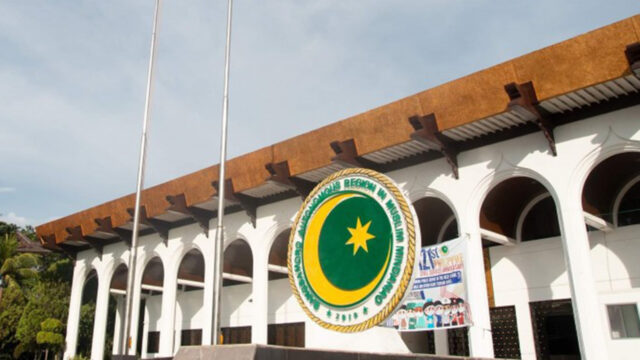
A HOUSE of Representatives committee on Wednesday approved a measure seeking to postpone the general elections of the Bangsamoro Autonomous Region in Muslim Mindanao (BARMM) by a year to 2026.

Approved by the House suffrage and electoral reforms panel, the bill consolidated various measures seeking to defer BARMM’s first regular elections to May 11, 2026 from May 12, 2025, according to a copy obtained by BusinessWorld.

Subsequent elections are scheduled to be held on the second Monday of May 2029, and every three years thereafter, the bill stated.

The proposed law was filed by congressmen to give the Bangsamoro Transition Authority (BTA) time to address governance and administrative issues arising from a Supreme Court (SC) decision excluding Sulu from the autonomous region. The high tribunal rejected a petition seeking a reversal of the decision on Tuesday.

Mt. Province Rep. Maximo Y. Dalog, Jr., who heads the House suffrage and electoral reforms committee, said the bill would be taken up by the plenary “either in the first or second week of December.”

The Philippine government enacted the Bangsamoro Organic Law in 2018 following a multi-year peace process with the Moro Islamic Liberation Front. It mandated the creation of the BTA to serve as an interim regional government, which was established after its ratification in 2019.

The BARMM government’s lawmaking power is vested in a parliament, with members hailing from the provinces of Basilan, Lanao del Sur, Maguindanao, Tawi-tawi, and Sulu. It was set to be composed of 80 members, of which 40 are political party representatives and eight are sectoral representatives.

The remaining 32 seats are allotted for BARMM’s congressional districts. Sulu province was slated to have seven districts up for grabs before the SC ruling.

“This resetting is crucial to ensure a just and credible electoral process for the first and historic Bangsamoro Parliamentary Elections,” Member of Parliament Don Arbison Loong said in a statement provided to the House suffrage and electoral reforms panel.

President Ferdinand R. Marcos, Jr. is vested with the authority to appoint new 80 interim members of the BTA while no successors have been elected, according to the bill. — Kenneth Christiane L. Basilio

ADVERTISEMENT
ADVERTISEMENT