Home Blog Page 2294

Anger at CEOs goes beyond the healthcare industry

FREEPIK

THE PHONES at corporate security firms are ringing off the hook. Security chiefs at major organizations are convening calls to trade notes. Company websites are being scrubbed of photos of their executives.

This is only the beginning of what’s likely to be a major ramping up of corporate security protocols across the country. The shooting of UnitedHealthcare CEO Brian Thompson in the middle of midtown Manhattan has boardrooms and C-suites rightly spooked. But it’s really the level of outrage that’s being directed at the company, not the killer, that has executives on edge. The public has seized on this moment to air its long list of grievances against what it views as a broken healthcare system. (For more on this, read my colleague Lisa Jarvis’s excellent column.*)

But if corporate America’s directors and top executives are only talking about and investing in security practices, they’re treating the symptom rather than the underlying disease. The issue goes deeper than just the healthcare industry, encompassing a broader business world that the public increasingly says it distrusts. “Companies need to acknowledge that the root cause of this [anger] is not treating humans with dignity and respect,” says Alison Taylor, New York University business school professor and author of Higher Ground: How Business Can Do the Right Thing in a Turbulent World.

I spent some time this year trying to make sense of why Americans’ faith in big business has seriously eroded over the last few decades. As I reported then, the percentage of Americans who say they have “a great deal” or “quite a lot” of confidence in major companies is today only 16%, about half the rate of 25 years ago, according to Gallup. We need only look at a few key numbers to understand where this sentiment originates:

The top 1% now hold a greater percentage of wealth than the entire middle 40%; 30 years ago, the reverse was true. To get to this point, the wealth of the very richest had to grow exponentially faster than that of the poorest.

Corporate profits now make up a larger share of GDP, while worker compensation has lost ground. In the 1980s, after-tax corporate profits accounted for 5.5% of GDP, according to David Kelly, chief global strategist with JPMorgan Asset Management; by 2023, they had reached nearly 10%. Over the same time period, worker compensation declined from 55.8% to 52.1% of GDP.

In 1965, the CEO-to-worker pay ratio was 21-to-one, meaning it would take 21 years for a typical employee to match what their CEO made in a year. In 2022, the ratio was 344-to-one, according to the Economic Policy Institute, with a projected average compensation of CEOs at the 350 largest publicly owned US companies at $25.2 million.

The average American probably can’t rattle off these stats — but they may feel their implications in their day-to-day life. As I wrote earlier this year, for many ordinary people, it seems like the US economy and the companies they work for are breaking the covenant to provide “a society where a job and hard work would let you pay your bills, maybe buy a house, and where, regardless of background, each generation could advance by building on the achievements of the last.”

There will be the temptation to button up security and call the problem solved, to blame social media for eroding the discourse and giving people a platform to be their worst selves. Understandable impulses, but ones that miss an opportunity.

The alternative is for companies to look squarely at this anger and it take seriously. Outbursts of anti-corporate sentiment have happened before: the Occupy Wall Street movement, for one. And they’re likely to keep happening more frequently and — unfortunately, violently — unless the business world does something to address the ways it has exacerbated the income gap and the feeling that fatter corporate profits come at the expense of everything and everyone else.

Bloomberg News has reported that security is already up, with median spending by S&P 500 companies that disclosed security costs doubling from 2021 to 2023 to almost $100,000, according to Equilar. Among those at the top end is Meta Platforms, Inc. CEO Mark Zuckerberg, who received $23.4 million last year from the company for his and his family’s personal security. He is also one of the super-rich to reportedly have built a luxury survivalist bunker.

These fortresses might save the wealthiest Americans from doomsday, but it’s only putting them further out of reach — literally and figuratively — of the workers and consumers who power their companies.

BLOOMBERG OPINION

*Read the column here: https://tinyurl.com/29427m6q.

AboitizPower energizes its Negros Occidental solar farm

ABOITIZ Renewables, Inc. (ARI), the renewable energy arm of Aboitiz Power Corp. (AboitizPower), has energized its 173-megawatt-peak (MWp) Calatrava Solar Project in Negros Occidental.

“Calatrava is our fifth energized solar facility and the largest capacity thus far in AboitizPower’s growing solar generation portfolio,” ARI President James Arnold Villaroman said in a statement on Thursday.

Since the start of the year, AboitizPower has energized a total of 512 megawatts (MW) of energy projects. This includes the 159-MWp Laoag Solar and 94-MWp Cayanga-Bugallon Solar power plants in Pangasinan.

It also activated the 17-MW Tiwi Binary Geothermal Power Plant in Albay, and SN Aboitiz Power’s 24-MW Magat battery energy storage system in Isabela.

The company recently switched on the 45-MWp Armenia Solar Project in Tarlac.

“This project (Calatrava Solar Project) would not be possible without the help of the National Grid of Corp. of the Philippines. They have helped us energize the facility to deliver power through the Calatrava substation,” the company said.

At present, AboitizPower has over 1,000 MW of disclosed projects from various indigenous energy sources, while constantly pursuing opportunities to grow its portfolio for solar, hydro, geothermal, wind, and energy storage systems.

The company has set a target of expanding its renewable energy capacity to 4,600 MW by 2030.

At the local bourse on Thursday, shares in the company dropped 0.67% to close at P37.25 each. — Sheldeen Joy Talavera

Philippine banks’ assets expand to P26.41 trillion

BW FILE PHOTO

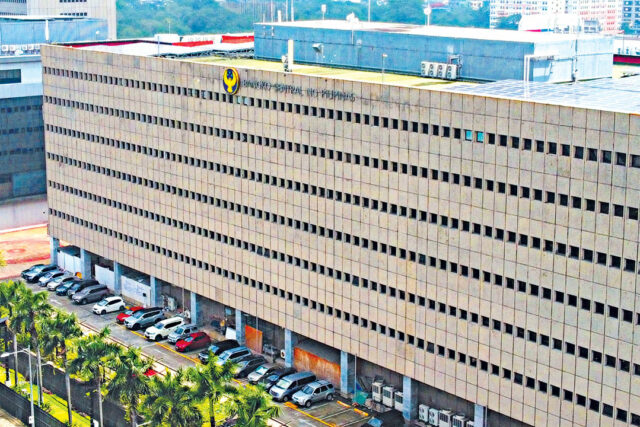
THE PHILIPPINE banking industry’s total assets rose by 9.8% year on year as of end-October, Bangko Sentral ng Pilipinas (BSP) data showed.

Preliminary data showed banks’ combined assets increased to P26.41 trillion as of end-October from P24.04 trillion a year prior.

Month on month, however, total assets inched down by 1.2% from P26.74 trillion as of end-September.

Banks’ assets are mainly supported by deposits, loans, and investments. These include cash and due from banks as well as interbank loans receivable (IBL) and reverse repurchase (RRP), net of allowances for credit losses.

The banking sector’s total loan portfolio inclusive of IBL and RRP jumped by 11.5% to P14.06 trillion as of October from P12.61 trillion a year ago.

Net investments, or financial assets and equity investments in subsidiaries, climbed by 12.1% to P7.84 trillion from P6.99 trillion a year earlier.

On the other hand, cash and due from banks stood at P2.43 trillion as of end-October, down by 10.7% from P2.72 trillion a year prior.

Net real and other properties acquired went up by 7.3% to P112.74 billion from P105.1 billion.

Banks’ other assets jumped by 21.8% to P1.96 trillion at end-October from P1.61 trillion a year earlier.

Meanwhile, the total liabilities of the banking system rose by 9.5% to P23.1 trillion from P21.1 trillion in the year-ago period.

Rizal Commercial Banking Corp. Chief Economist Michael L. Ricafort said the higher asset level as of end-October came on the back of higher loans as the recent reserve requirement ratio (RRR) cut allowed banks to ramp up their lending activities.

“This also reflects the continued growth in banks’ earnings in recent months that also helped in increasing capital and also loanable funds,” he added.

Bank lending grew by 10.6% to P12.5 trillion in October, separate BSP data showed, while the Philippine banking system’s net profit rose by 6.4% to P290 billion in the first nine months of the year.

The central bank slashed the RRR for universal and commercial banks and nonbank financial institutions with quasi-banking functions by 250 basis points (bps) to 7% from 9.5% effective Oct. 25.

On the other hand, Mr. Ricafort said the month-on-month decline in assets may have been due to disruptions caused by the series of typhoons that struck the country during the month.

BSP data showed that the month-on-month drop in banks’ assets was largely due to a decline in the sector’s total loan portfolio to P14.062 trillion as of October from P14.42 trillion as of September.

“The decline in the total loan portfolio came mostly from a 62% drop in RRPs with the BSP, likely due to banks pulling out their funds following the interest rate cuts,” AP Securities, Inc. Research Head Alfred Benjamin R. Garcia said..

The BSP has cut borrowing costs by 50 bps since it began its easing cycle in August, bringing the policy rate to 6%. — Luisa Maria Jacinta C. Jocson

Kraven The Hunter tells villain’s origin story with gangsters and gore

LONDON — Kraven The Hunter will not be your typical Marvel Comics adaptation, with an R rating that allowed filmmakers to include more gore and construct it like a gangster film, its director says.

In the Philippines, the Movie and Television Review and Classification Board has given the film an R-16 rating.

British actor Aaron Taylor-Johnson takes on the lead role in the origin story, which looks at how Kraven’s difficult relationship with his gangster father Nikolai Kravinoff, played by Oscar winner Russell Crowe, sets him on a dangerous path to becoming one of the world’s most feared hunters.

“We’ve structured it as a gangster film… but it is also… using this canon of Marvel characters that brings… another level of storytelling to it,” director J.C. Chandor told Reuters.

“The superhero genre is structured around violence and… what the R rating allowed us to do is be a little bit more honest with that violence… So in this film, you’re going to see some blood. It’s a little stylized, but it’s also more realistic, quite frankly.”

Mr. Taylor-Johnson trained to put on size to play the bulky Kraven, whose first lines in the movie are in Russian.

“We were taking that Marvel comic book character but taking him to a world that felt grounded in reality and… focusing in on… his back story,” he told Reuters. “I do believe you feel empathetic towards him, and yet he is killing (umpteen) different people… My character wants to be nothing like his father and ultimately becomes far, far worse.”

The 34-year-old has previously been cited by British media as a potential contender to play suave spy James Bond.

Asked what it was like to play a villain, he said: “It’s definitely interesting when it comes with multiple layers… There’s a darkness that he has to try and harbor with and come to terms with.”

The film, which also stars Ariana DeBose and Fred Hechinger, is now showing in Philippine theaters. — Reuters

Untapped job-creation potential seen in sciences, biotechnology

UNSPLASH

PHILIPPINE sciences are being held back by shortcomings in infrastructure and the dearth of incentives, limiting the sector’s capacity to unlock jobs and investment, industry representatives said.

“The limited career opportunities in the biopharmaceutical sector hinder the development of future scientists and experts, preventing them from gaining experience in good clinical and manufacturing practices,” Diana M. Edralin, president of the Pharmaceutical and Healthcare Association of the Philippines (PHAP), said in an e-mail.

“This not only undermines the potential for high-quality job creation within the country, but also represents a missed opportunity to position the nation as a clinical trial hub in Southeast Asia.”

Raul V. Destura, founder and chief executive officer of biotech startup Manila HealthTek, Inc., said the Philippines does not lack graduates and experts needed to expand its science and biotechnology sector.

“Actually, there are a lot of scientists who are really well-trained,” Mr. Destura told BusinessWorld on the sidelines of an event last month.

“It’s not really a shortage (that’s the problem,) but the lack of additional slots for them.”

Mr. Destura, who is also a medical doctor, said science graduates typically venture into the medical field or work as a research assistants or professors.

“But there is a subset of people who want to become researchers, scientists, inventors, biotechnologists. The current landscape is not enough to absorb all of these people,” he said.

Manila HealthTek, Inc. develops, manufactures, and tests portable diagnostic kits for selected infectious diseases affecting both human and animal health.

“The more we expand, the better-positioned we are to provide opportunities for our great Filipino scientists who can actually find careers in science… and not leave the country,” Mr. Destura said.

Meanwhile, Ms. Edralin, who also serves as the vice-president of the European Chamber of Commerce of the Philippines, cited the need for government support for innovation to attract more biopharmaceutical investment.

“Our country has the needed expertise, hospital facilities, and desirable demographics to support clinical trials for various conditions. However, despite these advantages, we acknowledge a concerning decline in our regional standings for clinical trials,” according to Ms. Edralin.

According to the PHAP, the Philippines used to rank second in the region in the conduct of clinical trials. It currently ranks fourth, behind Singapore, Thailand and Malaysia.

The competitiveness of Philippine-based clinical trials are also hampered by challenges in review timelines, limited infrastructure and support mechanisms, and the lack of publicly available disease registries, Ms. Edralin said.

There is also a need to harmonize regulatory pathways to streamline the approval process for clinical trials, especially for drugs for public health emergencies and rare or neglected diseases, she added.

“For competition to be vibrant, government spending must increase, pooled procurement must be implemented, and coverage to outpatient medicines must be expanded.” — Beatriz Marie D. Cruz

Unpacking the Filipino Dream: Optimism meets reality

FREEPIK

The Boston Consulting Group (BCG)’s latest research, “The Filipino Dream,” paints an inspiring picture of what gets Filipinos going: the aspirational dream of financial security in health emergencies and entrepreneurial passion. These dreams manifest the long-enduring strength and creativity of Filipinos, especially when it involves systemic and economic challenges that require the people to creatively overcome them. As we review this study, we can praise BCG for a brilliant analysis yet critically examine some conclusions that might differ from on ground realities in the Philippines.

Indeed, as we celebrate the findings of this study, it is very important to temper this optimism with a critical look at realities that may not exactly agree with the report’s conclusions.

CELEBRATING FILIPINO RESILIENCE
The report’s findings that 58% of Filipinos prioritize financial security for healthcare emergencies and 56% aspire to start their own businesses resonate deeply within the national psyche. Filipinos have long been known for their ingenuity and resourcefulness, often rising above challenges with a smile and an entrepreneurial spirit. The segmentation of dreamers into Providers, Trailblazers, Guardians, and Rebuilders offers a nuanced understanding of the diverse motivations across demographics.

BCG’s methodology, combining clustering and sentiment analysis, deserves praise for its rigor. It captures insights from over 1,400 respondents and gives a voice to the rural sector, which speaks of shared optimism and unique struggles that define the Filipino experience. The finding that 68% of Filipinos are optimistic about the coming year, despite significant challenges, underscores a remarkable spirit of hope.

It is quite striking that 58% of Filipinos dream about financial security in case health emergencies arise. It reflects growing consciousness of the risks brought about by unexpected medical costs, thereby being a critical step to advocating for better healthcare access. Programs like Universal Health Care (UHC) and initiatives such as expanded coverage under PhilHealth have shown good promise to ease burden. However, for many Filipinos, these benefits are unattainable. Long waiting times, insufficient hospital capacity, and the high cost of specialty care often leave patients relying on personal savings or informal systems, such as paluwagan (an informal group savings/lending system).

Moreover, rural areas, where access to healthcare facilities is limited, face even steeper challenges. This reality stands in contrast to the optimism reflected in the study. While progress has been made, the persistent gap in healthcare access raises the question: Are Filipinos truly empowered to tackle health emergencies, or are they simply becoming more adept at navigating an inadequate system?

It may also be argued that while financial security ranks as a top aspiration, the study’s optimism about institutional collaboration appears somewhat detached from realities on the ground.

For example, the reliance on informal savings mechanisms such as paluwagan is a reflection of distrust in formal financial systems. This is not a minor systemic hurdle but a systemic issue, compounded by inconsistent service delivery, lack of accessible financial products, and gaps in financial literacy.

However, starting a business is a worthwhile dream, and the question is whether the ecosystem for entrepreneurship is capable enough to foster such dreams. The reality is that credit access is limited, taxes have high compliance costs, and government support is usually lacking. These realities will temper the optimism about micro-entrepreneurship, and there is a growing need to focus on some of the structural challenges in more depth.

THE ENTREPRENEURIAL SPIRIT: A DOUBLE-EDGED SWORD
The dream of entrepreneurship, shared by 56% of respondents, reflects the Filipino people’s inherent creativity and drive for independence. This finding aligns with the visible rise of small businesses across the country, particularly during the pandemic, when Filipinos turned to micro-enterprises as a lifeline. From online sellers to food stalls, entrepreneurship has undeniably fueled economic activity.

Yet, this optimism calls for a reality check. Starting a business in the Philippines is not without significant barriers. The country’s ranking in the Ease of Doing Business Index, though improved in recent years, still points to challenges such as bureaucratic red tape, high startup costs, and limited access to financing.

Moreover, most entrepreneurs are informal entrepreneurs. They lack legal protection or financial security. Digital platforms such as GCash and Shopee have enabled small businesses, but many Filipinos do not possess the digital tools or the literacy to succeed in that ecosystem. In celebrating entrepreneurship, we must also talk about the systemic barriers which make it difficult for so many Filipinos to scale up their ventures sustainably.

RURAL OPTIMISM: A MISALIGNMENT?
BCG’s study notes that rural respondents express higher levels of optimism about the future compared to their urban counterparts. This finding is heartening, as it reflects the resilience of rural communities despite limited resources. However, it also raises questions about whether this optimism is rooted in tangible progress or simply in the enduring Filipino ability to find hope in adversity.

In fact, rural Filipinos face tremendous challenges, including limited access to healthcare, education, and economic opportunities. Infrastructure gaps, such as poor internet connectivity, further isolate these communities from the benefits of digital transformation. While optimism is a powerful force, policymakers and businesses must make sure that it translates into concrete improvements in quality of life. Otherwise, this positivity risks being overshadowed by systemic inequities.

INSTITUTIONAL TRUST: A LONG-STANDING CHALLENGE
The study points out a critical gap between Filipinos’ trusting nature in themselves versus that with institutions, wherein more persons turn to self-reliance because of failure attributed to institutions. It’s probably the most realistic result of the report. Institutional mistrust has deep roots because of previous issues such as graft, inefficiency, and varying policy implementation in the country.

This skepticism manifests itself in various ways: from continuing to rely on informal financial systems to being hesitant to approach formal healthcare providers. This is identified as a barrier by the study, yet it also points to an opportunity for institutions to rebuild trust through transparency and accountability. Programs that deliver tangible, reliable benefits — be it in healthcare, education, or financial services — are crucial to bridging the trust gap.

OPTIMISM AND REALISM
Most impressive, perhaps, is that this study shows the Filipino spirit in its most resilient form. The fact that 68% of respondents are optimistic about the coming year really says a lot about how much people want to go beyond their problems. While this optimism should be savored, it should not be taken without an acknowledgment of the problems that do not go away.

To make health security an actuality, we need systemic reforms to enable UHC. To sustain entrepreneurship, we need a facilitative environment that nourishes small businesses at various stages from seed to growth. For the optimism expressed in rural settings to see the light of day into progress, infrastructure, and educational investments are very important.

DREAMS TURNED INTO REALITY
The Filipino Dream offers an important look into the hopes and dreams of Filipinos. However, dreams alone do not create change; this requires collective action to confront barriers and create opportunities involving individuals, institutions, and policymakers.

Filipinos have always been resilient and resourceful. It is time for the systems meant to serve them to reflect the same strength and reliability. Only then can we ensure that the optimism and dreams highlighted in this study become the foundation for a more equitable and prosperous Philippines.

POLICY DEVELOPMENT: FILLING THE GAPS
Targeted policy interventions are needed to bridge the gap between aspiration and reality. The first priority should be reforms to make healthcare more accessible and affordable, as indicated by the top concern identified in the study: investing in preventive care, streamlining public health services, and encouraging private sector innovation in health insurance.

The financial sector needs to re-evaluate regulatory frameworks toward trust and accessibility. In fact, simplification of microfinance and small business loans procedures can encourage savings and borrowing. Furthermore, a national campaign to enhance financial literacy will empower more Filipinos to make informed decisions.

The study’s segmentation of dreamers can be very useful for policymakers. One-size-fits-all programs may not work as well as programs that are targeted to the needs of Providers, Trailblazers, Guardians, and Rebuilders. For example, retirement planning programs might be best suited for rural Guardians, while urban Trailblazers might need skill-building programs to support their entrepreneurial ventures.

RETHINKING BUSINESS STRATEGIES
More important is for businesses themselves to step up. Aligning with this call, in fact, is BCG’s impetus on the empowerment of Filipinos towards more inclusive business practices. Financial houses could consider producing products in response to savings for health and emergency funds, a package that satisfies short-term requirements and guarantees long-term security.

Corporations can play a vital role in helping aspiring entrepreneurs by providing mentorship, market access, and startup capital. Public-private partnerships could be used to help micro-entrepreneurs, especially in underserved regions. For example, e-commerce platforms could partner with local governments to train small business owners in digital marketing, thereby scaling up their operations.

THE NEED FOR FOLLOW-THROUGH RESEARCH
While “The Filipino Dream” provides informative material, it should not be taken as an overarching narrative but rather a jump off point for further scrutiny. Follow-up studies would take a closer look at areas such as understanding more distinctly the barriers women face, or the rural-urban divide in financial preparedness.

Moreover, a longitudinal study that follows the progress of Filipino dreamers over time would provide policymakers and businesses with actionable data. Are Trailblazers achieving financial independence? Have Rebuilders regained stability post-pandemic? These questions demand answers that can only come from sustained research efforts.

A CALL FOR COLLECTIVE ACTION
BCG’s Managing Director, Julian Cua, rightly emphasizes that the Filipino Dream is a collective vision. Realizing this vision will require collaboration across sectors. Policymakers, private corporations, and civil society must align their efforts to create an environment where dreams can flourish.

As we appreciate BCG for shining a light on the aspirations of Filipinos, we should also challenge ourselves to solve the barriers that hold many of us back. We can make these dreams become realities if we invest in policies, frameworks, and initiatives that empower every Filipino.

The resilience and optimism of Filipinos deserve not just recognition but tangible support. Let this study be the starting point for a movement, so financial security, entrepreneurial success, and progress may be in reach for everyone. In fulfilling the Filipino Dream, we uplift not just the individual but the nation itself.

You may download the BCG report here: https://tinyurl.com/26ydvkmf.


Dr. Ron F. Jabal, APR, is the CEO of the PAGEONE Group (www.pageonegroup.ph) and the founder of Advocacy Partners Asia (www.advocacy.ph).

ron.jabal@pageone.ph

rfjabal@gmail.com

Meralco franchise renewal bill up for Senate plenary debate

PHILIPPINE STAR/BOY SANTOS

A SENATE BILL that seeks to extend Manila Electric Co.’s (Meralco) franchise for another 25 years is now up for debate in the plenary.

“Meralco has long been a partner in our nation’s progress, but with that partnership comes accountability,” Senator Emmanuel Joel J. Villanueva said in his sponsorship speech for Senate Bill No. 2824 late Wednesday.

“This bill ensures that Meralco continues to meet the needs of our people while preparing for the challenges and opportunities of the future,” he added.

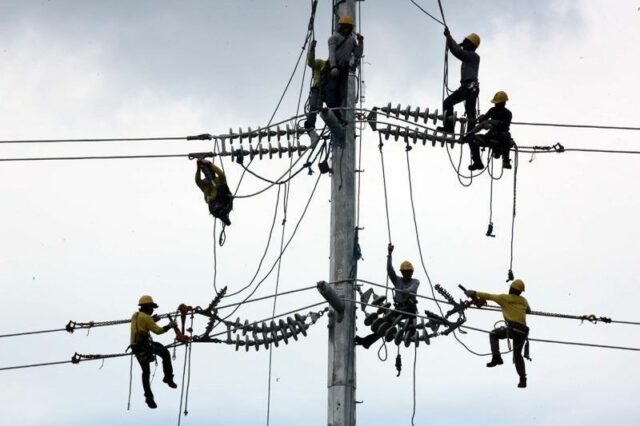
The proposed measure, if passed, will allow Meralco to continue to construct, operate, and maintain its electric distribution systems in areas such as Metro Manila, Bulacan, Cavite, Laguna, Batangas, and Rizal.

Meralco supplies power to at least 7.775 million Filipinos.

Last month, the House of Representatives approved a counterpart bill on final reading. It includes a provision that allows Meralco’s franchise to come into effect four years before its initial concession expires.

Citing the Electric Power Industry Reform Act of 2001, Mr. Villanueva emphasized the need for the company to ensure a reliable power supply in a “least cost manner” or at reasonable rates.

Meralco plans to invest about P24 billion over the next five years to enhance its power distribution system by replacing over 45,000 old poles and upgrading power lines, according to the senator.

“We join our countrymen in the hopes that these investments will make Meralco’s power supply even more reliable,” he said.

Meralco’s controlling stakeholder, Beacon Electric Asset Holdings, Inc., is partly owned by PLDT Inc.

Hastings Holdings, Inc., a unit of PLDT Beneficial Trust Fund subsidiary MediaQuest Holdings, Inc., has an interest in BusinessWorld through the Philippine Star Group, which it controls. — John Victor D. Ordoñez

Nonlife insurer TRISCO exits conservatorship, resumes business

PHILSTAR FILE PHOTO

THE INSURANCE COMMISSION (IC) lifted its cease-and-desist order (CDO) on nonlife insurer Travellers Insurance and Surety Corp. (TRISCO) effective Dec. 4, releasing it from conservatorship and allowing it to resume its operations.

TRISCO was prohibited from conducting business and was placed under conservatorship effective June 3 due to its inability to comply with requirements under the amended Insurance Code.

According to an earlier statement posted on TRISCO’s website, it was stopped from taking on new business due to issues with its net worth and capital.

“During the examination of the 2022 Annual Statements of TRISCO, the Insurance Commission denied a significant amount of investments made by the company, which impaired its net worth. Hence, TRISCO made a complete capital infusion as of May 27,” it said.

“On May 31, TRISCO had a meeting with the Financial Examination Group (FEG) of IC to check on the status of our compliance, and was informed of the documents needed for submission for validation. Thus, on June 3, we submitted the required documents before FEG-Non-Life. Pending action on our compliance, TRISCO was served with the CDO on the same day after an hour.”

The nonlife insurer said in a separate statement following the lifting of the CDO and its release from conservatorship that it “remains strong and steadfast” and is looking to boost its capital position.

“TRISCO stockholders have infused P950 million this 2024, in anticipation of the company’s plan to increase its authorized capital stock to P4 billion by 2025, further boosting its financial stability,” it said.

“With this, the company remains resilient and maintains a positive outlook, viewing this experience as both a challenge and an opportunity to strengthen our operations and reaffirm our commitment to delivering reliable, high-quality insurance products and services to our clients and the public,” it added.

TRISCO said it will enhance its enterprise risk management system through the reinforcement of its finance, risk management and governance committees to ensure that there will be no more regulatory compliance issues moving forward.

The insurer is also set to review and adjust its five-year financial plan, including its investment portfolio, “to guarantee long-term growth and stability,” it said.

TRISCO added that it settled claims worth P23.67 million from June to Nov. 6 while it worked with the IC to expedite the evaluation and compliance processes while it was under conservatorship.

The company was established in 1964 and is involved in the business of fire, marine, bonds, casualty insurance, among others.

Its premiums earned stood at P872.54 million and it booked a net income of P265.21 million last year, based on IC data.

Meanwhile, the nonlife industry’s net premiums written increased by 10.19% to P53.13 billion as of end-September from the same period last year. Its net income grew by 17.17% to P6.41 billion. — AMCS

Gerard Butler goes from action hero to singing Santa in Christmas mash-up

LONDON — Gerard Butler fans are used to seeing the Scottish actor swoop in to save the day in action films like Olympus Has Fallen and Plane. But in his latest movie, the 55-year-old takes on a somewhat different role — a singing, sometimes rapping, Santa Claus.

Mr. Butler voices St. Nick in The Night Before Christmas in Wonderland, an animated musical film adaptation of the children’s picture book by Carys Bexington and Kate Hindley.

The story is a mash-up between the poem “Twas the Night Before Christmas” and Alice in Wonderland and sees St. Nick travelling to Wonderland to deliver a gift and finding himself in trouble with a Christmas-hating Queen of Hearts.

“This is a little fun animated movie, not be the thing I would normally do or be expected to do, but I loved the opportunity to do different performances in different arenas,” Mr. Butler told Reuters.

“The whole family are going to be smiling and I want to be a part of those things.”

The screenplay for the film, which features Bridgerton actor Simone Ashley as Alice and Game of Thrones alumni Emilia Clarke as the Queen of Hearts, is entirely in rhyming couplets.

“To be honest, the whole thing was kind of a challenge so you just throw (it) all in the same box,” said Mr. Butler, who is also known for action epic 300 and the animated How to Train Your Dragon movies.

“I’ve got to sing these crazy songs. I’ve got to do a rap in which I cannot breathe. So there was a lot of challenges but fun ones.”

Asked if he planned to make more Christmas films in the future, Mr. Butler said:

“They are talking about doing a second one of this… I’m not sure if I’m allowed to say, but we already have a story of where does Santa go next, what other fairy tale character (does he meet), could he embark on a mission? And… (from) what I’ve heard so far, it sounds amazing.”

The Night Before Christmas in Wonderland is released on Sky Cinema on Friday. — Reuters

Mexico lower house unanimously approves reforms for app workers

REUTERS

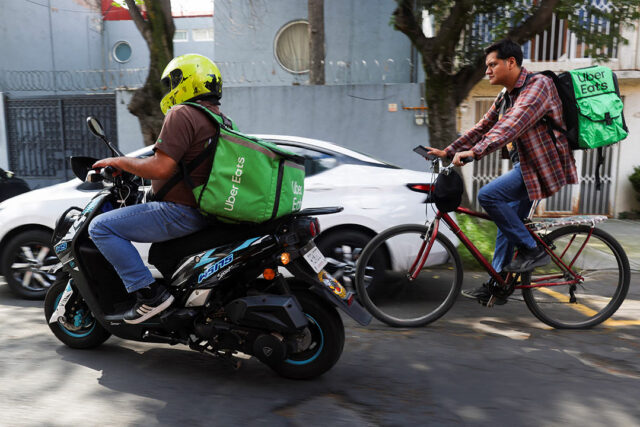
MEXICO CITY — Mexico’s lower house approved a reform that seeks to regulate labor conditions for delivery workers and drivers working for apps such as DiDi, Rappi and Uber by ensuring access to social security and a Christmas bonus, among other benefits.

The general reform passed unanimously with all 462 legislators present voting in favor following a two-hour debate. Deputies then went on to discuss the law’s particular terms before it passes to the Senate, which must vote on any changes.

The ruling Morena party and its allies, who won a landslide victory in the June general election, enjoy a large majority in both houses. They have since sped through a number of reforms proposed under the current and former administrations.

The reform would add Mexico to the ranks of countries such as Chile and Spain that already regulate work through digital platforms, guaranteeing basic labor rights such as a minimum wage and social security.

“We celebrate this great legislative step that combines flexibility and labor rights,” Labor Minister Marath Bolanos said on X after the approval, saying the law will provide certainty for the delivery apps’ business model.

Around 658,000 people are employed across Mexico on digital platforms, according to tax authority data. Of these, some 41% earn over the minimum wage.

Opposition Institutional Revolutionary Party lawmaker Ana Isabel Gonzalez, said the reform should include safeguards protecting from violence against women, such as cracking down on the creation of fake profiles.

The legislation would ensure that workers who earn at least a minimum wage on the app (around $414 per month starting in 2025) have the right to unionize and access to benefits such as social security, accident insurance, pensions, maternity leave, the right to receive company profits and a Christmas bonus.

Workers earning under minimum wage would not have access to all the benefits but be protected in case of work-related accidents.

President Claudia Sheinbaum  sent the proposal to legislators early December and the law was fast-tracked to a plenary vote ahead of the Christmas recess on Dec. 15. — Reuters

The Philippines and India at 75: From distant neighbors to vital Indo-Pacific partners

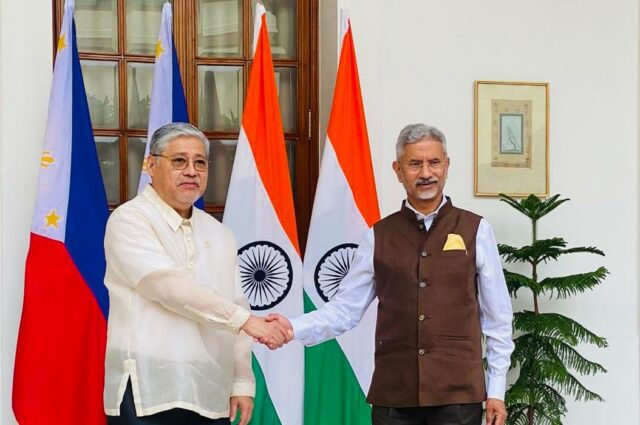
Foreign Affairs Secretary Enrique Manalo (left) and Indian Minister of External Affairs S. Jaishankar lead their respective national delegations in the 5th Joint Committee on Bilateral Cooperation in New Delhi on June 29, 2023. — DEPARTMENT OF FOREIGN AFFAIRS

THE Philippines and India share deep cultural and civilizational relations spanning hundreds of years. However, both nations were faced with new strategic challenges following the emergence of the Industrial Revolution, the heightened nature of inter-state competition, and the de-colonization process of the 20th century. Accordingly, with the Philippines and India gaining their independence in 1946 and 1947, respectively, the burgeoning structural dynamics of that period called for an urgent recalibration of foreign and security policies in Manila and New Delhi. As this year marks the 75th anniversary of diplomatic relations between the Philippines and India, it is crucial to understand and appreciate the evolution of bilateral security ties and the long-term potentials that this partnership possesses.

When Manila and New Delhi established diplomatic relations in November 1949, bilateral ties were immediately put the test by the challenges that stemmed from the unfolding systemic power competition between the United States of America (US) and the Soviet Union. While the Philippines and India had no direct conflict throughout the second half of the 20th century, the potential for any meaningful security collaboration was clouded by the Cold War dynamics, leading Manila and New Delhi to view each other from opposite sides of the ideational fence.

Consequently, the end of the bipolar era, along with the rise of an assertive China, and the overarching US-China power competition in the Western Pacific, provided opportunities for both countries to explore new dimensions in their relationship amid emerging structural realities.

For New Delhi, this willingness was signaled through its Look East Policy of 1991. In 2006, the meeting between the presidents of both countries led to the signing of a Memorandum of Understanding (MoU) on Defense and Security Cooperation to serve as a blueprint for long-term strategic cooperation. However, bilateral relations were still largely confined to issues of low politics, possibly due to Manila’s inward security perception and the limits of India’s willingness to translate its growing material capabilities into a robust and proactive foreign policy in Southeast Asia.

However, as the second decade of the 21st century began, China began pursuing a more overt expansionist approach towards the greater South China Sea and the West Philippine Sea in particular, Against this backdrop, the administration of former President Benigno Aquino III reoriented Manila’s security outlook from internal to territorial defense, with a particular emphasis on maritime security. This shift also allowed Manila to cast the net wider vis-à-vis its cooperation with like-minded Asian states like India. Accordingly, the first Joint Commission on Bilateral Cooperation (JCBC) meeting was held in 2011, while the first Joint Defense Cooperation Committee (JDCC) was established in 2012.

Such mechanisms were developed to institutionalize and enhance strategic cooperation between India and the Philippines, thus paving the way for joint military activities and arms transfers. However, Manila-New Delhi defense ties remained basic for several reasons, among them, was Manila’s lack of interest to diversify security partnerships away from the US and its extended alliance network and New Delhi’s initial reluctance to involve itself more overtly in the South China Sea, given the potential ramifications for Indian Ocean security.

Nevertheless, these impediments were eventually overcome in 2016. Under the administration of former President Rodrigo Duterte, Manila sought to radically reconfigure Philippine foreign policy to decrease the momentum in Philippine-US security ties and deepen Philippine-China relations. However, to appease Beijing for economic concessions, Duterte undermined Philippine sovereignty and sovereign rights in the West Philippine Sea. With China’s growing belligerence in Philippine waters, Manila needed to consider partner diversification. Among the benefits of Duterte’s external policy was opening doors for a more robust Philippine-India defense partnership.

This also aligned with Indian Prime Minister Narendra Modi’s desire for India to play a more prominent role as an alternative security and development partner in Southeast Asia through the Act East Policy. From 2016-2022, a series of crucial developments took place in the bilateral security partnership, including consecutive high-level visits from both sides, an increase in maritime security activities, and the sale of the BrahMos supersonic missile — making the Philippines the first recipient of this export from India.

These trends indicated Manila’s willingness to incorporate India into its security calculations and operationalize the growing partnership – an intent that was absent in the past decades. More importantly, with the emergence of the Indo-Pacific construct, Manila and New Delhi began to perceive one another as close, like-minded partners in a shared strategic space rather than distant neighbors from separate regions. As a testament to this acknowledgment, Philippine Navy flag officer in command Vice-Admiral Giovanni Carlo Bacordo stated the Philippines’ interest in bolstering maritime security cooperation with India to keep their shared seas safer.

Subsequently, when President Ferdinand Marcos, Jr. took office in June 2022, the Philippine-India security partnership was poised to strengthen further. The Marcos Jr. administration repositioned Manila’s foreign policy with the purpose of securing the West Philippine Sea against China’s expansionism. This converges with a rising India that seeks to strengthen the very foundations of that established order. In the past two years alone, several significant developments took place, such as signing an MoU for cooperation between the Philippine and Indian Coast Guards in August 2023, which would pave the way for a more institutionalized maritime security partnership.

Moreover, the fifth meeting of the India-Philippines Joint Defense Cooperation Committee (JDCC) in September was the first time to be co-chaired by the Defense Secretaries, indicating an elevation from the Joint Secretaries level during the 2023 JDCC in Delhi. Additionally, with the Philippines seeking to operationalize its Self-Reliance Defense Posture Act to modernize its Armed Forces, India has expressed support for capacity-building cooperation in the defense industry. Under the Modi Government, India has pursued its vision for “Aatmanirbhar Bharat,” or self-reliance in defense manufacturing. This opens pathways for possible joint production based on shared goals and interests in the region. Furthermore, both sides are also in talks to explore more avenues for arms trade and procurement amid the tumultuous landscape in the Indo-Pacific.

In addition, New Delhi has also become more vocal in supporting the Philippines’ legitimate position on the West Philippine Sea. This was illustrated when External Affairs Minister Dr. Subrahmanyam Jaishankar called for adherence to the 2016 Arbitral Ruling during his meeting with Philippine Foreign Affairs Secretary Enrique Manalo in July 2023. Moreover, During Mr. Jaishankar’s meeting with President Marcos Jr. in Manila in March, he stated India’s genuine intent to work with the Philippines to secure the seas based on international law. In doing so, the Indian Minister stated, “So if you want a country which actually says it will accept the judgment even if it goes against us, we are actually a natural candidate. So, we can be on your ship.”

Therefore, the Philippines and India have significantly enhanced the scope and depth of their bilateral security partnership throughout the years. In the past, relations were primarily confined to low politics, while functional defense cooperation barely figured in the strategic lexicon of both states. However, Manila and New Delhi overcame this cloud of unawareness. Given the uncertain future of regional geopolitics, it will be crucial for both partners to consistently explore new ways to enhance the function of their partnership according to the emerging challenges in the Indo-Pacific region.


Don Mclain Gill is a Manila-based geopolitical analyst, author, and lecturer at the Department of International Studies, De La Salle University, Manila.

Canadian Mining firm B2Gold plans to expand operations in PHL — DTI

B2GOLD.COM

CANADIAN gold mining company B2Gold Corp. plans to expand its operations in the Philippines, according to the Trade department.

In a statement, the Department of Trade and Industry (DTI) said that it met with officials of B2Gold and its local partner, Filminera Resources Corp., to discuss B2Gold’s plans to expand in the Philippines and its project in Aroroy, Masbate.

“B2Gold’s decision to expand its operations here reflects the confidence that global investors have in the robust policies, strategic reforms, and highly skilled workforce,” said DTI Secretary Ma. Cristina A. Roque.

“We warmly welcome this development as it highlights the Philippines’ commitment to building partnerships that promote sustainable economic growth and inclusive regional development,” she added.

The company is currently operating a gold mine in Masbate, which is about to reach its end of life. The company acquired its stake in the Masbate mine through a merger with CGA Mining Ltd. back in 2013.

“In mining, for you to determine if you can continue mining and expand or look for additional sites to mine, you need to have extensive research and analysis,” said Mario C. Tani, commercial counselor and trade commissioner at the Philippine Consulate General of Toronto, Canada, in a Viber message on Thursday.

“Usually, this entails a lot of hiring of local geologists and spending,” he added.

According to the Trade department, the opening of the company’s exploration office was formally announced during the Team Canada Trade Mission last week.

B2Gold has cited the country’s strategic location and skilled workers as among the reasons for the company’s success in the Philippines, as well as six consecutive years of operation without workplace injuries or accidents.

“B2Gold has invested in expanding skills and livelihood training programs for local residents while providing employment to nearly 2,000 direct and contract workers,” the DTI said.

“These efforts have contributed to Aroroy’s development from a fourth-class to a first-class municipality,” it added. — Justine Irish D. Tabile