Home Blog Page 2291

Empowering conversations for economic development
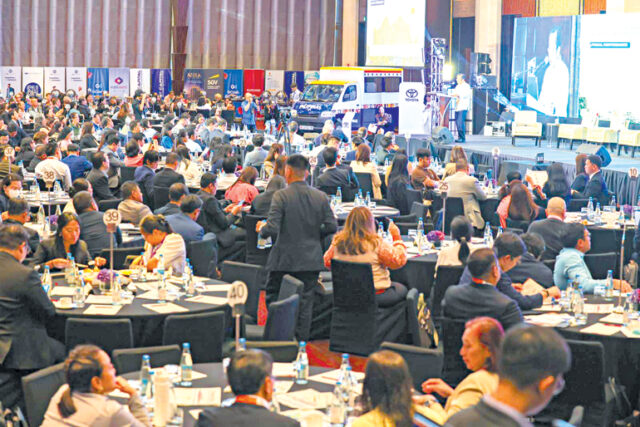
The latest edition of BusinessWorld Economic Forum gathered the business community last May 25 at the Grand Hyatt Manila in Bonifacio Global City, Taguig.

By Angela Kiara S. Brillantes, Special Features and Content Writer

Much like businesses and the media industry, BusinessWorld is going through significant transformations as it endeavors to remain a trusted source of business news and information. A significant transformation it has undergone is expanding its role, from being simply a newspaper to a platform for discussions of business and economic matters.

From its annual Economic and Forecast fora to its regular Insights events, BusinessWorld has made its name in driving transformative discussions in the Philippine business community.

For BusinessWorld Editor-in-Chief Cathy Rose A. Garcia, media organizations like BusinessWorld are essential in providing “insights into market trends, corporate developments, and economic policies; and a platform for discussion and debate on important economic and business issues.”

BusinessWorld, in particular, has remained a source of public trust since it started in the late 1980s. As such, it naturally became a platform for business reporting, as well as for engaging discussions in uncovering what lies ahead in the Philippine business landscape.

Economic Forum

The BusinessWorld Economic Forum, one of the media company’s major fora, has become one of the most-anticipated events for the Philippine business sector as it serves as a space and platform for industry leaders, corporate executives, government officials, and other experts to discuss important economic matters.

“BusinessWorld has always been known for its editorial independence and credibility. This is why the BusinessWorld Economic Forum has become one of the most anticipated business events of the year. The forum always provides intelligent and thoughtful discussions on the major economic and business issues facing the Philippines. It also highlights new business opportunities, emerging trends and innovations. The forum also provides insights into how Philippine businesses are evolving,” Ms. Garcia said.

“We have top-level speakers and relevant topics for our fora. We aim for not only engaging discussions but transformative ones to promote sustainable growth across all industries,” Jay R. Sarmiento, vice-president for sales and marketing at BusinessWorld, said.

“We make sure that the private and public sectors are represented in all discussions as well as esteemed regulatory bodies, research agencies/consulting firms as part of the discussions,” she further stressed.

Recently, aside from looking into the country’s most pressing economic issues, this year’s Economic Forum, themed “PH Next: Growth Drivers,” explored the industries that will serve as the next drivers of economic growth in the country. The whole-day forum was held at the Grand Hyatt Manila in Bonifacio Global City, Taguig last May 22.

The forum features key speakers, including policy makers, industry leaders, and top executives, who discussed the significant role of certain sectors in sustaining and fueling economic growth.

Keynote speakers in the recent Economic Forum included Arsenio M. Balisacan, secretary of the National Economic and Development Authority, who discussed about the imperatives of sustaining the country’s economic growth; and Lance Y. Gokongwei, president and chief executive officer of JG Summit Holdings, Inc., who shared his thoughts about boosting the private sector’s role of fueling economic growth.

Among the “next growth drivers” explored through the panel discussions were physical and digital infrastructure; the digital economy, spanning financial services, e-commerce, and service applications, among others; manufacturing; and power and renewables.

Forecast 2024
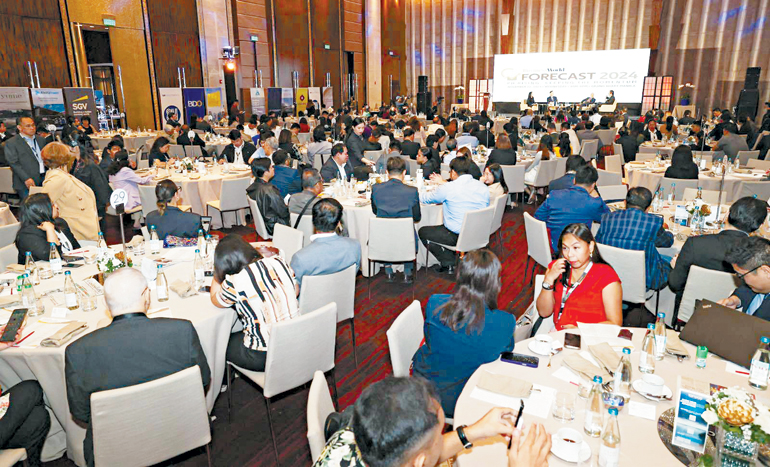
BusinessWorld’s Forcecast 2024 was held last Nov. 22, 2023, also at Grand Hyatt Manila.

Following the Economic Forum, the Forecast forum gears up the Philippine business community to navigate the year ahead with the latest economic outlooks — global, regional, and local — and the latest insights on challenges and opportunities ahead for businesses.

The most recent Forecast forum was centered on the theme “PH Rising: Keeping the Momentum,” aiming to provide valuable insights into sustaining the Philippines’ economic growth while it navigates the ever-evolving business landscape. It was likewise held at the Grand Hyatt Manila on Nov. 22, 2023.

Three economists from leading global institutions keynoted Forecast 2024. They were Pavit Ramachandran, country director for the Philippines at the Asian Development Bank, who shared the country’s economic outlook for 2024; Ndiame Diop, country director for Brunei, Malaysia, Philippines, and Thailand at World Bank, who discussed financial stability risks for 2024; and Ragnar Gudmundsson, resident representative to the Philippines at the International Monetary Fund, who presented about the necessary initiatives for post-pandemic development.

The panel discussions, meanwhile, sought to explore the prospects in industries such as property and energy, and also to assess the significant changes among consumers and the emergence of a next generation of leaders among millennials and Generation Z.

BusinessWorld Insights

Aside from these two major fora, BusinessWorld has also held several events under BusinessWorld Insights, a series of conferences tackling a wide range of topics with experts and industry executives.

Conceptualized amid the coronavirus pandemic, BusinessWorld Insights was launched in efforts to continue shaping the business discourse even in the absence of a physical venue. Since 2023, the series has been brought on-ground, making the BusinessWorld brand much more present, setting an additional venue for more in-depth discussions, and also giving way for more partnerships with leading and trusted brands.

This year has seen BusinessWorld Insights as a regular event that the business community can expect almost every month.
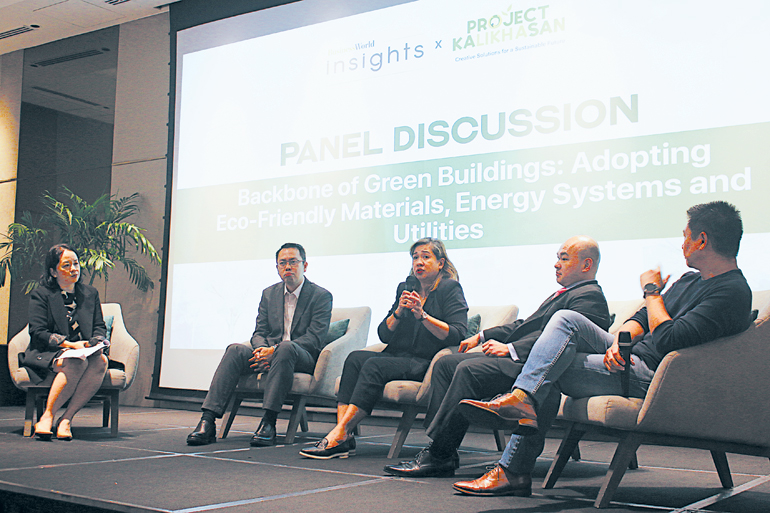
Last January, BusinessWorld Insights, under PhilSTAR Media Group’s Project KaLIKHAsan initiative, held a forum on “The Shift to Green Development” at Seda Manila Bay.

The first two Insights fora were held as part of PhilSTAR Media Group’s “Project KaLIKHAsan: Creative Solutions for a Sustainable Future,” where the group’s print, digital, and on-ground platforms converge to raise the cause of meaningful and concrete sustainability in industries and communities. “The Shift to Green Development,” held last Jan. 25 at Seda Manila Bay, gathered the real estate sector to discuss how it can further factor in sustainability across their developments through emerging innovations. “Achieving Balance in the Philippine Energy System,” held last April 16 at Seda BGC, brought together professionals from both the public and private ends to discuss the progress and prospects of the country’s energy system based on the energy trilemma, which consists of energy equity, environmental sustainability, and energy security.

The rest of the Insights fora were recently held at Dusit Thani Manila. One held last Feb. 27 looked into the outlook for the Philippine stock market for 2024 with local bourse and investment experts. Another one, held last June 25 with the theme “Ensuring Business Growth through Cybersecurity,” tackled the importance of cybersecurity in safeguarding the growth of businesses with officials representing the Department of Information and Communications Technology, National Privacy Commission, Globe Business, and PLDT Enterprise, among others. The most recent, held last July 31 with the theme “Building Sustainable and Inclusive Communities for the Future,” delved into the true essence of sustainable communities and the vital practices in making them real in the Philippine context with esteemed speakers such as Department of Human Settlements and Urban Development Undersecretary Henry Yap, Arch. Felino A. Palafox, Jr., and Robinsons Land Chief Strategist Ramon Rivero, to name a few.

Continuing conversations toward growth

One of the recent BusinessWorld Insights fora tackled “Ensuring Business Growth through Cybersecurity” last June at Dusit Thani Manila.

With all these, BusinessWorld has solidified its role as a key platform for conversations regarding the Philippine economy and its growth. The multimedia company’s line of conferences and fora has been set to bring greater impact in the business community, and the success of past events shows that they are on the right track.

“For all the events that BusinessWorld has mounted, it has been a continuing conversation for all industry sectors that are vital to our economic growth: from infrastructure, the ever-evolving digital transformation, sustainability, energy, MSMEs, leadership and the generational impact on the evolving workplace,” Lucien Dy Tioco, executive vice-president of BusinessWorld, shared.

“These events help BusinessWorld keep track with how much progress has been made and thus benefit us a deeper analyses of issues we need to address,” he added.

“BusinessWorld’s events have played a significant role in shaping business discourse in the Philippines by providing a venue for discussions and insights into the current economic environment,” Ms. Garcia said.

Ms. Sarmiento also mentioned that the success of BusinessWorld’s events can be seen from the awards bestowed to the company, as well as the congratulatory expressions left by the attendees, and the support it has received from holding such events.

The BusinessWorld Economic Forum had previously been recognized by award-giving bodies like the Philippine Quill Awards, The Media Specialists Association of the Philippines ICE Awards, and the Anvil Awards every year since its inception in 2016.

In particular, BusinessWorld won the Philippine Quill Awards under the Communication Skills category in 2022 for BusinessWorld Virtual Economic Forum (BW VEF) last 2020. BW VEF 2021, meanwhile, was recognized at the 21st Asian Media Awards presented by the World Association of News Publishers with a special Silver award for the Best Revenue Diversification Project/Product/Service under small/medium news media companies with annual revenue of less than US$10 million. BW VEF 2022 has also been recognized at the 58th Anvil Awards last year, bagging a silver award for Events and Exhibit — Conference/Convention.

Mr. Dy Tioco added that BusinessWorld’s events offers sectors to voice out their concerns, exchange ideas with others, and collaboratively come up with potential solutions.

“I would say our events provide avenue for all sectors to be heard, what are the critical issues that need attention, and how can we identify the pain points and push for solution. Our edge is the clout of influence we have through our thought leaders and industry experts from a global and local perspective,” Mr. Dy Tioco said.

With more Insights, Forecast, and Economic fora that the Philippine business community can look forward to, transformative discussions will remain as one of the strengths of BusinessWorld as it extends beyond the newspaper in serving as a public trust.

“These events have an important role in informing the public and enhancing understanding of key issues. These events give the business community a chance not just to listen and participate in lively discussions on business topics, but also to connect and exchange ideas,” Ms. Garcia said.
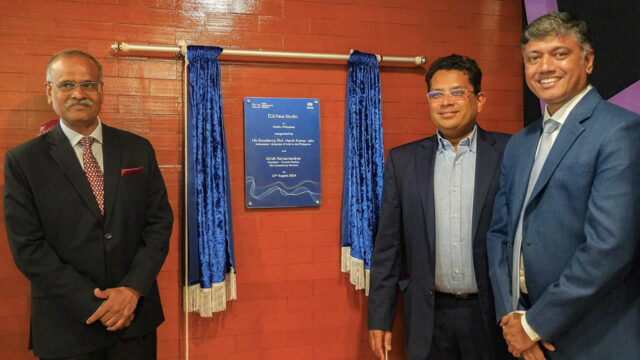
Mumbai-based TCS opens innovation hub in Manila

From left: His Excellency Sri. Harsh Kumar Jain, Ambassador-designate of India to the Philippines; Girish Ramachandran, President, Growth Markets, Tata Consultancy Services, and Shiju Varghese, Country Head, Tata Consultancy Services (Philippines) Inc. recently unveiled its state-of-the-art TCS Pace Studio in Manila.

TATA Consultancy Services Ltd. (TCS), a Mumbai-based multinational company specializing in information technology services and consulting, recently opened its TCS Pace Studio in Manila to ramp up digital innovation in the Asia-Pacific (APAC) region.

This facility is designed for TCS to co-innovate with customers to develop tailored solutions for their unique business needs, boosting digital innovation in the Asia-Pacific region, TCS said in a statement on Aug. 27.

Located within the Panorama Tower in Bonifacio Global City, the TCS Pace Studio will showcase platforms, such as TCS AI WisdomNext, TCS TwinX, and TCS Zero Carbon Platform, that leverage artificial intelligence, cloud computing, cybersecurity, and data analytics.

This was the firm’s fifth Pace Studios globally, including those in Riyadh, Sydney, Letterkenny, and Stockholm, along with seven Pace Ports in Tokyo, Amsterdam, New York, Pittsburgh, Toronto, London, and Paris.

“TCS Pace Studio is the gateway to a world of possibilities for our customers. It gives them access to TCS’ extensive research and innovation ecosystem, facilitating the development of novel solutions across diverse disciplines,” said Harrick Vin, chief technology officer at TCS.

The firm said that this investment underscores TCS’s commitment to the Philippines and the burgeoning APAC market.

With the country’s skilled talent pool, cost-effective operations, and strategic location, it presents a compelling value proposition for global businesses, TCS said.

The Philippine TCS Pace Studio will deliver various services, such as consulting, design, and implementation, facilitating clients in exploring new ideas, creating demonstrations, and refining their strategies.

TCS began operations in 2008 in the country and grew to more than 5,000 employees supporting customers in telecommunications, banking and finance, real estate, and airlines. — Aubrey Rose A. Inosante

The Grand Midori Ortigas: A Zen-inspired home in the central business district

The Grand Midori Ortigas (Artist’s Perspective)

Japanese design principles are renowned for their exquisite simplicity, unmatched functionality, and timeless elegance. These elements have influenced residential architecture and interior design, highlighting harmony, balance, and a deep connection with nature in homes.

The Grand Midori Ortigas by premier real estate developer Federal Land, Inc. is a prime example to the growing appeal of Japanese aesthetics in the Philippines. The signature residential development, located in the heart of Ortigas Central Business District (CBD), is conceptualized to offer residents a serene and balanced lifestyle amidst the fast-paced environment of one of Metro Manila’s major business hubs.

The two towers of The Grand Midori Ortigas feature intricate weave patterns inspired by traditional Japanese art. Inside, the design maximizes natural light and ventilation with large windows and well-placed living spaces. These elements create a tranquil and functional environment where residents can enjoy a seamless flow of energy.

Federal Land collaborated with the world-renowned architectural firm Tange Associates to bring the Japanese design principles to life. Tange Associates, led by the Pritzker Prize-winning architect Kenzo Tange, is known for their work on iconic structures such as the Tokyo Metropolitan Government Building, Saint Mary Cathedral Tokyo, Tokyo Aquatics Center, and Yoyogi Stadium.

STRATEGIC LOCATION IN THE HEART OF THE METRO

Situated along Exchange Road in Ortigas Center, The Grand Midori Ortigas offers residents access to key business districts, shopping centers, schools, hospitals, and transport hubs.

The newly constructed BGC-Ortigas Link Bridge, also known as the Kalayaan Bridge, significantly reduces travel time between Ortigas and Bonifacio Global City (BGC), making it a convenient halfway home for professionals working in both districts. The development also benefits from being situated near one of the upcoming stations of the Metro Manila Subway.

Furthermore, the Ortigas CBD is currently experiencing a surge in residential rental demand, driven by the economic recovery and return-to-office mandates post-pandemic. As nearby infrastructure projects near completion, property values in the area are expected to rise, making The Grand Midori Ortigas a smart investment choice for discerning buyers.

WORLD-CLASS AMENITIES FOR A BALANCED LIFESTYLE

Amenity Deck of The Grand Midori Ortigas (Artist’s Perspective)

The Grand Midori Ortigas is distinguished in the busy landscape of Ortigas CBD by its integration of nature into its design. Lush, green walkways connect various amenities on the building’s amenity floor, creating a natural outdoor space.

The outdoor amenities include a lap pool, Jacuzzi, children’s pool, and pool lounge, all surrounded by landscaped gardens. Additionally, the development features a children’s outdoor play area and a well-thought-out Zen garden that offers occupants a tranquil retreat for meditation and relaxation.

Meanwhile, indoor amenities include a lounge area for relaxation, a fitness area for health enthusiasts, a yoga room for those seeking inner peace, and a game room for entertainment. For families with children, there is a dedicated playroom, while students and professionals will appreciate the study lounge and conference room. The multipurpose room is also ideal for hosting events and gatherings.

PREMIUM URBAN LIVING

Studio Unit (Artist’s Perspective)

The Grand Midori Ortigas offers a variety of unit configurations to suit different needs and preferences. Units range from studio apartments, ranging from 35-38 square meters, to spacious three-bedroom units, ranging from 105-109 square meters.

Two-Bedroom Unit (Artist’s Perspective)

All units are equipped with balconies that can serve as personal spaces where one can enjoy a moment of solitude or indulge in urban gardening.

Three-Bedroom Unit (Artist’s Perspective)

Each unit is also configured to emphasize layout and function, allowing residents to maximize their living space. The efficient structure of the units gives residents the freedom to personalize their homes according to their tastes and lifestyle needs.

Flex Suite (Artist’s Perspective)

Recognizing the diverse needs of today’s homeowners, The Grand Midori Ortigas introduces Flex Suites. These 64-square meter one-bedroom units come with a 30-square meter multipurpose area called the Flex Space. This area can be customized as a nursery, studio, home office, or even a workout area, making it ideal for those requiring flexible living arrangements. Accordingly, the flexibility of these units ensures that the condominium caters to a wide range of lifestyles, from young professionals to growing families.

ENHANCED QUALITY OF LIFE

Zen Garden at The Grand Midori Ortigas (Artist’s Perspective)

Derived from the Japanese word “zen,” which means “meditation” or “absorption,” the Zen way of life is all about living in the present moment, finding balance, and cultivating inner peace. The Grand Midori Ortigas embodies this philosophy in its design and ambiance, creating a sanctuary where residents can escape the stresses of urban life.

Meanwhile, the name “Midori,” which means “green” in Japanese, further underscores the development’s commitment to creating a peaceful and harmonious living environment.

The development is surrounded by verdant landscapes, offering a refreshing urban escape. In a city where green spaces are often hard to come by, The Grand Midori Ortigas offers a unique opportunity to connect with nature, even in the heart of the city.

In the recent PropertyGuru Philippines Property Awards, The Grand Midori Ortigas received a Highly Commended for the Best CBD Development category, recognizing the blend of Zen serenity with practical urban living right in the heart of one of the busiest business districts in the country.

Discover serenity of Zen living at The Grand Midori Ortigas. Visit our showroom located at the Ground Floor The Exchange Regency, Exchange Road corner Meralco Avenue, Ortigas Center, Pasig City, for an exclusive preview at of the contemporary bliss that awaits.

For more information, visit www.federalland.ph or email invest@federalland.ph.


Spotlight is BusinessWorld’s sponsored section that allows advertisers to amplify their brand and connect with BusinessWorld’s audience by publishing their stories on the BusinessWorld Web site. For more information, send an email to online@bworldonline.com.

Join us on Viber at https://bit.ly/3hv6bLA to get more updates and subscribe to BusinessWorld’s titles and get exclusive content through www.bworld-x.com.

Attainable to the core: Lynk & Co Philippines unveils new 06 SUV Hyper Core+ variant

Starts at P1.299M for cash purchases

Lynk & Co Philippines introduces its most attainable vehicle yet: the new 06 SUV Hyper Core+. This exciting global variant offers exceptional style and safety, European engineering, and a sporty yet sophisticated driving experience, making it an attractive choice for Filipino car buyers.

Starting with a net cash price of Php 1,299,000.00 (MSRP at Php 1,399,000.00,) the 06 SUV Hyper Core+ comes with a comprehensive 5-year or 150,000km vehicle warranty and 2 years free periodic maintenance service (PMS), meaning you can enjoy your new, Swedish-designed and engineered 06 SUV without worrying about unexpected costs.

The 06 SUV Hyper Core+ is available in a range of eye-catching colors, including Misty Gray, Pearl White, Sonic Green, and Pastel Lilac. These stylish options are meant to cater to diverse preferences while  allowing customers to express their individuality.

Safety is a top priority for Lynk & Co, and the 06 SUV Hyper Core+ is equipped with a host of advanced features to protect its occupants. These include a High Strength Body Structure, driver/passenger/side/curtain airbags, ESP 9.3 Vehicle Stability Control System, Hill Start Assist, Anti Rollover Protection, 360-degree view camera, and Cruise Control just to name a few.

That being said, the 06 SUV Hyper Core+ is no slouch in the performance department, featuring a finely-tuned, 4-cylinder 1.5-liter turbocharged engine capable of producing 181Ps and 290 Nm of torque. It accelerates quickly off the line, and has the torque to keep the power sustained.

Stylish front fascia, highlighted by Aurora Borealis Daytime Running Lights
Bright, highly visible Energy Cube integrated tail lamps accentuate the 06 SUV’s rear.

The exterior of the 06 SUV Hyper Core+ is equally impressive. Full LED headlamps and taillamps provide enhanced visibility, while the large panoramic sunroof allows for natural light and ventilation. The Aurora Borealis daytime running lights add a touch of sophistication, while 18-inch alloy wheels complement the SUV’s sporty character.

The 06 SUV’s ergonomic, comfortable, and sleek interior

Inside, the 06 SUV Hyper Core+ boasts a modern and comfortable interior. The 10.25-inch HD Instrument Cluster and 12.3-inch Color Touch Screen Display provide intuitive controls and access to a range of features. The 6 speakers deliver clear and immersive audio, while the integrated leather style semi bucket seats offer excellent support and comfort.

The Lynk & Co 06 SUV Hyper Core+ is a compelling proposition for those seeking a stylish, safe, and affordable SUV. With its attractive pricing, comprehensive warranty and maintenance coverage, and impressive features, it is sure to appeal to a wide range of Filipino car buyers.

Visit our growing roster of dealerships to see our cars in the metal: Lynk & Co Alabang, Lynk & Co Bulacan, Lynk & Co BGC, and Lynk & Co Iloilo. You may likewise contact Lynk & Co Philippines via its hotline, 0917-175-LYNK (5965). You may also visit LynkCo.ph to book a test drive, request for a quote, and learn more about Lynk & Co’s exciting product lineup.

Follow Lynk & Co on social media: LynkCoPhilippines on Facebook, and @lynko_philippines on Instagram.


Spotlight is BusinessWorld’s sponsored section that allows advertisers to amplify their brand and connect with BusinessWorld’s audience by publishing their stories on the BusinessWorld Web site. For more information, send an email to online@bworldonline.com.

Join us on Viber at https://bit.ly/3hv6bLA to get more updates and subscribe to BusinessWorld’s titles and get exclusive content through www.bworld-x.com.

Banks accelerate digital shift as more customers transact online

FREEPIK

By Aaron Michael C. Sy, Reporter

INCREASED consumer demand for online services because of the coronavirus pandemic has accelerated the financial sector’s digitalization, with new players in the market also pushing traditional banks to adapt to the changing landscape of the industry.

Jose Teodoro K. Limcaoco, president and chief executive officer of Bank of the Philippine Islands (BPI), one of the country’s biggest lenders in asset terms, told BusinessWorld that the lockdowns imposed during the coronavirus pandemic forced the industry to find new ways of delivering their services to their clients.

“What the pandemic taught a lot of people was that you could not rely on the old means. Therefore, new technologies came to the fore — instant payments, e-wallets all came to the fore. And all of a sudden, what I would call the modern banking client expects this as part of the basic service already. I don’t know any young banking clients who don’t have the app.

I know a lot of older banking clients who won’t touch the app for discomfort, but all the new banking clients expect the app already,” Mr. Limcaoco, who is also president of the Bankers Association of the Philippines (BAP), the lead organization of universal and commercial banks in the country, said in an interview.

At the height of the pandemic, the Bangko Sentral ng Pilipinas (BSP) in October 2020 launched its three-year Digital Payments Transformation Roadmap, where it laid out initiatives meant to spur the Philippines’ shift to a cash-lite economy. It targeted to convert 50% of the total volume of retail payments into digital form and have 70% of Filipino adults become part of the formal financial system by end-2023.

The BSP’s 2023 Report on E-Payments Measurement released in July 2024 showed that digital payments made up 52.8% of the volume of retail transactions in 2023, up from the 42.1% share in 2022. In terms of value, 55.3% of retail transactions last year were done online, also rising from 40.1% the year prior.

The increase in digital payments was driven by wider use of online transaction channels among individuals and businesses, the central bank said, with the coronavirus pandemic accelerating this shift.

At end-2019, only 14% of the total volume and 24% of the value of retail payments were done online, according to central bank data,

Meanwhile, 56% of Filipino adults had accounts with formal financial institutions as of 2021, the BSP’s latest Financial Inclusion Survey showed, up from 29% in 2019. This came on the back of an increase in e-money and bank accounts.

Banks have been increasing their technology expenditures to keep up with the growing demand for digital financial services, Mr. Limcaoco said.

“Many banks had to migrate what we call the legacy systems to modern platforms. We certainly did it.”

Digitalization has also become a way for banks to streamline their operations, as it allows them to bring down some costs, broaden their reach, and improve service delivery, Mr. Limcaoco added.

Banks now use technology to collect data and gain insights on their clients, allowing them to develop better and more targeted product offerings, he said, citing the use of emerging technologies like generative artificial intelligence (GenAI) to improve customer experience.

“In terms of being able to answer questions, you’ll have consistency of service because you’re coming off the same script, if you will. You have faster turnout because AI allows you to do work faster, better,” Mr. Limcaoco said.

“What we know today of artificial intelligence, it has a strong potential going forward. In fact, at BPI, we have an internal tool already, which we have ingested all our policies and procedures for the branches so that our people can type in the questions as told to them verbatim by the client and it will answer,” he added.

DIGITAL BANKS
The entry of digital banks into the Philippine financial sector has also pushed traditional lenders to innovate, Mr. Limcaoco said.

“I think as a whole, [digital banks] made the legacy banks wake up, to be quite honest. Legacy banks have realized that they’ve got to be more in tune with technology, that they’ve got to listen to the customer more. They’ve got to react faster to customer demands.”

The BSP in December 2020 unveiled its framework for digital banks that sets them apart from other lender types such as universal, thrift, commercial, or Islamic lenders.

In 2021, the central bank capped the number of digital banks at six. The six online lenders currently operating in the country are Tonik Digital Bank, Inc.; GoTyme Bank of the Gokongwei group and Singapore-based Tyme; Maya Bank of Voyager Innovations, Inc.; Overseas Filipino Bank, a subsidiary of Land Bank of the Philippines; UNObank of DigibankASIA Pte. Ltd.; and UnionDigital Bank of Union Bank of the Philippines, Inc.

Starting 2025, an additional four digital banks will be allowed to operate in the country. The four new licenses may be given to new applicants or banks seeking to convert their existing license to a digital one.

Despite the economic downturn caused by the pandemic, the rapid pace of digitalization it caused was a boon for online-only banks, Maya Bank President Angelo S. Madrid, who is also the president of the Digital Bank Association of the Philippines (DiBA PH), said in an e-mail interview.

“Digital banks, operational for just over two years, have benefited from the lessons learned by the banking industry during the pandemic. The pandemic accelerated digitalization and financial inclusion, leading more Filipinos to open financial accounts through e-wallets. Now, Filipinos seek more accessible banking services like deposits and lending,” Mr. Madrid said.

Demand for digital financial services is being driven by the younger demographic, he said.

“Many have turned to digital banking, often making it their first financial account. This shift has led to a strong demand for seamless, accessible banking services. In response, digital banks are providing streamlined experiences, higher interest rates, and personalized credit options. While significant progress has been made, the pace of innovation must continue to keep up with the ever-increasing expectations of consumers,” Mr. Madrid said.

The latest central bank data showed that digital banks booked a combined net loss of P4.11 billion at end-June 2024. They held assets worth P104.12 billion in the same period, with a gross loan portfolio of P28.27 billion and deposits of P82.36 billion.

Total depositors of digital banks stood at 8.71 million as of June, with the number of deposit accounts at 13.9 million.

To cope with consumers’ preference for the convenience offered by online banking platforms, digital banks have adopted strategies such as fully digital client onboarding with video verification and AI-assisted Know Your Customer processes, Mr. Madrid said.

Digital lenders also use AI and machine learning for credit scoring, using alternative transaction data to assess customers without credit histories, he added.

“They also maintain a cloud-first infrastructure, ensuring scalability, robust security, and efficient service deployment,” Mr. Madrid added.

CYBERSECURITY, INFRASTRUCTURE GAPS
However, with more customers transacting online, cyberattacks on financial institutions have increased. According to cybersecurity firm Kaspersky, the Philippines had the highest number of financial-related phishing attempts on business devices in 2023 in the Southeast Asian region with 163,279 incidents. Financial phishing refers to fraudulent resources related to banking, payment systems, and digital shops.

“Banks have invested in fraud control and cybersecurity in terms of manpower, systems and policies, but a lot of areas can still be improved. For instance, banks should spend more time planning and preparing for more serious cybersecurity threats like ransomware or online money theft,” Enrico P. Villanueva, a senior lecturer at the University of the Philippines Los Baños (UPLB) Economics Department, said in a social media message.

For BPI’s Mr. Limcaoco, financial literacy also plays a huge part in protecting the industry against fraud, as most banks have already invested in the “best software” to boost their cyber resilience.

“Because you’re very reliant on technology, you’ve got to be very careful also about fraud, the cyber threats. And you use technology on the other side to counter that as well,” he said. “The weak spot, to be honest, is as an industry and working with the government, we need to educate the consumer more about these threats.”

“We need to give the same level of education to people on digital crime. People aren’t aware because people are too trusting… We need to educate people to never share your OTP (one-time password), no matter what. It’s simple. We will never ask for it. So, why are you sharing it?”

Another issue that banks face is the lack of broadband infrastructure in rural areas, resulting in underserved segments. But banks are now developing strategies to reach rural areas without the need for major infrastructure, Mr. Limcaoco said, such as agency banking initiatives.

Still, the government and private sector should collaborate to provide underserved areas with the necessary infrastructure, he added.

“If we can get 95-97% of the country covered, both from a broadband infrastructure aspect and then follow that with a financial infrastructure, we’ve done our duty. We’ve done our job,” Mr. Limcaoco said.

“As internet connectivity improves in rural regions, more Filipinos will gain access to modern financial solutions. This trend is supported by government initiatives and private sector collaborations aimed at enhancing digital infrastructure across the country,” Maya Bank’s Mr. Madrid added.

“Digital banks are well-positioned to take advantage of these improvements. They offer innovative solutions that don’t rely on physical branches, making banking services more accessible to underserved populations,” he said. “With seamless digital onboarding, AI-driven credit scoring, and personalized financial products, digital banks can provide comprehensive services even in areas with limited physical banking infrastructure.”

The lack of tech talent in the banking industry is also a stumbling block in the industry’s digitalization, Mr. Limcaoco added.

“There is a war for talent, for people who understand the digital space. Tech people, IT people, people who understand user experience, user interface. We put a premium on frontliners who understand tech,” he said. “The very good tech people have become very competitive. They’ve become costly. And a good person can move from bank to bank.”

“Our issue is that the world has discovered the Philippines is a great source of talent, and therefore we lose a lot of people to multinationals and international companies. We lose a lot of people to the gig economy — people who are willing not to have a formal Philippine job but willing to work on projects from abroad,” Mr. Limcaoco added.

Even with these roadblocks, UPLB’s Mr. Villanueva said the changing demographic of the country’s workforce will continue to spur the Philippine financial sector’s digitalization.

“It is a given that consumers of financial services will expect more digitalization given that the new generation of workforce are digital natives. Digitalization often enables efficiency and convenience, so demand for it will continue,” he said.

“While the digitalization of the banking industry faces challenges such as cybersecurity risks, digital literacy, infrastructure limitations, competition, and the need to build customer trust, several factors are accelerating digital transformation,” Maya Bank’s Mr. Madrid added. “Technological advancements, increasing consumer demand, supportive government initiatives, strategic partnerships, and global trends will continue to push the industry toward greater digitalization, ultimately leading to a more inclusive, efficient, and innovative banking landscape.”

Improving the Philippines’ overall digital infrastructure is the key to boosting financial inclusion, BPI’s Mr. Limcaoco said.

“Digitalization will always continue. You’ll find more and more people wanting to be on a digital platform… It’s just more convenient. It’s safer. We just need to educate people.”

Ortigas Land’s Glaston Tower opens doors to a more sustainable workspace in the metro

Sustainability has been influencing design and function of offices, as seen in green buildings gradually popping up along Metro Manila skylines and workspaces evolving to better serve the needs of organizations and their employees.

Within Ortigas East, a new space for offices combines style, modernity, and sustainability to elevate workspaces to a higher level.

Poised to be a new icon in the office market, The Glaston Tower, by world-class developer Ortigas Land, combines a stunning aesthetic of modernity and functionality, all geared towards fostering a workspace that promotes comfort and productivity for office workers. This sleek 34-storey building consists of 25 floors of office workspace, 8 levels of podium parking, 2 levels of basement parking, and food and retail establishments on the ground floor.

The Glaston Tower is shaping up to become the next new prime business address as it offers a great workspace for tech startups, law firms, financial corporations, and consulting and trading companies.

The Glaston Tower is perfectly positioned to become an attractive office space, especially for those seeking the bigger live-work-play vibe. It offers direct access to establishments, whether it’s for dining, retail, shopping, or residential areas. Also within its proximity, the tower is a few walks away from residential towers including Maple at Verdánt Towers—perfect for workers who want to skip the hectic commuter life.

Furthermore, it is conveniently located to its neighboring cities, including Ortigas Center, Bonifacio Global City (BGC), and Makati, all just 2.4-9 kilometers away. All things considered, thanks to its strategic location, office workers have everything they need within their reach.

The office tower is also equipped with features and amenities that not only evokes the building’s style and elegance but also its reliable function to tenants. The office tower offers premium grade A offices with a grand lobby and 15 high speed elevators. These are aptly coupled with modern safety and security measures, as well as building maintenance throughout the tower.

At The Glaston Tower, sustainability is at the heart of design. Its green features enable companies to work in a more sustainable manner and create a healthier, cozier, and environmentally friendly workspace.

For instance, the tower features sustainable lighting designs and double glazed windows, rainwater collection systems, and breathable spaces and a refreshing atmosphere, among many others.

Further to this, the building stands tall in Ortigas East, enveloped with walkable areas, parks, and open spaces.

With its sustainable design, The Glaston Tower has received the LEED Gold Building Certification, which promotes sustainable and environmentally friendly construction practices.

“We have uncompromising standards that lead us to achieve a LEED Gold certification for implementing practical and measurable strategies and solutions in areas including sustainable site development, water savings, energy efficiency, materials selection, and indoor environmental quality,” Jenna Belardo, Vice-President of Ortigas Land’s Residential Business Unit, said in a statement.

Developed by the U.S. Green Building Council (USGBC), the  Leadership in Energy and Environmental Design (LEED) is the world’s most widely used green building rating system and is regarded as an international symbol of excellence.

The Glaston Tower’s LEED Gold certification opens a new chapter for Ortigas Land to champion sustainability and promote a sensible lifestyle in the Philippine real estate landscape. The Glaston Tower is just one of the many green buildings set to elevate the workspace, serving local communities with a purpose.

For Jenna, a LEED Gold Certification means that Ortigas Land is on track in delivering sustainable spaces that ensure healthier and more comfortable settings for the office workers. Additionally, it strengthens the company’s vision in enhancing life and fostering sustainability in the country.

For more information about The Glaston Tower, visit https://www.ortigas.land/properties/offices-at-glaston.


Spotlight is BusinessWorld’s sponsored section that allows advertisers to amplify their brand and connect with BusinessWorld’s audience by publishing their stories on the BusinessWorld Web site. For more information, send an email to online@bworldonline.com.

Join us on Viber at https://bit.ly/3hv6bLA to get more updates and subscribe to BusinessWorld’s titles and get exclusive content through www.bworld-x.com.

Meralco closes doors to new investors for Terra Solar project

MANILA Electric Co. (Meralco) has decided not to seek additional partners for the P200-billion Terra Solar project after securing a $600-million (approximately P34 billion) investment from UK-based investment firm Actis, the company’s chairman said.

“It is 60:40 already; we don’t want to go below 60%, and they (Actis) are already at 40%,” Meralco Chairman and Chief Executive Officer Manuel V. Pangilinan told reporters on the sidelines of a signing ceremony on Friday last week.

SP New Energy Corp. (SPNEC), a unit of Meralco, has agreed to issue shares equivalent to 40% stake upon closing in Terra Solar, for a total consideration of about P34 billion from Actis.

“What truly makes Actis the right partner for us is the mutual respect and appreciation of the value that both of us will be bringing into the table,” said Emmanuel V. Rubio, president of SPNEC and Meralco PowerGen Corp. (MGen), during the ceremony.

“We both see Terra Solar not just as a project, but as a calling. A calling to lead the Philippines’ journey towards energy security and contribute to its economic prosperity,” he added.

Investment banking companies Morgan Stanley and UBS Asia-Pacific led Actis’ transaction for Terra Solar, according to Mr. Pangilinan, narrowing the “very long list of investors” keen on the project.

“We worked with two preeminent investment bankers… Happy to work with them. This is a super deal for Meralco and a super deal for the country,” he said.

The Terra Solar project in Nueva Ecija and Bulacan consists of a 3,500-megawatt solar power plant and a 4,000-megawatt-hour energy storage system. It is expected to generate more than five billion kilowatt-hours of electricity yearly.

The first phase of the project is scheduled to be delivered by 2026, while Phase 2 is targeted for 2027.

Mr. Pangilinan said that the Terra Solar project is “around 60-67% completed already.”

Established in 2020, Terra Solar was a 50-50 joint venture between Prime Infrastructure Capital, Inc. and Solar Philippines Power Project Holdings, Inc., the parent firm of SPNEC.

SPNEC took full control of Terra Solar after acquiring the entire stake of Prime Infra last year for P6 billion.

SPNEC is now controlled by the Pangilinan group, through MGen Renewable Energy, Inc., the renewable energy development arm of MGen, a wholly owned subsidiary of Meralco.

Meralco’s controlling stakeholder, Beacon Electric Asset Holdings, Inc., is partly owned by PLDT Inc.

Hastings Holdings, Inc., a unit of PLDT Beneficial Trust Fund subsidiary MediaQuest Holdings, Inc., has an interest in BusinessWorld through the Philippine Star Group, which it controls. — Sheldeen Joy Talavera

‘Pinnacle’ Porsche 718 models now in PHL

Porsche Spyder RS — PHOTO BY KAP MACEDA AGUILA

As electrification looms, these top-tier Boxster and Cayman variants make a last ICE stand

ACROSS THE AUTO industry, the full electrification of mobility is not only seemingly inevitable, but is actually just around the corner. Stuttgart-headquartered Porsche is one of the brands that has declared a push toward electric mobility, saying on its website that it is “planning for more than 80% of the vehicles it delivers in 2030 to be fully electric — depending on customer demand and the development of electric mobility in individual regions of the world.” Most recently, Porsche unveiled the all-electric Macan SUV. Decarbonization is the overarching goal, it declared on its website.

You can very well say that the clock is ticking on Porsche’s production line for ICE (internal combustion engine)-powered vehicles — making each ICE (or at least pure-ICE, anyway) release a valuable one as far as purists are concerned. For the so-called 718 models, the Cayman and the Boxster convertible, the current iterations are projected to be the last ones before the aforementioned impending electrification. “It will be the last, because Porsche announced that the next 718 will be all-electric already,” underscored Porsche Philippines Brand Ambassador Bryan Ellamil during a recent preview for a handful of media practitioners at the PGA Cars Studio on EDSA.

And to end the ICE age on a high note, Porsche Philippines has brought in what are called the “pinnacle models” of the storied 718 line. These are no longer a “poor man’s 911,” opined Mr. Ellamil, but are actually performance standouts — in addition to looking the part.

PORSCHE 718 CAYMAN GT4 RS
Located amidships (for both, actually) is a naturally aspirated 4.0-liter flat-six engine generating 500ps and 450Nm (at 6,750rpm), and can roar to a maximum of 9,000rpm. This power plant is what also powers the 911 (yes, 911) GT3 Cup car, and the 718 GT2 RS Clubsport racer.

An unladen weight of 1,415kg helps to guarantee sprightly performance. Indeed, the new powertrain allowed the new Cayman GT4 RS to obliterate the Nürburgring Nordschleife mark of the 420ps 718 Cayman GT4 (which is also 35kg heavier) by more than 23 seconds. The GT4 RS managed the feat in seven minutes, nine seconds.

Meanwhile, acceleration is made “breathtaking” through a standard Porsche dual-clutch transmission (PDK) — allowing the vehicle to accelerate from zero to 100kph in a scant 3.4 seconds — onto a top speed is 315kph. Porsche said that “those who wish to shift manually can not only use the gearshift paddles on the steering wheel, but also the newly designed manual selector lever in the center console.”

Porsche Philippines pulled all the stops to secure the best-possible version of the vehicle. A Weissach Package throws in a roll-over bar and sports exhaust system made of titanium, multiple components with a carbon-weave finish, plus forged magnesium wheels.

The 718 Cayman GT4’s “racetrack-ready chassis” gets an enhanced, RS-specific damper setup, as well as modified spring and anti-roll bar rates, among others. To better rein in the increased performance, lightweight brake discs on the front axle are bigger at 408 millimeters — with an option for a PCCB (Porsche Ceramic Composite Brake) which is even larger at 410mm in the front.

PORSCHE 718 SPYDER RS
Arguably even more visceral — certainly in pure looks alone — is the Porsche 718 Spyder RS. Porsche nixes the Boxster nomenclature altogether in this version, which comes 30 years after the presentation of the Boxster concept car. The most powerful iteration of the mid-engined roadster is more than just the open-top equivalent of the 718 Cayman GT4 RS.

“It is an enthusiast’s car,” insisted Mr. Ellamil, and added that its value, for obvious reasons, is expected to appreciate in the future. As it is, this vehicle is actually harder to source, owing to allocation limitations.

Like in the Cayman, the normal-breathing straight-six of the 911 GT3 appears here — marking the first time the mill has been conscripted for duty in an open-topped mid-engined sports car. This enables the same sprightliness in the Spyder — taking the same 3.4 seconds from a standstill to 100kph.

With regard to its stowable soft top, the task is entirely manual. There’s bit of a learning curve, but it’s pretty straightforward once you know what to do. The assembly consists of a sun sail and a weather deflector — both “completely removable and can be stowed together or singly in the vehicle.” The sun sail can be installed by itself as a “Bimini top,” to protect the driver and front passenger from intense sunlight. The manual experience is “purist-pleasing” function, Porsche submitted.

Porsche Philippines also options the Spyder with a Weissach Package. The exhaust system tailpipes are rendered in titanium, and get a look inspired by the limited-edition 935 from 2018. Within, the upper part of the dashboard is wrapped in anti-glare Race-Tex.

The Porsche dual clutch transmission (PDK) shifts through seven gears “at lightning speed and guarantees maximum performance.” Gearshift paddles behind the steering wheel allow drivers to keep their hands on the wheel even when shifting gears manually. The driver can opt to use the ergonomically designed selector lever on the center console.

The Spyder and Cayman get carbon fiber reinforced plastic (CFRP) hoods for lower weight.

The front end of the new Porsche 718 Spyder RS is almost identical to the front end of the 718 Cayman GT4 RS. Two NACA (National Advisory Committee for Aeronautics) air intakes aid to cool the brakes “without adversely affecting the drag coefficient.” A ducktail-shaped tear-off edge facilitates aerodynamics and maximum driving stability even at high speed.

Check out the two models currently on display at the Porsche Philippines showroom on EDSA, Greenhills, San Juan City.

Fall in love with LINSY exclusively on LazMall

LINSY Philippines and Lazada executives cutting the ribbon at the LINSY Philippines Grand Launch in Glorietta 2. From L-R: Khryzia Montalbo, Operations and Creative Director, LINSY Philippines; Melody Chiaoco, Sales and Marketing Director, LINSY Philippines; Janine Gesalem, Merchandising and Finance Director, LINSY Philippines; Samson Wang, CEO of LINSY Global; Jonathan Gesalem, President, LINSY Philippines; Carlos Barrera, CEO, Lazada Philippines; and Jason Chen, CBO, Lazada Group

Enjoy exclusive discounts and free shipping on top-quality home items at Lazada’s 9.9 Mega Brands Sale

Lazada, a leading eCommerce platform in Southeast Asia, partners with LINSY, China’s No.1 online furniture brand to bring stylish, functional, and affordable furniture into Filipino homes.

LINSY designs focus on comfort and versatility, ensuring each product meets strict international quality and environmental standards. With a commitment to making high-quality furniture accessible to all, LINSY offers three distinctive styles: Modern, Light Luxury, and Nordic. This variety allows anyone to create a home that truly reflects their personal tastes and lifestyle. LINSY empowers you to craft your own space, your own taste — all with the aim to make life better.

“Lazada is committed to delivering a superior online shopping experience and offering a wide assortment of top-quality products at the best prices,” said Angel Ramiro, Lazada Philippines’ Chief Operating Officer. “We are thrilled to welcome LINSY to LazMall, where we can expand our furniture selection and introduce a new concept of stylish and practical living for Filipinos.”

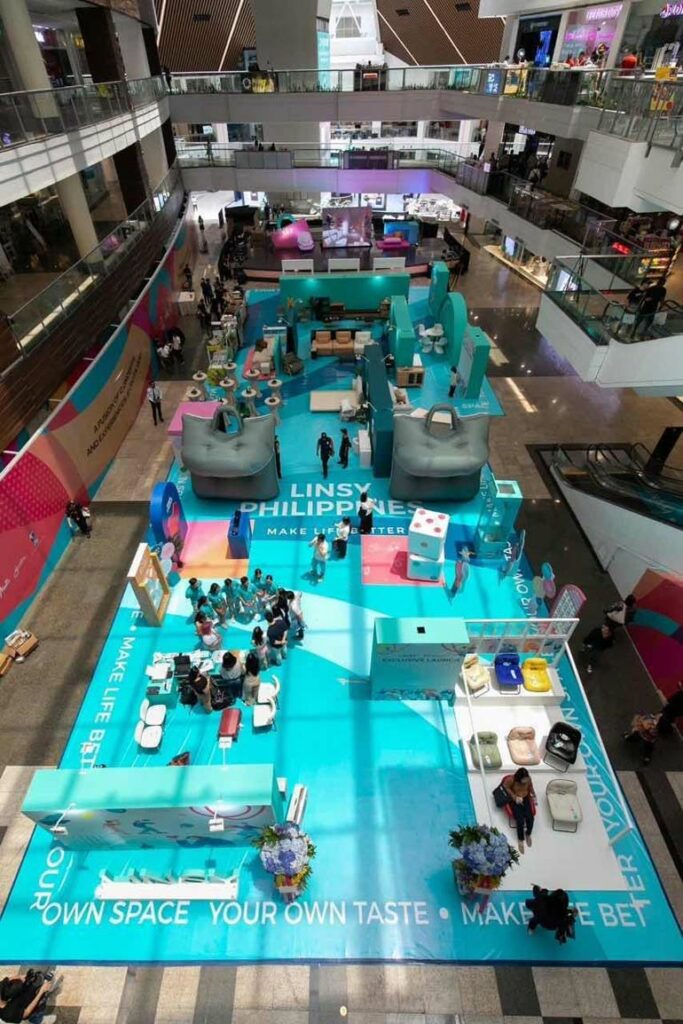
LINSY displays at Glorietta 2 launch event

LINSY is exclusively available in the Philippines through LazMall, Lazada’s destination for top-rated international and local brands, and authorized distributors. Buyers can shop with confidence and enjoy 100% authentic products, guaranteed on-time delivery, and a hassle-free 30-day return policy.

With the Lazada 9.9 Mega Brands Sale happening from Sept. 8 (8 p.m.) to 13, now’s the perfect time to add your favorite items to your cart. Enjoy exclusive discounts, up to Php 1,500 off Lazada vouchers, and free shipping with Php 0 minimum spend!

For more information on Lazada’s 9.9 Mega Brands Sale, check out Lazada Philippines on Facebook, Instagram, and X.


Spotlight is BusinessWorld’s sponsored section that allows advertisers to amplify their brand and connect with BusinessWorld’s audience by publishing their stories on the BusinessWorld Web site. For more information, send an email to online@bworldonline.com.

Join us on Viber at https://bit.ly/3hv6bLA to get more updates and subscribe to BusinessWorld’s titles and get exclusive content through www.bworld-x.com.

What can Filipino financial institutions learn from the successes of digital challenger banks?

VECTORJUICE-FREEPIK

By Lance Katigbak and Julian Cua

DO YOU KNOW what it means to “Venmo” someone? If you live outside the US, chances are you haven’t heard of the peer-to-peer fintech app whose name is now synonymous with money transfers.

Indeed, digital challenger banks such as Venmo have significantly reshaped the global financial landscape in recent years, including here in the Philippines.

Challenger banks are now in full swing across the country, with six local digital banks leveraging the digital-only, customer-centric, cloud-native and always-on availability characterized by these emerging challengers.

Many readers will be familiar with prominent examples and their expansion. GCash, though not a bank, has already become a household name. GoTyme, a local challenger bank with over 3.7 million customers, recently acquired leading fintech SAVii to build out its lending business. UnionDigital Bank, the digital banking arm of UnionBank, crossed P5 billion in revenue in 2023. Pioneering digital bank Tonik Bank recently extended its fintech offering into Cebu, as well as introduced new products and features such as SME lending and generative AI chatbots.

Two of the six local players are already profitable according to Bangko Sentral ng Pilipinas. These and other digital banks around the world offer important insight into the opportunities and challenges for traditional financial institutions eyeing their own role in this buoyant digital market.

LESSONS FROM NEOBANKS
Lesson 1: Target the underserved.

Neobanks often succeed by targeting segments largely neglected by incumbent financial institutions.

In mature banking markets, this often means addressing underserved populations such as small- and medium-sized enterprises (SMEs) or individuals with poor credit or low incomes. They also succeed in attracting digital-savvy populations with expectations of personalization and efficient service in a digital-first world.

Lesson 2: Leverage partnerships.

For example, US-based Chime leveraged a partnership approach with ride-hailing giants Uber and Lyft to address the unmet payment needs of gig workers. It drove growth through partnership by linking and managing third-party banks on Chime and offered rewards with major retailers to incentivize new users to spend via Chime.

Clair, a US neobank in which one of our authors previously worked, targeted hourly workers by offering free advances on their earned wages as soon as they clocked out of work. It was able to do this through developing unique partnerships with HR technology companies.

In emerging markets, digital challenger banks often target younger, tech-savvy urban populations that predominantly rely on cash, and may have low income or financial literacy. They also succeed in targeting modest-sized SMEs and low-income populations who have a desire for banking with affordable services.

Lesson 3: Differentiate with superior customer experience.

Successful challenger banks each take different strategies for acquisition — they know that it’s not about having to pay a lot of money for users, but about targeting them effectively.

Brazil’s NuBank targeted unbanked populations by offering no-fee credit cards in areas of high demand, as well as offering a no-fee digital account with free transfers. This was backed with exceptional customer service through 24/7 customer support.

Lesson 4: Focus on a few key products then build a suite.

Digital challenger banks take different paths to build a complete suite of products, although they typically start with transactional or credit businesses. The UK’s Revolut and Monzo, Germany’s N26, and South Korea’s KakaoBank all launched with payments solutions, with KakaoBank also including current account, savings account and lending facilities. China’s WeBank and MYBank both focused on current account, savings account and lending products.

Startups typically launch with transactional business models, then add new products through partnership or business building, while corporate-backed firms often launch with accounts and lending businesses.

Lesson 5: Be agile.

Challenger banks know that they don’t need to have every product ready for every customer all at once — it’s about iteratively building products to acquire different types of customers over time.

CREATING THE RIGHT FOUNDATION FOR SUCCESS
For traditional financial institutions looking to compete with neobanks, the journey will involve both a technical and cultural transformation.

It’s vital to create the right technical backend to support an effective frontend experience. Successful digital challenger banks can deliver these unique, appealing customer experiences and product offerings because of a flexible, fit-for-purpose backend.

Comprehensive front-to-back (F2B) transformation will be essential, integrating transformation seamlessly across all elements of a bank. This includes redesigning areas such as customer experience, colleague experience, internal processes, risk and compliance controls, and the tech and data stack.

An F2B approach works because it addresses customers, colleagues, costs and controls as part of a holistic transformation. For example, UK-based HSBC unlocked $1 billion in productivity savings, a 35-point increase in net promoter score, 2x to 3x faster time to delivery and up to 4,000 full-time-equivalent hours of cost savings through F2B transformation.

F2B transformation does not require all changes to be delivered at once but promotes a holistic strategy rather than a siloed and disjointed transformation journey. At Boston Consulting Group (BCG), we work with financial institutions to inform strategic F2B transformation through a five-step process to not only identify pain points, but also to define the “North Star” of project ambition while putting the building blocks and implementation plan in place for transformation.

It’s never too late for incumbent institutions to begin. Legacy banks already benefit from scale and reach of their existing operations, and they can leverage this for their advantage.

WHAT’S NEXT FOR INCUMBENT FINANCIAL INSTITUTIONS?

Filipino financial institutions can learn important lessons from digital challenger banks, like developing new channels, committing to improved digital customer experiences, creating a fit-for-purpose and flexible technology platform, developing an agile working environment and building new brand connections with an expanding customer base.

Digital challenger banks have captured value by not only meeting evolving customer expectations, but also addressing the unmet need in a significant share of the customer base. Traditional financial institutions can learn from this approach to inform their own strategies.

Filipino financial institutions should act now to embrace digital transformation, building on lessons from successful global examples to achieve success.

Lance Katigbak is a principal at BCG Manila and was the former chief revenue officer of Clair, a US-based neobank.


Julian Cua is a managing director and partner at BCG Manila and works with technology companies across Southeast Asia.

Transforming Spaces, Enriching Lives: How Ayala Land Continues to Pioneer Sustainable Urban Innovation

Ayala Land’s transformative development, One Ayala, represents a major step forward in the advancement of urban living and business spaces in the Philippines.

Ayala Land has long been a pioneer in creating sustainable, thriving communities in the Philippines. Not many remember that before the Makati central business district (CBD) became the country’s most vibrant financial hub, it had been empty grassland alongside the Nielson Field air base. Similarly, the potential of Nuvali in Laguna had been largely dormant before it became a bustling business center in the south.

Ayala Avenue in the 1960s

Historically, Ayala Land’s projects have consistently elevated the areas they touch, sowing seeds so they can grow as beacons of progress and sustainable development. The company’s vision has not only reshaped physical landscapes but also driven economic growth, turning these spaces into centers of opportunity.

One Ayala: A model of urban innovation

One does not need to look further than One Ayala for proof. As one of Ayala Land’s latest and most groundbreaking projects, One Ayala stands as a first-of-its-kind intermodal hub in the heart of Makati City.

Located at the intersection of EDSA and Ayala Avenue, One Ayala has redefined urban convenience and accessibility by integrating intermodal terminal, commercial, office, retail, and hospitality spaces.  Before its transformation, the area was a congested tangle of buses and pedestrians, a state which was further exacerbated by the lack of organization regarding how commuters make use of the terminal facilities.

One Ayala Terminal provides accessible transport routes to commuters in Makati CBD to other locations in Metro Manila and provinces.

Today, One Ayala has alleviated these challenges, offering seamless connectivity through direct links to the MRT Ayala Station, EDSA, and future Makati subway system. The terminal facilities include dedicated bays for buses, jeepneys, and UV Express vehicles, significantly reducing street congestion and providing safer, more organized boarding and alighting areas for daily commuters.

For anyone commuting in Metro Manila, the impact of One Ayala on their daily lives is immediately noticeable, as the development has not only improved the area’s functionality but has also set a new benchmark for urban development in the city. It offers air-conditioned waiting areas, ample seating, and easy access to food and retail options, providing a comfortable environment for people waiting for their rides. The development also includes assistance booths and wayfinding systems to help commuters navigate their journey efficiently.

Moreover, the inclusion of green spaces, modern amenities, and sustainable design features makes One Ayala is a noteworthy example of urban planning focused on accessibility and environmental responsibility.

As the largest real estate developer in the Philippines, Ayala Land is known for creating diverse communities that grow into economic centers. With a commitment to sustainable development, the company continues to transform landscapes and enhance the lives of communities across the country. The One Ayala initiative reflects this vision, highlighting the company’s ability to innovate and adapt to urban challenges.

Pioneering sustainable development

At the heart of Ayala Land’s approach to real estate is a deep-rooted dedication to sustainable practices. The company has established a blueprint for sustainable development that guides the design and construction of every project, ensuring that its communities are not only aesthetically pleasing but also environmentally responsible.

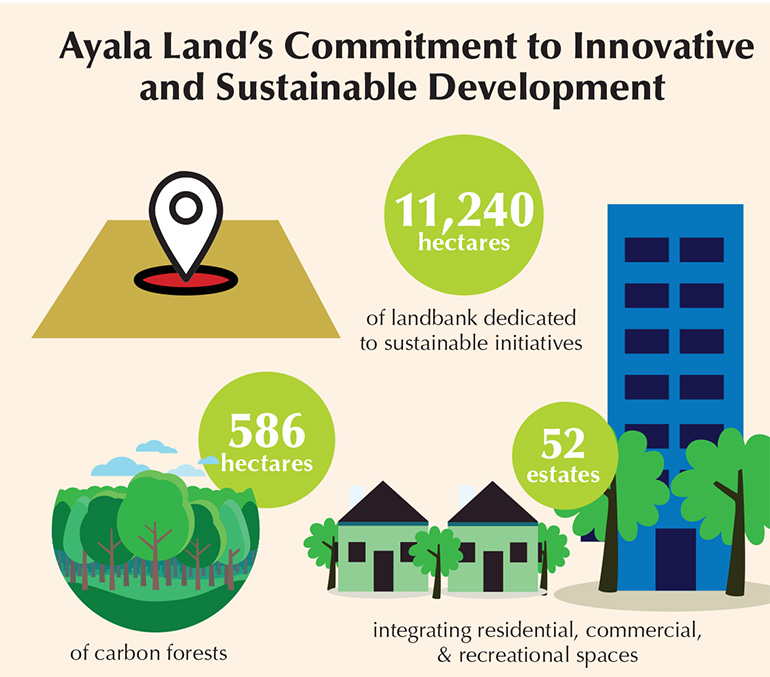
The company’s land bank encompasses over 11,240 hectares, with 586 hectares dedicated to Ayala Land’s nurtured carbon forests.

Ayala Land’s commitment to “Enhancing Land and Enriching Lives” is also reflected in its residential offerings. Through its brands—AyalaLand Premier, Alveo, Avida, Amaia, and BellaVita—the company provides diverse living options that promote connectivity, eco-efficiency, and local economic progress.

The transformation continues through the redevelopment of Ayala Malls’ flagship locations: Glorietta, Greenbelt, TriNoma, and Ayala Center Cebu. This ambitious project aims to redefine what malls can be in the modern era—more than just places to shop, but dynamic third spaces where communities can connect and create memories. The redevelopment focuses on enhancing customer experiences with updated aesthetics, sustainable designs, and a mix of local and global brands that cater to the unique character of each community.

From indulgent shopping excursions and culinary explorations to a variety of engaging activities, Ayala Malls Glorietta offers an unparalleled experience.

Ayala Malls’ revitalization includes lush greeneries, open al fresco spaces, reinvented Activity Centers, and cutting-edge cinema experiences, reinforcing its role as a destination for leisure and interaction. The malls will continue to feature outdoor parks and activity areas, enhancing the customer experience with a touch of nature and relaxation amid urban environments. This focus on creating open, breathable spaces is part of Ayala Malls’ vision to provide memorable environments that resonate with customers of all ages.

Ayala Land’s commitment to sustainable, integrated developments drives its ongoing vision of enriching Filipino lives. From intermodal hubs like One Ayala to the refreshed retail experiences at Ayala Malls, the company focuses on transforming urban spaces into sustainable ecosystems. These projects foster economic opportunities and community connections, contributing to a more connected future.

Makati CBD, an estate developed by Ayala Land, is undergoing a transformation and revolutionizing the urban lifestyle.

The revitalization of Ayala Malls is designed not just to keep up with current trends but to set a new standard for mall experiences in the Philippines. As Ayala Land continues to shape the urban landscape, its efforts remain focused on prioritizing people, environment, and innovation, paving the way for the next generation of transformative spaces in the Philippines.


Spotlight is BusinessWorld’s sponsored section that allows advertisers to amplify their brand and connect with BusinessWorld’s audience by publishing their stories on the BusinessWorld Web site. For more information, send an email to online@bworldonline.com.

Join us on Viber at https://bit.ly/3hv6bLA to get more updates and subscribe to BusinessWorld’s titles and get exclusive content through www.bworld-x.com.

In search of the ‘Best Places to Work’ in the Philippines

BusinessWorld partners with WorkL for list of happiest workplaces across the country

By Bjorn Biel M. Beltran, Special Features and Content Assistant Editor

What is the perfect workplace?

Any number of people will likely come up with any number of possible scenarios. Someone who enjoys collaborating with others and hearing new perspectives might want a sort of a global office, working seamlessly with international teams. Meanwhile, someone who prefers to work at their own pace might want a remote or hybrid work model. Others have grown used to traditional corporate settings and find comfort in structured, well-defined work days.

Different as the ideals may be for each person, there is still a baseline by which the happiness of a worker is measured. A workplace where employees are not just content, but genuinely happy — a place where people show up not just because they have to, but because they want to.

That’s the vision behind the Best Places to Work 2025 awards, the latest partnership between BusinessWorld and WorkL — a collaboration that promises to set a new standard for workplace happiness in the country.

“BusinessWorld, Best Places to Work 2025 awards are open for organizations across the Philippines to enter with the chance of being included within the prestigious list which will help businesses attract and retain talent,” Suzanna Duke, Partnerships director of WorkL, said.

WorkL, an international organization with a mission to elevate workplace happiness globally, has teamed up with BusinessWorld to launch the Best Places to Work 2025 awards with the aim of creating a more engaged, fulfilled, and vibrant workforce in the Philippines.

WorkL already holds data on the state of work-life in the Philippines, which shows that the current employee engagement score, as of July 2024 was 80%, well above the global average of 70%. Flight Risk for employees (or how likely an employee is to leave the organization within the next nine months) in the country is also extremely low, at just 10% compared to a global average of 25%.

Companies participating in the awards will receive deep insights into their workplace dynamics, from engagement scores to diversity indicators. It’s a holistic approach to workplace happiness that goes beyond surface-level perks.

“The Best Places to Work awards will highlight the growing importance of employee happiness and illustrate how a happy workforce makes a business commercially more successful,” she added.

“Improving workplace standards in the Philippines should be a focus for all businesses, therefore with such a prominent business title putting employee happiness in focus, there will be a shift in expectations and ultimately standards, for businesses to adhere to.”

The Best Places to Work 2025 list will be based on results from a survey to entrant organizations, which features 31 questions centered around WorkL’s widely approved employee engagement theory, the Six Steps to Workplace Happiness. Developed by behavioral scientists, data analysts, psychologists, business leaders, academics and other independent parties, the survey monitors employee engagement and well-being in the workplace.

Partnering for better workplaces

WorkL’s journey began in 2017 when Lord Price, a former Minister of State for Trade and Investment in the United Kingdom (UK), launched the platform alongside WorkL for Business. His mission was simple yet profound: to make the world of work a better place.

Over the years, WorkL has powered the highly regarded Sunday Times Best Places to Work Awards in the UK and has established partnerships with major media outlets worldwide. When Lord Price visited the Philippines, he was struck by the country’s untapped potential and a growing appetite for better employee engagement. Then, finding a natural synergy with the company, he reached out to BusinessWorld, recognizing it as the perfect partner to champion this cause in the Philippines.

Jay R. Sarmiento, vice-president for Sales & Marketing of PhilSTAR Media Group, of which BusinessWorld is a part of, said that WorkL reached out to the company due to the paper’s credibility as a business news platform and paper.

As a leading voice in business journalism, the publication is uniquely positioned to amplify the importance of workplace happiness, pushing it to the forefront of corporate agendas across the country. This is more than just a partnership; it is a call to action for businesses to rethink their priorities and put their people first.

“[The Best Places to Work awards] will provide them with data and insights on how they can retain their talent and even give them leverage in terms of attracting talent to their company,” she added.

The awards will help businesses measure their current standing and identify areas for improvement, using WorkL’s data-driven approach that covers everything from flight risk to confidence in management. For those opting for the enhanced package, the insights run even deeper, offering tailored action plans and demographic analyses to fine-tune their strategies.

BusinessWorld is also offering a free digital subscription to its publication via its e-commerce site BWorldX for all organizations who enter this initiative.

“The primary goal for the partnership is to ultimately make organizations and their employees in the Philippines happier and the businesses, commercially successful. The happiness of employees is important for both organizations and economies because there is an undeniable link between workplace happiness and financial success,” Ms. Duke said.

“Management often focuses on productivity metrics and performance outcomes, but both of these depend on the extra discretionary effort you can get from your employees and how this compares to your competitors. A happy employee gives more by going the extra mile.”

Why happiness matters

But what does happiness at work really mean? According to WorkL, true workplace happiness is rooted in a deeper sense of fulfillment, where employees feel valued, supported, and connected to their work and their colleagues. It is about creating spaces where people can grow, learn, and find purpose.

“Happiness at work extends beyond mere job satisfaction. It encompasses a sense of fulfilment, purpose, and positive engagement with tasks and colleagues. Factors contributing to workplace happiness include meaningful work, supportive management, a good working relationship with your manager, opportunities for growth and development, and a positive work culture,” Ms. Duke said.

“When employees find joy and purpose in their work, they are more likely to be engaged and motivated, as well as to take fewer sick days, all leading to enhanced performance.”

The hope is that as more companies strive to make it onto the Best Places to Work list, there will be a ripple effect that extends far beyond individual businesses. The awards have the potential to reshape the broader landscape of work in the Philippines, setting new benchmarks for what it means to be a great place to work.

Companies that prioritize employee happiness will not only attract top talent but also inspire loyalty and long-term commitment from their workforce.

“Having an organization such as BusinessWorld promote happiness at work, as well as support businesses in their endeavors to become happier places to work, will significantly impact the Philippine job market positively,” Ms. Duke added.

“As a leader within business, BusinessWorld is tackling a very real problem whereby organizations are failing because of an unhappy workforce. Prioritizing employee happiness will ultimately benefit businesses and the wider economy in the Philippines.”

The deadline for entry in BusinessWorld’s Best Places to Work is on Aug. 1, 2025, and results will be announced the following September.