Home Blog Page 2223

Review of MRT-3 proposed fare hike expected to be completed within year

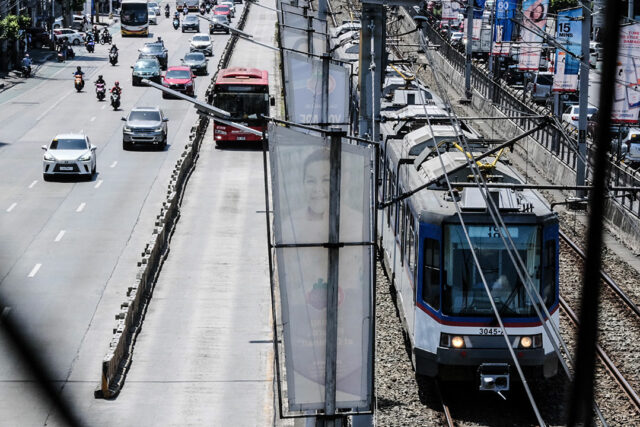
A Metro Rail Transit Line 3 (MRT-3) train is seen along EDSA, Quezon City, March 24, 2024. — PHILIPPINE STAR/RYAN BALDEMOR

THE Transportation department hopes to finish its evaluation of the proposed fare hike for the Metro Rail Transit Line 3 (MRT-3) within the year.

“It is still being reviewed by our regulatory unit. We are not in a rush; I think we can come up with a decision within the year,” Transportation Secretary Jaime J. Bautista said on the sidelines of a House committee hearing. 

In June, the Department of Transportation (DoTr) said the proposed hike for the MRT-3 has been filed and its Rail Regulatory Unit is reviewing the timing and rates of the proposed increase.

According to Assistant Secretary for railways Jorjette B. Aquino, the government has an outstanding payment of  P3.4 billion to the operator of MRT-3 under its build-lease-transfer  concession deal. 

Last month, the DoTr said it is expecting fares generated by MRT-3 may be weaker than expected, leading to a possible failure to meet its financial obligations to the operator of the commuter line, Metro Rail Transit Corp.

The DoTr has said the fare hike increase proposal is for a P2.29 in boarding fare, or a 21-centavo increase per kilometer. In 2023, the DoTr said the MRT-3’s fare hike petition was refiled after a technical defect in its previous filing.

The DoTr rejected a previous proposal, noting that the MRT-3 management had failed to issue a notice of public hearing. — Ashley Erika O. Jose

Macquarie sees PHL regulatory, infra issues deterring investment

REUTERS

CONCERNS about Philippine regulation and infrastructure need to be resolved to unlock Australian investment in Philippine mining and renewable energy ventures, according to Macquarie Group.

Speaking on the sidelines of the Australian Business Mission to the Philippines last week, Macquarie Managing Director and Chief Executive Officer Shemara Wikramanayake cited the two items as the top requirements for Australian businesses.

She said that the Philippines is rich in copper, gold, and cobalt, but little foreign investment has come in to develop these resources.

“We’ve got mining companies here that are talking with Philippine partners on how they can together develop these reserves, and there’s massive capital investment that they need in developing these, so they need a certainty of framework to invest in,” she said.

In renewable energy, she said investors want to be reassured on off-takers for the power produced and the strength of the project pipeline.

“Permitting needs to be sorted out, so you can’t have it within the time frame. Transmission infrastructure is needed as you produce more remote energy,” she said.

“These things are all complex … We’re being very disciplined and patient and thinking through what are the outcomes actually that are going to be good for the Philippines, what do we need to do to deliver that, which steps and how do we work with all the partners,” she added.

Ms. Wikramanayake led a 14-member delegation of Australian businesses to the Philippines.

Last week’s visit featured meetings with senior government officials, Philippine conglomerates, and Australian companies long established in the Philippines.

The delegation included representatives from Australian Super, Future Fund, IFM Investors, Investible, Plenary Group, EMR Capital, ANZ, Telstra, Bega Foods, Costa Group, GrainCorp, Sunrice, and Pristine Pacific, who inquire about possible agrifood, infrastructure, transportation, and energy projects.

Australian Ambassador to the Philippines Hae Kyong Yu said that the Australian government aims to launch a 45 million Australian dollar economic growth development plan for the Philippines by early 2025.

“We made a conscious decision to use part of our development money to focus on economic growth. And that is the program over five years that we are finalizing at the moment,” she added.

She said that the program is being co-designed with the Philippine government to work out the country’s priorities.

“A big chunk of this is really about helping the Philippines achieve good economic reforms. So it’s really tooling them with the appropriate skills, expertise, and knowledge, and even ideas based on Australia’s experience,” she added.

As of 2023, 250 Australian companies are operating in the Philippines, with staff of 44,000.

Trade between the two countries at the end of 2023 totaled P378 billion, with two-way investment amounting to P321 billion. — Justine Irish D. Tabile

Six ecozones await proclamation

THE Philippine Economic Zone Authority (PEZA) said that it is waiting on the proclamations for six more economic zones (ecozones) on top of the 11 proclamations issued this year.

“The initial project cost of the six ecozones pending for proclamation is more than P5 billion,” PEZA said in a statement over the weekend.

The six ecozones comprise one IT (information technology) park, three manufacturing zones, and two expansions of current manufacturing zones.

This year, the Office of the President has so far proclaimed 11 ecozones — new-build and expansions — worth over P2 billion.

“Two of these (pending) ecozones will be located in Cavite, while four will be developed in Pampanga, Tarlac, Ilocos Sur, and Cebu,” the investment promotion agency said.

This brought the total ecozones proclaimed under President Ferdinand R. Marcos Jr. to 22, which took in a combined investment of over P5 billion.

As of June, PEZA managed 427 operating ecozones, or ecozones with at least one existing and operating PEZA-registered business enterprise. The zones host 4,382 locators.

PEZA Director General Tereso O. Panga has set a target of 30 ecozone proclamations a year. — Justine Irish D. Tabile

GOCC subsidies fall in July

GOVERNMENT-owned and -controlled corporations (GOCCs) received 67.75% less budgetary support in July compared to a year earlier, according to the Bureau of the Treasury (BTr).

The BTr said subsidies provided to GOCCs plunged to P10.72 billion in July from P33.24 billion a year earlier.

Month on month, GOCC subsidies rose 5.51% from P10.16 billion in June.

The National Government provides budgetary support to GOCCs every month to cover their daily operations when revenues are insufficient.

The National Irrigation Authority (NIA) received the highest allocation for the month at P6.76 billion, accounting for 63.04% of all subsidies, the BTr said.

This was followed by the Bases Conversion and Development Authority  with P2.23 billion and the Philippine Fisheries Development Authority  with P357 million. 

GOCCs that received at least P100 million in subsidies include the Subic Bay Metropolitan Authority (P282 million), the Philippine Heart Center (P168 million), the Philippine Children’s Medical Center (P151 million), the National Kidney and Transplant Institute (P133 million), and the Philippine Coconut Authority (P112 million).

At least P50 million in subsidies went to the Cultural Center of the Philippines (P80 million), the Light Rail Transit Authority (P72 million), the Lung Center of the Philippines (P70 million), the Development Academy of the Philippines (P64 million), and the Philippine Rice Research Institute (P60 million).

Receiving no subsidies were the Philippine Health Insurance Corp. (PhilHealth), the Bangko Sentral ng Pilipinas, the National Home Mortgage Finance Corp., the Philippine Crop Insurance Corp., the Philippine Deposit Insurance Corp., the Social Housing Finance Corp., the Small Business Corp., the Local Water Utilities Administration, and the National Power Corp.

Also receiving no subsidies were the National Electrification Administration, the National Food Authority, the National Housing Authority (NHA), the Authority of the Freeport Area of Bataan, the Philippine Postal Corp., the Power Sector Assets and Liabilities Management Corp. (PSALM), the Sugar Regulatory Authority, and the Tourism Infrastructure and Enterprise Zone Authority.

In the first seven months of the year, GOCC subsidies dropped 19.61% to P77.93 billion. 

The NIA remained the top recipient for the period (P43.29 billion), followed by PSALM (P8 billion) and NHA (P3.75 billion).

Subsidies to government corporations decreased as the government spent more on infrastructure and calamity response, Philippine Institute for Development Studies Senior Research Fellow John Paolo R. Rivera said.

“The decline in subsidies may be due to a decline in availability of government funds due to declining revenue or cash flows given its high utilization in previous months to fund infrastructure spending, social protection programs, calamity response, and debt servicing,” he said via Viber.

In July, government spending rose 5.8% to P486.22 billion. This was attributed to higher interest payments and the increased National Tax Allotment share of local government units.

“It is also possible that GOCCs’ earning capacity increased… warranting reduced subsidies,” Mr. Rivera added.

In the coming months, the government must increase subsidies for PhilHealth due to the increase in monkeypox (mpox) cases, Mr. Rivera said.

As of Sept. 1, the Health department reported eight active cases of mpox in the Philippines. — Beatriz Marie D. Cruz

LGUs to get P21B from tobacco taxes

PHILSTAR FILE PHOTO

LOCAL government units (LGUs) will receive P21 billion from the excise taxes collected from domestically manufactured tobacco and cigarettes, the Department of Budget and Management (DBM) said.

In a memorandum, the DBM said P17 billion in excise taxes on Virginia tobacco cigarettes will go to provinces, pro-rated based on the volume of production.

Some P4 billion worth of Burley and native tobacco excise taxes will go to the provinces in accordance with the volume of their leaf production.

The sharing scheme for Burley and native tobacco is 50% to the provinces and the remaining 50% shared out by volume of production among municipalities and cities.

The volume of production and trade acceptances of the beneficiary LGUs were identified based on certifications issued by the National Tobacco Administration, as endorsed by the Department of Agriculture.

Programs and projects funded by the tobacco tax allocations must be in line with the Agricultural and Fisheries Modernization Program and the Roadmap for the Philippine Tobacco Industry, the DBM said.

“Moreover, beneficiary LGUs are highly encouraged to allocate at least 25% of their total share for cooperative programs, livelihood projects, and financial support for registered tobacco farmers,” it added. — Beatriz Marie D. Cruz

PPA awards Dumaguete port expansion deal; declares failure of bid for El Nido projects

DUMAGUETE.COM

THE Philippine Ports Authority (PPA) said it awarded the contract to expand the Port of Dumaguete to BNR Construction and Development Corp.

The PPA said a total of 12 companies participated in the auction for the P533.31-million port expansion project won by the Cebu construction company, which was the low bidder.

The PPA issued the bid invitation for the Port of Dumaguete project in July. The contractor of the project must finish the project within 720 days from the receipt of the notice to proceed.

Meanwhile, the PPA is set to conduct another auction round for the P626,859 Ports of Buenasuerte and San Fernando, El Nido, Palawan project after its bids and awards committee declared a failure of bidding.

In a resolution issued by the PPA’s bids and awards committee, it said no bids were received during the bid opening.

“The BAC, after a motion duly made and properly seconded, declared the bidding for the project MPF-PLW-05-2025 Maintenance of Various Port Physical Facilities, Ports of El Nido (Buenasuerte) and San Fernando, El Nido, Palawan, a failure,” the PPA said.  — Ashley Erika O. Jose

Taiwan pork producers studying PHL expansion

REUTERS

PORK PRODUCERS from Taiwan are looking to expand their footprint in the Philippines, the Taipei-based Commerce Development Research Institute (CDRI) said.

“We will work with local distributors, and based on the demand we could expand their markets further,” CDRI Team Leader Hsieh Chung An, who helped organize a Taiwan pork expo last week, told BusinessWorld. “We are also looking at restaurants and hotels.”

He added that the Taiwan-based food companies are seeking to establish themselves with Philippine businesses and consumers.

Mr. Hsieh said that the CDRI had also promoted Taiwan pork products with Philippine supermarkets.

He said that the expo could also head to various cities in the Philippines, depending on demand.

Hog raisers have reported that consumers are reluctant to buy pork amid a surge in African Swine Fever (ASF) cases.

“Taiwan pork is considered among the best in the world in terms of sanitary conditions, so we want to promote our products to the Philippine market,” Mr. Hsieh said.

He added that the industry is “strictly regulated. We do not use ordinary water but purified water… we also have strict requirements for the personnel working in the slaughterhouses,” Mr. Hsieh said, adding that Taiwan has experienced no ASF outbreaks.

The recent surge in Philippine cases was due to the recent rains, which may have helped spread contaminated water in the farms, as well as the transportation of infected pigs outside the known disease zones, the Department of Agriculture has said.

As of Aug. 21, there are 115 municipalities with active ASF cases across 32 provinces, according to the Bureau of Animal Industry. — Adrian H. Halili

What matters to APAC boards in 2024

IN BRIEF:

• 60% of Asia-Pacific board directors identify economic conditions as their top concern for 2024

• Despite the increasing severity of climate-related risks, only 21% of Asia-Pacific board directors consider climate change a priority

• Demand for data analysts in the Philippines outpaces graduate supply, creating a skills gap due to misalignment between education and industry needs

The Asia-Pacific region is proving its mettle amidst increasing economic and geopolitical complexities. However, for boardrooms across the region, maintaining a competitive edge will require more than just resilience. The situation calls for an agile, globally interconnected approach that can quickly adapt to the shifting landscape.

While much of the world braces against economic headwinds, the Asia-Pacific region is positioned to lead the charge and expected to account for nearly 60% of global GDP growth in 2024, surpassing pre-pandemic benchmarks. Underpinned by robust performance across national economies, this optimistic outlook has nearly three-quarters of Asia-Pacific CEOs forecasting higher revenue growth and profitability for the year ahead.

However, this promising forecast comes with its own set of challenges. Boardrooms are under pressure to navigate a mix of pressures — with inflation, rising labor costs, and geopolitical tensions topping the list of concerns. 

The latest 2024 EY Asia-Pacific Board Priorities survey shows that economic conditions are the primary agenda of 60% of board directors this year. Beyond these economic pressures, capital allocation and talent shortages are also emerging as key pain points that boards need to tackle head-on. Given these dynamics, boards must keep their finger on the pulse of economic indicators to be able to pivot strategies effectively — and quickly — across multiple fields of play when required. 

This article will discuss the critical challenges Asia-Pacific boards face in 2024 and strategies to turn them into competitive advantages in the evolving global marketplace.

CAPITAL ALLOCATION PRESSURE
As inflation, rising operating costs, and diminishing pricing power bite the bottom line, Asia-Pacific boards are moving their focus from growth-at-all-costs strategies to a more nuanced focus on financial discipline. The survey reveals that two-thirds of directors are increasingly concerned about capital availability, with 56% grappling with the complexities of mergers and acquisitions, restructuring initiatives, and divestiture decisions.

Despite the unique challenges of the current economic landscape, boards can still rely on fundamental oversight practices in capital strategy. These practices include regular reviews of capital budgeting and strategic plans to ensure agility and alignment with corporate objectives, maintaining a competitive edge in the global marketplace. 

Boards should also prioritize the right metrics, balancing short-term key performance indicators with long-term value creation goals and using a balanced scorecard that integrates financial, non-financial, and qualitative indicators.

THE RISE OF GEN Z WORKFORCE
Talent management is one of the most crucial priorities for Asia-Pacific boards as they prepare for an AI-driven future. By 2025, Generation Z — those born between the mid-1990s and 2010 — is expected to make up 27% of the region’s workforce. This generation is characterized by being digital savvy, having a purpose-driven mindset, and a preference for flexibility.

Given these traits, boards are challenged to reimagine their approach to talent development. Those that successfully integrate the unique perspectives and skills of this generation can gain fresh insights, enhancing their capacity to innovate and stay competitive. However, achieving this requires more than merely recognizing the value of younger talent. Boards must foster an organizational culture that prioritizes innovation and embraces diversity, equity, and inclusion.

AI-FUELED PEOPLE-CENTRIC FUTURE
Asia-Pacific boards are rapidly embracing Generative AI, with 40% of directors prioritizing digital transformation and business model changes in 2024. As AI-generated data becomes more prevalent, boards must ensure executives exercise proper oversight, making data governance a key priority. Companies must establish guardrails and ensure compliance with evolving regulations.

Meanwhile, the growing reliance on data-driven decision-making and AI is sharply increasing demand for specialized skills in data science and AI. A report by the Philippine Institute for Development Studies (PIDS) highlights a rising demand for data analysts, but higher education institutions are currently falling short in producing enough graduates to meet this need. The report highlights that data science and analytics skills remain underdeveloped within the Philippine workforce due to a disconnect between educational institutions and industry requirements. 

Although several undergraduate degrees, such as computer science, business administration, statistics, and others, serve as pathways for data science and analytics (DSA) careers, they currently lack specific training tailored to industry demands. This highlights the need for boards to recognize the strategic value of these skills and take proactive steps to develop the talent essential for long-term growth and innovation.

THRIVING IN ASIA’S GREEN ECONOMY
As Asia continues to position itself as a key player in the global green economy, businesses across the region have a unique opportunity to capitalize on this shift. The Philippines, for instance, has made significant strides in climate action, ranking sixth out of 67 countries in the 2024 Climate Change Performance Index (CCPI) and fifth out of 10 countries in the Southeast Asia Green Economy Index.

These feats underscore the country’s progress in reducing greenhouse gas emissions and developing renewable energy. However, both highlight the country’s ongoing challenges in climate policy and ambition, revealing a significant gap in government and corporate decarbonization strategies.

For businesses to thrive in Asia’s burgeoning green economy, boards must adopt a long-term, strategic approach. While current returns on clean energy investments may lag behind traditional sectors, the potential for future growth is immense. As highlighted in the 2023 EY Global Board Risk Survey, the most resilient boards are those willing to sacrifice short-term financial gains for the long-term benefits of environmental, social, and governance (ESG) commitments.

To truly capitalize on Asia’s green economy, businesses must align their capital allocation with ESG objectives, ensuring that their strategies are not just reactive but proactive in driving sustainability. This requires a commitment to meticulous planning, sustainable investments, and the integration of ESG into the core business model.

THE CLIMATE URGENCY
Despite the urgency of the climate crisis, it remains a secondary concern for many Asia-Pacific boards, with only 21% of respondents identifying it as a critical issue. Nearly half of these directors cite insufficient information as a barrier.

The recent EY Sustainable Value Study reveals that some organizations are scaling back their commitments to net zero and modestly reducing investments in sustainability. Larger organizations, particularly those with revenues exceeding $5 billion, are more likely to prioritize climate action (47%) compared to their smaller counterparts (13%). However, this shortsightedness threatens the long-term sustainability and resilience of these businesses.

To thrive in a decarbonizing economy, boards must recognize climate action as essential to long-term value creation rather than a mere compliance issue. By embedding ESG considerations into their strategies, boards can move sustainability from aspiration to committed action.

WHAT IT MEANS TO BE FUTURE-FIT
Asia-Pacific boards must embrace a transformative mindset and develop tailored governance models to navigate 2024 and beyond. While the need for change is evident, the path forward will vary by organization, depending on their current state, maturity, and strategic vision.

Prioritizing key issues, reassessing long-term purpose, and defining what it means to be future-fit will be essential for boards.

This article is for general information only and is not a substitute for professional advice where the facts and circumstances warrant. The views and opinions expressed above are those of the author and do not necessarily represent the views of SGV & Co.


Marie Stephanie C. Tan-Hamed is a Strategy and Transactions (SaT) partner and the PH Government and Public Sector leader of SGV & Co.


Yagi weakens after killing dozens in Vietnam, China and Philippines

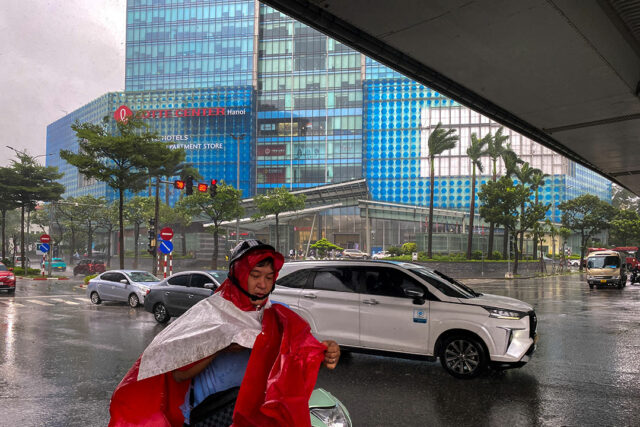
A MAN puts on waterproof clothing amid the impact of Typhoon Yagi in Hanoi, Vietnam, Sept. 7, 2024. — REUTERS/THINH NGUYEN

HANOI — Typhoon Yagi, Asia’s most powerful storm this year, was downgraded to a tropical depression on Sunday, after wreaking havoc in northern Vietnam, China’s Hainan and the Philippines, claiming dozens of lives, according to preliminary reports.

Vietnam’s meteorological agency issued the downgrade on Sunday but cautioned about the ongoing risk of flooding and landslides as the storm, the strongest to hit the country in decades, moves westwards.

On Saturday, Yagi disrupted power supplies and telecommunications in Vietnam’s capital, Hanoi, causing extensive flooding, felling thousands of trees and damaging homes.

The government said the storm has led to at least three deaths in Hanoi, a city of 8.5 million, with these figures being preliminary. Fourteen people have died in Vietnam so far, according to reports, including four from a landslide in the province of Hoa Binh, about 100 km (62 miles) south of Hanoi.

A 53-year-old motorcyclist was killed after a tree fell on him in the northern Hai Duong province, state media reported. At least one body was recovered from the sea near the coastal city of Halong, where a dozen people were missing at sea, with rescue operations expected to start on Sunday when conditions allow.

Yagi has claimed the lives of four people on the southern Chinese island of Hainan, according to the latest update from local authorities. The civil defence office in the Philippines, the first country Yagi hit after forming last week, raised the death toll there on Sunday to 20 from 16 and said 22 people remained missing.

RISK OF FLASH FLOODS
After it made landfall in Vietnam on Saturday afternoon, Yagi triggered waves as high as 4 meters (13 feet) in coastal provinces, leading to extended power and telecommunication outages that have complicated damage assessment, the government said.

The meteorological agency warned of continued “risk of flash floods near small rivers and streams, and landslides on steep slopes in many places in the northern mountainous areas” and the coastal province of Thanh Hoa.

Relative calm returned on Sunday morning to Hanoi, where authorities rushed to clean up streets from toppled trees scattered across the city centre and other neighborhoods.

“The storm has devastated the city. Trees fell down on top of people’s houses, cars and people on the street,” said 57-year-old Hanoi resident Hoang Ngoc Nhien.

Hanoi’s Noi Bai international airport, the busiest in northern Vietnam, reopened on Sunday after closing on Saturday morning.

In Hainan, preliminary estimates suggested significant economic losses and widespread power outages, according to emergency response authorities cited by state-run Hainan Daily. Reuters

Yellen says she’s ‘probably’ done when Biden ends his term

JANET YELLEN

US TREASURY SECRETARY Janet Yellen said on Saturday that she is “probably done” serving at the highest levels of government after President Joseph R. Biden’s term ends in January, but will likely meet again soon with her Chinese counterpart.

Asked at the Texas Tribune Festival in Austin, Texas whether she was “done” when a new administration takes over in January, or might continue in her job or take on a new administration role, Ms. Yellen said: “Probably done, but… we’ll see.”

The comments are the closest that Ms. Yellen, 78, has come to announcing her future plans as the presidential race between Vice-President Kamala Harris and former president Donald Trump heats up. Ms. Yellen has been the first woman to serve as Treasury Secretary, Federal Reserve chair and director of the White House National Economic Council.

Ms. Yellen told the event in Austin that she still has a lot of work to do at Treasury in coming months, including another likely meeting with Chinese Vice Premier He Lifeng, her Beijing counterpart, to try to manage an often tense relationship.

The two met in April in Beijing, where Ms. Yellen warned China to rein in excess industrial capacity ahead of Mr. Biden’s decision to impose steep tariff increases on Chinese-made electric vehicles, batteries, solar products and semiconductors.

Ms. Yellen said she would welcome a visit to the U.S. but also may return to China herself, adding: “My guess is that we will have, one way or another, a visit.”

The Treasury’s top economic diplomat, Undersecretary Jay Shambaugh, will lead a delegation to Beijing “very soon” to discuss economic issues. Shambaugh leads a US-China economic working group that has made addressing China’s excess factory production a top issue

Ms. Yellen said the US-China relationship “needs to be prioritized and nurtured” by the next US administration, with discussions at the highest levels and among agency staffs.

“We have enough differences and without a chance to discuss them and put them in context, it’s certainly possible for tensions to rise,” Ms. Yellen said. “So this is something that really requires ongoing attention. I hope that it would get it.”

‘SOLID ECONOMY’
Ms. Yellen also said the US economy has largely reached a “soft landing” with lower inflation after US August jobs data on Friday showed a slight decline in the unemployment rate despite slower hiring.

“When you see pace of job creation diminishing over time, what I love to see is that it stabilizes roughly where it is now, and we have to be careful to make sure that it’s not going to weaken further,” Ms. Yellen said. 

She said consumer spending remains “quite solid” and while there is “less frenzy” in hiring, there are not meaningful layoffs

“I’m attentive to downside risks now on the employment side, but I what I think we’re seeing, we will continue to see, is a good, solid economy,” Ms. Yellen said. — Reuters

Australia’s census to include sexual orientation, gender questions for 1st time

STOCK PHOTO | Image by Chandlervid85 from Freepik

SYDNEY — Australia will include questions on sexual orientation and gender in its census for the first time, after more than a week of controversy over the centre-left Labor government’s earlier decision to exclude them.

Treasurer Jim Chalmers said on Sunday the 2026 census would include sexual orientation and gender, although he declined to specify the questions and said the Australian Bureau of Statistics (ABS) would design them later.

“We have listened to the LGBTIQ+ community to make sure that we can work with the ABS to deliver this really important change when it comes to the 2026 census,” he said.

“We say to Australians from the LGBTIQ+ community: you matter, you’ve been heard, you will be counted.”

The questions will be optional and only asked of those over 16 years of age.

The move reverses an August decision to exclude questions about LGBTIQ+ identity.

Deputy Prime Minister Richard Marles said then the government did not want to open up divisive debates. He denied any political motives behind the decision amid media reports that the government was apprehensive about sparking a culture-war-style campaign ahead of an election likely to be called within nine months.

The United Kingdom added an optional question on sexual orientation in its 2021 census for the first time. — Reuters

Harris says Dick, Liz Cheney put country above party with endorsements

KAMALA HARRIS — GAGE SKIDMORE/WIKIMEDIA.ORG

PITTSBURGH — Democratic presidential candidate Kamala Harris said on Saturday endorsements of her by Republican former Vice-President Dick Cheney and his daughter Liz Cheney, a former US Representative, were “courageous” for putting country ahead of political party.

Ms. Harris was in Pittsburgh preparing for the Sept. 10 debate against her Republican rival Donald Trump, with whom she is locked in a tight race for the Nov. 5 vote.

“I’m honored to have their endorsement,” said Ms. Harris at Penzeys Spices in the Strip District, on a break from debate preparation where she greeted patrons and bought spices. She said both Cheneys were making a courageous statement that “it’s okay, if not important, to put the country above party.”

Dick Cheney, who served as vice-president under Republican George W. Bush from 2001 to 2009, said on Friday that “in our nation’s 248-year history, there has never been an individual who is a greater threat to our republic than Donald Trump.”

Ms. Cheney said on Wednesday she would vote for Harris, calling Trump a “danger.”

Mr. Trump called Dick Cheney an “irrelevant RINO along with his daughter” in a social media post on Friday, using a term he applies to Republicans not loyal to him, which stands for “Republicans in Name Only.” — Reuters