Home Blog Page 2083

First-time theater talents flex their muscles

Shorts and Briefs Theater Festival turns 10

By Brontë H. Lacsamana, Reporter

Theater Review
Shorts and Briefs Theater Festival

THE Shorts and Briefs Theater Festival (SNB) returns each year to present one-act plays by theater first-timers to a live audience. For its 10th year, the festival upped the ante by accepting musicals helmed by first-time playwrights, directors, actors, and newbie songwriters.

This year, the songwriters were asked to present compositions which the six new directors perused to find a match. Once a director chose a song, a partnership was then forged for the two to create a 15-minute musical, under the mentorship of composer TJ Ramos and playwright Juan Ekis.

On Oct. 26 and 27, festivalgoers filled the Cultural Center of the Philippines’ Tanghalang Ignacio Gimenez to see what musicals were created by the six director-songwriter duos.

“We’ve put up shows in many small spaces over the years, including on stairs, just to showcase Shorts and Briefs. Somehow we’ve made it to 10 years and we’re here now thanks to CCP!” said festival director Karl Alexis Jingco at the penultimate show on the last day.

“This is a festival that celebrates the beauty of being a first-timer. It’s scary, but that’s the beauty of it. We celebrate the fear, that leap,” he said.

The curtain opened that day on the endearing romance Sakto Lang, directed by Migui Moreno with music by Karlo Guevarra. It follows Daniel (Daniel Santos) and Vanessa (played by Vanessa Dulay), who unknowingly harbored romantic feelings for each other back in college and now have the chance to reconnect while waiting for a ride home from work.

Its strength is the clever use of the minimal set and props to convey the two leads’ emotions. With decent songs filled with drama powering the story forward, both actors utilized the space around them well as they performed a gentle tug of war of hidden feelings for each other.

The second play, Ang Kwento ng Bubuyog at Paru-paro, directed by Aaron Alsol with music by Aaron Vincent Jimenez, provided a dark tonal contrast. With a pastel-colored poster, a children’s book title, and its main actors coming in dressed in fluffy bee and butterfly costumes, the last thing the audience expected was a rap-style star-crossed gay lovers’ tragedy.

Minimal stage design gave actors Mateo Oladive as Bubuyog and Radleigh as Paru-paro, much work to do for the mix of whimsy and grit to be convincing, but they played their parts well. The music also lent more desperation, sadness, and power to their romance, its beats and drops leaving an impact.

“I chose to work with rap music kasi sabi ko gusto ko na astig ’yong love story (because I said I wanted the love story to be cool),” Mr. Alsol, the director, told BusinessWorld after the show.

“It also breaks the stereotype na rap, sa mga straight lang ‘yon (that rap is just for straight guys),” he said.

Following the subverted expectations of Bubuyog at Paru-paro was Tala, a grounded tale centered on corporate slaves Ella (Francel Go) and Katherine (Pamy Villa). Directed by Jiezl Virmy Chua with music by Martin Sarmenta, it follows two office workers revealing dreams and frustrations as they work overtime.

Both actresses gave commendable performances, especially Ms. Go whose idealistic fervor shone through even as her mic went out. Her portrayal of a young woman chasing her dreams clashed perfectly with Ms. Villa’s of an older woman whose dreams have already been broken. The songs accompanying this story were beautifully matched to their respective moments.

After a brief intermission came the nostalgic UP Diliman-set Disyembre, directed by Ray Raña with music by Axl Diego. It tells the story of Serine, who brings her boyfriend Enzo to the UP Lantern Parade to help jog his memory and reverse the short-term memory loss he suffered from an accident.

While the story itself isn’t new, the execution was seamless, with Kaye Ann Diana and Luis Orbeso as the leads playing friends-who-are-actually-a-couple without a hitch. Notably, the music suits every heartfelt scene.

Continuing the melodrama was Nakasilip sa Bituin, directed by Hazel Madronero with music by Gerard De Leon. It centers on Kay (Kaith Lawrence Espinosa) and John (Mark Jhonsen Bognot), a sister and brother struggling financially to make ends meet.

While its spoken parts were much stronger than the musical sections, their chemistry as siblings sold the story of them trying to stay strong for each other despite their faults. The set was also the most detailed and polished of all of the plays in the festival.

Finally, Kasloy, directed by Paulito Del Mundo with music by John Custer, served as a solid, poignant finish. It follows Rain (Presh Capistrano) and River (Lev Vergara) as close friends and fellow songwriters who go up to the mountains to compose music together.

Like the other musicals in the set, the drama played out by its actors was impeccable, especially in its well-timed twist. Kasloy, also the title of the song provided by Mr. Custer, was undoubtedly the best of the night, inducing tears in quite a few audience members.

“The responsibility of directing your first piece of musical theater is huge, but it helps that we’re guided by mentors and our collaborators,” said director Mr. Del Mundo after the show. “We’re all proud of our work.”

Shorts and Briefs’ 10th year marked a high note for the festival. Every musical had emotions and insights to impart, with room for improvement for all of them but even more potential filling the theater with energy.

SNB was organized by Eksena PH, which had Filipino Sign Language interpreters for the Deaf community in the audience. For more information on their upcoming events, visit their social media pages.


Arts & Culture (10/30/24)


Eingel Calayag releases debut fable collection

FILIPINO author Eingel Calayag has released her debut collection of modern fables, Kindred Spirits Under the Starlight, an anthology that weaves together tales of animals, folklore, and human emotions, all set in the Philippines. Its characters include Pawi, a curious young sea turtle; Adha, a widowed pigeon struggling with postpartum depression; Tan-Tan, a wise elder whale shark; Uno, a grieving carabao; Mang Ben, a bereaved farmer; Makisig, a domesticated Philippine eagle; and Maliksi, a seasoned traveler. The book is available from 8Letters Publishing via https://www.8lettersbooks.com/shop/kindred-spirits-under-the-starligh-eingel-calayag/.


Lopez family collection on view at Iloilo museum

THE Lopez Family of Iloilo will be unveiling The Patrimony of All – Ang Panublion sang Tanan – Paintings from the Lopez Museum and Library Collection, an exhibit showcasing the works of Filipino masters Juan Luna, Felix Hidalgo, Juan Arellano, and Fernando Amorsolo from the Lopez Museum and Library (LML) Collection. According to Mercedes Lopez-Vargas, Lopez Group Foundation president and LML executive director, 16 pieces were selected for the exhibition — four by Luna, four by Hidalgo, five by Amorsolo, and three by Arellano. Curated by Dr. Patrick Flores, The Patrimony of All will open on Nov. 25 at the University of the Philippines Visayas (UPV) Museum of Art and Cultural Heritage, Iloilo City, and run until April 25, 2025.


Kidlat Tahimik, Spanish artist Enrique Marty dialogue

THE meeting of minds between Spanish painter Enrique Marty and Baguio-based Filipino artist Kidlat Tahimik has culminated in Wolves at the Door, an exhibition and dialogue being held at the Instituto Cervantes de Manila until Dec. 4. It is based on a work in progress that Mr. Marty has been undertaking since 2013, in the form of short video-essays entitled All your world is pointless. The exhibition is completed with watercolor works that serve as a storyboard and the video Cosmic Encounters, a conversation between curator Kristine Guzmán, Enrique Marty, and Kidlat Tahimik that took place in Baguio back in August. The interview reveals many parallels in the works of the two artists such as the visibility of the “other,” materialized in the representation of Kaspar Hauser, and the role played by Kidlat Tahimik in the 1974 film born from Mr. Marty’s initial concept. The show is ongoing at Instituto Cervantes de Manila, 385 Real St., Intramuros, Manila.


Film expert to discuss AI’s impact on the arts

FILM professor and industry expert Ed Cabagnot will give a free public lecture on the evolution of artificial intelligence (AI) and its impact on the arts at De La Salle College of Saint Benilde. As a proponent of developing pioneering courses on AI related to media and the creative and culture industries, Mr. Cabagnot will be giving a comprehensive overview of AI’s interconnected relationship with the human experience. Set for Nov. 8, 11:30 a.m., at the 12th floor screening room of the Design + Arts Campus, the talk is part of the Master Lecture Series organized by the school’s BenildeFilm program. It is free and open to students from other colleges and universities. Interested participants may register via forms.gle/cyeeFtmPY32bj3Dj8.


Mga Kuwento ni Juan Tamad premieres in Nov.

ALICE REYES Dance Philippines (ARDP) is set to perform Mga Kuwento ni Juan Tamad on Nov. 10. Touted as a dance adventure for young audiences, it is the latest addition to the company’s repertoire of Filipino works. ARDP choreographer Erl Sorilla crafted the book and the choreography, his first time to do so. The musical score is by award-winning singer-songwriter Toto Sorioso and the sets and costumes are designed by director and Broadway designer Loy Arcenas. It follows Juan Tamad, a misunderstood boy, and his loyal monkey companion Matsing, as they set out to find the village’s most prized treasure, the Gintong Niyog, in order to win the hand of Maria Masipag. ARDP company dancer Renzen Arboleda will play Juan Tamad, with Karla Santos as Maria Masipag and Dan Dayo as Matsing. Mga Kuwento ni Juan Tamad premieres on Nov. 10 at the Samsung Performing Arts Theater, Makati City, as part of the Cultural Center of the Philippines’ Children’s Biennale. Admission is on a pay-what-you-can basis.


Search Mindscape’s immersive art exhibition

THE Search Mindscape Foundation recently presented Immersive Art, a one-day multi-sensory art event, to celebrate its fifth anniversary. On Oct. 26, it held multiple art-related activities, such as a live painting competition titled “Battle of the Brush,” co-created by Kevan Seng of Capulet Art and Canadian artist Raymond Chow. Works by a wide range of digital artists like Idan Cruz, Tey Clamor, Red Sales, and Bea Mariano were showcased. Live music performances coincided with larger-than-life art projections exhibited throughout the venue, Green Sun in Chino Roces Ave. Ext., Makati City. Artists who performed included Barbie Almalbis, Sampaguita, and the Pete Canzon Group, to name a few. For more details on Search Mindscape Foundation’s events, visit their social media pages.
Margaret Atwood, unworried by AI, continues prolific writing career

CANADAPOST-POSTESCANADA.CA

COPENHAGEN — Renowned Canadian author Margaret Atwood, who is currently writing her memoir, said in an interview that she is too old to be worried about the rise of artificial intelligence and described herself as still having a “good time” writing.

Ms. Atwood, 84, debuted as a poet in 1961 and published her first novel, The Edible Woman, in 1969. She has since written more than 60 books, including novels, short stories and children’s books.

“I’m not a writer who exists in a state of misery and finds it terribly difficult to write. You can probably guess that by the number of books I’ve actually written,” Ms. Atwood said. “I’m having a good time.”

Ms. Atwood, spoke with Reuters last week while in Denmark to receive the Hans Christian Andersen Literature Award, named after the famous 19th century fairytale writer.

She was relaxed about the impact that AI could have on her career, drawing a contrast with younger creative people.

“AI is worrying a lot of people. (…) I’m too old to get too worried about this stuff. But if I were 30, I’d be worried,” she said. “If I were a graphic designer, I would be worried.”

Last year, she reviewed poems and literature written by AI in her name.

“So far, AI is a crap poet. Really bad,” she said. “And it’s not a very good fiction writer either.”

Ms. Atwood’s dystopian novel, The Handmaid’s Tale, first published in 1985 about a theocratic dictatorship in the United States, saw a surge in sales following the election of Republican Donald Trump to the White House in 2016.

In 2019, she published a sequel, The Testaments, which was the joint winner of that year’s Booker Prize.

In the interview, Ms. Atwood also renewed her previous criticism of Trump, amid his current close presidential race, saying she was very concerned about what she views as his autocratic tendencies.

Her latest book, Old Babes in the Wood, published in 2021, delves into themes of family, marriage, grief, and loss, written two years after the death of her husband, author Graeme Gibson.

Looking ahead, Ms. Atwood says:

“I love people asking me about the future. What do you have in mind? The next two years, the next five years, the next 10 years? We don’t know. Well, I’m writing a great honking big memoir right now, and I’m only putting in stupid things and catastrophes because everything else is boring.” — Reuters

Will a curfew ease overtourism in Seoul’s historic Hanok Village?

ENGLISH.VISITKOREA.OR.KR

SEOUL — Kwon Young-doo, owner of a private art gallery in Seoul’s historic Bukchon Hanok Village, is concerned about an impending curfew policy aimed at mitigating overtourism in the area.

The curfew, set for a trial in November and to be officially launched in March next year, will limit tourist access to specific areas of Bukchon from 5 p.m. to 10 a.m. Fines of up to 100,000 won ($72) will be imposed on violators.

“Who would want to visit?” said Kwon, the owner of the Asian Cultural Art Museum, who moved to the historic area 18 years ago. “They’ll leave with a bad impression of South Korea.”

Bukchon Hanok Village, with its narrow winding alleyways in hilly northern Seoul, dates back to the Joseon Dynasty (1392–1897). The area has become a popular tourist destination, especially after being featured on a TV show a decade ago.

Tourists and Koreans alike are drawn to the neighborhood for its quaint houses with signature wood columns and doors, a courtyard, and tiled roof.

However, increased tourism has become more than an inconvenience for the residents, who complain about noise, littering, public urination, and invasion of privacy.

Some tourists have been caught on surveillance cameras trying to enter private homes or peeking inside without permission, generating friction with locals.

Many residents have chosen to leave, leading to a 27.6% drop in the village’s population over the past 10 years, according to the Jongno district office.

The area attracted approximately 6 million visitors last year, compared with its resident population of around 6,100.

Chung Moon-hun, the Jongno district head, says the goal is to protect the rights of residents and the restrictions will be adjusted if necessary to make it effective. The area where curfew hours and fines will be imposed is approximately 34,000 square meters, about the size of five soccer fields.

But residents are skeptical about the policy’s effectiveness citing loopholes such as exemptions for tourists staying overnight in hanok accommodations. They also blame the proliferation of corporate-run hanok stays for disrupting their lives.

Since 2020, authorities have loosened restrictions on traditional Korean houses offering accommodation, resulting in a surge in corporate-run hanok stays in the residential areas, residents say.

In 2010, 10 traditional houses were registered in Bukchon under the name Traditional Korean Housing Experience Businesses; by October 2024, that number had ballooned to 116, according to the district office.

“People come for just a day to enjoy themselves, and the noise from parties is extremely loud,” said Kim Eun-mee, who lives next to a hanok stay. Clearing trash in front of her home has become a chore she has to tend to several times a day.

“It’s often difficult to maintain a normal daily routine due to disturbances like people dragging suitcases around even during the early hours, which frequently wakes me up.”

Lee Dong-woo, CEO of hanok stay booking platform BUTLER.LEE, said the business took off when owners who found it difficult to renovate or maintain old houses entrusted the property to hospitality businesses.

“These requests are driving the expansion, not because we are actively evicting current residents to operate hanok stays, which is completely untrue,” Lee who manages 17 hanok stays in Bukchon said.

Tourists, meanwhile, are divided over the curfew. Some agree the residents’ quality of life is important. Others chafe at the idea of getting fined for simply walking down a public street.

There are also questions about enforcement; how to tell tourists from residents, how to make foreigners pay the fine, and the language barrier. — Reuters

UBS report says wealthier clients became more cautious about art, sales dropped last year

COURTESY OF ART BASEL

NEW YORK — Global art sales fell 4% last year to around $65 billion, as the wealthiest buyers reduced purchases, according to the Art Market Report, published by Swiss bank UBS on Thursday.

The bank’s wealth management division advises clients interested in buying art, although it does not consider the purchases as investments.

Inflation, high interest rates, and political instability made the wealthiest clients become more cautious with art purchases and take more time deciding on potential acquisitions, according to the UBS Global Wealth Management chief economist Paul Donovan.

Sales volume at art auctions dropped 7% and at dealers, by 3%, mainly by slowing demand for more expensive art and purchases of average lower value.

The only country where art sales grew was China, which became the world’s second-largest art market after the US with a 9% rise in transactions to $12.2 billion. Mr. Donovan credits the higher activity by Chinese buyers to delayed post-COVID lockdown behavior, since China kept isolation measures longer than Western countries.

High interest rates and inflation contributed to the collapse of the most speculative art transactions, such as sales of digital art known as NFT, the UBS economist added.

NFT sales peaked at $2.9 billion in 2021 and were 51% lower than the peak last year. They do not seem to have recovered even later this year, Mr. Donovan said, after interest rates began dropping and other assets such as crypto currencies rose. — Reuters

Metro Manila office vacancy rate to rise to 20.5% by yearend — Colliers

AS OF THE end of the third quarter, Colliers data showed that office space vacancy rose to 18.6% from 18.3% the previous quarter due to space resulting from POGO lease terminations and nonrenewal of pre-pandemic leases. — PHILSTAR FILE PHOTO

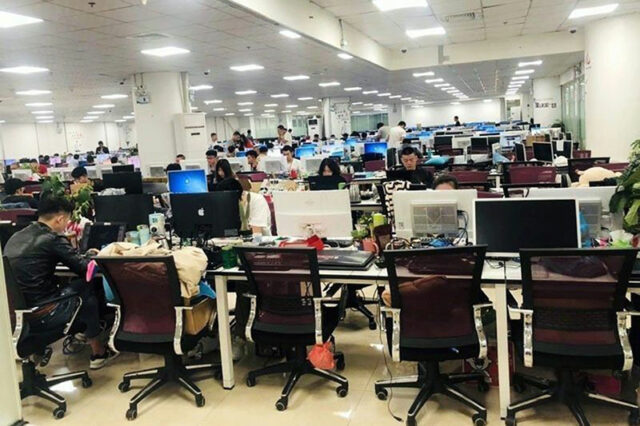
THE OFFICE VACANCY rate in Metro Manila is projected to reach 20.5% by the end of the year, driven by the influx of new office space and the departure of Philippine offshore gaming operators (POGOs), according to property consultancy firm Colliers Philippines.

“We anticipate (office) vacancies to rise to 20.5% by the end of the year and end at flat net demand for the market mainly due to the POGOs exiting,” Colliers Director for Office Services Kevin R. Jara said during a briefing in Taguig City on Tuesday.

As of the end of the third quarter, Colliers data showed that office space vacancy rose to 18.6% from 18.3% the previous quarter due to space resulting from POGO lease terminations and non-renewal of pre-pandemic leases.

Mr. Jara said another 157,000 square meters (sq.m.) of POGO-occupied office space are expected to be vacated by the fourth quarter.

“These were the ones that we know and have officially notified their landlords that they’re not renewing their lease,” he said.

“57,000 sq.m. have already been vacated in the third quarter. That’s the immediate effect of the POGO ban,” he added.

POGOs, which are now officially known as Internet Gaming Licensees, were ordered shut down by the end of the year after the president announced a ban in July.

In terms of supply, Mr. Jara said Colliers is projecting an additional 119,000 sq.m. of office space by the fourth quarter.

“Then in 2025, we are expecting 615,000 sq.m. of new office stock, mostly coming in Cubao, North Edsa, and the Bay Area,” he said.

Mr. Jara said the average office rent is expected to be flat by yearend.

“It’s going to be an increasingly situational scenario for office occupiers taking up new leases. It would really depend on the building occupancy, age of the building, and portfolio situation of the landlord that is leasing the space,” he said.

Submarkets with substantial POGO exposure, such as the Bay Area, are expected to see a decline in rents by yearend.

On the other hand, submarkets such as Makati, Fort Bonifacio, and Ortigas are projected to see marginal increases in rents due to declining vacancy rates.

Mr. Jara also said the consultancy company has seen improvements in the transaction volume of office spaces led by the information technology and business process management sector and traditional office users.

“We think the market remains stable despite updates in regulation just over the past three months,” he said.

“We are still confident to see more opportunities arise, even with upcoming events in the US elections and with impending legislation such as the Corporate Recovery and Tax Incentives for Enterprises to Maximize Opportunities for Reinvigorating the Economy (CREATE MORE),” he added. — Revin Mikhael D. Ochave

Ancient Pompeii site uncovers tiny house with exquisite frescoes

POMPEIISITES.ORG

ROME — Archaeologists in the ancient Roman city of Pompeii have uncovered a richly decorated but uncommonly small house with finely preserved frescoes of mythological scenes, the site said on Thursday.

The dwelling, called the House of Phaedra after the mythological queen of Athens who features in one of its wall paintings, sheds light on changing architectural styles in the first century AD, the Pompeii archaeological park said in a statement.

Unlike many of the houses excavated at the site, it was not built around the traditional Roman atrium, an open space with a pool for collecting rainwater.

Despite its small size, the house “strikes us for the high level of its wall decorations,” the statement said, noting they were of similar quality to much larger and more opulent homes near the new discovery, which lies in the center of the site.

The once-thriving city of Pompeii and the surrounding countryside in southern Italy was submerged by volcanic ash when Mount Vesuvius exploded in A.D. 79.

The eruption killed thousands of Romans who had no idea they were living in the shadow of one of Europe’s biggest volcanoes. It buried the city in a thick layer of ash, preserving many of its residents and buildings.

Besides the fresco of Phaedra and Hippolytus, who spurned her love, other mythological scenes adorning the vividly colored walls of the house include a sexual encounter between a satyr and a nymph, and gods who the site said may have been Venus and Adonis.

The building also boasts numerous smaller, but detailed and beautifully preserved patterns and scenes from nature. — Reuters

Meralco expects P16-B refund for customers

PHILIPPINE STAR/MICHAEL VARCAS

MANILA Electric Co. (Meralco) expects to refund around P16 billion to its customers once the energy regulator finalizes the fifth regulatory reset, which reviews and sets the distribution rates for 2022 to 2026.

The refund will be issued only if the covered years are deemed a “lapsed period.”

“Our initial estimate, for at least three years, would be around P16 billion. So, that’s a big, big, big relief for the consumers. That’s why we want to have that closure already,” Jose Ronald V. Valles, Meralco’s senior vice-president and head of its regulatory management, said on the sidelines of a briefing on Monday.

Under the Electric Power Industry Reform Act of 2001, or EPIRA, the Energy Regulatory Commission (ERC) is mandated to establish and enforce a methodology for setting transmission and distribution wheeling rates for a distribution utility.

Distribution utilities such as Meralco are subject to a performance-based regulation wherein they are required to undergo a rate reset process prior to the start of the next regulatory year.

The rate reset process is usually a “forward-looking” exercise that requires the regulated entity to submit forecasted expenditures and proposed projects over a five-year regulatory period for the ERC to review and adjust rates.

In March 2022, Meralco filed its application for the fifth regulatory period (5RP), which spans from July 1, 2022 to June 30, 2026.

Mr. Valles said that the P16-billion refund corresponds to the average weighted actual price over the approved maximum average price set by the ERC, which the distribution utility is permitted to charge for its provision of services.

He said that the company is awaiting the official decision from the ERC to start the preparations for the next period of rate reset beginning July 2026.

“We are waiting for the order because the release of that order will trigger the filing of that application for refund and the preparation for the filing of the 6RP because we don’t want the 6RP to be delayed again,” he said.

“We want to prepare this early for the 6RP because we have a full 21-month period under the rules to prepare for the reset,” he added.

Citing deliberations, ERC Commissioner Catherine P. Maceda told a Senate hearing earlier this month that the commission decided to forgo the regular regulatory reset due to the anticipation that it will not be completed until 2026.

The official order has yet to be posted as of press time.

Ms. Maceda said the performance-based regulation process should be based on forecasts and there are no current rules to address the lapsed period for private distribution utilities.

“The commission deliberated on this, and ultimately, the decision that prevailed was for the PBR (performance-based regulation) reset to be applied completely to the sixth regulatory period as two years have already passed under the 5RP,” she said. Ms. Maceda is referring to the years 2023 and 2024 as the lapsed period.

Meralco last underwent a rate reset process for the 4RP covering the period from July 1, 2015 to June 30, 2022, which accounted for a lapsed period.

In a decision dated June 16, 2022 and promulgated July 5, 2022, the ERC ordered Meralco to issue a refund worth a total of more than P40 billion, which is equivalent to 73 centavos per kilowatt-hour (kWh) following recalculations.

The commission resolved to recompute and finalize the provisionally approved Meralco’s rate amounting to P1.3522 per kWh. — Sheldeen Joy Talavera

AfD says Bauhaus displaced local traditions

COMMONS.WIKIMEDIA.ORG

BERLIN — It shaped modern industrial design and continues to inspire architects and product designers the world over, but to some on Germany’s far right, Bauhaus is nothing to celebrate.

As the East German city of Dessau prepares to celebrate next year’s centenary of the famed design school’s move there, the far-right Alternative for Germany (AfD) has urged local legislators not to glorify Bauhaus’ cosmopolitan style ethos, saying it negated regional traditions.

The AfD’s proposal, debated and roundly rejected by the state parliament of Saxony-Anhalt earlier this week, sparked a predictable outcry: Bauhaus was part of the interwar flourishing of German avant-garde culture that was stamped out by the Nazis when they came to power in 1933.

But for some, the content of the proposal was less significant than what it said about the party’s broader political strategy.

This year the AfD became the first far-right party to win a German regional election since World War Two, benefitting from a flagging economy but also by tapping into culturally divisive issues that crystallize splits over national identity.

“Culture war is their business model and provocation is their business model,” said Jan-Werner Mueller, a politics professor at Princeton University who studies populist far-right movements.

Elsewhere, the party has targeted authorities that use gender-neutral language and fly rainbow LGBTQ+ flags from municipal buildings, casting itself as a champion of traditional German grammar and family values.

Founded in 1919, the Bauhaus school set out to marry traditional craftsmanship with industrial production.

It became a magnet for designers from across Europe, many of them Jewish, and its very cosmopolitanism made it a cultural touchstone for post-war Germany as it looked for chinks of light in a history scarred by the genocidal crimes of the Nazis.

But that cosmopolitan spirit has been seized upon by some on the far right to portray the movement as un-German.

“The international spread of the Bauhaus style created a porridge-like homogeneity that displaced local architectural traditions,” the AfD’s legislative motion read, rejecting the “uncritical glorification” of the movement.

‘CREATING NOISE’
Around the world, the AfD is not alone among right-wing groups in rejecting modern architecture and design.

Donald Trump’s US administration sought to prescribe neoclassical architecture for all new federal buildings, while Hungary’s nationalist Prime Minister Viktor Orban has rebuilt much of the center of Budapest in a supposed restoration of its pre-war facade.

“The AfD has recognized the importance of the cultural sphere,” said Barbara Steiner, head of the Bauhaus Dessau Foundation. “Because you can use it to touch people’s hearts and emotions.”

The Bauhaus building in Dessau, with its distinctive steel window frames, unadorned facade and curved lettering is an international icon that inspired much post-war social housing, not all of which was successful or popular.

That has given the AfD space to argue that it is defending German culture by attacking the school and its legacy — including the clean, airy lines of Ludwig Mies van der Rohe’s architecture or Marcel Breuer’s iconic cantilever chair.

“They’re creating noise, showing that they are protecting their voters, defending high art and traditional values,” said Stephan Ehrig, a lecturer at Glasgow University.

The fact that the attack dismayed admirers of the Bauhaus style made it all the more effective as a tactic: polarization is good politics, he added.

During this week’s debate in Saxony-Anhalt, the AfD legislator behind the proposal, Hans-Thomas Tillschneider, told the legislature “your worship of Bauhaus seems very fragile … if our subjecting it to a little criticism might take your precious Bauhaus away from you.” — Reuters

Treasury bureau fully awards reissued bonds at lower rates

BW FILE PHOTO

THE GOVERNMENT made a full award of the Treasury bonds (T-bonds) it offered on Tuesday at a lower average rate on the back of strong demand for longer tenors amid better yields.

The Bureau of the Treasury (BTr) raised P15 billion as planned via the reissued 10-year bonds it auctioned off on Tuesday as total bids reached P43.277 billion, or almost three times the amount on offer.

This brought the total outstanding volume for the series to P251.85 billion, the Treasury said in a statement.

The bonds, which have a remaining life of nine years and two months, were awarded at an average rate of 5.87%. Accepted yields ranged from 5.828% to 5.89%.

The average rate of the reissued papers was 9.7 basis points (bps) lower than the 5.967% fetched for the bonds when they were last awarded on Sept. 17. This was also 38 bps below the 6.25% coupon rate for the issue.

This was also just 2 bps higher than the 5.85% fetched for the 10-year bond and 0.7 bp below the 5.863% quoted for the same bond series at the secondary market before Tuesday’s auction, based on PHP Bloomberg Valuation Service Reference Rates data provided by the Treasury.

The government fully awarded its offer of reissued 10-year bonds as the average rate fetched was lower than the issue’s coupon and the yield quoted for the last issuance, the BTr said.

“It was awarded within the market’s expected range. You can see that there is appetite for duration as yields become attractive,” a trader said in a text message.

The T-bond offer was met with strong demand after the Bangko Sentral ng Pilipinas’ (BSP) latest cut in banks’ reserve requirement ratios (RRR) took effect on Friday, as this released about P400 billion in liquidity into the financial system, Rizal Commercial Banking Corp. Chief Economist Michael L. Ricafort said in a Viber message.

The BSP has reduced the RRR for universal and commercial banks and nonbank financial institutions with quasi-banking functions by 250 bps to 7% from 9.5% effective Oct. 25.

It also cut the RRR for digital banks by 200 bps to 4%, while the ratio for thrift lenders was brought down by 100 bps to 1%. Rural and cooperative banks’ reserve requirement was slashed by 100 bps to 0%.

The yields fetched were aligned with secondary market levels amid market caution before the US presidential election on Nov. 5, Mr. Ricafort added.

The election for US president is expected to be close. Vice-President Kamala Harris, a Democrat, was leading Republican Donald Trump nationally by a marginal 46% to 43%, a recent Reuters/Ipsos poll showed, Reuters reported. Election Day in the US is Nov. 5.

Ten-year US Treasury yields eased to 4.2661% on Tuesday, after reaching the highest since July 11 at 4.3% overnight.

The US currency has also been buoyed by rising market expectations for an election win for Mr. Trump, whose tariff, tax and immigration policies are seen as inflationary, thus negative for bonds and positive for the dollar.

Tuesday’s T-bond auction was the government’s last offering for the month. It raised the planned P45 billion via the long-term papers as it made full awards of all its offerings.

With this, the BTr was able to raise P145 billion as programmed from the domestic market in October.

For November, the government is looking to borrow P90 billion from the domestic market, or P60 billion via Treasury bills (T-bills) and P30 billion through T-bonds.

The government borrows from local and foreign sources to help fund its budget deficit, which is capped at P1.48 trillion or 5.6% of gross domestic product this year. — A.M.C. Sy with Reuters

Globe completes P300-M tower sale to Unity Digital Infrastructure

TO DATE, Globe’s tower sale and leaseback agreement with Unity has generated a total of P3.7 billion. — GLOBE.COM.PH

GLOBE Telecom, Inc. has completed the sale of 25 telecommunications towers to Unity Digital Infrastructure, Inc. for P300 million.

This development marks the latest transaction of Globe’s tower sales to Unity, representing 68.7%, or 307 of the 447 towers to be acquired by Unity for a total of P5.4 billion, the Ayala-led telecommunications company said in a regulatory filing on Tuesday.

Unity is a joint venture telecommunications infrastructure platform of Aboitiz Infracapital, Inc. and global private markets firm Partners Group.

Globe expects an estimated pre-tax net gain of P1.8 billion once this transaction is finalized, the company said.

“This transaction will allow Globe to efficiently raise capital, redeploy capital from passive infrastructure to active equipment, improve balance sheet health, and leverage the expertise of tower companies,” Globe said.

To date, Globe’s tower sale and leaseback agreement with Unity has generated a total of P3.7 billion, its regulatory filing showed.

Aside from its agreement with Unity, Globe also sold 5,709 towers and related infrastructure to Frontier Tower Associates Philippines, Inc. and MIESCOR Infrastructure Development Corp. for P71 billion.

In July, Globe said it had fully closed the sale of 3,529 towers to be acquired by Frontier Towers.

Under this transaction, Frontier Towers will acquire 3,529 towers for P45 billion, while 2,180 towers will be sold to MIESCOR Infrastructure, a unit of Manila Electric Co., for P26 billion.

At the stock exchange on Tuesday, shares in Globe fell by P166, or 7.33%, to close at P2,100 each. — Ashley Erika O. Jose

Metrobank net income rises to P12.12B in Q3

METROBANK.COM.PH

METROPOLITAN Bank & Trust Co.’s (Metrobank) net income rose by 11.35% in the third quarter amid higher revenues as it booked growth in both interest and non-interest earnings.

The Ty-led bank’s attributable net profit stood at P12.124 billion in the three months ended September, up from P10.888 billion in the same period last year, the bank’s financial statement disclosed to the stock exchange on Tuesday showed.

This brought Metrobank’s net income for the first nine months to a record P35.729 billion, up by 12.4% year on year from P31.786 billion, “supported by the bank’s strong asset expansion, recovery in non-interest income and improved asset quality,” it said in a statement.

This translated to a return on equity of 12.93%, rising from 12.83% a year ago, and a return on assets of 1.48%, up from 1.46%.

“Our robust results reflect our strong drive to continue supporting the growing needs of our clients, all while preserving the health of our portfolio. We look forward to the positive impact of recent regulatory measures on the banking industry alongside improving economic outlook,” Metrobank President Fabian S. Dee said.

The bank’s net interest income went up by 4.1% to P27.752 billion in the third quarter from P26.658 billion a year ago.

This came as its interest earnings increased by 12.93%, driven by higher income from loans and receivables and investment securities. Interest expenses grew by a faster 30.94% in the period.

Net interest margin was at 3.9% at end-September, down from 3.93% a year ago.

Metrobank’s other income surged by 50.39% to P12.063 billion from P8.021 billion as it posted higher net trading, securities and foreign exchange gains and fee income in the quarter.

On the other hand, the lender’s total operating expenses went up by 17.25% to P20.597 billion from P17.566 billion amid higher manpower and miscellaneous costs.

Its cost-to-income ratio stood at 52.2% at end-September.

Metrobank’s gross loans expanded by 15.6% as of September.

“Commercial loans surged 16.6% as firms resumed capital spending and built up their inventories. On the other hand, consumer loans grew by 12.3% driven by a 16.6% rise in net credit card receivables and 15.7% growth in auto loans,” the bank said.

Despite the increase in its loans, Metrobank’s asset quality improved as its nonperforming loan (NPL) ratio eased to 1.59% as of September from 1.74% a year prior as it remained “prudent in its lending business,” it said.

“As a result, provision costs declined by 48.2% year on year. Nonetheless, NPL cover remains high, at 161.9%, providing a substantial buffer against any risks to the portfolio.”

Meanwhile, total deposits stood at P2.28 trillion as of September, with low-cost current and savings account or CASA deposits making up 62.3% of the total.

Its loans-to-deposits ratio went up to 74.4% from 62.62% a year ago.

Metrobank’s total assets stood at P3.34 trillion at end-September, and total equity was at P380.14 billion.

Its common equity Tier 1 ratio was at 16.3%, down from 17.59% a year prior, while its capital adequacy ratio was at 17.1%, lower than 18.42%. Still, both remained well above the central bank’s minimum requirements.

The bank’s liquidity ratio inched down to 47.49% from 48.89%, while its liquidity coverage ratio was at a “healthy” 258.4%.

The Metrobank Group had 956 branches, 1,303 on-site automated teller machines (ATMs) and 1,001 off-site ATMs as of Sept. 30.

Metrobank’s shares dropped by P3.20 or 4.07% to close at P75.50 apiece on Tuesday. — A.M.C. Sy