Home Blog Page 2054

China hits back with tariffs on US goods as new levies take effect
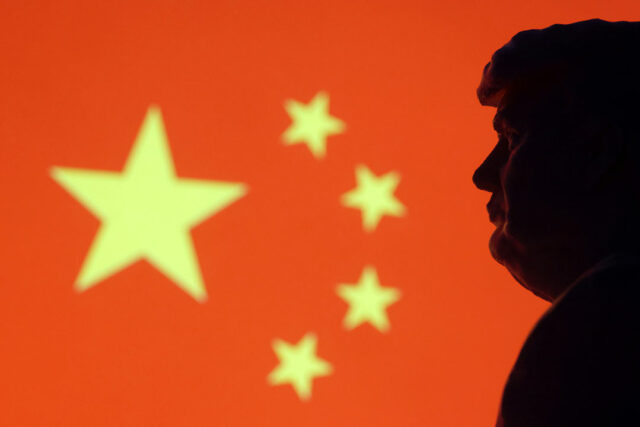
A 3D-PRINTED miniature model of US President Donald Trump and the Chinese flag are seen in this illustration taken on Jan. 15, 2025. — REUTERS/DADO RUVIC/ILLUSTRATION

WASHINGTON/BEIJING —  China on Tuesday slapped tariffs on US imports in a rapid response to new US duties on Chinese goods, renewing a trade war between the world’s top two economies as President Donald Trump sought to punish China for not halting the flow of illicit drugs.

Mr. Trump’s additional 10% tariff across all Chinese imports into the US came into effect at 12:01 a.m. ET on Tuesday (0501 GMT).

Within minutes, China’s Finance Ministry said it would impose levies of 15% for US coal and LNG and 10% for crude oil, farm equipment and some autos. The new tariffs on US exports will start on Feb. 10, the ministry said.

China also said it was starting an anti-monopoly investigation in Alphabet, Inc.’s Google, while including both PVH Corp., the holding company for brands including Calvin Klein, and US biotechnology company Illumina on its “unreliable entities list.”

Separately, China’s Commerce Ministry and its Customs Administration said the country is imposing export controls on tungsten, tellurium, ruthenium, molybdenum and ruthenium-related items to “safeguard national security interests.”

Mr. Trump on Monday suspended his threat of 25% tariffs on Mexico and Canada at the last minute, agreeing to a 30-day pause in return for concessions on border and crime enforcement with the two neighboring countries.

But there was no such reprieve for China, and a White House spokesperson said Mr. Trump would not be speaking with Chinese President Xi Jinping until later in the week.

During his first term in 2018, Mr. Trump initiated a brutal two-year trade war with China over its massive US trade surplus, with tit-for-tat tariffs on hundreds of billions of dollars worth of goods upending global supply chains and damaging the world economy.

To end that trade war, China agreed in 2020 to spend an extra $200 billion a year on US goods but the plan was derailed by the COVID pandemic and its annual trade deficit had widened to $361 billion, according to Chinese customs data released last month.

“The trade war is in the early stages so the likelihood of further tariffs is high,” Oxford Economics said in a note as it downgraded its China economic growth forecast.

Mr. Trump warned he might increase tariffs on China further unless Beijing stemmed the flow of fentanyl, a deadly opioid, into the United States.

“China hopefully is going to stop sending us fentanyl, and if they’re not, the tariffs are going to go substantially higher,” he said on Monday.

China has called fentanyl America’s problem and said it would challenge the tariffs at the World Trade Organization and take other countermeasures, but also left the door open for talks.

NEIGHBORLY DEALS
There was relief in Ottawa and Mexico City, as well as global financial markets, after the deals to avert the hefty tariffs on Canada and Mexico.

Both Canadian Prime Minister Justin Trudeau and Mexican President Claudia Sheinbaum said they had agreed to bolster border enforcement efforts in response to Mr. Trump’s demand to crack down on immigration and drug smuggling. That would pause 25% tariffs due to take effect on Tuesday for 30 days.

Canada agreed to deploy new technology and personnel along its border with the United States and launch cooperative efforts to fight organized crime, fentanyl smuggling and money laundering.

Mexico agreed to reinforce its northern border with 10,000 National Guard members to stem the flow of illegal migration and drugs.

The United States also made a commitment to prevent trafficking of high-powered weapons to Mexico, Ms. Sheinbaum said.

“As President, it is my responsibility to ensure the safety of ALL Americans, and I am doing just that. I am very pleased with this initial outcome,” Mr. Trump said on social media.

After speaking by phone with both leaders, Mr. Trump said he would try to negotiate economic agreements over the coming month with the two largest US trading partners, whose economies have become tightly intertwined with the United States since a landmark free-trade deal was struck in the 1990s.

The Canadian dollar earlier soared after slumping to its lowest in more than two decades. The news also gave US stock index futures a lift after a day of losses on Wall Street, and sent oil prices lower.

Industry groups, fearful of disrupted supply chains, welcomed the pause.

“That’s very encouraging news,” said Chris Davison, who heads a trade group of Canadian canola producers. “We have a highly integrated industry that benefits both countries.”

Mr. Trump suggested on Sunday the 27-nation European Union (EU) would be his next target, but did not say when.

EU leaders at an informal summit in Brussels on Monday said Europe would be prepared to fight back if the US imposes tariffs, but also called for reason and negotiation. The US is the EU’s largest trade and investment partner.

Mr. Trump hinted that Britain, which left the EU in 2020, might be spared tariffs.

Mr. Trump acknowledged over the weekend that his tariffs could cause some short-term pain for US consumers, but says they are needed to curb immigration and narcotics trafficking and spur domestic industries.

The tariffs as originally planned would cover almost half of all US imports and would require the United States to more than double its own manufacturing output to cover the gap — an unfeasible task in the near term, ING analysts wrote.

Other analysts said the tariffs could throw Canada and Mexico into recession and trigger “stagflation” — high inflation, stagnant growth and elevated unemployment — at home. — Reuters

Elon Musk targets closure of USAID

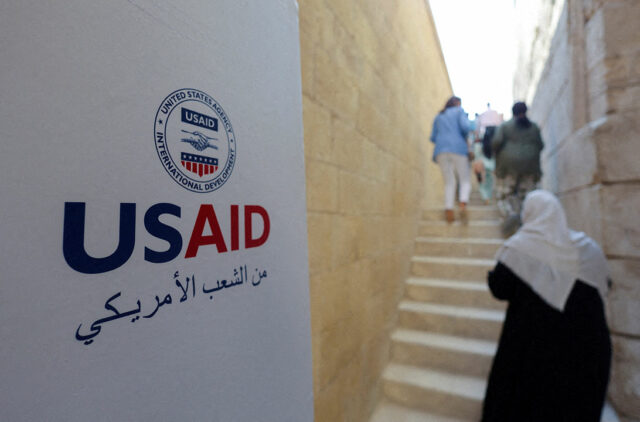
Visitors walk up a stair during the opening of the restoration project at the historic Bimaristan Al-Muayyad Sheikh, one of the oldest hospitals following extensive renovations carried out in partnership between Egypt’s Tourism and Antiquities Ministry and the United States Agency for International Development (USAID) in Old Cairo, Egypt Aug. 18, 2024. — REUTERS

WASHINGTON — The Trump administration said it would lock US Agency for International Development (USAID) workers out of their headquarters in downtown Washington DC for a second day on Tuesday as it moved to shutter the agency, prompting two Democratic senators to vow to block confirmations of State Department nominees in protest.

Monday’s lockout added to the chaos that has consumed the agency, which distributes billions of dollars of humanitarian aid around the world, since Mr. Trump ordered a freeze on most US foreign aid hours after taking office on Jan. 20.

USAID has been targeted for closure by billionaire Elon Musk, who has been tasked by the president with downsizing the federal government. A senior White House official, speaking on condition of anonymity, said Mr. Trump was considering merging USAID into the State Department and had “entrusted Elon to oversee the efficiency of this agency.”

A group of Democratic lawmakers, cheered by dozens of furloughed agency employees and contractors, held a protest in front of the USAID headquarters, which was shut to the employees on Monday, according to an internal e-mail seen by Reuters.

Another internal e-mail seen by Reuters went out late on Monday, telling employees at the agency’s headquarters and a second site in Washington to work remotely again on Tuesday, adding to concerns voiced by staff members and lawmakers.

“We don’t have a fourth branch of government called Elon Musk,” said US Representative Jamie Raskin, speaking outside the building.

Senators Brian Schatz and Chris Van Hollen said they would block confirmation of Mr. Trump’s nominees for State Department positions under rules that allow them to hold up nominations even if the Republican majority of the chamber want them to move forward.

“We have control over the calendar for nominees,” said Mr. Van Hollen. “We will do everything we can to block State Department nominees from going forward until this illegal action is reversed.”

‘AGAINST THE LAW’
Hundreds of USAID programs covering billions of dollars worth of lifesaving aid across the globe came to a grinding halt after Mr. Trump on Jan. 20 ordered a freeze of most US foreign aid, saying he wanted to ensure it is aligned with his “America First” policy.

If USAID were put under the State Department, it would likely have dramatic consequences for the distribution of aid from the United States, the world’s largest single donor.

Mr. Musk has been increasingly critical of USAID, calling it a left-wing agency unaccountable to the White House. Mr. Musk critics say his accusations are often lodged without evidence and may be ideologically driven.

The rush of events has underlined Mr. Musk’s powerful role in setting Mr. Trump’s agenda. Last week, Mr. Musk’s team at the Department of Government Efficiency gained access to the most sensitive payment systems at Treasury and, as Reuters reported, locked some employees out of their agency’s computers.

At USAID, two senior security staff were put on leave after refusing to provide classified documents to DOGE employees on site over the weekend.

“What’s happening to USAID is against the law,” Mr. Schatz told Reuters outside the agency headquarters. “It’s flatly illegal, and it is dangerous to Americans at home and abroad.”

Some USAID staff waved signs as the lawmakers spoke, including one that read: “USAID saves lives.”

Democrats have argued that eliminating USAID’s independence requires an act of Congress. Mr. Trump told reporters on Monday that he did not believe that was necessary.

“I love the concept (of USAID), but they turned out to be radical left lunatics,” Mr. Trump said.

RUBIO NOW ACTING USAID HEAD
US Secretary of State Marco Rubio told reporters in San Salvador that he was now the acting head of USAID, calling the agency “completely unresponsive” and accusing the staff there of being “unwilling to answer simple questions” about programs.

“If you go to mission after mission and embassy after embassy around the world, you will often find that in many cases, USAID is involved in programs that run counter to what we’re trying to do in our national strategy with that country or with that region. That cannot continue,” Mr. Rubio said.

He informed Congress in a letter of the looming reorganization of the agency, saying some parts of USAID might be absorbed by the State Department and the remainder may be abolished.

Senator Jeanne Shaheen, a Democrat, said she found Rubio’s notification “wholly insufficient on the law and devoid of any rationale for the drastic, abrupt action the administration has taken, with no prior notice to Congress.”

In fiscal year 2023, the United States disbursed, partly via USAID, $72 billion of aid worldwide on everything from women’s health in conflict zones to access to clean water, HIV/AIDS treatments, energy security and anti-corruption work. It provided 42% of all humanitarian aid tracked by the United Nations in 2024.

And yet it is less than 1% of its total budget.

The State Department issued worldwide stop-work directives after Mr. Trump’s freeze order, with the exception of emergency food assistance. Experts warned that the move risks killing people.

Since then, dozens of USAID career staff have been put on leave. Three sources familiar with the matter told Reuters that USAID personal services contractors, who carry out the bulk of the work in the agency’s humanitarian bureau, have also been locked out of their government accounts.

“Without PSCs, there is no longer functionally a Bureau for Humanitarian Assistance in USAID. The waivers from Secretary of State Rubio for emergency food and other urgent assistance are a smokescreen and farce if there is no one to make the awards happen,” a USAID official said. — Reuters

S. Korea wants to rebuild aviation safety system after crash, fire incidents

RESCUE WORKERS take part in a salvage operation at the site where an aircraft crashed after it went off the runway at Muan International Airport in Muan, South Korea, Dec. 29, 2024. — REUTERS

SEOUL — South Korea aims to rebuild its aviation safety system from scratch, the Transport ministry said on Tuesday, launching a new committee to improve air travel in the country that suffered two major aviation incidents a month apart.

“In order to restore trust in our country’s aviation safety system, the government will make a determined effort to rebuild the aviation safety system from the ground up,” Deputy Minister of Land, Infrastructure and Transport Baek Won-kuk will tell the committee, the ministry statement said.

The government must address aviation safety as a top priority, he added.

In the deadliest air disaster ever on South Korean soil, a plane belonging to budget airline Jeju Air crashed at the country’s Muan airport on Dec. 29, killing all but two of the 181 passengers and crew members on board.

Duck remains were found in both engines of the plane, a preliminary investigation report said, indicating bird strikes occurred before the crash. Air accidents are nearly always caused by a combination of factors, according to experts.

Last week, an Air Busan plane was engulfed in flames at Busan’s international airport as the low-cost carrier’s jet prepared to depart, with all on board evacuated safely.

The fire was first detected by a flight attendant in an overhead luggage bin in the rear of the plane, Air Busan has said.

Investigations into the causes of both incidents are ongoing.

The 10-week committee will include private sector experts and will look at issues including maintenance and aircraft utilization rates at budget airlines, and airport construction and operation.

In response to the Jeju Air crash, which saw the plane belly land but then plough into a concrete embankment supporting navigation equipment past the end of Muan’s runway, authorities already said they would amend similar structures at seven airports around the country. — Reuters

Trump orders creation of US sovereign wealth fund, says it could buy TikTok

REUTERS

WASHINGTON — US President Donald Trump signed an executive order on Monday ordering the creation of a sovereign wealth fund within the next year, saying it could potentially buy the short video app TikTok.

If created, the sovereign wealth fund could place the US alongside numerous other countries, particularly in the Middle East and Asia, that have launched similar funds as a way to make direct investments with government dollars.

The text of the executive order was sparse on details, and simply directed the Treasury and Commerce Departments to submit a plan for such a fund within 90 days, including recommendations on “funding mechanisms, investment strategies, fund structure, and a governance model.”

Typically such funds rely on a country’s budget surplus to make investments, but the US operates at a deficit. Its creation also would likely require approval from Congress.

“We’re going to create a lot of wealth for the fund,” Mr. Trump told reporters. “And I think it’s about time that this country had a sovereign wealth fund.”

Mr. Trump had previously floated such a government investment vehicle as a presidential candidate, saying it could fund “great national endeavors” like infrastructure projects such as highways and airports, manufacturing, and medical research.

Administration officials did not say how the fund would operate or be financed, but Mr. Trump has previously said it could be funded by “tariffs and other intelligent things.”

Treasury Secretary Scott Bessent told reporters the fund would be set up within the next 12 months.

“We’re going to monetize the asset side of the US balance sheet for the American people,” Mr. Bessent said. “There’ll be a combination of liquid assets, assets that we have in this country as we work to bring them out for the American people.”

One approach would be to convert the US International Development Finance Corp. (DFC) to function similar to a sovereign wealth fund, which the Trump administration reportedly considered in recent months, Bloomberg News reported. The DFC is a government agency that currently partners with private parties to finance projects in the developing world.

Mr. Trump announced on Friday he was nominating Benjamin Black to head that development agency. Mr. Black, a managing partner at investment firm Fortinbras Enterprises, is the son of Leon Black, the co-founder of asset management firm Apollo Global Management.

The Biden administration also was considering establishing such a fund prior to Mr. Trump’s election in November, according to The New York Times and Financial Times.

But precisely how such a fund would be structured, and funded, remained unclear. Several experts said Congress would likely need to authorize new funding given the lack of an existing surplus to tap. The order directed officials to review any need for legislation.

Clemence Landers, a former Treasury official who is now with the Center for Global Development, said there has been talk of repurposing the DFC but setting up such a fund would require Congress.

“Obviously you can’t establish an institution by executive order and more to the point is you can’t fund an institution by executive order,” she said.

Investors said the news came as a surprise.

“Creating a sovereign wealth fund suggests that a country has savings that will go up and can be allocated to this,” said Colin Graham, head of multi-asset strategies at Robeco in London. “The economic rules of thumb don’t add up.”

There are over 90 such funds across the world managing over $8 trillion in assets, according to the International Forum of Sovereign Wealth Funds.

Numerous US states, including Alaska, Texas and New Mexico also have their own wealth funds, which help fund various priorities, including education and tax relief. They frequently rely on revenue raised by natural resources, like oil or land.

In another surprise twist, Mr. Trump suggested the wealth fund could buy TikTok, whose fate has been up in the air since a law requiring its Chinese owner ByteDance to either sell it on national security grounds or face a ban took effect on Jan. 19.

Mr. Trump, after taking office on Jan. 20, signed an executive order seeking to delay by 75 days the enforcement of the law.

Mr. Trump has said that he was in talks with multiple people over TikTok’s purchase and would likely have a decision on the app’s future in February. The popular app has about 170 million American users.

“We’re going to be doing something, perhaps with TikTok, and perhaps not,” Mr. Trump said. “If we make the right deal, we’ll do it. Otherwise, we won’t… we might put that in the sovereign wealth fund.” — Reuters

EU leaders agree to step up defense efforts

A EUROPEAN UNION’S flag flutters outside the European Commission headquarters in Brussels, Belgium, Oct. 15, 2020. — REUTERS

BRUSSELS — European Union  (EU) leaders agreed on Monday to do more to bolster their defenses against Russia and other threats by hiking spending and filling gaps in their military capabilities.

“A lot has been done already but we need to do more. We need to do it better, stronger, faster – and we need to do it together,” Antonio Costa, the president of the European Council of EU leaders, said after a summit on defense in Brussels.

However, the leaders left largely unanswered the question of how their planned surge in defense spending would be paid for.

European countries have already ramped up defense spending in recent years, in response to Russia’s 2022 invasion of Ukraine and a growing view that they cannot rely so much on the United States to protect the continent in years to come.

Their efforts have been fuelled by questions about US President Donald Trump’s commitment to the NATO security alliance and by his demands for European nations to spend more on the continent’s defenses.

The start of the EU summit was overshadowed by Mr. Trump declaring at the weekend that he will soon impose tariffs on imports from the EU, having ordered similar measures on goods from Canada and Mexico — which were paused on Monday — and from China.

The EU leaders agreed to focus on filling critical gaps in their defenses such as air and missile defense, missiles, ammunition and military transport, Costa told reporters.

The leaders discussed how such priorities could be funded but did not reach a detailed agreement. The European Commission, however, agreed to look for flexibility in rules it oversees on EU countries’ public finances to make defense spending easier.

“Europe needs, basically, a surge in defense. And for that, our defense industrial base must be strengthened,” European Commission President Ursula von der Leyen told reporters after the summit.

“For many, many years, we have under-invested in defense. Thus there’s a great urgency to increase the defense spending with a big magnitude,” she said.

NATO Secretary General Mark Rutte and British Prime Minister Keir Starmer also took part in the Brussels talks.

SPENDING HIKE
Last year, EU countries spent an average of 1.9% of GDP on defense, or about 326 billion euros ($334.5 billion) — a 30% increase on 2021, according to EU estimates.

But many EU leaders have said they will need to spend even more. The Commission, the EU’s executive body, has estimated the bloc may need to spend an extra 500 billion euros over the next decade to fill the critical gaps in European defences.

Mr. Trump has said NATO’s European members should spend 5% of GDP on defence — a figure no member of the alliance including the United States currently reaches.

Ms. Von der Leyen and Costa said the EU had several potential defence financing options, including national spending, an expanded role for the EU’s European Investment Bank and private capital.

Leaders avoided directly addressing in public the politically sensitive question of whether the EU should issue joint debt to pay for defense spending.

Diplomats say borrowing to finance loans rather than grants for military projects may be a possible compromise. — Reuters

Manila gears up for 2025 ITIC with Mon Abrea leading the initiative

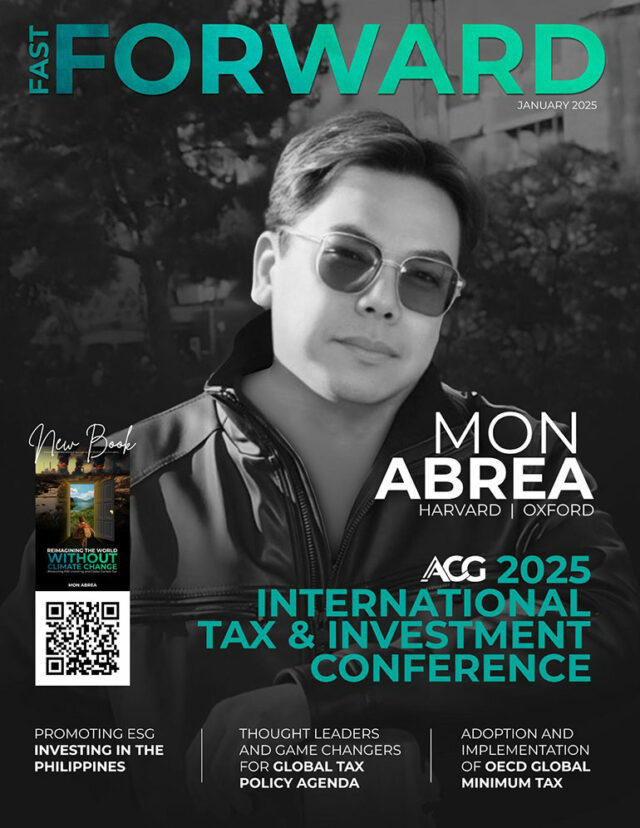
As the Philippines positions itself for a sustainable economic future, Mon Abrea, Founder and CEO of the Asian Consulting Group (ACG), returns with a strong vision to drive ESG (Environmental, Social, and Governance) investing and global tax reforms. This theme will take center stage at the upcoming 2025 International Tax and Investment Conference (ITIC) on March 26 at the Manila Marriott. Under the theme “FAST Forward: Promoting ESG Investing in the Philippines,” the conference aims to unite policymakers, investors, and business leaders to explore the intersection of sustainability and fiscal policy.

Mr. Abrea’s thought leadership has been instrumental in reshaping discussions on sustainable finance. He highlights the potential of ESG-aligned investments as catalysts for long-term economic growth, while promoting compliance with evolving global tax regulations. His advocacy reinforces the importance of these initiatives in strengthening the Philippines’ position as a competitive and sustainable player in the global economy.

ACG partnered with Asia CEO on Jan. 31 to collaborate in recognizing outstanding individuals, experts, and leaders during the 2025 International Tax and Investment Conference. The conference will launch several key initiatives, including Book Series 2: Reimagining the World Without Climate Change, Season 3 of Thought Leaders and Game Changers, and the 2025 International Tax and Investment Roadshow, aimed at promoting ESG investing across global markets.

A day earlier, Mr. Abrea highlighted tax reforms fostering a business-friendly environment at the British Chamber’s UK-PH Economic Forecasting event alongside Trade Secretary Cristina Roque and UK Ambassador Laure Beaufils, and on Feb. 1, he discussed the OECD Global Minimum Tax on Bilyonaryo News Channel’s “Follow the Money.

These strategic initiatives set the stage for the highly anticipated ITIC 2025 — a defining event for industry leaders and innovators in tax and sustainable finance. Join the conversation shaping the future of tax and investment. Reserve your spot at ITIC 2025 by emailing itic@acg.ph or calling +63 917-627-8805. REGISTER NOW!


Spotlight is BusinessWorld’s sponsored section that allows advertisers to amplify their brand and connect with BusinessWorld’s audience by publishing their stories on the BusinessWorld Web site. For more information, send an email to online@bworldonline.com.

Join us on Viber at https://bit.ly/3hv6bLA to get more updates and subscribe to BusinessWorld’s titles and get exclusive content through www.bworld-x.com.

Wi-Fi 7 with the TP-Link BE2200

photo by Jino Nicolas

by Jino Nicolas, BusinessWorld

Wi-Fi technology has come a long way since it first came out, and it is difficult to imagine not having it around. 

The very first widely accepted standard was the 802.11b (Wi-Fi 1), which offered speeds of up to 11Mbps. As time progressed, so did technology. 

Wi-Fi 4 (802.11n) introduced the multiple input, multiple output (MIMO) technology which significantly increased reach and speed. 

Wi-Fi 5 (802.11ac) focused on increasing speed by enabling wider channel bandwidths and higher-order modulation. 

Wi-Fi 6 (802.11ax) improved network efficiency while handling more devices simultaneously through the orthogonal frequency-division multiple access (OFDMA) and the multi-user MIMO (MU-MIMO). 

Fast forward to today, Wi-Fi 7 (802.11be) is the latest standard promising higher speeds, lower latency, and higher network capacity. 

In order to experience Wi-Fi 7, the BusinessWorld team got its hands on the TP-Link BE22000, a high-end Wi-Fi mesh system that promises blazing fast-speeds and seamless connectivity for an entire home.


What is a mesh Wi-Fi system? 

A mesh Wi-Fi system uses multiple devices called ‘nodes’ to create a seamless network experience throughout an entire home. This kind of network setup blankets the entire home or office with consistent coverage, seamless roaming, and eliminates dead zones.

Source: https://www.tp-link.com/ph/mesh-wifi/

By setting up nodes strategically, any user can enjoy connectivity wherever they are. 

The TP-Link BE22000 is a top-tier mesh Wi-Fi device that utilizes Wi-Fi 7. 


BE22000 Key Features  

Source: https://www.tp-link.com/ph/home-networking/deco/deco-be85/

The TP-Link BE22000 offers 22 Gbps across three bands (tri-band): 2.4 GHz, 5 GHz, and 6 GHz. Devices connected to the mesh are distributed across these three frequencies in order to reduce congestion and interference. 

For instance, the 2.4GHz band is well-suited for many smart home devices. On the other hand, gaming consoles or 4K Smart TVs would be able to use the higher bandwidths of the 5 and 6 GHz bands. 

The BE22000 utilizes 4K-QAM (Quadrature Amplitude Modulation), which packs denser data into each signal to further improve speeds and efficiency. Think of it as a piece of luggage you have to transport. Instead of just throwing clothes in it, folding and arranging them efficiently would help you secure more space for more items. In effect, this allows each signal to carry significantly more data, boosting both speed and efficiency. 

The BE22000 includes two 10Gbps Ethernet ports. One connects to your modem for high-speed internet access, while the second can be used for incredibly fast wired backhaul between Deco units, providing ample bandwidth for high-performance devices. 

Additionally, the BE22000 also has two 2.5 Gbps ports for devices that need high bandwidth such as gaming consoles and workstations. 

The BE22000 is easy to setup through the Deco App available for both Android and iOS devices.


Wi-Fi 7 Benefits 

In order to provide enhanced network efficiency, Wi-Fi 7 also introduces a wider channel of 320Mhz, Multi-Link Operation (MLO), and Multi-RUs (resource units). Think of it as a wider pipe through which data can flow, allowing for more simultaneous transmissions. 

MLO enables devices to access multiple bands at the same time, allowing increased throughput, lower latency, and improved reliability. This is quite advantageous for demanding operations such as online gaming and video streaming. 

With MLO, simultaneous online tasks will run smoother and lag-free because the Wi-Fi can use multiple bands. 

Multi-RUs, on the other hand, improves network efficiency by dynamic allocation of resources for optimal performance, regardless of multiple connected devices. It acts as a sort of a traffic controller that ensures every device connected gets its fair share of bandwidth. 


Testing the TP-Link BE22000 

Note: BusinessWorld only has access to one unit of BE22000 and as such, testing was only done within a single room with multiple devices. Among those devices, only a flagship phone was Wi-Fi 7 capable. This test is conducted to experience the router capabilities of the BE22000.

STOCK IMAGE: vector created by sentavio – www.freepik.com

It is a common circumstance nowadays wherein a room serves multiple purposes: bedroom, office, game/entertainment room. 

For this test, a room with a 4K TV, a mid-range desktop workstation, a Macbook Pro, an Xbox Series X, and three flagship phones. 

The scenario: Both husband and wife work remotely at home and in their bedroom with a 200mbps connection through the TP-Link BE22000. 

The husband is at his desktop workstation downloading video files for work, while his Xbox Series X is downloading a new game he just bought. His phone is perched in front of his monitor, playing 4K song covers from Youtube as he listens to them via his earbuds. 

The wife, on the other hand, is sitting on the bed with her Macbook Pro attending a meeting, all while playing a movie in 4K on their smart TV via Netflix. 

In this scenario, only the husband’s flagship phone is capable of connecting via Wi-Fi 7. Evidently, his Youtube streaming is unaffected by all the other devices considering the phone has access to multiple bands. The Wi-Fi 7 phone can utilize multiple bands simultaneously like a car using multiple lanes on an expressway, while other devices are limited to fewer lanes. 

This band switching, facilitated by MLO, allows the phone to maintain a consistent and high-speed connection even while other devices are heavily utilizing the network. 


Latency? Lower is better. 

Latency, in the context of networking, refers to the delay between a user’s action and the response to that action. It’s essentially the time it takes for data to travel from its source to its destination and back again. 

STOCK PHOTO | Image by Ian van der Linde from Pixabay

This is mostly noticed by online gamers and remote workers through their video conferences. 

The TP-Link BE22000 is designed to excel in reducing latency through the benefits of Wi-Fi 7 such as the MLO, wider channels, and Multi-RUs. 

These advancements in Wi-Fi 7’s technology will prove beneficial for fast-paced online games such as multiplayer first-person shooters, online sports and fighting games. 

Lower latency is always better, as it means a more responsive connection. 


Future proof? 

Wi-Fi 7 is still young, but with more devices coming out that are Wi-Fi 7 capable, the ability to change and use multiple bands and the dynamic allocation of resources, the dream of having a seamlessly connected smart home is within reach. The TP-Link BE22000 will be able to accommodate that aspiration. 

If a person is still just about to build their smart home, the BE22000’s support for Wi-Fi 7 and its backward compatibility make it a solid choice for those looking to invest in a high-performance network that will remain relevant for several years. 

Philippines, US joint air patrol exercises underway over South China Sea

PHILSTAR FILE PHOTO

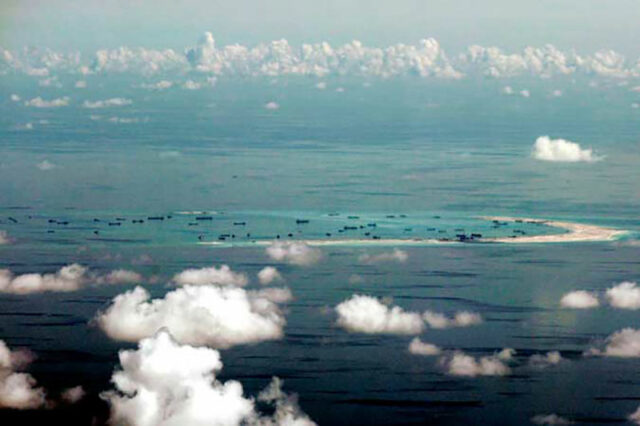
MANILA – The air forces of the Philippines and the United States were holding joint patrols over the South China Sea on Tuesday, a spokesperson for the Philippine Air Force said.

The one-day exercise was being carried out in the West Philippine Sea, Philippine air force spokesperson Maria Consuelo Castillo said, using Manila’s term for waters in the South China Sea that fall within its exclusive economic zone.

Castillo said the two of the Philippines’ FA-50 fighter aircrafts were participating, along with two U.S. B1-B bombers. — Reuters

Rice stockpile eyed as Japan PM orders swift relief from rising prices

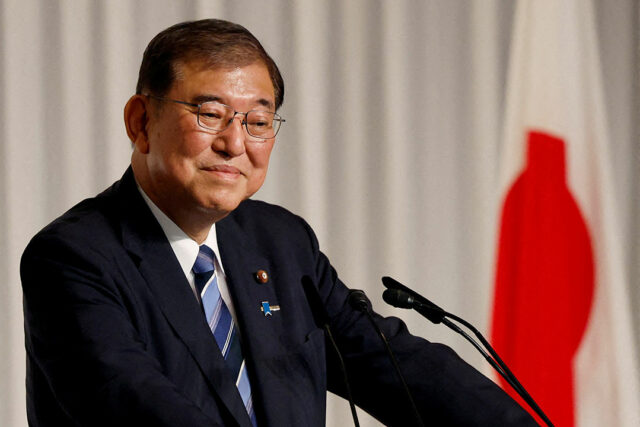
JAPANESE PRIME MINISTER SHIGERU ISHIBA — REUTERS FILE PHOTO

 – Japanese Prime Minister Shigeru Ishiba has ordered the swift implementation of measures to give consumers relief from inflated food prices, including an unprecedented release of stockpiled rice to bring down costs, a minister said on Tuesday.

At a news conference, Economy Minister Ryosei Akazawa said Mr. Ishiba had instructed the cabinet to proceed quickly with countermeasures as the prices of rice, vegetables and other living costs have soared in recent months.

“Citizens are suffering greatly and feeling pain,” he said, noting that the elevated price of rice had been unexpected.

The average transaction price of rice produced last year jumped 55% to 23,715 yen ($153) per 60 kg (132 lb) from the previous year, according to government data.

The agriculture ministry last week agreed on a new policy that would allow the government to sell stockpiled rice to farm cooperatives on the condition that the buyers would sell back the equivalent amount to the government within a year. It would be the first time stockpiled rice has been released to bring down prices.

Details such as the sale price and timing are yet to be decided, a ministry official said on Tuesday.

Japanese consumer prices rose 3.6% in December from the previous year, marking the biggest jump in almost two years, while the share of households’ spending on food hit a four-decade high last year. – Reuters

India’s Modi invited to meet with Trump next week, White House official says

REUTERS

 – U.S. President Donald Trump has invited Indian Prime Minister Narendra Modi to visit the White House next week, a White House official said, hours after a U.S. military plane departed to return deported migrants to the country.

Mr. Trump spoke with Mr. Modi on Jan. 27, when he discussed immigration and stressed the importance of India buying more American-made security equipment and fair bilateral trading ties.

India, a strategic partner of the United States in its efforts to counter China, is keen to enhance trade relations with the U.S. and make it easier for its citizens to get skilled worker visas.

It is also keen to avoid tariffs that Mr. Trump has threatened in the past, citing India’s high tariffs on U.S. products.

The United States is India’s largest trading partner and two-way trade between the two countries surpassed $118 billion in 2023/24, with India posting a trade surplus of $32 billion. – Reuters

US manufacturing rebounds, tariffs could derail tentative recovery

DONOVAN REEVES-UNSPLASH

 – U.S. manufacturing grew for the first time in more than two years in January, but the durability of the recovery was in doubt after President Donald Trump slapped tariffs on goods from three major trade partners at the weekend.

While Mr. Trump on Monday said he would pause the 25% tariffs announced Saturday on Mexican and Canadian goods, a 10% levy on goods from China is set to go ahead, and economists say the lingering tariff threat will constrain manufacturing through a strong dollar that makes U.S.-made goods uncompetitive.

“Tariffs represent a negative supply shock, which hurts production and raises prices, a much smaller scale of what we experienced in the pandemic,” said Kathy Bostjancic, chief economist at Nationwide.

“Another round of tariffs from the U.S. would amplify the deleterious impact on inflation and GDP growth.”

A survey from the Institute for Supply Management (ISM) released on Monday, which was conducted before the escalation in trade tensions, showed raw-material inventories at factories were already declining last month, lifting prices for the fourth straight month.

The ISM said its manufacturing PMI increased to 50.9 last month, the highest reading since September 2022, from 49.2 in December. It was the first time since October 2022 that the PMI rose above the 50 mark, indicating growth in the manufacturing sector, which accounts for 10.3% of the economy. Economists polled by Reuters had forecast the PMI rising to 49.8.

Manufacturing has been undercut by the Federal Reserve hiking interest rates by 5.25 percentage points in 2022 and 2023 to tame inflation. The U.S. central bank started its policy easing cycle in September. It lowered rates by 100 basis points before pausing in January amid uncertainty about the economic impact of the administration’s policies, including deportations.

Stocks on Wall Street tumbled, before recouping some losses. The dollar fell against a basket of currencies, but remains supported by tariff moves. U.S. Treasury yields dropped as investors sought a safe haven.


SNARLED SUPPLY CHAINS

Manufacturing output fell 0.4% from the fourth quarter of 2023 through the fourth quarter of 2024, Fed data showed.

“The lingering threat of tariffs implying a much stronger U.S. dollar would also weigh on manufacturing as roughly half of manufactured goods are exported,” said Veronica Clark, an economist at Citigroup.

Eight industries reported growth last month, including textile mills, primary metals, machinery and transportation equipment. Among the other eight reporting a contraction were miscellaneous manufacturing, wood and computer and electronic products.

Makers of transportation equipment said “alleviating supply chain conditions are noticeably pivoting back into acute shortage situations,” adding “concerns are growing of an environment of more supply chain shortages.”

Their counterparts in the computer and electronic products industry said “as the U.S. administration transfers, we will continue to monitor the impact of tariffs on materials used for manufacturing.” Producers of electrical equipment, appliances and components said “business is slowly improving.”

The ISM survey’s forward-looking new orders sub-index jumped to 55.1 last month from 52.1 in December. Production at factories also picked up.

Its measure of prices paid by manufacturers raced to an eight-month high of 54.9 from 52.5 in December, where economists had forecast a rise to 53.5.

Suppliers’ delivery performance was marginally slower. The survey’s supplier deliveries index rose to 50.9 from 50.1 in December. A reading above 50 indicates slower deliveries.

Timothy Fiore, chair of the ISM’s Manufacturing Business Survey Committee, noted that “panelists’ companies likely did not receive as much material as desired.”

Inventories contracted. Imports grew, suggesting manufacturers had been front-loading materials ahead of tariffs.

Factory employment expanded for the first time since May. It, however, has not correlated well with the manufacturing payrolls in the government’s closely watched employment report.

Higher tariffs were also seen dragging the construction sector by raising the costs of lumber, the biggest input in homebuilding, and other components. Construction spending increased 0.5% in December, underpinned by single-family homebuilding, a separate report from the Commerce Department’s Census Bureau showed.

“Even if they (tariffs) are watered down this year and eventually lifted, new protectionist measures will cut growth in residential investment and business investment in structures,” said Bernard Yaros, lead U.S. economist at Oxford Economics. – Reuters

FBI advocates appeal to Congress as agents face scrutiny for Jan 6 work

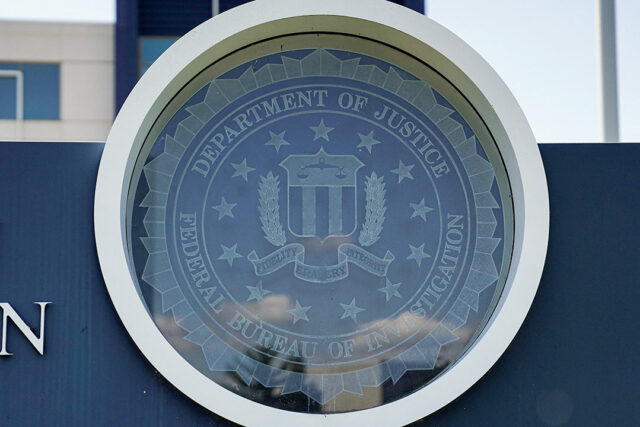
A VIEW shows the seal of the Federal Bureau of Investigation (FBI) outside of the FBI’s Cincinnati Field Office in Cincinnati, Ohio, US, Aug. 11, 2022. — REUTERS

 – Advocacy groups representing FBI agents appealed to the U.S. Congress on Monday to intervene to stop possible mass firings of agents who worked on the investigation of the Jan. 6, 2021 Capitol attack and other probes condemned by President Donald Trump.

In a letter to Republican and Democratic leaders in the Senate and House of Representatives, the groups warned that Trump-appointed leaders at the Justice Department were taking actions that imperiled the careers of thousands of FBI agents.

Republicans hold narrow majorities in both the chambers and have so far shown little interest in criticizing or reining in the administration’s actions.

A senior Justice Department official appointed by Mr. Trump asked the FBI to compile a list of employees who worked on cases related to the Capitol attack. FBI employees were ordered to fill out a questionnaire on Sunday detailing their work on those cases.

“We urge you to work with President Trump to prevent acting officials from taking personnel actions that undermine our shared goal of keeping the FBI out of politics,” the groups wrote in the letter. It was signed by the head of the FBI Agents Association, which represents 14,000 current and former special agents, and other law enforcement groups.

The directive has stoked fears that the Trump administration, which has already fired or reassigned dozens of Justice Department prosecutors and senior FBI officials, may take action against FBI agents who worked on the Capitol riot probe.

The Justice Department has not commented on the personnel moves. Officials have said some of the moves were aimed at employees who could not be trusted to carry out Trump’s agenda.

Separately on Monday, Senate Judiciary Committee Democrats wrote letters to Mr. Trump’s nominees to lead the Justice Department and FBI demanding records relating to the removal of career officials.

“We can only assume these decisions are intended to prevent the Department from investigating national security and public corruption, while also serving as political retribution against the President’s perceived enemies,” lawmakers led by Senator Dick Durbin wrote in the letter. – Reuters