Home Blog Page 1970

Disaster preparedness of Filipinos increased, but needs more improvement – 2024 Harvard survey

The Philippines is considered one of the countries that is most vulnerable to the impact of climate change. — PHILIPPINE STAR/EDD GUMBAN

Filipinos are more prepared for natural disasters than they were seven years ago, but material investments and social support still needs improvement, according to a nationwide survey conducted between February to March 2024 by the Harvard Humanitarian Initiative (HHI). 

On average, Filipinos’ self-reported disaster preparedness level increased by 42%, as revealed by the HHI survey on disaster preparedness and climate change perceptions in the Philippines. 

The average score – 19.2 out of 50 points – was an improvement over the 13.5 out of 50 gleaned in a 2017 study conducted by HHI using the same methodology and instrument.  

“For a country as vulnerable to disasters as the Philippines, [however,] this is not enough,” Vincenzo Bollettino, director of the HHI Resilient Communities program and co-lead for this study, said. 

“A score of 19.2 highlights both progress and areas needing urgent attention,” he said in a November 7 press statement. 

“The score suggests that Filipinos are only doing 38.4% of the kinds of disaster preparedness activities needed to be prepared,” he added. 

Among the five objective measures of disaster preparedness, Filipinos scored highest in information (4.9 out of 10) and lowest in social support (2.3 out of 10).  

In terms of specific social support activities, less than a quarter of Filipinos are members of a group or association (23%) and are familiar with their local disaster risk reduction and management officers (16%).  

Social support also declined to 2.3 in 2024 from 2.7 out of 10 in 2017. 

While many Filipinos discuss emergency plans as a family (58%), less than a third prepare their respective disaster management plan (20%), Go bag (27%), adequate supplies of regularly taken medications (32%), and first aid kit (33%). 

Regions-wise, the Cordillera Administrative Region (24.0 out of 50), Central Visayas (21.5), and Western Visayas (21.4) reported the highest levels of preparedness. Davao Region (17.3), Negros Island (15.8), and Bangsamoro Autonomous Region in Muslim Mindanao or BARMM (15.1), on the other hand, reported the lowest levels of such preparedness.  

The Philippine capital of Metro Manila ranked 11th in level of disaster preparedness (19.1) and slightly below the national average (19.2). It is also one of the regions with the least progress in disaster preparedness over time, with an increase in preparedness score by 22%, or 3.4 points from 15.7 in 2017. 

“The [National Capital Region] is the heart of the Philippine economy and home for a significant part of the country’s population, yet it is routinely hit by natural hazards,” Mr. Bollettino said. “Increasing its disaster preparedness is crucial.” 

The Philippines has the highest disaster risk in the world, based on the 2024 WorldRiskReport. 

As Patrick Vinck, HHI’s director of research, said: “enhancing the Philippines’ disaster preparedness requires investing in local leadership and leveraging technology to improve early warning systems and community engagement, among other critical measures.” 

“This should be accompanied by investments in resilient infrastructures, local capacities, and anticipatory actions,” he said in the same November 7 press statement.Patricia B. Mirasol

Reformulated Filipino lechon and banana sauces get approval for US market

Source: https://www.facebook.com/NutriAsia.Inc/

Mang Tomas lechon sauce, UFC banana sauce, and Jufran specialty sauces have been approved by the US Food and Drug Administration (FDA) to resume shipment into the United States, as announced by Nutri-Asia, Inc., the Philippine manufacturer of the products, on November 7. 

On November 4, a social media post by vlogger Cabalen Foodie went viral, noting the temporary halt in shipments of such sauces to the US.

The US FDA issued import alert No. 99-45 on October 25 on products that are or contain unsafe food additives. 

Among the ingredients found in Philippine-made products were Benzoate, a preservative that has a negative impact on gut microbiome; BHA, another preservative with carcinogenic potential; and Potassium Iodate, a dough strengthener that interferes with thyroid functions in high doses. 

Other Philippine companies whose products had been flagged were Heinz UFC Philippines Inc. and HDR FOODS CORPORATION. 

Manufacturers need to “adequately demonstrate that the firm has resolved the conditions that gave rise to the appearance of the violation” to have their products removed from the Red List. 

NutriAsia ensures that its products are compliant with the regulatory requirements in the countries they are exported to, the company said. 

“In the Philippines, food products are legally required to use [the food additive] Potassium Iodate, while the US FDA just very recently announced new requirements around this ingredient,” the statement read. “As such, the discussion around Potassium Iodate today is not a safety issue but rather a regulatory requirement which varies by country.” 

The company has since reformulated its products and has gained approval for release in the US market. – Patricia B. Mirasol

Philippine president signs new laws to assert South China Sea rights, sovereignty

PHILIPPINE COAST GUARD/HANDOUT VIA REUTERS

MANILA – Philippine President Ferdinand Marcos Jr signed two laws on Friday aimed at strengthening the country’s maritime claims and bolstering its territorial integrity, as tensions with China over disputed areas in the South China Sea persist.

The Maritime Zones Act and the Archipelagic Sea Lanes Act would define the Philippines’ maritime entitlements and set designated sea lanes and air routes to reinforce sovereignty and maritime rights under international law.

Mr. Marcos hailed the laws as a demonstration of the Philippines’ commitment to uphold an international rules-based order, and protect its rights to exploit resources peacefully in its exclusive economic zone (EEZ).

“Our people, especially our fisher folk, should be able to pursue their livelihood free from uncertainty and harassment,” Mr. Marcos said. “We must be able to harness mineral and energy resources in our sea bed.”

While the two laws were envisioned to help U.S. ally the Philippines to monitor and defend against potential encroachment, questions remain about how they will be enforced and if they will impact Chinese activity in the Philippine EEZ.

China asserts its claim of sovereignty over almost the entire South China Sea through an armada of coast guard ships, some of which are accused by its neighbours of aggressive conduct and of trying to disrupt energy and fisheries activity in their EEZs.

Senator Francis Tolentino, one of the authors of the maritime zones measure, said he does not expect tensions in Philippine EEZ will be instantly reduced with the implementation of the new laws.

“China will not recognise these, but the imprimatur that we’ll be getting from the international community would strengthen our position,” Mr. Tolentino told a press conference.

China’s embassy in Manila did not immediately respond to a request for comment on the new laws and senator’s remarks.

Mr. Tolentino also said the laws would reinforce a 2016 arbitration ruling on the South China Sea, which declared China’s expansive claims had no basis under international law. China has rejected the 2016 decision. – Reuters

AmCham Philippines to host ‘AmCham Tourism Summit 2024: Elevating Philippine Tourism and Infrastructure for Global Competitiveness’

The American Chamber of Commerce of the Philippines, Inc. (AmCham) is proud to announce the AmCham Tourism Summit 2024, set to take place on Wednesday, Nov. 13, at the Sheraton Manila Hotel in Pasay City. This landmark summit, themed “Elevating Philippine Tourism and Infrastructure for Global Competitiveness,” will unite prominent industry leaders, government officials, and stakeholders to discuss transformative developments in the Philippine tourism landscape.

The summit will provide a deep dive into critical areas shaping the future of Philippine tourism, including the country’s potential as a healthcare destination in medical tourism, sustainable tourism practices aimed at long-term ecological balance, and measures to enhance security and disaster preparedness for safer travel experiences. Furthermore, discussions will cover urban connectivity and infrastructure development, emphasizing the essential role of seamless transportation networks and modern facilities in creating an accessible and competitive tourism industry.

Bringing this summit to life are event partners whose support underscores their commitment to advancing Philippine tourism. United Airlines joins as the Official Airline Partner, alongside other sponsors, Sheraton Manila Hotel, AGC Development Corp., Converge Business, and Quantity Solutions Inc. Together, these partnerships embody a shared vision for a globally competitive tourism industry that drives economic growth and development.

The AmCham Tourism Summit 2024 offers a valuable platform for fostering strategic dialogue, promoting innovation, and cultivating partnerships among key players in the industry who are collectively working to enhance the Philippines’ position on the global tourism stage.


Spotlight is BusinessWorld’s sponsored section that allows advertisers to amplify their brand and connect with BusinessWorld’s audience by publishing their stories on the BusinessWorld Web site. For more information, send an email to online@bworldonline.com.

Join us on Viber at https://bit.ly/3hv6bLA to get more updates and subscribe to BusinessWorld’s titles and get exclusive content through www.bworld-x.com.

Trump win spurs defense ally Philippines to shield economic ties

STOCK PHOTO | Image from Pixabay

The return of Donald Trump to the White House is unlikely to reshape the US and the Philippines’ longstanding security alliance, but his economic policies and their impact would take center stage, according to Manila’s envoy to Washington.

“Our interests are very much aligned. It is going to be beneficial for both our countries,” Ambassador Jose Manuel Romualdez said in an interview Thursday at his Washington office. “I am convinced and confident that there will be no major changes especially on the defense side.”

Manila plans to capitalize on strengthened defense ties to continue scoring economic benefits from Washington during Trump’s second term, according to the envoy. The Philippines is seeking to sustain the flow of infrastructure aid and investment pledges from the US that ramped up under Joe Biden, as Mr. Trump’s protectionist policies risk roiling the global economy.

“On the economic side, that’s where we need to be able to see what his policies would be and how it would affect the Philippines,” Mr. Romualdez said. “It’s a matter of being able to negotiate a level that we would both agree is good for our countries,” he said of President-elect Trump’s plan to impose steep tariffs on all US imports, especially those from China.

Among the US’ oldest allies in Asia and one of the region’s fast-growing economies, the Philippines is preparing to mount a campaign to convince the Trump administration to consider the Southeast Asian nation as a supply chain partner as the superpower rebuilds its manufacturing sector, the envoy said.

NOT WORRIED
Mr. Romualdez isn’t worried at all that the next US administration could significantly alter Washington’s current strategy of countering China’s aggression in the region. It was during Mr. Trump’s first term, he said, that the US made the assurance that South China Sea is covered under the 1951 Mutual Defense Treaty.

Mr. Romualdez recalled Mr. Trump saying in 2017 when he visited the Philippines that the country “is in a geopolitical place where it is the most expensive piece of real estate” because of its proximity to the South China Sea.

If the South China Sea, which is a key route for trillions of dollars of trade, falls under the control of China, the US will be “severely affected,” the envoy said.

Manila and Washington have bolstered their defense alliance, with President Ferdinand Marcos Jr. expanding US access to Philippine military facilities, and holding joint drills in disputed waters.

Mr. Romualdez, a cousin of President Marcos, has been Manila’s envoy to the US since 2017. He was instrumental in stabilizing the alliance, after the relationship faced headwinds during the past administration of Rodrigo Duterte, who forged warmer ties with China and was critical of Washington.

The ambassador said he had been in touch with former Trump administration officials and other Republican leaders during the campaign.

“Our argument has always been: we want to be economically strong, economically prosperous so we would have the resources to defend ourselves, upgrade our armed forces with our own resources and whatever resources the US would be willing to assist us so that we can be a real partner,” Mr. Romualdez said. — Bloomberg

From farmers to importers: how Filipino rice growing went wrong

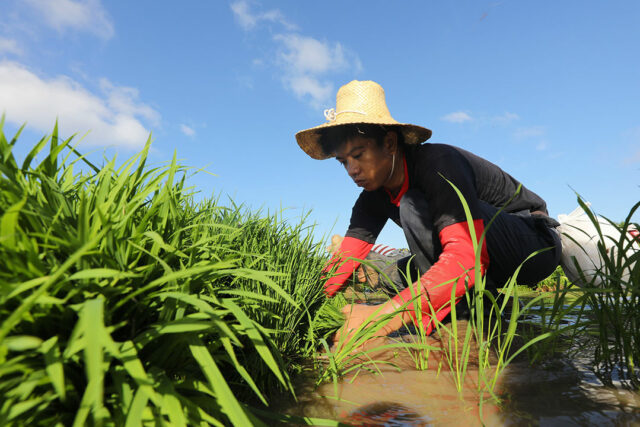
Farmers inspect rice crops affected by floods in La Union in this Oct. 12, 2021 file photo. — PHILIPPINE STAR/MICHAEL VARCAS

 – Alex Quinones has been a rice farmer in the Philippines for almost five decades – last summer was the first time his field dried up, forcing many of his neighbors to swap farm life for street sweeping.

“We were not able to harvest any rice. This drought was unlike anything we experienced before,” Mr. Quinones, 62, told the Thomson Reuters Foundation from his farm in Oriental Mindoro province, southwest of Manila.

Farm groups blame a dangerous cocktail of high imports, low trade prices and an ill-planned subsidy scheme for crippling the rice sector, pushing many small growers out of business.

Mr. Quinones leads an association of about 300 local rice farmers and said some had now become builders, street sweepers and waste pickers just so they could eat or pay off debts.

Along with fast-changing weather patterns, he said a deluge of foreign rice – imports have risen by nearly 60% since 2020 – has also hit income in recent years, with traders buying local rice near production costs.

The government said the El Nino phenomenon had cost the farm sector 9.5 billion pesos ($161.70 million)in damages as of May, as climate change slashed rice production.

Although one in four Filipinos work in farming, the country has now become the world’s top importer of rice, according to the United States Department of Agriculture.

To feed its population of more than 113 million, the country lifted a cap on rice imports five years ago, imposing tariffs of 35% to 40% to cushion the new, competitive blow.

The country is projected to import a record 4.7 million metric tons of rice this year, rising to 4.9 million metric tons in 2025, surpassing major importers such as China, Indonesia, the European Union, Nigeria and Iraq.

But farmers’ groups said the high imports and a lack of disaster aid had displaced farmers, trapped rice growers in poverty and left the country dependent on foreign food.

“It’s high time to junk the law that for the last five years had consistently failed our rice farmers and consumers”, said Cathy Estavillo, who represents a local group of peasant women and the rice watch group Bantay Bigas.

Super Typhoon Enteng, the Philippines‘ fifth tropical cyclone this year, caused more than 2.2 billion pesos in damage to agriculture and livestock, affecting over 59,000 farmers and 37,000 hectares of agricultural land.

In the Bicol region, in the northern part of the country, rights group said about 90% of rice farms that were then ready for harvest was damaged by September’s typhoon.

Ms. Estavillo said farmers hit by this run of climate disasters had yet to receive any government compensation.


IMPACT ON FARMERS

The Rice Tariffication Law was supposed to help Filipino farmers by channeling import taxes into a Rice Competitiveness Enhancement Fund (RCEF) worth 10 billion pesos a year.

The fund aimed to finance new farm machinery, seed development and propagation, among other initiatives.

But Filipino farmers lost an estimated 90 billion pesos during the first year of the new law, data from the National Federation of Peasant Women in the Philippines shows, as traders pushed down prices on the back of all the new imports.

During this period, farmers earned barely half the cost of living.

In Nueva Ecija, once the nation’s rice basket, many farmers went into bankruptcy as prices for rice tanked to new lows.


LOCAL PRODUCTION

Last year, the government reaped a record 30 billion pesos in tariffs on imported rice – money that advocates said did little to help struggling Filipino farmers.

Under the law, Manila allots 5 billion pesos a year for cooperatives, associations and local government units to buy agricultural equipment.

As of March, Manila said it had delivered over 26,000 units of agricultural equipment, benefitting a million farmers.

But Ms. Estavillo said many small-scale farmers were not part of cooperatives or groups so were excluded from the distribution.

“A bigger number of farmers still rent tractors and harvesters. The 10 billion a year is not enough to slash the cost of rice production to 50%’, said Ms. Estavillo.

Farmers also complained of insufficient fertilizer handouts, and of seeds being distributed too late or too old.

“In reality, the tariffs that ideally should be returned to farmers through machines, fertilizers, and pesticides to lower their production costs were not significant and failed to make them competitive,” said Ms. Estavillo.

In comparison, Thailand last year approved 55 billion baht ($1.60 billion) of support for its rice farmers: seven times the amount pledged to their Filipino counterparts.

Ms. Estavillo said about 100,000 farmers had signed a petition urging the government to scrap the law, strengthen rice production and help farmers earn a decent income.

With nothing to harvest, farmers like Quinones now struggle even to take out loans to finance the next planting season in June – putting all his future earnings into jeopardy.

“The government promised to loan us 35,000 pesos each for production. Until now, we have not received anything from them and we don’t know how to start over,” he said. – Reuters


Taiwan coast guard to harness ‘people power’ to report Chinese activity

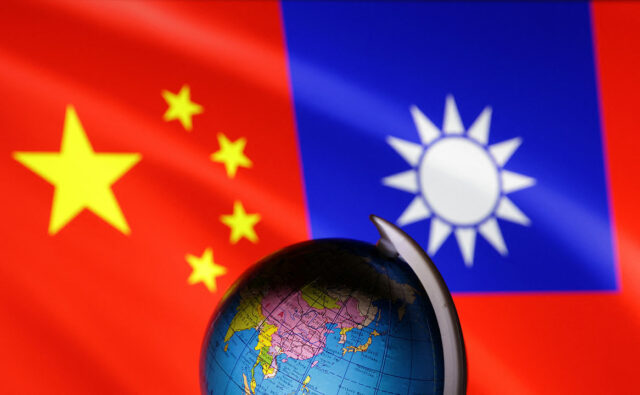
A GLOBE is seen in front of Chinese and Taiwanese flags in this illustration, Aug. 6, 2022. — REUTERS

 – Taiwan’s coast guard said on Friday it would offer rewards worth thousands of dollars for spotting Chinese activity at sea, including warships or submarines, saying it was harnessing “people power” to boost its own limited workforce.

Taiwan, which China claims as its own territory, has complained for the past five years of stepped up Chinese military activity, and the Taiwanese coast guard has increasingly been involved in patrolling sea areas.

China’s coast guard’s involvement in these activities has grown, which Taiwan officials say is part of a “grey zone” strategy that stops short of war and aims to enforce what China calls its right to manage and control the Taiwan Strait.

Taiwan’s coast guard said there was a growing threat at sea.

“The coast guard has limited manpower and there is endless people power at sea,” it said in a statement.

“In order to build a dense notification network at sea and along the coast, and to eliminate grey area attacks, the coast guard calls on Taiwan’s people to raise their awareness of maritime security and stay alert to the abnormal activities.”

The highest reward of T$200,000 ($6,245) will go to those reporting piracy, murder, arson or hostage taking, while reporting illegal entry of Chinese nationals will net T$50,000, the coast guard said.

For what it called “substantiated” reports of Chinese warships, including submarines, in Taiwan’s waters then T$3,000 per case would be offered, it added.

The coast guard has come in for criticism in Taiwan for failing to spot some cases of Chinese nationals crossing the strait and landing on the island, people who mostly used small boats that are hard for radars to detect.

In June, Taiwanese fishing boats in the strait took pictures of a Chinese submarine that had surfaced.

Taiwan has been boosting investment in its coast guard with larger more modern ships, some of which can be equipped with missiles in the event of war. – Reuters

NAACP condemns racist texts to Black Americans on slavery

PHILIPPINE STAR/EDD GUMBAN

 – The NAACP on Thursday condemned racist text messages referencing slavery that were sent anonymously to Black Americans this week as a contentious election was coming to an end in the United States.

The messages urged recipients in multiple states, including Alabama, North Carolina, Virginia, and Pennsylvania, to report to a plantation to pick cotton, the NAACP said in a statement.

The FBI said on Thursday it was in touch with the U.S. Justice Department and other federal authorities about the “offensive and racist messages.”

“These actions are not normal. And we refuse to let them be normalized,” NAACP President Derrick Johnson said in a statement from the organization, which advocates for racial justice and rights for Black Americans.

High school and college students were among the recipients, the Associated Press reported.

Johnson said the messages were a reflection of Donald Trump’s presidential election victory on Tuesday, which sent shockwaves through Black American communities.

Many Black Americans fear a rollback of civil rights after Trump’s pledge to end federal diversity and inclusion programs.

The president-elect denies he is racist, and has said his economic agenda will benefit all Americans, including Black Americans.

A spokesperson for the president did not immediately respond to a request for comment sent after normal business hours in Washington.

Johnson said the messages “represent an alarming increase in vile and abhorrent rhetoric from racist groups across the country, who now feel emboldened to spread hate and stoke the flames of fear that many of us are feeling after Tuesday’s election results.”

The run-up to Tuesday’s general election in the United States included the biggest rise in U.S. political violence since the 1970s, which included some racist attacks on supporters of Vice President Kamala Harris, the first woman of color at the top of a major party ticket. – Reuters

Boeing to repay furloughed staff, proceed with job cuts

REUTERS

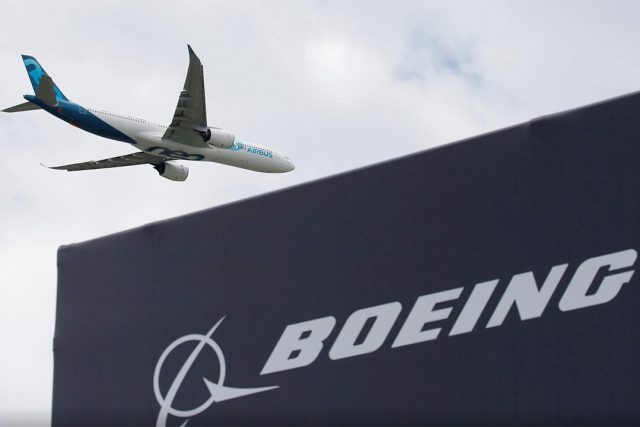
 – Boeing CEO Kelly Ortberg said on Thursday that employees furloughed during a seven-week strike by factory workers would be repaid by the company for lost wages, but it would proceed with plans to cut about 10% of its global workforce.

Boeing furloughed thousands of salaried employees on a rolling basis after the strike by 33,000 union machinists began in September and halted production of its best-selling 737 MAX. But the planemaker later canceled the unpaid leave after announcing plans to cut 17,000 jobs.

Your sacrifice made a difference and helped the company bridge to this moment,” Mr. Ortberg told staff in an email seen by Reuters. “We want to acknowledge your support by returning your lost pay if you went on unpaid furlough.”

Boeing is dealing with morale issues as it moves ahead with its job cuts, with many of the employees due to be notified about the future of their roles this month.

We will continue forward with our previously announced actions to reduce our workforce levels to align with our financial reality and a more focused and streamlined set of priorities,” Mr. Ortberg wrote to staff. “These structural changes are important to our competitiveness and will help us deliver more value to our customers over the long term.”

A spokesperson for the Society of Professional Engineering Employees in Aerospace, which represents Boeing engineers, said earlier it was informed that 60-day notices of job losses would be issued to its members on Nov. 15.

Boeing on Monday won ratification of a contract giving its machinists a 38% pay hike over four years and a $12,000 bonus, ending the strike.

Those workers are due back by Nov. 12. Boeing has not said yet when it plans to resume production of the 737 MAX, but has indicated it will be gradual and under regulatory scrutiny.

The planemaker has racked up losses of nearly $8 billion this year as it continues to wrestle with a quality crisis from a January mid-air panel blowout.

We have hard work ahead to restore our company and deliver on our customer commitments, but we are on the right path and making the right changes,” Mr. Ortberg wrote.

Boeing raised $24 billion in fresh capital last month to shore up its finances. Mr. Ortberg said last month he is reviewing Boeing’s businesses and long-term forecasts.

The company may end up selling some assets, as it downsizes its workforce to focus on the company’s key civil planemaking and core defense units.

Mr. Ortberg’s email was reported earlier by the Air Current, an aviation industry publication. – Reuters

Aiding pediatric cancer patients suffering from hearing loss

STOCK PHOTO | Image by shatishira from Pixabay

by Edg Adrian A. Eva, Reporter

Hearing loss for children receiving cancer treatment is a difficult side effect—particularly during their formative years, when connecting with society is crucial to their development. 

“Many are unaware of the unattended side effects of these treatments, mainly irreversible hearing loss,” JP Mallo, I Want to Share Foundation (IWTS) Board of Trustee said in his opening statement during the turnover event. 

In a 2023 study, Mr. Mallo noted that 30% to 50% of children who received platinum-based chemotherapy, such as cisplatin and carboplatin, developed hearing loss. At the Philippine General Hospital, this is more commonly observed among patients with brain tumors and osteosarcoma, a type of bone cancer. 

To bridge the gap, ten pediatric cancer patients from the Philippine General Hospital (PGH) received hearing aids on October 29, in a turnover ceremony led by the I Want to Share Foundation (IWTS) in partnership with Manila Hearing Aid.  

An additional twenty hearing aids will also be provided to other selected pediatric patients at PGH in the near future.  

This initiative is part of PGH’s survivorship program, according to Dr. Ana Patricia Alcasabas, a pediatric oncologist at PGH. It was developed as more children have survived cancer since the early 2010s, in partnership with community organizations and non-government groups, to address the long-term effects of cancer treatments, such as hearing loss. 

“We want to move for the children to integrate them (back) in their schools, families, and develop them careers… They do have a disability like hearing loss, (but) we want to help them overcome it,” Ms. Alcasabas said.  

Each hearing aid is personalized for every patient, depending on the size of their ears and the severity of the hearing loss, which takes at least three months to develop, Sheila Marie B. Romero, founder of IWTS told BusinessWorld. 

For patients like 7-year-old Rome, a two-year cancer survivor diagnosed with Grade 4 Medulloblastoma (a highly malignant and fast-growing type of brain tumor), receiving a hearing aid could help him return to school, as both of his ears were severely affected by some of his cancer treatments. 

“Kanina no’ng nabigyan kami niyan (hearing aid) sobrang naiyak talaga ako. Kasi mahina lang yung boses ko, (tapos) tinanong ko siya kung naririnig na niya ako? Naririnig niya ako, sumagot po siya [Earlier, when we were given the hearing aid, I was crying because I asked him in a soft voice if he could hear me, and he said yes],” Michelle Teodocio, mother of Rome told BusinessWorld.  

Meanwhile, for 8-year-old Lance, who is still undergoing chemotherapy to complete eight cycles for the same Grade 4 Medulloblastoma, receiving a hearing aid could help him enjoy his favorite music and videos on his mom’s smartphone. 

“Super thankful din po kami na napili siya na mabigyan kasi parang mahina rin po yung kanan niya kahit pang-apat pa lang po namin (cycle) [We are also very thankful that he was chosen to receive it because his right ear seems to be losing hearing, even though it is only our fourth cycle],” Anna Joy Dela Cruz, mother of Lance said.  

IWTS Founder, Ms. Romero, told BusinessWorld that after the initial distribution of thirty hearing aids to pediatric cancer patients at PGH, the foundation will continue to provide hearing aids to more patients in the future, reinforcing its commitment to supporting the lives of young cancer survivors. 

MMDA aims to have zero waste in landfills by 2034

PHILIPPINE STAR/EDD GUMBAN

by Almira Louise S. Martinez, Reporter

The Metro Manila Development Authority (MMDA) launched its 10-year Road to Zero Waste program on Tuesday, aiming to create a more sustainable future in the metro.  

The ten-year roadmap envisions a ‘closed-loop system’ of solid waste management, wherein waste reduction, recycling, and resource recovery lead to zero waste in landfills by 2034.   

“The program aims to cover all types of waste that employs sustainable, practical, and preferably, local solutions and methods,” MMDA Chairman Romando S. Artes said at the Road to Zero Waste Summit 2024. 

According to Mr. Artes, the agency aims to promote social and behavioral change in the National Capital Region (NCR) and “catalyze pro-active actions.” 

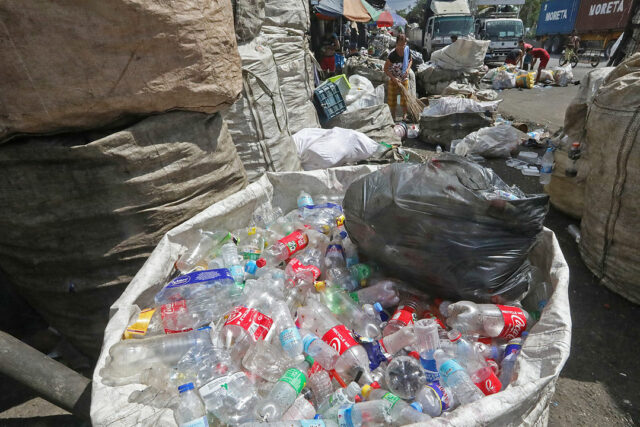
As cited in the 2023 Waste Analysis and Characterization Study in Metro Manila, MMDA reported that 21.44% of household waste can be recycled. Meanwhile, 85% of public market waste is compostable. 

Mr. Artes added that local government units (LGUs) struggle to collect all community-generated trash because citizens throw it in bodies of water, like rivers, which enhances flooding during calamities. 

In line with this, the Department of the Interior and Local Government (DILG) urged all LGUs to participate and give proper attention to implementing Metro Manila’s sustainability initiative. 

“I think it’s very important that LGUs and the Filipino citizens themselves inculcate what the government is teaching us,” DILG Assistant Secretary for Local Government Jessi Howard S. Lanete told BusinessWorld. 

“Walang bagong Pilipinas kung walang bagong Pilipino [We can’t change the Philippines if we can’t change ourselves,”]  he added. 

QCinema International Film Festival unveils 2024 lineup

QCinema International Film Festival returns with The Gaze as its theme, inviting audiences to explore diverse perspectives through film. From the masculine and feminine gaze to new ways of seeing the world, this year’s festival showcases 77 titles, including 22 short films and 55 full-length films, across 11 sections. 

Featuring a mix of Asian competition films, world cinema, genre works, and arthouse gems, The Gaze offers a rich and immersive experience that opens new insights into politics, gender, race, and more. 

Kicking off the 12th edition of QCinema is Directors Factory Philippines, an exciting omnibus film project created in collaboration with Cannes Directors’ Fortnight. This groundbreaking initiative features the works of four filmmakers from the partner country and four from other nations.

This year’s Directors Factory Philippines features four films: Walay Balay, directed by Eve Baswel (Philippines) and Gogularaajan Rajendran (Malaysia); Nightbirds, directed by Maria Estela Paiso (Philippines) and Ashok Vish (India); Silig, directed by Arvin Belarmino (Philippines) and Lomorpich Rithy (Cambodia); and Cold Cut, directed by Don Eblahan (Philippines) and Tan Siyou (Singapore).  

QCinema 2024 will close with Cloud by acclaimed Japanese filmmaker Kiyoshi Kurosawa. Premiered out of competition at the 81st Venice International Film Festival, Cloud has garnered international attention and was selected as Japan’s Best International Feature Film entry at the 97th Academy Awards. 

Competition Sections

QCinema 2024 will feature two main competition sections: Asian Next Wave and QCShorts International. This year, QCShorts has expanded to include films from across Southeast Asia, with six Filipino short film grantees competing alongside the region’s best. 

The Asian Next Wave Competition showcases some of the most exciting films from emerging Asian filmmakers, each at the onset of their storytelling careers. 

Among the lineup are films from three debuting female directors: Don’t Cry Butterfly by Dương Diệu Linh (Vietnam, Indonesia, Philippines, Singapore), the Grand Prize winner at Venice Critics’ Week; Pierce by Nelicia Low (Taiwan, Poland, Singapore), Best Director at the recent Karlovy Vary Crystal Globe Competition; and making its Asian premiere, Mistress Dispeller, a feature documentary by Elizabeth Lo (China, USA), winner of the NETPAC award for Best Asian Film at Venice. 

Four other debuts include Happyend by Neo Sora (Singapore, UK, USA), which also recently premiered in Venice; Tale of the Land by Loeloe Hendra (Indonesia, Philippines, Qatar, Taiwan), winner of the Fipresci prize in last month’s Busan; Viet and Nam by Truong Minh Quy (Philippines, Vietnam, Singapore, France, Netherlands, Germany, Italy, USA), from Cannes’ Un Certain Regard; and finally, making its world premiere is Moneyslapper by Bor Ocampo (Philippines).

Competing in QCShorts International are Alaga by Nicole Rosacay, Kinakausap ni Celso ang Diyos by Gilb Baldoza, Refrain by Joseph Dominic Cruz, RAMPAGE! (o ang parada) by Kukay Bautista Zinampan, Supermassive Heavenly Body by Sam Villa-Real, and Water Sports by Whammy Alcazaren from the Philippines. 

Joining them from Southeast Asia are Are We Still Friends? by Al Ridwan (Indonesia); Here We Are by Chanasorn Chaikitiporn (Thailand), which made its international premiere at the Berlinale: Forum Expanded; In the Name of Love I Will Punish You by Exsell Rabbani (Indonesia), which made its world premiere at the Fantasia Film Festival; Peaceland by Ekin Kee Charles (Malaysia); Saigon Kiss by Hồng Anh Nguyễn (Vietnam/Australia/Germany), which received the Special Mention: Queer métrage Prize at the Clermont-Ferrand International Short Film Festival; and Locarno-winning WAShhh by Mickey Lai (Malaysia/Ireland).

For this year’s edition, RainbowQC and New Horizons are now both international competition sections under the Special Critics Prize awards, with their respective juries. 

RainbowQC continues to celebrate LGBTQIA+ films, showcasing diverse stories of identity, love, and community with bold and authentic voices from queer cinema worldwide. New Horizons presents groundbreaking debut feature films from visionary new directors. 

RainbowQC includes three Cannes Queer Palm nominees: Baby by Marcelo Caetano, from Critics’ Week; The Balconettes by Noémie Merlant, from Midnight Screenings; and My Sunshine, by Hiroshi Okuyama, from Un Certain Regard. Two other titles round up this competition – Pooja, Sir by Deepak Rauniyar from Venice Orizzonti, and Sebastian by Mikko Mäkelä from this year’s Sundance World Dramatic Competition.

The New Horizons section includes Blue Sun Palace by Constance Tsang, winner of the French Touch Prize at Cannes Critics’ Week; Cu Li Never Cries by Phạm Ngọc Lân, which won this year’s Best First Feature in Berlin; Santosh by Sandhya Suri from Cannes’ Un Certain Regard, which is the UK’s entry for Best International Feature Film at the 97th Academy Awards; The Major Tones by Ingrid Pokropek, selected for the Generation Kplus section at the 74th Berlin Film Festival; and Toxic by Saulė Bliuvaitė, which won this year’s Locarno Golden Leopard.

Exhibition Sections

The most awaited section of QCinema 2024, Screen International, showcases 10 films from world-renowned directors, each celebrated for their distinctive styles and acclaimed works. 

This year’s lineup includes two very recent titles from the San Sebastian Film Festival – Afternoons of Solitude by Albert Serra, a documentary feature that won three awards, including Best Film, and When Fall is Coming by François Ozon, which won Best Screenplay. 

From Cannes are four of its big winners: All We Imagine as Light by Payal Kapadia, the first Indian film in decades to compete in Cannes’ main competition, where it won the Grand Prix; the Best Director award winner, Grand Tour by Miguel Gomes, which is Portugal’s entry for the 97th Academy Awards; Critics’ Week section Grand Prize winner, Simon of the Mountain by Federico Luis; and the Palme d’Or winner, Anora by Sean Baker, touted as a strong Oscar contender.

Fresh from its Venice world premieres are from its out-of-competition berth, Pinoy auteur Lav Diaz with Phantosmia; The End, a musical-fantasy by Joshua Oppenheimer; The Count of Monte Cristo by Alexandre de la Patellièr and Matthieu Delaporte, the most expensive French film of 2024; and the Venice Golden Lion winner, The Room Next Door by Pedro Almodóvar.

QCinema also introduces exciting new sections to its lineup: QCLokal, highlighting local Filipino talents; Rediscovery, which brings classic films back to the big screen; Contemporary Italian Cinema, showcasing the best of modern Italian filmmaking; and QCinema Selects, a curated selection of standout films from around the world.  

The QCLokal section includes Room in a Crowd by John Torres, featuring a special live sound performance and stitched-together footage from the lockdown, and Rizal’s Makamisa: Phantasm of Revenge by Khavn, which recently won Best Feature at the Lausanne Underground Film and Music Festival, inspired by José Rizal’s unfinished third novel. 

It will also have the Shorts Expo, which presents five world premieres of remarkable short films such as Brownout Capital by Pabelle Manikan, Forgetting Clara by Nicole Matti, May Puso ba ang Manika? by Shiri de Leon, Objects Do Not Randomly Fall from the Sky by Maria Estela Paiso, and Yung Huling Swimming Reunion Before Life Happens by Glenn Barit, and the Southeast Asian premiere of Invisible Labor by Joanne Cesario.

The Rediscovery section lineup includes Delicatessen by Jean-Pierre Jeunet and Marc Caro; Dogtooth by Yorgos Lanthimos, which won the Prix Un Certain Regard at the 2009 Cannes Film Festival and was nominated for Best Foreign Language Film at the 83rd Academy Awards; and Ran by Akira Kurosawa, his final epic and widely regarded as one of the greatest films ever made.

Contemporary Italian Cinema takes center stage with a compelling lineup of films that showcase the best of modern Italian storytelling.  Antonio and Marco Manetti bring us Diabolik, while Matteo Garrone presents Io Capitano. Marco Bellocchio’s Kidnapped: The Abduction of Edgardo Mortara delves into historical drama, and Carlo Sironi’s My Summer with Irene offers a captivating summer tale. Alice Rohrwacher’s La Chimera and Michele Riondino’s Palazzina Laf complete this exceptional selection, showcasing the brilliance of Italian and European filmmaking. 

QCinema Selects includes Ghost Cat Anzu by Yoko Kuno and Nobuhiro Yamashita, QCinema’s first anime film, which premiered at Cannes and won the Audience Award at Fantasia Film Festival; No Other Land by Rachel Szor, Yuval Abraham, Hamdan Ballal, and Basel Adra, winner of the Panorama Audience Award at the Berlin International Film Festival; Shahid by Narges Kalhor, a debut feature that took home two awards at Berlin; Sujo by Fernanda Valadez and Astrid Rondero, which won the World Cinema Dramatic Grand Jury Prize at Sundance; The Sparrow In The Chimney by Ramon Zürcher, premiered at Locarno; and Twilight Of The Warriors: Walled In by Soi Cheang, one of Hong Kong’s highest-grossing films and its official entry for the Best International Feature Film at the 97th Academy Awards.

Other favorite sections are making a comeback at QCinema 2024. Before Midnight section embraces genres, delving into the fantastic, erotic, action thrillers and everything for late-night chills and thrills. Lastly, Special Screenings offer exclusive, must-see films for a truly unique cinematic experience.   

The Before Midnight section includes Motel Destino by Karim Aïnouz, which competed for both the Palme d’Or and Queer Palm at the 77th Cannes Film Festival; Gazer by Ryan J. Sloan, a self-financed debut that had its world premiere at Directors’ Fortnight, Cannes; Infinite Summer by Miguel Llansó, which premiered at the Fantasia International Film Festival; A Samurai in Time by Junichi Yasuda, winner of the Audience Award for Best Asian Feature at Fantasia; and The Wailing by Pedro Martin-Calero, which premiered in official competition at the San Sebastián International Film Festival.

The Special Screenings section includes An Errand by Dominic Baekart, If My Lover Were a Flower by Kaung Zan, The Marching Band by Emmanuel Courcol, A Thousand Forests by Hanz Florentino, and Lost Sabungeros by Bryan Brazil. Each film presents a distinct narrative, adding depth and variety to the festival’s rich program.

The festival will take place from Nov. 8 to 17 across Gateway Cineplex 18, Ayala Malls Cinema at Trinoma, Red Carpet at Shangri-la Plaza, and Powerplant Mall.


Spotlight is BusinessWorld’s sponsored section that allows advertisers to amplify their brand and connect with BusinessWorld’s audience by publishing their stories on the BusinessWorld Web site. For more information, send an email to online@bworldonline.com.

Join us on Viber at https://bit.ly/3hv6bLA to get more updates and subscribe to BusinessWorld’s titles and get exclusive content through www.bworld-x.com.