Home Blog Page 197

Turkish-language drama Yellow Letters wins Berlin Film Festival’s top prize

BERLIN — Yellow Letters, a drama about what happens to a marriage under extraordinary political pressure, won the Berlin Film Festival’s Golden Bear top prize on Saturday night.

The Turkish-language drama set in Germany stars Ozgu Namal and Tansu Bicer as a married actor and playwright who lose their jobs and have to leave behind their comfortable lives after the husband is targeted by the Turkish state for posting critical content online.

“The real threat is not among us. It is out there. It’s the autocrats. It’s the right-wing parties. It’s the nihilists of our time who try to come to power and destroy our way of living,” said producer Ingo Fliess. “Let’s not fight each other. Let’s fight them,” he said.

“I know what (this win) means to my cast and crew who came from Turkey, who now are getting a visibility that is on an international scale,” Turkish‑German director Ilker Catak told Reuters after the award ceremony.

The director, whose previous Berlin entry The Teachers’ Lounge was nominated for an Oscar, said it was important that the film was not just about Turkey, but Germany as well. “There is a sign that says 1933 and what we’ve seen in this country before, we must never forget,” he said, referring to the year that Adolf Hitler came to power.

This year’s jury president, legendary German director Wim Wenders, praised the winner as “a movie that speaks up very clearly about the political language of totalitarianism.”

In total, 22 films had been in the running.

POLITICAL FESTIVAL
The festival maintained its reputation as the most overtly political of its peers, Venice and Cannes, with the war in Gaza in particular dominating public discussions about the films.

“If this Berlinale has been emotionally charged, that’s not a failure of the Berlinale, and it’s not a failure of cinema,” said festival director Tricia Tuttle at the opening ceremony, using the festival’s nickname.

Mr. Wenders used his final appearance as jury president to urge filmmakers and activists to act as allies, not rivals, after his comment that filmmakers should not be political caused Indian novelist Arundhati Roy to pull out.

Several award winners used their speech to express solidarity with the Palestinians and other oppressed peoples.

“The least we can do here is to break the silence and remind them that they are not really alone,” said Turkish filmmaker Emin Alper, whose film Salvation took the second-place Silver Bear Grand Jury Prize.

Palestinian-Syrian director Abdallah Al-Khatib, whose Chronicles From the Siege won the Perspectives section for emerging filmmakers, criticized the German government for its stance on Gaza despite concerns about crossing a red line.

“I was under a lot of pressure to participate in Berlinale for one reason only, to stand here and say: ‘The Palestinians will be free,’” he said.

SANDRA HUELLER WINS AGAIN
German actor Sandra Hueller, who starred in 2024 Oscar-winning films Anatomy of a Fall and Zone of Interest, continued her winning streak by taking home best actor for the period piece Rose, in which she dresses as a man.

“To me, it’s special because I won my first-ever recognition as an actor in a film at this festival 20 years ago,” Ms. Hueller told Reuters, who won best actress in 2006 for Requiem.

Queen at Sea, a drama that follows French star Juliette Binoche as she deals with her mother’s advanced dementia and its effects on her marriage, won two prizes: the third-place jury prize and best supporting actor, shared by its two elderly performers, Anna Calder-Marshall and Tom Courtenay.

Director Lance Hammer, who last competed at the festival in 2008, said he hoped that maybe “people will see this and feel some comfort or relief that they’re not alone.”

Director Grant Gee won best director for Everybody Digs Bill Evans, a black-and-white biographical drama starring Norwegian actor Anders Danielsen Lie as the US jazz pianist.

Nina Roza, about an art curator who returns to Bulgaria to verify whether a child painting prodigy is genuine, won best screenplay while Yo (Love is a Rebellious Bird) took the prize for outstanding artistic contribution. — Reuters

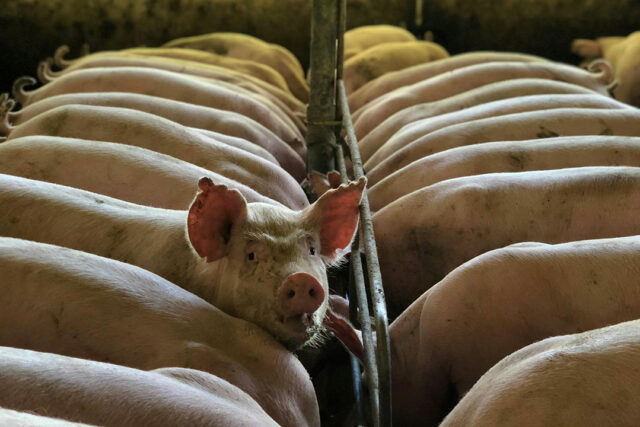
Swine, chicken populations up in Q4, cattle down

STOCK PHOTO | Image by Barbara Barbosa from Pexels

THE SWINE and chicken populations rose in the fourth quarter of 2025, while the cattle herd decreased, according to the Philippine Statistics Authority (PSA).

In its quarterly livestock bulletin, the PSA reported a 0.5% year-on-year increase in the swine population to 8.79 million head in the fourth quarter.

The PSA said 78.3% of the swine population was from smallhold farms, while the remaining 20.4% and 1.3% were from commercial and semi-commercial farms, respectively.

Calabarzon (Cavite, Laguna, Batangas, Rizal, and Quezon) recorded the highest swine population with 1.14 million head as of Dec. 31. This was followed by Central Luzon and the Bicol Region, with corresponding inventories of 1.04 million and 0.69 million head, respectively.

Hog production on a liveweight basis in the fourth quarter increased 1.6% year on year to 454,980 metric tons (MT).

The chicken population increased 5.2% year on year in the fourth quarter to 217.23 million birds.

The PSA said native or improved chickens accounted for 35.3% of the population, while broiler chickens accounted for 34.5%. Layer chickens and gamefowl for breeding accounted for 25.8% and 4.4% of the total, respectively.

The top chicken population was recorded in Calabarzon at 43.82 million birds, followed by Central Luzon with 38.81 million and Northern Mindanao with 17.76 million.

Chicken output on a live weight basis in the fourth quarter rose 9.4% to 613,560 MT from 560,740 in the same period in 2024.

Meanwhile, the cattle herd declined 1.3% year on year to 2.51 million head in the fourth quarter.

According to the PSA, 86.3% of the cattle herd was raised by smallhold farms, while the remaining 11.3% and 2.4% by semi-commercial and commercial farms, respectively.

The Central Visayas had the largest cattle herd with 273,100 head, followed by the Ilocos Region and the Bangsamoro Autonomous Region in Muslim Mindanao with corresponding populations of 259,670 and 253,650.

Cattle production on a liveweight basis  declined 1.5% to 64,940 MT in the fourth quarter. — Vonn Andrei E. Villamiel

Lower vape taxes will worsen the vape epidemic

STOCK PHOTO | Image by Diana.Grytsku from Freepik

Today, Feb. 23, the House Ways and Means Committee will hold a hearing to deliberate on House bills on a number of tax measures, including bills which propose to lower taxes on vape products.

House Bill (HB) 5207, authored by House Deputy Speaker Kristine Singson-Meehan et al., HB 5364 authored by Representatives Rufus and Maximo Rodriguez, and HB 5212 by Representative Ferdinand Hernandez, all similarly claim to endeavor to alleviate the burden of illicit tobacco trade and “ensure fair competition among legitimate industry players.” But the bills actually carry egregious proposals, including imposing a lower tax rate on e-cigarettes or vape products.

Under Republic Act 11467 of 2020, taxes on vape products differentiate between nicotine salt and freebase nicotine. As of 2026, nicotine salts are taxed at P60.29 per milliliter and freebase nicotine is taxed at a lower P69 per 10 milliliters or P6/milliliter.

This kind of differentiation in vape tax rates is only done in the Philippines. Although some countries, like Sweden, apply differentiated tax rates based on nicotine concentration levels, only the Philippines distinguishes nicotine salt formulations from freebase formulations. Most countries tax vape liquids at the same rate regardless of formulation.

According to the Department of Finance (DoF), this two-tiered system creates inefficiencies and tax loopholes. Vape manufacturers tend to misdeclare their products as freebase nicotine rather than nicotine salt, given that it is difficult to differentiate between the two. And so, to simplify tax administration, getting rid of the two-tier system and instead taxing all kinds of vape liquids at the same rate would be worthwhile.

But what HBs 5207, 5364, and 5212 do is unify the tax rates for nicotine salt and freebase at a low P10 per milliliter, a stark drop from the current P60.29/mL tax rate of nicotine salts. The measure masquerades as “tax rationalization” which “plugs revenue leaks” when all it does is lower current tax rates.

A similar bill to be discussed today, authored by House Ways and Means Chair Representative Miro Quimbo, HB 1316, which was criticized by advocates for its provision granting tax incentives to the tobacco industry, at least unifies vape taxes at a higher rate of P61.425/mL.

Further, HBs 5207, 5364, and 5212 only increase taxes on vapor products and do not increase taxes on heated tobacco products (HTPs), which introduce similar levels of harm and yet are taxed much lower than both cigarettes and the higher tier of vape products.

Health advocates have strongly opposed the lower excise tax rate for vapor products, and argue that tax rates must be equalized at the prevailing higher rate: P60.29 per milliliter, or even higher. Further, the gap between the tax rates of heated tobacco products and vape products needs to be narrowed.

The bills justify the “differentiated and lower excise tax rate for vapor products” by citing alignment with “harm reduction strategies.” In Rep. Singson-Meehan’s bill, the explanatory note writes “a lower tax rate will encourage smokers to transition to less harmful alternatives.”

However, the tobacco industry’s claim of vape products being a safer alternative to cigarettes has been debunked by numerous studies over the years. One of the latest additions to the literature debunking this myth is a February 2026 study published in Public Health Reports by Dr. Stanton Glantz and Dr. Andre Luiz Oliveira da Silva, noting that “healthcare providers and public health authorities should stop promoting e-cigarettes as a meaningfully safer alternative to cigarette smoking.”

The meta-analysis, which analyzed 124 studies on the association of e-cigarette use with disease outcomes in the general population, showed that there is no distinguishable difference in the odds of disease for current e-cigarette users compared to cigarette smokers.

Lowering taxes on vape products will lead to revenue losses, an irresponsible move at a time when the government is facing a serious fiscal problem.

From a public health perspective, lowering vape taxes will only worsen the ongoing “vapedemic.” According to National Nutrition Survey data, the population of adolescent vape users (aged 10-19) jumped from an estimated 37,513 in 2021 to 423,185 in 2023. This is a 1,100% increase in a span of two years — likely a result of weak regulation, including tax rates that are too low and the passage of RA 11900, which lowered the age of access to vapes from 21 to 18 years old and lifted the flavor ban.

This time last year, Congress passed House Bill 11360, or what advocates branded the Sin Tax Sabotage Bill, which proposed to lower the annual indexation of tobacco and vape taxes and would have led to 2 million new smokers and P175 billion in foregone government revenue. In the face of public backlash, the bill lowering tobacco taxes was not passed in the Senate; yet, it is disturbing that the latest House Bills have similar provisions to the Sin Tax Sabotage Bill.

The difference is that the current bills focus on vape products and will eventually make these products even more affordable for their target market: the vulnerable youth.


Pia Rodrigo and Gage Andal are researchers at Action for Economic Reforms.

Debt yields mixed after BSP move

YIELDS on government securities (GS) traded in the secondary market were mixed last week as the Bangko Sentral ng Pilipinas (BSP) delivered a sixth straight cut and as the Treasury offered new 10-year bonds.

GS yields, which move opposite to prices, went down by 2.72 basis points (bps) on average week on week, based on PHP Bloomberg Valuation Service Reference Rates data as of Feb. 20 published on the Philippine Dealing System’s website.

At the short end of the curve, yields on the 91-, 182-, and 364-day Treasury bills (T-bills) fell by 11.79 bps, 9.17 bps and 8.35 bps week on week to 4.4319%, 4.5437% and 4.5946%, respectively.

Meanwhile, at the belly, rates were mixed. Yields on the three-, four-, and five-year Treasury bonds (T-bonds) edged up by 0.23 bp (to 5.3463%), 0.94 bp (5.485%), and 1.07 bps (5.5985%), respectively, while those for the two- and seven-year bonds went down by 2.33 bps (to 5.161%), and 0.15 bp (5.7732%).

Yields were also mixed at the long end. The rate of the 10-year tenor inched up by 0.03 bp (to 5.9679%), while yields on the 20- and 25-year bonds slipped by 0.33 bp (to 6.5791%) and 0.12 bp (6.5821%), respectively.

GS volume traded reached P44.06 billion, lower than the P60.76 billion recorded a week earlier.

Yields on shorter tenors continued to decline as the BSP slashed borrowing costs again last week, with the market pricing in previous and possible future cuts, a bond trader said in an e-mail.

The BSP on Thursday lowered benchmark interest rates by 25 bps for a sixth straight meeting to bring the policy rate to 4.25%, as expected by all 16 analysts in a BusinessWorld poll.

This brought total reductions since August 2024 to 225 bps.

BSP Governor Eli M. Remolona, Jr. said future easing will largely depend on how soon confidence will recover, as weak sentiment has affected demand, making the output gap bigger.

“We’re now in a situation where it’s more conditional on what happens to confidence and growth,” he said at a briefing after Thursday’s meeting. “We support growth, and we do want growth. But at the same time, our main mandate is still inflation. So, to the extent we can support growth without causing inflation, we will support growth.”

On Friday, he said that with inflation under control, they have room to help stimulate domestic demand, although they face a “large element of uncertainty.”

“We are at the point where monetary policy cannot do much more, but things are very uncertain,” the BSP chief said.

Analysts are split on prospects for the central bank’s policy path, with some expecting the BSP to pause for now and others seeing further easing ahead.

“The massive demand for the latest 10-year offering reflected market participants’ high preference to secure attractive interest rates near 6%,” the bond trader added.

The Bureau of the Treasury  said on Friday that it raised a total of P297.94 billion from its offering of new 10-year fixed-rate Treasury notes, made up of P235 billion in new money and P62.94 billion via the switch program.

This was well above the initial P30-billion offer. The benchmark bonds fetched at a coupon rate of 5.925%.

The trader said soft US data released early last week raised concerns over the state of the world’s largest economy, also pulling yields down.

For this week, US reports on gross domestic product and inflation released late on Friday could affect local yield movements as these could give market players clues on the Federal Reserve’s future policy actions, the trader added.

Meanwhile, Jonathan L. Ravelas, a senior adviser at Reyes Tacandong & Co., said in a Viber message that rates could move sideways or higher “with upside risks to inflation and the need for clearer signs of confidence in the economy.” — P.O.A. Montalvo

Kia PHL is APAC distributor of the year

Kia President and CEO Ho Sung Song (left) with Kia Philippines Managing Director Jay Lopez at the 2026 Kia Global Distributors Convention — PHOTO FROM KIA PHILIPPINES

KIA PHILIPPINES, a subsidiary of ACMobility, was recently recognized as the Regional Distributor of the Year at the 2026 Kia Global Distributors Convention held in Australia, marking the first time the Philippines has received the distinction.

“The achievement represents a significant milestone not only for the brand but also for the local automotive industry. The award honors the brand’s outstanding performance across key metrics, including sales volume, wholesale and retail growth rates, market share growth, and overall dealer capacity,” said Kia Philippines in a statement.

Kia Philippines Managing Director Jay Lopez declared, “This award is a strong validation of the hard work and collaboration of our entire Kia Philippines team and our dealer partners. Competing alongside top-performing markets globally and emerging as the Asia-Pacific winner reflects how far we have come as an organization. This achievement motivates us to keep pushing forward and deliver even greater value to our customers.”

Out of five global regions (North America, South America, Europe, the Middle East, Africa, and Asia Pacific) only one top subsidiary or distributor per region is selected for the award. Aside from the Philippines, the other countries awarded were the United States, Peru, Denmark, and Northern Iraq. The recognition underscores Kia Philippines’ position as the leading distributor in the APAC region and reinforces its strong momentum in delivering sustained growth and excellence.

For more information about the brand’s vehicle lineup, visit www.kia.com/ph or follow Kia Philippines on Facebook, Instagram, and YouTube.

TMP expects flat 2026 sales amid cautious consumer demand

PHOTO FROM TOYOTA MOTOR PHILIPPINES CORP.

TOYOTA Motor Philippines Corp. (TMP) is projecting flat car sales this year amid subdued private spending, but said it will continue expanding the reach of its electric models in provincial markets.

“We are taking a conservative stance and stay flat from last year. So, maybe a range of 5% growth,” TMP Chairman Alfred V. Ty told reporters on the sidelines of the 42nd joint meeting of the Philippines-Japan Economic Cooperation Committee, Inc. and the Japan-Philippines Economic Cooperation Committee (PHILJEC-JPECC) on Thursday last week.

He noted that the market is likely on a “wait-and-see” stance before purchasing activity regains momentum.

“The market has to have more confidence in the economy to start spending again, because that’s what we’re hearing from the market,” Mr. Ty said. “Some of them will wait and make sure that their business will be protected for this year.”

TMP ended 2025 with a 5.2% increase in sales, with 229,447 Toyota and Lexus units sold. The company accounted for 49.49% of the market share.

TMP earlier said it aims to maintain a 46% market share in 2026.

It is also targeting growth for its affordable hybrid vehicles, with provincial markets seen as a key driver.

“Right now, the market is shifting to provincial over NCR (National Capital Region)… and that’s where we want the demand to grow,” Mr. Ty said.

Sales of TMP’s electric models jumped 40% last year to 19,516 units, representing 9% of total units sold in 2025. Since 2009, the company has sold 44,228 electrified units as part of its efforts to promote carbon neutrality.

For 2026, TMP plans to introduce five new models, including three electrified vehicles: the Urban Cruiser battery electric vehicle (EV), the RAV4 hybrid EV, and the Land Cruiser 300 hybrid EV. Other new launches will include the Land Cruiser FJ and the all-new Hilux.

The Philippine automotive industry is expected to grow to between 491,000 and 510,000 units this year, TMP President Masando Hashimoto said in January. — Beatriz Marie D. Cruz

London Fashion Week: Paul Costelloe honored at first fashion show helmed by his son

PAUL COSTELLOE — YOUTUBE.COM/@FASHIONFEED

LONDON — William Costelloe paid tribute to his late father, Irish designer Paul Costelloe, on Thursday, as he presented the fashion label’s first collection since its founder’s death in November.

Models wore long jackets and dresses with sculpted shoulders, sharp trouser suits and voluminous blouses as part of the autumn/winter line. (Watch the show here: https://tinyurl.com/55xexdvv).

There was plenty of tweed, check, and knitwear as well as prints that both father and son, now the brand’s creative director, had worked on in their last collaboration.

Paul Costelloe, who became a fixture at London Fashion Week for four decades, died in November aged 80.

“It’s an honor to him, what he taught me,” William Costelloe told Reuters backstage, saying his first collection went back to the brand’s roots.

“It’s really a celebration of tailoring… making women look incredible, structured shoulders… and then also kind of looking at new silhouettes… these broad shoulders coming in at the waist.”

He chose a color palette of earthy tones, tan, white, and charcoal. Knitwear came in ribbed jumpers with large hoods and short skirts. Models also wore culotte pants or short skirts with large bow-like embellishments.

Accessories included long chunky scarves and oversized handbags.

The show took place on the first day of London Fashion Week, the second leg of the autumn-winter 2026 catwalk calendar, which began in New York and will also head to Milan and Paris.

London Fashion Week ends today, Monday.

KING CHARLES VISITS LONDON FASHION SHOW
Meanwhile, Britain’s King Charles appeared at a fashion show in London on Thursday just hours after his brother Andrew Mountbatten-Windsor was arrested on suspicion of misconduct in public office.

Charles greeted onlookers with a wave when he arrived at Tolu Coker’s London Fashion Week show and was met with applause inside the room.

Watching the British-Nigerian designer’s collection he chatted animatedly to British Fashion Council Chief Laura Weir and designer Stella McCartney on the front row.

Earlier on Thursday, Mountbatten-Windsor was arrested by police and detained in custody to be questioned over allegations he sent confidential government documents to Jeffrey Epstein.

The arrest of the senior royal, eighth in line to the throne, is unprecedented in modern times and presents Charles with the biggest crisis of his reign.

Charles’ visit to London Fashion Week, which was planned in advance, combined his eye for classic British style with his support for traditional crafts.

The monarch, a long-time customer at London’s famed Savile Row street of tailors, watched as models presented the latest creations by Coker, who is known for celebrating cultural identity and craftsmanship in her work.

Charles, 77, follows in his late mother’s footsteps by attending a London Fashion Week show. In 2018, Queen Elizabeth sat beside fashion editor Anna Wintour on the front row at Richard Quinn’s show.

Coker, who launched her eponymous brand in 2021, was showing as part of the British Fashion Council’s NEWGEN program, which provides financial support and mentoring for new designers.

Before the show, Charles toured exhibitions at the London Fashion Week hub, including one by designer McCartney, known for using alternatives to leather and fur in her designs, focusing on sustainable British innovation. — Reuters

Trump weedkiller order could cost him political support in November midterms

MIKE MOZART/FLICKR

WASHINGTON — Members of the US Make America Healthy Again (MAHA) movement that backs Health Secretary Robert F. Kennedy, Jr. said an executive order this week to boost domestic production of the weedkiller glyphosate risks their support in November’s midterm elections.

Mr. Kennedy backers helped elect President Donald Trump in 2024, and he has installed MAHA priorities during his second term, such as reducing the number of recommended childhood vaccines and promoting whole foods in the new dietary guidelines.

The administration drew criticism from MAHA activists last year for removing draft language on pesticides from an August report on children’s health and for the Environmental Protection Agency’s approval of new pesticides.

On Wednesday, Mr. Trump’s executive order invoked the Defense Production Act to ensure the domestic supply of phosphorus and glyphosate, a widely used weedkiller at the center of tens of thousands of lawsuits by plaintiffs claiming it causes cancer.

MAHA activists said they saw Mr. Trump’s executive order as a broken promise to their movement, which opposes the widespread use of glyphosate due to health concerns.

“I don’t feel like there’s much hope after this executive order in preserving the MAHA vote,” said Kelly Ryerson, co-executive director of American Regeneration and a critic of glyphosate use.

The order says glyphosate is “crucial to the national security and defense, including food-supply security.”

White House spokesman Kush Desai said the Trump administration is committed to the MAHA agenda.

“The President’s executive order is not an endorsement of any product or practice. This action simply seeks to strengthen our national security and end America’s decades-long reliance on foreign imports and supply chains,” Mr. Desai said in a statement.

Estimates vary widely on how many voters MAHA includes, but it represented a large part of Mr. Kennedy’s support during his aborted presidential campaign.

Bayer, the only company that produces glyphosate in the US, proposed a $7.25-billion legal settlement this week to address tens of thousands of lawsuits claiming its glyphosate weedkiller Roundup causes cancer.

The German company said in August that it could be forced to stop US production unless regulatory changes were made to stave off that litigation. The US imports large volumes of glyphosate from China.

Bayer has maintained that glyphosate is safe for human use.

The science on glyphosate’s safety is mixed, with some research showing it can affect the endocrine system or linking it to cancer.

Dave Murphy, founder and CEO of United We Eat and former finance manager on Mr. Kennedy’s presidential campaign, called the executive order a “strategic mistake” that could serve as an election liability.

“Trump would not be in the White House this second time without those followers, and we expect him to live up to his word,” Mr. Murphy said.

Mr. Kennedy, a longtime glyphosate critic who in a 2024 post on X called it “one of the likely culprits in America’s chronic disease epidemic,” said in a statement that the executive order is necessary for national security.

“When hostile actors control critical inputs, they weaken our security,” he said, without specifying to which countries he was referring. “By expanding domestic production, we close that gap and protect American families.”

Republicans control the Senate and, more narrowly, the House of Representatives, but every seat in the House and a third in the Senate will be contested in November.

Mr. Trump’s aggressive approach to immigration and voter concerns about persistently high costs already show signs of liability to Republicans in the elections. Sitting presidents have lost House seats in every midterm election since George W. Bush in 2006.

MAHA supporters flooded social media with posts and comments about their disappointment, including images with the text, “we do not consent to being poisoned.”

A petition to Mr. Trump being circulated by the MAHA group Moms Across America, whose founder Zen Honeycutt is a longtime Mr. Kennedy ally, urges him to rescind the order.

“True national security is healthy families and the ability of the next generation to reproduce and thrive, which will not happen for as long as these pervasive, harmful herbicides are being used,” the petition read. — Reuters

Gov’t working to align PHL bond pricing standards with global rules

NATIONAL TREASURER Sharon P. Almanza — BUREAU OF THE TREASURY FACEBOOK

THE GOVERNMENT is looking to align the Philippines’ bond pricing standards with international rules to boost the country’s chances of re-entering the JPMorgan Chase & Co.’s Government Bond Index-Emerging Markets (GBI-EM).

“[For the Philippines,] the withholding tax is part of the computation for premium and discount. So, we’re also trying to align with how other countries are withholding tax,” National Treasurer Sharon P. Almanza told reporters on Wednesday last week.

“There’s withholding tax (in other countries), but they don’t include it in the computation of bonds when they are issued at the premium or at the discount. So, it’s gross price. For us, it’s embedded in the price.”

She said they are working with market players on the matter as part of the government’s efforts to be included in the global bank’s GBI-EM.

JPMorgan’s GBI-EM tracks the performance of sovereign and quasi-sovereign bonds issued by emerging market countries. The country’s inclusion will need to be approved by a certain percentage of investors reviewing the index.

In September last year, JPMorgan tagged Philippine peso-denominated government bonds (RPGB) as “Index Watch Positive,” which is the final review phase for the’ country’s potential inclusion in the GBI-EM.

The bank said it will conduct its Index Watch assessment and provide updates within this quarter.

The Philippines’ global peso notes were removed from the GBI-EM in January 2024 due to illiquidity. For potential inclusion in the index are RPGBs issued from 2023 with tenors up to 20 years.

Secondary market liquidity and taxation issues were among the key concerns for Philippine bonds raised by JPMorgan.

Ms. Almanza said she is positive about the country’s re-inclusion in the index.

“There are a lot of improvements. With liquidity, we already have the tax treaty for implementation, at least for those with the tax treaty agreement. And on the Bangko Sentral ng Pilipinas’ (BSP) side, there’s the peso interest rate swap (IRS) market. So, it also helped with liquidity and the repo (repurchase) market.”

The BTr in November 2024 announced the implementation of a streamlined tax treaty procedure for the nonresident investors of government securities.

Meanwhile, the enhanced Peso IRS market began operations in November 2024 and is being handled by the Bankers Association of the Philippines to promote the development of yield curves to further support the pricing requirements of short-term credit instruments, such as loans. — Aaron Michael C. Sy

The collective conscience

STOCK PHOTO | Image from Freepik

The collective conscience is formed by “conscious agreements in society that make societal cohesion possible — the realm of shared traditions, laws, and cultural norms,” according to social scientists. True, the collective conscience sometimes “nods” in sleepy disinterestedness, and it might take a while for current events and thought processes to gel into “shared traditions, laws and cultural norms” before society “nods” its approval and agreement to the “new normal” that is constantly in flux.

The term “collective conscience” was introduced by the French sociologist Émile Durkheim in 1893. His idea of collective consciousness refers to beliefs and sentiments common to average members of society, forming a determinate system that has its own life. There is a collective conscience that would drive society’s future directions.

What does the collective conscience think and feel, in the mad whirl of changing “shared traditions, laws, cultural norms” and even principles and values, in the world and in our country today?

Some political leaders with questionable integrity and inelegant character have been elected into public office by an unexpected majority. And when public trust is betrayed by corrupt public officials, why does the collective conscience allow and abet the scandalous anomalies that steal the wealth of the country and deny the poor their very sustenance and survival?

The US-based Journal of Public Economics (March 2004) posits a theory of the quality (competence and honesty) of elected officials: “Our theory offers three main insights. Low-quality citizens have a ‘comparative advantage’ in pursuing elective office, because their market wages are lower than those of high-quality citizens (competence), and/or because they reap higher returns from holding office (honesty). Hence, voters may find themselves supply constrained of high-quality candidates. Second, bad politicians generate negative externalities for good ones, making their rewards from office increasing in the average quality of office holders. This leads to multiple equilibria in quality. Third, incumbent policymakers can influence the rewards of future policymakers, leading to path dependence in quality: bad governments sow the seeds for more bad governments.”

The Guardian article by Dean Burnett (“Democracy vs Psychology: why people keep electing idiots,” April 2015) offers a mercilessly frank analysis. “Unfortunately, there are several psychological mechanisms that lead to apparent idiots being elected into powerful positions,” Burnett says, with a disclaimer that not all elected officials are bad or are idiots. “But plenty are,” he says with acerbic humor: “The US seems particularly afflicted with them.”

“Logically, you’d want an intelligent person who understands the best approach and methods for running a country in the best possible way. But no, people seem drawn to demonstrations of questionable intellectual abilities. There are a wide variety of ideological, cultural, social, historical, financial and other factors involved, because politics incorporates all of these things, but there are also some known psychological processes that may contribute to this phenomenon.

“The Dunning-Kruger effect reveals that less-intelligent people are usually incredibly confident. More intelligent people, by contrast, aren’t at all. Self-appraisal is a useful metacognitive skill, but one that requires intelligence; if you don’t have much of it, you don’t consider yourself flawed or ignorant, because technically you don’t have the ability to do so. This may explain the negative image of politics, which is mostly a series of confident individuals making big promises and failing miserably to keep them.

“People are often put off by intellectual and complex subjects and discussions in any case. They may have no experience with the issue, or may find it too daunting to want to engage with, because doing so successfully would require a lot of time and effort. Parkinson’s law of triviality, says that people will spend far more time and effort focusing on something trivial that they do understand than something complicated that they don’t. (Thus, many winning politicians are those with high exposure in popular media — film stars, sports heroes, celebrities in otherwise non-political scenes.)

“The majority of people are prone to numerous subconscious biases, prejudices, stereotyping and prefer their own ‘groups.’ None of these things are particularly logical and invariably are not supported by actual evidence and reality, and people really don’t like being told things they don’t want to hear. People are also keenly aware of social status; we need to feel we are superior to others in some way to maintain our sense of self-worth. As a result, someone more intelligent saying complicated things that contain uncomfortable (but accurate) facts isn’t going to appeal to anyone, but someone demonstrably less-intelligent is not challenging to someone’s perceived social status, and if they’re going to say simple things that support inherent prejudices and deny uncomfortable facts, then so much the better.”

Socio-political analyst-writer Randy David taunts the Filipino collective conscience: “Why do we keep electing bad leaders?” (randydavid.com/2000/02). “We do so because our attention is focused on changing persons rather than institutions. The system by which we recruit the leaders of our nation is deeply flawed. This is immediately evident in the premium we place on the personal popularity of candidates rather than on their capacity to articulate and defend a national plan. We place little value on debate and on educational campaigns to create intelligent voters. By our failure to stop vote-buying and electoral fraud, we allow politicians to prey upon the hunger of impoverished voters and the vulnerability of election workers. We permit candidates to raise unlimited amounts of campaign contributions from undisclosed sources, unmindful of the graft and corruption that follows when politicians start paying back every peso they received from expectant financiers.”

Corruption watcher Transparency International (TI) in its 2025 report gives the Philippines a score of 32 out of the perfect 100 zero-corruption; the Philippines is a dismal No. 120 out of 180 countries ranked (with No. 1, Denmark, as least corrupt country of all), meaning we are in the last group, the 1/3 most corrupt countries in the survey.

TI identifies two recent major corruption cases that have cast the Philippines into the shameful lot of the most corrupt countries:

1. Fraud in the flood control projects that have drained over P1 trillion from government funds (February 2026)

2. Bribery in the failed Climate Change projects (September 2021).

The collective consciousness must awaken, and not relent on the punishment of those found guilty of corruption in government, and must insist on the restitution of stolen wealth.

The flood control investigations have been in the news since anomalies in the Department of Public Works and Highways (DPWH) were exposed by no less than President Ferdinand Marcos, Jr. in his State of the Nation (SONA) in July 2025. The finger-pointing and the denials by “suspects” in the massive systemic fraud have been “dribbled” between evidently politically opposed sectors, confusing and tiring the collective conscience.

So also, is the collective consciousness sated to stupor on three other major issues of conscience constantly discussed in media:

1. The ICC case on Rodrigo Duterte. On March 11, 2025, former Philippine president Rodrigo Duterte was arrested by the Philippine National Police and Interpol in Operation Pursuit under an International Criminal Court (ICC) warrant charging him with crimes against humanity related to the Philippine drug war: the murders of 76 people between 2013 and 2018. Fifty-seven of the killings took place during his presidency, and the other 19 occurred during his term as mayor of Davao City. The hearing for confirmation of charges is scheduled for Feb. 23, 24, 26 and 27 at the ICC in The Hague, Netherlands. Supporters of Rodrigo Duterte continue to actively protest against the ICC arrest and trial.

2. The impeachment of Vice-President Sara Duterte. On Feb. 5, 2025, 215 members of the House of Representatives signed an impeachment complaint against Sara Duterte on charges that include corruption, plotting to assassinate President Marcos Jr., involvement in extrajudicial killings and incitement to insurrection and public disorder. The Senate failed to act on the impeachment complaint in time, and remanded the case back to the House, whereupon the Supreme Court (SC) declared the complaint unconstitutional because of the one-year filing technicality. The impeachment complaint was re-filed by the House on Feb. 6, this year, as the SC wanted. Sara Duterte announced on Feb. 18 that she will be running for president in the 2028 elections.

3. The intrusion and territorial claims of China in the West Philippine Sea. Chinese foreign information manipulation and interference (FIMI) operations linked to the West Philippine Sea are expected to persist through the 2028 national elections, Philippine security officials said (inquirer.net, Feb. 20). The South China Sea dispute is a complex, long-standing territorial conflict involving overlapping claims by China, Taiwan, Vietnam, Malaysia, Brunei, and the Philippines over islands (mainly the Spratly and Paracel groups), reefs, and surrounding waters. China claims roughly 90% of the area via its “nine-dash line,” which was rejected by a 2016 international tribunal ruling. Key issues involve control of strategic shipping lanes, oil/gas reserves, and fisheries, with escalating tensions driven by China’s artificial island construction and military buildup (BBC, July 7, 2023).

So many issues now trouble the mind and heart of this small, struggling country. Why is the collective conscience seeming to drift towards indifference to the moral and social-economic costs of corruption and injustice in society? Why have the principles and values fought for during the 1986 EDSA People Power Revolution faded in the compromises and accommodations for survival and individualistic objectives in a fast-changing world?

“EDSA at 40: Moral fatigue threatens Philippines,” The Philippine Star headlined, ahead of the 40th anniversary of the EDSA People Power revolt on Feb. 25. Catholic Bishops’ Conference (CBCP) president and Lipa Archbishop Gilbert Garcera said during his Thursday Mass at the National Shrine of Mary, Queen of Peace in Quezon City: “The greatest danger today is not only historical distortion, but moral fatigue. When freedom is treated merely as a memory and not a duty, the spirit of EDSA slowly dies.” Bishop Garcera said: “moral fatigue arises when freedom is remembered only as a memory, faith becomes devotion without courage, and peace is sought without justice.”

The collective conscience nods, in recognition and acceptance of its sacred duty to uphold and defend peace and justice among fellowmen.


Amelia H. C. Ylagan is a doctor of Business Administration from the University of the Philippines.

ahcylagan@yahoo.com

Jimny gets Suzuki Safety Support

PHOTO FROM SUZUKI PHILIPPINES

SUZUKI PHILIPPINES (SPH) recently announced that the 2026 Jimny Three-Door now comes equipped with Suzuki Safety Support — bringing advanced driver-assist technology to the famous 4×4 vehicle.

Celebrated for its boxy design, agility, and off-road toughness, the Jimny “now adds intelligent safety to its list of strengths,” said SPH in a statement. “This latest upgrade makes the beloved 4×4 not just trail-ready, but even more reassuring for everyday drives and long highway journeys.”

Suzuki Safety Support is a suite of preventive safety technologies designed to help avoid collisions and reduce driver fatigue. The system includes Dual Sensor Brake Support II (DSBS II) which uses a camera and laser sensor to detect vehicles or pedestrians ahead. When a potential collision is detected, the system issues audio and visual warnings and can automatically apply the brakes if necessary. However, SPH noted that the DSBS II is limited to the ability of the monocular camera and millimeter-wave radar sensor to detect obstacles and lanes. “Please do not rely on this system alone and always practice safe driving habits,” said the company.

Available in all new Jimny Three-Door variants, adaptive cruise control uses radar and a camera to maintain a preset speed while intelligently adjusting acceleration and braking based on traffic conditions ahead. Meanwhile, lane departure prevention provides subtle steering assistance when the vehicle begins drifting outside its lane, and lane departure warning alerts the driver through audio, visual cues, and steering feedback. The Weaving Alert function monitors driving patterns and issues a buzzer-like sound and dashboard warning if unusual drifting is detected, and high beam assist improves nighttime visibility by automatically switching between high and low beams depending on surrounding traffic and lighting conditions, activating at speeds of 30kph and above when the headlamp switch is set to Auto.

The vehicle also receives practical interior and convenience enhancements. GLX variants now feature a new nine-inch infotainment touchscreen that delivers “a more modern and intuitive user experience,” plus a newly updated colored display in the information gauge cluster that replaces the previous red-orange graphics. Both GL and GLX variants now benefit from the addition of front side and curtain air bags. Front parking sensors are now standard across the range, making maneuvering in tight spaces easier, while the GL variant also gains a reverse camera for added convenience and visibility when backing up.

The 2026 Jimny Three-Door with Suzuki Safety Support is available in the following variants: GL MT SS (P1.293 million), GLX AT SS (P1.355 million), and GLX AT Two-Tone (P1.365 million).

For more information, visit http://suzuki.com.ph/auto/. For daily updates, like Suzuki Auto PHL’s Facebook page at https://www.facebook.com/SuzukiAutoPH or follow on Twitter (SuzukiAutoPH) and Instagram (@suzukiautoph).

SEC orders Umeta Credit Lending to halt operations

BW FILE PHOTO

THE Securities and Exchange Commission (SEC) has issued a cease-and-desist order (CDO) against Umeta Credit Lending Corp. and its associated online lending platforms (OLPs) for unauthorized operations and allegedly engaging in unfair debt collection practices.

In a cease-and-desist order dated Feb. 18, the SEC’s Financing and Lending Companies Department (FLCD) instructed Umeta Credit and its platforms, including FinLedger – Smart Ledger, Cash Twig, Meta Cash, and MorePautang – Loan Hub, to immediately stop promoting or conducting lending activities.

“The prohibition covers the operation and promotion of the OLPs it controls, such as Meta Cash, MorePautang – Loan Hub, Cash Twig, FinLedger – Smart Ledger, and any other platform, application, website, or digital interface operated under other names,” the Commission said in a statement on Friday.

The order stemmed from an FLCD verification showing that the company operated undisclosed OLPs without SEC approval, violating SEC Memorandum Circular (MC) No. 19, s. 2019, which requires full disclosure by financing and lending firms.

Umeta Credit Lending also violated SEC MC No. 10, s. 2021, which imposed a moratorium on new OLPs starting Nov. 5, 2021.

“[Umeta Credit Lending’s] decision to deploy and maintain multiple OLPs, under varying names and digital identities, without proper recording with the Commission, constitutes a deliberate circumvention of regulatory safeguards. This is not a case of mere technical lapse or administrative oversight. It is a calculated evasion of supervision,” the order read.

The SEC also determined that Umeta Credit Lending used unfair debt collection tactics, based on more than 300 informal complaints received from January 2025 to January 2026.

Five of those complaints advanced to formal administrative cases for breaching SEC MC No. 18, Series of 2019, which bans unfair collection practices by lending companies.

Additionally, the firm ignored five show-cause letters from the SEC, amounting to a “deliberate refusal to engage with lawful authority” and “blatant disregard” of the Commission’s oversight role.

“The convergence of the following circumstances: (a) unauthorized operation of multiple OLPs; (b) hundreds of complaints alleging unfair collection practices; and (c) the [company’s] repeated refusal to respond to five formal regulatory directives creates a clear and present danger to financial consumers,” the order read.

“Accordingly, the issuance of a CDO is necessary to immediately halt the [Umeta Credit Lending’s] operations and prevent further injury to the borrowing public pending final determination of its administrative liability,” it added.

BusinessWorld was unable to reach Umeta Credit Lending and its associated OLPs, as their websites and Facebook pages could not be found. — Alexandria Grace C. Magno