Home Blog Page 197

The good fight against political dynasties

The 20th Congress of the Philippines currently has within its sights the potential structural change to turn the political tide.

The current debates on the Anti-Dynasty Bill (simultaneously taking place in both upper and lower houses) have ventilated a healthy round of discourse both in legislative circles, civil society, and the public at large.

The consolidated Senate bill features many “safeguards” that can potentially limit political dynasties and protect the country from the ill effects of dynastic politics. These include the addressing of overlapping constituencies through restrictions at the national and local levels of government, inclusion of the party-list system in the list of covered positions, and a ban on succession of incumbents by relatives.

The glaring difference with the stand of anti-dynasty advocates is the consanguinity and affinity clause for both versions of the bill, with bills limiting it to the 2nd degree of consanguinity and affinity. Anti-dynasty advocates strongly recommend banning relatives up to the 4th degree of consanguinity and affinity to ensure that no excessive consolidation of power by one family takes place.

The house bill (authored by Representative Sandro Marcos and Speaker Boyet Dy) subscribes to the idea of anti-dynastic politics, but this version falls short of what can actually prevent political dynasties from enduring. The Anti-Dynasty Network (ADN) points out the following shortcomings of the Marcos-Dy version: lack of prohibition on succession, weak restrictions on overlapping constituencies, and the absence of the party-list as a position under the guardianship of the law. The bill also features a “within the same district” prohibition in the context of legislative posts, which is frankly not possible anyway under a single member district system.

The bill likewise supports the same consanguinity and affinity clause as the Senate version.

As both bills head towards the bicameral conference, it becomes apparent which anti-dynasty version is more effective in stunting the growth of dynasties and thus more ably carries the weight of the common good. While it seems that it will be an uphill battle for an outright prohibition, the hope remains that the essential elements of an effective anti-dynasty law will remain in the final version, if the more effective version prevails. In the current political climate, this hope remains dim and unencouraging, which means that the role that a concerned citizenry can potentially play increases.

The making of good laws is our responsibility as citizens as well because we hold the right to choose our lawmakers.

Finally, in a month dedicated to women, it seems apt that an anti-dynasty law that ends the concentration of power in a system that has traditionally favored the patriarchy should succeed. The long-term gains in the quality of leadership and democracy in our country certainly outweigh the short-sighted interests of those who stand to gain from a weak law being basement bargained and passed.

It is not only a gift to women — our mothers, our sisters, our daughters, our friends — but also a promise to future generations of leaders who can be shaped by the needs and common interests of the country rather than the directives and incentives that come from being a member of a political dynasty.


Dr. Maria Elissa J. Lao is an associate professor at the Department of Political Science and director of the University Gender and Development Office of the Ateneo de Manila University.


EastWest rolls out auto loan refinancing program

PHILSTAR FILE PHOTO

EAST WEST Banking Corp. has launched a refinancing solution for auto loans that lets borrowers access cash while keeping their vehicles as collateral.

The program, called EastWest AutoCash, allows borrowers to tap as much as 70% of their car’s appraised value, with repayment terms of up to 48 months.

For loans with a 50% loan-to-value ratio, the bank offers a promotional interest rate of 0.68% a month, below the standard 0.88% rate for refinancing.

“EastWest AutoCash gives customers a smart way to access funds using an asset they already own — without disrupting their daily mobility,” EastWest Chief Executive Officer Jerry G. Ngo said in a statement on Monday. “It’s about helping our clients move forward financially while continuing to move forward in life.”

The product is available to both existing and new customers, particularly car owners seeking liquidity for business, education, medical expenses, emergencies or personal needs.

Eligible vehicles must be registered under the borrower’s name and no older than 10 years.

If the car is still under a previous loan, the refinancing amount must exceed the remaining balance, with proceeds released net of the outstanding loan.

Applicants must submit photos of the vehicle (interior, exterior, odometer), latest official receipts and certificates of registration, two government-issued IDs, proof of residence, tax identification number and proof of income

Acceptable income documentation varies: three months’ pay slips for employed applicants, a business permit for self-employed borrowers or three months of remittance records for those relying on remittance income.

Applications remain subject to the bank’s standard credit evaluation.

EastWest Bank has been expanding consumer-focused lending products as it seeks to diversify its portfolio. Last year, the lender reported a net income of P9.1 billion, up 21% from 2024, driven by strong core revenue and fee income growth.

Shares of EastWest Bank closed at P12.92 on Monday, down 1.37% or 18 centavos from Friday’s finish. — Aaron Michael C. Sy

National Symphony Orchestra executive director steps down, exiting Kennedy Center

COMMONS.WIKIMEDIA.ORG

WASHINGTON — National Symphony Orchestra Executive Director Jean Davidson announced on Friday that she was stepping down from the ensemble that primarily performs at the John F. Kennedy Center for the Performing Arts in Washington.

“It’s no secret that this has been a really hard year,” Davidson told the New York Times, while noting that she started looking for a new opportunity several months ago.

She will head the Wallis Annenberg Center for the Performing Arts in California.

The National Symphony Orchestra did not immediately respond to a request for comment.

Davidson’s departure follows months of turmoil at the Kennedy Center, a national cultural center in the US capital that was named after former President John F. Kennedy months after his assassination. President Donald Trump has appointed himself as chairman, pushed to change the organization’s focus and named a board that voted last year to add his name to the institution. Last month, Trump announced that the Kennedy Center would close for two years, for reconstruction work.

US Representative Joyce Beatty, a Democrat and ex-officio Kennedy Center board member, last year filed a court challenge over the name change. On Friday, she amended that lawsuit to also ask the court to halt moves to “shutter and gut” the facility.

Roma Daravi, vice-president of public relations for the center, said in a statement to Reuters: “We’re confident the court will uphold the board’s decision on the name change and the desperately needed renovations which will continue as scheduled.”

Beatty said in her lawsuit that board members appointed by Trump, a Republican, also had unlawfully stripped voting rights from her and other ex-officio board members who serve under an act of Congress. Ex-officio members come from both political parties.

In response to a request for comment on board members’ voting rights, Daravi’s office referred Reuters to comments made by Daravi to the Washington Post, saying that ex-officio members have never voted.

“The bylaws were revised to reflect this longstanding precedent and everyone received the technical changes both before the meeting and after revisions,” Daravi wrote in an e-mail to the Post, which reported on the bylaw changes late last year.

Dozens of artists have canceled performances at the center since Trump returned to the White House last year. While an array of reasons have been given for the cancellations, some artists have cited opposition to aspects of Trump’s agenda. Among the many events it has historically hosted are the Kennedy Center Honors, usually held every December. — Reuters

Infra milestones to drive PHL real estate growth in 2026

THE CAVITE-LAGUNA EXPRESSWAY (CALAX) — MPTC.COM.PH

THE PHILIPPINE real estate market could see continued expansion in 2026 as major infrastructure projects near completion, improving connectivity and opening new locations for development.

According to JLL Philippines, a real estate advisory and professional services firm, the completion of key transport links is expected to influence investment and development opportunities in emerging areas.

“Our outlook for 2026 reflects cautious optimism as we anticipate steady market ascent while navigating supply absorption dynamics, infrastructure project timelines, monetary policy impacts, and tourism recovery,” Janlo de los Reyes, head of research and strategic consulting at JLL Philippines, said in a report.

Several transport projects scheduled for completion are expected to improve access to areas surrounding Metro Manila. These include the Cavite-Laguna Expressway (CALAX), the C5 South Link Expressway, and the NLEX-SLEX Connector Road. MPCALA Holdings, Inc., a unit of Metro Pacific Tollways Corp. (MPTC), has tapped CM Pancho Construction, Inc. (CMPCI) and listed builder EEI Corp. to complete remaining works for CALAX.

Improved connectivity from these projects is expected to support real estate activity and help unlock development opportunities in provinces adjacent to Metro Manila, JLL Philippines said.

Mr. De los Reyes said Metro Manila’s development pipeline through 2030 indicates continued market confidence, with new supply planned across the office, retail, residential, hotel, and logistics sectors in several surrounding provinces.

The projected expansion in 2026 follows stronger activity across several property segments in 2025.

In the office sector, gross leasing volume rose by 71.5% year on year, reflecting increased tenant activity.

“The office market showed sustained positive leasing activity in the fourth quarter of last year. If you look at the full year number, it’s close to around one million square meters (sq.m.) of office transactions. This marks the highest volume since 2022, maintaining the upward trajectory of leasing demand over the same time period,” Mr. De los Reyes said.

The logistics and industrial segment may benefit most directly from improved infrastructure. In 2025, warehouse inventory expanded by 34.2% in speculative stock as developers positioned projects in logistics hubs.

Strong demand has kept vacancy rates below 4% in specific locations, namely Cebu, Metro Manila, Pampanga, Batangas, and Laguna.

Improved connectivity may also influence the retail and residential sectors. Retail activity rebounded in late 2025, with new store openings increasing by 34%.

The residential market also remained supported by remittances from overseas Filipino workers (OFWs), which rose by 3.3% and continued to support demand for midscale and luxury condominium units.

As major transport links approach completion, property activity may gradually expand beyond Metro Manila’s traditional core areas, potentially supporting broader regional development in the coming years.

MPTC is the tollway arm of Metro Pacific Investments Corp. (MPIC), one of three main Philippine units of Hong Kong-based First Pacific Co. Ltd., alongside Philex Mining Corp. and PLDT Inc.

Hastings Holdings, Inc., a unit of PLDT Beneficial Trust Fund subsidiary MediaQuest Holdings, Inc., holds a majority stake in BusinessWorld through the Philippine Star Group, which it controls. — A.G.C. Magno

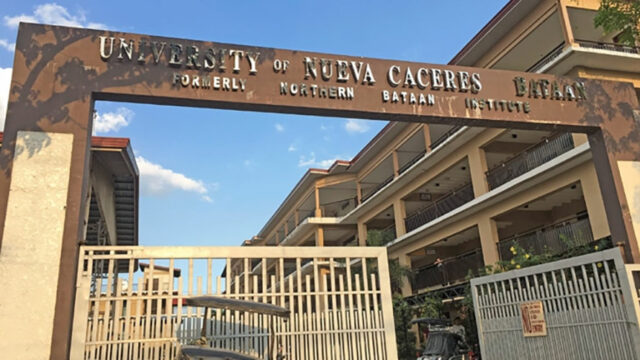
FEU to acquire majority stake in Bataan college

1BATAAN.COM

LISTED educational institution Far Eastern University, Inc. (FEU) has entered into a memorandum of agreement with Bataan Peninsula Educational Institution, Inc. (BPEII) to purchase 76.92% of the land where BPEII operates for P50 million.

In a regulatory filing on Monday, FEU said the agreement also includes its subscription to 39,500 shares in BPEII for P106 million.

“FEU and the other landowners will subsequently transfer the land in exchange for additional shares in BPEII,” the company said.

The deal, involving BPEII — which operates as University of Nueva Caceres-Bataan — is pending fulfillment of closing conditions.

After the transaction, FEU is set to hold a 60.34% equity stake in BPEII.

FEU currently holds a 51% stake in Edustria, Inc., a senior high school in Batangas co-developed with the Technological Institute of the Philippines, Inc., which owns 49%.

The company also has interests in other educational institutions, including a 40% stake in JPMC College of Health Sciences in Brunei Darussalam, 34% of Good Samaritan Colleges, Inc. in Cabanatuan City, Nueva Ecija, and 50% of Higher Academia, Inc. in San Fernando, Pampanga. — Alexandria Grace C. Magno

How does the Philippines’ quality of life compare with its neighbors?

The Philippines ranked 98th out of 188* countries in the 2026 edition of CS Global Partners’ Good Life Index. The index evaluates factors such as safety, healthcare, education, work-life balance, environmental quality, cultural richness, social support, and access to amenities for both residents and visitors. The country scored 61.3 out of 100, the sixth lowest in the East and Southeast Asia region.

How PSEi member stocks performed — March 9, 2026

Here’s a quick glance at how PSEi stocks fared on Monday, March 9, 2026.


Philippines steps up bid for UNSC seat

President Ferdinand R. Marcos, Jr., accompanied by First Lady Liza Araneta-Marcos, wave before their departure for the ASEAN Summit in Kuala Lumpur. — PHILIPPINE STAR/RYAN BALDEMOR

By Erika Mae P. Sinaking, Reporter

THE PHILIPPINES is stepping up diplomatic efforts to secure a nonpermanent seat on the United Nations Security Council (UNSC), a move the government said would amplify Manila’s voice in global peace and security discussions and help advance regional interests.

President Ferdinand R. Marcos, Jr. arrived in New York on Sunday for a working visit to the United Nations General Assembly from March 9-10, where he sought to advance the Philippines’ candidature for a nonpermanent seat on the UNSC.

“This candidature is about shared responsibility. It is about ensuring that the voice of the Philippines — and of developing countries — is heard at the highest forum of global peace and security,” Mr. Marcos said in his pre-departure speech, based on a statement on Monday.

Palace Press Officer Clarissa A. Castro said in a news briefing that winning the seat would enable the country to help shape international decisions on peace and security.

“Membership in a nonpermanent seat will give the Philippines a voice in helping shape global agendas or aspirations,” Ms. Castro said in Filipino.

“It will also allow us to provide suggestions on decisions on international peace and security issues. This is not only in the interest of our country — it is also in the interest of our region,” she said.

The UNSC is the UN’s most powerful body, with the authority to adopt binding resolutions on peace and security.

The five permanent members — China, France, Russia, the UK and US — hold veto power; while 10 nonpermanent members are elected for two-year terms and enjoy voting rights but not veto privileges.

The election will be held in June, and candidates must secure a two-thirds majority vote from member states that are present and voting. The Philippines, which previously served on the council in 1957, 1963, 1980-1981, and 2004-2005, is seeking the Asia-Pacific seat for the 2027-2028 term.

UNSC RELEVANCE
Herman Joseph S. Kraft, a political science professor at the University of the Philippines Diliman, said while a non-permanent membership comes with both prestige and responsibility.

“All members of the UNSC get to discuss issues that have international significance, often having access to information and insights that other members of the UN General Assembly do not necessarily know about,” Mr. Kraft told BusinessWorld via e-mail.

He added that nonpermanent members can also hold the rotating presidency of the council. “Most importantly, it gets to vote on how the UN should act on these matters.”

Mr. Kraft, however, said the current geopolitical environment may complicate the role of smaller states in the council.

“The relevance of the UNSC is under question as the great powers seem to be reshaping the international order to the detriment of smaller states,” he said. “It is still important to be able to be in a platform that would allow the Philippines a voice in how that process evolves.”

He said that Manila could face diplomatic dilemmas, particularly given its alliance with the United States and disputes with China in the South China Sea.

A council seat could provide Manila with a platform to push its foreign policy concerns, lawyer and political analyst Jesus Nicardo M. Falcis III said.

“A seat on the UNSC, even if nonpermanent, gives us a direct channel to voice out and lobby for our own concerns and foreign policy goals,” Mr. Falcis told BusinessWorld in a Facebook Messenger chat.

He cited issues such as the protection of Philippine maritime rights in the South China Sea and efforts to reduce tensions in regional and global conflicts.

Jose Mario D. de Vega, a part-time instructor specializing in international relations at the Philippine Normal University, likewise sees the UNSC seat as a wider platform to highlight the Philippines’ position in the sea dispute, but questioned the consistency of Manila’s foreign policy posture.

“If his regime is truly for peace, then how will he explain the existence of the various US military installations here?” Mr. de Vega said, referring to the Philippines’ security arrangements with the United States.

He also raised the possibility that geopolitical tensions, including disputes in the Taiwan Strait, could expose the Philippines to security risks because of the presence of US facilities in the country.

He also said that the bid could raise questions about Manila’s commitment to international legal institutions, citing the Philippines’ withdrawal from the International Criminal Court.

De Lima, priest file criminal raps against 18 ‘ex-Marines’ over bribery allegations

PHILSTAR FILE PHOTO

PARTY-LIST Rep. Leila M. de Lima and Catholic priest Flaviano Antonio L. Villanueva on Monday filed criminal complaints against 18 individuals claiming to be former soldiers and their legal counsel over their bribery claims.

Ms. de Lima and Mr. Villanueva filed libel, cyberlibel complaints before the Department of Justice (DoJ) and separate perjury complaints in the National Bureau of Investigation (NBI) against the ex-Marines and their lawyer, Levi Baligod.

The case stemmed from a joint sworn affidavit executed by the group alleging that Ms. de Lima was among several lawmakers who received suitcases of cash ranging from P30 million to P70 million. These alleged transactions reportedly took place following a meeting with former lawmaker Elizaldy S. Co and former Speaker Rep. Ferdinand Martin G. Romualdez.

The affidavit also linked Ms. de Lima and Mr. Villanueva in an alleged bribery scheme involving International Criminal Court (ICC) personnel.

“I never received any such money from any of these ex-Marines and from any of those other persons stated in their sworn statement. So, I hope you listen, ask yourselves and your conscience. Crime does not pay and lying under oath is a crime,” Ms. de Lima told reporters in an ambush interview at the DoJ in Filipino.

“It is clear to us that our complaints have basis. So, all that the proper authorities like the NBI and the DoJ have to do is just do their job properly,” she added.

For his part, Mr. Villanueva said that the legal action was taken on behalf of the homeless and the victims of extrajudicial killings to stand up for the truth. He said the bribery allegations were a calculated move to intimidate witnesses and undermine the ICC handling the case of former Philippine President Rodrigo R. Duterte.

“They want to insist that the witnesses are paid off,” Mr. Villanueva told reporters, adding that the timing of these claims was meant to destroy the integrity of the investigation.

In a statement sent to reporters, Mr. Baligod said it is within their rights to file the complaint, noting they will file their answer at the directive of the National Prosecution Service.

In a separate filing, Bureau of Corrections (BuCor) Director General Gregorio Pio P. Catapang, Jr. lodged criminal complaints for libel and perjury against the same respondents.

In the same sworn affidavit, the BuCor chief allegedly acted as a “bagman,” facilitating the transport of large sums of cash derived from purported criminal activities and kickbacks.

Mr. Catapang denied the claims, specifically refuting the accusation that he delivered eight suitcases of cash to any individual. “I said it is not true because first of all, I do not have that kind of money,” he said in an interview.

He maintained that BuCor funds are allocated for construction and essential services rather than anomalous projects, noting that the bureau is not involved in Department of Public Works and Highways scandal.

“My conscience is clear. True justice must arise from due process, not from the sensationalism of trial by publicity,” he said.

Earlier, National Security Adviser Eduardo Año and former Senator Antonio F. Trillanes IV, who were also targeted by the allegations, lodged criminal complaints against the group.

“At this stage, the complaints will still have to be evaluated if sufficient for the conduct of preliminary investigation,” Justice spokesperson Raphael Niccolo L. Martinez told reporters in a Viber group chat.

He added that any decision regarding the consolidation of these cases would only occur after the preliminary probe is concluded and if the complaints are deemed sufficient to proceed to trial. — Erika Mae P. Sinaking

Over 400 Filipinos returned home amid Middle East war, DMW says

DMW.GOV.PH

NINETY more overseas Filipino workers (OFWs) arrived in the Philippines on Sunday evening, the Department of Migrant Workers (DMW) said on Monday, amid its repatriation efforts since the Middle East war broke out.

On board Emirates Airline EK 334, 90 OFWs, including 33 that availed the government’s repatriation offer, returned from the United Arab Emirates (UAE), the agency said in a statement. The batch also includes OFWs stranded in Dubai.

This brings the total number of repatriated Filipinos to more than 400 as of March 8, including 399 OFWs and 12 dependents. The department started repatriation efforts on March 5, less than a week since the United States and Israeli forces launched coordinated airstrikes on Iranian targets on Feb. 28.

There are an estimated 2.41 million Filipinos living in Middle Eastern countries, led by the United Arab Emirates with 975,000, followed by Saudi Arabia at 813,00, Qatar at 250,000 and Kuwait with 211,000, according to the Department of Foreign Affairs. There are about 800 Filipinos in Iran and 31,000 in Israel.

Meanwhile, President Ferdinand R. Marcos, Jr. has directed major telecommunications providers in the country to roll out free communication services for OFWs stationed in the Middle East and their families in the Philippines.

In a social media announcement on Monday, Mr. Marcos said this initiative is part of a broader effort to provide “further assistance” to the estimated 2.5 million Filipinos living in the region.

He said the government’s “Libreng Tawag Program” covers several countries, including Iran, Iraq, Bahrain, Kuwait, Oman, Qatar, the UAE, and Saudi Arabia.

“Our public telecommunications entities will also set up free call stations in selected business centers located in major malls to help families stay in touch with their loved ones abroad,” Mr. Marcos said.

“Through these efforts, we want to ensure that our kababayans can remain connected with their families, offer comfort to one another, and confirm their safety without additional financial burden,” he added.

This has prompted local telecommunication companies to expand their communication assistance for Filipinos in the Middle East.

In separate media releases on Monday, PLDT Inc. and Globe Telecom, Inc. said they are extending free call and connectivity services for Filipinos in the Middle East.

PLDT said it is extending all free services and is setting up free call stations in select PLDT and Smart stores in malls.

The Manuel V. Pangilinan-led telecommunications company said the free calls will be available until March 15, and will be made available through its one-stop marketplace, TinBo (Tindahan ni Bossing) which is available for users in Bahrain, Kuwait, Iran, Iraq, Israel, Oman, Qatar, Saudi Arabia, and the UAE. 

In the Philippines, customers can make free calls to the Gulf states, Israel, and Iran until March 15 for PLDT Home and Enterprise customers.

“The PLDT Group encourages Filipinos in affected regions to stay vigilant, follow local advisories, and stay in touch with Philippine embassies and consulates. These efforts are in line with the PLDT Group’s mission to deliver meaningful connections that uplift lives and empower every Filipino, and its support for the government’s overall digitalization and nation-building agenda,” PLDT said.

Meanwhile, Globe said it has provided roaming packages for customers in affected countries like Israel, Bahrain, Kuwait, Oman, Qatar, the UAE, and Saudi Arabia.

It said that the complimentary package includes 15 minutes of incoming and outgoing calls, 15 text messages, and 1 gigabyte worth of data valid for seven days.

Hastings Holdings, Inc., a unit of the PLDT Beneficial Trust Fund subsidiary MediaQuest Holdings, Inc., holds a majority stake in BusinessWorld through the Philippine Star Group, which it controls. — Erika Mae P. Sinaking and Ashley Erika O. Jose

Party‑list bloc vows push for tougher anti-dynasty measure

PCOO

A GROUP of party‑list lawmakers on Monday said they are preparing a “plenary offensive” to push for a version of the anti‑dynasty bill they deem fit for approval in the House of Representatives, vowing to aggressively pursue a broader ban on political families.

In a statement, Akbayan Party-list lawmakers said they will push for an anti-dynasty bill aligned with the 1987 Constitution, rejecting efforts to pass a version of the proposal that could still allow political families to proliferate.

“Our proposed recommendations seek to strengthen the measure by closing loopholes long exploited by political families to remain in power and by expanding the scope of the proposal,” Party-list Rep. Percival V. Cendaña said in a statement, joined by fellow lawmakers Jose Manuel Tadeo “Chel” I. Diokno, Dadah Kiram Ismula and Dinagat Islands Rep. Arlene Bag-ao.

Lawmakers are currently assessing bills aimed at curbing political dynasties, with a Senate bill seeking to bar second-degree relatives from running or succeeding immediately. The House last week approved a similar measure that analysts have said is weaker and allows families to monopolize seats across the government.

The House Suffrage and Electoral Reforms Committee passed an unnumbered substitute bill that would bar spouses and relatives up to second-degree consanguinity and affinity from occupying elective posts simultaneously but leaves out a provision that would prohibit successive postings.

The Akbayan Party-list lawmakers said they will push for a political ban up to fourth-degree relatives and bar succession among family members. They will also seek to include party-list groups in the scope of a proposal to prohibit dynasties.

Amendments to include criminal charges against politicians seeking to entrench their families in the political system were among the group’s recommendations, urging that such acts be considered an offense under the country’s election code.

“A strong and effective anti-political dynasty law is essential to strengthening Philippine democracy,” Ms. Bag-ao said. “It must ensure that public office is not confined to a few powerful families but remains open to ordinary citizens who wish to serve.”

President Ferdinand R. Marcos, Jr. has made limiting political dynasties a priority after public criticism over alleged misuse of billions of pesos in congressional district funds earmarked for Public Works projects, making it part of his governance reform agenda.

Such a bill has long been pushed in Congress but has repeatedly faltered for a lack of support from a legislature dominated by political families. Eight of 10 lawmakers belong to dynasties, according to a report by the Philippine Center for Investigative Journalism. — Kenneth Christiane L. Basilio

Fair debt collection bill OKd

PHILIPPINE STAR/PAOLO ROMERO

THE Senate on Monday approved on third and final reading a proposal to regulate debt collection practices in the Philippines to protect debtors from abuse and harassment.

Senators unanimously passed Senate Bill No. 1744, with 20 voting in favor and none against the proposal that seeks to ban money lenders from using coercion and harassment tactics to collect repayment.

“With the passage of this measure, we take a significant step toward ensuring that financial access in our country is not built on fear and intimidation, but on fairness, accountability and respect for human dignity,” Senator Emmanuel Joel J. Villanueva said in a statement.

Money lenders are prohibited from threatening harm or using profanity when dealing with debtors, with public shaming deemed an unauthorized act, including repeated attempts to contact borrowers, according to the bill.

Lending companies that fail to comply with the bill’s provisions face administrative fines of up to P1 million, while debtors may pursue civil damages of up to P30,000 against collectors found in violation.

“This measure is not about encouraging people to evade their obligations,” Mr. Villanueva said. “While paying debt is an obligation, having debt is not a sin.” — Kenneth Christiane L. Basilio