Home Blog Page 1943

TMP says auto parts exports may rise 5% next year

IN 2023, the Toyota group accounted for 30% or $1.26 billion of the total Philippine auto parts exports. — YUMMIE DINGDING / PPA POOL

TOYOTA Motor Philippines Corp. (TMP) is projecting a potential 5% growth in auto parts exports next year as demand recovers in other countries, a company official said.

“If next year it will increase, more or less… it will be 5%,” TMP First Vice-President for Purchasing Richard B. Valdez told reporters on Tuesday.

Exports are so far flat this year, he noted. “Every year, at least we would like to increase, but that will still depend on the sales of other countries.”

In 2023, the Toyota group accounted for 30% or $1.26 billion of the total Philippine auto parts exports. These represented $665 million in export revenues.

However, the car manufacturer’s share in the auto parts exports that year was lower than 33% a year prior.

“It’s a little bit down because since we are exporting, these (represent) the sales of other countries like Thailand and other ASEAN (Association of Southeast Asian Nations) markets,” Mr. Valdez said.

There are lower sales in other markets due to issues with financing as interest rates remain elevated, he noted.

Data from the ASEAN Automotive Federation (AAF) showed that motor vehicle sales in Thailand declined 9% to 775,780 units last year.

Meanwhile, Thailand’s motor vehicle sales from January to September dropped 23.5% to 438,303 units.

Rizal Commercial Banking Corp. Chief Economist Michael L. Ricafort said it is possible for the country’s total auto parts exports to increase next year.

“This is consistent with the fact that the Philippines is one of the fastest growing in vehicle sales and production in ASEAN in recent years,” he said.

AAF statistics showed that Philippine motor vehicle production grew 18.3% in the January-to-September period to 97,139 units. It was the second-fastest in the region.

Meanwhile, a joint report by the Chamber of Automotive Manufacturers of the Philippines, Inc. and Truck Manufacturers Association showed that auto sales grew 8.9% to 384,310 units as of October.

Mr. Ricafort added that since Toyota is one of the world’s biggest automakers, it is possible for the company to further diversify its global supply chains.

“It will be prudent for them to diversify the auto parts exported from the Philippines to the rest of [its] production facilities worldwide,” he said.

In 2016, TMP established Toyota Motor Philippines Logistics, Inc. (TLI) to strengthen its indirect exports of OEM (original equipment manufacturer) and aftermarket parts and accessories to Toyota’s global network.

As of the end of 2023, TLI has 13 indirect export suppliers, which generate around $200 million annually.

According to Mr. Valdez, the top destinations for Philippine-made parts last year were Thailand, South Africa, Brazil, Taiwan, and India. — Justine Irish D. Tabile

ERC clears NGCP’s P38.09-B transmission projects

PHILSTAR FILE PHOTO

THE ENERGY Regulatory Commission (ERC) has approved three capital expenditure (capex) transmission projects for the National Grid Corp. of the Philippines (NGCP), amounting to P38.09 billion.

In separate resolutions, the regulator approved the development of the P17.09-billion Bolo-Balaoan 500-kilovolt (kV) Transmission Line, P16.8-billion Northern Luzon 230-kV Loop, and P4.2-billion Nabas-Caticlan-Boracay Transmission projects.

The grid projects are expected to improve the reliability and stability of the transmission grid in key Luzon and Visayas provinces.

“The approval of these projects underscores our commitment to ensuring the reliability, security, and affordability of our country’s electricity supply,” ERC Chairperson and Chief Executive Officer Monalisa C. Dimalanta said.

“It is thus critical for the NGCP to ensure the efficient and timely completion of the projects so we can further boost the ability of our grid to absorb new power capacities needed to meet the growing demand of our communities, businesses, and industries,” she added.

The Bolo-Balaoan 500-kV line, which will serve as a backbone in the northwestern part of the island grid, is expected to support the integration of offshore wind and other committed renewable energy projects, as well as liquefied natural gas.

Along with the approval, the ERC ordered the grid operator to complete the project by Nov. 30, 2026.

The Northern Luzon 230-kV Loop project is designed to upgrade the existing transmission corridor and harness the generation potential in the provinces of Cagayan, Kalinga, Apayao, and Ilocos Norte.

The project is expected to be finished by March 2028.

To help bridge power in the Visayas, the Nabas-Caticlan-Boracay Transmission project will address the overloading issues in the existing Nabas-Caticlan 69-kV transmission line, Caticlan-Boracay transmission line, and Manoc-Manoc 69-kV load end substation.

The project, which is seen to enhance the reliability of power supply to the Panay Islands, is directed to be finished by May 2025.

Last week, NGCP Spokesperson Cynthia P. Alabanza said that the company would allocate more than P600 billion in capex for over 100 transmission projects. — Sheldeen Joy Talavera

SPNEC taps Energy China for Terra Solar construction

TERRA SOLAR awards engineering, procurement, and construction contract to Energy China for world’s largest solar power plant.

TERRA SOLAR Philippines, Inc. (TSPI), a subsidiary of SP New Energy Corp. (SPNEC), has tapped China Energy Engineering Group Co. Ltd. (Energy China) to develop a portion of its solar project in Central Luzon.

TSPI awarded the engineering, procurement, and construction (EPC) contract to Energy China, which operates in 140 countries, the company said in a statement on Tuesday.

“Our partnership with Energy China guarantees a seamless, turnkey delivery of key components for the Terra Solar project,” TSPI said.

SPNEC’s TSPI is constructing a P200-billion project consisting of a 3,500-megawatt-peak (MWp) solar power plant and a 4,500-megawatt-hour (MWh) battery energy storage system, aimed at providing power to two million households.

SPNEC is now controlled by the Pangilinan group through MGen Renewable Energy, Inc., the renewable energy development arm of Meralco Power Gen Corp. (MGen). The latter is a unit of Manila Electric Co. (Meralco).

“Choosing Energy China as our EPC partner was not a mere whim; we made sure that we selected a company with an exceptional track record in delivering complex, large-scale renewable energy projects around the world,” TSPI President and Executive Director Dennis B. Jordan said.

Energy China and its affiliates will oversee all aspects, including procurement, design, engineering, permitting, manufacturing, testing, logistics, and on-site delivery, ensuring the project is executed “efficiently and comprehensively,” TSPI said.

Under the agreement, Energy China will also provide warranty coverage, promptly address any defects, and implement robust operational and maintenance protocols to ensure the project’s long-term reliability and success.

Moreover, the company will develop specialized training programs for local teams and collaborate closely with stakeholders to facilitate the smooth integration of the project into the national grid, including the incorporation of the battery energy storage system.

“This partnership is more than just a business deal — it is a catalyst for progress and development. Through this collaboration for Terra Solar, we aim to accelerate the nation’s energy transition journey and contribute to a cleaner, more sustainable future,” MGen President and Chief Executive Officer (CEO) Emmanuel V. Rubio said.

Meralco Chairman and CEO Manuel V. Pangilinan said that the agreement “goes beyond what it is but a commitment by Meralco and MGen to change the energy landscape.”

“By combining variable renewable energy from solar with advanced battery storage, Terra Solar will provide 850 MW of mid-merit, clean, and reliable energy, making it competitive with conventional power plants,” TSPI said.

Meralco’s controlling stakeholder, Beacon Electric Asset Holdings, Inc., is partly owned by PLDT Inc.

Hastings Holdings, Inc., a unit of PLDT Beneficial Trust Fund subsidiary MediaQuest Holdings, Inc., has an interest in BusinessWorld through the Philippine Star Group, which it controls. — Sheldeen Joy Talavera

Ballet Philippines reimagines Peter Pan

BALLET Philippines (BP) is revisiting a beloved childhood classic to greet the Christmas season this year.

For Peter Pan, the dance company will interpret J.M. Barrie’s children’s tale in a manner Filipinos will appreciate, according to BP artistic director Mikhail “Misha” Martynyuk.

It cannot be compared to other versions, including the Disney animated film from 1953, Mr. Martynyuk told the press at the launch on Nov. 5. He said that the ballet is strictly an adaptation of the original story, with its own completely new libretto and music. “I didn’t look at any Peter Pan productions by other companies. I read the book, studied places and details, then I made a draft. So, it doesn’t make sense to compare,” he said.

The Russian choreographer also said that the goal of BP’s Peter Pan is to “share something positive and joyful.” Meant for Filipino families to enjoy, it leans into strong familial bonds, particularly Wendy’s nurturing role and dedication towards her brothers.

“Our dancers are fully immersed in this ballet, and I believe that audiences, too, will feel a sense of childhood wonder as they reconnect with their favorite characters,” he said.

The story revolves around Peter Pan, a mischievous boy who can fly, taking Wendy Darling and her two brothers John and Michael on an adventure in Neverland, where they encounter fairies and pirates and Captain Hook.

Audience members can expect whimsical designs and vibrant colors in the costumes, designed by BP’s costume designer Eleanora Martynyuk.

As part of BP’s tradition of Christmas performances, the ballet aims to “welcome the season with cheer and festivity.”

It will also be a nostalgic revisiting of the story as the last time BP took on the story of Peter Pan was in 2015.

To keep things exciting and fresh, five sets of dancers will perform for each of the five shows. Principal dancers Ian Ocampo and Jemima Reyes as Peter Pan and Wendy lead one set, with Emmerson Evangelio and Eduardson Evangelio as John and Michael.

At the media preview, where they showed a short glimpse of an early scene where Wendy and her brothers are playing at home, the four demonstrated the cheerful nature of the ballet. The two leads then performed a tender pas de deux.

Ballet Philippines President Kathleen Liechtenstein told BusinessWorld that Peter Pan will “bring the magic of Christmas to the stage to delight young and old alike.”

“The libretto, music, costumes, choreography, and sets are all completely new. It will be an entirely original take on this beloved tale, basically our Christmas gift to everyone,” she said.

Peter Pan continues the ballet company’s seasonal theme of relevé, which means to rise above challenges. It will run from Dec. 6 to 8 at The Theatre at Solaire, Parañaque.

Tickets are available at http://www.ballet.ph and via Ticketworld. — Brontë H. Lacsamana

First Gen says LNG cargo from Shell received in October

REUTERS

FIRST GEN Corp. received its latest liquefied natural gas (LNG) cargo from Shell Eastern Trading Pte. Ltd. last month, possibly the last for the year, the Lopez-led company said on Tuesday.

“We had the delivery in October,” First Gen Senior Vice-President and Chief Revenue Officer Vincent Martin C. Villegas told reporters on Tuesday.

“What we do is we provide or complement the supply of Malampaya,” he added.

In September, the company invited bidders for the procurement of 154,500 cubic meters of LNG cargo to be used for its gas-fired power plants.

Asked if First Gen will procure another LNG cargo this year, Mr. Villegas said, “Not expected but depends on the utilization. But today, we don’t see.”

He added that the procurement of LNG cargo would depend on the utilization of the supply and the need to supplement Malampaya, the country’s sole natural gas provider.

The LNG cargo being procured is loaded into the BW Batangas, a floating storage and regasification unit, and then used for the power plants.

First Gen has four existing gas-fired power plants with a combined capacity of 2,017 megawatts in the First Gen Clean Energy Complex in Batangas.

Its subsidiary, FGEN LNG Corp., constructed an interim offshore LNG terminal and executed a five-year time charter party for BW Batangas to provide LNG storage and regasification services.

The company completed its first LNG cargo delivery in Subic in August 2023 and made subsequent deliveries at its Batangas complex in December 2023 and February and May 2024.

At the local bourse, First Gen shares fell 1.94% to close at P17.18 apiece. — Sheldeen Joy Talavera

Megawide Foundation paves the way for tomorrow’s industry leaders, welcomes latest cohort of college scholars  

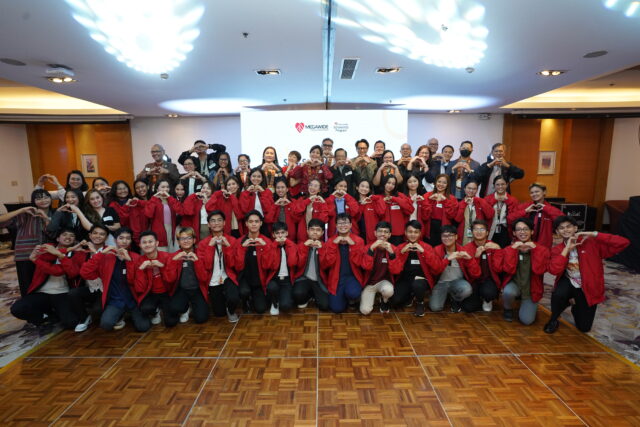
Megawide Corporate Foundation, Inc. (“MCFI” or “the Foundation”), the corporate social responsibility arm of Megawide Construction Corporation (“Megawide”), formally welcomed its new batch of college scholars for the 2024–2025 academic year in a jacket-handing ceremony held on Wednesday, Nov. 6 at the Crowne Plaza Galleria Suites in Quezon City.

The ceremony is MCFI’s first-ever symbolic welcoming occasion which marks the entry of select scholars into the Megawide family, who are taking up Accountancy, Management Engineering, Architecture, Landscape Architecture, Civil Engineering, Electrical Engineering, Geodetic Engineering, Mechanical Engineering and Real Estate Management. Each scholar received a custom Megawide Foundation jacket, signifying their official status as beneficiaries of the Megawide Scholarship Program (“MSP”).

“This ceremony is more than a rite of passage; it’s an acknowledgment of our scholars’ potential and hard work,” shared Megawide Corporate Foundation, Inc. President Tata Saavedra. “By supporting their education, we are empowering future leaders who will play crucial roles in helping advance our nation and creating First-World opportunities for their communities.”

MCFI Independent Director Celso Vivas opened the event with an inspiring address, sharing his humble journey from being a working student to becoming an industry leader, emphasizing the sheer value of resilience and determination.

The scholars participated in a panel discussion with Vivas and Saavedra, together with MCFI Independent Trustee Paulette Lui and Megawide Construction Chief Operating Officer Frederick Tan, who offered valuable insights on Megawide’s commitment to nation-building and highlighted career paths within the industry, inspiring them as they prepare to embark on their professional journeys.

Empowering future industry leaders 

Since 2015, MCFI has provided support to nearly 100 students. Designed to be holistic in approach, the academic support program also includes relevant life skills, leadership and psychosocial workshops and mentorships for the scholars through the Foundation’s “MeGabay” sessions facilitated by the team with industry leaders and subject matter experts.

The commitment to fostering a new generation of leaders will drive industry growth. By investing in the holistic development of its scholars, MCFI not only supports their academic success but also prepares them for the responsibilities and challenges of leadership. This equips them with the strategic mindset and ethical grounding essential for building a sustainable economy for the Philippines.

In collaborative efforts, MCFI worked with their partner universities to screen and select deserving students through rigorous assessments. The Foundation team also worked with registered social workers who helped out in culminating home visits to validate each scholar’s eligibility through their family background and commitment to the program.

The jacket-handing ceremony then presented a total of 35 scholars from leading universities including Ateneo de Manila University (ADMU) led by Dean of John Gokongwei of Management Dr. Roberto Galang; De La Salle University (DLSU) with Dean of Gokongwei College of Engineering Dr. Kathleen Aviso; De La Salle University-College of St. Benilde (DLSU-CSB) with Dean of School of Management and Information Technology Joana Dinoso and Dean of School and Environment and Design Harvey Vasquez; University of the Philippines (UP) with Dean of College of Engineering Dr. Maria Antonia Tanchuling and Dean of College of Architecture Luis Ma. Bo-ot; Polytechnic University of the Philippines (PUP) with Dean of College of Accountancy Dr. Julieta Fonte; and Technological University of the Philippines (TUP) with President Reynaldo Ramos.

The scholars were joined by their ultimate supporters—their families—who expressed their excitement and gratitude for this promising opportunity. Registered social workers, and Megawide executives and employees also took part in the event.

MCFI reaffirms its dedication to fostering a culture of excellence, integrity, and community among the country’s youth. By investing in education, MCFI continues its mission of uplifting Filipino families and communities, building a stronger and more skilled future workforce.


Spotlight is BusinessWorld’s sponsored section that allows advertisers to amplify their brand and connect with BusinessWorld’s audience by publishing their stories on the BusinessWorld Web site. For more information, send an email to online@bworldonline.com.

Join us on Viber at https://bit.ly/3hv6bLA to get more updates and subscribe to BusinessWorld’s titles and get exclusive content through www.bworld-x.com.

Unraveling a fascinating, convoluted history

By Jonathan Best

Book Review
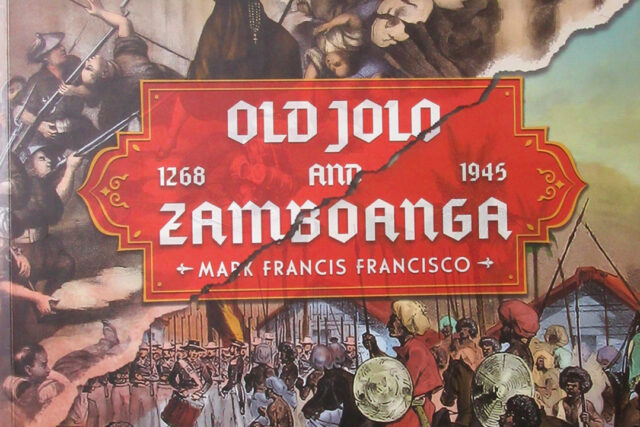
Old Jolo and Zamboanga 1268 – 1945
By Mark Francis Francisco
Vibal Foundation, Inc.’s Filipiniana Clásica series, 2024
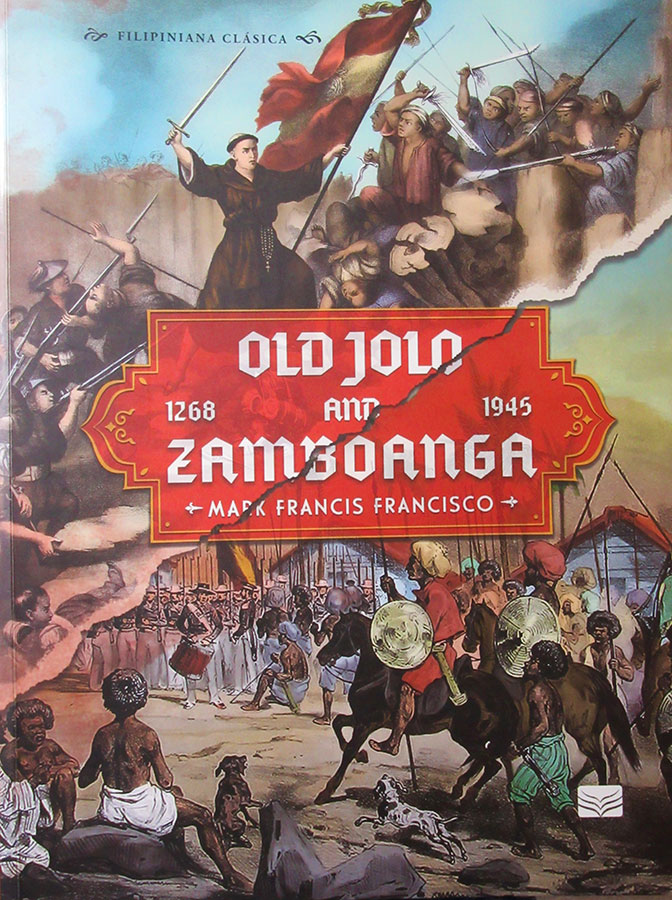
MARK FRANCIS FRANCISCO must be congratulated for researching, organizing and documenting the extremely complex and oft times obscure and neglected history of the southernmost regions of the Philippines. The “Sulu Zone,” as labeled by the noted Southeast Asian historian James F. Warren, extends from Zamboanga at the southwestern tip of Mindanao through the Sulu Archipelago to Sandakan on the north coast of Borneo. Over the last thousand years or more, this region has seen a continuous flux of people, both indigenous and foreign, Lumad, Muslim, Christian, and possibly Hindu, moving from place to place and claiming various degrees of sovereignty.

As Francisco points out early on in his loosely chronological narrative, the region has been principally defined by inter-island and foreign trade from time immemorial. The land dwellers would provide goods such as staple foods, gold, honey, cloth, tropical hardwoods, spices, etc. while the sea dwellers (the Sama-Dilaut or sea Badjao) would trade dried or fresh fish, pearls, and other products of the sea throughout Southeast Asia to locals and Chinese and other foreign buyers. Neither group lived exclusively on land or sea, but a profitable economic system connected by the sea lanes existed for many centuries.

It may shock the modern reader to realize one of the most lucrative commodities for centuries were slaves who were captured throughout the Philippine archipelago and Borneo. Jolo was the main entrepôt for this profitable trade until it was finally suppressed, first by the Spanish in the late 1800s and then terminated by the Americans in the early 20th century. As with any controversial cultural traditions, it is important to keep in mind the moral context of a particular era. Slavery had existed worldwide since ancient times and was still a common practice in North and South America to the middle of the 19th century and even well into the 20th century in the Islamic Middle East, rationalized by racism in the Americas and religion in the Muslim world. There was nothing uniquely Filipino about slave trading.

However, it did play an important role in the political and economic development of this region as the author points out on numerous occasions. The city of Zamboanga originated as a fortress built by the Spanish to try to block the passage between Mindanao and Basilan which pirates and slave raiders coming up from the south used to attack the Visayas and as far north as Luzon. The initial fort, built in 1663, failed to deter raiders but three generations later the Spanish tried again and this time Fort Pilar, named after the Christian Lady of Pilar, miraculously survived and became the focal point of the multicultural city that Zamboanga is today; a mix of Yakan, Samal, Sama-Badjao, Sama-Dilaut, Subanon, Tausug, Chinese, and Spanish settled there and created their own unique Chavacano-Zamboangueño dialect derived from mestizo Spanish and Filipino languages and now with a sprinkling of English words.

Francisco carefully recounts the movements of the people and the outstanding political, military, and cultural events that unfolded in Zamboanga over the centuries. The city was a surprisingly homogeneous community considering the conglomeration of different groups that settled there.

To the south Jolo and its adjacent islands, Tawi-Tawi, Sitanki and numerous others had their own unique development dominated by a variety of Islamic sultanates interacting with the Spanish Philippines to the north, other sultanates in southeast Asia and at times European governments. Sometimes Jolo prospered in conjunction with Zamboanga and sometimes literally was at war with the Spanish, American, and even Filipino governments that were based in Zamboanga and Manila.

Both cities in their heydays were celebrated as charming garden cities of flowers, gracious living, and with mild weather below the typhoon belt. The land was fertile, and the sea provided plenty of food and the Philippines’ famous genuine natural pearls. Unfortunately, Jolo was repeatedly burned to the ground as the sultanates resisted domination by the Christian northerners. The sultan’s lands were divided by dubious European treaties and sporadic guerrilla warfare. The end of the slave trade and the popularity of Japanese cultured pearls left Jolo and the Sulu Zone a forgotten backwater in modern times.

Mark Francis Francisco’s book is a fascinating reconstruction of the history of both Zamboanga and Jolo. He has extensively researched existing texts from European, American, Filipino, and even ancient Chinese sources. The Ming Dynasty court records extensively document the trade mission of Sultan Paduka Batara of Jolo, with his large entourage of relatives and advisers, to the Chinese Emperor Young Lee in 1417. They clearly show the high level of trading and diplomatic expertise of the rulers of the Philippine “Sulu Zone” centuries before the Europeans appeared on the scene. Philippine gold, pearls, and exotic tropical wood were exchanged for Chinese silk, porcelain, and metal ware and artifacts.

Francisco cites Magellan’s chronicler Antonio Pigafetta from the 16th century, Fr. Francisco Combes SJ from the 17th century and numerous other sources from the Spanish period and even more from the American administration such as Najeeb M. Saleeby, right up to well-known contemporary Filipino historians such as Teodoro Agoncillo, Cesar Majul, Resil B. Mojares, Horacio De La Costa, and many others. The American historian James Francis Warren, who has written extensively on the history of Southeast Asia, is one of his major sources.

The book is lavishly illustrated with beautiful vintage photographs, color prints, and antique maps. Additional easy-to-read modern maps would have been helpful given the complex geography of Zamboanga, Basilan, Jolo and the innumerable islands stretching all the way southwest to the coast of Borneo and beyond. Given the name changes over the years, even knowledgeable Filipinos have trouble pinpointing exactly where historical sites, islands, towns and settlements are located today. What is left of the remaining sultanates of Jolo and western Mindanao still claim portions of Sandakan and North Borneo which was dubiously leased from them and then given to Malaysia by the once powerful British Empire.

Being a native son of Zamboanga gives Francisco an advantage over non-native historians who have written about this complex region. His descriptions of social life in Zamboanga and Chavacano social life have an appealing familiar touch. The book is the result of six years of meticulous research started soon after he graduated from college. He earned a BS in social studies from Ateneo de Zamboanga University and later a master’s degree from Ateneo de Manila. As the author’s biography page states, he has specialized in Mindanawon studies and particularly in the culture of the Subanon people and Sama-Badjao people of Sulu. He is active in the academic community of his hometown and also has participated in the implementation of the Bangsamoro Organic Law and in local community development.

Mark Francis Francisco’s book is a valuable contribution to researchers and the average reader wishing to learn more about the southern Philippines’ convoluted and fascinating history. As young Filipinos seek out and discover their Asian roots, so often obscured during the centuries of Western colonial occupation, this book will be exceedingly helpful in their studies.


DoubleDragon ends P10-B bond offer early

BW FILE PHOTO

LISTED DoubleDragon Corp. (DD) said it ended the offer period for its P10-billion fixed-rate peso retail bond issuance two days earlier than planned due to high investor demand.

The bond issuance was “more than fully subscribed” as of Nov. 18, earlier than the original end of the offer period on Nov. 20, DD said in a statement to the stock exchange on Tuesday.

“We are deeply grateful for the trust and confidence of the investing public as manifested in this retail bond offering. This will further inspire our whole team to continue the grit and hard work that we believe is essential to enable DD to reach greater heights and become more and more relevant and durable as years go forward,” DD Chairman Edgar “Injap” J. Sia II said.

“We are very glad about the early oversubscription outcome of this DD otso-buenas peso retail bond offering, enabling DD to capture an even wider stakeholder base into DD’s ecosystem,” he added.

DD’s bond issuance was priced at 8% per annum and has a tenor of 5.5 years.

The offer had a base amount of P5 billion and an oversubscription option of up to P5 billion.

The issuance will be listed on the Philippine Dealing & Exchange Corp. on Nov. 27.

“We seek the understanding of the investing public for cutting short the DD retail bond offer period due to oversubscription way ahead,” the company said.

For the first nine months, DD’s attributable net income climbed by 5.2% to P1.51 billion from P1.43 billion in 2023. Revenue for the January-to-September period increased by 4.5% to P6.42 billion from P6.15 billion a year ago.

On Tuesday, DD shares rose by 1.35% or 13 centavos to P9.77 per share. — Revin Mikhael D. Ochave

Rijksmuseum begins years-long restoration of Rembrandt’s Night Watch

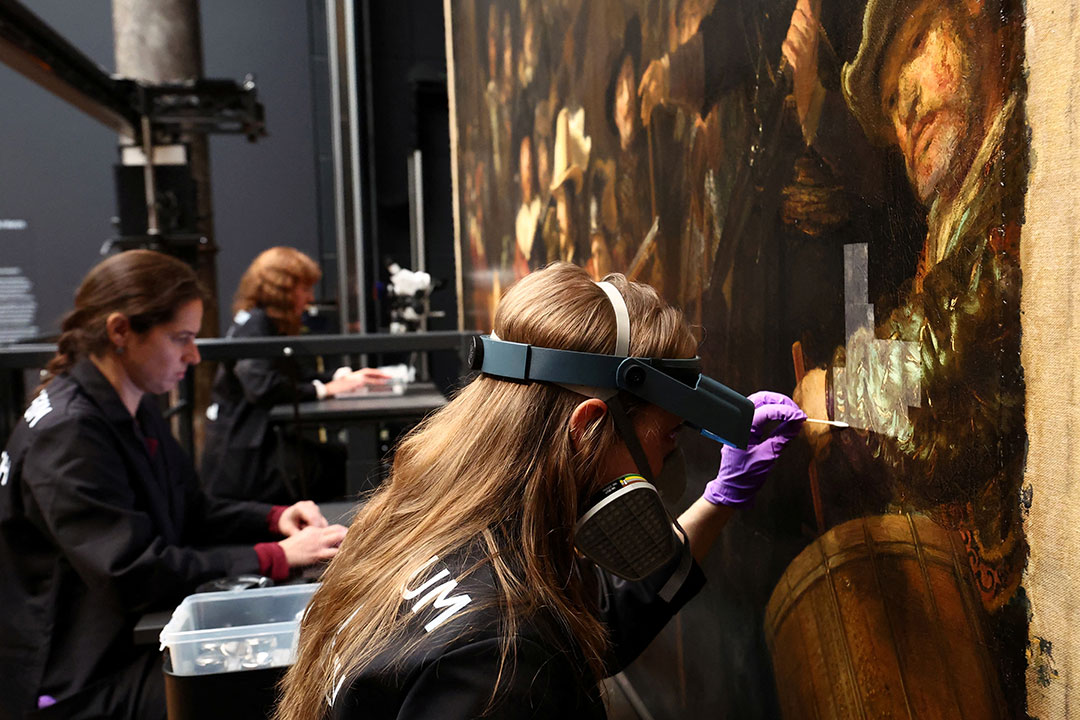
CONSERVATORS Giulia Sara de Vivo from Italy and Nienke Woltman from the Netherlands work during the restoration of the painting The Night Watch (De Nachtwacht) by Rembrandt at the Rijksmuseum in Amsterdam, the Netherlands, Nov. 12, 2024. — REUTERS

AMSTERDAM — Eight art conservators have begun a painstaking process to remove a layer of varnish from Rembrandt’s giant Night Watch masterpiece to reveal its original depth and color.

The task, which could last years, began last week at the national Rijksmuseum gallery in Amsterdam.

“Rembrandt painted with a very clear contrast between light and dark and that had become far less obvious in the painting. So I think that once it’s restored it will have much more depth and the figures in the painting will come to life,” museum director Taco Dibbits said.

In the first five-year stage of work, which included researching the delicate process of varnish removal, the 3.8 meter by 4.5 meter canvas was re-stretched.

The next stage of “Operation Night Watch,” the most extensive restoration of the artwork, also will help preserve the painting for future generations and repair any damage.

A tissue impregnated with a very small amount of solvent is placed on the paint surface and the varnish dissolves, said restorer Ige Verslype, showing how the yellowish tint had been removed.

The Rijksmuseum, the most popular gallery in the Netherlands, is visited by more than 2 million people annually. — Reuters

CloudCFO uses AI to simplify accounting for small firms

CLOUDCFO.PH

CLOUDCFO, INC., a Manila-based outsourcing firm, is integrating artificial intelligence (AI) into its accounting products to help small and medium enterprises (SMEs) gain valuable insights into their financial performance.

CloudCFO Chief Executive Officer Mickael Cardoso, who has worked with several multinational companies for years, co-founded the company in 2016 to help SMEs, which often faced long waiting times to generate financial reports.

“I’ve always found it insightful and actually interesting that most business owners operate this way — they work hard day to day, committing their financial resources, time, effort and sweat, but they don’t really know how things are going,” he told BusinessWorld.

“That’s kind of what we’re trying to unlock… We want them to know [their performance] every month, week, or even quarterly. ‘OK, I’m on the right track, and here’s how I can correct it.’”

CloudCFO offers accounting and financial services including bookkeeping, tax compliance, payroll processing, financial reporting and payment management. It also provides specialized corporate services such as management support tailored to each business, primarily SMEs.

As part of its AI integration, CloudCFO analyzes documents uploaded by clients to its platform, identifies their type — such as invoices — and cross-references these with past transactions and supplier records.

The system then determines how to handle similar cases based on historical data, automating the process without requiring manual inputs from accountants.

CloudCFO also uses the data to predict and streamline how certain situations should be handled for their clients.

“This really creates a lot of efficiency gains for us and potentially increases accuracy and faster turnaround times for customers,” Mr. Cardoso said.

The integration of AI elevates the role of accountants, he said, noting that they have spent a painstaking amount of time organizing and categorizing documents to ensure that files are properly stored for future access.

“It frees up time for more value-adding work, such as advisory and customer support,” the CEO said. “That’s what we’re excited about, and that’s what we see as revolutionary. The role of accountants will have to be reinvented, thanks to AI.”

After the automated bookkeeping process, CloudCFO ensures the accuracy of the data by getting these reviewed by their accountants and posting them to the customers’ accounts.

The company now has 300 clients, mostly SMEs in the Philippines and Southeast Asia, with plans to expand globally.

“We do want to expand abroad because we see the value of what we can bring and solve the problems and challenges that SMEs face in other markets, notably the US, Canada, Australia and New Zealand,” Mr. Cardoso said. — Edg Adrian A. Eva

Fruitas expands portfolio with Mang Bok’s asset purchase

FRUITASHOLDINGS.COM

LISTED Fruitas Holdings, Inc. is venturing into the roasted chicken segment after its subsidiary acquired the assets of Mang Bok’s brand.

Fruitas subsidiary Negril Trading, Inc. became a 60% shareholder of Bigboks Enterprises, Inc., which served as the acquisition vehicle for Mang Bok’s business assets, the listed company said in a regulatory filing on Tuesday.

The deal between Negril and Bigboks comprised 960,000 shares, equivalent to a 60% stake, at P9.23 per share, totaling P8.86 million.

“The acquisition includes all assets, including inventories, equipment, leasehold improvements, transportation equipment, if any, intellectual property rights/trademark, franchise ownership grant/rights, contractual rights to suppliers and lessors including security deposits at the time of acquisition,” Fruitas said.

Established in September 2022, Mang Bok’s is known for its roasted chicken, roasted pork belly (liempo), other fried items, and rice meals.

“Our family continues to grow larger and more fruitful. Bringing Mang Bok’s into the diverse portfolio of House of Fruitas is an exciting opportunity for us. This acquisition perfectly aligns with our commitment to excellence and our customer-centricity approach,” Fruitas President and Chief Executive Officer Lester C. Yu said.

For the first nine months, Fruitas grew its net income by 35% to P95 million as revenue surged by 19% to P2.1 billion.

Gross profit increased by 21% to P1.27 billion while earnings before interest, taxes, depreciation, and amortization rose by 18% to P305 million.

Fruitas has 851 stores nationwide. These include 732 kiosks/carts/inline stores, 105 community stores, and 14 cloud kitchens and restaurants.

Fruitas has more than 25 brands in its portfolio, including Fruitas Fresh from Babot’s Farm, Buko Loco, Buko ni Fruitas, De Original Jamaican Pattie, Johnn Lemon, Black Pearl, and Sabroso Lechon.

On Tuesday, Fruitas shares fell by 1.37% or one centavo to 72 centavos apiece. — Revin Mikhael D. Ochave

Analysts: Philippine banks to sustain profits in Q4

BW FILE PHOTO

By Aaron Michael C. Sy, Reporter

BANKS are expected to sustaining their earnings growth in the fourth quarter as loan demand is spurred by year-end spending and after the central bank cut the reserve requirement ratio (RRR).

“For the fourth quarter, we’re hoping to see sustained momentum in loan growth and perhaps some improvement in net interest margins following the reduction in RRR last October,” Charmaine Co, an equity research analyst at COL Financial Group, Inc., said in a Viber message.

The Bangko Sentral ng Pilipinas (BSP) last month cut the reserve requirements for universal and commercial banks and nonbank financial institutions by 250 basis points (bps) to 7%, effective on Oct. 25.

It also cut the RRR for digital banks by 200 bps to 4%, while the ratio for thrift lenders was cut by 100 bps to 1%. Rural and cooperative banks’ RRR likewise fell by 100 bps to zero.

“For the fourth quarter, BSP rate cuts may pressure margins, but this could be offset by lower funding costs and improved loan demand, especially from corporates and small businesses,” Luis A. Limlingan, head of sales at Regina Capital Development Corp., said in a Viber message. “The holiday season and remittance inflows are also expected to boost consumer lending and transaction volumes.”

The central bank has cut interest rates by 50 bps since it started its easing cycle in August, bringing its key interest rate to 6%.

Cristina S. Ulang, head of research at First Metro Investment Corp., said she expects banks to continue their strong earnings growth as loan spreads remain wide and would be boosted by the RRR cut.

She added that the Corporate Recovery and Tax Incentives for Enterprises to Maximize Opportunities for Reinvigorating the Economy (CREATE MORE) law could spur Investments and boost Philippine companies’ capital spending.

President Ferdinand R. Marcos, Jr. last week signed into law the CREATE MORE bill, which further reduces the corporate income tax to 20% from 25% for registered business enterprises.

It also allows these companies to take a 100% deduction on power expenses in a taxable year, up from 50% allowed by the Tax Code.

In the first nine months of the year, bank earnings were driven by continued loan growth, Ms. Ulang said in a Viber message.

She said Bank of the Philippine Islands (BPI) had the fastest income growth, while BDO Unibank, Inc. had the biggest nominal income during the period.

In the third quarter, BDO’s net income grew 13.26% year on year to P21.18 billion, driven by the continued growth in its core businesses. This brought the lender’s nine-month income to P60.62 billion, climbing 12.47% from a year ago.

Meanwhile, BPI’s net income rose 29.4% to P17.4 billion in the third quarter as revenues increased. This brought its nine-month earnings to P48 billion, 24.3% higher than a year earlier and driven by robust revenue growth and sustained positive operating leverage.

“In the third quarter, most banks’ results were either above or in line with our estimates,” Ms. Co said. “Outperformances were characterized by stronger-than-expected revenues from better lending income in addition to some significant trading gains.”

“The Philippine banking sector showed mixed performance in the third quarter. Banks like BDO and BPI stood out due to strong loan growth, higher fee-based revenues, and controlled nonperforming loans, while Metropolitan Bank & Trust Co. (Metrobank) posted steady but slower growth,” Mr. Limlingan said.

Metrobank’s net income rose 11.35% to P12.124 billion in the third quarter amid higher revenues as it booked growth in both interest and noninterest earnings. This brought its nine-month net income to a record P35.729 billion, up 12.4% year on year.