Home Blog Page 1813

US posture in PHL’s sea dispute with China hinges on Trump’s Cabinet

US PRESIDENT-ELECT Donald J. Trump is set to assume office on Jan. 20, 2025. — REUTERS

By John Victor D. Ordoñez, Reporter

WASHINGTON’s stance in dealing with Manila’s dispute with Beijing over the South China Sea will hinge on who ends up joining US President-elect Donald J. Trump’s Cabinet, a security analyst said as his nominees favor a hawkish approach towards China.

“What remains to be seen is what posture the US will take toward the West Philippine Sea and the alliance in 2025 under Donald Trump,” Raymond M. Powell, a fellow at Stanford University’s Gordian Knot Center for National Security Innovation, said in an X message.

“Many of Trump’s initial cabinet nominations have taken hawkish positions on China and may look for opportunities to keep Beijing off-balance.”

Last month, Mr. Trump nominated former Director of National Intelligence John Ratcliffe to head the Central Intelligence Office, FOX News host Pete Hegseth as Defense Secretary and Florida Congressman Michael Waltz as National Security Adviser.

He had also named New York Congresswoman Elise Stefanik as the United Nations ambassador. They are known for advocating a “hard-line” foreign policy on Beijing.

“With the incoming Trump return to the White House, we will expect that China will intensify its gray zone tactics and legal claims in the West Philippine Sea,” Chester B. Cabalza, founding president of Manila-based International Development and Security Cooperation, said in a Facebook Messenger chat. “Beijing is poised to increase its aggression as it may see Manila topside more with Washington.”

The Philippines and China have been embroiled in repeated spats in the past few years over disputed features within Manila’s exclusive economic zone (EEZ), sparking regional concerns about a miscalculation and escalation at sea.

Just last Friday, Reuters reported that China’s coast guard said it warned and “drove away” a Philippine C-208 aircraft that “illegally” entered the airspace over Scarborough Shoal, which the Philippines calls Bajo de Masinloc, in the South China Sea.

China urged the Philippine side to immediately cease “violations and provocations”, the coast guard said, adding that it will continue to strengthen law enforcement in “waters under China’s jurisdiction.”

Philippine Coast Guard (PCG) spokesman Jay Tristan Tarriela clarified in an X post on Saturday that the PCG vessels and Bureau of Fisheries and Aquatic Resources (BFAR) aircraft left the vicinity of Shoal “by their own decision” after the successful delivery of supplies to fishermen in the area.

“The PCG vessels and BFAR aircraft conducted legitimate patrols in our waters at Bajo De Masinloc to ensure the safety and security of our Filipino fishermen,” Mr. Tarriela said.

“We have also noted China’s encroachment in Bajo De Masinloc, with the deployment of China Coast Guard vessels, the Chinese Maritime Militia, and even a PLA (People’s Liberation Army) Navy vessel.”

Mr. Tarriel also said Beijing has no jurisdiction over Scarborough Shoal, citing the 2016 Arbitral Award and Article 121 of the United Nations Convention on the Law of the Sea which classified it as a rock.

“The Philippines has sovereignty over it, including its territorial sea. The waters beyond Bajo de Masinloc’s 12-nautical-mile territorial sea up to 200 nautical miles, fall within the Philippine EEZ, measured from Luzon’s baseline.”

China has rejected the 2016 ruling, which invalidated its claims, under international law.

Brunei, Malaysia, Taiwan, The Philippines and Vietnam all claim parts of the sea. Tensions have risen amid concern over China’s expansive claims encroach on their exclusive economic zones.

In April, Republican Senator Bill Hagerty and Democrat Senator Tim Kaine pushed a bill that increased US military aid for the Philippines to $500 million from $40 million over five fiscal years through 2029.

The Philippines, one of the weakest in the world in terms of military capability, is important to Washington’s efforts to push back against China, which claims the South China Sea almost in its entirety.

Last month, Philippine President Ferdinand R. Marcos, Jr. said he had a “very productive” congratulatory phone call with United States Mr.  Trump, following an election that has put countries in the Indo-Pacific region on a wait-and-see mode.

The Philippine leader said the relationship between the US and the Philippines is “as deep as can possibly be because it has been for a very long time.”

“Scarborough Shoal and Sabina Shoal have emerged as the two primary flashpoints as 2025 begins,” Mr. Powell said. “Second Thomas Shoal has, for now, receded as both the Philippines and China seem content with the murky terms of the truce reached last summer.” — with Reuters

Marcos admin may be considering legal charges vs VP Sara ahead of polls

Vice-President Sara Z. Duterte-Carpio — PHILIPPINE STAR/RYAN BALDEMOR

By Kenneth Christiane L. Basilio and Kyle Aristophere T. Atienza, Reporters

THE GOVERNMENT of President Ferdinand R. Marcos, Jr. is likely considering letting the country’s justice system deal with Vice-President (VP) Sara Z. Duterte-Carpio’s alleged misuse of secret funds, delaying her impeachment process after the midterm elections, analysts said over the weekend.

“Since it was not acted upon by the House leadership from the first impeachment complaint that was filed, [it seems] they opted to take the criminal charges route,” Arjan P. Aguirre, who teaches political science at the Ateneo de Manila University, said in a Facebook messenger Chat.

Ms. Duterte has been slapped with a slew of ouster raps at the House of Representatives, with three impeachment complaints accusing the embattled vice-president of failing to account for more than P600 million worth of confidential and intelligence funds (CIF) in 2022 and 2023.

The Office of the Vice-President did not immediately respond to an e-mail seeking comment.

Ephraim B. Cortez, president of the National Union of Peoples’ Lawyers, said that Ms. Duterte could be held criminally liable for plunder and falsification of public documents in relation to her disbursements of secret funds. Congressmen earlier unveiled that fictitious identities were used as CIF recipients.

He said complaints could be filed with the Ombudsman, the country’s anti-graft body responsible for investigating and prosecuting government officials accused of graft, corruption and other crimes.

It is currently headed by Ombudsman Samuel R. Martires, with his term set to end in August 2025.

“The new Ombudsman should not be afraid of going against the Dutertes,” said Mr. Aguirre.

Mr. Cortez said Ms. Duterte could simultaneously face ouster proceedings and Ombudsman complaints.

“The proceedings in the Ombudsman are for the purpose of determining criminal liability. Impeachment on the other hand is a constitutional process for the removal of an impeachable officer, like the vice-president,” he said.

Meanwhile, Mr. Aguirre noted that lawmakers may have opted for the “riskier” route of deliberating the impeachment complaints after the midterm elections due to the lack of urgency from the House leadership to act on the impeachment complaints.

The House first deliberates impeachment complaints, requiring one-third of its members, or at least 103 congressmen, to find the ouster allegations with merit before the case is elevated to the Senate for trial.

“Looking at the calendar, the timeline for an impeachment process to happen became tight since Congress is now in recess,” he said. “They are also having another break in February in preparation for the midterms.”

The Philippine Congress went on recess for its Christmas break on Dec. 21, resuming again on Jan. 13 for its final leg of session before the midterm polls in May 2025. Lawmakers would then go on break for four months in preparation for the upcoming election.

Incumbent officials will have the looming impeachment complaint against Ms. Duterte hanging over their heads amid their re-election campaign, said Anthony Lawrence A. Borja, an associate political science professor at De La Salle University.

“Before the elections, the impeachment process will force prospective candidates to canvas their constituencies and determine how many remain loyal, or at least supportive of the Dutertes,” he said in a separate Facebook chat.

“The results of such can help sway the actions of concerned lawmakers and the prospective candidates among them,” he added.

Mr. Borja noted that congressmen are relatively insulated from the repercussions of supporting or opposing Ms. Duterte’s impeachment. Senators, however, bear the brunt of the decision, as the feud between the Marcos and Duterte camps is “at the national level.”

Ouster raps against Ms. Duterte come against the backdrop of a widening political rift between two of the country’s most influential political clans. The falling out of the Dutertes and Marcoses has resulted in the collapse of what was once a formidable electoral alliance that delivered them landslide wins in the 2022 elections.

DECLINING TRUST RATING
Ms. Duterte and House Speaker Martin G. Romualdez emerged as the biggest losers in Pulse Asia Survey Research, Inc.’s most recent approval and trust rating.

Ms. Duterte’s trust rating in November declined by 12 points to 61% from 49% in September, while her approval score fell to 50% from 60%.

Her trust rating was still highest in Mindanao at 81%, but this was a 9 percentage-point decline from 90% in September. Her rating in Visayas also plunged to 47% from 74%.

Her trust rating fell to 34% from 37% in the capital region. It declined in Luzon areas outside Metro Manila to 37% from 47%.

Mr. Aguirre cited Ms. Duterte’s “numerous meltdowns” that have been well discussed on social media and in the news cycle.

“The accusations too that VP Sara is using government resources for her presidential ambition might also be affecting her in a negative way,” he said in a Facebook Messenger chat.

The Vice-President’s approval rating in Mindanao also plunged to 80% from 93% and saw a 20-percentage point decline in the Visayas at 51%.

Her approval ratings in Balance Luzon and Metro Manila fell to 40% from 46% and to 34% from 36%, respectively.

In the survey, Mr. Romualdez continued to be the least trusted among the top four Philippine officials, with only 21% or 1 in 5 Filipinos saying they trust him. This was down from 31% in September.

His distrust rating was higher at 35%, up from 25% two months earlier.

In the Visayas, his supposed bailiwick, his trust rating declined by 14-percentage point, while his distrust rating rose by 24 points.

His approval rating in Visayas also went down by 7 percentage points, while his disapproval rating rose by 8 percentage points.

“The equally drastic increase of disapproval towards Speaker Romualdez indicates the relative insulation of the president from the political duels between the VP and the House,” Mr. Borja.

He said the survey results were not necessarily good for the Marcos administration because for one, “the approval and disapproval for both the President and the Vice-President are statistically tied with both experiencing increasing levels of disapproval.”

The President’s trust rating declined by three percentage points to 47% in November from 50% in September.

His approval rating dropped by two percentage points to 48% from 50%.

While the President’s approval rating saw a 12-percentage point decline in Mindanao, it rose by 4 percentage points in Luzon.

“The president must not be seen as dealing with anything else other than the most pertinent issues on economic welfare and public service. To this end,” Mr. Borja said.

Hansley A. Juliano, who teaches politics at the Ateneo, said Ms. Duterte has “failed to control the narrative against her, and the media cycle continues to be about how every major political actor in Congress is out to get her.”

“Considering her stances and her seeming unwillingness to take accountability for anything, these declines are predictable,” he added in a Messenger chat.

In the survey, which has a margin error of 2% at the 95% confidence level, Pulse interviewed 2,400 adults.

Over P15-M Phivolcs budget cut compromises protection for landslide-prone areas, group says

PCOO

A SCIENTIST group at the weekend flagged the massive cut under the Congress-approved 2025 national budget for an early warning system project designed to prepare communities for landslides, which it said is a step in the wrong direction as the country bears the brunt of the worsening climate.

The cut, which would see the Dynaslope project’s budget slashed to P25.5 million next year from P41.1 million in 2024, has serious consequences for landslide-prone communities, AGHAM said in a statement.

“Cutting its budget now — when typhoons are becoming stronger and more frequent — is a step in the wrong direction, risking lives and erasing hard-won progress in disaster resilience.”

AGHAM said if the cut pushes through, a third or 19 of the project’s employees are at risk of losing their jobs next year.

This will affect scientists, researchers and other personnel working on the project, it said.

“Such move will waste highly valuable government resources—skilled disaster risk reduction management workers who have spent years honing their expertise through rigorous training and work experience, serving vulnerable communities.”

“These workers, already burdened by pay delays, unsafe working conditions, job insecurity, and the absence of rightful benefits, now face yet another threat to their livelihoods,” it added.

Dynaslope, a project at the Department of Science and Technology’s Philippine Institute of Volcanology and Seismology, has been providing community-based early warning systems for landslides in the Philippines since 2008.

It monitors 52 landslide sites in 18 provinces and has developed hazard maps, risk assessments, a landslide monitoring system, and landslide early warning committees in partnership with local government units (LGUs).

In an open letter to Mr. Marcos dated Dec. 17, Dynaslope project staff including scientists, engineers and community development professionals said the 44% budget reduction will “deeply compromise a lifeline that protects Filipino lives and livelihoods from landslide disasters.”

They said professionals working for the project have “devoted years to honing their expertise through rigorous training, practice, and research.”

“This loss threatens to severely undermine our 24/7 landslide monitoring operations, downscale cutting-edge landslide research, and reduce critical capacity-building initiatives and technical assistance to communities — all of which vital for advancing disaster risk reduction strategies,” they said.

At the 2024 Gawad KALASAG awards, Mr. Marcos urged the National Disaster Risk Reduction and Management Council (NDRRMC) and other concerned agencies and LGUs “to continue working together to develop innovative solutions that are science-based, that are sustainable, and are future-ready, and establish clear guidelines for more effective disaster-response.”

Dynaslope staff said the project “is a prime example of such innovation, pioneering a community-based early warning system for landslides that has safeguarded 52 vulnerable communities across 24 provinces, protecting thousands of lives, public infrastructures, and empowering over 46 local government units to protect their people.”

Mr. Marcos in November said typhoons experienced by his country have been increasingly unpredictable due to the changing climate, and that his government doesn’t have a “template to follow” in terms of response.

“With your support, we can continue our work and expand our services to more environmentally fragile communities,” they added. “Without sufficient funding, life-saving efforts in the development of localized, cost-efficient landslide early warning technologies will be stalled, leaving more at risk,” Dynaslope workers said. — Kyle Aristophere T. Atienza

Mary Jane Veloso’s pardon won’t hurt PHL-Indonesia ties — NUPL

Mary Jane Veloso is emotional upon seeing her parents, sons and other family members inside the Correctional Institute for Women in Mandaluyong City, Dec. 18. PHOTO BY MIGUEL DE GUZMAN, The Philippine Star

By Chloe Mari A. Hufana, Reporter

ADVOCATES urged President Ferdinand R. Marcos, Jr. to grant an absolute pardon to Mary Jane F. Veloso, a Filipina who was previously a death-row prisoner in Indonesia, to address what they describe as “a grave miscarriage of justice,” asserting that such a move will not significantly impact Manila’s relations with Jakarta.

“It is wise and proper for President Marcos to grant absolute pardon on Mary Jane… to correct an injustice done to her,” National Union of Peoples’ Lawyers (NUPL) President Ephraim B. Cortez told BusinessWorld in a Viber message over the weekend.

“It is clear that Mary Jane was a victim of human trafficking. Under international conventions on human trafficking, and under both Indonesian and Philippine laws, trafficked victims are exempted from criminal liability, meaning that they should not be prosecuted for the crimes they committed as trafficked persons,” he added.

He noted this issue was never raised during her trial in Indonesia, leading to her prosecution for drug trafficking when she should have been exempted from criminal liability.

“Since Mary Jane is now under the custody of the Philippine government, it has the power to correct that injustice, and the way to do it is through executive clemency by granting her an absolute pardon.”

The President has absolute power to grant executive clemency.

Josue Raphael J. Cortez, lecturer at the De La Salle-College of St. Benilde’s School of Diplomacy and Governance, said granting clemency would not drastically affect Manila and Jakarta’s diplomatic relations.

“[It] would not drastically affect our ties with Indonesia given [it] already transitioned all the legalities of Veloso’s case to the Philippine judicial system. Therefore, such decisions are beyond Indonesian purview by now,” he told BusinessWorld in a Messenger chat.

He, however, noted that illicit drug cases are something Jakarta is stringent with, it might view Manila’s drug policies as “not that serious enough” which “may affect their decision to our future pleas, if ever.”

“There will be not [many] diplomatic setbacks, if ever, as Indonesia also respects the Philippines’ sovereignty and jurisdiction on the matter. However, should similar circumstances transpire again in the near future, then Jakarta might be wary already of granting similar pleas relating to such circumstances.”

NUPL’s Mr. Cortez also noted that Ms. Veloso is now entitled to remedies and protection the country could afford her as jurisdiction over her case has been transferred back to the Philippine government.

“This includes [availing] of clemency through absolute pardon,” he said, noting the nine Australian convicts turned over by the Indonesians to the Australians who were released immediately as soon as they landed in Australia.

“The Philippine government should do the same [to Ms. Veloso],” he noted.

The President last week said he is still consulting with legal experts on Ms. Veloso’s clemency request, adding “We are still far from that… We still have to have a look at really what her status is.”

Ms. Veloso was convicted in 2010 for drug trafficking in Indonesia after being caught with heroin in her luggage. However, evidence and testimonies that emerged later strongly suggest that Ms. Veloso was a victim of human trafficking, exploited by a syndicate that used her as an unwitting drug courier.

She received a last-minute reprieve from execution in 2015 after the late former President Benigno Simeon C. Aquino III appealed to the Indonesian government, arguing she could be a vital witness in prosecuting drug syndicates.

She arrived in Manila last Dec. 18 after almost 15 years of incarceration in Indonesian prison.

Online systems for buses sought

THE Department of Transportation (DoTr) should require all bus companies to have an online booking platform for passengers to ease congestion during the holiday rush, a congressman said on Sunday.

Allowing passengers to buy bus tickets ahead of time could reduce congestion at transport terminals by easing long queues during the seasonal rush, Quezon Rep. Reynante U. Arrogancia said.

“For the convenience of passengers, the Department of Transportation should require all bus lines to have an option of advanced online booking and payment of bus tickets,” Mr. Arrogancia, a vice-chairperson of the House transportation committee, said in a statement.

“Advance online booking benefits passengers by giving them peace of mind, knowing they already have a ticket and a guaranteed seat on the bus,” he added. “It also works to the advantage of bus companies, enabling them to better predict passenger volumes and allocate the necessary buses and drivers for operations.”

Thousands of Filipinos are expected to flock to bus terminals during the Christmas break as they head to their vacation destinations for the holiday.

The Metropolitan Manila Development Authority in early December has already permitted provincial buses to ply the Philippine capital region major’s thoroughfare, Epifanio de los Santos Avenue (EDSA), to accommodate the surge of commuters during the Christmas break. — Kenneth Christiane L. Basilio

More tourists in Taiwan, PHL seen

SUNSET over Taipei City — THOMAS TUCKER-UNSPLAH

THE Philippines’ partnership with Taiwan is expected to increase Filipino tourists in Taiwan next year, the Philippine Travel Agencies Association (PTAA) said on Friday.

“I think this center will open the eyes of everyone and (allow) a mutual relationship between Taiwan and the Philippines,” Mariegel Tankiang Manotok, president of the Philippine Travel Agencies Association (PTAA), told BusinessWorld in an interview at the launch of Taiwan Tourism Information Center (TTIC).

“I think there will be more tourists in both the Philippines and in Taiwan arrivals as well,” she added.

Last June, the Taiwan Ministry of Foreign Affairs-Bureau of Consular Affairs announced the extension of its trial visa-free entry for Philippine passport holders and other citizens of its “New Southbound Policy” including Thailand and Brunei.

“Since the visa-free (policy) has already been extended until July 2025, so that would definitely incur a lot of interest again with our Filipinos,” Ms. Manotok said.

In a statement, the Taiwan Tourism Administration (TTA) said it sees the Philippines as a “high potential market” for tourism.

The TTA logged over 378,000 Filipino tourists in Taiwan last October, surpassing the 350,000-mark last year. The tourism administration added that this number makes the Philippines a top contributor to Taiwan’s inbound tourism.

“The Philippine market is one of the most valued markets for the Taiwan Tourism Administration,” it said.

Taipei Economic and Culture Office in the Philippines Ambassador Wallace Chow said he expects more than 400,000 Filipino tourists by year-end and hopes for 500,000 next year.

To achieve this goal, TTA plans to execute exclusive promotional strategies in 2025 to attract more visitors from the Philippines.

These activities involve Taiwan tourism-themed advertisements on trains in Metro Manila, tourism promotional videos on television, influencer collaborations, and media partnerships.

TTA also mentioned group tour incentives and discounts, raffle campaigns, “Buy 2, Get 1 Free” airline ticket promotions, and free Pocket Wi-Fi rentals captured the interest of the Philippine market. — Almira Louise S. Martinez

BI frontliners may greet travelers

BUREAU OF IMMIGRATION FACEBOOK PAGE

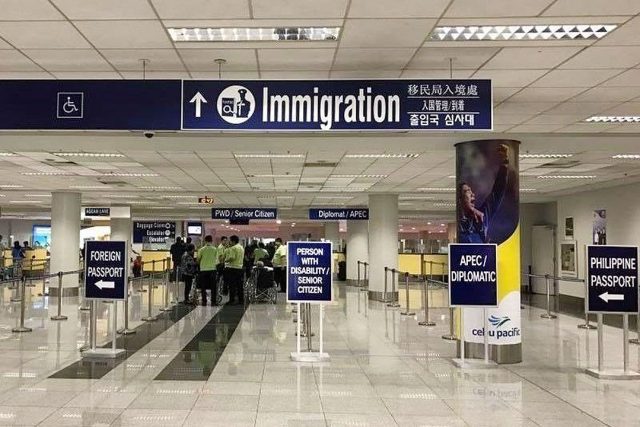
THE Bureau of Immigration (BI) said that frontline officers are allowed to extend holiday greetings to travelers during the Christmas season while emphasizing the importance of maintaining respect and inclusivity.

Commissioner Joel Anthony M. Viado noted officers must ensure all travelers feel welcomed regardless of their faith or background.

“Filipinos are known worldwide for their warmth and hospitality, especially during the holiday season,” Mr. Viado said in a statement.

“Greeting is not just about spreading joy; it’s about showing the world the Filipino way of celebrating — with warmth, respect, and inclusivity. It’s a simple gesture that reflects our identity as a people,” he added.

He reminded travelers that government personnel cannot receive gifts or tokens.

The BI previously reported that it anticipates approximately 110,000 daily arrivals and departures throughout the holiday season.

“A simple smile or greeting to our officers when they work tirelessly to provide service to travelers would surely cheer them up, especially during holidays when they sacrifice time with their families to report for work,” he added.

To ensure smooth operations, passengers are urged to arrive early at the airports and comply with immigration protocols. — Chloe Mari A. Hufana

Permit and license offices in every LGU sought to attract investors

SCOTT GRAHAM-UNSPLASH

A PHILIPPINE senator on Sunday pushed for a measure that seeks to establish business permit and licensing offices (BPLO) in local government units (LGUs) to speed up the process of setting up shop in the country, which he said would attract more investors.

“By establishing a BPLO in every LGU, we create a one-stop shop for business-related transactions, reducing the burden on our entrepreneurs and making government services more accessible and systematic,” Senator Sherwin T. Gatchalian said in a statement.

“LGUs need to be ready and equipped to respond promptly and effectively to investor needs particularly small businesses and startups to help generate employment opportunities for our people and underpin economic growth.”

Under Senate Bill No. 1278, the proposed BPLO Act, localities will establish these offices that aim to ensure businesses are able to sort out administrative requirements.

“The measure complements the spirit of the Ease of Doing Business Act, which laid the groundwork for efficient service delivery,” Mr. Gatchalian said. — John Victor D. Ordoñez

UP-PGH acquires new equipment, facilities

THE University of the Philippines-Philippine General Hospital (UP-PGH) enhanced its capacity to deliver advanced healthcare to poor Filipinos with the acquisition of diagnostic equipment and critical care facilities, reinforcing the hospital’s mission of providing free, high-quality healthcare while training future medical professionals.

In a statement released last week, the UP-PGH recently unveiled a cutting-edge Positron Emission Tomography (PET) and Computed Tomography (CT) scan facility, a first for any government hospital in the Philippines.

It also inaugurated a new centralized intensive care unit capable of accommodating 32 patients and installed a 128-slice CT scan. It serves around 700,000 patients annually.

These advancements are part of the hospital’s long-term master plan to modernize its services.

“We need this machine badly because it has become central to the diagnosis of cancer, a major concern of our healthcare system,” UP-PGH Director Gerardo D. Legaspi said in a statement.

Poor patients will use the machine 80% of the time, compared to 20% for paying patients, he added.

The PET-CT scan procedure can accommodate up to eight patients a day at present and will be scaled up to 15 once operations become more regular, he added.

UP-PGH’s advancements go beyond imaging as recent interventions have included free angiography and stent placement for heart attack patients, cochlear implants for poor children and robotic surgeries for underserved patients.

The hospital also offers new treatments, such as intraoperative radiotherapy for breast cancer, eliminating the need for prolonged radiation therapy and deep brain stimulation for Lubag disease or X-linked dystonia-parkinsonism.

UP-PGH is also the only hospital in the country offering High-Intensity Focused Ultrasound for tremors and has introduced a transcranial magnetic stimulation unit to aid patients with mental health conditions.

The recent addition of a robotic gait trainer in its rehabilitation department further underscores its commitment to providing better healthcare to marginalized communities.

Mr. Legaspi highlighted how UP-PGH’s modernization is supported by the government, with the hospital receiving a P7.72-billion allocation in the 2024 national budget. This represents one-third of the University of the Philippines’ total budget.

UP-PGH continues to collaborate with the Department of Health to expand access to its services for non-PGH patients and train healthcare personnel nationwide. — Chloe Mari A. Hufana

P88.3-M sea, lake port projects in BARMM set

COTABATO CITY — Members of various business blocs were elated with the allocation of the Bangsamoro government of P88.3 million for the improvement of a seaport in Tawi-Tawi and construction of five lake ports in Lanao del Sur.

The lawyer-entrepreneur Ronald Hallid D. Torres, chairperson of the Bangsamoro Business Council, and Mohammad O. Pasigan, who is overseeing the Bangsamoro Board of Investments, separately told reporters on Sunday that the port projects of the Ministry of Transportation and Communications (MoTC) in the autonomous region will boost commerce and trade in Tawi-Tawi and Lanao del Sur.

Tawi-Tawi and Lanao del Sur are component provinces of the Bangsamoro Autonomous Region in Muslim Mindanao (BARMM).

“These projects will boost our efforts of showing to potential investors in other regions and abroad that we have these facilities that are essential to the socio-economic growth of the Bangsamoro region,” Mr. Torres said.

Minister Paisalin P. Tago of the MoTC and representatives of four different construction companies forged in Cotabato City last Wednesday separate contracts for the modernization of the main building and the passenger terminal in the Bongao Seaport in Bongao, Tawi-Tawi and the construction of the lake ports in lakeside towns in Lanao del Sur.

Lake Lanao is where thousands of ethnic Maranaos catch freshwater fish every day that they supply to markets in Lanao del Sur’s 39 towns and in its capital, Marawi City.

Mr. Tago said the BARMM government has allocated P88.3 million for the projects.

“The lake ports that we are to construct will hasten the mobility of people who rely on Lake Lanao as a source of income,” Mr. Tago said.

The MoTC has two agencies, the Bangsamoro Airport Authority and the Bangsamoro Ports Authority, that manage the airports and seaports in the autonomous region, both under the operational control of Mr. Tago. — John Felix M. Unson

PHL remittances 4th among poorer economies in 2024

A man accepts Philippine peso bills at a money remittance center in Makati City, Metro Manila, Philippines, Sept. 19, 2018. — REUTERS/ELOISA LOPEZ

THE PHILIPPINES had the fourth-highest remittance levels among low- and middle-income countries (LMICs) this year, with inflows estimated at $40.2 billion, the World Bank said.

The bank said its rankings were topped by India ($129 billion), Mexico ($68 billion), and China ($48 billion). Pakistan ($33 billion) placed fifth.

“In smaller economies, remittance inflows represent very large shares of gross domestic product (GDP), highlighting the importance of remittances for funding the current account and fiscal shortfalls,” the World Bank said in a blog entry published on Dec. 18.

It said officially recorded remittances to LMICs are expected to hit $685 billion in 2024, up 5.8%.

However, the World Bank said this is likely an underestimate because of the volume of remittances coursed through informal channels.

Remittances in the Philippines are larger than foreign direct investment (FDI) and official development assistance, the bank said.

“The gap between remittances and FDI is expected to widen further in 2024,” it said.

It also said that in the past decade, remittances grew 57% while FDI declined 41%.

The World Bank said remittances are expected to continue growing due to “enormous migration pressures driven by demographic trends, income gaps, and climate change.”

It also urged countries to find ways to leverage remittance flows for poverty reduction, financing health and education, bringing about financial inclusion, and improving access to capital markets for state and nonstate enterprises.

The World Bank said the $40.23 billion estimated remittance inflow was equivalent to 8.5% of GDP in 2024.

For East Asia and the Pacific region, the remittance flows to low- and middle-income regions rose 0.74% to $136 billion in 2023. — Aubrey Rose A. Inosante

Recto: ‘Tweaked’ PIFITA bill to generate P300B by 2030

FINANCE SECRETARY RALPH G. RECTO — DEPARTMENT OF FINANCE FACEBOOK PAGE

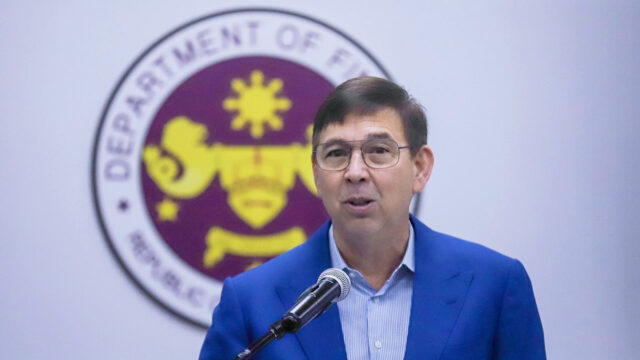
THE Department of Finance’s (DoF) proposed changes to the Senate’s version of the capital markets reform bill could bring in additional revenue of P300 billion by 2030, Finance Secretary Ralph G. Recto said.

“We are raising new revenue. We’ve tweaked the revenue measures (like) the Passive Income and Financial Intermediary Taxation Act (PIFITA),” Mr. Recto told reporters last week.

The tweaks will produce “a revenue gain of up to P300 billion by 2030,” he added.

PIFITA, or House Bill No. 4339, is the fourth package of the Comprehensive Tax Reform Program, initiated in 2018 to bring about a more equitable and efficient tax system.

The bill seeks to “harmonize the taxation of passive income and financial intermediaries by reducing and simplifying the complicated tax rates on financial transactions.”

This modifications were made to the proposed Capital Markets Efficiency Promotion Act (CMEPA) or House Bill No. 9277, and its Senate counterpart — Senate Bill No. 2865, also called CMEPA.

The Senate’s CMEPA bill was filed by Senator Sherwin T. Gatchalian in November and is currently awaiting second reading.

In a letter with the proposed changes to the Senate’s CMEPA bill addressed to Senate President Francis G. Escudero, the DoF said factoring in the proposed changes, the bill could generate P13.85 billion in the 2025-2028 period.

Also projected for the period was a P289.08-billion tax collection generated by the Government Revenues Optimization through Wealth Tax Harmonization (GROWTH), previously referred to as DoF-enhanced CMEPA, in the same period.

However, the CMEPA bill in its current form could cause P140.11 billion in foregone revenue for the same period, it said.

“Considering the foregoing, we respectfully propose to include provisions and adopt the proposed language under the DoF’s GROWTH bill,” the DoF said in the letter.

Among the proposed provisions by the DoF are to repeal the exemption on excise taxes imposed on pickup trucks, and to set a uniform 20% interest income rate.

The DoF said the “repeal of the exemption on pickup trucks will address market distortions and inequities while restoring fairness among industry players.”

Under the Tax Reform for Acceleration and Inclusion (TRAIN) Law, pickup trucks were granted special tax treatment to benefiting small business owners and professionals.

It also proposed a uniform final tax rate of 20% on interest income on savings deposits, time deposits, foreign currency deposit units, deposit substitutes, and long-term negotiable certificates of deposit. 

Meanwhile, the House-approved PIFITA proposed lowering the interest income rate to 15%.

The Senate’s CMEPA bill does not mention any reduction of tax rates for interest income or repeal of the pickup trucks excise exemption.

The GROWTH bill is expected to raise much-needed revenue beginning in 2025, but will also “improve the progressivity of wealth taxes, harmonize business taxes on financial intermediaries, and level the playing field on currency deposits.”

Among the DoF’s proposed revisions are temporarily increasing the rates of capital gains tax on real property, donor’s tax, and estate tax to 10% from 2025 to 2030, which will be reduced to 6% effective 2031.

“Our proposal, on the 6% to 10%, on the capital gains of the estate and the donors, has a sunset provision until 2030. When 2030 comes, it will revert to 6%, unless extended by Congress. I’ll leave it to Congress,” Mr. Recto said.

He also reiterated that this is not a “new tax” but an amendment of the PIFITA.

Asked whether the decision to not impose new consumption-based taxes was due to the nearing midterm election, Mr. Recto said there are too many consumption taxes at present.

“Maybe what we can do is plug certain leakages like the PWD (Persons with Disabilities) benefits which are being abused. I think the National ID will help with that. I hope by next year, if I’m not mistaken, we will have sufficiently funded the PSA (Philippine Statistics Authority),” he said, referring to the agency overseeing the National ID program. — Aubrey Rose A. Inosante