Home Blog Page 1753

Jonathan Esmerio takes reins of Loxon group of companies

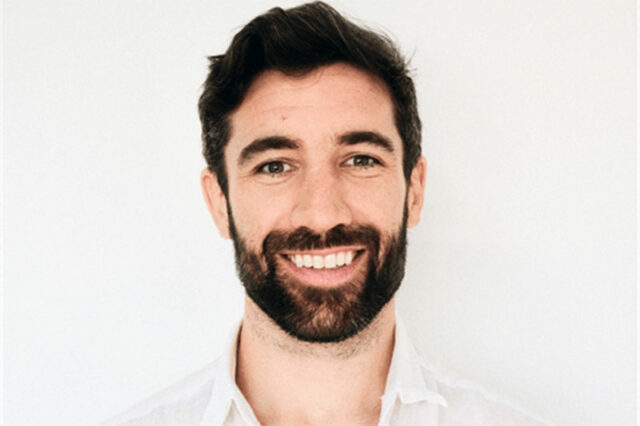
The Loxon Group of Companies would like to announce that Jonathan A. Esmerio has been elected by the Board of Directors as its new President and Chief Operating Officer. He also steps up as President of Loxon Wandset, Inc. (LWI), a subsidiary that specializes in building envelop systems such as the design of aluminum glass for facade systems, engineering, testing, fabrication and installation of aluminum and glass systems, after being promoted from Vice President. Jon remains to be President of the other subsidiaries namely, Loxon Philippines, Inc. (LPI), which is a globally recognized specialty contractor of fully integrated building management systems for the protection of life and property; and ECE Prime Holdings, Inc., which has interests in the property sector. Jon also sits as a Director of the Group’s international logistics and procurement arm, Loxon Limited Hong Kong.

LPI and LWI have both achieved ISO-certification for their Risk Based Quality Management System and are Triple A-licensed specialty contractors as certified by the Philippine Contractors Accreditation Board (PCAB).

In both of his new roles, Jon replaced company founder Ed C. Esmerio who will continue to serve as Chairman of Loxon Group of Companies and the Chief Executive Officer of LWI. Jon has been tasked to oversee project management operations and business development while Ed will focus his energies on engineering and design, logistics, plant expansion and the forging of joint-venture partnerships for building facades with leading foreign companies.

“I would like to thank the Board for their vote of confidence and trust. I look forward to steering Loxon Group towards further growth and expansion by capitalizing on technological innovation and making sustainability a core part of our business strategy,” said Jonathan A. Esmerio, President and COO of Loxon Group of Companies.

Jon brings with him a wealth of experience having served in a variety of roles within the Group over the last 21 years. He has undergone extensive leadership and technical training here and abroad, and his track record of accomplishments has prepared him well for this new challenge. Jon graduated with a degree in BS Industrial Engineering from De La Salle University and completed the Corporate Finance Diploma Course in Ateneo de Manila Graduate School of Business and the Eliminate Obstacles to Growth by Recognizing and Overcoming Challenges Course of Harvard Business School.


Spotlight is BusinessWorld’s sponsored section that allows advertisers to amplify their brand and connect with BusinessWorld’s audience by publishing their stories on the BusinessWorld Web site. For more information, send an email to online@bworldonline.com.

Join us on Viber at https://bit.ly/3hv6bLA to get more updates and subscribe to BusinessWorld’s titles and get exclusive content through www.bworld-x.com.

First Gen eyes 50-MW solar facility in Batangas

FIRST GEN CORP. has a total of 3,668 megawatts of installed capacity coming from its portfolio of plants that run on geothermal, wind, hydro, solar energy, and natural gas. — FIRSTGEN.COM.PH

By Sheldeen Joy Talavera, Reporter

LOPEZ-LED First Gen Corp. plans to build a 50-megawatt (MW) solar power facility in Batangas, according to its president.

“Right now, we’re hoping that we can build our largest solar investment, which will be 50 megawatts, and that will be the springboard for more solar expansion of the First Gen Group moving ahead,” First Gen President and Chief Operating Officer Francis Giles B. Puno said in an interview with BusinessWorld.

The solar power project was allocated a portion of next year’s capital expenditure (capex) budget, amounting to approximately P35 billion.

If the company is to start the construction next year, Mr. Puno estimated it to invest around between P1 billion and P2 billion.

“This will take roughly about two years to build those facilities,” he said.

As the company is quite “coming from behind,” it is aiming to be “more aggressive” in investing in solar facilities.

“Hopefully, we can get attractive prices for our solar investment. But we’re very serious about expanding solar installation across the country,” Mr. Puno said.

The company is targeting a lower capex budget for 2025 amounting to P35 billion, of which 90% will be allocated for its renewable energy subsidiary Energy Development Corp.’s drilling activities and growth projects.

First Gen has a total of 3,668 MW of installed capacity coming from its portfolio of plants that run on geothermal, wind, hydro, solar energy, and natural gas.

AI in Philippine banking: Embracing innovation amid challenges

FREEPIK

By Abigail Marie P. Yraola, Deputy Research Head

AS THE COUNTRY embraces the digital revolution, the use of artificial intelligence (AI) in its banking operations shows significant advancements for the country.

AI, particularly generative AI (GenAI), redefines the operational and strategic landscapes of the banking sector and thus, has become a crucial factor in transformative change, Ernst & Young said in a report titled “How artificial intelligence is reshaping the financial services industry.”

The report highlighted that utilizing AI is driving a significant transformation in financial services by fostering innovation and streamlining operations.

Additionally, with its broad applications, AI enhances customer service, improves risk management, and reshapes capital markets.

The banking sector is adapting to a landscape sculpted by the six major trends: emerging technologies, ecosystem models, sustainability, digital assets, talent acquisition, and regulatory adjustments, Ernst & Young said in their report noting that these factors are driving the industry to move beyond traditional boundaries, impacting not only consumer banking but also transforming investment, corporate banking, and capital markets.

“By integrating AI technologies, banks are setting new benchmarks for operational efficiency, client engagement and sustainable growth,” it said.

The Bangko Sentral ng Pilipinas (BSP) recognizes that AI is continually evolving.

“AI has been identified as one of the crucial components of the fourth industrial revolution,” the BSP said in an e-mail.

The central bank added that AI can bridge the gap in financial inclusion through innovative solutions.

However, it also pointed out barriers that hinder financial inclusion which include (a) a lack of documentation required to open an account, (b) low awareness of the digital products and services available in the market, and (c) the high costs associated with the infrastructure needed for digitalization.

ADOPTING AI IN BANKING OPERATIONS
Currently, the central bank is guided by the definition provided by the Organisation for Economic Co-operation and Development (OECD), which describes an AI system as a “machine-based system that, for explicit or implicit objectives, infers how to generate outputs based on the input it receives.

These outputs, it said, can influence physical or virtual environments. Different AI systems vary in their levels of autonomy and adaptability after deployment.

This definition, the BSP said, aligns with the central bank’s goal of promoting the responsible use of technology to assist in inference and output generation that enhances decision-making processes.

“There has been a notable increase in the adoption and integration of AI solutions within the financial sector, particularly in enhancing decision-making, automating processes, and personalizing services,” BSP said.

It also added that recent advancements in technology have had a significant impact across various industries, particularly in BSP-supervised financial institutions (BSFIs) but noted that BSFIs can choose not to adopt AI if their existing processes are working efficiently.

The central bank further explained that when considering the adoption of AI systems, BSFIs should ensure that these technologies are integrated into their overall business plans, highlighting that it should align with its digital transformation goals.

“As with any emerging technology, there are benefits and risks associated in adopting AI,” the central bank said, acknowledging that there is “no one-size-fits-all approach for AI systems.”

However, it suggested that financial institutions can establish a policy statement outlining their approach towards AI adoption which could help prime the organization on its use.

Fintech Alliance.PH Founding Chairman and Rizal Commercial Banking Corp. Executive Vice-President and Chief Innovation and Inclusion Officer Angelito “Lito” M. Villanueva said that AI has played a crucial role in democratizing financial access, allowing for more efficient, secure, and personalized banking experiences.

He cautioned that alongside these advances, AI also brings complex challenges that demand careful attention to regulation and ethical boundaries before widespread adoption.

He further explained that AI is crucial for automating processes, enhancing predictive analytics, and enabling targeted decision-making, which helps banks accomplish data-driven tasks more efficiently and accurately.

“Central banks can leverage AI for regulatory compliance and fraud detection. In commercial banking, AI can personalize customer interactions, credit risk analysis, and cybersecurity measures,” Mr. Villanueva said in an e-mail interview.

He added that as AI evolves, concerns about job displacement, especially within low-skilled sectors, are growing. Under Philippine labor law, employers are permitted to terminate employees if labor-saving technologies, such as AI, lead to redundancies, provided that legal standards are followed.

“This presents a need for the government to focus not only on AI regulations but also on creating alternative job opportunities for displaced workers,” he said.

CONSIDERATIONS AND IMPLEMENTATION
When considering the adoption of AI or any emerging technology, financial institutions should start by evaluating their risk appetite.

“Depending on the risk-reward analysis, BSFIs could integrate AI into their systems with proper controls,” the BSP said.

The central bank expects that risk management measures for consumer protection, cybersecurity, and anti-money laundering/combating the financing of terrorism (AML/CFT) are established whenever an AI system is implemented.

“At the minimum, financial institutions should adhere to the principle of “Do no harm” regarding the use of AI, whether internally or externally,” BSP said.

For Mr. Villanueva, phased and purpose-driven AI implementation should be given priority to areas that improve customer experience, risk management, and boost cybersecurity.

Customer-facing applications, such as AI chatbots and virtual assistants, should be deployed initially to streamline basic customer interactions and make banking more accessible.

“At RCBC, we’re focusing on how AI could improve the accuracy of customer risk profiles and improve cybersecurity protocols. Through Fintech Alliance.Ph, we work to advocate for AI policies that promote both innovation and customer protection, a balance that helps financial institutions adopt AI responsibly,” he said.

Mr. Villanueva highlighted that traditional AI, such as predictive analytics and machine learning, can reinforce the foundational framework of Philippine banks, while GenAI can enhance customer engagement efforts.

EMERGING CHALLENGES
A report by McKinsey & Co. titled “Scaling Gen AI in banking: Choosing the best operating model” highlighted that banks and other financial institutions rapidly use AI technology, and challenges are emerging.

It further explained that AI, specifically Gen AI is transforming the banking industry as financial institutions leverage this technology to enhance customer-facing chatbots, detect fraud, and accelerate time-consuming tasks such as code development, creating pitch book drafts, and summarizing regulatory reports.

They suggested that banks and financial institutions can adopt varying approaches to structuring their GenAI operating models, ranging from highly centralized to highly decentralized.

The BSP is cognizant of its crucial role in promoting an enabling regulatory environment that promotes innovation and risk resilient financial systems.

When an institution intends to adopt artificial intelligence (AI), it should conduct risk-based assessments before development. These assessments should focus on key risk areas, including consumer protection, cybersecurity, and anti-money laundering (AML) and counter-terrorism financing (CFT). Additionally, continuous monitoring is essential to validate the AI system’s outputs over time.

For Mr. Villanueva, institutions can maximize the value of AI by prioritizing transparency, ethical practices, and strong data governance policies.

The proactive measures taken by the BSP in developing regulatory frameworks for AI are essential for establishing these standards, he highlighted.

“We need that distinction between goal-oriented AI and ethically guided AI. AI’s capabilities for automation and problem-solving raise questions about maintaining a balance between efficiency and ethics,” Mr. Villanueva emphasized.

“We must ensure that human judgment remains central, especially as AI advances to more autonomous roles, how AI systems are designed and used ultimately defines their impact, whether good or bad.”

For John Paolo R. Rivera, senior research fellow at Philippine Institute for Development Studies, he said that AI can be used by banks to detect fraud in transactions and forecast financial risks.

“As an advantage, generative AI can create customer outreach campaigns or designs tailored financial advice scripts using natural language generation,” he said in a Viber message.

He further explained that traditional and GenAI are complementary technologies that financial institutions can utilize to enhance operations, boost customer satisfaction, and ensure regulatory compliance.

“Banks should focus on adopting hybrid solutions — using traditional AI for precision and security, while exploring generative AI for innovation and customization.”

RISKS AND BENEFITS
Mr. Villanueva listed that harnessing AI offers numerous life-changing benefits, including improved decision-making, cost reduction, and more personalized customer experiences.

“In fraud prevention, AI systems can monitor transactions in real time, which is critical in addressing the Philippines’ higher-than-global fraud rates. There is promise in reducing fraudulent transactions and boosting security.”

However, he also cautioned that integrating AI posts risks such as data privacy concerns, potential biases, and high implementation costs.

For example, he said that if not carefully monitored, AI systems can inadvertently introduce biases into decision-making processes.

The central bank emphasized that financial institutions should also develop a workforce training plan to prepare employees for the adoption of AI technologies.

“Similarly, with the rise of AI-powered cyber-attacks, institutions should continuously monitor and strengthen their cybersecurity defenses,” the central bank said.

Mr. Villanueva emphasized that they are focused on implementing ethical AI adoption by working with regulators to establish standards that protect consumer data and mitigate bias risks.

He noted that reports from McKinsey and Goldman Sachs predict that AI will impact millions of jobs in industries such as manufacturing and marketing.

“This shift will require flexible regulatory frameworks that protect consumers without stifling innovation,” Mr. Villanueva said.

Utilizing AI in banking operations, he said, is not just black or white. It has dual sides benefits and risks, wins and losses.

It is undoubtedly a powerful tool that can either help us create a more inclusive and prosperous future or exacerbate the existing class and digital divide.

How First Circle aims to bridge the SME funding gap

FIRST CIRCLE Co-Founder and Chief Executive Officer Patrick Lynch

By Beatriz Marie D. Cruz, Reporter

FIRST CIRCLE, a local financial technology (fintech) lender, is looking to partner with four more banks next year to help bridge the lending gap between banks and small and medium enterprises (SMEs), according to its chief executive officer (CEO).

“We’ve got four credit relationships with banks, and we want to bring that to maybe seven or eight by next year,” First Circle Co-Founder and CEO Patrick Lynch said in an interview with BusinessWorld.

First Circle specializes in SME lending, as it offers flexible and collateral-free business and employee salary loans. It also provides online banking services to small businesses without transfer limits, transaction fees, and maintaining balance.

The fintech company borrows from banks and uses the money to lend to SMEs, Mr. Lynch said, noting that its affordable and flexible loan products help provide more small businesses with access to financing.

“Banks don’t have the technology and the operations to be able to serve and manage lots and lots of small customers, but we do because we’re a technology company, and the banks have the balance sheet.”

“The game is not about trying to compete in what’s there now; it’s about creating more access for businesses.”

Latest data from the Bangko Sentral ng Pilipinas (BSP) showed that Philippine banks had extended P488.13 billion in loans to micro, small- and medium-sized enterprises (MSMEs) as of the end of June. However, this fell below the 10% required quota, accounting for only 4.52% of their P10.08-trillion total loan portfolio.

Under Republic Act No. 9501, or the Magna Carta for MSMEs, banks are mandated to allot 10% of their loan portfolio for small businesses. Specifically, 8% must go to micro and small-sized businesses, while 2% must go to medium-sized enterprises.

MSMEs account for over 99.6% of all businesses in the Philippines and provide thousands of jobs, establishing their critical role as the backbone of the economy.

There was a total of 1.24 million MSMEs in the Philippines as of last year, with a majority (82.1%) of them operating in the provinces, according to the Asian Development Bank’s (ADB) latest SME Monitor.

However, banks would rather pay fines for non-compliance than undergo the risks of lending to small businesses. The banking industry’s gross non-performing loan ratio stood at 10.3% in 2023, nearly double the 2019 ratio, according to the ADB.

Small businesses’ access to bank loans also remains hindered by high-interest rates, tight collateral requirements, and the tedious loan application process. Other MSMEs resort to non-traditional sources of financing like pawnshops, the Manila-based lender said.

First Circle’s business loan offers up to P20 million without requesting collateral, compared to banks, which mostly require collateral for loan amounts beyond P2 million, it said.

The fintech company’s partnership with Philippine banks forms part of its strategy to improve Filipino SMEs’ access to financing next year, according to Mr. Lynch.

“Over the course of the next five to ten years, the whole game is about expanding our offering to support more of the needs of SMEs.”

TECH-BASED FINANCIAL INCLUSION
Mr. Lynch co-founded First Circle in 2016 with the idea of using technology to improve financing access among SMEs. He gained the backing of former BSP Governor Nestor A. Espenilla, who advocated for financial inclusion among consumers and businesses alike.

“He was very pro-financial inclusion, and he realized that the best way to include people was going to be through technology companies,” said Mr. Lynch, recalling the late banker’s full support.

To date, First Circle has extended P11 billion in loans to support SME growth, with its customers growing by 80% on average in over two years, Mr. Lynch said.

Since its founding, First Circle has supported up to 5,000 SMEs nationwide, with more than half of them being women-led firms, according to Mr. Lynch.

SMEs can open an account in one day and can loan up to P20 million with no collateral.

First Circle also boasts competitive interest rates, beginning at 0.99% per month, compared to most business loan providers, which charge between 2-10% interest per month, Mr. Lynch said.

It can also provide SME owners with a loan decision in a maximum of two days with minimal requirements. To limit unnecessary costs, business owners may only pay interest rates for the amount they borrow.

“It’s very easy to draw down; there are no hidden fees… if you want to repay early, we give you all your interest back,” Mr. Lynch said. “[If you] need to reschedule because your customers have paid you late, we reschedule very easily, and so that’s why we’re winning because we care about the customer.”

As part of its expansion plans, the tech company started using artificial intelligence (AI) in its underwriting earlier this year, which allows them to process documents more easily.

Beginning next year, First Circle is extending its loan period for its business loans, wherein borrowers can pay their loans for up to three years from the current 12 months, Mr. Lynch said.

“At the moment, we provide up to 12 months (repayment). We will soon be providing up to three years,” he said, which will be available as early as January.

For 2025, First Circle is also planning to launch its “express business loan,” which seeks to grant customers loan access on the day of their application.

Early next year, the fintech lender is also set to release three new financial products meant to help SMEs improve their operations, Mr. Lynch added, saying this has yet to be revealed.

With the BSP’s easing cycle still underway, Mr. Lynch is bullish that the company can provide even cheaper loans to small business owners.

The central bank has reduced borrowing costs by a total of 50 basis points (bps) since kicking off its easing cycle in August, bringing the key rate to 6%, BSP Governor Eli M. Remolona, Jr. said last month.

With the Philippine economy expected to grow over the next 20 to 30 years, SMEs need more credit access to utilize its growth potential, according to Mr. Lynch.

He added that the BSP’s push for financial inclusion plays a critical role in ensuring that more Filipinos, especially SMEs, are banked.

On what makes it worth investing in MSMEs, Mr. Lynch said: “It’s a huge market; it’s about half of GDP (gross domestic product). Number two, it’s a very big opportunity to use technology to drive change.”

“Number three, SMEs employ two-thirds of the labor force. And a strong SME sector is very important for wealth distribution in society.”

The NEXT-GEN Tamaraw means business

PHOTO BY KAP MACEDA AGUILA

Toyota’s proudly PHL-made CV is back, and it’s more flexible than ever

ONCE UPON a time, the Tamaraw was ubiquitous in the wild. By Tamaraw I mean the Toyota Tamaraw, and by wild I mean Philippine roads.

Named after the Mindoro dwarf buffalo endemic to the region, the utility vehicle had long been a source of pride (and business) for the Japan-headquartered brand’s operations here. The model, shared Toyota Motor Philippines Corp. (TMP) Chairman Alfred V. Ty, debuted in December 1976 — appearing in a high-side pickup form (with roof) and motivated by a 1.2-liter 3K engine mated to a four-speed manual transmission. The second generation rolled out the following decade, then came the updated high-side pickup in 1991, and the third-generation Tamaraw FX Wagon in 1993.

For more than 20 years, the Tamaraw fell silent, largely to give way to the Innova MPV’s local production, and was pushed to the background as utility models from other brands took up the cudgels in the segment.

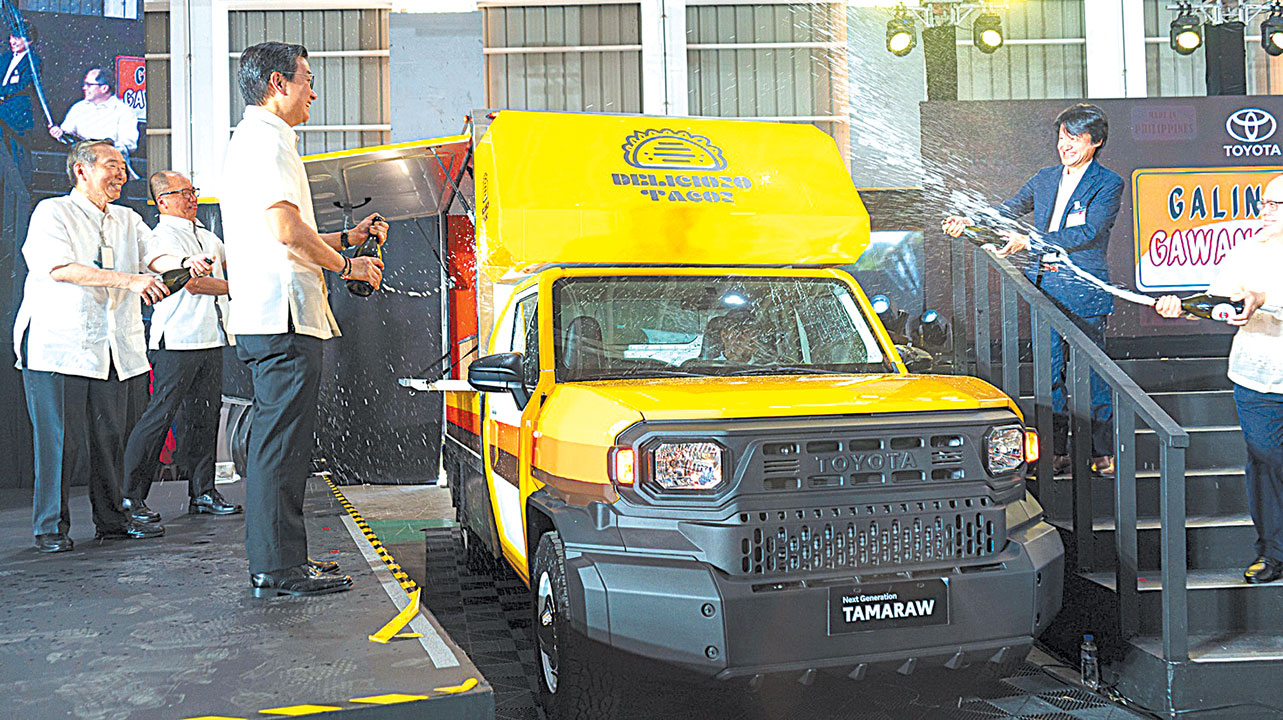
Last Friday, TMP officially broke the Tamaraw’s silence as it publicly unveiled the latest (and all-new) iteration — seen to build on the legacy of the workhorse while opening a new chapter of possibilities, promises, and expectations.

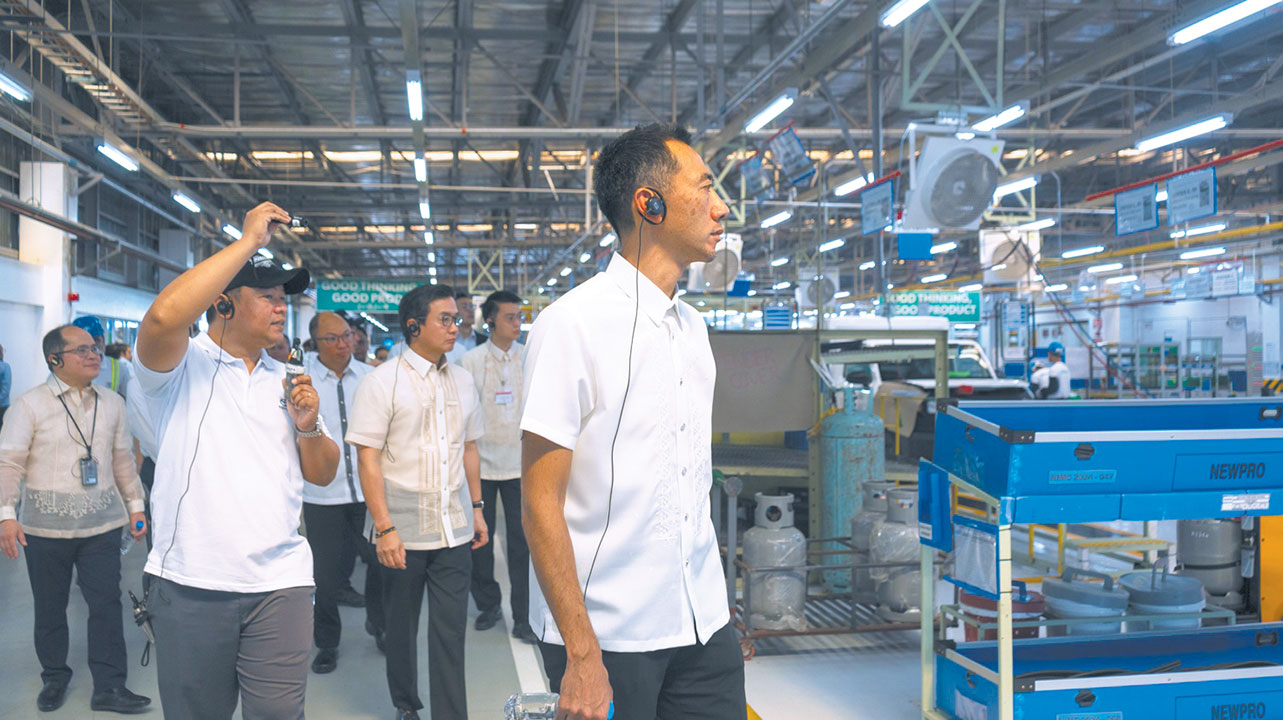
Prior to the launch, Toyota had underscored the importance of the model — and, truly, the people who will ultimately be responsible for its manufacture — by celebrating the Tamaraw’s roll-off at TMP’s sprawling 78-hectare, Philippine Export Zone Authority (PEZA)-accredited Santa Rosa, Laguna facility. Primarily organized for TMP employees, the event was also attended by “key stakeholders” from the Toyota network, government, industry, and select members of the media.

Now based on Toyota’s new International Multi-Purpose Vehicle platform designed for the Asian market, the Tamaraw’s return is even more significant because it will be manufactured in Santa Rosa. Addressing attendees of the roll-off ceremony, Mr. Ty described the Tamaraw as a “super work vehicle” and “wonder vehicle.” He continued, “Just one year ago, we were honored by no other than President Marcos and Chairman Akio Toyoda to witness our CKD (completely knocked down) assembly lines, and today, we have all of you right here in Santa Rosa.”

Present for the occasion was Toyota Asia Region Deputy Chief Executive Officer Hao Quoc Tien who confirmed, according to TMP, that the conversion factory is a “capability breakthrough, being first of its kind in the Southeast Asian region.”

TMP’s Laguna factory boasts a “capacity exceeding 54,800 units annually,” with a 60,000-vehicle maximum volume, and the Tamaraw now joins two other CKD models (the Vios and Innova) produced on the premises.

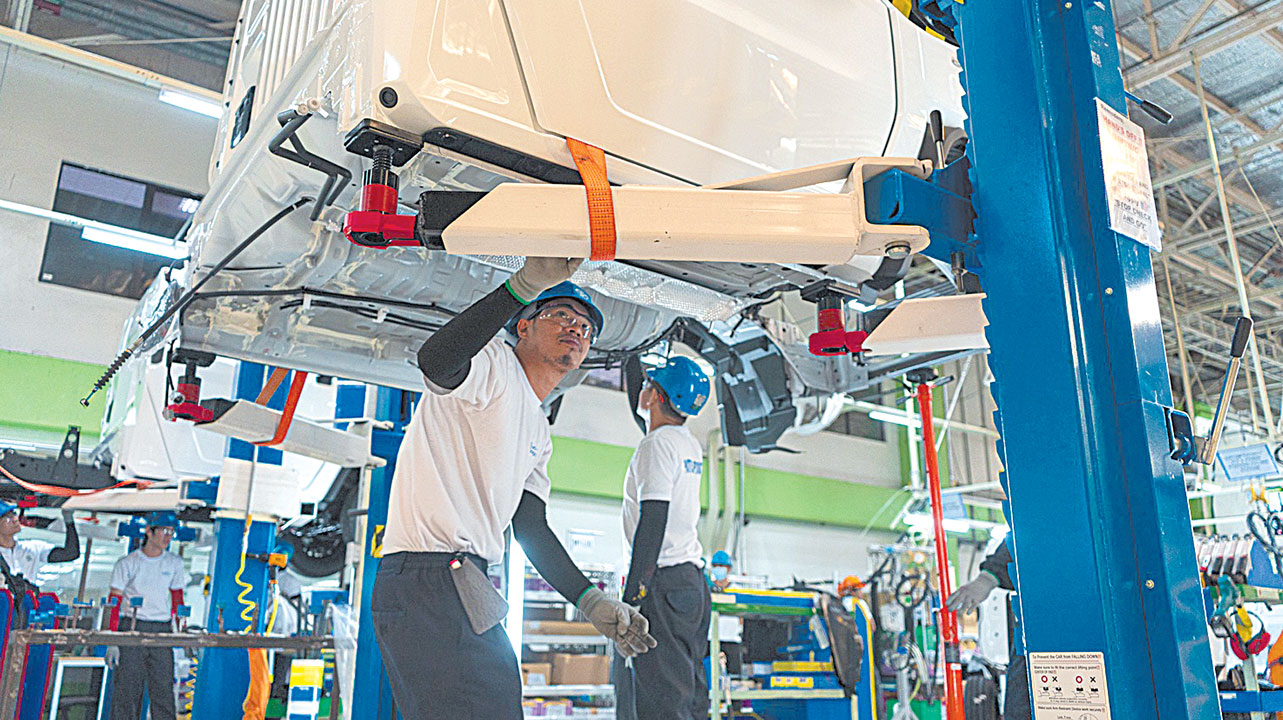
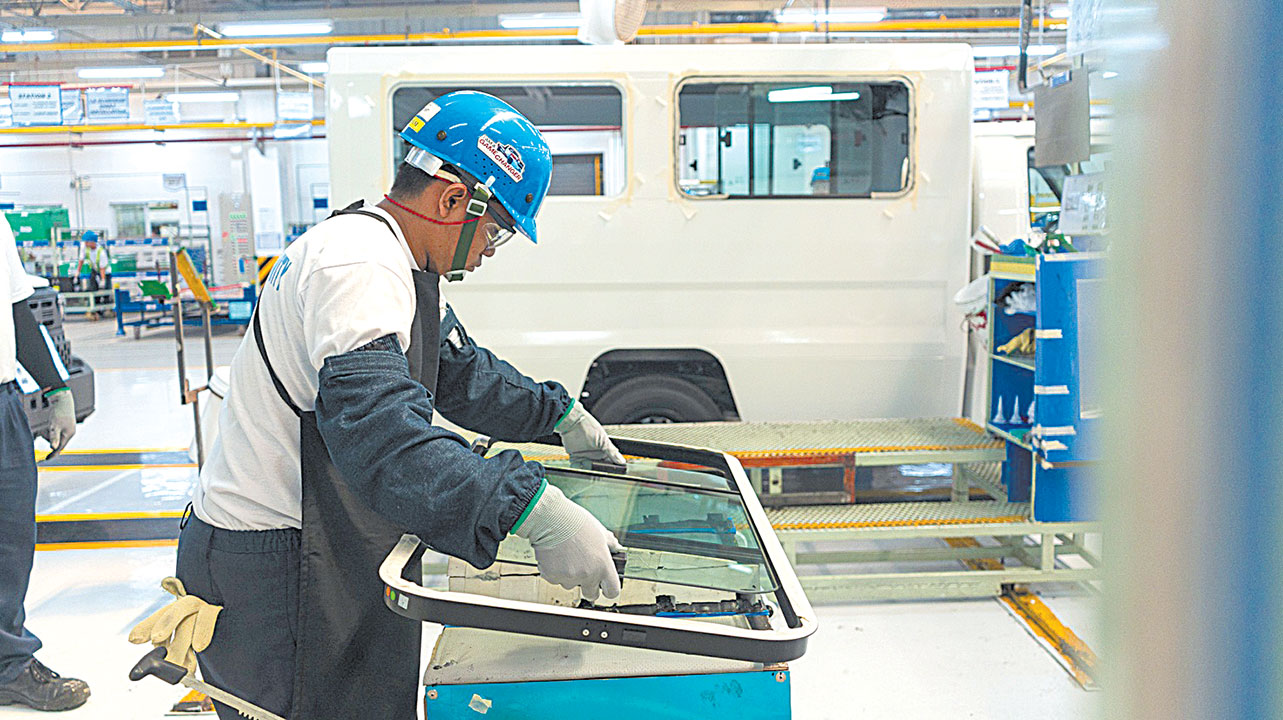
After the unveiling, the company invited guests for a brief tour of its new 1.5-hectare, P1.1-billion TMP Conversion Factory — which ups the total commitment to the IMV 0 project to a cool P5.5 billion, spent on “earlier investments in vehicle production, in-house and outsourced parts localizations.” The factory rolls out the Tamaraw in three body styles — dropside, utility van, and aluminum van forms — available with gas or diesel powertrains, and TMP contracted an additional team of workers to man the new production line. A sub-model — dubbed the Hilux Tamaraw — conscripts the platform of the Hilux pickup. Electrification for the Tamaraw may be in the cards in the future, subject to demand by customers.

Exporting Philippine-made Tamaraws is another prospect, and TMP President Masando Hashimoto said this needs to be studied more. “In  the future, I want to expand our business abroad. Today, we are importing parts from Thailand, but if we want exportation to be possible, we need more localization. We need to invest more in our facility or those of our suppliers.”

Presently, 25% of Tamaraw parts are locally sourced. The engine comes from Toyota’s Thailand factory, while the transmission is made here. “We still rely heavily on parts imported from Thailand like the glass, battery,” continued the executive.

Replying to a question from “Velocity,” Mr. Hashimoto revealed that TMP has already completed the production of 200,000 Vios units — a requirement under the government’s Comprehensive Automotive Resurgence Strategy (CARS) program, inked in 2015 via Executive Order No. 182. The program extended incentives to as many as three participating car manufacturers in return for producing at least 200,000 units of a mass-market model. TMP enrolled the Vios, while Mitsubishi Motors Philippines Corp. (MMPC) entered the hatchback and sedan versions of the Mirage. An enrolled model gets P9 billion in fiscal support.

“We are quite happy with the achievement, and once again we want to show our appreciation to the government. This initiative helps manufacturers like us and Mitsubishi a lot,” declared Mr. Hashimoto. “Unfortunately, we faced some difficulty during the COVID-19 pandemic, so if (the government) could consider some compensation or how to offset that difficult time when we didn’t make good production (like) if they consider an extension, that would be very helpful to us and Mitsubishi.” To date, not all the incentives promised to TMP through CARS have been received.

However, the company is keen on working anew with the government on a similar arrangement. Said TMP First Vice-President for Corporate Affairs Josephine Villanueva, “With the P5.5 billion that we’ve already put in, we (should be qualified) for another CARS-like program.”

Known as an Asian utility vehicle when it first arrived on the scene, the next-generation Tamaraw is now markedly more flexible. Through its many iterations, the vehicle is envisioned to provide “an inclusive mobility solution for micro, small, and medium enterprises (MSMEs) across various industries nationwide,” said TMP.

Mr. Hashimoto explained, “This commercial vehicle area is very new to Toyota. After 2004, we stopped the commercial vehicle line (of the Tamaraw). This market is (now) dominated by Mitsubishi and Hyundai and we are quite behind. We are now the challenger… It’s a new model, but for all employees of TMP, it represents a new program for us to train ourselves — for production and marketing — because everything is new. This (should be) a good experience for all Toyota employees.”

Production rollout, per the executive, should total “around 20,000” units a year, with a monthly output of 1,500 to 1,800 — the latter figures also reflecting the expected sales volume across TMP’s nationwide dealership network.

He reiterated, “We need to develop again the image of Toyota in this specific category. In passenger cars, we have no problem, we are very confident. But this (utility vehicle space) is really a big challenge.”

Mr. Hashimoto said he expects the “utility vehicle” guise of the Tamaraw, among its many iterations, to gain the most traction in the market. This used to be called the FX, and it was renamed, he insisted, to “avoid confusion.” The confidence in the variant is predicated on its versatility. “It is our focus model.”

In response to this writer’s question on what the Tamaraw’s arrival means for the brand’s equally versatile Lite Ace utility series, he maintained, “We want to maximize our model lineup. The Lite Ace is one of those — covering a (market) area through its 1.5-liter gasoline engine. And we still have the Tamaraw, and we have Hi Ace Commuter. These several models will be mixed in this category.”

The all-new Tamaraw is powered by either a 2.4-liter diesel (150ps, 400Nm or 300Nm) or 2.0-liter gas (139ps, 183Nm) mill mated to a six-speed automatic transmission (in the case of the 2GD-FTV [High]) or five-speed manual.

At the launch, TMP revealed the pricing of the nameplate’s variants that will be made initially available: Tamaraw 2.4 GL Dropside A/T (P1.075 million), Tamaraw 2.4 Utility Van (previously the FX) M/T (P1.142 million), Tamaraw 2.4 Aluminum Cargo M/T (P1.041 million), and Tamaraw 2.4 Dropside M/T (P937,000).

The other iterations of the Tamaraw — namely the short-wheelbase versions — will be available by March next year. According to materials already being distributed by Toyota dealers, the Tamaraw 2.0 Utility Van will be priced at P1 million, the Tamaraw 2.0 Aluminum Cargo M/T will cost P804,000, and the Tamaraw 2.0 Dropside M/T will come with a P750,000 sticker.

From something old, something new

THE KIMONO, the traditional garment of Japan, gets a new life under the hands of fashion designer Yumi Christina (she drops her last name, Sakamoto, for work). Of both Japanese and Filipino descent, the designer’s work melds both of her worlds, with the materials coming from the land of her father, and the labor from the land of her mother.

We met Ms. Sakamoto during an event with Moda Interni on Nov. 28, with her work, old kimonos turned into suits and gowns, displayed alongside the flamboyant creations of Italian furniture brand Opera Contemporary. Her clothes are sold under the brand EDYA1929, a tribute to a store her great-grandfather opened in 1929, before the Second World War forced it to close.

On view was an iridescent shot silk dress woven with a pattern of flowers, the skirt hemmed with peacock feathers. A similar dress, this time in cream, was hemmed with what seemed to be albino peacock feathers (Ms. Sakamoto bleached them white). There was a corset in gold brocade, a wrap dress in the same luxurious tint, and a cream blazer with a raised pattern of clouds.

In the showroom, she hung a cream brocade robe, used only for the most formal of occasions, embroidered with golden cranes. This one she doesn’t dare rework: she just keeps it around for inspiration.

She herself wore a blazer of her own creation: trees in blossom are on a black silk background, and a pond of gold snakes around the pattern, looking like water when sunlight hits it at sunset.

Ms. Sakamoto moved from Japan to the Philippines five years ago. “It’s a bit of an embarrassing story but — I got divorced while I was pregnant. I couldn’t do it on my own in Japan anymore. My family’s here,” she told us in an interview.

During her stay, she found an old kimono in, of all places, a Japan Surplus store. “The old kimono I found in Japan Surplus was really messy. A lot of stains. I never had interest in kimono before. I felt like — I was so sad at the time. So when I saw that kimono, I was like, ‘You’re here also. You came all the way from Japan, too.’”

“I knew that there are a lot of kimono discarded in Japan. I wanted to find a home for them. I wanted them to be loved by someone again. It doesn’t have to be in Japan. In the Philippines, it’s perfect,” she said.

“It’s like my healing journey as well. I want to be loved again. But I have to be healed: creating is my healing process.”

She has been in fashion for 18 years, but back in Japan, she worked for more casual American brands, dressing people like skaters. “But I’m a girl. I love wearing a dress. I always design a dress for myself. But I had no idea how to create a dress.”

After coming from casual wear, her new work touches on couture, using pure silk and artisanal techniques like embroidery. We mentioned that the material comes from the land of her father, but the labor comes from the land of her mother: everything she knows now about technique, she learned from artisans in the Philippines.

She started by discussing the difficulties of working with the material: silk shrinks when washed, with the initial washing she does. Kimono fabric, according to her, comes at 12 or 13 inches in width (she gestured with her hands). “So it’s very limited,” and she can’t make larger garments unless she combines them. She receives the kimono now as donations, either from her pop-ups at Japanese department stores or friends from her old life in fashion. “They don’t know what to do with their own kimonos, so they just send it to me.”

Sometimes, the kimono arrives damaged or stained: that’s where the Filipino artisans come in. “Made-to-order and couture in this country is very advanced,” she said, which is surprising when we realize how many famed fashion designers come from Japan (Hanae Mori, or Issey Miyake, or Rei Kawakubo, for example). “There are a lot of artisans [in the Philippines]. Everywhere. Beaders, sewers. They help me hide all the stains by beading, embroidery,” she said.

“I think the Philippines is more flexible, and very open-minded to these kimono dresses. I think I can’t do this if I’m still in Japan. I can do this because I’m here in the Philippines,” she said.

She told us what she loves about working with the old, and why there should still be space for them in this world constantly churning out the new. “The technique, the embroidery, and the hand painting: it’s done by very skillful and talented artisans. They’re old already. It’s sayang (a waste) to throw them away,” she said. “If they’re gone, no one can do this anymore.”

“[Each piece] has its own history and story. Some people tell me a story of their kimono. I fall in love with the story first, so I can make the design for this story,” she said.

“Some people say that old things have bad spirits. Sometimes I feel something weird when I touch the old kimono, but I also feel that I can rebirth them by designing, creating them, into something else.”

Yumi Christina’s work can be found at edya1929.com. — Joseph L. Garcia

T-bill, bond rates may be mixed on BSP, Fed bets

STOCK PHOTO | Image by RJ Joquico from Unsplash

RATES of the Treasury bills (T-bills) and Treasury bonds (T-bonds) on offer this week may end mixed as data released last week bolstered expectations for rate cuts by both the Bangko Sentral ng Pilipinas (BSP) and the US Federal Reserve at their respective meetings this month.

The Bureau of the Treasury (BTr) will auction off P15 billion in T-bills on Monday, or P5 billion each in 91-, 182-, and 364-day papers.

On Tuesday, the government will offer P15 billion in reissued 10-year T-bonds with a remaining life of nine years and one month.

T-bill and T-bond rates could track the mixed movements in the secondary market yields last week as the pickup in Philippine headline inflation last month boosted bets of a rate cut by the BSP Monetary Board at their last meeting for the year, Rizal Commercial Banking Corp. Chief Economist Michael L. Ricafort said in a Viber message.

At the secondary market, the 91-, 182-, and 364-day T-bills went up by 5.1 basis points (bps), 4.88 bps, and 7.56 bps week on week to end at 5.6955%, 5.9724%, and 6.0804%, respectively, based on PHP Bloomberg Valuation Service Reference Rates data as of Dec. 6 published on the Philippine Dealing System’s website.

Meanwhile, the 10-year bond’s yield declined by 11.41 bps week on week to end at 5.8846%.

The 10-year bond to be auctioned off on Tuesday could see strong demand as this would be the last T-bond offering this year, a trader said in an e-mail.

The papers could fetch yields between 5.85% and 5.9% after US nonfarm payrolls data released on Friday came in within expectations, bolstering expectations of another Fed cut at their Dec. 17-18 meeting, the trader added.

Philippine headline inflation picked up to 2.5% in November from 2.3% in October, the government reported last week.

The Monetary Board will hold its last policy meeting for the year on Dec. 19. BSP Governor Eli M. Remolona, Jr. has said that the Philippine central bank could cut or pause at this month’s review.

Last week, the BTr raised P15 billion as planned from the T-bills it auctioned off as total bids reached P57.8 billion, almost four times as much as the amount on offer.

Broken down, the Treasury borrowed the programmed P5 billion through the 91-day T-bills as tenders for the tenor reached P21.75 billion. The three-month paper was quoted at an average rate of 5.63%, down by 1.7 bps from the previous week’s auction, with accepted bids having yields ranging from 5.62% to 5.64%.

The government likewise made a full P5-billion award of the 182-day securities, with bids reaching P16.11 billion. The average rate of the six-month T-bill stood at 5.905%, up by 2.3 bps, with accepted rates at 5.85% to 5.925%

Lastly, the Treasury raised P5 billion as planned via the 364-day debt papers as demand for the tenor totaled P19.94 billion. The average rate of the one-year debt increased by 3.2 bps to 5.937%, with the tenders accepted carrying yields ranging from 5.92% to 5.948%.

Meanwhile, the reissued 10-year bonds to be auctioned off on Tuesday were last offered on Oct. 29, where the BTr raised P15 billion as planned at an average rate of 5.87%, below the 6.25% coupon.

The Treasury is looking to borrow P90 billion from the domestic market this month, or P60 billion via T-bills and P30 billion through T-bonds.

The government borrows from local and foreign sources to help fund its budget deficit, which is capped at P1.52 trillion or 5.7% of gross domestic product this year. — A.M.C. Sy

AFASA: A milestone in cybersecurity for Philippine banking

STOCK PHOTO | Image by Jcomp from Freepik

By Pierce Oel A. Montalvo

IT’S ONE SMALL STEP for the central bank, and one giant leap for the Philippine banking industry.

Signed last July, the new Anti-Financial Account Scamming Act (AFASA) signifies the most comprehensive attempt yet to protect Filipino consumers from digital financial crimes.

Beyond the short-term, the AFASA serves as a cornerstone for the central bank’s 2024–2029 Financial Services Cyber Resilience Plan. The plan outlines a comprehensive roadmap and key framework designed to strengthen the financial services sector’s resilience against cyber threats.

“It will protect our people from falling prey to perpetrators who target their banks and e-wallet accounts,” President Ferdinand R. Marcos, Jr. said during the signing ceremony of the law.

The legislation reflected a shared commitment among government and financial leaders to address the growing threat of cybercrime head-on.

“We express our full support for the new anti-financial account scamming law. This will help us strengthen consumer protection and foster trust and confidence in the Philippine financial system,” said Bangko Sentral ng Pilipinas (BSP) Governor Eli M. Remolona, Jr.

Online scams continue to happen just about anywhere, and at unprecedented rates. A study by the nonprofit Global Anti-Scam Alliance revealed that approximately $1.03 trillion was lost by consumers worldwide in scams in 2023.

According to data from the same study, the Philippines would have lost an estimated P459.98 billion from digital scams during the same year, or 1.9% of its economic output.

Cybersecurity firm Kaspersky also reported that the Philippines recorded the highest number of financial phishing attempts targeting business devices in Southeast Asia in 2023, with 163,279 incidents detected and blocked throughout the year.

The BSP further reported that 59.48% of cyber fraud losses among BSP-supervised financial institutions (BSFIs) in 2023 were attributed to account takeovers, identity theft, and phishing. Overall, cyberfraud losses surged by 212% compared to 2022.

“[T]his is essential in this time as cybercriminals use technology to defraud fellow Filipinos — causing not only personal economic loss through them but also a loss of trust in financial institutions,” said Mr. Marcos.

These figures underscored an urgency of robust legal and institutional measures to combat digital financial crimes. The specifics of the AFASA reveal how the BSP aims to reinforce financial security in the Philippines.

THE LAW IN BRIEF
AFASA seeks to strengthen security measures and boost consumer confidence in the expanding financial technology sector. In an annual report by Fintech News Philippines, e-money accounts grew by 12.9% to 47.6 million as of the second quarter of 2022.

Meanwhile, data from the Bangko Sentral ng Pilipinas (BSP) revealed that the proportion of Filipino adults with bank accounts rose to 65% in 2022, up from 56% in 2021.

A key element of the AFASA is its explicit definition of “financial account scamming,” which points to a range of illicit activities.

These include traditional money muling operations, where individuals utilize their accounts to facilitate the transfer of illicit funds.

“[Money muling operations include] opening accounts using fake names or identity documents belonging to other people and selling or renting out financial accounts,” said Atty. Nicasio A. Conti, chief executive officer of research and intelligence agency Capstone-Intel, in a Messenger chat.

The AFASA also recognizes social engineering schemes as a form of financial account scamming.

“Examples of social engineering schemes include impersonating a representative of an institution to obtain sensitive information or using electronic communications to deceive someone and gain access to their information,” said Mr. Conti.

The AFASA also designates money muling or social engineering as “economic sabotage” if it involves: (a) conspiracy of three or more people; (b) three or more victims; (c) mass mailers; or (d) human trafficking.

“There is no specific threshold for amount involved or specific pattern to be considered to qualify a money muling activity or a social engineering scheme as economic sabotage,” said the BSP in a statement.

“As long as the money muling activity or social engineering scheme is committed in the manner mentioned above, it shall be considered economic sabotage.”

Penalties under AFASA are extensive. Money muling carries 6-8 years imprisonment and/or fines from P100,000 to P500,000. Social engineering scams result in 10-12 years (up to 14 if the victim is a senior citizen) and fines up to P1 million (or up to P2 million for senior citizen victims).

Economic sabotage can lead to life imprisonment and fines up to P5 million.

BSFIs will also be responsible for reimbursing customers who lose money due to scams if the bank didn’t have proper anti-fraud measures in place or acted negligently. They will also be liable if they fail to freeze funds involved in a disputed transaction as required by the new law.

“For claims not exceeding P10 million, aggrieved account holders may file a formal complaint for adjudication before the Consumer Complaints Resolution Office of the BSP,” the central bank said.

The scope of AFASA extends beyond traditional banking services as well. Mr. Conti said that the AFASA covers all types of financial accounts, including deposit accounts, trust accounts, investment accounts, credit card accounts, and electronic wallets.

This broad coverage ensures comprehensive protection against various forms of financial account scamming across the board.

The AFASA also compels all BSFIs to adopt more rigorous measures to protect consumers. In a memorandum elaborating upon AFASA’s prescribed risk management systems, the BSP reinforces the responsibility of BSFIs to employ proper fraud management systems, infrastructure and security monitoring, multi-factor authentication, and user enrollment and verification processes.

According to the same memorandum, BSFIs are now expected to keep extensive audit trails for e-service transactions. BSFIs now must also undergo annual Vulnerability and Penetration Testing from independent external parties.

“The degree of sophistication and layers of risk management system and controls depends on the size, nature and complexity of BSFIs’ business models and operations,” said the BSP.

Another highlight of the new law is the heightened power of the BSP in its investigation of financial accounts.

“BSP deemed it necessary to obtain new powers to help law enforcement authorities (LEAs) and competent government agencies in preventing and combatting financial account scams,” the BSP added.

Through the AFASA, the BSP gains the power to investigate suspicious transactions and share related information with law enforcement.

The BSP emphasized that financial account investigations would require prior evidence of potential involvement in money muling or social engineering schemes, and that any resulting information would be shared solely with LEAs and relevant government authorities.

“Any information that may be shared by BSP should be used solely for the purpose of filing and prosecuting a criminal case for violation of the AFASA,” said the BSP.

Consequently, bank secrecy laws do not apply to financial accounts under investigation of the BSP.

These exemptions apply to the Law on Secrecy of Bank Deposits, the Foreign Currency Deposits Act of the Philippines, and the Revised Non-Stock Savings and Loan Association Act of 1997.

This measure modifies the application of said laws, facilitating greater government oversight for investigations made by the BSP.

“It should be understood, however, that the authority to enforce penal provisions of the AFASA, including the powers to investigate and prosecute the prohibited acts defined under the law, make arrests and to file criminal complaints, are still lodged with the LEAs and appropriate authorities,” the BSP said.

THE SENTIMENT
By enhancing security, the AFASA aims to boost consumer confidence and promote wider use of financial services, aligning with the BSP’s goals for a robust digital financial ecosystem.

However, according to the Bankers Association of the Philippines (BAP), the strict measures of the AFASA may leave to unintended outcomes.

“For example, the rapid freeze and verification requirements may introduce operational delays, particularly if the verification process or industry-wide reporting mechanisms lack standardization,” the BAP said in an e-mail interview.

“This could result in temporary inconveniences for legitimate account holders and delays in fund access during verification procedures.”

Carlos T. Tengkiat, chief information security officer for Rizal Commercial Banking Corp., said that there should be no unforeseen consequences arising from the new law.

“There are safeguards in place [that] also the penalize those who seek to abuse the information sharing portion of the investigation among various public and private sector personnel,” he said in an e-mail.

The BAP also said that informal sector participants who lack understanding of the legal risks associated with account misuse may initially face challenges.

The BSP’s 2021 financial inclusion survey revealed that only 7% of Filipinos have attended a seminar on financial literacy.

Furthermore, only 2% of Filipino respondents answered all six basic financial literacy questions correctly, in the same survey.

“This emphasizes the need for an extensive public awareness campaign to inform the public and SMEs of AFASA’s regulations and discourage them from unknowingly participating in money-muling activities,” said the BAP.

“The informal financial sector would benefit because the law gives avenues for them for investigation as well as restitution for the crimes committed against them,” said Mr. Tengkiat.

Capstone-Intel’s Mr. Conti said that balancing strict security protocols with a smooth customer experience will also be a critical concern.

“Of course, there still are the provisions of the Data Privacy Act. Overly stringent measures could frustrate users, so banks need to focus on user-friendly yet secure solutions.”

Mr. Tengkiat also said that be the shifting landscape of technologies as well as the creativity of fraudsters would be a potential challenge.

“These may make controls fluid, to cope with these financial institutions must be able to anticipate new threats, adopt new technologies as well as preserving good customer experience when their services are used,” Mr. Tengkiat said.

Despite the new law, trust in financial technology remains compromised among Filipino consumers, amid scams persisting in the country’s financial landscape.               

“I’m usually very careful,” said Nikki Bryce Roque, in his Facebook post, recounting how he lost his entire mobile wallet balance to financial account scammers last November.

A seemingly legitimate text message, sent through the wallet’s official SMS number, alerted Mr. Roque to an impending insurance renewal and prompted him to click a link to cancel the charge.

The link led him through a series of supposedly official web pages requesting his one-time password and mobile wallet PIN, resulting in an unauthorized transaction that drained his account dry.

“They can even invade legit sites and incorporate their scamming mechanisms there,” said Mr. Roque in a Messenger chat.

A recent survey by mobile operator trade body GSMA reveals that 71.4% of Filipinos perceive growing risks to account security, with financial fraud being a major concern.

Furthermore, a 2023 GSMA survey revealed that 67% of Filipinos did not report instances of scams to law enforcement. Reporting was hampered by complexity, perceived ineffectiveness, and uncertainty about where to report.

When asked if he believed he was adequately informed by his banks, service providers, or even the BSP, Mr. Roque said: “No, I didn’t even know it exists.”

Another e-wallet user and scam victim, who requests to remain anonymous, also said that he was not aware with the law’s existence.

Investigations by his service provider regarding his case claimed that one-time passwords were sent to only the user’s device, a claim the user says is impossible. 

He has since contacted both his e-wallet service provider and the BSP through official channels about his incident, albeit hearing no response from the central bank. “It feels like they didn’t take any action regarding my concern. They didn’t even reach out to me once.”

Mr. Roque said that the new law has only transferred the responsibility to central banks and not to the institutions who are needing more stringent security features.

“If the bank heavily invests in the investigation phase rather than strengthening its security features, it means they are willing to let their clients get robbed as long as they are not held legally liable.”

Nonetheless, the BAP remains optimistic.

“The BAP anticipates that AFASA will encourage the sector to expand product offerings focused on account security and fraud prevention, which aligns with the association’s goals of elevating cybersecurity standards in Philippine banking and providing consumers with secure, reliable financial services,” the BAP said.


The Marcos administration must be careful about two potential blind sides

PHILIPPINE STAR/MIGUEL DE GUZMAN

It is always tempting when writing outlooks for 2025 to have an overarching theme — the one narrative ring to rule them all. I am taking the opposite direction, which is that we may be neglecting some risks or opportunities that will manifest next year with only limited immediate effect, but which could play out in the coming years.

WATCH THE SWS DATA
The headlines are focused on the congressional efforts to pin down Vice-President Sara Duterte, for reasons ranging from her intemperate outbursts to her office’s spending of its slush funds. Whether Sara’s threats against the president violate the guardrails of democracy or whether her office’s use of confidential funds were illegal and improper are valid questions, but to be credible, the pursuit of answers by congress must have some broader institutional reform effect, and not be a pure political takedown both in perception and reality. She may be fair political game to the administration’s allies, but the line between valid prosecution and perceived persecution of a political opponent is a thin one and could backfire down the road.

Allies of former president Benigno Aquino III used the same strategy allegations to taint the family of his vice-president. This, together with the buoyant economy in the latter half of Aquino’s term, seem to lay the proper groundwork for his nominated successor. The data all seemed to work for the Aquino administration: growth was high, inflation was under control, people were buying motorcycles and cars. But voters cast these aside and focused on the one thing that drew them to the candidacy of then Davao City mayor Rodrigo Duterte: his promise to keep people safe. Purposely or inadvertently, his campaign blindsided the administration with an appeal to a then seemingly unaddressed issue: the growing anxiety of the public over law and order.

After Duterte had won, I always asked the question: was his victory ever in the data? And one publicly and easily available but underappreciated data set clearly revealed an issue that would eventually work against the Aquino administration – the perception of rising crime.

The Social Weather Stations (SWS) is largely underappreciated by our country, whether by policymakers or corporates. This was of course hindsight. But in looking for data that could have correlated with Duterte’s emergence, SWS’ regular surveys on crime victimization stood out. From 2015-2016, it showed a significant number, near doubling, of Filipinos saying that they or a member of their family had been victimized by criminals the past six months.

The Marcos administration should take a closer look at the current SWS numbers because while they are off their highs, the recent trends of both actual victimization and fears of neighborhood crime are also rising. Both SWS (of Mahar Mangahas) and Pulse Asia (of Ronnie Holmes) have been the most reliable sources of social and political trends in the two decades that I have been analyzing political risk — and they are under-supported and their data under-analyzed.

THE DEEP RABBIT HOLE OF GEOPOLITICS
Geopolitics will affect our world significantly, especially the tilt against globalization. The trade tensions between China and the US will likely reshape where goods are produced, while the rise of nativist politics could limit immigration. Both could have long-term effects on inflation in the Philippines and, in the case of immigration, our families.

Should trade tensions between China and the US persist, the production efficiencies that kept inflation low the past two decades by concentrating global supply chains in a few countries — which was primarily China — may no longer work, and the Marcos administration may eventually have to deal with structurally higher inflation for manufactured goods later in its term.

In the recent US presidential election, public discomfort (to put it mildly) over rising prices was a key component of voters’ decisions against the incumbent. The Philippines — and much of Southeast Asia — did not experience the severity of the inflation spike in Europe and the US for various reasons but like the rest of the world we may have to deal with structurally worse inflation than the past two decades. Inflation is not only painful for the pocket when at the store or market; recent research shows that it also increases the stress of workers in the workplace. The desire to find ways to keep their incomes at pace with rising prices increases the antagonism between workers and their employers when they ask for wage increases or attempt to organize. It may also cause them to look for new jobs, with the attendant uncertainty that the process brings. These are disruptive and stressful, which Joao Guerreiro, Jonathon Hazell, Chen Lian, and Christina Patterson describe as the “conflict cost” of inflation in a recent paper. Thus, inflation’s political effects cannot and should not be underestimated, especially if more analyses become available that the pain from additional inflation above a certain reference point trumps higher economic growth, also above a certain reference point.

The administration may have to send the Bangko Sentral ng Pilipinas (BSP) a nicer Christmas gift this year (within the limits of ethical behavior, of course). The BSP has been pragmatic but consistent in the need to keep inflation expectations anchored. Its policies and research on managing future inflation risks in the context of uncertainty about how global value chains are being reshaped will be key not only for investors and banks, but ultimately in our ability to effectively manage inflation for the benefit of the common Filipino.

Of course, there are other variables to consider that make this more of a medium-term concern, such as increased oil production causing fuel prices to drop or the possibility of Chinese goods being dumped into Southeast Asia, which might bring down prices. However, the latter has the unintended effect of possibly resulting in new trade barriers as governments attempt to protect their domestic industries, as the Thai and Indonesian discussions on limiting cross-border e-commerce show.

The second issue is with migration. There has been a gradual but noticeable swing towards the tightening of policies for workers and students, even in countries that were once seen as welcoming of skilled labor. The change may not be immediately noticeable for Filipinos. After all, our countrymen who go abroad work in sectors where they are needed and where labor conditions will remain tight such as healthcare, and they may therefore still be exempted from tightening of migration rules. But there is one risk that they face, which is that family-based migration — i.e., a Philippine worker being able to bring in their spouses and children at the outset or petitioning that they be eventually allowed to join them in  their new country — could become much more difficult.

It might lead to families being separated for longer, at immense cost to their well-being. We pride ourselves on being a Christian country that values family, but our economic survival and growth over the past two decades has depended on large parts of our population moving abroad and being separated for months, if not years. We tout OFWs as heroes, but their families are the ones paying the price. OFWs are undoubtedly able to better provide economically for those they leave behind, but the studies of the potentially disruptive social effects of decades of migration are few and far between.

Economically, tighter rules on family-based migration might cause workers to remit more of their earnings to the Philippines, which works well for our domestic economy. But it could also make them more reluctant to go abroad, which could in the long run increase domestic political pressures as the escape valve of being able to leave the country shrinks.

This has its own uncertainties: as fewer people are able to leave and become more frustrated with domestic governance, do they become more vulnerable to populists or to mobilize to create real political pressure to improve the outlook for the country? Given the difficulty of organizing politically in the country, the former seems to be the more realistic outcome.


Bob Herrera-Lim is a managing director at Teneo, a New York-based consulting firm that advises companies and investors globally. He covers all of Southeast Asia for the firm’s clients. He is also a fellow of the Foundation for Economic Freedom.

‘X’ marks new era for Volvo

The Volvo EX30 SUV is positioned as Volvo’s most affordable and compact model, retailing for P2.99 million. — PHOTO BY DYLAN AFUANG

Now under HARI, brand adds compact EX30 to ‘sustainable’ lineup

By Dylan Afuang

UNDERSCORING the local arrival of the Volvo EX30 is the start of the Swedish car maker’s Philippine distributorship under Hariphil Asia Resources, Inc. (HARI). The brand’s subcompact battery electric vehicle (BEV) joined what a HARI executive boasted as a “safe and sustainable” local Volvo lineup, which is complemented by so-called Volvo Personal Service customer amenities.

“This launch marks the beginning of a promising partnership between Volvo and HARI — a trusted leader in building (auto) brands and after-sales services for almost 25 years,” HARI Vice-Chair, President, and CEO Maria Fe Perez-Agudo said in her message during the introduction of the EX30 to customers, bank partners, and media in Makati City.

Along with Volvo, HARI, the operator of Hyundai Trucks and Buses here, also took the local distribution rights of American automaker Chevrolet this year. The EX30 SUV, meanwhile, is positioned as Volvo’s most affordable and compact model. Retailing for P2.99 million for its sole Single Motor Extended Range variant, the vehicle’s stylish design and sustainable materials used in its design were touted as its key highlights.

“We are proud to bring the ‘World of Volvo’ to Filipino customers,” Ms. Perez-Agudo added. The umbrella term covers the brand’s electrified local offerings in the EX30, C40, and XC40 BEVs; the XC40, XC60, XC90, and S90 mild-hybrid electric vehicles (MHEVs); and the introduction of the mentioned Volvo Personal Service customer perks.

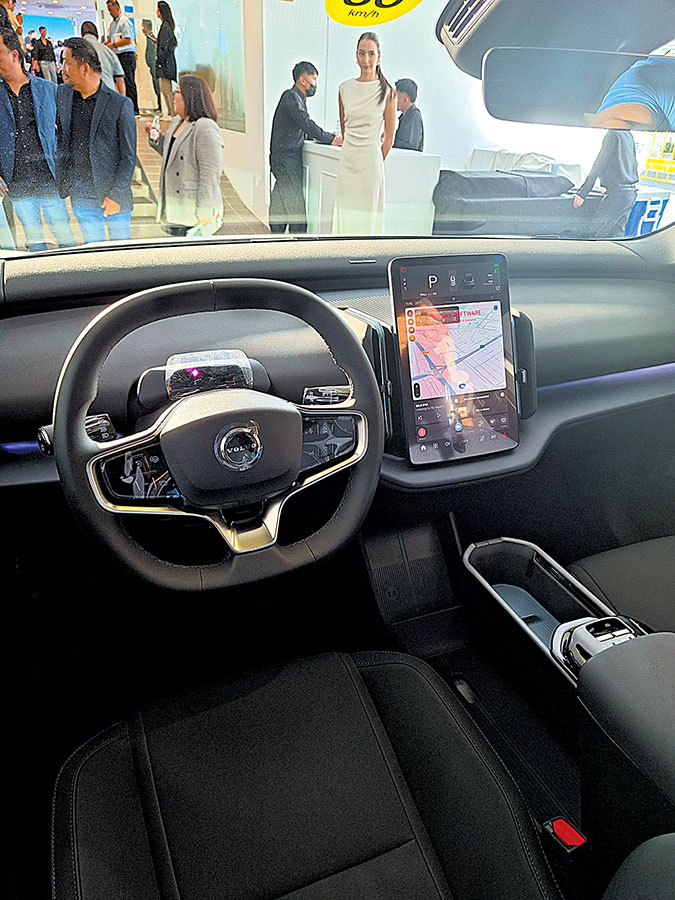
The EX30 measures 4,233-mm long, 1,838-mm wide, and 1,550-mm tall. Recycled aluminum, steel, and plastics were used in building the vehicle, a company release stated. Moving into the car’s five-seater cabin, the materials here came from recycled denim fibers. To free up more interior space, the Harman Kardon audio is combined in one “soundbar” in the center of the cabin, instead of fitting speakers separately on the doors, Volvo CEO Jim Rowan said in a video.

The EX30 Single Motor comes with a 69-kWh lithium-ion battery that enables up to 476km of range. A rear-drive electric motor produces 272hp and 343Nm of torque, and energy consumption is quoted at 17.5kWh/100km and the zero-to-100kph time at 5.3 seconds. It takes as little as 28 minutes to charge from 10% to 80% via fast-charge DC connection.

As for the new Volvo Personal Service program, the HARI leadership said, “At first contact, you get a dedicated technician who will process all of your concerns. It was conceived to eliminate needless handovers and to shorten wait times. The (brand is training HARI) until 2025 to make sure that this works in its finest execution.”

On top of this, the EX30 comes with a five-year unlimited mileage vehicle warranty, and an eight-year/160,000-km battery warranty, whichever comes first. Preventive maintenance service (PMS) is required once a year or every 10,000km, whichever comes first.

Included with the EX30’s safety features are front- and rear-collision avoidance systems, lane-keeping devices with Pilot Assist, and a 360-degree camera. Through the steering, Park Pilot Assist can help the driver in parking in parallel, curved, perpendicular, and diagonal spaces.

To inquire about Volvo Philippines’ latest products, the public is invited to visit Volvo Makati (UDC Building, 2272 Chino Roces Avenue, Makati City) or contact the brand through email (inquiry@volvocarsph.com), or visit its website (www.volvocars.com/ph).

SM to open two new malls in China

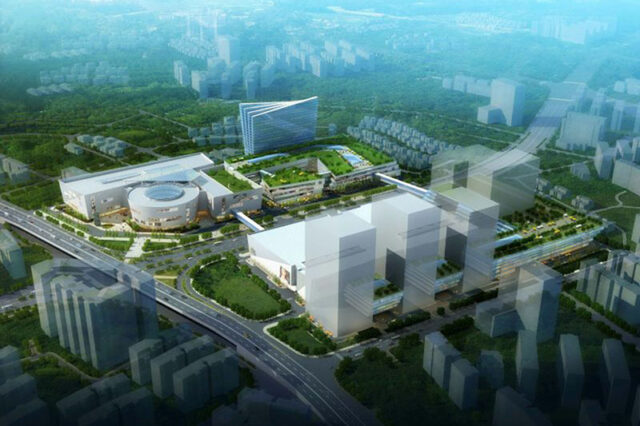
SM Xiamen Complex Perspective — SMSUPERMALLS.CN

THE SM group’s mall business is gearing to expand its presence in China with new openings in Xiamen and Fuzhou.

“We have two additional malls that we will open in China. One is in Xiamen again, but in a farther area. The other is in Fuzhou, which is also part of the Fujian province,” SM Supermalls President Steven Tan told reporters on the sidelines of a media event in Mandaluyong City last week.

“These two new projects will keep us very busy at least for the next three to four years,” he added.

He said the planned malls in Xiamen and Fuzhou will open by 2025 and 2027, respectively. “On the mall in Xiamen, it’s in the outskirts. We feel that there is an opportunity there, and our head office is in Xiamen, so it is easier to control,” he said.

“Right now, our focus is more on the Fujian province simply because of proximity. There is a new lot that was offered by the government. We studied it and deemed that it was good,” he added.

SM Supermalls is the malls unit of listed property developer SM Prime Holdings, Inc.

SM Prime has eight malls in China comprised of SM City Yangzhou, SM City Xiamen, SM City Jinjiang, SM City Chengdu, SM City Suzhou, SM City Chongqing, SM City Zibo, and SM City Tianjin.

Mr. Tan said that SM is also set to complete the first part of SM City Xiamen Phase 4 (Xiamen 4) by end of 2025. The expansion includes a boutique hotel.

“We’ve already opened the first part of Xiamen 4. If you total it all, it might actually be bigger than SM Mall of Asia and SM Megamall. The completion of all will probably be by end of next year,” he said.

Mr. Tan added that talks are set to be finalized with the Intercon Group (Intercontinental Hotels Group) regarding the hotel component of Xiamen 4.

“We’re in finalization with Intercon. It’s a boutique hotel with more than 100 rooms,” Mr. Tan said.

“We always come in as a mall first. Then, if there is an opportunity for us to expand the hotel business, we do,” he added.

He also said that the group’s Jinjiang, Xiamen, and Suzhou malls have already exceeded pre-pandemic levels in terms of performance.

Aside from its China malls, SM also has 87 malls in the Philippines, with the latest one being SM City J Mall in Mandaue City, Cebu, which was opened in October.

SM Prime shares were last traded on Dec. 6 at P26.7  apiece. — Revin Mikhael D. Ochave

Gashapon: A capsule of surprise

The best part? They are made in the Philippines

FOR MANY Filipinos, Japanese anime characters like Dragon Ball’s Goku, Sailor Moon, and Pikachu from Pokémon hold a special place in childhood memories as they often brightened early mornings before school. These childhood memories can be rekindled through Gashapon stations as these toy vending machines from Bandai Namco offer customers iconic anime figures in collectible capsules. The most interesting part is that the machine and many of the figures are actually made in the Philippines.

Every drop of a coin into the Gashapon station holds the promise of a surprise capsule, which is exciting for both children and collectors worldwide. While Gashapon has its origins in Japan, there’s a good chance that the machine dispensing the capsules is actually made in Lipa City, Batangas, by Bandai Namco Philippines Inc. (BNPI).

BNPI Senior Manager Arvin Salud told BusinessWorld that BNPI is responsible for over 80% to 90% of the global production of Gashapon station machines, serving as the backbone of the popular capsule toy brand.

Mr. Salud said that BNPI manufactures around 300 to 400 Gashapon stations each day — translating to around 8,000 to 9,000 machines per month. In addition to producing the machines, they are also responsible for creating the toys and capsules found in every Gashapon machine.

BNPI has been producing these machines since 2015, bringing a spark of joy and inspiring fans all over the world, Mr. Salud said.

“In terms of our quality at tsaka yung craftsmanship ng pagkakagawa ng mga toys namin siguro ayun talaga yung hinahanap nila [In terms of our quality and the craftsmanship of how our toys are made, I think that’s really what they’re looking for],” Mr. Salud said in an interview, highlighting fans’ love for the Gashapon stations.

The BNPI’s mission goes beyond manufacturing toys; it also celebrates creativity and craftsmanship in every Gashapon station they create, Mr. Salud said in a statement.

As most Gashapon toys are made from plastic, Mr. Salud highlighted that BNPI is actively working on efforts to recycle the plastic capsules, aiming to reduce waste and promote sustainability.

“Normally yung habol is yung toy diba inside (Normally, what people are after is the toy, right, inside?)… We are collecting that one (the capsule) and recycling it to our factory,” Mr. Salud said.

With the growing demand, Mr. Salud also told BusinessWorld that BNPI has plans to expand its manufacturing operations to two additional locations in 2026. — Edg Adrian A. Eva