Home Blog Page 1663

T-bills, bonds may fetch weaker demand after jumbo note issue

BW FILE PHOTO

RATES of the Treasury bills (T-bills) and Treasury bonds (T-bonds) to be auctioned off this week may move sideways as demand could weaken following the government’s jumbo issuance of new 10-year fixed-rate Treasury notes (FXTN).

The Bureau of the Treasury (BTr) will offer P25 billion in T-bills on Monday, or P8 billion each in 91- and 182-day papers and P9 billion in 364-day papers.

On Tuesday, the government will auction off P30 billion in reissued seven-year T-bonds with a remaining life of five years and two months.

The rates of the T-bills and T-bonds on offer this week could track sideways movements in secondary market yields before the end of the BTr’s public offering of new benchmark 10-year bonds, Rizal Commercial Banking Corp. Chief Economist Michael L. Ricafort said in a Viber message.

The jumbo bond issue likely “siphoned off some of the excess liquidity from the financial system that could have reduced demand for… the upcoming Treasury bill and Treasury bond offerings,” Mr. Ricafort said.

At the secondary market on Friday, the rates of the  91- and 364-day T-bills rose by 4.25 basis points (bps) and 5.21 bps week on week to end at 5.4558%, and 5.7362%, respectively, while the 182-day debt went down by 2.19 bps to yield 5.6089%, based on PHP Bloomberg Valuation Service (BVAL) Reference Rates data as of April 25 published on the Philippine Dealing System’s website.

Meanwhile, the yield on the seven-year bond went down by 1.43 bps week on week to close at 6.0928%, while the rate of five-year debt — the tenor closest to the remaining life of the T-bonds on offer on Tuesday — also declined by 1.75 bps to 5.9247%.

The government raised a total of P300 billion via its offering of new 10-year benchmark bonds, the BTr announced on Friday.

This was 10 times the initial P30-billion program as bids reached P307.05 billion, allowing the Treasury to end the public offer period on April 23, a day earlier than planned.

The BTr raised an initial P135 billion from the papers at the rate-setting auction on April 15 as tenders reached P197.3 billion.

The notes fetched a coupon rate of 6.375%. Accepted bid yields ranged from 6% to 6.4%, resulting in an average rate of 6.286%.

The issue will be listed on the Philippine Dealing & Exchange Corp. fixed-income board on April 28 (Monday).

Last week, the BTr raised P25 billion as planned from the T-bills it auctioned off as total bids reached P73.913 billion or nearly thrice the amount on offer.

Broken down, the Treasury borrowed the programmed P8 billion via the 91-day T-bills as tenders for the tenor reached P13.67 billion. The three-month paper was quoted at an average rate of 5.546%, rising by 12.4 bps from the previous auction. Tenders accepted by the BTr carried yields of 5.425% to 5.625%.

The government likewise made a full P8-billion award of the 182-day securities as bids for the paper amounted to P25.863 billion. The average rate of the six-month T-bill was at 5.675%, up by 1.8 bps, with accepted rates ranging from 5.62% to 5.696%.

Lastly, the Treasury raised P9 billion as planned via the 364-day debt papers as demand for the tenor totaled P34.38 billion. The average rate of the one-year T-bill slipped by 2.3 bps to 5.691%, with bids accepted having yields of 5.684% to 5.7%.

Meanwhile, the reissued seven-year bonds to be offered on Tuesday were last auctioned off on March 4, where the government raised P30 billion as planned at an average rate of 6.019%, lower than the 6.375% coupon.

The government borrows from local and foreign sources to help fund its budget deficit, which is capped at P1.54 trillion or 5.3% of gross domestic product this year. — A.M.C. Sy

Mexican farmers fight drought amid water dispute with the US

REUTERS

JULIMES, Mexico — Dead animals lie scattered across the planes of this cattle ranching town in northern Mexico, victims of a long-term drought that is forcing farmers here to consider uprooting their lives to look elsewhere for land and water.

More than 64% of Mexico’s territory is experiencing some level of drought, according to government data. Northern states are the hardest hit, particularly Chihuahua, with most of its territory engulfed by the most extreme levels of drought.

The struggles of farmers come as Mexico and the US are in tense negotiations over Mexican delays in delivering the quantities of water laid out in a 1944 treaty.

President Donald Trump has threatened tariffs and sanctions if Mexico does not increase water deliveries, which US officials say have devastated Texan farmers. The Mexican government says drought has ravaged its ability to comply.

In the agricultural town of Julimes in Chihuahua, farmers are wondering how much longer they can survive.

“I don’t think we’ll be able to hold out much longer,” said cattle farmer Leopoldo Ochoa, 62, as he rode with his granddaughter on horseback behind his herd.

Farmers in northern Chihuahua have already had to move their herds out of the mountainous areas where they typically graze due to a lack of water and grass. Mr. Ochoa lives in Valle de Zaragoza, which is dependent on the strained La Boquilla Dam.

“If there is no more water, we will have to leave this ranch and look elsewhere. Imagine leaving here at my age, where I have lived all my life,” said Manuel Araiza, 60.

“It is sad, but it is the reality that all of this is coming to an end,” he added.

As diplomats negotiate water deliveries from Mexico to the US, farmers in Chihuahua consider their own futures.

“My children tell me this is no longer profitable and that I should sell the animals,” said cattle rancher Estreberto Saenz Monje, 57. “The truth is, we’ve never seen anything like this before.” — Reuters

Muji opens largest store in Glorietta

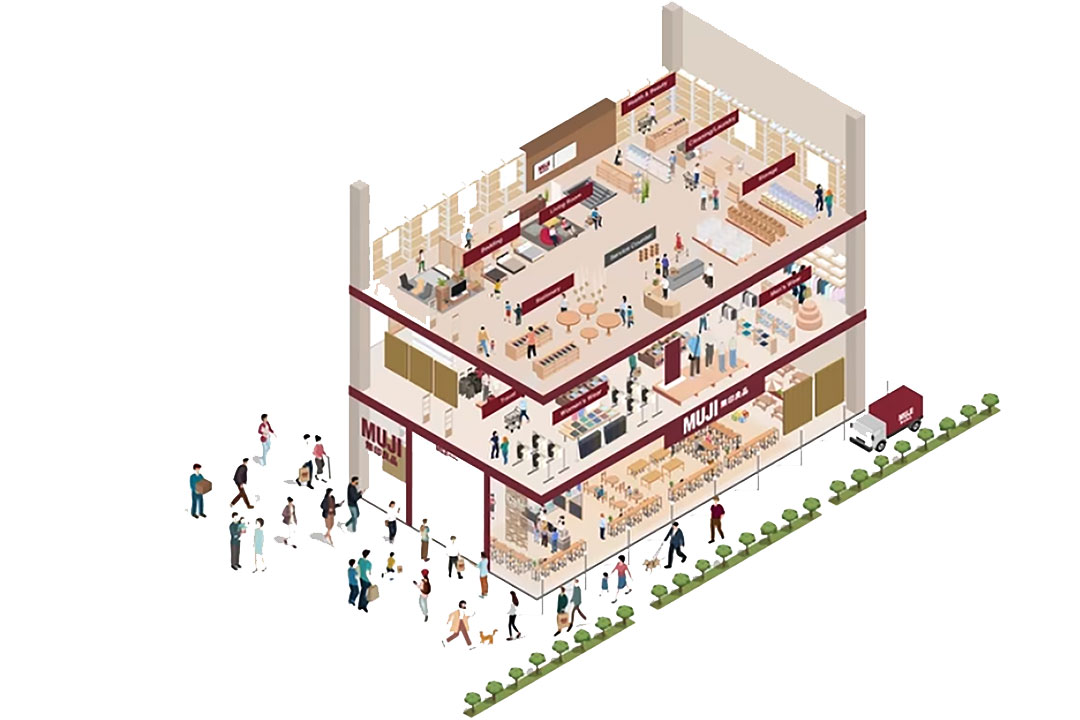
AN ILLUSTRATION of Muji’s new store in Glorietta. — FACEBOOK.COM/MUJI.PH

MUJI, the brand known for espousing minimalist lifestyles through its stuff (a charming contradiction), has opened its largest store in the Philippines and its first flagship in the country with three floors worth of things in Glorietta 3 (occupying the former space of Mercury Drug).

Takeshi Akiyosi, president of Muji Philippines, said in a group interview on April 24 that Muji has over 7,000 products to date (it initially had 40 when it opened in Tokyo in 1980). “We have to show the many products, so we needed to make a new location; a big store,” he said. Plans for the new flagship began three years ago, he explained.

“As a part of our brand-building strategy, we are also developing flagship stores in each ASEAN market. These flagship stores are more than just retail locations: they are a space where customers can experience our brand’s identity and values in depth,” said Akihiro Kamogari, officer in charge of Southeast Asia operations and director of business for Muji in Thailand.

Muji Philippines Corp. Marketing Manager Christina Dagdag said, “We also hear a lot of customers asking us to open more stores. Really, what the Muji Philippines brand or company wants is to bridge the gap and to be more accessible… that’s why we’re slowly opening more stores closer to the community.”

The brand, short for Mujirushi Ryohin, translates to “no-brand quality goods.” It opened in 1980 in Aoyama district in Tokyo, amid a consumer boom in newly wealthy Japan. The brand, through its goods that reflect a certain refined roughness, promotes a lifestyle devoid of visual noise. In a 2018 BusinessWorld story, the brand’s Art Director Kenya Hara said, “The brands always want a customer to say, ‘I want to have it. I must have it.’ The only thing that Muji would want the customer to say [is], ‘Muji will do.’”

The 2,600-square-meter store carries 2,500 products out of the brand’s 7,000, including Muji-branded ceramics and tableware. It also houses the largest Muji Coffee Counter in the Philippines (it seats 122), plus the new Muji Bakery.

Its interiors incorporate reclaimed wood from the Philippines, and the Green Plants section has plants sourced from a farm in Batangas. Other sections include the stamp table, embroidery services, in-house alterations, a water refill station, and a service counter. There’s also an exhibit explaining the brand’s philosophy.

“With strong economic growth continuing across this market, we are accelerating our store expansion and aim to build a brand that is more deeply rooted in the everyday lives of the people in each country,” said Mr. Kamogari, highlighting their presence in the ASEAN region. They are currently in five countries in Southeast Asia: the Philippines, Thailand, Vietnam, Singapore, and Malaysia. “We have recently launched product development, especially here in the ASEAN market, by taking into account in that climate for culture, lifestyle, and beauty preferences.

“Moving forward, we will focus on enhancing our product lineup, and offering these items at affordable price points,” he said. “We think the ASEAN is not simply a destination for business expansion, but as a true partner in building the future together.”

Muji Philippines Corp. is a joint venture between the SSI Group, Inc. and Japan’s Ryohin Keikaku Co. Ltd. Muji has branches at Glorietta 3, Greenbelt 3, Central Square in BGC, Power Plant Mall at Rockwell, Shangri-La Plaza East Wing, SM Mall of Asia, SM North EDSA and Uptown Mall in BGC. — Joseph L. Garcia

Amid elections, let’s talk about why we need health taxes now

FREEPIK

Two weeks before the 2025 midterm elections, the political spotlight is understandably focused on the widening and seemingly irreparable rift between the Marcos and Duterte factions. Their political feud may dominate headlines, but the deeper issues at stake — justice, accountability, governance, and the rule of law — are what truly matter. This political rupture will likely reshape the political landscape and test our country’s democratic institutions.

Yet even as the nation grapples with this political confrontation, we must not lose sight of another grave and connected problem: the country’s worsening fiscal situation. If left unaddressed, fiscal deterioration would cripple the capacity of the current and succeeding administrations to deliver basic services, protect economic stability, and rebuild trust in governance. Economic weakness will only deepen political instability.

The warning signs are already showing: GDP growth has slowed from 7.6% in 2022 to below 5.5% and 5.7% respectively in 2023 and 2024. The Philippines has underperformed not just against its own targets but also against the expectations of multilaterals who have downgraded their projections for the country from previous years. Given this loss of economic momentum, the Marcos administration’s goal of achieving upper middle-income status by 2025 is now likely out of reach.

The fiscal deficit remains above 5% of GDP. Debt-to-GDP stayed above 60% by end-2024, with debt servicing costs rising to 12.1% of the budget last year and set to consume 13.8% of the national budget in 2025. Yet despite these pressures, the 2025 national budget reflects cuts to critical human capital investments in health and education, while expanding pork-laden ayuda (assistance) programs designed more for political patronage than for genuine development.

The question now is not whether the government needs new sources of revenue, but rather, how quickly and decisively it can act. And one of the clearest, most urgent measures available is having health taxes: higher taxes on tobacco, vapes, alcohol, and sugar-sweetened beverages.

The economic argument is overwhelming. Alcohol and tobacco consumption, through healthcare costs, lost productivity, and premature deaths, inflicted an estimated P1.1 trillion in economic damage or nearly 5% of the country’s GDP in 2021. Yet excise tax collections from these products amounted to just P266.6 billion in 2021, barely one-fourth of the total cost. The burden of this imbalance is borne not by the industries that profit, but by ordinary Filipino taxpayers who fund public hospitals and healthcare programs.

Health taxes offer a “double dividend”: they raise much-needed revenues while simultaneously reducing the social and economic harm caused by unhealthy consumption. According to the 2024 Budget of Expenditures and Sources of Financing (BESF), the government could have generated P76.1 billion in incremental revenue in the first year alone by increasing taxes on alcopops, softdrinks, and junk food. Yet in the 2025 BESF, these measures have disappeared, signaling that the administration may have abandoned a critical health tax reform. A broader alcohol tax reform, such as that proposed in House Bill 11320 filed by Anakalusugan Party-list Rep. Ray Reyes, would be even more impactful. Based on projections by Action for Economic Reforms, Mr. Reyes’ bill could yield an additional P69 billion in revenue over the next five years, while reducing the public health burden of alcohol and strengthening funding for Universal Health Care.

But health taxes are not just about generating revenue. They are about justice and fairness: making those who profit from harm pay a greater share. They are about discouraging consumption patterns that are devastating public health, particularly among vulnerable populations such as young and low-income Filipinos.

Meanwhile, reducing health taxes, as House Bill 11360 — which health advocates refer to as the Sin Tax Sabotage Bill — seeks to do, would be not only irresponsible but reckless in the face of the fiscal crisis. Finance Secretary Ralph Recto’s silence on this industry-backed sabotage of revenues, even as he publicly acknowledges the need for new taxes, is a glaring contradiction.

Instead of championing health taxes, Mr. Recto has pinned his hopes on hiking capital gains, estate, and donor’s taxes under the so-called GROWTH (Government Revenues Optimization through Wealth Tax Harmonization) Bill. This strategy is flawed. History and tax reform experience, particularly the objectives of the original PIFITA (Passive Income and Financial Intermediary Taxation Act) proposal, show that higher capital gains taxes rarely yield significant revenues. Instead, they encourage tax avoidance, drive up evasion, complicate tax administration, and risk spooking financial markets, especially when the country already faces external economic pressures.

Health taxes, from a political perspective, can also generate public support. A March 2024 national survey by polling firm WR Numero, commissioned by Action for Economic Reforms, found overwhelming public backing for health taxes: 72.1% support higher tobacco taxes; 69.3% support higher vape taxes; 67.7% support higher alcohol taxes; and 56.2% support higher taxes on junk food and soft drinks.

Filipinos understand the need for reform. It is the politicians who are lagging behind.

And President Marcos must recognize this too. While he struggles to maintain a hold on his political coalition, he must remember that governance should not pause for elections. Even if his administration’s slate wins a plurality of seats in the midterm elections, failure to address the country’s deeper economic and fiscal challenges will reflect poorly on his leadership, both now and in history’s judgment.

The next Congress and administration must make a choice: protect the profits of alcohol, tobacco, and junk food industries, or protect the health and economic future of the Filipino people. The evidence is overwhelming, and the public support is strong.

We need higher health taxes now — to rebuild fiscal space, to safeguard public health, and to secure a more stable and equitable future.


AJ Montesa is a program officer for research and heads the tax policy team of Action for Economic Reforms.

Electro luxe

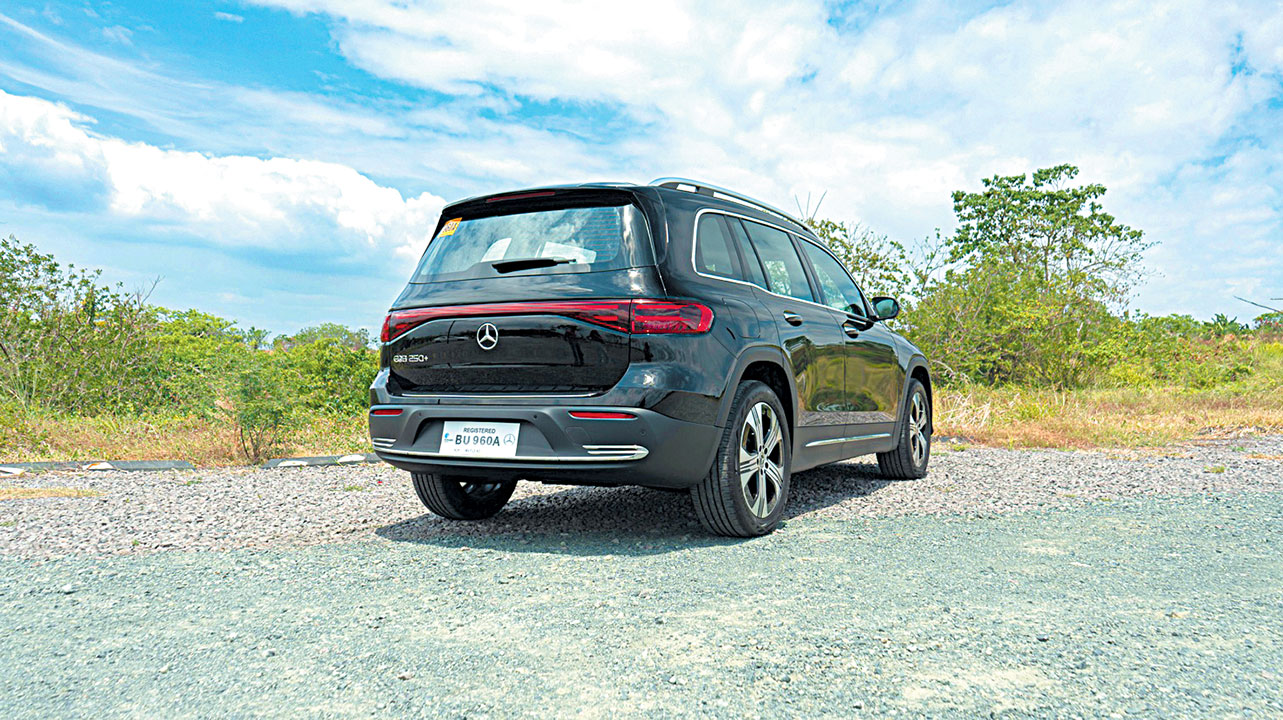
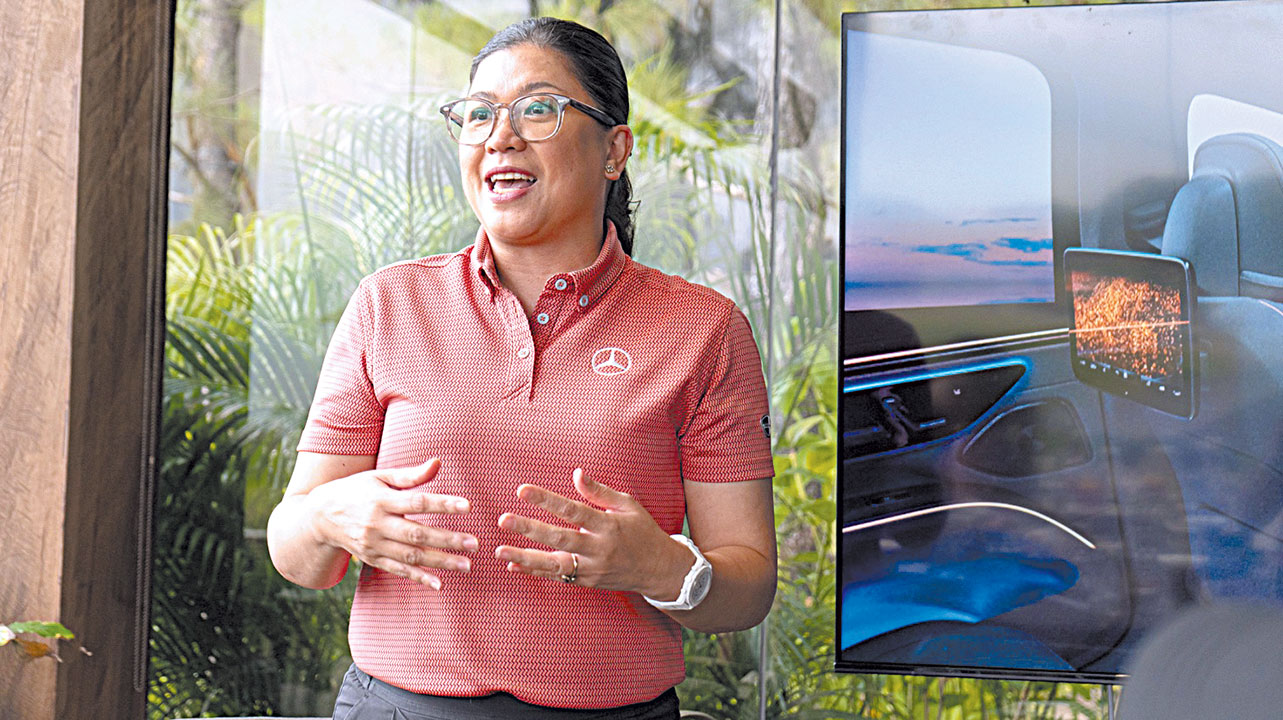
Mercedes-Benz Philippines General Manager for Distribution and Retail Maricar Parco with the EQE (left) and EQB — PHOTO BY KAP MACEDA AGUILA

BEV aspirations continue to drive Mercedes-Benz Philippines

By Kap Maceda Aguila

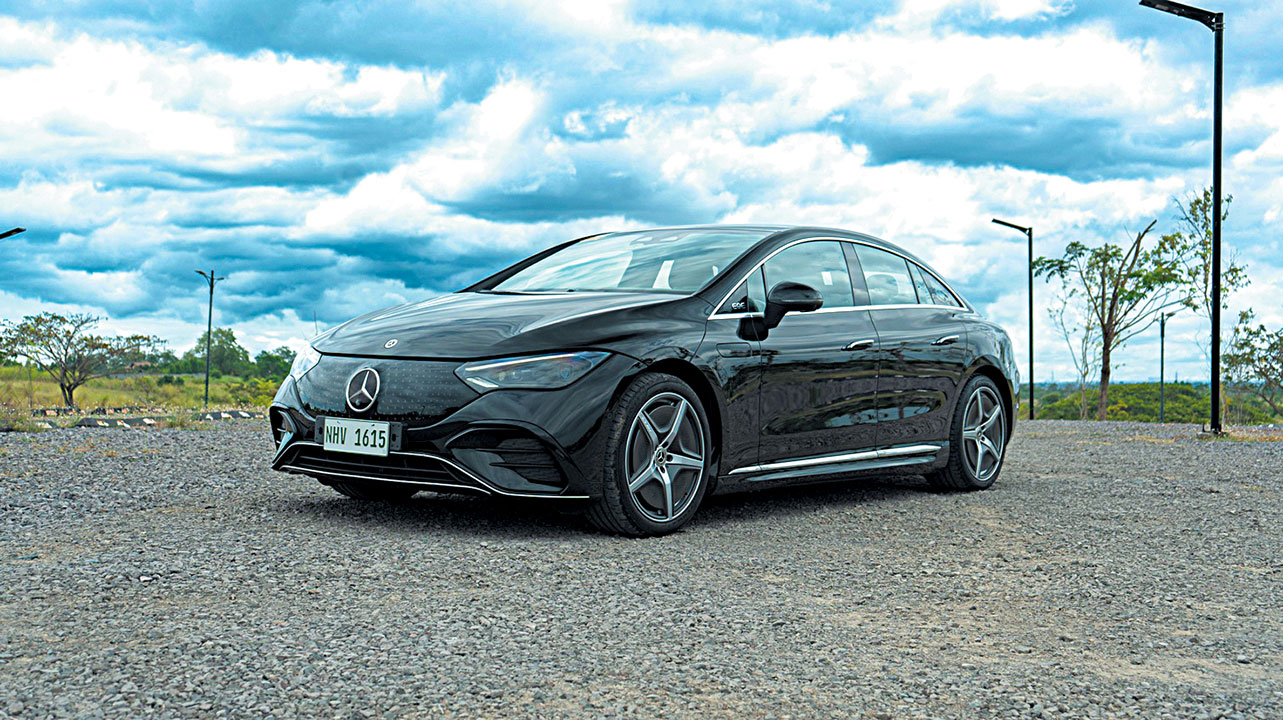
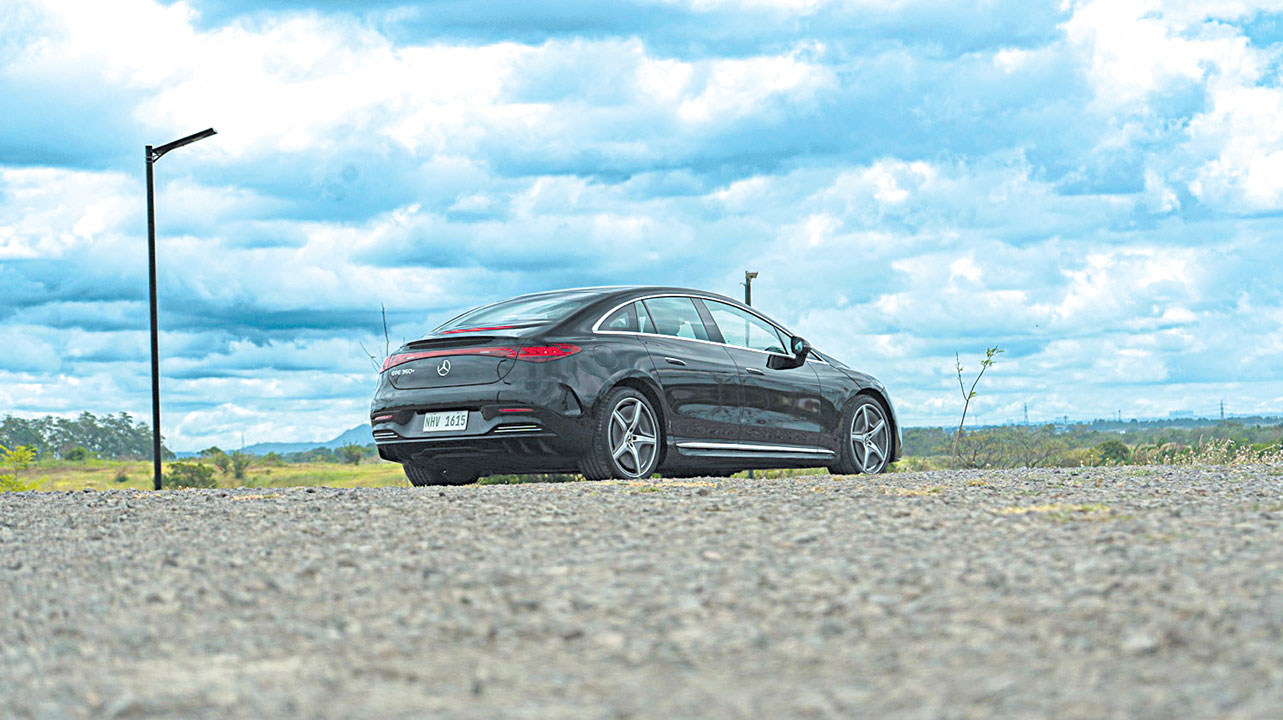
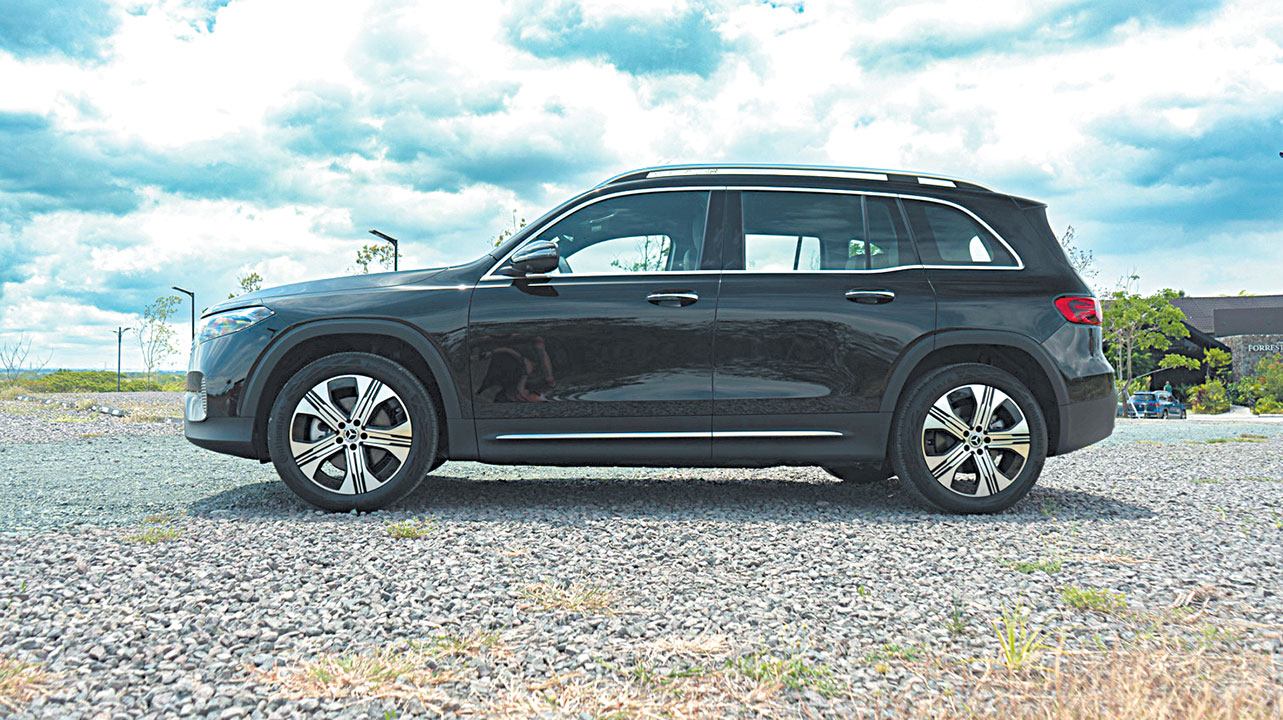
A BRIEF SOUTHWARD drive aboard two Mercedes-Benz battery electric vehicle (BEV) models comprised an exclusive “Sustainable Luxury in Motion” activity with media recently. Inchcape Philippines, distributor of the Stuttgart-headquartered brand, sought to bring to the fore its BEV offerings via the EQE sedan and EQB SUV through a ride-and-drive activity to and from its flagship dealership in Greenhills to Dasmariñas, Cavite.

“Mercedes-Benz is proud to have the widest range of BEVs in the EQ. We have six models, starting from the EQA, EQB, the EQE, the last with sedan and SUV versions, and the top-of-the-line EQS — also coming in sedan and SUV versions,” said Mercedes-Benz Philippines General Manager for Distribution and Retail Maricar Parco. “We introduced the EQ line about two years ago, and we’re very happy to share that we have now about 200 proud owners.”

Currently, Mercedes-Benz BEVs account for 12% of the brand’s sales in the Philippines, added Ms. Parco. The target is to grow that number to 50%. She revealed that they plan to bring in plug-in hybrid electric vehicle (PHEV) models in the second half of the year.

Significantly, toward the end of Q2 or at the start of Q3, the much-awaited electric version of the iconic G-Class: The Mercedes-Benz G 580 with EQ Tech (which shows a departure from the traditional appellation style), will be launched.

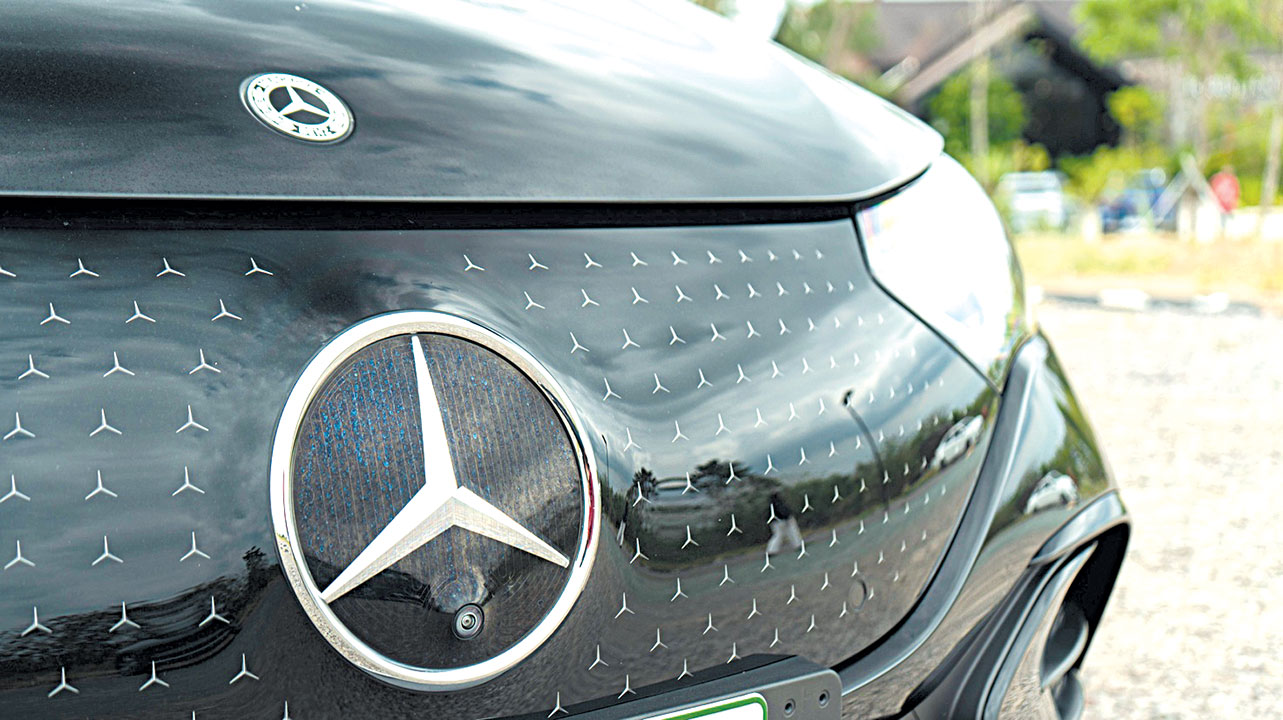
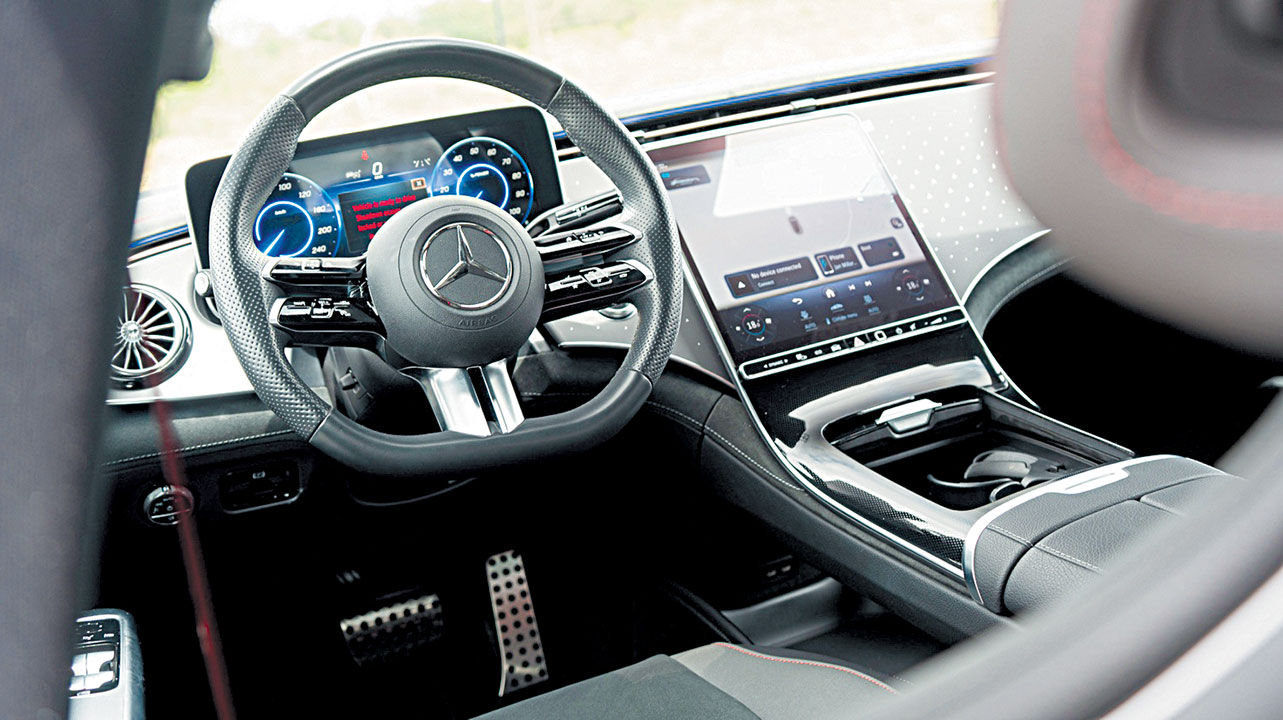
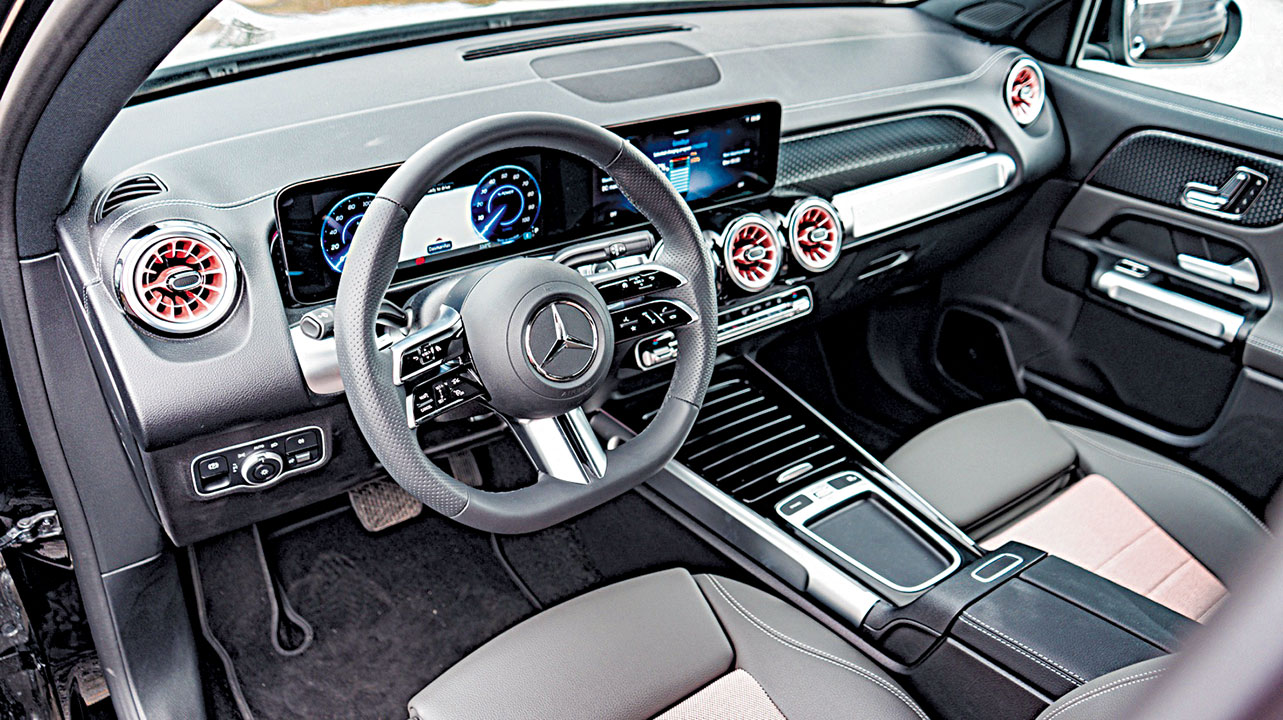
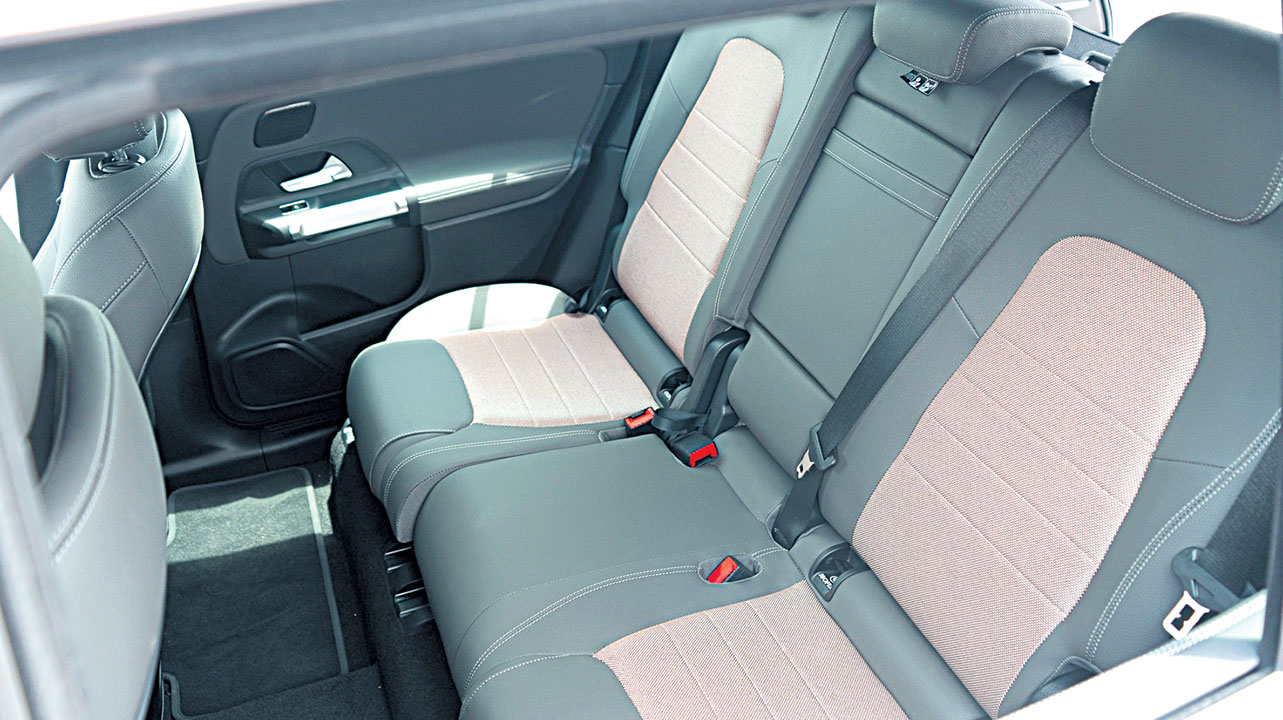
For the drive, Inchcape Philippines conscripted the Mercedes-Benz EQE 350+. The model outputs 215kW and 565Nm, and musters a zero-to-100kph time of 6.4 seconds. The rear wheels drive the vehicle, motivated by a 90.5-kWh battery. WLTP standard testing reveals maximum range of 644km to 682km. Meanwhile, the front-wheel-driven Mercedes-Benz EQB 250+ boasts 140kW and 385Nm of output from its 70.1-kWh battery — helping realize a standstill-to-100kph time of 8.9 seconds and a WLTP-certified range of 422km to 473km. The entry point to the EQ line, the EQB 250, was also among the test units. This one can deliver a decent 450 kilometers on a fully charged battery.

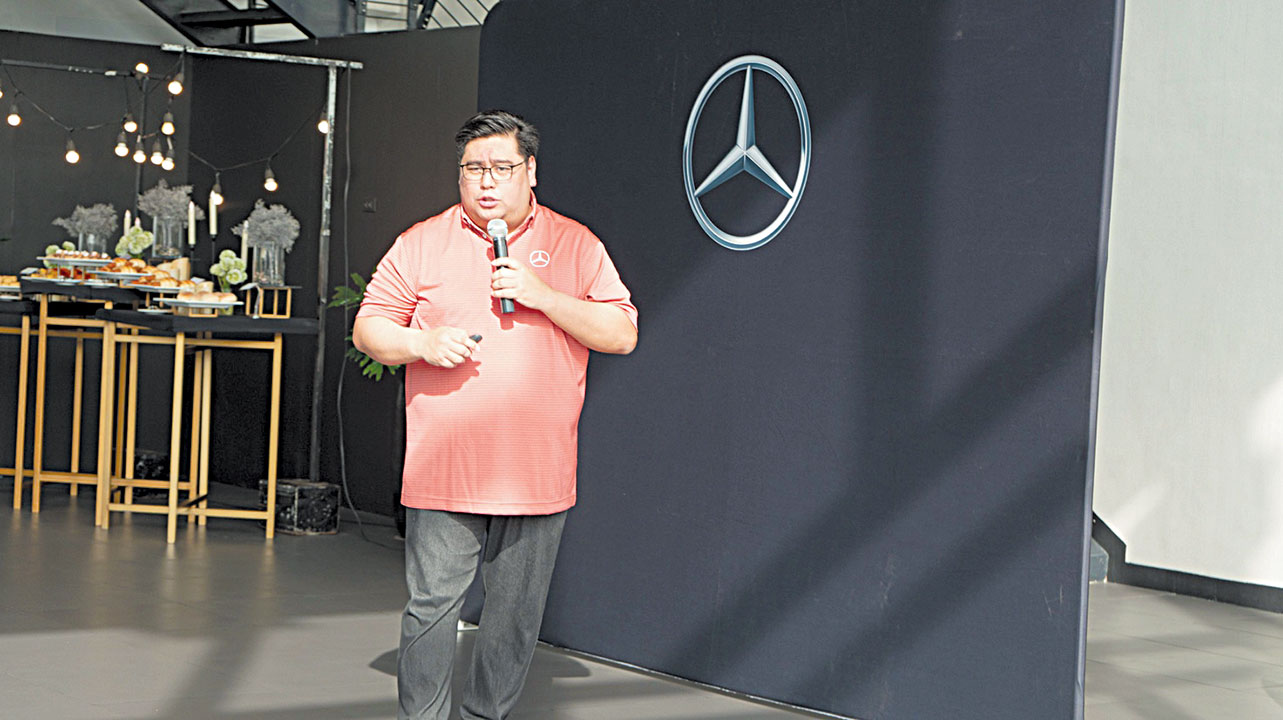
The EQ models of Mercedes-Benz have gotten somewhat mixed reviews — mainly because of their radically different design versus its internal combustion engine (ICE) counterparts. “Quality is always the priority in Mercedes-Benz, along with safety and the design concept,” submitted Mercedes-Benz Philippines Assistant Vice-President for Product Planning and Training Benjamin Bautista. “Mercedes-Benz is also creating a separate image for its EQ line, as we are aware that we have purist customers in our core products in the E-Class and S-Class.”

He hopes that creating a new image for the EQ line will hopefully result in a larger market for these models. “However, it doesn’t stop us from perfecting our core values: ease of use, love, respect, and trust — while innovating toward wider electrification in the future,” Mr. Bautista stressed. Part of this future, he explained, will be PHEVs and range extended electric vehicles (REEVs).

Even as Mercedes-Benz continues to pin its hopes on its slew of full-electric offerings, we will see if the German automaker comes up with the next big thing to possibly follow in the footsteps of its EQs — possibly finding more resonance with a growing market that is becoming increasingly open and cognizant of the benefits of the electric format.

SEC eyes declassification of listed firms’ common shares

BW FILE PHOTO

By Revin Mikhael D. Ochave, Reporter

THE Securities and Exchange Commission (SEC) is proposing to declassify the Class A and B common shares of all listed companies to improve trading efficiency.

“To ensure efficiency in executing and settling equity trades, the classification of common shares into Class A and Class B of all the listed companies shall be discontinued,” it said in an April 25 draft memorandum circular posted on its website.

The SEC issued the circular to revise the rules allowing the trading of B shares on the regular board and requiring buyers to accept either A or B certificates.

“The classification of the A and B shares has been a source of administrative inefficiencies for the trading participants and the Securities Clearing Corp. of the Philippines, as well as unwarranted arbitrage for holders of Class B shares,” the corporate regulator said.

Class A shares are stocks issued to Filipino citizens, while Class B shares may be issued to both Filipinos and foreign investors.

Some listed companies that have Class A and B shares include holding company ATN Holdings, Inc., miner Benguet Corp. and construction material supplier Concrete Aggregates Corp.

The SEC said there are still several listed companies with Class A and B common shares “for the sole purpose of monitoring equity ownership of local and foreign investors, as these shares bear the same rights, privileges and entitlement to dividends.”

In September 1973, the SEC released guidelines to monitor foreign ownership through the classification of common shares of publicly listed companies into Class A and B shares, ensuring that the 60% local and 40% foreign stock ownership requirement is met.

In May 1997, it ordered the Philippine Stock Exchange (PSE) to declassify shares of companies going public to eliminate the “unfair price disparity” between Class A and B shares. However, the declassification was applied prospectively.

“The phase-out is warranted because that share classification structure hasn’t served any practical purpose ever since the PSE introduced an effective system for monitoring foreign ownership limits,” China Bank Capital Corp. Managing Director Juan Paolo E. Colet said in a Viber message.

“It becomes simpler for investors as there’s just a single class of common shares to trade. Furthermore, it removes unnecessary arbitrage because the market is pricing only one kind of common stock,” he added.

Jarrod Leighton M. Tin, an equity research analyst at DragonFi Securities, Inc., said the proposal would improve liquidity.

“It’s good for companies with A and B shares as it will increase stock liquidity as both foreign and local investors can now trade the company under a single ticker symbol,” he said in a Viber message.” “B shares are generally more illiquid and often have tracking error relative to the A shares.”

“It also helps a bit in overall market liquidity because if there are too many ticker symbols but few market players, it can actually worsen market illiquidity since there are too many stocks to choose from,” he added.

The SEC proposed that listed companies amend their articles of incorporation to reflect the declassification within a year from the draft circular’s effectivity.

“During the period to amend the articles of incorporation, buyers on the regular board shall accept the delivery of the specific class of shares that they have purchased and paid for, and shall not be compelled to receive an alternative class of shares,” it said.

Comments on the draft circular will be accepted until May 24.

Rates of central bank securities end lower with both tenors oversubscribed

BW FILE PHOTO

YIELDS on the central bank’s short-term securities ended lower on Friday, with strong demand seen for both tenors.

The Bangko Sentral ng Pilipinas (BSP) bills fetched bids amounting to P149.916 billion on Friday, higher than the P80-billion offer and the P124.432 billion in tenders for the P120 billion auctioned off a week prior. The central bank awarded P80 billion in securities as planned.

Broken down, tenders for the 28-day BSP bills reached P69.713 billion, well above the P30 billion placed on the auction block and the P40.817 billion in bids for the P40-billion volume offered in the previous week. The central bank fully awarded the one-month papers.

Banks asked for rates ranging from 5.625% to 5.738%, lower than the 5.65% to 5.849% margin seen a week earlier. This caused the average rate of the one-month securities to decline by 6.55 basis points (bps) to 5.7135% from 5.779% previously.

Meanwhile, bids for the 56-day bills amounted to P80.203 billion, higher than the P50-billion offering but below the P83.615 billion in tenders for the P80-billion offer by the central bank a week prior. The BSP also made a full award of the two-month bills.

Accepted yields were from 5.649% to 5.74%, lower than the 5.65% to 5.8% band seen a week prior. With this, the average rate of the 56-day securities dropped by 4.13 bps to 5.7135% from 5.7548% logged in the previous auction.

The central bank decreased last week’s total offering of BSP bills (BSPB) compared with the volume put up for auction the prior week and fully awarded both tenors amid strong demand, BSP Deputy Governor Francisco G. Dakila, Jr. said in a statement.

“The 28-day BSPB was 2.3 times oversubscribed and the 56-day BSPB was 1.6 times oversubscribed,” he said.

“The decline in BSPB rates continued to reflect the partial pass-through of the 25-bp reduction in the policy rate on April 11,” Mr. Dakila added.

The Monetary Board this month resumed its rate-cutting cycle, delivering a 25-bp cut to bring the policy rate to 5.5%.

The central bank uses the BSP securities and its term deposit facility to mop up excess liquidity in the financial system and to better guide short-term market rates towards its policy rate.

The BSP bills also contribute to improved price discovery for debt instruments while supporting monetary policy transmission, the central bank said.

The central bank securities were calibrated to not overlap with the Treasury bill and term deposit tenors also being offered weekly.

Data from the central bank showed that around 50% of its market operations are done through the short-term BSP bills.

The BSP bills are considered high-quality liquid assets for the computation of banks’ liquidity coverage ratio, net stable funding ratio, and minimum liquidity ratio.

They can also be traded on the secondary market. — Luisa Maria Jacinta C. Jocson

Ukraine detains foreign vessel it says was exporting stolen grain

REUTERS

KYIV —  Ukraine has detained a foreign vessel in its territorial waters which it alleges was involved in the illegal trade of stolen Ukrainian grain, the state security service SBU said on Friday.

Kyiv has accused Russia of trading stolen Ukrainian grain since the 2022 war in Ukraine began, allegations Russia denies.

Ship seizures, however, have been rare.

“The investigation found that the arrested vessel was part of Russia’s ‘shadow’ fleet, which the Kremlin uses to sell looted Ukrainian grain to third countries,” SBU said on the Telegram messaging service.

It said that at the end of 2024, the same vessel had exported from the Crimean port of Sevastopol 5,000 metric tons of wheat stolen from the occupied southern Ukrainian territory.

SBU said the vessel had carried out an illegal raid under the flag of an Asian country to export the grain. It gave no more details.

In July Ukraine seized a foreign cargo ship on the Danube River and detained the captain on suspicion of helping Moscow export Ukrainian grain from Russian-occupied Crimea.

Findings of its investigation into that case were not reported. — Reuters

Quezon City takes fabric scraps and uses them for clothing — again

NICHOLE SAMSON

QC follows up sustainable fashion show with kiddy sequel

LAST YEAR Quezon City’s (QC) Earth Month offering, Retashow: QC’s Walk to Sustainability, was successful in promoting one of the city’s sustainability initiatives, the Kilo/s Kyusi Store within the city hall complex. There, secondhand clothes are sold by the kilogram, inspired by a business model seen in Paris thrift stores. Since last year, the initiative has earned P2 million. The proceeds are going on to fund the city’s Learning Recovery program, which pays for tutors for public school students underperforming in reading and math.

This was according to Quezon City mayor Josefina “Joy” Belmonte, who opened this year’s Retashow: Kidswear Edition, held at Gateway Mall 2 at the Araneta City in Cubao. She added that the initiative diverted four tons of textile waste from landfills, while 700 kilograms worth of textiles have been upcycled by community artisans.

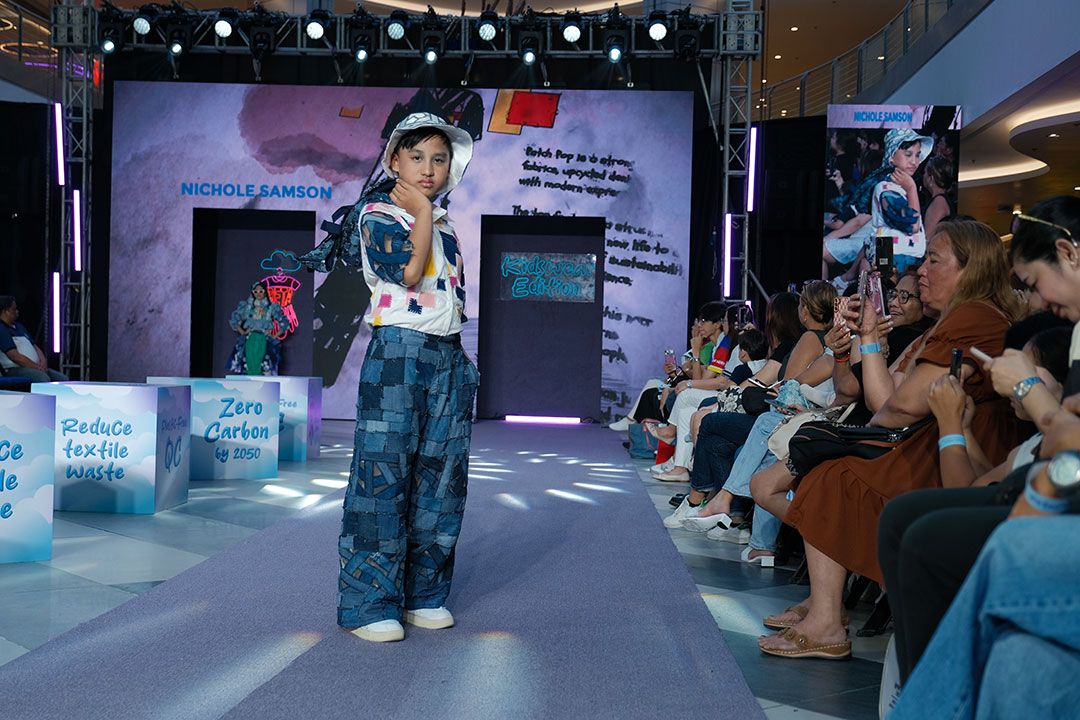
Some of these community artisans were at the show on April 23. Last year, they chose one winner and two runners-up; this year, they awarded six winners with P50,000 each: included in the criteria were design, originality, wearability and feasibility, as well as the condition that the clothes must be made with at least 70% recycled textiles.

The six winners were Nard Patrick Redoble, Nichole Samson, Katherine Añonuevo, Ma. Joy Pauline Castillano, Hazel Roldan, and Neil Bryan Capistrano.

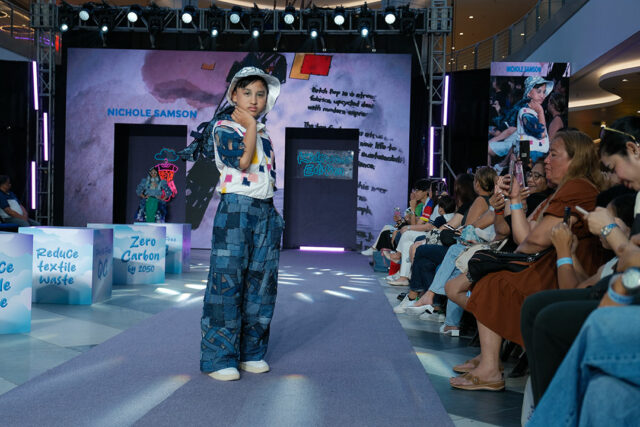
Mr. Redoble showed off an outfit with neon shades that reminded us of watermelons and other fruits; while Ms. Samson’s child model took off his patchwork hat and unfolded it into a bag. Ms. Añonuevo’s creation used indigenous fabric, whose design and color were inspired by a bottle of Mountain Dew soda (according to a voiceover).

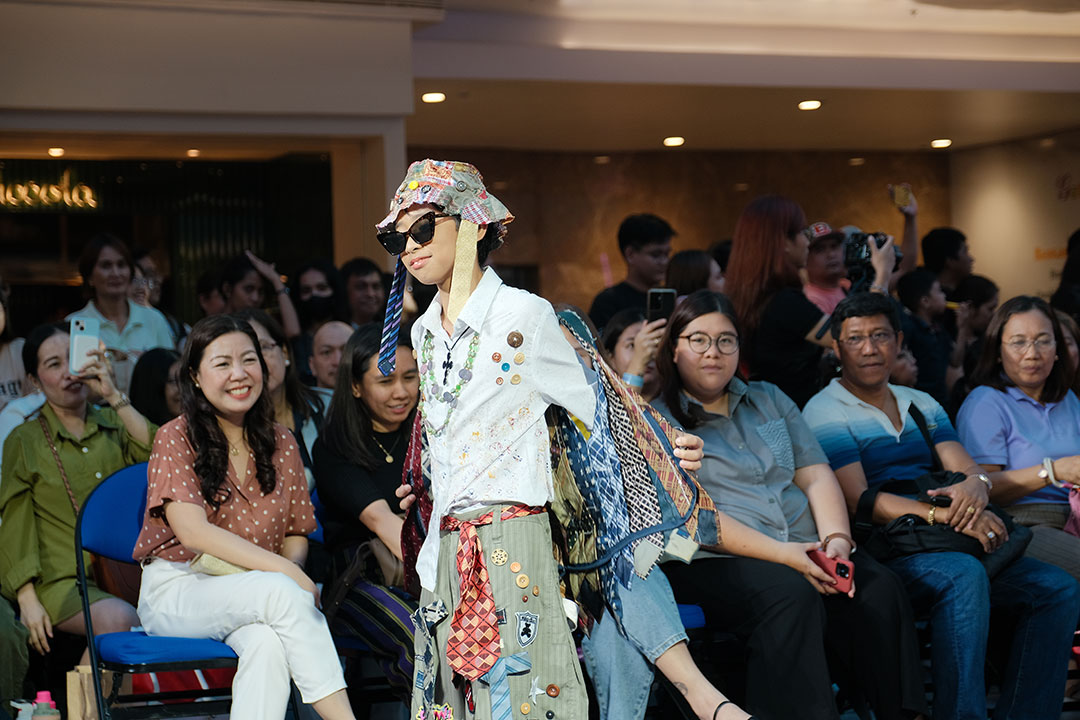
Ms. Castillano’s creation involved one of our favorite things from this competition, a vest made from discarded neckties, while Ms. Roldan used flour sacks for a preppy outfit worn by the child model on the runway. Finally, Mr. Capistrano made a chic jacket out of woven denim strips.

On a personal note, in her speech, Ms. Belmonte spoke about her own experiences with sustainability before it even became a buzzword. She would receive hand-me-downs from all three of her brothers (who include BusinessWorld Chief Executive Officer Miguel Belmonte). “Kaya po medyo tomboyish ako noong lumalaki ako (That’s why I was a bit of a tomboy growing up),” she said. “But that is an example of reuse, and sustainable action.”

The mayor still retains a bit of the girl who wore her brothers’ old clothes: during her speech, she showed pictures of herself wearing the same outfit on different occasions. “I am a very proud outfit repeater. By choice, by practice. Wearing the same clothes to different events isn’t an accident. It is a statement that practicality is powerful. Repeating outfits is smart, sustainable, and should be normalized.”

The mayor, who was named 2023 Champion of the Earth by the United Nations Environment Program (UNEP), went on to say that “Walang masama sa kagustuhang maging presentable o fashionable. Pero may mga tanong tayong kailangang itanong: saan galing ang damit na ito? Sino ang gumawa? Ano ang epekto nito sa kalikasan (There is nothing wrong with wanting to be presentable or fashionable. But there are questions we need to ask: where are these clothes from? Who made them? What is their effect on the environment)?

“Behind every shirt, every pair of jeans, is a story. Not just of creativity or commerce, but of labor, waste, and environmental cost.” — Joseph L. Garcia

Pope Francis: Servant-leader to the world

CHURCH ENGLAND AND WALES/MAZUR/CATHOLICNEWS.ORG.UK

On Easter Sunday, April 20, Pope Francis blessed all from the central loggia of St. Peter’s Basilica — “Urbi et Orbi” (To the city [Rome] and to the world).

“On this day, I would like all of us to hope anew and to revive our trust in others, including those who are different than ourselves, or who come from distant lands, bringing unfamiliar customs, ways of life, and ideas! For all of us are children of God!,” he said.

Pope Francis did not himself deliver his speech, but he sat quietly in his wheelchair on the balcony as his prayers were read out to the multitude at St. Peter’s Square in Rome, and to the world.

“May the light of peace radiate throughout the Holy Land and the entire world… (Pray for) Israel, and for all the Israeli people and the Palestinian people. The growing climate of anti-Semitism throughout the world is worrisome. (Pray) for the people of Gaza… where the terrible conflict continues to cause death and destruction and to create a dramatic and deplorable humanitarian situation. I appeal to the warring parties: Call a ceasefire, release the hostages, and come to the aid of a starving people that aspires to a future of peace!

“Let us pray for the Christian communities in Lebanon and in Syria, presently experiencing a delicate transition in its history. They aspire to stability and to participation in the life of their respective nations;

“…for the people of Yemen, who are experiencing one of the world’s most serious and prolonged humanitarian crises because of war, and I invite all to find solutions through a constructive dialogue;

“…for Ukraine, devastated by war. I encourage all parties involved to pursue efforts aimed at achieving a just and lasting peace;

“…for the South Caucasus and pray that a final peace agreement between Armenia and Azerbaijan will soon be signed and implemented, and lead to long-awaited reconciliation in the region;

“…for harmony in the western Balkans and sustain political leaders in their efforts to allay tensions and crises, and, together with their partner countries in the region, to reject dangerous and destabilizing action;

“…for the African peoples who are victims of violence and conflict, especially in the Democratic Republic of Congo, in Sudan and South Sudan; for tensions in the Sahel, the Horn of Africa, and the Great Lakes region, as well as those Christians who in many places are not able freely to profess their faith;

“…for the people of Myanmar, plagued by long years of armed conflict, who, with courage and patience, are dealing with the aftermath of the devastating earthquake in Sagaing, which caused the death of thousands and great suffering for many.

“Men and women in our world, in their hunger for wealth and power, consume even their neighbors, their brothers and sisters,” he said. “How many wars have we seen! And in how many places, even today, are human dignity and freedom treated with contempt!

“I appeal to all those in positions of political responsibility in our world not to yield to the logic of fear, which only leads to isolation from others, but rather to use the resources available to help the needy, to fight hunger and to encourage initiatives that promote development. These are the ‘weapons’ of peace: weapons that build the future instead of sowing seeds of death!

“There can be no peace without freedom of religion, freedom of thought, freedom of expression, and respect for the views of others. May the principle of humanity never fail to be the hallmark of our daily actions… In this jubilee year, may Easter also be a fitting occasion for the liberation of prisoners of war and political prisoners!”

Pope Francis blessed not only the 1.406 billion Catholics worldwide, but all the world. “Buona Pasqua (Happy Easter)!”

On Easter Monday, April 21, Pope Francis passed away peacefully at 7:35 a.m. in his room at Casa Santa Marta, a Vatican guesthouse where he chose to live instead of the Apostolic Palace since his election as Pope in 2013. His health problems this year started in early February with an initial diagnosis of bronchitis, which over a month degenerated into respiratory tract infections and then bilateral pneumonia. Pope Francis suffered episodes of acute respiratory failure and early kidney failure. After five weeks, he left Rome’s Gemelli Hospital to recuperate at home.

The world was shocked to know of Pope Francis’ fatal stroke and passing when all thought he had hurdled his health challenges. Why, we watched him ride in the popemobile on Easter Sunday after the Urbi et Orbi blessing on the balcony of St. Peter’s Basilica, waving to the ecstatic crowd of 50,000 at St. Peter’s Square! We are so saddened by the loss of a great, well-loved servant-leader of the world. Pope Francis belonged to the world.

Pope Francis (born Jorge Mario Bergoglio; Dec. 17, 1936 — April 21, 2025; 88 years old) was the head of the Catholic Church and sovereign of the Vatican City State from 2013 until his death. He was the first Jesuit pope, the first Latin American, the first from the Americas, the first from the Southern Hemisphere, and the first born or raised outside of Europe since the 8th century Syrian pope Gregory III. Jorge Bergoglio was ordained a priest in 1969, consecrated Bishop in 1992, and created Cardinal in 2001. He was elected Pope in 2013.

Pope Francis is well loved for his emphasis and exhortations on the loving and caring of our fellowmen, regardless of race, status, gender, faith and beliefs, politics and economics. He focused on easing poverty in a materialistic global society that has sunk to dubious means to serve individualistic ends of wealth, power, pleasure, and honor (St. Augustine’s Four pitfalls of Man). He chose his papal name, “Francis,” in honor of St. Francis of Assisi, an exemplar of poverty and patron of the poor.

Evangelii gaudium (The Joy of the Gospel) is a 2013 apostolic exhortation by Pope Francis that has been described by Italian theologian Massimo Faggioli as “the manifesto of Francis” and a “Magna Carta for church reform.” It touches on many of the themes of Francis’ papacy, including obligations Christians have to the poor and the duty to establish and maintain just economic, political, and legal orders. Refocusing society’s priorities, he asks how “it is not a news item when an elderly homeless person dies of exposure, but it is news when the stock market loses two points?

“Almost without being aware of it, we end up being incapable of feeling compassion at the outcry of the poor, weeping for other people’s pain, and feeling a need to help them, as though all this were someone else’s responsibility and not our own.

“The culture of prosperity deadens us; we are thrilled if the market offers us something new to purchase. In the meantime, all those lives stunted for lack of opportunity seem a mere spectacle; they fail to move us.

“I encourage financial experts and political leaders to ponder the words of [Saint John Chrysostom], one of the sages of antiquity: ‘Not to share one’s wealth with the poor is to steal from them and to take away their livelihood. It is not our own goods which we hold, but theirs.’”

Pope Francis lived what he preached — humility and poverty. He avoided pomp and ceremony in his person and position. He lived simply in the Domus Sanctae Marthae, a guest house within the Vatican, doing his chores and paying his bills himself. (He was the first pope since Pope Pius X to live outside the papal apartments.)

Pope Francis was known for traveling in economy or business class rather than first class. His preference for simpler travel arrangements reflected his emphasis on humility and connection with the people. He visited many countries and continents during his pontificate: South Korea, Sri Lanka, the Philippines, Japan, Bangladesh, Mongolia, Myanmar, Thailand, Indonesia, Papua New Guinea, East Timor, Singapore, Belgium, India, Brazil, Bolivia, Ecuador, Paraguay, the United States, Cuba, Mexico, Colombia, Chile, Peru, Panama, Canada, Kenya, Uganda, the Central African Republic, Egypt, Morocco, Mozambique, Madagascar, Mauritius, and the Democratic Republic of Congo. He has also visited countries in the Holy Land, Africa, Oceania, and the Americas, making him the first pope to visit these regions.

And when he died, Pope Francis chose to be buried in a simple wooden coffin unlike his predecessors, who were buried in three nested coffins — one made of cypress, one made of lead, and one made of elm. “The tomb must be in the earth; simple, without particular decoration and with the only inscription: Franciscus,” the pontiff said in his will, released by the Vatican. He also said the costs of his burial would be covered “by a sum provided by a benefactor.” Francis is the first pontiff in more than a century to be buried outside the Vatican, a couple of miles away in the Basilica di Santa Maria Maggiore.

Over 200,000 people from all walks of life poured into St. Peter’s Square and the adjacent areas on Saturday morning to bid their final farewell at his Requiem Mass. The solemn and moving celebration was presided over by Cardinal Giovanni Battista Re, joined by some 250 Cardinals, Patriarchs, Archbishops, Bishops, priests, and consecrated religious (Vatican News, April 26).

The Gospel was from John 21, 15-19: Jesus asks Simon Peter three times if he loves him, and Peter affirms his love each time. Jesus then instructs Peter to “Feed my lambs” and “Take care of my sheep,” emphasizing his future leadership role. Finally, Jesus predicts Peter’s death, revealing it will be a death of glory.

Referencing the Gospel passage where Christ charges Peter (the first Pope) with shepherding His flock, Cardinal Re remarked that “Despite his frailty and suffering towards the end, Pope Francis chose to follow this path of self-giving until the last day of his earthly life,” in which he “followed in the footsteps of his Lord, the Good Shepherd.”

At the Requiem Mass, an open book of the Gospels was laid on Pope Francis’ wooden coffin. Meaningfully, the brisk wind kept turning the pages of the book that guided this servant-leader of the community of Man.


Amelia H. C. Ylagan is a doctor of Business Administration from the University of the Philippines.

ahcylagan@yahoo.com

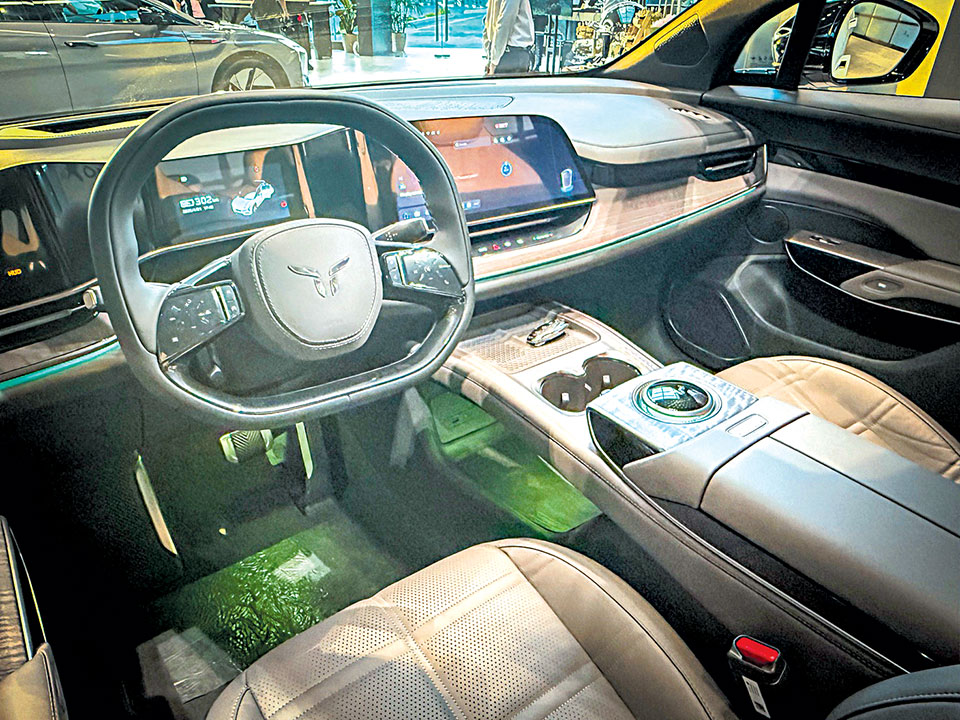
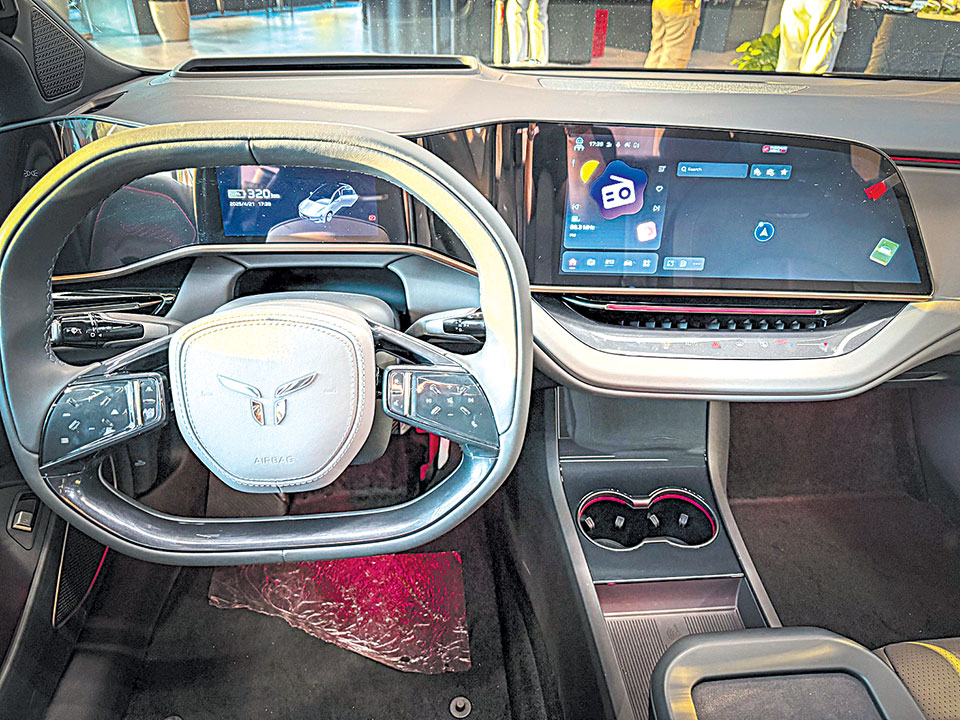
Hongqi charges forward

The Hongqi E-HS7 is priced from P2.58 million. — PHOTO BY JOYCE REYES-AGUILA

New BEVs previewed; PHEVs set to arrive

By Joyce Reyes-Aguila

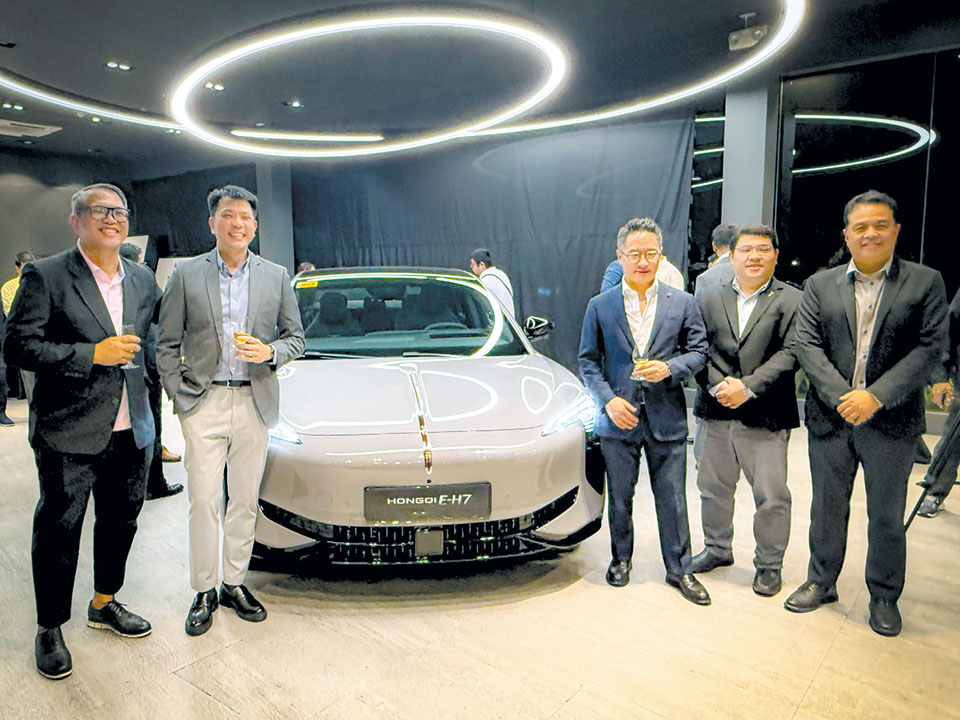
ESTABLISHED IN 1958, Hongqi is known to be the oldest Chinese passenger car brand, once reserved only for high-ranking government officials. Today, the marque takes on the luxury automotive market.

Local Hongqi distributor EVOxTerra, Inc. launched two battery electric vehicles (BEVs) in the Philippines: the EH7 sedan and the E-HS7 crossover sport utility vehicle (SUV). In an exclusive interview with “Velocity,” EVOxTerra President Rashid Delgado said the move aims to “really accelerate the transition from ICE (internal combustion engine) to new energy vehicles.”

He narrated, “When we first launched in October 2023, we had a more limited lineup, especially on new energy vehicles. We’ve been preparing for the launch of the next generation of BEVs, starting with these two new models. Later this year, we will follow with a lineup of PHEVs (plug-in hybrid electric vehicles), as well as, potentially, new BEVs.”

In a preview for members of the media and content creators, EVOxTerra presented the two new Hongqi offerings scheduled to be officially launched on May 27. The EH7 sedan is available as the 2WD Executive model that has a range of 501km and a zero-to-100kph time of 7.8 seconds, and the 4WD Flagship model that accelerates from standstill to 100kph in 4.2 seconds, and boasts a range of 640km.

Executive and Flagship models are also available for the E-HS7 SUV. The Executive’s maximum power is 253kW, with a range of 475km. The Flagship has 540km of range and peak power of 202 + 253 kW from its two motors. Twenty minutes of charging at maximum capacity can up the battery level from 10% to 80%, with a 600-km range.

According to EVOxTerra Product Planning Manager Kristoff Arcega, the new BEVs come in new designs, Level 2 autonomous driving, and five-star safety ratings secured in both China and Europe. A company release described the design updates to include “sleek external lines and improved internal architecture.” Driving information is provided via a 63-inch augmented reality head-up display (AR HUD) in both vehicles.

Mr. Delgado said the latest models represent Hongqi’s “unwavering commitment to building (its) presence and offerings in the Philippine market (as well as providing) more sustainable future investments and new technology innovation with EVs and plug-in hybrids.” The executive added that the brand’s entry to the market was its first foray outside China — and happened earlier than its introduction in Europe last year. “We were kind of ahead of the game in terms of Hongqi’s global expansion,” he explained. “But since then, (Honqi) has (spent) a lot of marketing dollars to expand outside of China, to build the brand. So, we’re also trying to follow them in reinforcing and strengthening the brand.”

The “striking design” of Hongqi vehicles attracts customers, he maintained. “There is no question that it’s a Hongqi when you see it on the road. It’s really eye-catching, and really draws attention. And then complementary (to that) is the technology and innovation behind it, as well as the heritage.”

The brand presently has four locations in Metro Manila, including its flagship dealership in Bonifacio Global City and near Manila Bay at the Four E-Com Center North Tower Seaside Boulevard. Mr. Delgado reported that Hongqi is also part of a multi-brand showroom in Alabang until they find a more permanent showroom in the area “hopefully by this year.” A partnership with BJ Mercantile, distributor of Scania trucks, is expected to result in a fourth location, this time in Quezon City. “We are also talking to various groups in the north, as well as the Visayas and Mindanao for expansion.(With) the four dealers in Metro Manila and these areas, I think we will — more or less — have all bases covered. We will also look at other strategic locations in the country.”

Aside from distributing EVs, EVOxTerra, Inc. is simultaneously building an ecosystem that offers brand-agnostic charging infrastructure, said its president. The company’s EVOxCharge platform can also run on different chargers. “We’re setting up our own charging network (and are) working with partners who own facilities and also want to put up chargers in their commercial establishments, office buildings, condominiums, as well as for home installation for customers of our brand,” said Mr. Delgado. EV owners of any brand can visit the EVOxTerra EV Lifestyle and Service Center in Western Bicutan, Taguig to access its 10-slot EV charging station. A showroom of EVOxTerra lineup from brands like Bestune, Weltmeister, and BAW is also the vicinity.

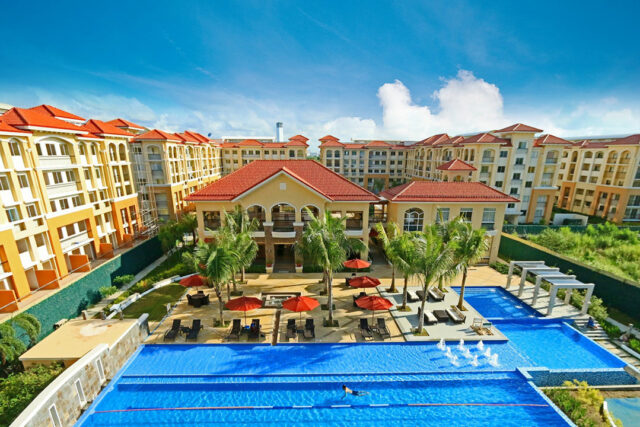
Filinvest Land eyes more home projects outside Metro Manila

SANREMO OASIS part of City di Mare along South Road Properties in Cebu City. — BW FILE PHOTO

FILINVEST LAND, INC. (FLI) is building more homes outside Metro Manila, where it expects increased demand amid declining interest rates.

“We will continue to push existing residential offerings, which are mostly outside of Metro Manila,” Filinvest Land President and Chief Executive Officer Tristaneil D. Las Marias said at the company’s annual stockholders’ meeting last week.

“With the recent reduction in interest rates and expected further reductions in interest rates, we expect demand to increase this year,” he added.

FLI revenue from residential real estate rose 6% to P15.39 billion last year as more projects were completed.

The property developer launched 19 residential projects worth P27 billion last year. Reservation sales were steady at P19.4 billion, supported by the 75% growth in the Visayas region.

On April 10, the local central bank slashed the policy rate by 25 basis points to 5.5% and hinted of further rate cuts, which would likely be in “baby steps” or 25-basis point increments.

Mr. Las Marias said the company expects the opening of a Filinvest mall in Clark, Pampanga province by the fourth quarter.

He added that their office business is expected to be stable this year, while the industrial segment would post additional revenue from new locator sign-ups in the next few months.

Last year, Filinvest Land’s attributable net income rose 11% to P4.17 billion, boosted by higher consolidated revenue.

Its portfolio spans homes, townships, mixed-use developments, mid-rise and high-rise condominiums, office buildings, shopping centers and leisure developments.

Filinvest Land shares gained 2.63% or 2 centavos to 78 centavos each on April 25. — Revin Mikhael D. Ochave