Home Blog Page 1662

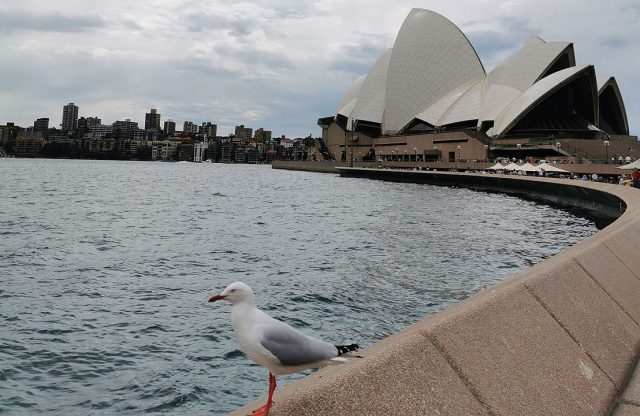
Australia to put two-year ban on foreigners buying existing homes

BW FILE PHOTO

SYDNEY — Australia will ban foreign investors from buying existing homes in the country for two years, its government said on Sunday, in an effort to boost under-pressure housing supply.

“We’re banning foreign purchases of established dwellings from April 1, 2025, until March 31 2027,” treasurer Jim Chalmers said in a statement with housing minister Clare O’Neil. It added that a review would be undertaken on whether the ban would be extended.

Dissatisfaction with housing in Australia reached an all-time high last year and it is an issue that is expected to dominate a general election due by May.

Ms. O’Neil said in comments televised by the Australian Broadcasting Corp. that the ban would likely free up around 1,800 properties per year for local buyers.

“These initiatives are a small but important part of our already big and broad housing agenda which is focused on boosting supply and helping more people into homes,” the ministers’ statement said.

Housing is the largest contributor to the rising cost of living in Australia and is set to be a key issue at the upcoming election. A recent poll had the center-left Labor government lagging its main conservative political opposition.

The government recently passed housing reforms including a shared equity scheme and tax incentives for developers, to ease cost pressures and achieve a target of building 1.2 million new homes by 2030. — Reuters

Trump: If it saves the country, it’s not illegal

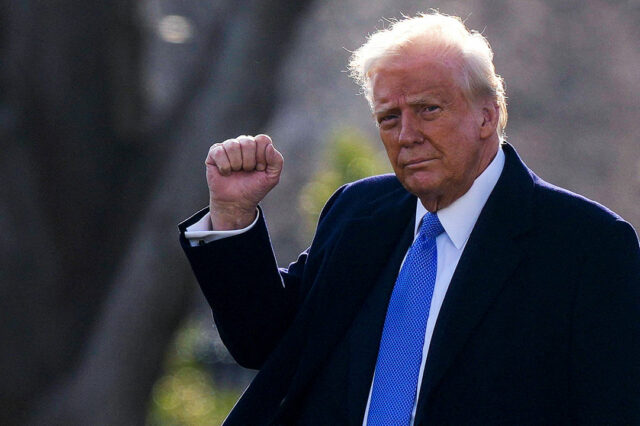
US PRESIDENT Donald Trump gestures as he walks to board Marine One, during his departure for Palm Beach, Florida from the South Lawn of the White House in Washington, US on Feb. 7, 2025. — REUTERS

WASHINGTON — Echoing France’s Napoleon Bonaparte, US President Donald Trump on Saturday took to social media to signal continued resistance to limits on his executive authority in the face of multiple legal challenges.

“He who saves his Country does not violate any Law,” Mr. Trump, a Republican, proclaimed on his Truth Social network. The White House did not respond to a request for more details.

The phrase, attributed to the French military leader who created the Napoleonic Code of civil law in 1804 before declaring himself emperor, drew immediate criticism from Democrats.

“Spoken like a true dictator,” Senator Adam Schiff of California, a longtime adversary of Mr. Trump, wrote on X.

Mr. Trump, who took office on Jan. 20, has made broad assertions of executive power that appear headed toward US Supreme Court showdowns. Some lawsuits accuse Mr. Trump of usurping the authority of Congress as set out in the US Constitution.

While Mr. Trump said he abides by court rulings, his advisers have attacked judges on social media and called for their impeachment. Vice-President JD Vance wrote on X this week that judges “aren’t allowed to control the executive’s legitimate power.”

Washington lawyer Norm Eisen, who like Mr. Schiff worked on the first of Mr. Trump’s two impeachment trials, said Mr. Trump’s lawyers have repeatedly tried to argue that if the president does it, it’s not illegal.

Napoleon’s saying, he said, excuses illegal acts.

“This is a trial balloon and a provocation,” Mr. Eisen said of Mr. Trump’s message.

Mr. Trump, whose longtime slogan is “Make America Great Again,” attributed his survival of an assassination attempt in July to God’s will.

“Many people have told me that God spared my life for a reason, and that reason was to save our country and to restore America to greatness,” he said after his election victory. — Reuters

Malaysia’s economy ends 2024 on high note amid strong investment, domestic spending

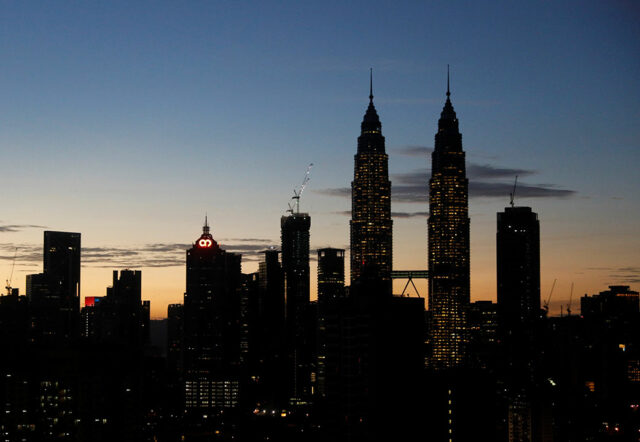
A view of Kuala Lumpur skyline in Malaysia, Feb. 16, 2017. — REUTERS

KUALA LUMPUR — Malaysia’s economy grew faster than expected in the fourth quarter of 2024 amid strong domestic demand and a recovery in exports, the central bank said on Friday, as it expects investment activities and household spending to drive growth this year.

Bank Negara Malaysia said the 5% year-on-year growth in gross domestic product during October-December was driven by domestic demand, strong investment activity, and sustained household spending.

But it cautioned that the outlook remains subject to risks, including an economic slowdown in major trading partners amid heightening expectations of global trade and investment restrictions, as well as lower-than-expected commodity production.

The fourth-quarter reading was above both an official advance estimate and analysts’ forecast in a Reuters poll of a 4.8% expansion, but softer than the 5.4% expansion in the previous quarter.

On a quarter-on-quarter seasonally adjusted basis, the economy contracted 1.1%, compared to a revised 1.9% rise in the third quarter.

“Growth was weighed down by contraction in the commodities sector following lower oil palm output as well as the continued decline in oil production,” the central bank said in a statement.

Full-year growth in 2024 was 5.1%, in line with an advance estimate and the government’s forecast range of 4.8% to 5.3%, and compared to 3.6% in 2023.

The government and central bank have forecast the economy will grow between 4.5% and 5.5% in 2025.

Central bank Governor Abdul Rasheed Ghaffour said economic growth this year will be driven by “robust expansion in investment activity, resilient household spending and expansion in exports.”

Annual headline inflation moderated to 1.8% in the fourth quarter of 2024 from 1.9% in the third quarter, while full-year inflation eased to 1.8% from 2.5% in 2023.

Inflation is expected to remain manageable in 2025 amid easing global cost conditions and the absence of excessive domestic demand pressures, the central bank said, though it cautioned that government policies would contribute to upward pressure on prices.

Last year, the government cut costly blanket subsidies for diesel, electricity, and chicken, among others, and plans to extend the policy to a widely used transport fuel in the middle of 2025.

Capital Economics said growth will ease slightly this year due to tighter fiscal policy and a moderation in investment, adding the government’s plan to further cut subsidies would weigh on consumer spending.

“We think Gross Domestic Product growth will ease to 4.8% this year, from 5.1% last year. But with inflation set to rise on the back of subsidy cuts, we think the central bank will keep interest rates unchanged for the foreseeable future” economist Shivaan Tandon said in a note.

The central bank held its key interest rate unchanged at 3.00% last month, where it has been since May 2023, citing strong economic growth and steady inflation, while warning of potential currency volatility.

The ringgit is expected to remain influenced by external factors, the central bank said, but Malaysia’s positive economic prospects and policies will provide support in the medium-term. — Reuters

Argentina’s opposition threatens impeachment trial after Milei touts crypto coin

ARGENTINE president-elect Javier Milei addresses supporters after winning Argentina’s runoff presidential election, in Buenos Aires, Argentina, Nov. 19, 2023. — REUTERS

BUENOS AIRES — Argentine President Javier Milei could face an impeachment trial in Congress, opposition lawmakers said on Saturday, after the libertarian leader touted a cryptocurrency which crashed soon after.

Mr. Milei late on Friday posted on X recommending the little-known crypto coin $LIBRE, which soon after shot up to nearly $5 apiece.

Just hours later, the cryptocurrency plummeted to under $1.

Argentina’s fintech chamber acknowledged that the case could potentially be a “rug pull,” in which the developers of a crypto token draw legitimate investments, pumping up the value, only to later dump their stake.

“This scandal, which embarrasses us on an international scale, requires us to launch an impeachment request against the president,” said lawmaker Leandro Santoro, a member of the opposition coalition.

Mr. Milei deleted the post on X, with local media saying the post had been up for a few hours on Friday night. He later said he took down his post after becoming aware of the circumstances, and that he had no relation to the cryptocurrency.

“I was not aware of the details of the project and once I found out, I decided to not continue giving it publicity,” he said. — Reuters

China accuses Australia of deliberate provocation in South China Sea

PHILEMBASSY.NO

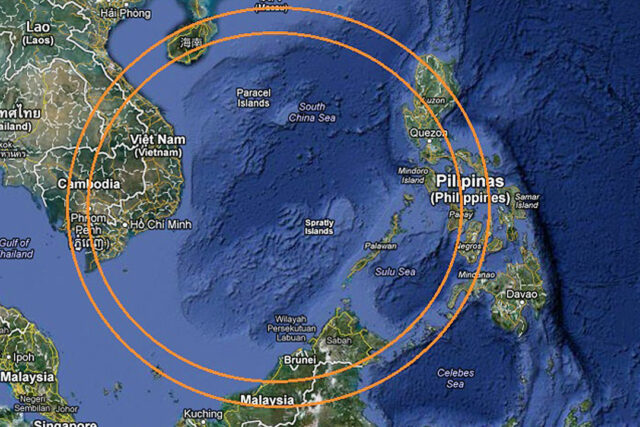
BEIJING – China accused Australia on Friday of deliberately provoking it with a maritime patrol in the disputed South China Sea this week, saying the latter was spreading “false narratives”, though Australia maintained its action adhered to international law.

The incident, in which Australia’s defense minister said a Chinese PLA J-16 jet released flares within 30 m (100 feet) of an RAAF aircraft, comes amid ties strained by navy and air force interactions that Australia has called dangerous.

Friday’s comments came a day after Australia flagged “unsafe and unprofessional” actions by the jet towards the patrol which it said was on routine surveillance in international waters on Tuesday, an account Beijing disputes.

“Australia deliberately infringed upon China’s rights in the South China Sea and provoked China, yet it was the villain who complained first, spreading false narratives,” said Zhang Xiaogang, a spokesperson for the Chinese defense ministry.

Mr. Zhang accused the Australian military aircraft of ignoring the main routes in the busy waterway, saying it “broke into the homes” of others, and adding that China’s response was reasonable and a legitimate defense of sovereignty.

“We urge Australia to abandon its illusion of speculation and adventure,” Mr. Zhang said.

He urged Australia to restrain its frontline naval and air forces, instead of “stirring up trouble” in the South China Sea to the detriment of others and itself.

Before the Chinese comments, Australia’s Prime Minister Anthony Albanese told reporters, “We regard this action as unsafe. We’ve made that clear.”

Defense Minister Richard Marles said the Australian aircraft was in international airspace, adding, “There was no way that the pilot of the Chinese J16 could have been able to control where the flares then go.”

The Australian military’s exercise of freedom of navigation in the South China Sea comes with increasing risk, Mr. Marles said.

“We do it in accordance with international law,” he told the Australian Broadcasting Corporation in an earlier interview on Friday.

“We’re not the only country that does it. But it is really important that we are asserting the rules of the road, as it were.”

The Philippine foreign ministry expressed concern over the incident, citing “unsafe maneuvers” by the Chinese aircraft.

“All countries are expected to respect freedom of navigation and overflight in and above international sea lines of communication, such as the South China Sea,” it said in a statement.

China claims vast swathes of the South China Sea, despite overlapping claims by Brunei, Indonesia, Malaysia, the Philippines and Vietnam.

China rejects a 2016 ruling by the Permanent Court of Arbitration in the Hague that its sweeping claims were not supported by international law. – Reuters

Price growth of building materials in Metro Manila slows in January

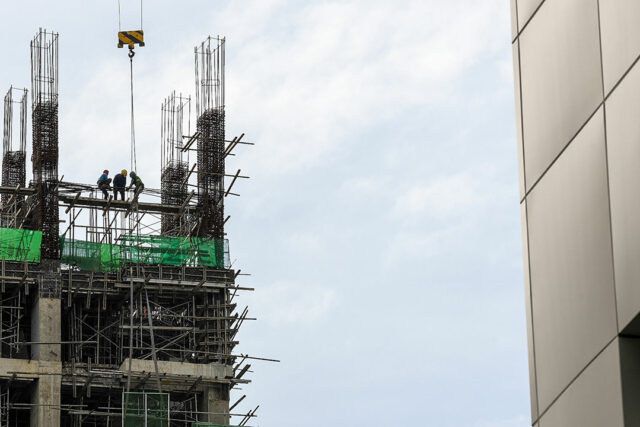
Workers were seen at a construction site in Manila. — PHILIPPINE STAR/EDD GUMBAN

Price growth of construction materials in the National Capital Region (NCR) eased in January amid lower interest rates and a weaker peso, the Philippine Statistics Authority (PSA) reported on Friday.

According to preliminary data, the January construction materials retail price index (CMRPI) slowed to 1.2% in January, from 1.5% recorded in December and 1.4% reported in the same month last year.

Growth in the CMRPI in the National Capital Region (NCR) was the weakest in five months or since the 1.1% in August 2024.

“A weaker peso has made imported construction materials cheaper,” Cid L. Terosa, senior economist at the University of Asia and the Pacific, said in an e-mail interview.

The peso ended at P58.365 against the dollar in January, weakening from P57.845 at end-December 2024.

Mr. Terosa also said that lower interest rates have restrained the cost of production of construction materials.

Last year, the Bangko Sentral ng Pilipinas brought a total of 75 basis points in rate cuts since the beginning of its easing cycle in August, bringing the key rate to 5.75%.

“Lower demand for construction materials due to relatively fewer construction activities amidst the glut in residential and office buildings and units has contributed to slower price increases in prices across most construction materials,” Mr. Terosa said.

The PSA also said that the main factor behind NCR’s slower annual CMRPI increase was the deceleration in the heavily weighted tinsmithry materials index, which rose by 1.6% in January, down from 2.6% in December 2024.

Tinsmithry materials form the largest commodity group in the index, accounting for 21.76% of the CMRPI.

Other commodity groups also reported slower price growths, such as electrical materials (1.8% from 1.9%), painting materials and related compounds (2.2% from 2.6%), plumbing materials (0.8% from 1%), and miscellaneous construction materials (0.6% from 0.8%).

Only carpentry materials saw price increase at 1%, from 0.8% last month.

In a separate report by the PSA, the construction materials wholesale price index (CMWPI) cooled to a record 0.1%, lower than 0.2% in December and 1.5% in January last year.

The CMRPI is based on 2012 constant prices, while the CMWPI is based on 2018 constant prices.

Of the 20 categories, four commodities saw accelerated price growths, six saw easing growth, four were unchanged, and six commodities posted price declines.

The PSA attributed the slower annual CMWPI growth primarily to prices in reinforcing steel and PVC pipes, which declined by 0.3% (from 1.2%) and 0.1% (from 0.9%), respectively.

Other categories where rates went down were hardware (0.1% from 0.7%), G.I. sheet (0.3% from 0.4%), structural steel (-0.9% from -0.5%), metal products (0% from 0.1%), electrical works (0.3% from 0.4%), plumbing fixtures and accessories or waterworks (0.7% from 1.2%), painting works (1.1% from 1.2%), and fuels and lubricants (-3.4% from -1.2%).

The indices for concrete products, glass and glass products, asphalt, and machinery and equipment rental did not change.

Mr. Terosa said that US President Donald J. Trump’s trade policies and trade wars between major exporters of construction materials are key factors to consider in the coming months.

Since taking office in January, Mr. Trump has imposed tariffs on Chinese imports while putting on hold the duties on products from Mexico and Canada.

He is also mulling on slapping “reciprocal tariffs” on every country taxing US imports, stoking fears of wider global trade war, Reuters reported.

“If the downward trend in prices across most construction materials will continue despite the tense global trade environment, construction activity and real estate development in the NCR will benefit.” — Pierce Oel A. Montalvo

China opposes US missile deployed by Philippines

US ARMY PACIFIC

HONG KONG – China has urged the Philippines to withdraw the United States’ “Typhon” intermediate range missile, the defense ministry said on Friday, accusing the Southeast Asian nation of breaking its “promises” by introducing the missile system.

The system is part of a U.S. drive to amass a variety of anti-ship weapons in Asia. The weapon drew sharp criticism from China when first deployed in April 2024 during a training exercise.

The Philippines was not “only giving up its own security and national defense to others, but also introducing the risks of geopolitical confrontation and arms race into the region,” said Zhang Xiaogang, a spokesman for the Chinese defense ministry.

The missile system is a “strategic offensive weapon” and the Philippine side had “repeatedly broken its promises and catered to the U.S. side in introducing this system,” he added.

The comments came as Jonathan Malaya, a spokesperson for the Philippines National Security Council, told a press conference the Typhon missile was only meant for defense, and that the Philippines had never promised to withdraw the Typhon missile.

The Philippines “adheres to its pacifist constitution which renounces war as an instrument of national policy,” Mr. Malaya said.

The Philippines embassy and the U.S. embassy in Beijing did not immediately respond to requests for comment.

The U.S. military moved its Typhon launchers – which can fire multipurpose missiles distances of up to thousands of kilometers – from Laoag airfield in the Philippines to another site on the island of Luzon, Reuters reported in January.

The Tomahawk cruise missiles in the launchers can hit targets in both China and Russia from the Philippines, while the SM-6 missiles it also carries can strike air or sea targets more than 200 km (165 miles) away. – Reuters

Approved foreign investments drop to P544B in 2024

Philippine flags line the road in the City of Dasmariñas in Cavite, June 2, 2023. — PHILIPPINE STAR/EDD GUMBAN

By Abigail Marie P. Yraola, Deputy Research Head

Approved foreign investments in the Philippines fell by 38.9% last year to P543.62 billion, the steepest decline in four years, the Philippine Statistics Authority reported on Thursday.

Preliminary data from the PSA showed the value of foreign commitments approved by the country’s investment promotion agencies (IPAs) in 2024 was lower than the P889.24 billion in 2023.

The annual fall in foreign investments was the lowest since the 71.3% drop recorded in 2020.

Total Approved Foreign Investment Pledges

In the three months to December, pledges reached P57.70 billion, down 85.4% from P394.46 billion in the same period in 2023.

This was the steepest decline in over 26 years or since the 94.5% slump in the third quarter of 1998. By value, it was the lowest since the P27.46 billion in the third quarter of 2023.

“Global uncertainty due to geopolitical tensions is the primary reason for the large drop in foreign investments for the quarter,” Oikonomia Advisory & Research, Inc. economist Reinielle Matt Erece said in an e-mail.

He added that US President Donald J. Trump’s campaign and eventual win alongside his policies which includes tariff increases, strict immigration regulations, and other trade reforms made investors hesitant to invest outside their home countries.

“Foreign investors are hesitant as they hold on to their capital, re-analyze global risk factors, and is on a ‘wait and-see’ mode on the ongoing developments of the global economy,” Mr. Erece said.

Additionally, he said that the latest approved foreign investments data affected the country’s growth trajectory and while unemployment remains relatively low and stable, economic sentiment is negatively affected by growth print which will carry on towards this year.

“Investors will now be concerned of a slow growth in consumption, and adding global uncertainty to the mix, will make them even more hesitant to invest in the country,” he said.

The Philippine economy expanded by 5.2% in the fourth quarter of 2024, the slowest pace in six quarters or since the 4.3% in the second quarter of 2023.

This brought the country’s gross domestic product (GDP) at 5.6% in 2024, below the revised 6-6.5% government target.

On the other hand, unemployment in the country slowed to 3.1% in December which brought the full year average to an all-time low of 3.8%. This is equivalent to 1.94 million jobless Filipinos.

The December figure was the lowest since April 2005, when the statistics agency revised its definition of unemployed to Filipinos aged 15 years and older without a job, available for work and actively seeking one.

For the fourth quarter, investment commitments were approved by five IPAs — Board of Investments (BOI), BOI-Bangsamoro Autonomous Region in Muslim Mindanao (BOI-BARMM), Clark Development Corp. (CDC), Philippine Economic Zone Authority (PEZA), and Subic Bay Metropolitan Authority (SBMA).

Switzerland was the top source of investment pledges for 2024 after committing P289.06 billion, or 53.2% of the total. It was followed by South Korea’s P100.34 billion (18.5% share) and the Netherlands’ P50.22 billion (9.2% share).

Meanwhile, in the fourth quarter, South Korea had the largest approved investments with P26.16 billion, accounting 45.3% of the total P57.70-billion pledges. This was followed by the Netherlands at P9.19 billion (15.9% share) and Japan with commitments worth P4.11 billion (7.1% share)

The BoI contributed the largest bulk with 70.7% of foreign investment pledges worth P384.44 billion last year.

In the last three months of 2024, BoI had the largest commitments worth P28.10 billion followed by PEZA with P15.44 billion.

SBMA and CDC approved P13.64 billion and P445.10 million worth of pledges, respectively. BoI-BARMM approved P86.66 million worth of commitments.

During the period, the Authority of the Freeport Area of Bataan, Bases Conversion and Development Authority, Cagayan Economic Zone Authority, Clark International Airport Corp., Poro Point Management Corp., John Hay Management Corporation, Tourism Infrastructure and Enterprise Zone Authority, and Zamboanga City Special Economic Zone Authority did not approve any investment pledges during the period.

In 2024, about 62.8% or P341.50 billion of the total approved foreign investments will go to the energy sector.

Meanwhile, in the October to December period, the manufacturing sector cornered the largest approved foreign investments with P30.55 billion, about 52.9% of the total pledges during the period.

Additionally, around 20.6% or P11.87 billion of the approved foreign investments will go into the transportation and storage industry, while 13.3% or P7.68 billion worth of pledges will be invested in the energy industry.

During the period, 34.5% of these foreign investment commitments worth P19.92 billion will be for projects in Central Luzon.

Meanwhile, Calabarzon (Cavite, Laguna, Batangas, Rizal, and Quezon) cornered P13.51 woth of investment commitments while Metro Manila will get P12.86 billion.

In 2024, Calabarzon cornered around P195.67 billion worth of these investment pledges.

Should these foreign commitments materialize, these projects are expected to generate 39,284 jobs, 20.3% higher than the 23,726 projected jobs a year earlier.

Mr. Erece said that in terms of job generation, it is still too early to predict a slowdown but it is important for policymakers to take steps to prevent this slowdown and attract more investments to stimulate job growth and accelerate economic expansion.

“Some of the measures that policymakers can do is to implement more accommodative monetary policy, such as a timely rate cut,” Mr. Erece said.

While this may eventually cause the Philippine peso to depreciate especially against the US dollar, he added that the “economy is much more reliant on domestic consumption and spending so doing a rate cut will improve market sentiment and encourage spending from both businesses and consumers in the country.”

At its first policy meeting last Thursday, the Bangko Sentral ng Pilipinas (BSP) decided to keep it rates steady at 5.75%.

The central bank trimmed rates by a total of 75 basis points last year.

In the fourth quarter, total investment commitments from foreign and Filipino nationals fell by 36.1% to P373.70 billion, lower than P585.17 billion in the same period in 2023. Investment pledges by Filipinos reached P316 billion in the last quarter, accounting for 84.6% of the total.

Mr. Erece sees rising tensions on global trade, and a pause in rate cuts by the BSP, due to slow growth expected in 2025 and “cannot be optimistic for a growth in investments this quarter.”

However, he said that being an economy largely driven by domestic consumers and businesses provides a significant advantage in this uncertain global landscape.

“Stimulating consumption through fiscal spending and accommodative monetary policy can improve business sentiment, thereby inviting more foreign investments in the country,” he said.

The PSA data on foreign investment commitments, which may materialize shortly, differ from actual foreign direct investments tracked by the BSP. The central bank’s monitoring goes beyond the projects and includes other items such as reinvested earnings and lending to Philippine units via their debt instruments.


6 powerful ways to achieve your financial goals sooner than you think

We all have big dreams—whether it’s starting your own business, traveling the world, retiring early, or securing a comfortable future for our loved ones. The good news is that achieving your financial goals doesn’t have to take decades of hard work.

According to a 2024 study by the Bangko Sentral ng Pilipinas (BSP), Filipinos who start saving and investing early are more likely to reach their financial goals faster. The study highlights that individuals with higher financial literacy, particularly young adults, are better equipped to make smart financial decisions that can accelerate their path to financial freedom.

Here are six proven ways to speed up your journey toward financial freedom and set yourself up for long-term success.

Be Clear About Your Financial Goals

Start by defining exactly what you want to achieve. Is it paying off debt, saving for retirement, or investing in your children’s education? Clarity is key. Break your goals into smaller, actionable steps, and set realistic timelines to measure progress. A clear destination keeps you motivated and focused, making it easier to stay on track.

Set a Realistic Budget

A budget isn’t about restricting yourself; it’s about taking control of your finances. Track your income, expenses, and savings to identify areas where you can cut back. This frees up money to invest in your future. A flexible budget that adjusts with your changing circumstances ensures it remains practical and effective.

Automate Your Savings and Investments

Automating savings and investments is one of the easiest ways to stay consistent with your financial goals. Automatic transfers to your accounts eliminate the temptation to spend and ensure you’re building your wealth without added effort. Over time, even small contributions grow significantly, thanks to compounding.

Cut Back on Unnecessary Spending

Revisit your spending habits and identify areas where you can make adjustments. While small luxuries like a coffee or streaming subscription might not seem like much, mindful spending can free up more money for savings and investments. Strategic adjustments can significantly accelerate your progress toward financial freedom.

Stay Informed and Keep Learning

Financial trends and tools evolve constantly, and staying informed can help you make better decisions. Learn how inflation impacts savings, explore tax-efficient investing strategies, and understand different investment options. Whether it’s through books, webinars, or podcasts, improving your financial literacy ensures you can make smarter choices and spot opportunities for growth.

Embrace the power to be in control

Life is unpredictable, and financial protection is essential to ensure your loved ones can continue their goals even if something unexpected happens. This is where life insurance becomes invaluable. AXA Secure Future not only helps you save strategically but also provides life protection, ensuring that your family is supported financially in the event of your untimely passing.

Combining guaranteed yearly payouts from years 8 to 20 with a lump sum benefit at the end of the policy term, AXA Secure Future offers a balance of savings growth and peace of mind. It supplements your income and provides a safety net for your family, empowering you to focus on your goals without worry.

The journey to financial freedom starts with small, consistent steps. With tools like AXA Secure Future, you can stay in control of your finances while enjoying the peace of mind that comes with life protection.

To learn more about how AXA can help you achieve your goals, visit the AXA Secure Future webpage.


Spotlight is BusinessWorld’s sponsored section that allows advertisers to amplify their brand and connect with BusinessWorld’s audience by publishing their stories on the BusinessWorld Web site. For more information, send an email to online@bworldonline.com.

Join us on Viber at https://bit.ly/3hv6bLA to get more updates and subscribe to BusinessWorld’s titles and get exclusive content through www.bworld-x.com.

Takeda, Otsuka-Solar sign MoU to raise dengue awareness in the Philippines

Photo by Patricia B. Mirasol

by Patricia B. Mirasol, Producer

Takeda Healthcare Philippines, Inc. and Otsuka-Solar Philippines, Inc., with the support of the Embassy of Japan in the Philippines, inked on February 6 a memorandum of understanding to raise community-based awareness on dengue. 

The Japan-backed health alliance aims to empower communities in the Philippines with the knowledge and resources needed to improve health-promoting behaviors. 

Dengue cases from Jan. 1 to Nov. 16, 2024 reached 340,860 nationwide, or 81% higher than the 188,574 cases logged for the same period in 2023, according to the health department. 

Dengue is a viral infection transmitted to humans through the bite of infected mosquitoes. Urbanization (especially unplanned), is associated with dengue transmission through multiple social and environmental factors, including population density, human mobility, access to reliable water sources, and water storage practice. 

“With the Japanese Embassy’s support, Otsuka-Solar’s expertise in hydration and wellness, and Takeda’s leadership in pharmaceutical innovation, we can empower communities through open discussions about health, which is essential in shaping better healthcare practices and disease prevention strategies,” said Loreann E. Villanueva, country manager of Takeda Healthcare Philippines, Inc. 

“The campaign is initially targeting 10 communities, she said. 

“We’ll make the effort to understand what some of the causes are that’s driving the high incidence of dengue in their communities,” she told BusinessWorld on the sidelines of the event. “We are going to really find a way to get insights on the communities on what the gaps are, and that’s how were going to design the initiatives accordingly.”  

“Thats how we can avoid deaths and achieve the W.H.O. [World Health Organization]’s goal of zero dengue deaths by 2030,” she added. 

The highest case fatality rates of dengue in the country are observed among those 9 years old and below, as well as those 60 years old and above, said Dr. Enrique A. Tayag, a public health advocate and founding member of the Philippine Foundation for Vaccination.  

The challenges are multifold – from the lack of granular data to the different protocols for dengue management, he said at the Feb. 6 event. 

The integration of routine vector surveillance is likewise a challenge, he said. 

“Everyone does their own thing. They do it now, then they forget it the next season…,” he said. “Dengue will win if we do that. [Efforts] should be sustained. Hindi puwedeng ningas kugon lang (Our diligence shouldn’t just be short-lived).” 

The Philippine health department cannot do this alone, Dr. Tayag told the event audience. 

“This partnership can be a model for future collaboration among many entities,” he said. 

Filipinos advised to apply for visas early

Apply for visas early, said Bernard Vijaykumar, head for North Asia & the Philippines for VFS Global.

“Waiting until the last moment not only increases the risk of delays but also exposes applicants to fraudulent entities seeking to exploit their urgency,” he added.

VFS Global helps governments and diplomatic missions with visa, passport, and consular services, but doesn’t decide whether applications are approved or denied.

Interview By Patricia Mirasol
Video editing by Jayson Mariñas

Macron says only Ukrainian President Zelenskiy can negotiate peace for his country

FRENCH PRESIDENT EMMANUEL MACRON — REUTERS

French President Emmanuel Macron said only Ukrainian President Volodymyr Zelenskiy could negotiate on behalf of his country with Russia to end the war, warning a “peace that is a capitulation” would be “bad news for everyone”, including the U.S., the Financial Times reported on Thursday.

“The only question at this stage is whether President Putin is genuinely, sustainably, and credibly willing to agree to a ceasefire on this basis. After that, it’s up to the Ukrainians to negotiate with Russia,” Mr. Macron said in an interview with the newspaper at the Elysee Palace.

U.S. President Donald Trump on Wednesday separately discussed the war with Russian President Vladimir Putin and Mr. Zelenskiy and told U.S. officials to begin talks on ending the nearly three-year-long conflict.

The phone calls came shortly after U.S. Defense Secretary Pete Hegseth told Ukraine’s military allies in Brussels that a return to Ukraine’s pre-2014 borders – before Russia annexed Crimea – was unrealistic and that the U.S. does not see NATO membership for Kyiv as part of a solution.

Ukrainians on Thursday worried that Trump was preparing to sell out their country following his phone call Putin.

Mr. Trump, speaking to reporters at the White House on Thursday, said Ukraine would have a seat at the table during any peace negotiations with Russia over ending the war.

Mr. Macron told the Financial Times that Trump had created a “window of opportunity” for a negotiated solution, where “everyone has to play their role”, adding that it is now up to Mr. Zelenskiy to discuss territorial and sovereignty issues.

He said “..it is up to the international community, with a specific role for the Europeans, to discuss security guarantees and, more broadly, the security framework for the entire region. That is where we have a role to play.”

Mr. Macron described Mr. Trump’s return as an “electroshock” that should force Europe to secure its own future as well as Ukraine’s, the Financial Times report added.

Separately, Mr. Macron said to the newspaper that expelling Gazans would be “extremely dangerous”, adding that Trump’s designs on Gaza and Greenland were examples of the “extreme strategic uncertainty” the world was now living in.

The commentary is aimed at Trump’s shock announcement that the U.S. intends to remove Gaza residents and transform the war-ravaged territory into what the president billed as a “Riviera of the Middle East”. He had also said he wants to take over the Panama Canal and Greenland.

Mr. Macron reiterated that Europe should build its defence capabilities so it can act even when the U.S. is not involved.

“We must also develop a fully integrated European defence, industrial and technological base,” Mr. Macron said.

In January, at a joint news conference with German Chancellor Olaf Scholz in Paris, Mr. Macron said: “After the inauguration of a new administration in the United States, it is necessary more than ever for Europeans and for our two (France and Germany) countries to play their role of consolidating a united, strong and sovereign Europe.” – Reuters