Home Blog Page 1635

Powering inclusive and sustainable progress

L-R: BusinessWorld Insights forum host Dr. Danie Laurel, Philippine Energy Efficiency Alliance President Alexander D. Ablaza, and Meralco PowerGen Corp. President and CEO Emmanuel “Manny” V. Rubio during the forum’s panel discussion — Photo by Arjale Jayrie G. Queral

Efficiency and conservation crucial in attaining energy security, recent BusinessWorld Insights forum notes

By Bjorn Biel M. Beltran, Special Features and Content Assistant Editor

The energy industry is the core of civilization. Agriculture harnessed the power of the sun and gave the first people their roots. Fire brought warmth and community, then eventually, warfare and conquest. The industrial revolution, driven by coal and steam, redefined what humans could build, move, and imagine. Even language reflects this primacy: we call energy ‘fuel’, because energy quite literally fuels human progress.

Securing that energy, then, is tantamount to securing continued and sustained progress. For the Philippines, which continues to enjoy steady economic growth on the back of a young and talented workforce, keeping the energy supply stable and affordable is a critical goal for the government.

National Electrification Administration Administrator Antonio Mariano C. Almeda

“The pace at which our economy grows demands responsiveness and forward thinking — qualities that we need to explore as we determine how to adapt to economic changes and strengthen our capacities,” Antonio Mariano C. Almeda, administrator from the National Electrification Administration, said in a video message at the recent BusinessWorld Insights forum themed “Energy Security: Powering the Philippines’ Economic Growth.”

Energy security is a whole-of-nation endeavor, and Mr. Almeda recognizes the power of unity and collaboration between different sectors in the country in the pursuit of ensuring that all Filipinos benefit from progress.

“While the objective of fully electrifying the nation is a challenging endeavor, we are fortunate to have found reliable partners from the public and private sectors to support us. Through collaboration, we can accelerate the expansion of rural electrification projects to reach more communities, especially those in underserved areas,” he said.

Engr. Ernesto O. Silvano, Jr., deputy administrator for technical services at NEA, followed up on this speech with a discussion on the “Challenges and Opportunities in Energy Supply Chain in 2025.”

National Electrification Administration Deputy Administrator for Technical Services Engr. Ernesto O. Silvano, Jr. — Photo by Arjale Jayrie G. Queral

“Today, as we navigate a rapidly changing energy industry — one shaped by climate change, technological disruption, global market volatility, and the rising needs of a growing population — our mission must evolve and respond with greater urgency and purpose,” Mr. Silvano said.

Optimizing the energy grid

Towards that mission, the Philippines is in a position better than many other countries in the world. Alexander D. Ablaza, president of the Philippine Energy Efficiency Alliance, said that the country has some of the most inclusive, comprehensive energy frameworks out there.

For instance, the Philippine Energy Plan, which is the comprehensive long-term energy blueprint of the current administration, includes, among others, aggressive Renewable Energy (RE) and Energy Efficiency and Conservation (EEC) institutionalization programs for the entire government; the moratorium on new coal power projects; a mechanism allowing foreign ownership on large-scale geothermal projects under financial and technical assistance agreement (FTAA); the resumption of indigenous oil and gas exploration; the introduction of liquefied natural gas (LNG) portfolio; establishment of strategic petroleum reserves; and exploration of new energy sources like green hydrogen.

To tackle energy security, Mr. Ablaza instead called for a “paradigm shift” with how the conversation around the topic should be approached.

“Every time we talk about clean energy and sustainable energy, we should keep that balance of keeping energy efficiency in renewable energy, because that will bring us to our 2050 pathway,” he said during the forum’s panel discussion.

Mr. Ablaza also cited the call from the 28th Conference of the Parties to the UN Framework Convention on Climate Change (COP28) to double energy efficiency progress through 2030.
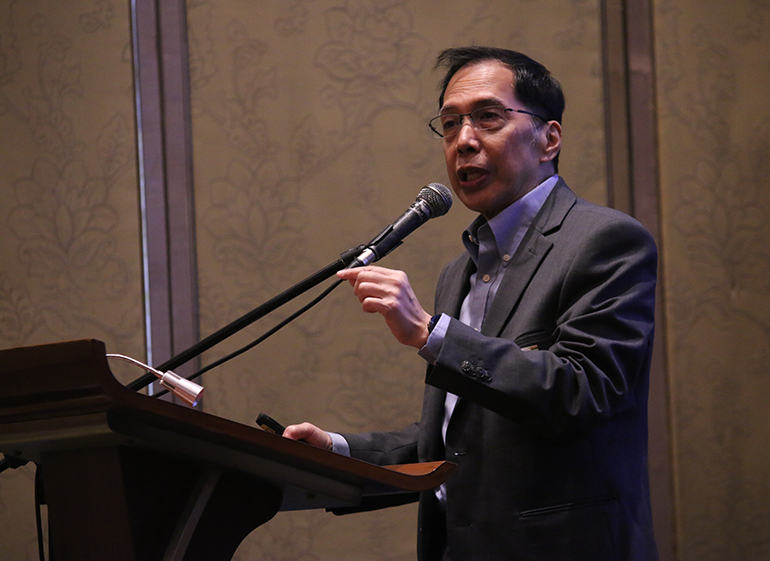
Alexander D. Ablaza, president of Philippine Energy Efficiency Alliance

“Energy efficiency should be regarded as an infrastructural asset class, one that should be ready for public private partnership transactions,” he said, adding that optimizing the flow of capital from investors to energy service companies can be the next step towards an energy secure future.

Emmanuel “Manny” V. Rubio, president and CEO of Meralco PowerGen Corp. (MGen), agreed, saying that the country currently has enough supply to sustain its current progress, but highlighting that preparations should be made for further on.

“The Philippines is entering an era of growth with our population over 115 million people, with energy demands rising fueled by rapid urbanization, economic expansion, and an ever-increasing standard of living,” he said.

At the same time, he noted that the government is aiming for a 35% renewable energy share by 2030 and a 50% share by 2040 as part of the Philippine Energy Plan.

“Quite aggressive, but I think with what we’re doing now with what we’re seeing, I think it’s achievable,” he said. “And hopefully, we won’t use diesel anymore. In fact, we have de-commissioned a number of our diesel plants because we believe that we won’t be needing them.”

Currently, Mr. Rubio believes that it is prudent that the Philippines has not yet committed to a long-term net zero target, as the current energy transition from fossil fuels to renewable is a delicate balancing act. The high variability of renewable energy is an issue that is still being addressed; and as the country waits for better technologies to resolve it, he said that focus should be redirected towards easier targets.

Emmanuel “Manny” V. Rubio, president and CEO of MGen

“One of the lowest hanging fruits in the energy industry is energy conservation. It is always said that the cheapest plants are the plants that you don’t have to build. You don’t have to build something you don’t need,” he said.

Building power plants, renewable energy or otherwise, requires massive investment and time: in capital outlays, land use, regulatory hurdles, and long lead times. Energy conservation and efficiency, he noted, can optimize the country’s current supply so that more plants are not necessary.

“Ambition needs action, and it also needs, of course, a realistic plan aligning all the things that need to be considered. So, action needs alignment, and we make it our mission to power the future by growing and diversified energy portfolio, one that balances renewables, transitional fuels like LNG, and reliable sources like coal, while ensuring affordability and good stability,” Mr. Rubio said.

As the power generation arm of Meralco, MGen holds a portfolio with a combined gross capacity of 2,602 megawatts (MW) from both traditional and renewable energy sources. The company is currently developing a project, now known as MTerra Solar, which consists of a 3,500-MW solar power plant and a 4,500-megawatt-hour (MWh) battery energy storage system.

As the Philippines moves towards a new era of growth, it is clear that the path ahead is no longer just about finding more power but using it wisely. The country stands on the cusp of economic transformation, and now it must reevaluate how it approaches that which powers it. Energy conservation and efficiency, at this point, are critical pillars of national development.

“While the path to energy security is not without challenges, through forward-thinking solutions, collective effort, and an unwavering commitment to serve, we can build a resilient, inclusive, and future-ready energy sector,” Mr. Silvano concluded in his speech.

This BusinessWorld Insights forum was presented by BusinessWorld Publishing Corp. together with sponsors MGen and Semirara Mining and Power Corp.; partner organizations Asian Consulting Group, American Chamber of Commerce of the Philippines, British Chamber of Commerce of the Philippines, Bank Marketing Association of the Philippines, CCI France Philippines, Management Association of the Philippines, Philippine Chamber of Commerce and Industry, Philippine Franchise Association, and Philippine Retailers Association; and official media partner The Philippine STAR.

Reinvention is the key to longevity

“Reinvention is necessary for those aiming for longevity in the amusement parks business, according to Benedicto C. Torres, Jr., president of Global Gutz Parks Philippines, Inc.

Interview by Patricia Mirasol
Video editing by Arjale Queral

US Cardinal Prevost elected Pope Leo XIV, first American pontiff

Pope Leo XIV | Screenshot from Vatican Media Livestream

 – U.S. Cardinal Robert Prevost was elected in a surprise choice to be the new leader of the Catholic Church on Thursday, taking the name Leo XIV, becoming the first American pontiff.

Pope Leo, appeared on the central balcony of St. Peter’s Basilica around 70 minutes after white smoke billowed from a chimney atop the Sistine Chapel signifying the 133 cardinal electors had chosen a new leader for the 1.4 billion-member Catholic Church.

The choice of Mr. Prevost was announced by French Cardinal Dominique Mamberti with the Latin words “Habemus Papam” (We have a pope) to tens of thousands of people gathered in St. Peter’s Square to hear the news.

Aged 69 and originally from Chicago, Prevost has spent most of his career as a missionary in Peru and became a cardinal only in 2023. He has given few media interviews and rarely speaks in public.

Pope Leo becomes the 267th Catholic pope after the death last month of Pope Francis, who was the first Latin American pope and had led the Church for 12 years and widely sought to open the staid institution up to the modern world.

Pope Francis enacted a range of reforms and allowed debate on divisive issues such as women’s ordination and better inclusion of LGBT Catholics.

Ahead of the conclave, some cardinals called for continuity with Francis’ vision of greater openness and reform, while others said they wanted to turn back the clock and embrace old traditions. – Reuters

PHL economic growth slows in Q1

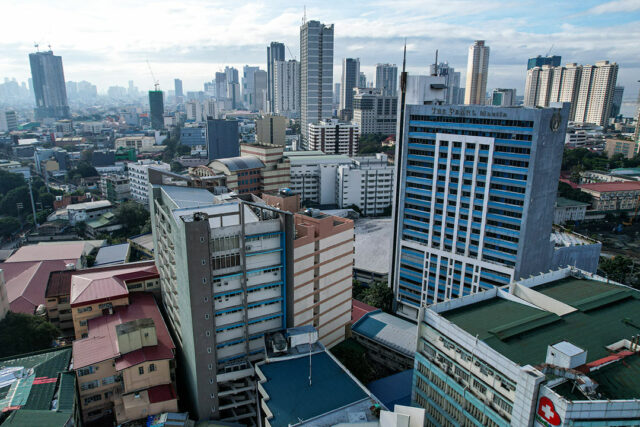
Buildings are seen in Manila’s business district. The Philippine economy expanded by 5.4% in the first quarter of 2025, the statistics agency said. — PHILIPPINE STAR/RYAN BALDEMOR

THE PHILIPPINE ECONOMY grew by a weaker-than-expected 5.4% in the first quarter, reflecting heightened uncertainty arising from the Trump administration’s tariffs.

Data from the Philippine Statistics Authority showed that gross domestic product (GDP) expanded by 5.4% in the January-to-March period, sharply slowing from the 5.9% expansion in the same quarter last year.

This was also well-below the 5.8% median forecast of 15 economists in a BusinessWorld poll last week but faster than the revised 5.3% GDP in the fourth quarter of 2024.

On a seasonally adjusted quarterly basis, GDP expanded by 1.2%, decelerating from the revised 1.5% in the fourth quarter.

“While this pace falls short of our initial expectations, it reflects developments from the broader global context of tempered economic activity amid persistent uncertainties,” Department of Economy, Planning, and Development (DEPDev) Undersecretary for Policy and Planning Group Rosemarie G. Edillon said at a briefing on Thursday. 

The first-quarter print was also below the government’s target range of 6-8% for the year.

Ms. Edillon said the economy should grow by at least 6.2% in the remaining three quarters to reach at least 6% growth by yearend.

She said the Development Budget Coordination Committee is scheduled to meet later this month to review the macroeconomic assumptions for this year.

First-quarter GDP growth was mainly fueled by faster public spending and household consumption.

Government spending jumped by 18.7% in the first three months of the year, faster than the 2.6% a year ago and 9% in the fourth quarter. This was the fastest clip since the second quarter of 2020.

The National Government frontloaded infrastructure spending ahead of the 45-day election ban on public works that started on March 28.

“Actually, for the entire year of 2025, there will still be substantial growth from government final consumption expenditure, again just looking at the disbursement program for the year,” Ms. Edillon said.

At the same time, household final consumption expenditure, which accounts for over 70% of the economy, grew by 5.3% annually from the 4.7% print in the fourth quarter.

“For household final consumption expenditure, what affects it really is, of course, the interest rates and then the inflation rate. And since we have been seeing easing inflation, we are hopeful that this will continue, and will impact positively on the household final consumption,” Ms. Edillon said.

Inflation averaged 2.2% in the first three months of the year, as food and transport costs fell.

The Bangko Sentral ng Pilipinas (BSP) cut its benchmark rate by 25 basis points (bps) to 5.5% at its April meeting. BSP Governor Eli M. Remolona, Jr. told Bloomberg on Wednesday that they are open to cutting rates by a further 75 bps this year amid cooling inflation.

TRADE WAR JITTERS
The DEPDev official noted investments and external trade offered a “mixed picture” in the first quarter.

“We’re seeing that it’s not really the trade war per se, but it’s really because of the anticipation of uncertainty in global trade, and therefore a lot more imports were front-loaded during the first quarter,” Ms. Edillon said.

Total exports growth slowed to 6.2% in the January-to-March period from 8.1% in the same period last year. Quarter on quarter, it picked up from 3.2%.

“The external sector’s performance reflects business strategies that were employed in anticipation of greater uncertainty in global trade. Thus, even with the strong (quarter-on-quarter) growth of exports (6.2% from 3.2%), net exports contracted sharply by -19.9% from its previous performance of -1.4%,” she said.

Imports increased by 9.9% in the first quarter, faster than the 2.2% in the same period last year and 2.7% in the fourth quarter.

Since he took office in late January, US President Donald J. Trump’ tariff threats sparked uncertainty and rattled markets around the world

In April, the US implemented a 10% baseline tariff on all its trading partners, while the higher reciprocal tariffs on some countries have been paused until July.

Gross capital formation, the investment component of the economy, grew by 4% in the first quarter, faster than the 0.8% a year ago but slower than the 5.5% in the fourth quarter.

“The reason for slower growth is because of the substantial drawdown in investments,” Ms. Edillon said, noting that fixed capital formation accelerated to 5.9%, from 2.3% in the same period in 2024.

She also noted a substantial drawdown in inventories (-98%), after a significant buildup in the last quarter of 2024.

“They’re kind of anxious probably that prices might increase or there might be some problems with the supply chain going forward, and therefore they already did the investments or the spending during first quarter,” Ms. Edillon said.

On the supply side, the services sector, which made the biggest contribution among major industries, expanded by 6.3% in the first quarter, easing from 7% a year ago.

The industry sector grew by 4.5% in the first quarter, slowing from 5.2% a year ago.

Agriculture, forestry, and fishing expanded by 2.2% in January to March, improving from the 0.5% growth in the same period a year ago.

Gross national income posted an annual 7.5% growth in the first quarter, slightly lower than the 9.9% rise a year ago.

Net primary income went up by 24.6% in the first quarter, lower than the 57.8% in the same quarter in 2024.

Ms. Edillon said the first-quarter economic data were not a disappointment, as global uncertainty was being seen as early as January.

Despite the lower-than-expected GDP growth, Ms. Edillon said the Philippines ranked second among Asian neighbors that have released first-quarter results, behind only Vietnam (6.9%) and tying China (5.4%). The Philippines was ahead of Indonesia (4.9%) and Malaysia (4.4%)

“There are actually signs that the economy is still very resilient, like domestic demand is still strong… But of course, global demand is not really well — it’s in a period of volatility,” she said.

Finance Secretary Ralph G. Recto said performance highlights the “continued strength and resilience” of the economy amid rising uncertainty.

“Our growth is strong, inflation continues to ease, private consumption is rising, and our job market remains vibrant. These are clear signals of accelerating domestic demand ahead, which is our strongest shield against external headwinds and trade wars,” Mr. Recto said.

‘LACKLUSTER’
Analysts were underwhelmed by the first-quarter economic data and expect the central bank to continue easing to support growth.

“Despite household spending finally improving and pre-election spending by the government being punchy, growth underperformed relative to expectations,” HSBC economist for ASEAN Aris D. Dacanay said.

Mr. Dacanay said he expects Philippine growth to weaken in the second half as trade uncertainties weigh on the global economy.

“With growth expected to be below the government’s 6-8% target band, we expect the BSP to continue its easing cycle. More specifically, we see the BSP cutting its policy rate to 5% by yearend to support growth,” he added.

The BSP’s next policy meeting is on June 19.

Oxford Economics Lead Economist Sunny Liu said GDP is now expected to grow by 5.5% this year, after the lower-than-expected first-quarter print.

“To support growth, we expect the central bank to maintain an accommodative monetary stance, with another 25-bp rate cut in the second half of the year. Heightened external uncertainty, and its adverse effects on investment, should weigh on growth,” she said.

ANZ economist Arindam Chakraborty and Chief Economist for Southeast Asia and India Sanjay Mathur said the GDP growth was “lackluster.”

They noted that private consumption growth was still below the pre-pandemic five-year average growth rate of 6.2%. The uptick in consumer spending was also driven by favorable base effects, they added.

ANZ economists now expect Philippine GDP to expand by 5% this year, noting that external demand and investments are likely to soften amid slowing global growth.

“As of now, we expect two more rate cuts by the BSP in 2025 with a terminal rate of 5%,” they said.

For Chinabank Research, the uptick in household consumption provided some optimism for sustained growth.

However, it said external trade may remain a “weak spot” as the country deals with higher US tariffs and a possible global slowdown.

“The weaker-than-expected Q1 GDP print, along with easing inflation, boosts the case for an interest rate cut from the BSP,” Chinabank Research added. — Aubrey Rose A. Inosante

Dollar reserves fall to $104.6B at end-April

PHILSTAR FILE PHOTO

THE Philippines’ dollar reserves declined by 1.9% as of end-April, as the National Government (NG) repaid more foreign debt, the central bank said.

Data from the Bangko Sentral ng Pilipinas (BSP) showed gross international reserves (GIR) dropped to $104.6 billion as of end-April from $106.7 billion as of end-March.

Year on year, the dollar reserves rose by 1.9% from $102.65 billion.

“This latest GIR level provides a robust external liquidity buffer,” the BSP said.

The dollar reserves in April were the lowest since the $103.27 billion seen in January.

“The month-on-month decrease in the GIR level reflected mainly the (1) NG’s drawdowns on its foreign currency deposits with the BSP to meet its external debt obligations and pay for its various expenditures, and (2) BSP’s net foreign exchange operations,” the central bank said in a statement.

International reserves are foreign assets of the BSP held mostly as investments in foreign-issued securities, monetary gold, and foreign exchange. These are supplemented by claims to the International Monetary Fund (IMF) in the form of reserve position in the fund and special drawing rights (SDRs).

Ample foreign exchange buffers protect the country from market volatility and ensure that it is capable of paying its debts in the event of an economic downturn.

BSP data showed the level of dollar reserves as of end-April is enough to cover about 3.6 times the country’s short-term external debt based on residual maturity.

It is also equivalent to 7.2 months’ worth of imports of goods and payments of services and primary income.

BSP data showed foreign investments fell 3.19% to $86.09 billion at end-April from $88.9 billion as of end-March. Year on year, foreign investments inched up 1.19% from $87.13 billion.

The country’s reserve position in the IMF rose by 13.57% to $741.6 million as of end-April from $653 million a month earlier. It also went up by 0.75% from $736.1 million a year ago.

SDRs — or the amount which the Philippines can tap from the IMF’s reserve currency basket — was unchanged month on month at $3.8 billion. Year on year, it dropped by 1.7% from $3.74 billion.

The value of the central bank’s gold holdings went up by 4.51% to $13.34 billion at end-April from $12.76 billion a month ago. Year on year, it jumped by 30.06% from $10.26 billion.

The BSP’s foreign exchange holdings increased by 23.52% to $648.6 million at end-April, from $525.1 million at end-March. Year on year, it decreased by 17.84% from $789.4 million.

Meanwhile, net international reserves slipped by 1.88% to $104.6 billion at end-April from $106.6 billion as of end-March.

Net international reserves refer to the difference between the GIR and reserve liabilities, including short-term foreign debt, and credit and loans from the IMF.

“The decline in GIR in April was mainly due to debt payments, foreign exchange operations, and lower gold valuations,” Philippine Institute for Development Studies Senior Research Fellow John Paolo R. Rivera said in a Viber message.

Rizal Commercial Banking Corp. Chief Economist Michael L. Ricafort said that the BSP’s possible interventions to defend the peso could have also led to the lower GIR in April.

The peso closed at P55.84 a dollar on April 30, strengthening by P1.37 from its P57.21 finish on March 31. Year to date, the local unit gained by P2.005 from its P57.845 close on Dec. 27, 2024.

“Moving forward, GIR is expected to stay stable, supported by remittances, BPOs (business process outsourcing), tourism, and government borrowings, though risks like global volatility and a widening current account deficit could weigh on it,” Mr. Rivera said. — AMCS

ADB eyes additional funding for major PHL infrastructure projects

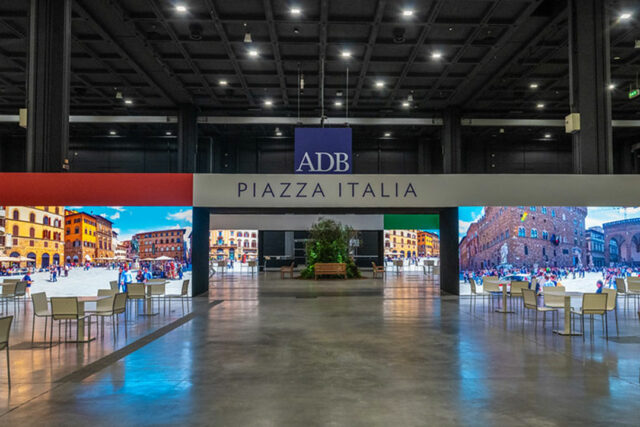
The Asian Development Bank (ADB) held its 58th annual meeting of governors in Milan, Italy this week. — COURTESY OF ADB

By Luisa Maria Jacinta C. Jocson, Senior Reporter

MILAN, Italy — The Asian Development Bank (ADB) is eyeing to extend about $4 billion in financing for the Philippines this year, which will fund key infrastructure projects like the Bataan-Cavite Interlink Bridge and Laguna Lakeshore project.

“We’re looking at about $4 billion in lending for 2025. That’s more or less what we’re seeing as an average volume for lending over the next few years,” ADB Country Director for the Philippines Pavit Ramachandran told BusinessWorld in an interview on the sidelines of the 58th ADB Annual Meeting here.

In 2024, the multilateral bank extended a little over $6 billion to the Philippines, the second-biggest recipient of financial assistance.

The ADB earlier said it is allocating about $24 billion in lending to the Philippines from 2024 to 2029.

“We’re continuing to support these infrastructure projects. Some of these have additional tranches. We’ve got these large-scale (projects). The Malolos-Clark (railway) is one,” Mr. Ramachandran said.

Last month, the ADB approved a $1.45-billion loan for the Malolos-Clark component of the 163-kilometer (km) North-South Commuter Railway, which will connect Malolos, Bulacan with the Clark International Airport.

Aside from this, there are also upcoming additional tranches for the Bataan-Cavite Interlink Bridge and Laguna Lakeshore Road Network project, he said.

The 32-km interlink bridge will connect the provinces of Bataan and Cavite across Manila Bay, with construction expected to start this year.

The Laguna Lakeshore project is a 37.5-kilometer expressway that will shorten travel time between Taguig City and Calamba, Laguna.

“These are programmatic investments over the course of the Country Partnership Strategy (CPS) period,” Mr. Ramachandran said.

The CPS, which covers the years 2024 to 2029, is focused on human development, infrastructure, disaster resilience, and economic competitiveness, among others.

Mr. Ramachandran said there are agriculture and energy investments in the pipeline.

“We are in the process of also very advanced stages of looking at the food voucher program,” he said.

The food stamp program last month was approved by the National Economic and Development Authority Board, which is now known as the Department of Economic, Planning and Development Board.

“We are targeting July for board consideration within ADB. That’s a priority project for us this year,” he added.

The program seeks to feed food-poor families with a monthly voucher worth P3,000.

Mr. Ramachandran said the ADB also has ongoing work around tax mobilization.

The bank also has an initiative aimed at further improving the ease of doing business in the country.

“That is basically about reducing red tape, streamlining business processes, using digital technology,” he added.

FOOD SECURITY
ADB President Masato Kanda earlier this week announced that the lender is raising its commitment to food security projects in the region to $40 billion up to 2030.

“In the Philippines, we are now seeing real interest from the government to do big transformative work around food systems,” Mr. Ramachandran said.

He said the bank is working on designing a project preparatory facility that will help prepare big-ticket initiatives in the agriculture, food, and natural resource space.

“First, we have plans around port development. I think the Department of Agriculture has ambitious plans for ports. These are roll-on, roll-off ports, fishing ports, ports for exports,” he said.

These will also cover aquaculture, large-scale irrigation, and flood disaster resilience, among others.

“We are in the process of now preparing for delivery this year a program on blue economy. This is a policy-based loan with very strong linkages to food security, just given the dependence of the coastal communities on fisheries and the aquatic environment… This will also have a biodiversity link which is also directly related to food security,” he added.

Mr. Ramachandran noted that the country has recently faced challenges with food price inflation.

“It has to be a holistic solution. It can’t only be a demand side. There’s also supply-side issues around making sure farmers have access to credit, information, insurance, technology, supporting them with irrigation systems, something that we are looking to also engage with,” Mr. Ramachandran said.

Energy is also a crucial area to alleviate many food system-related challenges.

“In the Philippines, the other challenge really is around energy and looking at the energy food nexus… We have also work that we’re doing in the energy sector to essentially help with reducing the cost of energy, ensuring stability of the grid and energy access, which will also have synergistic positive impacts on food security and the food sector.”

GROWTH CORRIDORS
Mr. Ramachandran also noted the significance of expanding growth corridors in the country.

About half of the country’s gross domestic product (GDP) is concentrated in Metro Manila and surrounding regions, he said.

“What we would like is more balanced development. I think the government is also keen on that to ensure that there’s more broad-based, inclusive development.”

“The benefits actually trickle to communities in other parts of the country. Mindanao and Visayas obviously are still lagging in terms of the poverty benefits. So, we are trying to look at what some of those future growth corridors.”

The ADB has been in discussion with the government and other stakeholders to explore what areas could “catalyze growth in terms of potential opportunities,” such as human capital.

“At the end of the day, skills and ensuring that you have the human capital base to drive growth is crucial. And, ensuring that development can be solidified in these corridors is important, particularly for these future-oriented industries,” Mr. Ramachandran said.

“These industries include semiconductors, critical minerals, the pharmaceutical sector, and renewables.”

“This will require a real ramping up in terms of skills. There’s an ambitious enterprise development plan that the government has, which we’re also engaging with to support some of these new areas and private sector-led growth in these areas.”

“Service development, or what we’re calling ‘servicification,’ around these areas is important. Because, currently, the services sector delivers a big proportion of the growth. But we’d like to also see more transition to high-value services.”

Meanwhile, Mr. Ramachandran said that the 58th Annual Meeting has been productive for the Philippines.

“I think this solidifies some of the partnership between Europe and Asia as well. This whole conference is actually, in a way, a bridge.”

He noted the development priorities raised during the meeting resonates very strongly with its efforts in the Philippines.

On the sidelines of the meeting, the country’s economic team also held the Philippine Economic Dialogue to attract investors.

“I think it’s a good opportunity for Philippines to showcase what they’ve been doing on the reform front to highlight some of their macroeconomic fundamentals. Milan is obviously a very attractive venue for investors,” Mr. Ramachandran said.

Clash of clans: Dynasties to slug it out in Philippine midterm elections

AN ICE CREAM VENDOR passes by a wall covered in campaign posters in Quezon City, May 4. Midterm elections are scheduled for May 12. — PHILIPPINE STAR/MIGUEL DE GUZMAN

By Kenneth Christiane L. Basilio, Reporter

ANTONIO A. ROMANO, a 49-year-old taxi driver from Quezon City, is sick and tired of the same familiar names and faces that he sees every time he votes, many of them from well-entrenched political families.

“Politicians these days have become incredibly shameless,” he told BusinessWorld. “It’s as if politics has become their business, one that they fully own.”

Philippine midterm elections this month are expected to remain a family affair, with dynastic clans and celebrities likely to dominate the contest that analysts see as a proxy war between the Marcos and Duterte families.

More than 18,000 seats nationwide are up for grabs in the midterm elections on May 12, held every three years so Filipinos can vote for 12 of 24 Senate seats, more than 300 congressmen and thousands of local officials in every province, city and town.

“Dynasties have become more aggressive in contesting seats beginning in the past decade,” Arjan P. Aguirre, who teaches political science at the Ateneo de Manila University, said in a Facebook Messenger chat, citing a “noticeable increase” in their presence at the House of Representatives, Senate and local offices.

Maria Ela L. Atienza, a political science professor at the University of the Philippines, said political families in the Philippines have existed before martial law in the early 1970s, but their numbers multiplied after the ouster of the late president Ferdinand E. Marcos, Sr. in 1986.

“Many dynasties have no more shame in running for multiple positions, with ‘fat’ dynasties increasing,” she told BusinessWorld in a Viber chat.

For years, public office in the Philippines has been treated like heirlooms, passed down by parents to their children and their grandchildren. It has also been a source of quarrels between family members who vie for the same posts.

About two-dozen political dynasties are each seeking at least five government seats across all government levels in this year’s midterm elections, according to a report by the Philippine Center for Investigative Journalism.

Political dynasties in the Philippines fall into three distinct categories, each reflecting the number of seats they take and the influence they yield, said Julio C. Teehankee, a political science professor at De La Salle University.

“Political dynasties in the Philippines can be distinguished between ‘thin’ dynasties, where only one family member occupies an elective position successively, and ‘fat’ dynasties, where many family members simultaneously occupy elective positions,” he said in a Facebook Messenger chat.

“If more than four or five family members occupy elective positions, they may already be considered ‘obese,’” he said. “Obese dynasties are dangerous to the health of democracy.”

Dynastic politicians are inherently anti-democratic because they put their personal interests before the public they’re supposed to serve, said Cleve V. Arguelles, chief executive officer and president at Philippine think tank WR Numero Research.

“They undermine democratic demands for transparency and accountability, ensuring that elections serve as coronations rather than actual competition for votes,” he said via Viber. “Political dynasties exist to monopolize power, shutting out competition and securing their rule.”

PROFITABLE BUSINESS
Political clans are interested in keeping their regional strongholds to shape policymaking in ways that align with and benefit their business interests, Danilo A. Arao, convener of election watchdog Kontra Daya, said.

“Political dynasties use their power and influence to promote their business interests,” he said via Messenger chat. “They pass laws that cater to their interests… [and] they are able to get lucrative government contracts.”

Dynastic politicians also use their position to block competition and offer business and economic opportunities to their kin, Mr. Arguelles said.

More than 60 political dynasties have links to construction companies, according to a 2022 study by the Ateneo de Manila University.

“The presence of ‘fat’ dynasties and politicians’ ownership of local businesses are both directly linked to poverty incidence,” it said. “The monopolization of key industries can skew local policies and economic gains to local politicians and their clients rather than the entire province.”

Dynasties tend to flock to the construction industry because it is among the most profitable ventures in the country, said Nigel Paul C. Villarete, senior adviser on public-private partnerships at technical advisory group Libra Konsult, Inc.

“It is the main portal for infrastructure development… which makes it profitable,” he said via Viber. “While national development rests on economic and social development, both require infrastructure as the basis for their execution.”

Politicians are “naturally inclined” toward the building sector because they are responsible for drafting and executing national development plans including infrastructure projects, Mr. Villarete said.

He added that politicians use their connections to win state contracts, causing “undue disadvantage” to the government.

Political dynasties also worsen economic inequality and stifle socioeconomic progress, Jose Enrique “Sonny” A. Africa, executive director at think tank IBON Foundation, said in a Viber message.

They often craft policies that foster a “long-term, patron-client” dynamic with their constituencies by channeling state resources into short-sighted financial programs that prioritize immediate relief over sustainable development, he added.

“They thrive in backward political ecosystems of poverty, patronage and dynastic entitlement,” Mr. Africa said.

Ms. Atienza blames weak institutions and poor government service for the rise of political clans. “When the state is unable to provide basic services to citizens, political families find a way in providing patronage and dole-outs to poor people.”

Weak political party structures have also allowed political dynasties to “metastasize,” she pointed out.

Politicians with business links have infiltrated the Philippines’ party-list system, with about 15 groups having ties to various enterprises during this election cycle, according to a Kontra Daya report.

The party-list system was created under the 1987 Constitution to allow underrepresented sectors to participate in the lawmaking process. It was expanded in 2013 after the Supreme Court ruled that political parties could also participate in the party-list system.

Mr. Aguirre said political dynasties would continue to thrive if no action is taken against them.

“This phenomenon will continue if there are no alternatives out there who can challenge these dynasties and we don’t reform our institutions to help them resist any form of capture from powerful families,” he said.

“We can start to put an end to this dynastic prevalence in the Philippines by pushing institutional support for party development, reforming the party-list system and strengthening participative governance mechanisms at various levels of government,” he added.

The Commission on Elections (Comelec) holds the power to disqualify political dynasties even in the absence of an enabling law banning them under a 2016 youth council law, according to Michael Henry Ll. Yusingco, a constitutionalist and senior research fellow at the Ateneo Policy Center.

“The Comelec can disqualify dynastic candidates on the basis of Article II, Section 26 of the Constitution in relation to the definition of a political dynasty found in Section 10 of the Sangguniang Kabataan Reform Act,” he said.

The 1987 Constitution prohibits dynasties, but an enabling law has not been passed for 37 years.

The law cited by Mr. Yusingco bars candidates who have relatives who are incumbent officials from the national down to the village level from running in youth council elections.

The Comelec is still studying whether it could use that law to disqualify dynastic politicians, Election Chairman George Erwin M. Garcia told BusinessWorld in a Viber message.

Filipinos have the power to reject political clans even in the absence of an enabling law against them, Mr. Yusingco said.

Mr. Romano, the taxi driver, vows to do just that.

“I promise not to vote for members of any political clans on May 12,” he said. “They don’t accomplish anything for ordinary Filipinos. It’s all just self-serving.”

White smoke billows from Sistine Chapel as new pope elected

 – White smoke rose from the Sistine Chapel on Thursday and the bells of St. Peter’s rang out, signaling that cardinals have elected a new pope to succeed Pope Francis and take charge of the Roman Catholic Church.

The election came on the first full day of voting by the 133 cardinal electors, who secluded themselves behind the Vatican’s medieval walls on Wednesday afternoon.

A joyous crowd in St. Peter’s Square cheered and applauded as the first puffs of smoke emerged from a small chimney on the roof of the Sistine Chapel, where the cardinals have been holding their secret ballot.

The identity of the pope and the name he has chosen as pontiff will be announced to the world from the central balcony of St. Peter’s Basilica shortly.

The new pope will then step forward to deliver his first public address and blessing to the gathered crowds.

Pope Francis died on April 21 after ruling the 1.4-billion member Church for 12 years. During his reign he sought to open up the staid institution to the modern world, enacting a range of reforms and allowing debate on divisive issues such as women’s ordination and better inclusion of LGBT Catholics.

While no clear favorites had emerged to succeed him, Italian Cardinal Pietro Parolin, who served as the Vatican’s number two under Francis, and Filipino Cardinal Luis Antonio Tagle were considered the frontrunners.

Other “papabili” – potential papal candidates in Italian – were France’s Jean-Marc Aveline, Hungary’s Peter Erdo, American Robert Prevost, Italy’s Pierbattista Pizzaballa and Filipino Pablo Virgilio David.

The cardinals will have had to decide whether to pick someone to build on Francis’ vision of greater openness and reform, or else choose a more conservative figure.

During the conclave their only communication with the outside world was through the smoke emerging from the chimney – black for no pope yet picked, white signaling a new pontiff chosen by a majority of at least two-thirds.

The cardinals held an initial inconclusive vote on Wednesday evening and a further two followed on Thursday morning. They returned to the Sistine Chapel at 4 p.m. (1400 GMT) and at around 6:08 p.m. (1608 GMT) the white smoke emerged.

During the conclave, cardinals were sequestered from the world and sworn to secrecy, their phones and computers confiscated, while they were shuttled between the Sistine Chapel for voting and two Vatican guesthouses to sleep and dine.

The average number of ballots it has taken to be elected over the past 10 conclaves was 7.2. Francis was elected after five in 2013. – Reuters

BPI Capital recognized for sustainable and innovative finance

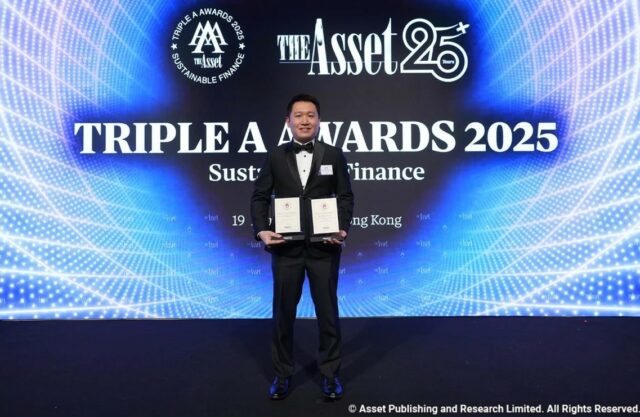
Lester Ong, BPI Capital President and CEO

BPI Capital Corporation has been recognized with multiple prestigious awards at The Asset Triple A Sustainable Finance Awards 2025 and the FinanceAsia Achievement Awards 2024, underscoring its leadership in sustainable and innovative financial solutions.

“We are deeply honored by these recognitions, which represent our commitment to providing long-term value and structuring landmark transactions that contribute to economic growth and sustainability,” said Lester Ong, BPI Capital President.

Sustainability & Innovation at the Forefront

The Asset Triple A Sustainable Finance Awards recognize leading corporates, institutions, and individuals who are driving significant innovation in sustainable finance. This year, BPI Capital earned multiple awards for its outstanding achievements in structuring innovative and sustainability-focused transactions, including the following:

  • Best Sustainability-Linked Financing (Philippines): Ayala Land Inc. Sustainability-Linked Bonds, supporting emissions reduction and green building certification.
  • Best Sustainability Bond–Local Currency (Philippines): BPI SEED Bonds, funding clean energy, energy efficiency, and Micro, Small, and Medium Enterprises (MSMEs).
  • Best Blue Bond (Philippines): Maynilad Blue Bonds, the first SEC-registered issuance in the country, financing sustainable water and wastewater projects.
  • Best Social Loan-Agriculture (Philippines): BPI Direct BanKo, Inc., A Savings Bank’s (BanKo) Agri-NegosyoKo Loan Program, in partnership with Agrilever, empowers small farmers with financial and technological support.
  • Best Acquisition Financing (Philippines): ISQ’s acquisition of PCSPC, expanding biofuel storage and sustainable aviation fuel facilities.
From left to right: Junie Veloso, former BPI Capital president; and Jasmine Tai, FinanceAsia associate head of Conferences and corporate treasurer

Furthermore, the FinanceAsia Awards honor leading institutions and advisors shaping Asia Pacific’s financial markets. BPI Capital achieved notable recognitions for spearheading innovative transactions in the Southeast Asia category, proving strong leadership in the capital markets:

  • Best Bond Deal in Southeast Asia & the Philippines: Maynilad’s Php15B Blue Bonds, further affirming its impact in sustainable water financing.
  • Best Project Finance Deal in the Philippines & Highly Commended in Southeast Asia: Alternergy Tanay Wind Corporation’s PHP8B Senior Secured Term Loan, supporting renewable energy.
  • Best M&A Deal in the Philippines: The BPI-Robinsons Bank merger, a landmark transaction in the Philippine banking sector, setting new benchmarks in financial advisory.

“As part of our ongoing commitment to financing sustainable initiatives, we at BPI remain dedicated to structuring transactions that not only drive long-term value but also inspire and enable more companies to adopt similar practices. Our goal is to continue leading by example, supporting businesses in achieving their sustainability objectives, and contributing to a greener, more resilient future,” said Eric Luchangco, BPI Chief Sustainability Officer and Chief Finance Officer.

These accolades establish BPI Capital’s position as a leading domestic investment house, continuously innovating to support issuers succeed in their financial and sustainability goals.


Spotlight is BusinessWorld’s sponsored section that allows advertisers to amplify their brand and connect with BusinessWorld’s audience by publishing their stories on the BusinessWorld Web site. For more information, send an email to online@bworldonline.com.

Join us on Viber at https://bit.ly/3hv6bLA to get more updates and subscribe to BusinessWorld’s titles and get exclusive content through www.bworld-x.com.

Allied Care Experts (ACE) Medical Center-Palawan to hold Annual Stockholders’ Meeting on June 23 via Zoom


Spotlight is BusinessWorld’s sponsored section that allows advertisers to amplify their brand and connect with BusinessWorld’s audience by publishing their stories on the BusinessWorld Web site. For more information, send an email to online@bworldonline.com.

Join us on Viber at https://bit.ly/3hv6bLA to get more updates and subscribe to BusinessWorld’s titles and get exclusive content through www.bworld-x.com.

MREIT Q1 income jumps 31%, fueled by new properties

MREIT’S PORTFOLIO includes campus-type buildings, ideal for IT-BPM companies, such as the office towers at McKinley West in Taguig City.

MREIT, INC. posted a 31% increase in first-quarter (Q1) net income to P963 million, up from P733 million in the same period last year, driven by contributions from recently acquired properties.

First-quarter revenues rose by 25% to P1.34 billion, compared with P1.08 billion in the same period in 2024, the real estate investment trust (REIT) of Megaworld Corp. said in a regulatory filing on Thursday.

For the January-to-March period, distributable income grew by 26% to P932 million from P742 million last year. The Securities and Exchange Commission’s implementing rules and regulations on REITs define distributable income as net income adjusted for unrealized gains and losses.

The growth was primarily driven by six office properties, valued at P13.15 billion, acquired in October 2024, as well as sustained rental escalations across the company’s portfolio.

The six properties include Two West Campus, Ten West Campus, and One Le Grand in McKinley West; One Fintech and Two Fintech in Iloilo Business Park; and Davao Finance Center in Davao Park District, with a total gross leasable area (GLA) of 156,631 square meters (sq.m.).

“This solid start to the year demonstrates the strength of our expanded portfolio and the continued demand for prime office spaces in our strategically located townships,” said MREIT President and Chief Executive Officer Kevin L. Tan.

“We remain focused on optimizing returns from our existing assets while exploring further acquisition opportunities that align with our growth strategy,” he added.

MREIT’s GLA currently stands at 482,000 sq.m., up by 48% following the completion of the third wave of asset acquisitions last year.

The company’s portfolio consists of 24 prime office properties across five Megaworld townships: Eastwood City, McKinley Hill, McKinley West, Iloilo Business Park, and Davao Park District.

The company also said it is on track to expand its portfolio to 600,000 sq.m. by year-end and aims to increase its GLA by 100,000 sq.m. annually to achieve its target of 1 million sq.m. by 2030.

Following its first-quarter performance, MREIT declared cash dividends of P0.25047 per share, payable on June 6 to stockholders of record as of May 23.

This dividend reflects an annualized yield of 7.4%, based on the last closing price of P13.58 per share as of May 7.

MREIT shares closed unchanged at P13.58 per share on Thursday. — Revin Mikhael D. Ochave

ACEN posts P1.95-billion income for first quarter

ACENRENEWABLES.COM

ACEN Corp. saw a 28.3% drop in its first-quarter (Q1) attributable net income to P1.95 billion, mainly due to weaker power generation and lower spot market prices, the Ayala-led energy company said on Thursday.

“ACEN’s first-quarter results reflect some of the challenges of scaling renewables. The company is strengthening its balance sheet with the planned equity infusion to ensure that we remain strong amidst these challenges, and sustain our growth initiatives in line with the global energy transition,” ACEN President and Chief Executive Officer Eric T. Francia said in a regulatory filing.

ACEN’s gross revenue for the period decreased by 21.12% to P7.77 billion, down from P9.85 billion in the first quarter of 2024.

Revenues from the sale of electricity, which accounted for 97.2% of total revenues, fell by 22.7% to P7.55 billion from P9.77 billion in the same period in 2024.

The company attributed the decline in renewable energy generation in the Philippines to the impact of a typhoon in November 2024, which affected the operations of its 160-megawatt (MW) Pagudpud wind farm and 70-MW Capa wind power plant.

ACEN also reported a decrease in solar power generation during the period.

Despite the decline in Philippine renewable generation, ACEN achieved a total attributable renewable output of 1,680 gigawatt-hours (GWh) for the first quarter.

ACEN’s international portfolio, meanwhile, generated 1,191 GWh of renewable energy, marking a 13% increase year-on-year, driven by the full contributions from power plants that began operations in 2024.

As of the end of the first quarter, approximately 3.6 GW of ACEN’s 7 GW renewable portfolio was operational, with 2.6 GW of assets under construction globally and 823 MW in committed capacity.

“Our teams are working intensively to move past the headwinds we experienced in the first quarter. We will continue to expand ACEN’s operating capacity, bringing our sizable pipeline to bear, while taking a more measured approach amid today’s external uncertainties,” said ACEN Chief Finance Officer Jonathan P. Back.

ACEN, the listed energy platform of the Ayala group, holds a total of 7 GW in attributable renewable energy capacity across operational, under-construction, and committed projects. The company’s portfolio spans the Philippines, Australia, Vietnam, India, Indonesia, Laos, and the United States. ACEN is targeting an expansion of its attributable renewable energy capacity to 20 GW by 2030.

In a separate development, ACEN signed a memorandum of agreement with Ayala Corp. and ST Telemedia Global Data Centres (Philippines) to explore opportunities in the growing data center sector in the Philippines.

STT GDC Philippines is a joint venture between Globe Telecom, Inc., Ayala Corp., and ST Telemedia Global Data Centres (STT GDC)

Under the partnership, ACEN will explore initiatives to provide renewable energy solutions to meet the rising demand for data centers in the country.

At the stock exchange on Thursday, shares of ACEN fell by 1.87% to P2.63 per share. — Ashley Erika O. Jose