Home Blog Page 1565

Slight infra delays expected as poll spending ban looms
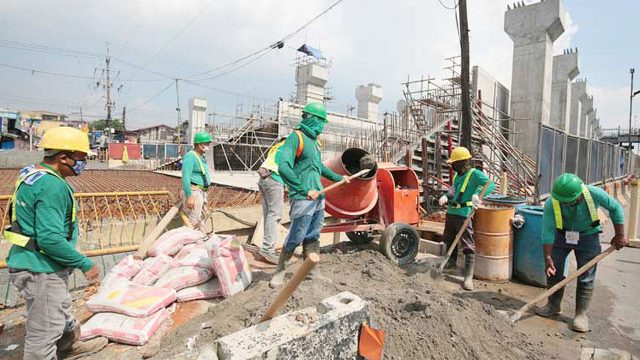
Workers are seen mixing cement at a construction site in Quezon City, May 19, 2020. — PHILIPPINE STAR/ MICHAEL VARCAS

By Beatriz Marie D. Cruz, Reporter

SOME public works projects are expected to experience minor delays due to the spending ban leading up to the midterm elections in May, government contractors said.

“The progress of government construction projects is hinged on funding from the government. Hence, we expect slight delays in the completion of these ongoing projects,” Jason C. Valderrama, founder and president of construction consultancy JCV & Associates, said via Viber.

“There will also be a temporary dip in revenue of government-focused contractors in April and May,” Mr. Valderrama noted.

Ahead of the May 12 elections, the Commission on Elections (Comelec) will impose a ban on public works spending starting March 28, which will run for 45 days. 

The Comelec has exempted from the ban 48 public infrastructure projects being pursued as public-private partnerships.

The case is different for projects that are wholly government-funded, Mr. Valderrama said, adding: “The temporary cessation of disbursement during the election ban will certainly affect their cash flow.”

EEI Corp. Senior Vice-President Earl Jason R. Vistro said the impact of the election spending ban varies by market segment.

“We normally see poll spending bans to impose delays on local-level government projects that have not yet started, which would consequently affect construction activity and revenue for contractors primarily engaged in such type of projects,” Mr. Vistro said in an e-mail.

Mr. Vistro also noted that such projects that have not yet started may be affected in jurisdictions that experience a change in leadership and priorities.

“New projects in both the private and public works sector may also experience some potential delays with permits and processing when there is a change of administration at the local level,” he also said. 

Major infrastructure projects under the Philippine Development Plan, such as the Metro Manila Subway or North-South Commuter Railway, will likely be unaffected, added Mr. Vistro, who is also EEI’s head of government relations, external affairs, safety and security.

Eduardo A. Sahagun, PHINMA Corp. director and executive vice-president for construction materials, said the spending ban will likely pose minimal effects on government projects if contracts were entered into early.

“Normally, the Public Works (department) will award the contracts before the construction ban,” he said via telephone, allowing much of the critical work to have been carried out by the time the ban sets in.

Budget Undersecretary Goddes Hope O. Libiran has said that about 12,900 projects worth P707 billion will be affected by the spending ban. The bulk of these projects are overseen by the Department of Public Works and Highways.

The government hopes to spend the equivalent of 5-6% of gross domestic product annually for infrastructure through 2028.

SC asked to rule on 2025 budget blank items, PhilHealth defunding

PHILSTAR FILE PHOTO

A COURT challenge to the 2025 budget has been filed, with the Supreme Court (SC) asked to rule on the spending plan’s legality by the Marcos administration’s first Executive Secretary.

Former Secretary Victor D. Rodriguez, who is running for the Senate, filed the petition on Monday, alleging before the tribunal that the 2025 General Appropriations Act (GAA), is “illegal” and “criminal.” He named President Ferdinand R. Marcos, Jr. and Congress as respondents.

“It’s a challenge to the constitutionality of the illegal, unlawful, immoral, and unconstitutional 2025 budget… about the Bicameral Conference Committee report containing 28 line items in blank consisting of more or less 13 pages,” Mr. Rodriguez told reporters in a video conference on Tuesday.

“You don’t pass an unenrolled bill blank,” he said, claiming that the 2025 GAA “violated Article VI, Section 27 of the 1987 Constitution of the Philippines when the members of the Bicameral Conference Committee signed and submitted a Report on the 2025 General Appropriations Bill with blanks.”

Asked to comment, Solicitor General Menardo I. Guevarra, who represents the government in legal proceedings, told reporters via Viber: “We shall comment on the petition if directed by the Supreme Court to do so. In the meantime the validity, regularity, and constitutionality of the 2025 GAA is legally presumed.”

The blank line items contained in the budget pertain to projects of the Department of Agriculture, such as irrigation and farm-to-market roads, according to a copy of the budget’s bicameral conference committee report obtained by BusinessWorld.

The petition further claims that the GAA violates the Universal Health Care Act (UHCA) by allocating “not a single centavo” to the Philippine Health Insurance Corp. (PhilHealth).

Legislators have justified the zero subsidy for PhilHealth, citing the health insurer’s P600 billion or so in reserve funds.

“Instead of allocating said excess funds to decrease the amount of member’s contributions and to increase the program’s benefits in accordance with Section 1 of the UHCA, which would have alleviated the latter’s burden of paying premiums to PhilHealth, said excess funds would now be utilized for the operating budget of PhilHealth, thereby deviating from the law’s goals,” according to the petition.

The petition also claims that the 2025 GAA violated Article VI, Section 25(1) of the 1987 Constitution when members of Congress re-aligned the proposed appropriations per the 2025 National Expenditure Program (NEP), which had the effect of increasing the allocation for Congress.

“While the realignment process adopted by the Respondent House of Representatives and Senate maintained the 2025 NEP total proposed budget in the amount of P6.352 trillion, the allotments for some line agencies were modified by the Respondents to accommodate a steep increase in the appropriations for Congress,” it added.

It noted that Mr. Marcos had failed to veto the budget appropriations for Congress.

“The President merely vetoed minute line items in the aforesaid bill specifically proposed programs and projects of the Department of Public Works and Highways (DPWH) amounting to P26.065 billion and Unprogrammed Appropriations amounting to P168.24 billion,” it said.

The petition also alleged the 2025 GAA violated Article XIV, Section 5(5) of the Constitution by not giving education top priority for funding.

Republic Act 12116 reclassified funding for the Philippine Military Academy, the Philippine National Policy Academy and the National Defense College of the Philippines as education funds. These bodies had previously been part of the defense budget, it added.

Funding for the Local Government Academy, Philippine Public Safety College, Philippine Science High School System, and Science Education Institute were also previously classified in other non-education budgets but were included as education items in the 2025 budget.

“In effect, the 2025 GAA was carefully crafted to superficially adhere to the mandate of the 1987 Constitution that ‘The State shall assign the highest budgetary priority to education and ensure that teaching will attract and retain its rightful share of the best available talents through adequate remuneration and other means of job satisfaction and fulfillment,”’ it said.

Stripping out the reclassified education items, the DPWH has the top budget allocation in the 2025 budget with P1.034 trillion.

Mr. Marcos signed into law the 2025 GAA on Dec. 30 but vetoed P194 billion worth of line items that he said were inconsistent with his government’s priorities.

Former President Rodrigo R. Duterte first called attention to the blank items in the Budget in mid-January. — Chloe Mari A. Hufana

Nestlé announces P6-B PHL factory upgrade plan

By Justine Irish D. Tabile, Reporter

NESTLÉ Philippines, Inc. said it set aside P6 billion to expand factory capacity and improve their efficiency.

At a media event on Tuesday, Nestlé Philippines Chief Executive Officer Kais Marzouki said that the investment plans are part of the P18.1 billion earmarked for the Philippines for the 2019-2027 period.

“What you see here over the last few years and a few years going forward is really a constant investment of P2 billion every year,” Mr. Marzouki said.

“This is to increase our capacities, to improve our technologies, to make our factories more efficient, and to respond to increasing demand,” he added.

He said the investments are geared toward better addressing the Philippine market’s nutrition, health, and wellness needs.

Citing issues like child nutrition, Mr. Marzouki said: “60% of what we sell addresses micronutrient deficiencies because many of our products are fortified.”

“All our factories need to be upgraded constantly, and that’s really what our investments are about,” he added.

On Monday, Nestlé was at the Taguig Integrated School for its Nestlé Wellness Campus experience.

Since 2012, the company has been staging Nestlé Wellness Campus events with the Department of Education (DepEd) to teach public school children and parents the importance of sound nutrition and proper health habits.

“Today we cover 26,000 schools. We cover half of all the children from Grade 1 to Grade 6… Every year we increase (the scope of the program) in partnership with the DepEd,” he said.

“We are already in eight regions. The idea is to eventually cover all the regions in the Philippines,” he added.

The investment plan also addresses major sustainability problems in the Philippines.

Laurent Freixe, Nestlé’s global chief executive officer, said that the company has been helping coffee farmers apply regenerative practices, using renewable electricity in their manufacturing facilities, and collecting plastic packaging to promote circularity.

“I think (the Philippines is) one of the best markets we have in terms of engagement end-to-end,” he added.

According to Mr. Marzouki, Nestlé was the first FMCG (fast-moving consumer goods) company to become plastic-neutral in the Philippines.

“That means that we take back as much as we put out in packaging. That’s 24,000 tons every year,” he added.

Mr. Freixe described the Philippines as a big market population-wise, comparable to Mexico and exceeding any European country.

“It’s one of the most promising countries in terms of economic growth… with the population growing, it’s one of the most promising markets we’ve got in the world,” he said.

“(The Philippines) is the sixth biggest market for the group in terms of turnover,” he added.

In 2023, Nestlé Philippines booked P169 billion in revenue. The company has yet to release results for 2024.

Mr. Marzouki said that the average annual revenue growth for Nestlé Philippines’ is around 5%.

According to Mr. Freixe, in the Philippines, “we believe in the cold coffee space… And I think there is a know-how there and many initiatives.”

“We also believe in the potential of pet food, which is still a relatively small category but has huge potential,” he added. The group controls the Purina brand of pet food.

The top 4 Nestlé brands in the Philippines are Nescafé, Bear Brand, Milo, and Maggi, Mr. Marzouki said.

“All our products are specially formulated for Filipino consumers and made in the Philippines. All of them have a different profiles than any other product in the rest of the world because they’re made specifically for the Filipino taste,” he said.

“Our ambition is to grow more big brands and to go into more consumer occasions to better serve our consumers. So our existing categories would have innovation, and we’ll also go into new categories,” he added.

BIR estimates 2024 tobacco revenue at $7.3B

BW FILE PHOTO

BUREAU of Internal Revenue (BIR) Commissioner Romeo D. Lumagui, Jr. on Tuesday gave a preliminary estimate for Philippine tobacco revenue at $7.3 billion in 2024.

“The Philippines, as one of Asia’s developing economies, is home to an active tobacco industry, whose revenues are projected to reach $7.3 billion in 2024,” Mr. Lumagui said in a speech during the 2nd International Tobacco Agricultural Summit.

The tobacco industry itself is projected to grow 2.67% annually between 2024 and 2029, he added.

He said the “strong potential” for revenue has attracted illicit industry entrants.

“Such exploitation is behind the illicit trade in tobacco products, which has been exposed as a major scourge of the economy,” he said.

Illicit tobacco products are substandard and threaten the public’s well-being while unfairly competing with legitimate enterprises.

He cited operations that led to the confiscation of illicit cigarettes valued at P252 million and P17.9 million in separate Davao City raids.

Mr. Lumagui noted the dramatic rise in popularity of vaping, “due in part to the glamor attached to this new form of smoking by its prevalence among celebrities.” — Aubrey Rose A. Inosante

3 John Hay residential leases signed — BCDA

PHILSTAR FILE PHOTO

THE Bases Conversion and Development Authority (BCDA) said it signed three new long-term residential lease deals for units at Camp John Hay.

In a statement on Tuesday, the BCDA said the new 25-year lease agreements were entered into with private individuals.

The leases involve a 427-square-meter (sq.m.) Country Estate unit, a 449-sq.m. Country Homes unit, and 275-sq.m. Forest Cabin.

BCDA President and Chief Executive Officer Joshua M. Bingcang said that the plan is to make Camp John Hay a community with thriving businesses and residents while protecting and preserving the forest.

“More lease agreements with both commercial and residential lessors are expected to be signed soon,” he added.

The BCDA regained control of the former US military recreational facility after the Supreme Court ordered the property’s turnover to the state-run corporation.

Since taking full control of Camp John Hay, BCDA has signed 15-year commercial lease agreements with Amare La Cucina for a 1,500-sq.m. lot and with Top Taste and Trading, Inc. for an 800-sq.m. property.

The BCDA also signed a 25-year residential lease contract for two Forest Cabin units with Metro Pacific Investment Corp. Director Victorico Vargas.

The BCDA tapped Metro Pacific group company Landco Pacific Corp. as the interim manager of The Manor, Forest Lodge, and the CAP-John Hay Trade and Cultural Center.

A consortium of Golfplus Management, Inc. (GMI) and DuckWorld PH has been engaged on an interim basis to oversee the operations and maintenance of the Camp John Hay golf course.

“BCDA is set to conduct a review of Camp John Hay’s over 25-year comprehensive master plan to align it with the United Nations’ Sustainable Development Goals,” it said.

“BCDA aims to replicate the successes of Bonifacio Global City in Taguig and New Clark City in Tarlac by implementing infrastructure projects that will empower the community and by bringing in investments that will provide more employment opportunities and will enable BCDA to contribute more to the state coffers,” it added.

The BCDA has said that it expects investments in Camp John Hay to hit P10 billion. — Justine Irish D. Tabile

Employer’s group revives job creation program

JOBSEEKERS gathered at the Mega Job Fair in a mall on Jan. 18, 2024. — PHILIPPINE STAR/EDD GUMBAN

THE Employers Confederation of the Philippines (ECoP) said that it will revive its Job Opportunities Building Skills (J.O.B.S.) program this year with the goal of including the informal sector.

“That is something that we will pursue this year, and we have been going around together with the Philippine Chamber of Commerce,” ECoP President Sergio Ortiz-Luis, Jr. said at a ceremony marking ECoP’s 50th year Tuesday.

According to Mr. Ortiz-Luis, the J.O.B.S. program was suspended with the change in administration.

“It was revived again through the initiative of the advisers of President Ferdinand R. Marcos, Jr. in the Private Sector Advisory Council and other industry groups,” he said.

Asked for a job generation target, he said, “We have not set a number. If you remember in 2021, we set a 1 million job target. We didn’t meet it at the end of the year because of the spike in COVID, but we reached the 1 million job mark by March 2022,” he added.

“What we would like to be able to do is to create enough jobs to be able to accommodate (the informal sector),” he added.

He said that many services companies are already tapping informal workers.

“What we are doing is matching. We will talk to the companies that are willing to do that,” he added.

The revived program will also target K-12 graduates who he said are experiencing difficulty finding jobs companies tend to hire experienced workers or those who have completed higher education.

For its 50th anniversary, ECoP will also be launching an online job fair platform known as the Employment Connect Opportunities, ECoP Deputy Director General Jelermina Abigail Roxas-Gorospe said.

For the platform, she said ECoP will be working with various institutions, both private and government.

“For the government, of course, we will be working with the Department of Labor and Employment and the Technical Education and Skills Development Authority,” she added.

ECoP’s other programs include its environment, social, and governance program and artificial intelligence chatbot on labor and employment issues. — Justine Irish D. Tabile

Japanese car repair firm studying Pampanga operation

PHILSTAR FILE PHOTO

THE Board of Investments (BoI) said on Tuesday that a Japanese company is considering setting up a quick-stop car repair service in Pampanga by July.

The BoI said it met with Japan’s Anest Iwata A.I.R. Corp. to discuss a planned venture in the Philippines.

“A key focus of the meeting was the company’s joint venture with Kurumaya Complete Auto Care (Kurumaya) for its repair shop operations, specifically for car coating repair services,” the BoI said.

Under the partnership, Anest Iwata plans to provide specialized training to Kurumaya employees.

Anest Iwata also plans to open its first shop in Pampanga and start operations by July. It also expressed plans to expand to other key locations such as Metro Manila and Laguna.

“The company is set to introduce the first-ever quick-stop car repair service in the country, promising same-day completion for repairs,” the BoI said.

Anest Iwata’s auto repair shop in Pampanga will be its first location outside Japan.

According to the BoI, the meeting with Anest Iwata follows an earlier engagement during the Investments Promotion Mission to Japan, led by Trade Undersecretary and BoI Managing Head Ceferino S. Rodolfo in November.

“We affirm Anest Iwata’s positive outlook on the Philippines. With the country’s young population, growing per capita gross domestic product, and projected strong automobile sales — including mid- to high-end brands — there is a significant opportunity for the company’s business to thrive,” Mr. Rodolfo said. — Justine Irish D. Tabile

Filipino soldiers to train on US Typhon missile system; no live-fire exercises

PHILSTAR FILE PHOTO

PHILIPPINE soldiers will train on the US military’s intermediate range missile system during unilateral army drills next month as part of preparations for bigger exercises with US counterparts, a military official said on Tuesday.

A platoon of about 20 Filipino soldiers from the army artillery regiment will train with the US Army Pacific’s First Multi-Domain Task Force on the Typhon missile system in mid-February, Philippine army spokesperson Louie Dema-ala said.

The exercise will focus on the “payload delivery system” and will highlight the system’s capabilities, he said, adding that it would not include live-fire exercises. “As long as the MRC (mid-range capability) is here, we maximize its utilization to train our personnel with these new technologies,” he told a news briefing.

The Typhon missile system was deployed by US forces to the Philippines in April last year as part of their Balikatan or “shoulder-to-shoulder” military exercises, and has since stayed in the country, angering China which has repeatedly called for its withdrawal.

The launchers have been redeployed to a new location in the Philippines that officials declined to disclose, Reuters reported last week.

Tomahawk cruise missiles used in the launchers can hit targets in both China and Russia from the Philippines. The SM-6 missiles it also carries can strike air or sea targets more than 200 km away.

The Philippines last year expressed interest to acquire the launchers as part of its modernization program.

Philippine military spokesperson Francel Margareth Padilla-Taborlupa on Tuesday said preparations were under way for this year’s annual Balikatan exercises, which are billed to be one of the biggest.

Security engagements between the Philippines and treaty ally the US have intensified in recent years, as both countries aim to counter what they see as an increasingly assertive China.

Strong ties between the two are expected to continue under US President Donald J. Trump, whose Secretary of State Marco Rubio last week reaffirmed Washington’s “ironclad” commitment to the Philippines under their decades-old Mutual Defense Treaty.

Also on Tuesday, the Philippine Coast Guard (PCG) accused a Chinese vessel of shadowing its ship that was trying to rescue a distressed fishing boat near the Zambales coast.

It said China Coast Guard-3304’s shadowing efforts had hindered BRP Cabra from retrieving the body of a deceased fisherman from the boat.

Upon reaching the fishing boat 70 nautical miles (129.6 kilometers) southwest of Silanguin Island, Zambales, the team manning BRP Cabra “discovered that the fisherman had no pulse and was already deceased.”

“To transport the body of the fisherman back to Subic, Zambales, BRP Cabra bravely navigated through the heavy waves to retrieve the deceased using its crane,” it said.

Chinese Coast Guard vessel CCG 3304, despite being aware of the distress call from the Filipino fishermen, engaged in shadowing that hindered the PCG vessel’s efforts to recover the body.”

DEFENSE ECOZONE
Meanwhile, Senator Juan Miguel F. Zubiri said the Senate’s approval on Monday of a bill that seeks to set up a one-stop economic hub in Bataan for defense industry investors would fast-track Manila’s goal of developing a self-reliant defense posture and boosting the local production of raw materials.

“This approval will go a long way towards developing a fully self-reliant defense posture, where our armed forces are supplied by our own homegrown defense industry,” the senator, who sponsored Senate Bill No. 2900, said in a statement.

“In the interest of self-reliance and in line with our Filipino-first policies, we made sure to require that special defense economic zone locators acquire a percentage of their raw materials from local producers,” he said.

The measure will set up a 370-hectare special defense economic zone in Limay, Bataan and give locators value-added tax exemptions for imports and local purchases and an income tax holiday.

These defense industry companies must pay a 5% final tax on their gross income, to be shared by Bataan province, the Special Defense Economic Zone Authority and the Armed Forces of the Philippines for its pension fund.

Philippine President Ferdinand R. Marcos, Jr. in October signed into law a bill that seeks to boost the country’s defense program through investments in local defense equipment and manufacturing amid tensions with China.

It allows the Defense department to develop a self-reliant defense posture program that will encourage manufacturers to produce weapons and defense systems in the country for local use and exports. It will give the agency P1 billion in funding.

Manila and Beijing have repeatedly clashed in the South China Sea, accusing each other of aggressive behavior involving their ships and of damaging the marine environment.

The Philippines, one of the weakest in the world in terms of military capability, is important to Washington’s efforts to push back against China, which claims the South China Sea almost in its entirety. — John Victor D. Ordoñez and KATA with Reuters

PHL midterm elections at risk from deepfakes, political analysts say

PHILSTAR FILE PHOTO

By Kenneth Christiane L. Basilio, Reporter

THE PHILIPPINES is ill-equipped to combat misuse of artificial intelligence (AI) by political candidates, who could undermine the integrity of midterm elections in May, political analysts said.

“The use of generative AI (Gen AI) in elections presents a significant issue due to its potential misuse for disinformation and influence operation,” Rona Ann V. Caritos, executive director at election watchdog Legal Network for Truthful Elections, said in an e-mail.

Nearly half of the world’s population flocked to polling stations last year to cast their votes amid technological strides in Gen AI, which can create deepfakes — artificial videos in which images are combined to create footage that depicts events, statements or action that never really happened.

The United Nations Development Programme a 2024 report said Gen AI misuse is a rising threat to democracy because it could be used for electoral disinformation.

“Past elections in countries such as Indonesia, India, Nigeria, Slovakia and the US have demonstrated how deep fakes and AI-generated content can disrupt democratic processes,” Ms. Caritos said in an e-mailed reply to questions.

The 2025 midterm elections in the Philippines are crucial for President Ferdinand R. Marcos, Jr., whose political allies control majority of both Houses of Congress. He risks having his policy agenda sidelined if administration lawmakers fail to get re-elected.

“Midterms are always seen as a referendum of the administration and are also used by political forces in the Philippines to consolidate in preparation for the presidential elections,” Arjan P. Aguirre, who teaches political science at the Ateneo de Manila University, said in a Facebook Messenger chat.

Filipinos will pick more than 300 congressmen and fill 12 of the 24 seats in the Senate.

AI can be used to create and moderate social media content, analyze public sentiment and use targeted campaigns for specific voters.

“AI is a mere tool that can be maximized for the good or weaponized for the bad,” Danilo A. Arao, who started election watchdog Kontra Daya, said via Messenger chat. “The tools are readily available and can be easily maximized.”

Candidates could use AI to craft a campaign based on voter sentiment, Dominic Vincent D. Ligot, founder of CirroLytix Research Services, said in an e-mail.

“They could conduct their own surveys and run algorithms to determine where they can secure votes from the general population,” Allan C. Tan, chief AI scientist at startup Predictive Systems, Inc., said by telephone.

He said threats would come from “bad actors” who would likely create deepfakes against their political rivals. “It’s easier for them to create fake videos and fake photos. And if the voting population is not mature enough to recognize deepfakes, they might believe them,” he said in Filipino.

“Deepfakes are becoming the most popular AI form to malign people,” Mr. Aguirre said.

Mr. Tan said that AI could also be used to automate troll farms and disinformation drives meant to malign political opponents and influence public opinion.

“Traditionally, in previous elections, you had these keyboard warriors,” he said. “They can create spam bots. Imagine the harm it could do if it’s automated now.”

CONTENT REGULATION
AI advancements would likely result in intensified propaganda efforts by political candidates, Mr. Aguirre said. “They could publish more convincing work that can hook the minds of unsuspecting voters.”

“The current legal and regulatory framework in the Philippines is not sufficient to put a stop to the spread of false AI-generated content,” Commission on Elections (Comelec) Chairman George Erwin M. Garcia told BusinessWorld in a Viber message.

He said their jurisdiction over AI content moderation is limited during the election period, leaving a big gap in the oversight over politicians’ digital campaigns.

In September, the Comelec issued Resolution No. 11064, which prescribes the requirements of AI use for political campaigns, while also banning the use of deepfakes.

“It lays down the registration, transparency and disclosure requirements for the use of AI technology in digital election campaigns and prohibits the misuse not only of AI and deepfakes in the upcoming national and local elections, but the misuse of social media and internet technology as well,” Mr. Garcia said.

A measure that seeks to combat election-related disinformation by outlawing the operations of troll farms was filed at the House of Representatives in December. It imposes a jail term of as long as 12 years and a fine of as much as P2 million on violators, while also disqualifying candidates who willingly benefit from disinformation campaigns.

Enacting an anti-fake news law is “not a good idea” because it could be used to suppress critics, Mr. Arao said. “Curbing disinformation through legislative intervention should not be done as this is tantamount to censorship.”

Content regulation policies used in other countries could lead to censorship and abuse, Ms. Caritos said. “Content regulation involves broad and ambiguously worded definitions of what constitutes false content or disinformation and is used in conjunction with criminal sanctions.”

“Transparency initiatives are less draconian and effective in addressing the problem of disinformation,” she added.

The government should look at conducting educational campaigns about AI misuse, while also pushing a transparency framework on AI use, Mr. Ligot said.

Comelec, TikTok partner vs fake news before midterms

STOCK PHOTO | Image by memyselfaneye from Pixabay

By Chloe Mari A. Hufana, Reporter

THE Commission on Elections (Comelec) and TikTok have signed a memorandum of understanding to campaign against misinformation ahead of Philippine midterm elections in May.

TikTok also launched a Philippine-specific election tab on its platform called Election Center, working with election watchdogs to reach out to Filipino voters.

“By reaching out to the Filipino electorate through our platform and specifically through the Election Center, we empower them not only to make their voices heard on the platform but to also make their voices heard in the polling booth come election day,” TikTok Public Policy Manager Peachy A. Paderna told a news briefing in Taguig City on Tuesday.

Under the deal, TikTok will disallow monetization and ads from politicians and candidates.

“We are not banning political expression on the platform; people are free to express themselves politically on TikTok but we don’t allow politicians, governments and political parties to make money on the platform,” she said. “We also don’t allow the monetization of political content.”

To do this, TikTok has 21 fact-checking partners globally and about 40,000 moderators to check misinformation and disinformation.

“We are continually partnering with the Comelec, and we are in constant conversation with them on the implementation of their rules and regulations, including the registration of social media accounts,” she added.

Comelec Chairman George Erwin M. Garcia said the election body and video-sharing platform would hold activities as part of the public information campaign.

TikTok creators and influencers, politicians and candidates will undergo briefings about the rules of the platform. A podcast about voter education is also in the works for this year’s midterm elections.

Mr. Garcia said they are also working with the Philippine branches of tech giants Google and Meta in fact-checking and preventing misinformation and disinformation.

While there are no written agreements with other social media platforms, Comelec spokesman John Rex C. Laudiangco said they have agreed on a fact-checking process.

“Our agreement is that, insofar as suspension and takedown, they will wait for the Comelec’s go-ahead before they act,” he said. “What’s good about this is that when we look at our rules and community policy, they align well. So, we won’t have a hard time.”

He said there are about 49 million voting-age Filipino TikTok users.

Filipinos will choose their congressmen, 12 of the 24-member Senate, mayors, vice-mayors and members of city councils on May 12.

Food security emergency likely to be declared within two days

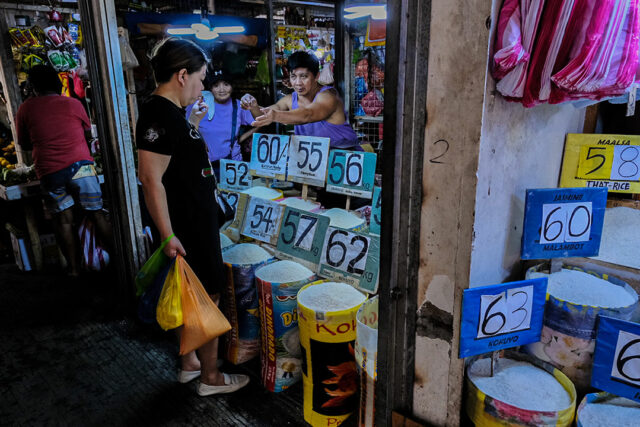
A customer buys rice at a stall in Paco Market, Manila, April 6, 2024. — PHILIPPINE STAR/RYAN BALDEMOR

THE Philippine government would likely declare a food security emergency within two days to enable the local rice agency to release buffer stocks amid stubbornly high rice prices, a Trade official told a House of Representatives committee on Tuesday.

The National Price Coordinating Council (NPCC) is close to finalizing a resolution that would allow the Agriculture secretary to declare the emergency, Trade Assistant Secretary Agaton Teodoro O. Uvero told congressmen.

Mr. Uvero said they finalized on Monday a version of the rice order that “everyone’s fine with.” “We need to follow the bureaucracy involved,” he said in Filipino.

When asked whether the government could release the order within the next 48 hours, Mr. Uvero said “we can probably do it.”

Republic Act (RA) No. 12708, the Agricultural Tariffication Act, grants the Agriculture secretary authority to declare a food security emergency, in cases of rice supply shortages or extraordinary price spikes.

“If in case the food security emergency is declared, then we can start unloading our stocks, whether they are regular or aging stocks,” National Food Authority (NFA) Administrator Larry R. Lacson told lawmakers in Filipino.

He said the rice agency currently has more than 760,000 bags of rice ready to be sold once the Department of Agriculture declares a food emergency.

The NFA would sell aging rice stocks at P29 per kilo, while it would barter regular stocks at P38 per kilo. “There are around 300,000 bags of aging stocks and 400,000 plus, almost 500,000 bags, of regular stocks,” said Mr. Lacson.

Also on Tuesday, Mr. Lacson said the current funding provided to NFA is not enough to cover the 15-day rice buffer stocking requirement under RA No. 12708. The law increased the rice agency’s minimum rice reserve level to 15 days’ worth of demand from the previous nine days.

“We would need P14.2 billion just to cover nine days,” said Mr. Lacson.

The NFA was provided with only P9 billion for buffer stocking this year, which could cover rice needs of Filipinos for six days, Ms. Quimbo pointed out. — Kenneth Christiane L. Basilio

House approves tobacco tracking bill on 2nd reading

IDIN EBRAHIMI-UNSPLASH

THE House of Representatives approved on second reading a measure that will introduce a track-and-trace system for tobacco products, a proposal seen deterring smuggled cigarettes.

In a voice vote, House Bill (HB) No. 11286, which seeks to strengthen the cigarette tax administration by implementing a track-and-trace system for all tobacco products, advanced in the chamber.

Under the bill, cigarettes, vapes, and tobacco products would need to be affixed with a stamp that has “physical or digital features,” while requiring companies to register equipment needed in making cigarettes and electronic vapes with the government.

“The illicit tobacco trade in our country is alarming. One in five sticks of cigarettes did not pass the quality control, and is more likely to cause death,” Party-list Rep. Ray Florence T. Reyes, who sponsored the measure, told the House floor.

“These unregulated products expose consumers to greater health risks,” he added.

Meanwhile, the House ways and means panel is eyeing an annually alternating tax rate hike scheme on cigarette products, while also tweaking the tax rate over all tobacco products.

The House tax committee made public on Tuesday HB No. 11360, which seeks to implement an odd-and-even numbered tax rate increase for cigarettes in an effort to curb the surge of illicit tobacco products in the Philippines.

“The rate of tax imposed shall be increased by 2% every even-numbered year effective on Jan. 1, 2026, and 4% every odd-numbered year, effective on Jan. 1, 2027,” the bill stated, changing the tax rate structure across all tobacco products.

“[The increase shall be implemented] until Dec. 31, 2035, provided that after the ten-year period, a review of the tax imposed and its impact on revenue collections, health costs, and prevalence of smoking shall be conducted,” it added.

Heated tobacco products would be charged with a P41 tax per pack of 20, with vape and cigarettes being imposed with a P66.15 tax per pack, according to the proposal.

Discussions over the levied tax rates for cigarettes have taken a front seat at the House tax panel, which is eyeing to reduce excise tax losses over the tobacco industry due to smuggling.

Excise tax rates for heated tobacco, cigarettes, and vape products are levied a yearly 5% tax rate increase from 2024, according to the Bureau of Internal Revenue’s (BIR) website.

“BIR revenue data show that further successive increases in tax rates have failed to result in higher collections,” Euvimil Nina R. Asuncion, revenue operations group director for the Finance department, told lawmakers on Monday.

The BIR was P52 billion short of its P185 billion tobacco excise tax collection target last year, collecting only P134 billion in 2024.

The House tax panel earlier eyed imposing a pause on the yearly excise tax rate increase over tobacco products, a proposal bucked by health advocates.

HB No. 11360 would lower the taxes collected from tobacco products, Anthony C. Leachon, former Department of Health advisor and convener of health advocacy group Sin Tax Coalition, said in a statement sent to BusinessWorld.

“We project that this will lead to P29 billion of forgone revenue for public health and tobacco farmers from 2026 to 2030 and will make cigarettes and electronic smoking devices more accessible to the youth and the poor,” he added. — Kenneth Christiane L. Basilio