Home Blog Page 1559

Megawide Construction Corp. to conduct Special Stockholders’ Meeting via remote communication on March 27


Spotlight is BusinessWorld’s sponsored section that allows advertisers to amplify their brand and connect with BusinessWorld’s audience by publishing their stories on the BusinessWorld Web site. For more information, send an email to online@bworldonline.com.

Join us on Viber at https://bit.ly/3hv6bLA to get more updates and subscribe to BusinessWorld’s titles and get exclusive content through www.bworld-x.com.

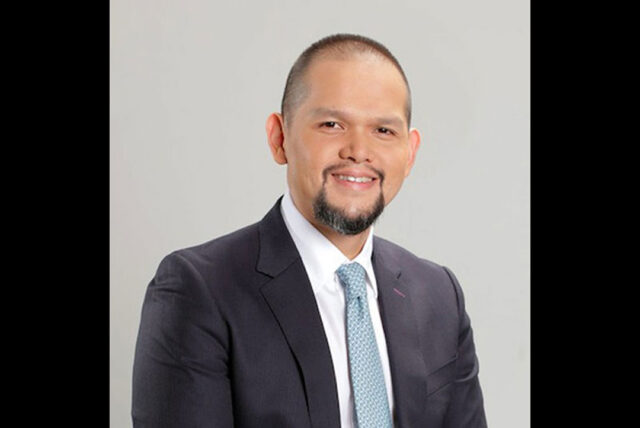
John Paul Ang named director of Ginebra San Miguel

Philippine star file photo

LISTED LIQUOR MANUFACTURER Ginebra San Miguel, Inc. (GSMI) has appointed John Paul L. Ang as director.

Mr. Ang, the eldest son of tycoon Ramon S. Ang, was elected to fill the vacancy left by Francisco S. Alejo III, whose resignation took effect on Jan. 31, GSMI said in a regulatory filing on Wednesday.

Mr. Ang is the president, chief operating officer, and director of diversified conglomerate San Miguel Corp. (SMC).

He holds directorships in other listed companies, namely Petron Corp., San Miguel Food and Beverage, Inc., and Top Frontier Investment Holdings, Inc.

Mr. Ang is the president and chief executive officer of Eagle Cement Corp., San Miguel Food and Beverage, Inc., Southern Concrete Industries, Inc., and South Western Cement Corp.

He is also the president of San Miguel Equity Investments, Inc. and the vice chairman of San Miguel Global Power Holdings Corp.

Additionally, he serves as a director in several companies, including SMC SLEX Inc., Aerofuel Storage Management Inc., Argonbay Construction Co., Inc., San Miguel Aerocity Inc., and KB Space Holdings, Inc., among others.

Mr. Ang holds a Bachelor of Arts degree in interdisciplinary studies from Ateneo de Manila University.

On Wednesday, GSMI shares fell by 0.20% or 60 centavos to P299 apiece, while SMC shares were unchanged at P83.50 each. — Revin Mikhael D. Ochave

Controlling the narrative

he Presidential Communications Office (PCO) has proposed the creation of a regulatory body to monitor fake news and identify troll farms. Meanwhile, in the House of Representatives, House Bill No. 1177 seeks to impose a 12-year jail term and a P2-million fine for operators of online troll farms. At the same time, a House committee is pushing for the registration of all social media accounts.

The House also wants to establish a regulatory body — a task force — to investigate and prosecute troll farms. Additionally, social media companies that fail to remove deceptive content would face fines, while whis-tleblowers exposing troll farm activities would receive protection. These measures aim to curb disinformation, particularly online.

The spread of misinformation is a legitimate concern that needs to be addressed both locally and globally. However, measures to combat disinformation proposed thus far risk government overreach and raise serious concerns about their implications on constitutional freedoms, free speech, and democracy.

History has shown that when governments attempt to regulate the flow of information, the line between moderation and censorship often becomes dangerously thin. Even well-intentioned policies can quickly transform into tools for suppressing dissent and controlling narratives. If given a choice, I would rather risk disinformation than institutionalize censorship.

In a democratic society, free speech must be protected, even when it includes criticism of the government and other powerful sectors. The challenge lies in distinguishing between disinformation and legitimate discourse. Frankly, a government regulatory body may not be the best entity to make that distinction.

There are no guarantees that a regulatory body tasked with monitoring social media — or traditional media, for that matter — could or would remain impartial. The subjectivity of defining “fake news” opens the door to potential abuse, particularly in a political climate where disinformation laws can be weaponized to silence opposition.

A look back at Martial Law (1972-1986) reveals troubling similarities to modern regulatory proposals. During that period, government agencies were used to control media, suppress dissent, and manipulate public discourse. The Media Advisory Council (MAC), created through Presidential Decree No. 191, required mass media entities to obtain a Certificate of Authority to Operate. In effect, it also functioned as a censorship board in the early years of Martial Law, determining what media could be published.

The proposed social media regulatory body could serve a similar function today. Moreover, what would stop the government from extending its power to traditional media as well?

Disinformation is not limited to social media, and a few high-profile cases involving print or broadcast media could justify further regulation.

During the Martial Law years, journalists were also required to register as media practitioners and obtain Press and Media IDs from a government office. This is reminiscent of today’s proposal for mandatory social media account registration, which raises concerns about mass surveillance.

It is thus alarming that a House committee is proposing a law on mandatory social media registration, akin to the SIM Registration Act. While the goal may be to hold users accountable and curb anonymous trolling, such measures pose serious privacy risks.

Requiring users to disclose their identities could lead to increased government surveillance, data breaches, and potential harassment of individuals engaging in critical discourse. Furthermore, anonymity is sometimes necessary for whistleblowers, journalists, and activists who expose corruption and human rights abuses. Stripping online anonymity under the guise of combating disinformation could have chilling effects on press freedom and civic engagement.

Moreover, the Philippines already has existing legal mechanisms to combat disinformation and hold malicious actors accountable. The Revised Penal Code covers libel and slander, while the Cybercrime Prevention Act of 2012 includes provisions on cyber libel. These laws allow individuals, including government officials, to seek legal remedies if they are defamed or harmed by false information online.

Additionally, the Data Privacy Act protects citizens from data breaches and unauthorized access to personal information, which are often tools used in disinformation campaigns. Furthermore, social media platforms have their own community standards and mechanisms for flagging, reporting, and removing harmful content. Strengthening the enforcement of these existing laws, rather than creating a new regulatory body, would be a more effective and less intrusive solution.

Malaysia’s experience with its Anti-Fake News Act, enacted in 2018 and repealed in 2019, serves as a cautionary tale. The law criminalized the creation or dissemination of “fake news,” imposing penalties of up to six years in prison and hefty fines. However, its broad definition allowed the government to target political opponents and suppress unfavorable reporting.

Similarly, Singapore’s Protection from Online Falsehoods and Manipulation Act (POFMA) granted government ministers the authority to determine falsehoods and order corrections or removals of online content. Critics ar-gue that the law has been used to suppress dissent and target government critics.

Germany’s Network Enforcement Act (NetzDG) requires social media companies to remove illegal content swiftly or face substantial fines. While the law has reduced hate speech, critics say it encourages over-censorship, as companies remove content preemptively to avoid penalties.

In Russia, recent laws impose severe penalties for spreading “false information” about the military, including fines and imprisonment of up to 15 years. These laws have reportedly been used to crack down on independent journalism and silence critics of Russia’s actions in Ukraine.

Tunisia’s Decree 54 criminalizes the spread of “fake news” deemed harmful to public safety or national defense, carrying penalties of up to five years in prison. Critics argue that the decree is being used to suppress free expression and target political opponents.

These examples highlight the fine line between combating misinformation and infringing on fundamental freedoms. While governments justify such regulations as necessary for public order and national security, they can become tools for suppressing dissent and controlling political narratives. I believe that any regulatory body here for social or traditional media could be weaponized in similar ways.

Instead of heavy-handed regulation, I think a more sustainable approach to countering fake news is education. The government should invest in nationwide media literacy programs to equip citizens with critical thinking skills to dis-cern credible information from falsehoods. While this is easier said than done, it is not impossible.

Finland, often cited as a model for countering disinformation, has integrated media literacy into its school curriculum, teaching students how to fact-check and analyze sources. The Philippines can follow suit by introducing similar programs in schools and promoting responsible digital citizenship in every way possible.

Instead of creating a regulatory body for social media, the government should instead work closer with platforms to improve content moderation policies, enhance transparency in political advertising, and encourage self-regulation. Collaborative approaches, such as independent fact-checking partnerships, algorithmic transparency, and user empowerment tools, are more effective in tackling disinformation while preserving free speech.

The dangers of government overreach, coupled with existing legal remedies and the proven effectiveness of media literacy, make compelling the case against a regulatory body for social media. While combating disinformation is crucial, the proposed measures risk infringing on fundamental freedoms and setting a dangerous precedent for state control over online discourse.

Rather than hastily implementing proposed measures, the government must conduct thorough studies, consult stakeholders — including journalists, legal experts, and civil society groups — and explore less invasive alternatives. The fight against fake news should not compromise the very democratic values it seeks to protect.


Marvin Tort is a former managing editor of BusinessWorld, and a former chairman of the Philippine Press Council

matort@yahoo.com

PHL nonlife insurers’ premiums may rise 10-15% this year as catastrophes push up firms’ reinsurance costs

PHILIPPINE NONLIFE insurers could increase their general minimum premium rates by 10% to 15% this year as natural catastrophes have affected the reinsurance market, resulting in losses, an industry group said.

“Sometimes, we really have to adjust because as it is, it’s hard to write losses. It’s not sustainable if insurers will continue to price at the same level even though your cost of reinsurance is already very high,” Malayan Insurance Co., Inc. Chief Operating Officer and Philippine Insurers and Reinsurers Association (PIRA) Trustee Eden R. Tesoro said at a press briefing on Wednesday.

PIRA Executive Director Michael L. Rellosa said the group has to inform the Insurance Commission (IC) that premiums will increase.

“We can’t just increase our prices. It has to be approved by the regulators. And even if you can, of course, you have to balance with the market conditions,” he said.

Based on seasonal renewals of reinsurance programs, which are usually in December, April, and July, PIRA could notify the IC about a rise in premium prices by next month, Mr. Rellosa added.

Ms. Tesoro said premiums will likely continue to increase in the next few years but with “little dips,” depending on each company’s portfolio and risks.

“Some companies are motor heavy, some companies are fire heavy, and some companies are the same. But what I can see is that perhaps the pricing will stay with small dips, generally speaking. Again, that may or may not be true for specific clients,” she said.

“One of the reasons why we have to be cautiously hopeful is because of climate change, and while we say that even if globally the prices of reinsurance seem to plateau, ultimately it comes down to each particular company’s portfolio and how exposed you are. So, reinsurers will look at that,” Ms. Tesoro added.

Meanwhile, investments of nonlife insurers could also be affected by US President Donald J. Trump’s administration’s trade policies, she said.

Mr. Rellosa said this could also contribute to higher premium rates.

“It’s going to affect trade, and if it affects trade, obviously, it’s going to affect the economy. Anything that affects the economy, we feel in the insurance industry. Either we insure less goods or [increase] the cost. For example, prepar-ing stuff locally would be more expensive because we import all this stuff. So, an increase in tariffs should also increase prices,” he said.

The combined net premiums written of nonlife insurers grew by 10.49% year on year to P71.84 billion in 2024, latest IC data based on submissions of 55 out of 59 licensed firms showed. — Aaron Michael C. Sy

Mobile app users in PHL more vulnerable to malware

SARA KURFESS-UNSPLASH

By Beatriz Marie D. Cruz, Reporter

FILIPINO mobile application users experience malware attacks more often than the global average, with brands needing to work double time to increase their safeguards against fraud as attacks become more advanced, according to mobile app security company Appdome.

The average infection rate of malware on Philippine mobile devices is at 16%, higher than the global average of 9%, Appdome Co-Creator and CEO Tom Tovar said in an interview with BusinessWorld.

“I think that’s in part due to the mobile-first nature of the Filipino market. Filipinos tend to lean into technology very quickly,” Mr. Tovar said.

Filipinos use an average of 11 mobile applications per day, higher than the global average of six apps and the US average of five, he said. A recent report by consumer intelligence firm Meltwater and creative agency We Are So-cial also showed that Filipinos spend an average of eight hours and 52 minutes daily on the internet, ranking third worldwide.

“You’re more likely to [attract] more opportunities for a malware maker to get something on your device if you’re downloading more apps.”

Mr. Tovar said 60% of the malware that infected Philippine mobile devices were spyware attacks, or those that log users’ keystrokes, clicks, and logins. Around 30% were harvesters, or attacks that steal usernames, passwords, and credit card information, while the remaining 10% were banking and payment trojans, which compromise transactions.

Filipino mobile users are now more concerned about attackers stealing their personal information, money, and other sensitive data, he said.

“If you look at the consumer sentiment, Filipino consumers care very much about data security and data privacy, but they care a lot more about protection from frauds, scams, account takeovers, and things that would take their money and identity.”

Around 88% of Filipinos said they favor preemptive anti-fraud measures when transacting through apps over reimbursement, Appdome data showed.

However, firms are “too slow” to keep up with the increasing sophistication of malware attacks, Mr. Tovar said.

“I think they’re outgunned and outclassed. They’re focused on data protection and compliance, which is great, but it’s not where the main attack surface is. The main attack surface is in fraud, scams, in malware, and in AI (artificial intelligence) deepfakes.”

AI has also increased the proliferation of polymorphic attacks, or those that can dynamically adjust to evade detection, he said.

“In the old world, you’ll get a trojan or malware installed on a device, and whatever it does, it does,” Mr. Tovar said. “But these days, with AI agents, they have the ability to shape shift in the middle of the process.”

New mobile app launches are expected to nearly double every year due to AI and cybersecurity teams will need to keep up to ensure the safety of their users, he said.

“They need to put AI at every single step in the defense lifecycle or they’re just going to be outrun by everybody else.”

Restaurant Review

Bistrot Le Coucou: begrudgingly delicious

By Joseph L. Garcia, Senior Reporter

WE’RE NOT placed so high up in the world to immediately take expensive things at face value: we’re not too shy to dunk on an expensive restaurant now and then. We were very, very prepared to dunk on Bistrot Le Coucou, the latest offering from the Nikkei Group, but as we sipped on their excellent martini and munched on their steak during their Feb. 12 opening, we were begrudgingly sold.

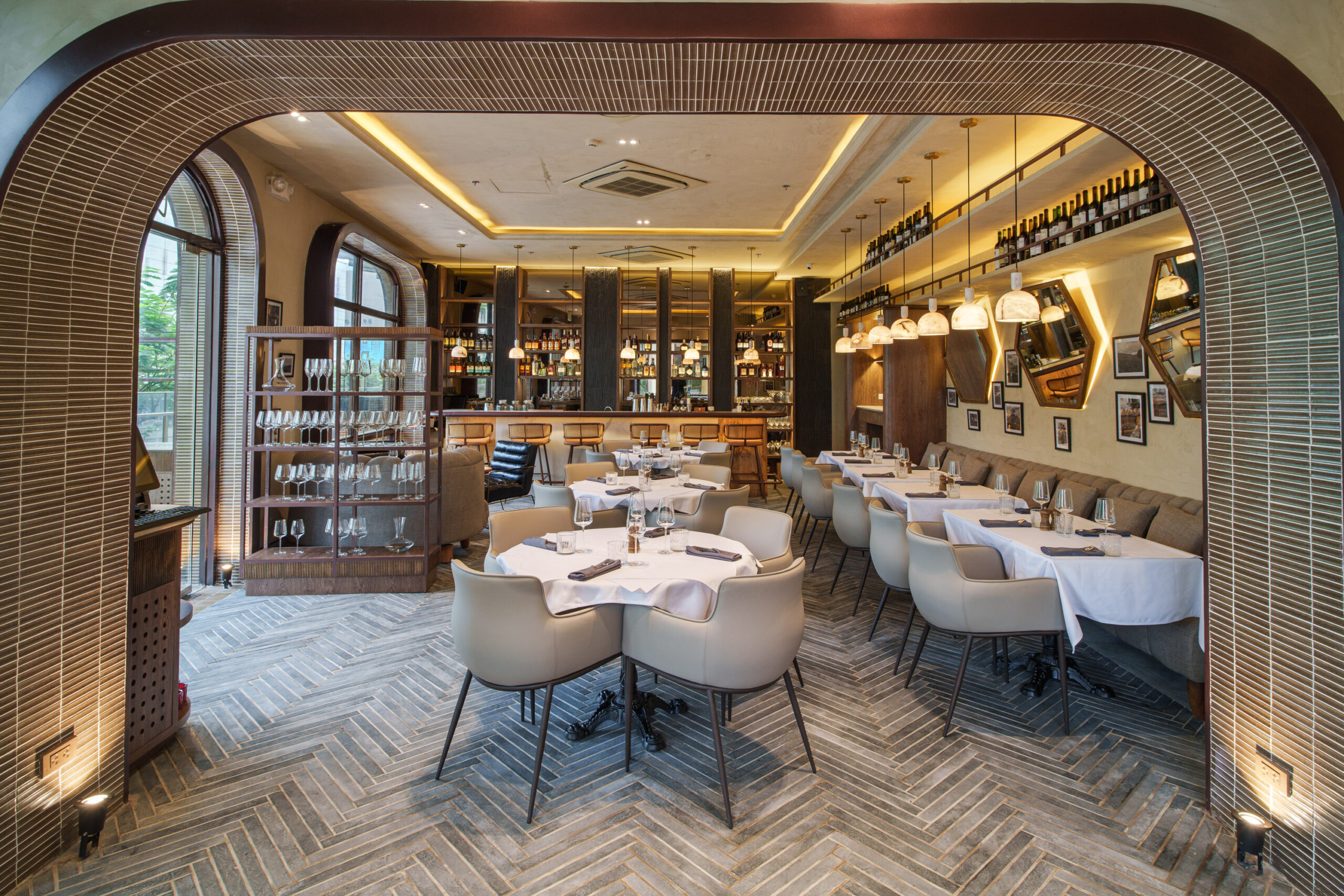
A popular legend since dismissed by linguists was that during the Battle of Paris in 1814, Russian occupiers shouted “Bistro!” (“quickly,” in a Russian transliteration) to their waiters. Other linguists say it derives from an old term for “innkeeper.” “Coucou,” meanwhile, is an informal greeting in French. All these elements together might translate to an informal experience, but Bistrot Le Coucou had waiters waiting behind us, white tablecloths, and very chic interiors with stone, wood, and white brick.

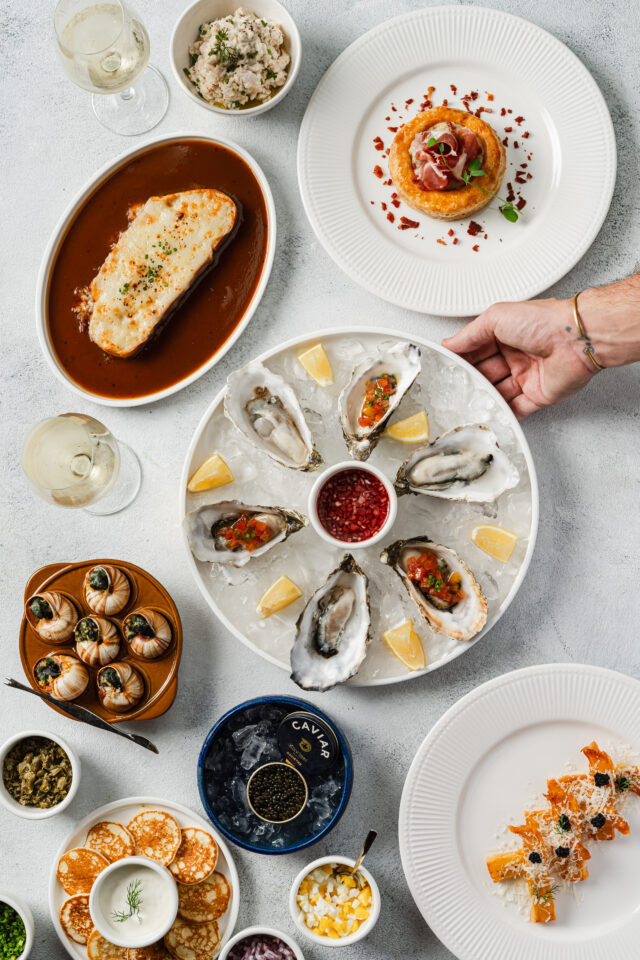
The Pomme Frites (fries) cost P350, and when it arrived at our table, it was about a handful of thick fries with a sprinkling of cheese and caviar. It looked like a caricature of rich-people food, but as we chewed, we be-grudgingly admitted that the high-low mix of caviar and fries should be a norm in the restaurant world. We liked it a lot.

The next course, a Melted Cheese (Beillevaire, according to the menu) was served with figs, caramelized shallots, and roasted cashews, cost P1,450. With some satisfaction, we noted that it could be done better. We found the Steak Tartare tangy, and ate it atop fried spinach leaves. Our reverse snobbery failed when we tried the melted cheese on top of the fried spinach leaves. Foiled again! The sweetish, creamy cheese was a great contrast to the crispy spinach.

The Escargot (snails) was irritatingly affordable at P550, and good, too. It was awake in its freshness, with a bit of a grassy note from the excellent butter sauce. We’re also quite impressed that the bread they served al-most matched the bread we had in Paris.

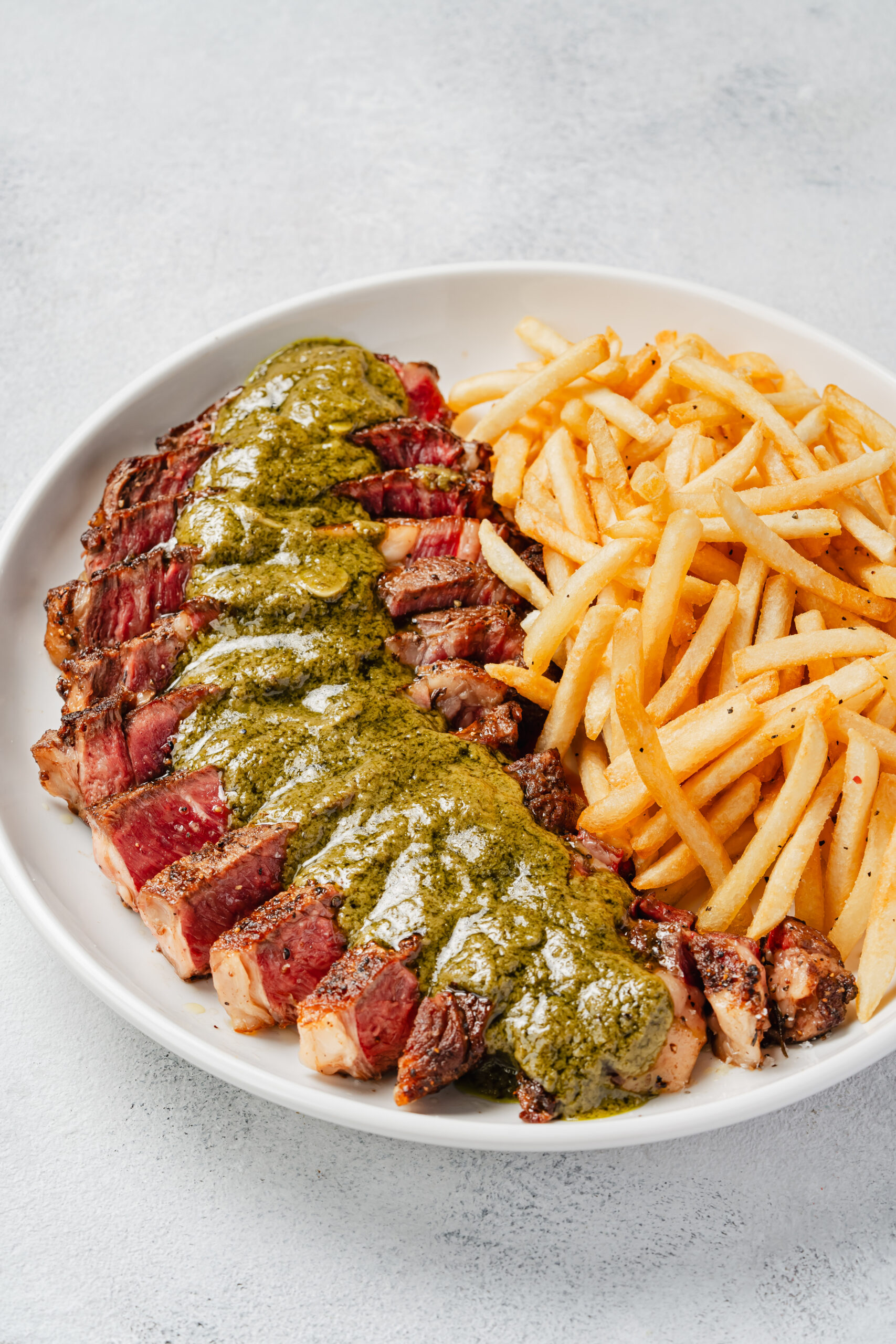
We were excited for the steak: The one-kilogram Entrecôte and Frites, a ribeye caramelized in butter and topped with roasted garlic and their version of the butter-based Café de Paris sauce. The ribeye was not as yielding to our knife (it’s not supposed to be; and look at us, suddenly too fancy to cut more than once). Otherwise, it was begrudgingly good and excellently rich. Will it beat the steak from other Manila steakhouses? Probably not — but it can look them in the face.

The Nikkei Group, with restaurants like Nikkei (Japanese-Peruvian), Alma, Big Belly (burgers), and Sala and Terraza Martinez (these Spanish restaurants are fast gaining a reputation as some of the city’s best), have an anointment of cool upon them, thanks to the chic crowd going in and out of them, not to mention their stamp on some of the country’s prime real estate. Chief Executive Officer and co-founder Carlo Lorenzana saw a gap in the number of French restaurants in the country, and decided to do one with classic Parisian dishes after vetoing a New York-style one. He said, “We want a good, cool dining experience, but not lose ourselves too much in trying too hard to be cool.”

We left the restaurant thinking we were a bit cooler: the food was great (albeit expensive — but one pays the price for cool, besides, a ticket to Paris is still more expensive), and the table of famous people near ours didn’t hurt either.

Bistrot Le Coucou is at the 2/F View Deck, One Bonifacio High Street Mall, PSE Tower, BGC, Taguig. Currently on soft opening, it is open for lunch from 11:30 a.m. until 3 p.m.; then for dinner from 5 to 10 p.m. from Sunday to Thursday, and until 11 p.m. on Fridays and Saturdays.

SLI says Sta. Monica Lake Residences to reflect Manaoag’s religious heritage

LISTED PROPERTY DEVELOPER Sta. Lucia Land, Inc. (SLI) said its Sta. Monica Lake Residences project in Pangasinan will have a Spanish-Mediterranean design reflecting Manaoag’s religious heritage.

“Set to be the first lake community in Manaoag, Pangasinan, Sta. Monica Lake Residences is one of the latest flagship projects of Sta. Lucia Land in North Luzon,” SLI said in an e-mail statement on March 3.

Manaoag is known as the Pilgrimage Center of the North and has a rich religious heritage and historical background.

The project will feature a man-made lake with a lighthouse.

The lake property will include a clubhouse with a swimming pool and open spaces for recreational activities.

“Our lineup of lake properties is a prominent highlight of our portfolio. With Sta. Monica, our aim is to offer an innovative neighborhood that harnesses the wellness of nature, provides the opportunities of a superior invest-ment, and embraces the identity of Manaoag as a vibrant municipality,” SLI President and Chief Executive Officer Exequiel D. Robles said.

Sta. Lucia Land has developed several projects in Pangasinan, including Centro Verde Bayambang in Bayambang and Almeria Verde in Dagupan City. The company has over seven projects in the province.

“We have projects in the cities of Dagupan and Urdaneta and, more recently, in Bayambang and Binmaley. As we enter the Manaoag market, we look forward to engaging a wider audience to address their ideals and bring them closer to their dream home,” Mr. Robles said. — Beatriz Marie D. Cruz

Kenneth Cobonpue goes into the restaurant biz with Fable

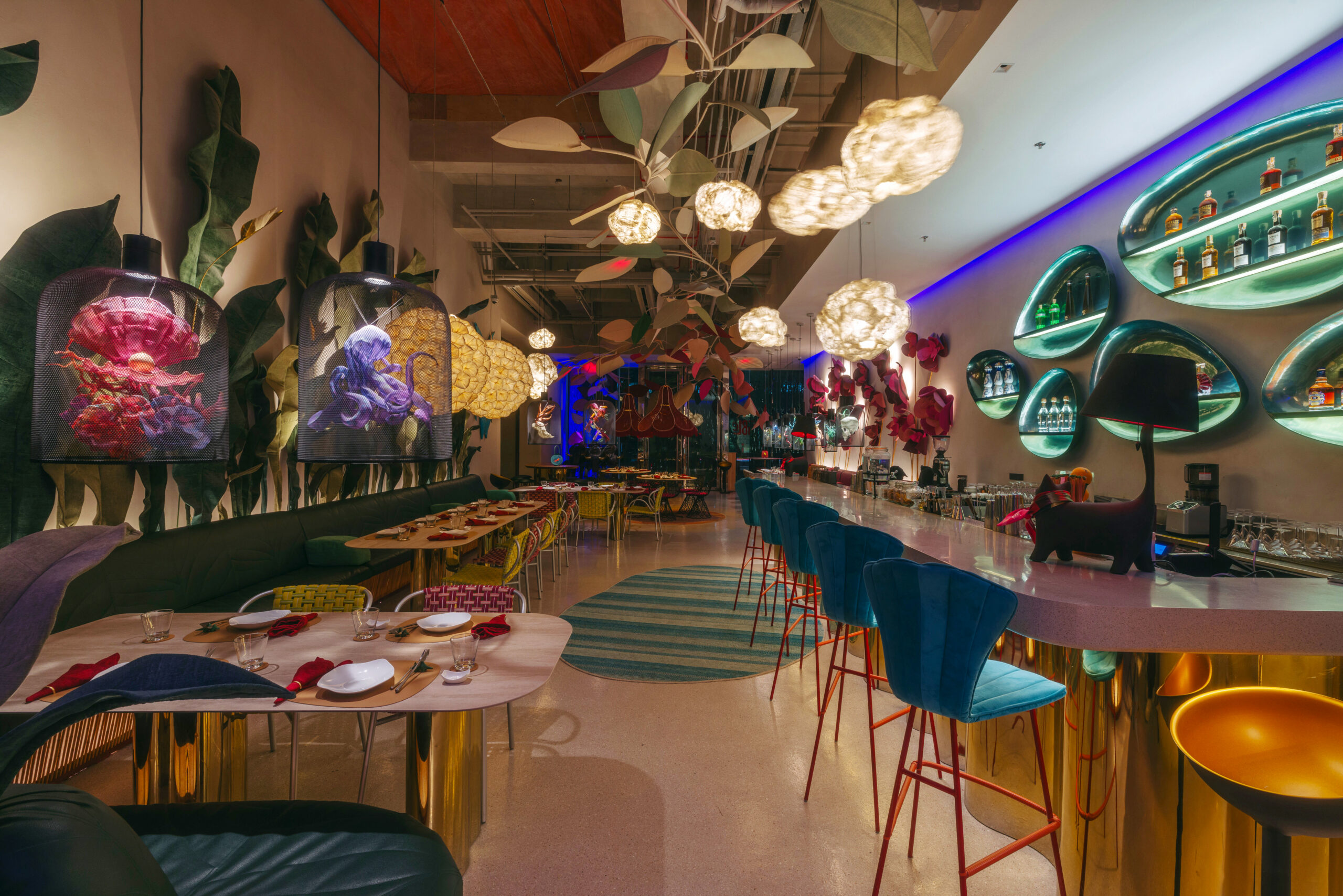
Fable Cafe + Lounge

KENNETH COBONPUE has an enviable client list, with celebrities both local and international, a sprinkling of businesspeople, and royalty. Now you can join that list, not with his furniture, but with a meal.

On Feb. 19, Mr. Cobonpue opened his new space at the Grand Hyatt in BGC, Taguig, moving his showroom there from Greenbelt, Makati. The new space holds three ventures: his furniture showroom, artist Ronald Ventura’s CloudGrey Gallery, and Mr. Cobonpue’s latest offering, the Fable Café + Lounge.

The restaurant is a treat for the eyes: every bit you see is a Kenneth Cobonpue original (which you can buy down the hall).

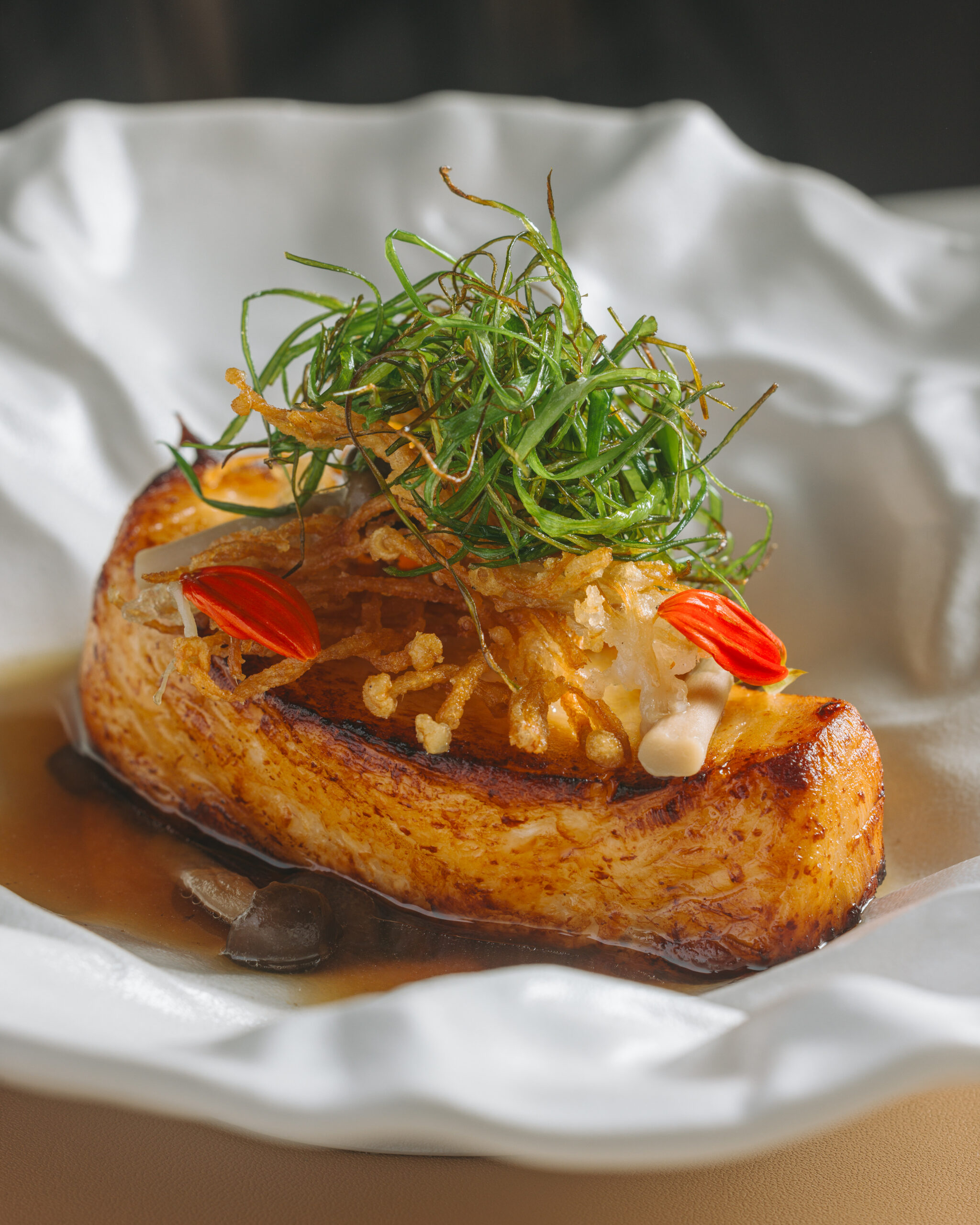
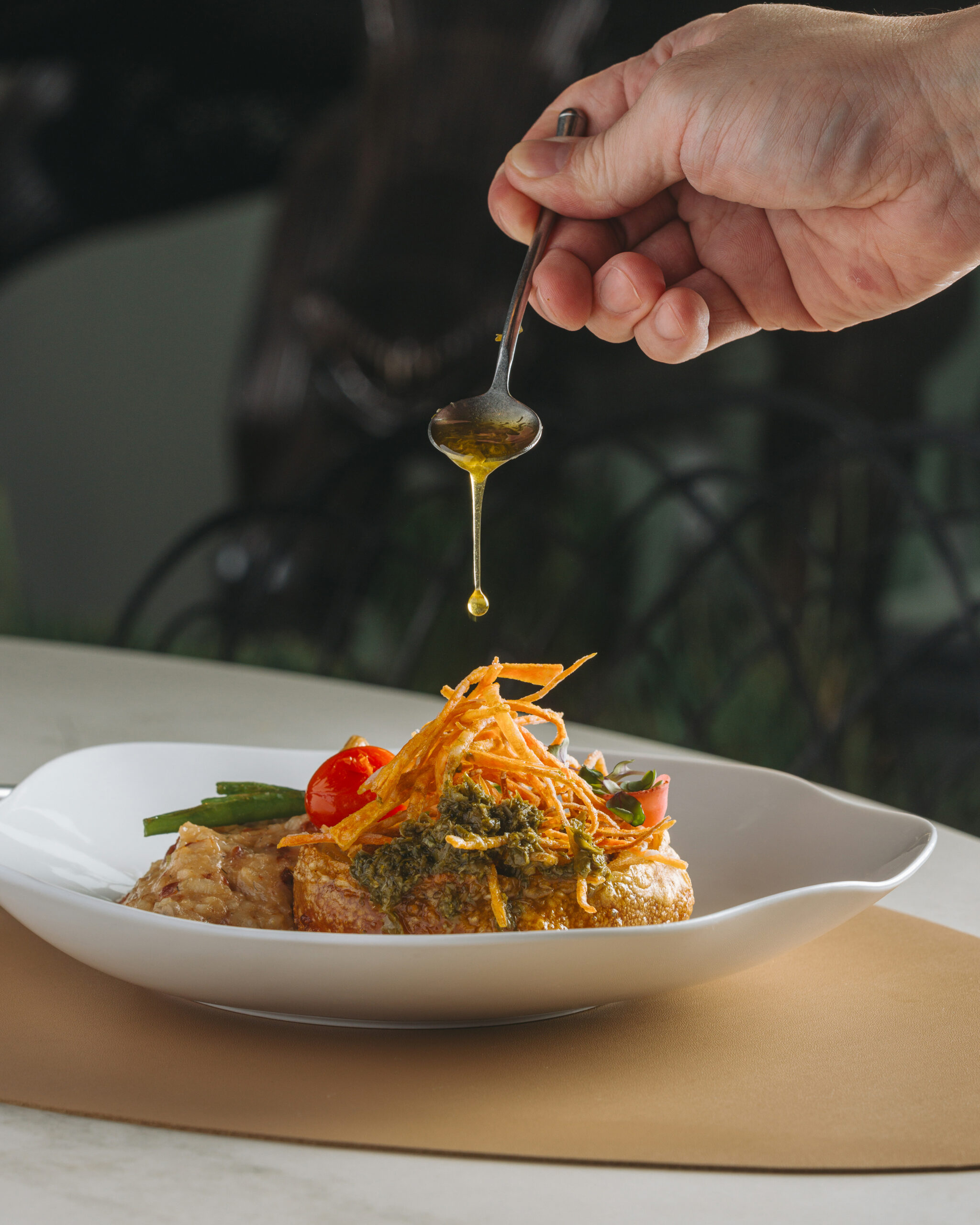
We’d be inclined to say more about the food, but the Feb. 19 grand opening had a limited menu — but we’re all praises for the meaty and forward Lamb Tacos (P550 for three), the filling and interesting Smoked Salmon Black Arancini (P650 for five), and the delightfully tangy and shocking pink Shrimp Dumplings with Ponzu Sauce (P540). Other items include pasta, sandwiches (Mr. Cobonpue stands by their turkey club, P770), cocktails, and a dinner menu with seabass, porchetta, and short ribs (between P1,240 for the Porchetta and P2,280 for the Seabass).

“Fable was just originally a café for our customers. It was supposed to be a simple space where we serve you coffee, and hopefully, you buy something. It gradually took a life of its own,” he said in a speech at the opening.

The restaurant takes its look from the fairy tales his mother, Betty Cobonpue (herself a formidable designer in her own right), read to him at night, which he would then sketch in the morning. “I had to imagine all the creatures, fairy tales, and faraway lands that she was describing.

“Everything you see here is really my childhood,” he said. “That’s why it’s called Fable.”

“This is part of my world,” he said, pointing to one of his flower lanterns. “It’s like Alice in Wonderland. It’s like going into that rabbit hole.”

This isn’t his first foray into the restaurant world: about 15 years ago, he had Morels & Malice in Cebu, for which he did the interiors. Asked about possibly opening more restaurants, he said in an interview, “I think so,” though: “It’s something I don’t necessarily enjoy.”

Apparently, designing restaurants is tricky: “You have to manage how people flow in a space; how people move. It’s a lot to do about psychology: it’s not all about form and function.”

Still, for him, there’s a thread running through the disciplines of food and design — and the act of creation itself. “All disciplines, whether music, design, art – it’s all the same. The process of creation is not a formula, and it’s not a burst of inspiration. It’s really hard work,” he said.

“You have to take time every day to just come up with something, and force yourself to do it.” — Joseph L. Garcia

On Meralco rates and NGCP’s cost of capital

former Energy Undersecretary and now “consumer advocate” recently attacked the Manila Electric Co. (Meralco) as being “unjust and unfair… charging households more than businesses,” referring to the lower rates for commercial and industrial customers compared to those of residential customers.

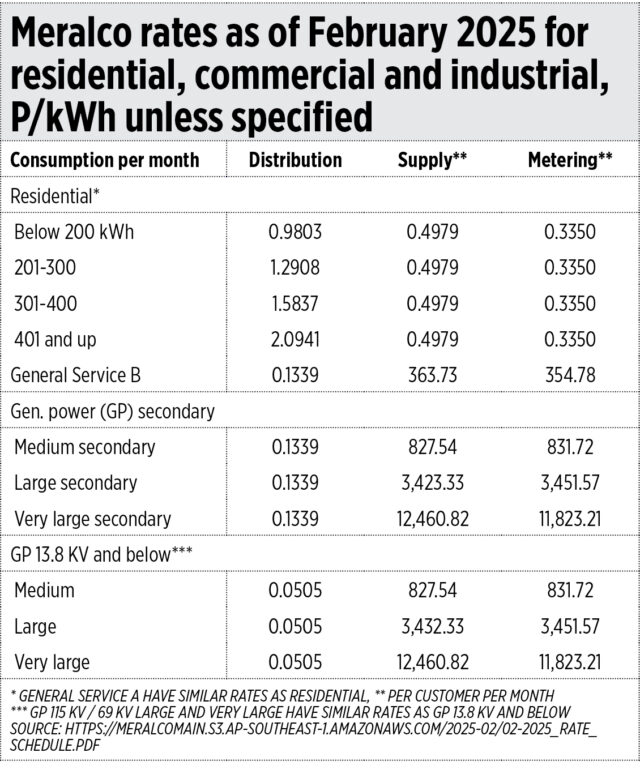
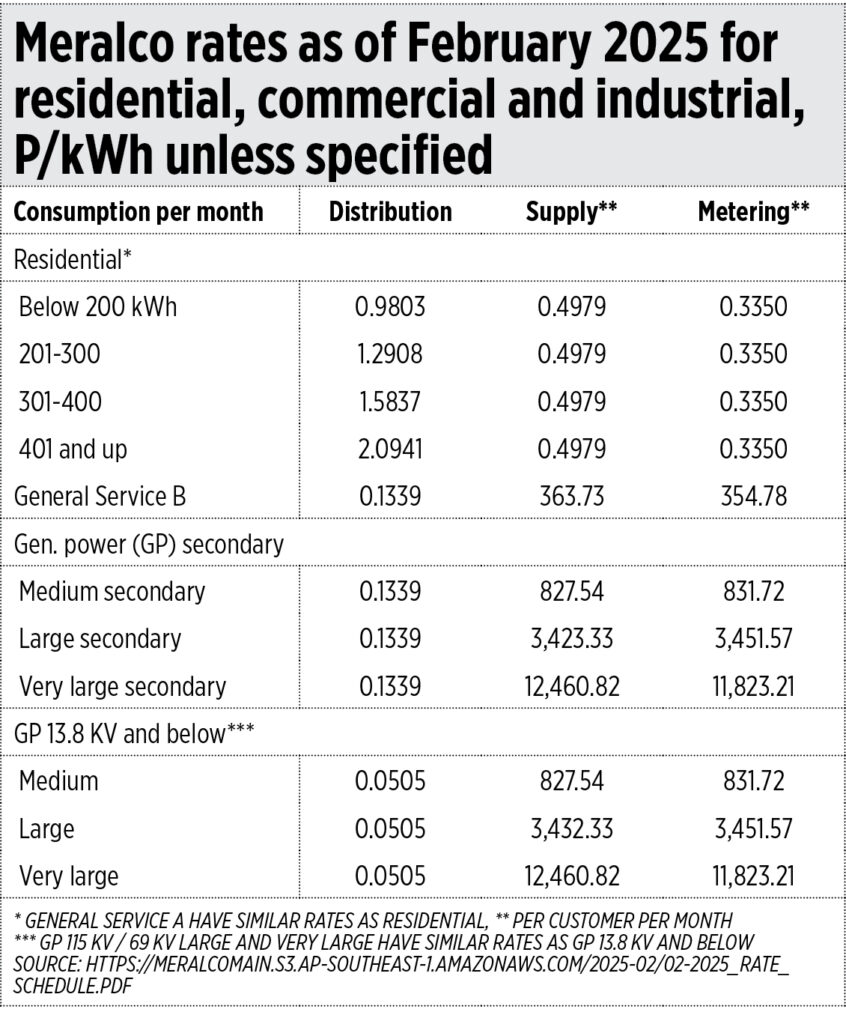
Petronilo Ilagan alleged that residential customers are subsidizing businesses. He used old numbers to make his argument, saying that residential customers pay “P1.8082 per kilowatt-hour (kWh) for 1-200 kWh users, P2.1187 per kWh for 201-300 kWh, P2.4116 per kWh for 301-400 kWh, and P2.9220 per kWh for those consuming over 401 kWh.” These were June 2022 numbers.

The most recent numbers are: P1.29/kWh for those consuming 201-300 kWh per month, and P2.09/kWh for those consuming over 401 kWh. In contrast, General service B and General Power (GP) Secondary customers pay only P0.134/kWh. The GP 13.8 KV pay even lower at 5 centavos/kWh. The supply charge and metering charge are up to P12,461 per large customer per month (see table).

Mr. Ilagan, who serves as president of the National Association of Electricity Consumers for Reforms, Inc. (Nasecore) is confused. Here are four reasons why.

1. The main concern of average residential or household customers like me is not “cheap at all costs” electricity but no blackouts. Electricity should be there when I need it, when I turn on the lights or the aircon. If electricity prices go up, then I can adjust by using an electric fan instead of an aircon, or turning off one or two of the many bulbs in the house. But when there is a blackout, my choices are horrible — either endure the darkness and inconvenience or light a candle. The latter is dangerous when a fire can accidentally happen, the price is damaged properties if not death to people.

2. The rates charged by private distribution utilities (DU) like Meralco are all regulated by the Energy Regulatory Commission (ERC) and not arbitrarily set by the DU. The current distribution charge rate has been there since 2003 and was not questioned for the last 22 years.

3. Setting up electric cables, meters, monitoring, and collection is more complicated and more costly with numerous small customers like households, compared with a single big hotel or mall or university.

4. The Electric Power Industry Reform Act of 2001 (EPIRA) Section 36 prohibits big customers from subsidizing residential customers, and businesses would be discouraged from coming into an area and creating more jobs if their cost of electricity gets even higher.

This attack on big DUs, the big generation companies, to force “cheap at all costs” electricity is only political noise and optics. The result would be “cheap but not available” electricity because the necessary cost and returns to entrepreneurship would not be met, so potential power businesses will not come into an area.

NGCP’S WACC
Recently the ERC set the weighted average cost of capital (WACC) for the National Grid Corp. of the Philippines (NGCP) for the 4th regulatory period (RP, 2016-2020) at 10.71%. This is lower than the 15.07% under the 3rd RP (2011-2015, under NGCP), and 15.88% under the 2nd RP (2006-2010, when the grid was under TransCo’s management).

This low level of WACC — meaning a low transmission charge to be allowed — can be problematic in terms of infusing more capital for more big transmission projects as more power generation capacities are added, espe-cially for geographically scattered, small renewable energy projects like solar.

The NGCP shoulders the Concession Fee Payment, then the 3% franchise tax, which are now considered as not being part of the revenue building blocks, or not an expenditure item for recovery. Then there are nearly a doz-en recoveries as adjustments to the annual revenue requirement (ARR) — some dating back to the 2nd RP — which are now facing uncertainty of recovery.

The regulated sub-sectors of power transmission and distribution are problematic because each costing is subject to approval or disapproval by the ERC. As an economics writer and researcher, my approach is always to have a high but realistic growth target — like 7-8% annual GDP growth — and seeing what the inputs are — like power generation-transmission-distribution levels — that can support such high growth targets. Working backwards to identify bottlenecks, regulation should adjust, not prevail. Growth targets should prevail over regulation and bureaucratic requirements.


Bienvenido S. Oplas, Jr. is the president of Bienvenido S. Oplas, Jr. Research Consultancy Services, and Minimal Government Thinkers. He is an international fellow of the Tholos Foundation.

minimalgovernment@gmail.com

Qualcomm banks on Southeast Asia’s AI boom to drive PC chip demand

LAPTOPS powered by Qualcomm Technologies, Inc.’s AI PC chips on display at the Snapdragon X Series Southeast Asia Media Summit held in Singapore on Feb. 26, 2025 -- Photo Cdredits: Bettina V. Roc

SINGAPORE — Qualcomm Technologies, Inc. expects the rapid adoption of artificial intelligence (AI) technologies in Southeast Asia to boost demand for laptops powered by its Snapdragon X Series chips.

Qualcomm on Feb. 26 held its first-ever Snapdragon X Series Southeast Asia Media Summit here at Sentosa island to highlight their belief in the region’s potential to become a growth driver for the AI PC market.

“When you think about AI PCs and what’s happening with the overall demand, the overall demand for AI PCs is just skyrocketing. When you look at 2024, just in one year, there were more than 8 million PCs that were shipped in just the Southeast Asia region,” Qualcomm Senior Vice-President of Product Management and General Manager for Compute and Gaming Kedar Kondap said at the summit.

Mr. Kondap said they expect AI to add more than $1 trillion in value to the Southeast Asian economy by 2030, with the region’s spending on AI seen to reach $650 million by 2026, driven by the adoption of generative AI (GenAI) technologies.

“That’s a staggering number in terms of how we see disruption in the marketplace, the way we see AI PCs fueling the economy and driving use cases across every industry like we’ve never seen before… Consumers here in Southeast Asia are leading the way when it comes to adopting GenAI.”

Kedar Kondap – Qualcomm Technologies, Inc. Senior Vice President of Product Management and General Manager for Compute and Gaming Kedar Kondap speaks at the Snapdragon X Series Southeast Asia Media Summit held in Singapore on Feb. 26, 2025. — Photo Cdredits: Bettina V. Roc

Deploying AI solutions can have a positive impact on every single industry and is expected to transform the workplace, Mr. Kondap said, driving demand for on-device AI.

The Snapdragon X Series marked Qualcomm’s return to the PC chip space. It first launched the Snapdragon X Elite processor in 2023, which is for high-end machines priced at the $1,000 range. This was followed by the X Plus chip launched in 2024 that powers laptops at the $800 range.

Completing the Snapdragon X Series chips is the Snapdragon X launched in January, which is targeted for PCs priced at around $600.

“What we’d like to do with all of this is make sure unparalleled performance, incredible battery life and the exact same GenAI experiences can run across all of these platforms. We want to make sure that these platforms support every con-sumer’s needs, more so here in Southeast Asia,” Mr. Kondap said.

DEMOCRATIZING AI ACCESS

The launch of the midrange Snapdragon X chip forms part of Qualcomm’s goal to democratize AI access, especially in Southeast Asia where economies are at different stages of development and adoption of technologies, with var-ying levels of internet infrastructure, said Nitin Kumar, Qualcomm senior director for product management.

The processor delivers up to 163% faster CPU performance versus its competition at the same power and better battery efficiency for users’ on-device AI needs, he said.

Mr. Kumar said in a roundtable with Philippine tech media and influencers on the sidelines of the summit that he expects both consumers and commercial users to find use cases for AI PCs, with the entire Snapdragon X Series line of PC chips giving them options to find their “sweet spot” in terms of cost.

“Our mission is to provide that AI capability to everyone, democratize the on-device AI capability… Qualcomm has always advocated that the good AI performance should be a hybrid AI — so, things happening in the cloud and things happening on the mobile itself,” he said.

“We want to invest in the market. This event being hosted here is the key example for that. We’re launching Snapdragon X in Southeast Asia market for you, for the Philippine market as an example, to drive that message… that there is a better ex-perience out there in the PC ecosystem. We’re going to drive that performance, drive that battery life, drive that on-device AI, and we will continue to make investment in the region to make sure that there is that adoption of that message across broader set of countries, of course, including Philippines as well. So, we understand the market and we are not going to stop here.”

ST Liew, vice-president at Qualcomm and president of its business in Taiwan and Southeast Asia, likewise said at the same roundtable that they are bullish that both personal and business PC users can find the perfect fit among devices powered by their Snapdragon X Series chips.

“I’m very confident that the platforms we have introduced will address the needed interest and the needed spots in Philippines, because very soon, the different professions and the industries are going to realize that … [they] will solve a lot of problems,” Mr. Liew said.

MANUFACTURERS

At the summit, Mr. Liew moderated a fireside chat with top executives from leading Arm-based Copilot+ PC manufacturers, namely Jimmy Lin, regional director for Southeast Asia at ASUS; Paul Carter, Dell Technologies, Inc. vice-president for Client Solutions in the Asia Pacific, Japan and Greater China region; Tarun Relhan, HP, Inc. head of Advanced Computing Systems for the Greater Asia region; and Sachin Bhatia, chief marketing officer for the Greater Asia Pacific region at Lenovo Personal Computing & Smart Devices.

The panel discussion touched on how Arm-based PCs powered by Snapdragon X Series chips are driving the on-device AI boom in Southeast Asia and how they are working to accelerate user adoption in the region.

ASUS’ Mr. Lin said Southeast Asia is made up of diverse and complicated markets at different levels of economic progress, which highlights the need for user education about the benefits of on-device AI.

“I think the first thing for us is to do the education and awareness. Because in Southeast Asia, we see that we are very different countries, like in Singapore is a high income, developed country. But we also have emerging coun-tries like Indonesia and the Philippines. For the people who live there, maybe they need to spend some amount of their salaries to afford one device. So, we have to prove to them that it is worth it to buy,” he said.

“In Southeast Asia, I would say 80% of the people will buy the stuff in the stores. People love to have a touch and feel feeling inside real stores. So, channel development is also very important.”

For their part, Lenovo’s Mr. Bhatia said to serve a diversified region like Southeast Asia, technology needs to be smart, accessible, and affordable.

“When I say smart, today the users are not looking just a device experience. They are looking at the entire ecosystem experience, whether they are using mobile, whether they are using tablet… it has to be a seamless connectiv-ity and seamless ecosystem. And second, there has to be a device for every user,” he said.

HP’s Mr. Relhan said governments in the region also play a huge role in driving AI adoption. “If you really look at it, it is not a decision which the consumer is driving… I think the drive needs to come in from the government, from big enterprises, to really adopt it, let the consumer feel it, use it, and then the drive automatically comes.”

“Southeast Asia is a leading region when it comes to the adoption of new technologies. Singapore was third on the AI index globally, but we also see it in other countries — Malaysia, Thailand, the Philippines — there tends to be a leap forward in technology, from nothing to the latest right away. And we’re starting to see that with the adoption of Qualcomm architecture,” Dell’s Mr. Carter said.

“Everybody’s waiting for that one killer app. There isn’t one killer app. It’s going to be a cumulative effect of all apps. And that is what we’re seeing in both the consumer space and in the business space. It’s actually going to be the utilization of native apps. So, this region, I do believe, is going to be at the forefront of the adoption of AI PCs.” — Bettina V. Roc

Peso strengthens to near five-month high as trade war, US growth concerns hit greenback

BW FILE PHOTO

THE PESO jumped to a near five-month high on Wednesday as the dollar took a hit from trade war and growth concerns following the Trump administration’s move to impose tariffs on its major trading partners.

The local unit closed at P57.345 per dollar on Wednesday, strengthening by 40.8 centavos from its P57.753 finish on Tuesday, Bankers Association of the Philippines data showed.

This was the peso’s best finish in nearly five months or since its P57.205-a-dollar close on Oct. 11, 2024.

The peso opened Wednesday’s session higher at P57.60 against the dollar. It traded stronger than Tuesday’s close the entire session as its intraday low was at just P57.61, while its best showing for the day was at P57.315 versus the greenback.

Dollars exchanged rose to $1.55 billion from $1.04 billion on Tuesday.

“The peso ended higher on the back of a weak dollar amid concerns over slowing US growth, the impact of tariffs on the US economy, and after the announcement of retaliatory tariffs from China, Canada, and Mexico,” a trader said in a phone interview.

The dollar dropped to a three-month low on Wednesday as markets reeled from a trade war triggered by US President Donald J. Trump, who again vowed reciprocal tariffs in his first speech to Congress since taking of-fice, Reuters reported.

Moves in currencies were volatile as investors fretted about the impact of escalating global trade tensions on the world economy.

In an address to Congress, Mr. Trump said further tariffs would follow on April 2, including “reciprocal tariffs” and non-tariff actions aimed at balancing out years of trade imbalances.

The dollar initially ticked higher as Mr. Trump was speaking, though later erased those gains to hit a low of 105.46 against a basket of currencies, its weakest since Dec. 6.

Investors have sold the dollar in a reversal of the so-called “Trump trades” which first gathered steam late last year, as they become increasingly concerned with the growth outlook for the world’s largest economy, which is al-ready showing signs of a slowdown.

The US President’s remarks to Congress comes just after he followed through on new 25% tariffs on imports from Mexico and Canada that took effect on Tuesday, along with a doubling of duties on Chinese goods to 20%.

Canada and China quickly acted in kind, while Mexican President Claudia Sheinbaum vowed retaliation but without details, saying she would announce Mexico’s response on Sunday.

Meanwhile, slower-than-expected February Philippine inflation also supported the peso on Wednesday, Rizal Commercial Banking Corp. Chief Economist Michael L. Ricafort said in a Viber message.

Headline inflation sharply decelerated to 2.1% in February from 2.9% in January, the Philippine Statistics Authority reported on Wednesday.

The February consumer price index was the slowest print in five months or since the 1.9% clip in September 2024. It was also below the Bangko Sentral ng Pilipinas’ 2.2%-3.% forecast and the 2.6% median estimate in a Busi-nessWorld poll of 18 analysts.

For Thursday, the trader expects the peso to move between P57.10 and P57.50 per dollar, while Mr. Ricafort said it could range from P57.20 to P57.50. — Aaron Michael C. Sy with Reuters

The comfort of routine

When a personal health crisis arises, requiring long hospitalization, it disrupts the flow of the day one is used to. A new set of activities take over, like having one’s blood extracted at 4 a.m. — Sorry to wake you up sir. Gone is the previ-ously predictable set of meetings and lunches, the old routine.

The comfort of routine, with its anticipated set of events, is not just embraced by old people who need to put handrails on their now retired state. It is also the refuge of organizations that are sometimes visited by the unexpected.

Airport congestion, resulting in cancellations of flights maybe from stalled airplanes blocking the runway due to floods, needs to be untangled. The stranded passengers have to eventually be rebooked, the runway cleared, and the flights rescheduled in an orderly manner before the airport authorities can declare “business as usual.” Back to the routine.

A crisis is considered defused only when the expected routine is restored, and the organization is back on its feet to deliver its products and services as its customers are used to.

Disruptions of all sorts derail the ordinary course of business and life. They include interruptions like power outages, elevator repairs, floods, labor strikes, pandemics, and supply chain interruptions that result in the shortage of rice and chickens. These glitches throw off the business routine and require soothing assurances from management of an expected return to normalcy, even giving a timeline (power will be restored by tomorrow morning).

Even planned inconveniences like lobby renovations or rerouting of traffic due to the laying of new water pipes need to project how long the departure from routine is likely to take. Still, even the reduced status of service provision is announced as uninterrupted — we are still open. Such an assurance already presumes that expectations of a complete range of products and services being unavailable — chicken rice will not be on the menu today.

In situations where a crisis is as yet not publicly admitted, the illusion of normalcy is even more critical to maintain, like a placid duck floating above the water with its feet frantically paddling underneath.

This story of hiding a crisis and projecting a state of wellbeing is explored by the acclaimed Japanese director, Akira Kurosawa, in his classic film, Kagemusha. A petty criminal look-alike is recruited by a Shogun to be his double. When the lord is wounded in battle and eventually dies, the double assumes his role in ceremonies and staged events, learning his mannerisms to keep the illusion going. The deception of strength is a delaying tactic to ward off hostile attack while in a weakened state.

The use of a political decoy, such as the one employed by the Takeda Clan in the Kurosawa movie, has its risks. Attempts at normalcy while covering up a crisis can be eroded by whist and explanations that lose their con-sistency. Such crises like undisclosed health problems of leaders, unfinished projects, or failure to meet debt obligation involve a big cast of characters and have many moving parts.

Companies with an internal crisis sometimes choose to hide this from the public, or even from their investors, hoping to somehow address them quietly. This strategy of non-disclosure, even when the magnitude of the problem is a sur-vival issue, like an unreported financial loss or a bad investment that needs to be written off, sometimes seems the only option. Public knowledge of the real situation can go beyond reputational risk.

Maintaining the veneer of business-as-usual in an undisclosed crisis does not have to be a conspiracy. But so often, it is still a shared secret of those in the know, keeping many others in the dark. Like the meteors that wiped out the dinosaurs that lived for a hundred million years (give or take a few centuries), disrupters of even dominant businesses can wipe out a corporate species, even a market leader. A change in technology can do that.

Even in life, getting back to a routine after a crisis is part of the healing process. How comforting it is to have a day unfold according to expectations. No surprises? Isn’t that too predictable? Even boredom can be embraced. Thursday is the schedule for sushi. Yes, you won’t forget. (Or you can go for ribeye steak instead.)