Home Blog Page 1555

Remembering the 1986 People Power Revolution
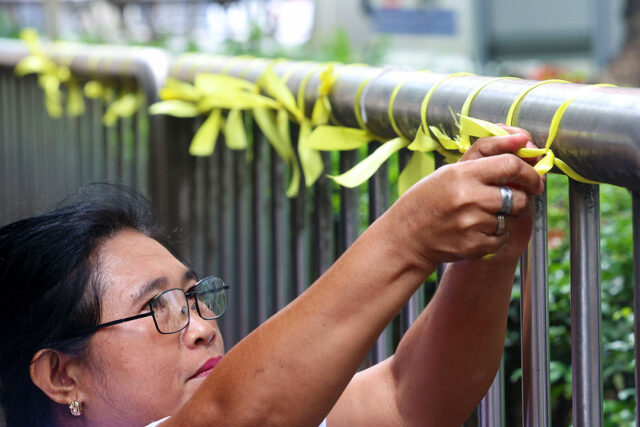
PHILIPPINE STAR/MIGUEL DE GUZMAN

It was one of the most tense and terrifying times in our country. It was like the tremulous gloom of wartime, our elders said. February 1986 was turbulent and stressful.

Because he could no longer run for a third term as president in 1973, Ferdinand E. Marcos, Sr. issued Proclamation No. 1081 on Sept. 23, 1972, declaring Martial Law, using the civil unrest that arose after the 1969 Philippine balance of payments crisis as a justification for the proclamation. It was economics that started Marcos Sr.’s 14-year authoritarian regime. (Ferdinand Marcos and the Philippines: the political economy of authoritarianism, Greenwood Publishing Group).

“A major economic crisis in the early 1980s virtually drove the Philippine economy into a standstill, crippling businesses and sending millions of Filipinos out of their jobs and into the streets. That crisis, unique at a time when the rest of Southeast Asia was roaring ahead economically was the result of a crippling impact of the economy’s dependence on foreign debt which it could no longer afford to repay and the political instability caused by the popular outrage from the assassination of Benigno Aquino, Jr. in August 1983,” business and economics journalist Ping Galang recalled. “Private investors either moved out or froze operations. Marcos was left with no option but to call a ‘snap’ election to validate his mandate” (gmanetwork.com, Sept. 21, 2009).

The snap election was held on Feb. 7, 1986. The official election canvasser, the Commission on Elections (Comelec), declared that Marcos was the winner. The final tally of the Comelec had Marcos winning with 10,807,197 votes against rival candidate (assassinated hero Benigno S. Aquino, Jr.’s widow) Corazon Aquino’s 9,291,761 votes. On the other hand, based on returns of 70% of the precincts, the National Movement for Free Elections (Namfrel), an accredited poll watcher, had Aquino winning with 7,835,070 votes against Marcos’s 7,053,068 votes (iReport EDSA 20th Anniversary Special Issue | Dr. William Castro, Philippine Center for Investigative Journalism, February 2006).

Thirty Comelec computer technicians walked out while tallying the votes to protest the deliberate manipulation of the official election results to favor Ferdinand E. Marcos, Sr. The walkout was considered one of the early “sparks” of the People Power Revolution. The walkout also served as an affirmation to allegations of vote-buying, fraud, and tampering of election results by the KBL, Marcos’ political party (Ibid.).

On Feb. 13, Cebu Archbishop Ricardo Cardinal Vidal issued a declaration on behalf of the Philippine Church hierarchy stating that when “a government does not of itself freely correct the evil it has inflicted on the people then it is our serious moral obligation as a people to make it do so… Now is the time to speak up. Now is the time to repair the wrong. The wrong was systematically organized. So must its correction be. But as in the election itself, that depends fully on the people; on what they are willing and ready to do” (“Post-Election Statement” archived from the original by Wikipedia on Sept. 23, 2015).

On Feb. 16, 1986, Corazon Aquino held the “Tagumpay ng Bayan” (People’s Victory) rally at Luneta Park, announcing a civil disobedience campaign and calling for her supporters to boycott publications and companies which were associated with Marcos or any of his cronies. The event was attended by a crowd of about two million people (Schock, Kurt, 1999: “People Power and Political Opportunities: Social Movement Mobilization and Outcomes in the Philippines and Burma.” Social Problems). Other protest groups responded and unified to join Aquino’s call (“The road to EDSA” by Elfren S. Cruz, Philstar.com., retrieved by Wikipedia on May 18, 2021).

In the aftermath of the election and the revelations of irregularities, the Reform the Armed Forces Movement (RAM) — a group formed in 1982 consisting of officers of the Armed Forces of the Philippines (AFP) who were disgruntled by the patronage politics and corruption in the AFP — decided to mount a coup d’etat against Ferdinand Marcos (“The 3-Day Revolution: How Marcos Was Toppled” by Mark Fineman, Los Angeles Times, Feb. 27, 1986).

On Feb. 20, RAM approached Cory Aquino, informing her of the coup plans and that they would form a junta headed by a Council of Elders composed of Defense Secretary Juan Ponce Enrile, General Fidel Ramos, Jaime Cardinal Sin, businessman Jaime Ongpin, former executive secretary Alejandro Melchor, Jr., and former senator Salvador “Doy” Laurel. Mrs. Aquino rejected the offer, as there was a sense that the Council would just be a front for a military junta headed by Enrile (“The Final Report of the Fact-Finding Commission: IV: Military Intervention in the Philippines: 1986 – 1987 | GOVPH,” Official Gazette of the Republic of the Philippines, National Printing Office, Oct. 3, 1990).

Juan Ponce Enrile, then Minister of Defense, and Gen. Fidel Ramos, then Armed Forces Vice Chief of Staff, were defectors and late entrants to the growing public protest against the dictatorship of Ferdinand Marcos, Sr. A write-up in the Fidel V. Ramos Presidential Library (fvrlegacy.org) “Ramos Pivots Towards EDSA: Bolting the Marcos Regime” relates:

“In August 1983 (when oppositionist Sen. Benigno S. Aquino, Jr. was assassinated at the Manila International Airport) President Ferdinand E. Marcos, Sr. assumed the position of Commander-in-Chief of the Armed Forces, replacing the ally he originally installed in this post, General Fabian C. Ver. He simultaneously removed Defense Minister Juan Ponce Enrile from the military chain of command. Operational control of the INP (Integrated National Police) was transferred from the PC (Philippine Constabulary) to General Ver. This signal of no-confidence from a president who curtailed Ramos’ authority over the INP to simple administration was, for political watchers, prediction enough of impending power shifts.”

On the morning of Feb. 21, Gen. Ver informed Marcos that there was a brewing coup plot by Enrile and a reported assassination attempt on him (Enrile). Marcos ordered the plot leaders’ arrest, and presented to the international and local press some of the captured plotters (Militant Labor in the Philippines by Lois A. West, 1997, Temple University Press, pp. 19–20, ISBN 978-1-56639-491-8, retrieved Dec. 3, 2007).

Fidel Ramos went to Jaime Cardinal Sin, Bishop of Manila, for help. Cardinal Sin called on Catholics and the Filipino people on Radio Veritas, the Church radio station:

“My Dear People, I wish you to pray, because it’s only through prayer that we may solve this problem. This is Cardinal Sin speaking to the people, especially in Metro Manila. I am indeed concerned about the situation of Minister Enrile and General Ramos, I am calling our people to support our two good friends at the camp. If any of you could be around at Camp Aguinaldo to show your solidarity and your support in this very crucial period, when our two good friends have shown their idealism, I would be very happy if you support them now. I would only wish that violence and bloodshed be avoided. Let us pray to our Blessed Lady to help us in order that we can solve this problem peacefully.”

On a long stretch of Epifanio de los Santos Avenue (EDSA) in Metro Manila from Feb. 22 to 25, 1986, over two million Filipino civilians, as well as several political and military groups and religious groups stood in passionate but peaceful protest, led by Jaime Cardinal Sin, with Catholic Bishops’ Conference of the Philippines President Ricardo Cardinal Vidal, the Archbishop of Cebu. It is remembered as a “Rosary miracle” in the peaceful victory (“The Rosary Miracle of the Philippines,” Valerie Joy Escalona, Oct. 22, 2024, National Catholic Register, retrieved Oct. 24, 2024).

Despite having held his own inauguration on Feb. 25, Marcos and his family were already preparing to flee the country. The Marcos family and entourage (with close associates Fabian Ver et al.) were flown out of the country by the US Airforce on the evening of Feb. 25 and arrived at Hickam Air Force base in Hawaii on Feb. 26. When Radio Veritas reported the Marcos family’s departure, the people rejoiced and danced in the streets, and not only on EDSA. It was a day of national jubilation.

In other countries, people also rejoiced and congratulated the Filipinos they knew. CBS anchorman Bob Simon reported: “We Americans like to think we taught the Filipinos democracy. Well, tonight they are teaching the world (People Power: The Philippine Revolution of 1986: An Eyewitness History, Manila, Philippines, by Paul Sagmayao Mercado and Francisco S. Tatad, The James B. Reuter, S.J., Foundation (1986), OCLC 1687489).

How can any Filipino at least in their 40s today, ever forget the dizzying euphoria from the deep joy of release and salvation, experienced in the People Power Revolution of 1986? It was like Christmas!

How can the epic story of EDSA I ever be erased and history revised, perhaps for self-serving manipulations to ease the consciences and rebuild the reputations of those who were on the “wrong” side of that glorious fight of the Filipinos for democracy and justice? To reverse the “wrong” side to be the “right” side? And vice versa? Meaning, the Filipino people were never the “heroes” of the EDSA People Power Revolution of 1986?

This year, the 39th anniversary of EDSA I, President Ferdinand R. Marcos, Jr., declared that Feb. 25 would be a “special working day,” downgrading it from its classification a public (non-working) holiday from 1987-2020, and a special non-working holiday from 2021-2023.

It was not included in the list of holidays in 2024 as declared by Marcos Jr., who cited that it “falls on a Sunday,” which is considered as a rest day anyway for most laborers, while maintaining respect for its commemoration. It was restored as a holiday in 2025, this time as a “special working day,” meaning, laborers and workers would have to go to work on that day to get their pay. The Department of Labor and Employment (DoLE), in Labor Advisory No. 2, Series of 2025, issued strict rules on “No work, no pay” for Feb. 25.

Yet many top Catholic schools in the Philippines declared a non-working day on Feb. 25, even if the Marcos government had downgraded it. The Dominican-run University of Santo Tomas (UST) led the schools’ protest with a memo on Friday, Feb. 14, stating that “there will be no classes and work on Feb. 25 (Tuesday).”

“Let us stand united and never forget that true power lies in the collective will of the people, and it is our responsibility to uphold the values of integrity, justice, and freedom for generations to come,” said UST secretary-general Father Louie Coronel to the UST community (Rappler.com, Feb. 17, 2025).

The youth must know and remember the EDSA People Power Revolution of Feb. 25, 1986.


Amelia H. C. Ylagan is a Doctor of Business Administration from the University of the Philippines.

ahcylagan@yahoo.com

Indian refiners cancel orders for palm oil after price surge

REUTERS

MUMBAI — Indian refiners have canceled orders for 100,000 metric tons of crude palm oil (CPO) scheduled for delivery between March and June, because of a surge in benchmark Malaysian prices and negative refining margins in India, trade sources said.

Refiners in the world’s largest importer of palm oil canceled the quantity over the last four days, including 30,000 metric tons on Friday, after Malaysian palm oil futures rose more than 11% over four weeks.

The Indian cancellations could limit the rally in Malaysian palm oil prices, although they could also support soy oil prices as some refiners shift to soy oil.

The trade sources spoke on condition of anonymity because they were not authorized to speak to the media.

One Indian buyer, who operates a refinery on the east coast and canceled palm oil shipments for March delivery, said the combination of negative refining margins in India and high overseas prices meant it made sense to lock in profits by selling palm oil back to suppliers, rather than importing it.

Price-sensitive Asian buyers traditionally rely on palm oil due to its low cost and quick shipping times. However, the recent price rise has pushed palm oil to a premium over soy oil on the global market.

An influx of soy oil into India between February and March, priced slightly lower than palm oil, has prompted some refiners to cancel their palm oil purchases to switch to soy oil, Sandeep Bajoria, chief executive of Sunvin Group, a vegetable oil brokerage, said.

A Mumbai-based dealer with a global trade house said buyers and sellers were mutually agreeing to cancel contracts, with buyers accepting a slightly lower price than the current market rate for cancellations.

Crude palm oil is being offered at about $1,210 a ton, including cost, insurance and freight, in India for March delivery, compared to around $1,120 to $1,130 a month ago.

India’s palm oil imports, which are primarily from Indonesia and Malaysia, in January fell 45% from a month ago to 275,241 metric tons, the lowest in nearly 14 years, as refiners turned to cheaper soy oil. The soy oil is imported mostly from Argentina and Brazil.

Market speculation India will raise its import duty on palm oil to support local oilseed farmers has also prompted some refiners to cancel contracts and book profits, said a New Delhi-based dealer with a global trade house. — Reuters

London Fashion Week: Paul Costelloe looks to equestrian world; Bora Aksu gets inspiration from Empress Sisi

LONDON — Irish designer Paul Costelloe drew inspiration from the equestrian world for his latest collection at London Fashion Week on Friday, showing jodhpur-shaped culottes, tweeds, and prints featuring show jumpers.

Mr. Costelloe’s autumn-winter 2025 line included dressage-like fitted jackets and structured skirts and shorts, sometimes paired with caps and long boots. Models also wore feminine coats and voluminous dresses.

“The theme is… showing my vintage, dating back to when I launched a collection called ‘Dressage,’ so it’s quite equestrian,” Mr. Costelloe, 79, told Reuters. “It’s got lovely tweeds… but we’ve made it a little more raunchy maybe.”

Mr. Costelloe chose autumnal hues for his color palette — brown, amber, and red — as well as cream and black. His outfits bore check as well as floral patterns.

BORA AKSU
Meanwhile, Turkish designer Bora Aksu said his latest collection was inspired by Austrian-Hungarian Empress Elisabeth, also known as Empress Sisi. Models wore structured coats and jackets with delicate, embroidered chiffon and lace dresses.

The collection, mainly in white, cream, red, purple and blue, also featured long-tiered skirts, blouses with bows and layered frocks. Some models wore veils over their faces and long gloves.

“She was one of those characters that I was drawn to because she was, I think, so misunderstood,” Mr. Aksu said. “People could only see her as… (Empress Elisabeth) but… she was into poetry, she was into writing. She was doing beautiful drawings.”

Running from Feb. 20-24, London is the second leg of the autumn-winter 2025 catwalk calendar, which began in New York and will go to Milan and Paris.

On the program are emerging designers as well as more established brands including Burberry, Erdem, and Roksanda. London is known for its fashion schools and for nurturing talent that has gone on to work at some of the world’s biggest luxury labels.

In a bid to provide commercial support for designers, there will be a fashion week pop-up shop on Regent Street in central London.

“It is a particularly challenging time at the moment, in the UK… because we are still focusing really on sort of overcoming the trade barriers of being out of the EU (European Union),” Caroline Rush, outgoing chief executive officer of the British Fashion Council, told Reuters.

“The shop is really an opportunity to showcase the brilliant designers that we have,” she said. — Reuters

Style (02/24/25)


Robinsons has travel on sale

IF YOU’RE looking for sturdy luggage, comfy shoes and clothes, and other travel essentials, Robinsons Department Store’s annual Wanderfest Travel Fair 2025 has you covered. Running until Feb. 28 in all Robinsons Department Store branches and online stores, the travel fair features trusted fashion and accessory brands for up to 60% off. These include bargains from Tunkr, Sky Travel, Adidas, Nike, World Balance, and Forthpack, among others. Customers can enjoy better deals when they use a Metrobank Credit Card during the sale. Get P200 cashback for a single-receipt spend of P3,000 on straight transactions, or a P300 cashback for P7,000 on 0% installment transaction. Wanderfest Travel Fair’s e-raffle offers special destinations for shoppers. For every minimum purchase of P4,500 from the shoes, bag, luggage, and athletics department using Go Rewards, shoppers earn one e-raffle entry to the promo, in partnership with Salmon and Klook. They can earn five additional entries when they purchase using Salmon. There will be one winner of an All-in Travel Package to Vietnam for four, and two winners of an All-in Travel Package to Siargao for two. There will also be two winners of an Enchanted Kingdom Ekspress one-day pass for six, courtesy of Klook. From Feb. 24 to March 2, shoppers can drop by Wanderfest at the Midtown Atrium, Robinsons Place Manila to check out more brands: browse various shoe styles from brands like Nike, Anta, and Skechers; and bags and luggage of all sizes from Hawk, Secosana, and Tunkr.


Uniqlo celebrates National Arts Month

GLOBAL APPAREL retailer Uniqlo celebrates visual art and fashion with its latest UT graphic tees and the UTme! customization service. In time for National Arts Month this February, the brand unveils its art-themed UT collection. The newest 2025 Spring Summer UT collection introduces designs inspired by 20th-century artists, including Henri Matisse and Pablo Picasso. In addition to the Matisse and Picasso collaborations, the line-up also highlights exclusive partnerships with the Museum of Fine Arts Boston’s Ukiyo-e collection, the Tate galleries, and The Museum of Modern Art in New York. Photography also takes center stage with designs from Magnum Photos, curated by photographer Coco Capitán, as well as a unique selection of cat photographs. In addition, there is the Peace For All Charity T-Shirt Collection through a special Picasso design to add to the project’s list of collaborators. Proceeds from the sale of this print go towards Uniqlo’s peace building efforts globally with their three partner organizations: Save the Children, Plan International, and UNHCR. These are available in all Uniqlo stores in the Philippines and the uniqlo.com/ph online store. The brand also highlights its UTme! customization service. Customers can create their own shirts by customizing UTme! shirts and tote bags through exclusive templates or their own unique artwork. UTme! customization service are available at the following stores: the Manila Global Flagship Store at Greenbelt 5, SM Mall of Asia, the Nuvali Roadside Store, SM Seaside City Cebu, and SM Lanang Premier .


EB Plus Moisture Boost Lipstick now available

THE EB Plus Moisture Boost Lipstick is a lightweight, pigment-packed lipstick infused with Hydracore Technology to keep lips moisturized all day long. Unlike traditional lipsticks that can feel drying over time, EB Plus Moisture Boost Lipstick is designed to deliver an instant hydration boost with every swipe. It features Hydracore Technology, a unique formula with a hydrating balm at the center of the lipstick bullet. This ensures that as the user applies the lipstick, their lips stay moisturized, soft, and plump without compromising on rich, long-lasting color. The EB Plus Moisture Boost Lipstick collection comes in nine shades: Misty Mauve, Toast of New York (classic brick red), Dewy Rose (candy pink), Watermelon Drop, Raspberry Pop, Maple Syrup (a warm brown), Wine Red, Cool Cocoa (soft choco brown), and Juicy Tomato. The EB Plus Moisture Boost Lipstick (P295) is available in all Watsons, SM Beauty Department Stores, Robinsons Department Stores, and all leading department stores nationwide and at Ever Bilena’s official Shopee, TikTok, and Lazada stores.


Anko to open second store in Alabang Town Center

ANKO, an Australian home and lifestyle brand, is set to expand its presence in the Philippines as it opens its second branch at the Alabang Town Center in May. It will carry the brand’s core categories including home living essentials, arts and crafts, and beauty must-haves. Anko also offers a wide selection of items including storage solutions, home décor, educational toys. For more information and updates on Anko’s opening at Alabang Town Center, follow @anko_philippines on Instagram.


New Balance offers new colorways at Foot Locker

NEW BALANCE is celebrating the launch of two new colorways of the 1000 line launching exclusively at Foot Locker with a global campaign featuring brand ambassador and Latin Grammy-winning singer-songwriter Eladio Carrión and Nigerian-British singer-songwriter Darkoo. Originally introduced in 1999, the New Balance 1000 has an innovative design embracing Y2K aesthetics. The 1000 features a streamlined silhouette, prominent overlay panels, segmented and sculpted sole unit, and nylon eyelets. The new 1000 colorways will be available in NB Navy/Dusk Shower/Pearl Grey/Sunfade Pink, and Mineral/Sea Salt/Angora/Peach/Blossom. The collection is exclusively available at Foot Locker in select stores globally and online.

Seaoil breaks ground on largest Luzon facility

From left are Seaoil Chairman Francis Yu; Seaoil Bauang, La Union dealer Engr. Pepito Alba, Jr.; and Seaoil CEO Glenn Yu.

LEADING INDEPENDENT fuel provider Seaoil continues its expansion efforts in the north as it recently broke ground on a new station in Bauang, La Union. The biggest Seaoil facility in Luzon measures 12,400 square meters and will cater to both fossil-fuel-powered and electric vehicles (EVs) in the “growing local market in La Union and nearby provinces.” Seaoil Bauang, La Union is also envisioned to serve passing travelers as a one-stop hub with locators such as coffee shops, convenience stores, and car service shops alongside EV charging facilities.

Seaoil is eyeing to set up the station to accept payments using PriceLocq, the company’s fuel-saving app, and sell its lubricant products once the location is fully operational. It will also house BYD La Union’s showroom and service shop.

“This milestone marks the beginning of a new era for Seaoil. We’re ready to bring sustainable energy and electric vehicles to motorists based in the north. The decision to open in Bauang is strategic as we have an extensive business partner network in North Luzon, and it is close to our Bangar depot further up north,” said Seaoil CEO Glenn Yu in a statement.

Construction of the hub is expected to be completed in the first half of 2025, and will be the third station in Bauang. Currently, Seaoil has 15 stations in the La Union province.

Seaelectric Philippines, Inc., Seaoil’s major partner locator in its Bauang, La Union station, will manage the BYD dealership. Seaoil also plans to add EV charging points at some of its 25 gasoline stations from its NLEX Balintawak branch to the Bauang station. “This strategic move not only supports the growing demand for electric vehicles but also addresses concerns on range anxiety by making EV charging more accessible to drivers along key routes,” concluded the company’s statement.

Ayala group expects to close KonsultaMD sale this month

THE AYALA GROUP expects to finalize the sale of its telehealth platform, KonsultaMD, to Pangilinan-led Metro Pacific Health Tech Corp. (mWell) by the end of the month, according to the president of Ayala Healthcare Holdings, Inc. (AC Health).

“We hope to close it by the end of the month,” AC Health President and Chief Executive Officer Paolo Maximo F. Borromeo told reporters last week.

Earlier this month, mWell signed an agreement to acquire KonsultaMD, the telehealth subsidiary of Globe’s corporate venture builder, 917Ventures, under the Ayala group. mWell serves as the digital healthcare arm of Metro Pacific Investments Corp. (MPIC).

Mr. Borromeo said AC Health will continue collaborating with KonsultaMD and mWell, clarifying that it is not entirely divesting from the telehealth platform.

The integration of KonsultaMD and mWell is expected to strengthen MPIC’s healthcare network by connecting more patients to its nationwide system of hospitals and medical providers.

Following the acquisition, KonsultaMD will retain its brand and continue operating under MPIC and mWell management.

Founded in 2015, KonsultaMD provides healthcare services, including 24/7 doctor consultations, diagnostics, medicine delivery, and home care. It currently has 2.7 million users and an extensive network of partner doctors.

Meanwhile, mWell, a health and wellness app, has 3.1 million users, including over 90,000 from Asia, South America, Africa, North America, Oceania, and Europe.

MPIC is one of the three key Philippine subsidiaries of Hong Kong-based First Pacific Co. Ltd., alongside Philex Mining Corp. and PLDT Inc.

Hastings Holdings, Inc., a unit of PLDT Beneficial Trust Fund subsidiary MediaQuest Holdings, Inc., holds a majority stake in BusinessWorld through the Philippine Star Group. — Ashley Erika O. Jose

BSP securities fetch higher yields

YIELDS on the Bangko Sentral ng Pilipinas’ (BSP) short-term bills rose on Friday as demand fell, with both tenors undersubscribed.

The central bank securities fetched bids amounting to P133.598 billion on Friday, lower than the P160-billion offer and the P151.057 billion in tenders for the P190 billion auctioned off in the prior week. The BSP awarded P129.588-billion worth of bills.

Broken down, tenders for the 28-day BSP bills reached P48.253 billion, below the P70-billion offer and the P60.185 billion in bids for the P90 billion placed on the auction block a week ago. The central bank accepted just P44.243 billion in bids on Friday.

Accepted yields ranged from 5.774% to 5.894%, higher than the 5.75% to 5.84% band seen a week earlier. This caused the average rate of the one-month securities to increase by 1.62 basis points (bps) to 5.8119% from 5.7957% previously.

Meanwhile, bids for the 56-day bills amounted to P85.345 billion, also lower than the P90-billion offering and the P90.872 billion in tenders for a P100-billion offer the week prior. The central bank accepted all tenders for the tenor.

Accepted rates for the two-month tenor were from 5.8% to 5.988%, above the 5.785% to 5.929% margin seen a week ago. With this, the average rate of the 56-day securities rose by 3.97 bps to 5.8769% from 5.8372% logged in the prior auction.

The central bank uses the BSP securities and its term deposit facility to mop up excess liquidity in the financial system and to better guide market rates.

The BSP bills were calibrated to not overlap with the Treasury bill and term deposit tenors also being offered weekly.

Data from the central bank showed that around 50% of its market operations are done through the short-term BSP bills.

Short-term instruments offer more stability and predictability, the BSP earlier said. These are also considered “high-quality liquid assets” and grants more flexibility for banks versus term deposits, which are not tradable. — Luisa Maria Jacinta C. Jocson

Parched southern Greece highlights EU water conservation challenges

REUTERS

NAFPLION, Greece — In the Argolida region of southern Greece, water escapes through cracks in an irrigation canal feeding a plain of orange trees. Underground, old pipes lose more than half the water that is pumped through them, officials say.

In summer, when reservoir levels tumble, authorities in the regional capital Nafplion advise residents not to drink the contaminated brackish water that is pumped from backup sources into their homes.

“You can smell the difference in the water, feel the dryness on your clothes,” said Lydia Sarakinioti, a jeweler in Nafplion who uses bottled water even to cook.

This month, the Europen Union (EU) launched a campaign to combat a climate change-driven water crisis that it says already affects 38% of its population. It has given EU countries until next year to assess leakage levels before a legal threshold is imposed.

The program to increase water security is expected to cost hundreds of billions of euros and comes as countries across southern Europe experience more erratic rainfall and hotter temperatures linked to climate change.

The situation in Greece, which lies on Europe’s baking southern frontier, shows just how complex and costly change will be. Last summer and winter were the warmest on record and many places saw no rainfall for months.

Moreover, a crippling 2009-18 debt crisis has led to years of underinvestment. Greece loses around half its drinking water to leaky pipes and theft, government figures show — nearly twice the EU average of 23%. Most maps of its underground pipeline network are either not digitized or do not exist, experts and officials said. 

Greece has spent more than 1.5 billion euros on drinking water infrastructure since 2019, the government said. But Argolida, an agricultural hub that produces roughly a third of Greece’s oranges, shows much more is needed.

“There are many problems, and we are trying to gradually tackle them all,” said Socrates Doris, the head of Nafplion’s municipal drinking water provider. He said that the company was seeking EU funding to help.

Prime Minister Kyriakos Mitsotakis promised to make fixes to Argolida’s water problems when he visited in November, including extending the irrigation network and providing a desalination unit to dissolve salts in water.

Government officials say fundamental fixes are needed first.

“If an area’s network leaks everywhere, what’s the point of buying a new desalination unit or drilling a well?” said Petros Varelidis, the Environment ministry’s secretary general for water resources.

Leakages in some areas reach 80%, he said.

“The needs are a lot bigger than the resources available.”

In Argolida, water scarcity leads to poor water quality.

When the lake feeding Nafplion shrinks, authorities boost it with brackish water from a submarine spring, Anavalos.

Tests commissioned by water authorities from June to November in 2022-24, seen by Reuters, showed higher than permitted levels of chlorides and sodium in those sources, which can affect people with blood pressure or kidney issues.

Nafplion is not alone. In the coastal town of Ermioni, only 8% of the 13,500 residents have permanent access to safe drinking water, according to local authorities’ data submitted to parliament.

Most residents rely on plastic bottled water, which creates its own environmental problems.

“The quality is really bad. It harms electric devices, such as the washing machine,” said resident Evi Leventi, 58.

Outside town, in fields dried by two years of drought, farmers dig up to 300 meters below the surface in search of water. It often comes up too salty because sea water has seeped into depleted underground aquifers.

“Every drop of water is indispensable… We pin our hopes on rainy winters,” said farmer George Mavras. — Reuters

Flu vaccination helps save lives

ETACTICS INC-UNSPLASH

Influenza or flu is one of the most common illnesses in the Philippines. Flu cases are reported in the country throughout the year, but these peak during October to February, which coincide with the cold northeast monsoon season or amihan.

The recent death of Taiwanese actress Barbie Hsu and Chinese actor Liang Youcheng not only shocked the entertainment world, but also underscored the dangers of influenza and its complications. Hsu, 48, succumbed to influenza-induced pneumonia while Liang, 27, died due to influenza complications.

Flu is a contagious respiratory illness caused by influenza viruses. It can cause mild to severe illness, and at times can lead to death. Flu symptoms usually come on suddenly. These include fever or feeling feverish/chills, cough, sore throat, runny or stuffy nose, muscle or body aches, headaches, fatigue, and vomiting and diarrhea (more common in children).

Most people who get sick with flu will recover in a few days to less than two weeks, but some people will develop complications, some of which can be life-threatening and result in death, according to the US Centers for Disease Control and Prevention (CDC).

Moderate complications from flu include sinus and ear infections. Pneumonia is a serious flu complication that can result from either flu virus infection alone or from co-infection of flu virus and bacteria. Pneumonia as a flu complication tends to be more severe and potentially fatal, the American Lung Association warns.

Other possible serious complications triggered by flu can include inflammation of the heart (myocarditis), brain (encephalitis), or muscle tissues (myositis, rhabdomyolysis), and multi-organ failure (e.g., respiratory and kidney failure).

Flu virus infection of the respiratory tract can trigger an extreme inflammatory response in the body and can lead to sepsis, the body’s life-threatening response to infection. Flu can also make chronic medical problems worse. For example, people with asthma may experience asthma attacks while they have flu, and people with chronic heart disease may experience a worsening of this condition triggered by flu.

People at higher risk of developing serious flu-related complications should they get sick include people 65 years and older, people of any age with certain chronic medical conditions (such as asthma, diabetes, or heart disease), pregnant women and children younger than five years, especially those younger than two years old.

Vaccination is the best way to reduce the risk of flu infection and its serious complications, according to the World Health Organization (WHO). The Philippine Society for Microbiology and Infectious Diseases (PSMID) recommends annual flu vaccination for adults, especially those in the high-risk populations. The Pediatric Infectious Disease Society of the Philippines (PIDSP) recommends children ages six months to eight years receiving influenza vaccine for the first time get two doses separated by at least four weeks. Children ages nine to 18 years should receive one dose of the vaccine yearly. Individuals must also speak with their physicians to learn more about getting vaccinated.

Aside from lowering flu infection risk, flu vaccination can also lower a person’s risk of serious illness from the flu and costly hospitalization, as well as avert considerable productivity losses due to work absences.

The CDC recommends actions to protect oneself and others from flu and help stop the spread of germs. For example, avoid close contact with people who are sick. When you are sick, keep your distance from others. If possible, stay home from work, school, and errands when you are sick.

Also, cover your mouth and nose when coughing or sneezing; you can also wear a mask. Wash your hands often to help protect you from germs. If soap and water are not available, use an alcohol-based hand rub. Avoid touching your eyes, nose, or mouth.

One can also take steps for cleaner air to reduce the risk of exposure to viruses. You can improve air quality by bringing in fresh outside air, purifying indoor air, or gathering outdoors if possible.

It is also important to practice good hygiene and other healthy habits. Clean frequently touched surfaces, such as countertops, handrails, and doorknobs regularly. Get adequate sleep, be physically active, manage stress, drink plenty of fluids, and eat nutritious food.

Together with the global health community, the innovative pharmaceutical industry, represented by the International Federation of Pharmaceutical Manufacturers and Associations (IFPMA), works to improve seasonal influenza vaccine coverage and support flu pandemic preparedness for the future.

The IFPMA Influenza Vaccine Supply International Task Force (IFPMA IVS) was established in February 2002 to address the challenges of seasonal and pandemic flu. IFPMA IVS brings together research-based vaccine manufacturers conducting R&D, development, and production to provide safe, effective, high-quality human vaccines and antivirals against seasonal, pre-pandemic, and pandemic flu. In 2019, IVS Task Force vaccine manufacturers distributed 531 million seasonal influenza vaccines worldwide.

Vaccination can help stop seasonal influenza in its tracks — and help prevent at-risk people being hospitalized or suffering complications.


Teodoro B. Padilla is the executive director of Pharmaceutical and Healthcare Association of the Philippines which represents the biopharmaceutical medicines and vaccines industry in the country. Its members are in the forefront of research and development efforts for COVID-19 and other diseases that affect Filipinos.

Knight Frank: Manila is 6th most affordable for prime office rent in Q4

In the fourth quarter, the Philippine capital placed sixth as the most affordable city for prime office rent among 23 Asia-Pacific markets, based on the latest edition of the Asia-Pacific Office Highlights by real estate consultancy Knight Frank. On an annual basis, Manila’s occupancy cost fell by 1.1%, compared with the average 1.6% decline of the region.

Knight Frank: Manila is 6<sup>th</sup> most affordable for prime office rent in Q4

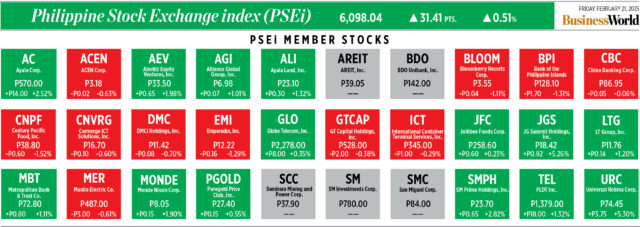
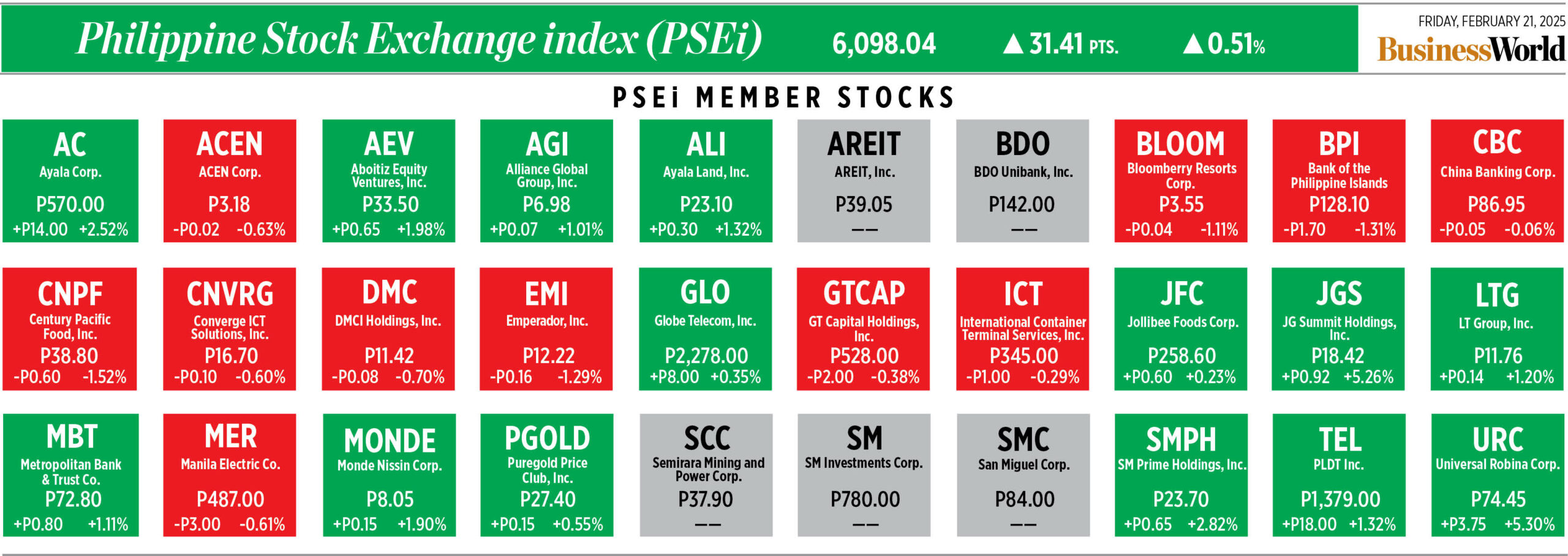
How PSEi member stocks performed — February 21, 2025

Here’s a quick glance at how PSEi stocks fared on Friday, February 21, 2025.


Exit from FATF ‘gray list’ may lift Philippine stocks

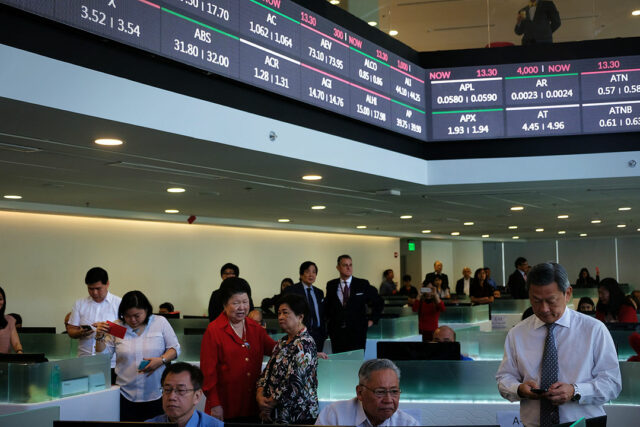
BW FILE PHOTO

PHILIPPINE STOCKS may advance this week as market sentiment is expected to get a lift from the country’s removal from dirty money watchdog Financial Action Task Force’s (FATF) “gray list” and after the central bank said it would cut banks’ reserve requirement ratios (RRR) next month.

On Friday, the benchmark Philippine Stock Exchange index (PSEi) climbed by 0.51% or 31.41 points to close at 6,098.04, while the broader all shares index dropped by 0.30% or 11.34 points to 3,660.28.

Week on week, the PSEi went up by 0.61% or 36.71 points from its 6,061.33 finish on Feb. 14.

“After dropping back to below 6,000 to open the week, the local bourse managed to recover as the first round of earnings releases started, but gains were capped as caution permeated,” online brokerage 2TradeAsia.com said in a market note.

For this week, Rizal Commercial Banking Corp. Chief Economist Michael L. Ricafort said the Philippines’ exit from the FATF’s gray list of jurisdictions under increased monitoring for money laundering risks could boost market sentiment.

The Philippines was on the FATF’s gray list for over three years or since June 2021.

The FATF Plenary and Working Group Meetings took place in Paris, France from Feb. 17 to Feb. 21.

The dirty money watchdog noted the Philippines’ “positive progress in addressing the strategic anti-money laundering and countering the financing of terrorism and proliferation financing deficiencies previously identified during their mutual evaluations.”

Mr. Ricafort added that the Bangko Sentral ng Pilipinas’ (BSP) announcement that it would cut banks’ RRRs further effective next month will also be positive for the market, as this would free up more than P300 billion in liquidity, which could be invested in equities.

On Friday, the BSP said it will reduce the RRR of universal and commercial banks and nonbank financial institutions with quasi-banking functions by 200 basis points (bp) to 5% from 7% effective March 28.

The central bank will also cut the RRR for digital banks by 150 bps to 2.5%, while the ratio for thrift lenders will be slashed by 100 bps to 0%.

The RRR is the portion of reserves that banks must hold onto rather than lending out. When a bank is required to hold a lower reserve ratio, it has more funds to lend to borrowers.

“Both of these developments… would support market sentiment and could increase investor confidence on the country going forward, a welcome development and one of the positive leads that the markets badly need recently, in view of the Trump factor that has weighed on the markets in recent weeks,” Mr. Ricafort said in an e-mail.

He placed the PSEi’s next support at 6,000 and minor resistance at 6,275-6,530.

For its part, 2TradeAsia.com put the market’s immediate support at 6,500 and resistance at 6,300-6,400. — S.J. Talavera