Home Blog Page 1528

Philippine ex-President Duterte to face murder charges at ICC for drug war killings
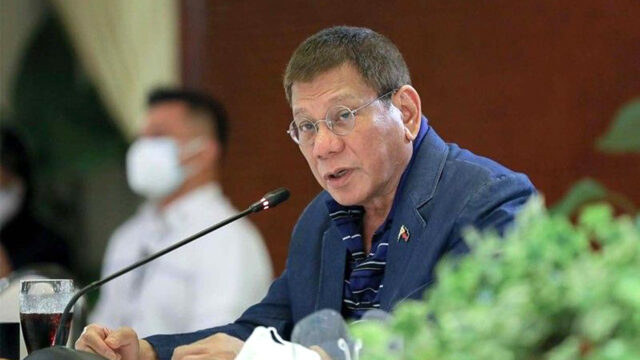
RODRIGO DUTERTE — PHILSTAR FILE PHOTO

ROTTERDAM (UPDATE) – A plane carrying former Philippine leader Rodrigo Duterte to the International Criminal Court to face charges over his bloody “war on drugs” took off for Rotterdam on Wednesday, after being delayed by a few hours during a layover in Dubai.

Duterte, who led the Philippines from 2016 to 2022, was arrested early on Tuesday in Manila, marking the biggest step yet in the ICC’s probe into alleged crimes against humanity during an anti-drugs crackdown that killed thousands and drew condemnation around the world.

Duterte, 79, could become the first Asian former head of state to go on trial at the ICC in The Hague.

The ICC’s warrant for his arrest says that as president, Duterte created, funded and armed “death squads” in his war on drugs that carried out murders of purported drug users and dealers.

In coming days, he will be brought before a judge and will have the allegations read out in court. Prosecutors accuse him of crimes against humanity for systematic attacks that led to dozens of murders.

A source at the ICC, who spoke on condition of anonymity, said the plane carrying the former president to Rotterdam, the airport serving The Hague, had taken off from Dubai, which was also confirmed by flight tracker websites.

The plane had originally been set to land in the Netherlands around 0600 GMT, but tracking service Flightradar 24 showed it should now arrive around 1613 GMT.

Duterte received medical attention during the layover in Dubai. Philippine broadcaster ABS-CBN News showed on its website pictures of what it said were police doctors checking on Duterte as he lay on an airplane bed.

A spokesperson for the Philippine National Police said the medical checks were routine “regular vital signs and monitoring”.

‘WE ARE FINALLY GETTING JUSTICE’
About 20 anti-Duterte protesters gathered on Wednesday outside the ICC with banners and a mask depicting him as a vampire. A handful of pro-Duterte protesters also gathered at the court building in The Hague.

Back home, for families of Philippine drug war victims, Duterte’s arrest revived hopes for justice.

“I was surprised and felt as if I had been brought back to life because what we have been fighting for is finally coming to fruition – we are finally getting justice for our loved ones who were taken from us,” said Jerica Ann Pico, the widow of a man who was killed during the war on drugs.

His daughter Sara Duterte, the country’s vice president, boarded a morning flight to Amsterdam, her office said in a statement, but it did not say what she intended to do there or how long she planned to stay in the Netherlands.

The ICC’s press office declined to comment. One of Duterte’s lawyers did not immediately respond to a request for comment. Officials in Dubai also did not immediately respond to a request for comment.

SIGNATURE CAMPAIGN PLATFORM
Philippine President Ferdinand Marcos Jr told a press conference on Tuesday that the plane carrying Duterte was en route to The Hague, saying that would allow the former president “to face charges of crimes against humanity in relation to his bloody war on drugs”.

The war on drugs was the signature campaign platform that swept the mercurial Duterte to power in 2016. During his six years in office, 6,200 suspects were killed during anti-drug operations, by the police’s count.

Activists say the real toll was far greater, with many thousands more slum drug users gunned down in mysterious circumstances, some of whom were on community “watch lists” after they signed up for treatment.

Silvestre Bello, a former labour minister and one of the former president’s lawyers, said a legal team would meet to assess options and seek clarity on where Duterte would be taken and whether they would be granted access to him.

Duterte’s youngest daughter, Veronica, plans to file a habeas corpus request with the Philippine Supreme Court to compel the government to bring him back, Salvador Panelo, his former chief legal counsel, said.

The arrest marks a stunning change of fortunes for the influential Duterte family, which formed a formidable alliance with Marcos to help him win a 2022 election by a huge margin.

But Marcos and his vice president have since had a bitter fallout, culminating in Sara Duterte’s impeachment last month by a lower house led by loyalists of Marcos. — Reuters

Greenland’s independence gradualists win election amid Trump control pledge

GREENLAND’s flag flutters on a tourist boat as it sails past icebergs near Ilulissat, Greenland, Sept. 13, 2017. — REUTERS

NUUK, Greenland — Greenland’s pro-business opposition Demokraatit party, which favors a slow approach to independence from Denmark, won on Tuesday’s parliamentary election that was dominated by US President Donald Trump’s pledge to take control of the island.

Demokraatit secured 29.9% of the votes with all ballots counted, up from 9.1% in 2021, ahead of the opposition Naleraq party, which favors rapid independence, at 24.5%.

Since taking office in January, Donald Trump has vowed to make Greenland — a semi-autonomous territory of Denmark — part of the United States, saying it is vital to US security interests, an idea rejected by most Greenlanders.

The vast island, with a population of just 57,000, has been caught up in a geopolitical race for dominance in the Arctic, where melting ice caps are making its resources more accessible and opening new shipping routes. Both Russia and China have intensified military activity in the region.

“People want change … We want more business to finance our welfare,” said Jens-Frederik Nielsen, Demokraatit’s leader and a former minister of industry and minerals.

“We don’t want independence tomorrow, we want a good foundation,” Mr. Nielsen told reporters in Nuuk.

He will now hold talks with other parties to try and form a governing coalition.

The ruling Inuit Ataqatigiit party and its partner Siumut, which also seek a slow path towards independence, won a combined 36% of votes, down from 66.1% in 2021.

“We respect the election outcome,” Prime Minister Mute Egede of the Inuit Ataqatigiit said in a Facebook post, adding that he would listen to any proposals in upcoming coalition talks.

Greenland is a former Danish colony and has been a territory since 1953. It gained some autonomy in 1979 when its first parliament was formed, but Copenhagen still controls foreign affairs, defense and monetary policy and provides just under $1 billion a year to the economy.

In 2009, it won the right to declare full independence through a referendum, even though it has not done so out of concern living standards would drop without Denmark’s economic support.

“I strongly believe that we will very soon start to live a life more based on who we are, based on our culture, based on our own language, and start to make regulations based on us, not based on Denmark,” said Qupanuk Olsen, candidate for the main pro-independence party Naleraq.

Inge Olsvig Brandt, a candidate for the ruling Inuit Ataqatigiit party, said:

“We don’t need the independence right now. We have too many things to work on. I think we have to work with ourselves, our history, and we are going to have a lot of healing work with us before we can take the next step.”

Voting had been extended by half an hour at some of the 72 polling stations across the Arctic island, where some 40,500 people were eligible to cast their ballot, although the final turnout was not immediately available.

INUIT PRIDE
Mr. Trump’s vocal interest has shaken up the status quo and coupled with the growing pride of the Indigenous people in their Inuit culture, put independence front and center in the election.

In the final debate on Greenland’s state broadcaster KNR late on Monday, leaders of the five parties currently in parliament unanimously said they did not trust Mr. Trump.

“He is trying to influence us. I can understand if citizens feel insecure,” said Erik Jensen, leader of government coalition partner Siumut.

A January poll suggested a majority of Greenland’s inhabitants support independence, but are divided on timing.

Early on, the election campaign focused on the anger and frustration aimed at historical wrongdoings by Denmark, according to Julie Rademacher, a consultant and former adviser to Greenland’s government.

“But I think the fear of the US imperialist approach has lately become bigger than the anger towards Denmark,” said Ms. Rademacher.

Reuters spoke to more than a dozen Greenlanders in Nuuk, all of whom said they favored independence, although many expressed concern that a swift transition could damage the economy and eliminate Nordic welfare services like universal healthcare and free schooling.

“We don’t want to be part of the US for obvious reasons; healthcare and Trump,” said Tuuta Lynge-Larsen, a bank employee and Nuuk resident, adding that this election was especially important. “We don’t like the attention, to put it short.”

The island holds substantial natural resources, including critical minerals such as rare earths used in high-tech industries, ranging from electric vehicles to missile systems.

However, Greenland has been slow to extract them due to environmental concerns, severe weather, and China’s near-total control of the sector, which has made it difficult for companies elsewhere to make a profit or secure buyers.

INVESTMENT PLEDGES
Mr. Trump initially declined to rule out military force to take control of the territory, alarming many Greenlanders, although he later softened his stance, stating he would respect the will of the local people and was “ready to invest billions of dollars” if they joined the US.

Mr. Egede has stressed the island is not for sale and advocated for a broad coalition government to resist external pressure. In an interview aired on Monday by Danish broadcaster DR, he dismissed Mr. Trump’s offer as disrespectful, expressing willingness to cooperate with other countries instead.

Denmark’s prime minister has said Greenland is not for sale, but made it clear that it is up to the local people to decide their future.

All six main political parties support independence but differ on how and when it could be achieved.

The pro-independence Naleraq party, the leading opposition force, had gained momentum ahead of the election, bolstered by US interest and fresh accusations of Denmark’s historic exploitation of Greenland’s mineral wealth.

The party believes the US attention strengthens Greenland’s position in secession talks with Denmark and aims to bring a deal with Copenhagen to a vote before the next election in four years. — Reuters

US Education department to cut half its staff as Trump eyes its elimination

RAWPIXEL

WASHINGTON — The US Department of Education said on Tuesday it would lay off nearly half its staff, a possible precursor to closing altogether, as government agencies scrambled to meet President Donald Trump’s deadline to submit plans for a second round of mass layoffs.

The terminations are part of the department’s “final mission,” it said in a press release, alluding to Mr. Trump’s vow to eliminate the department, which oversees $1.6 trillion in college loans, enforces civil rights laws in schools and provides federal funding for needy districts.

Asked on Fox News whether the firings would lead to the department’s dismantling, Secretary of Education Linda McMahon said “yes,” adding that doing so “was the president’s mandate.” The layoffs would leave the department with 2,183 workers, down from 4,133 when Mr. Trump took office in January.

Before announcing the layoffs, the agency ordered offices in the Washington area closed to staff from Tuesday evening through Wednesday, according to an internal notice seen by Reuters. An Education department spokesperson did not immediately respond to questions about the nature of the security issues prompting the closures.

Similar closures served as a precursor to shuttering the headquarters of the US Agency for International Development (USAID), the humanitarian aid agency, and the Consumer Financial Protection Bureau, which protects Americans against unscrupulous lenders.

The layoffs are the latest step in Mr. Trump’s sweeping effort to downsize the government, led by the world’s richest person Elon Musk and his Department of Government Efficiency (DOGE). DOGE has cut more than 100,000 jobs across the 2.3 million-member federal civilian bureaucracy, frozen most foreign aid and canceled thousands of programs and contracts, despite dozens of lawsuits challenging the legality of those moves.

DOGE’s blunt-force approach has frustrated several White House officials and Republican lawmakers, some of whom have confronted angry constituents at town halls. Mr. Trump told department heads last week that they, not Mr. Musk, have the final say on staffing, his first notable public move to restrain the Tesla CEO.

All US government agencies have been ordered to come up with large-scale layoff plans by Thursday, setting up the next phase of Mr. Trump’s cost-cutting campaign. Several agencies have offered employees payments to retire early to fulfill Mr. Trump’s demand.

Affected Education department employees will be placed on administrative leave starting on March 21, the department said.

The union representing more than 2,800 department workers said it would fight the “draconian cuts.”

“What is clear from the past weeks of mass firings, chaos, and unchecked unprofessionalism is that this regime has no respect for the thousands of workers who have dedicated their careers to serve their fellow Americans,” said Sheria Smith, president of the American Federation of Government Employees Local 252.

Mr. Trump and Mr. Musk have argued that the government is wasteful and bloated. DOGE claims it has saved $105 billion in cuts, but it has only publicly documented a fraction of those savings, and its accounting has been plagued by errors.

The federal government reported an estimated $162 billion in improper payments in fiscal year 2024, according to a US Government Accountability Office (GAO) annual report released on Tuesday. The vast majority were overpayments, the report said. Total federal outlays topped $6.75 trillion in that fiscal year, according to the Congressional Budget Office.

The total improper payments figure was down sharply from 2023’s $236 billion, the GAO said.

EARLY RETIREMENT OFFERS
Other agencies have offered lump-sum payments of up to $25,000 before tax to workers who agree to leave their jobs. Among these are the Office of Personnel Management (OPM), the Social Security Administration and the Department of Health and Human Services (HHS), including its Food and Drug Administration.

The buyout offers, combined with another program that eases eligibility requirements for early retirement, are being embraced as a lower-friction way to help meet the Thursday deadline, human resources specialists at several federal agencies told Reuters.

The Trump administration has been grappling with myriad lawsuits after it fired thousands of probationary workers in a first wave of mass layoffs and essentially dismantled entire departments like USAID and CFPB.

The General Services Administration (GSA), which manages the government’s property portfolio, is also seeking approval to offer the buyout payments to workers, according to an e-mail sent by its acting head to staff on Monday and seen by Reuters. The GSA could not be reached for comment outside of US business hours. The Securities and Exchange Commission has already offered bonuses of up to $50,000, Reuters reported.

Human resources and public governance experts said the appeal of the buyout program is that it is voluntary and less vulnerable to legal challenges. It also requires workers who have accepted the offer to repay the money if they take another government job within five years.

“If your strategy is to get as many people out the door voluntarily, that reduces the risk of court orders and opposition to you in the long run,” said Don Moynihan, a public policy professor at the University of Michigan.

Only a couple of agencies have telegraphed how many employees they plan to cut in the second phase of layoffs. These include the Department of Veterans Affairs, which is aiming to cut more than 80,000 workers, and the National Oceanic and Atmospheric Administration, which is planning to cut 1,029 staff.

Despite the looming deadline, no agency has yet submitted its job-cutting plan to OPM, the government’s human resources department that is collating the data, a person familiar with the matter told Reuters. OPM declined to comment.

OPM itself has offered lump-sum payments to some 650 of its employees, according to another person with knowledge of the matter. Employees were given until March 12 to respond.

On Monday, the HR department of the Food and Drug Administration sent an e-mail to all 19,000 employees announcing a Friday, March 14, deadline for a buyout program. Those who accept would have to retire by April 19.

Late on Monday, HHS sweetened its prior offer by adding two months of full pay in addition to the bonus, according to a copy of the e-mail seen by Reuters. HHS could not be reached for comment outside of normal US business hours. — Reuters

Whoscall app becoming a way of life for Filipinos fighting scams

In photo: Creators who shared how the Whoscall app helps them — making it an essential part of their daily routine and a way of life

In a time when digital threats like scam calls, phishing links, and fraudulent messages are everywhere, Filipinos from all backgrounds are taking charge of their online safety with Whoscall — a global anti-scam app.

As part of the #DapatAllMagWhoscall campaign, creators from different fields are sharing how the app helps them stay safe online and how Whoscall has become an essential part of their daily routine, making it a way of life for them.

Freelancers use it to verify unknown numbers, helping them distinguish between real client inquiries and scam calls. Digital natives rely on the app’s Uniform Resource Locator (URL) Scanner — Web Checker — to verify if a website is legitimate before clicking, keeping phishing attacks at bay. Further, they can also use the auto web checker to proactively check the risk of URLs and domains.

Online sellers and entrepreneurs use Whoscall’s caller ID and database to verify buyers, filter out scammers, and report fraudulent transactions. Even everyday Filipinos are sharing their experiences, highlighting how Whoscall has helped them avoid scams and reinforcing its vital role in fraud prevention.

By highlighting these cases, Whoscall reinforces its goal of proving that it is more than just a scam detection tool, offering a range of protective features that make it an essential tool for ensuring security in everyday digital interactions.

Recognizing this shift led to the unveiling of the addition of “Para sigurado ka sa mga texts, calls, and links” (To be sure about texts, calls, and links), reinforcing the idea that Whoscall is more than just a scam detection tool — it also offers a wide range of protective features.

Gogolook Philippines Country Head Mel Migriño pointed out Whoscall’s impact across different professions and its role in promoting digital inclusivity and security.

“The Whoscall App is more than just a tool — it’s a game-changer for professionals and digital users alike. By promoting inclusivity and security, it empowers individuals from all walks of life to navigate the digital world with confidence and peace of mind,” Ms. Migriño said.

Whoscall stands out as a free and user-friendly app, made even stronger by community contributions.

Available for download on both the Apple App Store and Google Play Store, the app is easy to set up — users simply install it, grant the necessary permissions, and register via Facebook or Gmail for seamless integration.

To ensure real-time protection, regularly updating the database is essential.

Whoscall’s effectiveness is reinforced by collaborations with government agencies like the Cybercrime Investigation and Coordinating Center (CICC) in the Philippines. However, its ability to detect unknown calls and risky links is further enhanced by user-generated reports, much like how Waze relies on community input to navigate traffic efficiently.

With the #DapatAllMagWhoscall campaign, the app champions digital safety, emphasizing the importance of protecting individuals from scam calls, suspicious messages, and fraudulent links.

By using Whoscall, users not only safeguard themselves but also contribute to a more secure and fraud-resistant digital space.


Spotlight is BusinessWorld’s sponsored section that allows advertisers to amplify their brand and connect with BusinessWorld’s audience by publishing their stories on the BusinessWorld Web site. For more information, send an email to online@bworldonline.com.

Join us on Viber at https://bit.ly/3hv6bLA to get more updates and subscribe to BusinessWorld’s titles and get exclusive content through www.bworld-x.com.

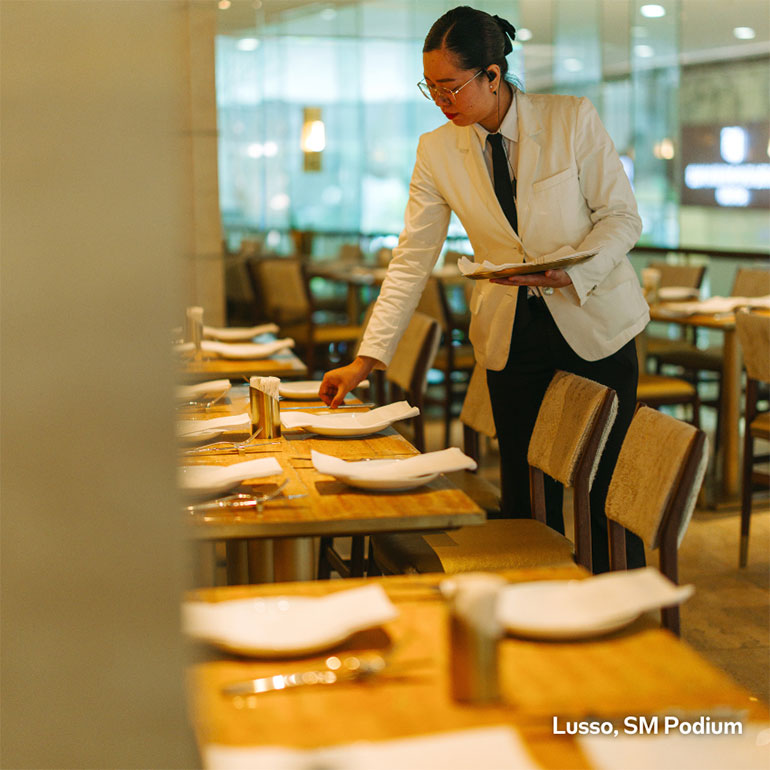
New year, new flavors: Lusso by Margarita Forés arrives at SM Podium

SM Podium elevates its sophisticated dining experience with the launch of Lusso by Margarita Forés — the first Margarita Signature restaurant, established by the celebrated chef and restaurateur Margarita Forés, to become part of SM’s prestigious portfolio. With the festive season in full swing, Lusso offers  the perfect setting to celebrate life’s special moments, whether it’s a holiday gathering, a romantic dinner, or a quiet indulgence with loved ones.

Renowned for her world-class culinary artistry, recognized as Asia’s Best Female Chef in 2016 by Asia’s 50 Best Restaurants, Forés brings her signature touch of elegance and exceptional flavors to this exciting new addition. Lusso promises an extraordinary culinary journey that combines the finest ingredients, impeccable presentation, and flavors that linger long after the last bite. Known for her innovative approach to Italian cuisine and her dedication to celebrating Filipino flavors on the global stage, Forés brings unparalleled expertise and a passion for excellence to every dish. At Lusso, dining becomes more than just a meal — it’s an experience.

Lusso is the perfect setting for creating unforgettable memories. Whether you’re planning an intimate dinner with someone special, hosting a cozy family gathering, or celebrating milestones with your closest friends, the restaurant offers the perfect backdrop to celebrate the season in style.

Lusso is a natural inclusion in SM Podium, seamlessly aligning with its reputation as a haven for elevated experiences through its curated offerings, sophisticated ambiance, and dedication to world-class dining. Offering an exquisite menu designed to indulge the senses, the restaurant is an invitation to savor life’s finer moments.

Signature dishes like the Portobello Mushroom, Asparagus & Goat Cheese Mille-Feuille and the decadent Lobster Linguine highlight Lusso’s commitment to culinary artistry. From sumptuous dishes crafted with precision to an ambiance that radiates understated luxury, Lusso transforms every visit into an unforgettable affair.

Visit Lusso at SM Podium and make this festive season truly special. Whether you’re indulging in a celebratory feast or treating yourself to an unforgettable dining experience, Lusso offers more than just a meal — it’s a taste of refined luxury. Discover more reasons to celebrate, more moments to savor, and more for you at SM, where exceptional dining meets the spirit of togetherness.




Spotlight is BusinessWorld’s sponsored section that allows advertisers to amplify their brand and connect with BusinessWorld’s audience by publishing their stories on the BusinessWorld Web site. For more information, send an email to online@bworldonline.com.

Join us on Viber at https://bit.ly/3hv6bLA to get more updates and subscribe to BusinessWorld’s titles and get exclusive content through www.bworld-x.com.

Philippines’ VP travels to The Hague as lawyers explore legal remedies for arrested ex-president

VICE-PRESIDENT SARA DUTERTE-CARPIO FACEBOOK PAGE

MANILA – Former Philippine President Rodrigo Duterte’s daughter, Vice President Sara Duterte, travelled to the Netherlands on Wednesday following his arrest at the request of the International Criminal Court as part of its probe into his “war on drugs.”

Rodrigo Duterte, a maverick ex-mayor and former prosecutor who led the Philippines from 2016 to 2022, was flown to The Hague on Tuesday, hours after his arrest in Manila, marking the biggest step yet in the ICC’s probe into alleged crimes against humanity during an anti-drugs crackdown that killed thousands and drew condemnation around the world.

Mr. Duterte, 79, could become the first Asian former head of state to go on trial at the ICC.

His daughter Sara boarded a morning flight to Amsterdam, her office said in a statement, but it did not say what she intended to do there or how long she plans to stay in the Netherlands.

Silvestre Bello, a former labor minister and one of the former president’s lawyers, said a legal team will meet to assess options and seek clarity on where Mr. Duterte will be taken and whether they would be granted access to him.

“First thing we will do is find out where exactly the former president will be brought so we know where we should go, because he will need legal assistance,” Mr. Bello said. “We will also discuss all possible legal remedies.”

Mr. Duterte is expected to arrive in the Netherlands on Wednesday. His youngest daughter, Veronica Duterte, plans to file a habeas corpus request with the Philippine Supreme Court to compel the government to bring him back, Salvador Panelo, his former chief legal counsel, said.

The war on drugs was the signature campaign platform that swept the mercurial Duterte to power in 2016. During his six years in office, 6,200 suspects were killed during anti-drug operations, by police count.

But activists say the real toll was far greater, with many thousands more slumland drug users gunned down in mysterious circumstances, some of whom were on community “watch lists” after they signed up for treatment.

Although Mr. Duterte unilaterally withdrew the Philippines from the ICC’s founding treaty in 2019 as it started looking into the drugs war, the court says it has jurisdiction to investigate alleged crimes that took place while a country was a member.

“Former President Duterte’s arrest and transfer to The Hague is a long-overdue victory against impunity that could bring victims and their families a step closer to justice,” said Bryony Lau, deputy Asia director at Human Rights Watch.

“This momentous event sends a message to human rights abusers everywhere that one day they could be held to account,” Mr. Lau added. – Reuters

Musk launches appeal to restore $56 billion Tesla payday

FILE PHOTO: Elon Musk, CEO of SpaceX and Tesla and owner of X, formerly known as Twitter, attends the Viva Technology conference dedicated to innovation and startups at the Porte de Versailles exhibition centre in Paris, France, June 16, 2023. REUTERS/Gonzalo Fuentes/File Photo

 – Elon Musk kicked off his appeal to try to restore his $56 billion payday from Tesla on Tuesday, claiming a lower court judge made multiple legal errors in rescinding the record compensation.

The 2018 pay package resulted in spectacular growth for the electric vehicle maker and yet it was determined by the lower Court of Chancery to be unfair to shareholders, who voted twice to approve the plan, Mr. Musk argued.

“That counterintuitive result defies settled principles of Delaware law, sound corporate governance, and common sense,” said the opening appeal brief by Musk and the current and former Tesla directors who are defendants in the case.

In January 2024, Chancellor Kathaleen McCormick rescinded the pay package of stock options, calling it “unfathomable.” She said it was unfair to Tesla shareholders because the directors who approved it were beholden to Musk and Tesla withheld key information from investors before they voted to approve it.

In June, Tesla got shareholder approval for the pay package for a second time, but the judge rejected that as grounds for reversing her ruling.

The pay package had awarded Musk options to buy around 303 million Tesla shares at around $23 each if the company hit performance and valuation goals. Tesla stock closed Tuesday at $230.58.

Tesla has said creating a new pay package of similar value could result in a charge of $25 billion, making the appeal an important avenue for restoring Mr. Musk’s compensation and keeping his attention on Tesla.

Mr. Musk has said that he wants a greater stake in Tesla or he might develop products outside of the company. The appeal comes as he is dedicating time to President Donald Trump’s government efficiency effort, known as DOGE, which has sparked demonstrations outside Tesla dealerships. The stock has fallen sharply in recent weeks.

In the appeal brief, Mr. Musk and the other defendants said Ms. McCormick wrongly applied a very difficult legal standard known as entire fairness to assess the pay package.

She arrived at that standard by finding Mr. Musk, who owned 21.9% of the stock at the time the board approved the pay package, controlled the pay negotiations, according to the brief. In addition, she wrongly determined that ordinary business relationships among directors made them conflicted and she erroneously faulted Tesla’s disclosures ahead of the 2018 shareholder vote, according to the brief.

Applying the entire fairness standard amounted to granting a “license to sue” to Tesla shareholders, the brief said. The lawsuit was brought by Richard Tornetta, a Tesla investor who owned nine shares when he filed the case in 2018. The lawsuit benefits Tesla, not Mr. Tornetta, in what is known as a derivative suit.

Mr. Musk blasted the pay decision and has encouraged other companies to follow Tesla and SpaceX and reincorporate out of Delaware. A handful have left the state or said they might, including Meta PlatformsTripAdvisor and Mr. Trump’s media company.

Fears that a trickle of companies will turn into a stampede, which has been dubbed “DExit,” prompted the state’s legislature to consider amending its corporate law to better protect controlling shareholders from lawsuits. – Reuters

USAID employees ordered to shred records, court filing says

An official at the U.S. Agency for International Development has ordered employees to shred a large volume of records, according to a court filing on Tuesday by government employee unions asking a judge to block the move.

In a motion filed in Washington, D.C., federal court, the unions cited an email from USAID’s acting executive secretary Erica Carr instructing employees to come to the agency’s office on Tuesday for “clearing classified safes and personnel documents.”

“Shred as many documents first, and reserve the burn bags for when the shredder becomes unavailable or needs a break,” Ms. Carr wrote in the email, which was included in the filing. The email did not give details about what documents were to be shredded.

The unions said the directive “suggests a rapid destruction of agency records on a large scale” that both violates federal record-keeping law and could destroy evidence in their case, which seeks to undo the dismantling of USAID under President Donald Trump.

White House Deputy Press Secretary Anna Kelly on X called reports of the shredding “fake news hysteria” and wrote that the documents were “old, mostly courtesy content (content from other agencies), and the originals still exist on classified computer systems.”

Ms. Kelly also wrote that the USAID building would soon be occupied by U.S. Customs and Border Protection.

The lawsuit was brought by the American Federation of Government Employees and American Foreign Service Association, which represent government employees, as well as by anti-poverty organization Oxfam America. They allege that Mr. Trump overstepped his authority in largely shuttering an independent agency established by Congress by firing or putting on leave its employees and cancelling its agreements with third-party partners.

The plaintiffs on Tuesday asked U.S. District Judge Carl Nichols for a temporary restraining order blocking the destruction of records. They said that if they eventually prevail in the case, the loss of vital personnel or other records could prevent USAID from resuming its operations.

In response to Tuesday’s motion, the judge ordered both sides to submit a status report by Wednesday morning proposing a schedule for briefs on the motion and noting any disagreements between them.

Mr. Nichols, a Trump appointee, last month allowed the administration to go forward with its plan to put more than 2,000 USAID employees on leave. Under Mr. Trump, the foreign aid agency has scrapped more than 80% of its programs and fired much of its staff.

In a separate lawsuit brought by USAID contractors and grant recipients, a federal judge on Monday ruled that the Trump administration cannot refuse to spend foreign aid money appropriated by Congress, although the judge stopped short of restoring canceled contracts. In that case, the Trump administration has repeatedly resisted complying with court orders to release frozen funds. – Reuters

Trump defends tariffs before corporate America as stocks sell off

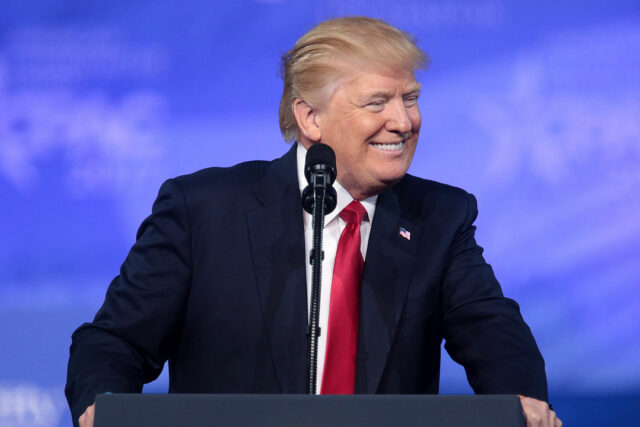
GAGE SKIDMORE-WIKIPEDIA

 – U.S. President Donald Trump defended his use of tariffs and said they could multiply as he met on Tuesday with the CEOs of America’s biggest companies, many of whom have watched their market value crater over recession and inflation fears.

The Republican president spoke to about 100 CEOs at a regular meeting of the Business Roundtable, which includes the heads of Apple, JPMorgan Chase and Walmart. The event followed a private Trump meeting with technology company executives at the White House on Monday.

U.S. stocks on Tuesday extended a selloff that has dragged the benchmark S&P 500 down 5.3% so far in 2025, with investors rattled over increased tariffs on imports and souring consumer sentiment.

Monday’s drop in the S&P 500 was its largest this year and followed an interview over the weekend in which Mr. Trump declined to rule out a recession resulting from his trade policies.

He clarified those comments on Tuesday, telling reporters, “I don’t see it at all,” regarding the possibility of a recession.

Speaking to business leaders and reporters before the roundtable, Trump defiantly maintained his stance, dismissed market volatility and vowed that investors would see gains for putting money to work now.

“The tariffs are going to be throwing off a lot of money for this country,” he said to CEOs. “It may go up higher.”

The executives in the room sat expressionless as Mr. Trump spoke during a brief part of the meeting that was open to the press. There was scattered chuckling when Mr. Trump said there were some people in the room he did not like.

Later, in a part of the meeting that was closed to reporters, Mr. Trump vowed to speed up approvals in environmental agencies and cut tax rates to 15% for companies making products in the U.S., according to a person familiar with the remarks.

Mr. Trump said markets may have been too high as of a few weeks ago, and described Chinese President Xi Jinping as not thrilled about the new tariffs, the person said.

Mr. Trump’s economic policies so far have centered on a blitz of tariff announcements. Some have taken effect and others have been delayed or are set to kick in later. He said they will correct unbalanced trade and stop the flow of illegal narcotics from abroad.

Mr. Trump started Tuesday by ramping up a burgeoning trade war with Canada, vowing to double tariffs set to take effect within hours on all imported steel and aluminum products from America’s northern neighbor to 50%. The White House later said the tariff would remain at 25% after Canadian officials agreed to talks.

Markets worry that tariffs could raise prices for businesses, boost inflation and undermine consumer confidence in a blow to economic growth. It has also raised investor speculation that Trump’s ambition will not be bound by the preferences of big business.

The White House has dismissed this thinking, which is shared by most economists, who view trade wars as a lose-lose proposition for the countries involved.

Mr. Trump’s aides say the tariff threats will force companies to invest more in the United States.


VOLATILE MARKETS

“Markets are going to go up and they’re going to go down, but you know what? We have to rebuild our country,” Trump told reporters before he met the business leaders.

For much of his political career, Mr. Trump has talked up the importance of the stock market. During his first 2017-2021 term in office he regularly pointed to rallying stock prices as proof of his success and in both his 2020 and 2024 campaigns warned that markets could tumble if he lost.

Mr. Trump had already imposed an additional 20% tariff on Chinese goods entering the United States, and 25% tariffs on imports from Canada and Mexico, although he suspended most of the duties on U.S. neighbors until April 2, when he plans to unveil a global regime of reciprocal tariffs on all trading partners.

Until recently, investors had been optimistic that Mr. Trump’s policies would stimulate growth, for instance through lower taxes. They also hoped he could ease inflationary pressures, for instance by loosening regulation on fossil fuel production.

But tax cuts need congressional approval and energy producers are unlikely to dramatically scale up production, which could cut their profit margins. Meanwhile, some economists see plans to increase deportations of undocumented immigrants increasing price pressures in the labor market. Cutting the federal workforce could raise unemployment.

“If we all are becoming a little more nationalistic … it’s going to have elevated inflation,” said BlackRock BLK.N CEO Larry Fink, a Business Roundtable member, at an industry conference on Monday.

Last week, the Business Roundtable warned that if they are long-lasting, the tariffs “run the risk of creating serious economic impact.” – Reuters

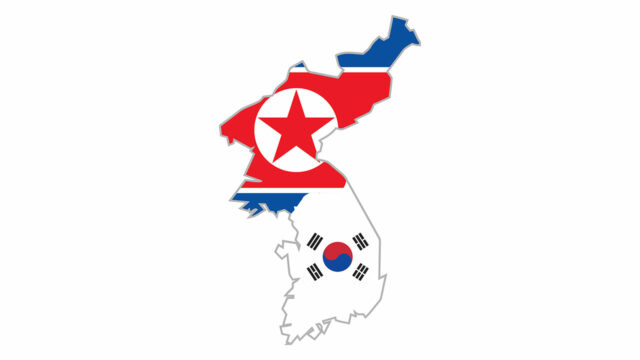
North Korea says South Korea jets’ accidental bombing shows armed conflict possible, KCNA says

 – North Korea said on Wednesday a recent accidental bombing of a civilian area by South Korean fighter jets in training shows a mishap could trigger a new armed conflict on the Korean peninsula, its state news agency reported.

Two South Korean jets mistakenly dropped eight air-to-surface bombs on a village near the military border with North Korea on Thursday, injuring 29 civilians in an accident the South’s military said was likely caused by pilot error.

The area was close to a regular training ground used by the allies near the border.

“We don’t need to explain how the situation would have unfolded if the bombs had dropped further north and crossed our border,” KCNA state news agency said.

“It is not at all an unreasonable imagination … that an accidental spark could engulf the Korean peninsula and the world in a new armed conflict in response to the malicious large joint military drills by the U.S. and South Korea,” KCNA said.

South Korean and U.S. militaries began annual Freedom Shield drills on Monday to run until March 20, but they suspended live-fire exercises following the bombing accident.

North Korea routinely denounces joint military drills by the allies, calling them a dress rehearsal for war against it.

South Korea rejects that accusation, saying the drills are defensive and aimed at maintaining readiness against possible North Korean aggression.

The U.S. Defense Department did not immediately have comment.

“This incident is an example of how the various war demonstrations by the U.S. and its followers targeting us are not for ‘peace and stability in South Korea’ as they claim but an extremely dangerous and unamusing acts that can breed an imminent crisis and the world’s first nuclear war,” KCNA said.

It warned of taking “merciless action” without notice if needed because of its enemies’ military activities. – Reuters

US to resume security support to Ukraine as Kyiv says it is ready to accept ceasefire proposal

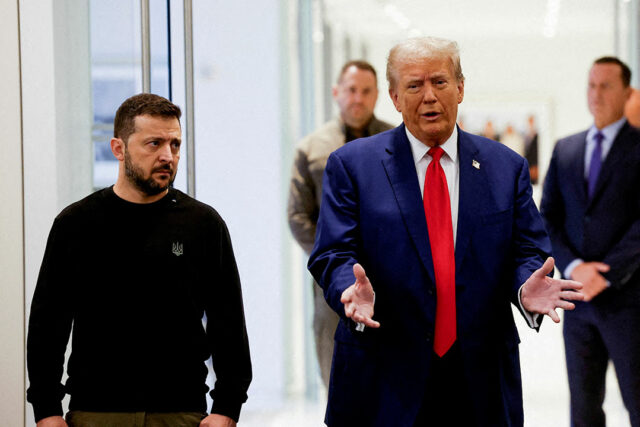
Donald Trump and Ukraine’s President Volodymyr Zelenskiy meet at Trump Tower in New York City, U.S., Sept. 27, 2024. — REUTERS

 – The United States agreed on Tuesday to resume military aid and intelligence sharing with Ukraine after talks where Kyiv said it would accept a U.S. proposal for a 30-day ceasefire in its conflict with Russiathe countries said in a joint statement.

U.S. Secretary of State Marco Rubio said the U.S. would now take the offer to Russia, and the ball is in Moscow’s court.

“Our hope is that the Russians will answer ‘yes’ as quickly as possible, so we can get to the second phase of this, which is real negotiations,” Rubio told reporters, referring to U.S. President Donald Trump, after more than eight hours of talks in Jeddah, Saudi Arabia.

The Kremlin launched a full-scale invasion of Ukraine three years ago, and Russia, which has been making advances, now holds around a fifth of Ukraine’s territory, including Crimea, which it annexed in 2014.

Mr. Rubio said Washington wanted a full agreement with both Russia and Ukraine “as soon as possible.”

“Every day that goes by, this war continues, people die, people are bombed, people are hurt on both sides of this conflict,” he said.

How Moscow would respond was far from certain.

Russian President Vladimir Putin has said he is open to discussing a peace deal, but he and his diplomats have repeatedly stated they are against a ceasefire and would seek a deal that safeguards Russia’s “long-term security.” Putin has ruled out territorial concessions and said Ukraine must withdraw fully from four Ukrainian regions claimed and partly controlled by Russia.

On Tuesday, Russia’s foreign ministry said only that it did not rule out contacts with U.S. representatives.

Ukrainian President Volodymyr Zelenskiy, who was in Saudi Arabia but did not participate in the talks, said the ceasefire was a “positive proposal,” that covers the frontline in the conflict, not just fighting by air and sea.


WILL RUSSIA AGREE?

The Ukrainian leader said the ceasefire would take effect as soon as Russia agreed.

“When the agreements come into force, during these 30 days of ‘silence,’ we will have time to prepare with our partners at the level of working documents all the aspects for reliable peace and long-term security,” Mr. Zelenskiy said.

Rubio said the plan would be delivered to the Russians through multiple channels. Mr. Trump’s national security adviser, Mike Waltz, was due to meet his Russian counterpart in the coming days and Mr. Trump’s special envoy Steve Witkoff plans to visit Moscow this week to meet Putin.

On Tuesday, Mr. Trump said he hoped for a swift ceasefire and thought he would talk to Putin this week. “I hope it’ll be over the next few days,” he told reporters at a White House event to promote his close adviser Elon Musk’s Tesla car company.

The U.S.-Ukraine agreement was a sharp turnaround from an acrimonious White House meeting on February 28 between the new Republican U.S. president, who has long been a Ukraine aid skeptic, and Mr. Zelenskiy.

In Tuesday’s joint statement, the two countries said they agreed to conclude as soon as possible a comprehensive agreement for developing Ukraine’s critical mineral resources, which had been in the works and was thrown into limbo by that meeting.

Following that encounter, the United States cut off intelligence sharing and weapons shipments to Ukraine, underlining Mr. Trump’s willingness to pressure a U.S. ally as he pivots to a more conciliatory approach to Moscow.

Trump said on Tuesday he would invite Mr. Zelenskiy back to the White House.

Ukrainian officials said late on Tuesday that both U.S. military assistance and intelligence sharing had resumed.


EUROPEAN PARTNERS

A top aide to Mr. Zelenskiy said options for security guarantees to Ukraine were discussed with U.S. officials. Security guarantees have been one of Kyiv’s key aims, and some European countries have expressed willingness to explore sending peacekeepers.

In the joint statement, Ukraine reiterated that European partners should be involved in the peace process. NATO Secretary General Mark Rutte will be at the White House on Thursday.

“It seems like the Americans and Ukrainians have taken an important step towards peace. And Europe stands ready to help reach a just and lasting peace,” Polish Prime Minister Donald Tusk said on X.

Mr. Waltz said the initial resumption of military assistance for Ukraine would involve equipment from U.S. stockpiles approved by former U.S. President Joe Biden and stopped by Mr. Trump.

As the diplomacy plays out, Ukraine’s battlefield positions have been under heavy pressure, particularly in Russia’s Kursk region where Moscow’s forces have launched a push to flush out Kyiv’s troops, which had been trying to hold a patch of land as a bargaining chip.

Ukraine overnight launched its biggest drone attack on Moscow and the surrounding region yet, showing Kyiv can also land major blows after a steady stream of Russian missile and drone attacks, one of which killed 14 people on Saturday.

The attack, in which 337 drones were downed over Russia, killed at least three employees of a meat warehouse and caused a short shutdown at Moscow’s four airports. – Reuters

Trump’s expanded metals tariffs to hit goods from horseshoes to bulldozer blades

STOCK PHOTO | Image by Foto-RaBe from Pixabay

 – U.S. President Donald Trump‘s bulked-up tariffs on steel and aluminum due to launch within hours will hit nearly $150 billion worth of derivative products made from the metals, ranging from nuts and bolts to bulldozer blades and threatening cost increases for industry and consumers alike.

The metals tariffs were set for an effective increase to 25% as prior exemptions, exclusions and quotas expire at 12:01 a.m. EDT (0401 GMT) on Wednesday, with hundreds of downstream products subjected to the duties for the first time.

Mr. Trump on Tuesday lashed out at Canada amid rising trade tensions with the U.S. ally, threatening 50% tariffs on Canadian steel and aluminum, but later backed off after Ontario Premier Doug Ford withdrew a 25% surcharge on the province’s electricity exports to the U.S.

A Reuters analysis of the products listed for new tariffs under Trump’s plan would subject a wide range of imported automotive and tractor parts, metal furniture, construction materials and machinery parts to the tariffs.

Mr. Trump’s action, first ordered last month to strengthen the Section 232 national security tariffs on steel and aluminum imposed during his first term, extends the duties to products as diverse as stainless steel sinks, gas ranges, air conditioner evaporator coils, horseshoes, aluminum fry pans and steel door hinges.

Total 2024 import value for the 289 product categories came to $147.3 billion with nearly two-thirds aluminum and one-third steel, according to Census Bureau data retrieved through the U.S. International Trade Commission’s Data Web system.

By contrast, Mr. Trump’s first two rounds of punitive tariffs on Chinese industrial goods in 2018 during his first term totaled only $50 billion in annual import value.

The tariffs will hit over $25 billion worth of imported aluminum components for cars, trucks, buses, tractors and specialty vehicles, and $15 billion worth of metal furniture and parts imports, the analysis showed.

Canada and Mexico, the two largest sources of the metals imports, would be the hardest hit. The two biggest U.S. trading partners also are battling separate, 25% duties on all products imposed in Trump’s drive to eradicate fentanyl trafficking. Those are largely paused for goods compliant with the U.S.-Mexico-Canada Agreement on trade’s rules of origin.

Steelmakers and aluminum producers have long argued that the proliferation of exemptions and quotas eroded the effectiveness of his first-term Section 232 tariffs imposed in 2018, which gave a temporary lift to U.S. steel and aluminum capacity use.

“These are not the steel and aluminum tariffs of the last time,” said Dan Ujczo, a trade lawyer specializing in U.S.-Canada trade matters. “These are the very products that consumers will feel on the shelves, in the construction industry in particular, and automotive.”

Mr. Ujczo, senior counsel at Thompson Hine in Columbus, Ohio, said some of the firm’s real estate clients are putting development projects on hold because they cannot accurately estimate materials costs over the next six to 12 months due to tariff uncertainty.

Mr. Trump’s goals in imposing the metals tariffs are to strengthen steel and aluminum production and bring more manufacturing and jobs to U.S. shores. They are part of an onslaught of tariff actions in his first weeks in office that will culminate in reciprocal tariffs on April 2 that aim to match other countries’ tariff rates and counteract their non-tariff trade barriers.


WEIGHING PRICE HIKES

But equipment manufacturers in Wisconsin say the new metals tariffs may simply raise costs because much of the supply base for small metal components has moved offshore. Several say they are weighing price hikes.

Mr. Husco, a Waukesha, Wisconsin-based maker of hydraulic components for automotive and construction equipment, buys steel domestically but will see cost increases across its supply chain, especially for smaller imported components like machined steel parts, said CEO Austin Ramirez.

The firm began moving some work out of China after Trump slapped tariffs on Chinese industrial goods in 2018, but this would be difficult for components with high labor content due to U.S. wage costs, he said.

“The more dominant impact will be higher cost on our inputs,” Mr. Ramirez said, adding that for many parts, even paying 25% tariffs would still be cheaper than trying to set up domestic production or trying to find U.S. suppliers, he said.

Farm equipment manufacturers would likely announce price hikes within a week or two, as the tariffs would likely boost domestic steel prices, said Kip Eideberg, head of government relations for the Association of Equipment Manufacturers.

Midwest hot-rolled steel futures prices HRCc1 have risen more than 21%, or $166 a ton, to $925 since Trump announced the tariff revisions.

“If it’s 8% more expensive to build tractors and combines in the U.S., some of that inevitably, unfortunately will be passed down to the customers,” Mr. Eideberg said.


METALS RESHORING

Whether Mr. Trump’s tariffs will bring metals work back or make some U.S. manufacturers less competitive with global peers is an open question.

But Alan Price, a lawyer who leads Wiley Rein’s trade practice in Washington, said they could help counteract policies such as Mexico’s IMMEX program, which allows foreign companies, including U.S. manufacturers, to import components duty-free into Mexico for assembly into finished products for export to the United States.

“Certainly, extending (tariffs) to these downstream products closes additional loopholes and reduces the attractiveness of shifting production outside the U.S.,” Mr. Price said, adding that the tariffs would also incentivize manufacturers to use more U.S.-produced steel and aluminum.

Unlike with the fentanyl-related tariffs, Mr. Trump has shown no sign of easing up ahead of the midnight deadline. He was expected to hear tariff concerns from top U.S. corporate CEOs on Tuesday afternoon.

The White House declined comment on potential cost increases from the tariffs, which it said were an extension of Mr. Trump’s first-term America First economic agenda to rebuild the U.S. industrial base, cut taxes and increase American energy production.

“In his second term, President Trump will again use tariffs to level the playing field for American workers and reignite America’s industrial might,” White House spokesperson Kush Desai said in a statement. – Reuters