Home Blog Page 1506

The demographic dividend of the Philippines: Sex is only for marriage

VECTEEZY

(Part 10)

It is providential that Donald Trump has made it very clear that he will do everything in his power as the new President of the US to root out the very morally dangerous “woke culture” that was encouraged by the previous US administration. President Trump minced no words when his first pronouncement on this issue was that there only two sexes recognized in American society: male and female, to the great consternation of the LGBTQ+ advocates. President Ferdinand “Bongbong” Marcos, Jr. thinks along the same line. On Jan. 20, the day Mr. Trump was sworn into office, Mr. Marcos Jr. said he was appalled by some elements in Senate Bill 1979, the proposed Prevention of Adolescent Pregnancy Act, blaming the “woke mentality” that he said some proponents were trying to bring into our system.

His statement came after an NGO named Project Dalisay, which is led by former Chief Justice Maria Lourdes P.A. Sereno, linked the Bill’s sex education provision to a technical guidance by the UN Educational, Scientific and Cultural Organization (UNESCO) and the World Health Organization for sex education to tackle the issue of masturbation among children. The documents issued by these two international organizations are very candid in proposing the normalization of masturbation.

One does not have to be deeply religious to accept as reasonable the dictum that “beasts copulate, but human beings are meant to marry.” Men and women are meant for lasting, loving relationships. They are the pillars and the foundation of the human family. It is important to drum this truth into the minds of young people. Animals can meet and mate for one day and never see each other again. That does not apply to persons. In sexuality education, the teacher and the parent must prepare the students not just for sex and its consequences but for marriage, that permanent loving bond which is the only right context for human intercourse.

Sexuality education must be accompanied by an education in human freedom and responsibility. The young must be taught as early as possible in life that freedom is not the ability to do what one pleases. It is the ability to choose what is right, what is good.

Irish writer Cormac Burke calls these the “Rules of Life.” These rules stem from objective realities, e.g., alcohol intoxicates, fire burns, electricity electrocutes, copulation can lead to pregnancy. If a person wishes to be truly free, he has to use things according to their purpose or else they backfire on him and he ends up with more problematic things to contend with than when he first began. No matter who someone is, or what he thinks or does, he is not excused from being governed by life’s rules. He can ignore these rules, defy them, or disregard them, but they still hold true. It is only by respecting these rules that one finds the fulfillment of freedom.

In the relations among individuals, the ultimate responsibility is to respect the inviolable dignity of the human person. For someone who believes that one is created by God, and that one’s existence was willed by the same God from eternity past, the person is of infinite value and worthy of being loved for his or her own sake. To use a person merely for the sake of the pleasure or comfort he or she can provide, without regard for that person’s welfare, is to go against the dignity of that person. In sexual matters, anyone who treats another person (whether of the opposite or same sex) as merely an object of pleasure is going against the dignity of that person.

Any kind of sexual act that is outside of marriage, no matter how strong the feelings of “love” may be, goes against the dignity of a person who deserves to be loved completely, exclusively, and permanently. Outside of marriage, there is no reassurance of committed love. Only in marriage can a person give himself to the other until death calls. Outside of it, the commitment lasts only as long as the pleasure lasts. In this type of sexual relationship, there can be no real loving but merely using or exploiting.

It is fundamentally wrong and counterproductive to teach teenagers to use condoms or other contraceptives in order to reduce the large number of teenage pregnancies in the Philippines. As we have seen above, an education that merely addresses the biological realities of the person is insufficient and can potentially damage the student. The narrow educational approach could lead the student to set the importance of the soul and its needs aside or beneath the desires of his or her flesh and senses. This may lead him or her to solely seek bodily pleasure instead of pursuing higher good which can demand that he give up some or all of his comforts.

On the other hand, an education that merely deals with the soul and neglects to acknowledge the senses and the passions, can also lead to unbearable frustration for the student. It must be emphasized that feelings and emotions run high, especially during adolescence, and that the student needs to understand that these emotions are not bad in and of themselves but that they must be used to pursue greater good.

These introductory principles are fully developed in eight separate books used at different levels of basic education from Grades 5 to 12, corresponding to the pre-teen and mid-teen ages, i.e., 11 to 18 years of age. The themes covered in ascending order are: Our Sexuality: What We Are; Our Home, Our Folks, Our Family; Our Classmates, Our Friends, Our Peers, Our Barkada; Sex: Its Nature, Purpose, Joys, Travails, and Challenges; Attraction and Courtship, Hanging Out, Dating and Relationships; Engagement and Marriage; Human Reproduction and Reproductive Well-being; Population, Economics and Population Management; and, finally at the Grade 12 level, special questions covering pre-marital sex, homosexuality, open parties, fashion, drugs, social networking, contraception, abortion, divorce and remarriage.

This set of books on Sexuality Education first appeared in 2013 and were updated in 2024. They were first used widely in the public school system in 2014. Accredited users number about 500 schools spread out all over the National Capital Region and the Calabarzon region. Authorization is given by an NGO, (Alalay sa Pamilya at Bayan carrying an expanding nationwide program) called Campaign for Character Education Tenacity (CACHET). The lead faculty come from the University of Asia and the Pacific where the teachers-coaches get their training. The contents of the books were made available online at cost by the Department of Education under the previous leadership and negotiations have started with the office of the current Secretary of Education. Interested parties may contact Global Creative Publishing House, care of Andrea Gomez at 0995-323-8503.


Bernardo M. Villegas has a Ph.D. in Economics from Harvard, is professor emeritus at the University of Asia and the Pacific, and a visiting professor at the IESE Business School in Barcelona, Spain. He was a member of the 1986 Constitutional Commission.

bernardo.villegas@uap.asia

Moovr bullish about increased e-scooter use in Philippines

By Beatriz Marie D. Cruz, Reporter

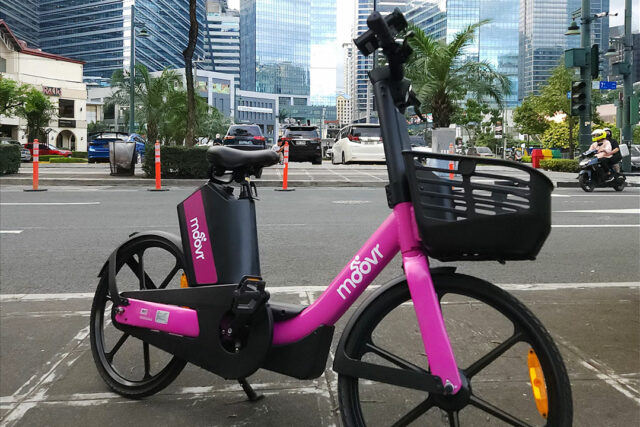
MOOVR PH, an e-scooter and bicycle-sharing mobile service, expects rider usage to increase by as much as 35% this year as it expands its fleet amid a growing demand for sustainable transport.

“For 2025, we project a 25-35% increase in rider usage, primarily driven by our expanded fleet and improved network coverage, particularly in connecting McKinley West and Bonifacio Global City (BGC),” Carlo Rombano, vice-president of operations at Moovr, said in an e-mail.

Moovr onboarded about 300,000 users last year, bringing the total to 600,000. It mainly serves BGC in Taguig City, the Makati central business district and Filinvest Alabang in Muntinlupa City.

The Philippine startup added 150 e-scooters to its fleet last year, bringing the total to 350, aside from 200 bicycles.

Moovr is bullish about increased awareness of micromobility options as a viable transportation alternative, Mr. Rombano said.

“We are optimistic given the positive experiences and adoption rates we’ve seen in areas like BGC,” he said in an e-mailed reply to questions. “Riders are increasingly recognizing the convenience and sustainability of bikes and e-scooters as viable transport solutions.”

Metro Manila ranked as the most congested metropolitan area in the world, according to the 2023 TomTom Traffic Index.

Moovr seeks to upgrade its fleet with more durable and advanced vehicles, and will launch marketing campaigns to increase public awareness and adoption. Safety also remains a priority for Moovr, Mr. Rombano said.

“Our geofencing technology ensures riders stay within designated zones, away from unsafe or prohibited areas such as highways or high-speed roads.”

The startup also conducts regular maintenance checks on its vehicles, educates riders and works with local governments to identify infrastructure gaps such as the need for dedicated bike lanes.

Part of its key growth opportunities is integrating artificial intelligence (AI)-powered route optimization in its mobile app, he added.

The company also seeks to deepen partnerships with local governments and private developers to create micromobility hubs and align its initiatives with eco-friendly practices.

E-scooters were the most commonly rented vehicle in the Philippines last year, driven by its convenience and compact design. It is also easy to operate both for first-time and regular users, Mr. Rombano said.

Moovr vehicles are rented for 15 to 30 minutes. Its customers are mostly residents, office workers and visitors.

Common reasons for renting two-wheeled vehicles include work commutes, running errands, leisure activities and bridging the “last mile” gap between public transportation and final destinations.

In the future, the company is considering four-wheeled vehicles for its fleet, particularly for group travel, cargo transport and sustainable intercity journeys.

“With growing user engagement and increasing alignment with urban infrastructure, we believe micromobility is on the cusp of broader acceptance and integration into the everyday transport landscape,” Mr. Rombano said.

US gold magnet: Banks fly bullion from Asian hubs to benefit from premium

STOCK PHOTO | Image from Freepik

MUMBAI — Global bullion banks are flying gold into the United States from trading hubs catering to Asian consumers, including Dubai and Hong Kong, to capitalize on the unusually high premium that US gold futures are enjoying over spot prices.

Traditionally, bullion banks transport gold eastward from the West to meet demand from China and India, the world’s two largest consumers, accounting for almost half of global consumption.

But alarm about US import tariffs planned by President Donald J. Trump has driven Comex futures prices substantially above spot prices in recent months, creating a lucrative arbitrage opportunity.

“Gold prices are skyrocketing, and in Asia, demand has pretty much disappeared,” said a Singapore-based bullion dealer with a leading bullion supplying bank. Spot gold prices hit a record high on Monday.

“Meanwhile, a sweet opportunity has popped up in the US, and naturally, almost every bank is jumping on it — moving gold over for Comex delivery to cash in on the arbitrage,” he said.

COMEX gold inventories have shot up almost 80% since late November, or 13.8 million troy ounces worth more than $38 billion at current prices, with supplies coming from London, Switzerland and now Asia-focused hubs.

The premium on Comex futures over spot prices widened again to about $40 on Monday, compared with discounts as high as $15 in India and a discount of around $1 in China.

The cost of moving gold from Asian hubs to the US is fractional when compared with prevailing Comex premiums, said a Mumbai-based bullion dealer.

A leading bullion bank even moved gold stored in a customs-free zone in India to the US last week, he said.

In normal situations, many banks bring gold into India and keep it in customs-free zones, clearing consignments by paying import taxes only after realizing demand. They can move the cargo back overseas without paying taxes.

As retail demand in Asian markets was muted by high prices, bullion banks were even sourcing gold from refiners in Dubai, which usually serve as a major India-supplying hub, to cater their demand in the US said a Dubai-based bullion dealer.

“The US is like a gold magnet right now, pulling in gold from all over the world,” he said. — Reuters

DigiPlus eyes partnership in Brazil

DIGIPLUS.COM.PH

DIGIPLUS Interactive Corp. is exploring the possibility of teaming up with a local partner in Brazil to support the company’s expansion.

“We’re always exploring possibilities. It’s better to have a local partner,” DigiPlus Chairman Eusebio H. Tanco said at a recent media briefing.

“It is not so much about the funding. We have sufficient resources, maybe more of a strategic partner,” he added.

Mr. Tanco also confirmed that the company’s operations in Brazil will begin with sports betting, which could go live “probably towards the end of the year.”

“We’ll start with sports first. They love football there. We’ll test the market first,” he said.

DigiPlus Vice-President for Investor Relations Celeste M. Jovenir said that the company has engaged a local Brazilian investment bank to search for potential partners.

“We haven’t identified anyone yet. The team is still searching and looking at different companies there. We have an investment banker in Brazil helping us. It’s a local Brazilian investment bank,” she said.

“The senior management is interviewing people from Brazil to form the team. Actually, we already have a team of ten people there since last year to apply for the license,” she added.

Last month, DigiPlus announced that its subsidiary DigiPlus Brazil Interactive Ltda. secured a gaming license from the Brazilian Ministry of Finance’s Secretariat of Awards and Bets.

With the gaming license, DigiPlus is now authorized to conduct land-based and online sports betting, electronic games, live game studios, and other fixed-odds betting activities in Brazil.

The company has initially earmarked P660 million to cover the license fees, minimum capitalization, financial reserves, and other operational expenses for the first three months of its operations in Brazil. It will use the ArenaPlus online sports betting platform for the Brazilian expansion.

DigiPlus previously mentioned that the Brazil expansion coincides with the country’s recent move to open up its gaming market, citing the population of over 200 million and its potential as one of the fastest-growing gaming markets in Latin America.

On Tuesday, DigiPlus shares rose by 0.84%, or 25 centavos, to P29.90 per share. — Revin Mikhael D. Ochave

High-tech spin for samurai-era ukiyo-e artist Hokusai at Tokyo exhibit

HOKUSAI.ANOTHERSTORY.WORLD

TOKYO — Visitors can step back in time to Japan’s samurai era in a new Tokyo exhibition that uses cutting-edge technology to bring to life the work of iconic artist Hokusai.

Hokusai: Another Story in Tokyo marks the latest in a series of immersive attractions that have sprung up in the capital, as well as growing interest in Japan’s cultural past as record numbers of tourists flood into the country.

The exhibition, tucked into a downtown shopping mall, invites patrons to step into scenes of nature and village life depicted by the master of Edo Period woodblock art.

Technical wizardry from digital imagery firm Ars Techne reproduces the washi paper texture of his prints. Haptic plates in the floor, developed by Sony PCL, give the feel that one is walking on a beach, ice, or across a rickety bridge.

“The concept is not just to see something, but to have an experience that goes beyond the real thing, to let you feel the scenery that Hokusai saw,” said Hiroki Inokuchi, a visual artist with Red Geek Pictures, which helped develop the exhibition.

Born in 1760, Katsushika Hokusai took the medium known as ukiyo-e to new artistic heights and popularity through his unique use of color and dynamic composition. Hokusai’s depictions of Mount Fuji have become emblematic of Japan, with his masterpiece The Great Wave off Kanagawa now gracing the back of the nation’s ¥1,000 note.

His prints became a hit in Europe after his death in 1849, kindling the Japonisme movement in art and inspiring painters such as Claude Monet and Vincent van Gogh.

The Hokusai exhibition, which runs from Saturday to June 1 at Tokyu Plaza Shibuya, follows other tech-driven, immersive art showcases in Tokyo that have proven to be draws among residents and overseas visitors. The digital art collective teamLab has two interactive museums in the capital that have set Guinness World Records for attendance.

Mariko Fukumizu, 42, said her four-year-old daughter loved stepping on and cracking make-believe ice in a rendering of one of Hokusai’s winter scenes.

“I like looking at art, but it’s difficult with kids, so it’s good to be able to go and experience things together,” said Ms. Fukumizu.

Japan is experiencing a tourism boom fueled by the weak yen, while cultural exports from manga to movies are seeing unprecedented popularity. Last year’s period epic Shogun swept major awards at both the Emmys and Golden Globes.

Ethem Sonmez, a 22-year-old visitor from Turkey, said Japanese animation and comics are rising in popularity in his country. He said an exhibit room that simulates wind rushing through a Hokusai landscape nearly brought him to tears.

“It was like the moment I first saw Fuji in the Shinkansen” bullet train, Mr. Sonmez said. “It was mesmerizing and I felt it again here.” — Reuters

We must break corruption’s grip on our democracy 

ORIGINAL PHOTO FROM FREEPIK

Corruption is a plague that has held our nation hostage for generations, and which continues to get in the way of genuine and sustainable development for the good of the people.

It’s not just economics or governance experts who are saying this. According to a Pulse Asia survey conducted from Nov. 26 to Dec. 3 last year, 90% of Filipinos believe that government officials involved in corruption must be held accountable. Moreover, 41% of Filipinos believe that addressing corruption must be a top priority for senatorial candidates.

What is clear here is that the people are aware: Corruption is a lingering national issue that undermines public service delivery, wastes public funds, emboldens abusive officials and makes them act with impunity, ultimately resulting in an erosion of people’s trust in government.

Corruption is not a one-time or linear event. Instead, it is a cycle. Incumbent officials who have access to and discretion over public funds abuse them to finance their political campaigns in the next elections, or to endear themselves to the public. They launch or rush government projects, beating the law-mandated election freeze, leading to inefficient or substandard outcomes.

They build up their campaign machinery, cleverly using funds intended for services like healthcare, education, and infrastructure. They dole out money in the guise of assistance and compassion, effectively buying votes to gain the support of local officials who will further their political objectives at the grassroots level. When these politicians win and take their oaths anew, the vicious cycle begins again.

Meanwhile, Filipinos continue to be most urgently concerned with the struggle with rising prices. In the same Pulse Asia survey among 2,500 respondents across the country, inflation was identified as the top national concern by 74% of Filipinos. Some 36% are concerned with increasing the pay of workers, while 31% think poverty reduction is a pressing concern. Twenty-seven percent believe that job creation and the fight against graft, theft, and corruption are key issues.

Coinciding with the Pulse Asia findings was the report of the Philippine Statistics Authority at around the same period that headline inflation increased from 2.5% to 2.9% month on month, driven by higher costs in housing, water, electricity, gas, and other fuels, as well as transport.

Also in the fourth quarter of 2024, the Social Weather Stations Governance Report Card, with more than 2,000 responses, illustrated both positive and negative developments. Net satisfaction with the government’s efforts in helping the poor rose from +51 in September to +57 in December, while public satisfaction with policies aimed at creating job opportunities saw a 7-point increase to +51. However, inflation remains a major concern, with net satisfaction dropping to -12 — the only negative rating.

All these, taken together, underscore what are truly important to the ordinary Filipino: providing the basic needs of the family, primarily food on the table, and securing a better future.

Corruption directly affects economic growth and development.

First, the lack of transparency deters local and foreign investors by creating bureaucratic inefficiencies and legal uncertainties. Foreign direct investment is crucial to job creation and economic growth. Thus, if investors stay away from the Philippines to avoid corrupt environments, there will be fewer job opportunities for Filipinos.

Second, corruption in procurement drives up costs, leads to substandard projects, and burdens the public. Bribery forces contractors to cut corners, resulting in poorly built infrastructure. Delayed or incomplete projects disrupt trade, logistics, and further raise costs.

Finally, corrupt officials divert funds meant for education, healthcare, and social welfare, depriving citizens of essential services and worsening poverty and inequality.

Corruption is a seemingly endless problem that requires sustained solutions. And with the 2025 elections fast approaching, Filipinos are again forced to confront realities in our political system: Is corruption so entrenched in our national DNA and are we powerless to break the vicious cycle that has prevented us from achieving our true potential as an economy and as a people?

Certainly, to be resigned to this fate will be detrimental to our nation.

We look forward to having conversations on this matter today, Feb. 5, as the Stratbase Institute hosts a forum entitled “Leveraging Strategic Collaborations to Address Corruption.” This side event of the 2025 Open Government Partnership (OGP) Asia and the Pacific Regional Meeting will be held from 1-4 p.m. at the Grand Hyatt Manila, Taguig City.

Specifically, we will be looking at how Filipinos can ensure transparency and accountability among government officials and in government affairs to ensure economic growth. We will explore the correlation between abuse of state resources and elections. Most importantly we will talk about what we can realistically do, right now and with the means we have at our disposal, to take on the issue of corruption head on.

The coming elections will be an opportunity for Filipinos to choose well and choose better. With the global movement for open governments and good practices among different countries, we can share experiences, principles, and approaches on how to combat the menace of corruption that has already taken much out of our nation. No single sector, entity, organization, or person has the monopoly in wanting a clean and honest government. Different perspectives and strategies are best put together in order to achieve desired results.

We owe our people, and the next generation of Filipinos, no less.


Victor Andres “Dindo” C. Manhit is the president of the Stratbase ADR Institute.

Concept store offers flexible retail spaces to small retailers

FACEBOOK.COM/CONNECTBYTHEPARK

CONNECT BY THE PARK, a multi-brand concept store at Alabang Town Center in Muntinlupa City, is helping small businesses sell their products by letting them rent space at a fraction of the cost of a mall retail shop.

“It’s really helping other micro, small and medium enterprises (MSMEs) like me because we all know how expensive it is to rent a space in malls,” Mariel Ortiz-Luis Veluz, founder of Connect by the Park, said in an interview.

Mall operators require upfront payment of a three-month security deposit, three-month advance rent and one-month construction bond, according to property consultant Colliers Philippines.

It added that malls typically charge 5% of gross sales for food and fashion retail tenants and 15% for food court tenants on top of maintenance and air-conditioning fees based on the size of the leased space.

In contrast, tenants can rent retail space that they can afford in Connect by the Park’s 30-square-meter store.

“We start from P2,500 per shelf up to about P35,000 for the whole shop,” Ms. Veluz said. “The big ones usually have a one-year contract, while small renters have a nine-month contract.”

The concept store at Alabang Town Center, which is owned by Ayala Malls, has 20 brand partners now. Clothing, accessories, bags, pre-loved branded shoes, and other locally made products are available in the shop.

“I was able to bring other brands as well in one shop and these are local businesses that I know started during the coronavirus pandemic,” she said.

Ms. Veluz said they also help tenants with marketing, while offering them a shared staff and a web store that offers same-day delivery.

“We added an online shop to fulfill the orders,” she said. “So if someone wants the product immediately, we can ship to them from the Alabang Town Center branch.”

This  year, Connect by the Park plans to open another branch with 20 brand partners at another Ayala mall, Ms. Veluz said. “Next, I’m targeting to open a branch in Glorietta.” — Almira Louise S. Martinez

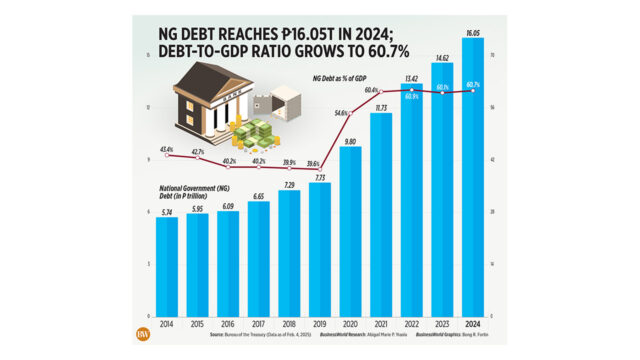
NG Debt Reaches ₱16.05t in 2024; Debt-to-GDP Ratio Grows to 60.7%

THE NATIONAL Government’s (NG) outstanding debt hit P16.05 trillion at the end of 2024 amid higher debt issuances and a stronger dollar, the Bureau of the Treasury (BTr) reported on Tuesday. Read the full story.

NG Debt Reaches ₱16.05t in 2024; Debt-to-GDP Ratio Grows to 60.7%

Coin deposit machine collections hit P1.24 billion as of Jan. 15

BANGKO SENTRAL NG PILIPINAS

THE BANGKO SENTRAL ng Pilipinas’ (BSP) deposit machines have collected P1.24 billion worth of coins as of Jan. 15.

This was 14.6% higher than the P1.082 billion worth of coins collected as of November, the BSP said in a social media post. The central bank did not release data for December.

There were 284,974 transactions made involving 310.7 million coins deposited in the machines, central bank data showed.

In June 2023, the BSP and its retail partners launched the deposit machines to promote efficient coin recirculation.

The project aims to address artificial coin shortage in the financial system and help ensure that the public uses only fit and legal tender.

All denominations of the BSP Coin Series and New Generation Currency Coins Series are accepted by the machines. Unfit and demonetized coins, foreign currency and foreign objects get rejected.

The value of coins deposited in the machines may be credited to a person’s e-wallet or bank account or converted into shopping vouchers.

There are currently 25 deposit machines available in the Greater Manila Area. They can be found in select retail establishments of the SM Store, Robinsons Supermarket and Festival Mall.

The BSP has said it plans to install 25 more units nationwide this year to boost accessibility. — Luisa Maria Jacinta C. Jocson

ACEN boosts investment in Belenos Energy

ACENRENEWABLES.COM

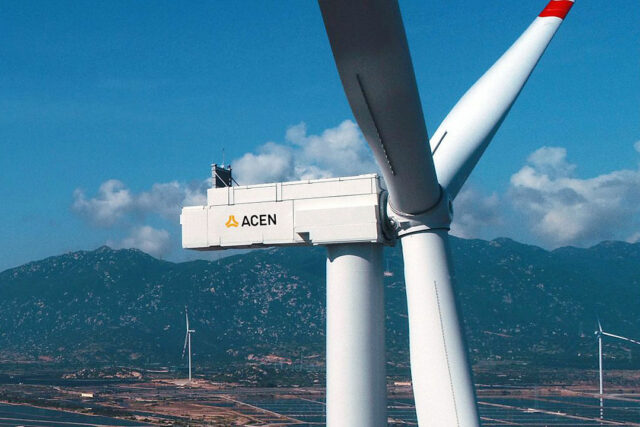
ACEN CORP., the Ayala group’s listed energy platform, is increasing its investment in subsidiary Belenos Energy Corp. by subscribing to P392 million worth of additional shares.

ACEN signed a contract with Belenos to subscribe to 392 million redeemable preferred shares at P1 each, the company told the local bourse on Tuesday.

The shares, which represent 29% of the total outstanding shares of Belenos, will be issued from the increase in authorized capital stock of Belenos, subject to the necessary regulatory approval by the Securities and Exchange Commission (SEC).

Belenos is ACEN’s special-purpose vehicle for development projects in the Philippines. It is a holding company that houses ACEN’s investments in YMP Telecom Power, Inc. and YMP Industrial Power, Inc., which it previously acquired to provide solar power to telecommunication towers, as well as the commercial and industrial sectors.

ACEN said it will pay an initial P180 million for the subscription price.

“The subscription will allow ACEN to have significant ownership in Belenos and is meant to facilitate Belenos’ investment in a potential renewable energy project,” the company stated.

In October last year, ACEN also subscribed to 50 million redeemable preferred shares worth a total of P50 million and invested P81 million in August to secure 81 million shares.

For 2025, ACEN has earmarked roughly P70 billion as its capital expenditure budget for renewable energy projects. The company is expecting to operationalize power projects with a combined capacity of approximately 1.2 gigawatts (GW) located within and outside the Philippines.

This pipeline of projects is part of the company’s 6.8-GW portfolio of attributable renewable capacity in operation, under construction, and committed projects.

After attaining its 5-GW renewable energy capacity target, the company aims to achieve 20 GW of renewables by 2030. — Sheldeen Joy Talavera

Russian missile attack seriously damages historic center of Odesa

The Bristol Hotel in better times. Reports say the lobby and other parts of the Hotel Bristol, a luxury landmark built at the end of the 19th century, have been reduced to rubble by a Russian missile attack. — WHC.UNESCO.ORG

RUSSIAN forces launched missiles on the center of Ukraine’s Black Sea port of Odesa, a UNESCO World Heritage site, seriously damaging historic buildings and injuring seven people, local officials said.

President Volodymyr Zelensky said the attack was “a deliberate strike” that underscored again the need to strengthen Ukraine’s air defenses.

He said Norwegian diplomats had been among those “who were in the epicenter of the strike” in the historic district.

Odesa Regional Governor Oleh Kiper said seven people were injured and emergency crews remained at the scene.

Online pictures posted by Mr. Kiper and by Odesa Mayor Gennady Trukhanov showed the lobby and other parts of the Hotel Bristol, a luxury landmark built at the end of the 19th century, reduced to rubble.

The Odesa Philharmonic concert hall, opposite the hotel, suffered damage with many of its windows smashed.

Online video showed fragments strewn on a street several hundred meters away near the opulent opera house from the same era. Museums in the district also suffered damage.

Mr. Kiper told national television that three explosions had resounded at intervals, which he described as a “well-established practice” by the Russian military of repeated attacks on the same target.

“However, in this case a missile capable of penetrating concrete was used,” he said while standing in a street near emergency crews. “This means it was deliberately aimed at a civilian hotel to destroy the floors and structures inside, causing destruction and, of course killing civilians staying there at the time.”

Mr. Zelensky, speaking in his nightly video address, said the attack was staged “directly on the city, on ordinary civilian buildings.”

“Again and again, air defense is the top priority. We are working with all our partners to provide more protection for our country.”

Mr. Zelensky said a meeting of Ukraine’s command had focused on improving weapons systems and speeding up deliveries.

“We need faster deliveries and greater numbers of systems and weapons which will enable us to save the lives of more of our soldiers, our people,” he said. “More orders for drones. More investments for the development of robotic systems. And more orders for basic weapons.” — Reuters

Harness women power versus poverty and hunger

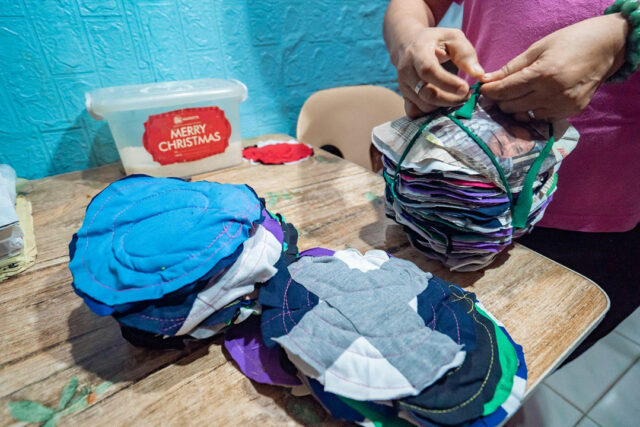
EARNING additional income from sewing rags at home. — ABOITIZPOWER.COM

It should be clear enough to us that our biggest problem is the high incidence of poverty and involuntary hunger among our people. Secretary Frederick Go, the President’s key economic adviser, says he is focusing on bringing in more investments in manufacturing in order to create more jobs. “Make more” is his slogan.

As I have pointed out earlier, it is difficult to generate investments in manufacturing because our energy costs are just too high. And our labor cost, because of our high cost of living, is not competitive. Our facility with the English language is becoming less and less a competitive advantage. We cannot compete with oil producers like Indonesia and Malaysia (with its possession of our share of mineral-rich and oil-producing Sabah). Add to this, of course, is the waste of taxpayers’ money by our irresponsible and corrupt politicians.

Sadly, our economy is consumer-led, largely from the sacrifices families make when members go overseas in order to be able to send money home. The social costs are high, with many families broken up by the separations. Children grow up dependent on electronic gadgets to stay in touch with their mothers who are taking care of other people’s children in other countries. Marriages often break down.

My rich background as a probinsiyana (country girl) who has studied and worked in highly urban settings has given me insights into our poverty situation, which is mostly in the rural areas, and mainly in the Visayas and Mindanao. As in urban settings, rural families can hardly live above the poverty line when only one parent (usually the husband) is able to make a living. Wives-mothers who do not go abroad to work as domestic helpers have at least three or four children. Those who do not have access to running water at home use up a lot of their time and energy fetching water from a distance, or from a neighborhood water well. Those who have young children have to take care of them full-time and are unable to contribute to the family income. Farmers earn too little after middlemen extract payments for advances for fertilizers and other farm inputs. Small-scale fishers catch too little after illegal fishing boats have scoured the municipal waters and harvested too much of the fish, big and small. It is ironic that those who produce our food can barely have enough to eat!

The most prosperous rural families I have encountered in my adventures have been those in which the women are able to add to the family income. These families have running water at home and the neighborhood has a day-care center. Moreover, there is a small value-adding enterprise that allows the women to work on a piecemeal basis. This enables them to get their housework done while working part-time in a nearby processing business. They do not need to abandon their families to get jobs in the big cities or overseas.

The best example of a prosperous rural community that I can think of is that of a barangay in Bohol where the men were small-scale fishermen. The women worked on looms that produced wall coverings for export to New York City. The mayor had an exporter friend in Cebu City whom she persuaded to subcontract production to one of her barangays. The “factory” was made of nipa and was right in the center of the barangay. Because of their generous incomes, the women were able to fund their own day-care center which one of the men who happened to be a carpenter built. They only asked the government to provide them with a teacher. They also built what they called their “multipurpose,” a hall which functioned as a conference room, dance hall, and chapel. Meanwhile, in a barangay in Cavite, the community enterprise consisted of dish rags produced from fabric cut-offs from a T-shirt factory. Again, the women earned on a piecemeal basis. They did not have to neglect their multiple tasks as homemakers, wives, and mothers. I was really impressed at how healthy and happy they and their families appeared.

Perhaps we should really have a think tank that brainstorms on rural-based enterprises which mobilize women as workers who can add to the family income. This, to me, is the most sensible and practical way for us to reduce our poverty incidence. Higher family incomes mean better food for our children; and hopefully, better performance in math, sciences, and reading comprehension.

The government and the private sector, together with local governments and the Department of Trade and Industry can strategize together and coordinate campaigns to make these happen at the grassroots. We need to think small.

“Infrastructure” does not only call for highways, bridges, and airports. It should mean investments in running water in all barangays, day-care centers, and subcontracting value-adding enterprises in rural areas, particularly in the Visayas and Mindanao. There should be links between rural communities and urban enterprises.


Teresa S. Abesamis is a former professor at the Asian Institute of Management and Fellow of the Development Academy of the Philippines.

tsabesamis0114@yahoo.com