Home Blog Page 1489

South Korean ministries block DeepSeek on security concerns, officials say

FREEPIK

– South Korea’s industry ministry has temporarily blocked employee access to Chinese artificial intelligence startup DeepSeek due to security concerns, a ministry official said on Wednesday, as the government urges caution on generative AI services.

The government issued a notice on Tuesday calling for ministries and agencies to exercise caution about using AI services including DeepSeek and ChatGPT at work, officials said.

State-run Korea Hydro & Nuclear Power said it had blocked use of AI services including DeepSeek earlier this month.

The defense ministry has also blocked access to DeepSeek on its computers that are for military use, officials said on Thursday.

The foreign ministry has restricted access to DeepSeek in computers that connect to external networks, Yonhap News Agency said. The ministry said it cannot confirm specific security measures.

DeepSeek did not immediately respond to an emailed request for comment.

It was not immediately clear if the ministries had taken any actions against ChatGPT.

The ban makes South Korea the latest government to warn about or place restrictions on DeepSeek.

Australia and Taiwan have banned DeepSeek this week from all government devices over concerns that the Chinese artificial intelligence startup poses security risks.

Italy’s data protection authority ordered DeepSeek in January to block its chatbot in the country after the Chinese startup failed to address the regulator’s concerns over its privacy policy.

Some other governments in Europe, the U.S. and India are also examining implications of using DeepSeek.

South Korea’s information privacy watchdog plans to ask DeepSeek about how the personal information of users is managed.

Chinese startup DeepSeek’s launch of its latest AI models last month sent shockwaves through the tech world. The company says its models are on a par with or better than products developed in the United States and are produced at a fraction of the cost.

South Korean chat app operator Kakao Corp has told its employees to refrain from using DeepSeek due to security fears, a spokesperson said on Wednesday, a day after the company announced its partnership with generative artificial intelligence heavyweight OpenAI.

Korean tech companies are now being more careful about using generative AI. SK Hynix , a maker of AI chips, has restricted access to generative AI services, and allowed limited use when necessary, a spokesperson said.

Naver, a major South Korean web portal, said it had asked employees not to use generative AI services that store data outside the company. – Reuters

Malaysia says forced displacement of Palestinians would be ethnic cleansing

REUTERS

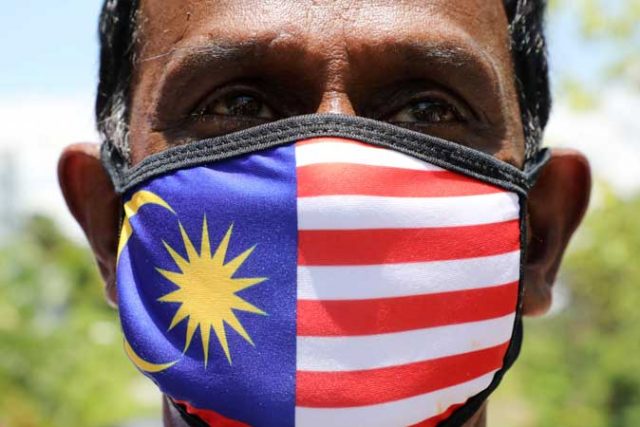
– Malaysia sees any proposal for the forced displacement of Palestinians as constituting ethnic cleansing and a violation of international law, the foreign ministry said on Thursday after U.S. President Donald Trump proposed a U.S. takeover of Gaza.

“Malaysia strongly opposes any proposal that could lead to the forced displacement or movement of Palestinians from their homeland. Such inhumane actions constitute ethnic cleansing and are clear violations of international law and multiple UN resolutions,” the statement said.

The ministry said it supported a two-state solution as the path to lasting peace and stability.

Muslim-majority Malaysia has been a staunch supporter of the Palestinian cause and has long advocated for a two-state solution to the conflict between Israel and the Palestinians.

Malaysia does not have diplomatic relations with Israel.

Prime Minister Anwar Ibrahim has said he maintains good relations with the political wing of Palestinian militant group Hamas but has no connection with its military wing.

Neighboring Indonesia, the world’s most populous Muslim-majority country, said late on Wednesday it rejected “any attempt to forcibly displace Palestinians or alter the demographic composition of the Occupied Palestinian Territory.”

Any such action would obstruct a two-state solution being realized, the ministry said, saying Indonesia called on the international community to ensure respect for international law. – Reuters

Google scraps diversity-based hiring targets

REUTERS

Alphabet’s Google is scrapping its goal to hire more employees from underrepresented groups and is reviewing some of its diversity, equity and inclusion (DEI) initiatives, joining a slew of U.S. businesses scaling back diversity initiatives.

“In 2020, we set aspirational hiring goals and focused on growing our offices outside California and New York to improve representation,” Fiona Cicconi, Alphabet’s chief people officer, said in an email to staff on Wednesday, a copy which was reviewed by Reuters. “…but in the future we will no longer have aspirational goals.”

Google had for years been among the most vocal companies pushing for more inclusive policies in the wake of protests against the police killings of George Floyd and other Black Americans in 2020.

In 2020, CEO Sundar Pichai set a goal to have 30% more of its leaders from underrepresented groups by 2025. At the time, about 96% of Google’s U.S. leaders were white or Asian, and 73% globally were men.

In 2021, it began to evaluate executive performance on team diversity and inclusion after a prominent leader of artificial intelligence research said the company abruptly fired her after she criticized its diversity efforts. Google’s chief diversity officer Melonie Parker said in a 2024 interview with BBC that the company had hit 60% of its five-year goals.

On Wednesday, an Alphabet spokesperson said the company did not have updated figures regarding Pichai’s goals.

Alphabet’s annual filing with the U.S. SEC on Wednesday showed it omitted a line saying it was “committed to making diversity, equity and inclusion part of everything we do and to growing a workforce that is representative of the users we serve.”

That statement appeared in annual reports from 2021 to 2024. The spokesperson said the line was removed to reflect its review of DEI programs.

“This is a real attack on gains that workers have made in the tech industry through movements fighting against racism, gender and LGBTQ discrimination, going all the way back to the civil rights movement. This is part of a troubling right-wing, anti-worker trend developing within tech companies that AWU (Alphabet Workers Union) is committed to fighting against,” said Parul Koul, a software engineer and the union’s president, in a statement.


FEDERAL CONTRACTOR

Google, which sells cloud computing and other services to the U.S. government, also said it was reviewing policy changes by President Donald Trump aimed at curbing DEI in the government and among federal contractors.

“Because we are a federal contractor, our teams are also evaluating changes to our programs required to comply with recent court decisions and U.S. Executive Orders on this topic,” Ms. Cicconi said in the email.

The company will maintain internal employee groups such as “Trans at Google,” “Black Googler Network” and the “Disability Alliance,” which the company has said inform decisions around products and policies.

The Wall Street Journal first reported on Wednesday about the memo.

Facebook parent Meta Platforms said in January in an internal memo it was ending its DEI programs, including those for hiring, training and picking suppliers.

Amazon also said it was “winding down outdated programs and materials” related to representation and inclusion, in a memo to its employees, seen by Reuters.

Conservative groups, fortified by a 2023 U.S. Supreme Court ruling that invalidated affirmative action in university admissions, have condemned DEI programs and have threatened litigation against companies implementing them. – Reuters

China challenges Trump tariffs at WTO, package shippers warn of chaos

COLLECTIONS - GETARCHIVE

 – China filed a World Trade Organization complaint on Wednesday against U.S. President Donald Trump’s new 10% tariff on Chinese imports and his cancellation of a duty-free exemption for low-value packages, arguing the actions are “protectionist” and break WTO rules.

Beijing’s request for U.S. trade consultations came as confusion reigned among shippers and retailers over Trump’s closure of the “de minimis” exemption for package imports valued under $800 and widely used by e-commerce firms including Shein, Temu and Amazon.

A Customs and Border Protection official said all small packages from China and Hong Kong needed to have customs entries on file prior to arrival and there was the potential for some cargo to be sent back without this paperwork.

The WTO said China submitted a request for consultations with the U.S. on the tariffs. China argues in the document that Trump’s new duties aimed at halting the flow of fentanyl opioids and their precursor chemicals to the U.S. “are imposed on the basis of unfounded and false allegations concerning China.”

It said the duties are discriminatory, only applying to goods of Chinese origin, and are inconsistent with the U.S.’s WTO obligations.

The request for consultations is the start of a dispute process that could lead to a ruling that Trump’s duties violated trade rules in the same manner that a 2020 WTO ruling found that his first-term China tariffs broke trade regulations.

But such a victory would be unlikely to bring Beijing relief because the WTO’s Appellate Body has been largely inoperable for years, as the U.S. has blocked the appointment of appellate judges over what it views as judicial overreach by the body. This has prohibited a final decision in the 2020 case.


PACKAGE CHAOS

The U.S. Postal Service said on Wednesday it would again accept parcels from China and Hong Kong, reversing a temporary suspension that threatened to disrupt millions of package imports every day.

“We’re all running around like headless chickens at this moment in time, trying to second-guess what’s going to happen,” said Martin Palmer, co-founder of Hurricane Commerce, a cross-border e-commerce data provider. “And in two weeks’ time we may be back to normal.”

The Trump administration has blamed the de minimis exemption for allowing fentanyl and its precursor chemicals to enter the U.S. unscreened. Recent Reuters reporting has also found that drug traffickers are exploiting the exemption.

USPS said in a statement it was working with the U.S. Customs and Border Protection agency to implement an efficient collection mechanism for the new China tariffs to minimize disruptions to deliveries.


NO TRUMP-XI TALKS

On Wednesday, there was still no call scheduled between Mr. Trump and Chinese President Xi Jinping to discuss the new U.S. tariffs and Beijing’s retaliatory measures, a person familiar with the matter told Reuters.

Mr. Trump said on Tuesday he was in no hurry to speak with Mr. Xi as the tariff took effect just after midnight Eastern Time.

China responded with targeted tariffs on imports of U.S. coal, liquefied natural gas, crude oil and farm equipment, and opened an anti-monopoly investigation into Alphabet’s Google.

The launch of the new trade war caught the retail and shipping sectors flat-footed.

“There has really been absolutely zero time for anyone to prepare for this,” said Maureen Cori, co-founder of New York-based consultancy Supply Chain Compliance. “What we really need is direction from the government on how to handle this without warning or notice.”

Currently, de minimis parcels are consolidated so customs can clear hundreds or thousands of shipments at once, but they will now require individual clearances, significantly increasing the burden for postal services, brokers and customs agents, Cori said.

The provision was initially intended as a way to streamline trade, and its use has surged with the increase in online shopping.

About 1.36 billion shipments entered the United States using the de minimis provision in 2024, up 36% from 2023, according to U.S. Customs and Border Protection (CBP) data.


TARIFF UNCERTAINTY

U.S. Treasury Secretary Scott Bessent on Wednesday defended Mr. Trump’s tariff strategy in his first media interview since taking office, saying it was aimed at bringing manufacturing back to the U.S., including for industries that have largely left U.S. shores.

U.S. Federal Reserve officials on Wednesday pointed to the large policy uncertainty around tariffs and other issues arising from the early days Trump’s administration as among the top challenges in figuring out where to take U.S. monetary policy in the months ahead.

Chicago Fed President Austan Goolsbee warned that ignoring the potential inflationary impact of tariffs would be a mistake, whereas Richmond Fed President Thomas Barkin said it remains impossible at this early stage to know where cost increases from any tariffs might be absorbed or passed along to consumers. – Reuters

Philippines Senate head says cannot hear impeachment complaint against vice-president until June

Senate President Francis G. Escudero — SENATE PRIB

 – The Philippine Senate can only act on the impeachment complaint against Vice-President Sara Duterte on June 2 when Congress resumes after the midterm elections, Senate President Francis Escudero told a briefing on Thursday.

Mr. Escudero said the senators who will act as jurors need to swear an oath while Congress is in session before they can convene as an impeachment court.

“Legally, it cannot be done,” Mr. Escudero said.

The House of Representatives on Wednesday impeached Duterte, the daughter of the country’s firebrand former leader Rodrigo Duterte.

The impeachment complaint stemmed from allegations Duterte misused public funds while she was vice president and education minister, amassed unexplained wealth, and threatened the lives of President Ferdinand Marcos Jr, the first lady and the lower house speaker. She has repeatedly denied wrongdoing.

She became the second-most-senior elected official in the Philippines to be impeached after former President Joseph Estrada in 2000. – Reuters

US Postal Service U-turn on China parcels sows confusion among retailers, shippers

STOCK PHOTO | Image by ha11ok from Pixabay

 – The U.S. Postal Service said on Wednesday it would again accept parcels from China and Hong Kong, reversing a 12-hour suspension after President Donald Trump scrapped an exemption used by retailers including Temu, Shein, and Amazon to ship low-value packages duty-free to the United States.

The about-face added to the growing confusion among retailers and express shipping firms over how to deal with Trump’s new 10% tariff on imports from China and his closure of the “de minimis” duty exemption for packages valued at under $800, with the stated aim of stopping the flow of fentanyl and precursor chemicals into the United States.

Major international shippers promised to maintain deliveries, but disruptions may still occur as the USPS works out how tariffs on small packages would be collected in tandem with the U.S. Customs and Border Protection department.

FedEx, meanwhile, suspended its money-back guarantee on overseas shipments as disruptions ripple through the supply chain. Indeed, one logistics executive said CBP at New York’s John F. Kennedy (JFK) International Airport is putting a hold on all incoming shipments from China until further notice.

“We’re all running around like headless chickens at this moment in time, trying to second-guess what’s going to happen. And in two weeks’ time we may be back to normal,” said Martin Palmer, co-founder of Hurricane Commerce, a cross-border ecommerce data provider.

“There has really been absolutely zero time for anyone to prepare for this,” said Maureen Cori, co-founder of New York-based consultancy Supply Chain Compliance. “What we really need is direction from the government on how to handle this.”

About 1.36 billion shipments entered the United States using the de minimis provision in 2024, up 36% from 2023, according to CBP data. Reuters reporting has found that drug traffickers have exploited the exemption to bring fentanyl and its precursor chemicals into the country unscreened.

The USPS said it was working with the CBP to institute an efficient way to collect the new tariffs on China to “ensure the least disruption to package delivery,” it said in a statement.

The USPS did not comment on whether its temporary suspension had been tied to Trump’s order ending de minimis shipments from China, which was announced on Saturday and came into force on Tuesday.

“The problem is not with the Postal Service. The problem is with Customs. They are not prepared for what’s happening,” said one postal industry expert, who requested anonymity for fear of retribution. “The trillion-dollar question,” the expert said, is who will collect the duties and who will pay them.

Kate Muth, executive director of the International Mailers Advisory Group (IMAG), which represents the U.S. international mailing and shipping sector, said making the change through the traditional federal rule-making process would have allowed affected parties to provide input and adjust in the months-long period before implementation.

“We don’t have that luxury. Everything’s happening immediately without preparation,” she said.

There is also the potential that the CBP could see a net revenue loss if the cost to collect those duties is higher than the revenue that’s collected, she said.


INDIVIDUAL CLEARANCES

Currently, de minimis parcels are consolidated so that customs can clear hundreds or thousands of shipments at once, but they will now require individual clearances, significantly increasing the burden for postal services, brokers and customs agents, Cori said.

The provision was initially intended as a way to streamline trade, and its use has surged with the increase in online shopping, fueling the growth of fast-fashion retailers Shein and online dollar-store Temu, both of which sell products ranging from toys to smartphones.

The two firms together likely accounted for more than 30% of all packages shipped to the United States each day under the provision, according to a June 2023 U.S. congressional committee report on China that also found nearly half of all packages shipped under de minimis come from China.

Shein and Temu did not reply to requests for comment.


GREATER SCRUTINY

Some international couriers including FedEx and SF Express, China’s largest express delivery company, said they will continue to send packages to the United States.

But FedEx said it had suspended its money-back guarantee for U.S.-inbound shipments effective Jan. 29, citing recent regulatory changes, according to a notice on its website.

Deutsche Post-owned DHL DHLn.DE and UPS UPS.N said they were working with customers to limit negative impacts for them and consumers, and to avoid disruption to supply chains.

UPS, FedEx and DHL have systems in place to collect duties and can switch customers over to those services, shipping experts told Reuters.

Other air freight, however, could be more vulnerable to delays.

Customs officers in telephone calls on Wednesday alerted Ram Radhakrishnan that all shipments coming from China and Hong Kong would be held at JFK until further notice. The CEO of Silq, which manages quality control, logistics and customs clearance for clients, said sweaters for his clients are being held, even though duties on those products are paid.

“It is a little gnarly,” said Radhakrishnan, whose company does not handle de minimis and is being swept up in the chaos following Trump’s order. Representatives from CBP and JFK did not immediately respond to requests for comment.

Radhakrishnan said he was not aware of CBP holds on inbound China cargo at other U.S. airports.

As of Wednesday afternoon there was still no call scheduled between Trump and Chinese President Xi Jinping to discuss the new U.S. tariffs and Beijing’s retaliatory measures, a person familiar with the matter told Reuters. – Reuters

Trump order seeks to ban transgender women and girls from female sports

REUTERS

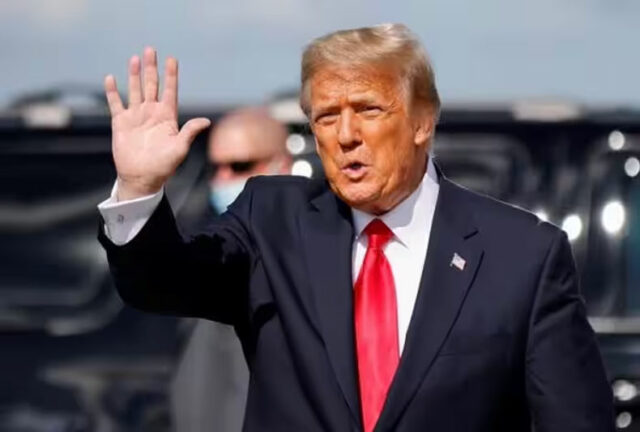
 – U.S. President Donald Trump signed an executive order on Wednesday attempting to exclude transgender girls and women from female sports, a directive that supporters say will restore fairness but critics say infringes on the rights of a tiny minority of athletes.

The order directs the Department of Justice to make sure all government agencies enforce a ban on transgender girls and women from participating in female school sports under Trump’s interpretation of Title IX, a law against sex discrimination in education.

“The war on women’s sports is over,” Mr. Trump said at a signing ceremony with about 100 women and girls aligned behind him, many of the youngest ones wearing uniforms and sports jerseys.

“My administration will not stand by and watch men beat and batter female athletes.”

The order, which is likely to face legal challenges, threatens to cut off federal funding for any school that allows transgender women or girls to compete in female-designated sporting competitions.

It would affect only a small number of athletes. The president of the National Collegiate Athletics Association told a Senate panel in December he was aware of fewer than 10 transgender athletes among the 530,000 competing at 1,100 member schools.

The NCAA welcomed the executive order for providing a clear national standard in the face of “a patchwork of conflicting state laws and court decisions,” saying in a statement it would conform its policy accordingly.

“The NCAA Board of Governors is reviewing the executive order and will take necessary steps to align NCAA policy in the coming days, subject to further guidance from the administration,” the statement said.

Under current policy the NCAA requires transgender women athletes to meet testosterone limits on a sport-by-sport basis.

The issue has also connected with voters, who responded with enthusiastic applause when Mr. Trump mentioned bans on transgender athletes at his campaign rallies. He repeatedly aired television advertisements that criticized allowing transgender women and girls to compete in female sports.

Polls have found a majority of Americans oppose transgender athletes competing in sports that align with their gender identity, and 25 Republican-led states have passed laws that ban transgender girls from participating in girls’ sports.

Federal courts have generally ruled in favor of letting transgender girls compete. A 9th U.S. Circuit Court of Appeals ruling blocked Idaho’s ban, while the 9th Circuit and the 4th Circuit have also stopped bans from being enforced against specific plaintiffs in West Virginia and Arizona. A federal district court judge in New Hampshire has blocked that state from enforcing its ban against two plaintiffs.

But the Biden administration’s 2024 interpretation of Title IX that it protects transgender people from discrimination on the basis of sex was blocked by a federal judge in Kentucky in January.


TARGETING TRANSGENDER RIGHTS

Wednesday’s directive follows a series of other Trump executive orders restricting transgender rights, including one attempting to halt all federal support for healthcare that aids in gender transition for people under 19 and another that bans transgender people from serving in the military. Those orders encountered immediate legal challenges.

On his first day in office on January 20, Mr. Trump signed an order demanding government employees refer only to “sex” and not “gender,” and declaring sex to be an “immutable biological reality” that precludes any change in gender identity.

Mr. Trump’s order goes beyond high school and college sports, calling for the U.S. government to deny visas for transgender females seeking to compete in the United States.

It will also instruct the State Department to pressure the International Olympic Committee to change its policy, which allows trans athletes to compete under general guidance preventing any athlete from gaining an unfair advantage.

A White House official said the United States will use “all of our authority and our ability” to enforce the order in Olympic events on U.S. soil. The 2028 Summer Olympics are due to be held in Los Angeles.

Chris Erchull, a senior staff attorney at the pro-LGBTQ legal group GLAD Law, said the various interscholastic athletics associations and coaches have successfully maintained fairness in sports for years, and banning trans athletes does nothing to ensure fairness or safety.

“We’re talking about a minuscule number of students. What’s more, we’re talking about students who aren’t posing any threat to other girls in school sports, and yet there is this enormous effort to take away their rights,” Mr. Erchull said. “It’s, it’s an absurd way to approach those goals.”

Human rights organization Amnesty International called the ban an attempt to “stigmatize and discriminate against LGBTQ+ people.”

But the order was cheered by Republicans in Congress including U.S. Representative Tim Walberg, who criticized the Biden administration for trying to “unravel decades of progress made by women to appease the most radical fringes of its own base.” – Reuters

Metro Manila condo oversupply worsens, with 8.2-year market absorption time — Colliers

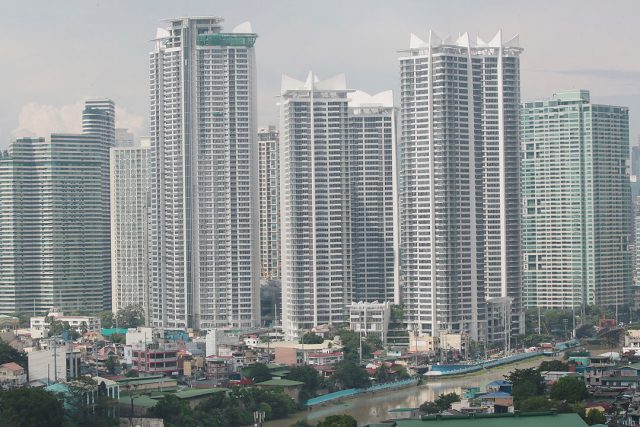
A VIEW of buildings in Makati City. — PHILIPPINE STAR/MICHAEL VARCAS

Metro Manila’s condominium oversupply reached a record high last year, with unsold units expected to take over eight years to be fully absorbed by the market, according to Colliers Philippines.

Unsold units surged by 77% in 2024 to P158 billion worth of inventory, up from P89.6 billion in 2023, Colliers Philippines Director and Head of Research Joey Roi H. Bondoc said during a briefing on Wednesday.

At the current market absorption rate, it would take up to 8.2 years, or 98 months, for these units to be sold, compared to just 3.2 years in 2023, Mr. Bondoc said.

Metro Manila’s overall residential vacancy rate reached 23.9%. With declining occupancy in the capital, Mr. Bondoc said there is strong demand for residential projects in areas outside Metro Manila.

Additionally, he noted opportunities for growth in the pre-selling market, particularly in the upscale and luxury segments.

Overall, Colliers Philippines said the real estate market is expected to sustain growth despite headwinds, driven by infrastructure projects and industrial expansion.

Mr. Bondoc cited ongoing infrastructure developments such as the Metro Rail Transit Line 4 (MRT-4), MRT-7, and the Taguig City Integrated Terminal Exchange as key drivers of real estate growth.

The hotel sector is also showing signs of recovery, supported by rising international arrivals and increasing occupancy rates, he said.

Foreign hotel brands are expanding in the Philippines, a trend expected to further strengthen the sector, he added.

In 2024, the Ninoy Aquino International Airport (NAIA) recorded an 11% increase in total passenger volume, surpassing 50 million, driven by a rise in flights and strong domestic travel demand.

Data from the Manila International Airport Authority (MIAA) showed that NAIA handled 50.26 million passengers in 2024, up 10.9% from 45.30 million in 2023 and 4.9% higher than the pre-pandemic level of 47.90 million in 2019.

From January to December 2024, domestic passenger traffic rose by 8.1% to 26.89 million from 24.88 million in 2023, while international passenger traffic increased by 14.4% to 23.37 million from 20.42 million.

Mr. Bondoc said ongoing infrastructure developments, particularly at NAIA and other regional airports, are expected to attract more travelers to the Philippines and support the hotel sector’s growth in 2025.

The industrial sector is also poised for sustained expansion in 2025, driven by continued investments, particularly in Luzon, he said.—Ashley Erika O. Jose

Fed officials note abundance of uncertainty in Trump’s policy moves

REUTERS

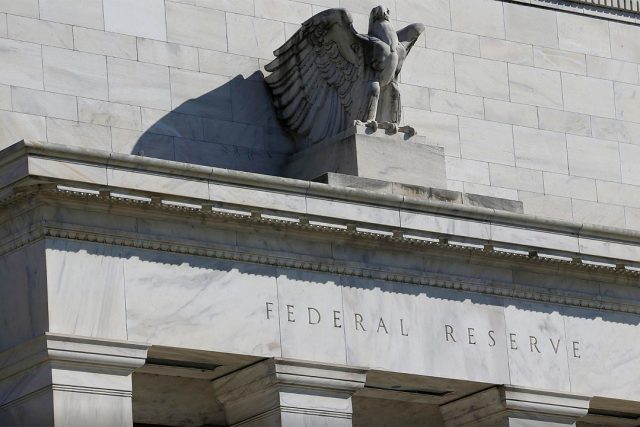
WASHINGTON – Federal Reserve officials on Wednesday pointed to the large policy uncertainty around tariffs and other issues arising from the early days of President Donald Trump’s administration as among the top challenges in figuring out where to take U.S. monetary policy in the months ahead.

Chicago Fed President Austan Goolsbee warned that ignoring the potential inflationary impact of tariffs would be a mistake, whereas Richmond Fed President Thomas Barkin said it remains impossible at this early stage to know where cost increases from any tariffs might be absorbed or passed along to consumers.

The views of the two U.S. central bankers were emblematic of the cautious approach Fed officials are angling to take in deciding whether to resume interest rate cuts later this year or continue to keep them on hold. The Fed left its benchmark interest rate unchanged last week in the 4.25%-4.50% range after cutting it at three straight meetings to close out 2024.

The U.S. economy is strong, the labor market is “plausibly” at full employment, and inflation has come down and is approaching the Fed’s 2% goal, Goolsbee said in remarks prepared for delivery to the Chicago Fed’s annual auto symposium in Detroit.

“Yet we now face a series of new challenges to the supply chain – natural and man-made disasters from fires and hurricanes to collisions with bridges that take out major ports, canal cloggings and threats of dockworker walkouts; geopolitical disruptions; immigration; and, of course, the threat of large tariffs and the potential for an escalating trade war,” Goolsbee said.

“If we see inflation rising or progress stalling in 2025, the Fed will be in the difficult position of trying to figure out if the inflation is coming from overheating or if it’s coming from tariffs,” Goolsbee said. “That distinction will be critical for deciding when or even if the Fed should act.”

The Trump administration announced last weekend that 25% tariffs on imports from Mexico and Canada would start on Feb. 4, but it delayed them until March 1 after the leaders of the two major U.S. trade partners agreed to crack down on drug smuggling and help stem the flow of undocumented migrants into the U.S.

An additional 10% tariff on imports from China went into effect on Tuesday.

LAYERS OF COMPLEXITY
Barkin, speaking to reporters after a Conference Board event in New York, said the “lean” in the latest set of policymaker projections is still toward further rate cuts this year, although uncertainty about the impact of tariffs, immigration and regulations will need to be better understood.

On tariffs specifically, Barkin said he sees three layers of complexity in arriving at their ultimate impact on inflation and demand.

First is the uncertainty around the level of duties and exactly who they are levied upon, Barkin said. The next unknown is whether other countries retaliate with tariffs of their own and to what degree companies absorb or pass on the higher import costs. Lastly, he said, is seeing “how this will all land on consumers.”

Economists generally view tariffs as a one-time lift to prices that should not feed into inflation in any persistent way or suggest the economy is overheating, which means a response from the central bank is not required.

Goolsbee, however, said this time “tariffs may apply to more countries or more goods or at higher rates, in which case the impact could turn out to be larger and longer lasting,” compared to 2018 when Trump put import duties in place during his first administration.

“If in 2018 companies shifted all the easiest things out of China, then what’s left might be the least substitutable goods,” he said. “In that case, the impact on inflation might be much larger this time.”

Goolsbee noted that in the auto industry, where parts used in the final assembly of a truck or car could cross borders multiple times as part of complex supply chains, tariffs could get stacked on top of tariffs.

And even if those tariffs don’t get passed directly along to car buyers, they can impact inflation in other ways, he suggested.

Suppliers say they believe manufacturers will balk at paying more for parts, so suppliers will end up eating the cost, and with margins tight already, they fear a wave of supplier bankruptcies, he said.

Goolsbee has until now been one of the Fed’s most vocal supporters of lowering interest rates to better align them with falling inflation. — Reuters

Inflation steady at 2.9% in January

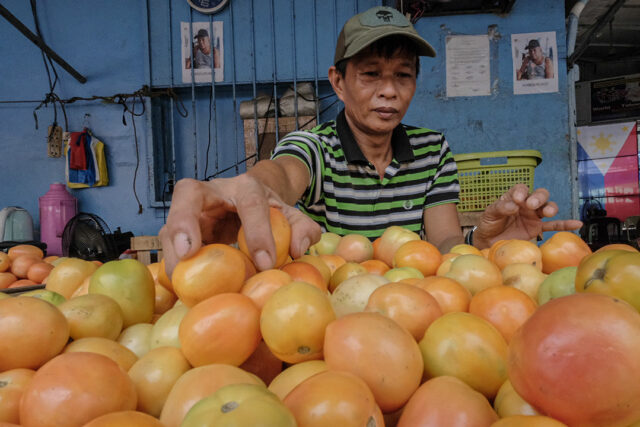
Tomatoes are sold at a market in Manila. Prices of tomatoes have soared in recent weeks. — PHILIPPINE STAR/ RYAN BALDEMOR

By Luisa Maria Jacinta C. Jocson, Reporter

HEADLINE INFLATION remained steady in January as lower utility costs offset a spike in food prices, preliminary data from the Philippine Statistics Authority (PSA) showed.

The consumer price index (CPI) rose 2.9% year on year in January, the same as December. It also settled within the 2.5%-3.3% forecast from the Bangko Sentral ng Pilipinas (BSP).

The January print was also slightly higher than the 2.8% median estimate in a BusinessWorld poll of 16 analysts.

Inflation rates in the Philippines

“The latest inflation outturn is consistent with the BSP’s assessment that inflation will remain anchored to the target range over the policy horizon,” the central bank said in a statement.

Core inflation, which discounts volatile prices of food and fuel, settled at 2.6% during the month — slower than 2.8% in December and 3.8% a year ago.

The heavily weighted food and nonalcoholic beverage index remained the top contributor to the overall CPI in January, accounting for a 50.3% share, National Statistician Claire Dennis S. Mapa said.

The index quickened to 3.8% in January from 3.4% a month earlier and 3.5% in the same period a year ago.

Food inflation alone accelerated to 4% from 3.5% in December and 3.3% in 2024.

Vegetables, tubers, plantains, cooking bananas and pulses soared to 21.1% in January from 14.2% in December and the 20.8% decline in the previous year.

In particular, tomato prices had a much faster annual growth rate of 155.7% from 120.8% a month earlier. This accounted for 0.4 percentage point (ppt) or 12.4% of January inflation.

Mr. Mapa said the increase in vegetable prices partly reflected the impact of typhoons.

Several storms hit the country in the fourth quarter, leading to billions of pesos worth of agricultural damage.

The increase in prices of meat and other parts of slaughtered land animals jumped to 6.4% from 4.9% month on month. Meat of pigs rose to 8.4% from 5.1%, while meat of poultry climbed to 8.4% from 7.7%.

Mr. Mapa said higher pork prices were due to cases of African Swine Fever (ASF) in some regions.

Data from the Bureau of Animal Industry showed some 88 municipalities across 19 provinces had active ASF cases.

Meanwhile, fish and other seafood also quickened to 3.3% from 1% a month prior.

RICE DOWNTREND
On the other hand, rice inflation contracted to 2.3% in January from the 0.8% clip in December and 22.6% jump a year prior.

This was also the lowest since the -2.8% rice inflation print in June 2020. It was also the first time that rice posted a contraction since the -0.1% in December 2021.

“Based on the current trend of prices, the expectation is that at least until July, we will expect negative inflation for rice,” Mr. Mapa added.

In January, the average price of regular milled rice declined to P48.25 per kilogram from P49.65 a year earlier. Well-milled rice decreased to P54.14 from P54.91, while special rice dropped to P63.13 from P63.90 year on year.

The Agriculture department on Monday declared a food security emergency on rice, which has remained stubbornly high despite the reduction of tariffs. The declaration will allow the National Food Authority to release buffer stocks at subsidized prices to help lower the cost of the staple grain.

“Any action to reduce the price of rice is always beneficial to our Filipino consumers, because rice has a heavy weight in our CPI basket,” Mr. Mapa said.

Meanwhile, the PSA said the housing, water, electricity, gas and other fuels index was also a main contributor to inflation, easing to 2.2% in January from 2.9% in December. However, it rose from the 0.7% print a year ago.

Manila Electric Co. lowered the overall rate by P0.2189 per kilowatt-hour (kWh) to P11.7428 per kWh in January from P11.9617 per kWh in December.

Data from the PSA showed inflation of rentals slowed to 2% from 2.4% in December, while water supply eased to 6.2% from 6.8%.

Water rates rose in January. Manila Water Co. raised rates by P5.95 per cubic meter, while Maynilad Water Services, Inc. hiked rates by P7.32 per cubic meter.

Transport inflation also slightly picked up to 1.1% from 0.9% in December and the 0.3% decline a year prior.

In January, pump price adjustments stood at a net increase of P2.65 a liter for gasoline, P4.80 a liter for diesel and P3.80 a liter for kerosene.

Data from the PSA showed inflation for the bottom 30% of income households eased to 2.4% in January from 2.5% a month prior and 3.6% in the previous year.

Consumer prices in the National Capital Region (NCR) eased to 2.8% in January from 3.1% in December. Outside NCR, inflation settled at 2.9%, the same as a month ago.

The central bank said inflation is likely to further ease in the coming months.

“The rice tariff reduction and negative base effects are expected to support disinflation,” it said.

However, the BSP noted risks to the inflation outlook continue to lean to the upside, citing “potential upward adjustments in transport fares and electricity rates.”

“The impact of lower import tariffs on rice remains as the main downside risk to inflation… However, uncertainty in the external environment could temper economic activity and market sentiment,” it added.

National Economic and Development Authority Secretary Arsenio M. Balisacan said the government is working to address food inflation as it remains “one of the government’s most pressing priorities.”

He said the government is implementing interventions to mitigate the impact of La Niña and ramping up vaccinations against ASF among other measures to help tame inflation.

DOWNSIDE RISKS
Meanwhile, HSBC economist for ASEAN Aris D. Dacanay said the risks to the inflation outlook are tilted to the downside, citing tariff cuts, the recent declaration of the food security emergency, as well as the implementation of a maximum suggested retail price for rice.

Analysts expect the Monetary Board to cut rates at its first policy review of the year next week.

Bank of the Philippine Islands Lead Economist Emilio S. Neri, Jr. said the possibility of a BSP rate cut on Feb. 13 has increased as inflation provides room for easing.

“Despite the slight upside surprise, we expect the BSP to continue loosening the monetary reins to help build support for domestic demand,” Mr. Dacanay said.

HSBC expects the Monetary Board to cut by 25 bps at the Feb. 13 meeting.

“Inflation is still within the lower-bound range of the BSP’s 2-4% target band, which gives the central bank room to maneuver and slightly shift its focus on growth,” Mr. Dacanay said.

The weaker-than-expected GDP data could also “push the central bank to prioritize growth,” Mr. Neri said.

The Philippine economy grew by a slower-than-expected 5.2% in the fourth quarter, bringing full-year 2024 growth to 5.6%. This fell short of the government’s 6-6.5% target.

Mr. Neri said the central bank will also likely consider the currency in its next policy decision.

“The peso may come under pressure if the Federal Reserve leaves interest rates unchanged for longer. The BSP appears to be open to USD/PHP moving higher as long as inflation remains within target,” he added.

However, Mr. Neri said further easing this year is unlikely to be aggressive.

“Nevertheless, we believe the scope for cuts this year remains limited. Aside from interest-differential driven portfolio outflow, the economy’s sizeable current account deficit makes the economy more vulnerable to intensifying external shocks i.e. global trade tensions.”

BSP Governor Eli M. Remolona, Jr. has signaled the possibility of 50 bps worth of rate cuts this year, citing that 75 bps or 100 bps may be “too much.”

This could be delivered in increments of 25 bps each in the first and second half of the year, he added.

However, the BSP chief has said that a rate cut is still on the table at the Feb. 13 meeting.

“Cutting the policy rate aggressively could amplify this vulnerability and exert unmanageable pressure on the peso. We therefore continue to expect a total of 50 bps in RRP rate cuts this year, which will bring the policy rate to 5.25% by yearend,” Mr. Neri added.

The central bank began its easing cycle in August last year, slashing borrowing costs by a total of 75 bps by end-2024. It delivered three straight rate cuts, bringing the benchmark to 5.75%.

REBASING
Meanwhile, the PSA said it is set to change the base year of price indices to 2023 from 2018 starting January 2026.

“We are looking at rebasing it to 2023 and the technical staff are already doing the preparatory work,” Mr. Mapa said.

“I think next year, not this year. We are doing rebasing for both the GDP and the inflation rate, both 2023,” he added.

The PSA periodically rebases the CPI to ensure that the CPI market basket captures goods and services commonly purchased by households over time, update expenditure patterns and synchronize its base year with that of GDP and other indices.

The rebasing is also in accordance with a PSA Board Resolution that approved the synchronized rebasing of price indices to base year 2006 and every six years thereafter

“Right now, what we’re doing is we’re looking at the commodity items from the last family income and expenditures survey. We may adjust the weights of commodity items,” Mr. Mapa said in mixed English and Filipino.

The PSA adjusts the weights of these items based on consumption, he added.

“Second, we also look at items that are new in 2023 versus 2018. There’s what we call a commodity and outlet survey, where we go to outlets to see where consumers buy typical commodities,” Mr. Mapa said.

“When you have an inflation report, there are some 500,000 items all over the country that the PSA collects. It takes substantial time to prepare and get all of this data,” he added.

The PSA approved the CPI rebasing to 2018 from 2012, which took effect in 2022.

Bicam report on capital markets reform OKd

BW FILE PHOTO

THE SENATE and the House of Representatives on Wednesday ratified the bicameral conference report on a measure that seeks to cut the tax on stock transactions to 0.1% from 0.6%, a move that experts hope will boost the Philippine stock market.

At the same time, Congress also ratified the bicam report on the measure that will raise the capital of the Development Bank of the Philippines (DBP).

“We have come up with a piece of legislation that seeks to promote capital market development, increase capital mobility, and enhance financial inclusion,” Senator Sherwin T. Gatchalian said, referring to the Capital Markets Efficiency Promotions Act.

“A more efficient capital market means more opportunities, greater financial inclusion, and stronger economy that works for all.

Mr. Gatchalian said lawmakers agreed to reduce the documentary stamp tax (DST) on original issue of shares of stock to 0.75% from 1% of the par value of the shares of stock.

It will also exempt DST on the original issuance, redemption or other disposition of shares or units of participation in a unit investment trust fund.

Mr. Gatchalian said the move would ease the financial burden on investors and allow them to maximize their earnings without needless taxes.

He said the bill will also introduce an allowable deduction of 50% of an employer’s contribution to their employees’ personal equity and retirement accounts, which would incentivize businesses to encourage workers to prepare for retirement.

A copy of the bicameral conference committee report of the measure was not immediately available.

Based on a forecast by the Philippine Stock Exchange, the lowering the stock transaction tax to 0.1% would boost stock market’s trading volume to P4.9 trillion by 2029.

Meanwhile, the Senate also ratified bicameral conference committee report of the new DBP charter, which would boost the lender’s authorized capital stock to P300 billion from P35 billion.

The measure mandates that the National Government will own 70% of the DBP’s capital stock at all times, with P32 billion or 10.67% being fully subscribed to and paid for by the state. It will also allow the state-run lender to conduct an initial public offering.

“The increased capitalization could be provided to DBP which would give them heightened ability to issue more loans to fund critical projects for priority sectors such as infrastructure health social services and agriculture,” Senator Mark A. Villar, who sponsored the Senate bill, told the plenary floor.

A copy of the bicameral conference committee report on the DBP charter was not available.

“This proposed measure will enable the DBP to continuously support national development goals, ensuring that the benefits of these projects reach ordinary Filipinos in terms of job opportunities, better services, and improved livelihoods,” Mr. Villar said. — John Victor D. Ordoñez

Pangandaman says gov’t could adjust growth target if necessary

Motorists are seen along United Nations Avenue in Manila. — PHILIPPINE STAR/RYAN BALDEMOR

BUDGET Secretary Amenah F. Pangandaman on Wednesday said the government’s 6-8% gross domestic product (GDP) growth target this year may be adjusted after underwhelming 2024 growth and global uncertainties.

“Let’s wait for it. Maybe, we need to adjust. So, if needed, we’ll do the necessary adjustment,” Ms. Pangandaman, who chairs the Development Budget Coordination Committee (DBCC), told reporters on Wednesday.

The DBCC will conduct its first meeting this year in March.

“All the numbers are already in. We already saw our GDP, inflation, but our employment is still very good. We’ll wait for the others… There’s a policy meeting soon. So, once all the numbers are in, and then we’ll check what’s happening with our peers,” Ms. Pangandaman said.

The Philippine economy grew by a weaker-than-expected 5.6% in 2024, falling short of the government’s revised 6-6.5% target.

Asked if the country could hit 8% growth this year, Finance Secretary Ralph G. Recto earlier told BusinessWorld that “6-6.5% [growth] is doable for 2025.”

Department of Budget and Management (DBM) Principal Economist and Undersecretary Joselito R. Basilio said the DBCC will likely retain the 6% lower band for 2025.

“Most likely retain. The lower part is firmer, meaning it won’t be lowered or raised anymore. Given the reasons for achieving the growth target, such as election spending, and agriculture is okay,” Mr. Basilio told reporters.

Mr. Pangandaman said they will also wait for the Bangko Sentral ng Pilipinas’ (BSP) next policy move.

“The BSP has its own thing. They also crunch their own numbers based on the international outlook… Let’s wait for it. Maybe we need to adjust,” she said.

BSP Governor Eli M. Remolona, Jr. over the weekend said they may cut interest rates by 50 basis points (bps) this year. He said the cuts could be delivered in increments of 25 bps each in the first and second half of the year.

The central bank began its easing cycle in August last year, slashing borrowing costs by a total of 75 bps to 5.75% by end-2024.

Meanwhile, Mr. Basilio said the DBCC could revise the revenue and expenditure program for this year to be “more realistic.”

“Depending on the condition in March. It will be there’s Trump on the outside. Then, our budget is still rolling to 2025. Then, depending on what the finalized revenue measures are,” Mr. Basilio said.

The DBCC expects revenues to hit P4.64 trillion in 2025, while expenditure program was set at P6.182 trillion.

It also kept the deficit ceiling at -5.3% of GDP for 2025.

USAID FREEZE
At the same time, Ms. Pangandaman said she does not see any downside risks yet associated with recent policies announced by US President Donald J. Trump.

“Nothing yet. As of now, it’s just the pronouncements and most of it is just the policy review of the existing orders and previous policy. So, we wait, we wait, we wait until we get their final agenda in this administration,” she said.

The Trump administration on Tuesday announced that it was going to put on leave all directly hired employees of the US Agency for International Development (USAID) globally and recall thousands of personnel working overseas, Reuters reported. (Related story here: “Trump administration puts on leave USAID staff globally in dramatic aid overhaul”).

USAID programs around the world, including the Philippines, were halted after Mr. Trump ordered a freeze on most US foreign aid to ensure this is aligned with his “America First” policy.

“I think, again, what Trump’s administration said is that they will just review, give them a 30-day review of all the aid that they provide to development countries, otherwise. So, ngayon, hintay muna po tayo,” Ms. Pangandaman said in mixed Filipino and English.

Ms. Pangandaman said the government is hopeful that after the review, the US will still provide funding for projects in the Philippines.

Asked if the government can step in and provide the funding instead, she said: “We don’t know yet. The aid that is being given to us by not just the US but also our other development partners is a bit big. So, let’s see if we can.”

National Economic Development Authority Secretary Arsenio M. Balisacan said he sees no significant impact from the suspension of foreign aid. — Aubrey Rose A. Inosante