Home Blog Page 1484

Ukraine and U.S. discuss how to make minerals fund operational by year-end

Donald Trump and Ukraine’s President Volodymyr Zelenskiy meet at Trump Tower in New York City, U.S., Sept. 27, 2024. — REUTERS

 – Ukraine and the United States have discussed how to make a minerals fund operational by the end of the year and the fund’s first meeting is expected in July, Ukraine’s First Deputy Prime Minister, Yulia Svyrydenko, said in Washington on Wednesday.

The agreement on developing Ukraine’s mineral resources, heavily promoted by U.S. President Donald Trump, was signed by Ms. Svyrydenko in Washington in April after weeks of tough negotiations made the terms more favorable to Kyiv.

Ukraine’s parliament then ratified the deal.

On Wednesday, Ms. Svyrydenko held meetings with U.S. Treasury Secretary Scott Bessent and the Development Finance Corporation, which would be a partner of the minerals fund, “and we discussed very concrete steps how to make this fund operational during this year,” she told reporters.

“So we plan to have the first board meeting of this fund in July and we will discuss what will be the seed capital to start operating this fund. And actually, too, we should adopt the investment strategy for this fund for the next few years.”

The negotiations leading to the clinching of the minerals fund deal followed a heated exchange at the White House between Mr. Trump and Ukrainian President Volodymyr Zelenskiy over how to work towards ending Ukraine’s three-year-old war with Russia.

The agreement was critical to Mr. Zelenskiy mending ties with Trump. The two men met briefly at the Vatican in April during the funeral of Pope Francis to help put their relations back on track. – Reuters

Southwest Pacific hit by unprecedented marine heat waves in 2024, UN says

PHILIPPINE STAR/MIGUEL DE GUZMAN

 – Unprecedented heat waves in the Southwest Pacific affected more than 10% of the global ocean surface in 2024, damaging coral reefs and putting the region’s last remaining tropical glacier at risk of extinction, the UN’s weather body said on Thursday.

Average 2024 temperatures in the region – which covers Australia and New Zealand as well as southeast Asian island states like Indonesia and the Philippines – were nearly half a degree Celsius (0.9 Fahrenheit) higher than the 1991-2020 mean, the World Meteorological Organization said in an annual report.

“Much of the region saw at least severe marine heat wave conditions at some point during the course of 2024, particularly in areas near and south of the equator,” said the WMO’s Blair Trewin, one of the report’s authors.

Extreme heat over the year affected 40 million square kilometers (15.4 million square miles) of ocean, and new temperature highs were set in the Philippines and Australia, the report said. Ocean surface temperatures also broke records, while total ocean heat content was the second-highest annual average, behind 2022.

An unprecedented number of cyclones, which experts have attributed to climate change, also caused havoc in the Philippines in October and November.

Sea levels continue to rise more quickly than the global average, an urgent problem in a region where more than half the population live within 500 meters (547 yards) of the coast, the report added.

The report also cited satellite data showing that the region’s sole tropical glacier, located in Indonesia on the western part of the island of New Guinea, shrank by up to 50% last year.

“Unfortunately, if this rate of loss continues, this glacier could be gone by 2026 or shortly thereafter,” said the WMO’s Thea Turkington, another of the report’s authors. – Reuters

Amazon’s delivery, logistics get an AI boost

REUTERS

 – Amazon wants customers to know that artificial intelligence is not just for writing college essays.

In a series of announcements Wednesday, Amazon demonstrated how stockroom robots, delivery people and its sprawling warehouses will all benefit from a hefty dose of artificial intelligence, speeding packages to customer doorsteps.

The company said it is forming a new group at its Lab126 device unit focused on creating warehouse robots that will perform multiple tasks when prompted, a significant advance over today’s robots that typically are designed for a singular job.

Using so-called agentic AI, these robots will be able to unload trailers and then retrieve parts for repairs, according to Amazon.

“For our customers, it’s, of course, faster delivery,” said the unit’s leader, Yesh Dattatreya, a robotics scientist, at an event at Amazon’s Silicon Valley Lab126 hardware device lab. He said the robots could be critical during times of heavy demand, like around the holidays, for things like lifting heavy objects in confined spaces.

The new AI would also help the company minimize waste and cut carbon emissions, Amazon said.

Agentic AI has become one of the hot investment areas with technologists promising software that can make decisions and act upon them without any additional input from users. Such software is meant to help automate everyday tasks like scheduling.

“We’re creating systems that can hear, understand and act on natural language commands, turning warehouse robots into flexible, multi-talented assistants,” Amazon said in a statement prior to the lab event.

Mr. Dattatreya said decisions like what the robots would look like, how many would be deployed or when had yet to be determined.


NAVIGATING OBSTACLES AT DELIVERY POINTS

Amazon is also using generative AI to create more advanced maps for its delivery drivers, so that they can more efficiently deliver packages. The specialized AI will provide Amazon fine detail on building shapes, as well as obstacles and anything else they may need to navigate for a package drop-off.

“This innovation is making it easier for Amazon drivers to find the right delivery spot, especially in tricky places like big office complexes,” Amazon said.

That technology could be critical to specialized eyeglasses Amazon is developing for delivery drivers that Reuters reported exclusively last year. The company hopes to outfit drivers with screen-embedded glasses that free their hands from GPS devices and give them turn-by-turn directions while driving, as well as while carrying packages at their destination.

Viraj Chatterjee, a vice president in Amazon’s Geospatial unit, said in an interview the technology could potentially be used in the eyeglasses, but that the hardware was far from being perfected. It marked Amazon’s first public acknowledgement of the eyeglass project.

He said delivery drivers in the U.S. were already using the maps daily. The software has been particularly useful for large apartment complexes and housing developments, he said.

Mr. Chatterjee said Amazon’s delivery people, who are largely contractors, are not required to use the software. Some gig companies have faced legal challenges over whether they are asserting too much control over their contracted workers through mapping and other software.

Amazon also said AI will help it more efficiently predict what products customers will need and where to improve its same day delivery operations, with the software considering factors such as price, convenience, weather and sales events, like Prime Day.

“It allows us to sell a different set of books in Boston than we would in Boise, and cater to different tastes really, really efficiently across the communities that we serve,” said Nathan Smith, director of demand forecasting for Amazon’s supply chain optimization technologies unit. – Reuters

Judge blocks Trump administration’s effort to eliminate Job Corps

WESLEY TINGEY-UNSPLASH

 – A U.S. judge on Wednesday temporarily stopped the Trump administration from moving ahead with an effort to eliminate the Job Corps, the largest U.S. job training program for low-income youth.

U.S. District Judge Andrew Carter in Manhattan issued a temporary restraining order in a lawsuit filed by a trade group representing contractors that operate Job Corps centers. Carter ordered the government not to terminate Job Corps contractors or stop work at Job Corps centers until a further ruling in the case, and he ordered the Labor Department to appear at a court hearing on June 17.

The lawsuit alleges that the U.S. Department of Labor is violating federal law and its own regulations by abruptly shuttering the program, a plan the agency announced last week.

Job Corps was created by Congress in 1964 and allows 16-to-24-year-olds from disadvantaged backgrounds to obtain high school diplomas or an equivalent, vocational certificates and licenses and on-the-job training. The program currently serves about 25,000 people at 120 Job Corps centers run by contractors.

The Labor Department in announcing the end of the program said it was not cost effective, had a low graduation rate and was not placing participants in stable jobs. The department also said there had been thousands of instances of violence, drug use and security breaches at Job Corps centers.

The National Job Corps Association and other plaintiffs in Tuesday’s lawsuit said the Labor Department does not have the power to dismantle a program established and funded by Congress.

Shuttering Job Corps is a small piece of a broader effort by Trump, a Republican, and his appointees to drastically shrink the federal bureaucracy, including by getting rid of some offices and agencies altogether. – Reuters

Canadian metals industry warns of layoffs, lost sales due to new US tariffs

STOCK PHOTO | Image by Russian Aluminium Association from Pixabay

 – Canadian companies and a major union said on Wednesday higher U.S. tariffs on steel and aluminum could result in more job losses and lost sales, as Prime Minister Mark Carney said Canada is preparing reprisals.

The U.S. tariff hike on the two metals to 50% from the 25% rate introduced in March took effect at 12:01 a.m. (0401 GMT) on Wednesday.

Canada is the largest seller of the metals to the U.S., exporting to its southern neighbor roughly twice as much aluminum as the rest of the top 10 exporters’ volumes combined.

“So this is going to have a very quick impact, I will say to you, on steel industry,” said Lana Payne, president of Unifor, which is Canada’s private sector union.

The Aluminum Association of Canada, which counts Rio Tinto RIO.L among its members, said 50% tariffs could result in its members diversifying to Europe.

Tim Houtsma, CEO of Nova Scotia-based Marid Industries, a medium-scale steel fabricator, told Reuters that the tariffs make it impossible to sell to the United States.

“We are going to tighten our belt and we are going to need to watch our cost because we are going to be shut out of the U.S. market for some period of time,” Mr. Houtsma said.

Canada is prepared to strike back against the United States if talks with Washington to remove tariffs do not succeed, Prime Minister Mark Carney said on Wednesday.

“We are in intensive negotiations with the Americans, and, in parallel, preparing reprisals if those negotiations do not succeed,” he told the House of Commons.

Unifor called on Carney to retaliate immediately and urged Canada to pause exports of critical minerals to the United States. Hundreds of Canadian steel workers have lost their jobs since initial tariffs took effect. Unifor warned layoffs in the auto and aerospace industries could also occur.

In March, Canada imposed 25% tariffs on C$29.8 billion ($21.79 billion) worth of imports from the U.S. Carney has said previously there is a limit to how far Canada can go in imposing tit-for-tat tariffs.

Jeremy Flack, CEO of Flack Global Metals, a U.S.-based steel trader and manufacturer, said the tariffs have led to a pause of orders and reduced demand for steel.

“We are not getting any orders. Volumes starting from February have begun to decline,” Mr. Flack said. – Reuters

Serviam Conference on Servant Leaders as Pilgrims of Hope

In celebration of the Jubilee Year 2025, the Serviam Catholic Community Foundation, Inc., under the chairmanship of Jose Cardinal Advincula, heeds the call of the Church toward synodality — a journey of serving together in hope that doesn’t disappoint, because it is rooted in God’s love.

In this spirit, the Foundation will host a one-day conference on Saturday, July 12, 2025, at the St. Benilde Gym, La Salle Green Hills, Ortigas Avenue, Mandaluyong City.

The keynote address will be delivered by Luis Antonio Cardinal Tagle, Immediate Past Chairman of the Serviam Foundation, who will speak on the theme, “Servant Leaders as Pilgrims of Hope,” to a thousand parish and faith community leaders.

Other distinguished speakers include:

Pablo Virgilio Cardinal David, who will speak on “Anchored in Hope: Trusting the Power of God’s Word.”

Estela Padilla, PhD, lay theologian and voting participant in the 2024 Vatican Synod, who will share her insights on “Manifesting Hope in a Synodal Way.”

A panel discussion will follow on “Hope in Challenging Times,” which will feature 3 prominent speakers to talk on their servant leadership practices:

  •    Senator Risa Hontiveros, from a governance perspective
  •    Avin Ong, representing business
  •    Dingdong Dantes, from the arts and culture perspective

The discussion will be moderated by journalist Paterno Esmaquel.

Culminating the day will be a Eucharistic Mass and the launch of the “Servant Leadership Empowerment Program,” a curriculum gift of Serviam to the Church.

Now in its fourth year, the Servant Leadership Conference, spearheaded by Fr. Anton CT Pascual as spiritual director, offers participants an opportunity to rekindle their hope in Christ amid contemporary challenges, drawing strength and direction from the Word of God. Thus the event seeks to deepen the participants’ faith in serving by leading.

To register, pls visit the online registration at https://serviamslconference2025.com or scan the QR CODE. Or, you may contact the Serviam Secretariat at serviamsli@gmail.com or 0905-540-4795 or (02) 8897-2143.


Spotlight is BusinessWorld’s sponsored section that allows advertisers to amplify their brand and connect with BusinessWorld’s audience by publishing their stories on the BusinessWorld Web site. For more information, send an email to online@bworldonline.com.

Join us on Viber at https://bit.ly/3hv6bLA to get more updates and subscribe to BusinessWorld’s titles and get exclusive content through www.bworld-x.com.

Crypto Fight Night ONCHAIN® ignites the ring at Philippine Blockchain Week 2025

Photo provided by Crypto Fight Night

One of the most thrilling experiences at Philippine Blockchain Week 2025 (PBW) is set to explode on June 10! Crypto Fight Night and ONCHAIN® team up for a high-energy fusion of live boxing and Web3 culture that all true boxing fans wouldn’t want to miss. Held at Hall 4 of the SMX Convention Center Manila, this event is where fighters, blockchain innovators, and digital pioneers collide.

Crypto Fight Night, ONCHAIN®, and PBW 2025 come together to spotlight the fearless spirit of the decentralized world — with physical grit in the ring and entrepreneurial fire in the crowd.

“Crypto Fight Night is where the boldest in Web3 step into the ring to claim their legacy,” said Rahul Suri, Co-founder of CFN. “In collaboration with ONCHAIN® and as the headline event at Philippine Blockchain Week 2025, this is more than a spectacle — it’s a showcase of power, ambition, and the unstoppable force of community. This isn’t just a fight night, it’s a movement.”

What to Expect:

John Riel Casimero — Photo provided by ONCHAIN®

Crypto Fight Night ONCHAIN® delivers an unforgettable evening where physical power meets digital innovation. Guests can expect professionally staged live boxing matches featuring rising amateur talent, electrifying appearances by 3× World Champion John Riel Casimero and fellow champion Denice Zamboanga, and a one-of-a-kind networking environment brimming with founders, investors, creators, and Web3 leaders.

All of this unfolds in an immersive fight night atmosphere — complete with high-energy lighting, crowd intensity, and music that amplifies every moment. It’s not just an event — it’s a full-sensory experience where the communities of PBW, ONCHAIN®, and Crypto Fight Night come together in force.

“Crypto Fight Night ONCHAIN®️ — presented by ONCHAIN®️ Ramp — fuses the pulse of live sport with Web3’s creative energy,” said Jason Dominique, CEO and co-founder of ONCHAIN®️ Labs. “Our goal is to back builders, celebrate their communities, and prove that acquiring on-chain digital assets can feel as effortless as taking a seat ringside.”

Denice Zamboanga — Photo from https://www.instagram.com/p/DJMDNT3JDuM/

“We’re beyond thrilled to partner with Crypto Fight Night Onchain in staging this landmark event at Philippine Blockchain Week!  With CFN aligning with the most prestigious blockchain conferences globally, the partnership truly highlights our growth and influence in the space,” said Janelle Barretto, President and Co-Founder of Philippine Blockchain Week.

How to Attend:

Crypto Fight Night, presented by ONCHAIN®, is an official marquee event of PBW 2025 open to registered attendees. Register here for the event: https://lu.ma/qezmf3rg.

PBW Tickets: Quantum Pass (VIP), Cipher Pass (General Admission), and Block Pass (Expo Access) would grant you entry to Onchain with VIP Holders getting priority seating.

Note: No additional ticket is required. Existing PBW 2025 ticket holders can enter for FREE. Visit https://app.moongate.id/e/philippine-blockchain-week-2025 for more information on PBW Tickets.

Event Snapshot:

What: Crypto Fight Night ONCHAIN® at PBW 2025
When: June 10, 2025
Where: Hall 4, SMX Convention Center Manila
Who: Registered Philippine Blockchain Week 2025 attendees only

About the Brands:

Crypto Fight Night is a high-impact, global boxing event where the worlds of combat sports and cryptocurrency collide. Featuring influencers, pro fighters, and crypto personalities in the ring, CFN blends entertainment with Web3 culture to create viral moments, build community, and drive massive digital engagement.

Photo provided by ONCHAIN®

ONCHAIN® is a payments company building infrastructure to move everyday finance on-chain. Its flagship product, ONCHAIN® Ramp, enables token-based projects to list and sell digital assets directly to buyers worldwide — no exchanges, no custodians, no unnecessary steps. Built on the ONCHAIN® Payment Network (OPN), the platform has attracted over 300 early access signups from builders seeking a faster, simpler path to market.

Philippine Blockchain Week is the country’s flagship blockchain event, uniting global and local ecosystems in one platform to drive education, innovation, and inclusion through Web3. Now in its fourth spectacular year, PBW remains the Philippines’ premier event where global visionaries converge to explore emerging trends, share insights, and drive meaningful collaborations that shape the future of blockchain.

Partners and Acknowledgments:

Philippine Blockchain Week 2025 is made possible in collaboration with Blockchain Council of the Philippines, PBW 2025 Co-Hosts 9CAT Group of Thailand and our Gold Sponsors — OKX, ONCHAIN®, Political Pump. Silver Sponsors — DVCode, Maya, Venom. Bronze Sponsors — Celo Philippines, Chatoshi.Ai FZCO, XChain Foundation, Stray Shot, World Coin, and Coins.ph.

Lastly, we wanted to thank our Media Partners — Bitcoin.com, Bitcoin Addict, BusinessWorld, CoinGeek, CignalPlay, CryptoNewsZ, CryptoniteUAE, Jinse Finance, Manila Bulletin, Museigen.Io, NameCoinNews, Newswatch Plus, Plumdale.Co, The Philippine Star, TNC The New Channel, Times of Blockchain, UseTheBitcoin.com, WazzupPilipinas.com, Web3TV.

For media inquiries, collaborations, or to get your PBW tickets to gain free access to CFN ONCHAIN Fight Night, head to www.pbw.ph.


Spotlight is BusinessWorld’s sponsored section that allows advertisers to amplify their brand and connect with BusinessWorld’s audience by publishing their stories on the BusinessWorld Web site. For more information, send an email to online@bworldonline.com.

Join us on Viber at https://bit.ly/3hv6bLA to get more updates and subscribe to BusinessWorld’s titles and get exclusive content through www.bworld-x.com.

House approves P200 wage hike bill

MEN are seen working at a construction site in Navotas City, June 22, 2024. — PHILIPPINE STAR/RYAN BALDEMOR

By Kenneth Christiane L. Basilio, Reporter

THE HOUSE of Representatives on Wednesday approved on third and final reading a measure seeking a P200 across-the-board minimum wage hike for workers in the private sector, despite concerns over its potential inflationary effects and adverse impact on small businesses.

Lawmakers voted 171-1-0 to approve House Bill No. 11376, paving the way for the possibility of a first legislated wage hike since the late 1980s, when a law created regional wage boards to dictate pay rates.

Congressmen in February passed the bill on second reading, while the Senate greenlit a counterpart bill seeking a P100 wage increase last year.

However, the House’s approval of the wage hike comes just a few days before Congress adjourns for a final time on June 13.

In a statement after the approval, the Trade Union Congress of the Philippines (TUCP) urged the House and Senate leadership to immediately convene a bicameral conference committee to reconcile disagreeing provisions of their bills.

“I appeal to all my fellow bicameral committee conferees — my counterparts in the Senate and my colleagues in the House — let us get this done, and get it done now,” Deputy Speaker and TUCP Party-list Rep. Raymond Democrito C. Mendoza said in the statement. “We are way past the stage of whether we will pass a legislated wage hike, but how much that wage hike will be.”

“Regardless of whether it ends up closer to P100 or P200, this will be the most significant wage increase in nearly four decades,” he added.

The Philippines sets minimum wages regionally through wage boards, but lawmakers argue the system delivers slow and meager increases that fail to keep up with rising costs.

Around 55% of Filipino families see themselves as poor, according to an April Social Weather Stations survey. Data from the Philippine Statistics Authority in 2023 showed that a family of five needs at least P13,797 a month or P460 daily to make ends meet.

Giving a nod to a legislated wage hike would provide a “real boost” to achieving a livable wage, Federation of Free Workers President Jose Sonny G. Matula said before the bill’s approval, adding that it’s “pro-worker, pro-poor and pro-local economy.”

“A legislated wage hike breaks the cycle of barya-barya (loose change) adjustments from regional wage boards,” he said in a Viber message. “For minimum wage workers nationwide, this means a real boost to daily survival — a step toward a living wage.”

However, only five million workers would benefit from the wage hike, Sergio R. Ortiz-Luis, Jr., president of the Employers Confederation of the Philippines, said before the bill’s approval.

“Only 10% of employees would be affected by the legislated wage increase,” he said in a phone call, noting that most workers are in the informal sector. “Most are, for example, farmers, fisherfolk, tricycle and jeepney drivers and market vendors.”

Close to 50 million Filipinos were employed in March 2025, according to government data.

Companies would likely struggle to keep up with a legislated wage hike, prompting them to raise the prices of goods and services they provide, which could be inflationary, John Paolo R. Rivera, a senior research fellow at the Philippine Institute for Development Studies, said before the bill’s approval.

“Businesses could pass on the higher labor costs to consumers through increased prices,” he said in a Viber message. “However, the inflationary impact would depend on the scale of the wage hike and whether it is staggered or accompanied by productivity gains.”

An immediate wage hike could force companies to downsize their workforce, leading to job shedding and reduced hiring, he said. “Micro, small and medium enterprises (MSME) may struggle to absorb higher wage bills.”

MSMEs account for more than 99% of all businesses in the Philippines and generate 67% of the country’s total employment, according to the United Nations Development Program.

The Labor department may provide incentives to small businesses to help them comply with the legislated wage increase, according to the proposed law. Companies with fewer than 10 employees may be exempted from the measure too.

It could cost the government P1.5 billion monthly if it chooses to subsidize small businesses just so they could comply with the proposed wage hike, said Mr. Ortiz.

“It could cost up to P50 million a day,” he said. “Where will that come from?”

Lawmakers should instead let regional wage boards handle salary increases, Mr. Ortiz said. “There are regional wage boards that are raising wages every year.”

Congress should also look at implementing a legislative wage hike by phase or through a region-based approach to help balance the interests of businesses and workers, said Mr. Rivera.

PHL shows solid growth momentum, OECD says

Pedestrians walk across the street in Cubao, Quezon City, May 31, 2025. — PHILIPPINE STAR/NOEL B. PABALATE

THE PHILIPPINES’ growth momentum remains “broadly stable,” even as global trade tensions would make it hard to hit the 6-8% growth target in the next two years, an Organisation for Economic Co-operation and Development (OECD) economist said.

“The Philippines continues to show very solid growth momentum, supported by domestic demand and somewhat by public investment,” OECD economist Cyrille Schwellnus said at a briefing on Wednesday.

In its latest Economic Outlook, the OECD projected below-target growth for the Philippines for 2025 and 2026. It sees the Philippine economy growing by 5.6% this year, and picking up to 6% in 2026.

Mr. Schwellnus cited robust labor market and election-tied expenditure as main drivers of growth.

“But investment is going through a soft patch, growing well below its average over the past three years. Exports, again, are growing at a healthy pace. But we expect that to weaken on the back of escalating global trade tensions,” he said.

In April, the US slapped higher reciprocal tariffs on most of its trading partners’ goods exports, though this has been suspended until July, except for the baseline 10% which still remains in effect. The US slapped the Philippines with a 17% reciprocal tariff, the second lowest among its neighbors.

Mr. Schwellnus said the government’s 6-8% growth target is “perfectly attainable” in the medium term.

“But in the very short term, in 2025, 2026, we see [the target] as difficult to reach,” Mr. Schwellnus said.

In the first quarter, gross domestic product (GDP) grew by a weaker-than-expected 5.4% amid heightened uncertainty arising from the Trump administration’s tariff policies.

“Now in 2025, we have additional headwinds, especially from the external side, so a slowdown of global trade, but also on the domestic side, where we see some fiscal consolidation going on over the next couple of years,” Mr. Schwellnus said.

The OECD cut its global growth outlook to 2.9% in both 2025 and 2026, noting that “substantial barriers to trade, tighter financial conditions, diminishing confidence and heightened policy uncertainty are projected to have adverse impacts on growth.”

The OECD noted the possible impact of the global economic slowdown on remittances from overseas Filipino workers.

“If there were to be a larger-than-expected slowdown in major economies, such as the US or China, that would, of course, have an effect on exports of the Philippines, and it might also impact remittance flows, which would then impact domestic consumption and investment,” Mr. Schwellnus said.

However, the OECD said the impact on remittance flows was not accounted for in its growth projection for the Philippines.

Mr. Schwellnus said the Philippines can immediately implement reforms, especially to reduce barriers to foreign direct investment.

In the same report, the OECD projected that inflation would settle at 2% this year and 3.1% in 2026 “amid balanced domestic demand and currency stability.”

“Looking ahead, we expect inflation to gradually return to 3% as food prices stabilize and monetary policy continues to ease,” he said.

BSP Governor Eli M. Remolona, Jr. earlier said cooling inflation has given them “plenty of room” to cut rates this year. Mr. Remolona said they could deliver two more rate cuts this year, in “baby steps” of 25 basis points.

SERVICES UNAFFECTED
Meanwhile, the Philippines’ services sector is unlikely to be impacted by the US tariff policies, S&P Global Ratings said, though the industry could eventually face strains in the coming years.

“In the Philippines, the story is more nuanced. The Philippines is active in the export of certain things. One is services, especially business process outsourcing. It is a big factor for the Philippine economy,” S&P Global Ratings Senior Economist Vishrut Rana said in a webinar.

The service sector will likely be sheltered from the initial impact of the trade tensions, he said.

“One element of shelter is that for services. Trade seems to be unaffected by the tariff measures for the time being. It could come under pressure over the next few years,” he added.

United States President Donald J. Trump’s reciprocal tariffs have only covered goods, not services.

Meanwhile, the credit rater also noted that the Philippines’ electronics exports are also spared for the time being.

“The Philippines is also a significant player in the electronic supply chain in Asia and the Pacific (APAC). However, for the time being, it doesn’t seem to be a focus area,” Mr. Rana said.

The US’ reciprocal tariffs will not apply to certain goods, such as semiconductors, copper, pharmaceuticals, gold, and minerals that are not available in the US, according to the White House’s April 2 tariff announcement.

Electronic products were the top commodity export of the Philippines last year, accounting for more than half or 53.4% of its total exports.

“On broader trade, there could be some pressure on the electronic space. We are watching that at the moment,” Mr. Rana said. “For now, the APAC electronic sector is performing relatively well, which is supporting the sector in the Philippines also.” — ARAI and LMJCJ


BSP proposes changes to regulatory relief policy

BW FILE PHOTO

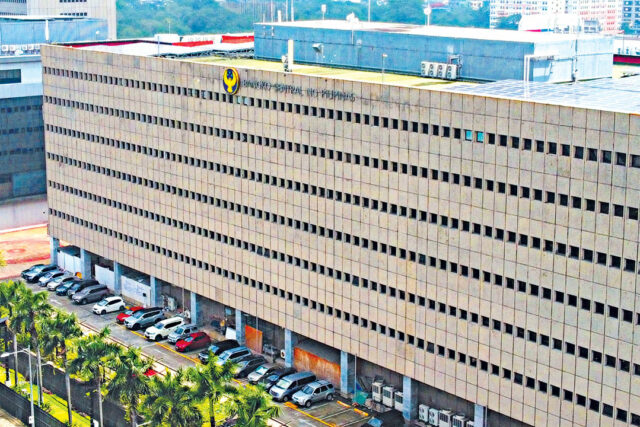
THE BANGKO SENTRAL ng Pilipinas (BSP) is seeking to amend its regulatory relief policy for banks in order to provide them with more support during calamities and disasters.

“Consistent with the aim of strengthening banks’ operational resilience through business continuity or disaster recovery measures, the BSP is amending the regulatory relief policy for banks by providing additional regulatory measures,” it said in a draft circular.

“The BSP recognizes the vulnerability of the Philippines to both natural and human-induced hazards which can lead to certain areas being declared under a state of calamity.”

These amendments seek to make regulatory relief measures more uniform and systemic, as well as boost banks’ capacity to bounce back from natural calamities.

The draft circular proposes to formally adopt several relief measures that were already given to banks affected by Tropical Storm Kristine and Super Typhoons Leon, Ofel and Pepito, which were introduced in January.

Under the draft rules, banks may avail themselves of relief measures within one year from the onset of a calamity. This could be earlier than the date of the official declaration of a state of calamity, it added.

Banks may also be granted a temporary grace period for loan payments and a temporary exclusion from past due and nonperforming loan (NPL) computations.

“Banks may grant borrowers in affected areas a grace period of up to six months for loan repayments, which may start from the inception date of the calamity,” it said.

“Loans extended to affected borrowers may be temporarily excluded from past due and NPL computations from one year from the inception date of the calamity.”

The BSP also included in the draft circular some interventions that were first implemented during the coronavirus disease 2019 (COVID-19) pandemic.

These include easing the identification requirements for households or micro-businesses in affected areas; relaxation of notification requirements related to changes in banking days and hours as well as temporary closure of bank branches and branch-lite units.

For example, branches that must temporarily close due to hazards are exempt from notification requirements.

Banks may also defer the opening of approved branches or branch-lite units in affected areas for up to three years.

Meanwhile, the draft circular also proposes a staggered booking of impairment losses.

“Impairment losses from banks’ own physical assets, including bank premises and equipment, due to hazards may be recognized over a three-year period, subject to BSP evaluation and approval,” it said.

“Similarly, the three-year period is also proposed to apply to the staggered booking of credit loss allowances.”

AGRI LOANS
The central bank is also introducing relief policies specifically for the agriculture sector.

“Meanwhile, since the agricultural sector is usually affected by climate-related hazards, the BSP is proposing a standardized forbearance measure covering agricultural loans,” it said.

“Loan payments for agricultural borrowers may be deferred, with repayment terms adjusted based on crop cycles and other relevant factors,” it added.

For example, the deferment period for loans related to the production of palay and corn is set at six months; while those for other short-term crops is at seven months, sugarcane at 12 months and cassava at 14 months.

The proposed rules also detail guidelines on the grace period for rediscounting obligations.

“Rediscounting banks may apply for a 60-day grace period to settle the outstanding rediscounting obligations with the BSP as of the inception date of the calamity.”

Rizal Commercial Banking Corp. Chief Economist Michael L. Ricafort said that improvements in the relief measures are a welcome development.

“The Philippines is one of the hardest-hit countries by natural calamities in a given year,” he said.

“So, a framework on regulatory relief measures as a stop-gap measure (will help) better respond to the adverse effects on some borrowers, though transitory in nature until they are back on their feet once supply chains and business transactions normalize.” — L.M.J.C. Jocson

New SEC chief urged to boost capital market development

FRANCISCO EDRALIN LIM — ACCRALAW.COM

By Revin Mikhael D. Ochave, Reporter

THE RECENT appointment of prominent lawyer Francisco Edralin Lim as the new chairperson of the Securities and Exchange Commission (SEC) received the backing of top corporate executives, business groups, and market analysts, who urged him to push initiatives to develop the local capital markets.

Philippine Chamber of Commerce and Industry Chairman George T. Barcelon said Mr. Lim, former president and chief executive officer (CEO) of the Philippine Stock Exchange (PSE) should pursue efforts to encourage small- and medium-sized enterprises to list on the local bourse.

“Compared with other Southeast Asian countries, the number of listed companies in our bourse is quite limited. Maybe it would be something that he would look into and provide support for the listing of small- and medium-sized companies,” he said in a phone interview.

Mr. Barcelon also pressed Mr. Lim to further improve the SEC’s systems and accelerate the processing of transactions.

On Tuesday, Malacañang announced the appointment of Mr. Lim as SEC chief, replacing Emilio B. Aquino, who steps down on June 6.

Mr. Lim was the president and CEO of the PSE from 2004 to 2010 and is a senior partner at the Angara Abello Concepcion Regala & Cruz Law Offices. Under the Securities Regulation Code, the SEC chairperson must be a lawyer.

Mr. Lim was also a former president of the Management Association of the Philippines and the Financial Executives Institute of the Philippines (FINEX).

In a Viber message, FINEX President EJ A. Qua Hiansen said Mr. Lim is expected to boost the SEC’s push for capital market development.

“We expect Mr. Lim’s leadership to drive the SEC in developing and strengthening our capital markets, ensuring a regulatory framework that is responsive to evolving market dynamics while promoting good, ethical business practices,” said Mr. Qua Hiansen, who is also the chief financial officer of Del Rosario-led conglomerate PHINMA Corp.

“His reputation as a staunch advocate for the development of our capital markets, coupled with his dedication to safeguarding investors, makes him an exceptional choice. We are confident that Mr. Lim’s leadership will result in a positive impact on the SEC’s vital mission,” he added.

SM Investments Corp. President and CEO Frederic C. DyBuncio welcomed Mr. Lim’s appointment, saying that the Sy-led conglomerate remains supportive of efforts to help create an environment for the growth of businesses and communities.

“With his deep understanding of the capital markets, we look forward to continued progress in strengthening investor trust and good corporate governance,” he said in a Viber message.

AP Securities, Inc. Research Head Alfred Benjamin R. Garcia said Mr. Lim is expected to drive market improvements following the recent signing of Republic Act No. 12214, or the Capital Markets Efficiency Promotion Act (CMEPA).

“He might be the best pick for SEC chair in this CMEPA era, since he’s from the capital markets and he knows how things work on both the regulator and trading participant side,” he said.

Under the CMEPA, the stock transaction tax was slashed to 0.1% from 0.6%, while the documentary stamp tax (DST) on the original issue of shares was cut to 0.75% from 1%.

China Bank Capital Corp. Managing Director Juan Paolo E. Colet said Mr. Lim is expected to work closely with the PSE and lawmakers to craft and accelerate measures to make the local stock market more attractive to companies and investors.

“We also expect him to push better corporate governance standards and stronger protections for minority shareholders so that investors would have greater confidence in participating in the equity market,” he said in a Viber message.

Rizal Commercial Banking Corp. Chief Economist Michael L. Ricafort said in a Viber message that Mr. Lim is expected to work on the integration of the PSE with its regional counterparts.

“We hope to see him push for further reforms, further development, and adopt more global best practices,” he said.

Leveraging technology, empowering local communities to help protect Sierra Madre and Mt. Makiling

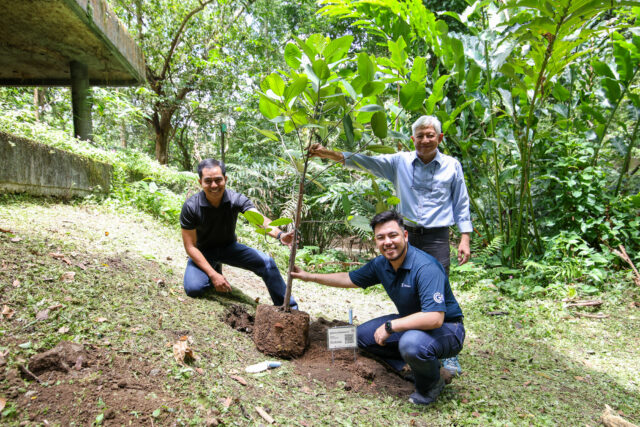
Tree planting initiative takes root. CJ Alegre, GCash Head for Sustainability (right) joins UPLB-CFNR Dean Marlo D. Mendoza, MDM (center), and Arthur Umali (left), University Research Associate at UPLB during the ceremonial planting of an endemic species, Dillenia philippinensis, locally known as Katmon. This collaborative effort between the university and corporate sector demonstrates their shared commitment to environmental conservation and sustainable ecosystem restoration.

Planting 130,000 forest and fruit trees in the two UP Land Grants by 2029 through the support of local communities and the 22M GForest Green Heroes

The University of the Philippines Los Baños (UPLB) is partnering with GCash, the leading Philippine finance super app, through its GForest program, to address environmental threats like illegal forest conversion and accelerate the restoration of degraded lands within the Mount Makiling Georeserve and the Sierra Madre mountain range. The strategic partnership aims to protect and reforest 250 hectares of land within the two land grants managed by UPLB by planting at least 130,000 forest and fruit trees during the first phase, and another 25,000 seedlings for urban and roadside planting in parts of Mount Makiling Georeserve by 2029.

UPLB, as the Center for Excellence in Forestry Education, is set to implement its data-driven and science-based approach to identify suitable types of trees,  strategic project areas, and apply implementation strategies to ensure environmental conservation and reforestation efforts translate into meaningful long-term impact.

UPLB Chancellor Jose V. Camacho Jr. (left) and UPLB-CFNR Dean Marlo D. Mendoza, MDM (right) showcase their institution’s commitment as the Center for Excellence in Forestry Education to restore vital forest ecosystems nationwide through innovative partnerships.

The academic institution also seeks to tap local communities as long-term partners in planting and stewardship, empowering them through livelihood opportunities and ongoing involvement. These include women’s groups, people’s organizations, and qualified UPLB community members.

UPLB also seeks to engage participation and support from relevant local government units (LGUs) in Laguna, municipalities in Quezon province, and national-level government agencies like the Department of Environment and Natural Resources (DENR) and the Department of Science and Technology (DICT).

Marked by a ceremonial contract signing led by UPLB, its College of Forestry and Natural Resources (CFNR), the Land Grant Management Office (LGMO), and GCash, through the support of its 22-million GForest Green Heroes, pledged to plant at least 130,000 forest and fruit trees across 250 hectares in two land grant areas managed by UPLB in the Sierra Madre Mountain Range.

In addition, 10 kilometers of road within the Mount Makiling Forest Reserve will be planted with species ideal for urban settings. Another 25,000 seedlings will also be cultivated for roadside planting in various parts of Laguna province.

Roadside planting in the Mt. Makiling Georeserve will provide multiple benefits, including environmental, social, and economic advantages. In terms of environmental impact, it will lead to improved air and temperature quality, carbon sequestration, noise reduction, urban flood mitigation, pollination support, and urban wildlife habitat. From a social and economic perspective, it can improve recreational opportunities and mental wellbeing, lead to energy savings, and increase property values.

“Sierra Madre is one of our last frontiers when it comes to [our remaining] intact forests,” shared UPLB-CFNR Dean Marlo D. Mendoza, MDM. [This] is rich in terms of biodiversity [and is] very high in endemism, which means a lot of species that are in Sierra Madre can only be found there or [can be found in] the Philippines and not other parts of the world.”

Vision for a Greener Future. UPLB-CFNR Dean Marlo D. Mendoza, MDM leads initiatives leveraging technology and empowering local communities to help protect Sierra Madre and Mt. Makiling through the strategic partnership between the university and GCash.

Luzon’s backbone against natural hazards

The Sierra Madre mountain range, which spans approximately 600 kilometers from Cagayan to Quezon Province, is known as the “backbone of Luzon” and is home to lush forests and vital watersheds that support the nation’s diverse wildlife populations. In addition, it acts as a natural shield against typhoons coming from the Pacific, protecting the Philippines by weakening and redirecting storm winds before they reach inland areas.

The end goal of the UPLB and GCash reforestation initiative is to help restore and fortify parts of the UP Sierra Madre Land Grant. The trees planted aim to convert degraded lands (remnants of past logging, timber poaching, and unsustainable farming) into thriving ecosystems of tall native forest species that form a closed or semi-closed canopy.

Fundamental to the success of this program is UPLB’s sourcing process, which focuses on native tree species that are well-adapted to the local environment and support biodiversity. UPLB researchers have selected a diverse mix of native species, such as Mayapis, Apitong, White Lauan, Almon, and Palosapis, that can support canopy restoration while promoting ecological diversity.

Meanwhile, native tree species for urban areas— such as Salingogon, Katmon, Aunasin, and Pamitoyen have been selected based on tree architecture, height, climate adaptability, and the benefits offered, such as aesthetic values, shade, pollution reduction, and habitats for wildlife. To complete the project in the coming months, UPLB will also recruit the help of local communities to oversee the planting, care, monitoring, and evaluation activities thereafter.

Mapping Green Recovery. The UPLB-GCash partnership aims to restore degraded ecosystems, enhance biodiversity, and empower local communities as stewards of the Philippines’ precious forest resources through innovative conservation approaches.

By championing collaboration among scientists, organizations like GCash, and local communities, this partnership creates a holistic approach that addresses environmental challenges, enhances resilience, and turns residents into long-term environmental stewards. The program includes community-based monitoring to ensure survival rates and continuous ecological and social benefits.

“We are excited about this new partnership with GCash, as it allows us to explore the environmental and socioeconomic impacts of reforestation,” said Mendoza. “Together, we can implement UPLB’s proven methods to maximize benefits for both ecosystems and local communities.”

“Through this partnership, GCash continues to strengthen its commitment to sustainability. As a tech for good platform, we can bridge users with sustainability partners and environmental institutions, like UPLB, and contribute to real-world environmental efforts,” CJ Alegre, GCash Head for Sustainability, added. “At GCash, we believe that technology can be a powerful tool for positive change.”


Spotlight is BusinessWorld’s sponsored section that allows advertisers to amplify their brand and connect with BusinessWorld’s audience by publishing their stories on the BusinessWorld Web site. For more information, send an email to online@bworldonline.com.

Join us on Viber at https://bit.ly/3hv6bLA to get more updates and subscribe to BusinessWorld’s titles and get exclusive content through www.bworld-x.com.