Home Blog Page 1482

Poultry imports banned from 2 US states

REUTERS

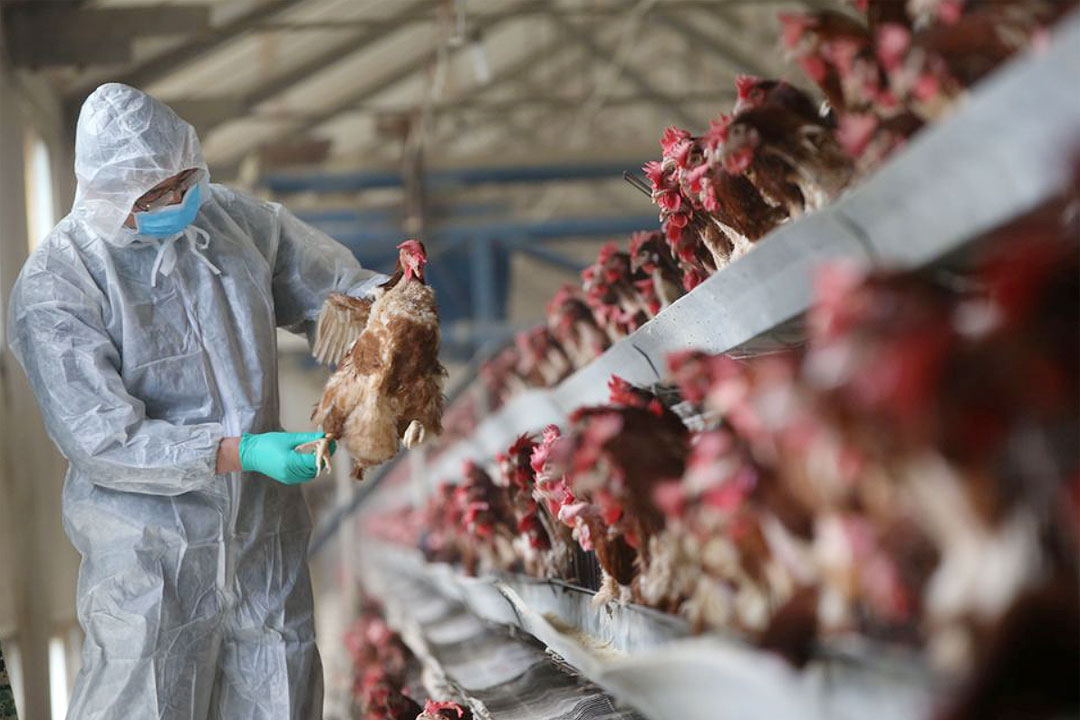
THE Department of Agriculture (DA) has ordered a ban on poultry meat imports from the US states of Maryland and Missouri, following bird flu outbreaks there.

Memorandum Order No. 07 dated Feb. 4 covered domestic and wild birds and their products such as poultry meat, day-old chicks, eggs and semen.

In the order, the DA said the rapid spread of H5N Highly Pathogenicity Inspection Avian Influenza (HPAI) necessitates broader trade restrictions to prevent the entry of the virus and protect domestic producers.

The DA said all shipments coming from the two states that are in transit, loaded, or accepted at port before the communication of the order to US authorities will be allowed “provided that products were slaughtered/produced 14 days before the Jan. 14 outbreak in Caroline County in Maryland and in Newton County in Missouri. — Kyle Aristophere T. Atienza

Ghosting is a taxpayer’s regret

February is often associated with love because of Valentine’s Day. However, to those who are dating, it is now common to hear the term “ghosting,” which means the act of suddenly cutting off ties without explanation due to fear of confrontation. But for taxpayers, ghosting the BIR is something to regret, especially when it comes to tax audits.

The BIR is no stranger to being ghosted by taxpayers, which it classifies as Cannot Be Located (CBL). On Jan. 14, the BIR issued Revenue Memorandum Order (RMO) No. 004-2025, outlining the policies and guidelines in reporting CBL taxpayers and the procedures for handling their cases.

Taxpayers may be considered CBL when they are not found at their registered address, their whereabouts cannot be established, or their indicated address is non-existent. The RMO also provides that those taxpayers with virtual offices (a shared office utilized by various taxpayers), but with no authorized representative available to receive any correspondence addressed to them, may likewise be considered CBL.

In case there are irregularities in the registration process resulting in the taxpayer being tagged as CBL, the concerned Revenue Officers (ROs)/officials involved will be subject to appropriate sanctions.

Equally important to note is that, before the concerned RO handling the case may tag such taxpayers as CBL, they are required to exhaust all possible means available to locate the taxpayer.

One of the ways ROs confirm whether a taxpayer is CBL is by collaborating with government agencies, suppliers, and purchasers possibly connected with the taxpayer. ROs are allowed to send notices to the taxpayer’s e-mail address or to its authorized tax agent of record. In the case of corporate taxpayers, ROs may send notices to their accountable officers, or even to the Certified Public Accountant indicated in the taxpayer’s financial statements.

In case these efforts to locate the taxpayer produce no results, the case officers may also resort to obtaining certifications from other government agencies to confirm the non-existence/non-compliance/inactive status of the taxpayer. A consolidated list of CBL taxpayers is uploaded to the BIR website. The BIR is required to issue an “Advisory” on the newly published lists of CBLs, together with the instructions on what the taxpayers should do if they see their names on the list.

EFFECTS OF BEING TAGGED CBL
So, what happens when a taxpayer with a pending BIR audit/assessment is declared CBL? In general, internal revenue taxes are to be assessed within three years after the last day prescribed by law for its filing or from the day the return was filed, whichever is later. This prescriptive period affords taxpayers protection against lengthy and unreasonable investigation. However, RMO 004-2025 highlights that when a taxpayer is CBL, such a period of limitation is suspended and may only resume upon the service of any previously unserved correspondence/notice.

Notwithstanding the suspension of the period of limitation for both assessment and collection, it is required that the Notice of Discrepancy/Discussion of Discrepancy (NoD/DoD) be issued to document the taxpayer’s deficiency in any internal revenue tax.

In cases where the notices requesting the presentation of accounting records and documents have not been served due to the taxpayer being classified as CBL, the NoD/DoD is to be prepared based on available documents. The issuance of a subpoena is not necessary to justify the assessment based on available documents. Further, the taxpayer’s right to a DoD as indicated in the NoD is forfeited, and the PAN will be issued accordingly.

To those taxpayers who have pending applications (i.e., tax clearance, registration of books of account, etc.), the BIR office concerned is required to conduct a verification of whether the applicant is CBL. In this case, the number of days to process these applications, as mandated under existing revenue issuance in accordance with the Ease of Doing Business law, do not apply.

ROs handling audit or refund cases must verify from the published list of CBL taxpayers if there are expenses/input taxes being claimed by the auditee-taxpayer arising from transactions with CBL taxpayers. Purchases made from a published CBL taxpayer may not be allowed as deductions for Income tax purposes, and if the transaction has a VAT component, the same cannot be claimed as input tax, unless the buyer can prove the authenticity of purchases made, among others.

Clearly, proper communication is important not only when it comes to romantic relationships, but also in dealing with the BIR. It is the taxpayer’s responsibility to keep records updated especially when there are changes in registration, specifically regarding their registered address and other relevant information. Corporate taxpayers using a virtual office as their registered business address, must ensure there is an authorized representative available to receive correspondence from the BIR. Although the CBL classification may not be forever, there are still repercussions that the taxpayer may come to regret, especially when faced with a BIR audit.


Ma. Jessica A. Guevarra is a senior manager of the Tax Advisory & Compliance Practice Area of P&A Grant Thornton.

Tweet us: @GrantThorntonPH

Facebook: P&A Grant Thornton

pagrantthornton@ph.gt.com

www.grantthornton.com.ph

Special session for VP impeachment trial is illegal, says Senate president

VICE-PRESIDENT SARA DUTERTE-CARPIO — FACEBOOK.COM/MAYORINDAYSARADUTERTEOFFICIAL

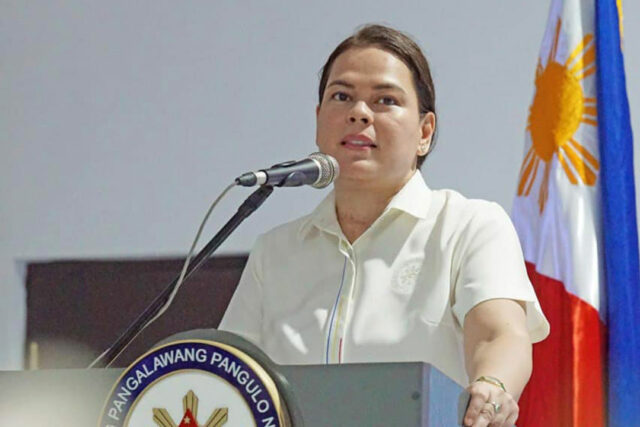
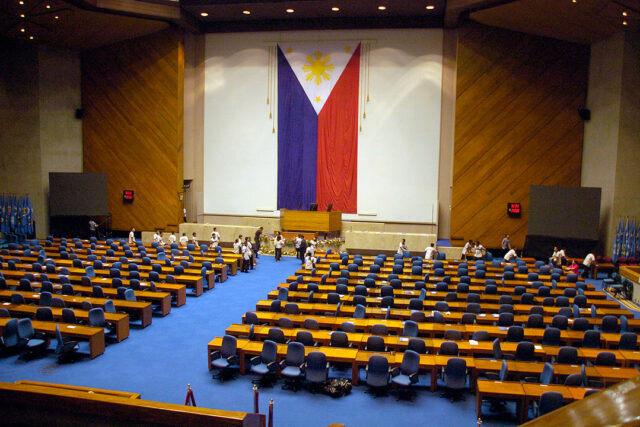
THE SENATE won’t hold a special session so they could try impeached Vice-President (VP) Sara Duterte-Carpio, who is accused of corruption and other charges, because it is against the law, its president said on Monday.

The chamber is likely after the President’s State of the Nation Address on July 28 or once the new Congress starts, Senate President Francis G. Escudero told reporters.

“I have no intention of requesting to the President a special session,” he said. “This is not one of the things or reasons [under the law] for the Senate to call for a special session,” he added in Filipino.

More than 200 congressmen last week filed and signed an impeachment complaint against Ms. Duterte, more than the one-third vote required by the Constitution for her to be impeached, paving the way for her trial by the Senate.

The House of Representatives sent the bill of the impeachment complaint to the Senate on the last day of the congressional session. Twenty-five more congressmen later endorsed the complaint.

The ouster charges consisted of seven articles of impeachment, including allegations of plotting the assassination of the President, misusing secret funds, amassing unexplained wealth and committing acts of destabilization

Ms. Duterte has denied any wrongdoing, including having threatened to get President Ferdinand R. Marcos, Jr. assassinated in case she herself were killed. She earlier said her lawyers are busy preparing for her defense.

“Who wants us to hold a special session and conduct the trial before the [May 12 midterm] elections?” Mr. Escudero asked in Filipino. “Those who are pro-impeachment. We won’t listen to those who are pro-or anti-Vice-President Sara. We will follow what the law provides.”

Congress is on a four-month break for the midterm elections, where Filipinos will pick a new set of congressmen and 12 of the 24-member Senate, as well as other local officials.

Mr. Escudero cited the case of former Ombudsman Merceditas Gutierrez, whom the House impeached three days before they adjourned. The trial was set more than a month later, he pointed out.

He also noted that former Chief Justice Renato C. Corona was impeached a week before Congress went on a break. “The Senate held the trial after Christmas and the New Year, in January, or about a month after,” he said in Filipino.

“Why should I change the treatment of this impeachment complaint?” he asked, adding that the Vice-President’s impeachment case is not special.

He noted that under the 1987 Constitution, Congress can only hold special sessions for urgent legislation, when it must vote for a new Vice-President in case one is removed or incapacitated or if the President becomes incapacitated by a majority vote of the Cabinet.

The Legislature may also hold special sessions to canvass the votes and proclaim the President and Vice-President after an election, or when martial law is declared and the writ of habeas corpus is suspended, he pointed out.

Meanwhile, the House of Representatives prosecution team plans to subpoena the Vice-President’s bank records as evidence once her trial starts, said Manila Rep. Joel R. Chua, a prosecutor-congressman for the trial.

“The impeachment process allows us to complete the evidence to support our case, and that includes subpoenaing financial records, if necessary, through the Senate impeachment court,” he said in a statement.

“The Bank Secrecy law provides an exception for impeachment cases, and we intend to use all legal means to secure relevant documents, in addition to the evidence already present, that will aid in the trial,” he added.

The Vice-President’s office did not answer several calls outside business hours.

Ms. Duterte is one of few Philippine officials who were impeached, among them ex-President Joseph E. Estrada in 2000, Ombudsman Merceditas Gutierrez in March 2011, Mr. Corona in December 2011 and election chief Juan Andres D. Bautista in October 2017.

Mr. Corona was convicted by the Senate, while Ms. Gutierrez and Mr. Bautista resigned before they could be tried. Mr. Estrada’s trial was aborted as some House prosecutors walked out after senators voted against opening a document containing evidence. He was later ousted by a street uprising.

The House prosecution panel is also considering working with the Anti-Money Laundering Council and state auditors to trace transactions connected to the Vice-President’s confidential funds, Mr. Chua said.

Ms. Duterte has been accused of mishandling P612.5 million worth of confidential and intelligence funds in 2022 and 2023, which stemmed from a House inquiry. She has denied any wrongdoing, calling the probe politically motivated. — Kenneth Christiane L. Basilio, Adrian H. Halili and Norman P. Aquino


Stronger ties between US and PHL defense chiefs sought under Trump 2.0

FACEBOOK.COM/USEMBASSYPH

By John Victor D. Ordoñez, Reporter

MANILA and Washington should pursue deeper ties and constant communications between their defense agencies to ensure the continuity of security engagements under a second Trump administration, security analysts said at the weekend.

“Establishing good personal relations between their defense chiefs is crucial to promote better consultation and coordination,” Lucio B. Pitlo III, a research fellow at the Asia-Pacific Pathways to Progress Foundation, said in a Facebook Messenger chat.

“This can help promote continuity of ongoing security engagements, clarify issues like concerns over military aid suspension and identify and reinforce shared interests and priorities,” he added.

Last week, US Defense Secretary Pete Hegseth spoke on the phone with his Philippine counterpart Gilberto Eduardo Gerardo C. Teodoro, Jr. to discuss boosting deterrence in the South China Sea amid rising tensions with China, according to the US Department of State.

Washington’s Defense chief reaffirmed Washington’s “ironclad” commitment to its Mutual Defense Treaty with Manila to secure peace in the Indo-Pacific region. He also vowed to work with Mr. Teodoro in boosting defense cooperation.

Manila has been embroiled in wrangles at sea with Beijing in the past two years and the two countries have faced off regularly around disputed features in the South China Sea that fall within Manila’s exclusive economic zone.

“There won’t be much of a radical shift under the Trump government despite the whole concept of transactionalism when it comes to recognizing the significance of the alliance,” Don McClain Gill, who teaches foreign relations at De La Salle University in Manila, said in a Facebook Messenger chat.

“As far as the defense angle is concerned, I do not think that there would be major obstacles in pushing this further under Trump 2.0,” he added.

The US Department of State on Jan. 20 issued an executive order that froze foreign funding, with exceptions for emergency food programs and military aid to Israel and Egypt.

US President Donald J. Trump ordered the 90-day pause in foreign development assistance pending a review.

Last month, US Secretary of State Marco Rubio talked about China’s “dangerous and destabilizing actions in the South China Sea” with Philippine Foreign Affairs Secretary Enrique A. Manalo and underscored the ironclad US defense commitment to Manila.

The US is the Philippines’ major security partner, with a 1951 Mutual Defense Treaty compelling both nations to defend each other in case of an armed attack.

Their air forces held joint patrols over the South China Sea last week, a move that angered China, which also conducted a “routine patrol” over the disputed Scarborough Shoal.

Beijing has accused its neighbor of joining patrols it said were organized by foreign countries to “undermine peace and stability” in the waterway.

Security engagements between the allies have soared under Philippine President Ferdinand R. Marcos, Jr., who has moved closer to Washington and allowed the expansion of military bases that American forces could access, including facilities facing the democratically governed island of Taiwan, which China claims as its own.

“I don’t think that the defense aspect of our partnership with the US would be derailed,” Mr. Gill said. “The economic development aspect is another story. But of course, that doesn’t paint the entire picture of the partnership we have with the US.”

The Philippines has contested China’s sweeping claims in the waterway through diplomatic channels by filing more than 190 diplomatic protests since Mr. Marcos took office in 2022.

DMW: 140 Filipino workers and their dependents to come home this month

Smokes rise, amid ongoing cross-border hostilities between Hezbollah and Israeli forces, in Tyre, southern Lebanon Sept. 23, 2024. — REUTERS

THE Philippine government will repatriate 131 overseas Filipino workers (OFW) and nine dependents in Lebanon to ensure their safety amid worsening conflict, the Department of Migrant Workers (DMW) said on Monday.

In a statement, Migrant Workers Secretary Hans Leo J. Cacdac said the Filipinos are expected to come home early this week.

The Filipinos are expected to arrive in two batches — 52 workers with one dependent on Feb. 10 and 79 workers with eight dependents on Feb. 11.

“Most of them were sheltered in Beirut under the auspices of the DMW and the Overseas Workers Welfare Administration (OWWA),” he said “We stand continually ready to assist and support OFWs who wish to come home for safety and security.”

The Filipinos will get immediate financial assistance, airport support and post-arrival services from the Department of Foreign Affairs (DFA), OWWA, Department of Health, Department of Social Welfare and Development and Technical Education and Skills Development Authority.

The DMW’s National Reintegration Center for OFWs will also provide reintegration help, including upskilling opportunities, livelihood assistance and skill training.

The return of the 131 OFWs and their dependents will bring the number of repatriated Filipinos from Lebanon to 1,569 OFWs and 68 dependents, according to DMW data.

The DFA earlier placed Lebanon under Alert Level 3 and Crisis Alert Level 3, suspending the deployment of contract workers to the West Asian country.

Israel and Hamas reached a ceasefire agreement on Jan. 15 that took effect on Jan. 19, allowing Palestinians to return home. Hezbollah, an Iran-backed Lebanese militant group, supported Palestine in its war against Israel.

Israel had vowed to destroy Hamas for its October 2023 attack, in which 1,200 people were killed, most of them civilians, and 251 were taken hostage, according to Israeli tallies.

More than 48,000 people have died in Israel’s retaliatory assault, most of them civilians, according to Palestinian health authorities. — Chloe Mari A. Hufana

Agri dep’t questioned over onion imports ahead of harvest season

ENGIN AKYURT--UNSPLASH

A PHILIPPINE Senator on Monday questioned the Department of Agriculture (DA) plans to allow the importation of red and yellow onions as the harvest season is expected to begin.

“Before bringing in imports, make sure you’re not burying our farmers’ livelihood in the process,” Senator Maria Imelda R. Marcos said in a statement in Filipino.

Last week, the DA said that it would allow the importation of 4,000 metric tons (MT) of onions to ensure stable prices as local stocks are running low.

The Agriculture department has permitted the shipment of 3,000 MT of red onions and 1,000 MT of white onion, expected to arrive by Feb. 20.

Ms. Marcos questioned the need for further onion imports, adding that the local harvest season had already begun.

She added the onion prices are expected to drop during harvest time amid the influx of local supply.

“Why bring in imports now when we know this would mean losses for our farmers?” she asked.

Agriculture Secretary Francisco P. Tiu Laurel, Jr. had said that the agency allowed the importation of onions to avoid risks of a potential shortage and further spikes in prices.

Ms. Marcos said that the DA should also take action on individuals stockpiling onions in cold storage facilities.

“Even if we have enough supply, prices will still skyrocket if hoarders are in control,” she added.

The inventory for red onions was tallied at 2,325.86 MT with white onion stocks at 631.44 MT, according to Bureau of Plant Industry, as of Jan. 31.

Last year, the DA allowed white onion imports totaling 17,000 MT, after delaying imports until August due to higher production.

Meanwhile, Senator Sherwin T. Gatchalian asked the Trade department to enhance monitoring of bread prices in response to the rising retail costs.

“The Department of Trade and Industry (DTI) should strictly monitor prices of bread to prevent unscrupulous traders and retailers from unduly hiking prices given that bread is an alternative to rice, which has remained costly,” Mr. Gatchalian said in a statement. 

He added that any increase in bread prices should be “both reasonable and justified,” citing the need for transparency in pricing.

Last week, the DTI had issued a new suggested retail price (SRP) for basic necessities and prime commodities, which included the SRP for bread.

The SRP for a 450-gram pack of Pinoy tasty went up to P44 from P40.5, while Pinoy tasty saw prices rise to P27.5 from P25 for a 250-gram pack, according to the Trade department’s SRP bulletin as of Feb. 1. These brands are the only stock-keeping units under the bread category.

“The government should explore measures to stabilize production costs, such as securing reliable chains for wheat and other essential ingredients and providing necessary support for bakers to enhance production efficiency,” Mr. Gatchalian added.

The country typically imports most of its wheat requirement for the processing of flour for bread and other baked goods, while animal grade wheat is imported for feed.

According to the United States Department of Agriculture, the Philippines may import 7 million MT of wheat in 2025. — Adrian H. Halili

NEDA monitoring risks to growth

PHILIPPINE STAR /EDD GUMBAN

THE NATIONAL Economic Development Authority (NEDA) is monitoring “uncertainties,” such as geopolitical risks, that could affect the country’s 6-8% gross domestic product (GDP) growth target this year, an official said on Monday.

“We really need to consider a lot of scenarios (before adjusting the growth target),” NEDA Undersecretary Rosemarie G. Edillon told reporters on the sidelines of a Palace briefing.

“Because on one hand, you are seeing that tensions in the Middle East are easing and that would actually lower fuel prices and that would have a good impact on us, but off hand, I cannot say (if growth target will be revised).”

The Development Budget Coordination Committee is set to hold its first meeting this year in March.

The Philippine economy grew by a weaker-than-expected 5.6% in 2024, falling short of the government’s revised 6-6.5% target.

Budget Secretary Amenah F. Pangandaman told reporters last week that the government could adjust the target if needed.

Finance Secretary Ralph G. Recto earlier told BusinessWorld that achieving a 6-6.5% GDP growth is “doable for 2025.”

Meanwhile, Ms. Edillon said the Philippines should reposition itself as an alternative source of exports to the US to benefit from the ongoing trade war Washington has with its partners such as Canada.

“In fact, if we can position our country as a very attractive alternative source for former exports to the US, we can actually benefit,” she said in mixed English and Filipino.

“We can gain a lot from our regional free trade agreements, so we’re assuming that in case Canada, perhaps, they will maximize the regional free trade agreements, and this is where we can really benefit,” she added.

US President Donald J. Trump earlier imposed a 25% additional tariff on imports from Canada and Mexico but later put it on hold. He also implemented an additional 10% tariff on imports from China.

The NEDA undersecretary said Manila has to strengthen sectors such as the chip and semiconductor industry to boost its exports. — John Victor D. Ordoñez

Graft suit over 2025 budget filed 

BW FILE PHOTO

ALLIES of the Duterte clan filed a complaint before the Ombudsman on Monday, accusing House Speaker Ferdinand Martin G. Romualdez and other lawmakers of falsifying legislative documents and engaging in graft in relation to the alleged P241 billion worth of insertions to the 2025 national budget.

The complainants, led by Davao del Norte 1st District Rep. Pantaleon D. Alvarez, accused Mr. Romualdez, Majority Leader Manuel Jose M. Dalipe, ex-chairman of the Committee on Appropriations Elizaldy S. Co and acting chairman of the appropriations panel Stella Luz A. Quimbo, for committing at least 12 counts of falsification of legislative documents, under Article 170 of the Revised Penal Code and 12 counts of violations of Section 3(e) of the Anti-Graft and Corrupt Practices.

The 30-page complaint cited a podcast episode where former President Rodrigo R. Duterte raised concerns over the alleged P241-billion insertions, which replaced blank items in the approved bicam report.

The complainants also argued that the insertions were “not mere correction of typographical, grammatical, or printing error.”

In a Viber chat with reporters, Mr. Dalipe said passing the 2025 General Appropriations Act is a constitutional duty of Congress, not a criminal act.

He added the budget undergoes thorough deliberations in Congress before presidential approval, ensuring transparency and accountability.

“This process adheres to the checks and balances enshrined in our Constitution, ensuring transparency, accountability, and fiscal responsibility,” he added.

The offices of the other named respondents did not immediately respond to Viber chats seeking comments. — Chloe Mari A. Hufana

State can fund USAID studies — NEDA

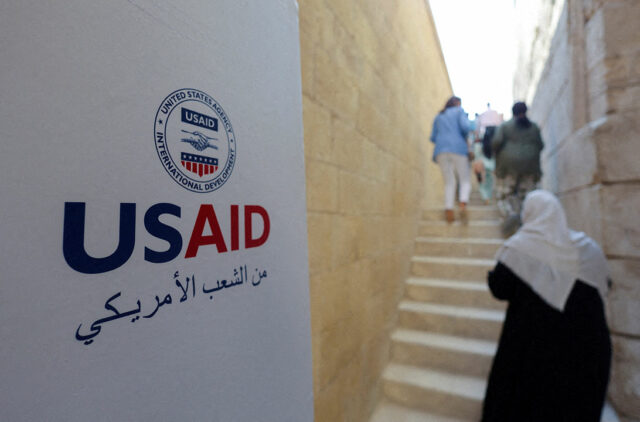
Visitors walk up a stair during the opening of the restoration project at the historic Bimaristan Al-Muayyad Sheikh, one of the oldest hospitals following extensive renovations carried out in partnership between Egypt’s Tourism and Antiquities Ministry and the United States Agency for International Development (USAID) in Old Cairo, Egypt Aug. 18, 2024. — REUTERS

THE Government can still fund ongoing studies and outsource technical assistance projects initially funded by the United States Agency for International Development (USAID) amid Washington’s 90-day pause to foreign aid projects, according to a National Economic Development Authority (NEDA) official.

“With respect to studies USAID is supporting, these can actually continue because we can actually also provide funding for that,” NEDA Undersecretary Rosemarie G. Edillon told reporters on the sidelines of a Palace briefing on Monday.

“It’s really more of the technical assistance part, which actually, we can source from other developers,” she told the briefing.

The US Department of State on Jan. 20 issued an executive order that froze foreign funding, with exceptions for emergency food programs and military aid to Israel and Egypt.

US President Donald J. Trump ordered the 90-day pause in foreign development assistance pending a review of these programs in relation to his administration’s foreign policy, which includes programs under USAID.

Washington had also ordered a “stop-work” order on Jan. 24 for all existing foreign assistance after Mr. Trump’s call for a review.

“We will have to wait for that issue to be resolved, but regarding the ongoing technical assistance, we are actually still continuing with the studies,” Ms. Edillon said.

She told reporters that USAID workers in Manila have stopped working for the time being amid the pause in foreign aid.

NEDA Secretary Arsenio M. Balisacan earlier said the pause in aid is unlikely to cause a significant impact to the Philippine economy.

Washington provided foreign aid worth $60 billion in 2023 or about 1% of the US budget.

“We also have a good relationship with the USAID staff. Many of them provide inputs out of their goodwill,” the NEDA undersecretary said. — John Victor D. Ordoñez

New Comelec commissioners named

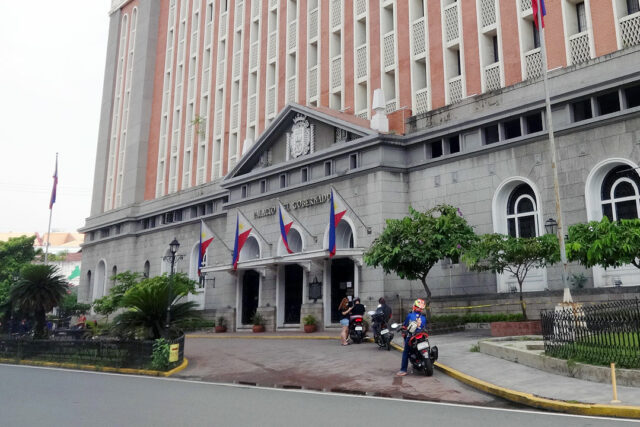
THE COMELEC office in Intramuros, Manila — PATRICK ROQUE

PRESIDENT Ferdinand R. Marcos, Jr. has named a lawyer from the Commission on Elections (Comelec) and a regional election director as new commissioners of the election body ahead of the May midterm elections.

In separate letters, dated Feb. 10 and signed by President Ferdinand R. Marcos, Jr., Comelec Law Department Director Maria Norina S. Tangaro-Casingal  and Comelec Ilocos Regional Director Noli Rafol Pipo were named commissioners to replace Socorro B. Inting and Marlon S. Casquejo, respectively.

Both former election commissioners retired last week.

The Philippine midterm elections are scheduled for May 12, when Filipinos will elect 12 of the 24 senators, congressmen and local officials.

Comelec Chairman George Erwin M. Garcia said last week that about 13 million ballots have already been printed since they resumed printing last Jan. 27, or about 16% of the 72 million it aims to print for the elections.

The agency is printing about 1.8 million ballots per day, exceeding Comelec’s initial goal of 1.5 million printouts, he told a news briefing on Feb. 5. — John Victor D. Ordoñez

NBI foils P22-M smuggled fuel — BoC

PHILIPPINE STAR/WALTER BOLLOZOS

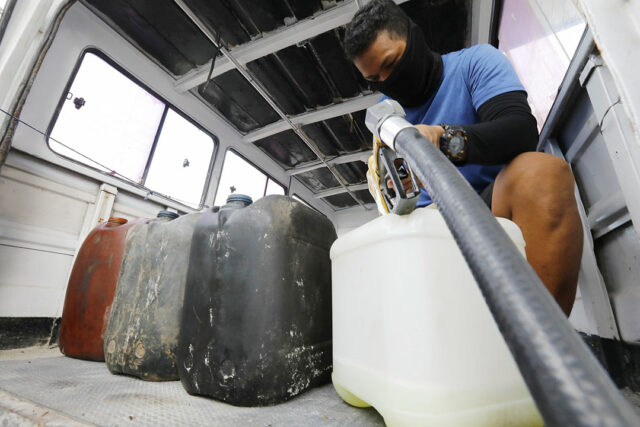
THE Bureau of Customs (BoC) said on Monday that the National Bureau of Investigation (NBI) Criminal Intelligence Division (CRID) intercepted smuggled fuel valued at P22.438 million in Bataan.

In a statement on Monday, the Customs said the CRID along with its counterterrorism and counterintelligence divisions apprehended individuals and seized a motor tanker, MV Effraine, and 11 lorry trucks — four carrying a total of 674,520 liters of illicit fuel.

“Fuel marking tests conducted yielded ‘failed’ results in both initial and confirmatory tests, confirming that the seized fuel did not meet legally required tax markings,” the BoC said.

In Customs’ 123rd founding anniversary program last week, President Ferdinand R. Marcos, Jr. said P94.7 million worth of unmarked fuel was seized under the agency’s fuel marking program. — Aubrey Rose A. Inosante

CA overturns dropped charges vs Canada waste

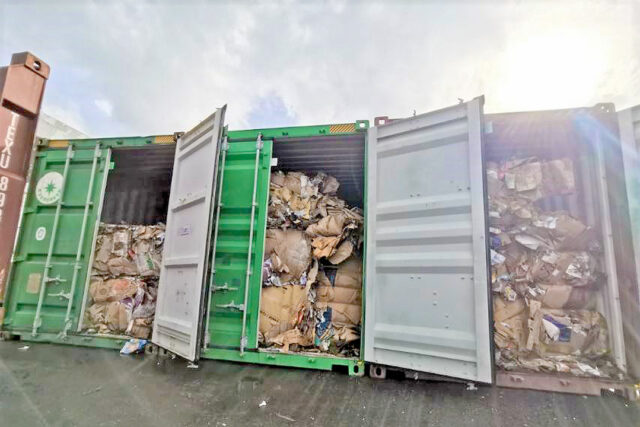
CARGO containers with wastes seized by the Bureau of Customs in 2020. — BUREAU OF CUSTOMS

THE Court of Appeals (CA) overturned a lower court’s decision to dismiss smuggling charges from the unlawful importation of fifty container vans of “Canada waste” declared as “plastic scrap.”

The court’s Eighth Division said two judges handling the case from the Regional Trial Court, Branch 47, Manila, committed a grave abuse of discretion for prematurely granting the Demurrer to Evidence filed by the private respondents and denying the prosecution’s motion for reconsideration.

It also ruled the judge who denied the prosecution’s motion for reconsideration committed a grave abuse of discretion by failing to address the due process issue. Instead, his resolution said the judgment of acquittal was immediately final and could no longer be assailed.

The tribunal cited jurisprudence saying that a trial court’s decision can be nullified if it is found to have “blatantly abused its authority” and deprived the prosecution of the opportunity to present its case.

It determined the lower court’s actions were made without proper regard for due process; thus, the acquittal was considered null and void.

The court ordered the reinstatement of the criminal cases and directed the trial court to resolve the Demurrer to Evidence with dispatch after allowing the prosecution to file its comment.

The appellate court noted the private respondents filed their Demurrer to Evidence on June 17, 2023, and it was granted on June 20, 2023, while the order admitting the prosecution’s formal offer of evidence was only served on the parties on June 22, 2023.

It ruled this violated the prosecution’s right to due process because they were not allowed to comment on or object to the demurrer.

The case involved eight separate pieces of information filed against two private respondents for allegedly violating the Tariff and Customs Code of the Philippines.

The charges stemmed from the unlawful importation of fifty container vans declared as “plastic scrap” but found to contain used, mixed, or unsorted plastic materials, including household garbage and used adult diapers, known as “Canada Waste.”

The Bureau of Customs filed a complaint against the private respondents before the Department of Justice, which found probable cause and led to formal indictments. — Chloe Mari A. Hufana