Home Blog Page 1447

POC asks PSC to release Harbin gold winner curling team incentives

THE Philippine Olympic Committee (POC) on Wednesday asked the Philippine Sports Commission (PSC) to release the incentives due the national curling team that struck a historic gold in the Asian Winter Games in Harbin, China last month.

POC President Abraham Tolentino said the incentives, worth P2 million as mandated by law, has not been released to the triumphant Filipino curlers Marc and Erico Pfister, Alan Frei and Benjo Delarmente, which, the former said, could affect their training for the qualifier to next year’s Winter Olympics in Italy.

“This delay is hurting the momentum of our historic gold medallist in curling in Harbin with strong consideration that the victory — a first by the country and any Southeast Asian nation in any winter sports — is our springboard to a potential gold in next year’s Winter Olympics,” said the Tagaytay City Mayor and PhilCycling chief.

“Let’s give what’s due this team because before their historic success in Harbin, they’ve been competing under the Philippine flag at their own expense and without any support from our government,” he added.

The POC had already given the team $5,000, or around P286,000, before the squad left to resume training abroad.

The Philippine Sports Commission has yet to respond to the issue as of this writing.

“I’m hoping they release incentives the soonest and avoid any delays because this may affect the team’s preparations on their campaign to qualify for the Winter Olympics,” he said. — Joey Villar

Stagflation on the radar for US economy, but no repeat of ’70s

A SHOPPING CART is seen in a supermarket in Manhattan, New York City, June 10, 2022. — REUTERS

WASHINGTON — Recent economic projections from Federal Reserve officials had shades of “Stagflation-lite,” in the words of one economist, a sentiment increasingly echoed among other observers of the US economy and central bank wondering if the country’s outperformance during the pandemic is about to slide.

So what is stagflation and why is it suddenly on everyone’s mind?

THAT (BAD) ’70s SHOW
Stagflation, or a period of both high inflation and high joblessness, hit the US notably in the 1970s, which may have featured the worst US economic leadership since the Great Depression. Fed officials had their data and their framework wrong, and elected officials flailed against inflation with price controls and what now seem quaint public relations efforts, most notoriously the Ford administration’s “Whip Inflation Now (WIN)” button campaign.

As economists in recent weeks have begun marking down their estimates of economic growth and marking up estimates of inflation in the face of dramatic economic policy shifts under President Donald Trump, it has sparked debate about whether that could be unfolding again now.

In theory, a weak economy with rising unemployment undercuts inflation, so the two should not coexist. But as with oil price shocks in the 1970s that drove prices higher, the tariff shock anticipated from Mr. Trump’s trade policies now has the world guessing.

The Trump administration says the tariffs are part of what they bill as a transition for the economy that, coupled with other efforts to deregulate industry and cut taxes, will produce both plentiful jobs and lower inflation.

The hints of stagflation in current forecasts aren’t near as bad as the 1970s, a decade in a league of its own when a surge in the so-called “misery index” combining the unemployment and inflation rates still stands out in charts of postwar economy.

But the direction of travel for major aspects of the economy has caught economists’ attention. When Fed officials this week assessed the risks they see ahead they pointed uniformly towards higher inflation and higher unemployment than previously expected.

“Stagflation-lite,” is what RSM chief economist Joe Brusuelas titled his analysis of the Fed’s meeting last week. Policymakers’ forecasts “implied mild stagflation ahead in the near term as growth slows and inflation increases,” he said, noting the “pervasive uncertainty around the size and magnitude of the trade shock.”

‘NOTHING MORE UNCOMFORTABLE’
Fed policymakers last week left interest rates unchanged but still anticipate two quarter-point cuts by yearend. Their new economic projections, however, laid bare their conundrum. Growth is anticipated to slow, unemployment to rise a bit more than expected, and inflation to accelerate in the face of existing and widening tariffs.

Implied by their forecasts of rate cuts and higher inflation is a belief that tariff-triggered price increases would be one-off jumps, the same assumption the Fed made early in the pandemic when it called rising prices “transitory” — and was proven wrong.

Things are different now. Factories and ports are open and goods are flowing.

But given the scope and breadth of what Mr. Trump is planning, officials say the outcome remains unpredictable.

Hard macroeconomic data, as Fed Chair Jerome Powell noted in his press conference last week, remain solid. The misery index is rather low in fact.

But softer measures like sentiment are sliding, something policymakers feel could cause businesses to stall investment and hiring and households to cut back, even as tariffs lead prices to keep rising. Fed officials note growing concern among business contacts, and have begun discussing the difficult choice moments of stagflation pose for a central bank tasked with controlling inflation while sustaining employment.

“There is nothing more uncomfortable than the stagflationary environment…where both sides of the mandate start going wrong. There is not a generic answer…Which is worse? Is it bigger on the inflation side? Is it bigger on the job market side?” Chicago Fed President Austan Goolsbee said Friday on CNBC. “Higher tariffs raise prices and reduce output so that is a stagflationary impulse.”

NOTHING TAKEN FOR GRANTED
If the Fed is caught in the middle, their priority is clear: To ensure that not just inflation, but public expectations about inflation, remain under control.

Perhaps the key mistake of the 1970s was a failure to understand better the role that public psychology plays in future inflation. Scarred by rising prices, Americans’ belief that costs would keep on rising kept pushing prices higher even as the economy weakened.

It took punishing interest rates and two successive recessions under Fed chief Paul Volcker to begin to establish the Fed’s credibility and reset expectations through the rest of the 1980s and into the 1990s.

That’s a lesson Mr. Powell has said he takes to heart, and one he says he won’t repeat.

“I don’t see any reason to think that we’re looking at a replay of the ’70s or anything like that…Underlying inflation is still running in the twos, with probably a little bit of a pickup associated with tariffs,” Mr. Powell said at a press conference after the Fed’s most recent meeting. “I wouldn’t say we’re in a situation that’s remotely comparable to that.

But stable inflation expectations are “at the very heart of our framework,” he said. “We will be watching all of it very, very carefully. We do not take anything for granted.” — Reuters

China poses biggest military, cyber threat to US, intel chiefs say

PHILSTAR FILE PHOTO

WASHINGTON — China remains the top military and cyber threat to the US, according to a report by US intelligence agencies published on Tuesday that said Beijing was making “steady but uneven” progress on capabilities it could use to capture Taiwan.

China has the ability to hit the US with conventional weapons; compromise US infrastructure through cyber attacks; and target its assets in space, the Annual Threat Assessment by the intelligence community said, adding that Beijing also seeks to displace the US as the top artificial intelligence (AI) power by 2030.

Russia, along with Iran, North Korea and China, seeks to challenge the US through deliberate campaigns to gain an advantage, with Moscow’s war in Ukraine affording a “wealth of lessons regarding combat against Western weapons and intelligence in a large-scale war,” the report said.

Released ahead of testimony before the Senate Intelligence Committee by President Donald Trump’s intelligence chiefs, the report said China’s People’s Liberation Army (PLA) likely planned to use large language models to create fake news, imitate personas, and enable attack networks.

“China’s military is fielding advanced capabilities, including hypersonic weapons, stealth aircraft, advanced submarines, stronger space and cyber warfare assets and a larger arsenal of nuclear weapons,” Director of National Intelligence Tulsi Gabbard told the committee. She labeled Beijing as Washington’s “most capable strategic competitor.”

“China almost certainly has a multifaceted, national-level strategy designed to displace the United States as the world’s most influential AI power by 2030,” the report said.

CIA Director John Ratcliffe told the committee that China had made only “intermittent” efforts to curtail the flow of precursor chemicals fueling the US fentanyl crisis due to its reluctance to crack down on lucrative Chinese businesses.

Mr. Trump has increased tariffs on all Chinese imports by 20% to punish Beijing for what Mr. Trump called its failure to halt shipments of fentanyl chemicals. China has denied playing a role in the crisis, the leading cause of US drug overdose deaths. The issue has become a major point of friction between the Trump administration and Chinese officials.

“There is nothing to prevent China … from cracking down on fentanyl precursors,” Mr. Ratcliffe said.

The spokesperson for China’s embassy in Washington, Liu Pengyu, said the US has long “hyped up” the China threat as an excuse to maintain US military hegemony.

“China is determined to be a force for peace, stability and progress in the world, and also determined to defend our national sovereignty, security and territorial integrity,” Mr. Liu said, adding that “fentanyl abuse is a problem that the United States itself must confront and resolve.”

INTELLIGENCE LEAK FUROR OVERSHADOWS HEARING
The committee hearing was overshadowed by Democratic senators grilling Mr. Ratcliffe and Ms. Gabbard over revelations that they and other top Trump officials discussed highly sensitive military plans in a Signal messaging app group that accidentally included a US journalist.

Numerous Republican senators focused their questioning on undocumented immigrants in the US.

The intelligence report said large-scale illegal immigration had strained US infrastructure and “enabled known or suspected terrorists to cross into the United States.”

The intelligence agencies said Iran was committed to developing surrogate networks inside the US and to targeting former and current US officials.

While Iran continued to improve its domestically produced missile and UAV systems and arm a consortium of “like-minded terrorist and militant actors,” they said, the US continues to assess that Tehran “is not building a nuclear weapon.”

US concerns about China dominated about a third of the 33-page report, which said Beijing was set to increase military and economic coercion toward Taiwan, the democratically governed island China claims as its territory.

“The PLA probably is making steady but uneven progress on capabilities it would use in an attempt to seize Taiwan and deter — and if necessary, defeat — US military intervention,” it said.

The intelligence agencies said China’s long-term goal was to expand access to Greenland’s natural resources and use it as a “key strategic foothold” in the Arctic.

US Vice-President JD Vance said he would visit Greenland this week while accompanying a high-profile US delegation. Mr. Trump has angered NATO ally Denmark and Greenland with renewed calls for the US to take over the semi-autonomous Danish territory, calling the proposal a US national security imperative.

Still, the report said, China faces “daunting” domestic challenges, including corruption, demographic imbalances, and fiscal and economic headwinds that could impair the ruling Communist Party’s legitimacy at home.

China’s economic growth probably will continue to slow because of low consumer and investor confidence, and Chinese officials appear to be bracing for more economic friction with the US, the report said. — Reuters

Hegseth in spotlight as officials deflect blame over leaked chat group

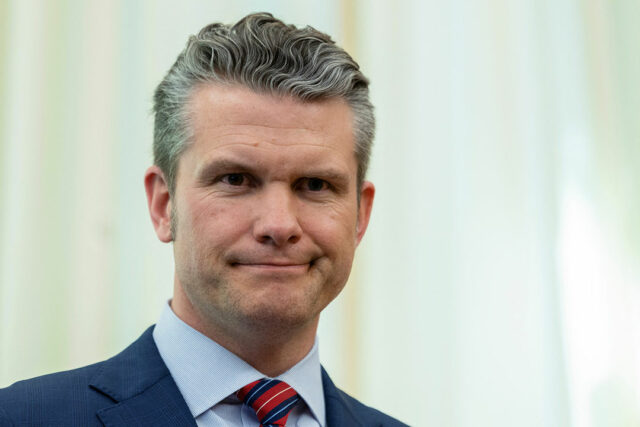
US DEFENSE SECRETARY PETE HEGSETH — REUTERS

WASHINGTON — America’s top spies on Tuesday shifted the spotlight back to Defense Secretary Pete Hegseth to explain how highly sensitive details he posted in a telephone chat about imminent US strikes on Yemen were not classified.

President Donald Trump’s administration has sought to contain fallout from an explosive article on Monday by The Atlantic’s editor-in-chief Jeffrey Goldberg, revealing that he was included in a group chat on the encrypted messaging app Signal with Mr. Trump’s most senior national security advisors to coordinate on Yemen.

Mr. Goldberg said Mr. Hegseth posted war plans shortly before the first wave of attacks on March 15 “including information about targets, weapons the US would be deploying, and attack sequencing,” which he read from a supermarket parking lot on his phone. 

Still, Mr. Trump’s administration said on Tuesday that no classified information was shared in the chat, bewildering Democrats and former US officials, who regard that kind of targeting information as some of the most closely-held material ahead of a US military campaign.

“There was no classified information, as I understand it,” Mr. Trump said on Tuesday.

Director of National Intelligence Tulsi Gabbard and Central Intelligence Agency Director John Ratcliffe also said no classified information was shared. But, pressed, they said Mr. Hegseth would be the one to determine what defense information is classified.

“The Secretary of Defense is the original classification authority for DOD in deciding what would be classified information,” Mr. Ratcliffe said.

Asked if details about the strikes on the Houthis, like attack sequencing and timing, would not have been considered classified, Ms. Gabbard said: “I defer to the Secretary of Defense and the National Security Council on that question.” 

For his part, Mr. Hegseth has denied sharing war plans in the group chat.

“Nobody was texting war plans, and that’s all I have to say about that,” he told reporters while on an official trip to Hawaii on Monday.

Mr. Goldberg responded to Mr. Hegseth’s denial in an interview on CNN late on Monday by saying, “No, that’s a lie. He was texting war plans.”

Senior US national security officials have classified systems that are meant to be used to communicate secret materials. Mr. Ratcliffe said National Security Advisor Mike Waltz set up the Signal chat for unclassified coordination and that teams would be “provided with information further on the high side for high-side communication.”

“So I think clearly it reflects that the national security advisor intended this to be — as it should have been — a mechanism for coordinating between senior level officials, but not a substitute for using high-side or classified communications for anything that would be classified,” he said.

“And I think that is exactly what did happen.”

A US official, speaking on the condition of anonymity, said that if the information was coming from within the Defense Department, Mr. Hegseth could have de-classified it, even outside of a formal process.

But another official said that there was a process for de-classification within the Pentagon and if Mr. Hegseth decided to unilaterally de-classify the information in the group chat, it would be “extremely suspect.”

US Senate Majority Leader John Thune said on Tuesday he expects the Senate Armed Services Committee will look into the issue.

“I think everybody has acknowledged, including the White House, that mistakes were made and what we want to do is make sure that something like that doesn’t happen again,” Mr. Thune told reporters at the Republican leaders’ weekly press briefing.

Republican Rep. Don Bacon, a retired Air Force general who sits on the House Armed Services Committee, told reporters that Mr. Hegseth needed to take responsibility for the breach, which he said put lives at risk.

Asked about the White House claim that no classified details were shared, Mr. Bacon responded: “They ought to just be honest and own up to it.” — Reuters

China swoops in to replace Asian USAID projects axed by Trump

STOCK PHOTO | Image by SW1994 from Pixabay

THE US canceled two aid projects in Cambodia in late February  — one to encourage child literacy and another to improve nutrition and development for kids under five. A week later, China’s aid agency announced funding for programs to achieve almost identical goals.

“Children are the future of the country and the nation,” China’s ambassador to Cambodia Wang Wenbin said at the event, standing next to the country’s Health minister and a UNICEF official. “We should care for the healthy growth of children together.”

While China’s announcement didn’t include a dollar figure, the Chinese money essentially funds the same types of initiatives and development goals as efforts terminated as part of the Trump administration’s dismantling of USAID, according to two people with knowledge of the US projects, who weren’t authorized to speak publicly.

Both focused on “inclusive education” and the “most vulnerable children,” according to news releases and procurement documents. They both provided school supplies, offering hand-washing materials and improving outcomes for “vulnerable” families and households, newborns and children with disabilities, according to the people.

The price tag for the US programs — $40 million — was small compared with the $27.7 billion in savings the Trump administration said this week it saved by axing thousands of aid contracts. But for Cambodia, whose national gross domestic product is roughly equivalent to that Vermont, it was a big sum, and replacing lost foreign funds has been a priority.

The State Department, which oversees USAID and may now absorb the agency entirely, said in a statement that the US was funding aid programs that make Americans wealthier and more secure. At the same time, it said the US had achieved “significant progress” by investing in Cambodia’s development over the past 30 years, “partnering closely” with the government.

“Despite changes in the US approach to foreign assistance, we hope to see our relationship with Cambodia productively mature as we make America safer, stronger, and more prosperous,” the department added in the statement.

The contracts were terminated on Feb. 26 after President Donald Trump and adviser Elon Musk launched a sweeping overhaul of US foreign assistance, which included dismantling the US Agency for International Development (USAID).

Although it’s only one example, it appears to confirm fears voiced by Democratic and some Republican lawmakers, aid advocates and former US officials: By slashing foreign aid, Mr. Trump is giving China an easy opportunity to fill a vacuum and gain a soft-power advantage in countries where the global adversaries compete for influence.

That’s especially urgent in Cambodia, where the US has spent roughly $1 billion since the 1990s. Washington has long waged an uphill battle with China in Southeast Asia, and Cambodia in particular. The Biden administration raised concerns about Chinese military influence at the country’s Ream Naval Base over the last four years. 

But more recently, the US has moved to strengthen defense ties with the government in Phnom Penh, which granted an American warship access to Ream for the first time late last year.

‘DIPLOMATIC GIFT’
“It’s a diplomatic gift” to China, said Charles Kenny, a senior fellow at the Center for Global Development. “In every country where there’s a serious USAID cut, if they put a small amount of money into a health and education project and say, ‘Look, we’re ramping up,’ that does seem to be a bit of a publicity gift for them. And I’m sure they’re smart enough to take it.”

Since the Trump administration moved to shut down USAID, terminate most of its foreign aid contracts, and furlough or place on leave most of its employees, US lawmakers, development experts and national security professionals have highlighted the geopolitical risks of curtailing US foreign aid in the developing world.

Many of those lawmakers and experts have warned that China could move in, gaining further influence over developing nations after wooing officials in Africa, Asia and South America for years with tens of billions in loans focused mostly on infrastructure through Beijing’s Belt and Road Initiative.

And it certainly has. China already announced funding for a Cambodian de-mining initiative that was dropped, and later restored, by the US. In mid-March, Beijing also announced an early childhood development project in Rwanda, where USAID recently curtailed contracts. And Chinese officials have reportedly offered to make up for funding gaps in Nepal, nestled between India and China.

Will Parks, the Cambodia representative for the United Nations Children’s Fund, said in a statement that the organization and Cambodia signed a partnership with China in 2024, based on a proposal from 2022. It was launched earlier this month and “complements” funding from other nations, Mr. Parks said.   

“Cambodia has made tremendous progress for children over the past decade,” he said. “But further reductions of aid budgets could jeopardize these hard-won achievements.”

Cambodia’s government was explicit about drawing a link.

“The Cambodian government works with many partners, and we never rely on any one partner exclusively,” government spokesman Pen Bona said via text message in response to questions. “So if one partner withdraws support, we seek to find another partner to replace it.”

China “will continue to provide assistance to economic and social development” in Cambodia “under the framework of South-South cooperation,” the Chinese Foreign Ministry said in a statement.

“China’s aid policy remains consistent and clear,” the Foreign Ministry continued. “China’s principles of non-interference, not attaching any political strings, not giving empty promises remain unchanged.”

In a closed-door hearing on Capitol Hill this month, Mr. Trump appointee Pete Marocco, who led the assault on USAID, was asked about the Cambodia projects and the timing of China’s swift announcement, according to one person familiar with the session. Marocco brushed off concerns about China increasing its influence, this person said.

Mr. Marocco did not respond to a request for comment.

While Mr. Trump’s team have said the canceled projects brought no benefits to Americans, Diana Putman, who retired as USAID’s acting assistant administrator for Africa, said the agency’s billions in foreign assistance helped give US ambassadors a crucial advantage.

“Their leverage and ability to make a difference in terms of foreign policy in that country is backed up by the money that they bring, and in the Global South that money is primarily the money that USAID has,” Ms. Putman said. — Bloomberg


Research program to help bridge healthcare financing gaps

Launched by the Philippine Institute for Development Studies, the Department of Health, and PhilHealth, the Health Economics and Finance Program (HEFP) aims to tackle issues hindering the realization of universal healthcare in the Philippines.

HEFP will generate evidence to improve PhilHealth’s payment system, including studies to support the country’s transition to Diagnosis-Related Groups as mandated by the Universal Healthcare Act.

Provider payment reform aims to address out-of-pocket expenditures, which is a driver of poverty among Filipinos.

Interview by Patricia Mirasol
Video editing by Jayson Mariñas

Philippine Food Expo 2025: Unlock business opportunities and celebrate unique Filipino flavors

The 17th Philippine Food Expo is set to take place from April 4-6, 2025, at the World Trade Center, Metro Manila, bringing together the best of the Philippine food industry under one roof! Organized by the Philippine Food Processors and Exporters Organization, Inc. (PHILFOODEX), this event is the ultimate B2B and B2C food trade show, where food manufacturers, suppliers, distributors, retailers, and passionate food enthusiasts converge to discover the latest food trends, cutting-edge innovations, and unparalleled business opportunities.

WHY ATTEND? A WIN-WIN FOR INDUSTRY PLAYERS AND FOOD LOVERS!

For businesses in the food industry, the 17th Philippine Food Expo 2025 is the ideal venue to expand networks, connect with trusted local food producers, manufacturers and distributors, and discover emerging food trends, packaging solutions and processing innovations. Whether you’re looking to find wholesale partners, export opportunities, or franchise prospects, this expo offers invaluable business collaborations. More than just a business opportunity, participation supports locally sourced products, reducing import reliance and strengthening the Philippine economy.

For food enthusiasts, the expo provides a chance to experience the best of Filipino cuisine, from homegrown flavors to artisanal products and fresh local ingredients. By supporting local businesses, attendees push forward the growth of Filipino food entrepreneurs and the sustainability of local livelihoods. Moreover, visitors get exclusive access to new product launches, cooking demos, and culinary showcases, making it a must-attend event for anyone passionate about food.

Through the 17th Philippine Food Expo 2025, become part of a movement that empowers homegrown businesses, food startups, and agricultural enterprises; creates jobs; uplifts communities and helps position the Philippines as a global leader in food innovation. Let’s celebrate the flavors of our nation while driving sustainable economic impact!

GEAR UP FOR THIS YEAR’S SPECIAL EVENTS:

LIVE STAGE DEMOS & TALKS — Watch expert chefs and industry leaders share their craft!

  • Mabuhay World: Ube for Every Craving by Abigail Marquez — Experience innovative ube-based dishes.
  • Trending Desserts with Chef Emily Peralta — Discover the latest in pastry trends.
  • Taste the 100% Fresh Meat by Our Farms — See how high-quality meats are processed and prepared.
  • The Secrets of Pavlova Cakes by Chef Emily Peralta — Master the delicate balance of crispy and airy meringue.
  • Fusion Dishes Made Easy with Premium Choice Meats by Chef Nathaniel Uy — A perfect blend of international and local flavors.
  • Filipino Heritage Cuisine by Razor Chef — A journey into authentic Filipino flavors.
  • European at Home by Chef Jose Sarasola — Transform your kitchen into a European-inspired dining experience.
  • Philippine Food Expo (PFE) Knowledge Challenge — Test your culinary expertise and industry knowledge.
  • Food Safety Trends and Emerging Contaminants by Eurofins — Learn about the latest standards in food safety and compliance.

EXPERT-LED SEMINARS — Gain insights from industry pioneers!

  • Healthy Beverage — The rising demand for health-conscious drinks and market insights
  • Creating TRUST in eCommerce, GS1 and MSMEs, Global Migration to 2D — The future of online food businesses and supply chain transparency
  • Ilokano Culture and Heritage — A deep dive into the cultural significance of Ilokano cuisine
  • Municipality of San Nicolas, Ilocos Norte: Culture-based Governance ProgramPolicy innovations in local food business development
  • French Patisserie Workshop by Chef Emily Peralta — A hands-on master class in classic French pastries

CULINARY CHALLENGE CELEBRATING FILIPINO CREATIVITY!

Witness aspiring chefs, culinary students, and food industry professionals compete in thrilling challenges:

  • Food Styling & Photography — The art of making food look as good as it tastes.
  • Philippine Regional Table Setting — Showcasing cultural dining traditions.
  • Kitchen Masters — A battle of skills in fast-paced cooking.
  • PINASarap Breakfast — Reinventing Filipino breakfast classics.
  • Modern Filipino Dessert — Reimagining beloved local sweets.
  • Healthy Pasta — Creating nutritious and delicious pasta dishes.
  • Mystery Ingredient Challenge — A real-time culinary creativity test.
  • Knowledge Challenge — Culinary students battle it out in a culinary and food industry quiz!

BE PART OF THE MOVEMENT: PRE-REGISTER TODAY!

Join thousands of industry professionals, food lovers, and business owners at the country’s only All-Filipino Food Expo. Get discounts on admission by pre-registering online at https://tinyurl.com/pfe-tickets and take advantage of networking, learning, and tasting opportunities that will shape the future of the food industry.

📅 April 4-6, 2025
📍 World Trade Center, Metro Manila
📩 For inquiries, contact Exhibition Manager Cut Unlimited, Inc.: info@eventsbycut.com or call (02) 8363-4900 / 8362-2266.

Follow us on Facebook and Instagram (@philfoodexpo) for the latest updates!


Spotlight is BusinessWorld’s sponsored section that allows advertisers to amplify their brand and connect with BusinessWorld’s audience by publishing their stories on the BusinessWorld Web site. For more information, send an email to online@bworldonline.com.

Join us on Viber at https://bit.ly/3hv6bLA to get more updates and subscribe to BusinessWorld’s titles and get exclusive content through www.bworld-x.com.

Lazada turns 13: Bigger deals, smarter shopping, and more sustainable growth

LAZADA

Since its launch in 2012, Lazada Philippines has become the country’s premier e-commerce platform, empowering new sellers, supporting local and international brands, and improving the experiences of their customers. This year, as it celebrates its 13th anniversary with its Birthday Blowout Sale from March 24-29, Lazada is once again set to deliver unbeatable deals while elevating the shopping experience.

“As with every campaign, we want to be able to offer the best deals to our customers during this [Birthday Blowout Sale]. Month after month, we look at what works, and what doesn’t work, and then we learn from that. So when it comes to offers and promotions, we are confident that we are responding better to the needs of our consumers,” Lazada Philippines Head of Seller Operations Alvin Ching said in an interview with BusinessWorld.

Lazada hopes to deliver products that are more relevant to each user and to provide a better experience on the platform through the use of its pioneering technology like AI Lazzie, the first AI-powered e-commerce chatbot of its kind in Southeast Asia. Mr. Ching explains that AI Lazzie’s ability to refine product suggestions and give smarter recommendations come from data operations that analyze user behavior in terms of what they search for, click on, and purchase.

“No two users will see the exact same recommendations because each experience is uniquely tailored to their shopping habits. This personalization, built over 13 years, is what makes Lazada’s shopping experience more intuitive and rewarding,” Mr. Ching added.

In addition to AI-powered tools, gamified experiences are designed to enhance engagement and retention among Lazada’s shoppers. Mr. Ching mentions that integrating interactive elements into the shopping journey allows Lazada to transform simple transactions into exciting experiences and habits, making the platform more than just a place to shop.

Lazada Philippines Head of Seller Operations Alvin Ching

“We don’t necessarily expect people to buy every single time they visit the platform; but if they play and collect coins daily, and purchase once, twice, or three times a month, then we’re driving meaningful customer engagement,” Mr. Ching explained.

The most anticipated part of the platform’s birthday sale is the massive discounts made available in the week. During the Birthday Blowout Sale, shoppers can score up to 90% off on branded finds, snag up to P2,000 off in campaign vouchers, and enjoy 100% free shipping with no minimum spend.

Brands and items that receive the most discounts are determined by a strategic investment approach, rewarding sellers who actively engage with Lazada’s programs and are committed to giving the best deals to their customers. “Our goal for [sellers] who invest in the platform is to enjoy ROI by growing their sales,” Mr. Ching said.

Additionally, partner brands can look forward to increased visibility, page traffic, and sales opportunities during Lazada’s Birthday Blowout Sale. Mr. Ching encourages sellers to join these as a way to boost their earnings not just during the sale but also during regular shopping days.

Mr. Ching said that by offering better prices, sellers can generate more sales, more clicks, and a higher chance of going up in terms of recommendations. This means that even after the sale ends, their products remain more visible to interested buyers.

To ensure a seamless shopping experience, Lazada has strengthened its technological infrastructure and logistics capacity to handle the expected surge in app traffic and orders.

Through data garnered over the years, Lazada has significantly improved its sales projections, allowing the e-commerce platform to better strategize pickups from their sellers and even what kind of vehicles they need to use.

After achieving its EBITDA (Earnings Before Interest, Taxes, Depreciation, and Amortization)-positive milestone in July 2024, the focus for Lazada is now on staying sustainable, while continuing to deliver an exceptional online shopping experience for both buyers and sellers. That means constantly improving the platform, keeping up with what shoppers want, and making sure sellers continue to thrive.

“The question we’re trying to solve is ‘How can we stay ahead of evolving customer needs?’. And it’s trying to really understand how consumers behave,” he said. “That’s how we are going to spend the next 12 months. Deals and promos will be there, but there’s also a lot of work going on to ensure that you as a buyer will see products that are more relevant and interesting to you.”


Spotlight is BusinessWorld’s sponsored section that allows advertisers to amplify their brand and connect with BusinessWorld’s audience by publishing their stories on the BusinessWorld Web site. For more information, send an email to online@bworldonline.com.

Join us on Viber at https://bit.ly/3hv6bLA to get more updates and subscribe to BusinessWorld’s titles and get exclusive content through www.bworld-x.com.

Thai PM sails through no-confidence vote in parliament

THAILAND’s Prime Minister Paetongtarn Shinawatra attends a press conference at the Pheu Thai party headquarters following a royal endorsement ceremony in Bangkok, Thailand, Aug. 18, 2024. — REUTERS
FILE PHOTO | By 首相官邸ホームページ, CC BY 4.0, https://commons.wikimedia.org/w/index.php?curid=154247092

 – Thailand’s Prime Minister Paetongtarn Shinawatra on Wednesday sailed through a no-confidence vote in parliament, emerging unscathed from a two-day opposition onslaught and reaffirming the stability of her ruling coalition.

Thailand’s youngest prime minister won the backing of 319 of 488 lawmakers present, despite a barrage of barbs during a censure debate that accused her of being unqualified, lacking economic knowledge, evading tax and taking direction from influential father and political heavyweight Thaksin Shinawatra.

The confidence vote was an early test of the premier’s mandate more than seven months after she was unexpectedly thrust into the political spotlight having never held public office, replacing ally Srettha Thavisin following his removal by a court over an ethics violation.

Ms. Paetongtarn, 38, the fourth member of the Shinawatra family to hold the top job, had shrugged off all allegations, insisting she was giving her best for the country and should be judged by her work, not her family ties.

Despite her lukewarm ratings in opinion polls and economic growth far adrift of regional peers, Wednesday’s vote indicates Ms. Paetongtarn’s coalition remains solid, lowering the prospect of near-term instability in a county fraught with intermittent political turmoil.

Governments led by Pheu Thai and its predecessors, all led by or controlled by Thaksin, have been removed by courts or military coups, underscoring deep-rooted animosity between the polarizing billionaire and powerful conservatives with influence over key institutions.

Ms. Paetongtarn has insisted her government is not under anyone’s influence, while Thaksin has said he is retired and only offers advice. – Reuters

Trump signs election order calling for proof of U.S. citizenship to vote

REUTERS

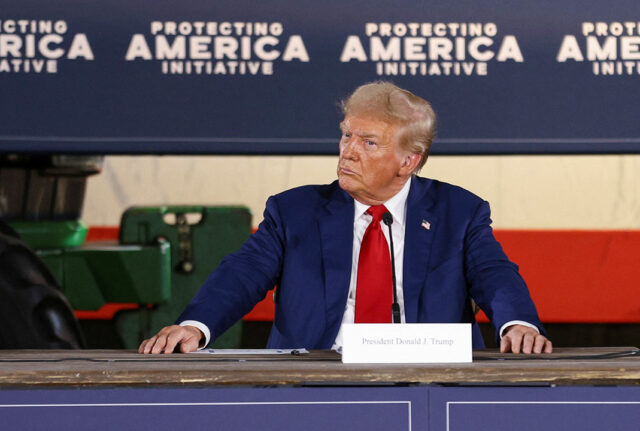
 – U.S. President Donald Trump signed an executive order on Tuesday that would require voters to prove they are U.S. citizens and attempts to prevent states from counting mail-in ballots received after Election Day.

The sweeping order also would seek to take federal funding away from states that do not comply.

Mr. Trump has long questioned the U.S. electoral system and continues to falsely claim that his 2020 loss to Democratic President Joe Biden was the result of widespread fraud. The president and his Republican allies also have made baseless claims about widespread voting by non-citizens, which is illegal and rarely occurs.

Last year the Republican-controlled House of Representatives approved a bill that would ban non-citizens from registering to vote in federal elections, a practice that is already illegal. It did not pass the Senate, which was then controlled by Democrats.

The White House’s order seeks to achieve similar goals. Voting rights groups argued that it, like the Safeguard American Voter Eligibility Act that did not become law, would disenfranchise voters, particularly people of color, who do not have access to passports or other required identification.

“We’ve got to straighten out our elections,” Mr. Trump said on Tuesday as he signed the order at the White House. “This country is so sick because of the elections, the fake elections and the bad elections, we’re going to straighten that out one way or the other.”

The order is likely to draw legal challenges.

This is a blatant attack on democracy and an authoritarian power grab,” said Lisa Gilbert, co-president of advocacy group Public Citizen.

In recent years Republicans have tried to put more restrictions on voting, while Democrats have sought to make it easier to vote by supporting mail-in ballot access and early voting opportunities.

Public Citizen noted that about 146 million Americans do not have a passport, and Brennan Center research showed 9 percent of U.S. citizens who are eligible to vote, or 21.3 million people, do not have proof of citizenship “readily available.”

According to U.S. law, the U.S. secretary of state can unilaterally cancel passports if it determines they were “illegally, fraudulently, or erroneously obtained” or created through illegality or fraud.

The White House argued that Mr. Trump’s order would prevent foreign nationals from interfering in U.S. elections. Under the new directive, voters would be asked a citizenship question on the federal voting form for the first time.

“Federal election-related funds will be conditioned on states complying with the integrity measures set forth by federal law, including the requirement that states use the national mail voter registration form that will now require proof of citizenship,” a White House fact sheet about the order said.

The order criticized policies allowing mail-in ballots to arrive and be counted after Election Day. The order said Mr. Trump’s policy is to “require that votes be cast and received by the election date established in law.”

According to the National Conference of State Legislatures, 18 states along with Puerto Rico, the Virgin Islands and Washington, D.C., will count ballots that are postmarked on or before Election Day, regardless of when they arrive.

Mr. Trump’s order also requires the secretary of Homeland Security to ensure states have access to systems that verify the citizenship or immigration status of people who register to vote.

It also directs the Department of Homeland Security and an administrator from the Elon Musk-run Department of Government Efficiency to review states’ voter registration lists, using a subpoena if necessary, to make sure they are consistent with federal requirements.

The Republican National Committee said on Tuesday it had requested public records from 48 states and Washington, D.C., to check how they maintain their voter registration lists.

“Voters have a right to know that their states are properly maintaining voter rolls and quickly acting to clean voter registration lists by removing ineligible voters,” RNC Chairman Michael Whatley said in a statement. – Reuters

Vietnam to cut tariffs on U.S. imports as Trump tariff decision looms

REUTERS

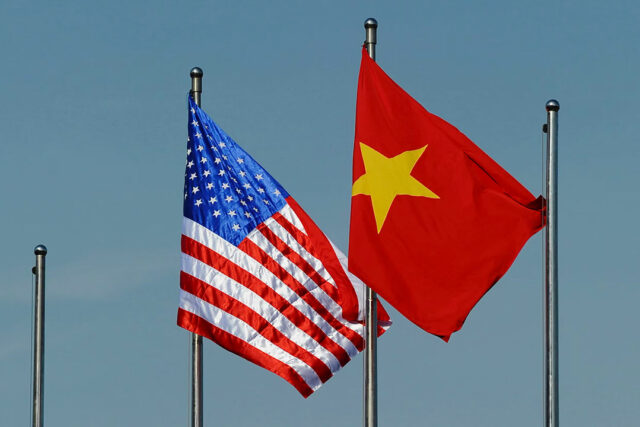
 – Vietnam will cut its tariffs on several U.S. products including LNG and cars, the head of the Finance Ministry’s tax policy department said, as the country tries to avoid being hit with U.S. tariffs because of its large bilateral trade surplus.

The Southeast Asian industrial hub has taken a series of measures to reduce its trade surplus with Washington, which exceeded $123 billion last year, after U.S. President Donald Trump flagged wide-ranging tariffs on trading partners.

Among the cuts, the tariff on American LNG will be cut to 2% from 5%, on automobiles to 32% from a range of 45% to 64%, and on ethanol to 5% from 10%, Nguyen Quoc Hung said in a statement posted on the ministry’s website late on Tuesday.

The tariff cuts are aimed at “improving trade balances with (Vietnam)’s trade partners,” Hung said, adding that while the U.S. and Vietnam had a Comprehensive Strategic Partnership the countries had not signed a free-trade agreement.

Vietnam has not yet imported LNG from the U.S., but the country has been in talks with U.S. suppliers for its future fleet of LNG power plants, the first two of which are scheduled to start commercial power generation by June this year.

Mr. Hung said Vietnam will also remove its tariff on American ethane. He said the decree on the tariff cuts will be ready within this month and will take effect right after that.

Other American imports that will have lower tariffs include chicken thighs, almonds, apples, cherries and wooden products.

Mr. Trump is expected to apply reciprocal tariffs on several countries on April 2, although on Monday he said some countries might get breaks.

Russia, Ukraine agree to sea, energy truce; Washington seeks easing of sanctions

UKRAINIAN and Russian flags are seen in this picture illustration taken, Feb. 1. — REUTERS

 – The United States reached separate deals on Tuesday with Ukraine and Russia to pause their attacks at sea and against energy targets, with Washington agreeing to push to lift some sanctions against Moscow.

While it was not clear when or how the Black Sea maritime security deals would start, the agreements are the first formal commitments by the two warring sides since the inauguration of President Donald Trump, who is pushing for an end to the war in Ukraine and a rapid rapprochement with Moscow that has alarmed Kyiv and European countries.

The U.S. agreement with Russia goes further than the agreement with Ukraine, with Washington committing to help seek the lifting of international sanctions on Russian agriculture and fertilizer exports, long a Russian demand.

Shortly after the U.S. announcements, the Kremlin said the Black Sea agreements would not come into effect unless links between some Russian banks and the international financial system were restored.

Ukrainian President Volodymyr Zelenskiy said his understanding was that the truce agreements did not require sanctions relief to come into force and would take effect immediately, calling the Kremlin’s statement an attempt to “manipulate” the deals.

“They are already trying to distort agreements and, in fact, deceive both our intermediaries and the entire world,” Mr. Zelenskiy said in his nightly video address.

Kyiv and Moscow both said they would rely on Washington to enforce the deals, while expressing skepticism that the other side would abide by them.

“We will need clear guarantees,” said Russian Foreign Minister Sergei Lavrov. “And given the sad experience of agreements with just Kyiv, the guarantees can only be the result of an order from Washington to Mr. Zelenskiy and his team to do one thing and not the other.”

Mr. Zelenskiy said if Russia violated them he would ask Trump to impose additional sanctions on Moscow and provide more weapons for Ukraine.

“We have no faith in the Russians, but we will be constructive,” he said.

In the hours following the announcements, both Russia and Ukraine accused each other of launching drone attacks, but there were no immediate reports of hits on Black Sea or energy targets.

Meanwhile Mr. Trump, in an interview with Newsmax, acknowledged that Russia could be trying to delay ending the war.

“I think that Russia wants to see an end to it, but it could be they’re dragging their feet. I’ve done it over the years,” he said.


BROADER TRUCE PROSPECTS

The deals were reached after parallel talks in Saudi Arabia that followed separate phone calls last week between Trump and the two presidents, Mr. Zelenskiy and Vladimir Putin.

If implemented, the deals could be the first significant step toward Trump’s goal to achieve a more encompassing ceasefire in the war in Ukraine that Russia started with its full-scale invasion three years ago.

Mr. Putin rejected Mr. Trump’s proposal for a full ceasefire lasting 30 days, which Ukraine had previously endorsed.

“We are making a lot of progress,” Mr. Trump told reporters on Tuesday, while adding there was “tremendous animosity” in the talks.

“There’s a lot of hatred, as you can probably tell, and it allows for people to get together, mediated, arbitrated, and see if we can get it stopped. And I think it will work.”

Washington has softened its rhetoric towards Russia in recent days, with Trump envoy Steve Witkoff saying he did not “regard Putin as a bad guy,” alarming European officials who consider the Russian leader a dangerous enemy.

Mr. Lavrov, a veteran Russian diplomat at the helm of the foreign ministry since 2004, said the optimism of Mr. Witkoff who said that truce could come soon does not take under consideration the European allies of Kyiv.

“He (Witkoff) significantly overestimates the elites of European countries, who want to ‘hang like a stone around the neck’ of Zelenskiy, so as not to allow him to ‘give in’,” Mr. Lavrov said.

Ukraine and its European allies fear Mr. Trump could strike a hasty deal with Mr. Putin that undermines their security and caves in to Russian demands, including for Kyiv to abandon its NATO ambitions and give up land claimed by Moscow.


PAUSE ON ATTACKS ON ENERGY FACILITIES

Russia has pounded Ukraine’s power grid with missiles and drones and Kyiv has launched long-range strikes on Russian oil and gas targets in attacks that have become a major aspect of the war to undermine each other’s war efforts.

The Kremlin said the pause in attacks on energy would last for 30 days from March 18, when Putin first discussed it with Trump. Ukraine had said last week it would accept such a pause only after a formal agreement.

The agreement on a truce at sea addresses an issue that was critical early in the war, when Russia imposed a de facto naval blockade on Ukraine, one of the world’s biggest grain exporters, worsening a global food crisis.

More recently, maritime battles have been a comparatively small part of the war since Russia withdrew its naval forces from the eastern Black Sea after a number of successful Ukrainian attacks.

Kyiv has been able to reopen its ports and resume exports at around pre-war levels, despite the collapse of a previous U.N.-brokered Black Sea shipping agreement, but its ports have come under regular air attack. Mr. Zelenskiy said the agreement would bar such strikes.

Ukrainian Defence Minister Rustem Umerov said Kyiv would regard any movement of Russian military vessels outside the eastern part of the Black Sea as a violation and a threat, in which case Ukraine would have full right to self-defense.

Moscow said the agreement would require sanctions relief including restoring links between Russia’s agricultural export bank and the SWIFT international payments system. That and other steps could require agreement from European countries. – Reuters