Home Blog Page 14

Horford’s treys carry Warriors to play-in win over LA Clippers

AL HORFORD connected on four 3-pointers in the final 5:37 of a Western Conference play-in game, lifting the 10th place Golden State Warriors to a 126-121 win over the ninth-place Los Angeles (LA) Clippers on Wednesday in Inglewood, California.

Golden State advances to a sudden-death matchup against the Suns in Phoenix on Friday to determine the West’s No. 8 seed and the Oklahoma City Thunder’s first-round playoff opponent. The loss ends the Clippers’ season.

Horford’s late-game hot streak was part of a game-ending, 27-13 Golden State run. Stephen Curry punctuated a 35-point night by burying a deep 3-pointer with 50.4 seconds remaining, putting the Warriors ahead to stay, 120-117. Curry’s seven makes on 12 attempts from beyond the arc paced the Warriors to a 19-of-41 long-range barrage (46.3%).

The 39-year-old veteran had just two points off the bench before his late onslaught. He finished with 14 points, set up for his pivotal baskets off of two assists from Gui Santos that were sandwiched by a pair of assists from Curry.

Santos played a key all-around role for the Warriors, finishing with 20 points, six rebounds and five assists. Golden State also got 20 points from Kristaps Porzingis, including six straight points over one stretch in the fourth quarter. Reuters

Rivers exits Bucks

It did not end with a bang, or even with a dignified fade. Doc Rivers’ tenure with the Bucks simply gave way, as if exhausted by its own contradictions. A 32-50 finish, yet another early end to the season, and a 97-103 cumulative record over three seasons left little room for reinterpretation. The green and cream did not so much move on as concede what had long been apparent: Whatever promise the hiring came with was long buried in disappointment.

To be sure, Rivers was never meant to preside over a rebuild. The Bucks had already done the hard part years earlier, constructing a title core around Giannis Antetokounmpo and cashing in with a championship. The bench tactician was brought in not to imagine a future but to stabilize a present — an experienced hand tasked with aligning a veteran roster toward one more credible run. Instead, they cycled through instability: two first-round exits, followed by a campaign so dysfunctional that it could not even reach the play-in. And so they embark on their third coaching search in as many years, not as a reflection of decisiveness but as an admission of miscalculation.

In truth, the unraveling extended beyond the sideline. Perennial Most Valuable Player candidate Antetokounmpo’s post-mortem was alternately invested and disillusioned, speaking of the Bucks “as far from contention” as at any point in his career and, at the same time, conceding the uncertainty of his own future. The duality was telling: loyalty expressed in public, doubt lingering underneath. They had spent the last half decade attempting to satisfy their erstwhile foundational piece, trading assets, reshaping rosters, and accelerating timelines, only to find themselves in limbo. Paradoxically, the urgency to win has made the present untenable.

Rivers, for his part, becomes equal parts participant and symbol. His resume remains intact: a championship with the Celtics and a place among the most accomplished mentors of his generation. That said, his aborted tenure with the Bucks adds to a more recent pattern in which expectation and outcome have failed to meet. Hired midstream and asked to impose order on a situation already in flux, he ultimately leaves with no evidence of success. Even the possibility of staying in an advisory role comes off as a soft landing.

As longtime habitués of the sport know only too well, instability does not come with advance warning; it manifests slowly at first, and then in overwhelming fashion. The Bucks did not collapse in a single season. They eroded over time, through decisions that made sense in isolation but not in sequence. In this regard, Rivers’ departure formalizes what has already taken hold, giving way to an admission that the structure, as built, can no longer sustain itself.


Anthony L. Cuaycong has been writing Courtside since BusinessWorld introduced a Sports section in 1994. He is a consultant on strategic planning, operations and human resources management, corporate communications, and business development.

Hopes for Middle East peace grow with Israel and Lebanon eyeing ceasefire

Smokes rise, amid ongoing cross-border hostilities between Hezbollah and Israeli forces, in Tyre, southern Lebanon Sept. 23, 2024. — REUTERS

WASHINGTON/JERUSALEM — Optimism grew on Thursday that the war in the Middle East may be near an end, with a key Pakistani mediator in Tehran and the administration of President Donald J. Trump talking up hopes for a deal that would open the crucial Strait of Hormuz.

Israel’s cabinet met on Wednesday to discuss a possible ceasefire in neighboring Lebanon, a senior Israeli official said, more than six weeks into its war with Iran-backed Hezbollah. Two senior Lebanese officials said they had been briefed that efforts were underway for a ceasefire but had no further details on how long it would last or when it would be announced.

Mr. Trump said talks between leaders of both countries would take place on Thursday, without providing details.

Ending the fighting in Lebanon was a key sticking point in earlier peace talks, along with how to deal with Tehran’s nuclear ambitions.

US and Iranian officials were weighing a return to Pakistan for further talks as early as the coming weekend, after negotiations ended on Sunday without a breakthrough. Pakistan’s army chief and key figure in the mediation, Field Marshal Asim Munir, arrived in Tehran on Wednesday to try to prevent a renewal of the conflict.

“We feel good about the prospects of a deal,” White House Press Secretary Karoline Leavitt said at a news conference on Wednesday, calling conversations mediated by Pakistan “productive and ongoing.” She denied reports that the US had formally requested an extension of a two-week ceasefire agreed by the two sides on April 8.

More in-person talks had not yet been confirmed but would likely take place in Pakistan again, Ms. Leavitt said.

Pakistan’s military confirmed Mr. Munir had arrived in Tehran. A senior Iranian source told Reuters that Mr. Munir, who had mediated the last round of talks, would seek “to narrow gaps” between the two sides.

Mohammad Eslami, head of the Atomic Energy Organization of Iran, said talks needed to recognize Iran’s rights, interests and dignity to be fruitful.

“But if it continues, as it usually does, relying on deception and, in fact, on a lack of commitment and failure to adhere to agreements and set terms, then it naturally cannot succeed,” he said during a pro-government rally in Tehran.

SOME INVESTORS REMAIN SKEPTICAL
The talks last weekend broke down without an agreement to end the war, which Mr. Trump began alongside Israel on Feb. 28, triggering Iranian attacks on Iran’s Gulf neighbors as well as reigniting the Israel-Hezbollah conflict. Thousands of people have been killed, mostly in Iran and Lebanon, while soaring energy costs have rattled investors and policymakers around the world.

Stock markets have rallied strongly in recent days on expectations of a swift resolution to the fighting, with indices on Wall Street hitting record highs on Wednesday as crude oil prices steadied.

“While there are hopes for de-escalation, many investors remain skeptical, given that US-Iran talks have repeatedly broken down even after appearing to make progress,” said Toshitaka Tazawa, an analyst at Fujitomi Securities.

ECONOMIC PRESSURE ON IRAN
Treasury Secretary Scott Bessent predicted that China’s purchase of Iranian oil would “pause” given a US blockade on vessels calling at Iranian ports. He said the US could impose secondary sanctions on countries that purchase Iranian crude.

The US Treasury had warned two Chinese banks not to process Iranian money or face sanctions, he said, without naming the banks. China previously bought more than 80% of Iran’s shipped oil.

Mr. Trump said on Wednesday he had told Chinese President Xi Jinping not to give Iran weapons, which Mr. Xi had said he wasn’t. Mr. Trump also said that China was very happy he was “permanently opening” the Strait of Hormuz.

“I am doing it for them, also — And the World,” he wrote on social media, adding: “President Xi will give me a big, fat, hug when I get there in a few weeks.”

The war has led Iran to effectively shut the Strait — a vital artery for global crude and gas shipments — to ships other than its own, sharply reducing exports from the Gulf and leaving energy importers scrambling for alternative supplies.

IRAN COULD ALLOW TRAFFIC ON OMANI SIDE OF STRAIT
Iran’s joint military command warned it would halt trade flows in the Gulf, the Sea of Oman and the Red Sea — which connects to the Suez Canal — if the US blockade continued.

Iran could consider allowing ships to sail freely through the Omani side of the Strait without risk of attack as part of proposals it has offered in negotiations with the US, providing a deal is clinched to prevent renewed conflict, a source briefed by Tehran said.

Mr. Trump has also threatened to escalate if the war resumes.

“We could take out every one of their bridges in one hour. We could take out every one of their power plants, electric power plants, in one hour. We don’t want to do that… so we’ll see what happens,” he told Fox Business Network.

Iran’s nuclear ambitions were a key sticking point at last weekend’s talks. The US proposed a 20-year suspension of all nuclear activity by Iran — an apparent concession from longstanding demands for a permanent ban — while Tehran suggested a halt of three to five years, according to people familiar with the proposals.

Washington has also pressed for any enriched nuclear material to be removed from Iran, while Tehran has demanded that international sanctions against it be lifted.

One source involved in the talks said back-channel discussions had made progress in narrowing gaps, bringing the two sides closer to a deal that could be presented at a new round of talks. Reuters

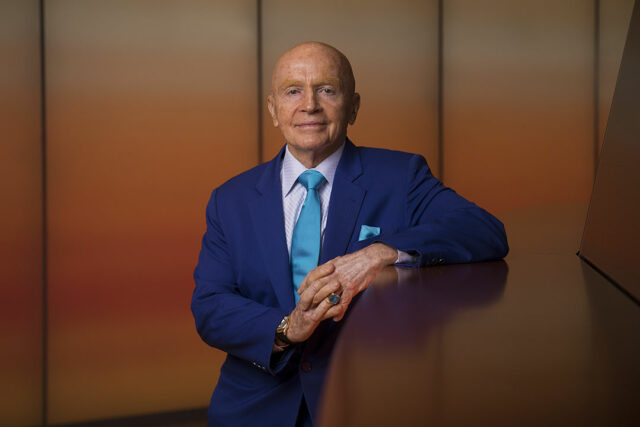
Mark Mobius, emerging markets investing pioneer, dies at 89

MARK MOBIUS in 2019. — BLOOMBERG/SIMON DAWSON

MARK MOBIUS, who put emerging markets on investors’ radar with on-the-ground insights over more than four peripatetic decades, has died. He was 89.

He died on Wednesday, according to a post on his LinkedIn page attributed to his spokeswoman, Kylie Wong. John Ninia, a partner at Mobius Investments, said he died in Singapore.

In more than 30 years with Franklin Templeton Investments, officially Franklin Resources, Inc., Mr. Mobius became an evangelist for money-making opportunities in Africa, Asia, Eastern Europe and Latin America. In a crowd of investing advisers, he was distinctive in part for his impeccably shaved head, which inspired the nickname Bald Eagle.

Hired in 1987 by John Templeton, a pioneer in leading American investors to companies abroad, Mr. Mobius started one of the first mutual funds dedicated to rapidly developing new markets. He oversaw the Templeton Emerging Markets Group until 2016, was lead manager of its flagship Templeton Emerging Markets Investment Trust until 2015 and retired in January 2018.

From 1989 until his retirement, the closed-end fund returned 13.4% a year on average, according to Morningstar Direct. From 2001, when the MSCI Emerging Markets Index was introduced, the Templeton fund beat that benchmark by 1.9% a year on average, according to Morningstar.

“Mark Mobius is to emerging market investing what Colonel Sanders is to fried chicken,” Peter Douglas, a principal at the Singapore chapter of the Chartered Alternative Investment Analyst Association, said when Mr. Mobius stepped aside as portfolio manager. “He is the icon of the industry and has been the global cheerleader of emerging markets.”

Partly based in Singapore, Mr. Mobius traveled 250 to 300 days a year in a Gulfstream IV private jet, visiting factories and distributors in remote corners of the globe to identify investment opportunities.

“What was unique about him was that he really rolled up his sleeves and got into where the opportunities were,” Wall Street veteran Ed Yardeni said in a Bloomberg Television interview, calling him a “giant” in the global investment community. “Because of his leadership on that, I think we saw that investing in emerging markets has caught on.”

Mr. Mobius correctly predicted the start of a bull market that began in 2009, snapped up bargains during the Asian financial crisis after Thailand floated its currency in 1997 and bought Russian stocks as panic selling took hold in Russia in 1998. He was also one of the first institutional investors to identify Africa as a promising frontier market, setting up the Templeton Africa Fund in 2012.

‘KICKING THE TIRES’
“I believe in getting out and kicking the tires,” he wrote in 2015. “I would rather see with my own eyes what’s happening in a company or country. Lies can be as revealing as truth, if you know what the cues are.”

Just last month, via his Substack column, he shared his thoughts on the war in Iran and its impact on equity markets.

Mr. Mobius founded London-based Mobius Capital Partners in 2018 and oversaw actively managed funds investing in emerging market equities. He left there in late 2023 but continued to seek out investing opportunities, setting up a new venture in Dubai, where he had lived for three years.

Franklin Resources, Inc. was founded in 1947 and is based in San Mateo, California. It acquired Mr. Templeton’s investment firm — Templeton, Galbraith & Hansberger Ltd. — in 1992 to create Franklin Templeton Investments.

Joseph Bernhard Mark Mobius was born on Aug. 17, 1936, in Bellmore, on New York’s Long Island. His German father, Paul Mobius, was a ship’s cook and baker. His mother, the former Maria Louisa Colon, was Puerto Rican. With his two brothers, Hans and Paul, Mr. Mobius grew up with German and Spanish spoken at home.

In 1955, Mr. Mobius received a scholarship to study dramatic arts at Boston University and worked as a pianist in a nightclub to help pay for his education. He earned a bachelor’s degree in fine arts and a master’s in communications.

STUDIED IN KYOTO
He successfully applied for a scholarship to learn Japanese culture and the Japanese language in Kyoto, triggering his desire to live and work in Asia. After earning a PhD in political science and economics from Massachusetts Institute of Technology, in 1964, he took a job with International Research Associates, conducting surveys and other consumer research in Thailand and Korea for a year each.

He ended up in Hong Kong, where he started his own industrial research consulting firm. One project — a report on the Hong Kong stock market — was his entre into securities analysis. His Yul Brynner hairstyle, as he described it, was conceived at this time after a fire in his apartment damaged his hair, and he shaved the rest off, according to his 1997 memoir.

He was hired by Vickers Da Costa, a UK stock brokerage, to start a Taiwanese fund management company, International Investment Trust. He traveled to the Bahamas to present investment opportunities to Mr. Templeton, who in 1986 asked if he would be interested in running an emerging markets fund. The following year they raised $100 million in capital, listed their fund on the New York Stock Exchange and opened a small office in Hong Kong for Mr. Mobius and two Chinese analysts. They began investing in six places: Hong Kong, the Philippines, Singapore, Malaysia, Mexico and Thailand.

“You must remember, in those days, most countries did not welcome foreign investment,” Mr. Mobius recalled in a 2022 interview with Barry Ritholz for Bloomberg’s Masters in Business podcast series. “They were also either socialist or communist like China and Russia. Eastern Europe was out of the question, of course. So we had only six markets in which to invest, and then we started expanding. Gradually, markets opened up. And eventually we were investing in something like 70 different countries around the world.”

1987 CRASH
After losing a third of his fund’s value in the October 1987 stock market crash during his first year with Mr. Templeton, Mr. Mobius diversified to other markets including Argentina, Mexico, Indonesia and Russia.

Mr. Mobius wrote more than a dozen books on investing and economics, including The Investor’s Guide to Emerging Markets (1994) and Passport to Profits (1999). He shared rules and aphorisms including, “if you see the light at the end of the tunnel, it’s too late to buy.”

In 1999, he was tapped to serve on the World Bank’s Global Corporate Governance Forum as a co-chairman of a task force on investor responsibility.

Mr. Mobius never married. In Passport to Profits, he wrote that there were costs and benefits to being a “full-time nomad — an endangered species I’ve long admired for their fierce independence, their refusal to abide by conventional norms, their desperate desire for freedom.”

“Though some people probably pity me for having no home, no family, no domestic life to speak of,” he wrote, “my somewhat eccentric lifestyle offers untold opportunities for variety, stimulation and creativity.” — Bloomberg


Foreign investors flee Thailand as ME war dashes hope for economic revival

PIXABAY

SINGAPORE — Foreign investors are selling Thai assets as an energy shock from the US-Israeli war on Iran threatens to snuff out hopes for an economic revival under Prime Minister Anutin Charnvirakul and exposes the policy paralysis that is gripping Bangkok.

The conflict has sent global oil prices up to near $100 a barrel, sharpening the focus on Asia’s reliance on energy supplies from the Gulf. Thailand is among the most exposed, with the Middle East (ME) supplying nearly half of its oil and gas, according to Krungsri Research.

With public debt on the brink of eclipsing the government’s self-imposed 70% ceiling and an economy that was already in deflation before the war, Bangkok’s challenge is far more acute than most of its neighbors.

The setback came just as the stars seemed to be aligning for Southeast Asia’s second-largest economy, with investors rushing into Thailand again for the first time in years.

Foreigners bought $1.7 billion worth of Thai stocks in February, LSEG data showed. Mr. Charnvirakul’s resounding victory in February ushered in hopes of political stability and long-awaited economic reforms in a country that had lurched through years of turmoil and uncertainty.

But when the Iran war broke out at the end of February, foreign investors pulled back sharply, with an $823-million net sell-off in equities in March, while bond outflows hit $705 million, the largest combined outflow since October 2024.

A two-week ceasefire this month has spurred hopes of a resolution and led to a sharp rally in Thai stocks and the baht, but investors are cautious about the country’s vulnerability if oil prices remain elevated.

“The risk remains (that) markets remain complacent about the long-term impact from energy shock and that higher fuel costs hit consumption and disrupt exports and tourism, two key drivers of the Thai economy,” said Daniel Tan, a portfolio manager at Grasshopper Asset Management.

Khoi Vu, an ASEAN equity strategist at JPMorgan, said his bank is still cautious on Thai equities, noting that while political stability had begun to brighten the outlook before the Middle East conflict, the energy shock is a near-term headwind.

“As the energy shock has yet to fully materialize, we believe the market has yet to price in significant growth impact,” he said.

LIMITED POLICY OPTIONS AHEAD
With the fragile ceasefire in mind, analysts and investors warn Thailand faces another difficult year.

Unlike many of its peers in the region, Thailand’s exposure runs deeper than just fuel costs as over half of annual power output comes from gas, and liquefied natural gas (LNG) imports are accounting for an increasing share of generation.

Thailand’s conundrum is that its economy has struggled to gain traction, growing just 2.4% last year and lagging peers, while inflation dropped for 12 straight months, triggering a rate cut from the central bank in February before the war.

“There’s a broad consensus among investors that Thailand is in a policy bind,” said Gary Tan, a Singapore-based portfolio manager at Allspring Global Investments.

“The central bank has limited room to hike without derailing the recovery, but little urgency or space to ease, which leaves policy restrictive by default,” said Mr. Tan, who is underweight on Thailand.

Every one baht rise in fuel prices cuts economic growth by 2 basis points, according to state planning agency estimates, underlining why Bangkok is reluctant to increase subsidies.

“Higher oil prices could weigh on consumption, the current account and the baht, while also complicating the disinflation path and potentially limiting how much further rates can fall,” said Nattanont Arunyakananda, investment manager of Thai equities at Aberdeen Investments.

The war has upended Thailand’s inflation picture, with average inflation projected to rise as much as 3.5% this year depending on how the conflict unfolds, a stark turnaround from a 0.54% contraction in the first quarter.

Thailand has limited ammunition to address its economic problems, Finance Minister Ekniti Nitithanprapas said on Friday.

SLIDING BAHT TAKING THE HEAT
The currency has emerged as the pressure valve, with the Thai baht sliding about 2.8% since the war broke out, though it has clawed back some of the losses since the ceasefire was announced last week.

Regional rivals, the Philippine peso and the Indonesian rupiah, are at record lows, but the baht’s strong performance in 2025 when it gained 9%, is likely to help provide Thailand some buffer and more room to weaken, analysts say.

Still, Thailand is walking a tightrope, having to pick and choose where to step in. It has ruled out fuel subsidies for now, but will absorb higher costs to keep electricity tariffs largely unchanged ahead of the summer.

Fiscal worries are compounding the pressure, with public debt at 66% of gross domestic product — just shy of the 70% ceiling — and investors worry that the government may need to raise it. The government so far has said it does not plan to raise the ceiling.

“If the shock extends beyond April, it stops being just a headline issue and starts feeding into day-to-day operations,” Aberdeen’s Mr. Arunyakananda said. Reuters

UK proposal to charge tourists to visit museums sparks backlash amid restitution demands

REUTERS

LONDON — Britain is considering introducing entry fees for tourists visiting some of England’s most renowned museums, a proposal that has drawn criticism from restitution groups and countries while disputed artifacts remain on display.

Free admission to Britain’s national museums and galleries was introduced in 2001 by former Labor Prime Minister Tony Blair in a bid to make culture more accessible to all.

Last month, the UK government said it would work with the museum sector to explore the potential benefits of charging international visitors at national museums, including how this could support the arts sector. It would provide an update of the consultation before the end of the year, it said.

However, the proposal is facing backlash amid growing calls worldwide for artifacts to be sent back to their communities or countries of origin.

Although some efforts have been made to confront the longstanding issue, artifacts as well as human remains taken during the colonial era are still held in various museums across Europe. Some longstanding claims for artifacts involving the British Museum include Greece’s Parthenon Sculptures, known as Elgin Marbles, and Nigeria’s Benin Bronzes.

The British Museum has previously said that the strength of its collection lies in enabling millions of visitors to understand the world’s cultures and how they are interconnected.

ENTRY FEES ADD TO ONGOING INEQUALITIES
Ghana, which has some of its regalia and other artefacts in British institutions, said charging foreign visitors to view such objects raises issues of “fairness,” particularly where restitution discussions remain ongoing, Foreign Minister Samuel Okudzeto Ablakwa told Reuters.

The proposal, if implemented, would be “unethical,” said Eric Phillips, vice-chair of the Caribbean Community’s reparations commission, a bloc of 15 member states including Jamaica and Barbados.

“Why should we have to pay to see our heritage?” Mr. Phillips said.

Arley Gill, chairman of Grenada’s national reparations committee, said the priority should be to return the artifacts to their “rightful owners.”

Open Restitution Africa (ORA) said Africans and others already face barriers to accessing artefacts taken from their countries and held in Western museums, including visa requirements and travel costs.

“Introducing entry fees further compounds these inequalities,” ORA said.

Meanwhile, the US-based non-profit Restitution Study Group said a fee exemption for such visitors would be a “meaningful gesture.”

The government declined to comment on the criticism. Reuters

Solar panel project helps both customers and communities nationwide

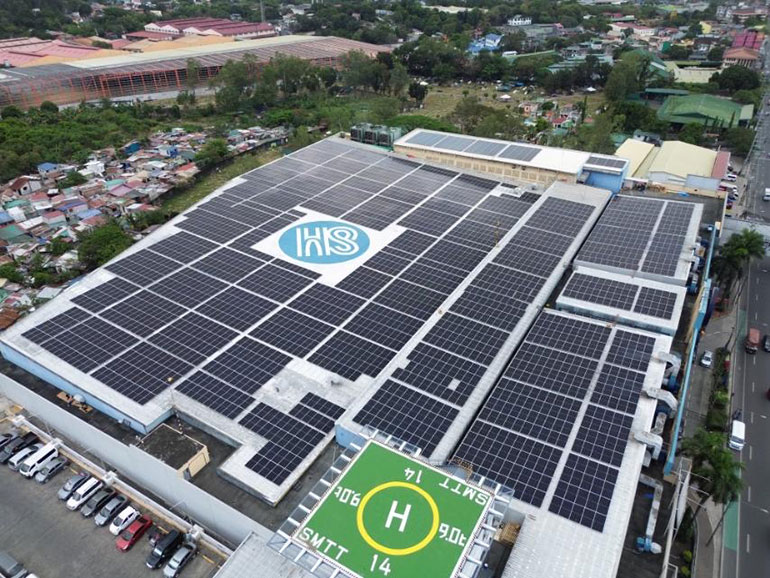
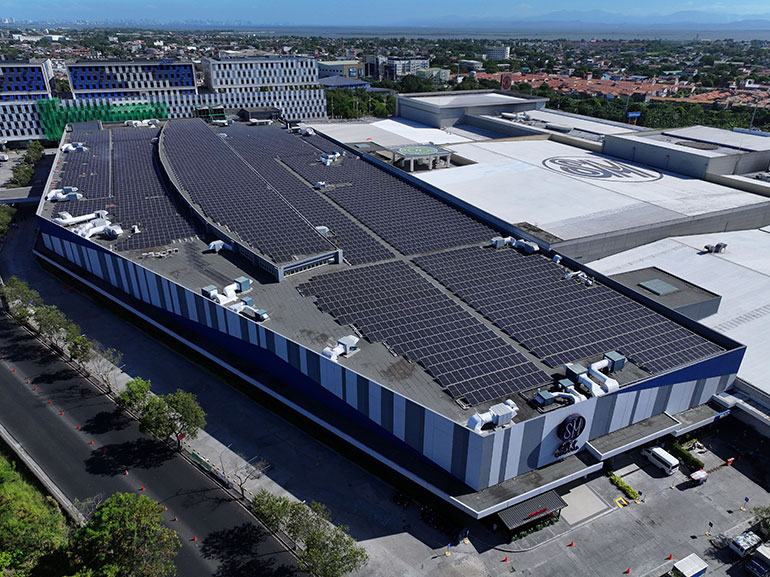
SM North EDSA

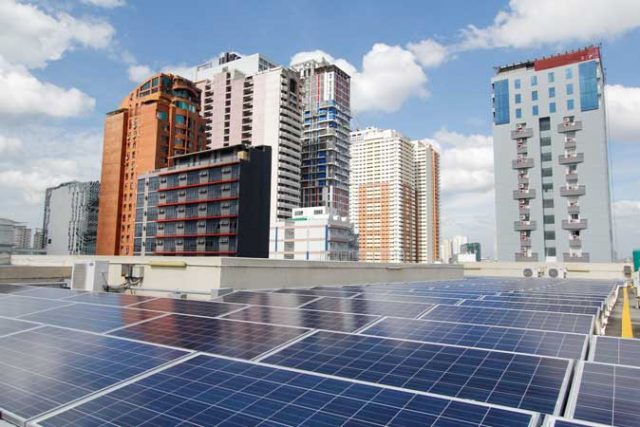
Amid the current energy state of emergency and as demand for electricity rises during the summer months, SM Supermalls reinforces its energy-efficiency practices to serve its customers and surrounding communities undisrupted, on top of sustaining its operations.

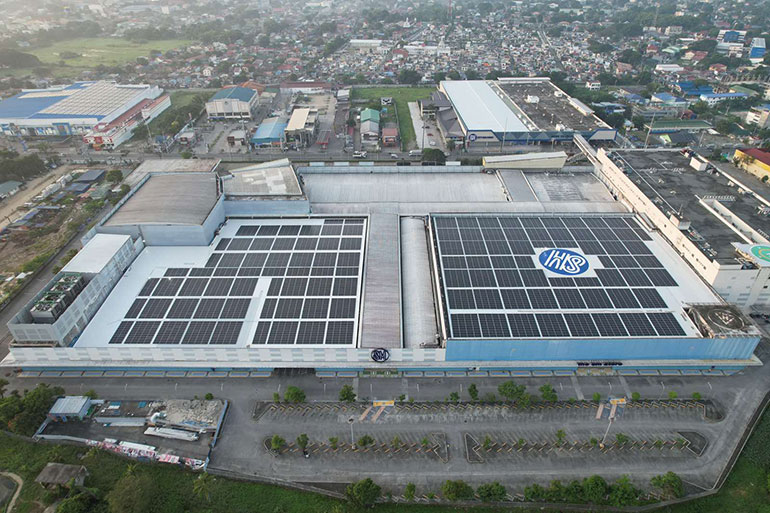
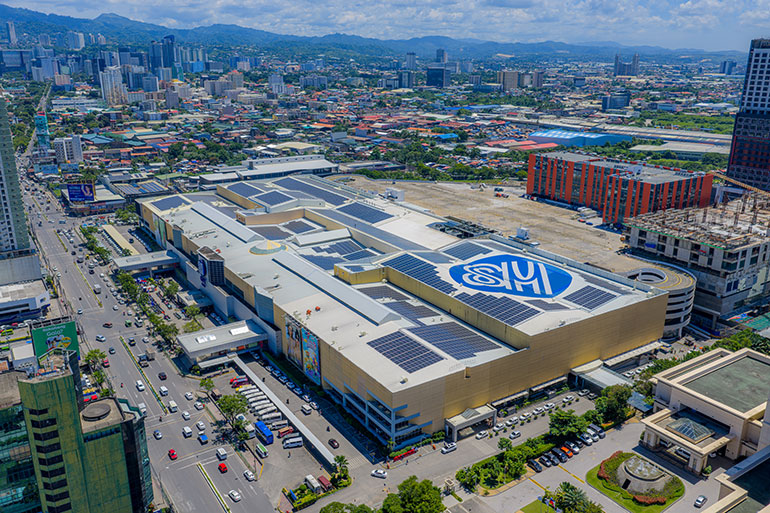
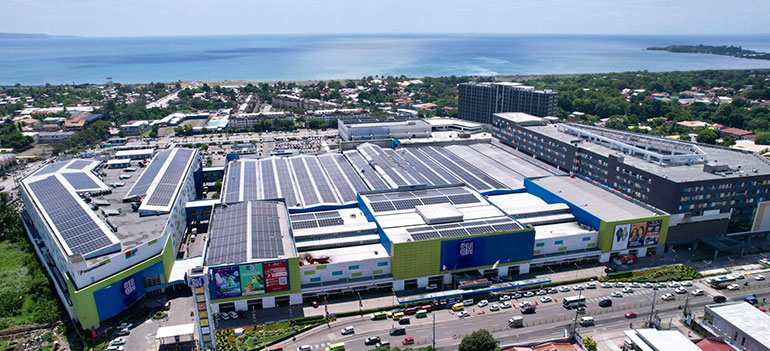
SM Group operates the country’s largest rooftop solar panel network nationwide among property developers. Its investment in renewable energy started in 2014 with the very first installation of solar panels in SM North EDSA — long before government mandates on sustainability and the current pressures on alternative sources of power amid the energy crisis. With over 200,000 panels installed across 59 mall properties, covering 65 hectares, this expansive system powers SM’s most-loved malls through a hybrid energy strategy, helping them run more efficiently and sustainably.

SM City Baliwag

Impact to Communities

Collectively, these panels generate 106 MWp of solar power, meeting over 50% of the mall operator’s electricity needs and helping ensure stable operations — from lighting to elevators. By integrating solar energy, SM reduces costs, improves efficiency, and delivers a more reliable, comfortable experience for tenants and shoppers.

This hybrid energy strategy, paired with its adjusted mall operating hours reduces SM’s reliance on the national grid, helping ease pressure on the overall energy supply and free up capacity for households, schools, hospitals, offices, and essential services, in its surrounding communities particularly during peak hours.

SM’s reinforced energy efficiency thrust amid the energy crisis is its latest effort in pursuit of transformative sustainability, action that results in impactful, tangible value to customers and its surrounding communities.


Spotlight is BusinessWorld’s sponsored section that allows advertisers to amplify their brand and connect with BusinessWorld’s audience by publishing their stories on the BusinessWorld Web site. For more information, send an email to online@bworldonline.com.

Join us on Viber at https://bit.ly/3hv6bLA to get more updates and subscribe to BusinessWorld’s titles and get exclusive content through www.bworld-x.com.

Trump says Lebanese and Israeli leaders to speak, Pakistan says Lebanon peace essential

AN EXPLOSION caused by a projectile impact after Iran launched missiles into Israel following Israel and the US launched strikes on Iran, in Tel Aviv, Israel, Feb. 28, 2026. — REUTERS/GIDEON MARKOWICZ

BEIRUT/JERUSALEM — US President Donald Trump said Lebanese and Israeli leaders will speak for the first time in decades on Thursday, while Pakistan said peace in Lebanon was essential for talks it is mediating between Washington and Tehran on ending the Iran war.

The Lebanon conflict spiraled out of the US-Israeli war with Iran, with the Iran-backed Hezbollah opening fire in support of Tehran on March 2, prompting an Israeli offensive in Lebanon just 15 months after the last major conflict.

The Israeli security cabinet convened late on Wednesday to discuss a possible ceasefire in Lebanon.

“Peace in Lebanon is essential for (Iran) peace talks,” Tahir Andrabi, spokesperson for Pakistan’s Foreign Ministry, said.

In a post on Truth Social, Mr. Trump said he was “trying to get a little breathing room” between Israel and Lebanon.

“It has been a long time since the two leaders have spoken, like 34 years. It will happen tomorrow. Nice!” Mr. Trump wrote in the post published before midnight on Wednesday, Washington time. The post did not give any further details.

Gila Gamliel, a member of Israel’s security cabinet, told Israel’s Army Radio that Prime Minister Benjamin Netanyahu would “speak for the first time with the president of Lebanon after so many years of no contact between the two countries”.

A senior Lebanese official told Reuters Lebanon had no information about a call between Lebanese President Joseph Aoun and Mr. Netanyahu.

BEIRUT AT ODDS WITH HEZBOLLAH
The Lebanese government has been sharply at odds with Hezbollah over its decision to enter the war, having spent the last year seeking to secure the peaceful disarmament of the group founded by Iran’s Revolutionary Guards in 1982.

Beirut banned Hezbollah’s military activities on March 2.

The Israeli Prime Minister’s office and Mr. Aoun’s office did not immediately respond to requests for comment. The office of Prime Minister Nawaf Salam also told Reuters it had no information about contact between Lebanese and Israeli leaders.

Washington on Wednesday expressed optimism about reaching a deal to end the war with Iran. The sides agreed a two-week ceasefire in the Iran war on April 8, following mediation by Pakistan.

Israel and the US have said the campaign against Hezbollah was not part of that ceasefire, though Pakistan’s prime minister had said the truce would include Lebanon, as demanded by Iran.

FIGHTING IN KEY LEBANESE TOWN
A senior Israeli official and a senior Lebanese official said on Wednesday Mr. Netanyahu’s government was under heavy pressure from Washington to reach a ceasefire in Lebanon.

A senior US administration official said on Wednesday the Trump administration had not asked for a ceasefire, but the US president “would welcome the end of hostilities in Lebanon as part of a peace agreement between Israel and Lebanon”.

Mr. Netanyahu, in a video statement released late on Wednesday, said the Israeli military continued to strike at Hezbollah and was about to “overcome” the southern Lebanese town of Bint Jbeil, located at the border.

The senior Lebanese official said that Lebanon’s assessment was that Israel wanted to secure a victory in Bint Jbeil before diplomatic progress could be made.

The Israeli military said its troops were continuing “targeted ground operations in southern Lebanon”.

In Israel, sirens rang out warning of incoming rocket fire, sending residents of several Israeli northern towns running to bomb shelters. There were no immediate reports of injuries.

Hezbollah kept up its attacks, firing rockets at two towns in Israel, the group’s al-Manar television reported.

Israeli and Lebanese ambassadors held rare talks in Washington on Tuesday.

Iran has said Lebanon must be included in any agreement to end the wider war in the Middle East, while Washington has pushed back, saying there is no link between the two sets of talks.

Hezbollah on Wednesday condemned Tuesday’s meeting in Washington, saying it would deepen the rift among Lebanese. — Reuters

DepEd, DPWH begin construction of 20,000 classrooms

Department of Education Secretary Sonny Angara and Department of Public Works and Highways Secretary Vince Dizon sign an agreement between the two agencies on April 16, 2006. — DEPED FB PAGE

The Department of Education (DepEd) and the Department of Public Works and Highways (DPWH) on Thursday pledged to begin construction of 20,000 classrooms this year to address the nationwide backlog of over 144,000.  

This comes after the signing of the Memorandum of Agreement (MoA) between the agencies to streamline the implementation of the Basic Education Facilities Program (BEFP).

“The goal this year is 20,000 classrooms, so as long as we are near our goal, we could say that it’s been a historic year in terms of improvement,” Education Secretary Juan Edgardo “Sonny” M. Angara told reporters in a briefing.

“It’s a 2-year horizon, so between funding release and construction and completion, you’re talking about 2 years,” he added.

Under the agreement, DepEd will “provide a school infrastructure master list by the end of May to identify priority schools, ensuring site readiness, and securing necessary environmental clearances.”

Meanwhile, the DPWH will “manage all bidding and construction activities, conduct joint site validations, and ensure all buildings are fully functional and safe, including rectifying any non-conformities reported by DepEd.”

According to Public Works Secretary Vivencio “Vince” B. Dizon, the 5,000 classrooms targeted this year will undergo DPWH’s new procurement process through livestreaming and a transparency portal.

“We’re doing everything that we can to maintain transparency and ensure that the previous wrongdoings within the DPWH won’t happen again,” he told reporters in Filipino during the same briefing.

He added that the 4,000 classrooms for 2025 will be finished in September this year. The DPWH previously reported completion of only 22 classrooms in October last year.

“Right now, we have 3,000 ongoing constructions. Of which, 2,500 will be completed by June, and the remainder will be finished by September,” he said.

The Second Congressional Commission on Education (EDCOM II) warned in February that the backlog could further widen due to 122,518 aging school buildings and the expected condemnation of over 51,000 classrooms by 2028.

“It will take a 10-year sustained spending program to really address not only the classroom shortage but also the other systemic problems in education,” Mr. Angara said.

“This is not the problem of Marcos’ administration alone. This will also be a problem for the next administration, so hopefully the next administration will be as committed as this one to addressing the problems in education,” he added. — Almira Louise S. Martinez

China solar makers say war-induced renewables demand won’t fix overcapacity

BW FILE PHOTO

BEIJING — Chinese solar manufacturers say any boost to global demand for renewable energy from the oil supply shock caused by the Iran war is unlikely to significantly ease the industry’s overcapacity, leaving producers worried about their survival.

Chinese green energy stocks rallied more than 10% to nearly five-year highs after the US-Israeli attacks began on February 28, before paring back some of their gains.

The conflict has sent oil prices to nearly $100 per barrel and is threatening the global economy, forcing many governments to reassess fossil fuels within the energy mix. But while markets are betting this could drive up demand for solar panels and other green energy products from China, the producers themselves are less optimistic.

The solar industry is widely seen as one of the sectors most affected by overcapacity – an endemic problem in the Chinese economy, which has fueled a record trade surplus but weighed on manufacturers’ profits and fueled diplomatic tensions.

“Prices might go up slightly, or global demand might increase a little bit, but it won’t seriously impact the overall supply-demand dynamics,” one solar industry executive said, asking – like four other executives who spoke with Reuters for this story – for anonymity due to the sensitivity of the matter.

“Some companies will make it and some won’t,” the source said. “The problem is that the capacity is still there. It hasn’t been shut down, cleared out or truly exited the market.”

As of 2025, China’s solar factories had enough capacity to cover the estimated global demand this year nearly twice over, even after taking into account the Iran war impact in its demand forecast, Morningstar estimates.

Parts of the supply chain saw further capacity expansion last year despite government and industry-led efforts to pare it back. Manufacturing capacity in polysilicon, wafers, and cells rose by 9%, 11%, and 7%, respectively, compared to 2024, according to Morningstar. Module capacity declined by 5%.

“Overcapacity is very serious and won’t be cleared in the short term,” said a sales manager at a major solar manufacturer in China. “The industry is under extreme pressure.”

CHINA’S SOLAR INDUSTRY IS IN ‘OFF-SEASON’
Two other China-based solar executives told Reuters they had not noticed any increase in demand since the Iran war started.

One reason, they said, is that buyers had front loaded orders before Beijing’s long-flagged removal of export tax rebates for the industry on April 1 – one of its measures to curb capacity.

One of the executives said his company had already shipped most of what it expected to sell in the second quarter to overseas warehouses, to get ahead of the rebate removal. Other producers had made similar moves, which meant the industry was “currently in the off-season,” the executive added.

“In April, things actually cooled off a bit, because shipments obviously had to go out before the rebate was canceled,” the other executive said.

The other reason for pessimism is that it is unclear where any surge in demand would come from. About 70% of new global solar installations were in the US, the EU, and China last year.

Tariffs and other restrictions are preventing significant sales to the United States. Reuters reported on Wednesday that China was weighing curbs on exports to the US of the most advanced equipment being used in making solar panels, a move that would expand Beijing’s export controls and further inflame tensions between the two countries.

In China, demand is actually expected to drop in the wake of last year’s renewable power pricing reforms that introduced a market-based auction mechanism and removed guaranteed returns over a coal-price benchmark, said Morningstar analyst Cheng Wang.

That leaves Europe. But Mr. Wang does not expect a repeat of the solar installation boom that followed Russia’s invasion of Ukraine in 2022.

At that time European natural gas prices rose relatively more sharply than during the current Iran war, from 60 to 70 euros per million British thermal units (mmBtu) in January 2022 to 340 euros per mmBtu by August 2022. They last traded at 43 euros per mmBtu, from around 33 euros before the Iran war.

“This time the impact is much more moderate,” Mr. Wang said of the gas prices.

“The Iran war will have only a marginally positive impact on global solar demand,” he said. “I do not expect a surge.” — Reuters

Globe expands 5G and LTE to empower communities in Camarines Sur

NAGA CITY, Philippines — Camarines Sur is rapidly advancing as a major growth center in the Bicol Region, registering a 4.9% economic expansion in 2024, significantly higher than its 2023 pace of 3.2%, and contributing 32.9% of the region’s gross domestic product. Tourism continues to be a key driver of activity in the province. In 2025, Camarines Sur welcomed over 720,000 visitors, topping regional destination arrivals and underscoring its rising appeal for leisure, faith‑based, and nature‑based travel. Highlights include globally known attractions such as the Caramoan Islands, the Camarines Sur Water Complex, and annual celebrations like the Penafrancia Fiesta and Kaogma Festival.

As tourism, education, and commerce expand, the need for fast, reliable connectivity has become fundamental to local development. Globe is responding with strategic network investments to enhance both 5G availability and LTE performance across urban, suburban, coastal, and rural communities in the province.

Globe’s latest network upgrades deliver broader 5G coverage in Naga City. These expansions support high‑demand mobile uses such as real‑time communications, online learning, video conferencing, e‑commerce, cloud‑based operations, and rich media tourism engagement. In addition to expanded 5G, Globe has strengthened LTE service in surrounding municipalities such as Nabua, Ragay, Bula, Buhi, Bombon, Tinambac, Siruma, San Jose, Ocampo, and Minalabac, resulting in more consistent mobile speeds, reduced network congestion, and improved coverage even in fringe areas. These enhancements make digital access more reliable for students, micro‑entrepreneurs, professionals, families, and local government units.

“Camarines Sur is not just a destination for visitors, it is an emerging center for digital learning, enterprise, and opportunity,” said Jenefere Mangurali-Macatangay, Territory Business Head. “To accelerate that growth, dependable mobile connectivity is essential. Globe’s expanded 5G and stronger LTE footprint ensures that people across the province can learn, work, and do business with confidence, wherever they are.”

Independent performance benchmarks reinforce Globe’s leadership in network quality. In Ookla’s 2025 Speedtest® Verified Results, Globe was recognized as the Most Consistent Mobile and Fixed Network in the Philippines, reflecting strength in delivering dependable performance across wide geographic areas and diverse usage patterns.

Globe’s infrastructure buildouts are complemented by accessible mobile offers designed to make high‑quality connectivity practical and inclusive. Plans like GO+99, which bundles data, texts and vouchers, and TM EasySURF50 5G, which delivers affordable internet access for students and families, help ensure that more residents can benefit from Globe’s network enhancements.

As the province continues to advance as a tourism magnet, education hub, and entrepreneurial landscape, Globe’s strengthened mobile network provides the digital foundation necessary to support the region’s evolving ambitions.

With Globe’s expanded 5G footprint and improved LTE coverage, people and enterprises in Camarines Sur are better equipped to connect, innovate, engage, and compete in the digital economy.

For more information about Globe, visit www.globe.com.ph.


Spotlight is BusinessWorld’s sponsored section that allows advertisers to amplify their brand and connect with BusinessWorld’s audience by publishing their stories on the BusinessWorld Web site. For more information, send an email to online@bworldonline.com.

Join us on Viber at https://bit.ly/3hv6bLA to get more updates and subscribe to BusinessWorld’s titles and get exclusive content through www.bworld-x.com.

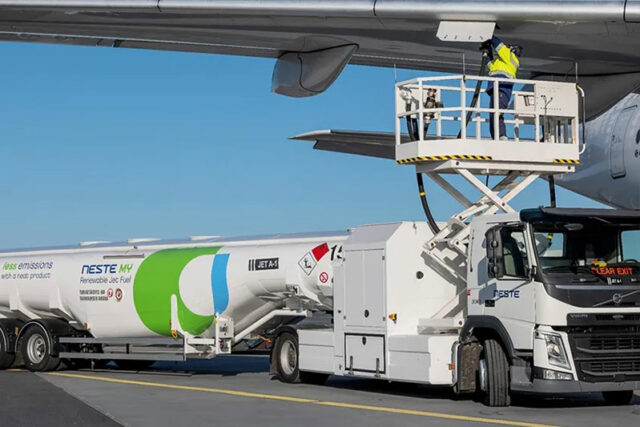
EU working on jet fuel plan as Iran crisis threatens air travel

NESTE/HANDOUT VIA REUTERS

BRUSSELS/LONDON — The European Union is drafting plans to tackle a looming jet fuel supply crunch and maximize refinery output, officials said.

European airlines have warned of jet fuel shortages within weeks as a result of the Iran war, disrupting travel ahead of summer. Europe is more dependent on jet fuel imports, with some 75% from the Middle East, than for any other transport fuel.

From next month, the European Commission will introduce EU-wide mapping of refining capacity for oil products and introduce measures “to ensure that existing refining capacity is fully utilized and maintained”, a draft proposal seen by Reuters said.

The EU is also working on measures targeting jet fuel supply, but those are still in development, officials familiar with the proposals said. The Commission declined to comment on the draft plans, which are due to be published on April 22.

Jet fuel prices have soared since the blocking of the Strait of Hormuz and European airlines are warning of price hikes, cancellations and grounded planes if the war does not end soon.

US President Donald Trump said in comments aired on Wednesday that the war with Iran could end soon, telling the world to watch out for an “amazing two days”, while US forces imposing a blockade turned back vessels leaving Iranian ports.

SHORTAGES COULD HIT SUMMER HOLIDAY SEASON
Airlines are preparing for a potential supply crunch, with the International Energy Agency forecasting jet fuel shortages by June if the region can only replace half of the supplies it normally gets from the Middle East.

Increased imports from Africa and the US are unlikely to fully make up for the drop, while fuel handling consortia that feed into airports do not always keep long-term stocks, analysts said, and many airports do not keep large stocks on hand.

Some airports have warned of shortages within three weeks if the Strait of Hormuz remains closed to fuel shipments.

As domestic oil production has shrunk and governments have sought to shift to cleaner energy sources, Europe’s refining capacity has declined in recent years.

The IEA said this month that many European refiners are already operating at maximum capacity for jet fuel production.

“Our (jet fuel) suppliers are changing their forecasting windows, and they’re no longer keen to give an outlook over a time window that goes beyond one month,” Lufthansa CTO, Grazia Vittadini, told Reuters in Frankfurt on Wednesday.

A spokesperson for UK airport Heathrow said that the impacts of the war had not yet hit its operations, although it was monitoring the situation. ADP, owner of Paris Charles de Gaulle, did not respond to a request for comment.

The proposed EU rules would not be expected to impact Britain, which is outside the 27-member bloc.

JET FUEL STOCKS VARY AROUND EUROPE
Jet fuel supplies are highly uneven across Europe. Spain has eight refineries and is a net exporter of jet fuel, while imports cover more than 60% of British demand.

European airlines have asked the EU to improve monitoring of jet fuel supplies and consider joint purchasing of kerosene.

The OECD Europe region, which includes EU countries as well as others like Britain and Norway, imports more than 30% of its jet fuel, IEA data shows, with most going through the Strait.

The EU requires its members to maintain 90 days of emergency oil reserves as a buffer against supply shocks. This does not include a specific requirement on jet fuel, although countries can count it and other oil products towards their stock. — Reuters

ADVERTISEMENT
ADVERTISEMENT