Home Blog Page 1387

Philippines ranks 90th and 99th in freedom and prosperity rankings

The Philippines placed 90th in Freedom Index and 99th in Prosperity Index out of 164 countries in the latest edition of the Freedom and Prosperity Indexes by US-based think tank Atlantic Council. Out of 100 possible points, the Philippines scored 64.0 in the Freedom Index with a low freedom status and 61.3 in the Prosperity Index with a low prosperity status.

Philippines Ranks 90<sup>th</sup> and 99<sup>th</sup> in Freedom and Prosperity Rankings

Australia cancels rapper Ye’s visa over ‘Heil Hitler’ song

A screenshot from the music video for Ye’s song “Heil Hitler.” — YOUTUBE.COM/@COUK44

SYDNEY — Ye, formerly known as Kanye West, has had his Australian visa cancelled after he released “Heil Hitler,” a song promoting Nazism, the country’s home affairs minister said on Wednesday.

The US rapper released the song that praised the Nazi leader Adolf Hitler across social media and music streaming platforms in May.

The song came a few months after Ye made a string of antisemitic posts on X, which included comments such as “I love Hitler” and “I’m a Nazi.”

Home Affairs Minister Tony Burke said that while previous offensive comments made by Ye had not affected his visa status, officials reviewed it again after the song’s release.

“It was a lower level (visa) and the officials still looked at the law and said you’re going to have a song and promote that sort of Nazism, we don’t need that in Australia,” he told national broadcaster ABC on Wednesday.

“We have enough problems in this country already without deliberately importing bigotry.”

Mr. Burke added that Ye had family in Australia and had been a longtime visitor prior to the visa cancellation. The singer married his wife Bianca Censori, an Australian architect, in December 2022.

Mr. Burke’s office declined to comment on the exact date of the visa cancellation. Ye’s management did not respond immediately to a request for comment outside US business hours.

In October 2024, US conservative influencer Candace Owens was also barred from entry into Australia. Mr. Burke said “Australia’s national interest is best served when Candace Owens is somewhere else.” — Reuters

The Middle Ages are making a political comeback

STOCK PHOTO | Image from Freepik

By Adrian Wooldridge

STOCK PHOTO | Image from Freepik

IN ONE of the most memorable scenes in Pulp Fiction, a film replete with memorable scenes, a Los Angeles gangster, Marsellus Wallace, turns the tables on a man who has kidnapped and abused him. He’s going to get a couple of friends to go to work on his assailant “with a pair of pliers and a blow torch,” he says, and ensure that he spends “the rest of his short life in agonizing pain.” In short, he’s going to “get medieval” on him.

There has been an awful lot of “getting medieval” in the world recently. The “12-day  war” between Israel and Iran was all about the most modern weapons of mass destruction humanity has devised. Yet it was frequently discussed in a language that is more resonant of the Middle Ages than the scientific laboratory.

Consider Donald Trump’s “rage tweet” in reply to the Democratic Congresswoman Alexandria Ocasio-Cortez (“stupid AOC”) and her suggestion that the president should be impeached for authorizing the bombing of Iran without congressional approval. Congresswoman Ilhan Omar gets called “the mouse.” President Joe Biden is “Sleepy Joe.” Senator Chuck Schumer is “Cryin’ Chuck” or “Our Great Palestinian Senator.”

Trump’s political success has been helped by his genius for nicknames. During his run for the Republican nomination back in 2015 and 2016, he brought his Republican rivals down to size with a collection of memorable names: “low-energy Jeb” (Jeb Bush), “Sloppy Chris” (Chris Christie), “Lil Marco” (Marco Rubio). Hillary Clinton was “Crooked Hillary”; Biden was “Crooked Joe” at first; Kamala Harris was, at various times “Crazy Kamala,” “Laffin Kamala,” and “Lyin Kamala.” As for foreign leaders, Bashar al-Assad is “Animal Assad,” Justin Trudeau is “Governor Trudeau,” and Kim Jong Un is “Rocket Man” or “Little Rocket Man.”

This is all reminiscent of the Middle Ages when every great political figure had a nickname. Sometimes royal nicknames mocked (or celebrated) people’s physical appearance: Charles the Bald, Charles the Fat, Ivar the Boneless, Ragnar Hairy-Pants. Sometimes they celebrated their political or military successes as with Vlad the Impaler or Eric Bloodaxe or Richard the Lionheart. William the Conqueror started life as William the Bastard before he changed his reputation by subjugating England.

Or consider NATO Secretary General Mark Rutte’s private letter to Trump (“Mr. President, Dear Donald”), written on the eve of the recent NATO summit and then leaked by a delighted Trump to the world. Rutte, a former prime minister of the Netherlands, a country that led the enlightenment, simultaneously grovels to the US president and adopts his idiosyncratic language. The “decisive action” in Iran was “truly extraordinary” and “something no one else dared to do. It makes us all safer.” “You have driven us to a really, really important moment for the US and Europe and the world” by getting Europe to agree to spend more money on its own defense, he says. “You will achieve something NO American president in decades could get done.” The secretary general capped this during the summit, by justifying Tump’s use of a profanity in his warning to Iran and Israel to stop fighting on the grounds that “daddy sometimes has to use strong language.”

Rutte’s letter belongs to the long tradition of groveling loyal addresses to monarchs from their subjects (though with shorter words and more capital letters). Monarchs were routinely praised for their wisdom, justice, and foresight; the subjects were equally routinely described as grateful, humble and awestruck. You could never go too far in praising your betters. Far from being embarrassed by too much flattery, the royals simply took it as their due and asked for more. To compete the medieval feel, Rutte’s letter even ended with “safe travels and see you at His Majesty’s dinner.”

And, finally, consider the language of the Iranian leadership over the bombing. The speaker of the Iranian parliament, Mohammad Baqer Qalibaf, raged that “the evil hand of the Zionist criminal and terrorist gang has once again been stained with the blood of commanders and Mujahideen in Iran, dearer than our lives.” Iran’s Supreme Leader Ali Khamenei declared that his country had “delivered a hard slap to America’s face” and that “the Zionist regime” was “practically knocked out and crushed under the blows of the Islamic Republic.” America and Israel are referred to as “the big Satan” and “the little Satan.”

Such language was common across the medieval world, Christian as well as Muslim, when everybody believed that the forces of Good and Evil would eventually see a final showdown followed by the reign of universal peace and harmony. Since the 1979 revolution, the Iranian regime has been doing everything in its power to revive this way of thinking. The religious establishment stokes beliefs in the second coming of the Hidden Imam. The Ayatollah Ruhollah Khomeini adopted the honorific of “the Deputy of the Iman of the Age,” and an official body discusses the details of the second coming. The TV broadcasts images of red tulips (the blood-stained martyrs) and a white-clad Mahdi riding off into the distance.

This is all a far cry from the traditional language of global affairs when bland politicians and technocrats talked about sub-section three, paragraph five of the latest report by the IAEA or some other acronym-laden authority. It would be comforting to imagine that “the re-medievalization of the world” is a passing fad, triggered by Trump’s narrow victory over an incompetent Democratic Party and the agonies of an eccentric Iranian regime. This would be a mistake: We are currently witnessing the overturning of all the basic assumptions about progress that have guided thinking since the Enlightenment.

A growing cadre of strongmen treat their countries as their personal property and international relations as a test of their personal egos. Religion is exercising a growing influence on global politics. And a post-literate and brain-addled public craves nicknames and memes rather than demanding speeches and complicated reasoning. Whether re-medievalization is compatible with the long-term survival of the species in a world of nuclear weapons and ultra-sonic ballistic missiles is open to doubt.

BLOOMBERG OPINION

Trump administration reports 23,000 fewer federal jobs since September

WASHINGTON — President Donald Trump’s administration reported having 2.3 million people on federal payrolls in March, little changed from prior months despite the Republican’s efforts to shrink the size of government.

The Office of Personnel Management, which functions as the HR department for the federal government, published figures on Tuesday on hiring and firing across thousands of government offices, with growth in some areas of government largely canceling out cuts elsewhere.

Overall, the number of federal jobs — excluding postal workers and the military — was down about 23,000 from September, the last published report on overall staffing levels.

To be sure, the numbers are only through March and Mr. Trump, who took office in January, has continued efforts to shrink the federal workforce. The administration has signed deals, for example, with at least 75,000 federal workers, agreeing to pay them for several months before they resign. A spokesperson at the Office of Personnel Management said hundreds of thousands of such workers will drop off federal payrolls in October.

“This data marks the first measurable step toward President Trump’s vision of a disciplined, accountable federal workforce and it’s only the beginning,” Acting OPM Director Chuck Ezell said in a statement.

Mr. Trump, with help from former adviser Elon Musk, kicked off a sweeping campaign in January to shutter federal offices and cut jobs. Federal worker unions and their allies pushed back in court, with judges ordering agencies in some cases to rescind or pause the firings.

The new figures show a nosedive in hiring, which dropped by half in February from January. OPM ordered federal agencies to pause hiring on Inauguration Day, with exceptions for positions related to immigration, national security or public safety. The federal government hired fewer than 5,000 people in January, compared to about 20,000 in December before Mr. Trump returned to the White House.

The Labor department’s own estimates on the size of the federal workforce, which are based on surveys of government payrolls rather than the Office of Personnel Management’s more precise tally, have pointed to further tiny declines in federal employment in April and May.

The figures released on Tuesday showed payrolls at the Social Security Administration, which administers pensions and other payments for millions of elderly Americans, had fallen to about 56,000 in March, down from about 58,000 in September.

Payrolls at the Department of Homeland Security, which leads the president’s efforts to crack down on illegal immigration, rose to about 232,000 in March from 228,000 in September. — Reuters

Two more rural banks merge amid BSP efforts to strengthen industry

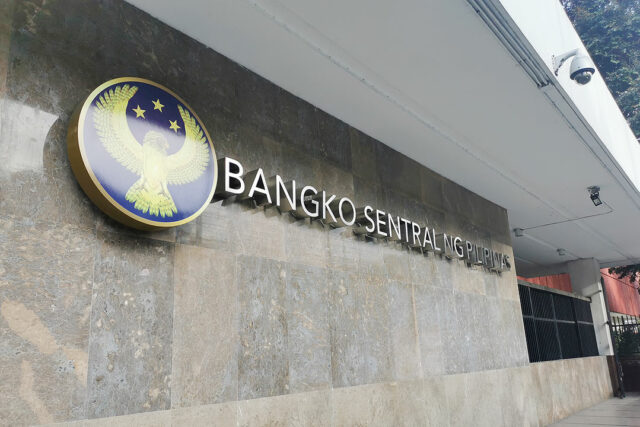
Bangko Sentral ng Pilipinas main office in Manila. — BW FILE PHOTO

TWO MORE rural banks have merged, the Bangko Sentral ng Pilipinas (BSP) announced in a circular, a development that is in line with the regulator’s efforts to strengthen the sector through consolidations.

The merger between Manor Bank – A Rural Bank Corp. and Rural Bank of Casiguran (Aurora), Inc. (CSIGU) took effect on June 2, the BSP said in a circular dated June 27.

Manor Bank was the surviving entity and absorbed all the assets and liabilities of CSIGU.

The Securities and Exchange Commission approved on April 29 the articles and plan of merger between the two banks, which was executed on Sept. 11, 2024, the central bank said.

Information from the BSP’s website showed that Manor Bank has four offices and is headquartered in Romblon.

The BSP has been encouraging rural banks to consolidate as part of its Rural Bank Strengthening Program (RBSP) that was launched in 2022.

The RBSP has five time-bound tracks that aim to strengthen the capital position of rural banks, namely merger/consolidation, acquisition/third-party investment, voluntary exit/upgrade of banking license, capital buildup program, and supervisory intervention.

In September 2022, the BSP raised the minimum capital requirement for rural banks with a head office and as many as five branches to P50 million, while those with six to 10 branches must have a minimum capital of P120 million.

Meanwhile, those with more than 10 branches must have a capital of at least P200 million.

Rural banks have until 2027 to comply with the new rules.

In March, the BSP announced the merger of Zambales Rural Bank, Inc. and Bridgeway Rural Banking Corp., with the former being the surviving entity.

Last month, the central bank said it approved the consolidation of four rural banks to form Agribusiness Banking Corp. – A Rural Bank (Agribank), which began operating on June 16.

The rural bank sector booked a combined net income of P3.09 billion in the first quarter, latest BSP data showed. Total assets were at P471.17 billion as of end-March.

As of May, there were a total of 2,884 rural bank offices operating in the Philippines, including those of microfinance-oriented banks. These include 358 head offices. — AMCS

Another fuel price rollback seen next week

PHILSTAR FILE PHOTO

OIL PRICES may continue to decline next week amid easing geopolitical risks in the Middle East and a possible increase in oil production by the Organization of the Petroleum Exporting Countries and its allies (OPEC+), an industry player said.

“World crude oil and refined fuel prices fell this week due to easing of geopolitical risk, prospect of another OPEC+ output hike in August that will lead to an increase in supply, and concerns of economic slowdown driven by prospects of higher US tariff,” Jetti Petroleum, Inc. President Leo P. Bellas told reporters on Thursday.

Based on three-day trading data from the Mean of Platts Singapore (MOPS), a benchmark used for refined oil products, the diesel price is projected to go down by P0.40 to P0.60 per liter, and gasoline by P1 to P1.65 per liter.

He noted, however, that fuel prices “have stayed range bound due to positive demand indicators from China and expectations that Saudi Arabia will raise its prices in August for buyers of its crude in Asia.”

“MOPS prices today are expected to track the increase in crude oil following suspension by Iran of cooperation with the International Atomic Energy Agency,” Mr. Bellas said.

“The US-Vietnam trade deal also boosted prices but the unexpected rise in US crude inventories limited the oil price gains.”

On Tuesday, local oil companies implemented a rollback in gasoline prices by P1.40 per liter, diesel by P1.80 per liter, and kerosene by P2.20 per liter.

The rollback in pump prices was the first after six consecutive weeks of price hikes for gasoline, four weeks for diesel, and three weeks for kerosene.

Since January, gasoline, diesel, and kerosene prices have increased by P9, P10.05, and P1.85 per liter, respectively. — Sheldeen Joy Talavera

National Government outstanding debt

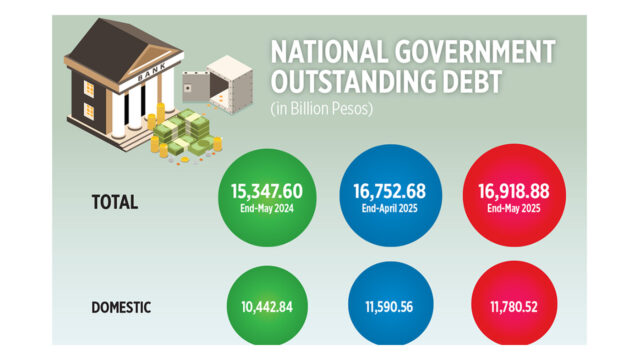
THE NATIONAL Government’s (NG) outstanding debt hit a fresh high of P16.92 trillion at the end of May as new domestic debt issuances were partly offset by the stronger peso, the Bureau of the Treasury (BTr) said on Thursday. Read the full story.

National Government outstanding debt

Sean ‘Diddy’ Combs cleared of most serious charges, to remain jailed for now

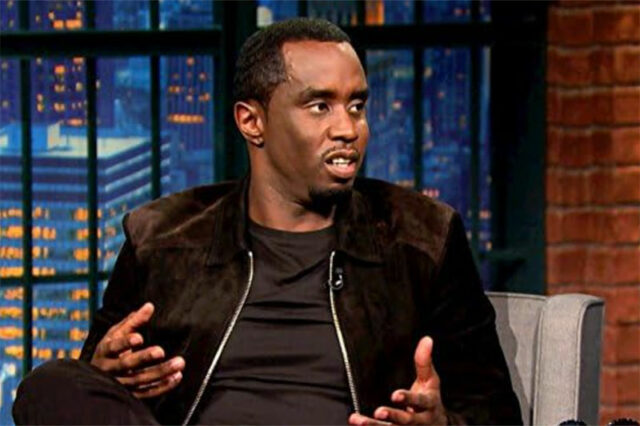
Sean “Diddy” Combs on the talk show Late Night with Seth Myers. — IMDB

NEW YORK — Sean “Diddy” Combs will remain behind bars for now, a judge ruled on Wednesday, after the music mogul was cleared of sex trafficking and racketeering charges that could have put him behind bars for life but found guilty of lesser prostitution-related offenses.

In rejecting the defense’s request for bail, US District Judge Arun Subramanian said prosecutors had presented ample evidence at Mr. Combs’ trial that he had committed violent acts and should remain in jail until his sentencing on two counts of transportation to engage in prostitution.

“It is impossible for the defendant to demonstrate by clear and convincing evidence that he poses no danger,” Mr. Subramanian said during a hearing in Manhattan federal court hours after the verdict.

The seven-week trial focused on allegations that Mr. Combs forced two of his former girlfriends to partake in drug-fueled, days-long sexual performances sometimes known as “Freak Offs”  with male sex workers in hotel rooms while Mr. Combs watched, masturbated and occasionally filmed.

Both women — the rhythm and blues singer Casandra “Cassie” Ventura, and a woman known in court by the pseudonym Jane — testified that he beat them and threatened to withhold financial support or leak sexually explicit images of them.

As Mr. Subramanian denied bail, Mr. Combs stared straight ahead and one of his family members in the courtroom gallery hung their head.

It was a far cry from the jubilant reaction after the verdict.

“I’m gonna be home soon,” Mr. Combs said then, prompting applause and cheers from his family and supporters. “Thank you, I love you.”

The 12-member jury unanimously acquitted Mr. Combs of racketeering conspiracy and two counts of sex trafficking Ms. Ventura and Jane. The Bad Boy Records founder could have faced life in prison if convicted on those counts.

Mr. Combs, once famed for hosting lavish parties for the cultural elite in luxurious locales like the Hamptons and Saint-Tropez, had pleaded not guilty to all five counts.

The verdict was overall a win for Mr. Combs, a former billionaire known for elevating hip-hop in American culture.

“It’s a great victory for Sean Combs, it’s a great victory for the jury system,” defense lawyer Marc Agnifilo told reporters.

Under federal law, Mr. Combs faces up to 10 years in prison on each of the two prostitution counts. But prosecutors acknowledged in a court filing that federal sentencing guidelines appeared to recommend a sentence of at most 5-1/4 years total, well below the statutory maximum. Mr. Combs’ lawyers argued that two years would be the outer limit.

The judge suggested sentencing Mr. Combs on Oct. 3, but will consider a defense request for an earlier date.

Prosecutors argued Mr. Combs should remain in jail because he remained a danger, pointing to Jane’s trial testimony that he assaulted her in June 2024 while aware he was under investigation.

“He’s an extremely violent man with an extraordinarily dangerous temper who has shown no remorse,” prosecutor Maurene Comey said in court.

ACQUITTAL ON THREE CHARGES
The jury’s acquittal on the most serious charges signaled that the prosecution failed to draw a direct line between Mr. Combs’ abuse of Ms. Ventura and Jane and their participation in the sexual performances.

The defense acknowledged that Mr. Combs engaged in domestic violence, but argued that Ms. Ventura and Jane were strong, independent women who consensually took part in the sexual performances because they wanted to please Mr. Combs.

Sarah Krissoff, a former federal prosecutor in Manhattan, said the jury may have viewed Mr. Combs’ conduct as evidence of toxic romantic relationships, but not sex trafficking.

In a statement after the verdict, Manhattan US Attorney Jay Clayton and Homeland Security Investigations Special Agent in Charge Ricky Patel said sex crimes were “all too present” across society and that Americans wanted it to stop.

Mr. Combs still faces dozens of civil lawsuits accusing him of abuse. Ms. Ventura sued him in November 2023 for sex trafficking, and they settled a day later for $20 million.

Mr. Combs, once feted for turning artists like Notorious B.I.G. and Usher into stars, has denied all wrongdoing.

After the verdict, Ms. Ventura’s lawyer Douglas Wigdor said in a statement that she had “paved the way” for Mr. Combs’ conviction on the prostitution counts. — Reuters

Malasakit and Well-Being: Finding stability in volatility

STOCK PHOTO | Image by Pikisuperstar from Freepik

Work today is not just about productivity, but also humanity. Despite widespread recognition that employee well-being is essential, Filipino organizations continue to grapple with ensuring targets are met while dealing with relentless pressures — rapid technological advancements, economic volatility, and evolving workplace expectations. In particular, automation and AI disrupt job security, global economic shifts affect local industries, and mounting workloads create stress and burnout.

Recent developments such as DeepSeek; US President Donald Trump’s tariff announcements; changing diversity, equity, and inclusion (DEI) priorities; declining environmental, social, and governance (ESG) focus; and local politics threaten organizational stability, leaving both leaders and employees vulnerable to anxiety, exhaustion, and disengagement.

Sadly, stress is a daily reality for Filipinos. The Gallup State of the Global Workplace 2025 reports that nearly half (47%) of its Filipino respondents reported daily stress. AON Philippines reports that one in three (31%) lower income employees experiences chronic workplace stress. Great Place to Work Philippines, a company that specializes in helping organizations build a positive employee culture, states that only one in five (22%) of employees enjoy high levels of well-being. These findings highlight the urgent need for organizations to go beyond rhetoric and embed well-being into company culture and people strategy.

But employee well-being is more than just physical health. It is the foundation of engagement, performance, and loyalty. Employee well-being has been defined as “a state of being happy, prosperous, and healthy, both physically, mentally, psychologically, and socioeconomically.” Research published in Management and Labour Studies in 2023 shows that employees who feel supported in their well-being are more productive, resilient, and committed to their organizations. In contrast, burnout leads to absenteeism, quiet quitting, and high turnover rates. In simple terms, well-being is not just a human resource issue; it is a business necessity.

Amid this backdrop, the Filipino workplace culture presents unique challenges for well-being. Unlike in Western cultures, our deeply ingrained cultural values such as hierarchy and collectivism shape how Filipinos approach relationships, work, and overall well-being. For instance, respect for authority and utang na loob (debt of gratitude) encourage Filipinos to be loyal, respectful, and obedient to those in superior positions. Group values such as bayanihan (going out of one’s way to help others) and pakikisama (getting along with others) promote a spirit of community, group responsibility, and maintaining harmony. However, these same values can prevent employees from speaking up about well-being concerns such as excessive workloads, mental health issues, or even potential solutions for fear of being perceived as challenging authority or being pabibo (showing off). Furthermore, indirect conflict resolution, often through tsismis (gossip) or parinig (indirect remarks or dropping hints to convey a message) discourage open communication. Similarly, the expectation to work overtime as a sign of dedication remains widespread, especially for people aiming for promotions, leaving many employees hesitant to set boundaries. When left unchecked, these cultural tendencies contribute to stress, burnout, and disengagement.

How can organizations ensure that well-being is not just an afterthought, but a business priority? Well, Filipino stakeholders can convey malasakit (genuine care) by addressing both systemic challenges and cultural barriers. Doing so requires action at different levels.

First, organizations must normalize conversations about mental health and work stress. Confidential counseling, support groups, and stress management programs should be integrated into company culture — not just as benefits on paper, but as actively promoted, stigma-free resources. Well-being needs to be prioritized, not penalized. Leaders should model openness by sharing personal insights and reinforcing that seeking support is a strength, not a weakness. For example, the Jollibee Group, the People Management Association of the Philippines (PMAP) 2024 Employer of the Year Awardee, provides employee assistance programs not only to employees, but also to their dependents.

Second, leaders must integrate well-being into performance management. Regular check-ins, coaching, and mentoring should emphasize both business goals and employee well-being as key success metrics. Too often, workplaces equate dedication with exhaustion. Leaders need to encourage employees to perform at their best without sacrificing their well-being. This requires leadership training in emotional intelligence, empathetic communication, workload management, and psychological safety.

Finally, employees must reclaim their well-being by taking charge of what they can control. This means setting boundaries, prioritizing tasks, directly dealing with disagreements, and using leave credits without guilt — a practice that many Filipinos avoid out of fear of being perceived as lazy. But self-care is not selfish; it is a prerequisite for sustainable performance. Beyond personal habits such as proper sleep and exercise, employees should feel empowered to advocate for better work conditions and to openly discuss well-being concerns with their leaders.

Overall, a thriving workforce is built on a culture of care and accountability. Organizations must redefine success — not just by business metrics, but also through malasakit. By integrating well-being into leadership, workplace culture, and HR strategies, businesses can create resilient, high-performing teams that excel even in volatile times.


Hannibal George Marchan teaches at De La Salle University. He is also a keynote speaker, workshop and team building facilitator, and executive coach for LHH, Quintegral, HumanDev, and Kaizen Leadership Asia.

hannibal.marchan@dlsu.edu.ph

Making character references truly count

I’m the recruitment manager of a medium-sized establishment. We don’t require character references, especially when certain job applicants have proven their worth during our intensive interviews. Am I doing it right? — Lost Lamb.

In the era of AI, psychometric tools, and applicant tracking systems, the humble, age-old character references may appear irrelevant and unwanted. Many times, we ditch character references who give exaggerated recommendations. So, what’s the use? Is that a good reason to ignore them?

Of course not. Don’t be too quick to dismiss references. When done right, character references can offer powerful insight into a candidate’s true self — something no résumé, chatbot, or even a deep-dive stress interview can capture.

But you’re right. Many reference checks are ineffective if you don’t exercise critical thinking. Anyway, you can only do it if you’re ready to decide between the top two contenders in the shortlist. What’s important is to expect that references may not give you an objective answer.

You can only know the truth when you dig deeper, assuming that character references are approachable, friendly, and accommodating.

RIGHT STRATEGIES
If thoughtfully and thoroughly consulted, references can help you answer many questions every hiring manager wrestles with. Here’s how to transform character references into effective allies for smart hiring. Note, however, that the following strategies may apply only for candidates vying for key and sensitive managerial posts:

One, ask the right people. Job candidates would always give you the names of people who are friendly to them. That’s understandable. However, as a hiring manager, your job is to ask for specific details and not just praise from the right people. You can do this by asking for the names of their former direct bosses and not just office colleagues.

One caveat, though. Don’t do this when the applicants are still employed, or you’ll risk damaging their career in that organization. Better, if you can talk to their past employers. If possible, ask for the names of people who don’t always agree with them on certain issues.

Two, settle for three references. Other than the candidates’ direct boss, talk to their former colleagues who have worked with them in collaborative roles. Talk to objective references who can speak to the candidates’ competence, character, and integrity.

Again, be careful with this approach as you don’t want to destroy the candidates’ careers by talking to many people who can spill the beans unnecessarily.

Three, know their specific stories. Don’t be tempted to ask — “Would you rehire this person?” This question is vague and subjective. More often, the answer reflects personal bias or internal policies, not the candidate’s actual performance. Instead, ask the following behavioral and insightful questions that could yield meaningful insights:

Can you describe a situation when the candidate made a serious mistake? In what way did they handle it? How did they respond to critical, negative feedback? What strengths did they bring to your organization? What challenges did they face?

Four, read between the lines. What isn’t said is more revealing than what is said out loud. Be cautious if a reference speaks in glowing but vague terms. Imagine hearing this — “he’s a great guy, always smiling.” If the reference struggles to give specific examples, that’s a red flag.

Likewise, listen and understand for long pauses, hesitation, faint praise, and polite evasions. You have to understand this as people avoid direct criticism out of fear of legal consequences or personal discomfort. Trust your instinct when something is a bit off.

Five, understand but double-check. Validate the information against what was stated in the candidate’s resume or what came up during the interview. Did the candidate lead a cross-functional project that yielded millions? Did they leave the job voluntarily, or was there a story behind it?

It’s not about catching the candidates in a lie, but about gaining clarity. That’s where you should be able to reconcile different stories.

Six, discover the personal bias. Character references are not neutral. Many of them are supporters. Some are reluctant whistleblowers. They’re playing it safe, just enough not to get sued. Recognize that cultural norms may discourage people from speaking negatively, even if it’s warranted.

Some references may be overly enthusiastic because of loyalty. Others may refrain from giving a candidate’s strengths out of rivalry or resentment.

NOT A DECIDING FACTOR
Seeking the character references’ opinion is not obsolete. But it’s often underutilized. When you ask the right people the right questions, listen carefully to the answers. You’ll gain a rare window into how a person shows up when things aren’t perfect.

Reference checks should never be the only deciding factor. They’re like dessert, not the main course. They may be used only alongside in-depth interviews, work samples, and other related hiring processes.

In a world that thrives on trust, culture, and collaboration, references are your greatest allies, if you know how to handle them well.


Ask questions and receive Rey Elbo’s insights for free. E-mail elbonomics@gmail.com or DM him on Facebook, LinkedIn, X, or via https://reyelbo.com. Anonymity is guaranteed.


Women breaking barriers

Women, accounting for half of the labor force in the Philippines, are making waves in the business world, shattering glass ceilings. Next Generation of Women Corporate Directors (NOWCD) Chairman Aurora “Boots” Garcia recently said that the number of women directors in boards increased from 18% in 2020 to 21% in 2023, which shows progress. Hopefully, the numbers would still improve.

The NOWCD forum with the theme “Breaking Barriers: Women Leading in Business and Beyond” was held on June 23 at the BPI Wealth Lounge in Ayala Triangle Gardens. The keynote speaker was Mariana Zobel de Ayala, managing director of Ayala Corp., with powerhouse panelists Robina Gokongwei, chair of Robinsons Retail Holdings; Colonel Francel Padilla, spokesperson of the Armed Forces of the Philippines (AFP); and Dr. Jean Franco, professor at the University of the Philippines’ Department of Political Science. The forum was ably moderated by Julia Abad, executive director of the Far Eastern University Public Policy Center (FEU PPC).

At the forum, Patricia Basilio, FEU PPC data analyst, presented a research paper on gender attitudes. She said that progress has been made in advancing gender equality worldwide, but alarmingly, younger males are becoming more anti-feminist than their older counterparts and female peers.

In the Philippines, a college survey showed that many male college students view gender equality as a “burden” to business. The study also showed that the full potential of women in the workforce remains unrealized due to the presence of gender bias that often perpetuates stereotypes regarding workplace roles (for example, not all men want to be breadwinners, or not all women prefer to stay at home). Also, in both private businesses and the government, there is an underrepresentation of women. The concern is that if unchallenged, these students could carry these biases when they take leadership roles in the future. It is therefore important to engage young people at every opportunity, be it through schools, social media, families, and churches, among others, to help them shift away from their sexist attitudes before they harden.

Keynote speaker Ms. Mariana shared about her experiences in the Ayala Group. She highlighted standout Ayala women leaders like MeAnn Dy, the first woman president of Ayala Land, Inc.; Martha Sazon of GCash; executive vice-president Ginbee Go of BPI Consumer Banking; and Theresa Marcial, head of BPI Wealth.

AFP Spokesperson Francel spoke about her own difficult experiences in the male-dominated military sector. “You need to bring your own chair to get a seat at the table,” she said. Still, there is hope as technology is opening doors. Artificial intelligence is leveling the field, with women topping the military exams. How can men offer help? Her immediate response: “Just letting go. Give [them] a free hand.”

A number of women leaders were also present at the event: former Securities and Exchange Commission Chairman Tess Herbosa, Maritess Pineda, KPMG’s Sharon Daoyon, Aboitiz InfraCapital President Cosette Canilao, Vanee Gosiengfiao of Sanofi, Philippine Bank of Communications President Patricia May Sy (her home made breads are so good!), Karen de Venecia, PLDT director Marife Zamora, and Karen Roa, president of Filipina CEO Circle, among others.

At my table was Karen Roa who recently completed  her PhD in Leadership Studies from Ateneo despite having a full-time job as president of First Metro Asset Management. Even while at the top, one has to learn continuously. When I asked about her thesis, she responded: “The study explores the moral identity traits of Filipino finance executives and examines their influence on ethical leadership behavior. The findings revealed a distinct moral identity profile among Filipino finance leaders highlighting traits such as integrity fairness, responsibility, and respectfulness. However, regression analysis showed no significant relationship between moral identity traits and perceived ethical leadership behavior. This suggests that there is a moral identity within the Philippine context, but it doesn’t translate into observable ethical leadership in organizational settings.” A disconnect seems to exist — a sign that values must be clearly communicated, and reinforced by actions, systems and even culture.

Thank you to the amazing NOWCD Events team headed by Gianna Montinola, supported by Tere and her BPI Wealth Team who ensured quality service from parking, to greetings, to a wonderful lunch setup, and even tokens. Congratulations! Women power indeed!

The NOWCD event was inspiring, with excellent learnings not only from the speakers but the attendees as well. The forum is certainly a push forward towards NOWCD’s goal to develop women to become drivers of visionary and effective boards.

The views expressed herein are the author’s own and do not necessarily reflect the opinion of her office as well as FINEX.


Flor G. Tarriela is a banker by profession and an environmentalist/ gardener.

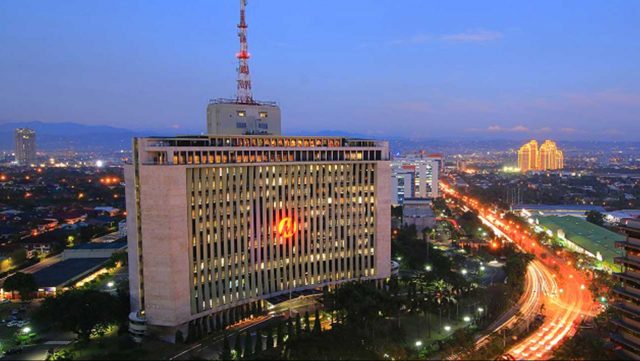
Meralco sees recovery in energy sales volume by second half

MERALCO.COM.PH

POWER distributor Manila Electric Co. (Meralco) expects a recovery in energy sales volume by the second half of the year, driven by a pickup in certain sectors within the commercial and industrial segments.

“On the second half, I think there will be some sort of a recovery,” Meralco Senior Vice-President and Chief Revenue Officer Ferdinand O. Geluz told reporters on Thursday.

Mr. Geluz said they expect the impact of the exit of Philippine offshore gaming operators (POGOs) last year — which affected the power consumption of several key commercial subsegments such as real estate and retail trade — to “normalize.”

The energization of data centers last year may also affect sales due to anticipated demand from their clients.

“We’re seeing some uptick in the construction industry, cement as well as glass. And somehow still after a long period of downturn, we are seeing a slight growth,” he said.

Meanwhile, Meralco expects “flattish” growth in energy sales volume for the first half, due to cooler weather during the period.

For this year, Meralco is targeting a 4.5% increase in energy sales volume, or at least 56,000 gigawatt-hours (GWh).

In 2024, Meralco’s energy sales volume rose by 6.4% to 54,325 GWh from 51,044 GWh in the previous year, driven by warmer temperatures due to El Niño and sustained customer energizations.

This exceeded the company’s target of 53,473 GWh for the year. 

Meralco’s controlling stakeholder, Beacon Electric Asset Holdings, Inc., is partly owned by PLDT, Inc.

Hastings Holdings, Inc., a unit of PLDT Beneficial Trust Fund subsidiary MediaQuest Holdings, Inc., has an interest in BusinessWorld through the Philippine Star Group, which it controls. — Sheldeen Joy Talavera