Home Blog Page 1349

Philippines urged to act after sea drones linked to China

PHOTO SHOWS an underwater drone with Chinese markings from the Philippine National Police in Bicol, Dec. 30, 2024. — PHILIPPINE NATIONAL POLICE REGIONAL OFFICE 5

The Philippines should step up its efforts and reinforce its claim over parts of the South China Sea through legal and diplomatic means, a Senate leader said on Wednesday after authorities reported that the sea drones found in Philippine waters may be of Chinese origin. 

The Philippine Navy on Tuesday said that three of the five sea drones recovered within the country’s waters in the last two years had a “50% to 80%” likelihood of being deployed by China and might have been intended for preparations for underwater warfare.  

Equipped with advanced technology, the suspected Chinese sea drones could measure water depth, temperature, salinity, detect underwater sounds, and transmit the data via satellite communication. 

“What is apparent is that China has been deploying these drones to study our seabed and map out our underwater terrain to gather critical data for scientific, commercial, or military use,” Senate Majority Leader Francis N. Tolentino said in a statement. 

“This development should further bolster our efforts to protect the West Philippine Sea, and to continue to assert through legal and diplomatic means our sovereign rights over our exclusive economic zones and resources,” he added, referring to areas of the waterbody within the Philippines’ exclusive economic zone. 

The Chinese Embassy in Manila did not immediately respond to a Viber message seeking comment. 

In January, Mr. Tolentino also filed Senate Resolution No. 1267, which called on the chamber to conduct an inquiry into the six-foot submersible drone, discovered by three fishermen in Masbate on Dec. 30, 2024.  

China and the Philippines have been at loggerheads over disputed features in the South China Sea as Beijing claims the waterway almost in its entirety. 

Mr. Tolentino urged Filipinos who discover sea drones to hand them over to the proper authorities. “If you find a drone, don’t tinker with it, don’t sell it, or keep it as a souvenir.” — Kenneth Christiane L. Basilio

CAAP, BCDA ink deal on air traffic systems for Clark airport

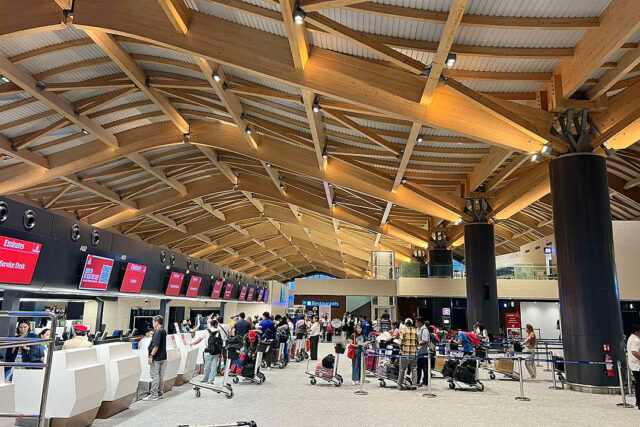
CLARK INTERNATIONAL AIRPORT

The Civil Aviation Authority of the Philippines (CAAP) and Bases Conversion and Development Authority (BCDA) have signed a deal for the operation and maintenance of air traffic systems for Clark International Airport. 

“This agreement ensures that our air traffic services, navigation systems and equipment are maintained and operated to the highest standards of excellence and efficiency,” CAAP Director General Raul L. Del Rosario said in statement on Wednesday. 

The agreement, which was signed on Tuesday, will allow CAAP to continue overseeing the operations and maintenance of communications, navigation and surveillance and air traffic service facilities at Clark International Airport north of Manila. 

Under the partnership, BCDA will fund the procurement of parts and the maintenance of ancillary equipment, CAAP said. 

The agency said its tie-up with BCDA is part of its commitment to improve overall passenger experience at the airport. 

With the enhanced system, travelers can expect more efficient flight operations, reduced delays and a more seamless travel experience, CAAP said. 

In January, CAAP said it would focus on hardware upgrades on its communication and navigation systems this year after completing software upgrades last year. 

It said it was planning to tap a P2.1-billion loan extended by the Japan International Cooperation Agency (JICA). — Ashley Erika O. Jose 

DENR seizes P3.6-M counterfeit chainsaws

DENR.GOV.PH

The Department of Environment and Natural Resources (DENR) on Tuesday seized 241 pieces of illegally imported counterfeit chainsaws worth P3.6 million in a buy-bust operation in Valenzuela City. 

The industrial firm, which sells construction materials, violated a 2002 law prohibiting the sale, distribution, or possession of chainsaws without the necessary permits, the DENR said in a statement on Wednesday. 

“The operation took place at a Valenzuela warehouse where the chainsaws were being unloaded in preparation for sale,” the agency said. 

The haul included 154 large chainsaws priced at P 16,000 each and 87 medium chainsaws priced at P 13,000 each. 

“This operation sends a strong signal that this administration is serious about enforcement of environmental laws.” — Kyle Aristophere T. Atienza

SC pushes performance-based judicial evaluation 

SC.JUDICIARY.GOV.PH

The Supreme Court (SC) continued the pilot implementation of its Performance Development Framework (PDF) for High-Performance Courts with a kick-off event in San Juan, La Union, underscoring ongoing reforms to institutionalize performance-based judicial evaluation. 

Justice Alfredo Benjamin S. Caguioa, chair of the High Court’s Committee on First- and Second-Level Courts’ Performance Evaluation, led the April 4 event at the Awesome Hotel in San Juan, La Union. 

The courts, along with those in San Fernando, Sudipen, and Caba in La Union, were among those selected for the pilot phase. The courts were chosen based on high disposition and clearance rates.  

In a statement on Wednesday, the top court said the implementation of the PDF will help courts measure their performance, establish standards, and adopt best practices compiled in a “Playbook for High-Performance Courts.” 

It will evaluate four dimensions of a trial court, the SC noted: the court’s internal processes, decision-making quality, external stakeholder satisfaction, and internal stakeholder engagement. 

The high court, it said, is also working in collaboration with the European Union-supported Justice Sector Reform Programme: Governance in Justice. 

Mr. Caguioa also visited other pilot courts on April 3 to assess implementation progress and engage with frontline judicial personnel. — Chloe Mari A. Hufana

Seaborne cops seize P2.8-M imported cigarettes 

STOCK PHOTO | Image by Shaun Meintjes from Unsplash

COTABATO CITY — Seaborne policemen seized P2.8 million worth of cigarettes from Indonesia that seafarers were to deliver to a seaside village Zamboanga City on Sunday.  

Radio reports in Cotabato City on Wednesday stated that a police team intercepted the small boat carrying 53 large cases of imported cigarettes before it could sail close to a beachfront in Barangay Santa Barbara in Zamboanga City.  

Officials of the Police Regional Office-9 (PRO-9) and the Zamboanga City Police Office had separately said that the three men who were to deliver the cigarettes have been detained. 

Brig. Gen. Roel C. Rodolfo, director of PRO-9, said he is thankful to the tipsters who provided information about the illegal shipment, enabling the Zamboanga police force to intercept it promptly. 

Zamboanga City police officials said the confiscated imported cigarettes will be turned over to the Bureau of Customs for its disposition. — John Felix M. Unson

PSEi snaps five-day climb on profit taking before Lenten break 

BW FILE PHOTO

THE MAIN INDEX snapped its five-day rally on Wednesday due to profit taking before the Holy Week break.   

The Philippine Stock Exchange index (PSEi) fell by 0.83% or 51.48 points to close at 6,134.62, while the broader all shares index went up by 0.28% or 10.34 points to end at 3,656.99. 

Philippine financial markets are closed on April 17 (Maundy Thursday) and 18 (Good Friday). 

“The local bourse pulled back this Wednesday as investors took a cautious stance, booking gains ahead of the long weekend,” Philstocks Financial, Inc. Senior Research Analyst Japhet Louis O. Tantiangco said in a Viber message. 

“The local market also took cues from Wall Street’s overnight decline,” he added. 

Wall Street closed lower on Tuesday amid tariff uncertainties. The Dow Jones Industrial Average fell by 0.38% or 155.83 points to 40,368.96; the S&P 500 dropped by 0.17% or 9.34 points to 5,396.63; and the Nasdaq Composite declined by 0.05% or 8.31 points to 16,823.17. 

“Local shares ended the Holy Week-shortened trading week in the red as investors booked profits amid low volumes,” Regina Capital Development Corp. Head of Sales Luis A. Limlingan likewise said in a Viber message. “On the economic front, markets absorbed the latest overseas Filipino worker remittance data.” 

Cash remittances coursed through banks rose by 2.7% to $2.72 billion in February from $2.65 billion in the same month last year, the Bangko Sentral ng Pilipinas reported on Tuesday. 

Most sectoral indices ended lower on Wednesday. Services declined by 1.85% or 36.48 points to 1,928.17; holding firms dropped by 1.4% or 72.28 points to 5,067.27; property went down by 0.25% or 5.71 points to 2,213.28; and financials retreated by 0.11% or 2.74 points to 2,391.55. 

Meanwhile, mining and oil rose by 0.71% or 68.11 points to 9,640.09 and industrials climbed by 0.16% or 14.49 points to 8,758.83. 

“Converge ICT Solutions, Inc. was the index’s leader for the day, climbing 3.95% to P19.48. ACEN Corp. was at the tail end, falling 4.08% to P2.82,” Mr. Tantiangco said. 

Value turnover declined to P4.21 billion on Wednesday with 951.74 million shares traded from the P4.46 billion with 1.40 billion issues exchanged on Tuesday. 

Advancers outnumbered decliners, 110 versus 79, while 51 names were unchanged. 

Net foreign selling stood at P11.66 million on Wednesday, a reversal from the P205.99 million in net buying recorded on Tuesday. — Revin Mikhael D. Ochave

Yields on term deposits fall amid hopes for further BSP easing

YIELDS on the Bangko Sentral ng Pilipinas’ (BSP) term deposits dropped sharply on Wednesday, even as the two-week paper was undersubscribed, on expectations of further monetary easing this year. 

Demand for the central bank’s term deposit facility (TDF) amounted to P198.961 billion, above the P160-billion offer but below the P207.389 billion in bids for the same volume auctioned off a week prior. The BSP awarded only P155.928 billion in papers as the two-week deposits were undersubscribed. 

Broken down, tenders for the seven-day papers reached P123.033 billion, higher than the P80 billion placed on the auction block and the P107.514 billion in bids the same volume offered the previous week. The central bank awarded P80 billion in one-week papers as planned. 

Accepted yields were from 5.5% to 5.6%, a lower and wider band compared to the 5.7% to 5.7625% seen a week prior. With this, the average rate of the one-week term deposits fell by 14.21 basis points (bp) to 5.5759% from 5.7518% previously. 

Meanwhile, the 14-day papers fetched bids amounting to P75.928 billion, below the P80-billion offer and the P99.875 billion in tenders for the same amount auctioned off a week ago. The BSP accepted all submitted bids. 

Banks asked for rates ranging from 5.5% to 5.76%, declining and widening from the 5.7% to 5.78% margin seen last week. This caused the average rate of the two-week papers to drop by 10.15 bps to 5.6495% from 5.751% in the prior auction. 

The BSP has not auctioned off 28-day term deposits for more than four years to give way to its weekly offerings of securities with the same tenor. 

The TDF and BSP bills are used by the central bank to mop up excess liquidity in the financial system and to better guide market rates. 

Term deposit auction yields dropped for a second straight week on Wednesday following the BSP’s widely expected rate cut last week and signals of further policy easing, Rizal Commercial Banking Corp. Chief Economist Michael L. Ricafort said in a Viber message. 

The Monetary Board last week cut benchmark interest rates by 25 bps to bring the policy rate to 5.5%, as expected by all 17 analysts in a BusinessWorld poll, putting its easing cycle back on track after an unexpected pause in February. 

BSP Governor Eli M. Remolona, Jr. said they are considering further rate cuts this year in “baby steps” of 25 bps at a time. 

The central bank has now reduced borrowing costs by a cumulative 100 bps since it kicked off its rate-cut cycle in August last year.  

“US President Donald J. Trump’s latest 90-day tariff pause also supported market sentiment recently,” Mr. Ricafort said. 

“The BSP TDF auction yields also slightly eased after global crude oil prices declined recently to four-year lows and the peso exchange rate appreciated versus the US dollar, … both of which help support benign inflation and future policy rate cuts.” — A.M.C. Sy

Moody’s affirms Security Bank’s ratings, revises outlook to negative

BW FILE PHOTO

MOODY’S RATINGS has affirmed Security Bank Corp.’s ratings but revised the outlook to “negative” from “stable” as it expects its capital position and asset quality to face pressures amid strong long growth. 

Moody’s affirmed the listed bank’s Baa2/P-2 long-term (LT) and short-term (ST) local-currency (LC) and foreign-currency (FC) deposit ratings, Baa2 FC senior unsecured rating, Baa2/P-2 LT and ST LC and FC issuer ratings, Baa2/P-2 LT and ST LC and FC counterparty risk ratings, and Baa2(cr)/P-2(cr) LT and ST counterparty risk assessments, it said in a statement on Tuesday. 

It also affirmed the baa3 baseline credit assessment (BCA) and adjusted BCA of the bank, as well as the (P)Baa2 FC rating on the lender’s senior unsecured medium-term note (MTN) program and its (P)P-2 FC other ST rating. 

“We revised the outlook on Security Bank’s deposit, issuer and senior unsecured ratings to negative from stable mainly because of negative pressure on the bank’s capital buffer,” Moody’s said. “The rating action also considers the potentially negative impact of the bank’s strong loan growth and weakened ability to absorb future losses, under our environmental, social and governance framework, because it reflects Security Bank’s relatively aggressive financial strategy and risk management, which could negatively impact the bank’s credit profile.” 

“At the same time, errors in 2023 and 2024 annual audited financial statements, though corrected subsequently, highlighted weaknesses in the bank’s internal controls relative to peers, potentially raising operational risk. These challenges are reflected in a moderate governance issuer profile score of G-3,” it added. 

The credit rater said it affirmed Security Bank’s deposit ratings and BCA to reflect its “average” solvency and liquidity metrics and its “weaker-than-peers funding structure.” 

Meanwhile, it downgraded its outlook on the ratings to negative as it expects its capitalization, as measured by tangible common equity as a percentage of risk weighted assets (TCE/RWA), to remain under negative pressure. 

“The bank’s TCE/RWA declined to 13.7% as of December 2024 from 17.0% a year earlier, as loan growth accelerated to 25% in 2024 from 7% in 2023. Including the upcoming acquisition of a minority stake in Home Credit Philippines, a consumer finance company, we expect TCE/RWA to decline below 13%,” Moody’s said. 

In December, Security Bank announced that it will acquire MUFG Bank Ltd.’s 25% stake in HC Consumer Finance Philippines, Inc. (HCPH) or Home Credit Philippines for P11 billion. It targets to complete the transaction this year. 

Moody’s expects Security Bank to post a loan growth of about 10% this year, adding that the lender’s capital ratios would continue to decrease if rapid credit expansion continues over the next year. This, after loan growth outpaced return on equity (RoE) in 2024, it noted. 

Rapid loan growth has affected the bank’s asset quality, the credit rater said, with its loan loss reserves also lower than the industry average. 

The robust expansion of its retail lending business also poses unseasoned loan risks, it added, with higher credit costs outweighing the earnings boost provided by the sector. 

“In 2024, loan loss provisions as a percentage of gross loans increased to 0.94% from 0.79% the year before. We expect credit costs to stay elevated and profitability to remain broadly stable at current levels over the next 12 to 18 months,” Moody’s added. 

It also noted that Security Bank’s funding structure deteriorated “modestly” last year with the share of low-cost current and savings account deposits to the total also declining, “reflecting an increase in reliance on market funds to support loan growth and protect margins.” 

Still, the bank’s liquidity position remained sufficient for its short-term funding needs, the debt watcher added. 

Moody’s said it is unlikely to upgrade Security Bank’s ratings in the near term as they are already at the same level as the Philippines’ sovereign credit rating. 

“We could downgrade the bank’s deposit ratings and BCA if the bank’s TCE/TWA falls below 12% due to the loan growth surpassing RoE or if asset quality deteriorates, leading to an increase in credit costs and consequently lower profitability. A significant weakening in Security Bank’s funding and liquidity would also be negative for the BCA and ratings,” it said. 

“We could revise Security Bank’s outlook to stable if the bank’s TCE/RWA remains above 12% and if net income/tangible assets stays above 1% on a sustained basis,” Moody’s added. — BVR 

BSP, IFC pushing for movable asset financing to boost credit access 

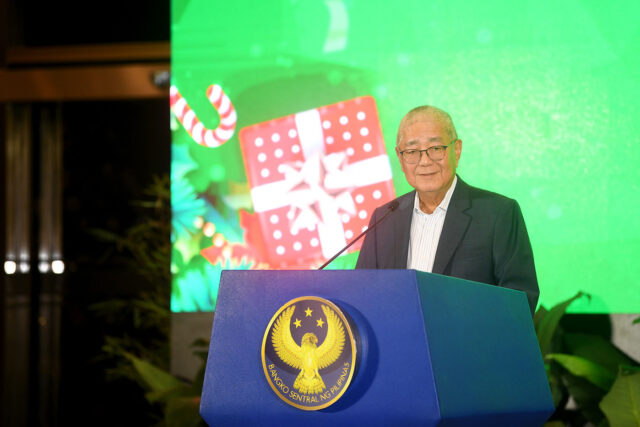
BANGKO SENTRAL ng Pilipinas Governor Eli M. Remolona, Jr. said their partnership with the International Finance Corp. will help improve small businesses’ access to credit. -- BANGKO SENTRAL NG PILIPINAS

THE BANGKO Sentral ng Pilipinas (BSP) has signed a memorandum of understanding (MoU) with the International Finance Corp. (IFC) to jointly develop the country’s movable finance market as they hope to improve micro, small, and medium enterprises’ (MSMEs) and the agriculture sector’s access to credit. 

The BSP-IFC partnership will run until 2027 and will focus on regulatory reform, sector capacity building, and supporting services development, the central bank said in a statement on Wednesday. 

“The BSP looks forward to working with IFC to build a dynamic movable asset finance (MAF) ecosystem. With this, micro, small, and medium enterprises and agri-enterprises can use their available assets to access financing for their working capital and other needs,” BSP Governor Eli M. Remolona, Jr. said. 

Under the MoU signed on March 7, the BSP and IFC will jointly promote MAF, a lending approach that allows borrowers to secure loans with movable assets like inventories, receivables, and equipment. 

“This approach is designed to benefit borrowers who lack real property to serve as loan collateral, particularly those from the MSME and agricultural sectors,” the central bank said. 

“While the Philippines has the Personal Property Security Act in place, there is still a need to promote MAF. According to a 2022 IFC study, finance involving movable assets in the country remained under 5%,” the BSP said. “The partnership between the BSP and IFC is meant to complement the law and significantly increase loans secured by movable assets.” 

BSP Deputy Governor Bernadette Romulo-Puyat said the partnership is in line with the central bank’s National Strategy for Financial Inclusion 2022-2028. — AMCS

PDIC renews bilateral cooperation deal with Korean counterpart 

THE PHILIPPINE Deposit Insurance Corp. (PDIC) has renewed its bilateral cooperation agreement with the Korea Deposit Insurance Corp. (KDIC). 

PDIC President and Chief Executive Officer Roberto B. Tan and KDIC Chairman and President Yoo Jae Hoon signed a memorandum of understanding (MoU) on March 25 for the collaboration, which was forged in 2014 and earlier renewed in 2019, PDIC said in a statement. 

The latest partnership between the two deposit insurance agencies (DIA) is effective for five years and may be renewed again. 

“The MoU institutionalizes continued cooperation and information-sharing between the two DIAs in the areas of deposit insurance, receivership and liquidation, bank resolution, risk management, premium assessment for banks, sources and methods of funds, information technology for database administration, legal and administrative procedures, and public awareness issues,” PDIC said. 

“The agreement … attests to the mutual commitment of the Philippines and Korea to sustain the enhancements of their respective deposit insurance systems.” 

PDIC and KDIC are members of the International Association of Deposit Insurers. 

“The continuing collaboration between the two DIAs is aligned with the IADI Core Principles for Effective Deposit Insurance Systems, particularly the Core Principle on cross-border issues, which provides that formal information-sharing and coordination arrangements should be in place among DIAs in relevant jurisdictions.” — A.M.C. Sy

Peso slips before Holy Week break 

BW FILE PHOTO

THE PESO inched down against the dollar on Wednesday on profit taking before the trading break. 

The local unit closed at P56.80 per dollar, slipping by three centavos from its P56.77 finish on Tuesday, Bankers Association of the Philippines data showed. 

The peso opened Wednesday’s session weaker at P56.80 against the dollar, which was also its worst showing for the day. Meanwhile, it reached an intraday high of P56.50 versus the greenback. 

Dollars traded went up to $2.3 billion on Wednesday from $2.13 billion on Tuesday. 

Philippine financial markets are closed on April 17 (Maundy Thursday) and 18 (Good Friday). 

“The dollar-peso initially rose to P56.50 on mounting concerns over the global economy. However, [there was] profit taking at the short position, allowing the pair to close at P56.80 ahead of the long weekend and US retail sales data,” a trader said in a phone interview. 

The peso depreciated slightly as players took advantage of the weaker dollar recently to secure their funding requirements, especially before the Holy Week break, Rizal Commercial Banking Corp. Chief Economist Michael L. Ricafort said in a Viber message.  

The dollar resumed its descent on Wednesday, dropping across the board and losing the most ground to the Swiss franc and the euro as a new bout of tariff-induced nerves gripped markets, Reuters reported. 

The dollar has been a casualty of shaken confidence in the United States as radical tariffs have been threatened, enforced and then partially postponed over a wild few weeks for world trade and markets. 

While it managed to find its footing earlier this week — even eking out small gains on Tuesday — by Wednesday, European trading of the US currency was headed back towards last week’s lows. 

The latest jitters follow a US decision to impose restrictions on chip exports to China, and President Donald J. Trump’s launch of a probe into whether critical minerals should face tariffs. 

The dollar was last down 1.2% on the Swiss franc at 0.8137 francs, just slightly above Friday’s 10-year low and was also 0.8% lower against the Japanese yen at 142.1, a seven-month low. 

The euro has had an overdue pullback from a surge to last week’s three-year high of $1.1474. But by the Asia afternoon it had found a footing and advanced 0.6% to $1.1346 — sending the dollar index back below 100. 

Traders were also keeping an eye on talks between Japan’s economy minister Ryosei Akazawa and Treasury Secretary Scott Bessent, as there is speculation the countries agree on a stronger yen. 

Positioning, however, as of last week’s data, showed the largest net yen long on record stretching back to 1986, meaning there could be a heavy reversal if there are signs the talks do not go well. 

Also still to come are US retail sales, an appearance from US Federal Reserve Chairman Jerome H. Powell and a Bank of Canada meeting where markets are uncertain whether policymakers will cut or hold interest rates. — A.M.C. Sy with Reuters 

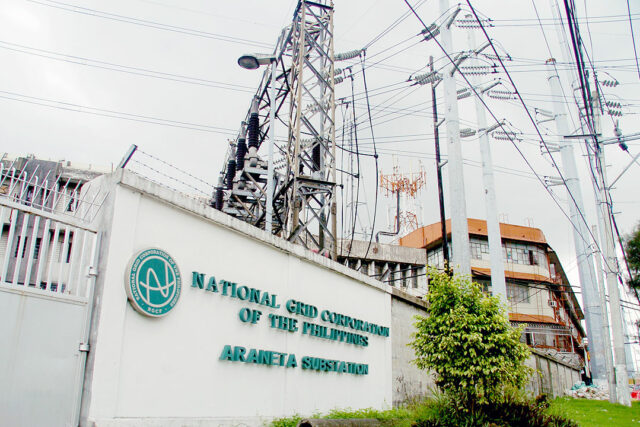
ERC allows NGCP to recover P28.29 billion from consumers 

BW FILE PHOTO

By Sheldeen Joy Talavera, Reporter  

Transmission charges are expected to increase as the Energy Regulatory Commission (ERC) authorized the National Grid Corp. of the Philippines (NGCP) to collect P28.29 billion in under-recoveries from consumers. 

The ERC said in a statement that it has completed NGCP’s fourth regulatory period (4th RP) rate reset spanning 2016 to 2022 following its commission meetings. 

In a decision by the majority composed of Commissioners Alexis M. Lumbatan, Floresinda G. Baldo-Digal, and Marko Romeo L. Fuentes, the ERC approved a maximum allowable revenue (MAR) of P335.78 billion for NGCP for the said period. 

MAR is the maximum amount that NGCP is allowed to take in annually to recover its operational expenses. 

ERC Chairperson and Chief Executive Officer Monalisa C. Dimalanta and Commissioner Catherine P. Maced dissented from the resolutions adopted by the majority. 

The majority used the “As spent” approach and adopted a weighted average cost of capital (WACC) of 11.33%.  

“‘As spent’ approach, in simple terms, allows NGCP’s capital expenses to form part of the asset base regardless of if the project is completed or not. The asset base or RAB (regulatory asset base) is the basis against which the WACC rate is applied,” Ms. Dimalanta said in a Viber message. 

Following the decision, the majority gave its go signal to NGCP to collect under-recoveries, which will result in an increase in transmission charges by the grid operator. 

“These arose because the MAR approved by the Majority is higher than what NGCP has been using for most of the years within the 4RP,” Ms. Dimalanta said, referring to the under-recoveries. 

Under the seven-year recovery period set by the majority, the NGCP is allowed to collect an additional P0.1013 per kilowatt-hour (kWh) in transmission charges to be collected over the next 84 months from issuance of the decision. 

The amount covers the P0.0629 per kWh average increase in the basic transmission charge and additional P0.0384 per kWh corresponding to the under-recovered portion of the increased MAR. 

The ruling, as well as the dissenting opinions of Ms. Dimalanta and Ms. Maceda, will be “issued in due course,” the ERC said. 

Under the Electric Power Industry Reform Act, the ERC is mandated to establish methodology for setting transmission and distribution wheeling rates. The rates must be set in a way that allows the recovery of “just and reasonable costs and a reasonable return on rate base” to enable the entity to operate viably. 

The rate reset process is usually a “forward-looking” exercise that requires the regulated entity to submit forecast expenditures and proposed projects over a five-year regulatory period. The ERC assesses the actual performance of the entity and adjusts rates as needed. 

According to the ERC, the company’s 4th RP is “distinct and unique because it covers a past period, thus requiring evaluation of historical data on NGCP’s expenditures and performance.” 

Meanwhile, the majority also approved to make permanent the NGCP’s MAR for 2015 amounting to P43 million. It also greenlit the company’s claim for a net performance incentive scheme reward for 2014 amounting to P783.06 million. 

NGCP has yet to release a statement on the matter as of press time.