Home Blog Page 1308

Route 66 turns 100: Celebrate a century of the great American road trip

Route 66 Association Hall of Fame & Museum in Pontiac, Illinois

There is no better way to discover the USA than by hitting the road — especially along the legendary Route 66. Turning 100 in 2026, this iconic highway has long captured the imagination of travelers and the American spirit. Affectionately known as the “Mother Road,” Route 66 traverses the heart of the USA — passing through the plains and cornfields of the Midwest, crossing the Mississippi River, winding through the deserts and canyons of the Southwest, and culminating at the Pacific Coast.

First established in 1926, Route 66 stretches from Chicago to Santa Monica, crossing eight states and over 3,900 kilometers. Though it was decommissioned as a federal highway decades ago, the route’s spirit of freedom and exploration has never faded. Retro diners still serve up slices of Americana. Restored motels glow in the soft neon of another era. And each quirky roadside stop tells a story — one of discovery and connections with the people and landscapes of the USA.

As the USA prepares for a year of milestones in 2026 — the Route 66 centennial and America’s 250th anniversary — there’s never been a more inspiring time to discover the road that introduced the world to the American road trip.

ROUTE 66

Chicago, Illinois

Route 66 begins in Chicago, Illinois, where the “Begin Route 66” sign marks the official start of the highway. Before setting out, hop on a boat tour along the Chicago River to admire the city’s architectural skyline, and enjoy a slice of authentic deep-dish pizza. As you head toward St. Louis, Missouri, make a pit stop at the Route 66 Association Hall of Fame and Museum in Pontiac, about 100 miles southwest of Chicago, to browse the collection of artifacts and memorabilia.

St. Louis, Missouri

On the 4.5-hour drive to St. Louis, quirky stops abound with retro motels, museums, and drive-in restaurants to keep you entertained along the way. Don’t miss the old Chain of Rocks Bridge as you cross the Mississippi River into Missouri. Once part of Route 66 for decades, it has since been restored as one of the world’s longest pedestrian and bicycle bridges.

Upon arrival in St. Louis, you’ll be greeted by the Gateway Arch — the tallest human-made monument in the USA. Take a tram ride to the top for sweeping views of the city, then explore the Museum at the Gateway Arch to learn more about the history of the USA.

Baseball fans can check out Busch Stadium, home of the St. Louis Cardinals Major League Baseball team. Just minutes away, the Anheuser-Bush Brewery provides fresh pours straight from the finishing cellars. Beermaster Tours are also available with behind-the-scenes access to the brewing process of Budweiser.

Oklahoma City, Oklahoma

Following Route 66 from St. Louis to Oklahoma City, you’ll pass retro gas stations, museums, the state Capitol building, and landmarks like the Round Barn and Pops 66 Soda Ranch. Snap a picture at the 21-meter-tall LED soda bottle, and visit the diner and shop inside, which offers nearly 700 varieties of classic and uniquely flavoured sodas, as well as delicious bites.

If you are craving meaty decadence, local barbecue joints serve up Oklahoma-style barbecue, known for its blend of regional influences and sauciness that hits the sweet spot.

After fueling up, take a stroll around Lake Hefner before stopping by Mix-Tape by Factory Obscura, a mural-splashed art installation. Then follow signs to the National Cowboy & Western Heritage Museum to learn about the USA’s Wild West roots. After that, it’s time to hit the road again — next stop: Texas.

Amarillo, Texas

Relieve the golden days of the Mother Road in Amarillo’s Route 66 Historic District, where Spanish Revival, Art Deco and Art Moderne architecture create a nostalgic backdrop for photos.

Just a short drive away, Cadillac Ranch features graffiti-covered Cadillacs half-buried in the ground. Bring a spray can to leave your mark on this art installation.

Albuquerque, New Mexico

From Amarillo, cruise west and stop at the Blue Hole — a crystal-blue natural swimming hole with hidden caves east of Santa Rosa, New Mexico. Continue to Albuquerque, where neon signs light up the 18 mile stretch of Route 66.

Wander the streets of Old Town, lined with restaurants and boutiques, then make your way to 66 Diner for a retro dining experience. Inside, jukebox tunes, an old-fashioned soda fountain and neon accents bring the 1950s to life.

Further along the route, visit Petroglyph National Monument — one of the largest petroglyph sites in North America — and the Sandia Peak Aerial Tramway, which offers panoramic views of Rio Grande Valley.

Holbrook, Arizona

Head west to Holbrook, about 3.5 hours away from Albuquerque. One of the most iconic landmarks along Route 66 is the Wigwam Village Hotel — one of only three remaining wigwam villages of the seven built around the country before 1950.

Stop to view the town’s dinosaur statues just off Route 66, then head to Petrified Forest National Park for a full-day adventure. Explore one of the walking trails in Painted Desert Park at your own pace, or join a guided tour led by world-class guides and field experts.

Los Angeles, California

Route 66 End of the Trail sign in Santa Monica

Buckle up for the final stretch of Route 66, which ends at Santa Monica Pier in Los Angeles. No trip to this city is complete without walking along Santa Monica Beach and soaking in the views.

Nearby, the Heal the Bay Aquarium invites visitors to explore the wonders of marine life. Add the historic 1922 Looff Hippodrome Carousel and Third Street Promenade to your must-visit list before flying home.

MORE ROAD TRIP IDEAS

Few things capture the spirit of adventure quite like hitting the open road. And while Route 66 is the quintessential American road trip, the USA also offers other memorable drives across its incredibly diverse landscapes.

Desert Landscapes and Hidden Towns
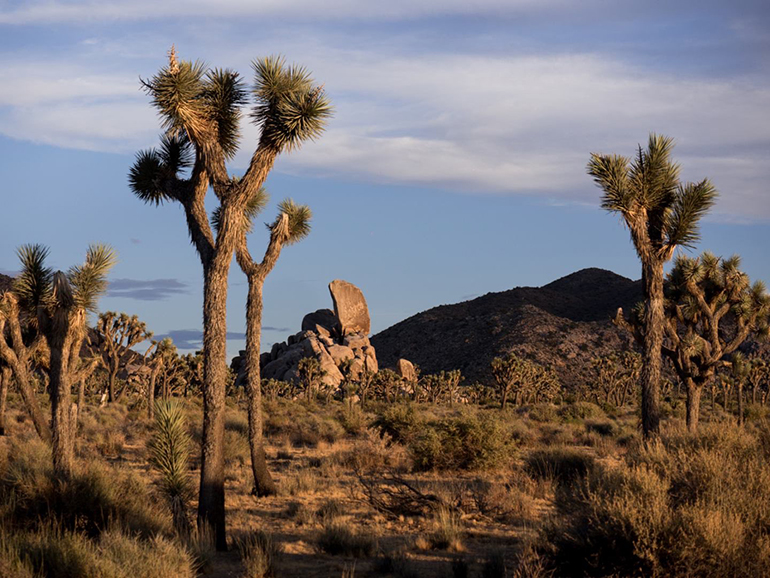
Joshua Tree National Park

Joshua Tree National Park (San Bernardino County, California) → Pioneertown (San Bernardino County, California) → Amboy (San Bernardino County, California) → Route 66Oatman (Mohave, Arizona)

Step into one of the world’s most magical desert landscapes on a journey steeped in natural beauty and historic charm. Wander among mythical rock formations and twisted Joshua trees before heading to Pioneertown. Originally built in the 1940s as a live-in Hollywood movie set, the town today is a desert enclave with artisan shops and the legendary Pappy & Harriet’s Pioneertown Palace, a restaurant and music venue that draws travelers from near and far.

Drive through the Mojave Desert to Amboy for a stop at Roy’s Motel and Café, a classic symbol of Route 66’s golden era. End your adventure in Oatman, where wild burros roam the streets of a Wild West town.

Cultures of the Southwest

Santa Fe (Santa Fe, New Mexico) → Taos Pueblo (Taos, New Mexico) → Acoma Sky City (Cibola, New Mexico) → Chaco Canyon (San Juan, New Mexico) → Mesa Verde (Montezuma, Colorado)

Trace the heritage of America’s indigenous communities across the Southwest. Begin in Santa Fe’s adobe-lined streets, then head to Taos Pueblo — a UNESCO World Heritage Site continuously inhabited for over 1,000 years. Perched atop a 360-foot mesa, Acoma Sky City offers panoramic desert views and a window into the culture and history of the Acoma people. Stargaze under the skies of Chaco Canyon, then conclude at Mesa Verde National Park, where cliff dwellings reveal the stories of Puebloans who built small villages out of the cliffs in the 13th century.

The Pacific Northwest Trail

Astoria (Clatsop, Oregon) → Olympic Peninsula (Washington) → San Juan Islands (San Juan, Washington) → North Cascades (Whatcom, Washington)

Start in Astoria, Oregon, where Victorian architecture and colorful murals invite exploration on foot. From there, follow the road through ancient forests and along the Wilderness Coast of Washington’s Olympic Peninsula. Take a ferry to San Juan Islands for orca sightings and farm-to-table dining, then venture into North Cascades National Park — an alpine wilderness marked by jagged peaks, deep valleys, and more than 300 glaciers.

Whichever road you take, the USA is a place where stories unfold in unexpected places, and every journey brings new moments of connection, discovery and wonder.

Editor’s Note

Assets can be downloaded here.


Spotlight is BusinessWorld’s sponsored section that allows advertisers to amplify their brand and connect with BusinessWorld’s audience by publishing their stories on the BusinessWorld Web site. For more information, send an email to online@bworldonline.com.

Join us on Viber at https://bit.ly/3hv6bLA to get more updates and subscribe to BusinessWorld’s titles and get exclusive content through www.bworld-x.com.

Trump moves to end crypto week legislation snag

REUTERS

 – U.S. President Donald Trump on Tuesday stepped in to broker an agreement among Republican lawmakers after a snag cast doubt on the fate of long-awaited cryptocurrency legislation that would mark a major victory for the digital assets sector.

A failed procedural vote in the House of Representatives earlier on Tuesday sent shares of crypto firms lower. But the Republican president said in a statement late on Tuesday that he was meeting in the Oval Office with 11 of 12 members of Congress needed to pass the legislation.

“After a short discussion, they have all agreed to vote tomorrow morning in favor of the Rule,” Mr. Trump said on his social media platform.

House Republicans had billed this week as “Crypto Week,” and were keen to advance numerous pieces of legislation aimed at providing clarity to the digital asset industry and long-sought legitimacy to the sector.

Several conservative Republicans on Tuesday earlier joined with Democrats in blocking a procedural vote to allow consideration of three crypto bills as part of a dispute over how the measures should be packaged and considered.

Shortly after that vote, House Speaker Mike Johnson told reporters that he planned to continue discussing the matter with members and hoped to vote on it again shortly.

Shares of crypto-related stocks including Circle Internet and Coinbase Global fell on the news of the vote but then pared losses.

The House is attempting to pass a series of crypto-related bills, most notably a bill that would establish a regulatory framework for stablecoins.

Stablecoins, a type of cryptocurrency designed to maintain a constant value, usually a 1-to-1 dollar peg, are commonly used by crypto traders to move funds between tokens. Their use has grown rapidly in recent years, and proponents say they could be used to send payments instantly.

That bill – and another the House is considering that would define when a crypto token is a commodity – would be a huge win for the crypto industry.

The House also was set to consider a bill that would prohibit the U.S. from issuing a central bank digital currency. Republicans say there is a risk this could give the government too much control over Americans’ personal finances.

That bill has not been considered in the Senate and the Federal Reserve has not indicated a desire to develop a central bank digital currency. – Reuters

Trump says Vietnam trade deal is ‘pretty well set’

REUTERS

 – U.S. President Donald Trump said on Tuesday that a trade agreement with Vietnam was nearly complete.

Mr. Trump told reporters at Joint Base Andrews near Washington that he could release details of the Vietnam trade agreement, but did not think it was necessary.

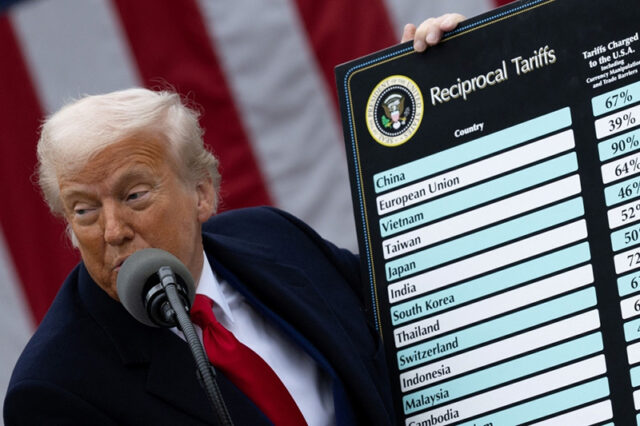
The U.S. president announced earlier this month that he had struck a preliminary trade deal with the Communist country, which would cut planned U.S. tariffs on imports from Vietnam to 20% from the 46% level he had threatened in April.

At the time, Mr. Trump also said goods that Washington deemed to be illegally transshipped through Vietnam to other countries would be subject to a 40% levy.

The agreement has not been finalized and details have not been released, leaving questions over how Washington will define an illegal transshipment and how much value Vietnam must add to imported products to avoid the 40% tariff. It also remains unclear which products would fall under Mr. Trump’s 20% tariff.

Vietnam has not confirmed the specific tariff rates, celebrating what it described as an agreement on a joint statement about a trade framework.

Asked if he planned to release details of the trade pact with Vietnam, Mr. Trump told reporters, “Well, I might. I don’t think it matters how much you release of the deal. We have a Vietnam deal, and I would say that that deal is being pretty well set.”

Vietnam has nearly tripled its exports to the United States since the start of the U.S.-China trade war in 2018, when the first Trump administration imposed wide-ranging tariffs on Beijing, pushing some manufacturers to move production south.

At the same time, Vietnam vastly expanded imports from China, with their inflow almost exactly matching the value and swings of exports to the United States, each totaling around $140 billion in 2024, data from the U.S. and Vietnam show. – Reuters

Beneath China’s resilient economy, a life of pay cuts and side hustles

STOCK PHOTO | Image by i4lying from Pixabay

 – Chinese state firm employee Zhang Jinming makes up for a 24% cut to his salary by delivering food for three hours every night after work and on weekends – and hopes he can avoid awkward encounters with colleagues.

“Being a part-time delivery person while working for a state-owned enterprise isn’t exactly considered respectable,” said Zhang, whose real estate firm pays him 4,200 yuan ($585) per month, down from 5,500 yuan.

While China has supported economic growth by keeping its ports and factories humming, the lack of real demand has hit profits, in turn squeezing workers like Zhang through wage cuts and forcing them to moonlight.

“There’s just no other way,” added the 30-year-old, who rides his scooter until 11.30 pm, making 60-70 yuan per evening. “The pay cut has put me under huge pressure. Many colleagues have resigned and I took over their workload.”

China’s economy posted robust 5.2% growth in the second quarter, showing its export-heavy model has so far withstood U.S. tariffs. But beneath the headline resilience, cracks are widening.

Contract and bill payment delays are rising, including among export champions like the autos and electronics industries and at utilities, whose owners, indebted local governments, have to run a tight shop while shoring up tariff-hit factories.

Ferocious competition for a slice of external demand, hit by global trade tensions, is crimping industrial profits, fueling factory-gate deflation even as export volumes climb. Workers bear the brunt of companies cutting costs.

Falling profits and wages shrank tax revenues, pressuring state employers like Zhang’s to cut costs as well. In pockets of the financial system, non-performing loans are surging as authorities push banks to lend more.

For the most part, the lopsided nature of growth in the world’s second-largest economy is a product of policies that favor exporters over consumers.

Economists have long urged Beijing to redirect support to domestically focused sectors, such as education and healthcare, or boost household consumption – for instance, by bolstering welfare – or risk a slowdown in the second half of the year.

Max Zenglein, Asia-Pacific senior economist at the Conference Board of Asia, describes China as a “dual-speed economy” with strong industry and weak consumption, noting the two are related.

“Some of the economic challenges including low profitability and deflationary pressure are largely driven by continued capacity expansion in the manufacturing and technology sectors,” said Mr. Zenglein.

“What’s unfolding now” in the trade war with the U.S. is “coming back home as a domestic issue.”


HIT TO INCOMES

Frank Huang, a 28-year-old teacher in Chongzuo, a city of more than 2 million people near the Vietnam border, in the indebted Guangxi region, says his school has not paid him in two-to-three months, waiting for authorities to provide the funds.

“I can only endure, I don’t dare to quit,” said Huang, who relies on parents when his 5,000 yuan paycheck doesn’t arrive. “If I were married with a mortgage, car loan and child, the pressure would be unimaginable.”

Another teacher from Linquan, a rural county of 1.5 million in eastern China, said she is only receiving her basic 3,000 yuan monthly salary. The performance-based part of her pay, usually about 16%, “has been consistently delayed.”

“After I pay for gas, parking and property management fees, what’s left isn’t enough for groceries,” said the teacher, who only gave her surname Yun for privacy reasons.

“I feel like begging,” added Ms. Yun. “If it weren’t for my parents, I would starve.”

There is no data on payment delays in the government sector. But among industrial firms, arrears have grown quickly in sectors with a strong state presence, either through industrial policy or – like in utilities – through direct ownership.

Arrears in the computer, communication and electronic equipment sector and in autos manufacturing – two priorities for China’s economic planners – rose by 16.6% and 11.2%, respectively, in the year through May, faster than the 9% average across industries. Overdue payments were up 17.1% and 11.1% in the water and gas sectors.

These figures suggest liquidity stress and are a side-effect of authorities prioritizing output over demand, said Minxiong Liao, senior economist at GlobalData.TS Lombard APAC.

“The result should be slower growth for these champion sectors,” in the future, he said.


SPENDING DEFERRED

With incomes under pressure, Beijing is struggling to meet its pledge to lift household consumption and worries are growing that persistent deflation will further damage the economy as consumers defer spending.

Huang Tingting quit her waitress job last month after business at her restaurant – and most shops nearby – plummeted in April, at the height of U.S.-China trade tensions. Responding to plunging revenues, the restaurant owner asked staff to take four unpaid leave days every month.

“I still have to pay rent and live my life,” said the 20-year-old from the eastern Jiangsu province, an export powerhouse that’s outpacing national growth, explaining why she quit.

In the past, though, she could find another restaurant job in a day or two. This time, she’s been unemployed since June. One recruiter told her a job she applied for had more than 10 other candidates.

“The job market this year is worse than last year,” said Ms. Huang. – Reuters

Trump’s UN envoy pick Waltz says US needs strong voice to counter China

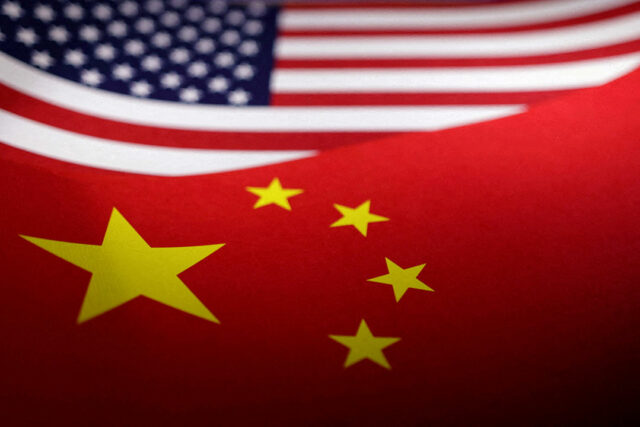
U.S. and Chinese flags are seen in this illustration taken, April 24, 2024. — REUTERS

 – The United Nations needs reform and the United States must have a strong voice to counter China, Mike Waltz, U.S. President Donald Trump‘s pick to be his U.N. envoy, said on Tuesday, adding that he is “confident we can make the U.N. great again.”

Mr. Waltz – a retired Army Green Beret and former Republican lawmaker from Florida – is one of the last major Trump nominees awaiting likely confirmation by the U.S. Senate. He appeared before the Senate Foreign Relations Committee on Tuesday as part of that process. A White House official, speaking on condition of anonymity, said the U.N. post would not be cabinet-level.

“We should have one place in the world where everyone can talk, where China, Russia, Europe, the developing world can come together and resolve conflicts” Mr. Waltz told the committee. “But after 80 years, it’s drifted from its core mission of peacemaking. We must return to the U.N.’s charter and first principles.”

His remarks largely echoed what Mr. Trump has said about the world body. U.N. Secretary-General Antonio Guterres announced in March that he was seeking ways to improve efficiency and cut costs as the U.N. turns 80 this year amid a cash crisis.

“The U.N. has ballooned to over 80 agencies with overlapping missions that waste resources and, if confirmed, I’ll push for transparency, like what we’re seeing in the Secretary-General’s UN80 reform plan calling for a 20% staff cut,” Mr. Waltz said.

He said U.N. peacekeeping plays an important role, but also needs reform.

Washington is the U.N.’s largest contributor – followed by China – accounting for 22% of the core U.N. budget and 27% of the peacekeeping budget. The U.N. has said the U.S. currently owes a total of $2.8 billion, of which $1.5 billion is for the regular budget. These payments are not voluntary.

The United States was also one of the world’s largest humanitarian aid donors, but the Trump administration has slashed billions of dollars in foreign assistance, including to U.N. agencies.


‘BLOCK AND TACKLE’

Mr. Waltz was Mr. Trump’s national security adviser until he was ousted on May 1 after he was caught up in a March scandal involving a Signal chat among top Trump national security aides. Mr. Trump then promptly nominated Waltz as his U.N. ambassador.

“The use of Signal was not only authorized, it’s still authorized, and highly recommended,” Mr. Waltz said on Tuesday. He later clarified it was not authorized for sharing classified information and that no classified information had been shared in the March Signal chat.

Mr. Waltz repeated long-held U.S. criticisms of the U.N. – that Washington pays too much at the 193-member world body, that it is anti-Israel and that China is building too much influence.

“We have to block and tackle Chinese influence,” Mr. Waltz said. “America must have a strong voice and, if confirmed, I’ll work with Secretary (of State Marco) Rubio to challenge this influence.”

Since beginning his second term in January, Mr. Trump has maintained the wary stance on multilateralism that was a hallmark of his first term between 2017 and 2021.

So far, Mr. Trump has stopped U.S. engagement with the U.N. Human Rights Council, extended a halt to funding for the Palestinian relief agency UNRWA and ordered a review of the U.N. cultural agency UNESCO. He has also announced plans to quit the Paris climate deal and the World Health Organization.

When asked about Mr. Waltz’s confirmation hearing, U.N. spokesperson Stephane Dujarric said on Tuesday: “Our message to all member states is: if you’re not fully pleased with what’s going on in this organization, engage with the other member states in this organization.” – Reuters

US National Guard unit was ‘extensively’ hacked by Salt Typhoon in 2024, memo says

PIXABAY

 – A U.S. state’s Army National Guard network was thoroughly hacked by a Chinese cyberespionage group nicknamed “Salt Typhoon,” according to a Department of Homeland Security memo.

The memo obtained by Property of the People, a national security transparency nonprofit, said the hackers “extensively compromised” the unnamed state Army National Guard’s network between March and December 2024 and exfiltrated maps and “data traffic” with counterparts’ networks in “every other US state and at least four US territories.”

The National Guard and the Department of Homeland Security’s cyber defense arm, CISA, did not immediately return messages. News of the memo was first reported by NBC News.

Salt Typhoon has emerged as one of the top concerns of American cyber defhen Coatesenders. U.S. officials allege that the hacking group is doing more than just gathering intelligence; it is prepositioning itself to paralyze U.S. critical infrastructure in case of a conflict with China. Beijing has repeatedly denied being behind the intrusions.

The memo, which said it drew on reporting from the Pentagon, said that Salt Typhoon’s success in compromising states’ Army National Guard networks nationwide “could undermine local cybersecurity efforts to protect critical infrastructure,” in part because such units are often “integrated with state fusion centers responsible for sharing threat information—including cyber threats.” – Reuters

Nvidia’s resumption of AI chips to China is part of rare earths talks, says US

The logo of technology company Nvidia is seen at its headquarters in Santa Clara, California February 11, 2015. — REUTERS/ROBERT GALBRAITH/FILE PHOTO

 – Nvidia’s planned resumption of sales of its H20 AI chips to China is part of U.S. negotiations on rare earths, Commerce Secretary Howard Lutnick said on Tuesday, and comes days after its CEO met President Donald Trump.

“We put that in the trade deal with the magnets,” Mr. Lutnick told Reuters, referring to an agreement Trump made to restart rare earth shipments to U.S. manufacturers. He did not provide additional detail.

Nvidia said late on Monday that it is filing applications with the U.S. government to resume sales to China of its H20 graphics processing unit, and has been assured by the U.S. it will get the licenses soon.

The planned resumption is a reversal of an export restriction imposed in April that is designed to keep the most advanced AI chips out of Chinese hands over national security concerns, an issue that has found rare bipartisan support. It drew swift questions and criticism from U.S. legislators on Tuesday.

The decision “would not only hand our foreign adversaries our most advanced technologies, but is also dangerously inconsistent with this Administration’s previously-stated position on export controls for China,” Democratic Representative Raja Krishnamoorthi, ranking member of the House of Representatives Select Committee on China, said in a statement.

Republican John Moolenaar, chair of that committee, said in a statement he would seek “clarification” from the Commerce Department.

“The H20 is a powerful chip that, according to our bipartisan investigation, played a significant role in the rise of PRC AI companies like DeepSeek,” Mr. Moolenaar said, referring to a Chinese startup that claims to have built AI models at a fraction of the cost paid by U.S. firms such as OpenAI. “It is crucial that the U.S. maintain its lead and keep advanced AI out of the hands of the CCP.”

Shares of Nvidia, the world’s most valuable firm, closed up 4% and were nearly unchanged in after-market trading. Nvidia had estimated that the curbs would cut its revenue by $15 billion.

Nvidia’s plan to resume sales has set off a scramble at Chinese firms to buy H20 chips, two sources told Reuters. The chips that Nvidia will resume selling are the best it can legally offer in China but lack much of the computing power of the versions for sale outside of China because of previous restrictions put in place by Trump’s first administration and then President Joe Biden’s administration.

But critically, H20 chips work with Nvidia’s software tools, which have become a de facto standard in the global AI industry.

CEO Jensen Huang, who is visiting Beijing and set to speak at an event on Wednesday, has argued that Nvidia’s leadership position could slip away if the company cannot sell to Chinese developers being courted by Huawei Technologies with chips produced in China.

The significance of the shift depends on the volume of H20 chips that the U.S. allows to be shipped to China, said Divyansh Kaushik, an AI expert at Beacon Global Strategies, a Washington-based advisory firm.

“If China is able to get a million H20 chips, it could significantly narrow, if not overtake, the U.S. lead in AI,” he said.


CHINA IS CRUCIAL

“The Chinese market is massive, dynamic, and highly innovative, and it’s also home to many AI researchers,” Mr. Huang told Chinese state broadcaster CCTV on Tuesday.

China generated $17 billion in revenue for Nvidia in the fiscal year ending January 26, or 13% of total sales, based on its latest annual report.

Internet giants ByteDance and Tencent are also in the process of submitting applications for H20 chips, the sources familiar with the matter said. Central to the process is an approved list put together by Nvidia for Chinese companies to register for potential purchases, one of the sources said.

ByteDance and Tencent did not respond to a request for comment. Nvidia declined to comment on the approved list system.

Asked at a regular foreign ministry briefing in Beijing about Nvidia’s plans to resume AI chip sales, a spokesperson said: “China is opposed to the politicization, instrumentalization and weaponization of science, technology and economic and trade issues to maliciously blockade and suppress China.”

China halted exports of rare earths in March following a trade spat with Mr. Trump that has showed some signs of easing. It dominates the market for rare earths, a group of 17 metals used in cellphones, weapons, electric vehicles, and more.

Mr. Huang’s visit is being closely watched in both China and the United States, where a bipartisan pair of senators last week sent the CEO a letter asking him to abstain from meeting companies working with military or intelligence bodies.

The senators also asked Huang to refrain from meeting with entities named on the United States’ restricted export list.

Rival AI chipmaker AMD also said the Department of Commerce would review its license applications to export its MI308 chips to China; it plans to resume those shipments when licenses are approved, it said. Its shares gained 7% in trading on Tuesday. – Reuters

Trump sets 19% tariff on Indonesia goods in latest deal

REUTERS

WASHINGTON/BRUSSELS – President Donald Trump on Tuesday said the US would impose a 19% tariff on goods from Indonesia under a new agreement with the Southeast Asian country and more deals were in the works as he continued to press for what he views as better terms with trading partners and ways to shrink a huge US trade deficit.

The pact with the relatively minor US trading partner is among the handful struck so far by the Trump administration ahead of an August 1 deadline for tariffs on most US imports to rise again. The accord came as the top US trading partner – the European Union – readied retaliatory measures should talks with Washington fail.

As that deadline approached, negotiations were under way with other nations eager to avoid more US levies beyond a baseline 10% on most goods that has been in place since April.

Trump’s roll-out of the policies has often been chaotic. His moves have upended decades of negotiated reductions in global trade barriers and roiled international financial markets and economic activity along the way.

Based on Trump tariff announcements through Sunday, Yale Budget Lab estimated the US effective average tariff rates will rise to 20.6% from between 2% and 3% before Trump’s return to the White House in January. Consumption shifts would bring the rate down to 19.7%, but it’s still the highest since 1933.

Trump outlined an Indonesia deal similar to a pact struck recently with Vietnam, with a flat tariff on exports to the US roughly double the current 10% and no levies on US exports going there. It also included a penalty rate for so-called transhipments of goods from China via Indonesia and a commitment to buy some US goods.

“They are going to pay 19% and we are going to pay nothing … we will have full access into Indonesia, and we have a couple of those deals that are going to be announced,” Trump said outside the Oval Office. Trump later announced on his Truth Social platform that Indonesia had agreed to buy $15 billion of US energy products, $4.5 billion of American farm products and 50 Boeing BA.N jets, though no time frame was specified.

TRUMP: INDIA TALKS MOVING SAME WAY
Indonesia’s total trade with the US – totalling just under $40 billion in 2024 – does not rank in the top 15, but it has been growing. US exports to Indonesia rose 3.7% last year, while imports from there were up 4.8%, leaving the US with a goods trade deficit of nearly $18 billion.

The top US import categories from Indonesia, according to US Census Bureau data from the International Trade Centre’s TradeMap tool, last year were palm oil, electronics equipment including data routers and switches, footwear, car tires, natural rubber and frozen shrimp.

Susiwijono Moegiarso, a senior official with Indonesia’s Coordinating Ministry for Economic Affairs, told Reuters in a text message: “We are preparing a joint statement between US and Indonesia that will explain the size of reciprocal tariff for Indonesia including the tariff deal, non-tariff and commercial arrangements. We will inform (the public) soon.”

Trump had threatened the country with a 32% tariff rate starting August 1 in a letter sent to its president last week. He sent similar letters to about two dozen trading partners this month, including Canada, Japan and Brazil, laying out tariff rates ranging from 20% to 50%, plus a 50% tariff on copper.

Speaking in Pittsburgh on Tuesday, Trump said he favored blanket tariffs over complicated negotiations, but his Treasury Secretary Scott Bessent and Commerce Secretary Howard Lutnick were keen to land more trade agreements.

Upon his arrival back in Washington, Trump told reporters that letters would be going out soon for many smaller countries, suggesting they would face a tariff of “a little over 10%.”

The August 1 deadline gives targeted countries time to negotiate about lower tariff rates. Some economists have also noted Trump’s pattern of backing off his tariff threats.

Since launching his tariff policy, Trump has clinched only a few deals, falling short of earlier promises to land “90 deals in 90 days.”

So far, framework agreements have been reached with the United Kingdom and Vietnam, and an interim deal has been struck with China to forestall the steepest of Trump’s tariffs while negotiations continue between Washington and Beijing.

Trump said talks with India were moving “along that same line,” adding, “We’re going to have access to India. And you have to understand, we had no access into any of these countries. Our people couldn’t go in. And now we’re getting access because of what we’re doing with the tariffs.”

EU READIES RETALIATION
The breakthrough with Indonesia came as the European Commission, which oversees trade for the EU, prepared to target 72 billion euros ($84.1 billion) worth of US goods – from Boeing BA.N aircraft and bourbon whiskey to cars – for possible tariffs if trade talks with Washington fail.

Trump is threatening a 30% tariff on imports from the EU from August 1, a level European officials say is unacceptable and would end normal trade between two of the world’s largest markets.

The list, sent to EU member states and seen by Reuters on Tuesday, pre-dated Trump’s move over the weekend to ramp up pressure on the 27-nation bloc and responded instead to US duties on cars and car parts and a 10% baseline tariff.

The package also covers chemicals, medical devices, electrical and precision equipment as well as agriculture and food products – a range of fruits and vegetables, along with wine, beer and spirits – valued at 6.35 billion euros. – Reuters

Cash remittances up 2.9% in May

Cash remittances coursed through banks increased by 2.9% to $2.658 billion in May, the Philippine central bank said. — REUTERS/DADO RUVIC/ILLUSTRATION

By Luisa Maria Jacinta C. Jocson, Senior Reporter

MONEY SENT HOME by overseas Filipino workers (OFWs) rose by an annual 2.9% in May, although the monthly haul was the lowest in 12 months, data from the Bangko Sentral ng Pilipinas (BSP) showed.

Cash remittances coursed through banks jumped by 2.9% to $2.658 billion in May from $2.583 billion in the same month a year ago, the central bank said on Tuesday.

It was also the lowest level of monthly remittances in 12 months or since May 2024.

Overseas Filipinos’ Cash Remittances

May remittance growth also slowed from the 4% pace in April, when cash remittances reached $2.664 billion.

Money sent home by land-based workers went up by 2.8% to $2.12 billion in May from $2.06 billion in the same month a year ago.

Remittances from sea-based migrant workers jumped by an annual 3.1% to $536 million in May.

“The increase in cash remittances drove an increase in personal remittances as well,” the BSP said.

Personal remittances, which include inflows in kind, rose by 3% to $2.97 billion in May from $2.88 billion in the previous year.

Broken down, remittances from workers with contracts of a year or more increased by 2.8% to $2.29 billion, while those with contracts of less than a year jumped by 3.4% to $590 million.

FIVE-MONTH PERIOD
In the first five months, cash remittances grew by 3% to $13.77 billion from $13.37 billion in the comparable year-ago period.

This as remittances sent by land-based workers climbed by 3.3% to $10.94 billion in the January-May period, while sea-based workers’ remittances edged higher by 2% to $2.82 billion.

The United States was the top source of remittances in the five-month period, accounting for 40.2% of the total.

This was followed by Singapore (7.4%), Saudi Arabia (6.4%), Japan (5%), the United Kingdom (4.6%), the United Arab Emirates (4.2%), Canada (3.3%), Qatar (2.9%) Korea (2.8%) and Taiwan (2.7%).

Personal remittances increased by 3% to $15.34 billion at end-May from $14.89 billion a year prior.

“The slower global economy amid Trump’s tariffs could have slowed down OFW remittances volume recently,” Rizal Commercial Banking Corp. Chief Economist Michael L. Ricafort said.

Jonathan L. Ravelas, a senior adviser at Reyes Tacandong & Co., likewise noted the increased uncertainty due to tariffs.

“The tariff move adds to geopolitical and trade uncertainty, which may deter foreign direct investment (FDI),” he said.

US President Donald J. Trump first announced the initial round of tariffs it planned to impose on its trading partners in April.

Earlier this month, Mr. Trump sent out notices with the updated tariff rates it plans to impose.

“The imposition of a 20% tariff on all Philippine exports to the US starting Aug. 1, 2025 by President Trump is expected to have significant and multifaceted effects on the Philippine economy,” Mr. Ravelas added.

The Philippines was hit with a 20% reciprocal tariff, higher than the 17% announced in April.

“For the coming months, protectionist policies by Mr. Trump, particularly stricter immigration rules could weigh on some OFW remittances, especially from the US,” Mr. Ricafort said.

Mr. Trump has vowed mass deportations, which he says are needed after high levels of illegal immigration under his predecessor, Reuters reported.

Mr. Trump’s recently passed “One Big Beautiful Bill” also imposes a 1% excise tax on remittance transfers from the United States to other countries, effective after Dec. 31, 2025. This was lower than earlier proposals of a 3.5% levy.

The tax was also initially aimed at non-US citizens but now applies to any remittance sender.

“Trump’s threats of higher tariffs and other America-first policies could also slow down global trade, investments, employment including some OFW jobs, and overall world economic growth, thereby could also indirectly slow down the growth in OFW remittances,” Mr. Ricafort added.

This year, the central bank is projecting remittances to grow by 2.8%.

World Bank says job reforms to drive PHL growth to nearly 7%

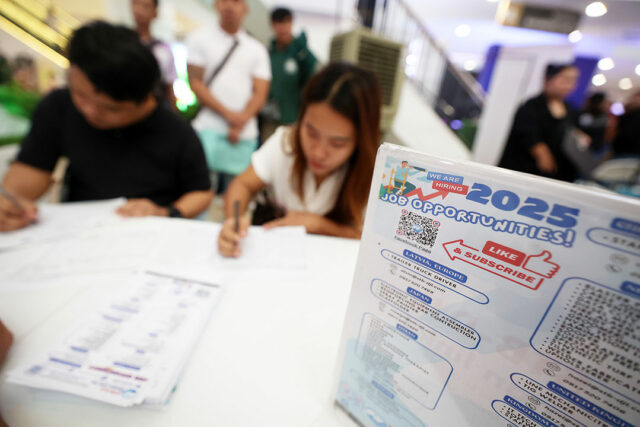
People fill out application forms at a job fair in Valenzuela City, June 27, 2025. — PHILIPPINE STAR/MIGUEL DE GUZMAN

REFORMS to enhance job creation and quality could propel Philippine economic growth to close to 7% and transform it into a middle-class economy by 2040, the World Bank said.

“To stay on a path to upper middle-income status and to realize the national ambition of a middle-class society free of poverty by 2040, the country needs a new wave of reforms. Faster, broader, deeper,” World Bank Country Director for the Philippines, Malaysia, and Brunei Zafer Mustafaoğlu said.

In its maiden launch of the Country Growth and Jobs Report for the Philippines on Tuesday, the World Bank said that it is “feasible” for economic growth to accelerate to 6.8% by 2040, along with ramping up employment and wages.

“The implementation of the set of reforms recommended in this report is estimated to increase annual gross domestic product (GDP) growth to 6.8%, create over 5.1 million additional jobs, and boost real wages by 12.9% by 2040,” according to the report.

World Bank models show the Philippines growing by an additional 1.4 percentage points (ppts) if its recommended reforms are implemented.

Broken down, economic growth could increase by 0.78 ppt annually through reforms aimed at productivity and human capital; by 0.45 ppt through deeper capital reforms; and by 0.18 ppt by boosting labor force participation.

The report has about 45 actionable recommendations, with the reforms focused on those three main pillars.

The World Bank said reforms are needed to boost project infrastructure investment, especially in connectivity.

“In an archipelagic economy like the Philippines that has spent so much in connectivity infrastructure, keeping restrictions to inter-island transport, the form of cable path restrictions, is sort of a big distortion, a big cost,” World Bank lead economist for Brunei, Malaysia, the Philippines and Thailand Gonzalo J. Varela said.

“Lifting restrictions to inter-island shipping, domestic shipping, is something that is also going to help the economy grow, and a lot of the growth happens at local levels.”

The multilateral institution also recommended policies to lower entry barriers for businesses; open domestic shipping to lower inter-island transport costs; and strengthen service delivery by local government units.

“Ensuring that local governments have the capacity to deliver the key services that they are mandated to deliver is also going to be crucial,” Mr. Varela added.

To further mobilize private capital, there is also a need to support small and medium enterprises and multinational companies linkages and deepen capital markets.

“The Philippines has received more foreign direct investment in the last few years, and we are yet to see that small and medium enterprises are connecting to these multinationals, that they are gaining from that connection as suppliers, gaining productivity,” he said.

FASTER GROWTH
With these reforms implemented, growth can further accelerate. “What it does is it brings that baseline that we had estimated at 5.4%, closer to that Philippine Development Plan target,” Mr. Varela said.

“It means that if these reforms are implemented by 2040, the Philippine economy would be 24% larger than it would have been otherwise,” he added.

The government is targeting 5.5-6.5% GDP growth this year and 6-7% from 2026 to 2028, according to latest Development Budget Coordination Committee  estimates.

Under the Philippine Development Plan, the government had placed an upper bound of 8% on economic growth targets until 2028.

“To achieve its goal of becoming a middle-class society, the Philippines needs to sustain annual growth of 6-10% for decades,” the World Bank said.

It noted that though job quality remains a concern despite an increase in the number of jobs.

“Despite impressive gains, productivity growth remains weak. Job creation has tilted heavily toward non-tradable sectors, while the tradable economy — so critical for long-term growth and innovation, is shrinking,” Mr. Mustafaoğlu said.

“Top firms are not expanding fast enough. Competition is limited and too many workers remain in low-quality, low-wage jobs.”

The latest data from the local statistics agency showed the Philippines’ unemployment rate went down to 3.9% in May from 4.1% in April, with the number of individuals in the labor force hitting an all-time high of 52.32 million.

“The middle-class society by 2040 national ambition is not a utopia. It is something that is achievable if there is a commitment, both from the public sector to double down on reforms, and from the private sector to innovate and compete,” Mr. Varela said.

Based on the World Bank’s latest income classification, the Philippines still remains a lower middle-income economy, narrowly missing the threshold to achieve upper middle-income status.

The Philippines posted a record gross national income per capita of $4,470, only $26 shy of the World Bank’s upper middle-income threshold of $4,496-$13,935.

ARTIFICIAL INTELLIGENCE
Meanwhile, the World Bank also flagged the impact of disruptive technologies such as artificial intelligence (AI).

“Some jobs in the Philippines are at risk of technology displacement. AI exposure and AI’s potential complementarity can affect employment. The Philippines has slightly fewer jobs comprising routine tasks than its peers,” according to the report.

“However, the Philippines is more exposed to AI’s displacement effect than other East Asia and the Pacific countries due to its higher engagement in cognitive services sectors, such as contact centers in the IT-BPO sector.”

Mr. Varela said these technologies are “fast moving” and so far, they have yet to see displacement in the implementation of AI.

“At the moment, that is not yet happening. The sector is looking at it very carefully, but neither in the Philippines nor in other countries that have a large share of the economy and productivity, we see that these are at the moment being displaced.”

“What AI will do is it will create new jobs, similar to what we saw with other technological changes that created some new jobs and displaced others.”

Mr. Varela said it will be crucial to have labor market institutions that facilitate the movement of people across sectors and activities.

“It’s also having the skills to do that. So, there’s an agenda on skilling and upskilling workers… science, technology, engineering, mathematics, are also going to be increasingly important with AI.”

Mr. Mustafaoğlu said that there is a “very good opportunity” for the Philippines to benefit from the shift to AI.

“It has a young population, and things are happening a lot in the case of Asia and the East Asia region. If we can take that opportunity to actually benefit from this new development of AI and integrate AI and technologies in a way that firms increase their capability… and the economy continues to benefit and grow.”

“That will also attract FDI (foreign direct investment), because when you have those capabilities, foreign firms will also come and invest here with new technologies,” he added. — Luisa Maria Jacinta C. Jocson

Marcos greenlights record P6.8-T 2026 budget

President Ferdinand R. Marcos, Jr. has approved the proposed P6.793-trillion national budget for 2026. — NOEL B. PABALATE/PPA POOL

By Chloe Mari A. Hufana, Reporter

PHILIPPINE President Ferdinand R. Marcos, Jr. on Tuesday approved the proposed P6.793-trillion national budget for 2026 that the Executive branch will submit to Congress later this month.

The national expenditure program (NEP) reflects the government’s commitment to boosting education and driving inclusive economic growth, Palace Press Officer Clarissa A. Castro told a news briefing.

The Department of Budget and Management (DBM) said in a separate statement on Tuesday that the proposed 2026 budget is higher by 7.4% from this year’s budget of P6.326 trillion.

The proposed P6.793-trillion budget is equivalent to 22% of the country’s gross domestic product (GDP). Economic managers are targeting 6-7% GDP growth for 2026 through 2028.

The 2026 NEP is expected to be submitted to Congress within 30 days after the opening of the regular session on July 28.

Budget Secretary Amenah F. Pangandaman said the details of the budget proposal are still being finalized.

Allocations for key sectors, such as education, defense, and agriculture, will increase for next year, she said in a Viber message.

“The President himself sat down with the different agencies to ensure that all our priorities are aligned towards our common goal of achieving our vision of a Bagong Pilipinas,” Ms. Pangandaman said in a separate statement.

The DBM said that it had initially received budget proposals totaling P10.101 trillion but had to cut these due to “limited fiscal space and the fiscal consolidation strategy.”

The DBM said it had considered budget submissions based on several criteria: alignment with the Philippine Development Plan 2023-2028; “shovel-readiness”; absorptive capacity of agencies; and prioritization of programs that deliver the “highest value and impact.” It also took into consideration the implementation of sustainable practices and the government’s fiscal space when evaluating the proposals.

The Marcos administration is targeting to gradually cut the fiscal deficit from 5.5% of GDP in 2025 to 4.3% by 2028.

By expense class, the DBM said the largest share of next year’s proposed budget will go to maintenance and other operating expenses at P2.639 trillion to support the implementation of government programs and projects.

Personnel services expenditures will increase by 16.8% to P1.908 trillion next year, representing 28.1% of the proposed NEP. This covers salaries, benefits, and the creation and filling of government positions.

Only P1.296 trillion will be allotted for capital outlays to fund priority infrastructure projects. Financial expenses will receive P950 billion to cover government financial obligations.

Of the total budget, National Government agencies will receive P4.305 trillion (63.4%) while local government units will get P1.35 trillion (20%). Government-owned or -controlled corporations (GOCCs) will be allocated P188.3 billion in subsidies or equity support as well as net lending assistance.

Reinielle Matt M. Erece, an economist at Oikonomia Advisory and Research, Inc., said an ample national budget can drive economic growth.

“This is as the government plays a role in empowering households through assistance and development programs as well as in developing infrastructure to support productivity,” he said via Viber.

However, Mr. Erece noted the impact of an increasing budget would depend if it increases productivity.

“If it does, we may expect debt burden to slowly go down as better economic conditions may also result in higher tax revenues if businesses and households are earning well,” he said.

“In addition, reducing red tape and improving government efficiency are ways for the government to reduce costs and needed borrowings and be able to focus more on developmental and social programs.”

Jose Enrique “Sonny” A. Africa, executive director of economic think tank IBON Foundation, said the 7.4% increase in the proposed 2026 NEP is “too small for the bold response needed in the face of the continuing domestic economic slowdown and mounting global turmoil.”

“The government has to spend more and on the right things for the stability that really matters in agriculture, Filipino industry, and social services for all those in need,” he said in a Viber chat.

“A narrow-minded avoidance of progressive taxes places the burden of fiscal consolidation on the poor and middle-class through higher consumption taxes and inadequate social services, made worse by spending skewed towards pork barrel projects, inappropriate infrastructure, and bloating debt service.”

BSP preparing new guidelines for smaller ‘digital-centric’ banks

BW FILE PHOTO

THE BANGKO SENTRAL ng Pilipinas (BSP) is planning to issue a draft circular within the year to establish guidelines to assess the “digital centricity” of smaller banks.

“We just want to provide a level playing field because there are digital banks, and there are also digital-centric conventional banks. So, we need to level the playing field, that’s why we also would require some more capital from those doing the work. So, the guidelines will also be issued for that,” BSP Deputy Governor Chuchi G. Fonacier told reporters on Tuesday.

She added the draft circular could be released within the next few months.

The circular will set the regulatory requirements for thrift banks, rural banks, and cooperative banks to be in line with those of digital banks through a “phased” implementation, she said in a speech at the Chamber of Thrift Banks (CTB) Convention 2025.

Ms. Fonacier said the circular will “ensure proportionate application of prudential requirements applicable to a digital bank, as determined by the BSP.”

“It still is for consideration by the Monetary Board, so we’re still currently drafting,” Ms. Fonacier said.

CTB President and CARD SME Bank Vice Chairperson Mary Jane A. Perreras said the thrift banking industry still needs to beef up its financial position before its members are ready to increase their capital to the same level as digital banks.

“There is a difference between digital banks and thrift banks. Digital banks can go without the brick-and-mortar branches because they are digital. So, their cost is maybe much smaller than traditional banks,” she told reporters.

Ms. Perreras said she is hopeful the industry will be able to digitalize by next year.

The minimum capital requirement for digital banks is currently set at P1 billion.

For thrift banks, they need to have at least P1 billion in capital if their head office is in Metro Manila, P500 million for those in Cebu and Davao, and P250 million for those in other areas.

Rural banks need to have a capital of P50 million to P200 million depending on the number of branches, while cooperative banks need to have a capital of P10 million.

“We have to digitalize to be able to come up with better, innovative products for our customers,” Ms. Perreras said.

Asked if most of the industry is financially ready to go digital, she said: “They are preparing. But you can’t say that they are fully prepared.”

The BSP has been closely monitoring entities operating like a digital bank or those that have a digital-centric model, even approaching some players to apply for the appropriate license after the moratorium on digital banking licenses was lifted at the start of this year.

The central bank in January lifted a three-year moratorium on digital banking licenses, allowing four more players to operate in the country from the current six.

Meanwhile, Ms. Fonacier said the central bank is still planning to release the guidelines on the ethical use of artificial intelligence (AI) in the financial sector.

It was initially supposed to be released in the first half, but Ms. Fonacier said the central bank still needs to do more research on best practices.

“This will cover key areas such as ethical AI deployment, continuous improvement in AI’s accuracy when making financial decisions, and rigorous management of algorithmic bias,” she said. — Aaron Michael C. Sy

ADVERTISEMENT
ADVERTISEMENT