Home Blog Page 1306

Diversified trade ties urged in face of Trump tariff letdown

US PRESIDENT Donald Trump delivers remarks on tariffs in the Rose Garden at the White House in Washington, DC, April 2, 2025. — REUTERS

By Chloe Mari A. Hufana, Reporter

THE PHILIPPINES should expand its trade relations with ASEAN, China, and the European Union (EU) in response to the 20% tariff imposed by the US, regardless of the outcome of President Ferdinand R. Marcos, Jr.’s visit to Washington next week, an academic said.

Josue Raphael J. Cortez, who lectures on diplomacy at the College of St. Benilde, said the Philippines needs to prepare to trade with alternative partners if negotiations with the US falter.

The new tariff is higher than the 17% rate initially assigned to the Philippines in early April.

“Should ASEAN members fail to achieve their aim to lower the tariffs, bolstering trade ties with their neighbors would be the way to go,” he said via Messenger chat. “It is high time that the bloc members strengthen their trading with one another because trade has been stagnant for the longest time at roughly 20-30%.”

Philippine exporters are not expected to be competitive at the 20% tariff, while the narrower differential relative to export competitors also weakens the case for relocating factories here.

Ahead of the Washington meeting, Mr. Cortez said Manila must prepare fallback options if talks fail to result in a tariff rollback.

China remains the Philippines’ largest trading partner, with the US coming in third, but the territorial dispute with Beijing complicates the prospect of deeper cooperation.

“Further deepening our economic ties with it can be a boon or a bane for us,” Mr. Cortez said.

The South China Sea remains a source of friction with China, with ties between Beijing and Manila at their worst in years in the face of frequent ship-to-ship confrontations in the Philippine exclusive economic zone.

The tariff uncertainty highlights the urgency of bringing ASEAN economies deeper into their integration project.

“It is high time that ASEAN members once again strengthen trading with one another, especially if they fail to achieve their aim of lowering tariffs with external partners,” Mr. Cortez said.

President Donald J. Trump imposed fresh tariffs on key members of the 10-nation bloc, with Vietnam managing to lower its rate to 20% from 46% in April.

Mr. Cortez also pointed to the EU as a potential alternative economic partner should negotiations with the US turn sour. The EU is the Philippines’ fourth-largest trading partner and a major source of foreign direct investment.

“Given that we are aligned with it both politically and economically, it will also be a good opportunity for us to further solidify our relationship,” he added.

Successful negotiations with Washington this month would bolster Mr. Marcos’ diplomatic standing ahead of his State of the Nation Address later this month, according to Mr. Cortez.

“It will not simply show how influential he is as the chief architect of Philippine foreign policy. It may also reflect his regime’s commitment to international norms and standards,” he said.

A successful negotiation with Washington may signal that Manila is a viable partner for open markets, willing to adjust and adapt to changing times, he noted.

“Despite nuanced views, with some arguing that we are heavily reliant on Washington, we still ascertain as a country that should we find something debilitating to our interests, we will not hesitate to utilize all the possible means for us to renegotiate something for ourselves,” he added.

According to a Reuters report last week, Foreign Affairs Secretary Ma. Theresa P. Lazaro confirmed the first meeting between the two presidents.

Ms. Lazaro told Reuters the fresh tariffs will be discussed, among others, with a Philippine delegation bound for Washington this week to negotiate.

A White House official earlier told Reuters the meeting was set for July 22. Philippine officials have announced the dates for the Marcos visit as July 20-22.

The US goods trade deficit with the Philippines widened to $4.9 billion in 2024, a 21.8% increase from 2023.
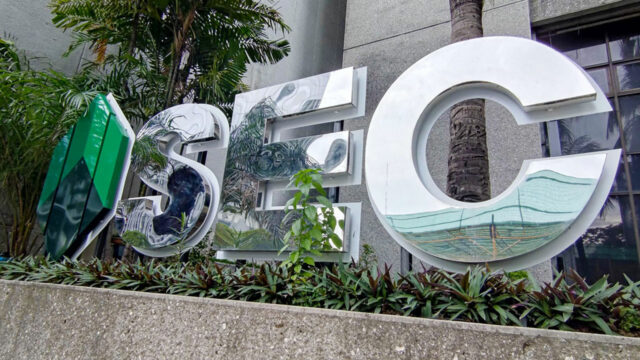

SEC affirms ‘deemed approved’ status of applications if processing timelines missed

BW FILE PHOTO

THE Securities and Exchange Commission (SEC) said it affirmed the “deemed approved” status of applications if the commission misses the processing timelines set for such transactions.

In Memorandum Circular (MC) No. 7, issued on July 10, the SEC said in the absence of written notice of delay or deficiency, pending applications or requests for a license, permit, certification, accreditation, or authorization will be considered approved if the commission fails to act within the prescribed period.

“This is provided that all required documents were submitted based on the appropriate provided checklist for the transaction,” according to the MC.

The SEC’s citizen’s charter sets a timeline of three working days for simple transactions or routine applications involving minimal discretion. Complex transactions or those that need evaluation or coordination have a processing deadline of seven working days. 

Transactions deemed “highly technical” or those that involve financial or legal review or multiple clearances should be processed within 20 working days.

Applications governed by a special law should be processed within the timeline specified in the law.

The citizen’s charter conforms to the timelines set in the Ease of Doing Business Act or Republic Act No. 11032.

“The processing time shall be reckoned from the submission of complete documentary requirements,” according to the MC.

“All departments and offices of the commission shall ensure that processes and requirements are necessary, consistent, and simplified,” the SEC said.

“Piecemeal document requests and comments shall not be tolerated, and every action shall be in line with the commitment to both compliance and convenience for stakeholders,” it added.

Earlier this month, President Ferdinand R. Marcos, Jr. directed the SEC to streamline its procedures, remove bureaucratic bottlenecks, and reduce transaction costs within its control to support the implementation of the Capital Markets Efficiency Promotion Act.

One of the law’s provisions is the reduction of the stock transaction tax to 0.1% from the previous 0.6% to boost stock market activity. — Revin Mikhael D. Ochave

GOCC subsidies down nearly 19% in May

PSALM

SUBSIDIES provided to government-owned and -controlled corporations (GOCCs) fell 18.73% year on year in May to P7.92 billion, the Bureau of the Treasury (BTr) said.

The Treasury reported that month on month, May subsidies dropped 45.57% from April.

The National Government (NG) extends subsidies to GOCCs to help fund operational expenses not covered by their revenue.

In May, the National Irrigation Administration (NIA) topped the subsidy list with P3.54 billion or 44.72% of the total.

The National Electrification Administration received P1.25 billion and National Food Authority (NFA) P750 million.

The Philippine Fisheries Development Authority was granted P724 million in subsidies in May. It did not receive subsidies in the previous month.

State-run firms on the subsidy list included the Philippine Heart Center (P385 million), the Sugar Regulatory Administration (P208 million), the Philippine Coconut Authority (P170 million), the Philippine Rice Research Institute (P133 million), the National Kidney and Transplant Institute (P124 million), and the Philippine Children’s Medical Center (P120 million).

Other GOCCs obtaining subsidies exceeding P50 million include the Development Academy of the Philippines (P77 million), the Light Rail Transit Authority (P74 million), the Cultural Center of the Philippines (P60 million), the Lung Center of the Philippines (P59 million), the National Dairy Authority (P58 million), the Philippine Institute for Development Studies (P44 million), the Center for International Trade Expositions and Missions (P27 million) and the Philippine Institute of Traditional and Alternative Health Care (P20 million).

Those receiving less than P20 million were the People’s Television Network, Inc. (P18 million), the Metropolitan Waterworks and Sewerage System (P14 million), the Aurora Pacific Economic Zone and Freeport Authority (P10 million), the Philippine Tax Academy (P10 million), the Philippine Center for Economic Development (P9 million), and the Subic Bay Metropolitan Authority (P8 million).

The Southern Philippines Development Authority, The Tourism Infrastructure & Enterprise Zone Authority, and the Zamboanga City Special Economic Zone Authority all received P7 million in May. 

Receiving no subsidies were the Land Bank of the Philippines, the Small Business Corp., the National Housing Authority, the National Power Corp., the Philippine National Railways, the Bases Conversion Development Authority, the Intercontinental Broadcasting Corp.-13, the Philippine Crop Insurance Corp., the Power Sector Assets and Liabilities Management Corp. (PSALM), and the Tourism Promotions Board.

“This could be part of the fiscal reform measures to (limit) subsidies to GOCCs (to) priority and mission-critical items for economic growth and development,” Rizal Commercial Banking Corp. Chief Economist Michael L. Ricafort said over the weekend.

In order to plug the budget deficit, profitable state-run firms with surpluses have been requested to remit more dividends, he said.

As of May 15, the Department of Finance had collected P76 billion in GOCC dividends.

In the first five months, the budget deficit widened 29.41% year on year to P523.9 billion, as the government accelerated spending on infrastructure and social programs.

In the first five months, GOCC subsidies hit P45.05 billion, down 21.03% from a year earlier.

The NIA was the top recipient in the five months with P15.34 billion. This was followed by PSALM (P8 billion) and the NFA (P3.75 billion).

In a separate report, PIDS, the government think tank, urged the government to repurpose the NIA’s idle irrigation water rights for broader public use, including household supply and other municipal needs.

PIDS reported that more than 1.3 million liters per second of irrigation water, intended for farmland — now goes largely unused as many agricultural areas have been converted into residential and commercial communities. — Aubrey Rose A. Inosante

BIR, LANDBANK offer easier foreign DSP VAT payments

REUTERS

THE Bureau of Internal Revenue (BIR) and the Land Bank of the Philippines (LANDBANK) said they signed an agreement to streamline the payment of value-added tax (VAT) by foreign digital service providers (DSPs).

“This Memorandum of Agreement (MoA) outlines the agreement between two government agencies to collaborate in the collection of Value-Added Tax on Digital Services (VDS) through a dedicated portal,” the BIR said in a statement over the weekend.

The MoA was signed on July 8.

The BIR previously extended the registration of all non-resident digital service providers to July 1 due to the unavailability of the VDS portal and the online registration and update system.

President Ferdinand R. Marcos, Jr. signed the law imposing VAT on DSPs in October.

“LANDBANK will serve as the solution provider for the VDS portal to establish a platform where foreign DSPs can file and pay their VAT,” the BIR said.

As of the end of May, BIR collections rose 13.8% to P1.35 trillion.

The Department of Finance has said that the government will generate P102.12 billion in revenue from the VAT on DSPs between 2025 and 2028. — Aubrey Rose A. Inosante

Farmers wary of tariff concessions to US

REUTERS

By Kyle Aristophere T. Atienza, Reporter

FARMERS said any tariff concessions extended to the US on agricultural goods will favor “privileged importers” while harming workers and the environment.

“We reject any response that leads to a race to the bottom — slashing tariffs on key agricultural commodities, weakening labor protections, or compromising environmental standards,” Samahang Industriya ng Agrikultura spokesman Jayson H. Cainglet said via Viber.

“Trade policy must be shaped by the national interest, not by external pressure or short-term market gains of a few privileged importers,” it said.

Philippine officials are set to fly to the US this week for negotiations to convince President Donald J. Trump not to impose a 20% tariff on imports from the Philippine exports starting Aug. 1.

Secretary Frederick Go, the President’s adviser on investment, said last week that  the Philippines is pursuing a bilateral deal with the US, up to and including a free trade agreement.

Mr. Cainglet noted that negotiators from the Philippines have failed to consult farmers.

“We strongly caution against rushing into such a deal without considering its broader implications for our domestic economy,” he said.

The proposed 20% US tariff rate for Philippine goods was higher than the 17% rate announced by Mr. Trump in April.

At that time, the Department of Agriculture (DA) said it was diversifying the markets for its agriculture exports in preparation for higher US tariffs.

In a July 7 statement, the DA noted that “international market access is expanding” for Philippine farm goods.

“Durian, mangoes, and avocados have secured new export approvals, while tamban (a type of sardine) has been officially recognized by the EU Codex, paving the way for broader sardine exports.”

The Philippines charges a 34% tariff on US goods. Its trade surplus with US amounted to $4.9 billion in 2024.

Mr. Cainglet said Philippine exports that will be affected the most by the new US tariff rate are semi-processed goods like coconut oil, desiccated coconut, canned pineapple, and coconut water.

The Philippine Coconut Authority (PCA) said in a statement on Sunday that it met on July 8 with chief executives of leading coconut processing firms, who “stressed the importance of continued negotiations with the US to reduce tariff barriers.”

“Major processors pledged to back PCA’s replanting initiatives, assuring international buyers that the Philippines can maintain a stable supply of high-quality coconut products,” it said.

While global demand for coconut products “continues to grow,” climate change and international trade regulations “present new challenges for producers,” it added.

“A unified strategy is key to protect farmer livelihoods and maintain the country’s dominant market position.”

Mr. Cainglet urged the government to prioritize the welfare of producers over that of importers and traders in its negotiations with the US.

“The US tariff should be viewed as a signal of how the US is protecting its own farmers, manufacturers, and domestic markets,” he said.

“Tariffs, when used strategically, can serve as essential tools to support local agricultural production, promote industrial growth, protect jobs, and preserve rural livelihoods.”

PCCI calls for sanctions on spot market defaulters

BW FILE PHOTO

THE Philippine Chamber of Commerce and Industry (PCCI) is calling on the Energy Regulatory Commission (ERC) and the Independent Electricity Market Operator of the Philippines (IEMOP) to hold to account parties defaulting on spot market transactions.

According to the business group, the costs resulting from Wholesale Electricity Spot Market (WESM) members defaulting on payments are being passed on to consumers through higher electricity prices while imposing burdens on compliant participants.

“These defaults distort market signals and expose law-abiding market players to significant financial risk,” it said.

“Imposing the burden on compliant WESM members effectively penalizes those who fulfill their financial obligations while relieving delinquent members of their responsibility,” it added.

Citing WESM rules, the PCCI said IEMOP has the authority to suspend and deregister defaulting members if their financial obligations remain unfulfilled after receiving default and suspension notices.

“IEMOP should implement a policy framework that ensures defaulters are held accountable and that compliant members are protected from bearing the cost of others’ failures,” PCCI said.

The group also pushed for greater transparency in billing systems of retail electricity suppliers (RES), particularly on WESM-related charges for contestable consumers.

“The group proposed that electricity bills issued by RES providers clearly itemize WESM charges — including energy transactions, line rentals, feed-in tariff components, and net settlement surplus allocations,” the PCCI said.

“This would provide contestable customers — now encompassing a wider base under the expanded Retail Competition and Open Access (RCOA) — with a better understanding of how charges are computed,” it added.

According to the group, the transparency will help contestable customers make informed decisions while promoting greater competition within the energy sector.

“As the energy market continues to evolve … fair enforcement of rules and transparent billing practices are essential to building a more accountable and efficient power sector that benefits both suppliers and consumers,” it added. — Justine Irish D. Tabile

Malampaya gas exploration program fourth phase seen completed this year

BW FILE PHOTO

THE Department of Energy (DoE) said the Malampaya Phase 4 drilling program is expected to be completed within the year to determine the extent of the remaining gas resources in the field.

“Within the year, we will know if there is any resource there,” Energy Secretary Sharon S. Garin said in a briefing last week.

Ms. Garin said that the drilling is on track and “very positive.”

Demujin F. Antiporda, assistant director of the DoE’s Energy Resource Development Bureau, said drilling at Camago well — one of the three sites being evaluated in Phase 4 — is expected to be conclude by the end of July or early August.

“We have two development wells ongoing, to be followed by one exploration,” he said.

Phase 4, part of the Malampaya Deep Water Gas-to-Power Project, covers the Camago and Malampaya East production wells and the Bagong Pag-asa exploration well. The project aims to extend the life of the Malampaya gas field, which supplies about 20% of Luzon’s power needs.

The project is operated by the Malampaya consortium, which is composed of Prime Energy Resources Development B.V., UC38 LLC, Prime Oil & Gas, Inc., and state-owned PNOC Exploration Corp.

“It’s a gamble for the country. But we’re very hopeful because all of the geologic studies show that there is potential in those areas,” Ms. Garin said.

Last month, the DoE announced the arrival of the seventh-generation Drillship Noble Viking at the Bagong Pag-asa site off Palawan, with first gas, if any, expected by the fourth quarter of 2026.

In October, the Malampaya Phase 4 was certified as an energy project of national significance, making it eligible for expedited permit processing. — Sheldeen Joy Talavera

Transforming the role of accountants

IN BRIEF:

Accountants are transitioning from traditional roles to strategic partners within organizations, offering insights into business strategy and risk management.

• The demand for specialized skills is on the rise, particularly in areas such as environmental, social, and governance (ESG) reporting and data analytics, requiring strong communication and relationship-building abilities.

• Artificial intelligence (AI) and digital technologies are automating routine tasks, enabling accountants to focus on higher-value activities and enhancing their long-term career prospects.

The accountancy profession is undergoing a significant transformation. A recent report from the Institute of Singapore Chartered Accountants (ISCA) emphasizes that various factors, including shifts in the business landscape, technological advancements, and an expanding scope of responsibilities for accounting professionals, have intensified the need for the profession to adapt and innovate. As the landscape evolves, accountants must embrace new technologies and skill sets to remain relevant and valuable in their organizations. This transformation is not merely a reaction to change; it is an opportunity for accountants to proactively shape the future of their profession.

ACCOUNTANTS AS STRATEGIC PARTNERS
Gone are the days when accountants were merely viewed as number crunchers. Today, finance professionals play a crucial role in nearly every aspect of an organization. This unique position allows them to gain a comprehensive understanding of the company’s financial health and overall performance.

Accountants and finance leaders are increasingly recognized as trusted stewards of financial integrity and strategic advisors to management and the board. They provide essential insights into business strategy, risk management, and performance enhancement, a trend that is expected to continue growing.

THE NECESSITY FOR SPECIALIZED SKILLS
As the role of accountants expands, so does the demand for specialized skills. The complexity of regulations and compliance requirements has surged, requiring accountants to stay informed about evolving international accounting standards, tax regulations, and financial and sustainability reporting obligations. The growing emphasis on transparent and credible environmental, social, and governance (ESG) disclosures further highlights this need. Accountants must be skilled at translating intricate financial and non-financial data into clear, accessible language for a diverse range of stakeholders.

Moreover, there is an increasing expectation for integrated services, prompting accountants to extend their expertise beyond traditional accounting and tax functions. They must cultivate strong relationships with stakeholders to understand their unique challenges and deliver tailored solutions.

For example, accountants will need a solid understanding of cybersecurity principles to safeguard sensitive financial information and ensure compliance with data protection regulations. Familiarity with cloud computing and automation tools further enhances their ability to work efficiently and accurately in a digital landscape. Accountants are also increasingly required to possess knowledge in ESG reporting, enabling them to prepare and analyze reports that comply with global standards. They must also understand sustainable finance principles, assessing the financial implications of various sustainability initiatives.

A strong grasp of economic analysis is likewise crucial, as it helps them interpret regulatory compliance, economic indicators and trends that inform financial decision-making and strategic planning. In risk management, accountants must be adept at identifying, analyzing, and mitigating financial and operational risks within their organizations. They need to implement effective compliance risk management frameworks to control regulatory risks.

To meet these expectations, accountants are leveraging big data and analytics tools to provide insights and predictive analyses. Techniques in data visualization are already enhancing the communication of complex financial information. To navigate these evolving demands, soft skills such as effective communication, digital literacy, and emotional intelligence are becoming increasingly valuable.

EMBRACING AI FOR ENHANCED PRODUCTIVITY
For years, accountants have been encouraged to adopt digital technologies to alleviate the burden of repetitive tasks. The rise of artificial intelligence (AI), particularly generative AI (GenAI) and agentic AI, is revolutionizing the profession. Routine activities like data entry, reconciliation, and reporting are being automated, allowing accountants to focus on higher-value tasks and strategic advisory roles that facilitate informed decision-making.

However, investing in technology is only part of the solution. A human-centric approach is essential for successful transformation. Technology investments must be complemented by a focus on people development. Beyond merely boosting productivity, AI investments are crucial for enriching the experience for accounting professionals, supporting long-term career growth.

CREATING NEW CAREER TRACKS
Today’s younger generation seeks diverse experiences before committing to long-term career paths. Consequently, the structure of accountancy careers must be reimagined to retain their appeal.

In response, SGV has the SGV Academy program, which is designed to close the gap between academic learning and industry practice and needs. The SGV Academy offers a suite of initiatives that include educator development, part-time teaching by SGV professionals, guest lectures, collaborative teaching, interactive workshops, and student internships. The firm collaborates with various universities to enhance curricula with industry insights and provides students with relevant industry exposure. This collaboration often includes guest lectures, workshops, and joint research initiatives, enriching the educational experience for accountancy students.

As the profession continues to evolve, lifelong learning becomes imperative for accountants. Every stakeholder in the ecosystem (individuals, employers, professional bodies, and government) has a role to play. Businesses, often regarded as the “schools of tomorrow,” should invest in professional development programs that enhance both the technical and soft skills of their accountants.

EMBRACING TRANSFORMATION
The evolution of the accountancy profession is not just a response to external pressures; it is an opportunity for accountants to redefine their roles and enhance their value within organizations. By embracing specialized skills, leveraging AI, and fostering new career tracks, accountants can position themselves as indispensable strategic partners in the business landscape. This proactive approach will ensure the profession’s relevance and attract the next generation of talent, paving the way for a dynamic and resilient future in accountancy.

This article is for general information only and is not a substitute for professional advice where the facts and circumstances warrant. The views and opinions expressed above are those of the author and do not necessarily represent the views of SGV & Co.


Cyril Jasmin B. Valencia is the assurance leader of SGV & Co.

Japan’s destroyer transfer to boost PHL’s aging naval fleet, analysts say

DEFENSE SECRETARY Gilberto C. Teodoro, Jr. and his Japanese counterpart Gen Nakatani tackle regional security issues during the latter’s visit to Manila. — DEPARTMENT OF NATIONAL DEFENSE OFFICIAL FACEBOOK PAGE

By Kenneth Christiane L. Basilio, Reporter

JAPAN’S plan to transfer Abukuma-class destroyer escorts to the Philippines could enhance Manila’s coastal patrol and maritime defense capabilities, analysts said at the weekend, underscoring the country’s efforts to counter China’s growing assertiveness in the South China Sea.

The proposed handover, first reported by Japanese newspaper Yomiuri Shimbun, involves 1980s-era destroyer ships equipped with anti-ship warfare systems. Security analysts said the vessels, despite their age, would be a valuable addition to the Philippines’ aging and limited naval fleet, providing a much-needed upgrade in maritime deterrence and patrol operations.

“These ships bring credible anti-ship missiles, torpedo launchers and modern sensors, which will improve the Philippines’ ability to deter or respond to China’s naval activity,” Rocio Salle Gatdula, a defense economist studying security at Georgetown University, said in a Facebook Messenger chat.

The transfer is viewed as part of broader efforts by Japan and the Philippines to enhance regional maritime security cooperation amid heightened tensions in the South China Sea, where Beijing continues to assert expansive claims. China’s so-called nine-dash line overlaps with the Philippines’ exclusive economic zone (EEZ), as well as the EEZs of Vietnam, Malaysia, and other neighbors.

In 2016, a United Nations-backed arbitral tribunal ruled that China’s sweeping claims had no legal basis — a decision Beijing refuses to recognize. Since then, Chinese coast guard and naval vessels have repeatedly entered waters claimed by the Philippines, drawing protests from Manila.

Like the Philippines, Japan has its own maritime dispute with China over the Senkaku Islands in the East China Sea. Analysts say both nations face a common challenge in pushing back against China’s expanding maritime presence.

Sherwin E. Ona, a security analyst and associate professor at De La Salle University, said accepting the destroyers could strengthen the Philippines’ ability to monitor and control activity within its EEZ.

“The transfer will have a significant impact on the Armed Forces of the Philippines’ anti-access/area denial capabilities and strengthen the deterrence posture of the country,” he said in a Viber message. “These destroyer escorts… are smaller ships that can be employed for coastal patrols or littoral missions. These are perfect for our EEZ.”

At about 109 meters in length, the Abukuma-class destroyers are comparable in size to the Philippine Navy’s BRP Miguel Malvar, which measures 118 meters. Analysts say these vessels would expand the country’s capacity for surface warfare and anti-submarine missions.

“The Abukuma-class destroyer escorts would be a substantial expansion and capability upgrade for the Philippine’s small surface fleet,” Raymond M. Powell, a fellow at Stanford University’s Gordian Knot Center for National Security Innovation, said via Messenger chat.

The Philippine Navy operates a fleet composed mostly of hand-me-down ships from the US and UK, many of which are aging and lack advanced weaponry.

“The Philippines has few ships with modern missile and anti-ship warfare capabilities… Many of its current vessels are outdated or lightly armed,” Ms. Gatdula said, adding that the Japanese ships would add critical versatility.

Mr. Ona noted that the destroyers would complement the Philippines’ upcoming Rajah Sulayman-class offshore patrol vessels, six of which are being built by South Korea’s HD Hyundai Heavy Industries under a P30-billion contract. Deliveries are expected to begin next year.

“The Philippine Navy has to keep accepting materiel capability that would upgrade its arsenal,” Chester B. Cabalza, founding president of the International Development and Security Cooperation think tank, said in a Messenger chat. “China has been pumping its own navy by the numbers. Countering it by quantity and strategy are obligatory for Japan and the Philippines.”

However, analysts warned that not all weapon systems on the Japanese ships may be included in the transfer due to Japan’s strict arms export regulations.

“The Philippines should expect the exclusion of some missiles, advanced sensors, or electronic warfare systems, depending on what the Japanese government’s decisions and the specific export framework agreed upon,” Ms. Gatdula said.

To maximize the value of the ships, she said the Philippine Navy could retrofit them with upgraded communication systems, torpedoes and close-in weapon systems to enhance combat performance and interoperability with allies.

Mr. Powell, meanwhile, cautioned that the integration of the Japanese ships could present logistical and operational challenges for the Philippine Navy.

“The navy would need to rapidly absorb an entirely new class of surface combatant with very different weapon systems than it has operated before,” he said. “More capital ships will require more trained sailors and technicians, more port facilities and more money.”

“That means a real commitment not just from the navy but from the entire government to prioritize a major naval expansion,” he added.

The Philippine Navy is sending a six-member inspection team to Japan in August, including officers for weapon systems, ship maintenance and financial evaluation, according to Philippine Navy spokesman Captain John Percie Alcos.

The destroyers would become part of a broader P2-trillion ($35 billion) military modernization program, which aims to improve the Philippines’ defense posture over the next decade. The plan includes acquiring new warships, aircraft and missile systems amid tensions with China.

As part of this strategy, the government is also looking to procure multi-role combat jets to strengthen its air defense capabilities.

“The multi-role fighter program provides the country with credible deterrence plus the ability for interdiction, strike and air defense missions,” Mr. Ona said. “With its capability to intercept and challenge airborne intruders, it is seen as the backbone of the country’s air defense identification zone.”

Mr. Cabalza said the Philippines should develop a robust air defense network to complement its naval expansion.

“Since the country has the longest coastlines in Asia, it has to build a network of visible air power around the maritime nation to patrol its vast maritime domains to its identified air defense zones,” he said.

Corruption, inflation still top worries under Marcos

PHILIPPINE STAR/RYAN BALDEMOR

FILIPINOS continue to view corruption, economic management and inflation as the most urgent issues that President Ferdinand R. Marcos, Jr. must address, according to the latest survey by research firm Publicus Asia.

The survey results, released on Sunday, showed that 21% of respondents cited corruption as their top concern — keeping its lead for the fourth straight quarter since the third quarter of 2024.

Concerns about the economy and inflation followed at 11% each, while poverty ranked next at 9%. Education and illegal drugs were tied at 7%, registering as the least urgent issues for most respondents.

“The latest survey underscores the public’s continuing demand for economic relief, anti-corruption reforms and opportunities, while also revealing nuanced concerns shaped by region, age, and socio-economic status,” Publicus said in a statement.

The survey results suggest that while national issues remain broadly consistent, regional variations persist. For example, inflation was a more urgent concern in Metro Manila, while poverty was more pressing in North-Central Luzon, the Visayas, and among young, unemployed and low-income Filipinos.

The Philippine Statistics Authority (PSA) earlier reported that inflation in June rose slightly to 1.4% from 1.3% in May, though slower than 3.7% a year earlier. The latest figure fell within the central bank’s forecast of 1.1% to 1.9%.

In Mindanao, the illegal drug problem emerged as the second-most pressing issue, signaling that security concerns remain high in the region despite waning national attention.

“This shift may be attributed to the waning media attention on the ongoing investigations into extrajudicial killings linked to the Duterte administration, which likely influenced public focus,” Publicus noted.

Former President Rodrigo R. Duterte, who hails from Davao City, is detained in The Hague, Netherlands, for alleged crimes against in connection to his deadly drug war during his time as mayor and president. Human rights groups have said as many as 30,000 mostly poor Filipinos died.

At the household level, job scarcity and affordability were key issues. Fifteen percent of respondents identified rising prices as their primary concern, while 15% highlighted job scarcity, particularly among the youth.

Despite this, PSA data showed some improvements in the labor market. The unemployment rate fell to 3.9% in May from 4.1% in April, with the number of jobless Filipinos dropping to 2.03 million, down from 2.06 million in April and 2.11 million in May 2024. The unemployment rate averaged 4% from January to May 2025, unchanged from the same period last year.

Among employed respondents, 13% expressed concerns over job insecurity, while fear of crime was more common among those in their 50s (16%).

The findings come just weeks ahead of Mr. Marcos’s fourth State of the Nation Address on July 28, as he seeks to define his administration’s legacy midway through his term.

The survey was conducted from June 27 to 30 among 1,500 registered voters nationwide. — Chloe Mari A. Hufana

Senator-judges urged to stay impartial during Sara’s trial

VICE-PRESIDENT Sara Duterte-Carpio — OFFICE OF THE VICE PRESIDENT

A NEWLY elected senator on Sunday called on fellow members of the Senate to uphold impartiality as senator-judges in the upcoming impeachment trial of Vice-President Sara Duterte-Carpio.

“A gentle caution to senator-judges of the impeachment court — we should leave the filing of all motions and pleadings to the prosecution and defense teams,” Senator Panfilo “Ping” M. Lacson said in a statement.

He said the sole responsibility of senator-judges is to listen to the arguments presented by both sides before rendering a decision.

“Senator-judges should behave and speak like judges — be impartial, speak only to clarify statements from the prosecution and defense, and not express personal opinions on the case since the public will observe their demeanor during the trial,” he added.

The Senate is expected to reconvene as an impeachment court on July 29, a day after the official start of the 20th Congress. A new roster of senator-judges will be sworn in on the same day.

The call for neutrality comes after Senator Ronald “Bato” M. Dela Rosa, a known Duterte ally, said he intends to raise a motion questioning whether the Senate of the 20th Congress is bound by actions taken during the 19th Congress.

Last week, he said the first motion he would raise is to determine whether or not the Senate of the 20th Congress is willing to be bound by the actions of the previous Senate.

Last month, Mr. Dela Rosa also moved to dismiss the impeachment case, but the charges were returned to the House of Representatives to certify compliance with constitutional requirements before being resubmitted to the Senate.

Mr. Lacson reiterated that only the defense panel — not a senator-judge — should file such motions.

On June 30, Vice-President Duterte’s legal team asked the Senate to drop the complaint on grounds that it violates the constitutional ban on multiple impeachment proceedings.

Ms. Duterte, who is widely seen as a potential presidential contender in 2028, faces accusations of secret fund misuse, unexplained wealth, destabilization and plotting the assassination of President Ferdinand R. Marcos, Jr., his family, and the Speaker. She has denied all allegations.

The impeachment complaint was filed in February with the backing of more than 200 lawmakers — exceeding the one-third threshold required to transmit the charges to the Senate. — Adrian H. Halili

PHL told to enforce stricter rules for Filipino seafarers

STOCK PHOTO | Image by iliastefanidis30 from Pixabay

By Adrian H. Halili, Reporter

THE PHILIPPINES should consider enforcing stiffer penalties on ship owners with Filipino crew members that sail through high-risk areas, analysts said, following consecutive attacks of Houthi rebels on two separate ships in the Red Sea last week.

“The Philippine government, to ensure that the interests of Filipino seafarers are protected and promoted, should impose stricter sanctions on shipping companies,” Josue Raphael J. Cortez, a diplomacy lecturer at De La Salle-College of St. Benilde said in a Messenger chat.

He added that the Philippines could also work with its partners in the region to explore possible shared practices to equip seafarers with skills in managing during times of crisis.

“A layer of training requirements must be imposed concerning how they can protect themselves should such an event transpire,” Mr. Cortez said.

Last week, the Department of Migrant Workers (DMW) said that Houthi rebels in small boats attacked two bulk carriers — the MV Magic Seas and the MV Eternity C — carrying Filipino seafarers sailing through the Red Sea near Yemen.

Labor leader and Federation of Free Workers (FFW) President Jose Sonny G. Matula called on the government to impose stricter employment controls on shipping companies that send Filipino seafarers into active war zones without adequate protection.

Last week, the DMW had released Advisory No. 21, calling all ship owners with Filipino crew members to avoid or divert their routes from “high risk and war like areas, particularly the Red Sea and the Gulf of Aden.”

“There must also be strong diplomatic efforts to secure the release of hostages and ensure accountability from all parties,” Mr. Matula said in a Viber message.

He added that the government should provide long-term support for the affected seafarers and their families, including financial aid, trauma counseling, and legal assistance.

“The FFW holds that Filipino seafarer’s power global trade. Their lives must not be treated as disposable,” he said.

There is little the Philippine government could do except banning the deployment of Filipino seafarers in the area, Benjamin Velasco, assistant professor at the UP Diliman School of Labor and Industrial Relations.

“Ships of course can avoid the Red Sea but that is beyond the control of the Philippine government,” Mr. Velasco said via Facebook chat.

In a statement on Sunday, the DMW said all 17 Filipino crewmen of the MV Magic Seas have arrived in the Philippines and are set to receive assistance and support from the government.

The agency said that 11 crew members arrived at the Ninoy Aquino International Airport on Saturday evening, while six seafarers arrived last July 11.

“Aside from our immediate financial assistance and reintegration services, all the seafarers will also be provided with medical check-ups, including physical and mental health assessments, as well as psychosocial counseling to help them recover from the challenges abroad,” Migrant Workers Secretary Hans Leo J. Cacdac said.

Mr. Cacdac added that the affected seafarers will receive support from the agency’s Agarang Kalinga at Saklolo para sa mga OFW na Nangangailangan Fund, a support system that offers legal assistance, medical assistance, financial aid, repatriation services, and emergency assistance.

The DMW is still confirming reports of the deaths and kidnapping of crewmembers, following the sinking of the MV Eternity C, last Monday.

Houthi rebels have been attacking ships in the Red Sea in support of Palestinians in Gaza, since the conflict between Israel and Hamas began in 2023.