Home Blog Page 1289

Trump sets 19% tariff on PHL goods
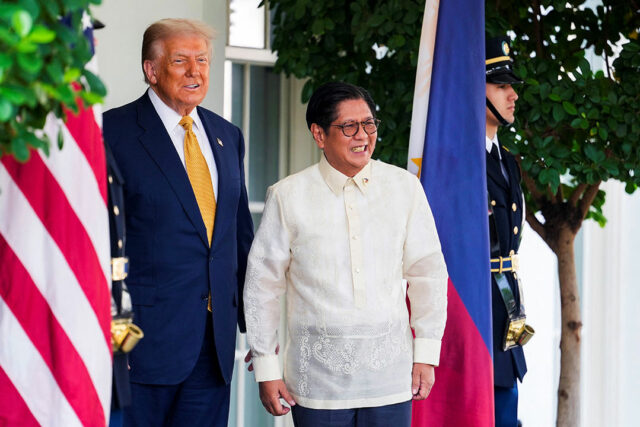
US PRESIDENT Donald J. Trump welcomes Philippine President Ferdinand R. Marcos, Jr. at the White House in Washington, DC, US, July 22. — REUTERS/KENT NISHIMURA

By Chloe Mari A. Hufana, Reporter and Luisa Maria Jacinta C. Jocson, Senior Reporter

US PRESIDENT Donald J. Trump on Tuesday announced he was imposing a new 19% tariff rate for goods from the Philippines, following a meeting with President Ferdinand R. Marcos, Jr. at the White House.

“It was a beautiful visit, and we concluded our trade deal, whereby the Philippines is going open market with the United States, and zero tariffs. The Philippines will pay a 19% tariff,” Mr. Trump said on his Truth Social platform.

While the new tariff rate is slightly lower than the threatened 20%, the 19% rate is higher than the 17% “reciprocal tariff” that Mr. Trump announced in April.

“One [percentage point] might seem like a very small concession. However, when you put it in real terms, it is a significant achievement,” Mr. Marcos told reporters in Washington following his meeting with Mr. Trump in the Oval Office. A copy of the transcript was released to the media.

“They told us that it is because of the special relationship between the Philippines and the United States.”

Contrary to Mr. Trump’s social media post, Mr. Marcos clarified that the Philippines will only open its market for US automobiles.

“The major areas that he (Mr. Trump) said were automobiles. Because we have a tariff on American automobiles, we will open that market and no longer charge tariffs on that,” he said.

As part of the deal, Mr. Marcos said the Philippines will also increase US imports of soy and wheat products, as well as medicine.

“There’s still a lot of detail that needs to be worked out on the different products,” he said, adding the template has been laid out.

A Reuters report quoted Philippine Ambassador to the United States Jose Manuel Romualdez as saying this was “an evolving good deal for both countries that could be further improved over time.”

Mr. Trump said the “very big numbers” in the trade agreement would only grow larger.

Data from the United States Trade Representative showed the US goods trade with the Philippines amounted to around $23.5 billion in 2024. US goods exports stood at $9.3 billion, while imports from the Philippines totaled $14.2 billion, bringing the US goods trade deficit with the Philippines to nearly $5 billion, up by 21.8% from 2023.

The US is a top export destination for Philippine goods, accounting for around 16% of total exports such as semiconductors and electronic products in the January-to-May period.

STILL SECOND LOWEST
Meanwhile, the Department of Economy, Planning, and Development (DEPDev) said the new 19% tariff puts the Philippines in a good position compared with its Southeast Asian neighbors.

“But still, if you look at the entire Association of Southeast Asian Nations (ASEAN) so far, we’re second to Singapore. To me, it’s still a very good outcome,” DEPDev Secretary Arsenio M. Balisacan told reporters on the sidelines of a conference on Wednesday.

Mr. Balisacan said the potential impact of the 19% and previous 20% tariff is “not really that much.”

“We are more worried about the indirect one. Indirect is how other countries’ tariffs will look like compared to us. That’s the one that’s more important because of the potential trade diversion benefits,” he said.

The Philippines’ new US tariff rate is now the same as Indonesia, and slightly lower than Vietnam’s 20%. Singapore faces the lowest US tariff rate of 10%.

While Vietnam was able to secure a 20% tariff, any transshipped goods will be subject to a 40% rate.

“How much of that are actually imports from China indirectly through Vietnam? That will be affected by the high tariff,” he said.

Asked about the zero tariff on US automobile imports, Mr. Balisacan said this is not a cause for concern.

“When you look at the current account deficit, you don’t look at it country by country. You should look at the total and that’s what matters,” Mr. Balisacan said.

“As a country, you should be able to accept a deficit from a country where you can import much cheaper products than what you can get elsewhere. And then you are able to export your products to where you can command higher value.”

Mr. Balisacan said the Philippines will heavily rely on domestic demand against the backdrop of these trade uncertainties.

“That’s what you can count on. And that’s actually what’s saving our economy now with all this uncertainty in the global economy.  It’s domestic,” he said.

“We have to strengthen that even as we are preparing for better times in trade, in the global economy. Still, we need to keep doing reforms to improve our competitiveness. Unlike in past decades, though the global economy improved, we were not ready. So, we missed the boat. Still a lot of things to do.”

IBON Foundation Executive Director Jose Enrique A. Africa said this new trade deal heavily favors the US.

“This is a bad deal, and President Marcos, Jr. is coming home empty-handed. There are virtually no benefits for the Philippines and only costs,” he said in a Viber chat.

Zero tariffs on US automobiles, in particular, could result in revenue losses, provoke trade tensions with other auto exporters like Japan, Korea, China, and the European Union, and hinder any plans to develop a domestic automotive industry, he added.

The economist also noted that the public must know the full extent of the concessions made by the Philippines, especially on the economic and defense fronts.
ADB, AMRO slash PHL growth forecasts for 2025, 2026

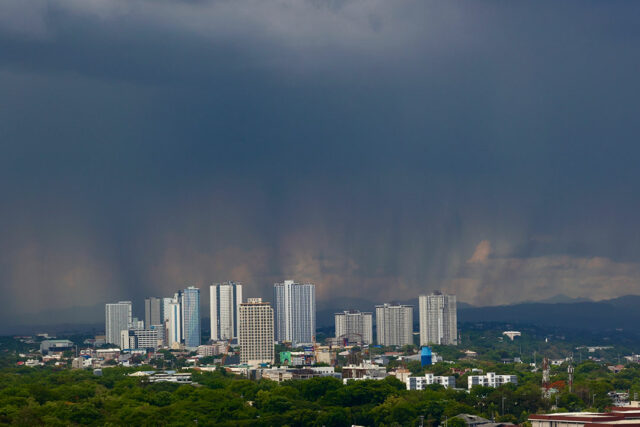
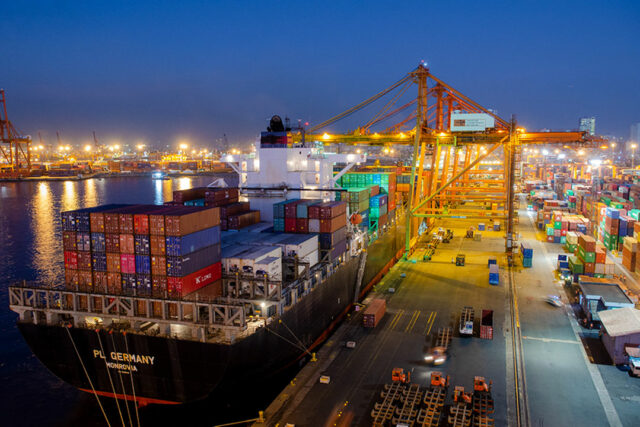
The Philippine economy is now likely to grow below 6% this year and in 2026 as the US tariffs and global economic slowdown cloud the outlook. — PHILIPPINE STAR/MIGUEL DE GUZMAN

A GLOBAL SLOWDOWN and higher US tariffs have clouded the growth outlook for the Philippines, as the Asian Development Bank (ADB) and ASEAN+3 Macroeconomic Research Office (AMRO) both downgraded their Philippine growth projections for this year and in 2026.

In its latest Asian Development Outlook, the ADB slashed its gross domestic product (GDP) growth forecast for the Philippines to 5.6% for 2025 from 6% previously. For 2026, the ADB projects Philippine GDP to grow by 5.8% from 6.1% previously.

However, this would be within the government’s 5.5 to 6.5% target for this year, but below the 6-7% goal for 2026.

At the same time, AMRO cut its growth projections for the Philippines to 5.6% for this year and 5.5% for 2026 in its latest ASEAN+3 Regional Economic Outlook (AREO) report. These are lower than its previous forecast of 6.3% for both 2025 and 2026.

AMRO also cut the ASEAN+3 region’s growth outlook to 3.8% (from 4.2%) in 2025, and 3.6% (from 4.1%) in 2026, reflecting the impact of higher US tariffs that will take effect on Aug. 1.

“These (US) tariffs will likely reduce US demand, increase investment uncertainty and dampen consumer confidence. Given the broad scope of the tariffs, the associated slowdown in global growth would further weigh on the region’s outlook,” AMRO said in the report.

ASEAN+3 comprises the Association of Southeast Asian Nation (ASEAN) members plus China, Hong Kong (China), Japan and South Korea.

AMRO also cut the growth forecast for ASEAN to 4.4% (from 4.7%) this year, and 4.2% (from 4.7%) in 2026.

Based on the latest AREO, the Philippines is expected to be the second-fastest growing economy this year and in 2026, after Vietnam. Vietnam is projected to grow by 7% this year and 6.5% next year.

AMRO Group Head and Principal Economist Allen Ng said Philippine growth forecasts were lowered on expectations of slower global growth.

At a briefing on Wednesday, Mr. Ng said the Philippines’ weaker-than-expected 5.4% GDP expansion in the first quarter hinted that the “growth momentum is slower than initially expected.”

Mr. Ng said the country’s growth will likely remain strong, thanks to sustained private consumption, stable labor market conditions, slower inflation and “robust” remittance outlook.

He said the newly announced 19% tariff that the US will impose on Philippine goods is unlikely to change its forecasts.

“In the case of the Philippines, our assessment is that the impact will be very limited and it’s unlikely that we will materially change our forecast given the changes is actually from 20% to 19%,” he said.

However, Mr. Ng noted the impact of the higher tariffs remains smaller in the country compared with its Association of Southeast Asian Nations (ASEAN) neighbors given the Philippine economy is more focused on the domestic market.

“But there will be broader impact on global slowdown on the economy. So, this will affect both exports as well as business sentiment and investment activities in the Philippines,” he said.

For 2026, AMRO said the impact of the tariffs on ASEAN+3 is projected to be “more significant.”

“This is particularly so for regional economies which face both higher tariffs from the US and rely more on external demand. Overall, however, continued strength in domestic demand and sustained external demand for electronics and tourism is expected to continue to underpin regional growth,” it said.

More aggressive protectionist policies from the US pose a major risk to the growth outlook for the region, AMRO said, citing potential tariffs on exempted sectors, such as semiconductors and pharmaceuticals.

“As these products represent a substantial share of exports to the US for some regional economies, such measures could further dampen growth. Idiosyncratic considerations are also influencing tariff decisions, it said.

Other risks include a sharper slowdown in the US and Europe, tighter financial conditions, a spike in global commodity prices and weaker growth in China.

Meanwhile, AMRO lowered its inflation forecast for the Philippines to 1.8% from 3.3% for 2025. This is slightly higher than the Bangko Sentral ng Pilipinas’ (BSP) 1.6% average forecast for this year.

AMRO kept its projection for 2026 at 3.2%, unchanged from its April forecast. This is below the central bank’s 3.4% target forecast for 2026.

AMRO has noted that central banks in half of ASEAN+3 economies have eased monetary policy amid slowing inflation and tariff concerns.

“Headline inflation in the region is projected to remain low and stable at around 1% in 2025 and 2026. This outlook reflects stable commodity prices, including the normalization of oil prices following the temporary volatility during the brief escalation of Iran-Israel conflict,” it said.

ADB FORECAST
Meanwhile, the ADB still expects the Philippines to post the second-fastest growth in Southeast Asia this year and 2026, despite lowering its projections.

Vietnam is projected to grow by 6.3% this year, followed by the Philippines (5.6%), Indonesia (5%), Malaysia (4.3%), Thailand (1.8%) and Singapore (1.6%).

For 2026, Vietnam is still likely to post the fastest growth at 6%, followed by the Philippines (5.8%), Indonesia (5.1%), Malaysia (4.2%), Thailand (1.6%) and Singapore (1.5%).

In a statement, the ADB said it lowered its growth forecasts for developing Asia and the Pacific region this year and next year “driven by expectations of reduced exports amid higher US tariffs and global trade uncertainty as well as weaker domestic demand.”

It trimmed its 2025 growth forecast for the region to 4.7% from a projection of 4.9% made in April. It also cut the region’s growth outlook for 2026 to 4.6% from 4.7%.

“Asia and the Pacific has weathered an increasingly challenging external environment this year. But the economic outlook has weakened amid intensifying risks and global uncertainty,” ADB Chief Economist Albert Park said in a statement.

Southeast Asia is expected to post the slowest growth among sub-regions. ADB projects Southeast Asia growth at 4.2% in 2025 and 4.3% in 2026, lower than the earlier forecasts of 4.7% for both years.

“Economies in the region should continue strengthening their fundamentals and promoting open trade and regional integration to support investment, employment and growth,” Mr. Park said

According to the ADB, developing Asia and the Pacific comprises 46 economies ranging from China to Georgia to Samoa, and excluding countries such as Japan, Australia and New Zealand.

REMITTANCE DECLINE
In the same report, the ADB said the Philippines is expected to see the “largest proportional decline” in remittance inflows from the US once the US tax on remittances is implemented in 2026.

“In the rest of the region, the Philippines is projected to face the largest proportional decline, with US remittance inflows falling by the equivalent of 0.05% of GDP, followed by Vietnam and Nepal (both 0.03%),” it said.

On the other hand, India’s potential remittance loss would be the largest in absolute terms at $315 million, but accounting for 0.01% of its GDP.

Mr. Trump signed the “One Big Beautiful Bill” into law on July 4, imposing a 1% excise tax on cash-based remittances from the US to recipients abroad. The tax will be implemented starting Jan. 1, 2026.

The ADB said senders finding ways to circumvent the tax will curb the impact on remittances.

“However, remittance service providers may absorb part or all of the tax to remain competitive against US banks, which are exempt,” it said.

The ADB said money transfer services such as Western Union, PayPal, or MoneyGram may likely absorb part or all of the levy and negatively hit their profit margins.

It added that the US tax may also accelerate shifts toward alternative channels, including cryptocurrency transfers and informal systems, as senders seek to avoid higher fees. — Aubrey Rose A. Inosante with Reuters

Philippine exporters to face ‘hard climb’ with 19% US tariff

BW FILE PHOTO

By Justine Irish D. Tabile, Reporter

A US TARIFF of 19% on Philippine goods will likely undermine the competitiveness of local exporters compared with those in neighboring Southeast Asian countries, analysts said.

Foreign Buyers Association of the Philippines (FOBAP) President Robert M. Young said that with the 19% tariff, it will be a “hard climb” for Philippine exports to remain competitive in the US market.

“It was just heartbreaking that despite the goodwill that we gave, that we were able to give accommodations to the military, we are not given some importance,” he said.

“Even before the reciprocal tariffs, our prices were already 15% higher than the other guys in the region — Bangladesh and Vietnam, and also China and the rest of the guys,” Mr. Young said. “Now that our tariff is more or less on the same level as theirs at 19%-20%, it will be a really, really hard climb,” he added.

The US trimmed its tariff rate to 19% from the threatened 20% following a meeting between US President Donald J. Trump and Philippine President Ferdinand R. Marcos, Jr. at the White House. However, this is still higher than the 17% “reciprocal tariff” that Mr. Trump announced in April.

“We concluded our trade deal, whereby the Philippines is going open market with the United States, and zero tariffs. The Philippines will pay a 19% tariff,” Mr. Trump said on his Truth Social platform.

The 19% US tariff on Philippine goods matches the rate for Indonesia, and slightly lower than the 20% tariff on Vietnam. However, it is still the second lowest in Southeast Asia after Singapore which faces a 10% US tariff.

FOBAP’s Mr. Young said that its members are already negotiating deals with US buyers on cost sharing. He noted they are looking at concentrating on higher-priced items, as it is where the group’s members see a competitive edge in terms of pricing.

“This is where we will have a chance, somehow, on the pricing scheme as far as competition is concerned with the other ASEAN neighbors. I think high fashion items can be a chance for us to continue dealing with the US,” he added.

Mr. Young also said that FOBAP members may also focus on other markets, including Russia, Australia, Canada and the European Union, among others.

‘TOO HIGH’
Meanwhile, Reyes Tacandong & Co. Senior Adviser Jonathan L. Ravelas said that the tariff is too high given that the Philippines will open up its automotive market.

“The imbalance undermines fair trade and places Philippine exporters at a competitive disadvantage. Reciprocity is key to sustainable bilateral trade,” Mr. Ravelas said in a Viber message.

Mr. Ravelas said that some sectors may benefit from the trade deal, including retail, logistics, and import-reliant sectors such as food, pharmaceuticals, and consumer goods, as “it will reduce input costs, thereby improving profit margins.”

However, zero tariffs on some US goods could potentially result in the dumping of cheaper American products in the Philippines.

“With zero tariffs on US imports, the local market may be flooded with cheaper American products, threatening domestic industries unless protective measures are introduced,” Mr. Ravelas said, adding that electronics, garments, and agricultural sectors would be the most vulnerable.

However, Mr. Marcos told reporters in Washington that the Philippines will only open its market for US automobiles.

Capital Economics Senior Asia Economist Gareth Leather said the impact of the tariff deal on the Philippines is “unlikely to be huge” as it is one of the least dependent Asian economies on US demand.

“While the economic hit to the Philippines will be modest, the deal does at least help shield it from losing ground to regional rivals,” he said in a report.

“However, it does remove at least some downside risks facing the country — the fact that the 19% tariff rate is close to what other countries in the region are likely to face means they won’t experience a loss of competitiveness vis-à-vis other countries in the region.”

The Philippines was also initially expected to be in a better position to win more concessions from the US.

“The fact that it has had to settle for tariffs of 19% suggests other countries still in negotiations with the US will have difficulty negotiating tariff rates much below 20%, which looks set to become the benchmark for the rest of the region (excluding China),” Mr. Leather said.

Former Tariff Commissioner George N. Manzano said the reduction in the tariff rate was “quite minimal and below expectations.”

“If we get only 1%, that seems to be too little for what we have given up… We were hoping to get even lower than 19%, so 1% is too little I think,” he said.

Rizal Commercial Banking Corp. Chief Economist Michael L. Ricafort said the tariff’s drag on exports would also not be as significant, as the country is not export-oriented.

“The Philippine economy is less reliant on exports as a source of economic growth. Philippine merchandise exports are 3-5 times lower compared with major ASEAN countries on a yearly basis,” he said.

“However, there may have already been some frontloading of Philippine exports beforehand in anticipation of these higher US import tariffs.”

However, he noted slower global growth due to the tariff war could “indirectly weigh on the Philippine economy.”

At the same time, some analysts said the Philippine government should continue negotiations to secure a lower US tariff.

“We should still do our best to lower it because our neighbors are actively negotiating to lower theirs,” Ateneo Center for Economic Research and Development Director Ser Percival K. Peña-Reyes said in a Viber message.

He noted the terms of the US-Philippines trade deal obviously favor the US.

“This is a one-sided arrangement that favors US exports while punishing Philippine producers despite our continued market openness,” John Paolo R. Rivera, a senior research fellow at the Philippine Institute for Development Studies, said in a Viber Message.

Mr. Rivera also noted that the country follows most-favored-nation rules and the World Trade Organization schedule, while the US has unilaterally abandoned this in favor of reciprocity based on its own trade deficit metrics, he said. — with Luisa Maria Jacinta C. Jocson and Aubrey Rose A. Inosante

SMGP acquires 43.2 million Meralco shares for P90 each under long-delayed deal

RAMON ANG — SANMIGUEL.COM.PH

SAN MIGUEL Global Power Holdings Corp. (SMGP), the power arm of San Miguel Corp. (SMC), has acquired a 3.8% stake in Manila Electric Co. (Meralco) for P3.9 billion following a long-delayed deal with the Land Bank of the Philippines (LANDBANK).

SMC disclosed the transaction to the stock exchange on Wednesday, following a report by news site InsiderPH.

“Such shares were transacted in the Philippine Stock Exchange this morning through the deed of absolute sale which contained the terms and conditions mutually determined by and acceptable to both parties and conformably with the decision of the Court of Appeals (CA),” the company said.

SMGP acquired 43.23 million common shares of Meralco at P90 each — about 83% lower than Meralco’s Tuesday closing price of P540.50.

On Wednesday, Meralco shares rose 0.83% to close at P545.

The deal marks the conclusion of a long-running legal dispute between SMGP and LANDBANK.

In 2008, SMGP — then known as Global 500 Investment — entered into a share purchase agreement with LANDBANK involving Meralco shares.

LANDBANK later rescinded the deal, prompting SMGP to sue for damages, arguing that the cancellation was unjustified.

In November 2022, the Court of Appeals sided with SMGP, ruling that the bank’s decision to withdraw from the agreement had no factual basis.

At the time, the deal was worth P4.19 billion, plus interest of P553.85 million.

LANDBANK had argued that the sale would be “grossly disadvantageous to the government,” as the shares were involved in a just compensation case with the Department of Agrarian Reform — a claim the court ultimately rejected.

“Their P3.9-billion stake in Meralco has already grown five times in value, so cashing out now locks in a substantial profit,” said Moses Frando, head of sales and trading at Seedbox Securities.

Redirecting the proceeds into “high-impact projects or strategic acquisitions will drive diversified growth and strengthen the balance sheet,” he added.

Following the acquisition, SMC’s Meralco stake is now worth around P23.6 billion, implying a “windfall gain” of roughly P19.7 billion, according to DragonFi Securities Equity Research Analyst Franco M. Fernandez.

“Given that it’s been more than a decade and the scale of this unrealized gain, I think the SMC group would benefit from selling a portion or even all of its stake,” Mr. Fernandez said.

He added that if SMC retains the stake, it could benefit from Meralco’s dividend stream or upstream a portion of the gains to declare a special dividend, “rewarding long-term shareholders and boosting investor confidence.”

“Either way, this unexpected upside strengthens SMC’s consolidated balance sheet at value,” he said.

Meralco’s controlling stakeholder, Beacon Electric Asset Holdings, Inc., is partly owned by PLDT Inc. Hastings Holdings, Inc., a unit of PLDT Beneficial Trust Fund subsidiary MediaQuest Holdings, Inc., has an interest in BusinessWorld through the Philippine Star Group, which it controls. — Sheldeen Joy Talavera

Different words, same language

SMOKED DUCK Leg Rendang with turmeric leaf and a side of glutinous rice cooked in bamboo. — JOSEPH L. GARCIA

A masterful dinner at the Tagaytay Food Festival

BUSINESSWORLD popped in on the second day of the Tagaytay Food Festival, which ran from July 18 to 20 mainly at the Tagaytay Vista Hotel. While inclement weather canceled events such as off-site tours, the frightening rains served as a canvas for chefs Jay Jay and Rhea Sycip of The Fatted Calf (a cult Tagaytay favorite worth the drive) and their collaborator for the evening, Hafizzul Hashim of the one Michelin-starred Restaurant Fiz in Singapore. All three presented a vision of comfort food across these seas, with the theme “Food that Binds.”

The food served did not give us comfort — what it did give us was a sense of euphoria.

Perhaps it was the generous servings, the sheer amount of dishes (we lost count after 10) stretching our stomachs, or just that the food made us feel so good, we reached a level of cheer that could be described as akin to a runner’s high.

The restaurant was noisy that evening, so much so that some couldn’t tell it was still raining if not for the raindrops tinkling against the skylight. Someone at our table read kinky love letters from James Joyce, also from the food-borne euphoria.

The dinner started calmly enough with a rondeau of amuse bouches, including Fried Siopao, Fish Tartlet, Kaya Toast with Caviar, and Crispy Fish Skin. Mr. Hashim bade us to eat that in a reversed order, so we had the fish skin first: frothy and light with smoked milkfish mousse. The Kaya Toast was a revelation: we didn’t realize that the common breakfast item in Singapore could reach such a luxurious height, but then how many people top this with caviar? The texture of the brioche toast contrasted with the creamy kaya while the caviar just gave a rarefied accent, without becoming vulgar with the expense. The Fish Tartlet, with kinilaw na papaya (ceviche, but using papaya instead), house pineapple vinegar, weaver ant salt, and kaffir lime oil, was delicate but interestingly muscular, with all the textures of the firm fish felt on the tongue.

A first course saw Rellenong Alimasag (stuffed crab), with a topping of turmeric custard and a crab fat emulsion. With lemon basil oil, it tasted very clean, despite the spiciness of the curry: the overall impression was a clear, sharp, white-hot flavor. It shared these characteristics with a Prawn Skewer with Sambal Tumis (fried chili paste; we encountered different versions of sambal during this dinner), but this prawn was more straightforward with its heat than the crab.

The chefs all worked on the Sinigang (sour soups), which they found they had in common. This version uses tomato, balmimbing (Averrhoa carambola or star fruit), alibangbang, (butterfly tree), and calamansi (a small native citrus) to sour the broth, and serves this with pansit-pansitan (a local herb) and dry-aged sea bream. The result was a sinigang that was earthier with a slight medicinal hint.

The main course was Mr. Hashim’s special pride, a Smoked Duck Leg Rendang (a coconut milk curry) with turmeric leaf. This had a side of glutinous rice cooked in bamboo (we had two; this might have been the straw that broke this camel’s stomach), Urap (a side dish with pako – ferns – and winged beans, toasted coconut, and another kind of sambal), cassava leaf in turmeric leaf-infused coconut sauce, and green chili sambal (Sambal Ijo). It was more than a mouthful, but we ate through all of it: it was lively, heavily nuanced, just exotic enough, but still strangely familiar.

Next, the chefs served duck again for their version of Tres Marias, a local Cavite trifecta often served for Sunday lunch. This had the Shio Koji dry-aged duck in a roasted rice sauce and duck fat-annatto oil (like kare-kare, a peanut-based stew); an adobo using Black Onyx brisket, house pili vinegar, and fermented black garlic. The third dish was a Papaya Kilawin with beef pancreas and topped with crispy ox tripe and ubod (heart of palm) miso. The Duck Kare-Kare was divine. The vegetables were wrapped in a leaf with flowers, which one breaks. It had an excellent lively flavor with just a hint of herbal, earthy indulgence. I could write sonnets about that duck, perfectly juicy but with an honest, straightforward taste.

We were much too full, and the rest of the evening passed in a haze, but we do remember a bite of the Kelapa, Bingka, and Itlog Maalat — coconut, bibingka (a rice cake), and salted egg, topped with mantecado (custard) ice cream. The richness was cut with the peppery flavor of fresh edible flowers.

The Sycip couple recalled meeting Mr. Hashim through fellow chef Waya Araos-Wijangco just this past summer. “Every time we got to see each other, we never stopped talking about ingredients,” said Mr. Sycip in a speech. “So many things, so many elements are the same.”

“We talk about food, the similarities of ingredients,” said Mr. Hashim. “We have a difference in cooking methods and cultural differences, yet the same root.”

In an interview, Ms. Sycip said, “We speak different languages, and yet we speak the same. We were able to connect through the food… it’s sharing stories.” — Joseph L. Garcia

DigiPlus seeks dialogue on proposed online gambling ban

BW FILE PHOTO

LISTED digital entertainment provider DigiPlus Interactive Corp. is appealing for dialogue with lawmakers amid proposed restrictions on online gambling, warning that a total ban could affect the livelihood of those in the industry.

“If there are new standards to meet, or better ways to protect players, we will act swiftly and responsibly; but please, do not condemn an industry, and the 50,000 Filipino families who rely on it, without hearing the facts first,” DigiPlus Chairman Eusebio H. Tanco said in an e-mailed statement on Wednesday.

DigiPlus called for a fact-based dialogue “grounded not in fear or stigma but in the shared goal of building a stronger, safer, and more accountable gaming industry.”

The company operates the platforms BingoPlus, ArenaPlus, and GameZone.

“We are appealing to the government: Let us approach this rationally. If we study the issue with clear eyes, we will see that the social ills being blamed on online gaming stem from the illegal market. That is where underage gambling happens. That is where financial abuse thrives. Target that, and the harm disappears,” DigiPlus said.

According to DigiPlus, a total ban puts at risk over 3,000 direct DigiPlus employees and an estimated 50,000 jobs across the online gaming industry.

It also said that a ban would only push players toward unregulated sites.

“In every city, in every province, our people are asking: are we no longer welcome, even when we’ve done everything right?” Mr. Tanco said.

Mr. Tanco said DigiPlus is open to evolving and improving its platforms wherever needed.

“Tell us what more we must do, and we will do it without hesitation. Just grant us the fairness owed to any lawful Filipino enterprise,” he said.

DigiPlus noted that the current atmosphere surrounding online gambling “feels less like regulation and more like retribution.”

“We stand licensed, audited, and transparent, yet we are made to answer for the crimes of illegal operators who respect neither law nor livelihood,” Mr. Tanco said.

DigiPlus said it is concerned that law-abiding operators are being swept into suspicion aimed at catching illegal operators.

Since November last year, the company has been implementing many of the measures now being debated in Congress, such as rigorous know-your-customer checks, mandatory age verification, self-exclusion tools, and responsible-gaming prompts.

The company added that it has consistently aligned its operations with regulatory expectations from the Philippine Amusement and Gaming Corp. (PAGCOR) and other relevant government agencies.

“Every peso flowing through its platforms is taxed, audited, and remitted to PAGCOR and the Bureau of Internal Revenue, funding healthcare, infrastructure, and disaster relief,” DigiPlus said.

“We are not asking for special treatment. We are simply asking to be judged by our actions, not by perception, nor by association with those who break the law. Regulation works best when it uplifts what is working, not when it dismantles it,” it added.

The country’s online gambling industry has come under heightened scrutiny, with lawmakers calling for either its regulation or a total ban amid concerns over rising addiction and financial harm.

The Bangko Sentral ng Pilipinas recently released a draft circular to regulate online gambling payments and address the misuse of financial services.

Separately, the Department of Finance has proposed a tax on online gaming as well as cash-in limits.

DigiPlus shares rose by 22.6% or P4.47 to P24.25 each on Wednesday. — Revin Mikhael D. Ochave

Cloud-first policy seen driving demand for collaboration tools

ZIMBRA, a US-based software suite focused productivity and collaboration tools, is optimistic about expanding its presence in the Philippines as more organizations move towards secure, cloud-first strategies.

“The Philippines is a strategic growth market for Zimbra, given our alignment with the country’s push toward digital transformation across government, financial services, and SMEs (small and medium enterprises),” Zimbra Chief Revenue Officer Marcus Teo told BusinessWorld.

“The government’s Cloud First Policy highlights the need for secure, locally hosted solutions, an area where Zimbra excels with its flexible setup options that let data stay within the country and meet local rules.”

Zimbra offers a collaboration solution that includes productivity tools like e-mail, calendar, file sharing, chat, tasks, and document editing. It is one of the key products of Synacor, Inc., a cloud-based software and services company based in New York.

Companies can integrate Zimbra’s e-mail features with programs like Outlook, Apple Mail, and Thunderbird.

The platform aims to address Philippine organizations’ need for secure, flexible collaboration tools at manageable costs, the company said.

“The Philippine market for collaboration tools is mostly served by big global software providers whose platforms often offer limited customization and less control over data,” Mr. Teo said.

These solutions may not fully align local rules or fit the budgets of state agencies and smaller firms, he said.

Philippine enterprises and institutions also typically operate in complex environments that blend older legacy systems with newer cloud services, Mr. Teo added.

“Because of this, more organizations are looking for alternatives that give them better privacy, data control, and predictable costs.”

Zimbra can connect with businesses’ existing tools for managing customers, inventory, or internal workflows, Mr. Teo said, as its open-core approach provides transparency and the ability to configure the platform according to an organization’s needs.

“Unlike closed systems, Zimbra lets organizations keep their data within the country and easily add features through open standards based add-ons,” he said. “This means businesses can stay in control while enjoying modern collaboration capabilities built for the Philippines.”

Zimbra’s built-in security features include multi-factor authentication and regular updates for vulnerabilities. Its security standards are supported without external tools, in line with Philippine firms’ need for stronger guardrails against evolving cybersecurity threats, Mr. Teo said.

“This means Zimbra can quickly adapt to new threats while keeping the platform easy to use and manage, helping Philippine organizations meet strict security requirements,” he said.

Around 84.5% of Philippine organizations experienced an average of three cybersecurity breaches in 2024, amid gaps in third-party cyber risk management, according to a report by cyber defense firm BlueVoyant. — Beatriz Marie D. Cruz

Human Made shakes up the shack

HUMAN MADE, the Japanese streetwear brand by designer and et cetera Nigo has teamed up with Shake Shack for a collaboration that marries fashion and food.

We called Nigo a “designer and et cetera” because he founded Bape in the 1990s, founded Human Made in 2010, and became artistic director of Kenzo. He’s also part of rap group Teriyaki Boyz, making for an interesting portfolio. Meanwhile, Shake Shack burgers have been an ambassador of New York-cool since 2004. It has 610 locations, including over 390 in 34 US States and the District of Columbia, and over 215 international locations across London, Hong Kong, Shanghai, Singapore, Mexico City, Istanbul, Dubai, Tokyo, Seoul and more.

We went to their Central Square BGC branch on July 22 for a taste of the collaboration’s offerings. The collabs were released in Japan on July 19, and the region followed suit, with launches in Seoul and Hong Kong (Mainland China launches the full menu on Aug. 6). Human Made has offered up caps, shirts, pouches, and other accessories to the rest of the region; the Philippines got the enamel key ring and pins, in the shape of a burger, with that Human Made-style.

As for the menu items, Shake Shack offered its homage to Human Made through the Teriyaki Shack Cheeseburger topped with teriyaki glaze, toasted black and white sesame seeds, pickled daikon, crispy onions, scallions and sweet soy mayo on a toasted potato bun. This was followed up by Human Made Curry Cheese fries: crispy crinkle cut fries topped with curry cheese sauce, applewood-smoked bacon and scallions. While comforting, you can’t kiss someone after this burger due to the strong onion-forward flavors. The fries should stay on the menu permanently, because they are such a treat.

Other things introduced during the tasting were smaller sizes of Shake Shack’s shakes (get the Black and White which is vanilla and chocolate fudge), and their breakfast menu (Egg N’ Cheese; Arugula, Egg N’ Cheese; That, and Bacon; Breakfast Potato; and Grilled Cheese).

“Nigo is really a big fan of Japanese cuisine and also American culture,” said Kate Villasenor, marketing director at Good Eats Specialists, Inc. The company is under the SSI Group, the exclusive franchise holder of Shake Shack in the Philippines, as well as of SaladStop!. “We’re believers of quality and also innovation, but at the same time making sure that the heritage is brought into the product.”

On collaborations with non-culinary figures, Ms. Villasenor said, “It’s making sure that we are still making ourselves relevant in the community. Not just in the culinary community, but also those perpetuating that lifestyle: in terms of innovation, in terms of being just among the community who care about the environment, about their friends and family.”

She said in a speech: “Though we might be originating from different backgrounds, our mutual commitment to innovation, craftsmanship, and cultural communication unites us.”

All menu items from the collaboration will be served in exclusive packaging featuring the heart-burger collaboration icon.

The limited-edition key ring and pin will be sold exclusively at participating Shake Shack locations excluding SM North EDSA, Gateway Mall 2, and NAIA Terminal 3 (they are available at the Alabang Town Center, Greenbelt 5, SM Mall of Asia, and SM Megamall branches). — JL Garcia

Abacore Capital Holdings, Inc. to hold 2025 Annual Stockholders’ Meeting on Aug. 14


Spotlight is BusinessWorld’s sponsored section that allows advertisers to amplify their brand and connect with BusinessWorld’s audience by publishing their stories on the BusinessWorld Web site. For more information, send an email to online@bworldonline.com.

Join us on Viber at https://bit.ly/3hv6bLA to get more updates and subscribe to BusinessWorld’s titles and get exclusive content through www.bworld-x.com.

PHINMA Education net income climbs 8% to P1.5B

PHINMA

PHINMA EDUCATION Holdings, Inc. reported an 8% increase in net income for financial year 2024-2025 (April 2024 to March 2025) to P1.5 billion, driven by higher enrollment.

The company is preparing to expand its nationwide presence with additional campus openings planned in the coming years.

Revenue rose by 14% to P6.5 billion, while earnings before interest, taxes, depreciation, and amortization increased by 15% to P2.2 billion, PHINMA Education said in an e-mailed statement on Wednesday.

PHINMA Education said its enrollment grew to over 163,000 students, mostly from low-income families in the Philippines and Indonesia.

“These results are a reflection of our deep commitment to student success,” PHINMA Education Chief Financial Officer Daisy C. Montinola said.

“Our continued investments in student support systems and retention programs have not only strengthened our operations but also reaffirmed our mission to serve,” she added.

PHINMA Education is planning to open additional campuses in San Pablo in Laguna, Roxas City, Bacolod City, and Butuan City in the coming years amid growing demand in underserved areas.

The company also expanded its school network to 12 with the recent addition of Saint Jude College in Dasmariñas, Cavite, and Kalbis University in Jakarta, Indonesia.

“We’re excited about expanding our reach and empowering more students across Southeast Asia to transform their lives through education,” Ms. Montinola said.

“It’s equally rewarding to see our financial growth mirror the progress of our students,” she added.

PHINMA Education also attributed its growth to the lower cost of education made possible through its scholarship programs.

The Sahabat Horizon Scholarship in Indonesia offers recipients up to 50% tuition coverage, while the Hawak Kamay Scholarship in the Philippines goes further by reducing tuition fees to as low as P5,500 per semester, with no entrance exam or maintaining grade requirements.

PHINMA Education is the education unit of the Del Rosario-led listed conglomerate PHINMA Corp., which also has interests in housing, hospitality, and construction.

PHINMA shares were unchanged at P17.88 each on Wednesday. — Revin Mikhael D. Ochave

New Xiaomi smart home cameras now available

XIAOMI CORP.

XIAOMI Corp.’s latest dual-lens smart home cameras are now available in the Philippines, the company announced this week.

The brand has launched the new Xiaomi CW500 and C500 Dual Smart Cameras. The CW500 is priced at P3,479 and the C500 costs P3,169, with both now available on Xiaomi’s official Shopee and Lazada stores.

Both can be set up via the Xiaomi Home app (version 9.4 or above).

“These innovative smart home cameras bring unparalleled dual-lens coverage and intelligent features right to your fingertips, offering double the peace of mind in one beautifully designed, affordable package,” Xiaomi said.

“In our increasingly connected lives, simple yet powerful ways to stay secure and connected are one of our top priorities, and Xiaomi understands this deeply. That’s why the Xiaomi CW500 and C500 Dual Smart Cameras are crafted to effortlessly meet the diverse needs of tech enthusiasts, busy small business owners, and families looking to watch over their loved ones and homes.”

Both devices have a dual-camera system that allows users to monitor two different areas simultaneously to eliminate blind spots.

The CW500 camera is meant for outdoor use as it has an IP66 dust and water resistance rating, according to the brand. With the device, users can monitor two live video feeds via the Mi Home app via a fixed-angle view and its Pan-Tilt-Zoom (PTZ) lens, which allows horizontal panning and tilting at 95 degrees vertically.

“Its crisp 2.5K resolution and large f/1.6 aperture mean you’ll see every detail in stunning clarity. And when the sun goes down, four smart white lights automatically turn on when someone’s nearby, giving you vivid, full-color night vision so you’re never left in the dark.”

Users can control the camera via smartphone through dual-band Wi-Fi 6 connectivity and can get alerts on the app for human or vehicle detection, with automatic video recording. It also has a built-in high-sensitivity microphone and speaker for two-way voice calls up to 10 meters.

Meanwhile, the Xiaomi C500 is for indoor use. It features dual 4-megapixel lenses that offer a 110-degree ultra-wide angle perspective and close-up focus with a smart PTZ camera that has a 58-degree horizontal angle.

“Whether you’re checking in while you’re away, its AI (artificial intelligence)-powered dual cameras work together to track movement and give you a split-screen view of everything that matters. The PTZ lens automatically zooms in and follows motion detected by the fixed camera — so you never miss a moment,” the brand said.

The camera has AI-powered pet detection and tracking and real-time crying baby detection with instant alerts, and users can define virtual fence areas for the fixed camera for enhanced surveillance of specific spaces. It also features infrared night vision without any red lights.

It can be mounted upright or inverted with its adjustable ceiling mount.

“The Xiaomi C500’s dual-band Wi-Fi 6 ensures seamless video playback and stable connectivity. Engage in clear two-way voice calls, keeping you connected with loved ones at home, and easily control your camera with both ‘OK, Google’ and ‘Alexa’ commands,” the brand added. — BVR

Is it healthy or just hype? 7 food marketing tricks targeting your child

STOCK PHOTO | Image by Mdjaff from Freepik

UNICEF, the United Nations agency for children, has come up with a list of “marketing” tricks used by purveyors of unhealthy food which target children.

The agency, which is present in more than 190 countries and territories, quoted the latest Expanded National Nutrition Survey of the Department of Science and Technology-Food and Nutrition Research Institute (DoST-FNRI) which said that the number of overweight children in the Philippines has more than doubled from 2003 to 2021, rising from 4.9% of all children to 13% — considered “high” based on World Health Organization (WHO) standards.

“This rise is partly driven by aggressive marketing of unhealthy products like formula milk, sugary drinks, and ultra-processed snacks. These are often promoted through school events, influencers, and misleading health claims, blurring the line between education and advertising. Some promotions even violate laws such as the Philippine Milk Code and the Sugar-Sweetened Beverage Tax under the TRAIN Law,” said the agency.

According to UNICEF, the seven signs of misleading marketing strategies to watch out for are:

1. Creating worry, then offering a product as the solution. Some ads play on parental concerns like picky eating or poor appetite, offering packaged products as quick fixes instead of real nutrition advice. If an ad skips tips like serving a variety of whole foods or encouraging regular meals, it’s likely trying to sell the product — not guide parents on what their child needs.

2. Claiming expert approval without a clear background. Some ads or articles claim the product is “doctor-recommended” without naming the expert or disclosing their ties to the brand. Without clear credentials, these endorsements may not be reliable. Look for named sources and check if they’re independent. Assess the product’s nutrition label, ask a local health worker, or look up general recommendations from organizations like the Department of Health (DoH) or WHO about what children should be drinking or eating.

3. Selectively using research to promote product benefits. Some ads cite research or long-term studies to boost their credibility but often leave out key details like who conducted the study, who funded it, and how the results were interpreted. In some cases, only favorable results are shown, especially if the study was paid for by the company itself.

Parents should be cautious if it only claims things like “scientifically proven” or “backed by decades of research” without clear sources. Look for published studies or turn to trusted public health agencies like the DoH or WHO — not just what the label or ad says.

4. Loosely associating a product with credible organizations or programs. Some ads or articles mention or use logos of respected institutions like the DoH, WHO, or UNICEF to suggest endorsement — even if it was falsified or unauthorized. This can mislead parents into thinking the product is officially endorsed or approved by such institutions.

Parents should not rely on logos or familiar names alone. They should always verify endorsements through the organization’s official website or social media pages. If there’s no clear public statement or recommendation, the name may have been used without permission.

5. Using celebrities, influencers, or emotional language while mentioning a product. Some ads use celebrities or parental influencers to build trust and connection with emotional claims like “just what my baby needs,” without explaining the product’s actual nutritional facts.

Look for clear details — ingredients, nutritional value, or standards met. If the ad only uses feel-good messaging or a familiar face, it’s likely designed to persuade, not inform. Use the nutrition label and ingredient list, and check with public health sources like the DoH or WHO for guidance.

6. Luring children through toys, mascots, or giveaways. Some brands use cartoon mascots, toys, and colorful packaging to catch children’s attention but often leave out important nutrition details that parents need to decide what’s good for their child. See if the ad focuses more on fun and freebies than on actual nutrition. Watch out for:

• Cartoon mascots or cute animal characters

• Toys or collectibles included with the product

• Lines like “collect them all,” “free inside,” or “limited edition”

• Logos, apps, or videos that look like kids’ shows or games

These are signs that the product is being marketed to kids — not to inform you as a parent. Always look at the nutrition label and ingredient list before deciding.

7. Promoting brand events as health and wellness initiatives. Some companies sponsor school events, health and sports clinics, fun runs, and family wellness programs to make their food products seem health-focused while subtly promoting their products.

Watch out for free formula milk, sugary drinks, fortified snacks, or heavy branding that outweighs any real health information. If giveaways take center stage, the event may be promoting products more than wellness. It is still best to check with the DoH or school health guidelines to make healthy choices.

Before trusting any claim, check if the message includes real nutrition facts, reliable sources, and guidance from trusted health organizations. Choices matter, and having the right information helps parents make decisions based on what their children truly need, not what brands want to sell.