Home Blog Page 1276

Taiwan to simulate impact of US tariffs on semiconductor sector

Semiconductor chips are seen on a circuit board of a computer in this illustration picture taken on Feb. 25, 2022. — REUTERS

TAIPEI – Taiwan will simulate the impact of any U.S. tariffs on the semiconductor industry and seek talks with Washington on the issue, the island’s economy minister said on Tuesday.

The Trump administration is probing the import of chips, along with pharmaceuticals, in a bid to impose tariffs on both on grounds that extensive reliance on foreign production of semiconductors and medicine is a national security threat.

The United States relies heavily on chips imported from Taiwan, a reliance former President Joe Biden sought to end during his term by granting billions of dollars in Chips Act awards to lure chipmakers to expand production in the country.

Speaking to reporters outside parliament, Taiwan Economy Minister Kuo Jyh-huei said he would seek to discuss the matter with the United States and ensure “fair competition” for Taiwanese industry.

The Taiwanese and U.S. chip sectors are complementary, he added.

“As to how much (the tariffs) could be, we will of course carry out simulations,” Kuo said. “On the tariffs issue, we will try as hard as possible to communicate with the U.S. side.”

The level of chip tariffs will be “the outcome of talks”, he added, without elaborating.

Taiwan is home to TSMC, the world’s largest contract chipmaker and a major supplier to companies including U.S. tech giants Apple and Nvidia.

On Monday, Nvidia said it is planning to build AI servers worth as much as $500 billion in the U.S. over the next four years with help from partners including TSMC. That followed Apple’s February promise of half a trillion dollars in U.S. investment over a similar time frame.

TSMC last month announced a $100 billion investment in the United States, on top of previous investment pledges.

Its Taiwan-listed shares traded 0.7% higher on Tuesday morning, largely in line with the broader market. — reuters

Trump administration sued over tariffs in US Court of International Trade

STOCK PHOTO | Image by Pexels from Pixabay

A legal advocacy group on Monday asked the U.S. Court of International Trade to block President Donald Trump’s sweeping tariffs on foreign trading partners, arguing the president overstepped his authority.

The lawsuit was filed by the nonpartisan Liberty Justice Center on behalf of five small U.S. businesses that import goods from countries targeted by the tariffs. The businesses range from a New York wine and spirits importer to a Virginia-based maker of educational kits and musical instruments.

The lawsuit challenges Mr. Trump’s April 2 “Liberation Day” tariffs, as well as duties he separately levied against China.

“No one person should have the power to impose taxes that have such vast global economic consequences,” Liberty Justice Center senior counsel Jeffrey Schwab said in a statement. “The Constitution gives the power to set tax rates — including tariffs — to Congress, not the President.”

White House spokesman Harrison Fields defended Mr. Trump’s tariffs in a statement.

“Never Trumpers will always oppose him, but President Trump is standing up for Main Street by putting an end to our trading partners — especially China — exploiting the U.S. His plan levels the playing field for businesses and workers to address our country’s national emergency of chronic trade deficits,” Mr. Fields said.

The Trump administration faces a similar lawsuit in Florida federal court, where a small business owner has asked a judge to block tariffs imposed on China.

Mr. Trump imposed 10% tariffs on goods from all countries and higher tariffs for countries the administration says have high barriers to U.S. imports, most of which he later paused for 90 days.

The president’s executive order invoked laws including the International Emergency Economic Powers Act, which gives presidents special powers to combat unusual or extraordinary threats to the U.S.

In Monday’s lawsuit, the Liberty Justice Center said the law does not give presidents the authority to impose tariffs.

“There is no precedent for using IEEPA to impose tariffs. No other President has ever done so or ever claimed the power to do so,” the lawsuit said.

The lawsuit asks the court to block enforcement of the tariffs and declare Mr. Trump lacked the authority to impose them.

The New York-based Court of International Trade is a U.S. federal court with broad jurisdiction over most trade-related matters. — Reuters

Vehicle sales jump 7.6% in March

Philippine automotive sales rose by 7.6% to 40,306 units in March. — PHILIPPINE STAR/MIGUEL DE GUZMAN

PHILIPPINE automotive sales grew by 7.6% in March as steady commercial vehicle sales offset a double-digit slump in sales of passenger cars, an industry report showed.

A joint report by the Chamber of Automotive Manufacturers of the Philippines, Inc. (CAMPI) and the Truck Manufacturers Association (TMA) showed new vehicle sales increased to 40,306 units in March from 37,474 units in the same month a year ago.

Auto Sales (March 2025)Month on month, car sales also grew 2.9% from 39,164 units sold in February.

“Vehicle sales continued to grow but already started to normalize on a year-to-date basis, closer or similar to gross domestic product growth of about 6% for 2025,” Rizal Commercial Banking Corp. Chief Economist Michael L. Ricafort said in a Viber message.

Data from CAMPI-TMA showed passenger car sales declined 16.6% in March to 8,449 from 10,127 a year prior. Passenger cars made up 21% of the total sales in March.

Month on month, sales of passenger cars inched up by 3.6% from 8,154 cars sold in February.

Mr. Ricafort noted the decline in passenger cars reflected a “greater preference for sport utility vehicles, pickups, and vehicles with higher clearance in view of the series of storms, typhoons, and floods in the latter part of 2024.”

On the other hand, commercial vehicle sales, which accounted for 79% of the total, increased by 16.5% to 31,857 in March from 27,347 a year ago.

Month on month, commercial vehicle sales grew 2.7% from 31,010 in February.

Broken down, light commercial vehicle sales rose by 18.2% year on year to 23,754, while Asian utility vehicle (AUV) sales went up by 9.9% to 7,057.

Sales of light-duty trucks and buses surged 40% to 626 in March from 447 units in the same month last year. Sales of medium-duty trucks and buses slipped by 3.9% to 320 from 333 last year.

In March, sales of heavy-duty trucks and buses surged 122.2% to 100 units from 45 units sold last year.

For the first three months of the year, vehicle sales went up by 6.8% year on year to 117,074 units from 109,606 in the same period in 2024.

Commercial vehicle sales increased by 13.9% to 92,742, while passenger car sales dropped by 13.7% to 24,332 in the January-to-March period.

As of end-March, Toyota Motor Philippines Corp. remained the market leader with a 47.42% share as its sales rose by 11.8% to 55,513 units.

Mitsubishi Motors Philippines Corp. came in second with a 12.1% increase in sales to 23,382 units in the January-to-March period. It accounted for almost 20% market share.

In third spot is Nissan Philippines, Inc. which saw a 15% drop in sales to 6,722 units in the first three months.

Rounding out the top five were Suzuki Phils., Inc., which saw a 23.8% increase in sales to 5,441 units, and Ford Motor Co. Phils., Inc. which posted a 30.7% drop in sales to 5,219 units.

RCBC’s Mr. Ricafort said that the industry has been seeing growing demand for electrified vehicles (EVs), hybrid vehicles, and self-driving vehicles.

“The Philippines has yet to catch up with other countries in increasing the demand for EVs and hybrid vehicles, given increased competition in terms of lower prices from China, Vietnam, and other countries,” he said.

“Newer models, more brands, low down payments, and more affordable vehicle purchase schemes… are also still driving demand or sales of vehicles,” he added.

The CAMPI-TMA report showed that 1,895 EVs were sold in March, bringing three-month sales to 5,311 units. This represented a 5.73% market share.

Broken down, hybrid EVs accounted for 4,554 units sold in the first three months. There were 692 battery EVs and 75 plug-in hybrid EVs sold as of end-March. — Justine Irish D. Tabile

Balisacan hopeful of 6% growth in Q1

Economic managers are targeting 6-8% growth this year. — PHILIPPINE STAR/MIGUEL DE GUZMAN

NATIONAL Economic and Development Authority Secretary Arsenio M. Balisacan is hopeful the economy grew by at least 6% in the first quarter, as rate cuts and cooling inflation drove up domestic consumption.

Mr. Balisacan told reporters it may be unrealistic to expect gross domestic product (GDP) growth to hit the upper end of the 6-8% target amid global uncertainty over the US tariff policy.

However, it may be too early to revise the growth targets, he added.

“Yeah, we are keeping for now the 6%, 6-8% growth. And we’re still quite confident that we may hit at least the low-end part (of the full-year target),” he said.

Asked if first-quarter GDP may have expanded faster than the 5.9% print in the first quarter of 2024, Mr. Balisacan replied: “If we are going to get something close to that (5.9%) for the first quarter, that to me is a respectable achievement. But I would like to see hopefully 6%.”

First-quarter GDP data will be released on May 8.

“Our target is to move the economy faster than it used to so that we can catch up with our neighbors,” Mr. Balisacan said.

Mr. Balisacan said domestic consumption, which makes up around three-quarters of GDP, will continue to drive growth.

“I would think that because of the lower interest rates and the much more favorable inflation that has happened over the last first three months of the year, this would surely have impacted favorably on domestic consumption,” he said.

In the first quarter, inflation averaged 2.2%, well within the central bank’s 2-4% target range.

The Bangko Sentral ng Pilipinas paused its easing cycle in February, but cut rates by 25 basis points at its meeting last week. This brought the target reverse repurchase rate to 5.5% from 5.75% previously.

Mr. Balisacan said second quarter economic performance may be “challenging” amid the turmoil caused by the US reciprocal tariffs.

US President Donald J. Trump on April 9 paused the new reciprocal tariffs for 90 days, although the baseline 10% tariff on almost all US imports remained in effect.

The Philippines faced a 17% reciprocal tariff, although this was the second lowest among Southeast Asian countries.

“In fact, when we did our simulation, the net benefits for us in terms of the increases in exports, overall exports, not just for the US but overall, as well as for increases in GDP, are now more favorable for us compared to the reciprocal tariffs,” he said.

Mr. Balisacan said that exports could possibly increase by 1.5% with the 10% blanket tariff during the 90-day pause.

“But then again, because exports as a contributor to our economy is quite small, the overall impact and impact is still quite high,” added.

The Development Budget Coordination Committee projects 6% and 5% growth in exports and imports, respectively, this year.

Despite the growing uncertainty in global trade, Mr. Balisacan said the Philippine economy remains relatively insulated due to its smaller role in global trade compared to its Asian neighbors.

“The economy is not as vulnerable to shocks in the global marketplace as our neighbors… because the Philippine economy’s exposure to trade is fairly small,” he said.

However, he cautioned against complacency, stressing the importance of strengthening export performance by diversifying markets and addressing investment constraints so the country could take advantage of trade diversion opportunities resulting from the sweeping US tariffs.

“We need to double, even triple, our efforts to improve the investment environment so investors see the Philippines as a viable destination,” Mr. Balisacan said. — Aubrey Rose A. Inosante with Reuters

Philippines, France to hold JEC meeting in September

A PROTESTER holds a French national flag as people gather to protest against the French far-right Rassemblement National (National Rally - RN) party, at the Place de la Republique following partial results in the first round of the early 2024 legislative elections, in Paris, France, June 30, 2024. — REUTERS

By Justine Irish D. Tabile, Reporter

THE Philippines and France are scheduled to hold a Joint Economic Committee (JEC) meeting in September, according to an official of the Department of Trade and Industry (DTI).

“We have a JEC with France. Our proposal actually is to do it on Sept. 30, if I am not mistaken. The date is not yet definite, but it will either be in late September or October,” DTI Undersecretary Allan B. Gepty told BusinessWorld on the sidelines of the France-Philippines Business Forum.

“The purpose of that is for both sides to sit down together to thresh out trade and investment issues. So, if there are concerns, we will resolve them. And then also in cooperation areas, if we want to promote trade and investments, we discuss those also on that platform,” he added.

This year’s Philippines-France JEC will take place in Manila.

According to Mr. Gepty, France is a significant trade and investment partner of the Philippines.

Last year, France was the country’s 19th top trading partner, 18th biggest source of import, and 20th biggest export market.

Total trade between France and the Philippines reached $1.5 billion in 2024, representing a 4.3% growth in the last 10 years, according to the Trade official.

“We see further potential to increase our trade. For the Philippines, there is $1.8 billion worth of export potential to France. Products of top export potential include electronic equipment, machinery, bananas and plantains, spectacle lenses, and copper cathodes,” said Mr. Gepty.

“We continue to invite French companies to explore investment opportunities in the Philippines in priority sectors such as renewable energy, infrastructure, automotive and electric vehicles, electronics, information technology and business process management, and shipbuilding,” he added.

French Chamber of Commerce and Industry in the Philippines Managing Director Kevin Charuel said that there are many sectors in which the Philippines and France can cooperate.

“As you know, France has a long history in terms of excellence and innovation. So, when we discuss sectors, it could be agriculture, agri-food, or renewable energy, and we are also very strong when it comes to infrastructure and construction,” said Mr. Charuel.

“There are already so many projects happening between Philippine and French firms… These collaborations show that there are so many industries where we can collaborate and be stronger together,” he added.

He said that the Philippines is only France’s sixth-largest trading partner in Southeast Asia, which shows the need to further develop the two countries’ economic relationship.

“One of the best examples of this is the direct flight of Air France between Manila and Paris because in ASEAN (Association of Southeast Asian Nations) there are other countries that are also very dynamic, and what is important for us is for France to also understand more about the Philippines,” he said.

Aside from improving tourism, Mr. Charuel said the direct link between Manila and Paris may encourage French business leaders to introduce their solutions and innovations and develop their businesses here.

“It’s not just about tourism; it’s also about business ties. It makes things much easier for business leaders to come to the Philippines to discuss possible collaborations,” he added.

However, Mr. Charuel said that French businesses hope that the Philippines will further improve ease of doing business.

“To be honest, there are still many challenges, and sometimes those can be very impactful. It can be related to bringing products to the Philippines, related to certifications, related to customs, and related to some barriers that we need to make more efficient,” he said.

“I think the administration is aware and is making the right move to make things work better to attract more foreign investments and, of course, more French companies to come to the Philippines,” he added.

PSEi could end as high as 7,800 amid global uncertainties

REUTERS

By Revin Mikhael D. Ochave, Reporter

THE Philippine Stock Exchange index (PSEi) could still settle as high as the 7,800 level by yearend, although global economic uncertainties may affect this outlook, analysts said.

“We are keeping our PSEi target for 2025 at 7,800, based on a 13x price-to-earnings ratio and an anticipated 10% growth in earnings per share for 2025,” Unicapital Securities, Inc. Research Head Wendy B. Estacio-Cruz told BusinessWorld in a Viber message.

She said key drivers for the PSEi include a further decline in interest rates, as well as the results of the tariff negotiations with the US.

“Clear signs of compromise could boost confidence, while setbacks may trigger renewed sell-offs in vulnerable sectors. Investors will need to see more stability in trade policy for any market bounce to have legs,” she added.

Ms. Estacio-Cruz said one of the main risks is global trade uncertainty, which could weaken investor demand.

“In our view, tariff-related uncertainty and shifting trade dynamics may weaken the peso by cutting export revenues and investor demand, limiting the central bank’s ability to lower interest rates,” she said.

“Although the 90-day tariff pause has provided short-term relief, elevated tariffs on Chinese goods and potential policy shifts may keep markets volatile,” she added.

On Monday, the PSEi closed 1.03% or 63.08 points higher at 6,145.52, while the broader all shares index went up by 0.16% or 6.13 points to 3,627.89.

The PSEi has since recovered after it dropped by 4.3% to close at 5,822.85 on Monday, April 7, its lowest close in 30 months amid tariff uncertainties.

The close on April 7 also signaled the PSEi’s return to bear market territory as it was down by 23.4% from the immediate high of 7,604.61 posted on Oct. 7 last year.

The Trump administration last week suspended for 90 days the higher reciprocal tariffs on most of the US’ trading partners. This meant all countries including the Philippines will be imposed the blanket 10% tariff until July.

US President Donald J. Trump had imposed a 17% tariff on the Philippines, among the lowest in the Southeast Asia, only second to Singapore’s baseline rate of 10%.

DragonFi Securities, Inc. Equity Research Analyst Jarrod Leighton M. Tin said in a Viber message that the PSEi is projected to end near the 6,800 level this year.

“We see the PSEi closing near the 6,800 level despite global headwinds such as the ongoing global trade war. The PSEi is set to benefit from low inflation which gives the Bangko Sentral ng Pilipinas (BSP) room to cut interest rates and lower the reserve requirement ratio to boost liquidity and economic activity,” he said.

On Thursday, the BSP reduced the target reverse repurchase rate by 25 basis points to 5.5% from 5.75%. Rates on the overnight deposit and lending facilities were also eased to 5% and 6%, respectively.

BSP Governor Eli M. Remolona, Jr. on Friday signaled a cautious approach on further policy easing to avoid reigniting inflation and to support the Philippine economy amid global uncertainties.

Mr. Tin also said the Philippines is “one of the more insulated nations in terms of the global trade war, which hopefully leads to more interest from foreign flows.”

In a Viber message, AP Securities, Inc. Research Head Alfred Benjamin R. Garcia said he lowered the target level for PSEi to 7,546 from the initial estimate of 7,752 due to earnings risks and projected slower economic growth amid trade uncertainty.

“Full-year 2025 earnings growth has been revised lower to 9.7% from 10.3% as local companies with global exposure start to feel the bite of Mr. Trump’s trade war and its effect on the global economy,” he said.

Mr. Garcia said Razon-led ports operator International Container Terminal Services, Inc. (ICTSI) may be affected since it is highly exposed to global trade.

“As for companies to avoid, top of mind would be ICTSI due to its exposure to global trade. However, we acknowledge that its ports mainly operate in countries that can potentially benefit from the realignment of trade flows following Trump’s trade war,” he said.

Mr. Garcia said another company that investors should be cautious of is fastfood giant Jollibee Foods Corp. (JFC).

“While JFC remains one of our top consumer picks, it is also a name to watch as it derives a significant portion of its revenues (39%) from overseas and this opens up the company to more risk,” he said.

Ms. Estacio-Cruz said consumer-related companies, especially those involved in manufacturing, will be most affected by global trade uncertainties due to rising input costs.

She added that the banking and retail sectors could be less likely to be impacted by the ongoing trade war.

“However, if the trade war continues to escalate, the banking sector may face slower credit growth due to delayed expansion in trade-exposed sectors like electronics and manufacturing,” she said.

Meanwhile, Mr. Tin said investors should consider companies in “defensive” sectors at this time.

“The sectors we continue to be optimistic on are defensives such as utilities, real estate investment trusts, telecommunications, power, and banking,” he said.

“The sectors we want to avoid are property, select export heavy consumer names, and physical gaming,” he added.


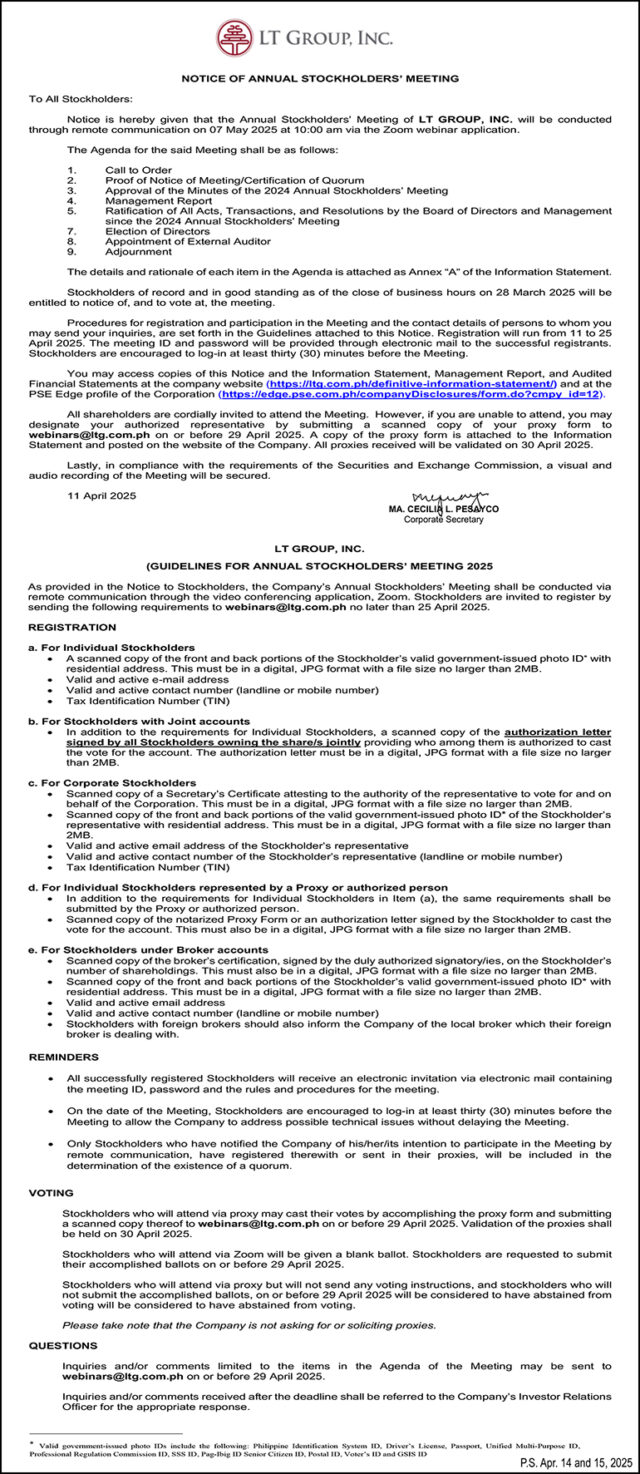
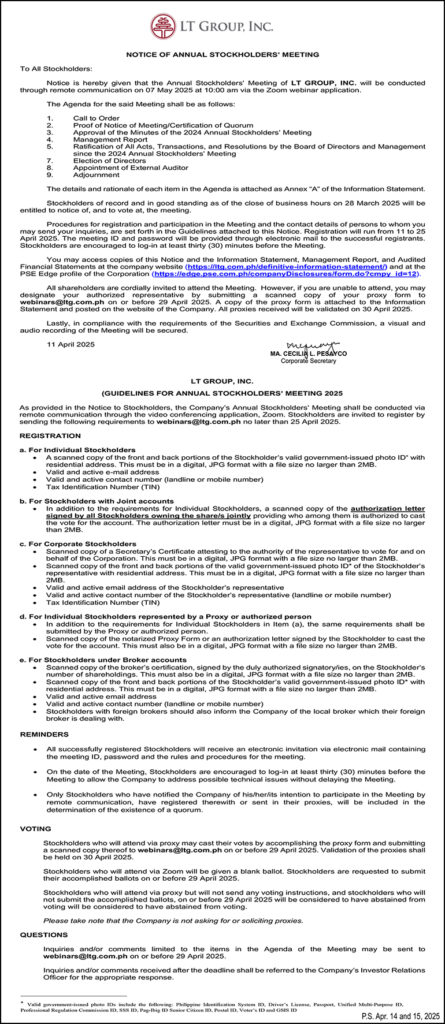
LT Group, Inc. to convene for Annual Meeting of Stockholders on May 7 via Zoom


Spotlight is BusinessWorld’s sponsored section that allows advertisers to amplify their brand and connect with BusinessWorld’s audience by publishing their stories on the BusinessWorld Web site. For more information, send an email to online@bworldonline.com.

Join us on Viber at https://bit.ly/3hv6bLA to get more updates and subscribe to BusinessWorld’s titles and get exclusive content through www.bworld-x.com.

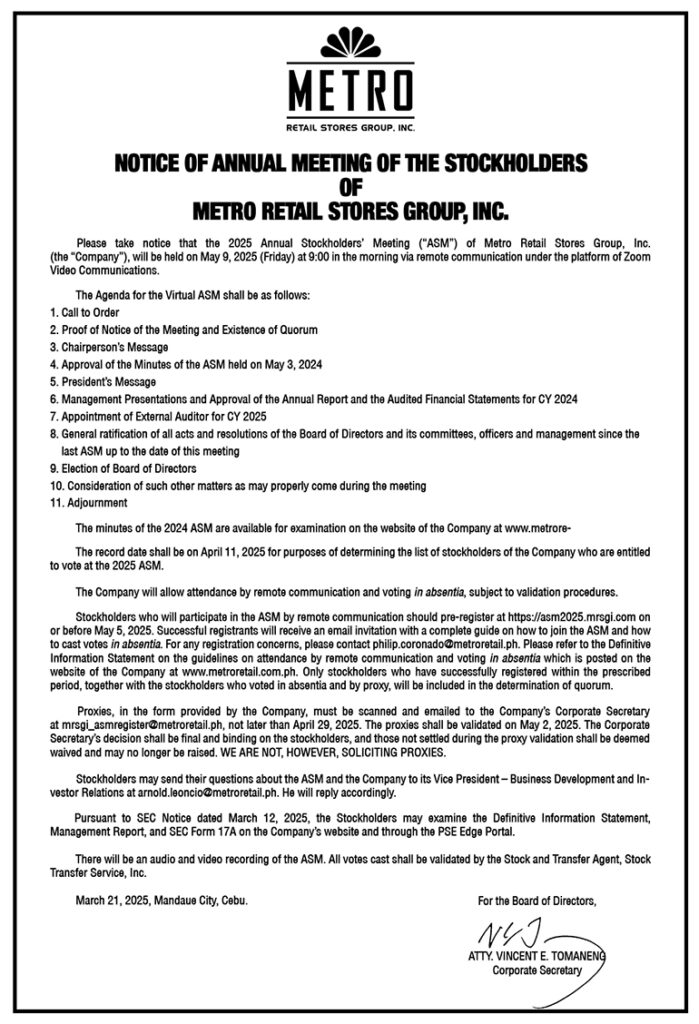
Metro Retail Stores Group, Inc. announces Annual Stockholders’ Meeting on May 9 via Zoom


Spotlight is BusinessWorld’s sponsored section that allows advertisers to amplify their brand and connect with BusinessWorld’s audience by publishing their stories on the BusinessWorld Web site. For more information, send an email to online@bworldonline.com.

Join us on Viber at https://bit.ly/3hv6bLA to get more updates and subscribe to BusinessWorld’s titles and get exclusive content through www.bworld-x.com.

Megawide raises P5.3 billion from preferred shares offering

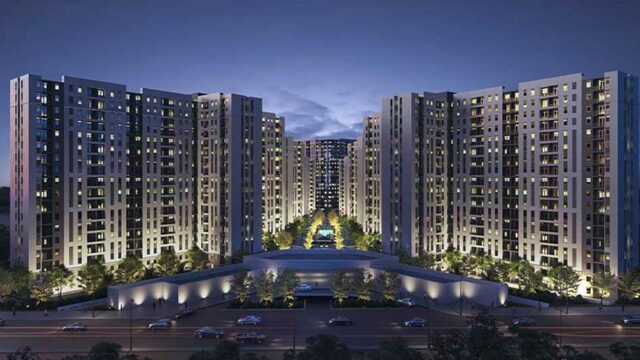
ONE LANCASTER PARK in Imus, Cavite, a joint venture between Megawide’s PH1 World Developers, Inc. and Property Company of Friends, Inc. (Pro-Friends). — BW FILE PHOTO

SAAVEDRA-LED infrastructure conglomerate Megawide Construction Corp. has raised P5.3 billion from its preferred shares offering.

The company listed its Series 6 preferred shares on the Philippine Stock Exchange on Monday, Megawide said in a regulatory filing.

The offering was 1.7 times oversubscribed from its base size of P3 billion.

The offer period ran from March 26 to April 4.

The issuance comprised completed bids amounting to P1.78 billion in Series 6A shares, P1.19 billion in Series 6B shares, and P2.3 billion in Series 6C shares, with dividend rates of 7.6283%, 7.9606%, and 8.2993%, respectively.

Megawide Chief Financial Officer Jez G. Dela Cruz previously said the company would use the proceeds to refinance its Series 4 preferred shares, fund its real estate growth projects, and support general corporate requirements.

“There’s much to look forward to in the years ahead, as we continue to anchor on our engineering and construction DNA, coupled with our pre-cast and construction solutions advantage, to drive our forward integration into scalable and responsive business platforms, such as our foray into real estate development,” Megawide Chairman and Chief Executive Officer Edgar B. Saavedra said.

“Against the backdrop of a national housing crisis, we believe there are significant opportunities in the local real estate space, especially end-user demand in the affordable and socialized housing segments in next-wave cities and suburban areas outside of Metro Manila,” he added.

Megawide engaged PNB Capital and Investment Corp., RCBC Capital Corp., and SB Capital Investment Corp. as the joint issue managers, joint lead underwriters, and joint bookrunners for the transaction.

As of end-2024, Megawide’s order book rose to P43.5 billion, with P17.2 billion worth of new contracts secured.

On Monday, Megawide shares increased by 0.5%, or one centavo, to close at P2 apiece. — Revin Mikhael D. Ochave

Hotel101 tops off Madrid project, completion set for December

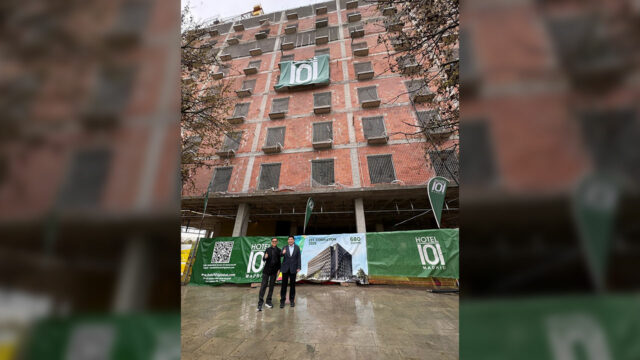
DoubleDragon Corp., the listed property developer owned by Edgar “Injap” Sia II and Tony Tan Caktiong, held the topping-off ceremony for the Hotel101-Madrid project on April 11.

DOUBLEDRAGON CORP. (DD) said the 680-room Hotel101-Madrid project of its hotel subsidiary Hotel101 Global Pte. Ltd. in Spain is set for completion in December as the company continues with its global expansion.

Hotel101 held the topping-off ceremony for Hotel101-Madrid on April 11, 11 months after the start of construction, DD said in a regulatory filing on Monday.

According to the company, the completion of Hotel101-Madrid will coincide with the upcoming F1 Grand Prix in Madrid next year.

The project sits on a 6,593-square-meter commercial property along Avenida Fuerzas Armadas, Valdebebas, in Madrid.

It is located near the Valdebebas Train Station, the IFEMA convention complex, the Real Madrid Sports Complex, and the new Madrid Barajas International Airport.

Once finished, Hotel101-Madrid will be one of the top five largest hotels in Madrid. It is one of the first three Hotel101 projects overseas, along with Niseko in Japan and Los Angeles in the United States.

Hotel101 aims to have one million rooms across 100 countries. It has identified an initial 25 priority countries for expansion, including the Philippines, Japan, Spain, the US, the United Kingdom, the United Arab Emirates, India, China, Thailand, Malaysia, Vietnam, Indonesia, Singapore, Cambodia, Bangladesh, Mexico, South Korea, Australia, Canada, Switzerland, Turkey, Italy, Germany, France, and Saudi Arabia.

Hotel101 is set to have its $2.3-billion listing on the Nasdaq Stock Exchange in the United States within the quarter.

Hotel101 will list on Nasdaq through a merger with JVSPAC Acquisition Corp. The combined entity will trade under the ticker symbol “HBNB.” The two groups signed a merger agreement in April last year.

DD shares climbed by 0.72%, or six centavos, to P8.36 per share on Monday. — Revin Mikhael D. Ochave

Globe’s GCash to acquire up to 50% stake in AB Capital

MICHAEL FOUSERT/UNSPLASH

GLOBE Telecom, Inc., through Globe Fintech Innovations, Inc. (Mynt), said it had closed two investment tranches to acquire a stake in AB Capital Securities, Inc. (ABCSI).

“As of December 31, 2024, Mynt has closed the two investment tranches and currently owns 16% of ABCSI,” Globe said in a regulatory filing on Monday.

Mynt, the parent company of electronic wallet platform GCash, entered into a definitive agreement with ABCSI in September 2023 to acquire up to 50% of its equity.

GCash has over 94 million registered users.

The electronic wallet platform is also among the most anticipated initial public offerings. Globe President and Chief Executive Officer Ernest L. Cu has said the GCash IPO could target an $8-billion valuation and may happen by year-end.

GCash services are currently available in 16 markets, including the United States, the United Kingdom, the United Arab Emirates, Australia, Canada, Germany, Hong Kong, Italy, Japan, Saudi Arabia, Kuwait, Qatar, Singapore, South Korea, Spain, and Taiwan.

For 2024, Globe recorded a core net income of P21.5 billion, marking a 14% increase from P18.92 billion in 2023, driven by higher revenues.

The company reported a combined revenue of P165.02 billion, up 2% from P162.33 billion in 2023, supported by a 4% increase in mobile revenues, which rose to P116.71 billion.

Last year, Globe said its mobile subscriber base grew by 7% year on year to 60.9 million, while mobile data users increased by 3% to 37.4 million.

At the local bourse on Monday, shares in Globe fell by P8, or 0.38%, to close at P2,090 apiece. — Ashley Erika O. Jose

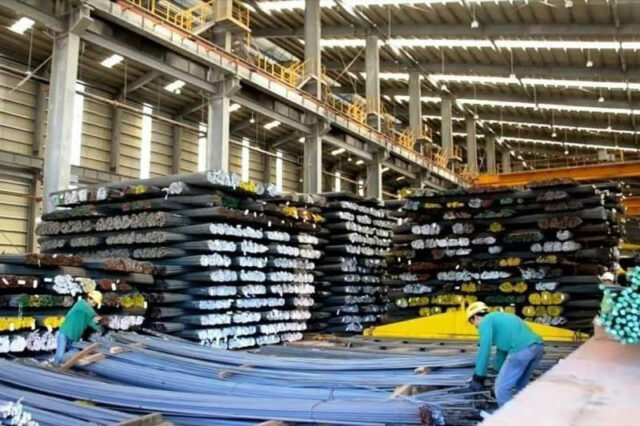
SteelAsia taps Italian firm to build steel mill in Quezon province

STEELASIA MANUFACTURING CORP FACEBOOK

STEELASIA Manufacturing Corp. has tapped Italy’s Danieli Co., Ltd. to build its heavy steel sections mill in Candelaria, Quezon.

Under the agreement, Danieli will supply all the core equipment and technology required for the P30-billion steel mill project.

Using Danieli’s green technologies, the Candelaria mill is expected to have one of the lowest carbon footprints among steel plants worldwide, with a projected reduction of 2 million tons of carbon dioxide.

“Steel is the base development of any country. This is laying the foundation of future development in the Philippines, and this is what we are seeing everywhere in the world,” said Danieli Chief Executive Officer Giacomo Mareschi Danieli in a statement on Monday.

The steel mill will be the first facility in the Philippines capable of producing heavy beams, angles, channels, sheet piles, and narrow plates, all of which are currently imported from China and Vietnam.

“Sections are most suitable for seismic zones or typhoon belts such as the Philippines because of their tensile strength advantages over reinforced concrete,” SteelAsia said.

Special Assistant to the President for Investment and Economic Affairs (SAPIEA) Frederick D. Go, who attended the signing ceremony, said SteelAsia’s investment is the kind of project the administration of President Ferdinand R. Marcos, Jr. seeks to attract.

“We want these kinds of investments to rebuild our economy and move from a consumption-based economy to a more sustainable investment-led economy,” Mr. Go said.

According to SteelAsia, the Philippine construction sector is expected to benefit from the new mill through cost and time savings once operations commence in 2027.

“Delivery lead times, particularly for infrastructure projects, will reduce from three months for imported steel to just two weeks locally,” the company said.

“By substituting these imports, the country will also benefit by avoiding the purchase of US dollars,” it added.

Once operational, SteelAsia’s section mill in Candelaria, along with its facility in Batangas, will help the country replace $1.2 billion worth of steel imports annually.

“It will really help our country’s self-sufficiency and reduce importation dependence from international suppliers,” SteelAsia said. — Justine Irish D. Tabile