Home Blog Page 1267

South Korea’s ousted leader Yoon loses reckless gamble with martial law

South Korean President Yoon Suk-yeol. — REUTERS

SEOUL – South Korea’s ousted leader Yoon Suk Yeol, a brash ex-prosecutor who came to power by repeatedly defying setbacks and taking gambles, ultimately fell victim to political recklessness that led him to impose martial law, former colleagues say.

Dogged by personal scandals involving his wife, a bitter row with political opponents whom he called communist sympathizers, and party-room rifts, Yoon was removed from the presidency on Friday in the third year of his five-year term.

The Constitutional Court upheld Yoon’s impeachment by parliament, ruling unanimously that he violated his constitutional duty by briefly declaring martial law on December 3 with no justifiable grounds.

Mr. Yoon, 64, still faces a criminal trial on charges of masterminding insurrection when he mobilized troops to try to shut down an opposition-led parliament that he accused of trying to destroy the country.

He denies wrongdoing, arguing in court that his six-hour attempt at martial law was to protect the country from “anti-state forces.”

Mr. Yoon used his legal career as a launchpad for elected office, according to a former colleague, winning the presidency in 2022.

“Yoon Suk Yeol was the most powerful prosecutor-general ever,” said Han Dong-soo, a former judge who was head of internal inspection at the prosecutors’ office under Yoon. “He used the office to carry out his plan to become president and in doing so, his actions were daring.”

Mr. Han recalls the future president remarking at a dinner he hosted with free-flowing drinks in 2020: “If I had gone to the military academy, I would have staged a coup.”

Mr. Yoon led high-profile investigations of the politically powerful, billed as a crusade against corruption that launched him into the public eye and generated the support that led to his victory in the presidential election.

But once in the presidency, he struggled to emulate his courtroom victories. Instead, he became increasingly embittered by unrelenting battles with opponents that drew out a recklessness that a former prosecution rival said was his defining trait.

By the time Mr. Yoon briefly imposed martial law in December, he was badly bruised politically.

SCANDALS, ‘AMERICAN PIE’
Mr. Yoon’s presidency was overshadowed by scandals involving his wife, Kim Keon Hee, who was accused of inappropriately accepting a Christian Dior handbag as a gift.

Mr. Yoon apologized after his conservative party suffered a crushing parliamentary election defeat last year, blamed on the scandal. But he continued to reject calls for a probe into the affair and into an allegation of stock price manipulation involving his wife and her mother.

The prosecutors’ office that investigated the allegations did not press charges against the first lady.

The past year was marked by repeated clashes with the opposition Democratic Party, while Mr. Yoon’s pro-business policies and initiatives to tackle an ageing society remained stymied. His 2025 budget was slashed by an opposition angry over his refusal to answer lingering questions about his wife.

Mr. Yoon’s struggles at home contrasted with his relative success internationally.

His push to reverse a decades-long diplomatic row with neighboring Japan and join Tokyo in three-way security cooperation with their key mutual ally, the United States, are widely seen as his signature foreign policy achievement.

Mr. Yoon’s ability to bond on a personal level, seen as the trait that gave him his early career success, was on full display at a White House event in 2023, when he took the stage and belted out the 1970s pop hit “American Pie” for an astonished then-President Joe Biden and a delighted crowd.

SHAMANS, HIGH SCHOOL BUDDIES
Born to a well-to-do family in Seoul, Yoon excelled at school and entered the elite Seoul National University to study law. But his penchant for partying caused him to repeatedly fail the bar exam before passing on the ninth try at age 30.

Mr. Yoon shot to national fame in 2016 when, as the chief investigator probing then-President Park Geun-hye for corruption, he was asked if he was out for revenge and responded that prosecutors were not “gangsters”.

The role he played in jailing Park and his surprise appointment as head of the powerful Seoul Central District Prosecutors’ Office marked the start of a dizzying rise to power.

Two years later, as prosecutor-general, he spearheaded a corruption probe of a close ally to the next president, Moon Jae-in. That made him a darling of conservatives frustrated with Moon’s liberal policies, setting Yoon up to be a candidate for president in 2022.

His term got off to a rocky start when he pushed ahead with moving the presidential office from the traditional Blue House compound to a new site, sparking questions whether it was because of a feng shui belief that the old compound was cursed. Yoon denied any involvement by himself or his wife with a shaman.

When Mr. Yoon refused to fire top officials after a 2022 Halloween crowd crush killed 159 people, he was accused of protecting his “yes men”. One was Safety Minister Lee Sang-min, a graduate of Yoon’s high school.

Another alumnus of the Choongam High School in Seoul was Kim Yong-hyun, who spearheaded the presidential office move, then served as the presidential security service chief and later as defense minister. Kim, the main figure advising Yoon to declare martial law, was also charged with insurrection. He too denies the charges.

Shin Yul, a Myongji University political science professor, said Mr. Yoon’s downfall, political near-demise was likely due to him listening to the wrong people and that he probably “still thinks he did the right thing” in declaring martial law. — Reuters
Trump tariffs provoke world condemnation and fears of a $2,300 iPhone

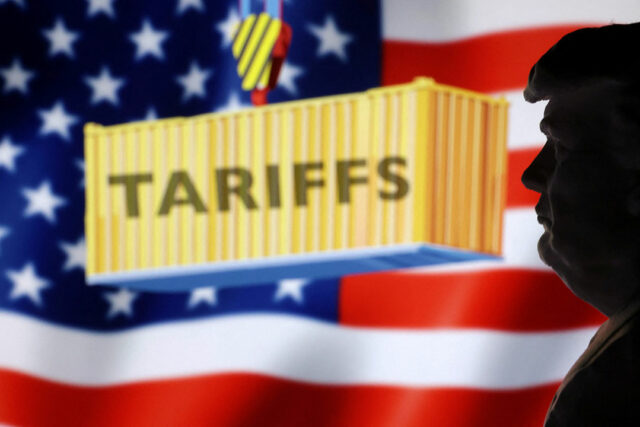
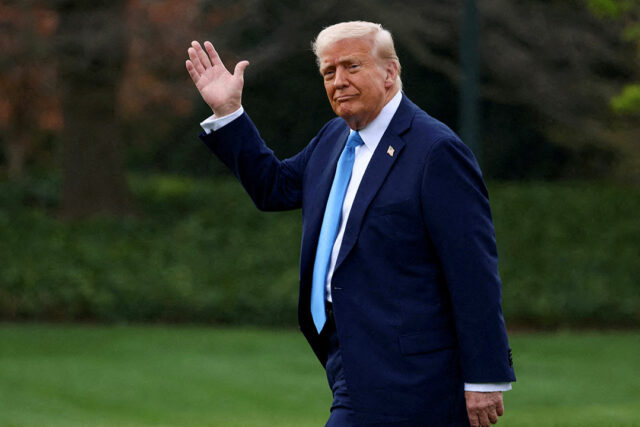
US President Donald Trump — REUTERS

WASHINGTON/OTTAWA/TOKYO – Countries around the world threatened to ratchet up a trade war with the United States as President Donald Trump’s sweeping tariffs ignited fears of steep price increases in the world’s largest consumer market.

The penalties announced by Mr. Trump on Wednesday triggered a plunge in world financial markets on Thursday and drew condemnation from other leaders reckoning with the end of a decades-long era of trade liberalization.

But there were conflicting messages from the White House about whether the tariffs were meant to be permanent or were a tactic to win concessions, with Mr. Trump saying they “give us great power to negotiate.”

The U.S. tariffs would amount to the highest trade barriers in more than a century: a 10% baseline tariff on all imports and higher targeted duties on some of the country’s biggest trading partners.

That could jack up the price for U.S. shoppers of everything from cannabis to running shoes to Apple’s iPhone. A high-end iPhone could cost nearly $2,300 if Apple passes the costs on to consumers, based on projections from Rosenblatt Securities.

Businesses raced to adjust. Automaker Stellantis said it would temporarily lay off U.S. workers and close plants in Canada and Mexico, while General Motors said it would increase U.S. production.

Canadian Prime Minister Mark Carney said the United States had abandoned its historic role as a champion of international economic cooperation.

“The global economy is fundamentally different today than it was yesterday,” he said as he announced a limited set of countermeasures.

Elsewhere, China vowed retaliation for Mr. Trump’s 54% tariffs on imports from the world’s No. 2 economy, as did the European Union, which faces a 20% duty.

French President Emmanuel Macron called for European countries to suspend investment in the United States.

Other trading partners, including Japan, South Korea, Mexico and India, said they would hold off on any retaliation for now as they seek concessions.

Washington’s allies and rivals alike warned of a devastating blow to global trade. Japan, one of the United States’ biggest trading partners and its largest foreign investor, is now facing a “national crisis”, Prime Minister Shigeru Ishiba told parliament.

The tariffs “clearly represent a significant risk to the global outlook at a time of sluggish growth,” IMF Managing Director Kristalina Georgieva said in a statement.

“It is important to avoid steps that could further harm the world economy. We appeal to the United States and its trading partners to work constructively to resolve trade tensions and reduce uncertainty,” Ms. Georgieva said.

U.S. Commerce Secretary Howard Lutnick and senior trade adviser Peter Navarro both told cable news programs on Thursday the president would not back off, and that the tariff increases were not a negotiation.

Mr. Trump then appeared to contradict them, telling reporters, “The tariffs give us great power to negotiate. Always have. I used it very well in the first administration, as you saw, but now we’re taking it to a whole new level.”

Stocks suffered a global meltdown, the U.S. dollar crumbled and oil prices were set for their worst week in months as analysts warned the tariffs could upend supply chains, hurt corporate profits and push the world economy towards recession.

The Dow fell nearly 4%, its biggest one-day percentage loss since June 2020. The S&P 500 lost nearly 5% and the tech-heavy Nasdaq .IXIC declined nearly 6%, its worst day in percentage terms since the pandemic era of March 2020.

American companies with significant overseas production took a hit. Nike shares lost 14% and Apple fell 9%.

Asian shares struggled to recover as their markets opened on Friday with Japan’s Nikkei down 1.85%, extending its 2.8% slide from Thursday. Chinese markets were closed for a holiday.

Mr. Trump says the “reciprocal” tariffs are a response to barriers put on U.S. goods, while administration officials said the tariffs would create manufacturing jobs at home and open up export markets abroad, although they cautioned it would take time to see results.

Vice President JD Vance in an interview with Newsmax faulted critics for taking a short-term view.

“That’s fundamentally what this is about, the national security of manufacturing and making the things that we need, from steel to pharmaceuticals,” Mr. Vance said.

Since returning to the White House in January, Mr. Trump’s on-again, off-again tariff threats have rattled consumer and business confidence. Mr. Trump could step back again, as the reciprocal tariffs are not due to take effect until April 9.

“The tariff plan does not appear to be well thought-out. Trade negotiations are a highly technical discipline, and in our view these proposals do not offer a serious basis for negotiations with any country,” said James Lucier, founding partner at Capital Alpha.

Economists say the tariffs could reignite inflation, raise the risk of a U.S. recession and boost costs for the average U.S. family by thousands of dollars.

Analysts said the tariffs could also alienate allies in Asia and undercut strategic efforts to contain China.

Mr. Trump has slapped a 24% tariff on Japan and a 25% tariff on South Korea, both home to major U.S. military bases. He also hit Taiwan with a 32% tariff as the island faces increased military pressure from China.

Canada and Mexico, the largest U.S. trading partners, were not hit with targeted tariffs on Wednesday, but they already face 25% tariffs on many goods and now face a separate set of tariffs on auto imports. — Reuters

Pioneer Insurance selects Sapiens to drive digital innovation in the Philippines

From left to right: Surajit Basu, Sapiens Regional Manager, Asia; Lorenzo Chan, Jr., Pioneer, Inc. President and CEO; Udi Matot, Sapiens SVP, P&C Business Unit; and Atty. Betty Medialdea, Pioneer Insurance & Surety Corp. President & CEO

Sapiens International Corporation (NASDAQ and TASE: SPNS), a leading global provider of software solutions for the insurance industry, announced that Pioneer Insurance and Surety Corporation, the leading insurance provider in the Philippines, has chosen Sapiens Insurance Platform to drive digital transformation and enhance customer experience.

The collaboration marks a significant milestone for Pioneer as it upgrades its operations, scales its capabilities, and embraces digitalization to stay ahead in the insurance industry.  This initiative will improve core processes with advanced technology to better respond to evolving market demands.

“Sapiens’ comprehensive platform will enable us to accelerate product development, automate workflows, and enhance customer journeys,” said Lorenzo Chan, President and CEO of Pioneer, Inc., the holding company of the Pioneer companies. “This partnership underscores our commitment to delivering innovative and relevant insurance solutions to our customers, while significantly improving operational efficiency. The mentorship model provided by Sapiens will also ensure self-sufficiency as we embrace this transformative journey.”

“We are proud to partner with Pioneer, a market leading insurer in the Philippines, and to demonstrate our growth in this important region,” said Roni Al-Dor, President and CEO of Sapiens. “Our insurance platform will empower Pioneer to meet their ambitious growth goals while delivering superior customer experiences. By automating and digitizing operations, Pioneer is positioning itself as a true innovator in the region’s insurance market.”

About Pioneer Insurance and Surety Corporation

For 70 years, Pioneer Insurance and Surety Corporation has been dedicated to wholeheartedly serving Filipinos through innovative and relevant insurance solutions. Over the decades, Pioneer has earned a reputation for leadership in the non-life industry, and is consistently ranked annually among the top 3 insurance companies in the Philippines by the Insurance Commission. The company is driven by its core values of integrity, excellence, and malasakit (empathy, high regard), supported by over 1,000 employees across more than 20 branches nationwide. For more information, visit https://pioneer.com.ph/.

About Sapiens

Sapiens International Corporation (NASDAQ and TASE: SPNS) is a global leader in intelligent insurance software solutions. With Sapiens’ robust platform, customer-driven partnerships, and rich ecosystem, insurers are empowered to future-proof their organizations with operational excellence in a rapidly changing marketplace. We help insurers harness the power of AI and advanced automation to support core solutions for property and casualty, workers’ compensation, and life insurance, including reinsurance, financial & compliance, data & analytics, digital, and decision management. Sapiens boasts a longtime global presence, serving over 600 customers in more than 30 countries with its innovative SaaS offerings. Recognized by industry experts and selected for the Microsoft Top 100 Partner program, Sapiens is committed to partnering with our customers for their entire transformation journey and is continuously innovating to ensure their success.

For more information visithttps://sapiens.comor follow us onLinkedIn.


Spotlight is BusinessWorld’s sponsored section that allows advertisers to amplify their brand and connect with BusinessWorld’s audience by publishing their stories on the BusinessWorld Web site. For more information, send an email to online@bworldonline.com.

Join us on Viber at https://bit.ly/3hv6bLA to get more updates and subscribe to BusinessWorld’s titles and get exclusive content through www.bworld-x.com.

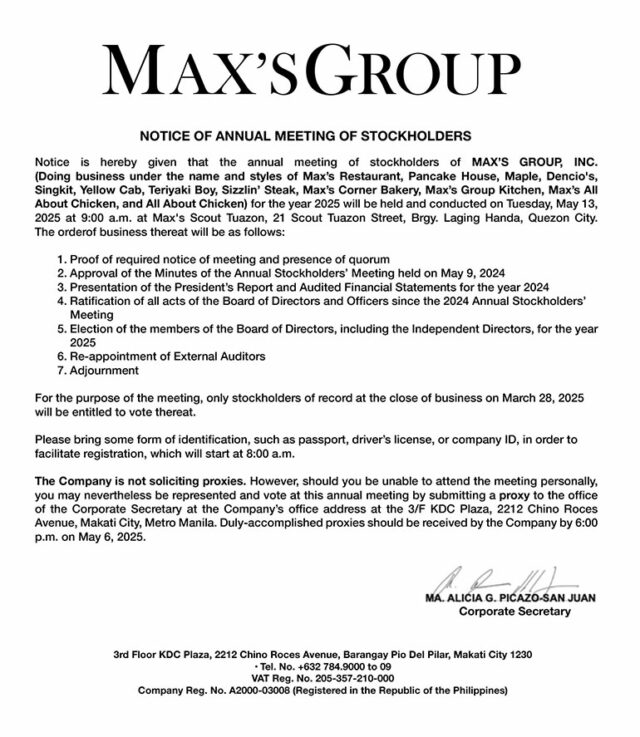
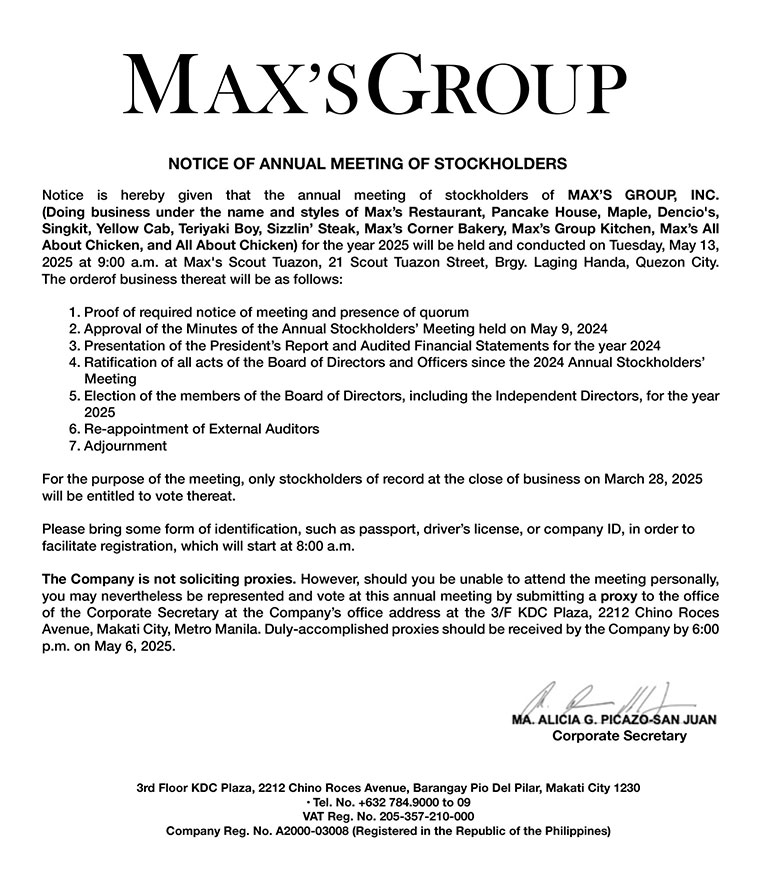
Max’s Group, Inc. to conduct Annual Meeting of Stockholders on May 13


Spotlight is BusinessWorld’s sponsored section that allows advertisers to amplify their brand and connect with BusinessWorld’s audience by publishing their stories on the BusinessWorld Web site. For more information, send an email to online@bworldonline.com.

Join us on Viber at https://bit.ly/3hv6bLA to get more updates and subscribe to BusinessWorld’s titles and get exclusive content through www.bworld-x.com.

US slaps higher tariff on Philippines

US President Donald J. Trump announced he will impose a 10% baseline tariff on all imports to the United States. — REUTERS

By Aubrey Rose A. Inosante and Justine Irish D. Tabile, Reporters

US PRESIDENT Donald J. Trump is imposing a bigger-than-expected tariff on Philippine exports to the United States, as part of a broader reciprocal tariff plan that will apply to all its trading partners.

However, Philippine government officials downplayed its impact, saying this was still lower than tariffs imposed on the rest of Southeast Asia.

Finance Secretary Ralph G. Recto said on Thursday that the Philippine economy, which is mainly driven by domestic demand, is “relatively resilient” against trade wars.

Philippines’ exports to US to be hit by Trump tariffs

“However, as with all countries, we are not spared from the impact of the expected decline in international trade and possible slowdown of global growth due to supply-chain disruptions, higher interest rates, and higher inflation,” Mr. Recto said in a statement.

Trade Secretary Cristina A. Roque said the reciprocal tariffs can provide opportunities for the Philippines as regional competitors will be subjected to higher tariffs.

“We view with guarded optimism that the recent US imposition of reciprocal tariffs will provide strategic opportunities for the Philippines to improve its economic relationship with the US,” she said in a statement.

Ms. Roque said she will request a meeting with her US counterpart to discuss “strengthening” trade relations between the two countries.

On Wednesday, Mr. Trump announced a 10% tariff on all its trading partners, which will take effect on April 5. (See related story “Trump’s tariffs stoke global trade war as China, EU hit back”).

The US will also slap individualized higher reciprocal tariffs on major trading partners including the European Union, China, Japan, South Korea and the Philippines, starting April 9.

“Foreign nations will finally be asked to pay for the privilege of access to our market — the biggest market in the world,” Mr. Trump said.

According to an infographic posted by the White House on X, the Philippines will be slapped with a 17% “discounted reciprocal tariff” as the Philippines charges a 34% tariff on the US.

However, an annex document to the executive order on reciprocal tariffs showed the adjusted reciprocal tariff for the Philippines is at 18%.

It was not immediately clear why there was a discrepancy in the tariff rates in the infographic posted on X and the annex document posted on The White House website.

Nonetheless, Philippine officials cited the 17% tariff rate in their press statements.

Among Southeast Asian countries, Cambodia faces the steepest tariff at 49%, followed by Laos (48%), Vietnam (46%), Myanmar (45%), Thailand (37%), Indonesia (32%), Malaysia (24%) and Brunei (24%). Singapore will be imposed a baseline tariff of 10%.

“The imposition of the 17% tariff, which is the second lowest, is not so bad in our opinion. We still see it as somewhat favorable,” Presidential Communications Office Undersecretary Clarissa A. Castro said at a Palace briefing in mixed English and Filipino.

Agriculture Secretary Francisco P. Tiu Laurel, Jr. said the Philippines could take advantage of the relatively lower tariff rate compared with its neighbors to “push for more sales to the US of our products.”

“The new tariffs also put the Philippines in a more advantageous position, more specifically for certain export products like coconuts. With lower tariffs than Thailand, Philippine coconut exports can be more competitive,” Ms. Roque said.

Ms. Roque noted that there are Philippine products that will be exempted from reciprocal tariffs, including copper ores and concentrates and integrated circuits.

According to a White House fact sheet, the reciprocal tariffs will not apply to certain goods, such as semiconductors, copper, pharmaceuticals, gold, and “certain minerals that are not available in the US.”

However, agri-based products, particularly food exports, are not exempted from reciprocal tariffs.

“The recent US measure has made US imports more expensive so that their domestic manufacturers can compete. Equally important for the US is to improve its access to rapidly growing economies such as the Philippines,” Ms. Roque said.

“In this regard, the Philippines aims to actively engage the US in a discussion to facilitate enhanced market access for its key export interests, such as automobiles, dairy products, frozen meat, and soybeans, within the framework of a bilateral free trade agreement.”

Special Assistant to the President for Investment and Economic Affairs Frederick D. Go said some investors may relocate and set up manufacturing facilities in the Philippines, given the relatively lower tariffs on Philippine exports to the US.

Trade Undersecretary Allan B. Gepty said it is important to maintain “good relations” with the US. “It would be good to see how we can seize opportunities from the possible trade diversion and recalibration of some investments in the region,” he said.

US President Donald J. Trump’s Reciprocal Tariffs

‘GAME CHANGER’
Fitch Ratings Head of US Economic Research Olu Sonola said Mr. Trump’s aggressive tariffs are a “game changer, not only for the US economy but for the global economy.”

“Many countries will likely end up in a recession. You can throw most forecasts out the door, if this tariff rate stays on for an extended period of time,” Mr. Sonola said.

Higher tariffs may also drive up prices and hurt demand for Philippine-made goods in the US.

“The US is the biggest export market of the Philippines, so this will have a drag on Philippine growth,” former commissioner of the Philippines Tariff Commission George N. Manzano said in a Viber message.

In 2024, the US was the top destination for Philippine exports, accounting for 17% of the total.

“US importers will put on all these additional tariffs to the selling price in the US,” Foreign Buyers Association of the Philippines  President Robert M. Young told BusinessWorld.

“The end result of this is that the Philippines will have difficulties in getting export orders due to lesser or no demand,” he added.

Asked if the Philippines could benefit from the higher tariffs imposed on other countries, Mr. Young pointed out that Philippines has higher costs.

“To start with, the Philippines was selling at a higher price than Vietnam, India, and Cambodia. Meaning, Philippine goods will be the last to be picked up from the shelves,” he said. “Also, Vietnam acted swiftly by reducing their tariff on US goods coming into Vietnam.”

The Philippines exported $12.14 billion worth of commodities to the US in 2024. Of the total, 53% or $6.43 billion were electronic products.

“Electronics and semiconductors, which comprise the bulk of Philippine exports to the US will be vulnerable. Apparel, footwear, and textile products, which rely on preferential trade agreements, may also face competitiveness issues,” Philippine Institute for Development Studies Senior Research Fellow John Paolo R. Rivera said.

“Agricultural exports, such as coconut oil, processed fruits, and seafood, could see a decline in demand due to price sensitivity in the US market,” Mr. Rivera said.

Mr. Rivera noted the direct impact on Philippine gross domestic product (GDP) may not be “immediately severe.”

“It’s a prolonged tariff war could dampen investment sentiment and export growth. If businesses pass on higher costs to consumers, inflation may spike,” he said.

The Development Budget Coordination Committee is targeting 6-8% GDP growth this year. It is also projecting 6% and 5% growth in exports and imports, respectively, this year.

In a report, ANZ Research said it estimated that the reciprocal tariffs could have a “milder impact” on the Philippines, along with Indonesia and India, due to their lower reliance on exports.

“Our understanding is that these tariffs are not final and can be negotiated lower, depending on the extent of reduction in the bilateral trade surplus with the US,” ANZ said.

Data from the Office of the US Trade Representative showed that bilateral trade between the Philippines and the US reached $23.5 billion in 2024 — comprising $9.3 billion in US exports and $14.2 billion in imports.

The US goods trade deficit with the Philippines was $4.9 billion in 2024, up 21.8% from last year.

To mitigate the negative effects of the tariffs, Mr. Young said that “there should be a joint best effort from the Philippine government and private sector to turn their heads to other potential export markets.”

Department of Trade and Industry-Export Marketing Bureau Director Bianca Pearl R. Sykimte said that the department is already looking at new export markets such as in the Middle East and Africa.

Confederation of Wearables Exporters of the Philippines Executive Director Ma. Teresita Jocson-Agoncillo said that the reciprocal tariffs will be imposed on top of the most favored nation (MFN) apparel rates.

“It’s better for us to wait for the US side to publish guidelines. As it looks the reciprocal tariff will be MFN rates plus 17%,” she said in a Viber message. “There is still an advantage, as the Philippines has the lowest (tariff) now, against ASEAN (Association of Southeast Asian Nations) counterparts but note that in the end it can still impact global sourcing and supply chain movement.”

CEOs remain optimistic amid headwinds — survey

Majority of chief executive officers (CEO) in the Philippines have a slightly optimistic outlook for the next 12 months. — PHILIPPINE STAR/RYAN BALDEMOR

MAJORITY of chief executive officers (CEO) in the Philippines have a slightly optimistic outlook for the next 12 months amid heightened global uncertainty and inflationary pressures, a survey showed.

In the Ernst & Young (EY) CEO Outlook Survey, 62% of the respondents said they are “somewhat optimistic” on the local business environment for this year.

“Caution is driven by the inflationary pressure that remains to be here in the local environment,” Noel P. Rabaja, head of strategy and transactions services group of EY-member SGV & Co., told reporters on Thursday.

“Aside from that, it is really the global uncertainties that we continue to experience, especially now, given the recent news on global trade policies,” he added.

The EY CEO Outlook Pulse survey, conducted by EY-Parthenon, gathered the perspectives of 1,200 leading CEOs globally, 50 of which are CEOs in the Philippines.

“The survey reveals that Philippine CEOs are confident, but not overly so, in their near-term outlook. They are cautiously optimistic about domestic growth, recognizing that local challenges tend to have a more direct and immediate impact on their businesses compared to global issues,” the report said.

“This perspective also reflects a conservative view that global headwinds might pose greater risk to local enterprises than to their counterparts in more mature economies.”

On the other hand, Philippine CEOs expressed high confidence when asked from a global (46%) and sector-specific (48%) perspective.

“This is particularly relevant given the Philippine economy’s dependence on imported key commodities and revenue streams linked to external markets, such as the business process outsourcing sector and overseas Filipino workers’ remittances,” it said.

The survey also revealed CEOs’ confidence about growth in their own sector.

“This is largely attributed to their expertise marked by their possession of deep insights into industry trends, competition, and market opportunities,” EY said.

At the same time, the survey showed 86% of the Philippine CEOs prioritize investing in new areas through joint ventures or mergers and acquisitions (M&As).

“It is interesting to note that there are a lot of Philippine CEOs considering M&A opportunities in 2025,” said Mr. Rabaja.

“The implication of that is that there is going to be more M&A transactions that we will see in the Philippines and that may attract more foreign investors coming in by way of participating in the transactions,” he added.

This participation, he said, will help drive foreign investment growth in the Philippines.

The report also showed that 82% of the business leaders are prioritizing investments in existing technology stack.

“One thing highlighted in the survey is the fact that Philippine CEOs are looking into accelerating investment in technology adoptions,” said Mr. Rabaja.

“This means that there are many corporations looking at accelerating their digital transformation,” he added.

According to the report, Philippine CEOs are adopting a tech-forward approach with 80% of the leaders recognizing the importance of investing in emerging technologies.

However, the CEOs have a cautious outlook on costs with 14% expressed pessimism on the cost of inputs and doing business, while 26% expressed pessimism in passing price increases to customers.

“While CEOs expect inflation to align with forecasts, they recognize potential risks that could skew this trajectory. As a result, a key watchout is the ability to transfer costs to customers if input prices rise more than anticipated,” the report said.

“To prepare for these risks, Philippine CEOs are planning to adopt strategies that enhance their operational capabilities through strategic initiatives like M&A and joint ventures to unlock efficiencies and potential cost synergies,” it added. — Justine Irish D. Tabile

Infrastructure spending declines in December

GOVERNMENT EXPENDITURES on infrastructure and other capital outlays jumped by 10.1% to P1.33 trillion in 2024. — PHILIPPINE STAR/ NOEL B. PABALATE

INFRASTRUCTURE SPENDING slumped by nearly 20% in December, but still exceeded the full-year program, the Department of Budget and Management (DBM) said.

Latest data from the DBM showed that spending on infrastructure and other capital outlays fell by 19.8% or P36.3 billion to P146.7 billion in December 2024 from P183 billion in the same month in 2023.

“This was attributed to the combined impact of the base effects of high capital disbursements in 2023, as well as the ongoing processing and release of cash allocations for payments of completed and ongoing capital outlay projects of various departments/agencies during the latter part of 2024,” the DBM said.

For the full-year, expenditures on infrastructure and other capital outlays jumped by 10.1% to P1.33 trillion from P1.2 trillion in 2023. This also exceeded the P1.24-trillion program by 6.7%.

The DBM attributed the faster infrastructure spending to the implementation of the Department of Public Works and Highways’ (DPWH) banner infrastructure projects as well as defense modernization projects of the Department of National Defense.

DBM data showed overall infrastructure disbursements rose by 8.9% to P1.545 trillion in 2024 from P1.42 trillion in 2023. It exceeded the P1.473-trillion program for 2024 by 4.9%.

“This was equivalent to 5.8% of GDP, well within the 5-6% target for 2024 and sustaining the 5.8% outturn in 2023,” the department said.

Infrastructure disbursements also include infrastructure components of subsidy and equity to government-owned and -controlled corporations and transfers to local government units.

“This was credited mainly to the accelerated infrastructure spending of the DPWH for its accelerated implementation of construction activities, particularly from carry-over or previous years’ projects, progress billings from completed ongoing infrastructure projects, as well as the direct payments made by development partners for foreign-assisted rail projects of the Department of Transportation,” the DBM said.

Oikonomia Advisory and Research, Inc. Economist Reinielle Matt M. Erece said the P122.2-billion increase in infrastructure and capital outlays in 2024 was partly driven by defense modernization programs of the government.

“This can be in response to the heightened geopolitical tensions felt by a lot of countries,” he said.

Rizal Commercial Banking Corp. Chief Economist Michael L. Ricafort said faster infrastructure spending last year can be partly attributed to preparations for the May elections.

“(This is) part of the preparations for the midterm elections, as basis for accomplishments that are consideration for the voters to choose some candidates based on their completed projects and programs,” he said.

Mr. Ricafort said the government likely expedited infrastructure projects in the first three months of 2025 ahead of the election ban.

The Commission on Elections’ ban on public works spending began on March 28 and will run for 45 days. The midterm elections are scheduled for May 12.

Mr. Erece said he expects slower infrastructure spending as the government “reviewed and removed some of the unprogrammed appropriations and other expenses that the administration felt were unneeded, at least in the short term.” — Aubrey Rose A. Inosante

Evolving internet connectivity in the Philippines

rawpixel.com | Freepik

From dial-up connections in hefty computer sets to the mobile data on our phones, the internet has evolved how individuals connect, learn, and amuse themselves, as well as how businesses operate and engage with their markets.

One of the earliest forms of internet connectivity is dial-up from the 1990s. Dial-up used telephone lines to connect computers to the internet. It employed modem technology that converts digital data into analog signals, allowing computers to connect to the internet. Typically, a dial-up connection ran at slower speeds by 56 kilobits per second (kbps) — making it time-consuming to perform daily and simple tasks.

The starting point of connecting the Philippines to the global internet can be traced back to the Philnet project, spearheaded by the Department of Science and Technology and the Industrial Research Foundation. This led to the very first internet connection of the country on March, 29, 1994, when former Computer Network Systems Corp., (ComNet) engineer Benjie Tan installed a Cisco 7000 router at the PLDT network center and connected it to Sprint Communications, a US telecommunication services company. The connection was recognized in “The First International E-Mail Conference” held in the University of San Carlos in Cebu after the campus successfully linked up to the connection.

After dial-up, broadband connections started to break through in the Philippines. Broadband technology offers faster internet speeds, starting at 256 kbps and up. More specifically, broadband connections make use of the Digital Subscriber Line (DSL), which transmits data over telephone lines. Alongside faster internet speeds, it also allows users to use the phone line and internet service simultaneously.

The broadband connection is a huge step for digital connectivity, greatly enhancing digital activities such as streaming videos, downloading larger files, and playing online games. This advancement has also spurred growth among services offering reliable broadband connectivity. From upgrading households, broadband connectivity has played a key role in shaping business operations and platforms.

As of 2025, according to Ookla’s Speedtest Global Index, Manila recorded a fixed broadband download speed of 89.96 Mbps and upload speed of 50.33 Mbps. Currently, it is ranked 58th in fixed broadband connection, with a global average of 94.40 Mbps.

“A robust broadband connectivity infrastructure is not just a technological necessity; it’s an essential cornerstone for the Philippines to boost growth and attain its goal of becoming an upper middle-income country in the next couple of years,” Manuela V. Ferro, vice-president for East Asia and Pacific at World Bank, highlighted.

Broadband connections were soon followed by fiber optic internet, known for significantly improved network speeds compared to the earlier internet models. Fiber optic utilizes optic cables that can transmit data rapidly and connect users across the country. The fiber optic serves as data gateways for long distance connectivity and faster internet speeds, reaching up to 1 gigabit per second (Gbps), remarkably augmenting internet services and elevating the overall user experience.

5G network

Also greatly enhancing digital connectivity in the country is the adoption of the fifth-generation cellular technology. 5G now stands as a standard source of internet connectivity that comprises extremely high internet speed, greater internet capacity and expanded bandwidth. In particular, the network can deliver speeds of up to 10 gigabytes per second (Gbps), enhances Internet of Things (IoT) applications, and exceeds over 1 million connections, among other benefits.

Before 5G, earlier mobile network technologies consisted of 1G (first generation), mainly used for voice communication; 2G (second generation), which enabled both voice calls and text messages; 3G (third generation), which provides a network for text, calls, and limited data transmission; and 4G (fourth generation), with access to mobile internet.

5G has advanced these capabilities, providing faster and more reliable connectivity, essential for powering up households and businesses. For instance, it connects businesses to cloud technology, which many are now increasingly utilizing for secure data storage and access.

Also, with sustainability at the core of many business operations, 5G connectivity helps in decreasing carbon emissions and enables a smart, energy-efficient network across sectors. According to Earth.org, when transmitting data, 5G cell sites only consume 15% of energy compared to 4G cell sites. 5G has been seen driving sustainable practices across sectors, including agriculture, energy, manufacturing, transport, and utilities, as shared by global professional services Accenture in a report. More particularly, 5G helps in improving grid optimization and demand for energy-efficient technologies. In agriculture, it is used to power information and communications technology solutions, like automated farming, real-time monitoring, and soil sensors, further minimizing environmental impact of agricultural activities.

Satellite internet

Also becoming more apparent is the utilization of satellite internet in the Philippines. The satellite internet is the kind that uses low earth orbit (LEO) satellites in space to provide internet connectivity. More specifically, it offers broadband internet that supports high-quality streaming, gaming, video calls, and accessing other digital services.

Unlike physical cables or fiber, these satellite constellations transmit data through radio signals in outer space. Because these satellites orbit high above the earth, they provide a vast coverage of internet connectivity, efficiently removing geographical barriers and reaching any location on the planet, be it rural or urban areas.

In recent years, the Philippines used satellite internet to its advantage. For example, it acts as a communication tower in several parts of the country, which in turn, benefits many communities in times of natural calamities. Additionally, it has been leading the way for sector-specific solutions. A report from Philippine Space Agency (PHILSA) indicated that satellite internet is essential for telemedicine, real-time weather data, and submission of data reports to provincial and regional headquarters.

Building on these digital advancements, many non-geostationary satellite orbit service providers are offering satellite internet services to Filipinos. These service providers have employed satellite internet kits in isolated and rural areas of the country.

Other initiatives involve the installation of satellite internet terminals and access points to these rural areas, as part of PHILSA’s Introducing Non-Geostationary Satellite Constellations Test Deployments to Improve Internet Service (INCENTIVISE) project. These initiatives are set to address the country’s digital gaps and improve connectivity and technological capabilities through space technology. — Angela Kiara S. Brillantes

Century Pacific Food, Del Monte may see impact from Trump tariffs, say analysts

CENTURYPACIFIC.COM.PH

THE 17% reciprocal tariff imposed by the United States on the Philippines could affect companies like Century Pacific Food, Inc. (CNPF) and Del Monte Pacific Ltd. (DMPL), according to analysts.

“Century Pacific Food, Inc.’s coconut business could be heavily impacted, as a significant portion of its clients’ sales relies on the US market,” Unicapital Securities, Inc. Research Head Wendy B. Estacio-Cruz said in a Viber message on Thursday.

In 2024, CNPF entered into a multiyear agreement to supply The Vita Coco Company, a US-based coconut product company, with 90 million liters of coconut water until 2029.

CNPF shares dropped by 4.34%, or P1.55, to P34.15 per share on Thursday following the announcement of the 17% reciprocal tariff on Philippine exports, part of US President Donald J. Trump’s “Liberation Day” tariff policy.

The Philippines currently imposes a 34% tariff on US goods. An annex to Mr. Trump’s executive order, posted on the White House website, shows an adjusted tariff rate of 18% for the Philippines, which will take effect on April 9.

“Most of our listed companies export to China and ASEAN (Association of Southeast Asian Nations), and we don’t really have any listed companies that derive significant income from the US aside from JFC and Del Monte Pacific Ltd.,” AP Securities, Inc. Research Head Alfred Benjamin R. Garcia said in a Viber message.

Del Monte Foods Holdings Ltd. generated approximately $1.73 billion in sales in the US for the period ending April 30, 2023, according to its consolidated financial statements.

DMPL shares were unchanged at P3 per share on Thursday.

“For JFC (Jollibee Foods Corp.), the pinch may come in the form of rising inflation in the US, which could eat into its margins,” Ms. Estacio-Cruz said.

As of March 12, 2025, Jollibee reported operating 76 stores across 14 US states. In addition to its flagship Jollibee brand, the company manages other brands in the US, including Chowking and Red Ribbon.

JFC shares fell by 3.11%, or P7.20, to P224 per share on Thursday.

Alvin D. Lao, president and chief executive officer of listed specialty food ingredients and oleochemicals company D&L Industries, Inc., said in a Viber message that the company is unfazed by the tariffs.

“Since D&L is a big importer, we can also benefit when more suppliers stop selling to US customers and (instead) sell to us. This refers to the raw materials that we import,” he said.

He added that the company’s exports to the US are less than 3% of its revenue and are also sellable to other markets.

“These are mostly high-margin specialty products with unique functional and technical properties, highly sought after and in high demand, so buyers are not as price-sensitive,” Mr. Lao said.

D&L stocks fell by 1.67%, or P0.09, to P5.31 per share on Thursday following the tariff announcement.

“Even though the US is our largest export destination, it still accounts for only around 16% of our total exports as of February 2025. Our participation in the Regional Comprehensive Economic Partnership free trade deal, which includes ASEAN, China, South Korea, Japan, Australia, and New Zealand, gives us plenty of other large markets for our exports,” AP Securities’ Mr. Garcia said.

“Industries that may be negatively affected by these tariffs are electronics, manufacturing, agriculture, and automotive, among others. Aside from these, the trickle-down effect of these tariffs could extend beyond just exporters. Local manufacturers that rely on imported raw materials from the US may also face increased costs,” Unicapital’s Ms. Estacio-Cruz said.

The direct impact of tariffs on most listed companies will “probably be limited,” China Bank Capital Corp. Managing Director Juan Paolo E. Colet said in a Viber message.

“The additional tariffs are generally seen as negatively impacting our goods exporters to the US, though perhaps not as bad as initially feared because we have the lowest rate among our emerging market peers…” he added.

Mr. Trump’s tariff for the Philippines is lower compared to neighbors such as Cambodia (49%), Laos (48%), China (34%), and Indonesia (32%).

Data from the Philippine Statistics Authority showed that the US remained the top destination for Philippine-made goods, with exports valued at $12.14 billion or 16.6% of total export sales.

Rizal Commercial Banking Corp. Chief Economist Michael L. Ricafort said in a Viber message that the reciprocal tariff is expected to have a limited impact on the Philippines.

“Other ASEAN and Asian countries with higher US import tariffs could look for alternative export markets such as more exports to the Philippines,” he said.

Meanwhile, Mr. Colet said in a Viber message that the reciprocal duties could position the Philippines as an alternative base for foreign companies.

“We see a potential silver lining. The new US reciprocal tariff regime presents an opportunity for us to position the Philippines as a competitive export base to attract foreign companies,” Mr. Colet said.

“To do that effectively, we need to redouble efforts to lower energy costs, improve infrastructure, and enhance the ease of doing business,” he added. — Revin Mikhael D. Ochave

David Archuleta releases playful pop anthem

SCREENSHOT from David Archuleta’s “Crème Brulée” music video.

American Idol favorite sings in Spanish, celebrates his queerness

SINGER-SONGWRITER David Archuleta, who was a favorite among Filipinos during his stint on American Idol, has released his latest single, “Crème Brulée,” the first track off of his upcoming EP.

It follows a previous single, “Hell Together,” where Mr. Archuleta expanded his pop songwriting to have a more personal, emotional impact. This time, he tapped into his flirtatious side and his Latin roots to come up with something new.

Co-written with Ryan Nealon and Robyn Dell’Unto and produced by Michael Blum, “Crème Brulée” blends English and Spanish lyrics, and aims to be “as smooth and addictive as the namesake dessert,” according to the singer.

“I’ve always been in touch with my Latin roots, but there wasn’t a space for it before. I recorded a Spanish version of ‘Crush’ as a teenager, but for some reason the record label didn’t want to sell it. I was also part of the Spanish ‘We Are The World’ cover,” the 34-year-old singer said at an online media roundtable on April 2.

He burst into the pop music scene at the age of 17 when his vocal talent was discovered on the seventh season of  the singing competition show American Idol where he won second place. Since then, he has churned out multiple platinum-selling hits globally, including in the Philippines.

“This is actually the first time I’ve done a pop song in my career where I’m singing in Spanish. I hope to implement that more in my music,” he told the press. “I feel I’m sexier when I’m speaking Spanish, and more of that Latin flame comes on. I get more comfortable with my sensuality.”

EMBRACING HIS QUEERNESS
On the confidence showcased in “Crème Brulée,” Mr. Archuleta added that “exploring his queerness and embracing it” has helped him evolve to become more charismatic and in his element.

“I was always so shy before. Now it’s kinda like, screw it. I’m here to have a good time. And if I make mistakes, I’ll learn from my mistakes and so be it. You become older and wiser,” he said.

The lyrics were written to tease the listeners, with the phrase “yo te vuelvo loco (I make you crazy) showcasing this new side of the artist. For him, no longer hiding his sexuality has allowed him to be flirtier and more playful, both in his personal life and in his music.

“There are a lot of performers who feel like they have to hide who they’re attracted to, who they’re in a relationship with, who the songs are about, because there’s prejudice. There may be pushback from some people, but there are those who love you and accept you for who you are,” Mr. Archuleta said.

The song’s music video features an intricately choreographed dance, created in collaboration with Aidan, Jordan, and Nathan Kim of the JA dance collective. In it, the artist gets to dance “sensually but without demanding attention.”

“When you’re out of the closet, it doesn’t have to be so in your face. Some people can do that great, but that’s not always my style. Here, I’m having fun with it but I’m still kinda chill and laidback. We found a great combination of those elements,” he explained.

COMPLEX CHOREOGRAPHY
The queerness in the “Crème Brulée” dance video is more subtle, with Mr. Archuleta and the dancers dressed in neutral tones, though the lighting towards the end incorporates rainbow-like colors.

He explained that being part of the LGBTQ+ (lesbian, gay, bisexual, trans, queer, plus) community is more than just “adhering to standards of black and white,” with each person having a different experience on the spectrum.

“There’s a certain aesthetic expected of being gay, so I wanted to present a more genderfluid look,” he said. “I love the stuff that’s in your face, loud, and poppy, but I do identify as queer and what I like about it is that it’s a bigger umbrella. We show a bit of that in the ‘Crème Brulée’ video, those different parts of being LGBTQ.”

“Who knows? Maybe I’ll show other parts later,” he concluded.

“Crème Brulée” is out now on all digital music streaming platforms. — Brontë H. Lacsamana

Tariff concerns may put pressure on peso

BW FILE PHOTO

THE PESO could slide back to the P58 level in the coming weeks on safe-haven demand for the dollar following the Trump administration’s move to slap a reciprocal tariff on Philippine exports to the United States, with investors awaiting more clarity on the potential impact of the sweeping levies on the global economy.

The local unit has been trading at the P57 level since late February as the greenback has been hit by US recession fears amid US President Donald J. Trump’s slew of protectionist policies combined with weak data out of the world’s largest economy.

On Thursday, the peso closed at a near six-month high of P57.095 per dollar, up 12 centavos from Thursday’s finish of P57.215.

This was its best close since it ended at P57.02 on Oct. 9, 2024.

The dollar slid broadly on Thursday after Mr. Trump announced harsher-than-expected tariffs against US trading partners, jolting the markets as investors sought safe havens such as the yen and Swiss franc, Reuters reported.

The dollar index, which measures the US currency against six other units, fell to 102.98, its lowest since mid-October. The index is down more than 4% this year.

“The dollar will be stronger in the near term as the markets slide to safety because of growing concerns over the health of the US economy that the retaliatory tariff may cause a recession and result in a slowdown in global growth. So, the dollar might strengthen due to market safe-haven demand,” a trader said in a phone interview.

The trader said the peso could trade between P57 and P58 in the near term due to trade war concerns.

“Trump’s tariff on Philippine exports will likely put downward pressure on the peso in the near term, though the extent depends on market sentiment and how businesses adjust. The Philippines runs a trade deficit. A hit to exports due to tariffs could widen the trade gap, increasing demand for dollars to pay for imports, which could weaken the peso. However, there will be delayed impacts as businesses will take time to adjust their strategies,” Philippine Institute for Development Studies (PIDS) Senior Research Fellow John Paolo R. Rivera said.

“Investors might also see these tariffs as a sign of growing trade uncertainty with the US, leading to weaker confidence in Philippine assets. If foreign investors pull out from local stocks or bonds, this could add to peso depreciation pressure.”

The lack of clarity on the implementation of the latest round of tariffs is expected to stoke volatility in global markets, Reyes Tacandong & Co. Senior Adviser Jonathan L. Ravelas said, adding that the peso could range from P57.20 to P57.50 per dollar in the coming weeks.

“There is little detail and no clear rules on trade, leading to continued uncertainty and dampened consumer and corporate confidence,” he said. “Retaliation from trade partners, currency volatility, and depreciations are expected, which will help estimate economic deadweight losses.”

“Tariff threats create uncertainty around potential rate cuts and jeopardize the stability of the Philippine peso,” Mr. Ravelas added.

Bangko Sentral ng Pilipinas (BSP) Governor Eli M. Remolona, Jr. said last week that there is a “good chance” that the Monetary Board would cut rates by 25 basis points (bp) at their April 10 policy review.

Mr. Remolona said the central bank remains on an easing cycle and could reduce borrowing costs by as much as 75 bps this year.

The central bank has brought down benchmark interest rates by a total of 75 bps since it began its rate-cut cycle in August last year, with the policy rate currently at 5.75%. The Monetary Board unexpectedly kept rates unchanged its Feb. 13 review amid uncertainties due to the Trump administration’s policies.

Mr. Rivera said the BSP may take a “more cautious” approach to rate cuts if the peso weakens further or if inflation risks emerge amid growing global trade war concerns caused by the US’ policies.

“However, if the impact on trade is manageable, the BSP could still proceed with gradual rate cuts in the second half of 2025 to support growth,” he said.

Rizal Commercial Banking Corp. Chief Economist Michael L. Ricafort added that markets will monitor the potential impact of the reciprocal tariffs on the US economy, especially inflation, as this could affect the Federal Reserve’s policy easing path.

“The risk of a US recession would lead to future Fed rate cuts that could matched locally,” Mr. Ricafort said.

“If the Fed remains hawkish while the BSP is pressured to cut rates, the peso may weaken further due to the narrowing interest rate differential,” PIDS’ Mr. Rivera added.

The trader said the March inflation report to be released on April 4 (Friday) will likely determine if the BSP will resume its easing cycle next week.

A BusinessWorld poll of 18 analysts yielded a median estimate of 2% for the March consumer price index (CPI), which would be a tad slower than the 2.1% in February.

Analysts earlier said benign March CPI print would pave the way for an April rate cut.

A second trader, who expects the peso to move between P57 and P58 per dollar in the near term, said the market still expects the BSP to bring down benchmark rates by 50 bps this year, although a sharp slowdown in economic growth would give it room to implement an additional 25-bp cut. — Aaron Michael C. Sy with Reuters

PSE increases stake in PDS after closing deals with SSS, Insular Investment

BW FILE PHOTO

THE Philippine Stock Exchange, Inc. (PSE) has raised its stake in the Philippine Dealing System Holdings Corp. (PDS) to 79.94% following the completion of deals with the Social Security System (SSS) and Insular Investment Corp.

The PSE said its acquisition of SSS’ 1.54% stake in PDS, equivalent to 96,388 shares, has met all closing conditions, while Insular Investment also finalized the sale of its 0.0645% share, or 4,030 shares.

“The transaction is subject to customary post-closing conditions,” the PSE said.

PDS operates the Philippine Dealing and Exchange Corp., Philippine Depository and Trust Corp., and Philippine Securities Settlement Corp.

In December 2024, the PSE announced plans to acquire a 61.92% stake in PDS for P2.32 billion. The market operator is purchasing 3.87 million PDS shares at P600 each.

The PSE posted a 57.5% increase in its net income to P1.21 billion in 2024, up from P766.31 million in 2023, following its acquisition of PDS.

On Thursday, PSE shares rose by 0.11% or 20 centavos to P182.20 per share. — Revin Mikhael D. Ochave