Home Blog Page 1212

Staggered NAIA land lease eyed

BW FILE PHOTO

THE Department of Transportation (DoTr) said it is in discussion with New NAIA Infra Corp. (NNIC) for the possibility of staggered implementation of land lease at Ninoy Aquino International Airport (NAIA).

“NNIC, along with the [DoTr] have been discussing on how to address the concerns and issues that were raised including the implementation of AO1. So far now, yes there is an AO1, it has been approved but it does not mean that there’s no solution to the problem,” Undersecretary for Aviation and Airports Jim C. Sydiongco told reporters on the sidelines of a recent aviation forum.

The Manila International Airport Authority Administrative (MIAA) Administrative Order No. 1 (AO1) covers revised fees, dues, and charges and assessments for the use of NAIA facilities. These include an increase in land lease in NAIA which will go up to P710 per square meter a month.

“All of these needs to be consulted with NNIC, the government has a commitment and that was part of the tender process when we entered into a solicited PPP (public-private partnership) with them,” Mr. Sydiongco said, adding that while the amount is unlikely to be negotiated or reduced, the manner of implementation can still be revisited.

“We are not committing anything at this point. It could be other ways of implementing it, it could be staggered or different things,” he said.

Further, Mr. Sydiongco also said the passenger service charge at NAIA is also set for implementation by September.

Passenger service charges, also known as terminal fees, are imposed on departing passengers. Currently, domestic travelers pay a passenger service charge of P200, while foreign travelers pay P550. It is anticipated that these fees will rise to P390 and P950, respectively.

“The passenger service charge is good to go, what we are discussing now is the land lease fees. The terminal fees will be implemented,” Mr. Sydiongco said. — Ashley Erika O. Jose

Deal sets up PHL studies in Cambodia

Philippine Ambassador to Cambodia Flerida Ann Camille P. Mayo and Neak Chandarith, Director of the Institute for International Studies and Public Policy, signed an agreement to set up a Philippine studies program at the Royal University of Phnom Penh.

THE Philippine Embassy in Cambodia has signed an agreement with the Royal University of Phnom Penh (RUPP) to set up a Philippine Studies program.

“The agreement formalizes Philippine Government support for joint academic activities between Philippine research institutions and the RUPP as well as academic exchanges between the Philippines and Cambodia,” the Department of Foreign Affairs (DFA) said in a statement.

Philippine Ambassador to Cambodia Flerida Ann Camille P. Mayo said that the partnership would help academic literature about the Philippines.

“With a view to bridging knowledge gaps and increasing Philippine representation in academic discourse in Cambodia, the Philippine Embassy takes pride in this significant milestone in our countries’ shared quest for regional peace and stability,” Ms. Mayo added.

Neak Chandarith, director of the Institute for International Studies and Public Policy for RUPP, said that new program will serve as a “model for academic collaboration, inspiring future initiatives that bridge Cambodia, the Philippines, and beyond.”

The DFA said that establishing Philippine Studies programs abroad, is one of its key cultural diplomacy initiatives. — Adrian H. Halili

New JV formed for P7.7-B bridge

FIRSTBALFOUR.COM

LOPEZ-LED First Balfour, Inc. has partnered with Japan-based JFE Engineering Corp. to construct the P7.7-billion Metro Manila Priority Bridges Seismic Improvement Project (MMPBSIP).

In a media release on Sunday, engineering and construction firm First Balfour, a subsidiary of First Philippine Holdings Corp. (FPH), said it had signed a contract with the Department of Public Works and Highways (DPWH) to form a joint venture (JV) company — JFE Engineering-First Balfour Joint Venture (JFE-FB JV).

It is expecting to receive the notice to proceed for the project within the coming weeks, First Balfour said.

MMPBSIP, which will be funded by the Japan International Cooperation Agency, targets to strengthen the Lambingan Bridge along New Panaderos Street in Santa Ana, Manila, and the Guadalupe Bridge along the Epifanio delos Santos Avenue in Makati City to withstand earthquakes.

Under this partnership, the two companies will demolish the existing concrete Lambingan Bridge and construct a new arch-type and stronger steel bridge over the same site.

The JV is also set to replace with steel box girders the concrete outer spans of Guadalupe bridge.

JFE Engineering focuses in developing large infrastructure projects like power generation plants, water and sewerage plants, pipelines, and industrial machineries aside from bridges and steel structures; while First Balfour is also behind some of the Philippine’ critical infrastructure projects like Cebu-Cordova Link Expressway, 150-megawatt Burgos Wind farm; and the two contract packages for the North-South Commuter Railway. — Ashley Erika O. Jose

Security Bank, Solenergy partner for sustainable financing

BW FILE PHOTO

SECURITY BANK Corp. has partnered with Solenergy Systems Inc. to launch solar rooftop solutions and sustainable energy options for businesses.

“We aim to provide businesses with affordable access to clean energy, reduce operational cost, and support the Philippines’ efforts to build a greener, more sustainable future,” Security Bank Executive Vice President, Chief Financial Officer, and Sustainability Committee Chairman Eduardo M. Obles said in a statement on Sunday.

Under the partnership, Solenergy will supply solar photovoltaic (PV) systems aimed at helping businesses reduce carbon footprint, lower energy costs, and support the government’s renewable energy goals.

Solenergy will also provide solutions such as installation and maintenance.

Security Bank said its offerings under the partnership will be tailored to the needs of businesses to further the adoption of solar energy and other green technologies.

Security Bank’s attributable net income rose by 23.4% to an all-time high of P11.24 billion in 2024, driven by record revenues. In the fourth quarter alone, the bank booked a net income of P2.8 billion, up 81% year on year. — Aaron Michael C. Sy

BingoPlus Foundation secures P150-M grant to scale community programs

BingoPlus Foundation’s Project Clean uses the MVP Filtration system to provide clean water to communities in need.

BINGOPLUS Foundation has received a P150-million grant from Tanco-led parent company DigiPlus Interactive Corp. to scale up its community programs nationwide.

The P150-million grant allows the foundation to widen its reach and deepen engagements across the country, especially through its Make-A-Wish project, BingoPlus Foundation said in an e-mail statement last week.

BingoPlus received the grant during the BingoPlus Night event in Pasay City on March 27.

“Through this investment, we look forward to enabling more strategic collaborations and more meaningful outcomes,” BingoPlus Foundation Executive Director Angela Camins-Wieneke said.

“From investing in our future talents to building resilient and healthy communities, we remain committed to multiplying the good for Filipinos,” she added.

In 2024, BingoPlus Foundation helped over 120,000 Filipinos through initiatives on technology education, accessible healthcare, community resilience, and responsible digitalization. — Revin Mikhael D. Ochave

Military, police all set for Sulu, Tawi-Tawi polls

COTABATO CITY — The military’s Western Mindanao Command and the Police Regional Office-Bangsamoro Autonomous Region (PRO-BAR) are all set for the May 2025 elections in Sulu and Tawi-Tawi.

Army Lt. Gen. Antonio G. Nafarrete, commander of the Western Mindanao, which has jurisdiction over the Bangsamoro Autonomous Region in Muslim Mindanao and Region 9, told reporters on Saturday that all military units in Sulu and in Tawi-Tawi had laid common security plans in support of the efforts of the Commission on Elections to ensure peaceful elections in both provinces.

Mr. Nafarrete and Police Brig. Gen. Romeo J. Macapaz, director of PRO-BAR, had separately said that they are optimistic of peaceful elections in Sulu, partly owing to the settlement in recent years of more than 30 bloody clan wars in its 19 towns by local executives and officials of police and military units in the province.

“Still, we are not taking chances. Our units in Sulu and in Tawi-Tawi are implementing tight election security measures as part of our general election security contingency for Sulu,” Mr. Nafarrete said.

Radio reports on Saturday stated that Nafarrete, officials of the 2nd Marine Brigade, the Naval Forces Western Mindanao and representatives from the Philippine Air Force held last Thursday a security conference at Barangay Sanga-Sanga in Bongao to discuss the intricacies of their election security plans for the province.

“We are also quite sure of peaceful elections in Tawi-Tawi,” Nafarrete said.

Mr. Nafarrete and officials of the 11th ID and its component-brigades also met last Wednesday, during which they agreed to work closely with all local government units and the PRO-BAR in maintaining law and order during the May 25 electoral exercise throughout the province. — John Felix M. Unson

P20 rice dismissed as political stunt

PHILIPPINE STAR/WALTER BOLLOZOS

By Kyle Aristophere T. Atienza, Reporter

THE government’s plan to trial the sale of subsidized P20-per-kilo rice in the Visayas is unsustainable and likely designed to woo voters, a think tank said.

Ibon Foundation Executive Director Jose Enrique A. Africa said the estimated 900,886 poor families in the Visayas, according to the Department of Social Welfare and Development registry, will exhaust the government’s subsidy budget of P4.5 billion within five months.

“That would leave over 4.1 million Visayan families still paying the normal expensive price for rice,” he said.

Agriculture Secretary Francisco Tiu Laurel, Jr. has said that the Visayas rollout is a pilot program, which could be expanded to the rest of the country.

Mr. Africa said the program would be even more stretched if the subsidy budget were to cover 5.6 million poor families nationwide, or to include the 20.1 million households estimated by the central bank to have no savings.

One other factor that could blow up costs is logistics, Mr. Africa said.

Mr. Laurel said in a statement on Sunday that he has instructed the National Food Authority (NFA) to begin transferring rice stocks to the Visayas.

“It will take several weeks to transfer tens even hundreds of thousands of 50-kilo bags rice from NFA warehouses, particularly from Mindoro to various parts of the Visayas,” according to Mr. Laurel, who also chairs the NFA Council.

The rice for this initiative will come from the NFA’s reserves, which, as of last week, were at a five-year high of 378,157 metric tons — equivalent to 7.56 million bags of rice or equivalent to 10 days’ national consumption.

NFA warehouses in Iloilo currently hold the equivalent of 862,409 sacks of rice, the Department of Agriculture (DA) said.

It said the supplies in Mindoro are needed for areas with limited rice production such as Cebu, Negros Island, Samar, and Leyte.

“The additional stocks for the Visayas will mainly come from Mindoro Island, where the NFA inventory exceeds 830,000 bags of rice,” NFA Administrator Larry Lacson said.

He said transferring 40,000 sacks of rice from Mindoro to Cebu could take up to a month.

The DA has secured clearance from the Commission on Elections to offer P20 rice, a key campaign promise of President Ferdinand Marcos, Jr. in 2022.

The subsidy for the lower-priced rice will be shared equally by the DA’s Food Terminal, Inc. and participating local government units (LGUs), the DA said.

Mr. Laurel said the Visayas was chosen for the pilot run of the P20-per-kilo rice program because its poverty rate exceeds the national average of 10.9%.

Negros Island and the Eastern Visayas have poverty rates of 22.6% and 20.3%, respectively, he added.

“Governors from the Visayas have also endorsed the program and are ready to share part of the subsidy,” the DA said.

“Initially expected to run only until December, the DA is now reviewing and fine tuning the plan following the directive of President Marcos to expand the initiative to the rest of the country and sustain it through 2028,” it added.

The DA reiterated that the initiative will also help clear space in NFA warehouses, allowing the grains agency to purchase more palay (unmilled rice) from farmers at higher prices.

IBON said the program compromises the NFA’s food security mission “at a time when it’s become even more important given the US-driven uncertainties in the global trading system.”

In the face of rising costs, the government has imposed a maximum suggested retail price for rice and pork, and was considering the same scheme for other commodities whose prices have risen.

The government in February declared a food security emergency that allowed the NFA to release reserves to government agencies, LGUs, and government-backed markets.

But the NFA earlier this month said it is set to auction off its ageing inventory due to low takeup by LGUs.

“Rice and other food prices can be sustainably lowered but only with a long-term strategy of steady protection and subsidies for small farmers and Filipino agriculture,” IBON said.

Also on Sunday, Federation of Free Farmers National Director Raul Q. Montemayor said farmers do not see major policy reversals after the midterm elections in May.

“Every move is politically driven now, but mainly for short term impact,” he said via Viber message.

Former Agriculture Secretary William A. Dar called for a long-term plan that will involve “all stakeholders that will boost productivity, increase incomes as well as make agriculture more competitive and resilient.”

Jayson H. Cainglet of the Samahang Industriya ng Agrikultura, meanwhile, noted that while farmgate prices are down on almost all commodities, retail prices remain high.

Farmgate prices are at P16-17 per kilo of palay, P90 per kilo of chicken, and P230 per kilo of pork, he said via Viber.

US, UK chambers urge candidates to back investment-friendly reforms

BW FILE PHOTO

ASPIRING LEGISLATORS need to push for even more reform measures to liberalize the economy and enhance the ease of doing business, two foreign business chambers said.

“We would like to see a lot of focus on further opening the economy and improving foreign direct investment (FDI),” British Chamber of Commerce Philippines Executive Chairman Chris Nelson said by telephone.

The Philippines is under pressure to attract more FDI to keep pace with regional rivals. It passed a law in 2022 permitting full foreign ownership of public services, including telecommunications, airlines and railways.

Mr. Nelson said the law should be “further improved.”

The Constitution reserves public utilities, education and advertising industries to Filipinos or companies with at least 60% Filipino ownership.

“We’re always going to advocate for a freer investment environment,” said Mr. Nelson said.

He also said political candidates should push for measures complementing the pending E-government and open data transmission bills, urging the next Congress to prioritize their approval if they remain unpassed. “We’d like to see candidates discussing how they would further improve the ease of doing business.”

“We’d like to see discussions to focus on improving business processes, and we think that it’s obviously directly linked to e-governance,” he added.

Sitting legislators should also work on priority measures currently pending in Congress, including amendments to a law that liberalized the power sector and the fiscal regime, Ebb Hinchliffe, American Chamber of Commerce of the Philippines, Inc. executive director, said via Viber.

“We are hopeful that key measures near the finish line… are passed within the current Congress so that the 20th Congress can focus on other measures that strengthen the Philippine trade and investment climate, like the International Maritime Trade Competitiveness Act and the creation of the Philippine Airports Authority,” he said.

Mr. Hinchliffe said the US chamber is working with other business groups on a list of priority legislation, to release it before the President’s State of the Nation Address in July.

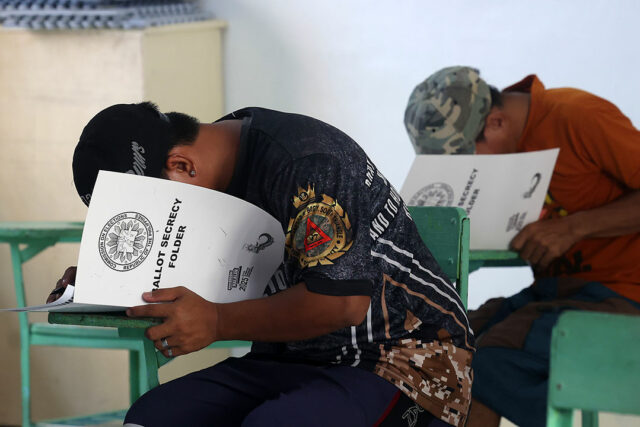
Voters will pick a new set of legislators, including half of the Senate, as well as thousands of local officials on May 12. — Kenneth Christiane L. Basilio

Ground broken on 38.81-MW Capas solar power plant

GURINENERGY.COM

SINDICATUM C-Solar Power, Inc. (SCSPI) has started the construction of a $33-million solar photovoltaic power plant in Capas, Tarlac, the Bases Conversion and Development Authority (BCDA) said.

In a statement, the BCDA said the subsidiary of Singapore renewable energy (RE) developer Gurīn Energy Pte Ltd. broke ground on the Capas Solar Power Project, which is targeted for completion by next year.

“The Philippines has one of the most exciting opportunities for renewable energy in the world,” Jose Rafael R. Mendoza, president of SCSPI and country manager of Gurīn Energy, said.

“With the support of the BCDA, the local government, and the stakeholders in our community, we wanted to show our commitment to our work plans by having this groundbreaking,” he added.

Once operational by January, the plant will have a total capacity of 38.81 megawatts (MW) peak and 31.25 MW alternating current. It is meant to boost the RE share in the country’s total energy mix and to address the power requirements of locators and residents in New Clark City.

It will be connected to the National Grid Corp. of the Philippines’ substation in Concepcion, Tarlac, via a 69-kilovolt transmission line.

“This proposed solar project will definitely add to our target of achieving 35% of renewable energy share in the power generation mix by 2030,” according to Ruby B. de Guzman, assistant director of the Department of Energy’s Renewable Energy Management Bureau.

The project, within New Clark City, is covered by a 25-year lease.  Justine Irish D. Tabile

Collectibles maker Pop Mart considering PHL food venture

POPMART.COM

POP MART International Group, a Chinese maker of toy collectibles, said it is interested in starting a food business in the Philippines alongside permanent retail stores, the Philippine Franchise Association (PFA) said.

PFA Chairman Sam Christopher Lim said the company is interested in operating its own store network.

“I know they have been doing pop-up stores, but now they want to do permanent stores,” he told reporters on the sidelines of the Franchise Asia Philippines 2025 Conference and Expo last week.

“That is one of the key things they were discussing with the Department of Trade and Industry (DTI), so that is more on a retail level,” he added.

“In Beijing, (Pop Mart) actually has a theme park with a bakery that’s doing very well,” he said.

“They said  it can be replicated outside a theme park. So, they are looking for partners, but they are still (developing) their strategy. But what I am proud of is that they said that if they launched a food brand, they are looking at the Philippines as possibly one of their first (overseas) markets,” he added.

He said Pop Mart views the Philippines as a strong consumer market.

“Nothing is confirmed yet … I think they were just here to really explore the market a bit more. We are supporting them and giving them insights. I also let them meet some of our food companies,” he added.

Pop Mart operates pop-up stores in SM Makati and SM Mall of Asia. — Justine Irish D. Tabile

DBM calls for gender and dev’t budget review

Young students form a line as they wait for their respective room assignments for their afternoon class at Malanday Elementary School, June 8, 2022. — PHILIPPINE STAR/ WALTER BOLLOZOS

BUDGET Secretary Amenah F. Pangandaman called for a review of gender and development (GAD) budget policy amid growing challenges, while also pushing for an inclusive budget process.

In an e-mail interview, Ms. Pangandaman, the first Muslim woman to lead the Department of Budget and Management (DBM), said such a review is needed “in consideration of the growing gender-related challenges and demands of our society, and mindful of our limited fiscal space.”

Government departments and agencies are required to allocate a minimum of 5% of their annual funding to gender programs, projects, and activities.

The Philippine Commission on Women reported that P807.64 billion, or 23% of the budget of government agencies including state universities and colleges, was allocated for GAD in 2023.

The actual GAD utilization however was only 13%.

“Being a woman in a leadership role, especially in governance and finance, requires a profound commitment to making every policy and program uplift the quality of life of every Filipino, especially women,” she said.

The administration’s budgeting practices have come under fire from former President Rodrigo R. Duterte, who alleged that the 2025 General Appropriations Act passed with a number of items left unfilled — leaving the government a so-called “blank check” for unspecified spending items.

The DBM rejected such claims as “fake news,” while President Ferdinand R. Marcos, Jr. said it is impossible to pass budgets with blank items.

Ms. Pangandaman said the DBM is advancing transparency and inclusive citizen participation in the budget process.

“We continue to leverage Open Government Partnership (OGP) as a platform for safe, inclusive, and constructive citizen participation in the budget process,” she said.

“The Philippines has long been recognized as a regional and global leader in this area, consistently earning high marks in the International Budget Partnership’s Open Budget Survey,” she said.

Ms. Pangandaman chairs the Philippine OGP and belongs to the organization’s global Steering Committee.

“In addition, the economic team is exploring the inclusion of civil society representatives in the Development Budget Coordination Committee — a move that could significantly deepen public participation throughout the entire budget cycle, from planning to implementation, monitoring, and evaluation,” she said. — Aubrey Rose A. Inosante

Foreign digital service providers reminded of VAT sign-up deadline

REUTERS

THE Bureau of Internal Revenue (BIR) said non-resident foreign digital service providers (DSPs) have until June 1 to register for value-added tax (VAT) in compliance with the digital services law.

According to Revenue Regulations No. 014-2025, non-resident DSP will be subject to VAT starting June 2.

“The Commissioner of Internal Revenue may further extend the deadlines on the transition period prescribed in these Regulations as may be deemed necessary,” the BIR said.

Such entities may register via the VAT on Digital Services portal or through the Online Registration and Update System.

In October, President Ferdinand R. Marcos, Jr. signed Republic Act No. 12023, which imposes a 12% VAT on DSPs, both resident and nonresident.

About P7.25 billion is expected to be collected from this law this year, another P21.37 billion in 2026, and a further P26.27 billion in 2029, the Department of Finance said.

Under the law, the digital services include search engines, e-marketplaces, cloud services, online media and advertising, online platforms, or digital goods. — Aubrey Rose A. Inosante