Home Blog Page 1165

Monthly social pension for all senior citizens pushed

BAGUIO CITY Nueva Vizcaya Rep. Tim Cayton on Monday filed House Bill No. 2691, Universal Social Pension, seeking to grant P1,500 monthly social pension for all senior citizens in the country.

Mr. Cayton, lawyer and former Mayor of hinterland Dupax del Norte town in Nueva Vizcaya, where they handed out P1,500 monthly social pension to all senior citizens in his hometown, want the same benefit to be replicated all over the country.

“Let’s give our elders the support and dignity they truly deserve,” he said. “Our senior citizens will always occupy a special place in my heart.” — Artemio A. Dumlao and Victor Martin

Philippines to intervene more forcefully in streaks of weak peso

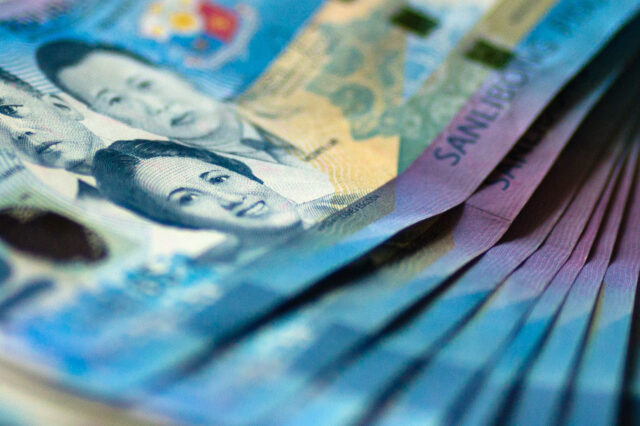
The Bangko Sentral ng Pilipinas adopted a new formula that determines the magnitude of peso losses that require stronger intervention to curb price pressures. Photographer: Julian Abram Wainwright/Bloomberg

THE Philippine central bank is intervening more forcefully during periods of extended peso weakness as part of a new strategy, gradually moving away from day-to-day intervention, Bangko Sentral ng Pilipinas (BSP) Governor Eli M. Remolona, Jr. said.

The BSP adopted a new formula that determines the magnitude of peso losses that require stronger intervention to curb price pressures, Mr. Remolona said in an interview Tuesday. He declined to elaborate on the formula.

“We worry when there’s a whole streak of peso depreciation,” Mr. Remolona said at his office in Manila. “It leads to inflation and then we start to worry, and then we might intervene more forcefully.”

The peso reversed its losses and strengthened as much as 0.4% to 57.41 per dollar following the central bank chief’s comments, outperforming other Asian currencies.

Global financial markets are turning volatile as traders grapple with US tariffs and speculation for more Federal Reserve interest-rate cuts. The Philippine peso slid 3.4% in July before rebounding this month.

P59 PER DOLLAR
The BSP used to intervene to smoothen day-to-day volatility, the BSP chief said. “We now understand there are thresholds: a depreciation of the peso doesn’t cause inflation to go up until it’s enough of a depreciation,” he said.

The governor also said “there’s a risk” of the local currency dropping again to the record low of P59 per dollar, given the peso’s volatility though he said authorities aren’t worried about specific levels.

Mr. Remolona said the BSP tries to smoothen the peso’s volatility “in a subtle way.” “We’re not trying to get rid of the swing. We’re just trying to dampen the swing,” he said.

The central bank chief also said policymakers may deliver two more quarter-point cuts in the key interest rate this year, with the easing cycle likely to continue in 2026 on tame inflation.

Mr. Remolona’s “signal of further easing reflects confidence that inflation is on a firm downward trajectory and that external conditions remain broadly manageable,” said Sarah Tan, economist at Moody’s Analytics in Singapore.

“Still, we think that the space is limited,” she said, pointing to risks such as a weaker peso or delayed easing by the Fed that could narrow the window for more aggressive rate cuts in the Philippines without risking capital outflows or reigniting inflation.

“We expect the BSP to continue easing into 2026, but with intermittent pauses to assess the impact of earlier cuts,” she added. — Bloomberg

Missed signals, lost deal: Why India-US trade talks failed

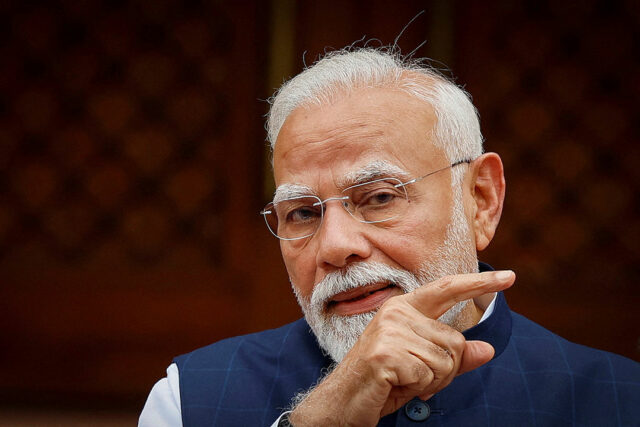
India’s Prime Minister Narendra Modi addresses the media on the first day of the monsoon session at Parliament house in New Delhi, India, July 21, 2025. — REUTERS/ADNAN ABIDI

NEW DELHI/WASHINGTON — After five rounds of trade negotiations, Indian officials were so confident of securing a favorable deal with the United States that they even signaled to the media that tariffs could be capped at 15%.

Indian officials expected US President Donald J. Trump to announce the deal himself weeks before the Aug. 1 deadline. The announcement never came.

New Delhi is now left with the surprise imposition of a 25% tariff on Indian goods from Friday, along with unspecified penalties over oil imports from Russia, while Mr. Trump has closed larger deals with Japan and the European Union (EU), and even offered better terms to arch-rival Pakistan.

Interviews with four Indian government officials and two US government officials revealed previously undisclosed details of the proposed deal and an exclusive account of how negotiations collapsed despite technical agreements on most issues.

The officials on both sides said a mix of political misjudgment, missed signals and bitterness broke down the deal between the world’s biggest and fifth-largest economies, whose bilateral trade is worth over $190 billion.

The White House, the US Trade Representative office, and India’s Prime Minister’s Office, along with the External Affairs and Commerce ministries, did not respond to e-mailed requests for comment.

India believed that after visits by Indian Trade Minister Piyush Goyal to Washington and US Vice-President JD Vance to Delhi, it had made a series of deal-clinching concessions.

New Delhi was offering zero tariffs on industrial goods that formed about 40% of US exports to India, two Indian government officials told Reuters.

Despite domestic pressure, India would also gradually lower tariffs on US cars and alcohol with quotas and accede to Washington’s main demand of higher energy and defense imports from the US, the officials said.

“Most differences were resolved after the fifth round in Washington, raising hopes of a breakthrough,” one of the officials said, adding negotiators believed the US would accommodate India’s reluctance on duty-free farm imports and dairy products from the US.

It was a miscalculation. Mr. Trump saw the issue differently and wanted more concessions.

“A lot of progress was made on many fronts in India talks, but there was never a deal that we felt good about,” said one White House official.

“We never got to what amounted to a full deal — a deal that we were looking for.”

OVERCONFIDENCE
Indian Prime Minister Narendra Modi, who visited Washington in February, agreed to target a deal by fall 2025, and more than double bilateral trade to $500 billion by 2030.

To bridge the $47-billion goods trade gap, India pledged to buy up to $25 billion in US energy and boost defense imports.

But officials now admit India grew overconfident after Mr. Trump talked up a “big” imminent deal, taking it as a signal that a favorable agreement was in hand. New Delhi then hardened its stance, especially on agriculture and dairy, two highly sensitive areas for the Indian government.

“We are one of the fastest growing economies, and the US can’t ignore a market of 1.4 billion,” one Indian official involved in the negotiations said in mid-July.

Negotiators even pushed for relief from the 10% average US tariff announced in April, plus a rollback of steel, aluminum and auto duties.

Later, India scaled back expectations after the US signed trade deals with key partners including Japan, and the EU, hoping it could secure a similar 15% tariff rate with fewer concessions.

That was unacceptable to the White House. “Trump wanted a headline-grabbing announcement with broader market access, investments and large purchases,” said a Washington-based source familiar with the talks.

An Indian official acknowledged New Delhi wasn’t ready to match what others offered.

South Korea, for example, struck a deal just before Mr. Trump’s Aug. 1 deadline, securing a 15% rate instead of 25% by offering $350 billion in investments, higher energy imports, and concessions on rice and beef.

COMMUNICATION BREAKDOWN
“At one point, both sides were very close to signing the deal,” said Mark Linscott, a former US Trade Representative who now works for a lobby group that is close to the discussions between the two nations.

“The missing component was a direct line of communication between President Trump and Prime Minister Modi.”

A White House official strongly disputed this, noting other deals had been resolved without such intervention.

An Indian government official involved in the talks said Mr. Modi could not have called, fearing a one-sided conversation with Mr. Trump that could put him on the spot.

However, the other three Indian officials said Mr. Trump’s repeated remarks about mediating the India-Pakistan conflict further strained negotiations and contributed to Mr. Modi not making a final call.

“Trump’s remarks on Pakistan didn’t go down well,” one of them said. “Ideally, India should have acknowledged the US role while making it clear the final call was ours.”

A senior Indian government official blamed the collapse on poor judgment, saying top Indian advisers mishandled the process.

“We lacked the diplomatic support needed after the US struck better deals with Vietnam, Indonesia, Japan and the EU,” the official said.

“We’re now in a crisis that could have been avoided.”

Mr. Trump said on Tuesday he would increase the tariff on imports from India from the current rate of 25% “very substantially” over the next 24 hours and alleged that New Delhi’s purchases of Russian oil were “fueling the war” in Ukraine.

Talks are ongoing, with a US delegation expected in Delhi later this month and Indian government officials still believe the deal can be salvaged from here.

“It’s still possible,” one White House official said.

The Indian government is re-examining areas within the farm and dairy sectors where concessions can be made, the fourth official said. On Russian oil, India could reduce some purchases in favor of US supplies if pricing is matched.

“It likely will require direct communication between the prime minister and the president,” said Mr. Linscott.

“Pick up the phone. Right now, we are in a lose-lose. But there is real potential for a win-win trade deal.” — Reuters


Hiroshima warns against nuclear weapons as it marks 80 years since A-bomb

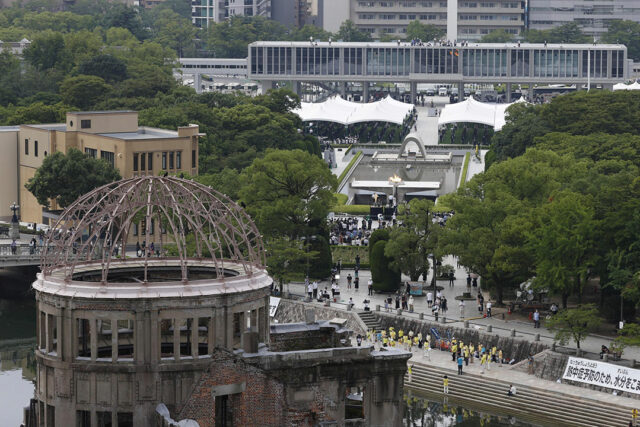
THE Atomic Bomb Dome is seen in front of the venue holding a ceremony to mark the 75th anniversary of the atomic bombing at the Hiroshima Peace Memorial Park in Hiroshima, western Japan, Aug. 6, 2020. — KYODO/VIA REUTERS

HIROSHIMA, Japan — Exactly 80 years since an atomic bomb was used in war for the first time, thousands bowed their heads in prayer in Hiroshima on Wednesday, as the city’s mayor warned world leaders about the nuclear warheads that still exist today.

The western Japanese city of Hiroshima was leveled on Aug. 6, 1945, when the United States dropped a uranium bomb nicknamed “Little Boy,” killing about 78,000 people instantly.

Hiroshima was the headquarters of some military units and a major supply base during World War Two. US war planners calculated that the surrounding mountains would concentrate the force of the bomb and enhance its destructiveness.

“Little Boy” unleashed a surge of heat reaching 4,000 degrees Celsius (7,200 degrees Fahrenheit) and radiation that killed tens of thousands more by the end of the year. It was followed by a plutonium bomb on Nagasaki three days later, and Japan’s surrender on Aug. 15.

Representatives from a record 120 countries and territories including nuclear superpower the United States, and Israel, which neither confirms nor denies having nuclear weaponry, attended the annual ceremony at the Hiroshima Peace Memorial Park for the milestone year.

After a moment of silence observed at 8:15 a.m., the exact time of the blast, mayor Kazumi Matsui called on leaders to heed the lessons of Hiroshima and Nagasaki and warned of the consequences of the global trend towards a military buildup.

“Among the world’s political leaders, there is a growing belief that possessing nuclear weapons is unavoidable in order to protect their own countries,” he said, noting that the US and Russia possessed 90% of the world’s nuclear warheads.

“This situation not only nullifies the lessons the international community has learned from the tragic history of the past, but also seriously undermines the frameworks that have been built for peace-building.

“To all the leaders around the world: Please visit Hiroshima and witness for yourselves the reality of the atomic bombing.”

Yoshikazu Horie, a 71-year-old tourist, expressed a similar sentiment.

“It feels more and more like history is repeating itself. Terrible things are happening in Europe… Even in Japan, in Asia, it’s going the same way, it’s very scary,” he said.

“I’ve got grandchildren and I want peace so they can live their lives happily.”

In the decades following the attacks, those who survived, called “hibakusha,” often faced discrimination as rumors spread that they carried diseases and their offspring could be tainted. Their numbers fell below 100,000 for the first time this year.

Japan, the only country to have suffered nuclear attacks, has stated its commitment to nuclear disarmament but is not a signatory or observer of the United Nations treaty to ban nuclear weapons. — Reuters

Hit by US tariffs, Indonesia plans to sell shrimp to China instead

FREEPIK

PANDEGLANG, Indonesia — At a shrimp farm in Indonesia, more than 16,000 kilometers (9,942 miles) from Washington, DC, US President Donald J. Trump’s import tariffs have left Denny Leonardo’s expansion plans in disarray.

Mr. Leonardo had aimed to add about 100 new ponds this year to his 150-pond farm on the southwestern tip of Java island, but was forced to reconsider when US orders dried up in the wake of Mr. Trump’s initial tariff threats in April.

And while the latest 19% tariff, agreed with Washington in July and due to take effect this week, is less than the initial 32%, Mr. Leonardo is counting the cost to his business.

“With the US pressuring Indonesia’s exports, everyone is eagerly looking for new opportunities to diversify, to reduce their dependence on the US,” the 30-year-old prawn farmer said after July’s announcement.

The United States is the biggest market for Indonesian prawns, buying 60% of the country’s $1.68 billion in shrimp exports last year.

Andi Tamsil, the head of Indonesia’s shrimp farmers’ association, estimates the 19% tariffs could see total exports plunge by 30% this year compared to 2024, putting the livelihoods of one million workers at risk.

Even with July’s agreement, most US customers are still putting their shrimp purchases on hold, said Budhi Wibowo, who heads an association of seafood businesses. He notes the new rates put Indonesia at a disadvantage against Ecuador, the world’s top producer of farmed shrimp, whose import tariff was set at 15%.

China is the world’s biggest importer of shrimp by volume, but Indonesians have preferred to sell to the US where they could get better prices, Mr. Budhi said.

Before the tariffs, China typically bought only 2% of Indonesia’s exports of the seafood.

Now the industry is having to work hard to promote its products to Chinese buyers.

In June, Mr. Tamsil, of the shrimp farmers’ association, traveled with a delegation of industry representatives to the southern Chinese city of Guangzhou to meet importers, restaurant owners and agri-commerce platforms. More trips are planned.

“We have a very big opportunity in China that imported around 1 million tons of shrimps,” Mr. Tamsil said. “Imagine if we could take just 20% of China’s import market.”

Mr. Budhi, of the seafood association, said Indonesia could also diversify exports to the Middle East, South Korea, Taiwan, and the European Union, especially as Jakarta is close to signing a free trade agreement with Brussels.

Back on his farm, Mr. Leonardo is confident his business, which he inherited from his father, can weather the US tariff storm. But it might not expand as quickly as he once hoped.

“I am optimistic that my company could survive because there will still be supply and demand. But for growth, I am not that optimistic,” Mr. Leonardo said. — Reuters

US requires Zambia, Malawi citizens to pay up to $15,000 bond for some visitor visas

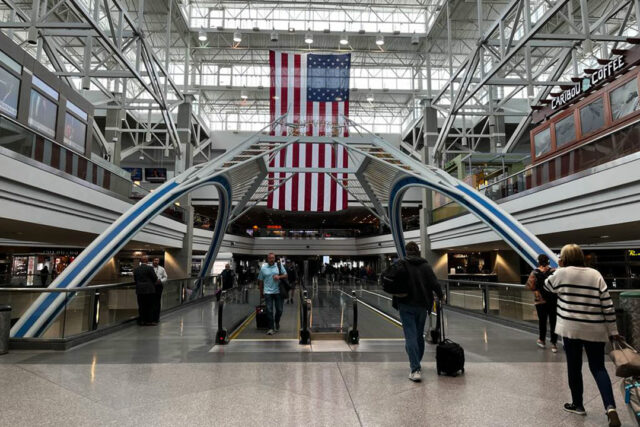
Travelers arrive at Denver International Airport, Colorado. — CATHY ROSE A. GARCIA

WASHINGTON — President Donald J. Trump’s administration will require visa applicants from Zambia and Malawi to pay bonds up to $15,000 for some tourist and business visas under a pilot program launching in two weeks, the State department said on Tuesday.

“Starting Aug. 20, 2025, any citizen or national traveling on a passport issued by one of these countries who is found otherwise eligible for a B1/B2 visa must post a bond in amounts of $5,000, $10,000, or $15,000, determined at time of visa interview,” the State department said in a notice on its website.

A notice about the program, which gives US consular officers worldwide the discretion to impose bonds on visitors from countries with high rates of visa overstays, appeared on the Federal Register on Monday but no country names had been mentioned.

A State department spokesperson on Monday said countries would be identified based on “high overstay rates, screening and vetting deficiencies, concerns regarding acquisition of citizenship by investment without a residency requirement, and foreign policy considerations.”

The spokesperson, speaking on the condition of anonymity, said the list of countries may be updated from time to time.

The bond amount will be returned to the applicant if the applicant leaves the US within the allowed window of time in line with their visa and complies with all the terms of their visa status.

Mr. Trump has made cracking down on illegal immigration a focus of his presidency, boosting resources to secure the border and arresting people who are in the US illegally.

He issued a travel ban in June that fully or partially blocks citizens of 19 nations from entering the US on national security grounds.

Numerous countries in Africa, including Burundi, Djibouti and Togo, also had high overstay rates, according to US Customs and Border Protection data from fiscal year 2023.

Visa holders who have posted a visa bond must arrive and depart the United States via three specific ports of entry, the State department notice said on Tuesday. It listed those as Boston Logan Airport, John F. Kennedy International Airport in New York and Washington Dulles Airport.

It warned that if such travelers arrive or depart from anywhere else, they could be denied entry or their departure may not be appropriately registered. — Reuters

Australia regulator says YouTube, others ‘turning a blind eye’ to child abuse material

SYDNEY — Australia’s internet watchdog has said the world’s biggest social media firms are still “turning a blind eye” to online child sex abuse material on their platforms, and said YouTube in particular had been unresponsive to its enquiries.

In a report released on Wednesday, the eSafety Commissioner said YouTube, along with Apple, failed to track the number of user reports it received of child sex abuse appearing on their platforms and also could not say how long it took them to respond to such reports.

The Australian government decided last week to include YouTube in its world-first social media ban for teenagers, following eSafety’s advice to overturn its planned exemption for the Alphabet-owned Google’s video-sharing site.

“When left to their own devices, these companies aren’t prioritizing the protection of children and are seemingly turning a blind eye to crimes occurring on their services,” eSafety Commissioner Julie Inman Grant said in a statement.

“No other consumer-facing industry would be given the license to operate by enabling such heinous crimes against children on their premises, or services.”

A Google spokesperson said “eSafety’s comments are rooted in reporting metrics, not online safety performance,” adding that YouTube’s systems proactively removed over 99% of all abuse content before being flagged or viewed.

“Our focus remains on outcomes and detecting and removing (child sexual exploitation and abuse) on YouTube,” the spokesperson said in a statement.

Meta — owner of Facebook, Instagram and Threads, three of the biggest platforms with more than 3 billion users worldwide — has said it prohibits graphic videos.

The eSafety Commissioner, an office set up to protect internet users, has mandated Apple, Discord, Google, Meta, Microsoft, Skype, Snap and WhatsApp to report on the measures they take to address child exploitation and abuse material in Australia.

The report on their responses so far found a “range of safety deficiencies on their services which increases the risk that child sexual exploitation and abuse material and activity appear on the services.”

Safety gaps included failures to detect and prevent livestreaming of the material or block links to known child abuse material, as well as inadequate reporting mechanisms.

It said platforms were also not using “hash-matching” technology on all parts of their services to identify images of child sexual abuse by checking them against a database. Google has said before that its anti-abuse measures include hash-matching technology and artificial intelligence.

The Australian regulator said some providers had not made improvements to address these safety gaps on their services despite it putting them on notice in previous years.

“In the case of Apple services and Google’s YouTube, they didn’t even answer our questions about how many user reports they received about child sexual abuse on their services or details of how many trust and safety personnel Apple and Google have on-staff,” Inman Grant said. — Reuters

Titan sub disaster was preventable, US finds in scathing report

OCEANGATE

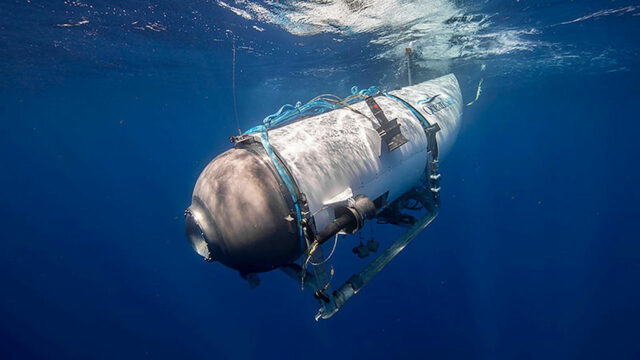
WASHINGTON — The catastrophic implosion of the Titan submersible that killed five people in 2023 could have been prevented, a US Coast Guard investigative board found on Tuesday, calling the vessel’s safety culture and operational practices “critically flawed.”

The Titan vanished during a descent to the Titanic wreck on a tourist expedition, losing contact with its support ship.

After a tense four-day search, its shattered remains were discovered strewn across the seabed 1,600 feet (488 meters) from the bow of the legendary ocean liner that sank in 1912, claiming more than 1,500 lives.

OceanGate, the US-based company that managed the tourist submersible, suspended all operations after the incident.

A company spokesperson said on Tuesday the company again offered its deepest condolences to the families of those who died “and directed its resources fully towards cooperating with the Coast Guard’s inquiry through its completion.”

The chair of the US Coast Guard Marine Board of Investigation, Jason Neubauer, said the accident was preventable.

“There is a need for stronger oversight and clear options for operators who are exploring new concepts outside of the existing regulatory framework,” he said in a statement with the release of the 300-page report.

Chloe Nargeolet, whose father, French oceanographer Paul-Henri Nargeolet, died on the submersible, said she was satisfied with the investigation.

“The OceanGate boss didn’t do his job properly and obviously my father didn’t know any of that,” she said. “It was not random or bad luck, it came from something. It could have been avoided.”

The board determined that the primary contributing factors were OceanGate’s “inadequate design, certification, maintenance and inspection process for the Titan.”

It also cited “a toxic workplace culture at OceanGate,” an inadequate regulatory framework for submersibles and other novel vessels, and an ineffective whistleblower process.

The report added “for several years preceding the incident, OceanGate leveraged intimidation tactics, allowances for scientific operations, and the company’s favorable reputation to evade regulatory scrutiny.”

The board found that OceanGate failed to investigate and address known hull anomalies following its 2022 Titanic expedition. It said data from Titan’s realtime monitoring system should have been analyzed and acted on during that expedition.

It also criticized OceanGate for failing to properly store the Titan before the 2023 Titanic expedition.

The report faulted the absence of a timely Occupational Safety and Health Administration investigation into a 2018 OceanGate whistleblower’s complaint combined with a lack of government cooperation, calling them a missed opportunity and added “early intervention may have resulted in OceanGate pursuing regulatory compliance or abandoning their plans.” — Reuters

Gilas Pilipinas braces for tough NZ Tall Blacks clash at Asian Cup

FIBA.BASKETBALL

Philippines bows to Chinese Taipei, 87-95

Games on Thursday
(King Abdullah Sports City, Jeddah)
2 p.m. (7 p.m. Manila time) – Iraq vs Chinese Taipei
6 p.m. (11 p.m. Manila time) – Philippines vs New Zealand

GILAS Pilipinas got off to a fumbling start in the FIBA Asia Cup in Jeddah, dropping an 87-95 setback to old tormentor Chinese-Taipei on Tuesday night (early Wednesday in Manila).

But the Nationals won’t let this deflate their spirits or diminish their belief in their capability to still go all the way.

“We felt that coming in, we would have a chance to go far and this has made a big roadblock for us up here. That’s something we have to overcome. If we have to come through the loser’s bracket, then we’ll try to do that,” said coach Tim Cone.

After the loss, Gilas found itself running third in Group D with one point and -8 differential behind New Zealand (NZ) (two points and +22) and the Taiwanese (two points and +8). Iraq brought up the rear with one point and -22.

Per competition rules, the group winner will gain a direct entry into the quarterfinals while the second and third-ranked squads will move to the playoff matches for the remaining Last-8 tickets.

Mr. Cone’s troops now have to pick themselves up quickly with the NZ Tall Blacks up next Thursday at 6 p.m. at the King Abdullah Sports City (11 p.m. in Manila). The Kiwis flexed their muscles in a 100-78 demolition of Iraq on opening day.

“We can feel bad about this one as much as we want, we can cry about it even, but the bottom line is we got New Zealand coming up and we got to get ready for them. This team has shown a lot of bounce-back in the past and I think we have a really good chance of coming out and playing a better, better game our next time out,” he said.

In a listless opening, Mr. Cone and Co. trailed early, 8-25, and Chinese-Taipei, led by the sweet-shooting Ying-Chun Chen (34 points on six-of-eight three-point clip) and 7-foot Brandon Gilbeck (16-9), kept them at bay the rest of the way.

Justin Brownlee shot 19 with seven rebounds before fouling out in the fourth. Kevin Quiambao rifled in 17, leading the fourth-quarter fightback that put Gilas to as close as four before the Taiwanese extinguished the threat for good.

“Obviously, (a) tough loss. I think we got punched early and we didn’t punch back,” said AJ Edu after Gilas failed to avenge its 84-91 loss to Chinese-Taipei back in the Asia Cup Qualifiers last February. — Olmin Leyba

The scores:

Chinese-Taipei 95 – Chen 34, Gilbeck 16, Lin 14, Hinton R. 14, Gadiaga 5, Hinton A. 4, Tseng 4, Ma 3, Hu 1, Liu 0, Gao 0, Chen 0.

Philippines 87 – Brownlee 19, Quiambao 17, Ramos 16, Thompson 16, Edu 8, Oftana 6, Newsome 3, Fajardo 2, Perez 0, Aguilar 0, Tamayo 0.

Quarterscores: 27-16, 43-34, 73-62, 95-87

Youth-laden Filipinas football team faces lowly Timor Leste squad at Asean Football Federation

Match on Thursday
(Viet Tri Stadium, Vietnam)
7:30 p.m. (8:30 p.m. Manila time) – Philippines vs Timor Leste

COACH Mark Torcaso expressed confidence the youth-laden Filipinas will step up to the plate as they defend the country’s Asean Football Federation crown beginning on Thursday at the Viet Tri Stadium in Phu Tho, Vietnam.

First up for the 23-member squad composed mostly of age group standouts with a handful of FIFA Women’s World Cup veterans is lightweight Timor Leste at 7:30 p.m. (8:30 p.m.) Manila time.

“We want to win, we want to defend the title and we know how important it is to the country,” Mr. Torcaso said.

“But we also want to make sure that we give our young girls the best opportunity to be ready for the (future high-level competitions like the) Asian Cup and the SEA Games,” he added.

With the Aug. 7 to 19 tournament also known as the MSIG Serenity Cup being held outside the FIFA windows, only Manila-based stalwarts Olivia and Chandler McDaniel, Hali Long, Inna Palacios and Quinley Quezada among the winning crew of 2022 made it to this trip.

“They (veterans) are going to be really, really important for our group, to share their experiences in winning the AFF tournament and in being at the World Cup and Asian Cups,” said Mr. Torcaso.

“They’re going to share that to our young players and there’s no doubt they’ll have open arms in talking to the young girls and I’m sure our young girls will be accepting of the information they take.”

The other Group B opening match features the Australian Under-23 squad against Myanmar at 4:30 p.m. (5:30 p.m. Manila time).

The goal is to finish Top 2 of the group to advance to the semifinals. — Olmin Leyba

PBA imposes three-year ban on Navarro for joining KBL

WILLIAM NAVARRO braved on to Korea despite a looming PBA ban on players joining other leagues.

Mr. Navarro on Wednesday plunged into the training camp right away of his newest club Busan KCC Egis in the Korean Basketball League (KBL), shortly after parting ways with Magnolia and the whipping of PBA’s surprising resolution amidst a new wave of player exodus.

“Fulfilling the dream,” said Mr. Navarro’s agency, the Titan Management Group on his signing.

Mr. Navarro, who met his teammates for the first time in Busan’s first camp in Yongin City near Seoul, is expected to be one of the affected players from PBA’s new ruling, which imposes a three-year ban on players who refused to sign with their mother PBA clubs despite a contract offer to jump ship to other leagues — local or foreign — instead.

The 28-year-old Ateneo stalwart joined with Busan on Tuesday for the 2025-2026 Season albeit the Korean club didn’t disclose the length of the deal. It’s the culmination of his KBL dream after a spoiled stint in 2022 with the Seoul Samsung Thunders to honor contract obligations with original team NorthPort and Gilas Pilipinas as the No. 2 pick in the 2021 special draft.

Also covered in the new rule, which is effective immediately after being approved by the PBA board last month, are rookies not signing the Uniformed Players Contract (UPC) with the teams that drafted them despite a tender offer to join other leagues.

Incoming rookies in this year’s draft slated next month are also included.

The only exemptions from the new rule are players who were not given contract offers during the 30-day grace period after the expiration of their UPC and those considered as unrestricted free agents, who have played a total of seven years in the PBA.

Entering a milestone 50th anniversary in October, the PBA saw another wave of exodus featuring its up-and-coming stars with Mr. Navarro only serving as the latest one.

Mr. Navarro’s move to Korea left the Hotshots, who albeit hold his playing rights in perpetuity in the PBA like other players jumping ship overseas, without any returns from a blockbuster trade in the middle of the just-concluded 2025 PBA Philippine Cup.

Magnolia acquired the 6-foot-6 Mr. Navarro, who has been one of NorthPort’s top players with a double-double average of 20.57 points and 10.57 rebounds but played only five games for the Hotshots, in exchange of Calvin Abueva, Jerrick Balanza and a second-round pick next season.

Mr. Navarro’s former teammate Arvin Tolentino last May also left NorthPort after bagging the Commissioner’s Cup Best Player of the Conference plum to sign with the KBL runner-up Seoul SK Knights.

And just last week, Jamie Malonzo parted ways with Barangay Ginebra to sign with the Kyoto Hannaryz in the Japan B.League while he’s in the middle of Gilas Pilipinas’ campaign in the 2025 FIBA Asia Cup in Jeddah, Saudi Arabia. — John Bryan Ulanday

Cignal, PLDT battle Akari and ZUS Coffee in quarterfinals

Games on Thursday
(PhilSports Arena)
4 p.m. – Cignal vs Akari
6:30 p.m. – PLDT vs ZUS Coffee

SISTER teams PLDT and Cignal are dreaming of winning its breakthrough Premier Volleyball League (PVL) championship.

And what better way to achieve it than doing it at the expense of each other.

The road there starts with the High Speed Hitters and the HD Spikers battling the ZUS Coffee Thunderbelles and the Akari Charger, respectively, on Thursday in the PVL on Tour quarterfinals at the PhilSports Arena.

A win by PLDT over ZUS at 6:30 p.m. and Cignal over Akari at 4 p.m. would catapult the Manny V. Pangilinan-owned franchises straight to knockout semis set on Tuesday at the Smart Araneta Coliseum.

By chance, they would face different foes there so a win by both in the semis would forge what had never happened before in their whole PVL lives — a potential title showdown.

But making it that far is easier said than done as roadblocks could potentially alter its course.

The biggest stumbling block could be ZUS, which has continuously sent shockwaves down the league including a shock, come-from-behind 22-25, 20-25, 25-16, 25-17, 5-10 win over Choco Mucho in last Tuesday’s knockout round at the same Pasig venue.

Other big fishes the giant-slaying Thunderbelles have caught were the Chery Tiggo Crossovers and the Creamline Cool Smashers — the league’s most titled club — in the pool phase.

Meanwhile, Cignal bested Akari in their pool duel, 25-23, 25-14, 25-23, last June 22 at the Chavit Coliseum in Ilocos Sur. — Joey Villar