Home Blog Page 1141

Manufacturing Purchasing Managers’ Index (PMI) of select ASEAN economies, May 2025

GROWTH in Philippine manufacturing activity slowed in May due to declining output and weaker demand from foreign markets amid global trade tensions. Read the full story.

Manufacturing Purchasing Managers’ Index (PMI) of select ASEAN economies, May 2025

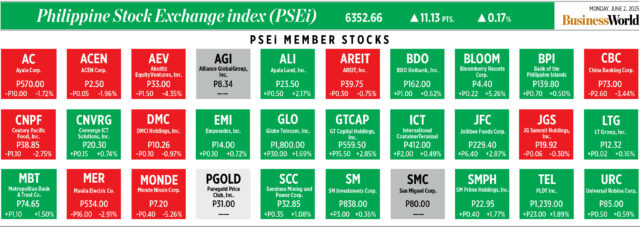
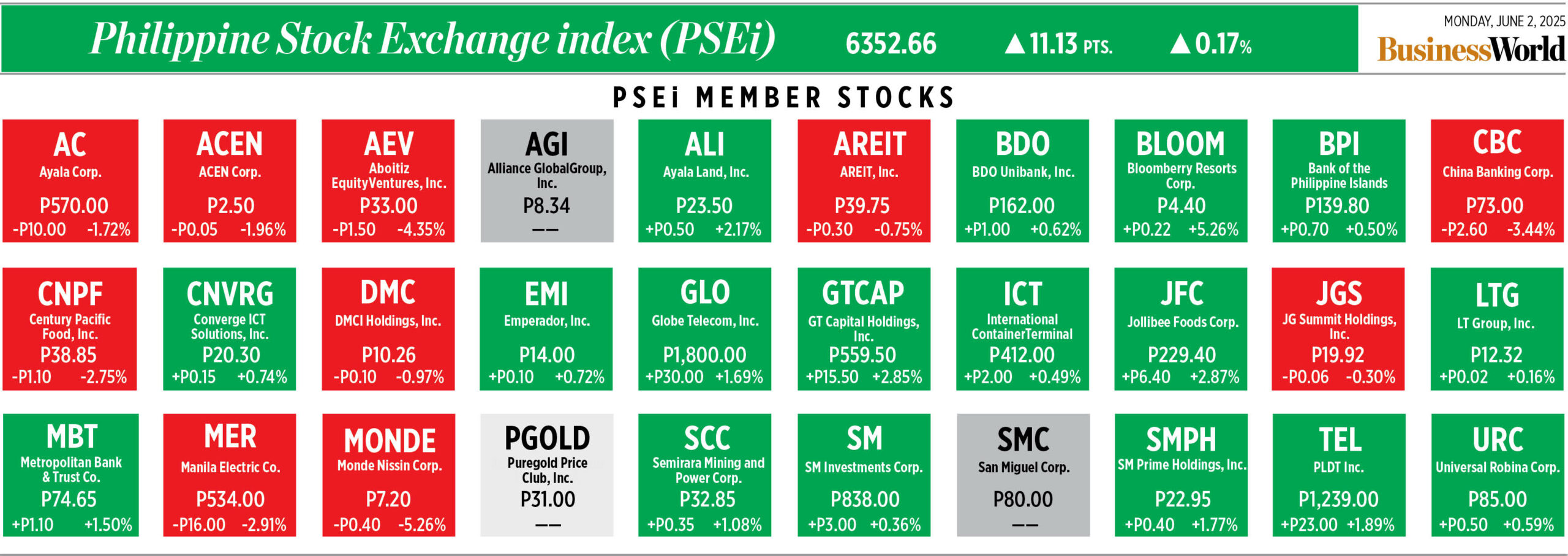
How PSEi member stocks performed — June 2, 2025

Here’s a quick glance at how PSEi stocks fared on Monday, June 2, 2025.


Stocks rise on expectations of slower inflation

REUTERS

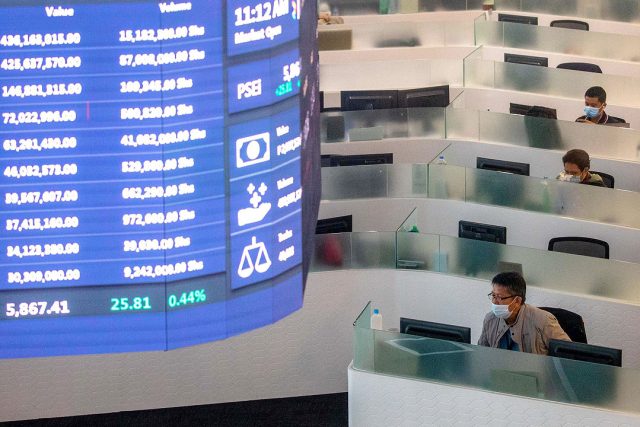
PHILIPPINE STOCKS posted a slight rebound on Monday amid expectations that headline inflation eased further last month.

The bellwether Philippine Stock Exchange index (PSEi) rose by 0.17% or 11.13 points to close at 6,352.66, while the broader all shares climbed by 0.53% or 19.79 points to 3,743.41.

“The local market started the week on a positive note, driven by expectations that the Philippines’ inflation rate last May had remained below the government’s 2%-4% target, in turn giving the Bangko Sentral ng Pilipinas (BSP) more room to cut their policy rate,” Philstocks Financial, Inc. Senior Research Analyst Japhet Louis O. Tantiangco said in a Viber message.

“Gains were tempered, however, with concerns over US President Donald J. Trump’s plan to double the US’ steel import tariffs,” he added.

The Philippine Statistics Authority is scheduled to release May inflation data on Thursday (June 5).

A BusinessWorld poll of 17 analysts yielded a median estimate of 1.3% for the May consumer price index (CPI), slower than the 1.4% in April and 3.9% in the same month a year ago. This is within the BSP’s 0.9%-1.7% forecast for the month.

If realized, this would be the lowest CPI in more than five years or since the 1.2% in November 2019.

Meanwhile, on Friday, Mr. Trump announced a plan to hike tariffs on imported steel and aluminum to 50% from 25%, increasing pressure on global steel manufacturers as part of his trade war.

“Philippine shares closed slightly positive to kickstart the month of June as the market gears up for new economic data that could influence price action movement this week,” Regina Capital Development Corp. Head of Sales Luis A. Limlingan said in a Viber message.

“Locally, key data include Monday’s manufacturing purchasing managers’ index, Thursday’s May inflation, and Friday’s unemployment, industrial output, and consumer confidence — offering a broad view of economic health,” he added.

Majority of sectoral indices closed higher on Monday. Property went up by 1.45% or 32.24 points to 2,245.52; services climbed by 1.3% or 27.97 points to 2,166.30; mining and oil increased by 1.03% or 101.17 points to 9,890.08; and financials rose by 0.16% or 3.96 points to 2,400.1.

Meanwhile, industrials went down by 0.39% or 35.17 points to 8,889.57 and holding firms dropped by 0.37% or 20.08 points to 5,331.71.

“Bloomberry Resorts Corp. was the day’s top index gainer, climbing 5.26% to P4.40. Monde Nissin Corp. was the worst index performer, dropping 5.26% to P7.20,” Mr. Tantiangco said.

Value turnover declined to P7.08 billion on Monday with 617.85 million shares from the P40.03 billion with 2.04 billion issues traded on Friday.

Advancers bested decliners, 119 versus 80, while 54 names were unchanged.

Net foreign buying stood at P418.29 million on Monday, a turnaround from the P15.31 billion in net selling recorded on Friday. — Revin Mikhael D. Ochave

Peso inches up as fresh tariff woes pull down dollar

BW FILE PHOTO

THE PESO inched up on Monday as the dollar slid after the Chinese commerce ministry said it would “take forceful measures” following US President Donald J. Trump’s claim that Beijing violated the agreements they reached in Geneva.

The local unit closed at P55.70 per dollar, strengthening by 4.5 centavos from its P55.745 finish on Friday, Bankers Association of the Philippines data showed.

The peso opened Monday’s session weaker at P55.85 against the dollar. Its worst showing was at P55.87, while its intraday best was at P55.68 versus the greenback.

Dollars exchanged dropped to $1.38 billion on Monday from $1.88 billion on Friday.

“The dollar-peso… initially opened higher at P55.85 and touched a high of P55.87. It fell to P55.68 on escalating trade tensions between US and China over trade tariffs. It looks like the deal won’t push through, which led to risk-off sentiment away from the dollar,” a trader said in a phone interview.

The dollar was also weaker on Monday after the US personal consumption expenditures index for April came out slower than expected, Rizal Commercial Banking Corp. Chief Economist Michael L. Ricafort said in a Viber message.

For Tuesday, the trader expects the peso to move between P55.50 and P55.90 per dollar, while Mr. Ricafort sees it ranging from P55.60 to P55.80.

The US dollar fell against other major currencies on Monday, giving up some of the previous week’s gains, as markets weighed the outlook for Mr. Trump’s tariff policy and its potential to constrict growth and unleash inflation, Reuters reported.

The greenback started the week on the back foot after Mr. Trump said on Friday that he planned to double duties on imported steel and aluminum to 50% from Wednesday, and as Beijing hit back against accusations it violated an agreement on critical minerals shipments.

The dollar dropped 0.8% to 142.85 yen as of 0821 GMT, giving back some of its more than 1% rally from last week.

A broader index, which measures the greenback against six major peers, eased 0.6% and at 98.751 and was just shy of its April 22 low. — Aaron Michael C. Sy with Reuters

Philippines, EU to set up security and defense dialogue — DFA chief

REUTERS

THE Philippines and the European Union (EU) will create a security and defense dialogue, Foreign Affairs Secretary Enrique A. Manalo said on Monday, following his meeting with EU High Representative for Foreign Affairs and Security Policy and Vice President (HRVP) Kaja Kallas.

“This dialogue will provide a mechanism for the Philippines and the EU to discuss security and defense related issues with both depth and regularity,” Mr. Manalo said in a joint news briefing.

He said the dialogue, which he considered a “significant milestone,” is expected to address concerns regarding emerging security threats that transcend borders, cyber-attacks, and foreign interference and manipulation of information.

Ms. Kallas added the defense dialogue will deepen collaboration between the country and the EU, allowing the exchange of expertise in security and defense, and exploration of joint initiatives that contribute to regional and global security.

“Our work will be comprehensive and will include maritime security, cyber security, counter terrorism and more,” she added.

Ms. Kallas said that the EU has remained committed in upholding the rules-based order, promoting peace, and addressing concerns in the South China Sea and Russia’s war against Ukraine.

“We reject any unilateral changes to the status quo, including use of coercion,” Ms. Kallas said when asked what the EU’s red lines are when it comes to China’s activities in areas like Taiwan and the South China Sea.

The Philippines has been strengthening relations with more foreign powers amid rising tensions in the South China Sea, as Beijing’s coast guard ships assert its claim over areas that fall within the Philippines’ exclusive economic zone.

China claims more than 80% of the South China Sea based on a 1940s map, which a United Nations-backed arbitration court in The Hague voided in 2016 for being illegal.

Moreover, Mr. Manalo said that the Philippines continues to push for deeper economic and trade activities with the EU.

“I emphasized the importance deepening our economic ties as we pursue greater collaboration in trade and investment through the conclusion of the Philippine-EU free trade agreement,” he added.

Ms. Kallas said that the EU and the Philippines are already enhancing their cooperation in digital connectivity, people-to-people contact, and green economy.

“We will move forward with the next round of negotiations of a free trade agreement,” she added.

The Philippines and the EU are currently negotiating a potential free-trade agreement which could boost trade and economic bilateral ties.

JOINT DRILLS
Manila’s Defense chief also met with his Japanese and European counterparts on Sunday, discussing ways to strengthen security cooperation amid ongoing regional tensions in Europe and the South China Sea.

Philippine Defense Secretary Gilberto C. Teodoro, Jr. held separate bilateral talks with his counterparts from Japan, the Netherlands, and Ukraine at the Shangri-La Dialogue in Singapore, a high-profile security summit attended by top officials from around the world, according to the Defense department.

The Philippines and Japan reaffirmed their desire for deeper military involvement in multinational military exercises held in the Southeast Asian nation, such as the vaunted Exercise Balikatan (shoulder-to-shoulder), it said.

“Japanese Defense Minister Gen Nakatani… reaffirmed Japan’s desire for deeper involvement in joint exercises like Balikatan and Kamandag, upon the entry into force of the Philippines-Japan Reciprocal Access Agreement (RAA),” the Department of National Defense (DND) said in a statement.

Manila and Tokyo signed the military agreement in July, allowing the entry of military equipment and troops for combat training from Japan.

The agreement is the first of its kind to be signed by Japan in Asia and coincides with Beijing’s increasing assertiveness in the South China Sea, where Beijing’s expansive claims conflict with those of several Southeast Asian nations.

“Both sides agreed on the importance of expanding cooperation in defense equipment production, which they recognized as mutually beneficial,” the DND said.

“Secretary Teodoro also emphasized the need for sustained bilateral and multilateral dialogues to deter actions that undermine regional peace, and called for stronger alliances rooted in shared principles,” it added.

In a separate meeting, Mr. Teodoro and Dutch Defense Minister Ruben Brekelmans on Sunday expressed interest in possible joint military activities in the future. “Both officials extended invitations for future visits, maintaining their intent to broaden defense engagement and cooperation,” the DND said.

Meanwhile, Mr. Teodoro expressed his admiration to Ukraine for its resilience, in a meeting with Ukraine’s Deputy Defense Minister Oleksandr Kozenko.

“Mr. Kozenko thanked the Philippines for its support to Ukrainian sovereignty and territorial integrity,” the DND said, adding that a Ukrainian defense attache will be sent to Manila to help bolster defense ties between the two nations. — Adrian H. Halili and Kenneth Christiane L. Basilio with Reuters


VP Duterte’s impeachment trial hinges on 20th Congress

Senate President Francis G. Escudero — SENATE PRIB

By Adrian H. Halili, Reporter

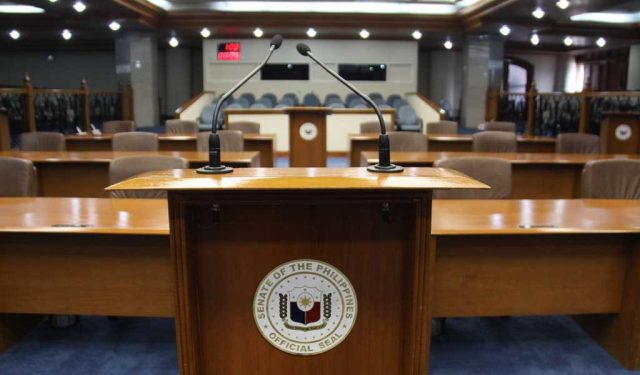
THE FATE OF the impeachment trial of Vice-President (VP) Sara Duterte-Carpio will still hinge on the upcoming Congress, the Senate chief said on Monday, noting they cannot bind the new set of Senator-judges.

“We can vote on it in plenary, but regardless of our decision, we cannot bind the 20th Congress,” Senate President Francis G. Escudero said in Filipino at a news briefing.

The 19th Congress may decide to push through with the trial, but the 20th Congress may also move for its dismissal, he explained.

“There is that possibility. Again, we cannot bind subsequent Congresses…All previous Congresses cannot bind subsequent Congresses,” Mr. Escudero said, when asked if there is a possibility that 20th Congress would not convene as an impeachment court.

“I’m just being honest and frank and straight forward that there is that possibility always, but it has never happened in the past,” he added.

The Senate chief postponed the scheduled presentation of charges against Ms. Duterte to June 11 from June 2 to allow the chamber to tackle priority legislative measures.

Mr. Escudero added that it is up to the Senate plenary to decide on the schedule of Ms. Duterte’s impeachment trial.

“The plenary is the supreme body of the Senate. It gets to decide anything and everything although at first instance, it can be decided by the Senate President but ultimately, it will have to be confirmed and affirmed or rejected for that matter by plenary,” he said.

He added that the Senate could only go as far as issuing the summons before the 19th Congress ends.

“The furthest the Senate can go is to issue a summons because the defendant has 10 days to file an answer and by June 30, the authority of the prosecutors or whoever they hire as a private prosecutor to stand in this case will expire,” Mr. Escudero said, as new Senators take their oaths as Senator-Judges once 20th Congress begins next month.

“The case cannot continue with only one side and the other side absent,” he added.

Under Senate rules, the VP will have 10 days to respond to the summons once issued, while the House prosecutors will have five days to reply.

Speaker Ferdinand Martin G. Romualdez told reporters on Monday that the House leaves the impeachment proceedings to the “sound discretion” of the Senate.

“The Senate President outlined the priority measures,… so we have to respect the decision of the Senate president,” he said.

FUNCTIONALLY DISMISSED
In a manifestation on Monday’s session, Senate Majority Leader Francis N. Tolentino said the impeachment case is within the jurisdiction of the 19th Congress and therefore cannot be carried over to the 20th Congress.

“If we cannot conclude the trial before June 30, 2025, we must recognize this impeachment case is functionally dismissed by constitutional operation and no action can be taken by the 20th Congress on the matter for lack of constitutional authority,” Mr. Tolentino said.

Senator Ana Theresia Hontiveros-Baraquel argued the Senate should continue with the impeachment proceedings that have been initiated without further delay, citing the 1987 Constitution.

“It is true that the 19th Congress cannot bind the 20th Congress, and all unfinished business will be terminated, but this is only true for any work done by us in the exercise of our legislative function,” Ms. Hontiveros said in her manifestation.

The Senate’s recent actions in relation to the impeachment of Ms. Duterte may be driven by the shifting public opinion, Josue Raphael J. Cortez, a diplomacy lecturer at the De La Salle-College of St. Benilde in a Messenger chat.

He added that “political will” would determine whether the impeachment proceedings will push through or not.

“Hampering the impeachment trials may do more harm than good as it will serve as a litmus test of how we project ourselves in the international context,” Mr. Cortez added.

Political science lecturer at the Ateneo de Manila University, Hansley A. Juliano, said in a Messenger chat the administration is “possibly weighing whether their ability to push through with it further ruins the Marcoses’ credibility.”

Ms. Duterte, who was impeached by more than 200 congressmen last Feb. 5, is expected to stand trial at the Senate as an impeachment court once her trial commences in July.

The impeachment complaint against the VP includes the misuse of confidential funds, unexplained wealth, acts of destabilization and plotting the assassination of Mr. Marcos, his family, and the Speaker of the House. The VP has denied any wrongdoing.

House to ‘work hard’ to pass bills in bicam

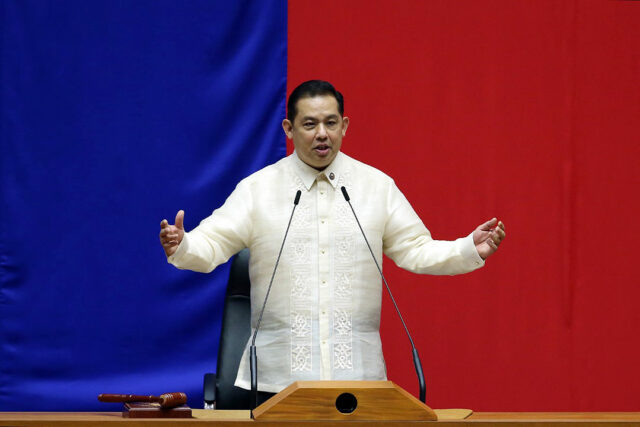
House Speaker Ferdinand Martin G. Romualdez — PHILIPPINE STAR/KRIZ JOHN ROSALES

THE House of Representatives will “work very hard” to pass the Marcos administration’s priority bills still pending at the bicameral conference committee level before the 19th Congress ends, Speaker Ferdinand Martin G. Romualdez said on Monday.

He said congressmen will prioritize the approval of the remaining measures, with confidence in completing all urgent bills before Congress adjourns in two weeks.

“We have two weeks before we adjourn sine die,” he told reporters. “So, we’ll wrap up the remaining priority measures.”

Lawmakers reconvened on Monday after a nearly four-month election break, leaving them two weeks to finalize measures before a new Congress convenes in late July.

Among the bills pending at the bicam level are measures that seek to formalize a fiscal regime for the mining sector, extend land lease limits for foreign investors and improve internet connectivity nationwide.

A group of foreign business chambers had urged lawmakers to pass the priority measures before the sine die adjournment.

“We’ll work very hard to try to resolve it before the two weeks [end],” said Mr. Romualdez.

During Monday’s session, Mr. Romualdez also called on lawmakers to pass key pending legislation before Congress concludes its session, highlighting the importance of finalizing bills seen as vital to improving public service.

“Let us pass the Open Access in Data Transmission Act to make fast, reliable internet accessible to every barangay,” he said. “Let us finalize the e-governance act so that public services become faster, smarter and less prone to red tape.”

He also urged lawmakers to approve a bill providing guidelines on the use of artificial intelligence (AI), helping the government “embrace innovation while protecting ethics, privacy and human dignity.” 

The House has approved 1,493 bills filed in the 19th Congress, with 280 being signed into law by President Ferdinand R. Marcos, Jr.

Apart from the priority measures, lawmakers are also expected to vote on third and final reading a measure seeking a P200 minimum wage hike.

Congressmen approved the bill on second reading in February, while their counterpart approved a bill seeking a P100 daily wage increase for minimum wage earners in the private sector last year.

Asked if the bill would pass the House before Congress concludes next week, Mr. Romualdez said: “We’ll see, we will leave it up to the process.”

The House Speaker should push lawmakers to approve the wage hike proposal before the end of the 19th Congress, a coalition of labor groups said in a statement.

“With only six session days left in June, every Filipino worker and their family is counting on the commitment of Speaker Ferdinand Martin G. Romualdez and the members of the House of Representatives to be truly the House of the People,” the National Wage Coalition said.

“Workers across the nation are closely watching and placing their full trust in Congress to pass the P200 legislated wage hike before anything else because to do otherwise is not merely neglect of duty but betrayal of trust,” it said. — Kenneth Christiane L. Basilio

Government rightsizing and Right-of-Way bills advance in Senate

BW FILE PHOTO

PRIORITY measures seeking to minimize redundancies within the government and amend the right-of-way law to speed up infrastructure projects advanced in the Senate on Monday.
With 22 affirmative votes, the chamber approved on third and final reading Senate Bill No. 890, the Government Optimization Act to remove obsolete government positions and eliminate duplications.

It will also simplify rules, regulations and processes, as well as empower the President to scale down agencies under the Executive branch.

Senate President Francis “Chiz” G. Escudero, among the principal authors, said that the bill will streamline bureaucracy in the government, “which also means the possible creation of new positions, new offices, upgrading, upskilling, and upscaling personnel to help them fill up much-needed positions and put them on the path toward career advancement.”

“The objective of rightsizing is not about saving money but being able to deliver services to the people more efficiently,” he said in a statement.

Covered under the bill are all agencies of the executive branch, including departments, bureaus, offices, commissions, boards, councils, and all other entities attached to or under their administrative supervision, and government-owned or -controlled corporations (GOCCs)

The bill exempts Congress, the Judiciary, constitutional commissions, ombudsman, local government units (LGUs), and teaching-related positions in the education sector from rightsizing. They may, however, authorize the optimization of their respective offices.

It also excluded military and uniformed personnel in the Departments of National Defense, Interior and Local Government, Transportation, Environment, and Justice.

Also on Monday, the chamber passed Senate Bill No. 2821, the Accelerated and Reformed Right-Of-Way (Arrow) Act, on second reading.

The bill seeks to facilitate the easier acquisition of right-of-way sites or locations for private infrastructure projects for public use to ensure a more efficient delivery of public services.

The proposed measure will amend Republic Act No. 10752, the Right-of-Way Act, to enable the government to private entities to acquire right-of-way.

The measure also mandates the implementing agency of the project to draft a right-of-way action plan before the acquisition of a certain property.

Infrastructure projects under ancestral land will also be required to secure the necessary certification from the National Commission on Indigenous Peoples for it to push through.

The proposed law seeks to align with Republic Act No. 12001, otherwise known as the Real Property Valuation and Assessment Reform Act, which mandates the establishment of uniformity in taxing real property.

Earlier, President Ferdinand R. Marcos, Jr. said that right-of-way issues have continued to hinder his government’s flagship infrastructure projects. The government is planning to allocate 5-6% of gross domestic product (GDP) to infrastructure spending. 

The Philippines has more than 200 flagship projects within its pipeline, valued at about P9.6 trillion.

Both measures were identified as priorities by the Legislative-Executive Development Advisory Council in the 19th Congress. — Adrian H. Halili

Singaporean PM to visit PHL

REUTERS

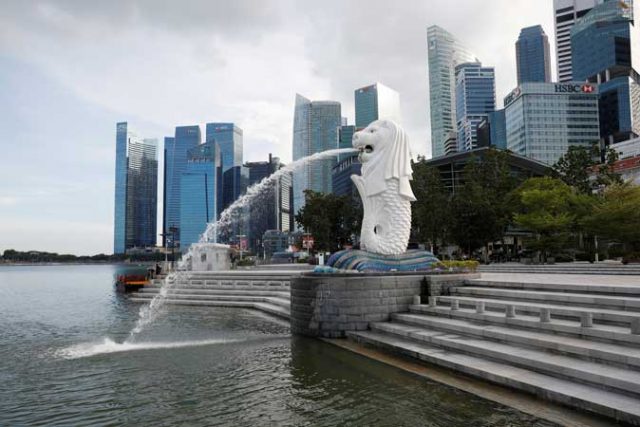
THE Singaporean Prime Minister (PM) will visit the Philippines on June 4 and 5 at the invitation of Philippine President Ferdinand R. Marcos, Jr., with discussions set on health, climate change mitigation, and civil service cooperation, the Presidential Palace said on Monday.

This is Prime Minister Lawrence Wong’s “introductory visit” to the country and marks his first bilateral visit after his reappointment in May, Malacañang said in a statement.

This also marks the first time a Singaporean prime minister has visited the country since 2017.

Mr. Marcos and Mr. Wong will also talk about political and economic issues following the conclusion of the Association of Southeast Asian Nations (ASEAN) Summit last week.

Singapore is the Philippines’ 8th-largest trading partner in 2024. About 220,000 Filipinos call the island nation home. — Chloe Mari A. Hufana

Law sets up body for agri profession

STOCK PHOTO | Image by Erik from Unsplash

PHILIPPINE President Ferdinand R. Marcos, Jr., signed into law a measure that will elevate the standards of the agriculture profession in the country through the creation of a dedicated regulatory body.

The Philippine Agriculturists Act, under Republic Act No. 12215, will create the Professional Regulatory Board for Agriculturists to develop and nurture competent, ethical, globally competitive, and well-rounded agriculturists.

“The State recognizes the importance of registered agriculturists in nation-building and development,” the law, signed on May 29, read in part.

Professionalism is intended to be fostered through transparent licensure examinations, a system of registration, and continuous professional development.

The enactment of RA 12215 aligns with the administration’s focus on food security, one of the key priorities under the president’s 10-point agenda for economic renewal and long-term growth.

According to the Philippine Statistics Authority’s (PSA) Labor Force Survey published last month, the country’s employment rate in March 2025 declined year on year.

It attributed the loss to the agriculture and forestry sector, which shed over 600,000 jobs compared to March 2024.

The government declared a “food security emergency” on rice last March due to persistently high prices despite global price reductions and lower tariffs on rice imports last year.

The country also faced a surge in hunger rates in December 2024, with more than a quarter of Filipino families experiencing involuntary hunger, the worst since September 2020 at the height of the coronavirus disease 2019 (COVID-19) lockdowns, according to the Social Weather Stations. — Chloe Mari A. Hufana

New PNP chief told: Uphold integrity

PRESIDENT Ferdinand R. Marcos, Jr. led the Philippine National Police (PNP) change of command ceremony for outgoing General Rommel Francisco D. Marbil (left) and his successor Nicolas D. Torre III (right) in Quezon City on Monday. — PHILIPPINE STAR/NOEL B. PABALATE

PRESIDENT Ferdinand R. Marcos, Jr., challenged the newly installed Philippine National Police (PNP) Chief to uphold discipline and accountability across the 232,000-strong force as the new top cop assumes command amid security threats and persistent concerns over police misconduct.

In a speech at the PNP change of command ceremony at Camp Crame on Monday, Mr. Marcos ordered newly appointed PNP Chief Nicolas D. Torre III to uphold the agency’s integrity by fast-tracking investigations into police officers accused of breaking the law.

Keep our police ranks clean and honorable,” he said in Filipino. “Speed up the investigation of cases against officers who violated the law so that we can deliver justice as soon as possible.”
Mr. Torre succeeds Rommel Francisco D. Marbil, who stepped down for his retirement.

The chief executive also urged Mr. Torre, who led the Crime Investigation and Detection Group (CIDG) prior to his new post, to continue the fight against illegal drugs.

“As enforcers of the law, the entire police force is expected to act with integrity, serve with honesty, and be a pillar of support for our fellow citizens,” he added in Filipino. “Avoid using your privileges for personal gain. Be instruments of justice, peace, and progress.”

Mr. Marcos also emphasized the need to increase police visibility in crime-prone areas and ensure rapid response capabilities at the community level amid continued public scrutiny of the PNP’s ability to police its own members and deliver timely justice in cases involving misconduct. — Chloe Mari A. Hufana

Bill seeking OFW reintegration hurdles House panel

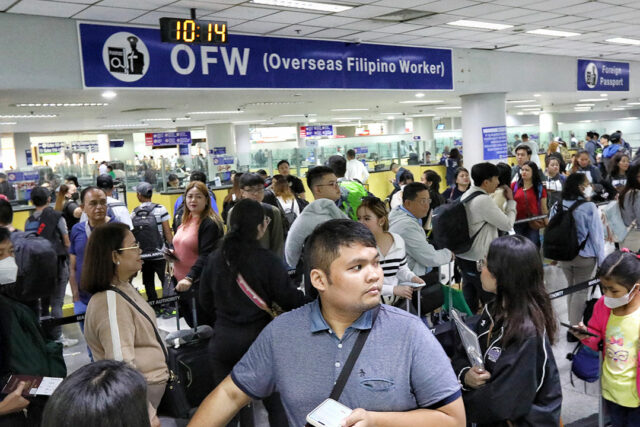
Overseas Filipino workers (OFWs) are seen at the Ninoy Aquino International Airport Terminal 3. — PHILIPPINE STAR/WALTER BOLLOZOS

A House of Representatives committee on Monday approved a measure seeking to create a framework providing long-term support for returning overseas Filipino workers (OFW), including financial support and psychosocial support.

The House overseas workers affair committee approved an unnumbered committee report that consolidated seven bills that sought to provide “reintegration” support for OFW returnees.

“What makes this measure so important is that it directly addresses what many OFWs worry about, what happens after the contract ends, after they come home,” Party-list Rep. Jude A. Acidre, who heads the House overseas workers panel, said.

“Reintegration isn’t just about giving them seminars or token programs. It’s about building a future they can look forward to,” he added.

Returning OFWs would be given access to government-arranged job fairs to help them search for employment opportunities while in the country, according to a copy of the bill obtained by BusinessWorld.

OFWs would also be granted civil service eligibility appropriate for their level of education attainment and job skills and experience, it added. — Kenneth Christiane L. Basilio