Home Blog Page 113

Budget reforms fall short in absence of participatory, accountability mechanisms
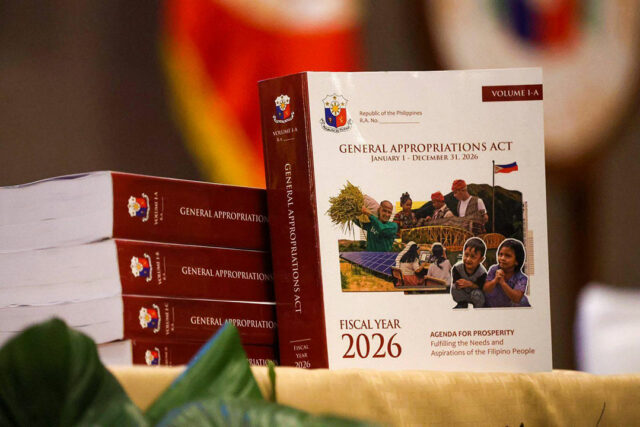
HANDOUT COURTESY OF OFFICE OF SEN. GATCHALIAN

By Adrian H. Halili, Reporter

THE country’s budget process remained “opaque” even as the government introduced several transparency reforms last year, analysts said, as the recently ratified 2026 national budget awaits President Ferdinand R. Marcos, Jr.’s approval.

“The general condition of the budget process remains opaque. Only a portion was televised. No efforts to enable participation and accountability in any part of the budget process,” Joy G. Aceron, convenor-director of transparency group G-Watch, said in a Facebook Messenger chat.

Lawmakers ratified the P6.793-trillion national budget for 2026 last Dec. 29, with critics noting that government aid and unprogrammed funding remained prone to misuse and politization due to weak accountability mechanisms.

Ederson DT. Tapia, a political science professor at the University of Makati, said that last year’s process showed more transparency, noting an increase in disclosures, stronger public messaging, and repeated invocations of openness.

“Yet transparency is not just about visibility alone. It is also about explainability,” he said in a Messenger chat.

“While procedures became more open, the rationale behind late-stage changes remained difficult for the public to fully grasp,” he added.

The deliberations for the 2026 budget have been marked by the implementation of several transparency measures, as a reaction from public outrage over a corruption scandal involving congressional insertions and opaque budget allocations.

These measures included the uploading of budget documents on online platforms, the livestreaming of bicameral proceedings, and the involvement of civil society in budget deliberations.

“In that sense, we saw improvements in procedural transparency, but deliberative transparency, such as clear articulation of trade-offs and policy priorities, remains incomplete,” Mr. Tapia said.

Ms. Aceron added transparency alone remains meaningless without responsiveness and accountability in budget deliberations.

“Transparency is only a means or tool,” she said, noting that transparency mechanisms serve only as tools if they don’t pave the way for civil society to influence decisions or hold legislators to account.

She added that last year’s budget process offered little room for public accountability, with allocations still prone to patronage and corruption.

“The budget continues to have allocations that perpetuate patronage, like the ayuda (social aid) programs and those prone to corruption, like the unprogrammed allocations,” she said.

Social aid programs like the Medical Assistance to Indigent and Financially Incapacitated Patients remained funded under the 2026 national spending plan, at P51.65 billion.

The program was previously flagged as it required patients to secure guarantee letters from politicians to avail of assistance.

Unprogrammed allocations are now set at P243.4 billion close to the P250-billion funding under the National Expenditure Plan. These standby funds for pre-planned government projects or emergency contingencies have been flagged for potential sources of corruption.


Selective accountability threatens to undercut Philippine anti-graft push

VARIOUS religious and civil society groups joined the second Trillion Peso March along Epifanio de los Santos Avenue (EDSA) in Quezon City, Nov. 30. — PHILIPPINE STAR/MIGUEL DE GUZMAN

By Chloe Mari A. Hufana, Reporter

PHILIPPINE anti-corruption efforts risk losing their deterrent effect unless investigations begin to reach senior political and business figures, a failure that could further erode public trust and shape behavior within the government in the years ahead, an analyst said.

The public is less unsettled by the absence of arrests than by a pattern in which enforcement actions appear to stop short of individuals with real political or economic weight, political science professor at the University of Makati Ederson DT. Tapia said.

Unless that boundary shifts, accountability will continue to be perceived as conditional, he warned, raising doubts about how far future probes will go.

“People feel that, even if they don’t always articulate it in sophisticated and legal terms. There’s a quiet question that hangs in the air: up to where does accountability actually go?” he said via Facebook Messenger.

The country is probing a multibillion-peso flood control scandal after President Ferdinand R. Marcos, Jr. exposed that high-ranking public officials have been colluding with private contractors to receive kickback money in return.

Only former Public Works officials and government contractors have so far been jailed since the President flagged anomalous flood control projects in August.

As climate risks intensify and infrastructure spending rise, Mr. Tapia said unresolved questions about responsibility could fuel deeper public skepticism.

That perception, if left unaddressed, may gradually alter how citizens and officials engage with institutions. Mr. Tapia said confidence may not collapse abruptly, but its slow erosion is expected, in which anti-corruption campaigns are increasingly viewed as symbolic.

Over time, this risks weakening their ability to deter misconduct as the government rolls out larger and more complex public works programs.

Mr. Tapia said political patronage and elite networks are likely to remain decisive factors, unless reforms disrupt the advantages of delay and distance from accountability.

Those with political and economic capital often do not need to interfere directly, he said, as prolonged investigations and procedural complexity can be enough to diffuse urgency and public pressure.

Looking ahead, Mr. Tapia warned that predictable enforcement outcomes could reshape incentives within the bureaucracy. Lower-level officials may continue to face immediate exposure, while those closer to power remain insulated, reinforcing an uneven risk landscape.

“Once that pattern becomes predictable, it stops deterring behavior,” he said. “It starts shaping it.”

For the government, Mr. Tapia said, the credibility of future anti-corruption drives will hinge on whether accountability visibly extends beyond familiar limits.

Without that shift, he warned, integrity may remain part of official rhetoric, but proximity to power will continue to be seen as the safer long-term strategy.

Marcos calls for discipline, unity

VIBRANT fireworks lit up the night sky during the 2026 New Year revelry at the Quezon Memorial Circle in Quezon City. — PHILIPPINE STAR/MIGUEL DE GUZMAN

PRESIDENT Ferdinand R. Marcos, Jr. urged Filipinos to approach 2026 with discipline, unity and a shared sense of purpose, framing the new year as a test of collective resolve as his administration probes a massive corruption scandal.

In his New Year’s message on Thursday, Mr. Marcos said the months ahead will require both personal discipline and national solidarity to translate lessons from the past year into progress, calling on citizens to see their choices as shaping the country’s direction.

“As we step into the unfolding days ahead, may we move forward with a clearer understanding of our role in each other’s lives and a renewed commitment to building a future shaped not by circumstance but by the strength of our will and the clarity of our collective purpose,” he said.

The President signaled that his government would press on with policies aimed at fostering unity and social cohesion, casting empathy and service as pillars of nation-building at a time when public trust and economic expectations remain under strain.

“A society thrives when its people choose empathy over indifference, service over self-interest, and hope over despair,” he said. “It is thus our commitment in the government to be relentless in pursuing a Bagong Pilipinas that nurtures unity, fosters compassion, and showcases the greatness of our kababayans.” — Chloe Mari A. Hufana

235 firework-related injuries logged

A CHILD presses on a head wound while waiting for treatment at the East Avenue Medical Center-Emergency Department and Trauma Center in Quezon City during the New Year revelry. — PHILIPPINE STAR/MIGUEL DE GUZMAN

THE Philippines logged 235 fireworks-related injuries during the latest New Year period, according to its Health department on Thursday, a sharp decline from a year earlier.

The Department of Health (DoH) said the cases were recorded from Dec. 21, 2025, to 4 a.m. on Jan. 1, 2026, including 62 injuries reported during New Year’s Eve celebrations.

The tally is 42% lower than the 403 cases recorded during the 2025 year-end festivities.

Health Spokesman Albert Francis E. Domingo said the lower number is encouraging but not final, as nationwide surveillance will continue until Jan. 5 to capture late hospital submissions.

“Even as we see today a lower [count] than last year’s count for fireworks-related injuries, the DoH anticipates that late reports will come in from today Jan. 1 all the way to Jan. 5. We hope the lower count will stay,” he said in a statement.

He warned that even minor burns or wounds caused by fireworks can lead to tetanus, a potentially fatal infection whose symptoms typically appear about eight days after injury and, in some cases, as late as three weeks.

Mr. Domingo urged those injured to seek immediate medical consultation, noting that tetanus vaccination is available at hospitals nationwide. — Chloe Mari A. Hufana

35 scam hub victims return to PHL

Police raided a suspected Philippine offshore gaming operator hub in a building in Parañaque City. — PHILIPPINE STAR/EDD GUMBAN

THE Department of Migrant Workers (DMW) said that 35 Filipinos who fell victim to scam hubs in Cambodia have safely returned to the Philippines.

“Their safe repatriation was achieved through the coordinated efforts of the Philippine Embassy in Phnom Penh and the Migrant Workers Offices in Singapore and Thailand,” the DMW said in a statement.

The returnees arrived in three batches at Ninoy Aquino International Airport on Dec. 31. Two of the batches flew through Kuala Lumpur, Malaysia, while the third batch went through Phnom Penh, Cambodia.

“The DMW reiterated its warning to Filipinos to remain alert to fraudulent job offers, especially those shared on social media platforms,” the agency said.

It also urged jobseekers to verify the legitimacy of overseas employment opportunities and to ensure they are properly approved and registered with the DMW before accepting any offer.

The agency noted the repatriation forms part of an ongoing inter-agency effort to assist Filipino victims of illegal recruitment, human trafficking, and scam hub operations. — Adrian H. Halili

Mayon Volcano raised to Alert Level 2

MAYON Volcano spews ash and lava as seen from Legaspi City, Albay on June 11, 2023. — PHILIPPINE STAR/EDD GUMBAN

THE state seismology agency raised Mayon Volcano’s alert status to Level 2 on Thursday amid increased seismic activity and rockfall in the volcano, warning citizens of potential eruption.

In a 6 a.m. bulletin, the Philippine Institute of Volcanology and Seismology (Phivolcs) said that Mayon was showing increasing unrest and heavy rockfall shedding at its summit since November.

“This means that there is current unrest driven by shallow magmatic processes that could lead to hazardous magmatic eruption,” it added.

Phivolcs said that it had recorded 599 rockfall events in the last two months of 2025, noting the highest incidence occurred on Dec. 31 with 41 rockfall events.

“Increased rockfall at Mayon has been a precursory sign of magmatic dome growth within the upper edifice preceding an eruption,” the agency said, citing the same conditions before the volcano’s 2023 eruption.

The seismology agency also noted rising cases of ground swelling, mainly caused by rising magma and gas pressurization.

It added that the persistent rockfall coupled with ground swelling “may indicate increased chances of an eruption occurring at the summit of Mayon, generating life-threatening volcanic hazards that may impact surrounding communities.”

Phivolcs called on the public to remain vigilant and refrain from entering within six-kilometer radius of the volcano to minimize risks from sudden explosions, pyroclastic density currents (PDC), rockfall, landslides and ballistic projectiles.

“Local government units must prepare communities within the PDC hazard zone for subsequent evacuation in case unrest suddenly escalates and the Alert Level is further raised,” it added.

Civil aviation authorities are also advised to warn pilots to avoid flying close to the volcano’s summit, noting that ash and ballistic fragments from any sudden eruption can be hazardous to aircraft. — Adrian H. Halili

22 hurt in Cotabato New Year’s Eve grenade attack

COTABATO CITY — Two men riding a motorcycle together left 22 revelers, including children, wounded after a grenade attack at Barangay Dalapitan in Matalam town in Cotabato at about midnight on Wednesday.

Lt. Col. Arniel C. Melocotones, Matalam police chief, and local executives separately told reporters on Thursday morning that one of the two motorcycle-riding men threw a fragmentation grenade at the victims, then setting off firecrackers and pyrotechnics along a highway in Sitio Ipil-Ipil in Barangay Dalapitan, and motored away immediately.

Barangay officials and police investigators who responded to the incident said the grenade blast that ripped through the area hurting 22 revelers, among them grade school children.

The incident triggered panic among villagers in Barangay Dalapitan.

The victims, who sustained shrapnel wounds in different parts of their bodies, were immediately transported by policemen and emergency responders from the Matalam local government unit to different hospitals for treatment.

Governor Emmylou Taliño-Mendoza, chairperson of the multi-sector Cotabato Provincial Peace and Order Council, has condemned the bombing and urged local officials in Matalam and residents of Barangay Dalapitan to help the police identify its perpetrators.

“Our provincial government will provide the victims essential support that they will need for the treatment of their injuries,” Ms. Mendoza said.

Brig. Gen. Arnold P. Ardiente, director of the Police Regional Office 12, said Mr. Melocotones and his subordinates in the Matalam Municipal Police Station, intelligence agents from the Cotabato Provincial Police Office and local officials are cooperating in identifying the two men behind the bombing for prosecution.

Army Brig. Gen. Ricky P. Bunayog, commander of the 602nd Infantry Brigade, and his superior, Major Gen. Jose Vladimir R. Cagara, commander of the 6th Infantry Division, separately said plainclothes operatives from their intelligence units in the province are helping the police put a closure to the incident. — John Felix M. Unson

Colliers says housing prices may have recovered in Q4

The Veranda at Arca South

RESIDENTIAL property prices may have picked up in the fourth quarter after the slump a quarter earlier, Colliers Philippines said.

“Similar to what we have seen previously, the fourth quarter is traditionally a strong quarter for residential take-up whether within or outside Metro Manila, whether it’s condominiums or horizontal,” Joey Roi H. Bondoc, director and head of research at Colliers Philippines, told BusinessWorld by telephone.

The Bangko Sentral ng Pilipinas (BSP) Residential Property Price Index indicated that housing prices nationwide posted its weakest growth ever in the third quarter at 1.9%.

This was a sharp slowdown from the 7.5% growth posted in the three months to June and the year-earlier 7.6%.

The BSP also reported that lower real estate investment brought banks and trust entities’ real estate exposure down to 19.54% at the end of September from 19.61% at the end of June and 19.55% a year earlier.

Real estate loans climbed 8.9% year on year to P3.096 trillion at the end of September, but real estate investment slipped 5.75% to P354.749 billion.

Mr. Bondoc said yearend bonuses and inflows of remittances from overseas Filipino workers could have spurred demand for residential property in the fourth quarter.

He also noted that the peso’s recent weakness may prompt migrants, especially those from North America, to send more money home.

The peso has been trading between P58 to P59 to the dollar since October, hitting a fresh record low of P59.22 on Dec. 9.

However, Mr. Bondoc said elevated mortgage rates may still continue to dampen housing price growth in the near term, but any potential rate reduction could help property take up and price growth by this quarter next year.

“I think we need to watch out for the… possible reduction in mortgage rates, given that there has been a substantial decline in basic policy rates by the central bank,” he added. “And if that happens, that will provide a better impetus for a spike in residential demand, and therefore residential prices, starting (in the) first quarter of 2026.”

The BSP ended the year with a fifth straight 25 basis-point (bp) cut on Dec. 11, bringing its total reductions on key borrowing costs to 200 bps since August 2024. The benchmark policy rate is currently at an over three-year low of 4.5%. 

Mr. Bondoc said lowering the mortgage rate between 6% and 6.5% from the current 7.8% could help the property industry by raising confidence among buyers.

“But the concern is that they have not been lowering their mortgage rates,” he added. “If they start doing that next year, 2026, I think (that will be) a very good sign that demand and then prices might recover faster because of this lower mortgage rate.” — Katherine K. Chan

Balance of CARS program funding worth P3.99 billion due for release this year — BoI

REUTERS

THE Board of Investments (BoI) said it expects to fulfill its remaining P3.99-billion obligation to fund the Comprehensive Automotive Resurgence Strategy (CARS) program within the year.

Under the CARS program, the government provides participating automotive firms with fixed investment support and production volume incentives. Of the P5.43-billion total commitment, P1.44 billion has been released so far.

BoI Managing Head Ceferino S. Rodolfo expressed confidence that the government’s obligations will be fulfilled this year. 

“In 2026, it’ll be finished… it is not dependent on savings before it can be issued,” he told reporters.

Mr. Rodolfo said the BoI has begun releasing tax payment certificates (TPC) to program participants.

Participants can use the TPC at the Bureau of Internal Revenue (BIR) or the Bureau of Customs (BoC) to offset their duties, Mr. Rodolfo said.

The BIR and the BoC will then bill the BoI for the amount equivalent to the TPC presented, and the Department of Budget and Management will issue the necessary Special Allotment Release Order to cover the payment. — Vonn Andrei E. Villamiel

PPA awards contract to expand Bohol port

THE Philippine Ports Authority (PPA) said it awarded the P501.95-million Getafe Port Expansion project in Bohol to BNR Construction and Development Corp.

The regulator awarded the contract to the Mandaue-based construction company, which submitted the low bid among 11 contenders, PPA said in a notice of award dated Dec. 18.

BNR Construction will have 660 calendar days to complete the project, the PPA said. The project includes construction of the port operational area.

Getafe port in northern Bohol is opposite Cebu City on the Cebu Strait.

In 2024, the PPA said it earmarked up to P16 billion for infrastructure projects until 2028. The funds will be allocated for enhancing port efficiency and capacity, including 14 big-ticket projects targeted for completion within the period.

The PPA said cargo and passenger traffic last year have been stronger than expected, with targets expected to be exceeded due to the demand peak in the fourth quarter of 2025.

The regulator had targeted cargo throughput of 301.47 million metric tons, while container volume is anticipated to top eight million twenty-foot equivalent units. — Ashley Erika O. Jose

Asian airlines seen leading industry’s growth in 2026

BW FILE PHOTO

THE International Air Transport Association (IATA) expects the airline industry, particularly in Asia, to sustain growth in 2026, driven by strong demand across both passenger and cargo segments.

“The air transport industry continues to demonstrate resilience amid persistent non-fuel cost pressures and operational constraints,” IATA said in a report.

The airline trade association projects stronger revenue growth in 2026, as carriers adapt to softer yields by expanding ancillary services and sustaining high load factors through efficient fleet utilization.

“Cost discipline is central to sustaining profitability in this low-margin business. While fuel prices have stabilized, non-fuel costs, particularly labor and maintenance, are rising due to pilot shortages, wage inflation, and aging fleets,” IATA said.

Airlines in the Philippines continue to recover, Rizal Commercial Banking Corp. Chief Economist Michael L. Ricafort said, noting higher domestic passenger tariffs even with foreign tourist arrivals yet to return to pre-pandemic levels.

Passenger fuel surcharges have remained steady, with the Civil Aeronautics Board (CAB) maintaining the surcharge at Level 4 for the sixth month in January.

Jet fuel prices declined 3.8% to $86.73 per barrel for the week ending Dec. 26; on a year-on-year basis, the global average jet fuel price dropped 12.4%.

IATA projects the Asia-Pacific to lead global growth, as regional airlines report rising passenger traffic. For the nine months ending September, the CAB said air passenger volume rose 6.247% to 46.84 million driven by growth in domestic passenger traffic.

Domestic passenger volume was 24.95 million, up 5.36% from a year earlier. International passengers were up 7.25% at 21.89 million.

PAL Holdings, Inc., the operator of flag carrier Philippine Airlines, reported a rise in attributable net income of 33.58% to P9.03 billion for the first nine months, supported by passenger revenue of P116.56 billion, up from P115.66 billion.

Cargo and ancillary revenue contributed P6.71 billion and P12.67 billion, respectively.

Meanwhile, Cebu Air, Inc., the operator of budget carrier Cebu Pacific, recorded an attributable net income of P5.03 billion for the nine months, reversing a net loss of P12.05 billion a year earlier.

Consolidated revenue for the period climbed 78.3% to P66.90 billion.

Passenger revenue for the first nine months rose to P46.13 billion, more than double the P22.48 billion previously. — Ashley Erika O. Jose

PHL food service sales seen rising 10% this year

CUSTOMERS eat at a restaurant in a mall in Quezon City. — PHILIPPINE STAR/ MICHAEL VARCAS

FOOD SERVICE sales in the Philippines are projected to increase 10% in 2026 to $15.4 billion, building on the sector’s recovery to pre-pandemic levels in 2025, according to the US Department of Agriculture (USDA).

In a report, the USDA said food service revenue in 2025 was estimated to have risen 8% to $14 billion from $13 billion in 2024. If realized, this would bring industry sales back to the levels recorded in 2019, before the COVID-19 (coronavirus disease 2019) pandemic.

For 2026, sales of full-service restaurants are projected to increase 3.23% to $2.18 billion.

The projected growth in full-service restaurant sales is attributed to the arrival of new international entrants, the development of innovative restaurant concepts, and increasing consumer demand for unique dining experiences.

The sales of limited-service restaurants are also projected to rise 10.23% to $9.52 billion this year.

According to the USDA, chicken-focused chains are driving growth in the limited-service sector. Asian, including Filipino, limited-service restaurants, as well as bakery, burger, and convenience store formats, are also showing strong performance.

The sales of street stalls and kiosks are also expected to grow 4.68% to $1.97 billion this year.

“Fueled by strong demand for quick, affordable food and beverage options, the enduring popularity of milk tea and grab-and-go coffee kiosks, and the widespread adoption of franchising models enable rapid expansion,” the USDA said.

Sales of cafés and bars are projected to rise 7.13% to $1.74 billion this year. If realized, this would represent a rebound from the 5.9% decline in sales last year.

According to the USDA, growth in the café and bar sector is driven by rising consumer mobility, the popularity of specialty coffee and tea shops, and the rising demand for innovative beverages and café experiences. — Vonn Andrei E. Villamiel