To mark 62 years of meaningful public service, LANDBANK recently honored its outstanding clients and partners who have been instrumental in delivering essential financial and support services nationwide.
The inaugural LANDBANK Gawad TANYAG (Tanging Yaman at Galing) Awards held on Aug. 8 celebrated the bank’s clients who have made an impact in communities and models of operational excellence, which include individual farmers and fishers, cooperatives, micro, small and medium enterprises (MSMEs), corporations and large enterprises, countryside financial institutions (CFIs), and microfinance institutions (MFIs).
“Sa bawat kwento ninyo, nakikita ko ang hinaharap na hinahangad nating lahat: isang Pilipinas na mas mayaman sa oportunidad, masagana sa pag-asa — kaya’t maraming salamat po sa pagpapatunay na ang tagumpay ay hindi lamang monopolya ng iilan, na ang pag-asenso ay puwedeng makamit ng bawat mamamayan,” said Finance Secretary and LANDBANK Chairman Ralph G. Recto in a statement.
LANDBANK President and CEO Lynette V. Ortiz
LANDBANK President and CEO Lynette V. Ortiz led the awarding ceremony to honor exemplary clients who embody the bank’s core values of partnership, loyalty, and excellence. She was joined by Department of Agriculture (DA) Undersecretary Roger V. Navarro, alongside key development partners.
“Through Gawad TANYAG, we honor the invaluable contributions of our clients who help move our nation forward. This is our way of celebrating partnerships that go beyond banking — partnerships rooted in trust, shared purpose, and the pursuit of meaningful change,” said Ms. Ortiz.
Under the Gawad PITAK (Pinakatanging Kooperatiba) category, the Hagonoy Farmers Multi-Purpose Cooperative, Panabingan Multi-Purpose Cooperative, and Nueva Ecija Seed Grower Multi-Purpose Cooperative were recognized as outstanding agri-based cooperatives in the small, medium, and large categories, respectively. The ASKI Employees Credit Cooperative and Providers Multi-Purpose Cooperative were also honored under the non-agricultural cooperative category.
Individual excellence was highlighted through the Ulirang Magsasaka award conferred to Alfonso Namujhe Jr. of Nueva Vizcaya, and the Ulirang Mangingisda award bestowed to Agrifina A. Gabres of Aurora.
Josephine Namujhe
“Napakalaking tulong ng LANDBANK. Noong mag-umpisa kami, walang bangko na gustong tumulong sa amin. LANDBANK lang ang naniwala. My dad started the spark, and LANDBANK fueled it. The citrus industry of Nueva Vizcaya owes it to LANDBANK,” said Josephine Namujhe, who received the award on behalf of her father.
The Gawad MSME was awarded to Jose Fernand Latog and Jollypig Farms, Inc. for the small and medium agri-based enterprises, respectively. Meanwhile, Spouses Patrick Mary and Rodary Therese Guanzon, and Spouses Mary Jeanette and Michael Anthony Bercadez were recognized under the small and medium non-agri enterprise categories, respectively.
The Gawad KAAGAPAY (Korporasyon na KAagapay sa Ating GAnap na TagumPAY) was conferred to Soliman E.C. Septic Tank Disposal, Fiesta Communities, Inc., and Cebu Landmasters, Inc. for their significant contributions as corporations and large enterprises in stimulating local economic growth.
“With the support of LANDBANK, we are very grateful that we have a partner in providing homes for our kababayans and empowering the Filipino people,” said Willie Tan, founder and president of Fiesta Communities, Inc. Rural Bank of Angeles, Producers Savings Bank Corporation, First Isabela Cooperative Bank, and ASA Philippines Foundations, Inc. were recognized with the Gawad PFI (Partner Financial Institution) for their exceptional performance under the rural bank, thrift bank, and microfinance categories, respectively.
The complete list of Gawad TANYAG awardees can be accessed here:
LANDBANK is celebrating its 62nd anniversary marking 62 meaningful years of advancing growth, financial inclusion, and sustainability through responsive and impactful banking services.
Spotlight is BusinessWorld’s sponsored section that allows advertisers to amplify their brand and connect with BusinessWorld’s audience by publishing their stories on the BusinessWorld Web site. For more information, send an email to online@bworldonline.com.
Join us on Viber at https://bit.ly/3hv6bLA to get more updates and subscribe to BusinessWorld’s titles and get exclusive content through www.bworld-x.com.
PHILIPPINE Savings Bank (PSBank) raised P5 billion in fresh funds via the two-year peso bonds it offered earlier this month.
The thrift unit of Metropolitan Bank & Trust Co. (Metrobank) listed the bonds on the Philippine Dealing & Exchange Corp. on Monday, it said in a disclosure to the stock exchange.
The final issue size was well above its P2-billion offer.
The latest bond issuance marked PSBank’s return to the domestic debt market after five years and made up the third tranche of its P40-billion bond program.
The papers carry a fixed interest rate of 5.875% per annum, payable quarterly.
“The public offer period, which was initially set to run from Aug. 4 to 8, 2025, was cut short to Aug. 5, 2025 as strong investor interest resulted in orders reaching more than six times the base offer size,” PSBank said.
“The net proceeds from this issuance will support PSBank’s expansion initiatives and further diversify the bank’s funding sources.”
First Metro Investment Corp. and ING Bank N.V. Manila Branch were the arrangers for the transaction. They also acted as selling agents together with PSBank and Metrobank.
PSBank’s net income went down by 29.88% to P953.62 million in the second quarter from P1.36 billion a year prior.
This brought its earnings for the first semester to P2.16 billion, dropping by 15.63% year on year from P2.56 billion.
Its shares went up by 30 centavos or 0.53% to end at P56.50 each on Monday. — BVR
TERENCE STAMP, playing General Zod, in a scene from Superman II.
LONDON — Terence Stamp liked to recall how he was on the verge of becoming a tantric sex teacher at an ashram in India when, in 1977, he received a telegram from his London agent with news that he was being considered for the Superman film.
“I was on the night flight the next day,” Mr. Stamp said in an interview with his publisher Watkins Books in 2015.
After eight years largely out of work, getting the role of the arch-villain General Zod in Superman and Superman II turned the full glare of Hollywood’s limelight on the Londoner.
Buoyed by his new role, Mr. Stamp said he would respond to curious looks from passers-by with a command of: “Kneel before Zod, you bastards,” which usually went down a storm.
He died on Sunday morning, aged 87, his family said in a statement. The cause was not immediately known.
“He leaves behind an extraordinary body of work, both as an actor and as a writer that will continue to touch and inspire people for years to come,” the family statement said.
‘I WOULD HAVE BEEN LAUGHED AT’ Terence Henry Stamp was born in London’s East End in 1938, the son of a tugboat coal stoker and a mother who Mr. Stamp said gave him his zest for life. As a child he endured the bombing of the city during World War II and the deprivations that followed.
“The great blessing of my life is that I had the really hard bit at the beginning because we were really poor,” he said.
He left school to work initially as a messenger boy for an advertising firm and quickly moved up the ranks before he won a scholarship to go to drama school. Until then he had kept his acting ambitions secret from his family for fear of disapproval.
“I couldn’t tell anyone I wanted to be an actor because it was out of the question. I would have been laughed at,” he said.
He shared a flat with another young London actor, Michael Caine, and landed the lead role in director Peter Ustinov’s 1962 adaptation of Billy Budd, a story of brutality in the British navy in the 18th century. That role earned him an Academy Award nomination and filled him with pride.
“To be cast by somebody like Ustinov was something that gave me a great deal of self-confidence in my film career,” Mr. Stamp told the Thomson Reuters Foundation in 2019. “During the shooting, I just thought, ‘Wow! This is it.’”
Famous for his good looks and impeccable dress sense, he formed one of Britain’s most glamorous couples with Julie Christie, with whom he starred in Far From the Madding Crowd in 1967. But he said the love of his life was the model Jean Shrimpton.
“When I lost her, then that also coincided with my career taking a dip,” he said.
After failing to land the role of James Bond to succeed Sean Connery, Mr. Stamp sought a change of scene. He appeared in Italian films and worked with Federico Fellini in the late 1960s.
“I view my life really as before and after Fellini,” he said. “Being cast by him was the greatest compliment an actor like myself could get.”
‘A LOT OF ACTION GOING ON’ It was while working in Rome — where he appeared in Pier Paolo Pasolini’s Theorem in 1968 and A Season in Hell in 1971 — that Mr. Stamp met Indian spiritual speaker and writer Jiddu Krishnamurti in 1968. Mr. Krishnamurti taught the Englishman how to pause his thoughts and meditate, prompting Mr. Stamp to study yoga in India.
Mumbai was his base but he spent long periods at the ashram in Pune, dressed in orange robes and growing his hair long, while learning the teachings of his yogi, including tantric sex.
“There was a rumor around the ashram that he was preparing me to teach the tantric group,” he said in the 2015 interview with Watkins Books. “There was a lot of action going on.”
After landing the role of General Zod, the megalomaniacal leader of the Kryptonians, in Superman in 1978 and its sequel in 1980, both times opposite Christopher Reeve, he went on to appear in a string of other films, including as a transgender woman in The Adventures of Priscilla, Queen of the Desert in 1994.
Other films included Valkyrie with Tom Cruise in 2008, The Adjustment Bureau with Matt Damon in 2011 and movies directed by Tim Burton.
He counted Princess Diana among his friends.
“It wasn’t a formal thing, we’d just meet up for a cup of tea, or sometimes we’d have a long chat for an hour. Sometimes it would be very quick,” he told the Daily Express newspaper in 2017. “The time I spent with her was a good time.”
In 2002, Mr. Stamp married for the first time at the age of 64 — to Elizabeth O’Rourke, a pharmacist, who was 35 years his junior. They divorced in 2008.
Asked by the Stage 32 website how he got film directors to believe in his talent, Mr. Stamp said: “I believed in myself.
“Originally, when I didn’t get cast I told myself there was a lack of discernment in them. This could be considered conceit. I look at it differently. Cherishing that divine spark in myself.” — Reuters
LISTED real estate developer Arthaland Corp., through its subsidiary Furusato Land Corp. (FLC), has acquired a 50% interest in 14 land parcels along Banilad Road in Cebu City valued at P2.5 billion for a planned project.
“This transaction will be subject to the ratification of the corporation’s board of directors at its next meeting,” Arthaland said in a regulatory filing on Monday.
Arthaland’s board approved the incorporation of FLC in May. The company also infused P500 million into FLC through a share subscription.
FLC serves as Arthaland’s project vehicle for acquiring property for the planned development. The company has yet to disclose details of the project.
For the first half, Arthaland recorded a 49% drop in net income to P240.1 million as revenue declined by 14% to P2.2 billion.
Arthaland said the revenue decline was due to projects that were either fully sold or nearly sold out during the period. However, the decrease was cushioned by contributions from the Eluria ultra-luxury residential condominium project in Makati and the initial revenue recognition of the second tower of the Una Apartments residential development in Biñan, Laguna.
Eluria is a 31-story project that will feature 37 limited-edition units, with only one to two units on each floor. Arthaland expects to generate P6 billion in sales from the project, with a 300-square-meter unit priced between P150 million and P170 million.
Meanwhile, Una Apartments is a five-tower mid-market residential development inside the 8.1-hectare Sevina Park in Biñan, Laguna.
Sevina Park is a mixed-use community accessible via the Cavite-Laguna Expressway. It is near the De La Salle University-Laguna Campus, hospitals, and several industrial estates.
Arthaland shares rose by 8.43% or P0.035 to 45 centavos apiece on Monday. — Revin Mikhael D. Ochave
Directors of publicly listed companies (PLCs) and private corporations usually attend board meetings face to face now and must, of course, observe boardroom etiquette. These board room manners are learned from basic etiquette in school augmented by classes held in esteemed institutions, like the Institute of Corporate Directors (www.icd.ph), the Centers for Good Governance, and the like. Even we, at NextGen Organization of Women Corporate Directors (www.nowcdphils.com), find time to listen to fireside chats with respected luminaries in corporate boards, like Cora dela Paz-Bernardo.
But in less formal boards, especially of non-government organizations (NGOs) and advisory councils, people seem to throw the etiquette book aside because either it is a “gratis et amore” board position or pro bono, or it is a family council or a board in a family corporation, where one will not be replaced or evaluated due to stockholder rights or, in the case of family, one is a rightful heir to the company. But this is where etiquette should first be learned and practiced. No board or council is any less than a PLC when we talk about governance and etiquette.
How many times have you attended a board meeting where the chairman tunes in from his mobile phone as he is travelling, or that he is home because something came up. You tend to doubt the seriousness of the corporation and the formality required of board members when your own chair does not consider it to be important to be dressed, come on time, and be behaved. Or even take note of the date and time and be present physically.
I have had the experience of directors attending to their mobile phones, taking lots of calls, and not paying attention when all the meeting requires is an hour or two of your time. Then there are directors who love to have their own private conversations with other directors, unmindful of the speaker or presenter who has the floor. I have seen these many times but choose not to call their attention, especially if I am the chair, and not the grand marshal of the room.
It is very disturbing to observe that well-educated people, chosen for their expertise on subjects, are only attentive when it is their turn to speak. Listening to a meeting should be job one. Participating in discussions is what we get paid for — either in a modest per diem, travel allowances, or just a free meal and a token. But how will you participate if you do not listen and half the time you are engaged in something else? It is unfair to the other directors who give up their time to listen and participate while you are only half present or mentally absent.
At NOWCD, we are looking to allow more women into our organization so we can address the call of the Philippine Stock Exchange in a recent press release to get more women in board rooms. We have to get women directors in a pipeline for future PLC directorships, even if they have had experience only in private companies as of yet, or have been CEOs of companies and are planning to have a career change after the C-suite.
But more than just corporate experience or topping the board exams, passing the bar or being exceptional in a certain field, what makes a good director or advisory council member is basic etiquette. This is a habit formed over the years which we must be very conscious of. We have sat in boards of non-profits, family corporations, and PLCs. The etiquette required is the same — respect for other people’s time and talk time. Show respect by keeping silent and keeping comments to ourselves until it is our turn to speak. It is the most difficult thing to do but, once learned, becomes a habit. Even more precious than expertise is the respect we show others.
Also, as more women join corporate boards, we ask the men to put the male jokes aside. That is part of board room etiquette. The golf jokes may be appropriate if the other members are into the sport but otherwise, golf jokes are best reserved for golf buddies.
Other board room “no-no’s” are discussions involving religion and politics. These topics are never-ending and may create animosity between and among good-natured board members.
What we discuss in boardrooms must be about the purpose of the board itself. Were we elected because of what we can contribute to the betterment of the organization, or as a token independent director in a PLC? Are we the token woman, youth, or subject matter expert or do we really add value to our boards?
Let us start by coming on time, being prepared, and, while the meeting is ongoing, pretending we are at the presidential palace waiting to be called by the powers that be. That should make us sit up straight, stop useless conversations, and listen to the chair or the one who has the floor.
Check your board room etiquette and check your directors’ manners and habits. It may spell the difference between an active profitable company or a compliance-driven board not checking on its positive results or outcomes.
Which board or advisory council do you belong to? It’s high time we checked everyone’s boardroom manners and etiquette.
This article reflects the personal opinion of the author and does not reflect the official stand of the Management Association of the Philippines or MAP.
Chit U. Juan is the co-vice-chair of the MAP Environment Committee. She is also the president of the Philippine Coffee Board, Inc. and Slow Food Manila
BEVERLY HILLS, California — Director Spike Lee’s multi-part documentary series for ESPN Films about former NFL quarterback Colin Kaepernick, who sparked a national debate when he protested racial injustice nearly a decade ago, will not be released, the filmmaker and ESPN said.
“ESPN, Colin Kaepernick and Spike Lee have collectively decided to no longer proceed with this project as a result of certain creative differences,” ESPN said in a statement to Reuters on Saturday.
“Despite not reaching finality, we appreciate all the hard work and collaboration that went into this film.”
Mr. Lee told Reuters on Friday that the series was not going to be released.
“It’s not coming out. That’s all I can say,” Mr. Lee said on the red carpet ahead of the Harold and Carole Pump Foundation dinner, a fundraiser for cancer research and treatment, in Beverly Hills, California.
Asked why, the Oscar-winning director declined to elaborate, citing a nondisclosure agreement.
“I can’t. I signed a nondisclosure. I can’t talk about it.”
Mr. Kaepernick played for the San Francisco 49ers from 2011 to 2016. He ignited a national debate in 2016 when he knelt during the US national anthem to protest systemic racism and police brutality.
The 37-year-old athlete has not played in the NFL since that season. Many experts believed his political activism, which triggered a movement that drew the ire of US President Donald J. Trump, was the key reason teams were wary of signing him.
He later filed a collusion grievance against team owners, which was settled with the league in 2019.
A representative for Mr. Kaepernick said the player had no comment about the docuseries on Saturday.
Production on the series began in 2022, with Walt Disney-owned ESPN touting it as a “full, first-person account” of Mr. Kaepernick’s journey that would feature extensive interviews with the player.
In September, Puck News reported the project faced delays amid disagreements between Mr. Kaepernick and Mr. Lee over the direction of the film, and that ESPN Chairman Jimmy Pitaro was open to allowing the filmmakers to shop it elsewhere. — Reuters
IMPROVING cybersecurity for online payments systems with the help of artificial intelligence (AI) solutions can push financial inclusion in the Philippines, payments technology company Global Payments, Inc. said.
The company expects AI to boost the Philippines’ online payments system within the next three to five years.
Krishnaraj Tantri, senior vice-president for South and Southeast Asia at Global Payments, said in an e-mail interview that AI-powered tools can help improve cybersecurity, particularly fraud detection, in the financial system.
Alternative security tools like biometrics, tokens, or cryptograms can also be implemented in addition to AI to protect the integrity of online payments systems.
“To enhance payment security in the Philippines, we can adopt several innovative measures. AI technology significantly improves the accuracy of fraud detection, allowing for real-time monitoring and response to suspicious activities,” Mr. Tantri said.
“These methods involve encoding transaction data, which minimizes the risk of identity theft and fraudulent transactions.”
Making online payments systems more secure, improving tech infrastructure, and financial education efforts will benefit small and medium enterprises (SME), which could help push the growth of digital payments outside the Philippine capital, Mr. Tantri said.
“As many SMEs struggle to hire skilled talent in competitive fields like digital marketing, finance, and IT, AI tools will play a crucial role in automating manual tasks and enhancing productivity across various business functions,” he said.
“Currently, many SMEs lack awareness of the benefits of digital payments, such as faster settlements and reduced fraud risk. Educational initiatives are essential to inform these businesses about how digital payment solutions can streamline their operations and improve their bottomlines.”
The development of mobile banking solutions that cater to the needs of unbanked individuals can also boost inclusion, the company said.
These need to be supported by partnerships between the government, financial institutions, and fintech companies, Mr. Tantri said.
A possible initiative would be incentivizing the deployment of point-of-sale terminals in underserved regions, which would help enable SMEs in areas that lack infrastructure to accept digital payments, he added.
“This could include subsidies for merchants or partnerships with technology providers to reduce costs and increase accessibility.”
The share of online payments in monthly retail transactions in the Philippines stood at 57.4% in terms of volume and 59% in value terms in 2024, the latest Bangko Sentral ng Pilipinas (BSP) data showed. These are up from 52.8% and 55.3%, respectively, in 2023.
The BSP is targeting to achieve a 60-70% share of digital payments over total retail payments volume by 2028, in line with the Philippine Development Plan. — A.M.C. Sy
DEL ROSARIO-LED PHINMA Corp. has increased its allotted capital expenditure (capex) this year to about P5 billion from the initial P3.8 billion to cover new projects.
“We said P3.8 billion. It’s actually going to be a little more because there were some projects approved last year that weren’t calculated into that. The (capex) number is closer to P5 billion,” PHINMA Chief Financial Officer EJ A. Qua Hiansen told reporters recently.
Mr. Qua Hiansen said the projects approved last year include the 21-hectare Saludad township in Bacolod City, the Davao terminal for cement subsidiary Philcement Corp., and the insulated panels factory of subsidiary Union Insulated Panel Corp. in Porac, Pampanga.
“All of the projects are actually looking well. The indications are strong,” he said.
“We like the Bacolod market. The sales pickup has been good. In Davao, we broke ground late last year. That’s on track. For the insulated panels factory, that one is also on track to start commercial operations next year,” he added.
Mr. Qua Hiansen said PHINMA remains optimistic about its growth prospects despite global uncertainties related to the United States tariffs.
“I think it’s not a surprise that the macroeconomic environment globally, especially with the tariffs, has been a bit murky, so it’s getting harder for us to predict. But long term, we like our businesses,” he said.
“They’re going to really return not just value to our shareholders but to society. We’re going to keep focusing on doing that. We’re still very much pushing our expansion projects and excited for the future,” he added.
Meanwhile, Mr. Qua Hiansen said PHINMA will launch the first project of its community housing venture, located in Davao, later this year. The project will have 530 units.
He added that the second project, situated in Bacolod, will be launched by the first half of next year. PHINMA is venturing into the community housing segment through subsidiary PHINMA Community Housing Corp.
“We’ll see how those first two do before we look at putting in more. But it’s something we want to do in a very big way. It’s something we’re very positive about,” he said.
For the first half, PHINMA posted a P455.06-million attributable net loss, wider than the P117.89-million net loss a year ago. Revenue rose by 4% to P10.82 billion, led by its education segment.
PHINMA shares fell by 2.94% or 50 centavos to P16.50 apiece on Monday. — Revin Mikhael D. Ochave
WE often conflate competition and competitiveness, the terms frequently invoked in economic policy discussions, yet subtly distinct. The former, competition, describes the dynamic struggle among firms for customers and resources. Competition compels businesses to innovate and improve. The latter, competitiveness, refers to the capacity of firms, industries, or entire economies, like the Philippines, to outperform others in contestable markets. This capacity to outperform others, crucially, stems from the systematic development of productive capabilities.
The two are inextricably linked. Intense competition fosters an environment where merit-based outcomes prevail, channeling resources — talent, capital, and market share — to those who generate greater value. In essence, robust competition fuels national competitiveness.
The Philippines offers an interesting case study to examine the concepts of competition and competitiveness. The World Bank’s recent “Growth and Jobs” report, “Running Uphill: Growth Jobs, and the Quest for Productivity,” sheds light on how policy leaders can harness the power of competition to drive long term competitiveness of the Philippine economy.
For instance, Philippine firms engaged in export activities are significantly more productive than their non-exporting counterparts — around 20% more, on average. This suggests that firms exposed to the pressures of global competition strive to become and remain competitive.
The evidence suggests that exporters in the Philippines are more productive for two reasons: selection and learning. Selection implies that firms that are more productive in the first place are the ones that become successful exporters. Learning implies that by becoming systematic exporters, firms become even more productive through being exposed to different and often superior technologies or management practices. According to the World Bank report’s findings, this gain in productivity often continues long after they start exporting. This is not just about efficiency; it translates to better jobs.
Data shows that more productive firms in the Philippines are hiring a greater share of workers, indicating efficient resource allocation.
Moreover, the most productive Philippine firms demonstrably offer higher wages; the median wage at top-performing firms is roughly double that of mid-tier ones.
These trends confirm that the principles of competition and competitiveness are at play and have driven progress in the Philippine economy.
Yet, despite these advances, the evidence also suggests that the system is not functioning as efficiently as it could. The market’s capacity to allocate resources effectively has diminished in some areas, particularly in recent years. Several indicators suggest that the Philippines needs to refocus on fostering a more competitive environment.
The Philippine’s inward shift has created missed opportunities for jobs and wealth creation. The export-to-GDP ratio has fallen, and the number of systematic merchandise exporters declined by 23% between 2011 and 2022. This inward focus risks hindering future productivity, as exporters and foreign-owned firms consistently outperform those serving only the domestic market.
Recent years have not seen talent move predominantly to the most productive firms. Between 2012 and 2021, mid-productivity firms accounted for most employment growth. Typically, high-productivity and expanding firms employ more labor, with firm growth playing a role in expansion, sustainability, and job creation.
Finally, the Philippine economy is showing signs of slowing growth, with rising sector concentration and reduced business turnover. New firm entry rates have dropped since 2015, remaining low compared to regional peers. Less new entrants mean less competitive pressure for incumbents. Family-owned conglomerates often dominate, investing in protected sectors like utilities and real estate — reflecting structural incentives and regulatory protections that favor established players over innovation.
So, what can Philippine policymakers do to reverse these trends and reinvigorate competition?
Insights from the recent World Bank Growth and Jobs Report point out clear, actionable measures.
First, the government could facilitate new investment by simplifying permitting and licensing processes. This means embracing automation for business entry and site permitting and strengthening electronic signature systems.
Second, robust implementation and enforcement of recent laws is crucial, particularly in non-tradeable and network service sectors such as telecommunications, transport, logistics, as well as in energy, and professional services. This involves empowering sector regulators, separating development and regulatory roles where conflicts of interest arise, and establishing a Beneficiary Ownership Registry for greater transparency.
Third, lowering the costs of international trade and foreign investment is paramount. Accelerating the implementation of free trade agreements (e.g., between the Philippines and the European Union, Korea, and Canada), simplifying non-tariff measures, utilizing trade attaches, and modernizing customs systems for efficient clearance are all vital. Improving VAT refund processes will also significantly reduce operational costs for exporters. Finally, enacting the Public Service Act amendment is expected to cut the cost of essential service inputs, encouraging further investment.
The Philippines’ long-term prosperity hinges on its ability to foster genuine competition, ensuring that the most productive firms can thrive and allocate resources efficiently. The signs are clear; the path forward requires determined action.
Jaime Frias is a senior economist leading engagement for the World Bank in innovation and competitiveness. He has over 25 years of experience in private sector development, Trade and Investment policy. His expertise includes project operations, strategy, and analytics, gained through work in more than a dozen countries across Central and South America, Africa, Eastern Europe, and East Asia.
THE PESO strengthened on Monday to return to the P56 level against the greenback as investors’ focus turned to the US Federal Reserve’s symposium this week.
The local unit closed at P56.965 per dollar, rising by 10 centavos from its P57.065 finish on Friday, Bankers Association of the Philippines data showed.
The peso opened Monday’s session at almost unchanged at P57.05 against the dollar. Its intraday best was its closing level of P56.965, while its worst showing was at P57.14 against the greenback.
Dollars exchanged dropped to $1.48 billion on Monday from $2.099 billion on Friday.
“The dollar-peso traded sideways as players waited on the sidelines ahead of the Jackson Hole symposium on Aug. 21 to 23 for possible hints from Fed officials on their easing path,” a trader said in a phone interview.
The peso was also supported by lower global crude oil prices, Rizal Commercial Banking Corp. Chief Economist Michael L. Ricafort said in a Viber message.
For Tuesday, the trader sees the peso moving between P56.80 and P57.20 per dollar, while Mr. Ricafort expects it to range from P56.85 to P57.15.
The US dollar wobbled on Monday ahead of what is likely to be an eventful week for US interest rate policy, while oil prices were subdued as risks to Russian supplies seemed to fade somewhat, Reuters reported.
The major economic event of the week will be the Kansas City Federal Reserve’s Jackson Hole symposium, where Chair Jerome H. Powell is due to speak on the economic outlook and the central bank’s policy framework.
Markets imply around an 85% chance of a quarter-point rate cut at the Fed’s meeting on Sept. 17 and are priced for further easing by December. Wagers on more Fed easing have weighed on the dollar, which dropped 0.4% against a basket of currencies last week to last stand at 97.858.
In commodity markets, oil prices struggled as US President Donald J. Trump backed away from threats to place more restrictions on Russian oil exports, although White House trade adviser Peter Navarro said India’s purchases of Russian crude were funding Russia’s war in Ukraine and had to stop. Brent was flat at $65.81 a barrel, while US crude steadied at $62.81 per barrel. — A.M.C. Sywith Reuters
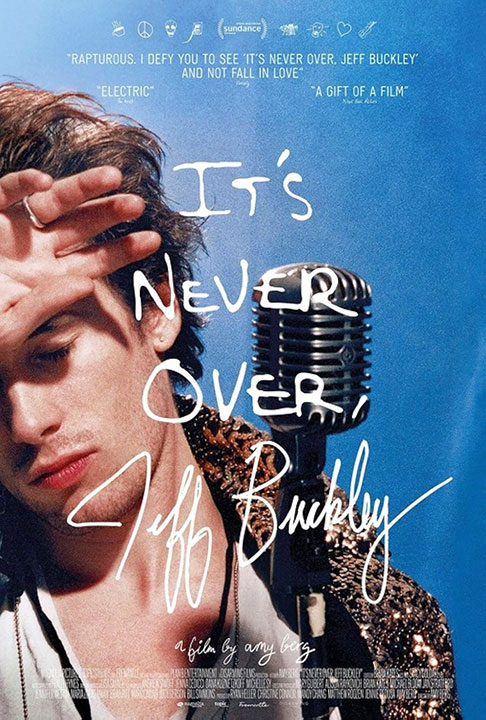
Jeff Buckley in It's Never Over, Jeff Buckley (2025) — IMDB
Jeff Buckley in It’s Never Over, Jeff Buckley (2025) — IMDB
SOME ARTISTS become timeless because their work transcends eras, resonating with new generations long after their time; others are immortalized because their lives — and careers — ended far too soon. Jeff Buckley, whose ethereal voice and singular 1994 album Grace earned him cult status before his accidental drowning at the age of 30, occupies both categories.
Nearly three decades since his passing, audiences now have the opportunity to rediscover Buckley. In It’s Never Over, Jeff Buckley, filmmaker Amy Berg excavates the life and legacy of the singer, drawing on rare archival material and the intimate recollections of the women who knew him best, including his mother, Mary Guibert, as well as his former partners and bandmates.
“I don’t think that there’s any one version of the Jeff Buckley story… but this is the one I chose to tell,” says Ms. Berg, whose efforts to make this film — the first to involve the cooperation of the singer’s estate — were more than a decade in the making. Speaking with Reuters from Los Angeles in the run up to the film’s Aug. 8 release, she discusses why Mr. Buckley’s voice still resonates today, the challenge of disentangling myth from man, and what his story reveals about the pressures of stardom — and whether we’ve gotten better at recognizing when young artists need help.
The following conversation has been edited for length and clarity.
Reuters: To start, can you tell the story of how this film came together, nearly 30 years after Buckley’s death?
Amy Berg: I was very moved by his album, Grace. It came at a time when music was very grungy and heavy and aggressive and very male. I heard this album and it just opened me up. I had all the feels. I loved Grace, I loved Jeff Buckley. And then just a couple of years later, he passed away while he was making his second album.
I’ve stayed with this album — it stayed with me, I should say — and just watched how his popularity has actually gone up. It seems like every generation, he has a whole bunch of new followers, and it’s kind of an unusual phenomenon to just have made one album and be bigger today than he was back in the ’90s. I’ve been wanting to tell his story since then.
Reuters: A couple of projects have been done on Buckley’s story. How does this one differ?
Berg: There has only really been one BBC special that was about him after he died and there was a scripted film that was made about his father (folk rock musician Tim Buckley) that he had a small role (in), but the estate didn’t participate in that. So this is really the first time they’ve ever participated in a film. There are a couple of projects, I believe, that almost happened, but didn’t. So this was the only official documentary about Jeff.
Reuters: You’ve explored the lives of iconic musicians before — I’m thinking, in particular, of your documentary on Janis Joplin. What draws you to these stories?
Berg: I wanted to make the Jeff Buckley film back in 2010. I didn’t get the rights at the time. I was up for the Janis Joplin gig and I went in and met with the family, and I think I did that film as an answer to not being able to make the Jeff Buckley film at the time. But it’s good that it happened that way because I learned a lot making the Janis film, about the process of making a music documentary. There’s just so much to it. It’s dense. There’s just a lot of rights involved. There’s archive. You have to scour for material. And you have to take on the responsibility of making sure that you get it right because the person is not around to justify or verify things.
Reuters: It was fascinating to hear Buckley narrate parts of his life throughout the film. What kind of source material were you working with?
Berg: I started reviewing the archive in 2019, which was an interesting moment. It was towards the end of Trump’s presidency, but there was a big women’s march movement and the language was very specific. And as I started listening to Jeff speak, I noticed what a feminist he was and I noticed that he had this cultural language of our time back in the ’90s. He really was tapped into something before his time because the music business was so patriarchal at the time. That really spoke to me, and so I decided to tell the story through the women in his life… and to try to understand who he was to them, because I just thought that was the right way to tell his story.
Reuters: You mention how Buckley’s fame has only grown since his passing. How did you navigate telling the story of the myth versus the man?
Berg: That was definitely something that I did struggle with because I had a certain impression of him, and I did not want to make a hagiographical film. I wanted to make an honest film and I wanted to show him as a human with all of his tricky, complicated personality. I just wanted to make sure that I got him right and I showed him with warts and all, let’s say.
Reuters: What most surprised you about him that you didn’t know before taking on the project?
Berg: When you hone in on a musician and that’s like your favorite musician, you kind of put them on a pedestal. So I think at that point, everything I learned about him was humbling. I expected that the relationship with his father was going to show up in the way that it did, but just the fact that he would buy his father’s CDs, cassettes, listen to them, then break them and throw them away — I mean, he was really kind of conflicted by how to embrace his legacy. So that was surprising.
In terms of the theme about trying to become a man, there are so many stereotypes about musicians being babies and never growing up and I was pleasantly surprised that he was really pushing himself to find that balance.
Reuters: Buckley seems to belong to a pantheon of young artists whose untimely deaths amplified their mystique — Janis Joplin, Kurt Cobain, Amy Winehouse, Jimi Hendrix, among others. Did you observe any parallels between Jeff’s story and theirs, the different contexts notwithstanding?
Berg: In Jeff’s case, (his drowning in the Mississippi River) was a mistake. He didn’t stick a needle in his arm, but he was being impulsive and he jumped in the water and it wasn’t a safe place to jump in.
The artists you’re talking about, their careers were just getting started. There’s not a lot released on them, so it’s like every inch is being sucked up of their legacy, any possible outtakes or demos. Jeff did one studio album and his second album, which I think is excellent, it is not the album he would have put out, obviously. It was demos that were turned into an album (posthumously). But that’s all there is. And so, of course, it’s going to amplify the kind of legacy and the mythology around his death because it’s just too young, too soon.
Reuters: Reflecting on artists whose lives were cut short, there’s often a conversation about the pressures of fame and the signs of emotional distress that may have gone unnoticed. Do you think we’ve gotten any better at recognizing and responding to those signs?
Berg: Do we take care of them enough? I mean, in the Amy Winehouse documentary, which was excellent, I thought that moment where she was about to go sign her record deal and she just got accepted into a rehab facility that she had applied to and chose not to do it and then sang about it. I mean, she might’ve had a totally different life. So it’s just those missed moments.
Asif (Kapadia, the director of Amy) did a great job in that film to highlight the disconnect with her family. And with Jeff, I do believe that that played into it, for sure. I think missed moments at the end where he was really struggling and he didn’t have the resources to stop and find help. I think that would have changed the scope of his future, of course. I know he was reaching out to those around him because he needed help. So whether or not that actually affected the moment that he jumped into the river, I think is a separate conversation. He did not commit suicide, obviously, but I think that he needed help and he was surrounded by a music scene that was very fast-paced and he was trying to slow things down.
Reuters:What are you hoping audiences, especially those who may be unfamiliar with Buckley, take away from this story?
Berg: I’ll throw this to a friend of mine, Alison Klayman, who’s also a documentary filmmaker. She went to see it at Sundance, and she called me after and one thing that she said stood out to me. She said, “I just want to go make art after watching this film.” And to me, that is the best possible gift that Jeff could give to audiences is to go find your own creativity and express it, because that’s all he was.
Reuters: What’s the story behind the film’s title?
Berg: It is a beautiful line from “Lover, You Should Have Come Over,” but also it’s a beautiful sentiment about this film that really has gone on forever for me, for the team that worked on it, and for him and his legacy. So that seemed like the right title. — Reuters
AFTER YEARS of turbulence, the Philippine office market is finally gaining ground. The first half of 2025 shows clear signs of a sector that is not only recovering, but recalibrating. Metro Manila is holding steady, provincial locations are accelerating and demand drivers — traditional companies and the outsourcing sector — are proving resilient. With positive market indicators across the board, the market’s rebound is starting to look less of a short-term recovery and more like the start of the industry’s new growth phase.
METRO MANILA’S MOMENTUM IS REAL Metro Manila recorded 446,100 square meters of transactions in the first half of 2025 — already surpassing half of 2024’s full-year total. This reflects a sustained recovery in office demand, especially among traditional and outsourcing firms. Notably, 70% of all transactions were driven by expansions and new setups, while the remainder involved relocations — often tied to flight-to-quality moves or space consolidation.
A closer look reveals that more than 80% of 3PO (third-party outsourcing) transactions were tied to business expansions, while over half of shared services firms were new entrants to the market. While large leasing transactions continue to make headlines, market activity in H1 2025 has been largely driven by small to mid-sized requirements, with 56% of recorded deals involving spaces below 1,000 square meters, and 36% between 1,000 to 2,000 square meters. Catering to small to mid-sized requirements entail flexibility from landlords. To better accommodate this demand, landlords are encouraged to remain flexible in their size offerings, especially in buildings with high vacancy.
VACATED SPACES ARE EASING — SLOWLY BUT SURELY One of the clearest signs of market recovery is the decline in space surrenders. Metro Manila’s vacated spaces totaled 382,000 square meters in the first half of 2025, down 27% from the second half of last year.Of the total vacated space, POGO (Philippine Offshore Gaming Operator) firms accounted for 174,000 square meters, while non-POGO tenants made up 208,000 square meters. Importantly, non-POGO vacancies have been consistently on a decline since 2023, suggesting that more occupiers are opting renew their leases rather than exit the market altogether.
While recent discussions around online gaming operations have raised questions on its impact on the real estate sector, the actual footprint of these firms in the office market remains negligible. Online gaming operators occupy less than 1% of Metro Manila’s total office stock — merely a fraction of the total POGO footprint during its peak years and a reminder that the market has already moved on from their absence.
GROWTH BEYOND THE NATION’S CAPITAL Outside of the National Capital Region, signs of growth are even more encouraging. Office demand in key provincial cities reached 159,100 square meters in H1 2025, up 28% year on year. Transaction volumes nearly doubled between the first and second quarters, pointing to sustained interest in regional expansion.
Cebu and Iloilo remain the strongest contenders, together accounting for more than half of all provincial transactions. Cebu’s office vacancy has fallen to 16.8% — its lowest since the pandemic — thanks to major expansions by established players and the arrival of new outsourcing firms.
Areas beyond traditional Tier 1 locations are beginning to draw attention from outsourcing firms. However, supply remains a key constraint as many of these locations lack BPO-grade office stock. Developers looking to future-proof their portfolios may find opportunity to address this underserved demand.
OUTLOOK FOR 2025 The Philippine office market is clearly in a better spot than it was a year ago. It is growing, recalibrating, and becoming more geographically diverse. Now at the tail end of the POGO exit, the market is no longer defined by vacancy shocks but measured by the growth of its reliable demand sources.
Momentum is building on different fronts — office demand is rising, space surrenders are declining and expansion-led deals outpacing relocations. While traditional and IT-BPM players continue to lead the charge, activity is now more dispersed. Growth is no longer confined in Metro Manila. Regional hubs like Cebu and Iloilo are becoming genuine frontiers of demand, with other emerging locations beginning to register on occupiers’ radar.
Still, the road ahead isn’t without its challenges. High vacancy lingers in certain submarkets, hybrid work remains in flux, and geopolitical issues continue to affect leasing and investment decisions. Nonetheless, the early gains in 2025 suggest that recovery has momentum. Landlords must continue to meet the market where it is, while developers should consider strategic bets in high-growth provincial areas. For now, confidence is returning, and with it, the foundations for the next cycle of growth in Philippine real estate.
Kevin Jara is director and head of tenant representation, while Kath Taburada is senior market analyst, both at Colliers Philippines. For feedback, please e-mail kevin.jara@colliers.com.