Home Blog Page 1101

Iraq signs agreement with Chevron on oil exploration projects, prime minister says

 – Iraq signed an agreement in principle with U.S. oil producer Chevron for the Nassiriya project that consists of four exploration blocks in addition to the development of other producing oil fields, Iraq’s prime minister said on Tuesday.

Iraq in the past two years has signed agreements with other oil majors, reversing a long period during which they retreated from the country. Improved contract terms have lured both France’s TotalEnergies and UK oil major BP to sign new deals, with a combined investment of over $50 billion.

“We are confident that Chevron, with its proven track record and expertise in successfully developing oil and gas projects, has the resources, experience, and technology to support Iraq to further develop new energy resources,” said Frank Mount, Chevron’s vice president of corporate business development, in a statement.

In 2021, Iraq authorised National Oil Company (NOC) to negotiate with Chevron over the development of oilfields in Nassiriya, in the Iraqi southern province of Dhi Qar.

The ministry at the time said its plan in the province included the completion of a group of giant projects in the oil and gas and water injection sectors, with a targeted initial capacity of 600,000 barrels of crude oil per day within seven years of starting work.

Prime Minister Mohammed Shia al-Sudani said the government adopted a new approach in dealing with major international oil companies and their investments in Iraq, especially U.S. companies, his office said. – Reuters

Baobab Eyewear champions hybrid offline-online retail experience through TikTok Shop

Baobab Eyewear’s Escolta store offers a personalized offline experience, complementing its strong presence on TikTok Shop.

Baobab Eyewear is redefining how Filipinos shop for eyewear, both online and offline. Known for its stylish, functional, and fairly priced frames, the proudly Filipino brand has found success in bridging the gap between digital discovery and in-store experience through TikTok Shop.

By leveraging TikTok Shop’s full-funnel ecosystem and content-first approach, Baobab was able to grow its online presence while driving foot traffic to its optical shop in Escolta, Manila. Its physical store provides a personalized space for customers to try on frames they first encountered online, completing a hybrid retail experience built for today’s discovery-driven consumers.

“Our audience was able to discover our physical store, thanks to our campaigns and presence on TikTok Shop”, said Eunice Abalos, Founder and Owner of Baobab Eyewear. “We are committed to offering thoughtfully designed eyewear that is life-proof, practical, and affordable, and giving our customers the best experience, whether through our physical store or TikTok Shop.”

Turning Content into Commerce

Through TikTok Shop, Baobab turned content and community into powerful growth engines. From short-form videos to livestream selling, the brand embraced new ways of engaging with consumers while offering seamless shopping, from frame selection to lens customization and prescription uploading.

“Even before TikTok Shop, Baobab was actively posting about our products and day-to-day operations—we really wanted to build an online community,” said Sheena Concepcion, Baobab’s Marketing Manager. “Since joining TikTok Shop, we’ve been able to reach more people and convert through features like free shipping, vouchers, and platform promos.”

Concepcion credits TikTok Shop’s recently upgraded ACE indicator system, which helps sellers optimize their Assortment, Content, and Empowerment strategies, for their success. During their summer campaign, Baobab utilized short videos as pre-launch content to generate excitement and drive traffic to the grand launch. The pre-launch phase alone saw a +43% increase in video views versus regular days.

Breakthrough Launch with BINI

One of Baobab’s standout milestones was the launch of BINIVISION, an exclusive collection created in partnership with the nation’s girl group, BINI. The campaign was activated through TikTok Shop and delivered a 3,410.45% uplift in Live GMV, ranking Baobab #1 during the platform’s Eyewear Co-Brand Day.

The exclusive BINIVISION collection, launched with girl group BINI

“As a discovery-driven and social platform, TikTok Shop empowers brands in reaching a wider audience and building communities”, said Franco Aligaen, Marketing Lead of TikTok Shop. “We believe these communities help bridge the offline and online worlds.”

As Baobab continues to grow, its success on TikTok Shop proves that when digital content, community, and commerce come together, they can unlock new opportunities for homegrown brands. With a hybrid retail model and a deep understanding of its audience, Baobab Eyewear is charting a path forward, where Filipino creativity meets inclusive, accessible design across both online and offline spaces.


Spotlight is BusinessWorld’s sponsored section that allows advertisers to amplify their brand and connect with BusinessWorld’s audience by publishing their stories on the BusinessWorld Web site. For more information, send an email to online@bworldonline.com.

Join us on Viber at https://bit.ly/3hv6bLA to get more updates and subscribe to BusinessWorld’s titles and get exclusive content through www.bworld-x.com.

New taxes ruled out amid record debt

FINANCE SECRETARY RALPH G. RECTO — PCO

By Kenneth Christiane L. Basilio, Reporter

THE GOVERNMENT will not introduce new tax proposals in the 20th Congress, Finance Secretary Ralph G. Recto said, reaffirming the administration’s fiscal consolidation strategy despite record-high debt.

Speaking with reporters after a Development Budget Coordination Committee briefing at the House of Representatives on Monday evening, Mr. Recto said the Marcos administration would instead focus on previously filed measures including an excise tax on single-use plastics and a tax amnesty program.

Asked whether the Department of Finance would back additional tax initiatives, Mr. Recto replied: “No.”

He also said the government was not considering increases in existing tax rates too.

“We only have the single-use plastics remaining, that’s number one,” he said. “Also possibly, a tax amnesty.”

Mr. Recto had earlier stressed that new revenue measures were unnecessary, pointing to what he described in April as the country’s “robust” fiscal position.

Government data showed the Philippines’ debt-to-gross domestic product ratio had risen to 63.1% as of end-June, its highest level since 2005. The figure remains above the 60% threshold that multilateral lenders view as manageable for developing economies.

The debt ratio is expected to ease to 61.3% by yearend, though still above the earlier 60.4% target, according to a Finance department handout.

Outstanding debt stood at a record P17.27 trillion in June, up 2.1% from the previous month and 11.5% higher than a year earlier.

The excise tax on single-use plastic bags was one of the 28 priority bills identified by the Legislative-Executive Development Advisory Council. While it was approved by the House on third reading in 2022, the measure was stuck at the Senate Ways and Means Committee.

The Finance department last year said the government could raise up to P33.8 billion in excise taxes on single-use plastic bags.

Three measures, which all seek to impose a P100-per-kilogram excise tax on single-use plastic bags, have been refiled at the House. A Senate counterpart bill proposes a lower rate of P20 per kilogram.

Mr. Recto in early August said the government is also looking at proposing a tax amnesty that will involve an amnesty charge set at a yet-to-be-determined percentage of the outstanding unpaid tax, in exchange for immunity from civil, criminal and administrative penalties.

Lawmakers in the House and Senate are pushing for a general tax amnesty that will impose a 2% amnesty tax rate dependent on the total assets of taxpayers up to 2024.

The Finance department’s decision to hold off on introducing new taxes is a “good move” given that proposing new levies could dampen household spending, said Reinielle Matt M. Erece, an economist at Oikonomia Advisory and Research, Inc.

“More taxes will effectively reduce disposable income of households since more of their income will be directed to taxes rather than consumption,” he said in a Viber message.

“Fiscal consolidation is important to better manage debt and budget efficiency, but if it comes at the expense of economic performance then it may be best to rethink the strategy to achieve this goal,” he added.

While the proposed excise tax on single-use plastics and tax amnesty could boost state revenues, the government should look at expanding the tax base and ensure that revenue streams are “future-proof,” John Paolo R. Rivera, a senior research fellow at the Philippine Institute for Development Studies, said.

“These should be seen as complementary, not core, measures,” he said in a Viber message. “What we need is better tax administration, improved enforcement and expanded coverage of existing tax measures.”

Mr. Rivera said that if the Finance department reverses its initial stance, then it should look at its impact on Filipino consumers and businesses.

“Any move must be weighed against inflation risks and its impact on consumers and businesses.”

Military pension reform shelved; analysts warn of ‘fiscal time bomb’

SOLDIERS march during the Armed Forces of the Philippines (AFP) Anniversary held at Camp General Emilio Aguinaldo in Quezon City, Dec. 20, 2024. — PHILIPPINE STAR/NOEL B. PABALATE

By Aubrey Rose A. Inosante and Kenneth Christiane L. Basilio, Reporters

THE MARCOS administration has shelved a plan to overhaul the pension system for military and uniformed personnel (MUP), Finance Secretary Ralph G. Recto said.

Analysts have warned that the current pension system for MUPs is a “fiscal time bomb” that threatens the Philippines’ fiscal sustainability.

“I think we discussed that already,” he told reporters on the sidelines of a House Committee on Appropriations briefing late on Monday. “Wala na ’yung  (There will be no) MUP reform so far for the remainder of the term.”

“The reform will be costly at this point in time,” Mr. Recto said without providing details.

However, Budget Secretary Amenah F. Pangandaman said the fate of the MUP reform bill will still be discussed in the Legislative-Executive Development Advisory Council (LEDAC) meeting next month.

“We’ll have to sit down. We still have a LEDAC (meeting),” she told BusinessWorld when asked about Mr. Recto’s statement.

Ms. Pangandaman warned that government allocations for MUP pensions will consume a larger share of the national budget in the coming years and could pose a possible fiscal burden if left unchecked.

“As you know, we have a limited fiscal space — so the pension will eat up a chunk of the budget. It will keep piling up, and it’s going to grow even more,” she told BusinessWorld on the sidelines of the briefing late on Monday.

Under the 2026 National Expenditure Program, the proposed allocation for the Pension and Gratuity Fund is at P197.99 billion, 36.8% higher than P144.72 billion this year.

Unlike government and private sector employees whose pension contributions are regularly remitted to the Government Service Insurance System and Social Security System, MUPs do not contribute to their own pension funds.

In 2023, the Department of Finance (DoF) under then-Secretary Benjamin E. Diokno pushed to reform the MUP pension system, warning of the risk of a “fiscal collapse.”

At that time, the DoF proposed to require contributions from all active personnel and new entrants and removed the full indexation of pensions.

However, the House in 2023 approved a version that does not require mandatory contributions from active personnel. Under the approved version, new entrants would be required to contribute 9% of their salary, while the National Government counterpart was set at 12%. It also provided for the automatic indexation of MUP pensions at 100% of the increase in the base pay of active personnel.

The Senate did not pass a counterpart bill for the MUP reform.

‘FISCAL TIME BOMB’
Jonathan L. Ravelas, a senior adviser at Reyes Tacandong & Co., said it’s a “risky move” for the government to shelve plans to reform the MUP pension system.

“The current pension setup is a fiscal time bomb — fully funded by taxpayers, no contributions from personnel, and pensions indexed to active salaries,” he told BusinessWorld in a Viber message on Tuesday.

Mr. Ravelas said failure to reform the pension system could saddle the government with a P14-trillion liability and a possible fiscal collapse in the long term.

“We need reform, but with care. Either set up a dedicated, government-backed pension fund seeded with revenues from privatization,” he said.

Mr. Ravelas suggested mandatory pension contributions from new entrants, while scrapping the current automatic indexation of benefits. He said the government should instead implement a fixed annual adjustment of pensions tied to inflation.

John Paolo R. Rivera, a senior research fellow at the Philippine Institute for Development Studies said delaying the MUP reform may ease political tension in the short term, but it risks long-term fiscal sustainability.

“The current pension system for military and uniformed personnel is non-contributory and ballooning. It consumes a growing portion of the national budget, crowding out funds for education, health, and infrastructure,” Mr. Rivera said.

He also warned that the National Government may face bigger deficits and heavier borrowing down in the future.

“The sooner we address it, the better for long-term economic stability,” Mr. Rivera said.

Remittances likely to remain resilient for rest of 2025 — analysts

Money sent home by overseas Filipino workers (OFWs) rose by 3.1% to $16.75 billion in the first six months of the year. — REUTERS

By Katherine K. Chan

CASH REMITTANCES are projected to remain resilient for the rest of the year, potentially surpassing the Bangko Sentral ng Pilipinas’ (BSP) 2.8% full-year growth target, analysts said.

However, they also warned of possible external shocks that could dampen remittance growth.

“We’re on track. First-half growth hit 3.1%, already above BSP’s 2.8% forecast,” Jonathan L. Ravelas, a senior adviser at Reyes Tacandong & Co., said in a Viber message.

“If global labor markets stay resilient and the peso remains competitive, we could even beat the (BSP’s) 2.8% full-year target.”

Money sent home by overseas Filipino workers (OFWs) rose by 3.1% to $16.75 billion in the first six months of the year, with land-based workers contributing the bulk of the increase.

The BSP is targeting a 2.8% growth in remittances this year, and 3% growth for 2026.

Remittance inflows are expected to accelerate ahead of the holiday season, analysts said.

“We expect remittances to remain a constant and reliable source of foreign currency over the next few months, with a seasonal acceleration as we enter the fourth quarter of the year,” Metropolitan Bank & Trust Co. (Metrobank) Chief Economist Nicholas Antonio T. Mapa said.

Ruben Carlo O. Asuncion, chief economist at Union Bank of the Philippines, Inc., said the BSP’s full-year target of 2.8% remittance growth is “well within reach.”

“Remittance flows are expected to remain resilient, supported by seasonal inflows during the ‘ber’ months and improving global labor conditions,” he said.

Analysts warned the US government’s 1% tax on remittances, which will take effect on Jan. 1, 2026, will have a dampening effect on remittances from US-based Filipinos.

“However, the proposed 1% remittance tax in the US could pose downside risks in 2026. While the BSP’s 3% growth target remains achievable, the tax may dampen inflows from the US — currently the largest source — unless mitigated by digital remittance innovations or policy support,” Mr. Asuncion said.

The tax will be applied on cash-based remittance transfers from US-based senders, regardless of citizenship status.

BSP data showed the US remained the top source of remittances to the country in the first half, accounting for 40.1% of total remittances for the period.

“The proposed 1% US remittance tax could dampen inflows (from formal channels) slightly if implemented, but its real impact will depend on scope, implementation, and possible offsets from fintech cost reductions or regulatory responses,” John Paolo R. Rivera, a senior research fellow at the Philippine Institute for Development Studies, said in Viber message.

Mr. Ravelas said the proposed tax is a “red flag,” as it might encourage senders to use informal channels.

“That’s a red flag. The US sends over 40% of our remittances. A 1% tax could dampen flows or push senders to informal channels,” he said. “We’ll need to watch how it’s implemented and prepare support mechanisms for OFWs.”

Mr. Mapa said OFWs have been “creative” in finding ways to send money back home in the past.

“We could still expect remittance flows to remain robust in the near term,” he said.

Meanwhile, Rizal Commercial Banking Corp. Chief Economist Michael L. Ricafort noted US protectionist policies and stricter immigration rules could weigh on remittances from the US.

“Trump’s threats of higher reciprocal tariffs and other America-first policies could also slow down global trade, investments, employment including some OFW jobs, and overall world economic growth,” he said in an e-mail. “This could also indirectly slow down the growth in OFW remittances from other countries around the world.”

Philippines officially exits from EU ‘high risk’ money laundering list

REUTERS

THE BANGKO Sentral ng Pilipinas (BSP) on Tuesday vowed to continue efforts to combat financial crimes, after the Philippines officially exited the European Union’s (EU) list of countries that are at “high-risk” for money laundering.

“The BSP remains firmly committed to driving financial sector reforms, strengthening anti-money laundering/countering terrorism and proliferation financing (AML/CTPF) supervision, and building a resilient, inclusive financial system that supports economic growth and global confidence,” BSP Governor Eli M. Remolona, Jr. said in a statement.

Mr. Remolona, who also chairs the Anti-Money Laundering Council (AMLC), said they are working on identifying areas where the Philippines can further uphold its commitment to combat financial crimes and maintain global standards.

On June 10, the European Commission approved a regulation that removed the Philippines and seven other countries from its list of “third countries” that were flagged as facing a “high risk” of money laundering and terrorism financing. This regulation took effect on Aug. 5.

The European Commission had welcomed the progress made by the Philippines, Barbados, Gibraltar, Jamaica, Panama, Senegal, Uganda and the United Arab Emirates in strengthening the effectiveness of their AML/CFT (countering the financing of terrorism) regimes.

“Based on the available information, the commission concludes that Barbados, Gibraltar, Jamaica, Panama, the Philippines, Senegal, Uganda and the United Arab Emirates no longer have strategic deficiencies in their AML/CFT regimes,” it said.

In February, the Financial Action Task Force (FATF) removed the Philippines from its list of jurisdictions under increased monitoring for dirty money risks, after a successful on-site visit and completion of the recommended action plan.

The Philippines was also removed from the United Kingdom’s list of high-risk third countries last March.

The country was on the FATF’s “gray list” for over three years or since June 2021. This had resulted in the Philippines’ inclusion in the EU’s list of high-risk jurisdictions and the UK’s advisory list, which meant being subjected to stricter customer due diligence measures by member states for business relationships or transactions, the Anti-Money Laundering Council has said.

The BSP said the Philippines’ exit from the FATF as well as the UK and EU watchlists “signals growing international confidence in the Philippines’ AML/CTPF regime.”

“This development is expected to generate benefits, including lower remittance fees and improved relationship of Philippine banks with foreign counterparts, which drives business activities,” it added.

Analysts said the BSP’s commitment to anti-money laundering reforms is “highly significant.”

“It signals to global investors, banks, and regulators that the country is serious about maintaining the integrity of its financial system,” John Paolo R. Rivera, a senior research fellow at the Philippine Institute for Development Studies, said. “This enhances investor confidence, reduces transaction costs, and improves access to global financial markets.”

Ruben Carlo O. Asuncion, chief economist at Union Bank of the Philippines, Inc., said the BSP’s move shows “sustained vigilance and proactive governance in financial regulation.”

“To maintain global AML/CTPF standards and avoid future listings, the BSP can enhance its risk-based supervision, particularly over high-risk sectors like casino junkets and designated nonfinancial businesses,” Mr. Asuncion said.

“Strengthening digital surveillance tools, improving inter-agency coordination with the AMLC and law enforcement, and regularly updating regulatory frameworks in line with evolving FATF standards will be key to sustaining momentum and ensuring long-term compliance,” he added.

The AMLC earlier said it is pushing amendments to the Anti-Money Laundering Act as part of efforts to ensure the Philippines will remain off the FATF’s gray list. — Katherine K. Chan

Shell Pilipinas sets up to P4-B capex for asset growth from 2027 to 2030

PILIPINAS.SHELL.COM.PH

LISTED oil firm Shell Pilipinas Corp. (SPC) plans to spend up to P4 billion in capital expenditure (capex) through 2030 to expand its asset portfolio in line with its medium-term growth strategy, its president said.

“In the medium term, we will progressively grow our asset portfolio. So, I guess medium term is 2027 to 2030 with capex in those years at P3-4 billion,” SPC President and Chief Executive Officer Lorelie Quiambao-Osial said during an investor relations event hosted by the Philippine Stock Exchange on Tuesday.

The allocation is part of the company’s goal of achieving competitive returns through a disciplined cost and capital structure, she said.

For the first half of the year, Ms. Quiambao-Osial said SPC reduced its capital spending to P0.6 billion, which is at par with the previous year and lower than in 2023.

“We will maintain spending between P2-3 billion this year and next year as we manage our cash and our debt levels,” she said.

Among the company’s developments this year is the opening of its fourth import terminal in southern Mindanao, which has a capacity of 60 to 70 million liters.

“That has been quite successful in terms of increasing our market position in South Mindanao,” SPC Vice-President for Finance Reynaldo P. Abilo said.

“It really provides us with competitiveness in the market, making sure that we’re able to reliably supply both existing and new customers in that particular area of the business.”

Ms. Quiambao-Osial said the company is making progress on opening another terminal in the Visayas to strengthen SPC’s position in the region.

Along with these terminals, the company operates import terminals in Batangas, northern Luzon, and northern Mindanao.

For the second quarter, SPC reported a 34.9% drop in its attributable net income to P221.73 million amid lower net sales.

Ms. Quiambao-Osial said SPC will pursue a “defend, grow and delivery” strategy to grow the company’s business.

“We know that there are risks and there are headwinds, but we’re ready to take them on with agility, customer focus, and with a winning performance culture,” she said.

“We are working very hard to put the company back, and we are on track in terms of confidence and ensure that we deliver long-term value for our shareholders.”

SPC, the second-largest player in the downstream oil industry, operates a network of over 1,100 service stations nationwide. — Sheldeen Joy Talavera

Meralco, South Korean firm sign deal to study small modular reactors

STOCK PHOTO | Image by Vwalakte from Freepik

MANILA ELECTRIC CO. (Meralco) has signed an agreement with South Korea’s DL Engineering & Construction (DL E&C) to conduct studies on the possible deployment of small modular reactors (SMRs) in the Philippines.

In a statement on Tuesday, Meralco said it signed a memorandum of understanding (MoU) with DL E&C to collaborate on feasibility studies, site assessments, and long-term strategic planning for SMR deployment.

Founded in 1939, DL E&C is a construction company in South Korea that aims to be “a total solution provider” in the engineering, procurement, and construction sector.

Meralco has expressed strong interest in SMRs as a solution to energize off-grid areas. SMRs, each capable of generating up to 300 megawatts (MW), can be constructed more quickly than traditional nuclear power plants.

During the company’s recent visit to South Korea, it also held discussions with its existing partners Korea Hydro and Nuclear Power, Samsung C&T Corp., and LG Energy Solutions, whose Namwon Substation is home to South Korea’s largest battery energy storage system.

To prepare a skilled workforce in the field of nuclear engineering, Meralco’s energy education unit, Meralco Power Academy, signed an MoU with KEPCO International Nuclear Graduate School (KINGS) to send scholars to South Korea beginning March next year.

The partnership forms part of Meralco’s Filipino Scholars and Interns on Nuclear Engineering (FISSION) program, through which the company aims to train Filipino nuclear professionals.

Established by Korea Electric Power Corp. (KEPCO), KINGS offers an industry-integrated curriculum as well as access to live plant data, simulators, field visits, and digital learning environments tailored to nuclear operations and reactor management.

Earlier this year, Meralco partnered with KEPCO to discuss potential collaborations on smart grid modernization, storm hardening, and energy transition strategies. This involves the rollout of advanced metering infrastructure, grid automation, data analytics, and the integration of distributed energy resources.

“Our strategic engagements in South Korea underscore our commitment to the responsible development of nuclear energy,” Meralco Executive Vice-President and Chief Operating Officer Ronnie L. Aperocho said.

“By partnering with global leaders with deep institutional knowledge, technical expertise and actual experience in operating nuclear facilities, we are building our own capabilities to ensure sustainable and safe adoption of nuclear energy in the Philippines,” he added.

Meralco is exploring how nuclear energy can rapidly complement the Philippines’ energy mix through its Nuclear Energy Strategic Transition (NEST) program.

The Philippines aims to have 1,200 MW of commercially operational nuclear power capacity by 2032.

Meralco’s controlling stakeholder, Beacon Electric Asset Holdings, Inc., is partly owned by PLDT Inc. Hastings Holdings, Inc., a unit of PLDT Beneficial Trust Fund subsidiary MediaQuest Holdings, Inc., has an interest in BusinessWorld through the Philippine Star Group, which it controls. — Sheldeen Joy Talavera

7-Eleven PHL says 250 more stores set to open by year-end

PHILSTAR FILE PHOTO

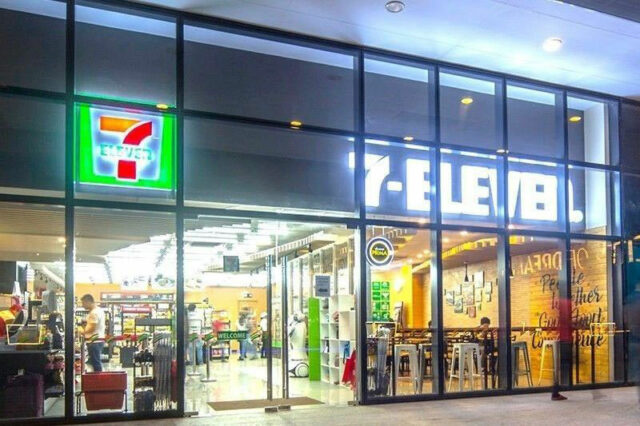
PHILIPPINE SEVEN CORP. (PSC), the exclusive licensee of the 7-Eleven convenience store brand in the country, aims to open around 250 new stores by year-end, a company official said.

“We’re looking at opening at least 500 stores by the end of this year. As of today, we have opened around 218 stores. Around 250 more stores are due to open the next following months,” PSC Operations Division Director Francis S. Medina said during an investor relations event hosted by the Philippine Stock Exchange on Tuesday.

Mr. Medina said close to 70% of the store openings will be in the Visayas and Mindanao.

“This is mainly due to the growth that we’ve seen in the past two or three years, surpassing Luzon, even in National Capital Region (NCR) stores,” he said.

Mr. Medina added that 50% of the planned store openings will be operated by franchisees.

“This is more evident in the areas of Visayas and Mindanao, where in most new stores, more than half are franchise-operated, while the Luzon stores, and particularly NCR, remain to be company-owned stores. Every year, it’s a 50% working number for us,” he said.

PSC Finance Head Lawrence M. De Leon said at the same briefing that the company operated 4,268 stores as of end-June and is on track to hit the 5,000-store mark before end-2025. He added that PSC has set aside P5.5 billion in capital expenditure this year to fund its expansion.

“Our pipeline remains to be very strong, with over 200 stores in various stages of construction,” he said.

Meanwhile, Mr. Medina said PSC has competitive advantages that could sustain its growth amid the threat posed by hard-discount retailers. He said 7-Eleven stores operate 24 hours and offer fastfood products and dining spaces.

“It’s a challenging environment now, but I think we have learned how to leverage 7-Eleven. Plus, they are still not yet in Visayas and Mindanao. Our objective is to acquire most of the best sites as soon as possible to prevent or make it difficult for any competition,” he said.

PSC shares fell by 2.49% or P1.30 to P51 apiece on Tuesday. — Revin Mikhael D. Ochave

BTr fully awards bond offer

WIKIPEDIA/JUDGE FLORO

THE GOVERNMENT made a full award of the reissued Treasury bonds (T-bonds) it offered on Tuesday at lower rates amid strong demand on expectations that borrowing costs will continue to go down.

The Bureau of the Treasury (BTr) borrowed P25 billion as planned via the reissued 10-year bonds, with total bids for the tenor reaching P98.91 billion or nearly four times the amount on offer.

This brought the total outstanding volume for the bond series to P417.6 billion, the Treasury said in a statement.

It added that it made a full award of the bonds as the offer was oversubscribed and as the average rate fetched for the issue was lower than yields quoted at the previous auction and those for comparable benchmarks at the secondary market.

The reissued 10-year bonds, which have a remaining life of nine years and eight months, were awarded at an average rate of 5.997%. Accepted yields ranged from 5.995% to 6%.

The average rate of the reissued papers fell by 28.8 basis points (bps) from the 6.285% fetched for the series’ last award on July 15 and was also 37.8 bps below the 6.375% coupon for the issue.

This was likewise 2.5 bps below the 6.022% fetched for the same bond series and 1.3 bps lower than the 6.01% quoted for the 10-year debt at the secondary market before Tuesday’s auction, based on the PHP Bloomberg Valuation Service Reference Rates data provided by the BTr.

The government fully awarded its T-bond offering as the average yield fetched for the series was at the low end of market expectations, a trader said in a text message.

“The high demand may have been due to the bond maturity this month, with a lot of investors having new funds to sink into various securities,” the trader said.

“Furthermore, the lower yield is just continuing the pattern of yields across the curve generally falling these past few days.”

Rizal Commercial Banking Corp. Chief Economist Michael L. Ricafort said in a Viber message that about P500 billion in bonds matured on Aug. 12, leading to increased market liquidity even amid the government’s latest offering of retail Treasury bonds that ended last week.

Mr. Ricafort added that the government fully awarded the 10-year bonds it offered on Tuesday as they were met with robust demand and also fetched lower yields following dovish signals from the Bangko Sentral ng Pilipinas (BSP) chief.

BSP Governor Eli M. Remolona, Jr. said last week that a rate cut is “quite likely” at the Monetary Board’s Aug. 28 meeting as they expect inflation to remain within target this year.

He added that the central bank could deliver only two more rate cuts this year, including the one they could implement this month.

After next week’s review, the Monetary Board’s remaining meetings for this year are scheduled for Oct. 9 and Dec. 11.

The BSP has lowered benchmark interest rates by a cumulative 125 bps since August 2024, with the policy rate now at 5.25%. A cut next week would mark the BSP’s third consecutive easing move since April.

Philippine headline inflation slowed to a near six-year low of 0.9% in July, marking the fifth straight month that inflation settled below the central bank’s 2-4% annual target.

For the first seven months of the year, inflation averaged 1.7%.

The 10-year T-bonds fetched lower rates as comparable US Treasury yields recently hit multi-month lows on growing hopes of a September rate cut by the Federal Reserve, Mr. Ricafort added.

Money markets reflect an 83.6% chance of a quarter-point rate cut at the Fed’s meeting on Sept. 17, according to CME FedWatch, Reuters reported.

Markets are looking this week to the Federal Reserve’s annual symposium in Jackson Hole for any clues on the likely path of interest rates. Fed Chair Jerome H. Powell is due to speak on the economic outlook and the central bank’s policy framework.

The BTr is looking to raise P185 billion from the domestic market this month, or P125 billion through Treasury bills and P60 billion via T-bonds.

The government borrows from local and foreign sources to help fund its budget deficit, which is capped at P1.56 trillion or 5.5% of gross domestic product this year. — Aaron Michael C. Sy

SM Hotels lines up P1.5-B Park Inn Sta. Rosa opening for Q1 2029

Park Inn by Radisson in Sta. Rosa, Laguna — SM PRIME HOLDINGS, INC.

SM HOTELS and Conventions Corp. (SMHCC), the hospitality arm of SM Prime Holdings, Inc., targets to open the P1.5-billion Park Inn by Radisson in Sta. Rosa, Laguna by the first quarter (Q1) of 2029 as part of its push to expand in regional growth centers.

The hotel will feature 201 rooms, dining outlets, a pool, a gym, and dedicated spaces for meetings and events, SM Prime said in an e-mailed statement on Tuesday.

Park Inn by Radisson Sta. Rosa will be directly connected to an SM mall and to the upcoming 4,000-square-meter (sq.m.) SMX Sta. Rosa Trade Hall, which is expected to attract regional and national meetings, incentives, conferences, and exhibitions (MICE) organizers and guests.

The hotel, designed by H1 Architecture, blends contemporary hospitality with local character and brand standards. It will be located within an integrated SM Prime development along the Sta. Rosa-Tagaytay Road in Laguna.

“With the City of Sta. Rosa’s growth as a business and industrial hub, demand for accommodations from business and leisure travelers continues to rise. The new hotel will meet this need, generate local jobs, and boost the city’s economic activity,” SMHCC Executive Vice-President Peggy E. Angeles said.

Ms. Angeles said at a recent briefing that SMHCC’s expansion plan reflects the surge in domestic tourism.

“Domestic tourism is thriving. The current demand is primarily from domestic travelers, driven by leisure travel and the steady recovery of MICE. This aligns well with our regional expansion strategy in growth corridors like Sta. Rosa,” she said.

She added that construction is ongoing for the 301-room Park Inn by Radisson in Cebu, while other locations are still being finalized.

In June, SMHCC said it plans to open seven new hotel projects by end-2029, which will raise its total hotel count to 17 from the current 10. Six of the new projects will be under the Park Inn by Radisson brand, while one will be developed under the Radisson brand.

The new hotels will add more than 1,300 rooms to SMHCC’s inventory, bringing its total room count to 3,923 from 2,602.

SMHCC currently operates 10 hotels with over 2,600 rooms, six convention centers, and two trade halls with more than 42,000 sq.m. of leasable space.

Its portfolio includes Park Inn by Radisson, Conrad Manila, Radisson Blu, Lanson Place, Taal Vista Hotel, and Pico Sands Hotel.

SM Prime shares closed unchanged at P23.60 each on Tuesday. — Revin Mikhael D. Ochave

Central bank’s Q1 profit surges to P40.2 billion on higher net FX gain

THE BANGKO SENTRAL ng Pilipinas’ (BSP) net income more than doubled in the first quarter as it booked a larger net foreign exchange (FX) gain, preliminary data showed.

The central bank’s net profit surged by 122.1% to P40.2 billion in the first three months of the year from P18.1 billion in the same period in 2024, according to its income statement posted on its website.

Broken down, the central bank’s revenues slipped to P67 billion from P67.1 billion a year prior.

This came as interest income jumped by up 12.69% year on year to P60.4 billion from P53.6 billion, while miscellaneous earnings — which consists of fees, penalties and other operating income — declined by 51.11% to P6.6 billion from P13.5 billion.

Meanwhile, the BSP’s expenses went down by 3.24% to P50.8 billion in the first quarter from P52.5 billion in the comparable year-ago period.

Broken down, interest expenses declined by 17.1% to P35.4 billion from P42.7 billion.

Meanwhile, other expenses, which include net trading losses, surged by 58.16% to P15.5 billion from P9.8 billion.

These brought the BSP’s net income before FX gains or losses, income tax expense or benefit, and capital reserves to P16.2 billion in the first quarter, 10.96% higher than P14.6 billion in the same period last year.

Adding to the central bank’s overall earnings in the three-month period was a P24-billion net gain from the fluctuation in FX rates realized via its foreign currency-denominated transactions, which surged from the P3.5-billion gain recorded in the first quarter of 2024.

“Higher BSP earnings would lead to stronger finances in terms of higher capital, thereby providing greater financial ammunition to fulfill its mandate of price stability and financial stability,” Rizal Commercial Banking Corp. Chief Economist Michael L. Ricafort said in a Viber message.

“This also reflects financial prudence that would help promote a more stable and stronger banking system. This would also help improve the government’s overall fiscal performance in terms of greater surplus,” he added.

ASSETS
Meanwhile, separate data showed that the BSP’s total assets grew by 2.8% year on year to P7.79 trillion at end-March from P7.57 trillion a year earlier.

International reserves made up the bulk of the central bank’s assets at P6.07 trillion, higher than P5.81 trillion in the same period last year.

Meanwhile, the central bank’s liabilities went up by 1.4% to P7.52 trillion as of March from P7.42 trillion.

These liabilities included currency in circulation, which amounted to P2.57 trillion, while deposits with the central bank stood at P1.96 trillion.

The BSP’s net worth was at P271.5 billion, while its surplus or reserves — which include its unrestricted retained earnings, capital reserves, unrealized gains or losses on investments in securities and stocks, and net income or loss from its operations — was at P211.5 billion. — Katherine K. Chan