Home Blog Page 1093

Senate frontrunners’ climate silence scored
PHILSTAR FILE PHOTO

FRONTRUNNERS in the 2025 senatorial race were silent on pressing environmental issues despite the climate crisis’s growing impact on the economy, according to a coalition of “green” groups.

In a statement, the coalition said 88% or 56 of 64 senatorial bets did not respond to its pre-election survey that sought to capture candidates’ position on crucial environmental issues facing the country.

“When climate justice is absent from platforms, it shows a dangerous disregard for the crises deepening hunger, worsening health, and driving poverty,” Lea B. Guerrero, country director at Greenpeace Philippines, said in the statement.

“We need leaders who will stand with people, hold polluters accountable and put climate at the top of the agenda,” she added.

The candidates who responded to the survey were Leodegerio “Ka Leody” De Guzman, Renecio “Luke” S. Espiritu, Jr., Teodoro “Teddy” A. Casiño, Jocelyn S. Andamo, Modesto “Mody” T. Floranda, David Delano D’Angelo, Norman C. Marquez and Arnel Bondilles Escobal.

But Greenpeace cited “previous positive efforts and track records” by nonrespondents like former Senators Francis Pancratius “Kiko” N. Pangilinan, who is cited for the Sagip Saka Act and legislative efforts to address single-use plastics, and Gringo N. Honasan for authoring the Clean Air Act and Solid Waste Management Act. 

The Sagip Saka Act empowered local governments to buy rice, vegetable and poultry for their feeding and relief programs directly from farmers’ groups without the need for bidding.

“While Filipinos grapple with climate disasters, plastic pollution and biodiversity collapse, our politicians cling and aspire to power through dynastic politics, smear campaigns and empty theatrics,” said Von Hernandez, Global Coordinator of the Break Free from Plastic movement.

Greenpeace said the state of the Philippine environment is “regressing,” citing the push for nuclear energy and waste-to-energy facilities.

It also cited the proliferation of single-use plastics, which the government had planned to tax, and attempts to open municipal fishing waters to commercial fishing interests.

The group urged policymakers to support a proposed ban on single-use plastics and institutionalize reuse and zero-waste solutions.

They should also reject “false fixes” like waste-to-energy incineration and nuclear energy, and push measures that would protect and rehabilitate the country’s terrestrial, coastal and marine resources, it added.

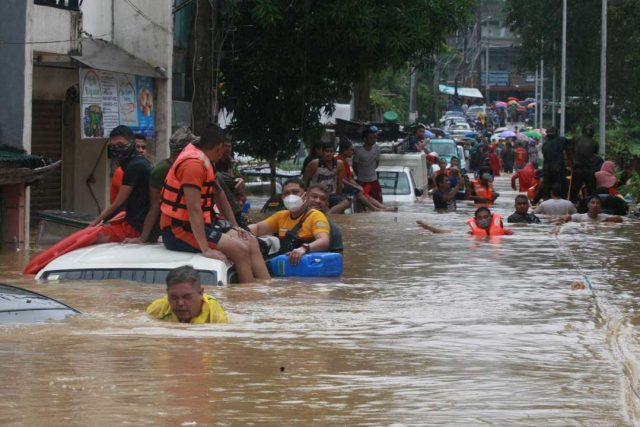
“Our communities are drowning in plastic, our coastlines are eroding, and our children are growing up in a world where clean water and safe food are no longer guaranteed,” said Wes Lipana, marine litter management officer at Ecowaste Coalition.

“Our environment is in a state of emergency, and that demands leadership,” he said. “Voters must demand bold environmental leadership and scrutinize candidate track records, not slogans.”

A World Bank report in 2022 showed that climate change could cut the Philippines’ gross domestic product by as much as 13.6% by 2040.

It said “adapting to the risks of climate change, including extreme events and slow-onset problems, is critical for the Philippines.” “It cannot wholly eliminate the costs of climate change, but it can greatly reduce them.” — Kyle Aristophere T. Atienza

Marcos declares May 12 a holiday

PHILIPPINE STAR/MIGUEL DE GUZMAN

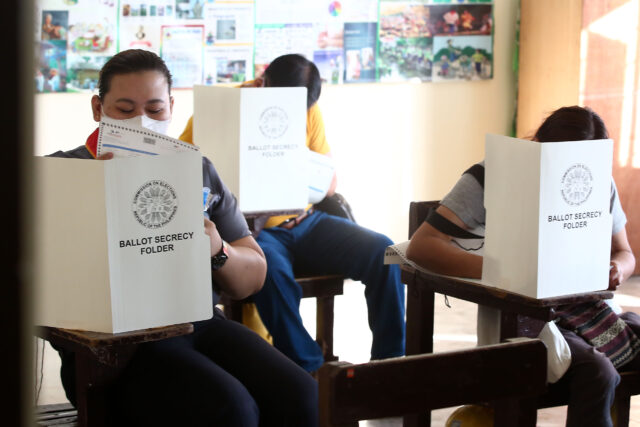
PRESIDENT Ferdinand R. Marcos, Jr., on Tuesday declared May 12 a nonworking holiday to allow Filipinos to vote in the midterm elections.

“There is a need to declare Monday, 12 May 2025, as a special (nonworking) holiday to enable the people to properly exercise their right to vote,” according to Proclamation No. 878.

The order was signed on May 6 in response to a request from the Commission on Elections (Comelec).  Previous elections have been declared special nonworking holidays.

Meanwhile, Comelec has extended the pre-enrollment period for overseas internet voting until May 10 from May 7.

Registered Filipino voters overseas must complete pre-enrollment before they can vote.

Also on Tuesday, The Comelec started distributing ballots for National Capital Region precincts. — Chloe Mari A. Hufana

Marcos bets dominate poll

PRESIDENT Ferdinand R. Marcos, Jr. attended a party convention in Pasay City where the administration’s senatorial bets for the 2025 elections were announced. The alliance comprises the country’s five major political parties — Partido Federal ng Pilipinas, Lakas-Christian Muslim Democrats, Nationalist People’s Coalition, Nacionalista Party and National Unity Party. — PPA POOL/ RYAN BALDEMOR

NINE of the 15 candidates in the “likely winning circle” in the pre-election senatorial preference survey are backed by the Marcos government, according to research firm WR Numero.

“Rule of thumb in every intervention under the current political system: the advantage is always on the administration,” Julio C. Teehankee, a political science professor from De La Salle University, told a news briefing.  “These individuals were selected by the administration because of their winnability.”

Party-list Rep. Erwin T. Tulfo and reelectionist Senator Christopher Lawrence “Bong” T. Go topped the list with 48.7% and 45.3%, respectively.

They were followed by former Senate President Vicente C. Sotto III with 37%, Senator Ronald M. Dela Rosa with 36.8% and Senator Pilar Juliana S. Cayetano wit 36.6%.

Broadcaster and independent candidate Bienvenido T. Tulfo (35.2%) and Senator Manuel “Lito” M. Lapid (34.8%) were ranked six to seven, while ex-Senator Panfilo M. Lacson, Sr., ranked eighth with 33.8%, followed by Makati Mayor Mar-len Abigail S. Binay at No. 9 with 31.7%.

Administration bets Camille A. Villar got 29.8% and Senator Ramon “Bong” B. Revilla, Jr. got 29.5% for ranks 10-11, while former Senator Paolo Benigno A. Aquino IV placed 12th with 28.5%.

Completing the “magic 15” were presidential sister Senator Maria Imelda Josefa Remedios “Imee” R. Marcos with 26.4%, former Senator and boxing camp Emmanuel D. Pacquiao, Sr. with 26.1% and former Senator Francis Pancratius N. Pangilinan with 24.5%.

In Metro Manila and the rest of Luzon, Mr. Tulfo was at the top with 49% and 59%, respectively, while in the Visayas, Mr. Go and Mr. Tulfo tied with 52%. In Mindanao, Mr. Dela Rosa was No.1 with 70%, trailed by Mr. Go with 63%.

“Looking at the survey results, it’s safe to say that the top two positions would be a toss-up between either Erwin Tulfo or Bong Go,” Mr. Teehankee said.

WR Numero interviewed 2,413 Filipino voters on April 23 to 30 for the poll, which had an error margin of ±2% points. — Almira Louise S. Martinez

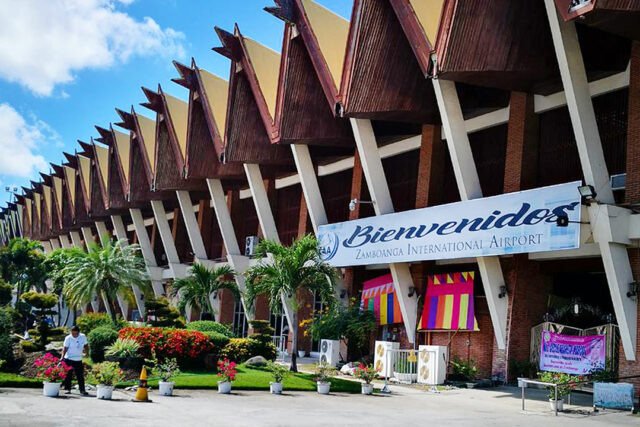
Zamboanga airport designer eyed

CAAP PHOTO

THE Department of Transportation (DoTr) is seeking a consultant to craft the design of the New Zamboanga International Airport development project.

In a request for expression of interest on Tuesday, the agency said it is looking for consultancy services for the detailed engineering design study for the New Zamboanga International Airport development project for P92.51 million.

The contract must be completed within 360 calendar days, the DoTr said, adding that interested parties may submit their bids until May 14.

The Transportation department said qualified bidders must have completed consulting services of size, complexity and technical specialty comparable to the job. — Ashley Erika O. Jose

Groups unite vs poll violence

PHILSTAR FILE PHOTO

COTABATO CITY — Seven big groups promoting good governance, human rights and Muslim-Christian solidarity have set up an election monitoring system to ensure peaceful and clean elections in southern Moro communities on May 12.

The nonpartisan Independent Election Monitoring Center (IEMC) will be jointly operated by the nongovernment Institute for Autonomy and Governance, National Citizens Movement for Free Elections, Notre Dame University, Notre Dame Broadcasting Corporation, Parish Pastoral Council for Responsible Voting-Cotabato City, Climate and Conflict Action Asia and the Coalition for Social Accountability and Transparency.

Launched on May 5, the IEMC, located inside the campus of the Notre Dame University in Cotabato City will monitor the May 12 elections and disseminate information through partner media on possible election-related violence that need policy and military intervention.

The IEMC will also operate in the first parliamentary elections in the Bangsamoro Autonomous Region in Muslim Mindanao in October, Benedicto R. Bacani, executive director of the Institute for Autonomy and Governance, told reporters. — John Felix M. Unson

ARTA cites economic optimism

BW FILE PHOTO

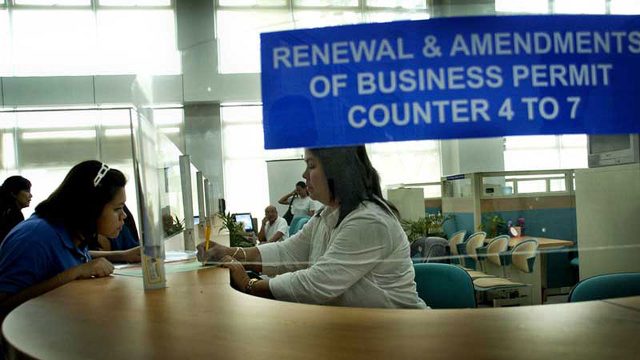
PHILIPPINE businesses are optimistic about economic prospects amid a continued push to streamline government processes and cut red tape, according to the Anti-Red Tape Authority (ARTA).

“We’re seeing a very upbeat business community,” Ernesto V. Perez, ARTA Director General, told a news briefing in mixed English and Filipino on Tuesday, citing recent collaborations with chambers of commerce and visits from foreign diplomats backing regulatory reforms.

Business groups including the Philippine Chamber of Commerce and Industry, Employers Confederation of the Philippines and Philippine Exporters Confederation have vowed to support ARTA’s initiatives, he pointed out.

The upbeat sentiment reflected growing investor confidence as the government accelerated the rollout of digital systems such as the electronic Business One-Stop Shop (e-BOSS) and enforced compliance across local government units (LGU).

“In 2028, we want all LGUs to be compliant with e-BOSS… that’s why we’re replacing red tape with red carpet, because this is the number one concern among businessmen,” Mr. Perez said. — Chloe Mari A. Hufana

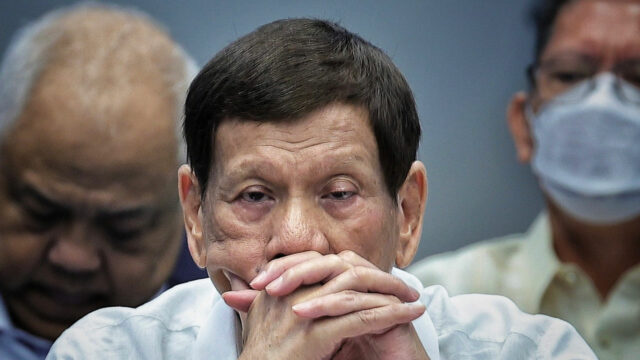
Agencies told to explain Duterte arrest

FORMER PRESIDENT Rodrigo R. Duterte — OFFICIAL FACEBOOK ACCOUNT OF THE SENATE OF THE PHILIPPINES

THE Ombudsman has ordered several high-ranking government officials to file a counter-affidavit in response to the findings by the Senate foreign relations committee of ex-President Rodrigo R. Duterte’s allegedly illegal arrest.

The Justice and Interior secretaries, national police chief, Crime Investigation and Detection Group director and special envoy on transnational crimes of the Foreign Affairs department were given 10 days to comment on the committee findings.

“Failure to file a counter-affidavit within the aforesaid period shall be deemed as a waiver of respondents’ right to submit controverting evidence and the preliminary investigation shall proceed accordingly,” according to the three-page order.

The complaint came after the Senate body probed the arrest of Mr. Duterte, who is now in custody of the International Criminal Court in The Hague awaiting trial for his alleged crimes against humanity. — Chloe Mari A. Hufana

Tagbilaran gets NGA 911

MORONG’S emergency response units participate in a tournament with the Philippine Army on March 3. — MDRRMO MORONG, RIZAL

THE local government of Tagbilaran City in Bohol last week launched a command center under the Next Generation Advanced 911 (NGA 911) emergency response technology.

The emergency communication tech was patterned after the US and provided by NGA 911 Philippines, a unit of American cloud-based emergency telecommunications solution provider NGA 911 LLC, the local company said in a statement.

With the city’s new emergency response command center, authorities can get quick and accurate caller location and record all calls.

It can use data-driven analytics, integrate CCTV systems and identify and reduce prank calls.

The Port of Tagbilaran, which serves as a major seaport in Central Visayas, is a gateway for both passengers and cargoes from key destinations including Manila. — Beatriz Marie D. Cruz

Bayan Muna backs seaman suit

STOCK PHOTO | Image by iliastefanidis30 from Pixabay

BAYAN MUNA has backed a lawsuit that seeks to void portions of the newly enacted Magna Carta for Seafarers at the Supreme Court.

“Bayan Muna, together with the seafarers, has been protesting against the unjust provisions of the Magna Carta for Filipino Seafarers since 2023, but our legislators have failed to heed the legitimate demands of the supposed beneficiaries of the Magna Carta law,” former Party-list Rep. Neri J. Colmenares, who lawyers for the seamen, said in a statement on Tuesday.

The lawsuit claims the law violates constitutional guarantees on equal protection of the law and legislative procedures.

The law requires a bond before a seaman can be awarded compensation, which the plaintiffs said puts undue burden that is not imposed on land-based workers.

“The seafarer has already won at the National Labor Relations Commission (NLRC); now they also need to pay to get the compensation they won,” Mr. Colmenares said.

“What kind of Magna Carta is this? How can seafarers feed their families and post a bond when they are unemployed due to injuries?” he asked. — Chloe Mari A. Hufana

Peso strengthens with April CPI at over five-year low

BW FILE PHOTO

THE PESO climbed against the dollar on Tuesday after Philippine headline inflation cooled to an over five-year low last month.

The local unit closed at P55.61 per dollar on Tuesday, strengthening by 16 centavos from its P55.77 finish on Monday, Bankers Association of the Philippines data showed.

The peso opened Tuesday’s trading session weaker at P55.80 against the dollar. Its worst showing was at P55.90, while its intraday best was at P55.51 versus the greenback.

Dollars exchanged inched down to $2.28 billion on Tuesday from $2.296 billion on Monday.

The slower-than-expected April inflation print supported the peso on Tuesday, both Rizal Commercial Banking Corp. Chief Economist Michael L. Ricafort and a trader said.

Headline inflation in April sharply decelerated to its slowest print in since November 2019 amid easing food prices, the Philippine Statistics Authority (PSA) reported on Tuesday.

The consumer price index (CPI) stood at 1.4% in April, easing from 1.8% in March and 3.8% in the same month a year ago.

This was within the 1.3% to 2.1% forecast of the Bangko Sentral ng Pilipinas (BSP) for the month and well below the 1.8% median estimate in a BusinessWorld poll of 14 analysts conducted last week.

For the first four months, the CPI averaged 2%, at the low end of the BSP’s 2-4% annual target.

“Trade optimism also kept on weighing on the dollar as the market monitors progress on the trade talks and ahead of the FOMC (Federal Open Market Committee) meeting this week,” the trader added.

For Wednesday, the trader expects the peso to move between P55.50 and P55.80 against the greenback, while Mr. Ricafort sees it ranging from P55.50 to P55.70.

The dollar dipped against major peers on Tuesday as concerns about tariffs and their impact on the economy lingered, while focus was turning to the Federal Reserve’s policy announcement on Wednesday, Reuters reported.

Investor attention has been on the possibility of easing trade tensions between the US and China after Beijing last week said it was evaluating an offer from Washington to hold talks over tariffs.

US President Donald J. Trump said on Sunday that Washington is meeting with many countries, including China, and that his main priority with China is to secure a fair deal.

But with few details coming out about trade discussions, investors have been left trying to make sense of headlines coming out of the White House.

Mr. Trump’s erratic trade policies have fueled significant waves of dollar selling since April as investors shifted away from US assets, pushing the euro, yen and Swiss franc higher.

The euro on Tuesday was up 0.3% against the dollar at $1.1347, and the yen was up 0.5% at 142.95 per dollar.

That dollar selling has spread to other Asian foreign exchange (FX), underscored by the Taiwan dollar’s record surge in recent sessions, which has stoked speculation that a revaluation of regional foreign exchange was possible to win US trade concessions.

Its rally suggested a big unwinding was under way and shone a light on one economy, among many, where years of big trade surpluses have built up large long dollar positions at exporters and insurers that are now under question and on edge.

The Taiwan dollar was fairly sedate on Tuesday last fetching 30.28 per US dollar, not far from the near three-year high of 29.59 it touched on Monday.

The focus turned to Hong Kong on Tuesday, where the de facto central bank bought $7.8 billion to stop the local currency from strengthening and breaking its peg to the greenback.

“The real action today is in Asian FX,” said Charu Chanana, chief investment strategist at Saxo in Singapore.

“If these currencies keep strengthening sharply, it could spark fears of a ‘reverse Asian currency crisis,’ with potential ripple effects in the bond market amid fears that Asian institutions reassess their unhedged exposure to Treasury holdings.” — Aaron Michael C. Sy with Reuters

Stocks rebound as inflation sharply slows in April

REUTERS

PHILIPPINE STOCKS rebounded on Tuesday as headline inflation slowed to an over five-year low in April, paving the way for further monetary easing.

The bellwether Philippine Stock Exchange index (PSEi) climbed by 0.92% or 59.06 points to end at 6,418.69, while the broader all shares index increased by 0.72% or 26.86 points to 3,746.12.

“The local market bounced back as investors cheered the Philippines’ April inflation rate which came in at 1.4%, lower than the preceding month’s 1.8%,” Philstocks Financial, Inc. Senior Research Analyst Japhet Louis O. Tantiangco said in a Viber message. “The low inflation figure is seen to give the Bangko Sentral ng Pilipinas (BSP) more room to ease their policy.”

“Philippine shares managed to resume their gains driven by the better-than-expected consumer price index (CPI) and more earnings releases,” Regina Capital Development Corp. Head of Sales Luis A. Limlingan said in a Viber message.

The April CPI was the lowest since the 1.2% logged in November 2019 amid moderating oil and food prices.

This was within the 1.3% to 2.1% forecast of the Bangko Sentral ng Pilipinas for the month and well below the 1.8% median estimate in a BusinessWorld poll of 14 analysts.

For the first four months, headline inflation averaged 2%, at the low end of the BSP’s 2-4% annual target.

BSP Governor Eli M. Remolona, Jr. said on Monday that cooling inflation gives the central bank “a lot of policy space.”

The Monetary Board last month resumed its easing cycle after an unexpected pause in April, cutting benchmark borrowing costs by 25 basis points (bps) to bring the policy rate to 5.5%. Its next meeting is on June 19.

Mr. Remolona earlier said they are likely to reduce rates further this year in “baby steps” of 25 bps at a time.

Almost all sectoral indices closed higher on Tuesday. Services rose by 3.52% or 69.64 points to 2,048.16; mining and oil went up by 2.62% or 248.49 points to 9,705.38; industrials increased by 0.64% or 57.96 points to 8,989.78; holding firms climbed by 0.55% or 29.50 points to 5,387.18; and property inched up by 0.05% or 1.30 points to 2,300.97.

Meanwhile, financials declined by 0.16% or 4.14 points to 2,458.45.

“Bloomberry Resorts Corp. was the top index gainer, jumping 9.97% to P4.19. Semirara Mining and Power Corp. was the main index loser, dropping 1.36% to P32.55,” Mr. Tantiangco said.

Value turnover increased to P6.15 billion on Tuesday with 876.09 million shares traded from the P5.67 billion with 699.74 million issues exchanged on Monday.

Advancers edged out decliners, 97 versus 95, while 46 names closed unchanged.

Net foreign buying stood at P690.87 million on Tuesday, a turnaround from the P77.41 million in net selling recorded on Monday. — Revin Mikhael D. Ochave

PHL retreats four places in Human Dev’t Index ranking

PHILIPPINE STAR/EDD GUMBAN

THE PHILIPPINES fell four spots on the Human Development Index (HDI) rankings, coming in at 117th in the 2023 evaluation, despite posting improving scores, the United Nations Development Program (UNDP) said.

In a statement, the UNDP said the Philippine score improved to 0.720, up from 0.714 in 2022 and 0.690 in 2019.

The index gauges a country’s health, education and standard of living.

“The Philippines’ HDI value for the year 2023 climbed to 0.720, reflecting an increase of 1.4% from the 2022 level; however, it remains below the average HDI for the East Asia and Pacific region,” the UNDP said in a statement on Tuesday.

The Philippines scored below East Asia and the Pacific’s average of 0.775 and the global average of 0.756.

Among neighboring countries, human development levels were “very high” in Hong Kong (8th), Singapore (13th), and Brunei Darussalam (60th).

The Philippines had a “high” human development level, as did Malaysia (67th), Thailand (76th), Vietnam (93rd), Indonesia (113rd) and Timor-Leste (142nd).

On the other hand, human development was classified as “medium” in Laos (147th), Myanmar (150th), and Cambodia (151st).

“Instead of seeing sustained recovery following the period of exceptional crises of 2020-2021, the report reveals unexpectedly weak progress. Excluding those crisis years, the meagre rise in global human development projected in this year’s report is the smallest increase since 1990,” the UNDP said.

The report also found that while global development is decelerating at an alarming rate, inequalities continue to widen between rich and poor countries.

“As traditional paths to development are squeezed by global pressures, decisive action is needed to move the world away from prolonged stagnation,” it said.

Life expectancy at birth is at 69.8 years in the Philippines, according to the Human Development Index. The expected years of schooling for Filipinos is 12.8, with the mean years of school is 10.

The Philippines also ranked 92nd in the gender inequality index with a score of 0.351, while its gender development score stood at 0.966.

The report also found that half of respondents worldwide think their jobs can be automated.

“An even larger share — six in ten — expect AI to impact their employment positively, creating opportunities in jobs that may not even exist today,” she said.

Around 13% of survey respondents fear artificial intelligence (AI) could lead to job losses while in low- and medium-HDI countries, 70% expect AI to increase their productivity. Two-thirds anticipate using AI in education, health, or work within the next year.

“The choices we make in the coming years will define the legacy of this technological transition for human development,” Pedro Conceição, director of UNDP’s Human Development Report Office, said.

“With the right policies and focus on people, AI can be a crucial bridge to new knowledge, skills, and ideas that can empower everyone from farmers to small business owners.” — Aubrey Rose A. Inosante