Home Blog Page 104

Agri trade deficit narrows 1.6% in February

BW FILE PHOTO

THE deficit in the agricultural goods trade narrowed by 1.6% in February to $828.95 million, according to preliminary data from the Philippine Statistics Authority (PSA).

The PSA said the deficit in February decreased from $842.6 million a year earlier.

Agricultural exports in February rose 7.1% year on year to $749.95 million, accounting for 10.2% of total exports. As a share of the $2.33 billion in two-way trade in farm products, exports accounted for 32.2%.

Imports of agricultural products in February rose 2.3% year on year to $1.58 billion, accounting for 14.3% of overall imports.

Two-way agricultural trade in February grew 3.8% year on year.

The PSA said exports of animal, vegetable, or microbial fats and oils and their cleavage products; prepared edible fats; and animal or vegetable waxes declined 3.3% year on year to $252.26 million in February, accounting for 33.6% of agricultural exports.

Exports of edible fruit and nuts, including peels of citrus fruit and melons, grew 13% year on year to $204.06 million in February, accounting for 27.2% of agricultural exports.

Agricultural shipments to the Association of Southeast Asian Nations (ASEAN) hit $60.31 million, with top buyer Malaysia accounting for $19.68 million or 32.63% of the total.

Exports to the Netherlands, the Philippines’ top destination for agricultural commodities in the European Union (EU), amounted to $112.65 million or 54.64% of Philippine agricultural exports to the bloc.

Among the major commodity groups, cereals accounted for the largest share of agricultural imports in February, totaling $332.69 million or 21.1%. The value of cereal exports fell 7.6% year on year during the month.

Vietnam was the leading supplier of agricultural products to the Philippines within ASEAN, accounting for $186.4 million or 28.53% of total imports from the region.

The top agricultural goods imported from ASEAN were cereals and animal, vegetable, or microbial fats and oils, and their cleavage products; prepared edible fats; and animal or vegetable waxes.

Within the EU, Spain was the Philippines’ top supplier of agricultural commodities, with imports valued at $25.33 million, or 21.7% of total shipments from the region.

The top agricultural commodities from the EU were meat and edible meat offal. — Vonn Andrei E. Villamiel

DTI hoping incentives for EV makers ready soon

REUTERS

THE Department of Trade and Industry (DTI) said it is hoping the Electric Vehicle Incentives Strategy (EVIS) program is approved in the next three months to accelerate the process of attracting investment in domestic electric vehicle (EV) manufacturing.

“We are hoping to issue the executive order and the implementing rules and regulations within the year — hopefully in three months,” Trade Secretary Ma. Cristina A. Roque told BusinessWorld.

“Since EVIS is primarily geared towards the domestic market, the Board of Investments (BoI) will be the focal agency for attracting participants,” she added.

On Monday, the Department of Finance (DoF) said Mitsubishi Motors Corp. (MMC) is planning to establish a dedicated hybrid electric vehicle (HEV) manufacturing facility through Mitsubishi Motors Philippines Corp. at its plant in Santa Rosa, Laguna.

“This is a landmark investment that will redefine the future of our automotive industry. And the even more exciting possibility is that we could be an exporter of hybrid cars,” Finance Secretary Frederick D. Go said.

The announcement follows a meeting between MMC President and Chief Executive Officer Takao Kato with Ferdinand R. Marcos, Jr. and Mr. Go at Malacañang Palace today.

According to the DoF, the dedicated HEV facility will help accelerate “the localization of advanced hybrid vehicle production, supporting the country’s goals for cleaner transport and higher-value manufacturing.”

“MMC is also looking at the possibility of exporting products from its Laguna plant,” it said.

“This kind of investment becomes more valuable during times of uncertainty, as it will create more job opportunities, while propelling the nation into a more sustainable and technological future,” it added.

Once realized, HEV manufacturing is expected to help the country reduce its oil import dependence and cut urban emissions.

Ms. Roque said that the BoI is working with the Fiscal Incentives Review Board to finalize the details of the EVIS.

“This will provide incentives for in-country value-adding and further hasten the development of the EV ecosystem as it complements other incentives already in place through the Electric Vehicle Industry Development Act.

These include number coding exemptions, tax exemptions, reduced registration fees, and import duty exemptions. — Justine Irish D. Tabile

Regulator presses airlines to use sustainable fuel

NESTE/HANDOUT VIA REUTERS

THE Civil Aviation Authority of the Philippines (CAAP) said it is encouraging airlines to adopt sustainable aviation fuel (SAF), adding that it is currently assessing the viability of making the switch by studying the conditions for producing the fuel in the Philippines.

“We reaffirm our commitment in making SAF adoption more viable and accessible, leveraging collaboration between government, industry, and private partners to shape a sustainable and forward-looking Philippine aviation sector,” CAAP Director-General Raul L. Del Rosario said in a statement on Monday.

CAAP said it is assessing feedstock availability, production technology, regulatory and investment opportunities to help support SAF adoption.

Nigel Paul C. Villarete, senior adviser on public-private partnerships at the technical advisory group Libra Konsult, said via Viber: “For as long as the economic benefits are adequately identified and measured and there is a clear indication of economic and environmental benefits, by all means CAAP should proceed towards that direction.”

The government should also evaluate the economic returns of wider SAF adoption, he said, adding that SAF may also be considered for local production.

“This would have an added advantage of decreasing our dependence on imported fuel which will lighten the pressure on our foreign exchange reserves,” Mr. Villarete said.

CAAP said that the Philippines is well-positioned for the SAF transition, citing the potential for its agricultural industry to provide feedstock.

SAF can help reduce emissions from air transportation, being made from non-petroleum raw materials like agricultural waste and used vegetable oil.

“CAAP will continue advancing cleaner aviation, investments, job generation and the Philippines’ role in sustainable aviation,” CAAP said.

Rene S. Santiago, an international consultant on transport development and former president of the Transportation Science Society of the Philippines, noted that the global supply of SAF is more limited than jet fuel.

“Another buzzword to claim Green brownie points? The basic question: can CAAP guarantee more SAF in stock than jet fuel, and at lower prices? Airlines would naturally go for cheaper alternatives, provided their engines can handle the alternative fuel,” Mr. Santiago said.

The International Air Transport Association (IATA) reported in December that SAF production last year accounted for 0.6% of total jet fuel consumption.

The dearth of SAF was attributed to lack of policy support, IATA said, adding that SAF prices are also higher than fossil-based jet fuel.

Among domestic carriers, only Cebu Pacific is currently using SAF. Both Philippine Airlines and AirAsia Philippines have announced plans to use SAF.

The IATA has estimated that SAF will result in a 65% reduction in carbon emissions needed by the aviation industry, en route to achieving net zero by 2050. — Ashley Erika O. Jose

Agri workers call for additional gov’t assistance as costs rise

CENTURYPACIFIC.COM.PH

A FARMERS’ organization said on Monday that the government needs to expand its assistance for agriculture workers, warning that surging fuel and input costs are worsening pressure on production and could worsen food availability in the coming months.

In a statement on Monday, the Kilusang Magbubukid ng Pilipinas (KMP) said the agricultural crisis is worsening as many farmers and fisherfolk remain without sufficient support.

“Diesel prices are now at P140 per liter while gasoline stands at more than P100 per liter. Fuel prices will increase again for the sixth consecutive week, and the government can only offer paltry and delayed aid,” the group said.

KMP said higher fuel prices have increased production expenses, including irrigation, transport, and farm inputs such as fertilizer. It said some farmers have seen the area they planted reduced or have suffered delays in cultivation, while fisherfolk have cut back on fishing trips.

KMP also said traders have reduced procurement or offered lower farmgate prices, which could also contribute to declining output and tighten food supply.

KMP said that of an estimated 11 million farmers and fisherfolk nationwide, only about 4 million are covered by current cash assistance programs, leaving around 7 million without support.

The group added that current fuel subsidy programs only cover up to 45,000 beneficiaries. It said the fuel assistance — P5,000 for farmers and P3,000 for fisherfolk — has also been reduced in value due to inflation.

The Department of Agriculture (DA) has so far allocated P150 million for fuel subsidies, which it sourced from unspent 2025 funds. The subsidy targets farmers using fuel-powered machinery and small-scale fisherfolk.

The DA has also tapped a P10-billion standby fund for the Presidential Assistance for Farmers and Fisherfolk Program, which provides P2,325 in cash aid to about 4 million eligible rice, corn, and sugarcane farmers, as well as registered fisherfolk.

However, KMP said the assistance excludes vegetable growers and farmers cultivating other crops.

“How about farmworkers and those planting vegetables, coconut, banana, abaca, and other crops? Aside from the impact of the fuel crisis, farmers and fisherfolk are also affected by the approaching El Niño,” KMP Chairman Danilo H. Ramos said in the statement.

KMP said that without immediate and substantial subsidies, more small producers may be forced to scale back or stop planting, putting the next cropping season at risk.

“Without immediate and substantial subsidies, farmers will be pushed to stop planting. This will directly translate to higher food prices and greater hunger among consumers,” Mr. Ramos said.

The group urged the government to expand subsidies and ensure broader coverage for farmers and fisherfolk to sustain food production. — Vonn Andrei E. Villamiel

Gov’t budget utilization rate hits 87% in Feb.

BW FILE PHOTO

GOVERNMENT agencies posted a budget utilization rate of 87% in February, ahead of the 83% year-earlier pace, the Department of Budget and Management (DBM) said.

In its latest Notice of Cash Allocations (NCAs) Utilization Report, the DBM reported that the National Government, local governments, and government-owned companies used P608.91 billion of their P700.22 billion in allocations by the end of February.

Unused NCAs stood at P91.31 billion, the DBM said.

NCAs are a quarterly disbursement authority that the DBM issues to agencies, allowing them to withdraw funds from the Bureau of the Treasury to support their spending needs.

As of the end of February, line departments utilized 81.9% of their allotments, equivalent to P373.84 billion out of P456.71 billion.

In the first two months, the Department of Foreign Affairs posted the highest budget usage rate at 98.1%.

It was followed by the Commission on Elections (96.5%), the Commission on Audit (95.6%), the Department of Tourism (94.3%), and the Commission on Human Rights (93.4%).

Meanwhile, the Judiciary recorded the lowest utilization rate of 49.5% as of the end of February.

The other departments posting low utilization rates were the departments of Labor and Employment (50.2%), the Agriculture (59.3%), Social Welfare and Development (60.2%), and Economy, Planning, and Development (61.6%).

Budgetary support to state-run firms amounting to P11.19 billion was 77.7% utilized as of the end of February.

Allocations to the local government units were 97.4% utilized, while the Metropolitan Manila Development Authority had a 99.9% utilization rate. — Justine Irish D. Tabile

Business name registrations up 11% in March

BUSINESS NAME registrations rose 11% to 96,601 in March, led by retail and food service enterprises, according to the Department of Trade and Industry (DTI).

According to the DTI’s business name registration system, March filings were 11.77% higher than the 86,428 recorded a year earlier.

Month on month, registered business names dropped 17% from February.

Of the total, 84,379 were new registrations, while 12,222 were renewals.

The wholesale and retail industry, which includes the repair of motor vehicles, motorcycles, and personal and household goods, reported 50,761 total registrations in March.

This was followed by accommodation and food service activities (13,768 total filings), manufacturing (5,363), real estate activities (5,045), other service activities (4,210), and transportation and storage (4,037).

Total business names registered with the DTI stood at 1.02 million in 2025, down from 1.06 million a year prior.

Women-led enterprises accounted for 12.11% or 56,652 total business registrations for the month, while male-led enterprises contributed 8.54% or 39,949.

In the first quarter, business name registrations rose 7.42% to 464,365.

As of April 5, 25,507 names were registered in Cavite, 17,098 in Laguna, 16,703 in Rizal, 13,757 in Batangas, and 7,565 in Quezon. — Beatriz Marie D. Cruz

The BIR’s updated approach to cross-border services

Since the Supreme Court issued its landmark Aces Philippines Cellular Satellite Corp. v. CIR ruling, the taxation of cross-border services has been the subject of extensive debate. The subsequent issuance of Revenue Memorandum Circular (RMC) No. 5-2024, as later supplemented by RMC No. 38-2024, sought to clarify the ruling but only raised further concerns among taxpayers due to its expansive interpretation and the aggressive audit assessments that followed.

On March 30, the Bureau of Internal Revenue (BIR) seems to have taken a step back with the issuance of RMC No. 24-2026, which appears to have tempered the reach of RMC No. 52024. While framed as a clarification, the new Circular refines its application by underscoring the need for careful factual determination and closer adherence to governing law and jurisprudence.

THE ISSUE OF AUTOMATIC TAXABILITY
One of the most significant takeaways from RMC No. 24-2026 is its clear statement that cross-border services are not automatically subject to Philippine income tax simply because they are categorized as such. This clarification addresses a key concern about RMC No. 5-2024, which listed various services (e.g., consulting, IT outsourcing, and management services) in a way that appeared to presume taxability whenever the services benefitted a Philippine entity.

RMC No. 24-2026 corrects this impression by underscoring the basic principle of tax law that the classification of a service does not determine its taxability.

RMC No. 24-2026 brings the focus back to the general rule for the taxation of situs of services, i.e., that the income is taxed where the service is performed. In considering the application of the Aces Philippines case, which expands the situs rule for taxation of services to include the place where the benefit is received or where the service is completed, Revenue Officers are directed to factually establish the source of income within the Philippines, and not merely rely on the classification of the service. For businesses engaging foreign service providers, this clarification offers much needed assurance that cross-border arrangements will not be taxed by default.

HOW THE BIR MUST ESTABLISH TAXABILITY
As a more disciplined application of the Aces Philippines case, the new Circular emphasized that cross-border service agreements are to be examined as a whole, the evaluation of which must consider the entirety of the services performed, and not just isolate a single activity as the sole income producing act. Assessments must clearly show the existence of the following essential elements:

• The payor is a Philippine resident or domestic entity, and the payee is a non-resident service provider;

• The service or activity: (a) is integral to the completion or delivery of the service, and (b) results in actual payment or accrual, creating economic benefit to the nonresident;

• The income-producing activity is situated in the Philippines; and

• There is no applicable exemption in tax treaties or domestic law.

Passive income, income from the sale of goods, and pass-through payments made to another nonresident for services performed outside the Philippines are excluded from this coverage. This explicit exclusion appears to be an attempt to address the confusion around reimbursable expenses, cost allocations, and shared services. The clarification reduces the risk that simple reimbursements will automatically be treated as taxable income. That said, the Circular provides limited detail on how to distinguish true passthrough payments from taxable service fees, leaving room for interpretation in more complex arrangements.

DOCUMENTS TAXPAYERS MAY PRESENT DURING AUDIT
RMC No. 24-2026 reiterates the principle in the Aces Philippines case that the burden of proof rests on the taxpayer to show that payments to nonresident service providers are from sources outside the Philippines, and therefore not subject to Philippine income tax. Thus, the new Circular provided guidance as to the supporting documents that the taxpayer may present, including, but not limited to sworn statements describing the transaction and services rendered; service contracts, master service agreements, statements of work, invoices, billing statements, or relevant correspondence; Tax Residency Certificate of the non-resident service provider; SEC Certificate of Non-Registration of the nonresident foreign corporation; proof of foreign organization or registration; proof of outward remittance; relevant BIR rulings, if any;  and, Certificate of Entitlement to Treaty Benefits, if applicable. A prior BIR ruling is not required, and the lack of one will not prejudice a taxpayer if the position can be properly supported during audit.

AREAS FOR FURTHER CLARIFICATION
While RMC No. 24-2026 provides meaningful clarification and introduces a more disciplined framework, there remain areas where additional guidance would be welcome and beneficial to taxpayers.

One area where further clarification may be helpful is the inclusion of practical examples. Illustrative scenarios covering common cross-border arrangements, such as consulting services, IT outsourcing, management fees, and fixed-fee engagements could assist taxpayers and revenue examiners alike in applying the sourcing principles consistently and with greater certainty.

Additional guidance may also be useful in relation to fixed-fee and outcome-independent services. While the Circular emphasizes the concepts of “completion” or “delivery” of services, it remains unclear how these tests apply where payment is not contingent on the successful use or measurable results of the service.

There is likewise room for further clarification on cost allocations and shared service arrangements. Although RMC No. 24-2026 excludes passthrough payments from its scope, the lack of clear criteria for evaluating cost charges, particularly in related party arrangements, may still pose challenges for both taxpayers and revenue examiners.

Finally, taxpayers may benefit from guidance on the treatment of pending ruling requests or tax treaty applications during audit. Clarifying whether and how such pending applications may be considered in evaluating taxability would help address procedural concerns for taxpayers who have proactively sought confirmation and are awaiting BIR action.

CONCLUSION
RMC No. 24-2026 reins in the earlier expansive interpretations of RMC Nos. 5-2024 and 38-2024, placing greater emphasis on the facts of each transaction and ensuring that tax assessments are grounded in established legal principles. However, the Circular is best viewed as a course correction rather than a final settlement. Until further guidance is issued, taxpayers should continue to approach cross-border service arrangements with careful documentation, clear contracts, and a well-reasoned sourcing analysis.

Let’s Talk Tax is a weekly newspaper column of P&A Grant Thornton that aims to keep the public informed of various developments in taxation. This article is not intended to be a substitute for competent professional advice.


Ivy Clarize A. Bernardez is an associate from the Tax Advisory & Compliance practice area of P&A Grant Thornton the Philippine member firm of Grant Thornton International Ltd.

pagrantthornton@ph.gt.com

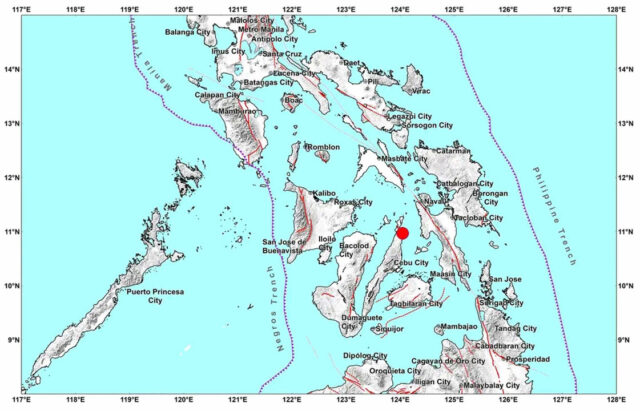
5.1-magnitude quake hits Bogo City, Cebu; tremors felt across Visayas

PHIVOLCS-DOST FB

A 5.1-magnitude earthquake struck Bogo City, Cebu, on Monday afternoon and was reported felt across Visayas, according to the Philippine Institute of Volcanology and Seismology (PHIVOLCS).

The quake occurred at 3:22 pm,, with its epicenter located 12 kilometers southeast of Bogo City at a depth of 11 km, PHIVOLCS said in its bulletin.

It was felt across many areas in the Visayas.

The strongest shaking, Intensity V, was reported in Bogo City and Medellin, Cebu, while Intensity IV was felt in Sogod, Cebu, and Villaba, Leyte

Intensity III was reported felt in Bantayan, Liloan, Toledo City, Tudela, Cebu City, and Mandaue City.

Lighter tremors of Intensity II were reported in Inabanga, Bohol, as well as Argao and Talisay City, Cebu, with Intensity I felt in Badian and San Fernando, Cebu.

Meanwhile, instrument measurements indicated Intensity IV in San Francisco, Cebu, and Hilongos and Villaba, Leyte.

Intensity III was recorded across several areas including Esperanza, Masbate; Liloan, Cebu; Cebu City; Lapu-Lapu City; Abuyog, Baybay, Carigara, and Isabel, Leyte; Ormoc City; and Hinundayan, Southern Leyte.

Intensity III was observed in Esperanza, Masbate; Liloan, Cebu; Cebu City; Lapu-Lapu City; Abuyog, Baybay, Carigara, and Isabel, Leyte; Ormoc City; and Hinundayan, Southern Leyte.

Intensity II was recorded in Roxas City, Capiz; Iloilo City; La Carlota City, Negros Occidental; Argao, Asturias, Carcar City, and San Fernando, Cebu; Kawayan and Naval, Biliran; Alangalang, Dulag, and Palo, Leyte; and Silago and Sogod, Southern Leyte.

Intensity I was observed in Aroroy and Cataingan, Masbate; Tapaz, Capiz; Jordan, Guimaras; Passi City, Iloilo; Sipalay City, Negros Occidental; Bacolod City; Borongan City, Eastern Samar; and Gandara, Samar.

PHIVOLCS warned that damage is expected and aftershocks may follow. The agency also urged the public to monitor updates on its official website.

Previously, a magnitude 6.9 earthquake struck Bogo City on September 30, 2025 affecting more than 754,000 individuals and resulting in 79 reported deaths, all recorded in Region 7, National Disaster Risk Reduction and Management Council (NDRRMC) said in its latest situational report. — Edg Adrian A. Eva

Eala battles home bet Grabher in first round of Linz Open in Austria

ALEX EALA — PHILIPPINE STAR/RUSSELL PALMA

AND Alexandra “Alex” Eala is on to the clay season.

The Filipina tennis pride will begin her campaign on a tougher surface against home bet Julia Grabher in the first round of the Upper Austria Ladies Linz Open on Tuesday at the Design Center in Linz.

Game time is at 5 p.m. (Manila time) with Ms. Eala looking to earn another shot at world No. 23 and multi-Grand Slam champion Jelena Ostapenko of Latvia, who gained a first-round bye as the No. 4 seed in the 32-player main draw.

This will be Ms. Eala’s debut in Austria, a 500-level tourney serving as the first event for the clay season leading up to the Roland Garros on May 24 to June 7 in Paris.

Ms. Eala will come into Austria brimming with hunger to regain lost glory after a free fall in the Women’s Tennis Association (WTA) rankings.

The 20-year-old ace, who reached a career-best ranking at No. 29 last month, fell one spot anew this week from No. 45 to No. 46 due to inactivity as she returned to home base at the Rafael Nadal Academy in Spain to train for the clay season.

Ms. Eala, who reunited with fellow Rafael Nadal Academy product and world No. 4 Iga Swiatek of Poland in Mallorca, Spain, had a massive drop in the world rankings after a Last 16 finish in the Miami Open, failing to protect her 390 rankings points from reaching the final four last year in the same tourney.

With Ms. Eala now having no points to protect for the rest of the season, she’s expected to regain the said ranking points and climb the WTA ladder anew.

And that will start in Austria, where she looms as the heavy favorite against the Ms. Grabher, WTA No. 89.

After the Linz Open, Ms. Eala will troop to Germany for the Porsche Tennis Grand Prix in Stuttgart on April 13 to 19 before returning to the Mutua Madrid Open in Spain on April 21 to May 3.

All of these tourneys will serve as Ms. Eala’s build-up for the French Open featuring the world tennis titans led by the Top 5 players in Aryna Sabalenka of Belarus, Elena Rybakina of Kazakhstan, reigning champion Coco Gauff of the United States, Ms. Swiatek and another American Jessica Pegula. — John Bryan Ulanday

Gilas women settle for silver medal in FIBA 3×3 Asia Cup

GILAS PILIPINAS WOMEN — INSTAGRAM.COM/FIBA3X3W

GILAS PILIPINAS women’s historic silver medal finish in the just concluded FIBA 3×3 Asia Cup in Singapore is a validation that Philippine women’s basketball has risen to unimaginable heights where a podium finish ambition in a regional meet this massive is no longer unthinkable.

On Easter Sunday, the Filipinas of Kacey Dela Rosa, Afril Bernardino, Cheska Apag and Mikka Cacho settled for the silver after they succumbed in an 18-9 defeat to the bigger, taller Australians headed by eventual MVP and WNBA player from the Toronto Tempo in Kristy Wallace in the gold medal match.

But that silver shone like gold as it was the highest finish by the country not just in this tournament but also in any Asian-level meets in years.

What made it more memorable was the country brought down World Cup silver winner Mongolia in the quarterfinals and third seed Japan in the semis that set it a date with destiny.

And Ms. Cacho, playing assistant coach, described it best.

“We believed,” she said.

The country hopes to replicate, if not eclipse it, when it plunges back into action in the FIBA 3×3 World Cup 2026 qualifiers slated this Saturday and Sunday also in Singapore where the top three will advance to the World Cup set on June 1 to 7 in Warsaw, Poland.

In Singapore, Gilas is bracketed in Pool A with Hungary, Lithuania and Egypt.

The country’s emergence started 11 years ago in Wuhan, China where it earned Division A promotion and consistently hung on to that spot and never left.

Last year, the squad finished sixth in the FIBA Women’s Asia Cup in Shenzhen that booked it a trip to the FIBA World Cup qualifying tournament and vaulted from No. 44 in the world rankings to No. 39 and seventh among Asians.

Along the way, the country reclaimed its dominance by copping the Southeast Asian Games gold in Thailand in December last year.

The arrival of a new star in Ms. Dela Rosa, a two-time UAAP MVP from Ateneo de Manila University, was one of the biggest keys to Gilas’ ascension.

Also on its plate is next year’s FIBA Asia Cup that the country will host.

There, the host nation will no longer settle for a competitive effort but will directly shoot for the stars and eye another podium finish that was more plausible now than in the decades past. — Joey Villar

Defense-minded Meralco Bolts brace for Bol-led TNT Tropang 5G in PBA Commissioner’s Cup

MERALCO BOLTS vs tnt tropang 5G — FACEBOOK.COM/MERALCOBOLTSOFFICIAL

Games on Tuesday
(Ninoy Aquino Stadium)
5:15 p.m. – Terrafirma vs Magnolia
7:30 p.m. – Meralco vs TNT

DEFENSIVE-MINDED Meralco takes its turn to try and stop surging Bol Bol and TNT in a livewire PBA Commissioner’s Cup Tuesday gig at the Ninoy Aquino Stadium.

The 7-foot-3 Mr. Bol has been balling for the TNT Tropang 5G, logging averages of 37.33 points and 16.33 rebounds as the defending champions won two in a row after an opening stumble in the mid-season tournament.

In their last game prior to the Lenten break, Mr. Bol gave powerhouse San Miguel Beermen the blues with a 34-point, 18-rebound game that propelled his squad to a 118-92 massacre.

And the scary thing is, the tall and long center with guard-like skills and fine shooting touch has yet to fully adjust to both the TNT and the PBA brands of play.

“I’m getting used to the physicality and getting my teammates involved and I think that’s what got us the last two wins,” said Mr. Bol.

“I think we’re getting there (chemistry with teammates). It was just a little bit hard the first game (but) after three games I’m getting used to them and they’re getting used to playing with me.”

Mr. Bol’s mission in Asia’s first play-for-play league is clear.

“I’m not worried about my game individually as long as we keep on stacking wins ‘cause that’s what’s most important,” he said.

Tasked with the primary chore of containing the fancied TNT reinforcement is Meralco counterpart Marvin Jones with support from the likes of Raymond Almazan, Brandon Bates and even Cliff Hodge.

Listed at 7-foot, Mr. Jones registered a 24-14 with three assists, a steal and a block in helping the Meralco Bolts to a 118-105 bounceback win over Titan last March 29. It was also his redemption game after a lackluster showing in a previous 102-109 loss to import-less Rain or Shine (ROS).

A win by Meralco (3-1) in the 7:30 p.m. tussle lifts the side to a tie for second with idle NLEX (4-1) behind pacesetting ROS (4-0).

Meanwhile, Terrafirma (3-1) shoots for the same standing at 5:15 p.m. against Magnolia (1-3).

The Terrafirma Dyip are in rebound mode after seeing their unbeaten start snapped by a 105-133 loss to Phoenix. The Magnolia Hotshots, for their part, hope to use their 121-109 breakthrough win over Macau as fuel to turn things around after a rough 0-3 opening card. — Olmin Leyba

De Luna, Malayan and Corteza in World Men’s 8-Ball tourney title hunt

LEE VAN CORTEZA — FACEBOOK.COM/PROBILLIARDSERIES

FILIPINOS Jeffrey De Luna, Sean Mark Malayan and Lee Van Corteza showed incredible poise in pulling off heart-stopping wins that kept them in the title hunt in the World Men’s 8-Ball Championship at St. Louis, Missouri over the weekend.

With their backs against the wall, Mr. De Luna smashed Kiwi Clark Sullivan, 8-4, Mr. Malayan edged German Joshua Filler, 8-7, and Mr. Corteza trounced Fin Arseni Sevastyanov, 8-4, to live for another day.

Messrs. De Luna, Malayan and Corteza would need nothing less than a win against German Stefan Kasper, Fin Casper Cappe Matikainen and unattached Wiktor Zielinski, respectively, to gatecrash into the round of 32.

Carlo Biado, who had an easier path by making the winner’s round early, faced trouble this time and stumbled to American Skyler Woodward, 8-4.

But the Filipino ace, who had won everything but this 8-ball tilt, will have one more shot at making it through the knockout round as he was battling Ukrainian Vitaliy Patsura as of this writing.

Failing to survive was Roberto Gomez, who was sent home packing by Pole Babica Radoslaw with an 8-7 win. — Joey Villar