Home Blog Page 1036

PHL on track for 2028 electrification target despite low budget — DoE

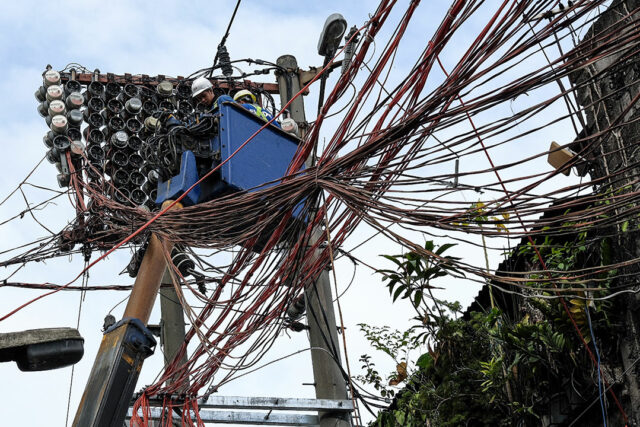
A power utility company lineman inspects electric meters along Romualdez Street, Road 10 in Tondo, Manila. — PHILIPPINE STAR/ RYAN BALDEMOR

THE PHILIPPINES will need a budget of up to P70 billion to achieve full electrification by 2028, but next year’s budget would cover only a small portion of the requirement.

“As proposed in the NEP (National Expenditure Program), (the national electrification budget) is probably only around P5 billion (in 2026), and actually, we need about P69 billion or P70 billion,” Energy Secretary Sharon S. Garin told reporters last week.

Ms. Garin said the government is on track to achieve full electrification in the next three years as there are different ways and sources of funding that can be implemented.

In coordination with the National Electrification Administration (NEA), the state-run agency tasked with promoting and supporting rural electrification, the Energy chief said the government will be focusing on energizing far-flung areas in Mindanao.

For 2026, the NEA has been allocated a P5-billion budget to finance its site electrification program.

During a recent hearing at the House of Representatives, Ms. Garin said the Department of Energy (DoE), along with relevant agencies, is earning substantial amounts for the National Treasury.

For next year, the DoE is seeking a P3.84-billion budget, 24% higher than its P3.08-billion budget for this year.

Compared to its budget, the DoE is earning more than P10 billion, mainly coming from the collection of shares from national wealth in the production of petroleum, coal, geothermal, wind, solar, and hydropower energy resources.

“There will be other streams of income and hopefully, we can access that too, especially for electrification purposes,” Ms. Garin said. “We are okay with the budget [for 2026].”

The 2024-2033 National Total Electrification Roadmap outlines the Philippines’ strategy to achieve 100% household electrification by 2028, or the end of the current administration’s term.

As of June 2024, 27.32 million households have access to electricity, but approximately 291,303 households have limited electricity service.

The government is pursuing programs such as household electrification, distribution line extension, stand-alone home systems, and microgrid systems to achieve the target.

INDIGENOUS NATURAL GAS
The government is also looking to promote the development of the Philippines’ natural gas industry to attain greater energy security.

In a department circular dated Sept. 1, the DoE has established rules to prioritize indigenous natural gas as a power supply source.

“There is a need to establish a clear framework to ensure the prioritization of indigenous natural gas through competitive, market driven pricing, while continuing to attract imported natural gas as a viable business investment in the Philippines,” the DoE said.

Among the guidelines included is the creation of a review and evaluation committee that will assess the pricing scheme adopted by suppliers utilizing indigenous natural gas.

The Indigenous Gas Prioritization – Review and Evaluation Committee (IGP-REC) will be chaired by an Energy undersecretary supervising the Energy Resource Development Bureau (ERDB) and Oil Industry Management Bureau (OIMB). Other committee members include the director of the ERDB, OIMB, and Legal Services.

IGP-REC is tasked to review and evaluate the pricing methodology adopted by suppliers and implement all other necessary measures allowed under the circular.

Under the circular, the DoE also ordered for gas-fired power plants to prioritize utilizing indigenous natural gas over imported natural gas.

“All users of natural gas shall first utilize available quantities of indigenous natural gas,” the agency said.

Malampaya gas field, which supplies about 20% of Luzon’s power needs, is the country’s sole natural gas provider. — S.J. Talavera

Philippine central bank seen as key stabilizer in uncertain global landscape

PHILIPPINE STAR/NOEL B. PABALATE

By Luisa Maria Jacinta C. Jocson, Senior Reporter

THE BANGKO SENTRAL ng Pilipinas’ (BSP) monetary policy and other tools will be key to supporting the economy and ensuring the stability of the country’s financial system amid a volatile external environment.

“In a highly uncertain environment, central banks like the BSP can play a key stabilizing role by striking the right balance between managing inflation and growth risks,” Asian Development Bank (ADB) Macroeconomics Research Division Principal Economist Matteo Lanzafame said in an e-mail.

Moody’s Analytics economist Sarah Tan said that central banks “play a critical role in anchoring stability” amid heightened uncertainty.

Inflation Rates and BSP Policy Rates in the Philippines

“For the BSP, this involves deploying its policy toolkit to maintain price stability, ensure orderly market functioning, and support sustainable growth,” Ms. Tan said in an e-mail.

The Bank for International Settlements (BIS) in its latest Annual Economic Report said that central banks must deal with the immediate fallout while keeping top of mind the deeper structural weaknesses that threaten the resilience of the global economy.

Markets and economies across the globe have been jolted by the United States’ flip-flopping trade policies since early this year.

The US slapped a 19% tariff on Philippine goods in a trade deal secured between President Ferdinand R. Marcos, Jr. and US President Donald J. Trump in July. The tariff rate took effect on Aug. 7.

This was the same rate imposed on goods from Cambodia, Malaysia, Thailand and Indonesia. It is slightly higher than the 20% on Vietnam and Taiwan, but lower than the 15% for Japan and South Korea.

“The BSP can help cushion the economy through continued monetary policy easing, which eases pressure on household budgets and supports spending,” Ms. Tan said.

The Philippine economy grew an annual 5.5% in the second quarter, up from 5.4% in the first quarter.

For the first half, gross domestic product (GDP) growth averaged 5.4%, slower than the 6.2% a year ago.

Department of Economy, Planning, and Development (DEPDev) Secretary Arsenio M. Balisacan said GDP must grow by 5.6% for the rest of the year to achieve the low end of the 5.5-6.5% full-year target.

“To the extent that central banks including the BSP have the monetary space to help stimulate economic growth, they can provide such a support,” GlobalSource Country Analyst for the Philippines and former BSP Deputy Governor Diwa C. Guinigundo said.

Pantheon Macroeconomics Chief Emerging Asia Economist Miguel Chanco said that monetary policy must continue “doing most of the heavy lifting in terms of supporting growth in these uncertain times.”

On the impact on corporates, the BSP can also boost liquidity to the banking system to ensure continuous credit flow.

‘COMMENDABLE JOB’
“One of the most important roles of a central bank is to provide price stability, especially during uncertain times,” East West Banking Corp. Chief Executive Officer Jerry G. Ngo said.

He said the BSP has done a “commendable job” keeping a clear forward guidance on the direction of interest rates.

“Further, the central bank has continued to lower intermediation costs and improve its liquidity facilities to support banks in carrying on with their lending activities. These measures have been crucial in supporting balanced and sustainable economic growth, even through uncertainty.”

Mr. Ngo also noted how the BSP’s policy direction shapes investor confidence.

“As we progress in our economic development, being open to foreign capital is crucial. A strong, credible central bank signals long-term stability and helps attract the kind of investments that support capital formation, not just consumption-led momentum,” he said.

HSBC economist for ASEAN Aris D. Dacanay said the next year and a half will likely be challenging across Southeast Asia.

“Navigating tariffs and the risks of more is already a given, not to mention the geopolitical risks looming around the globe.”

“In fact, the sheer uncertainty in global trade policy should already deter some trade and investments — enough to take a toll on overall growth.”

As ASEAN economies are small and open, they may have “no choice but to ride the turbulent waters of trade,” Mr. Dacanay said.

“But as economies face the inevitable, policymakers will likely crank their domestic economies to make up for the slack in trade, setting the stage for monetary easing,” he added.

FURTHER EASING AHEAD
Analysts said the central bank can continue its rate-cutting cycle to stimulate economic growth amid external headwinds.

“The BSP has space to continue loosening its monetary stance to support domestic demand, cushioning the economy against external shocks,” ADB’s Mr. Lanzafame said.

“A cautious approach, however, continues to be warranted, as uncertainty and risks remain high,” he added.

ADB Economic Research and Development Impact Department Principal Economist John Beirne likewise noted the need for vigilance.

“While growth risks due to external challenges, along with moderating inflation, support the case for the BSP to lower interest rates, financial stability risks also need to be taken into account,” he said.

Mr. Beirne flagged the possibility of capital outflows and currency depreciation if the US does not cut rates as anticipated by markets.

“Safeguarding investor confidence will be important in the face of these risks, including through well-coordinated monetary and macroprudential policies,” he added.

Mr. Chanco said the BSP can and should lower borrowing costs further as inflation will likely remain below the 2-4% target band for the remainder of this year.

“Inflation in the Philippines has been reined in and remained low and stable in the first half of the year. This creates room for further easing,” Ms. Tan said.

Headline inflation rose 0.9% year on year in July, the slowest pace in nearly six years, or since the 0.6% print posted in October 2019.

For the first seven months of the year, inflation averaged 1.7%. Inflation has so far settled within or below the 2-4% target range for the full year.

The BSP expects inflation to average 1.7% this year as expectations remain well-anchored.

At the Aug. 28 meeting, the Monetary Board cut policy rates by 25 bps, bringing the benchmark rate to 5%, the lowest since November 2022.

The central bank has reduced policy rates by a total of 150 bps since it began its easing cycle in August 2024.

“Based on the latest data, I think this puts us at our sweet spot for both inflation and output,” BSP Governor Eli M. Remolona, Jr. said during the Aug. 28 briefing.

“The projected inflation rate over the next year or so is where we want it to be. Output is moving to where we think our capacity is,” he said. “The policy rate itself is at our ‘Goldilocks’ rate — neither too high nor too low.”

Mr. Remolona said there is room for another rate cut this year.

“The data can change. The sweet spot can move… I think we have space for one more cut. If the data develops the way we think it will develop, then maybe one more cut this year,” the BSP chief said.

The Monetary Board has two remaining meetings scheduled for October and December.

LENDING DEMAND
As the BSP continues its easing cycle, banks have started to see the effect on demand for loans.

“We’ve definitely seen increased credit demand since the BSP started cutting rates in August 2024. This has helped push the banking industry’s loan growth to 12%,” Mr. Ngo said.

“With inflation under control at 1.9%, there is room for further rate cuts, barring any global and domestic headwinds. Doing so can spur more demand for credit towards productive uses and ultimately translate to economic growth.”

Bank lending grew by 11.3% year on year to P13.37 trillion as of May, the latest BSP data showed. Consumer loans to residents jumped by 23.7% to P1.699 trillion during the month.

“One of the reasons why we continue to see robust growth in our corporate sector and our small and medium (SME) enterprise sector is the fact that interest rates are lower,” Bankers Association of the Philippines President and Bank of the Philippine Islands (BPI) President and Chief Executive Officer Teodoro K. Limcaoco said.

“Therefore, it encourages these companies to borrow to make their investments, so it’s good for the economy,” he added.

Mr. Limcaoco said the BSP’s monetary easing has resulted in lower margins but noted that loan demand “would not have been as strong without these cuts.”

“As access to credit improves, it is essential that we reinforce responsible lending practices. Expanding credit responsibly, not just broadly, will be key to ensuring long-term financial resilience and inclusive growth,” Mr. Ngo added.

However, analysts noted risks that the central bank must keep an eye out for as it continues cutting rates.

“BSP’s ears should remain firmly on the ground to make sure we don’t see further capital outflows, reversal in the peso, and intensification of upside risks,” Mr. Guinigundo said.

Mr. Dacanay said that risks such as geopolitics and other domestic policies “will likely keep the BSP on its toes.”

“Any uptick in global oil prices or any increase in the tariff rates of rice could dim the stage for the BSP to boost consumption and investment,” he added.

Ms. Tan said the BSP will need to monitor several factors closely such as “potential inflationary pressures stemming from geopolitical tensions and global policy shifts, as well as the impact of previous rate cuts on domestic demand.”

GlobalSource’s Mr. Guinigundo said that the BSP could resort to using other tools like reserve requirements and macroprudential policy to “keep the volume of liquidity consistent with inflation and growth requirements.”

“The biggest risk for me from the perspective of financial instability is the tight rope the BSP has to walk as it continues to lower interest rates,” Mr. Chanco added.

FINANCIAL STABILITY
Meanwhile, the BSP will also be crucial in maintaining stability in the financial system despite these shocks.

“Higher US tariffs pose a risk to the country’s economic and financial stability as it dampens global trade and investor confidence,” Ms. Tan said.

Even though the Philippines secured a trade deal with the US, she said it is still too early to assess the impact.

“Slower economic growth and tighter financial conditions may lead to more credit stress in vulnerable sectors, which could affect the quality of bank assets.”

The BSP in its latest financial stability report said that the Philippines’ financial system remains resilient but faces moderate risks that warrant close monitoring.

“While the Philippine financial health remains sound, these risks highlight the importance of maintaining strong financial safeguards, closely monitoring emerging risks, and being ready to adjust policies quickly, when necessary,” Ms. Tan said.

EastWest Bank’s Mr. Ngo said the BSP’s policy guidance will be crucial at this time.

“During uncertain times, there is a heightened risk of tightening market liquidity as companies and banks alike increase cash buffers. If left unchecked, this may cause credit tightening,” he said.

“However, with the BSP providing clear guidance and ensuring ample system liquidity, banks are empowered to do what they do best — allocate economic capital efficiently,” he added.

Mr. Guinigundo said that the interconnectedness in bank and corporate loans should always be monitored.

“Any sustained increase in nonperforming loans and decline in the loan to deposit ratio should always get the attention of our bank regulators.”

The latest central bank data showed that nonperforming loans accounted for 3.38% of the banking sector’s total loan book in May.

“Good that our banks’ capital base remains solid but other metrics should be carefully monitored and appropriate actions taken when any sign of trouble becomes more apparent,” Mr. Guinigundo said.

Expanding access to credit while upholding strong credit standards helps banks “provide a measure of stability not only for the financial system but the economy as a whole,” Mr. Ngo added.

Uncertainty looms over Philippines’ modernized transport goal

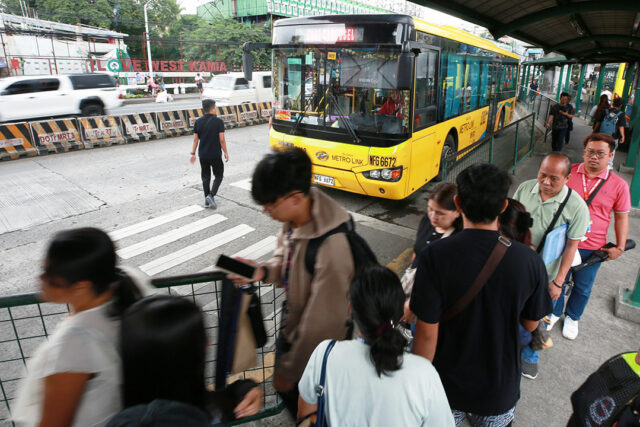
COMMUTERS wait for the bus at the EDSA Busway Nepa Q-Mart station in Quezon City, Feb. 26. — PHILIPPINE STAR/MIGUEL DE GUZMAN

By Ashley Erika O. Jose, Reporter

THE PHILIPPINES’ ambition to reshape and modernize the long-neglected mass transportation system is still in limbo but analysts say it may still be achievable if the government recalibrates its approach.

“It is not easy to commute in the country, it’s a struggle, it is not safe,” former Transportation Secretary Vivencio “Vince” B. Dizon said, echoing the sentiment of millions of Filipinos who endure long lines at rail stations and hours of traffic in congested streets.

Mr. Dizon, who took the helm of the Department of Transportation (DoTr) in February 2025, said they’re now focusing on fast-tracking its projects and implementing improvements.

“We are continuing our efforts to complete projects that will better the commuting experience of the public,” he added.

The government is refining the feasibility studies of its stalled and long-delayed projects to ensure the completion of the DoTr’s priority projects by 2028.

For instance, the agency is working on a new study for the Mindanao Railway project — one of the country’s most awaited rail projects — to assess the feasibility of the use of more modern and environment-friendly trains.

The original plan for the Mindanao Railway involved diesel-powered trains but projects involving non-electrified railways are having difficulty attracting investors over global warming concerns.

“Almost the entire Mindanao will benefit when (the Mindanao railway project) is fully completed. Rail is good for such a big island like Mindanao, with huge passenger and cargo demand in many provinces,” Nigel Paul C. Villarete, senior adviser on PPP (public-private partnership) at the technical advisory group Libra Konsult, Inc. told BusinessWorld.

The Mindanao railway system is considered a good project for Mindanao as the rail line will cover a sizable demand.

The DoTr has said earlier that it is considering enlisting the private sector for the Mindanao railway project as the government scrambles to put together funding after China bowed out of the project.

The Public-Private Partnership Center said it expects the completion of the feasibility study for the third phase of the Mindanao Railway project within this year.

Only phase three of the Mindanao Railway project is being considered for PPP, the agency said, noting that phases one and two will still be funded through official development assistance.

“As for the Mindanao railway, I can’t understand what’s taking so long to decide. It’s an easy project, simple and easy to plan and to determine feasibility. I suspect the difficulty is getting consensus and support. It covers the entire Mindanao, with so many provinces, and more governors and mayors,” Mr. Villarete said.

The first phase of the Mindanao Railway project, valued at P83 billion, will run from Tagum, Davao del Norte to Digos City, Davao del Sur. It is expected to carry 122,000 passengers per day and cut travel time between Tagum and Digos to one hour from three hours currently.

Mr. Villarete said it may be difficult to get a consensus on the Mindanao railway project, adding that a comprehensive study should be done by independent parties and experts.

“The DoTr is wriggling its hands. It’s not a question of what kind of railway to build (or what fuel). They’re hesitating because they’re not sure if this is the right decision,” Mr. Villarete said.

Rene S. Santiago, former president of the Transportation Science Society of the Philippines, said that the government should focus on completing projects that are feasible, especially for Mindanao which has yet to see its first rail line.

“Mindanao needs real improvement on its overall transport network, not more paper dreams. With less than three years to go, the administration should focus its energies on completing projects already on-stream,” he said.

RAILWAY RENAISSANCE
The current administration had promised a railway renaissance by highlighting projects like the Mindanao Railway, Metro Manila Subway project, the Metro Rail Transit Line (MRT-7), MRT-4, and the North-South Commuter Railway (NSCR).

However, none of these projects are expected to be completed soon, as the DoTr’s rail projects are hounded by many challenges including lack of funding, right-of-way (RoW) issues, and unfinished feasibility studies.

Approved in 2019, MRT-4 has yet to break ground as the agency is still working to secure loans for the project which was then estimated at more than P50 billion. The rail line covers 12.7 kilometers from the Epifanio de los Santos Avenue (EDSA)-Ortigas Ave. junction to Taytay, Rizal, will have 10 stations and is expected to serve more than 400,000 daily ridership.

The NSCR will likely be delayed by four years, Mr. Dizon said previously, after the project reached a 50% completion rate to date for the Manila-Clark segment. This project may now see partial operations by the end of 2026 or early 2027.

The 147-kilometer NSCR will connect Malolos, Bulacan with Clark International Airport, and Tutuban, Manila with Calamba, Laguna. The P873-billion project is co-financed by the Japan International Cooperation Agency (JICA) and the Asian Development Bank. It will have 35 stations and three depots.

For now, the DoTr said it is hoping to fulfill this administration’s promise of a modernized transportation system by expanding its focus outside Metro Manila particularly in Cebu and Davao.

BUS RAPID TRANSIT SYSTEM
Bus rapid transit (BRT) systems like the EDSA Busway are touted as one of the most important modes of transportation in the country as these are a more reliable and faster means of public transport.

Data provided by the Transportation department showed that the EDSA Busway served more than 63 million passengers alone in 2024, or about 177,000 commuters daily.

The EDSA Busway, a dedicated bus lane along Metro Manila’s busiest thoroughfare, is seen as a crucial step towards a progressive public transportation system with 23 stations operating round-the-clock.

The DoTr is planning to privatize the operations and maintenance of the EDSA Busway, although the plan is currently on hold for now as the agency plans to focus on rehabilitating the busways’ stations first.

The EDSA Busway Project initially involved the financing, design, construction, procurement of low-carbon buses, route planning, and operations and maintenance of the busway, PPP Center said.

For big cities with many commuters, the EDSA BRT project will directly affect commuters and business by 2028, transportation analysts said.

“Hopefully the Quezon Avenue BRT and its continuation and connection directly to Manila. For Metro Cebu, it’s the Cebu BRT, of course,” Mr. Villarete said.

DoTr’s Mr. Dizon said that the agency is targeting to start the rehabilitation of EDSA Busway stations within this year, spending as much as P253 million for the upgrade of up to four stations.

“I sincerely believe the BRT projects in Metro Manila and Cebu will make the most difference and benefit the most number of passengers,” Libra Konsult’s Mr. Villarete said.

Mr. Villarete said the government’s BRT projects will bring real economic viability while also improving passenger experience.

“People will accept with real certainty that the BRT both the EDSA and Cebu exhibited the highest ratings when evaluated and approved by the Department of Economy, Planning, and Development (DEPDev) board,” he said.

Mr. Villarete said that despite the existing railway lines passing through EDSA, the passenger share of the regular buses remains very high.

Aside from upgrading EDSA Busway stations, the DoTr is also eyeing its expansion by adding more bus stops in the southern portion of the Metro, according to Mr. Dizon. He said the agency will add two more stations by 2026.

MORE BUSWAYS
The Transportation department is also considering the construction of a busway along España Boulevard in Manila and Quezon Avenue in Quezon City. Mr. Dizon said the feasibility study for the project is expected to be completed as early as next year, noting that the Asian Development Bank is helping the DoTr to assess the viability of this plan.

In 2022, the DoTr shelved its planned Metro Manila BRT project due to lack of progress during the pandemic, and after the loan for the project expired that year.

The government had planned to construct a 12.3-kilometer segregated bus lane from Manila City Hall to Philcoa in Quezon City, which can serve up to 290,000 commuters daily.

For urban transport and mobility group AltMobility PH, all projects — commuter rail, subway, public utility vehicle modernization program, bus rapid transits, bike lanes, sidewalks — should be integrated as a whole, with the clear objective of prioritizing the public.

“No single project can solve our transport woes on its own, so it’s always important to consider a network-wide impact,” AltMobility PH Director Patricia Mariano said in an interview.

Maria Golda Mier Hilario, said director for Urban Development for Institute of Climate and Sustainable Cities (ICSC), the completion of MRT Line 7, the Metro Manila Subway and the Cebu BRT would really advance the country’s transportation network.

“The impact will be very tangible — more people are moved, traveling time will be greatly reduced, less road congestion since it will be faster and more convenient to take public transport than be stuck in traffic and to look for available car parking. This will reduce stress on the road and decongest our streets,” Ms. Hilario said.

However, big-ticket infrastructure projects are only one side of the equation, Ms. Hilario said, adding that public transport terminals and connectivity are the missing puzzle pieces, but the government has yet to address the lack of first-mile, last-mile connectivity solutions.

“As early as now, if we also fix the system and not just wait for big-ticket transport projects to finish, by improving accessibility of transit stops and terminals, unified ticketing system, better way finding, and integrating feeder routes into these main public transport routes — the potential benefit of these big-ticket transport projects will be immense,” she said.

AltMobility PH’s Ms. Mariano said that there is also a need for a whole-of-government approach between agencies, noting that a lot of mobility projects are tied to where and how the Department of Public Works and Highways build roads, how the local government and the Metropolitan Manila Development Authority manage and prioritize traffic; and how the Department of Human Settlements and Urban Development approves of land use.

Modernizing the transport system is more than just building the infrastructure, ICSC said.

“Improvements of the busway through the PPP is a good start. The efforts of the DoTr to explore different payment systems like e-wallets are also commendable,” Ms. Hilario said.

“If we really want to improve and modernize the country’s transportation system, we also need to fully integrate the jeepneys, UV express as feeders to main public transport modes. Integration is key.”

From potential to progress: Future-proofing Philippine growth

Photo courtesy of Asian Development Bank

By Pavit Ramachandran

THE PHILIPPINES is entering a pivotal phase. In 2025, after a strong post-pandemic recovery, the economy is expanding steadily and remains one of the fastest growing countries in Southeast Asia. Over the past two years, gross domestic product (GDP) growth has averaged 5.6%. Inflation is currently easing, and investor confidence remains solid. Upper middle-income status is expected by many soon.

But the path ahead will not be easy. From geopolitical instability and global economic uncertainty to increasingly frequent weather-related disasters, the risks are real — and growing. The question is not just whether growth will continue, but whether it will be inclusive, sustainable, and resilient.

To achieve that, the Philippines needs to focus its efforts on three interconnected priorities: investing in its people, building infrastructure that connects and empowers, and accelerating resilience to the changing climate.

INVESTING IN PEOPLE: SEIZING THE DIGITAL AND AI MOMENT
Heila Balgos thought her life had no meaning and direction when she couldn’t find a job two years after graduating from college. But after discovering and completing the technical and life skills training under JobStart Philippines, a full-service youth employment program run by the Department of Labor and Employment and funded by the Asian Development Bank (ADB), she found her purpose in life.

After her internship at Astoria Hotel Palawan, Heila rose through the ranks to become a company auditor.  She is now her family’s breadwinner, saving enough to fix their house and buy a television for her siblings, who used to watch TV in their neighbor’s house.

Heila’s story isn’t an isolated case. It’s one of thousands that show how lives can change with the right tools, preparation, and support.

The country has a demographic advantage that many aging economies envy: a young, dynamic, and digitally inclined workforce. But unless this workforce is well nourished and equipped with the right skills, that demographic dividend could turn into a missed opportunity.

While unemployment has dropped to 3.8%, underemployment remains persistently high. Many Filipinos are in low-productivity, informal jobs with little room for advancement. And as digital technology and artificial intelligence (AI) transform industries — from customer service and logistics to design and analytics — the pressure to adapt to new technologies is intensifying.

The Philippines, long a global leader in business process outsourcing, could either ride this wave or be swept aside by it. Generative AI is already changing what clients expect from service providers. Routine, repetitive tasks are being automated, while demand is growing for roles that combine digital savvy with creativity, emotional intelligence, and problem-solving.

Preparing workers for this shift will require more than updating the computer labs. It calls for a full-scale rethinking of education and training — from primary school to post-graduate, from online courses to on-the-job apprenticeships.

That means embedding digital and AI-relevant skills into the national curriculum, building industry-led training pathways, and expanding programs that provide real-world experience. Equally important is ensuring workers’ health and well-being, especially for young people. A healthy, well-nourished child today is a productive worker tomorrow.

ADB is supporting these efforts across the board — from basic education to education technology, and universal healthcare, to new partnerships with private employers to align training with real market needs. The private sector is not just a beneficiary here—it must be a co-designer of solutions.

CONNECTING THE COUNTRY: INFRASTRUCTURE THAT BRIDGES GAPS
The Philippines’ geography is both a marvel and a challenge. With over 7,000 islands spread across vast distances, connectivity isn’t just about convenience — it’s about resilience, inclusion, and competitiveness.

Yet infrastructure investment still lags regional peers. Logistics costs remain among the highest in Asia. Power remains expensive, unreliable, and unevenly distributed. Farmers in rural areas are still isolated, losing time and income because they lack reliable roads to transport their goods.

Ruel Tanucan, a farmer from Zamboanga Sibugay province, says that before the new roads built by the Department of Public Works and Highways under the ADB-financed Improving Growth Corridors in Mindanao Road Sector Project, it was difficult to transport goods to market especially when it rained because the roads would be muddy. But now farmers like him can bring their produce to the city anytime, even in rainy weather, resulting in lower transport costs and higher incomes.

Infrastructure isn’t just about concrete and steel — it’s about connection, opportunity, and dignity.

Building roads and ports isn’t new, but where and how we build them matters more than ever. Infrastructure must reach beyond Metro Manila, unlocking economic potential in underserved regions — from the uplands of Bukidnon to coastal towns in Samar.

Digital infrastructure is just as critical. Fast and affordable internet is not a luxury; it’s a basic requirement for participation in the modern economy. When a fiber-optic line reaches a remote barangay, it opens doors to e-commerce, education, telemedicine, and remote jobs.

The private sector plays a crucial role in closing these gaps. Through smart public-private partnerships (PPPs), private firms bring capital, technology, and operational know-how to infrastructure projects — from renewable energy and transport logistics to digital connectivity.

The Philippines is now ADB’s top PPP client, with a growing portfolio of infrastructure initiatives. But unlocking more PPP investments requires reducing red tape, ensuring policy consistency, and strengthening regulatory institutions.

BUILDING RESILIENCE: TURNING RISK INTO LEADERSHIP
The Philippines is on the frontlines of a changing climate. Each year, typhoons, floods, droughts, and rising sea levels threaten lives and livelihoods, with majority of Filipinos living near coastlines.

But the country also has the potential to lead. The government’s commitment to reduce greenhouse gas emissions by 75% by 2030 is ambitious, and rightly so. Meeting that target means accelerating the transition to cleaner energy, making agriculture more sustainable, and redesigning cities and transport systems to be low-carbon and climate-resilient.

AI and data are already beginning to make a difference — enhancing early warning systems, improving disaster recovery, and enabling smarter farming. Startups in Manila, Iloilo, and Cagayan de Oro are using technology to tackle everything from plastic waste to urban flooding.

ADB is investing heavily in resilience — from flood protection systems in urban areas to reforestation, renewable energy, and climate-resilient infrastructure. These aren’t just environmental projects — they’re economic resilience strategies. They create jobs, protect investments, and reduce long-term fiscal risks. ADB has expanded its support to long-term food and nutrition security, including initiatives to modernize agricultural value chains and improve access to affordable and healthy food, as well as sustainably transforming food systems by protecting ecosystems.

Nature-based solutions like mangrove restoration or watershed management offer multiple co-benefits: they buffer against storms, preserve biodiversity, and support fisheries and tourism. With the right incentives, these solutions can be scaled up.

A CHANCE TO LEAD REGIONALLY
As the Philippines prepares to chair ASEAN in 2026, it has a golden opportunity to shape the region’s agenda on inclusive growth and sustainable development.

Regional cooperation initiatives — like the ASEAN Power Grid, which aims to connect electricity markets across Southeast Asia — can transform energy security. Imagine a system where surplus solar power from Vietnam helps power hospitals in Luzon, or excess hydropower from the Lao People’s Democratic Republic supports grid stability during peak demand in Visayas.

If the Philippines can align its human capacities, infrastructure priorities, and climate leadership, it will not only secure its own future — it will inspire and influence its neighbors.

Progress is ultimately about people. It’s about whether Heila in Palawan or Ruel in Zamboanga see a path to a better life — not just for themselves, but also for their kababayans, and eventually, their own children.

This is the real test of inclusive growth, and that’s where national ambition must meet everyday realities.


Pavit Ramachandran is the deputy director general of the Southeast Asia Department of the Asian Development Bank.

Unlocking the Philippines’ aspiration economy: What we can do to propel MSMEs forward

STOCK PHOTO | Image by Benzoix from Freepik

By Tiffany Uy and Jaymes Shrimski

FROM market stalls to neighborhood stores in the Philippines, small businesses are doing more than selling goods — they’re carrying dreams.

For many Filipino micro, small and medium enterprises (MSMEs), starting their own business is motivated not by the profit alone, but by purpose. The people behind these energized enterprises are driven by goals to build a better future for their families, pursue personal passions, and send their children to school.

Growth is the top priority for many MSMEs, but achieving growth requires more than grit and dreams. It demands an environment made up of digital technologies, new markets, skilled labor, accessible capital, and government programs that work for them. Too often, these systems fall out of step with everyday realities.

The question is, what will it take to help MSMEs not just survive but thrive? Behind every MSME is a parent, a provider, a builder of opportunity. Supporting MSMEs is therefore not only an economic priority, but a commitment to the people behind them, and the dreams they carry.

Boston Consulting Group’s recent publication, Heart of Hustle: What Fuels the Filipino MSME — developed in partnership with the Department of Trade and Industry (DTI) — captures insights from over 3,000 MSMEs across five key dimensions of support. It uncovers where the system is falling short and where focused action can unlock the full potential of the country’s most avid dreamers.

ACCESS TO FINANCING
Most MSMEs know that growth requires capital, yet for many, formal financing still feels out of reach. Today, 83% of MSMEs rely on personal savings to fund their business. And while credit is technically available, it’s not meaningfully accessible. More than half of MSMEs (55%) have never applied for a loan, with 42% citing fear of debt, 34% pointing to perceived high interest rates, and 16% feeling the application process is too complex.

For business owners who seek stability for their families, borrowing can feel like a gamble, not a growth strategy.

Even among those MSMEs who have successfully borrowed, the majority report accepting small loans, typically as a last choice. This hesitancy stems from distrust and misalignment, not disinterest. MSMEs require financing that is safe, understandable, and tailored to their specific needs, rather than simply being “open” to them.

These findings demonstrate we should rethink how financing is offered, messaged, and supported. Effective solutions must reduce both friction and fear — embedded lending via supplier networks, micro-loans bundled with training, or community-led onboarding that demystifies debt. Only then can capital become the enabler it’s meant to be, not another barrier to overcome.

ACCESS TO MARKETS
The ambition to grow is clear — 88% of MSMEs want to expand, and 72% hope to enter new markets.

However, intent often outpaces readiness, with fewer than half of MSMEs (44%) feeling they have the information they need to support expansion, and only 39% participating in trade fairs for wider visibility.

Going international is even harder. One in three MSMEs aspire to export, but face compounding barriers. These hurdles include limited knowledge of regulatory requirements, lack of access to export financing, and low confidence in navigating unfamiliar buyers or markets.

Many MSMEs are willing to do the work, but don’t know where to begin. Bridging this gap calls for systems that build knowledge and lower participation costs. This could include pricing guidance, market insights, matchmaking platforms, and export coaching. With the right foundations, today’s neighborhood vendors could become tomorrow’s regional exporters.

ACCESS TO TOOLS AND INFRASTRUCTURE
Most MSMEs recognize the value of digitalizing portions of their operations, yet for many, digital adoption still feels out of reach.

While 77% of Filipino MSMEs aspire to use more digital solutions, only 20% report increased usage in the past year — and just 16% use any digital tools at all. This adoption gap isn’t due to lack of belief. Almost three quarters (72%) of MSME owners say digital tools can improve their business. Rather, this reluctance stems from perceived barriers — 74% believe their businesses are too small, and 50% believe they lack the technical expertise to implement.

For many MSMEs, digitalization feels complex, costly, and misaligned with how they operate day to day. Even among adopters, usage is concentrated on familiar tools like Microsoft Office (52%) or video conferencing tools (37%), while tools more directly tied to business outcome — like accounting software, point-of-sale systems, and inventory management — remain underused. These challenges are especially acute among microenterprises like sari-sari store owners and food service operators, where manual operations dominate and where even modest digital upgrades could unlock meaningful efficiency gains.

Closing this gap demands tools that are simple, affordable, and aligned with how small businesses are actually run. We should rethink how digital solutions are designed, delivered, and supported. This could look like bundled kits with training, mobile-first platforms, or agent-assisted onboarding in local languages.

ACCESS TO GOV’T SUPPORT
Most MSMEs want to engage with government support, yet access remains confusing and inconsistent. While 77% of MSMEs say they can comply with regulations and 62% report positive experiences with basic permits, satisfaction for financing support (36%) and upskilling of job-seekers (48%) is notably lower.

Awareness of government programs among MSMEs is high, but awareness alone doesn’t translate into participation. Over 70% recognize initiatives such as Negosyo Centers, Kapatid Mentor ME, Go Lokal, and Pondo sa Pagbabago at Pag-asenso. Yet actual participation remains below 20% for most initiatives, citing barriers such as unclear eligibility and difficulty understanding which offerings apply to their specific business.

These challenges are particularly pronounced among smaller players. Sari-sari store owners, for example, engage little beyond the most accessible support channels such as the Negosyo Center program. Meanwhile, food service operators struggle with labor law compliance and would deeply benefit from simplified hiring guides and labor law explainers. Across the board, only 21% of MSMEs are registered with Social Security System (SSS) as employers, and even fewer with Philippine Health Insurance Corp. (19%) or the Department of Labor and Employment (DoLE)with 14%.

The need is not simply for more programs, but for those that are easier to access, better tailored to business size and sector, and more clearly communicated. For government support to unlock MSME growth, it must shift from being available in principle to being usable in practice.

ACCESS TO LABOR
MSMEs are eager to grow their teams but face persistent gaps in accessing, developing, and retaining the talent they need.

Two-thirds of MSMEs (72%) say they want to expand their workforce, and 82% hope to upskill existing staff, yet only about half feel confident in their current training efforts or in the skills of available talent. Fewer still (48%) feel that the government is doing enough to help jobseekers upskill.

Labor-related compliance adds another layer of complexity. Just 14% are registered with the DoLE, and awareness of key labor laws — such as overtime and holiday pay rules, employee contracts, occupational safety and health standards, and termination pay— remains low. For many MSMEs, especially smaller enterprises, formal employment processes are unfamiliar, underutilized, or perceived as too complex.

Hiring remains largely informal for MSMEs. The majority of these enterprises still rely on walk-ins, referrals, or social media to fill roles, while structured recruitment channels like school partnerships or job platforms are used far less.

While 26% of MSMEs rely on walk-in applicants for hiring new talents, just 3% rely on university and school partnerships. This results in limited talent reach and poor job fits. For example, in the manufacturing segment, high turnover and skill mismatches remain persistent challenges.

MSMEs express strong intent to improve their labor practices but need talent systems built for their scale. This includes simple hiring templates, accessible upskilling programs tailored to sector and scale, and better access to part-time or seasonal worker networks where relevant. To unlock MSME growth, labor support must move beyond regulation toward enabling practical, responsive solutions that help small businesses build and retain the teams they need to thrive.

Filipino MSMEs are not short on ambition. They are short on fit-for-purpose support. Across all five pillars explored — financing, market access, tools and infrastructure, government support, and labor — it’s clear that the desire to grow is strong, but the systems around MSMEs are not always designed with their realities in mind.

This is a call to treat MSME support as economic infrastructure and not social aid. This means:

Extending metrics of success beyond program enrollment and into outcomes such as asset growth, job creation, and survival rates.

Building progressive pathways for credit access, starting from micro-limits tied to behavior and trust-based models that grow over time.

Designing support based on how MSMEs actually operate — not by downsizing corporate tools, but by building for workflows shaped by limited capital and daily reinvention — where time, capital, and capacity are structured differently.

If we can take the steps to build with MSMEs — like building systems that are simple, responsive, and rooted in real experiences — we don’t just unlock income or jobs. By doing so, we catalyze dignity and inclusive progress, by helping Filipinos turn one of their top dreams into reality: building a business of their own.

Read the full report from the Boston Consulting Group (BCG) here: https://www.bcg.com/publications/2025/philippines-what-fuels-the-filipino-msme


Tiffany Uy is a project leader based in BCG’s Manila office. She is a core member of BCG’s Social Impact practice, working a wide variety of economic development topics with public and social sector clients across Southeast Asia. 

Jaymes Nicholas Shrimski is a management consultant at BCG in Manila, with prior experience in venture capital and private banking across Southeast Asia.

Private capital, local jobs: What I’ve learned about building shared prosperity from Nairobi to Manila

PHILIPPINE STAR/ RYAN BALDEMOR

By Amena Arif

IT’S STILL EARLY DAYS for me in the Philippines as IFC’s new country manager here, and already I’m struck by the remarkable journey this country has undergone over the past four decades — a journey that BusinessWorld has dutifully documented through its 38 years of dedicated reporting.

I’m often asked what lessons I bring with me, working across such varied and seemingly disparate markets, from Pakistan to Lebanon to Sri Lanka, and then Kenya, where I led our operations across several East African countries. I see some consistent truths that cut across all these markets — how families, communities and economies change when people have respectable livelihoods. How these livelihoods and sustainable economic development must be deeply rooted in local capacity.

At IFC we are keenly aware that you can’t just parachute in solutions from the outside and expect them to take hold. Solutions may be seeded by ideas from outside, but they must be grown in and adapted to our market realities. And in the Philippines, there is no shortage of ideas or capacity.

With a young, dynamic population and a steadily growing economy, the country has all the ingredients for sustained prosperity. Yet challenges remain — how do we ensure that growth translates into meaningful, long-term employment opportunities that can lift millions more Filipinos into the middle class? We believe the answer lies in empowering the private sector to become the primary engine of job creation and growth. And that’s exactly what IFC is here for.

POWERING GROWTH: THE ROAD TO CLEAN ENERGY AND WATER
Energy is a fundamental input for economic growth, and there is no shortage of interest from the private sector to help the Philippines meet its energy aspirations. From renewable energy developers eager to drive low-carbon solutions across the archipelago to financial institutions leading multibillion-peso sustainable finance issuances, Philippine companies are stepping up with both capital and commitment. And so are we.

Last year, we announced our first Sustainability-Linked Financing deal with Ayala Land, Inc. (ALI), for up to $250 million (P14 billion), which aims to strengthen the Philippines’ transition to green and resilient buildings while creating quality employment opportunities across the construction and retail sectors. It also enabled the company to issue two additional sustainability-linked bonds under the same framework, demonstrating the market-creation impact of IFC’s strategic approach.

The framework doesn’t work for just one company — we established a replicable model that other developers and companies can adapt for their own sustainability journeys. When respected leaders like the Ayala Group are first to embrace these new financing instruments, it sends a powerful signal to the broader market about their commercial viability and strategic value.

Indeed, the Ayala Group and IFC have championed climate finance in the country for many years. In 2023, we invested $250 million in the Bank of the Philippine Islands’ first green bond issuance as part of our 30×30 Zero program. That was the biggest deal IFC has done with a financial institution in this part of the world, and it has gone on to fund crucial projects in renewable energy, green buildings, electric vehicles and climate-smart agriculture.

BDO is another great example of a financial institution leading the way in sustainable finance. The bank’s maiden blue bond issuance in 2022 encouraged other financial institutions to explore similar instruments, multiplying the impact. When IFC invested $100 million in that offering to tackle marine pollution, we weren’t just addressing an environmental challenge. We were catalyzing an entire industry around waste management, marine conservation, and sustainable coastal development—sectors that will employ thousands of Filipinos for decades to come.

DIGITAL TRANSFORMATION: CATALYZING JOB CREATION
Having spent my career in emerging markets, I have seen up close how strategic investments in financial technology can transform entire economic ecosystems.

The challenge is significant. Despite micro, small, and medium enterprises (MSMEs) comprising over 99% of all businesses in the Philippines, loans to them persistently fail to meet expectations. Under local law, banks must allocate at least 10% of their total loan portfolio to MSMEs. And yet in the first quarter of 2025, that figure came in at just 4.6%, not much different from last year.

This disparity becomes even more pronounced when we consider geographic distribution. While 75% of MSMEs operate outside Metro Manila, only a fraction of banking system loans serves companies beyond the capital region. This structural imbalance has created a financing desert that traditional banks have struggled to address.

Our fintech investments target this gap directly. We support technology-enabled lenders such as Salmon and First Circle, both of which use artificial intelligence (AI)-driven credit assessment to reach previously unbanked and underserved clients.

First Circle says SMEs partnering with them have achieved an average 80% growth in their first two years as customers, and the startup has now extended P11 billion in total loans. Meanwhile, Salmon’s acquisition and digital transformation of the 60-year-old Rural Bank of Sta. Rosa resulted in a remarkable 439% increase in deposits, demonstrating how fintech innovation can breathe new life into traditional banks while expanding financial access to underserved communities.

IFC also worked with CARD Bank, one of the largest microfinance institutions in the Philippines, to develop and deploy an automated credit scoring model nationwide across its branches last year. Since then, the bank has disbursed more than 10,000 new loans, of which 93% went to women or women-led businesses, many in remote areas.

Likewise for Esquire Financing — apart from a digital scorecard, IFC extended them P500 million, which was our first investment in a nonbank financial institution (NBFI) in the country. That was in 2022, just as the Philippines was navigating its way out of the pandemic, so the bulk of the proceeds went to those hardest hit by the lockdowns — women-owned businesses and informal enterprises.

The success of our investments in the Philippines validates a fundamental principle. When we remove barriers to financial access for large companies or small businesses, we unleash entrepreneurial potential that creates jobs, drives innovation, and builds more inclusive economic growth. We’ve seen time and again that every loan to an MSME can translate into five, ten or twenty new jobs in local communities. When a manufacturing plant in Cebu secures growth financing, it doesn’t just increase production capacity, it creates skilled employment opportunities and contributes to industrial development outside traditional economic centers.

At the World Bank Group, local job creation sits at the center of everything we do — whether we’re financing wind farms that employ local technicians or supporting financial institutions that expand credit to underserved markets. As part of IFC’s 2030 strategy, we’re aiming to reach over 30 million small businesses worldwide by 2030 through technology and strategic partnerships. But rather than just providing loans, we’re building complete support systems where small businesses can access markets, adopt new technologies, and find the opportunities they need to succeed and hire more people.

THE PATH FORWARD
Building on the remarkable progress of the past decades, the Philippines is well-positioned for the next phase of growth. The country has strengthened its institutions, developed human capital, and established robust regulatory frameworks. What’s needed now is a continuance of the patient, strategic deployment of private capital essential for creating quality jobs that will improve lives for millions of people.

Watching businesses create opportunities for young people in Africa, to my new role in Manila, supporting Filipino entrepreneurs as they build the companies of tomorrow, I think about that one principle that holds steady — when you get the private sector ecosystem right, good growth follows.

The Philippines has all the ingredients for this success. IFC with its patient capital, technical expertise, and, most importantly, a commitment to the Filipino people, can help ensure that private sector growth translates into broad-based, lasting and shared prosperity.


Amena Arif is the country manager for the Philippines at the International Finance Corporation (IFC).

Education reform at a turning point: 10 recommendations to prepare children for the future

STOCK PHOTO | Image by Nathan Dumlao from Unsplash

By Behzad Noubary

THE Philippines continues to have one of the fastest-growing economies in Southeast Asia and is poised to reach upper middle-income status. Yet, for a country approaching this income classification, too many human development outcomes remain lagging, stagnating or even regressing. The aspiration to attain upper middle-income status is increasingly challenged by intersecting global crises such as climate change, rapid technological disruption, and geopolitical instability.

The country is also poised to reap the benefits of a demographic dividend. Over the next two decades, there will be more adults than children in the population, resulting in a larger workforce. Education reforms can lay the groundwork for sustained national growth to reap the rewards of this demographic dividend.

The country could experience significant gains from this if the right policy frameworks are in place and sufficient investments are made now.

International assessments, such as the UNICEF-led 2019 Southeast Asia Primary Learning Metrics revealed that an alarming 9 out of 10 Grade 5 learners in the Philippines could not read at the required level. The COVID-19 pandemic further delayed learning by an estimated two to three years of schooling. Bangsamoro children are further behind. New learning assessment results will be released by the end of the year.

Children in the Philippines face complex, multifaceted challenges that begin long before they enter a classroom. Many are born into a landscape of social and economic inequality, leading to a host of disadvantages. These include limited access to essential prenatal vitamins, incomplete childhood vaccinations, inadequate nutrition, and early stimulation, which impacts brain development of a child. One in three children in the Philippines is stunted. Stunted children are likely to earn less as adults due to reduced physical and cognitive development. This diminished earning potential has significant consequences for both the individuals affected and the overall economic prosperity of their communities.

By the time a child reaches kindergarten, they often carry the weight of these early disadvantages. Their school environment presents its own set of obstacles, such as large class sizes, overworked teachers, and a scarcity of learning materials. In many cases, schools lack access to basic utilities like electricity and the internet.

The child’s journey can also be further complicated by bullying, the risk of child abuse, and the pressure to drop out to support their family financially. Given these circumstances, for a child to succeed academically is truly a remarkable achievement.

The second Congressional Commission on Education (EDCOM 2), established to recommend targeted reforms to address the learning crisis, has presented a range of analyses and solutions to long-standing issues within the education system. It has also fostered improved coordination between key agencies responsible for early childhood care and development (ECCD Council), basic education (DepEd), technical and vocational education (TESDA), and higher education (CHED). With new leadership and strategic plans, these agencies have a renewed focus on effective program implementation.

As a long-standing partner of the Philippine government, UNICEF Philippines supports these agencies in their roles as duty-bearers for children’s rights. While monitoring the Sustainable Development Goals 2030 has shown significant progress, there is still much work to be done. The new strategic plans put forth by education agencies have correctly identified many priorities for the medium term. Building on this momentum, UNICEF offers these recommendations to further recalibrate the country’s path toward providing quality education for every child.

1. Support Parents, Not Just School Personnel

Parents are the most influential factor in a child’s success. They not only contribute genetically but also shape the child’s home environment. Their understanding of education’s long-term value, even when faced with immediate financial constraints, is critical. Engaging and supporting parents and caregivers is key to ensuring children reach their full potential.

2. Ensure Proper Nutrition for Children Under Five, Not Just School-Age Kids

The government is already investing heavily in school-based feeding programs. However, we must find a way to expand similar programs to children younger than five. Conditions like stunting are largely irreversible after age two. Enhancing the implementation of Republic Act 11148, also known as the “First 1,000 Days Law,” is an excellent starting point.

3. Conduct Detailed Child Mapping, Not Just Home Visits

While national information systems are maturing, they still have gaps in tracking the target population in specific areas. Similarly, household visits by school personnel are often unsystematic and incomplete. A transition to comprehensive child tracking systems through enhanced and coordinated child mapping in local governments would enable the government to ensure every child, especially the most vulnerable including the children with disabilities, receives the appropriate services.

4. Increase Preschool Sessions, Not Just School Buildings

We commend the government for its investment in constructing new child development centers, but there is a significant lag between budget approval and project completion. We advocate for the widespread use of Supervised Neighborhood Playgroup sessions in communities to ensure early childhood education can begin immediately while waiting for new buildings to be completed.

5. Tap Other Experts for Teaching, Not Just Teacher Education Graduates

The Teacher Education Council’s forthcoming roadmap aims to attract top talent to the profession. In addition, we recommend creating pathways for graduates of other fields, as well as other professionals, to become teachers. Their specialized expertise and diverse life experiences are invaluable for a child’s holistic development.

6. Use Local Languages, Not Just English and Filipino

The choice of a medium of instruction is often political. However, from a scientific standpoint, a child’s first language is the best foundation for further learning. It enhances early learning and is the most effective way to build proficiency in both Filipino and English, preparing children to be globally competitive.

7. Teach Socioemotional Skills, Not Just Academic Competencies

Beyond low academic performance, employers frequently report that graduates lack the essential soft skills needed for the workplace. Socioemotional skills like self-awareness, relationship management, and responsible decision-making cannot be taught through lectures; they must be modeled. Schools should intentionally dedicate time and resources for activities that consistently build these skills.

8. Support Out-of-School Individuals, Not Just Formal Learners

Many Filipinos, usually through no fault of their own, have been unable to complete basic education, severely limiting their economic prospects. Expanding access to the Alternative Learning System offers a vital second chance to this portion of the population. The more out-of-school youth and adults we can support now, the sooner they can be more productive.

9. Prioritize Education in BARMM, Not Just Autonomy

As BARMM advances its autonomous governance, the Ministry of Basic, Higher, and Technical Education (MBHTE), led by visionary and competent technocrats, has successfully integrated all levels of education into a single agency. Given its unique context, BARMM requires a combination of direct implementation and systems strengthening support than other national agencies. Tailored national government support will ensure that BARMM’s institutions are capacitated to provide quality, inclusive and resilient education services while recognizing the region’s autonomy.

10. Enhance Climate Resilience, Not Just Disaster Preparedness

Children in the Philippines lose up to a month’s worth of school days due to climate-related events. Damaged learning infrastructure and materials, as well as high hazard exposure, impede their learning. The Philippine education system must adapt to the realities of climate change by investing in safe learning infrastructure, integrating climate change education into the curricula, training teachers and education personnel on climate-responsive teaching, and empowering children themselves to be active participants in climate change efforts. These are essential to continuous access to quality, inclusive education amid climate-related disruptions.

Education reform is a long-term endeavor. The country would benefit from sustained initiatives protected from political shifts. The existence of new strategic plans is a positive step, providing a roadmap for future leaders to follow. However, significant work remains to be done to ensure that these plans translate into tangible benefits and results that are felt directly by every Filipino child to be productive citizens, prepared to navigate the challenges of the future. The government can count on UNICEF to continue its support in ensuring the rights of every child are met.


Behzad Noubary is the country representative ad interim of UNICEF Philippines.

Philippines faces long road in quest to break free of middle-income trap

High-rise buildings tower over shanties in Parola, Tondo, Manila, Jan. 11, 2025. — PHILIPPINE STAR/RYAN BALDEMOR

By Aubrey Rose A. Inosante, Reporter

The Philippines’ ambition to graduate from being a middle-income economy will require many years of sustained growth, with scarring from the coronavirus pandemic and global uncertainties threatening to delay its progress.

Department of Economy, Planning, and Development (DEPDev) Secretary Arsenio M. Balisacan said the country’s transition to high-income status could take “decades of sustained high growth and capacity expansion.”

“Globally, the median period required for a country to progress from middle-income to high-income status is approximately 23 years. Since 1990, only 35 middle-income countries have transitioned to high-income status,” Mr. Balisacan said.

The Philippines is currently classified as a lower middle-income economy as its gross national income (GNI) per capita stood at $4,470 in 2024, up from $4,230 a year earlier, but still far from the World Bank’s high-income threshold of more than $13,935.

GNI per capita would need to grow more than three times for the Philippines to become a high-income country, Mr. Balisacan said.

The Philippines has been stuck in the World Bank’s lower middle-income bracket since 1987. The Marcos administration is targeting to reach upper middle-income status by next year.

In Southeast Asia, Vietnam has overtaken the Philippines in terms of GNI per capita, reaching $4,490. Other economies in the lower middle-income level are Cambodia ($2,520), Laos ($2,000), and Myanmar ($1,220).

Meanwhile, Malaysia ($11,670), Thailand ($7,120), and Indonesia ($4,910) are upper middle-income countries. Singapore ($74,750) and Brunei ($36,150) are high-income countries.

According to World Bank Division Director for the Philippines, Malaysia and Brunei Zafer Mustafaoğlu, the Philippine economy must grow by 6% to 7% annually to reach high-income status.

“Regardless of these thresholds, it is important for the Philippines to continue on a path of fast, inclusive, and job-rich growth that translates into improved living standards for all Filipinos,” Mr. Mustafaoğlu said in an e-mail.

“AmBisyon Natin 2040” was conceptualized in 2015 as a 25-year plan that envisions a high-income economy, with the Philippines becoming a predominantly middle-class society while minimizing poverty and poor health.

The DEPDev has clarified that there is no specific target year for the Philippines to reach high-income status, but its long-term goals have been set back by the COVID-19 pandemic that cost three years of growth momentum, Mr. Balisacan earlier said.

Emerging domestic and global risks could also derail its progress, he said.

“Slower growth is projected across countries, including in advanced economies and emerging Asia, stemming from the escalation of trade tensions, elevated uncertainties, and intensified geopolitical conflicts,” Mr. Balisacan said.

“A further worsening of the global economic condition may also stall progress in rebuilding policy buffers and further deteriorate countries’ resilience against ongoing and future shocks.”

US President Donald J. Trump’s protectionist trade policy has caused heightened global uncertainty. Since his return to the White House in January, Mr. Trump has imposed higher duties on various goods and sectors as he looks to strengthen US manufacturing and boost investment.

The US began imposing higher “reciprocal” tariffs on most of its trading partners starting Aug. 7. A 19% tariff was slapped on goods from the Philippines, Indonesia, Cambodia, Malaysia and Thailand.

Mr. Balisacan added that delayed rate cuts in the US could also affect the Philippine economy as this could lead to a weaker peso and a potential disruption in the Bangko Sentral ng Pilipinas’ (BSP) own easing cycle.

The US Federal Reserve has kept its target rate at the 4.25%-4.5% range since December last year, with officials citing the need to assess the inflationary and economic impact of Mr. Trump’s tariffs. However, Fed policymakers said in their July meeting that they continue to see two rate cuts this year.

For its part, the BSP resumed its easing cycle in April after a surprise pause earlier this year amid the uncertainty brought by the US’ policies.

In August, the Monetary Board delivered its third straight 25-basis-point (bp) cut to bring the target reverse repurchase rate to 5%.  It has now trimmed benchmark borrowing costs by a total of 150 bps since August 2024.

BSP Governor Eli M. Remolona, Jr. said the policy rate is now in a “sweet spot” in terms of both inflation and output, but he left the door open for one more reduction within the year to support the economy if needed, which would likely mark the end of its current rate-cut cycle.

Household spending and private investment also remain vulnerable to inflation-related risks, while extreme weather events and disasters pose threats to infrastructure and agricultural output, Mr. Balisacan added.

“Meanwhile, government spending could be hampered by the weak absorptive capacity of implementing agencies and local government units, as well as by the passage of tax/revenue-eroding measures.”

ESCAPING THE ‘MIDDLE-INCOME TRAP’
The World Bank describes the “middle-income trap” as a situation where a country is able to achieve middle-income status but then reaches a plateau and sees a deceleration in growth as it is unable to ramp up the sophistication of its economic structure to further increase productivity.

Mr. Balisacan said the government is exerting all efforts to avoid a boom-bust cycle, wherein an economy experiences rapid growth and then suddenly contracts.

The Philippines’ demographic dividend, which he said is expected to last until around 2060 to 2070, offers a window of opportunity.

“The country has a 20-year window to leverage its young population by investing in education and health and bridging the gap between human skills and labor market demand.”

He added that investment in critical infrastructure, reforming business regulation, and opening more sectors to competition could lead to higher and sustained economic growth.

The government is “strengthening efforts to manage public debt responsibly, keep the fiscal deficit within prudent limits, address inflationary pressures, and safeguard overall financial stability” in its quest for sustained and stable economic growth, Mr. Balisacan said.

ASEAN+3 Macroeconomic Research Office Country Economist Andrew Tsang said the Philippines has a “long way” to go before it reaches high-income status, with the fragile global environment expected to hit investment sentiment and trade.

This is why overcoming the scarring effects of the pandemic and boosting competitiveness are of paramount importance.

“This means attracting more investment and improving access to financing, especially for MSMEs (micro, small, and medium enterprises) whose balance sheets have been impaired, and upgrading productivity, job quality, and workforce skills,” Mr. Tsang said, adding that many MSMEs still rely on informal lenders like loan sharks due to banks’ reluctance to extend credit to the sector.

“At the same time, the government should prioritize improving labor productivity and job quality in the services sector, as well as in high-productivity sectors such as high-end manufacturing, digital services, and agribusiness,” he said.

Former Finance Secretary Margarito “Gary” B. Teves said reaching high-income status would also require the government to strategically allocate its funds to support productive economic activity.

“It is a tough task that requires sustained commitment and strong leadership on the part of the government to mobilize its limited resources productively into programs and projects that would provide opportunities to all Filipinos,” Mr. Teves said.

The country must diversify growth sources by investing further in agriculture, supply-chain improvements to manage food inflation, and addressing hunger and malnutrition, he said.

Boosting foreign direct investment inflows should also be a priority, he added. As a way to attract investments, the government must continue to improve the country’s physical and digital infrastructure.

“This would facilitate a smoother flow of goods and people across the archipelago, as well as unlock growth potential in the countryside. Enhancing internet access, especially in far-flung communities, is crucial in enabling information sharing such as in education, healthcare, and even skills development,” Mr. Teves said.

“Escaping the middle-income trap is not about doing more of the same but about moving up the value chain,” Mr. Mustafaoğlu added.

Citing the World Bank’s World Development Report 2024, he said middle-income economies like the Philippines should apply the sequenced strategy of investment, infusion, and innovation or “3i.”

“In short, to achieve more sophisticated economies, middle-income countries need two successive transitions. In the first, investment is complemented with infusion, so that countries focus on imitating and diffusing modern technologies. In the second, innovation is added to the investment and infusion mix, so that countries focus on building domestic capabilities to add value to global technologies, ultimately becoming innovators themselves.”

The Philippines needs to recalibrate the mix of the three drivers of economic growth —investment, infusion, and innovation — as it moves through middle-income status, he said.

“In secondary cities like Cebu or Davao, it’s also about helping firms better integrate into global supply chains. In more advanced areas, where sophisticated firms are emerging, building a strong innovation ecosystem becomes critical.”

Mr. Mustafaoğlu said there is no one-size-fits-all formula, but countries like South Korea, Poland, and Chile, which successfully escaped the middle-income trap, share key traits. These include sustained investment, strategic openness, and targeted support for firm capabilities and workforce skills that are adapted to their respective development stages and institutional context.

“Long-term success depends on investing in people… Boosting foundational learning, reducing stunting, and scaling up digital and technical skills — especially through flexible, lifelong learning — are essential to prepare workers for a rapidly changing global economy.”

In the face of rising global uncertainty, the Philippines must double down on reforms that strengthen competitiveness and resilience, such as eliminating barriers that keep firms small and unproductive, and tackling high costs related to doing business. Mr. Mustafaoğlu said. It must also put in place trade and investment policies to help firms meet international standards and connect to value chains.

“In short, global headwinds make reform more urgent — not less. By deepening competition, investing in capabilities, and helping firms connect to global markets, the Philippines can move up the ladder towards a sophisticated high-income economy.”

South China Sea code unlikely to be passed soon — analysts

ORIGINAL PHOTO FROM THE PHILIPPINE COASTGUARD FACEBOOK ACCOUNT

By Adrian H. Halili, Reporter

The Philippines finds itself at the center of a strategic contest, rallying Southeast Asian neighbors and Western partners against China’s expanding assertiveness in the South China Sea, as it prepares to host the Association of Southeast Asian Nations (ASEAN) Summit next year.

Manila is seeking to accelerate talks on a long-delayed Code of Conduct (CoC) for the disputed waters, aiming to bring negotiations closer to conclusion before it assumes the bloc’s chairmanship in 2026 — a role it will take a year earlier than expected after Myanmar declined its turn.

Foreign Affairs Secretary Ma. Theresa P. Lazaro said the Philippines wants to meet the 2023 mandate set by ASEAN foreign ministers to finalize a CoC with China “by next year,” even if experts remain skeptical about the chances of securing a legally binding agreement.

“It is our view, and we are all working together to have the ASEAN-China Code of Conduct to be out by next year,” Ms. Lazaro told a recent news briefing. Malaysia is set to host a technical working group meeting this month, followed by Singapore in September, with another round in China later in the year.

“All of these are fast-tracking [ways], but of course, in their own time frame, and the discussions are being really intensely discussed,” she added.

Once it takes over as ASEAN chairman, the Philippines plans to make peace and security, maritime cooperation and climate change the cross-cutting priorities of its leadership. “We are of the view that we should build on what Malaysia has done and create building blocks to strengthen ASEAN cooperation,” Ms. Lazaro said.

President Ferdinand R. Marcos, Jr., who came to office in 2022, has taken a stronger public stance against Beijing’s actions in the South China Sea. His administration has deepened ties with the US and other like-minded partners such as Australia and Japan, while expanding joint maritime activities.

ASEAN and China signed a nonbinding Declaration of Conduct in 2002, but efforts to transform it into an enforceable framework have repeatedly stalled due to political sensitivities and competing strategic interests.

Analysts say the prospect of finalizing a robust, legally enforceable CoC remains slim.

“The chances are very slim,” Francis M. Esteban, a faculty member at Far Eastern University’s Department of International Studies, said in a Facebook Messenger chat. “We still have to consider that ASEAN works on consensus, and lately, the dynamics between member states have been in shaky waters.”

If consensus is achieved, it would be a “game-changer” that could lend ASEAN greater moral and legal legitimacy on maritime issues, he said.

‘THORNY ISSUES’
Justin Keith A. Baquisal, a national security analyst at FACTS Asia, said member states still differ on what activities should be permitted or prohibited under the CoC.

“While all parties have said they want to have it as soon as possible, there are thorny issues,” he said in a Viber message. “Many want to retain a wide decision space and be flexible, so I doubt they can agree much.”

He added that while the CoC could bring predictability in regional maritime tactics and formalize dispute resolution, it would not be a “magic solution,” especially given Beijing’s track record of ignoring international rulings — including the 2016 arbitral award in favor of the Philippines that voided its sweeping nine-dash line claim.

The South China Sea remains one of Asia’s most volatile flashpoints, claimed wholly or partly by China, the Philippines, Vietnam, Malaysia, Brunei, Indonesia, and Taiwan. Beijing asserts sovereignty over more than 80% of the waterway based on a 1940s map — a claim dismissed by the Permanent Court of Arbitration in The Hague.

Some ASEAN members remain reluctant to confront China directly, prioritizing economic and military ties with Beijing. “Those ASEAN member states that lean towards China for support will ask the Philippines if it can provide more than what they are getting from China,” Mr. Esteban said.

Mr. Baquisal said neighbors such as Singapore, Malaysia and Vietnam have generally adopted nonaligned policies. “They will refrain from outright calling out or confrontation with China. That is ultimately their sovereign prerogative.”

The Philippines, he added, might have to settle for reinforcing regional acceptance of the United Nations Convention on the Law of the Sea (UNCLOS) without expecting others to join its stronger stance.

Chester B. Cabalza, president of the International Development and Security Cooperation think tank, said ASEAN should exercise “strategic patience” given the complexity of redefining the regional security framework.

“It will be a feat for ASEAN since the Philippines is a staunch supporter of maritime international law, but China would deter it and call it bias,” he said via Messenger chat.

Tensions in the South China Sea are unfolding alongside intensifying US-China competition in the region. Mr. Cabalza noted that US tariff policies are reshaping trade dynamics in ASEAN, giving Beijing opportunities to deepen economic influence through “lucrative trade-offs” with member capitals.

The Philippines recently concluded reciprocal tariff talks with Washington, set to take effect on Aug. 1. However, its rates offer little advantage over competitors such as Indonesia and Vietnam.

Mr. Baquisal said the Philippines should match its diplomatic push with accelerated military modernization — acquiring more ships, enhancing maritime domain awareness and reinforcing outposts in the Spratly Islands.

The government has embarked on a $35-billion (P2-trillion) modernization program over the next decade, including advanced naval vessels, aircraft, and missile systems. Manila is also integrating foreign partners into its defense posture, holding joint patrols and multilateral exercises in contested waters.

“Habitualizing the treatment of the South China Sea as not Chinese internal waters is very important, as this creates facts on the ground,” Mr. Baquisal said.

Multinational cooperation — once rare in the South China Sea — is becoming more common. The Philippines now routinely participates in exercises with countries like the US, Japan and Australia.

Mr. Esteban suggested embedding South China Sea education in the basic curriculum to foster public understanding of maritime sovereignty. “We need a whole-of-society approach in enforcing our sovereignty,” he added.

Aggressive reforms to help Marcos cement his legacy

PHILIPPINE STAR/RYAN BALDEMOR

By Chloe Mari A. Hufana, Reporter

PRESIDENT Ferdinand R. Marcos, Jr. enters the second half of his six-year term with his long-term legacy in mind, and might be best placed to achieve this if he pursues transformative reforms and avoid being treated like a lame duck for the remainder of his tenure, analysts said.

Mr. Marcos, whose presidency began with promises of stability and prosperity in 2022, now faces pressure to translate rhetoric into results. In his fourth State of the Nation Address (SONA) on July 28, he pointedly avoided mention of his economic goals during the last half of his term.

Weighing on him is the burden of public expectations to deliver on his campaign promises of cheap rice, a revitalized countryside, and a revival of manufacturing.

Ederson DT. Tapia, a political science professor at the University of Makati, said Mr. Marcos’ midterm SONA suggested the caution of a President focused on survival, with political harmony prioritized over bold reforms that have the potential of throwing Congress into gridlock.

Mr. Tapia noted the administration must shift from “maintenance mode” to pursuing bold, strategic reforms.

According to College of St. Benilde School of Diplomacy and Governance Dean Gary D. Ador Dionisio, the remainder of the President’s time in Malacañang must be focused on pursuing a “remarkable, realistic reform agenda.”

“Given his limited time, the administration must prioritize reforms’ to stabilize our economic foundation in the face of a high debt-to-GDP ratio,” he told BusinessWorld via Messenger chat.

He said these economic reforms must be undertaken with an eye towards reassuring the international community that the Philippines has working institutions that are up to the task of dealing with corrupt officials, as well as opening up the budget to greater public scrutiny, particularly the bicameral deliberations on the budget bill where many so-called “insertions” are made, diluting the impact of the Executive branch’s priority measures.

Mr. Ador Dionisio noted that the administration must pass a national living wage to increase the purchasing power of workers.

During the first half of the administration’s term, Congress failed to pass a legislated wage increase for minimum wage earners. The President also did not mention such measures during his SONA.

While such bills passed in their respective chambers, the House and Senate never agreed on which version to adopt. The House passed a bill to increase the minimum wage for private-sector workers by P200 on the last day of session of the 19th Congress. The Senate had passed similar legislation nearly a year earlier, calling for an increase of P100.

According to the Department of Labor and Employment, almost five million minimum wage earners in 2024 across 14 of the 17 Regional Tripartite Wages and Productivity Boards (RTWPBs) benefited from the pay hikes approved by regional boards, which ranged from P21 to P75.

As of July 2025, the National Capital Region had the highest daily minimum wage P695 for nonfarm workers, while the Bangsamoro Autonomous Region in Muslim Mindanao had the lowest at P361.

RTWPBs are authorized to adjust pay rates because they theoretically are best positioned to determine the needs of their respective regions, though in practice their wage adjustments have failed to keep up with the cost of living. A legislated wage hike, on the other hand, represents a one-size-fits-all approach that does not consider regional conditions.

Mr. Marcos has never publicly discouraged a legislated wage hike but has taken a position largely backing the role of RTWPBs.

Jose Enrique A. Africa, executive director of think tank IBON Foundation, urged the administration to adopt an agenda focused on industrialization and structural reform.

Merely passing priority bills endorsed by the Legislative-Executive Development Advisory Council (LEDAC) is insufficient if they fail to address deep-rooted issues like agricultural stagnation, deindustrialization, and inadequate public services.

“The best way for the Marcos Jr. administration to avert the early onset of lame-duck status is to shift from the listless performative governance so far to pushing a bold and coherent legislative agenda for industrialization,” he told BusinessWorld via Viber.

“This can be embedded in some of the proposals already raised by the LEDAC and can also leverage rhetoric from his last SONA.”

Mr. Africa said the priorities should be policies focused on short-term welfare, like food security, jobs, and healthcare, while laying the foundation for long-term transformation in agriculture, renewable energy, and transport.

In agriculture, a sector Mr. Marcos gave specific attention to when he became his own Secretary of Agriculture early in his time in office, Mr. Africa called for further support for smallholder farmers to reduce hunger and stimulate agro-industrial development.

Though the administration made P20 rice a centerpiece program, the goal has been haltingly achieved through subsidies and by limiting the beneficiaries to the poorest segments of society. Along the way, it had to declare a food emergency due to rising rice prices.

The Social Weather Stations (SWS) polling organization reported that about 7.5 million families experienced involuntary hunger in March 2025. Involuntary hunger was defined as having nothing to eat at least once in the past three months.

Mr. Tapia noted that agricultural modernization and food security are the kind of reforms with immediate and tangible impact on the lives of ordinary people. Addressing long-standing supply-chain issues and boosting domestic production will help stabilize food prices and reduce dependence on imports.

For jobs and infrastructure, Mr. Africa said the government must expand labor-intensive public employment programs to build essential infrastructure and support skills development.

Infrastructure and digital transformation, according to Mr. Tapia, remain cornerstones of the administration’s “Build Better More” program. Timely completion of flagship projects and the acceleration of e-governance are seen as essential to improving public service efficiency and attracting investment.

The administration must also promote decentralized, community-owned energy systems and reassess privatized water services, Mr. Africa added.

He batted for a wealth tax on billionaires to raise revenue and signal a commitment to equitable development.

Mr. Tapia said the administration must protect the middle class from excessive tax burdens. With debt levels still elevated, he stressed the need for a credible fiscal strategy that can support social and economic priorities without stifling growth.

“If he can deliver visible results in these areas, Marcos can frame his last three years as a period of consolidation and meaningful nation-building rather than drift into political irrelevance,” Mr. Tapia said.

Mr. Africa argued that what is “politically feasible” should not be defined by elite interests alone.

Mr. Ador Dionisio argued for rejoining the International Criminal Court to signal its commitment to human rights despite historical baggage.

Former President Rodrigo R. Duterte, unilaterally left the ICC in 2018 when the tribunal started investigating his war on drugs. He is currently detained at The Hague while awaiting trial for alleged crimes against humanity.

Mr. Ador Dionisio added that the policy agenda should include expanding the Pantawid Pamilyang Pilipino Program, the cash-transfer program at the core of the national poverty reduction strategy and human capital investment.

He also advocated for super health centers to ease the burden on Department of Health-run hospitals, depoliticizing government aid, and diversifying trade partnerships beyond the US.

Marcos faces uphill battle as divided Congress clouds reform push

PHILIPPINE STAR/NOEL B. PABALATE

By Kenneth Christiane L. Basilio, Reporter

PRESIDENT Ferdinand R. Marcos, Jr. could face legislative headwinds as a divided Congress threatens to derail his reform agenda, political analysts said, casting uncertainty over his efforts to build a lasting legacy ahead of the 2028 presidential race.

Contentious proposals will likely be subjected to deeper scrutiny in Congress, which could force the President to settle for watered-down measures at the expense of radical structural reforms, they added.

“A fragmented legislature creates a ‘transactional’ environment where bills will require heavier political bargaining and concessions,” Cleve V. Arguelles, chief executive officer and president at Philippine think tank WR Numero Research, said in a Viber message.

Scorecard: Philippine Development Plan 2025-2028

“A split Congress slows momentum for structural reforms and forces Mr. Marcos to focus on popular, low-conflict measures rather than ambitious policy changes,” he added.

The administration suffered a setback in the May 12 elections after only six of Mr. Marcos’ 11-man senatorial slate secured seats in the chamber — the worst showing by an incumbent since 2007.

While this poses a challenge for the President to marshal support in the chamber, Mr. Marcos has secured backing in the House of Representatives after his cousin, Speaker Ferdinand Martin G. Romualdez, retained leadership of the chamber in the 20th Congress with a supermajority vote.

“There is a significant change in the Senate as shown in the increase in the number of pro-Duterte senators,” Dennis C. Coronacion, who heads the University of Sto. Tomas Political Science Department, said in a Facebook chat.

With five of Vice-President Sara Duterte-Carpio’s endorsements winning senatorial seats, the total Duterte-allied senators in the chamber have risen to seven, which Senator Ronald M. dela Rosa has called the “Duter7” bloc.

“This division means that while Malacañang can push bills swiftly through the House, the Senate may act as a brake, especially on contentious measures,” Ederson DT. Tapia, a political science professor at the University of Makati, said in a Facebook Messenger chat. “The risk is that Marcos’ key reforms could stall or be watered down in bicameral negotiations.”

This may not be the case for non-controversial bills, which are less likely to encounter a congressional deadlock, said Mr. Coronacion.

20TH CONGRESS AGENDA
The President campaigned on a platform of economic revival, promising to reduce rice prices, boost agriculture, and usher in a new industrial era. Past the midpoint of his term, Mr. Marcos faces a critical window to enact long-term reforms that could define his legacy and help shore up support for his potential successor.

The Executive has yet to release its legislative wish list for the 20th Congress, as of writing, but Mr. Marcos is expected to focus on pushing for the approval of education, health and agriculture measures — issues that Mr. Arguelles said are “politically safe and broadly popular.”

Aside from gut issue-based policies, George T. Barcelon, chairman of the Philippine Chamber of Commerce and Industry, said Mr. Marcos should usher in structural reforms on power and logistics to lower operational costs to help attract foreign investors into the country. He noted that policymakers should move away from relying solely on incentives to lure foreign investors.

“We’ve always been very open about trying to attract more foreign investors because we are the one among ASEAN countries getting the least amount of investments,” he said in a phone call. “But just putting it in the law, or keep on adding incentives may not make this happen because there are still gaps.”

The government should also reform the tax system by enacting a Magna Carta for taxpayers and streamlining procedures to simplify payments, Eleanor L. Roque, tax principal of P&A Grant Thornton, said in a Viber message.

“Transparency and clear rules also help in encouraging investors, local and foreign, to invest in the Philippines,” she said.

Authorities should also focus on improving tax collections for now instead of looking at implementing new taxes to first plug revenue gaps, she added. “It may be more important to focus on collection efficiencies now and improving taxpayers’ services.”

Mr. Marcos is, however, expected to call for new tax measures amid a worsening fiscal position, and the need for welfare programs, like financial aids, to help shore up support for his administration, said Anthony Lawrence A. Borja, an associate political science professor at the De La Salle University.

“With the current fiscal limits facing the government, tied with promises of more welfare and government subsidies, new or increased taxes would certainly be forwarded,” he said in a Facebook chat.

An August report, published by the Congressional Policy and Budget Research Department (CPBRD), recommended that policymakers pursue tax reforms to support the government’s fiscal consolidation plan, including improving tax administration and expanding the tax base.

“Tax reforms may involve prioritizing the implementation of previously planned excise tax measures, further improvements in tax administration, broadening the tax base and enhancing the control of tax incentives,” the think tank said.

The CPBRD recommended that Congress either increase tax rates on sugary beverages or impose a “proportionate” tax rate that scales with the sugar content of drinks.

Drinks that use caloric or non-caloric sweeteners are currently charged a P6 excise tax per liter, while drinks that use high fructose corn syrup, or any such sweeteners in combination are charged P12 per liter, under Republic Act No. 10963, the Tax Reform for Acceleration and Inclusion Law.

The think tank also recommended lawmakers consider narrowing the tax gap between cigarettes and vapes by increasing the tax rates on heated tobacco products, while also introducing a 20% ad valorem tax plus a P20 specific tax on electronic nicotine and non-nicotine devices.

There should also be a hike on road users’ tax rates, as the CPBRD said the current regime is “disproportionately low” and needs an update to keep up with the pace of new vehicles.

The Motor Vehicle User Charge rate varies depending on the vehicle type, gross weight and year model, according to the Land Transportation Office.

Policymakers should also consider implementing a global minimum tax regime to capture profits from multinational companies seeking to reduce their tax burden by setting up shop in the country, the think tank added.

The government has ramped up borrowing since the coronavirus pandemic, raising debt to 63.1% of gross domestic product (GDP) as of June, the highest since 2005, from only 39.6% in 2019.

This is above the 60% threshold considered by multilateral lenders to be manageable for developing economies. The Marcos administration aims to bring the debt ratio to 60.4% by yearend, and 56.9% by 2028.

National debt also jumped to a fresh high P17.27 trillion as of end-June, according to the latest government data.

“With the Philippines’ current fiscal position, we may see more aggressive borrowing done by the National Government after raising the country’s debt ceiling and raising taxes for digital services and long-term interest earnings,” Reinielle Matt M. Erece, an economist at Oikonomia Advisory and Research, Inc., said in a Viber message.

However, pushing for tax reforms will likely face an uphill battle in the Senate, said Mr. Tapia. “Any tax measure must be packaged as pro-growth and shield the middle class to survive scrutiny.”

EXECUTIVE TOOLKIT
Mr. Arguelles said Mr. Marcos has a broad array of powers in his Executive toolkit to help advance key measures in the event of a legislative gridlock.

“Presidents in the Philippines operate in a hyper-presidential system with both formal and informal powers,” he said, citing the Executive’s power to disburse funds and appointment powers to government bodies, such as regulatory agencies.

“The control of disbursement of government funds still remains the most potent lever to reward allies and discipline dissenters,” he said.

“Administrative discretion can also help fast-track parts of his agenda without waiting for new legislation,” he added.

Mr. Marcos could also strike “quid pro quo” deals with lawmakers to block key legislation, offering plum political appointments or fast-tracking business licenses in exchange, said Mr. Coronacion.

the President could also use the Presidential Legislative Liaison Office to help negotiate compromises among lawmakers that are blocking his agenda, said Mr. Tapia.

“He could also time his endorsements to sway fence-sitting legislators,” he said. “The strategic use of public opinion and alliances with local governments can also pressure the Senate to act.”

Much depends on Mr. Marcos’ performance in the second half of his term, which will be crucial in shaping his legacy and laying the groundwork for a viable successor, he noted.

“If Marcos pushes through landmark measures — like fiscal reforms, infrastructure programs, or social protection laws — he strengthens his claim to a transformative legacy and positions an ally for 2028,” Mr. Tapia said. “Failure to deliver would risk painting him as a ‘caretaker president,’ making it harder to rally a successor and leaving the field open for opposition or Duterte-backed candidates.”

Binding constraints: Corruption and limited fiscal space

WESLEY TINGEY-UNSPLASH

By Pia Rodrigo and Filomeno S. Sta. Ana III

PRESIDENT Ferdinand R. Marcos, Jr. has entered the second half of his term with many promises to fulfill, but constrained by dwindling political capital, as shown by the administration’s performance in the 2025 midterm elections.

Although a recent OCTA survey (May 2025) said that President Marcos’ satisfaction rating is a high 68.1%, this does not translate into sufficient political capital. The political capital is necessary to pass difficult legislative reforms. For instance, a Senate that is mainly opposition, regardless of political color, will constrain the administration’s legislative agenda.

Further, the high satisfaction rating stands on shaky ground. Populist measures like the P20-per-kilo rice and different kinds of ayuda, make the masses happy. But this populism is fiscally unsustainable.

Nonetheless, if the President would like to leave a good legacy, he could use his high satisfaction rating to overcome the present major obstacles, introduce the durable reforms, and enable longer-term growth. His satisfaction rating should give him confidence that bold reforms can be done in the last three years of his term.

Thus, despite facing a few controversies, including the 2025 budget which was tagged by civil society as the most corrupt budget in Philippine history, President Marcos can still rectify the situation, move beyond business as usual, and adopt decisive reforms.

The administration must contend with what the World Bank describes as “weak Philippine growth until 2027.”  The administration in truth has failed to meet its original growth targets.  To save face, it has annually revised the targets downwards.

PROCESS OF IDENTIFYING BINDING CONSTRAINTS
As a first step, the Marcos administration needs to identify the binding constraints to private investments and growth. From there, determine the appropriate policy interventions. To undertake this, the growth diagnostics approach, popularized by Ricardo Hausmann, Dani Rodrik, and Andrés Velasco, is useful.

Examining low levels of investments and entrepreneurship, the diagnostics approach narrows the policy priorities through a decision tree, it explores possible causes, and picks out which constraints to investments are the most binding. To quote Hausmann et al., a growth and investment strategy must have a “sense of priorities” and targeting the most binding constraints “is likely to provide the biggest bang for the reform buck.”

Using the growth diagnostics approach, we then ask a series of questions, which would eventually lead us to the most likely binding constraints.

For example:  Does an external shock like the US President Donald J. Trump’s high tariffs constitute a binding constraint? Analysts have pointed out that the Philippines is not as deeply integrated into the US and global markets, and hence the overall effect on our economy is rather “limited.”

Net, can the main obstacle be the high cost of finance?  Globally, interest rates are stable or low.  In the Philippines, the central bank has likewise pursued an easing of monetary policy. This August 2025, the central bank cut its benchmark rate by a quarter point.   It has also signaled a further rate cut before the end of the year.

Or is the binding constraint attributed to low appropriability like high prices?  At the start of Marcos’ term, post-pandemic inflation shot up because of supply bottlenecks, which in turn fueled inflation expectations. This became a barrier to investments,   

It did not help either that import controls, low productivity, underinvestment, poor infrastructure, and oligopolistic market structure exacerbated the rise in basic food prices.

But general inflation in July 2025 stood at 0.9% (or a national average of 1.7% from January to July 2025). That said, food poverty and hunger persist, suggesting that the government must make food more accessible and affordable.

Is the binding constraint low human capital?  The many persistent problems relating to education and health outcomes, their non-resolution will have a bigger economic impact in the future. But they have not seriously undermined current growth. In fact, labor productivity in the Philippines has improved in recent years. In 2024, it rose to 4.5% year on year. The problem is that workers are not even being given a fair share of the productivity gains, based on the data on huge wage markdown.

Is the binding constraint infrastructure? Poor and inadequate infrastructure used to be a most binding constraint. The Duterte administration addressed this by almost doubling government spending for infrastructure from 2.8% to 5.5% during its term.

CORRUPTION
The current problem is how the budget for infrastructure has become severely corrupted. To wit: The diversion of budget items to corruption-prone projects (e.g., flood control), the huge overpricing, the use of substandard materials, and even the existence of ghost projects.  Most telling is the statement of Senator Panfilo M. Lacson that “sometimes less than 40% of project costs” is left for actual implementation.  Outspoken mayors for good governance like Benjamin B. Magalong and Vico N. Sotto have likewise narrated stories about blatant corrupt practices.

Considering all this, BusinessWorld columnist Diwa C. Guinigundo wrote that “the biggest drag on our economic momentum is not inflation, nor interest rates.  They have been tamed. It is corruption — plain, cruel, and devastating.” (See “Crawling beneath the bar of Caesar’s wife,” Aug. 29, 2025.)

Corruption has drained the public coffers and has deteriorated the government’s fiscal position. But other factors contribute to the worsening fiscal problem. The government has allowed inefficient, inequitable, and unsustainable expenditures like the different types of patronage ayuda and the inequitable health benefits that have not been subject to a technically rigorous assessment.  It has abandoned the reform of the increasingly costly pension system for military and uniformed personnel; they do not contribute a single centavo to their pension fund.  And it has rejected sound proposals to generate substantial tax revenues through, say, health taxes.

NARROW FISCAL SPACE
Thus, while the high degree of corruption has significantly contributed to the country’s shrinking fiscal space, the narrow fiscal space in itself is a most binding constraint.

For context, the government has yet to successfully unwind the deficit and reduce the debt burden from the COVID-19 pandemic, a time of understandable high deficit spending and borrowing.  More disturbing is the fact that the trend for debt-to-GDP ratio, instead of going down during the post-pandemic period, has risen from 60.6% for the full year in 2024 to 62%, or nearly P17 trillion, as of March 2025.

Meanwhile, the projected National Government (NG) deficit for 2025 is equivalent to 5.5% of GDP, barely an improvement from the deficit of 5.7% in the previous year. Note that before the pandemic, the deficit stood at 3.4% of GDP.

Sadly, Finance Secretary Ralph G. Recto turns a blind eye to the fiscal problem. Secretary Recto maintains his position that the country’s fiscal position remains robust.

“Strategic measures were prepared to ensure fiscal sustainability and provide necessary buffers amid rising global economic uncertainty due to political tensions, prolonged higher interest rates, and unpredictable trade policies. But given our current strong fiscal performance, these are not needed at this time,” Secretary Recto said in an April 2025 statement. Further, Secretary Recto has adopted a firm stance of “no new taxes” until the end of the Marcos administration.

The Bureau of Treasury, in its 2024 Full-Year Cash Operations Report, reported that total revenue collections in 2024 reached P4.419 trillion, or 16.72% of the country’s GDP, the highest revenue effort since 1997.

NONTAX REVENUES
A closer look at some indicators will belie Secretary Recto’s statements. The seemingly satisfactory revenue effort is deceiving. Note that “better-than-expected” nontax revenue collections primarily drove higher total revenue collections. These nontax revenues included public-private partnership concession fees amounting to P30 billion, and notably, P167.2-billion transfer of funds from two government-owned and -controlled corporations (GOCCs), the Philippine Health Insurance Corp. (PHIC) and the Philippine Deposit Insurance Corp. (PDIC).

In short, the bulk of these non-tax revenues are regurgitated revenues — huge transfers from PHIC and PDIC. Moreover, the transfer of these “fund balances” has been challenged at the Supreme Court, with petitioners calling on the Court to declare the provision transferring the GOCC funds unconstitutional for being a rider to the General Appropriations Act.

Beyond the illegality of the act, citizens have been questioning the wisdom and morality of the transfers.  The PhilHealth funds are social health insurance premiums of indirect contributors or the indigent population, persons with disabilities, and senior citizens.  The PDIC’s mandate is to protect the funds of bank depositors.

At the root of the PhilHealth and PDIC fund transfers is massive corruption that led to bicameral insertions of pork barrel projects in the programmed appropriations. The pork barrel projects bumped off the development programs, which became unprogrammed appropriations (UA). In turn, the UA’s funding depended on the transfers from PhilHealth and PDIC.

It is a fluke to base overall revenue performance on nontax revenues. Nontax revenues like the transfer of PhilHealth and PDIC funds to the National Government are artificial, non-recurring, unstable, and worse deceptive.

TAX REVENUES
But even with respect to tax revenues, the recent performance is mediocre. Analyzing tax revenue collections shows that actual collections missed the target set by the Quarterly Fiscal Program by 0.51% in 2024.

Moreover, the tax revenue collection got a superficial, temporary boost from a change in the filing schedule from monthly to quarterly. The Bureau of Internal Revenue (BIR) reported: “The substantial rise in VAT collections resulted from collecting 12 months’ worth of VAT in 2024 compared to just 10 months’ worth in 2023.”

In addition, a bonus that will not repeat is the increase in personal income tax collections, “driven mainly by higher government employee salaries with the implementation of Executive Order No. 64 s. 2024.”

The fluke pertaining to the 2024 revenue performance, thanks to nontax revenues, will point to a shrinkage of almost half of projected revenue contribution in percentage terms to the fiscal balance in 2025. (Source: Budget Expenditures and Sources of Financing, FYs 2018 to 2025.)

STUBBORN FISCAL DEFICIT
In response to the stubborn fiscal gap, Finance Secretary Recto recently adjusted the borrowing plan to P2.6 trillion from P2.55 trillion. Worse, the government has consistently moved its targets after failing to reach them. Most recently, the Department of Finance (DoF) lowered the growth targets from 6%-8% to 5.5%-6.5%.

Said differently, the lackluster fiscal performance has sacrificed growth. The fiscal pressures have a constraining effect on investments and human capital development programs.

In June 2025, the national budget deficit shot up to P241.6 billion from P145.2 billion in May 2025 as spending continued to outpace revenue collections. Year-on-year Treasury data indicate that this is a 15.56% increase from the P209.1 billion deficit in June 2024.

In the first six months of 2025, the National Government’s budget deficit widened by 24.69% to P765.5 billion from the P613.9-billion gap last year. The BTr said the budget deficit remained relatively within target as it was 0.63% above the programmed P760.7 billion for the first half.

So far, the Marcos administration has only successfully legislated two tax reforms: the Value-Added Tax (VAT) on Digital Service Providers Act, which will collect P102 billion until 2029, and the Capital Markets Efficiency Promotion Act (CMEPA), which will collect P25 billion until 2030. Other reforms, including the motor vehicle road users’ tax (MVRUT), the excise tax on single-use plastics, and excise taxes on alcohol, vape products, junk food and sweetened beverages have been dropped.

Rather than pursuing fiscal consolidation, the administration has increased politically motivated, populist, and corruption-prone expenditures and pursued revenue-eroding measures.

Congress passed the CREATE MORE Act, which repeals the law that rationalized fiscal incentives, the Corporate Recovery and Tax Incentives for Enterprises (CREATE) Act. CREATE MORE destroyed the core of the CREATE reform: giving incentives based on rigorous, fair, performance-based, and transparent rules   administered by the Fiscal Incentives Review Board.

Another threat is the continuing intense lobby of the tobacco industry to railroad a bill that will effectively lower tobacco tax rates.  Although the attempt to pass the bill (House Bill No. 11360) in the last Congress was thwarted, expect the bill to be resurrected in the current 20th Congress. If passed into law, over the next 10 years, the said bill will result in over one million new smokers and P176.5 billion worth of lost government revenues.

Solving the fiscal space problem has two major features. On the spending side, the government must stop the corruption of the budget and do away with inefficient and inequitable spending. Here, President Marcos, Jr. has called out the corruption in the flood-control projects. Public anger and vigilance can likewise restrain corruption.

On the revenue side, given the stubbornness of Secretary Recto towards tax reforms, the President can come forward and tackle the bull by its horns. The President must get the assurance that some tax reforms that efficiently generate substantial revenues have popular support.

We refer in particular to health taxes. Raising taxes on alcohol, sugar-sweetened beverages, tobacco, and vape products is a win-win. They discourage consumption of harmful products that contribute to non-communicable diseases like cardiovascular disease, diabetes, and cancer while raising government revenues that will create fiscal space as well as finance health and nutrition programs.

Admittedly, it is most challenging to pursue reforms in the last half of the presidential term. But President Marcos has shown that he can express intense anger about corruption of the budget. We hope he will exhibit the same intensity to solve the intractable fiscal problem and, to quote his former Finance Secretary Benjamin E. Diokno, to avert a “fiscal collapse.”

For the Marcos legacy to happen, he must surmount the most binding constraints, namely corruption and the narrow fiscal space.


Pia Rodrigo is strategic communications officer while Filomeno S. Sta. Ana III coordinates the Action for Economic Reforms.