Home Blog Page 1034

Airbnb scams: New book explores thriving criminal activity on big tech platforms
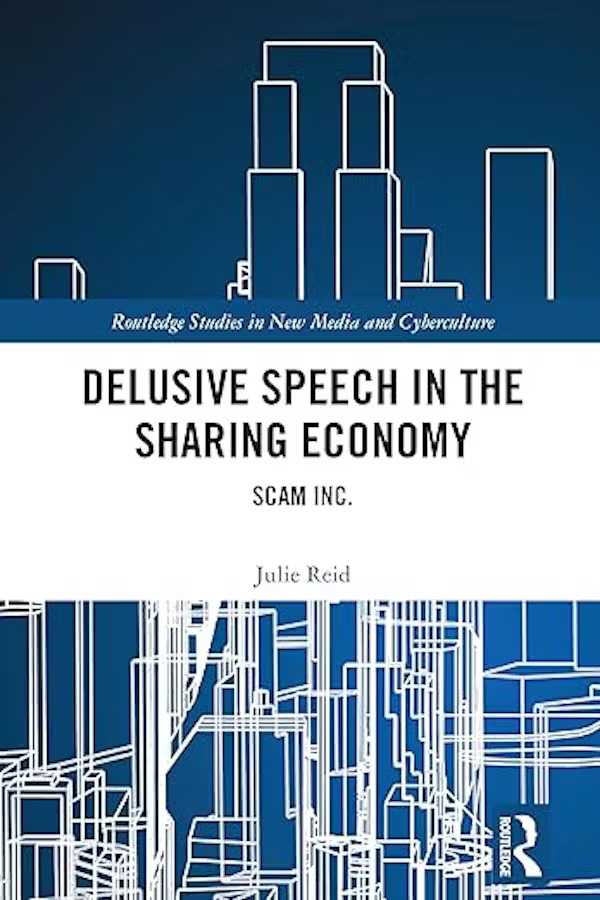
DELUSIVE Speech in the Sharing Economy Scam Inc. by Julie Reid

Big tech sharing economy platforms like Airbnb and Uber are marketed as trustworthy, but a new book by a South African media scholar argues that they are highly vulnerable to scammers who spread delusive speech (a form of disinformation, designed to deceive by criminal intent).

Julie Reid draws from first-hand accounts and over 600 cases from around the world of victims lured into scams or physical danger by fake Airbnb reviews and listings, providing a detailed case study. We asked her five questions about her book.

HOW DO THE SCAMS WORK?

Airbnb is the world’s largest accommodation-sharing platform. It connects property owners who want to rent out their homes with travelers looking for alternatives to traditional hotels. The company recently expanded its offering and now facilitates the booking of other services like personal trainers or caterers along with accommodation rentals.

Airbnb scams happen in several ways. The most obvious is the phantom listing scam. The scammer constructs a fake but attractive listing on Airbnb and accepts payments from unsuspecting guests. It’s only when guests arrive at the address that they discover the property doesn’t exist. Scammers have also learned to navigate around Airbnb’s review system. Fake positive reviews are produced by scam host networks, making them appear to be authentic.

Bait and switch scams are also common. Here the scam “host” contacts the guest on check-in day claiming the reserved property is suddenly unavailable. They offer alternative accommodation, which the guest later discovers is not as good as the original property they’ve paid for (which is often fictional). The guest pays for a premium rental but is forced to stay in a property that might be unsafe, unclean, or missing amenities.

Scam hosts use misleading, plagiarized, or artificial intelligence (AI)-generated property images and fake descriptions along with fake personal profiles and aliases.

Delusive tactics also redirect guests away from the secure Airbnb payment portal to alternative payment methods. The scammer disappears with the money.

But the danger isn’t limited to financial crimes. The platform’s business model is premised on staying in a stranger’s private property, which can put guests’ personal safety at risk.

Criminal hosts can lure targets into dangerous environments. Once checked in, guests are isolated from public view, housed in a property to which the host has access.

I’ve assessed multiple cases where Airbnb guests were assaulted, robbed with no signs of forced entry, raped, murdered, made victims of sexploitation, extortion or human trafficking, or held hostage.

HOW DOES THE DISINFORMATION WORK?

I consider delusive speech a subset of disinformation because it presents intentionally misleading content at scale. But it differs from disinformation in its intentions. It isn’t done to promote a particular cause or gain ideological, military, or political advantage. Delusive speech is motivated purely by criminal intent or nefarious financial gain.

Delusive speech works by hiding in plain sight on platforms we think we can trust, like Airbnb, Booking.com, Uber, and others. Often, it’s indistinguishable from honest and genuine content. When users browse Airbnb listings for holiday accommodation, they’re presented with numerous options. A fake property listing looks, sounds, and feels exactly the same as a genuine one.

This happens on a platform that has built its brand narrative around the concept of trust. Scammers exploit these digital contexts of pre-established trust. When users log on to popular e-commerce or sharing economy platforms, they’re already primed to pay for something. It becomes relatively easy for scammers to delude targets into parting with their money.

WHAT CAN AIRBNB DO ABOUT IT?

Airbnb already has several trust and safety mechanisms in place. They include rapid response teams, an expert Trust and Safety Advisory Coalition and travel insurance for guests. The company claims to be trying to stop fake listings with machine learning technology.

Sadly, none of these mechanisms work perfectly. While Airbnb promises to verify properties and host identities, my analysis exposes flaws in these systems. Scammers easily bypass verification tiers through aliases, forged documents and AI-generated material. Airbnb has admitted it needs to address the failures of its verification processes.

My analysis uncovered how scammed guests are routinely denied the opportunity to post reviews of problematic rentals. Opaque terms of service and content policies allow Airbnb customer service agents and executives to justify censoring negative but honest guest reviews.

This means dangerous and fraudulent activity goes publicly unreported and unreviewed, leaving future guests vulnerable. I argue that Airbnb’s review curation mechanisms should be revamped according to internationally recognized human rights frameworks that protect freedom of speech. This would allow for more honest accounts of guest experiences and create a safer online environment.

Perhaps the most common complaint I encountered was that Airbnb doesn’t remove offending listings from its platform, even after a scammed guest provides evidence that the listing was posted by a fraudster. Airbnb must develop an urgent protocol for swiftly removing offending listings when discovered, to protect future guests from falling victim to the same scam trap.

WHAT CAN USERS DO TO PROTECT THEMSELVES?

Travelers can protect themselves by being extra cautious. Ask around. Seek recommendations from people you know and trust, and who can verify that the property you are booking actually exists and that the host is trustworthy.

If that isn’t an option, consider an established hotel instead, but book directly with the hotel and not via third party sites like Booking.com where listings can easily be faked. Check on Google Street View to make sure the property is where it claims to be.

Either way, have a Plan B in case things go wrong. Prepare ahead of your trip by deciding what you will do if you find yourself in an unsafe situation. And always, always, buy travel insurance.

IS IT PART OF A BIGGER PROBLEM?

I assessed several digitally initiated scam categories in this book. While my main case study focused on Airbnb, the problem of delusive speech online isn’t unique to this platform. Delusive speech is now carried by all major tech platforms integral to everyday life.
In the book, I also highlight how scammers operate in every corner of the internet, including dating apps like Grindr, Tinder and Hinge; ride-sharing services like Uber, Lyft, and Bolt; travel sites like Booking.com and Hotels.com; and social media platforms like Facebook, Instagram, and YouTube, among others.

I hope that these examples will boost awareness of the risks of using these apps and sites.

Julie Reid is a professor at the University of South Africa.
What really matters

PHILIPPINE STAR/RYAN BALDEMOR

(First of two parts)

No, the most important economic reform that the Philippine Government can do is not to reverse the strong peso and undervalue the currency. What really matters today is not the exchange rate — this is a misguided view — but the steadfast adherence of Government to good governance.

Good political and economic governance ensures appropriate formulation and implementation of agricultural and industrial policies. The first is to achieve food security and stable commodity prices and the second is to establish a strong industrial base and viable external trade. Without a strong and viable production base, talking about being competitive in the global market is vacuous. We have a very limited range of products that could link to the global value chain. Domestically, with a limited supply of commercial commodities, prices would remain high, and inflation would be very volatile depending on the season. Peso devaluation cannot cure that.

Good political and economic governance says no to graft and corruption, regulatory capture, and red tape impediments to business activities including exports and imports. It is expensive to operate in the Philippines, what with enormous amount of grease money and commissions from every government project. Such would explain the high cost of doing business in the Philippines, uncompetitive pricing, and thus, the weak inflow of foreign capital in agriculture, services, and industry. Peso devaluation cannot compensate for business’ huge overhead.

Good political and economic governance favors critical infrastructure to address limited physical connectivity, expensive power, and low-quality human resources. Appropriate soft and hard infrastructure would make economic growth exuberant but sustainable, one that transcends narrow and vested interests in petty but profitable pork barrel projects like road widening and river dredging. Laying down key infrastructure in the Philippines is viable only when the government is forthright with the budget. With a strong trust in political leadership, the private sector could be rallied to participate in public-private- partnership projects. Peso devaluation can neither mitigate the lack of fiscal sustainability nor bolster private sector trust.

For many years until today, we have had very limited progress in establishing good political and economic governance. In terms of the Chandler Good Government Index, for example, covering such pillars as financial stewardship, attractive marketplace, strong institutions, helping people rise, robust laws and policies, global influence and reputation, and leadership and foresight, it was only this year that the country managed to recover from four years of successive declines in ranking. But such an improvement still failed to lift the Philippines out of the bottom four with Mongolia, Cambodia, and Laos among the East and Southeast Asian countries in 2025.

This result checks out with the Philippines’ ranking in the corruption perception index by Transparency International. The Philippines stood at 114th among the 180 countries covered, scoring only 33 out of 100, lower than the global average of 43. The country lagged most Asia-Pacific countries in terms of corruption perception by experts and businesspeople.

Some past empirical evidence* shows that in the Philippines, weak political governance based on such governance indicators as, yes, corruption perception index; legal structure; and property rights index drove the low GDP per capita and serious poverty and income distribution. On the other hand, relatively robust economic governance indices, including global competitiveness indicators and economic freedom, explained the strong economic growth in the Philippines.

The issue is not so much the pricing of products and services in the global market as reflected in the exchange rate, it is the country’s ability to be competitive by way of agile trade and industrial policies to take advantage of changing tastes and preferences, supported by a strong production and logistics base.

As the IMF’s Gustavo Adler, Luis Cubeddu, and Gita Gopinath wrote six years ago (“Taming the Currency Hype,” August 2019), “one should not put too much stock in the view that easing monetary policy can weaken a country’s currency enough to bring a lasting improvement in its trade balance through expenditure switching. Monetary policy alone is unlikely to induce the large and persistent devaluations that are needed to bring that result.”

With this, is the Philippines prepared to go all the way to pursue a growth path based on weakening the peso relative to the dollar?

First, it is difficult to argue that a weak peso could bolster weak exports and depress surging imports and, in the process, protect local industries. When the average peso dollar rate depreciated by nearly 10% in 2022 and over 2% in the next two years, exports growth even slowed down by 6.4% in 2022 from the previous year’s 12.5% in 2021 when the peso was appreciating in the last three years. In 2023 and 2024, exports even declined.

On the other hand, imports only slowed down in 2022, declined by only about 5% in 2023, but recovered in 2024.

Indeed, there is so much more other than the exchange rate.

We should recall that the bulk of Philippine exports consists of electronic products which are largely dependent on imported integrated circuits. Exports share around 40% of total external trade while imports account for the rest of the 60%. Devaluing the currency may encourage exports and discourage imports, something that is not certain given the experience of the last few years, but the large import dependence of our exports should make the advocates of weak currency as a major economic reform more circumspect.

How this will protect domestic industries escapes me.

Second, it is not easy to dismiss the inflationary impact of peso devaluation given the lower exchange rate pass-through (ERPT) to domestic inflation. True, the updated model of the Bangko Sentral ng Pilipinas (BSP) shows a lower ERPT both in the short run and the long run, before and after the BSP switched to inflation targeting in 2002. Today’s ERPT shows that in the short run, a P1 depreciation could increase inflation by 0.08 of a percentage point (ppt). In the long run, it’s 0.12 ppt.

A weak currency policy does not involve a mere P1 or P2 depreciation, otherwise such a magnitude of exchange rate adjustment has been more than possible under the current regime of flexible exchange rates. If we say we need a P5 depreciation to bring about meaningful impact on external trade, we are talking here of an initial inflation impact of 0.40 ppt and in the long run, 0.60 ppt. If this adjustment proves inadequate, nothing stops the authorities from depressing the peso further by another P5. In the short run, that means inflation could rise by 0.80 ppts and in the long run, 1.2 ppts.

The impact looks minuscule but once the market sees a constant increase over time, inflation expectations could be de-anchored and the overall inflationary consequences could be many times higher. Imperfect pricing behavior of import-dependent traders could further amplify inflationary tendencies in both the goods and labor markets.

Third, a weak currency can neither stimulate OFW remittances nor protect us from cheap goods from China. While inflation shows some moderating trends, price levels remain elevated. The viability of our overseas Filipino workers’ (OFW) industry is anchored on the skills and experiences of our migrant workers. Our OFWs would be more competitive and earn more if the government prioritizes quality public education and public health. Reskilling and upskilling would multiply the benefits of overseas employment far better than engineering peso weakness which has many collateral harms. A 10%-peso depreciation to, say, P60 to a dollar is meaningless when most Chinese goods are cheaper by 50% than their domestic counterparts. The point is to take advantage of the space for quality and durable products and longer shelf life. If we succeed in this, we could then boost domestic consumers’ patronage. This is something that cheapening the peso could not handle.

Fourth, it is not true that a weak peso is the strongest incentive for foreign investors to invest in the Philippines. That is less than half of the story. No less than the BSP’s research** indicates that foreign investments respond more to the country’s credit rating, ease of doing business, quality of human capital, and public governance.

Fifth, rather than saying that a strong peso could undercut the country’s tariff advantages under the new Trump tariff policy, our tariff advantage should actually provide us with some kind of a counterweight to a strong peso. In her pioneering work on how to adapt to the new tariff regime of Trump, former Trade Undersecretary Rafaelita Aldaba computed the ASEAN-5’s tariff exposure composite index (TECI) last April. Based on tariff rate severity, tariff burden, exemption level, nature of affected goods, and US export dependence, the Philippines has the least TECI at 2.2 against Vietnam’s 3.4, Thailand’s 3, Malaysia’s 2.8 and Indonesia’s 2.2. There is latitude for Philippine exports to the US to be competitive as US imports remain invoiced in US dollar. It would be the Americans who would be paying for imports from the Philippines higher by the 17% additional reciprocal tariff. Some products, especially electronic products, would also be exempted from the tariff.

The challenge for the Philippines in the face of the new tariff regime in the US is to capture relocation and shifts in the supply chain from China and other countries with higher reciprocal tariffs. This is especially true for those industries engaged in final assembly and testing of electronics as well as in semi-conductor packaging and IC backend services. While a weak peso may be of help here, again, foreign investors will be looking for our credit rating, ease of doing business, and the quality of human capital. The value of good governance cannot be overemphasized.

(Next week: Should the BSP have a dual mandate?)

* For instance, Lino Brigoglio, Carmen Saliba and Melchor Vella, “Governance in the Philippines in a Global Context — Evidence from Global Governance Indicators,” November 2014.

** For instance, H. Santos, M.R. Amador, and M.E. Romarate, “ASEAN-5 counties: In competition for FDI,” December 2021.


Diwa C. Guinigundo is the former deputy governor for the Monetary and Economics Sector, the Bangko Sentral ng Pilipinas (BSP). He served the BSP for 41 years. In 2001-2003, he was alternate executive director at the International Monetary Fund in Washington, DC. He is the senior pastor of the Fullness of Christ International Ministries in Mandaluyong.

Grab launches fully electric taxi fleet in Metro Manila

GRAB.COM

RIDE-HAILING app Grab Philippines has launched fully electric taxi services within Metro Manila.

“With strong support from commuter advocates and the private sector, GrabTaxi Electric underscores how sustainability can be seamlessly integrated into daily routines. The beta rollout also opens the door for real-time feed-back from passengers and drivers, which will inform future expansion and service improvements,” Grab Philippines said in a media release on Thursday.

The all-electric vehicle (EV) fleet operates in partnership with local operator EV Taxi Corp., Grab said, adding that it began operations in key hubs including Makati, Taguig, Pasig, Mandaluyong, Parañaque, and Pasay.

“This rollout marks a significant regulatory and operational milestone for the Philippines, where traditional combustion-engine vehicles still dominate the mobility landscape,” Grab Philippines said.

Currently, GrabTaxi Electric is in its beta phase and offered only to select users, the company said, adding it plans to expand electric vehicle adoption across its GrabCar fleet in other cities such as Davao and Cagayan de Oro within the year.

“This phased rollout will be supported by in-app sustainability features such as voluntary contributions for environmental conservation efforts for every Grab transaction, and deeper collaboration with government and private-sector part-ners to accelerate EV ecosystem readiness nationwide,” it added.

Last year, in 2024, Grab Philippines conducted a pilot study with BYD Philippines to assess the operational and financial viability of electric vehicles for both fleet operators and driver partners. — Ashley Erika O. Jose

Gov’t likely to renew push for DBP charter after veto

COURTESY OF DBP FACEBOOK PAGE

By Kenneth Christiane L. Basilio, Reporter

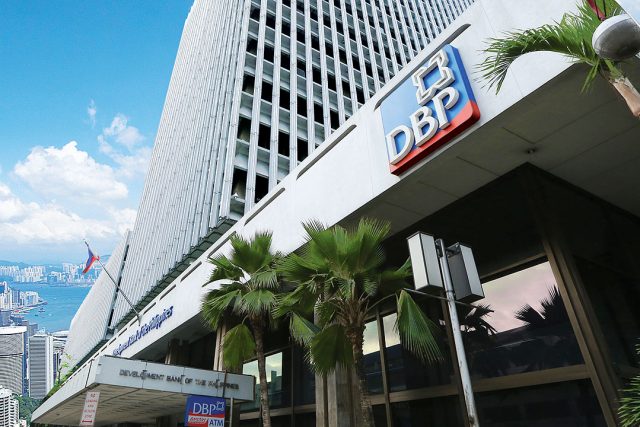
THE Finance department is likely to continue pushing for the passage of a new charter for the Development Bank of the Philippines (DBP) in the next Congress after the previous proposal was vetoed, the state-run lender’s top official said on Monday.

The bank hopes provisions that would increase its capital stock to P300 billion from P35 billion would be retained in the new bill that would be filed in the 20th Congress as these are a “key part” of the new charter, DBP President and Chief Executive Officer Michael O. de Jesus told BusinessWorld.

“This is up to the Department of Finance (DoF),” he said in an interview on the sidelines of a House of Representatives hearing. “I think they plan to start again, to refile and address all the issues on the veto. I think it will pursue the same one but with revisions and modifications.”

“The [DBP’s] priority is its increased capitalization,” Manila Rep. William “Irwin” C. Tieng, who heads the House banks committee, told BusinessWorld in an interview. “But we will follow the guidance of Malacañang and the DoF regarding the new charter that we will file for the 20th Congress.”

President Ferdinand R. Marcos, Jr. last month vetoed a bill seeking to replace DBP’s 27-year-old charter “due to certain provisions that are either vague or confusing, or conflicting with the Constitution, existing laws, and principles of good governance,” he said in his veto letter to Congress, a copy of which was obtained by BusinessWorld.

The Finance department has pushed for the amendments to DBP’s charter to strengthen its financial position and give it easier access to the capital markets. The proposal approved by the 19th Congress sought to increase the lender’s capital stock to help finance its priority sectors, such as social infrastructure and small businesses.

The bill would have also paved the way for DBP’s listing as it would have allowed the bank to offer up to 30% of its shares to the public, with the National Government mandated to own 70% of its capital stock at all times.

Fitch Ratings said in January that the new charter could help support the state-run lender’s capital restoration following its contribution to the country’s sovereign wealth fund and boost its credit profile.

Mr. Marcos said in his veto letter that the bill’s provision allowing DBP to temporarily appoint directors in its subsidiaries undermines the authority of the Executive over government-owned or -controlled corporations (GOCC) and the standards of accountability and oversight under the GOCC Governance Act. A provision that allows shareholders to vote for the bank’s board members also goes against another provision that authorizes the President to do the same.

He added that the authority granted to DBP to receive dividends from its subsidiaries contradicts the law that requires all GOCCs to remit at least 50% of their annual net earnings to the National Government.

“In addition to encroaching upon a core executive act, the said provisions unintentionally create overreach and duplicity on the scope of the bank’s authority, and the lack of any direction for its implementing rules and regulations render it most vulnerable to abuse,” Mr. Marcos said.

“This lack of clarity could permit a broad range of discretionary acts without sufficient checks and balances, thereby weakening the essential principles of transparency and accountability.”

PHINMA eyes year-end launch for Davao housing project

PHINMA.COM.PH

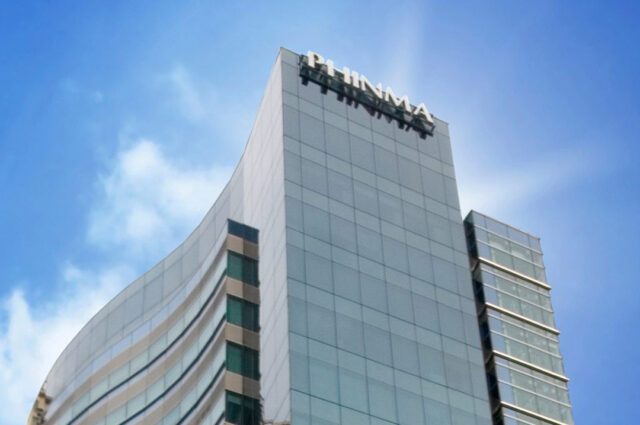
DEL ROSARIO-LED conglomerate PHINMA Corp. plans to begin development of its maiden community housing project in Davao City within the year.

“PHINMA Community Housing will break ground on its first housing project in Davao by the fourth quarter of this year,” PHINMA President and Chief Operating Officer Chito B. Salazar said during the company’s virtual annual stockholders’ meeting on Thursday.

In a previous regulatory filing, PHINMA said the Davao community housing project will have 530 units. The company is also eyeing Bacolod City as the second site for its community housing initiative.

PHINMA Chairman and Chief Executive Officer (CEO) Ramon R. Del Rosario, Jr. said during the meeting that the community housing projects aim to establish workers’ villages and communities.

“This is a fundamental need with an estimated backlog of over 6.5 million homes,” he said.

In March, the company’s board approved a P250-million investment in PHINMA Community Housing to finance capital expenditures, land acquisition, and other working capital requirements.

PHINMA Community Housing President and CEO Jose Luis M. Oquinena said during the meeting that the projects will include daycare centers and support home-based enterprises tailored to the needs of low-income Filipino families.

“This builds the foundation on community life, being able to support each other and looking at what will support the lifestyle and needs of low-income Filipino families,” he said.

Meanwhile, Mr. Salazar said the first phase of the 21-hectare Saludad township in Bacolod City is expected to go live by yearend.

Launched in October last year, Saludad will integrate residential enclaves, commercial hubs, educational institutions, hospitality components, and retail areas.

Mr. Salazar also said PHINMA Hospitality, Inc. will soon break ground on its second TRYP by Wyndham hotel within the Saludad township, while it is also expanding its Microtel by Wyndham Mall of Asia to accommo-date more local and foreign travelers.

He added that construction is ongoing for another TRYP by Wyndham hotel on Samal Island, marking the company’s entry into the condotel segment.

PHINMA Hospitality currently operates 14 Microtel by Wyndham hotels and one TRYP by Wyndham hotel in the Philippines.

In the first quarter, PHINMA recorded a 27% increase in consolidated net income to P562.62 million, as consolidated revenues rose by 21% to P6.6 billion on the back of stronger sales across its business units.

PHINMA shares were unchanged at P18 apiece on Thursday. — Revin Mikhael D. Ochave

Bryce Dallas Howard leads improv comics undercover in film Deep Cover

ORLANDO BLOOM, Bryce Dallas Howard, and Nick Mohammed in Deep Cover (2025)

LONDON — Jurassic World actor Bryce Dallas Howard takes on London’s criminal underworld in action comedy Deep Cover, playing an improv teacher who goes undercover.

The American stars as Kat, who along with her two students Marlon and Hugh, played by Orlando Bloom and Nick Mohammed, respectively, are recruited by a police cop to infiltrate a criminal gang.

Never breaking character and sticking to their “yes and…” improv comedy rule, the trio soon find themselves inside London’s threatening gangland.

“The script was so tight, so fun and of course I related to it, being an actor myself,” Ms. Howard told Reuters at the film’s world premiere at the SXSW London festival on Wednesday.

“There was lots of giggling and lots of laughing,” she added about making the movie.

Released on Prime Video on June 12, Deep Cover sees Mr. Bloom, who shot to fame in The Lord of the Rings movies, play a committed method actor. Ted Lasso actor Mr. Mohammed portrays a lonely worker drawn to Kat’s classes to gain confidence.

“There are quite a lot of scenes… that were just done in one take… because you just need to have all of that energy… pinging around between them (Howard, Bloom) and Mohammed,” director Tom Kingsley said. “And they’re all playing different characters to what you would normally expect.”

Asked if he tried to make Ms. Howard and Mr. Bloom laugh on set given his comedy background, Mr. Mohammed said: “I would play around a little bit… changing some of the lines every so often. But… they were just up for it.”

Apple TV+ has announced a fourth season of Emmy-winning comedy series Ted Lasso, in which Jason Sudeikis played the American coach of upstart British football team AFC Richmond and Mr. Mohammed portrayed kitman-turned-coach Nate Shelley.

Asked what he could say about season four, in which Lasso will coach a women’s football team, Mr. Mohammed said: “I only know what’s in the press at the moment… I can’t wait to see it. Who knows if Nate’s in it… we will see.”

The inaugural SXSW London, the European edition of the annual Austin, Texas, South by Southwest music, technology and film festival, runs June 2-7. — Reuters

Rising with the Machines: Harnessing AI for human development

FREEPIK | Image by Selva Ramachandran and Mohamed Shahudh from FREEPIK

By Selva Ramachandran and Mohamed Shahudh,

They say that the best way to predict the future is to shape it. In the past decade, the innovation that’s been hailed as having the most potential to direct and navigate this future is Artificial Intelligence (AI).

AI is not simply an advanced form of digitalization; it is a general-purpose technology, like electricity, with the potential to transform a wide range of sectors. Its multimodal adaptability allows it to influence education, healthcare, governance, and beyond. But this transformative potential is not inevitable. And as emphasized in the recently launched 2025 Human Development Report (HDR) by the United Nations Development Programme (UNDP), powerful as it may be, the future of AI is not preordained — it is shaped by the choices we make.

AI is progressing at a pace far surpassing earlier innovations such as the internet or personal computers. Between 2022 and 2025, AI-related investment is projected to double to $200 billion, three times the global spending on climate change adaptation. By 2033, the UN estimates that AI could be worth $4.8 trillion, equivalent to Germany’s current GDP.

This growth, however, is unfolding amid a slowdown in global human development and increasing global geopolitical uncertainty. The HDR highlights that current human development gains are among the slowest in decades. Traditional development pathways, such as export-led growth, are narrowing amid rising trade tensions and shrinking external finance.

Within this context, AI could serve either as a catalyst for inclusive development or as a force that deepens inequality. The outcome hinges on how we decide to leverage it.

The global AI ecosystem is currently concentrated and uneven. According to UNCTAD (UN Trade and Development), around 100 firms, mostly in the US and China, account for 40% of global corporate R&D. In these economies, AI investment could reach 2% of GDP. The private sector holds an outsized influence over AI’s evolution. According to the same report, fewer than one-third of developing countries have national AI strategies, with several missing from governance discussions. This growing imbalance makes it urgent to decide how and for whom AI should serve.

The Philippines embodies both the opportunities and risks of the AI era. A recent International Monetary Fund (IMF) report estimates that one-third of Filipino jobs are vulnerable to AI disruption, yet 61% have high potential for AI-driven augmentation. In sectors like education, AI can support teachers by identifying learning gaps and tailoring content. In business process outsourcing, or BPO, services, where 1.7 million jobs contribute 7.4% of GDP, routine tasks are increasingly automatable. However, with the right mix of policies, including skills upgrading and incentives for augmentation, this sector can remain both competitive and inclusive.

The HDR offers a roadmap through three interlinked strategies: investing in capabilities, building a complementarity economy, and driving innovation with intent. For the Philippines, this means not only expanding AI-related human capacities and infrastructure but also ensuring that these efforts are aligned with inclusive development. Scaling social protection systems, supporting workforce transitions, and linking innovation to public goals are essential.

On education, the Philippines allocated 3.62% of GDP to the sector in 2023, above the low- and middle-income countries’ (LMIC) average and close to upper middle-income countries’ (UMIC) average spending. However, the Philippines’ scores in the Program for International Student Assessment or PISA, measuring performance across STEM subjects, lag behind its ASEAN peers. Two key opportunities can help turn spending into results. First, the new Public Financial Management Reform Roadmap (2024–2028) shifts focus from inputs to outcomes, creating space to strengthen education through early childhood and skills-focused reforms. Second, greater fiscal decentralization, as highlighted by the World Bank, could improve the effectiveness of future programs.

Some concerns have been raised about how AI’s energy demand is rising fast. The IMF projects that data center electricity use could triple by 2030, equaling India’s current demand. In the Philippines, only 2.41 gigawatts (GW) of the 29.23 GW installed capacity in 2023 came from wind and solar, despite the vast potential. Unlocking sustainable energy sources could significantly cut electricity costs — the second highest in ASEAN after Singapore. While AI can help optimize grid efficiency, its energy use must not crowd out energy access for underserved communities. With the right approach, AI can turn renewable planning from a challenge into an opportunity.

As the 2025 Human Development Report reminds us, the path AI takes is not written in code — it is written in integrated policy, ethical deployment, and strong investments in human capital and innovation ecosystems. For countries like the Philippines, the moment to shape that path is now. The tools are in hand: a talented workforce, a growing innovation ecosystem, and a public sector willing to engage with transformation.

But to ensure AI becomes a driver of inclusive progress, not a deepener of divides, we must act fast with intention. That means investing in people as much as in technology, aligning innovation with public goals, and ensuring no community is left behind in the digital leap forward.

In the end, the real power of AI lies not in the technology itself, but in how we choose to wield it. If we are bold, deliberate, and inclusive in our approach, we can shape an AI-powered future that serves not just the few but ALL.

Dr. Selva Ramachandran is the UNDP resident representative in the Philippines and Mohamed Shahudh is an economist at UNDP Philippines.

Visa partners with Maya Group to enable account funding with foreign-issued cards

Photo Credit: VISA

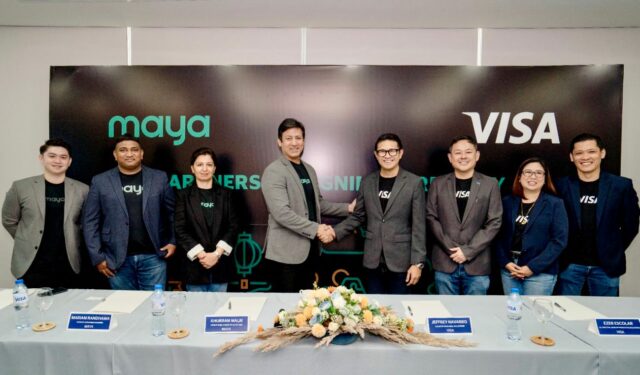
VISA has partnered with Maya Group to allow the app’s users to make cash in transactions with its foreign-issued cards.

Under the partnership, Visa will enable cross-border account funding transactions in the Maya app.

“This innovative partnership allows Maya users to seamlessly pull funds from foreign-issued Visa cards and load them directly into their Maya accounts, expanding payments flexibility,” Visa said in a statement. “Upon cashing in from their foreign-issued Visa cards, Maya users can now spend, save, and even invest their money in the Philippines through the Maya app.”

This will help expatriates, overseas Filipino workers (OFWs), tourists, and even freelancers manage their finances easily, it added.

“Our longstanding partnership with Maya continues to grow from strength to strength, and with this latest collaboration, we help make digital payments even more flexible. By enabling funding transactions from foreign-issued Visa cards, we provide Maya users with the power and convenience to manage their finances effortlessly, while ensuring seamless and secure transactions. This connects them to countless possibilities through their Maya accounts,” Visa Country Manager for the Philippines Jeffrey Navarro said.

“With this new feature, we’re making it easier for Filipinos and OFWs to move money from their Visa cards abroad straight into their Maya wallets. Maya has redefined how we spend, save, and invest — and we’re pleased to bring the same ease and flexibility to cross-border payments,” Maya Group Chief Commercial Officer Khurram Malik added.

Maya Innovations Holdings, Pte. Ltd., formerly Voyager Innovations Holdings, Pte. Ltd., is the parent holding company of Maya Philippines, Inc. and Maya Bank, Inc.

Maya Philippines is registered with the Bangko Sentral ng Pilipinas (BSP) as an electronic money issuer, remittance and transfer company, operator of payment system, and virtual asset services provider.

Meanwhile, Maya Bank is one of the six BSP-licensed digital banks in the country.

Maya Group posted a first-quarter net income of P127 million.

PLDT Inc. is Maya Innovations’ main shareholder. Hastings Holdings, Inc., a unit of PLDT Beneficial Trust Fund subsidiary MediaQuest Holdings, Inc., has a majority stake in BusinessWorld through the Philippine Star Group, which it controls.

Panasonic Manufacturing PHL to start Laguna facility construction by October

PANASONIC.COM

LISTED appliance producer and retailer Panasonic Manufacturing Philippines Corp. (PMPC) will start construction of a new factory building in Sta. Rosa, Laguna by October following a fire incident in December 2023 that destroyed its previous facility.

The new building is expected to be completed within two years from the start of construction, PMPC said in a regulatory filing on Thursday.

PMPC signed a building contract with Kujima Philippines Inc. for the project.

“There will be no negative impact of the execution and signing of the building contract by PMPC with Kujima Philippines on the company’s business and operations,” PMPC said.

PMPC’s washing machine and electric fan factory building at Laguna Technopark in Sta. Rosa was gutted by fire in December 2023.

The company said the building was fully demolished after its fire insurance claim was settled.

PMPC manufactures, imports, and distributes various appliances. Its primary products include refrigerators, air conditioners, and washing machines.

The company also offers electric fans, freezers, TV sets, digital audio-visual products, communications equipment, office automation equipment, cooling equipment, and various kitchen and home appliances.

PMPC shares declined by 8.72% or 64 centavos to P6.70 per share on Thursday. — Revin Mikhael D. Ochave

Companies’ role critical in upskilling — DoLE

PHILIPPINE STAR/NOEL B. PABALATE

THE DEPARTMENT of Labor and Employment (DoLE) said on Thursday that it is looking to the private sector to upskill job seekers.

“It’s important that we see the private sector’s role in ensuring that we have interventions for our workforce, especially for upskilling and reskilling initiatives,” Labor Assistant Secretary Patrick P. Patriwirawan, Jr. told reporters on the sidelines of the National Skills Summit 2025.

He added that current job seekers lack the soft skills as well as communication, teamwork, and time management skills needed to effectively navigate the workplace.

Yu Ming Chin, executive director of Viventis Search Asia, said that the private sector must invest in the skills of its hires.

“You work in a company and the company has to manage the training,” he told reporters. “If we become too dependent on the government their abilities could be lacking.”

He cited the need for analytical skills in the workplace, to improve problem-solving capacity.

Mr. Patriwirawan added: “Hard skills are also something that the DoLE is monitoring because (of the demand for) hard to fill technical skills.”

“This is an important aspect of the labor market. If they are not readily available, it is important that we have interventions and skills training ready,” he said.

The government currently conducts skill and development training through the Technical Education and Skills Development Authority.

“We have an ongoing collaboration with DepEd. We have upcoming job fairs with the senior high school (graduates) to ensure that our K-12 graduates are employable,” he added.

The K-12 (Kindergarten to Grade 12) program added two more years to basic education with the intent of making graduates employable and globally competitive.

Education Secretary Juan Edgardo M. Angara said that DepEd (Department of Education) needs to adjust the curriculum of schools to match the needs of employers, especially in Senior High School programs.

“The tendency is the curriculum won’t match or won’t help a students get a job,” Mr. Angara told reporters.

He added that schools must also integrate digital literacy in the newer curricula so graduates are at home with artificial intelligence (AI).

“Digital literacy is a crucial part of the curriculum and digital literacy is not the only skill for AI. It is important that a student not only knows how to read and write. It is important that he understands what he reads and writes,” Mr. Angara said.

The DepEd is set to implement a new K-12 curriculum in the upcoming school year, featuring the reduction of educational tracks for senior high school to two — academic and technical-professional.

It also cut the number of core subjects to five from 15. The five subjects are Effective Communications, Life Skills, General Mathematics, General Science, and the study of Philippine History and Society. — Adrian H. Halili

Sean ‘Diddy’ Combs held Cassie’s friend on balcony ledge, jury hears

Sean “Diddy” Combs on the talk show Late Night with Seth Myers. — IMDB

NEW YORK — Hip-hop mogul Sean “Diddy” Combs held a friend of his former girlfriend Casandra Ventura on the ledge of a balcony of a 17th floor apartment in September 2016, the friend testified on Wednesday at Mr. Combs’ sex trafficking trial.

Bryana Bongolan, Ms. Ventura’s friend, told jurors in Manhattan federal court that Mr. Combs then came up to her from behind on the balcony of Ms. Ventura’s Los Angeles apartment, lifted her up, and placed her on top of the balcony’s rail.

Mr. Combs then told her several times, “You know what the fuck you did,” Ms. Bongolan testified.

“For a split second I was thinking about if I was going to fall, but for the most part he was yelling at me, so I was trying to answer him,” Ms. Bongolan, 33, told the jury.

Ms. Bongolan testified that she told Mr. Combs she did not know what she had done. To this day, she does not know what Mr. Combs believed she did, Ms. Bongolan said.

Mr. Combs, 55, has pleaded not guilty to five counts including racketeering conspiracy and sex trafficking.

Federal prosecutors in Manhattan say Mr. Combs over two decades coerced women, including Ms. Ventura, to take part in drug-fueled sexual performances with male sex workers known as “Freak Offs.”

The trial is in its fourth week.

Ms. Ventura, a rhythm and blues singer known as Cassie, told jurors last month she took part in Mr. Combs’ Freak Offs for about a decade, at first to please him and later because he blackmailed her with videos of the encounters.

She said Mr. Combs frequently beat her.

Prosecutors with the Manhattan US attorney’s office say Mr. Combs and his associates used force and the threat of force to coerce women to take part in the Freak Offs and to make sure witnesses to his abuse remained quiet.

Mr. Combs’ lawyers have acknowledged he was at times abusive in domestic relationships, but argue that women who took part in Freak Offs did so consensually.

Ms. Bongolan said Mr. Combs and Ms. Ventura often had a volatile relationship. Ms. Bongolan said she saw Ms. Ventura with a black eye or bruises on multiple occasions. Once, Ms. Bongolan said she saw Mr. Combs throw a knife in Ms. Ventura’s direction in Ms. Ventura’s apartment.

Another time, on the beach in Malibu, California, Mr. Combs approached Ms. Bongolan and said, “I’m the devil and I could kill you,” Ms. Bongolan testified. She said she did not know why Mr. Combs told her that.

Ms. Bongolan said the 2016 balcony incident took place early one morning after she had spent the night at Ms. Ventura’s apartment. She said she was about 5 feet 1 inch (155 cm) tall and weighed between 100 and 115 pounds (45 to 52 kg) at the time. Mr. Combs, Ms. Bongolan said, was “bigger.”

After holding her on top of the balcony’s rail for between 10 and 15 seconds, Mr. Combs threw her onto the balcony furniture, Ms. Bongolan said. Jurors saw photographs Ms. Bongolan took of bruises she said she suffered as a result of the incident. Ms. Bongolan says she still has night terrors and paranoia.

Mr. Combs could face life in prison if convicted on all counts. Prosecutors have said they may finish presenting their case next week, allowing the defense to put on its case. — Reuters

The state of heritage conservation in the Philippines

The restored BarAsoain Church

For almost a century, the conservation of structures in the Philippines has been a quiet yet steadfast practice. Although only a handful of buildings were formally recognized as heritage during the Spanish and American Colonial Periods, the drive to preserve our architectural legacy — particularly civic and church structures — has been an enduring part of our national identity.

In the aftermath of the 1863 earthquake, the Pasig Church Bell Tower was restored by Felix Roxas, symbolizing an early example of heritage conservation. During the Malolos Convention, Arcadio Arellano meticulously repaired the Barasoain Church. Likewise, Tomas Mapua oversaw the restoration of the Intendencia de Intramuros and the Ayuntamiento de Manila in 1935 in anticipation of the Commonwealth Proclamation. The most ambitious of these early efforts came in the 1980s when the Intramuros Administration (IA) restored the entire walls of Intramuros — an unprecedented feat that remains the largest conservation project in Philippine history.

The dawn of the 21st century saw a renewed and growing awareness of our historical and cultural heritage. This was fueled in part by social media platforms that inspired pride in our past and by the enactment of Republic Act 10066, the National Cultural Heritage Act, which mandated the conservation of our country’s irreplaceable treasures. The recent restoration of the Metropolitan Theater by the National Commission for Culture and the Arts, better known as the NCCA, exemplifies the dedication required for this cause.

Despite the challenges, the project demonstrated that with collective resolve, we can reclaim and breathe new life into our heritage. The adaptive reuse of landmarks like Kalayaan Hall and the Teus and Goldenberg Mansions in the Malacañang Palace Complex, also highlights how these historic structures continue to remain relevant and meaningful in our contemporary context.

Equally fascinating is the modern bayanihan (communal) spirit behind the concept of Transferring Heritage Structure, the Las Casas Filipinas de Acuzar in Bagac, Bataan. It may not be ideal but it has served as a testament to this innovative approach — dismantling and rebuilding heritage buildings piece by piece to create a new setting that honors and celebrates our past.

Today, the most ambitious restoration effort is the Department of Education’s Gabaldon Restoration Project, launched in 2018 under Republic Act 11194. It aims to restore and conserve over 1,000 historic schoolhouses, safeguarding them as centers of learning and culture for generations to come. Simultaneously, the Department of Public Works and Highways initiated the “Big One Preparedness Program” to assess and retrofit old structures in Metro Manila, a necessary measure given the region’s vulnerability to earthquakes.

The conservation movement is now rallying around the effort to restore the 1926 Manila Central Post Office Building, ravaged by fire in 2023, and the Aduana or Intendecia de Manila of 1876. These iconic structures, symbols of our country’s architectural heritage, have inspired a wave of collaboration among cultural agencies and the private sector determined to restore them to their former glory.

Despite these significant milestones, conservation in the Philippines remains fraught with challenges — chronic underfunding, limited government support, the constant threat of natural disasters, and a general lack of public awareness. Moreover, many conservation projects are led by untrained individuals, echoing the same obstacles that have confronted conservationists for over a hundred years.

The delicate balance between preserving our heritage and accommodating modernity is an ever-present struggle. Yet, even as these challenges persist, the story of conservation in the Philippines is one of hope, resilience, and an unwavering commitment to our shared history.

Much has been achieved, but much more lies ahead. As time marches on and new structures join the “old column,” they will need the care of skilled and passionate stewards — architects, students, and history lovers — ready to face the signs of wear, neglect, and deterioration with knowledge and resolve. It is upon us to ensure that we are not only conserving and preserving but also championing the heritage that defines us.

Joel Vivero Rico, FPIA, UAP is an award-winning conservation architect, author, historian, heritage consultant, archaeologist, and history professor at De La Salle-College of Saint Benilde Design and Arts since 2011. He served as national president of the Philippine Institute of Architects, was deputy director of UAP Sentro ng Arkitekturang Filipino, president and CEO of Archaeology + Heritage (A+H), past executive council member of the NCCA Committee on Architecture and Allied Arts, and is currently an NCCA Executive Council Member in the National Committee on Monuments and Sites.