Home Blog Page 1033

Denver’s weak bench

The Nuggets may have extended the series to seven games, but, in the end, it was clear to all and sundry that the Thunder were simply better. Even reigning Most Valuable Player awardee Nikola Jokic had to concede in the aftermath that the blue, yellow, and red played from a position of weakness; they were compelled to show no small measure of resolve simply to force a winner-take-all affair against the competition, who just so happened to have the presumptive recipient of the Michael Jordan Trophy in Shai Gilgeous-Alexander.

Certainly, an argument can be made that the Nuggets stayed competitive in the Western Conference Semifinals because of Jokic’s singular brilliance. And were he more rested, he may well have overcome severe handicaps, among them the uneven roster of the 2023 champions and significant injuries to fellow starters Michael Porter Jr. and, in Game Seven, Aaron Gordon. Unfortunately, the need for him to expend considerable energy to move past the Clippers in the first round, which also went the distance, slowed him enough to the point where he looked, well, mortal versus the Thunder.

The numbers tell the tale. Jokic’s offensive norms in the West Semis — while still no laughing matter at 28.4 points and 5.9 assists — signified a downgrade from those in the regular season. That he totaled a mere 41 dimes was a shocker in and of itself; that he did so alongside 31 turnovers underscored his relative lack of effectiveness. Every time he touched the ball, he faced multiple defenders that pushed him out of his comfort zone and had him making uncharacteristically poor decisions under pressure. It didn’t help, of course, that his usual release valves either ailed or underperformed.

Little wonder, then, that Jokic was both resigned and wistful in his post-mortem. And in his acceptance of the reality that the Nuggets were ultimately overmatched, he pointed to a critical feature of success in the modern era: major contributions from the bench. “We definitely need to figure out a way to get more depth,” he said. “It seems like the teams that have longer rotations, the longer benches, are the ones winning.“ And given his exertions amid the lack of help, it was not a surprise to see him gassed by the second half of Game Seven; he could do no better than post three points on one field goal attempt en route to being eliminated from the playoffs.

How the Nuggets front office can maneuver through complicated collective bargaining agreement restrictions to provide Jokic with the right supporting cast remains to be seen. He may be signed on until 2028, but they would do well to maximize his peak years via astute personnel moves. Else, they will see even more disappointment lining his campaigns for the foreseeable future.


Anthony L. Cuaycong has been writing Courtside since BusinessWorld introduced a Sports section in 1994. He is a consultant on strategic planning, operations and human resources management, corporate communications, and business development.

WHO members vote in favor of global pandemic agreement

THE World Health Organization (WHO) logo is seen on the exterior of entry door at WHO Headquarters in Geneva, Switzerland, on July 19, 2023. — WHO/PIERRE ALBOUY

GENEVA — Members of the World Health Organization (WHO) voted emphatically in favor of a potentially groundbreaking global treaty on improving pandemic preparedness at the World Health Assembly on Monday.

One hundred twenty-four countries voted in favor, after Slovakia called for a vote on Monday, as its COVID-19 vaccine skeptic prime minister demanded that his country challenge the adoption of the agreement. No countries voted against, while 11 countries, including Poland, Israel, Italy, Russia, Slovakia and Iran abstained.

“Governments from all over the world are making their countries, and our interconnected global community, more equitable, healthier and safer from the threats posed by pathogens and viruses of pandemic potential,” said Director-General of the WHO, Tedros Adhanom Ghebreyesus.

The draft accord, which addresses structural inequities about how drugs or vaccines and health tools are developed, following lessons learned from the COVID-19 pandemic which killed millions of people in 2020-2022, will be formally adopted on Tuesday in a plenary session at the World Health Assembly in Geneva.

However, it will not formally come into effect until an annex on pathogen sharing is negotiated, which could take up to two years, after which states will have to ratify the accord.

Following three years of difficult negotiations, the agreement has been seen by many diplomats and analysts as a victory for global cooperation at a time when multilateral organizations like the WHO have been battered by sharp cuts in US foreign funding.

US negotiators left the discussions after President Donald Trump began a 12-month process of withdrawing the US — by far the WHO’s largest financial backer — from the agency when he took office in January. Given this, the US would not be bound by the pact. — Reuters

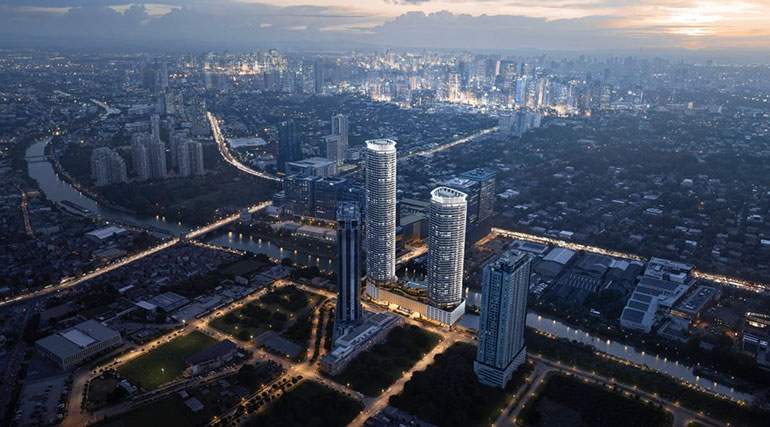
Shang Properties, Inc. to hold Annual Meeting of Stockholders on June 17


Spotlight is BusinessWorld’s sponsored section that allows advertisers to amplify their brand and connect with BusinessWorld’s audience by publishing their stories on the BusinessWorld Web site. For more information, send an email to online@bworldonline.com.

Join us on Viber at https://bit.ly/3hv6bLA to get more updates and subscribe to BusinessWorld’s titles and get exclusive content through www.bworld-x.com.

CREATE MORE: Key provisions addressing foreign investor concerns

By Mon Abrea

The passage of the Corporate Recovery and Tax Incentives for Enterprises to Maximize Opportunities for Reinvigorating the Economy (CREATE MORE) marks another milestone in the Philippines’ ongoing effort to modernize its tax system, make it more investor-friendly, and align it with global standards. Building on the foundational reforms introduced through CREATE, this new legislation not only streamlines incentives and improves clarity, but also responds directly to the practical concerns raised by foreign investors and multinational corporations (MNCs).

In our series of international roadshows last year — covering over 15 countries and engaging hundreds of business leaders, embassies, and chambers of commerce — two persistent themes emerged: the need for better taxpayer support for registered business enterprises (RBEs) and the urgent resolution of VAT refund issues. CREATE MORE addresses both, thanks to the collective insight of our global partners.

As part of this continuing effort, the Asian Consulting Group (ACG) actively collaborates with key government agencies, especially the Senate Ways and Means Committee and the Senate Tax Study and Research Office, to shape responsive and strategic tax policy reforms. The roadshow’s success was made possible through the strong support of the Department of Trade and Industry (DTI), Board of Investments (BoI), Philippine Economic Zone Authority (PEZA), and Philippine Trade and Investment Centers (PTIC) across Asia, Oceania, the Middle East, Europe, the United States, and Canada, along with our Philippine Embassies and Consulate General Offices. It was also driven by partnerships with foreign chambers and leading business organizations in Manila and across the globe. This unprecedented collaboration demonstrates the Philippines’ unified commitment to enhancing investor confidence and creating a globally competitive tax environment.

  1. Establishment of the RBE Taxpayer Service

One of the most welcomed features of CREATE MORE is the institutionalization of a dedicated RBE Taxpayer Service. For years, foreign investors and locators in Philippine economic zones voiced their frustration over inconsistencies in tax administration, delays in rulings, and lack of a centralized point of coordination with the BIR.

The RBE Taxpayer Service is a direct response to this concern. It creates a specialized unit within the Bureau of Internal Revenue (BIR) tasked exclusively with handling the tax-related needs of registered business enterprises, particularly their filing and payment obligations. This service will:

  • Provide streamlined support and guidance for compliance with tax and incentive regulations;
  • Facilitate prompt resolution of interpretative or procedural issues;
  • Ensure a consistent application of laws and policies across all regional BIR offices;
  • Improve coordination with investment promotion agencies (IPAs) to reduce red tape and regulatory ambiguity.

This measure ensures that investors who bring capital, innovation, and employment to the country are treated as partners in economic development — not as adversaries in a complex bureaucracy.

  1. Creation of a VAT Refund Center

Another major breakthrough under CREATE MORE is the creation of a centralized VAT Refund Center within the BIR and Bureau of Customs (BOC) that will handle the electronic processing and granting of cash refunds for creditable input VAT. This addresses the issue of delayed, denied, or excessively burdensome VAT refund processes, which has long been cited by foreign chambers and companies as a deterrent to investing in the Philippines. In fact, this was one of the most frequently raised concerns during our 2024 international engagements.

The VAT Refund Center aims to:

  • Centralize and fast-track the processing of VAT refund claims, especially for REEs and RBEs;
  • Adhere to a strict 90-day processing timeline, with accountability mechanisms to prevent undue delays;
  • Ensure transparency and automation in claim tracking, reducing discretionary power and opportunities for corruption.

This reform brings the Philippines closer to global best practices, where a functioning VAT refund system is standard. It also improves cash flow for exporters and MNCs, helping them reinvest more efficiently into operations and job creation.

A Responsive, Investor-Centered Reform

CREATE MORE is more than just a tax measure. It is a reflection of the Philippine government’s responsiveness to the business community — particularly foreign investors — who have shown continued confidence in the country’s potential despite global headwinds.

As we continue to champion good governance and global competitiveness, it is vital that we listen to stakeholders on the ground. The inclusion of the RBE Taxpayer Service and VAT Refund Center in CREATE MORE proves that meaningful reform happens when dialogue, data, and direction converge.

For investors looking to do business in the Philippines, this is a strong signal: We hear you, and we are building a better investment climate — with you as partners.

If you have tax issues in the Philippines, CONSULT ACG — email us at consult@acg.ph or visit www.acg.ph for more tax updates. You may also follow ACG on LinkedIn and social media: @consult.acg!

Mon Abrea, CPA, MBA, MPA is the Chief Tax Advisor of the Asian Consulting Group (ACG) and the Philippines’ foremost advocate of genuine tax reform. A Harvard graduate who also completed an executive program on Climate Policy at Oxford, he advises governments, multinational corporations, and global institutions on tax policy, governance, and sustainable investment. He has delivered investment and tax briefings in over 50 countries and states across Asia, North America, Europe, Australia, and the Middle East. He also hosts the podcast Thought Leaders and Game Changers, where he speaks with global experts on taxation, sustainability, and innovation. Follow him: @askthetaxwhiz.


Spotlight is BusinessWorld’s sponsored section that allows advertisers to amplify their brand and connect with BusinessWorld’s audience by publishing their stories on the BusinessWorld Web site. For more information, send an email to online@bworldonline.com.

Join us on Viber at https://bit.ly/3hv6bLA to get more updates and subscribe to BusinessWorld’s titles and get exclusive content through www.bworld-x.com.

Japan is sticking to demand for US to eliminate tariffs, trade envoy says

A person holds Japan’s national flag at the Imperial Palace in Tokyo, Japan, Jan. 2, 2020. — REUTERS

TOKYO – Japan’s top trade negotiator, Ryosei Akazawa, said on Tuesday there was no change to Tokyo’s stance of demanding an elimination of U.S. tariffs in bilateral trade negotiations.

Tokyo will not rush into clinching a trade deal if doing so risked hurting the country’s interests, he said.

“The slew of U.S. tariffs including reciprocal tariffs as well as those on automobiles, car parts, steel and aluminum, are regrettable. There’s no change to our stance of seeking a review, which is to say an elimination, of them,” Akazawa told a regular press conference.

Akazawa said the two countries held working-level trade talks in Washington on Monday. The schedule of a third round of ministerial-level negotiations was yet to be fixed, he added.

On April 2, U.S. President Donald Trump imposed 10% tariffs on all countries except Canada, Mexico and China, along with higher tariff rates for many big trading partners, including Japan, which faces a 24% tariff rate starting in July unless it can negotiate a deal with Washington.

Japanese policymakers and ruling party lawmakers have said they see no merit in striking a deal with the United States unless a 25% tariff on automobile imports is lifted, given the industry’s economic importance.

While Japan was the first major economy to start bilateral trade talks with Washington, Britain was the first to strike a deal with the Trump administration. China and the United States also agreed to a 90-day truce in their trade war that had threatened a global recession.

With initial hope of a quick deal failing, the Nikkei newspaper reported last week that Japan may water down its demand to a reduction, rather than an elimination, of U.S. tariffs.

A source with knowledge of the negotiations has told Reuters that Japan is considering a package of proposals to gain U.S. concessions that may include increased imports of U.S. corn and soy, technical cooperation in shipbuilding, and revision to inspection standards for imported automobiles. — Reuters

Kremlin spokesman: No deadline can be set for Ukraine memorandum

A RUSSIAN FLAG flies with the Spasskaya Tower of the Kremlin in the background in Moscow, Russia, Feb. 27, 2019. — REUTERS

The process for Moscow and Kyiv to develop a unified text of a peace and ceasefire memorandum will be complex, so there can be no fixed deadline, Russia’s news agencies cited Kremlin spokesperson Dmitry Peskov as saying in remarks published early on Tuesday.

“There are no deadlines and there cannot be any. It is clear that everyone wants to do this as quickly as possible, but, of course, the devil is in the details,” RIA state news agency quoted Peskov as telling reporters.

“The drafts will be formulated by both the Russian and Ukrainian sides, these draft documents will be exchanged, and then – complex contacts to develop a single text,” the Kremlin spokesman said.

U.S. President Donald Trump held calls on Monday with Russian President Vladimir Putin, Ukraine’s President Volodymyr Zelenskiy and the leaders of the European Union, France, Italy, Germany and Finland in an attempt to advance peace in the three-year-old war in Ukraine.

Mr. Trump said after the call that Russia and Ukraine will immediately start ceasefire negotiations. Mr. Putin said Russia “is ready to work with the Ukrainian side on a memorandum on a possible future peace accord.” – Reuters

Nippon Steel to invest $4 billion for new US Steel mill in $14 bln package, document says

Source: https://www.ussteel.com/media/video-image-library

WASHINGTON – Nippon Steel plans to invest $14 billion in U.S. Steel’s operations including up to $4 billion in a new steel mill if the Trump administration green lights its bid for the iconic U.S. company, according to a document and three people familiar with the matter.

Under details of the plan included in the document, the company will plow $11 billion into U.S. Steel’s infrastructure through 2028. That includes $1 billion in a green field site, which is expected to grow by $3 billion over the following years and has not been previously reported. The total investment figure was previously reported by CTFN.

Shares of U.S. Steel rose closed up more than 3% after the Reuters report.

The super-charged investment pledge, up from an initial $1.4 billion, was pitched as part of a last ditch effort to win approval of the merger, which has drawn fire from both Presidents Donald Trump and Joe Biden.

The companies face a May 21 deadline for the completion of a fresh national security review of their proposed tie-up, which was blocked by Biden on national security grounds in January following a prior review. Trump would then have 15 days to decide the fate of the transaction, although the timeline could slip.

It is unclear if the billions in new investment will be enough to sway Mr. Trump, though two other sources said his administration sought the increased investment.

The new pledge should be enough to entice the Trump administration to approve the merger, said Nick Klein, a lawyer from DLA Piper.

“Increased investment to expand steel production in the United States is critical to our national security. I think the Trump administration recognizes this and will approve the deal, Klein said.

Regardless, the offer shows the lengths Nippon Steel is willing to go to secure approval, with a looming $565 million breakup fee and current steep U.S. steel tariffs of 25% to access thriving American steel markets.

U.S. Steel declined to comment. Nippon Steel, the White House and the Treasury Department, which leads the committee overseeing the national security review, did not respond to requests for comment.

Nippon Steel offered $14.9 billion for U.S. Steel in December 2023, seeking to capitalize on an expected ramp up in steel purchases, thanks to the bipartisan infrastructure law.

But the tie-up faced headwinds from the start, with both then-President Biden and Trump asserting U.S. Steel should remain American owned as they sought to woo voters in the swing state of Pennsylvania, where the company is headquartered.

Nippon Steel added investment pledges to sweeten the deal from $1.4 billion to $2.7 billion in August 2024, as well as promises to maintain U.S. Steel’s headquarters in Pennsylvania.

But Biden’s January block of the deal on national security grounds prompted lawsuits by the companies alleging the national security review they received was biased, a charge the Biden White House disputed.

The steel giants saw a new opportunity in the Trump administration, which began on January 20 and opened a fresh 45-day national security review into the proposed merger last month.

But Mr. Trump’s public comments, ranging from welcoming a simple “investment” in U.S. Steel by the Japanese firm to floating a minority stake for Nippon Steel, have done little to shore up investor confidence in an eventual greenlight.

Regardless of Mr. Trump’s final decision, some lawmakers from his party attribute Nippon Steel’s increased investment to the President.

“President Trump has not only brought life back into this partnership by giving it a second chance, but he also made it great,” said Kim Ward, a Republican Pennsylvania state senator and staunch advocate for the deal’s approval.

Nippon Steel Vice Chairman Takahiro Mori was in Washington last week to meet with U.S. officials to try to win approval of the deal, Reuters previously reported. – Reuters

Biden’s cancer diagnosis prompts new questions about his health while in White House

REUTERS

WASHINGTON – Former U.S. President Joe Biden’s cancer announcement revived questions on Monday about the extent of his health issues during his tenure, with President Donald Trump saying Mr. Biden should have been more transparent with the public.

“I’m surprised that the public wasn’t notified a long time ago, because to get to stage 9, that’s a long time,” Mr. Trump told reporters on Monday, misstating Mr. Biden’s diagnosis. Mr. Trump also voiced sympathy on Sunday in a social media post.

Mr. Biden’s office said he had been diagnosed on Friday with “aggressive” prostate cancer that had spread to his bones. Cancers that have spread, or metastasized, are considered stage 4, the most advanced.

The remarks by Mr. Trump and other Republicans captured the renewed focus on the health of the 82-year-old Democratic former president with the publication of a book that details widespread concerns about Biden’s mental acuity among aides and Democratic insiders as he pursued reelection in 2024.

Excerpts from the book have prompted new questions about whether critical information was withheld from the American public about Biden’s ability to serve in the White House. Mr. Biden’s closest aides have dismissed those concerns, saying Mr. Biden was fully capable of making important decisions.

“Why didn’t the American people have a better sense of his health picture?” Vice President JD Vance said to reporters as he wrapped up a trip to Rome. “Why didn’t the American people have more accurate information about what he was actually dealing with? This is serious stuff.”

A spokesperson for Mr. Biden did not return a request for comment. Mr. Biden has appeared on television to rebut accusations that his mental capacity had diminished during his 2021-2025 term. “There’s nothing to sustain that,” he said on ABC’s ‘The View’ on May 8.

Mr. Biden, the oldest person ever to serve as president, was forced to drop his reelection bid last July after a stumbling debate performance against Trump eroded his support among fellow Democrats. Mr. Biden’s vice president, Kamala Harris, launched a bid of her own but lost to Mr. Trump in the November 2024 election.

DOCTORS SURPRISED
Most prostate cancers are detected at an earlier stage.

“I would assume the former president gets a very thorough physical every year,” said Dr. Chris George, medical director of the cancer program at Northwestern Health Network. “It’s sort of hard for me to believe that he’s had a (blood test) within the past year that was normal.”

Dr. Herbert Lepor, a urologist at NYU Langone Health, said that given the available screening options, “it is a bit unusual in the modern era to detect cancers at this late stage.”

Some 70% of prostate cancer cases were diagnosed before they spread to other organs, according to the Centers for Disease Control and Prevention.

U.S. guidelines do not recommend annual blood screening for men over 70 and it is unclear whether the annual presidential exam would have included those tests.

The new book, “Original Sin,” by journalists Jake Tapper and Alex Thompson put a spotlight on Mr. Biden’s mental acuity in his final months in office.

“It was a mistake for Democrats to not listen to the voters earlier,” U.S. Senator Chris Murphy of Connecticut, a potential 2028 Democratic presidential candidate, said on NBC on Sunday.

Mr. Biden faced no serious challenge for the 2024 Democratic nomination, and party leaders repeatedly vouched for his ability to serve a second four-year term even though 74% of Americans in January 2024 thought he was too old for the job, according to Reuters/Ipsos polling.

Mr. Biden’s cancer diagnosis drew an outpouring of sympathy from supporters and rivals alike. Mr. Biden thanked the public on behalf of his wife and himself for their support in a social media post released early on Monday.

“Cancer touches us all. Like so many of you, Jill and I have learned that we are strongest in the broken places. Thank you for lifting us up with love and support,” he said. – Reuters

Britain, Canada, France threaten sanctions against Israel over Gaza

A view shows houses and buildings destroyed by Israeli strikes in Gaza City, Oct. 10, 2023. — REUTERS

LONDON – The leaders of Britain, Canada and France threatened sanctions against Israel on Monday if it does not stop a renewed military offensive in Gaza and lift aid restrictions, piling further pressure on Prime Minister Benjamin Netanyahu.

The Israeli military announced the start of a new operation on Friday, and earlier on Monday Netanyahu said Israel would take control of the whole of Gaza. International experts already have warned of looming famine.

“The Israeli Government’s denial of essential humanitarian assistance to the civilian population is unacceptable and risks breaching International Humanitarian Law,” a joint statement released by the British government said.

“We oppose any attempt to expand settlements in the West Bank … We will not hesitate to take further action, including targeted sanctions.”

In response, Mr. Netanyahu said that “the leaders in London, Ottawa and Paris are offering a huge prize for the genocidal attack on Israel on October 7 while inviting more such atrocities”.

He said Israel will defend itself by just means until total victory is achieved, reiterating Israel’s conditions to end the war which include the release of the remaining hostages and the demilitarization of the Gaza strip.

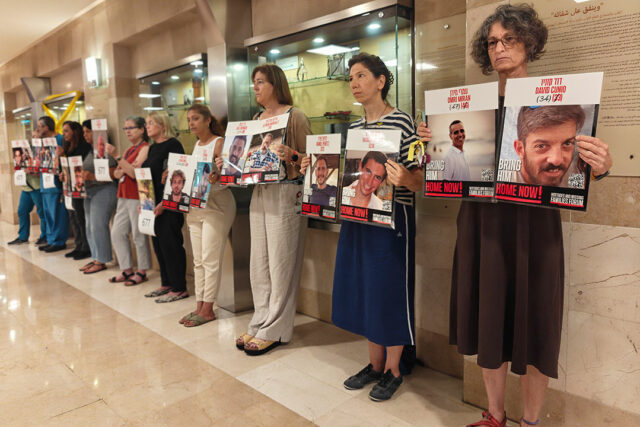
Israel has blocked the entry of medical, food and fuel supplies into Gaza since the start of March to try to pressure Hamas into freeing the hostages the Palestinian militant group took on October 7, 2023, when it attacked Israeli communities.

“We have always supported Israel’s right to defend Israelis against terrorism. But this escalation is wholly disproportionate,” the three Western leaders said in the joint statement. They said they would not stand by while Netanyahu’s government pursued “these egregious actions.”

They stated their support for efforts led by the United States, Qatar and Egypt for an immediate ceasefire in Gaza, and said they were committed to recognizing a Palestinian state as part of a two-state solution to the conflict.

Hamas welcomed the joint statement describing the stance as “an important step” in the right direction toward restoring the principles of international law.

Israel’s ground and air war has devastated Gaza, displacing nearly all its residents and killing more than 53,000 people, many of them civilians, according to Gaza health authorities.

The war began with the October 7, 2023, Hamas-led attack in which the militants killed about 1,200 people, mostly civilians, and seized 251 hostages, according to Israeli tallies. – Reuters

BoP deficit widens to $2.56B in April

A person shows US dollars at a currency exchange store in Manila, Philippines, Oct. 21, 2022. — REUTERS

By Luisa Maria Jacinta C. Jocson, Senior Reporter

THE PHILIPPINES’ balance of payments (BoP) deficit widened further in April as the government paid back its external debt, data from the Bangko Sentral ng Pilipinas (BSP) showed.   

The BSP on Monday said the BoP deficit stood at $2.56 billion in April, wider than the $639-million gap a year ago and the $1.97-billion shortfall in March.

Philippines: Balance of Payments (BoP) PositionThe BoP measures the country’s transactions with the rest of the world. A deficit indicates more funds exited the Philippines while a surplus means more money entered the country than left.

“The BoP deficit reflected the National Government’s (NG) drawdowns on its foreign currency deposits with the BSP to meet its external debt obligations and pay for its various expenditures, and the BSP’s net foreign exchange operations,” the central bank said.

Latest data from the BSP showed the Philippines’ outstanding external debt rose by an annual 9.8% to $137.63 billion as of end-December 2024.

This brought the external debt-to-gross domestic product (GDP) ratio to 29.8% at the end of 2024 from 28.7% in the previous year.

The country’s BoP position stood at a $5.52-billion deficit in the first four months of 2025, ballooning from the $401-million gap a year ago.

“Based on preliminary data, this year-to-date BoP deficit reflected mainly the widening trade in goods deficit,” the central bank said.

The country’s trade balance in goods stood at a $4.13-billion deficit in March, 23% higher than a year ago. This brought the first-quarter trade deficit to $12.71 billion, also widening by 12.8% year on year.

“This decline was partly muted, however, by the continued net inflows from personal remittances from overseas Filipinos and foreign borrowings by the NG,” it added.

Cash remittances rose by 2.6% in March to $2.81 billion, though this was the slowest growth in nine months.

The NG’s gross borrowings declined by 7.15% to P192.45 billion in March as gross external debt fell by 31.89%.

Meanwhile, the BoP reflected a final gross international reserve (GIR) level of $105.3 billion at its end-April position, lower than $106.7 billion as of end-March.

“This latest GIR level provides a robust external liquidity buffer,” the central bank said.

The dollar reserves were enough to cover 3.7 times the country’s short-term external debt based on residual maturity.

An ample level of foreign exchange buffers safeguards an economy from market volatility and is an assurance of the country’s capability to pay debt in the event of an economic downturn.

The GIR was also equivalent to 7.3 months’ worth of imports of goods and payments of services and primary income.

Rizal Commercial Banking Corp. Chief Economist Michael L. Ricafort said the wider BoP deficit was due to the continued trade gap and repayment of foreign currency debts and other foreign obligations.

However, he also noted the decline in foreign investments amid volatilities in financial markets due to the United States’ tariff policies.

For the coming months, Mr. Ricafort said the BoP position could improve due to proceeds from the NG’s foreign-currency debt that could add to the GIR.

He also cited “continued growth in OFW remittances, BPO revenues, exports, foreign tourism receipts, and other structural US dollar inflows of the country.”

“Going forward, any improvement in BoP data and in GIR data for the coming months could still help provide greater cushion for the peso exchange,” Mr. Ricafort said.

This year, the BSP expects the country’s BoP position to end at a $4-billion deficit, equivalent to -0.8% of gross domestic product.

The BoP position stood at a surplus of $609 million in 2024, plunging by 83.4% from the $3.672-billion surplus as of end-2023.

Auto sales drop 10% in April as passenger car sales slump

Heavy traffic is seen along Commonwealth Avenue in Quezon City, March 16, 2025. — PHILIPPINE STAR/MIGUEL DE GUZMAN

By Justine Irish D. Tabile, Reporter

PHILIPPINE AUTOMOTIVE SALES slid by 10% in April, the biggest annual decline in more than three years, amid a double-digit decline in passenger car sales, an industry report showed.

A joint report by the Chamber of Automotive Manufacturers of the Philippines, Inc. (CAMPI) and the Truck Manufacturers Association (TMA) showed new vehicle sales fell by 10% to 33,580 units in April from 37,314 units in the same month a year ago.

April saw the biggest annual decline since the 11.2% drop in January 2022. It was also the first time that sales fell since the 7.3% decline in February 2022.

Auto Sales (April 2025)

Month on month, car sales also slumped by 16.7% from 40,306 units sold in March.

“While the overall market trajectory remains positive, the recent slowdown may be attributed to seasonal factors, economic conditions, or evolving consumer demands,” said CAMPI President Rommel R. Gutierrez in a statement on Monday.

“Industry leaders continue to monitor market trends and expect further developments in the months ahead,” he added.

Data from CAMPI-TMA showed passenger car sales plunged by 35.5% in April to 6,498 from 10,069 a year prior. Passenger cars made up 19.35% of the total industry sales in April.

Month on month, sales of passenger cars slid by 23.1% from 8,449 cars sold in March.

Regina Capital Development Corp. Head of Sales Luis A. Limlingan said the slump in passenger car sales reflects “ongoing price sensitivity in the mass market.”

“The decline in April car sales was driven by fewer selling days due to holidays, high base effects from last year’s strong performance, and lingering consumer caution amid tight loan conditions,” he said in a Viber message.

On the other hand, commercial vehicle sales, which accounted for 80.65% of the total, dipped by 0.6% to 27,082 in April from 27,245 a year ago.

Month on month, commercial vehicle sales declined by 15% from 31,857 in March.

Broken down, light commercial vehicle sales rose by 3.2% year on year to 20,185, while Asian utility vehicle (AUV) sales declined by 12.1% to 5,992.

Sales of light-duty trucks and buses inched up by 1.6% to 499 in April, while sales of medium-duty trucks and buses dropped 18% to 291.

In April, sales of heavy-duty trucks and buses surged 134.7% to 115 units.

For the first four months of the year, vehicle sales inched up by 2.5% year on year to 150,654 units from 146,920 in the same period in 2024.

Commercial vehicle sales increased by 10.3% to 119,824, while passenger car sales dropped by 19.5% to 30,830 in the January-to-April period.

Rizal Commercial Banking Corp. Chief Economist Michael L. Ricafort said the Trump administration’s recent tariff policies may have hurt consumer confidence, affecting car sales.

“Trump’s announcement of reciprocal tariffs somewhat weighed on sentiment by consumers, businesses, and other institutions, as higher US import tariffs could slow down global trade, investments, employment, and overall economic growth worldwide,” he said in a Viber message.

“Possible slowdown in sales, incomes, employment, and other economic activities led to a more cautious attitude for some buyers of big-ticket items such as vehicles until the uncertainties settle regarding the Trump risk factor,” he added.

Mr. Ricafort said the ban on some government spending, including purchases of vehicles, ahead of the midterm election may have also affected overall industry sales.

“We expect a gradual recovery in the latter half of the year as demand picks up, inflation stabilizes, and hybrid and electric vehicle (EV) adoption grows. However, the outlook remains tempered by broader economic headwinds and cautious spending behavior,” Mr. Limlingan said.

Year to date, Toyota Motor Philippines Corp. remained the market leader with a 47.74% share as sales rose by 6.4% to 71,927 units.

Mitsubishi Motors Philippines Corp. came in second with a 7% increase in sales to 29,770 units in the January-to-April period. It accounted for 19.76% market share.

In third spot is Nissan Philippines, Inc. which saw a 12.7% drop in sales to 8,182 units in the first four months.

Rounding out the top five were Suzuki Phils., Inc., which saw a 14.5% increase in sales to 7,002 units, and Ford Motor Co. Phils., Inc. which posted a 30.6% drop in sales to 6,728 units.

The CAMPI-TMA report showed that 1,509 EVs were sold in April, bringing four-month sales to 6,820 units. This represented a 5.69% market share.

However, month-on-month EV sales dropped 20.4% from 1,895 units sold in March.

Broken down, hybrid EVs accounted for 5,744 units sold in the first four months. There were 978 battery EVs and 98 plug-in hybrid EVs sold as of end-April.

Toyota Motor sold the most hybrid EVs so far this year with 4,942, followed by Honda Cars Philippines with 442.

Nissan Philippines posted the highest sales of battery EVs with 409, followed by Tesla Motors Philippines with 396 units.

Agencies’ budget proposals reach P11 trillion for 2026

Metro Manila Development Authority employees repair chairs at a school in Mandaluyong City. — PHILIPPINE STAR/MIGUEL DE GUZMAN

GOVERNMENT AGENCIES’ budget proposals for the 2026 national budget have surged to P11 trillion, up from the P9.2 trillion in funding requests made for the 2025 budget, according to the Department of Budget and Management (DBM).

“It is not finished yet and only three bureaus were finalized. But based on the submissions, because there are a lot of them, there’s a 200-300% increase in agency submissions. So, they’re looking at approximately P11 trillion,” DBM Undersecretary Goddes Hope O. Libiran told reporters on the sidelines of the 2025 Open Government Week on Monday.

This is 20% higher than the P9.2 trillion in funding requests from government agencies last year.

“There are a lot of agencies that want to do a lot and maybe, like, for example, the Armed Forces of the Philippines raised their request for a modernization program,” she added.

The DBM’s estimate also accounted for both Tier 1 and Tier 2 proposals.

The government employs a two-tier budget process; ongoing spending is considered in Tier 1 and proposals for new and expanded spending are evaluated in Tier 2.

The P11-trillion proposals will be later reviewed under the Preliminary Executive Review Board.

Once they finalize it, they will defend it to the Executive Review Board, which includes Budget Secretary Amenah [F. Pangandaman] and the senior officials like us,” she said.

The final budget will be based on available fiscal space.

“The work of DBM is to determine which ones are really aligned with our Medium-Term Fiscal Framework to the Philippine Development Plan to the priorities of the administration and which are implementation-ready,” she said.

“If we put their proposal in the National Expenditure Program, won’t the budget be wasted? Will they be able to implement that? We’re in the process of that,” Ms. Libiran said.

In 2026, the overall National Expenditure Program will hit a record P6.793 trillion, up 7.38% from the P6.326-trillion national budget signed in 2025.

At the same event, Ms. Pangandaman expressed optimism that the Freedom of Information (FOI) bill will be passed by the incoming Congress.

“We conducted a series of roundtable discussions with the government, CSOs (civil society organizations), academic, and private sector to advance the passage of Freedom of Information bill in the 20th Congress,” she said. “With the support of President Ferdinand R. Marcos, Jr., I am confident that we will soon pass our very own FOI.”

The DBM and the Presidential Communications Office are set to incorporate the results from the discussions to strengthen the draft FOI bill. The draft bill will be presented to the Legislative-Executive Development Advisory Council meeting on May 26. — Aubrey Rose A. Inosante