Home Blog Page 1034

CLI expands Visayas footprint with 7.2-hectare Cebu township project

CEBU HOMEGROWN Developers, Inc., a joint venture between Cebu Landmasters, Inc. (CLI) and Ixidor Holdings, unveils Pristina Town, its most prime township in northern Cebu City. Anchoring the township is the P5.4-B North Grove, a garden-themed residential condominium and the township’s first residential project. — CEBU LANDMASTERS, INC.

LISTED developer Cebu Landmasters, Inc. (CLI) has launched a new 7.2-hectare township project in Cebu City, along with a P5.4-billion garden-themed condominium development, as part of its continued expansion in the Visayas property market.

The township, called Pristina Town, is being developed through Cebu Homegrown Developers, Inc., a joint venture between CLI and Ixidor Holdings. It will feature residential, commercial, and institutional components.

“Pristina Town is expected to strongly contribute to and benefit from the development of Cebu’s North Growth Center — an emerging hub transforming northern Cebu City into a vibrant, sustainable, and inclusive urban and economic center,” CLI Chairman and Chief Executive Officer Jose R. Soberano III said in a statement on Monday.

The development will incorporate sustainability features, including green spaces, pocket parks, smart programmable street lighting, and water catchment systems.

“The township stands out with its abundant green spaces, energy-efficient smart lighting, and innovative water reuse system,” Mr. Soberano said.

Planned infrastructure includes designated bike lanes, wide pedestrian walkways, planting strips, a transport hub, full underground utility cabling, and 24/7 security and surveillance systems.

Within the township, CLI launched North Grove, a P5.4-billion residential project that will comprise two condominium towers: Lumina and Terra.

Lumina will offer 386 units, including studio, one-bedroom, and one-bedroom garden layouts ranging from 24 to 35.14 square meters, with full-height windows. Amenities will include landscaped green areas, low-density floors, a fitness gym, game room, Zen garden, sky garden, lounge, and multi-purpose deck.

Terra will feature 643 studio units ranging from 22.75 to 25.37 square meters. It will be designed with natural tones and forest-inspired aesthetics and will have its own set of amenities, including a fitness gym, pocket gardens, and a multi-purpose deck.

North Grove will also have a retail podium with nearly 3,800 square meters of commercial space, including a supermarket and new retail formats.

The project marks the second development of Cebu Homegrown Developers following the completion of the Mandtra Residences in Mandaue City.

CLI shares closed unchanged at P2.48 each on Monday. — Revin Mikhael D. Ochave

Philippines First Insurance Group looks to cater to millennials, Gen Zs

AKSON-UNSPLASH

TANCO-LED Philippines First Insurance Group (PFI Group) is planning to launch products to cater to younger generations as it looks to increase its millennial and Generation Z clients, who now make up the majority of the country’s workforce.

“I think what we want to do is to take a look at all of the needs and to try to come up with a platform that will make it easier for the Gen Z, Gen Y to see what products they want, and at the same time, looking at all of our different products that we have in the four companies to come up with maybe bundled products so then it will be easier for them to understand. If they purchase an insurance [policy], they can be covered for the needs that they have,” PFI Group President and Chief Executive Officer Jaeger L. Tanco said at a media briefing on Monday.

The Tanco Group of Companies’ Philippines First Insurance Group has four brands, namely, health maintenance organization PhilhealthCare, Inc. (PhilCare), nonlife insurer Philippines First Insurance Co., Inc. (PhilFirst), life insurer Philippine Life Financial Assurance Corp. (PhilLife), and pre-need firm PhilPlans First, Inc. (PhilPlans).

A recent study conducted by the PFI Group for PhilLife showed that interest in insurance among millennials and Gen Zs was high, with 43.3% of 400 respondents nationwide aged 18 to 43 years old saying they are very interested and 35% saying they are interested.

Policies that protect family members were respondents’ top priority at 83.3%, followed by the policyholder (78.5%), and then their financial assets (54.8%). Almost half also preferred policies that protected their homes (48%), personal belongings (40.8%), and business or professional assets (27.8%).

For unforeseen events, the top five preferences of respondents were coverage for health emergencies (77.3%), accidents (76.3%), loss of life (67%), fire or property damage (60.8%), and disability (60%).

The study also found that the top three barriers for getting insurance were not having enough money (66.9%), having other financial priorities (41.9%), and that insurance products are too expensive (29.8%).

Mr. Tanco said PFI Group will introduce products with lower pricing and modified benefits to appeal to the younger generation and tap underserved markets.

“There are some markets that can afford higher pricing, then there are markets that may not be able to afford as much. Of course, there will also be a little change in benefits when that happens, because you don’t expect someone to pay higher or lower to get the same benefits as someone that pays higher,” he said.

“I think what we want to do is to give them the right pricing that will cater to what they need… We’ll come up with products that will target a certain segment taking into consideration their capability,” Mr. Tanco added.

PFI Group will focus on retail products rather than corporate, he said.  

PHILPLANS
Meanwhile, PFI Group’s pre-need unit PhilPlans hopes to rebound from the P546.82-million net loss it posted last year as the company looks to focus on other product lines and as they hope that financial markets perform better.

“PhilPlans has a trust fund. What they buy, part of it goes into the trust fund. The trust fund is invested. When you see red, it doesn’t mean that the company is in the red. It simply means that the investments that we have had are not performing well,” PhilPlans Vice Chairman Monico V. Jacob said at the same briefing.

“The equity market is down, and we have about 20% invested in the equity market. That affects our financial statements. The fixed-income instruments, the interest rates are not that high. Consequently, the fixed-income instruments you invested are not generating the kind of returns you want. This means that the trust fund of the company is being affected by the kind of investments we have made,” Mr. Jacob said.

PhilPlans will focus on selling memorial plans and making them more affordable to help offset low sales of education plans, he said.

“The education plan has not been a very popular pre-need product. What we are concentrating on right now are the memorial product and the pension product,” Mr. Jacob said. “We’re looking at making it a little bit more affordable because at the moment, we’re selling a lot of plans geared towards heritage because we own the crematory there and the mortuary there. But we feel that we should come up with memorial plans which are more affordable, and that’s what our product group is working on.”

He added that PhilPlans has about 300 partner funeral parlors. — Aaron Michael C. Sy

Entertainment News (05/27/25)


Everything About My Wife premieres on Netflix 

ROMANTIC COMEDY film Everything About My Wife, produced by GMA Pictures, CreaZion Studios, and Glimmer Studio Philippines, will be making its worldwide Netflix debut on May 29. Starring Jennylyn Mercado, Dennis Trillo, and Sam Milby, the film tells the story of Dom (Trillo), an unhappily married man who struggles to end his marriage to his wife (Mercado).


2 ABS-CBN restored films in Ayala Malls Cinemas

TWO FILMS restored by the ABS-CBN Film Restoration program will be screened at Ayala Mall Cinemas starting June 4. The 1982 film T-Bird at Ako, starring Nora Aunor and Vilma Santos, will be screened exclusively at Ayala Malls Cinemas. Directed by Danny L. Zialcita, it tells the story of lawyer Sylvia (Aunor), who tries to keep things professional between her and her client, Sabel (Santos), a dancer who accidentally kills a man in self-defense after he attempted to rape her. The other film is Mga Anak ni Facifica Falayfay, starring Dolphy, Roderick Paulate, Zsa Zsa Padilla, Lotlot de Leon, and more. Directed by Romy Villaflor, the 1987 film follows the death of the wife of Pacifico (Dolphy), deeply affecting their son Rodrigo (Paulate).


Father’s Day film program at UP Diliman

A FILM SERIES titled “Fathers of Circumstances” will be held at the University of the Philippines Film Institute (UPFI) Film Center in Diliman, Quezon City, on June 20 and 21. Curated by Eunice Helera and organized by Elevated Frames, it brings together five films from Japan and the Philippines that explore the many faces and meanings of fatherhood — whether by blood, choice, absence, or circumstance. It will also coincide with the reopening of Cine Adarna, UPFI Film Center’s main theater. Admission is free.


The Juans release single on ‘situationships’

FILIPINO band The Juans is back with their latest single, “Ano Ba Talaga Tayo?” The song is a heartfelt anthem for anyone who’s ever found themselves stuck in the emotional gray area of a “situationship.” An accompanying music video was also released, starring actors and real-life couple Elijah Canlas and Miles Ocampo. “Ano Ba Talaga Tayo?” is out now on all digital music streaming platforms.


Hip-hop newbie Khael Domaro releases new single

FILIPINO hip-hop newcomer Khael Domaro is entering the Pinoy hip-hop scene with “GODLIKE,” a single that features a verse from Gee Exclsv, a member of the chart-topping rap collective O SIDE MAFIA. The song is produced by Yung Bawal. “GODLIKE” is out now on all digital music streaming platforms.


Dwta drops new alt-rock single

FILIPINO singer-songwriter dwta is back with “Nasusunog (Pants On Fire),” her new single under Sony Music Entertainment. It marks a departure from her signature folk-pop sound, blending introspection with alt-rock instrumentation. It was written by dwta with Tiana Kocher, Ashley Mehta, and Martin Estrada, during the Sony x Monostereo Groove songwriting session earlier this year. The Bicol-born artist describes the track as “graceful wrath, the act of expressing anger in a way that remains vulnerable and composed.” It is out now on all digital music streaming platforms.


SB19 single in video game Fatal Fury music video

THE Japanese video gaming and interactive entertainment company SNK Corp. has unveiled its newest cross-cultural collaboration: a music video featuring their latest fighting game, Fatal Fury: City of the Wolves, and award-winning Filipino pop group SB19. It centers on SB19’s single “DUNGKA!,” inspired by the game’s key phrase, “rev it up.” The video combines the group’s sound with cinematic battle sequences from the video game. It is available to view online.


KOSTCON 2025 features K-Drama soundtracks live

K-DRAMA enthusiasts in the Philippines can now get tickets to KOSTCON 2025 – Korean OST Concert. It will be held at the SM Mall of Asia Arena, Pasay City, on Aug. 6, made possible by Random Minds. Among the performers are: balladeer Lyn (known for “My Destiny” from My Love from the Star and “With You” from Descendants of the Sun), Kim Bum Soo (known for “I Miss You” from Stairway to Heaven), K.Will (“Beautiful Moment” from The Beauty Inside). Soyou (“I Miss You” from Goblin), Heize (“Can You See My Heart” from Hotel Del Luna), and Lee Mujin (“Sweet” from Business Proposal).


Jollibee brings back the JolliKids Fun Camp

THE two-day JolliKids Fun Camp returns to offer kids a learning experience at Jollibee. The program allows children to step into the shoes of a Jollibee crew member over the course of two days, with each session lasting three hours. Participants will receive their own apron, booklet, and sticker set, used to track their performance. Registration is ongoing until June 14, and the program is open to children aged four to 12 years old. There is a registration fee of P620.


Johnnie Walker taps celebrities for campaign

JOHNNIE WALKER has launched its Greatest Of All Time (G.O.A.T.) campaign, featuring a lineup of Filipino icons: OPM band Urbandub, comedian Red Ollero, drag queen Marina Summers, A-Team streetdance duo Angelica and MJ Arda, and stylist Liz Uy. They each “embody the spirit of greatness in their respective fields,” with live performances, fashion showcases, and various events lined up as part of Johnnie Walker’s G.O.A.T. Fridays. The ongoing series pairs these events with Johnnie Walker cocktails. For more details, visit the liquor brand’s social media pages.


Korean stars reunite on Prime Video romance series

PRIME VIDEO has announced that Head Over Heels, a new Korean fantasy-romance series, will stream starting June 23. The show stars Cho Yi-hyun and Choo Young-woo, known for their work on various K-Dramas. It tells the story of a high school student-shamaness (Cho) setting out to save the life of her very first love (Choo).


Tom Odell announces new album, releases single

AMERICAN musician Tom Odell has announced that he will release a new album, A Wonderful Life, on Sept. 5 via UROK/Virgin. Recorded in London, it will feature 10 tracks including the recent introductory track and album opener, “Don’t Let Me Go.” In addition to the announcement, he has also released “Don’t Cry, Put Your Head On My Shoulder,” a guitar-led lullaby meant to be an anthem during concerts.

MWSS seeks retained water allocation for June

PHILIPPINE STAR/KRIZ JOHN ROSALES

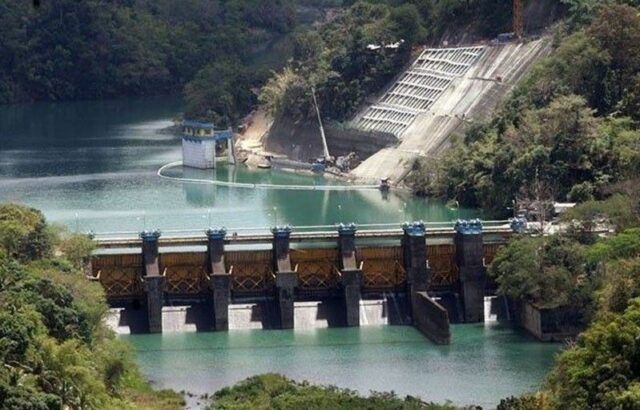
THE Metropolitan Waterworks and Sewerage System (MWSS) is seeking to retain its water allocation of 50 cubic meters per second (cms) from the Angat-Ipo-La Mesa water system for June.

While the request is still subject to approval by the National Water Resources Board (NWRB), the Angat technical working group has agreed to the proposal, according to Patrick James B. Dizon, manager of MWSS’ water and sewerage management division.

“Based on the historical records and also since the hot weather will now be reduced, the water demand in the next months will be decreased,” he said in a Viber message.

“But considering we have sufficient water from Angat Dam, we will be requesting to NWRB to maintain the allocation of MWSS,” he added.

MWSS is mandated to ensure the uninterrupted and adequate supply and distribution of potable water, as well as the maintenance of sewerage systems, in its service area covering Metro Manila and parts of Cavite and Rizal.

NWRB regulates and manages all water resources and services in the Philippines. It determines and approves MWSS’ monthly water allocation based on the status of the Angat Reservoir, weather conditions, and MWSS’ request.

Angat Dam supplies about 90% of Metro Manila’s potable water.

As of Monday morning, the water level at Angat Dam stood at 199.07 meters, lower than the 199.35 meters recorded a day earlier, according to the Philippine Atmospheric, Geophysical and Astronomical Services Administration (PAGASA).

The latest readings remain below the dam’s normal high-water level of 210 meters. — Sheldeen Talavera

Ayala Land chosen as Harvard Business School global capstone partner

AYALA LAND, INC.

AYALA LAND, INC. (ALI) has been selected as one of the global partners for Harvard Business School’s (HBS) FIELD Global Capstone Program, the listed property developer said on Monday.

“This collaboration allows us to showcase how we innovate, adapt to trends, and prioritize the customer while driving business growth,” Clarisse Feria-Darre, project development group head at ALI’s Premium Residential Business Group, said in a statement.

ALI is among 156 companies chosen worldwide to participate in the program, alongside Bank of the Philippine Islands, the Ayala group’s banking arm.

“The engagement underscores ALI’s commitment to fostering global learning and innovation through strategic partnerships with top academic institutions,” the company said.

Ahead of the students’ arrival in the Philippines, ALI executives collaborated remotely with the HBS leadership team.

During a week-long in-person engagement in Makati City, HBS students presented ideas to ALI executives, conducted field research across the metro, and delivered strategic recommendations to management.

The FIELD Global Capstone is a required course for first-year MBA students at Harvard University. The program is designed to enhance students’ capabilities in managing real-world business challenges across diverse environments.

“We are extremely grateful to Ayala Land and all the FIELD Global Capstone Project Partner organizations for all they do on behalf of our students,” said Joe Fuller, faculty chair for the FIELD Global Capstone.

ALI earlier reported a 10% year-on-year increase in first-quarter net income to P6.9 billion, supported by growth in leasing and property development revenues.

On Monday, shares of ALI rose by 0.64% or 15 centavos to close at P23.45. — Beatriz Marie D. Cruz

Anti-environmentalism is on the rise but it’s full of contradictions

FREEPIK

Anti-environmentalism is gaining ground. Attacks on the net zero goal and hostility to conservation measures and anti-pollution targets are becoming more common. And, as recent election results have shown, these tactics are reshaping politics in Britain and across the west.

Anti-environmentalism is a rejection of both environmental initiatives and activism. But despite its sudden rise and bold rhetoric, it is built on shaky foundations. The messages it offers are often contradictory and row against the tide of everyday experience.

Take the US president, Donald Trump. He dismantled many environmental protections in his last term of office, and is now removing those that are left — including support for research that even mentions the word climate. Yet he told a rally in Wisconsin in 2024: “I’m an environmentalist. I want clean air and clean water. Really clean water. Really clean air.”

Some of the contradictions of anti-environmentalism reflect its departure from traditional conservatism. Although routinely identified as “conservative,” the populist anti-green politics of Republicans in the US and Reform in the UK, along with the AfD in Germany and National Rally in France, represent a radical challenge to the ideals of continuity and conservation that were once at the heart of conservatism.

The Conservative Environment Network is an organization which pitches itself as an “independent forum for conservatives in the UK and around the world who support net zero, nature restoration and resource security.” Much of this network’s work involves reminding people that important environmental protections, from America’s national parks to controls on pollution and climate change in Britain and elsewhere, were introduced by conservatives.

But few on the right appear to be listening. A populist tide is washing this conservative tradition away, despite the fact that support for environmental protection remains very popular.

Polling indicates that 80% of people in the UK worry about climate change. Public backing for the work of the US Environmental Protection Agency is also overwhelming, including among Republican voters.

In part, this support reflects the fact that environmental damage is an everyday reality: unpredictable weather, the collapse of animal and insect populations, and a range of other challenges are not just on the TV, they are outside the window.

In my research for a forthcoming book on environmental nostalgia across the world, I keep bumping into an irony. In western nations, voices from the right say they want their country back, yet appear hostile to environmental policies that would protect their country and ensure its survival.

There are many reasons for this disconnect, including resentment against initiatives that require lifestyle and livelihood changes. However, the enmity and disengagement is more complicated than a simple rejection of nature.

Many people — including Trump himself — claim they are environmentalists even when the evidence suggests otherwise. The signs and symbols of environmental care are knitted into every aspect of our commercial and cultural life: if wildlife could sue for copyright, there would be a lot of rich bears.

I argue that a distinction can be made between what I call “cold” and “hot” forms of environmentalism. The former values and mourns the loss of nature, but as a spectacle to be observed — a set of appealing images of flora and fauna — while the latter feels implicated and anxious.

The former position allows people to claim they love nature yet be indifferent or even hostile to initiatives to save it. However, the line between cold and hot, or between anti- and pro-environmentalist, is neither fixed nor hard.

Another quality of anti-environmentalism is that its beliefs are changeable, even quixotic. Climate change is an example.

Reform’s leaders have long flirted with climate change denial. “Climate change has happened for millions of years,” explained former Reform UK leader Richard Tice in 2024, adding that “the idea that you can stop the power of the Sun or volcanoes is simply ludicrous.” Tice has not changed his views but later the same year, the party’s new leader, Nigel Farage, told the BBC that he was “not arguing the science.”

Like other populist parties, Reform adopts a mobile position on the environment, moving between denying that climate change is happening or that humans are causing it, and the very different contention that anthropogenic climate change is real but that environmental targets are unreachable and unfair, given that other nations (China is often mentioned) supposedly do so little.

A POST-WESTERN PARADOX
Researchers are only just starting to think about anti-environmentalism. One key analysis is environmental politics researcher John Hultgren’s The Smoke and the Spoils: Anti-Environmentalism and Class Struggle in the United States. This new book explains how Republicans managed to convince working-class voters that there is “zero-sum dichotomy between jobs and environmental protection, workers and environmentalists.”

This kind of binary has also been found by contributors to The Handbook of Anti-Environmentalism, who identify and critique the stereotyping of environmentalism as middle-class and elite in several western countries.

Yet the geographical focus of these pioneering works misses yet another of the paradoxes of anti-environmentalism: that although its rhetoric often accuses China and other non-western countries of doing little, there has been a significant environmental turn in both policy and public attitudes beyond Europe and the US.

Environmentalism is becoming post-western. This is partly because the realities of environmental damage are so stark across much of Asia and Africa.

Extreme temperatures and unpredictable rainfall are leading to food insecurity and community displacement. Environmentalism in the African Sahel and south Asia might better be called “survivalism.”

And despite its continuing reliance on fossil fuels, China’s state-led vision of a transition to a conservationist and decarbonized “ecological civilization” is positioning it as a global environmental leader.

Stereotypes of environmentalism being primarily a western concern are crumbling. Because of this, along with the many contradictions that beset it, the rise of anti-environmentalism appears not only complex, but curious and unsustainable.

THE CONVERSATION VIA REUTERS CONNECT


Alastair Bonnett is a professor of Geography at Newcastle University.

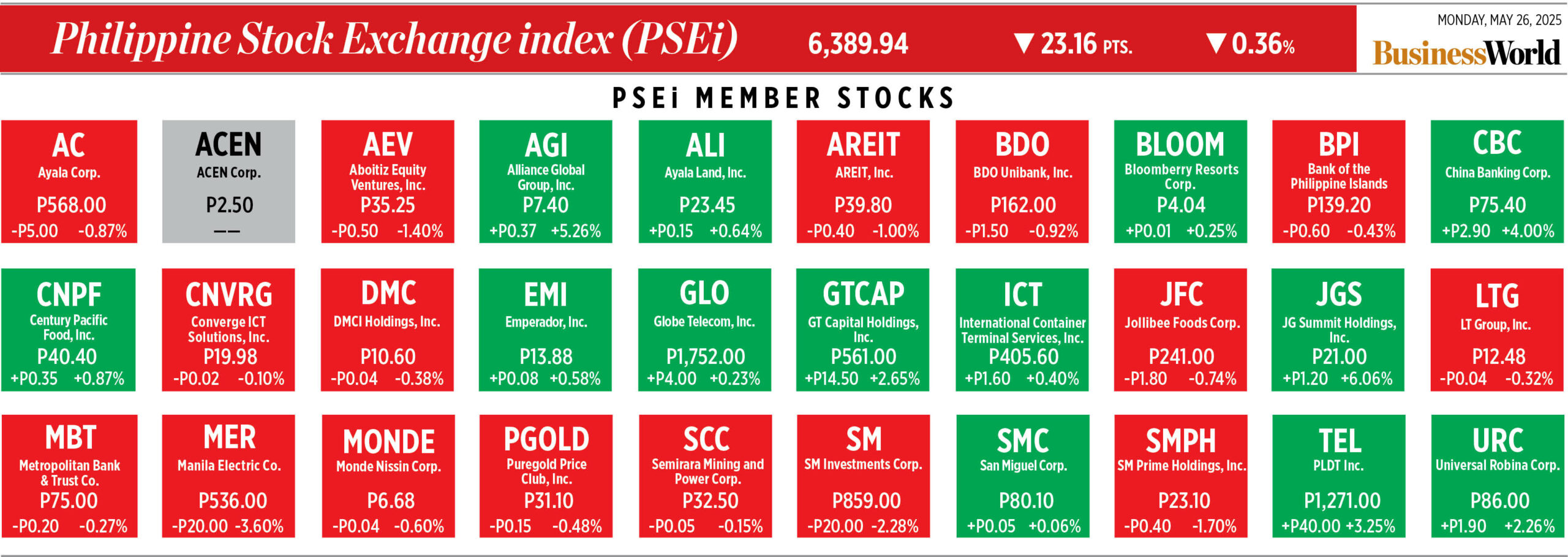
How PSEi member stocks performed — May 26, 2025

Here’s a quick glance at how PSEi stocks fared on Monday, May 26, 2025.


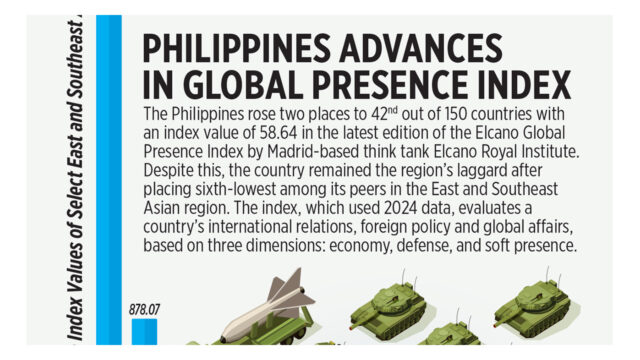
Philippines advances in Global Presence Index

The Philippines rose two places to 42nd out of 150 countries with an index value of 58.64 in the latest edition of the Elcano Global Presence Index by Madrid-based think tank Elcano Royal Institute. Despite this, the country remained the region’s laggard after placing sixth-lowest among its peers in the East and Southeast Asian region. The index, which used 2024 data, evaluates a country’s international relations, foreign policy and global affairs, based on three dimensions: economy, defense, and soft presence.

Philippines advances in Global Presence Index

Peso weakens on hawkish Fed

BW FILE PHOTO

THE PESO weakened anew against the dollar on Monday due to hawkish signals from a US Federal Reserve official.

The local unit closed at P55.42 per dollar, dropping by 17 centavos from its P55.25 finish on Friday, Bankers Association of the Philippines data showed.

The peso opened Monday’s session flat at P55.25 against the dollar. Its worst showing was at P55.45, while it climbed to a high of P55.143 versus the greenback.

Dollars exchanged dropped to $1.47 billion on Monday from $1.98 billion on Friday.

“The dollar-peso initially came to a fresh high of P55.143 as the market responded to the US’ extension of the tariff deadline against the European Union (EU), but eventually bounced to P55.45 following remarks from [Federal Reserve Bank of Minneapolis President Neel Kashkari] saying that a rate cut in September is still uncertain,” a trader said in a phone interview.

The peso weakened against the dollar on Monday amid renewed uncertainty after US President Donald J. Trump’s latest tariff threat against EU and eventual U-turn, Rizal Commercial Banking Corp. Chief Economist Michael L. Ricafort said in a Viber message.

For Tuesday, the trader expects the peso to move between P55.20 and P55.50 per dollar, while Mr. Ricafort sees it ranging from P55.30 to P55.50.

Mr. Kashkari said major shifts in US trade and immigration policy are creating uncertainty for Fed officials to move on interest rates before September, as the Trump administration continues tariff talks with numerous governments, Bloomberg reported.

“Anything is possible,” Mr. Kashkari said Monday in an interview on Bloomberg Television in Tokyo. But will the picture “be clear enough by September? I am not sure right now. We will have to see what the data says, but also how the negotiations are going,” he said. If trade deals are struck between the US and other nations over the next few months, “that should provide a lot of the clarity we are looking for,” he added.

While the US economy entered 2025 on solid footing, Mr. Trump’s tariffs and substantial changes to the country’s immigration policy have prompted businesses to rethink investment plans.

Widespread levies are seen pushing up US inflation while denting growth as firms pull back investment and households rein in spending. Mr. Kashkari and other central bank officials, including Chicago Fed chief Austan Goolsbee, have said the bar remains high for cutting interest rates in the near term.

“This uncertainty is potentially weighing on economic activity and creating challenges for us because we are not sure where things are going to settle and, therefore, where we should go with monetary policy,” Mr. Kashkari said.

Several Fed policymakers in the past week have signaled that their wait-and-see approach to potential interest-rate adjustments could extend for months as they look for clarity on the tariffs and their impact on the US economy.

Mr. Trump added to the uncertainty late last week when he threatened to impose a new 50% tariff on imported goods from the European Union, before delaying them until July 9. Mr. Trump also warned of a potential 25% levy on devices made by Apple, Inc. and Samsung Electronics Co. that are not manufactured in the US.

The Supreme Court last week shielded the Fed from Mr. Trump’s push to fire top officials at independent federal agencies.

In a ruling that let Mr. Trump oust officials at two other agencies, the court said its decision wouldn’t apply to the central bank, calling it a “uniquely structured, quasi-private entity.” The decision appears to protect Fed Chair Jerome H. Powell from outright termination, but it’s unclear whether it would prevent Mr. Trump from demoting him as chair.

Mr. Trump last month sent conflicting signals, posting on social media on April 17 that “Powell’s termination cannot come fast enough!” before telling reporters a few days later that he had no intention of firing him.

The biggest risk to the US economy is the overhang of major new policies, including trade barriers and immigration, Mr. Kashkari said on Monday. “I hope the negotiations taking place happen much more quickly than that so clarity can be provided.” — A.M.C. Sy with Bloomberg

PHL shares inch lower on renewed trade concerns

BW FILE PHOTO

PHILIPPINE STOCKS went down on Monday as investors sold index stocks and amid renewed uncertainty caused by the Trump administration’s tariff threat versus the European Union (EU).

The bellwether Philippine Stock Exchange index (PSEi) fell by 0.36% or 23.16 points to close at 6,389.94, while the broader all shares index declined by 0.24% or 9.15 points to 3,737.64.

“The local market closed lower this Monday as investors exited from index heavyweights such as SM Investments Corp., SM Prime Holdings, Inc., and Manila Electric Co.,” Philstocks Financial, Inc. Senior Research Analyst Japhet Louis O. Tantiangco said in a Viber message.

“Concerns over global trade were also reignited following US President Donald J. Trump’s 50% tariff threat against the EU.”

Mr. Trump backed away from his threat to impose 50% tariffs on imports from the European Union next month, restoring a July 9 deadline to allow for talks between Washington and the 27-nation bloc to produce a deal, Reuters reported.

Mr. Trump had said on Friday said he was recommending a 50% tariff effective from June 1, expressing frustration that trade negotiations with the EU were not moving quickly enough. The threat roiled global financial markets and intensified a trade war that has been punctuated by frequent changes in tariff policies toward US trading partners and allies.

The US president’s softened stance two days later marked another temporary reprieve in his erratic trade policy, even if the latest whipsawing in decision making reminded policymakers and investors how quickly circumstances could change.

Mr. Trump has sought to upend the world economy with his trade policies, but after his announcement in April of tariffs on multiple countries sparked financial market upheaval, he dialed down his threats in favor of talks. Since then, Washington has inked a pact with Britain and has held discussions with China.

“The PSEi opened the week in the red as investors adopted a wait-and-see stance amid thin trading and a lack of fresh domestic catalysts,” Regina Capital Development Corp. Head of Sales Luis A. Limlingan added in a Viber message.

Value turnover dropped to P4.74 billion on Monday with 486.007 million shares traded from the P6.25 billion with 854.49 million issues exchanged on Friday.

Sectoral indices were mixed. Holding firms dropped by 0.83% or 45.71 points to 5,432.69; industrials went down by 0.67% or 60.63 points to 8,906.94; and property declined by 0.55% or 12.62 points to 2,245.5.

Meanwhile, mining and oil rose by 4.57% or 434.60 points to 9,932.28; services increased by 0.59% or 12.52 points to 2,120.41; and financials inched up by 0.01% or 0.35 point to 2,404.39.

Advancers outnumbered decliners, 102 versus 90, while 50 names were unchanged.

Net foreign selling stood at P639,182.05 on Monday versus the P126.82 million in net buying recorded on Friday. — R.M.D. Ochave with Reuters

Gradual rise in rice tariff proposed for next harvest

REUTERS

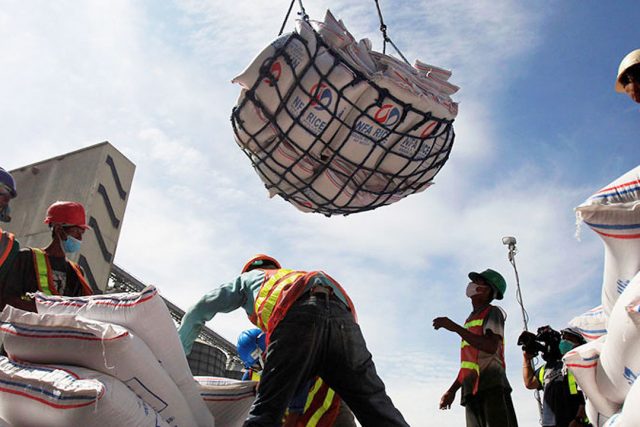
THE Department of Agriculture (DA) said it will propose to economic managers a gradual increase in the rice import tariffs by the next harvest.

The DA said it wants the current 15% tariff to be retained until the end of the second quarter to keep rice prices from rising, Agriculture Secretary Francisco Tiu Laurel, Jr. told reporters.

He said the Philippine harvest ended last month.

“I will not increase for now because the harvest in the countries of origin is almost finished,” Mr. Laurel said, adding that any tariff increase should be timed for the harvest seasons of rice exporters.

The government in July 2024 slashed tariffs on rice imports to 15% from 35% until 2028 to keep prices in check. The rate is subject to review every four months.

“We (will make the) recommendation that we can consider increasing it little by little,” Mr. Laurel said. “But it’s a matter of timing.”

Farmer groups, including the Samahang Industriya ng Agrikultura (SINAG), said in a recent petition to the Tariff Commission that the declaration of the food security emergency, which triggered the release of the government’s rice reserves, and the maximum suggested retail price scheme for imported rice were “admissions of the failure” of the reduced tariff rate to bring down rice prices.

The Commission heard the petition in March.

SINAG said the tariff reduction resulted in P15 billion in foregone revenue between July and December 2024.

Mr. Laurel in March said any sudden restoration of the 35% tariff rate for imported rice could lead to market shocks.

Secretary Arsenio M. Balisacan of the Department of Economy, Planning and Development has said that the government is open to a seasonal tariff scheme for rice imports to “stabilize farmers’ incomes.”

Under the proposal of the Federation of Free Farmers, levies would be timed to not clash with the height of the harvest season. — Kyle Aristophere T. Atienza

FDA suspends new application fees

Illustration photo shows various medicine pills in their original packaging in Brussels, Belgium, Aug. 9, 2019. — REUTERS/YVES HERMAN/ILLUSTRATION

THE Food and Drug Administration (FDA) said it suspended the new registration and assessment fees for medical products after legislators said they were modified without sufficient consultation.

In a briefing at the House of Representatives, FDA Director-General Paolo S. Teston said the recommendation to suspend the new fees has been conveyed to Health Secretary Teodoro J. Herbosa, and will take effect after he gives his approval.

“After due deliberation of the management committee of the FDA last week, we have recommended to the Health secretary the suspension of its implementation of the administrative order,” Mr. Teston told legislators.

“The recommendation is to suspend its implementation for a period of 60 days, unless sooner lifted or extended upon the instruction of the Secretary of Health,” he added.

The FDA overhauled its fee structure in December, with changes including a hike in annual licensing fees for drug distributors to P8,000 per year from the previous two-tiered structure that charged P5,000 for an initial license and P10,000 for succeeding years.

“Despite the increase in fees and charges by the FDA, industry stakeholders decried the absence of any palpable improvements in the delivery of the FDA’s services,” Iloilo Rep. Ferjenel G. Biron, who heads the House trade and industry panel, said.

“The exorbitant fees remain a burden to stakeholders as the increase they pay is not commensurate with the services they receive,” he added.

There are about 3,000 permit applications pending with the regulator, FDA Director Maria Cecilia C. Matienzo told the panel.

The delays in the processing of FDA permit applications have a “big effect” on medicine prices, Mr. Teston said, adding that his agency will come up with proposed solutions to clear the backlog.

“We recognize the effect of the slow processing of applications on the market prices of medicine,” he said. “But we’re a regulator, so we also need to ensure that the products entering the market are of quality, safe and effective.”

Meanwhile, the Philippine Chamber of Pharmaceutical Industry (PCPI) urged legislators to draft bills that will encourage the domestic production of medicine.

“We face challenges that hinder competition and growth, including regulatory disadvantages compared to foreign companies that no longer manufacture products in the Philippines,” it said in a document submitted to the House trade and industry panel obtained by BusinessWorld.

It called for express lanes to process the applications of domestically manufactured pharmaceutical products, the PCPI said.

It called for tax incentives for domestic drug manufacturers, such as the removal of value-added taxes and duties on imports of raw materials and pharmaceutical equipment.

The business group also urged legislators to consider adopting some regional regulatory practices like the preferential treatment of domestic pharmaceutical companies, citing the advantages granted to Indonesian, Vietnamese and Thai manufacturers. — Kenneth Christiane L. Basilio