Lesson of the Iran war: There is no substitute for fossil fuels
The continued bombing of Iran by the US and Israel has adversely affected oil and gas prices. There is no problem when it comes to the oil and gas supply; the problem is in their delivery and export from the Middle East to Asia, Europe, and the rest of the world.
It is often argued by the climate establishment that the world’s oil, gas, and coal prices should become more expensive via the imposition of carbon, excise, and other related taxes since then people and countries will be forced to use more solar, wind, and other sources of renewable power.
Now that hydrocarbon prices are high, businesses and energy companies are supposed to run towards more investments in and use of more solar and wind power, but this is not happening. Companies instead turn to coal to keep the lights and air conditioning on.
From Feb. 27, or day before the bombing of Iran, to March 6 or after seven days of war, crude oil (WTI, Brent, Dubai, Urals) prices have gone up from 16% to 54%. Natural gas prices have a wider range of increases, with US natural gas increasing by 12% while Europe’s TTF gas increased by 67%.
Meanwhile, solar-wind energy indices declined by 3-4% — they did not increase as expected. Even the nuclear index declined by 11%. It was the price of coal that experienced an increase of 16% (see Table 1).
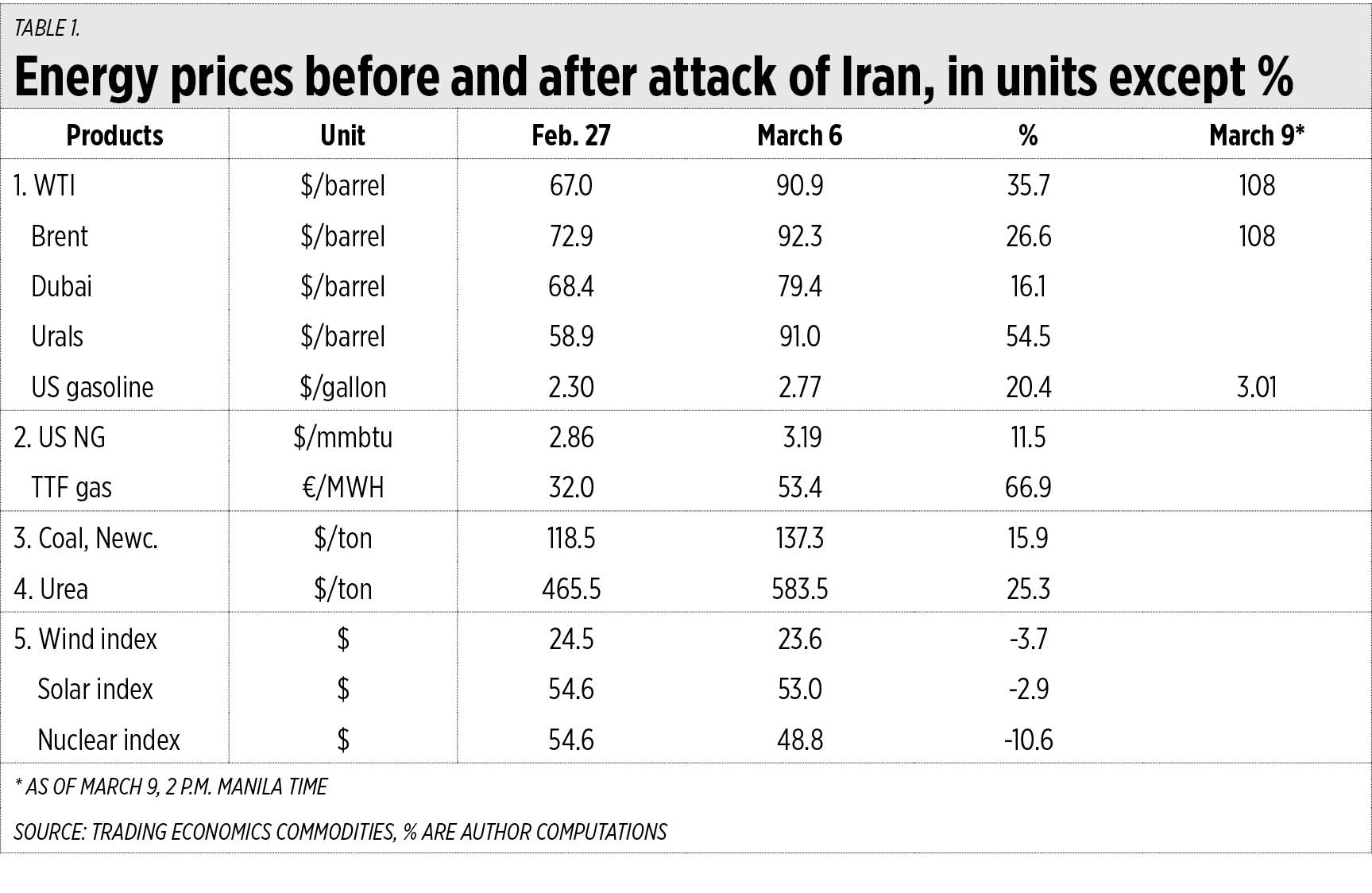
Which shows an inconvenient truth for the climate establishment — the substitute for fossil fuels/hydrocarbons are also fossil fuels/hydrocarbons. If not hydrocarbons from the Middle East, then hydrocarbons from Russia, Australia, or Indonesia, etc. It is delusional to think that solar/wind can substitute for fossil fuels.
Even if people use fully electric vehicles like those of BYD or Tesla, they still using oil-based products in the car paint, the dashboard, ceiling and interiors, the leather seats, the electrical wiring insulation, the synthetic rubber tires, polymers and carbon fiber, etc., even the road asphalt! These are among the thousands of oil byproducts.
We should expand exploration and development for our domestic oil and gas supply. We should have more offshore oil-gas development instead of irrational and expensive offshore wind.
I checked the movement of crude oil trade in 2024, and it showed the following:
1. The largest exporters of crude oil are Saudi Arabia, Russia, Canada, the US, the United Arab Emirates, and Iraq. Iran has no official record because of the long-standing sanctions against it, but it kept exporting crude via illicit trade.
2. The largest importers of crude oil are China, Europe, the US, India, Japan, and other Asia-Pacific nations (Taiwan, Korea, Australia, etc.).
3. The US is the largest producer of crude oil, but its oil is mostly what is called light/sweet. They still need to import heavy/sour oil for their refinery production.
4. China’s main source of crude imports is Russia, followed by Saudi Arabia, Iraq, the UAE and other nations from the Middle East (see Table 2).
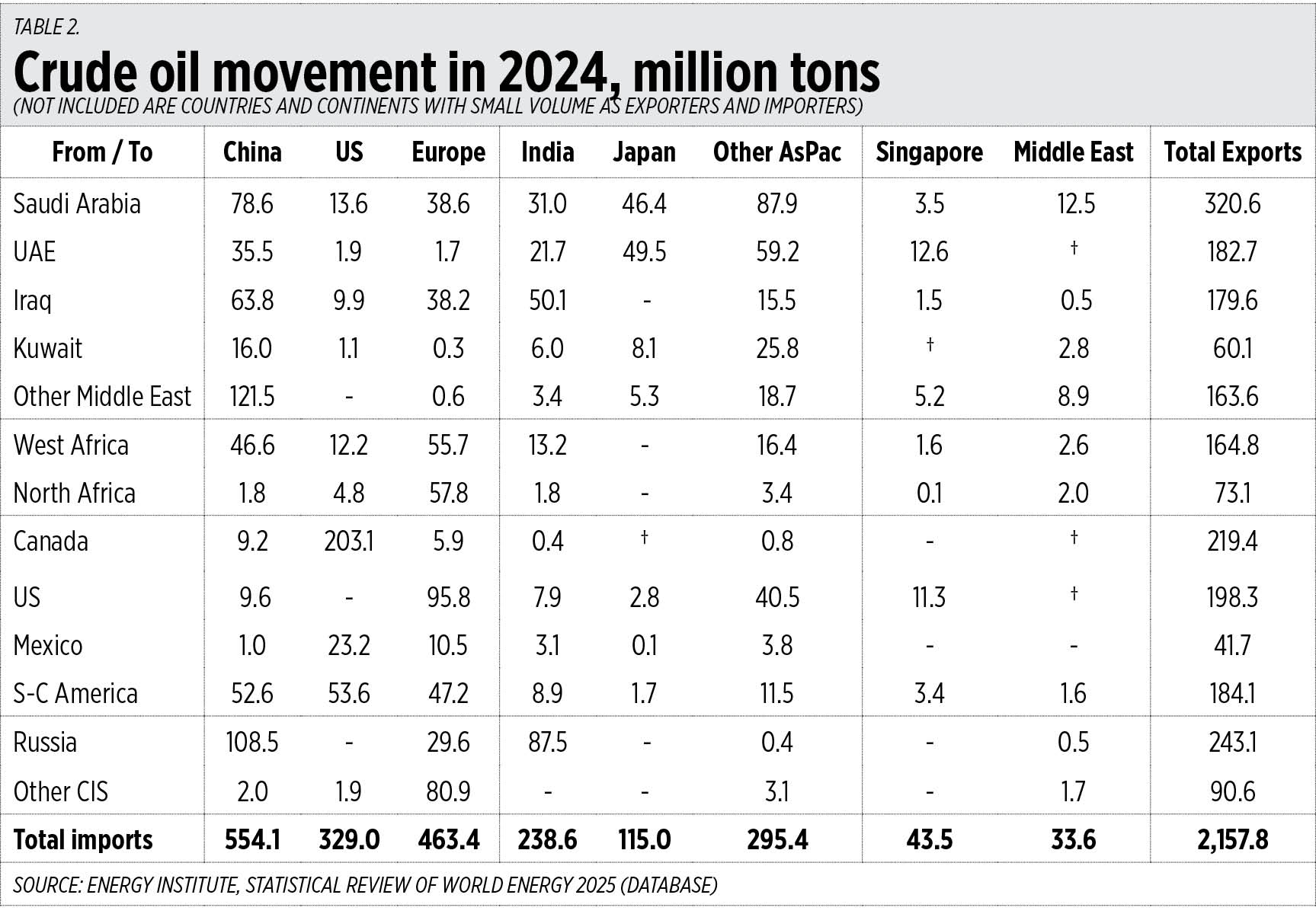
So, it seems that the biggest loser in the continuing war, aside from Iran, is China since 57% of its total crude oil imports in 2024 came from the Middle East, and now the delivery is choked. The US, especially under Trump, has an implicit goal of disallowing China from becoming at par with it in the level of industrialization and political-economic influence on global affairs.
PEPIF 2026
The Philippine Electric Power Industry Forum (PEPIF) 2026 will be held on March 12 at John Hay Convention Center in Baguio City. This is a big annual conference organized by the Independent Electricity Market Operator of the Philippines (IEMOP).
Keynote and plenary speeches will be held in the morning, then a panel discussion is scheduled for the afternoon which is focused on the theme, “The Energy Trilemma in the Philippines: Pathways to Security, Sustainability and Equity.” The panel speakers will be Energy Undersecretary Mylene Capongcol, Energy Director Luningning Baltazar, Energy Regulatory Commission Director Sharon Montaner, Philippines Independent Power Producers Association Chairman Roman Miguel de Jesus, Ateneo Economics Professor Fernando Aldaba, and the National Grid Corp. of the Philippines’ Redi Allan Remoroza.
I will be moderating this panel of articulate speakers, industry players, and regulators. I hope to bring out the best ideas from each of them.
Bienvenido S. Oplas, Jr. is the president of Bienvenido S. Oplas, Jr. Research Consultancy Services, and Minimal Government Thinkers. He is an internationa fellow of the Tholos Foundation.