Marcos faces crisis as fragile Philippines punished by oil shock
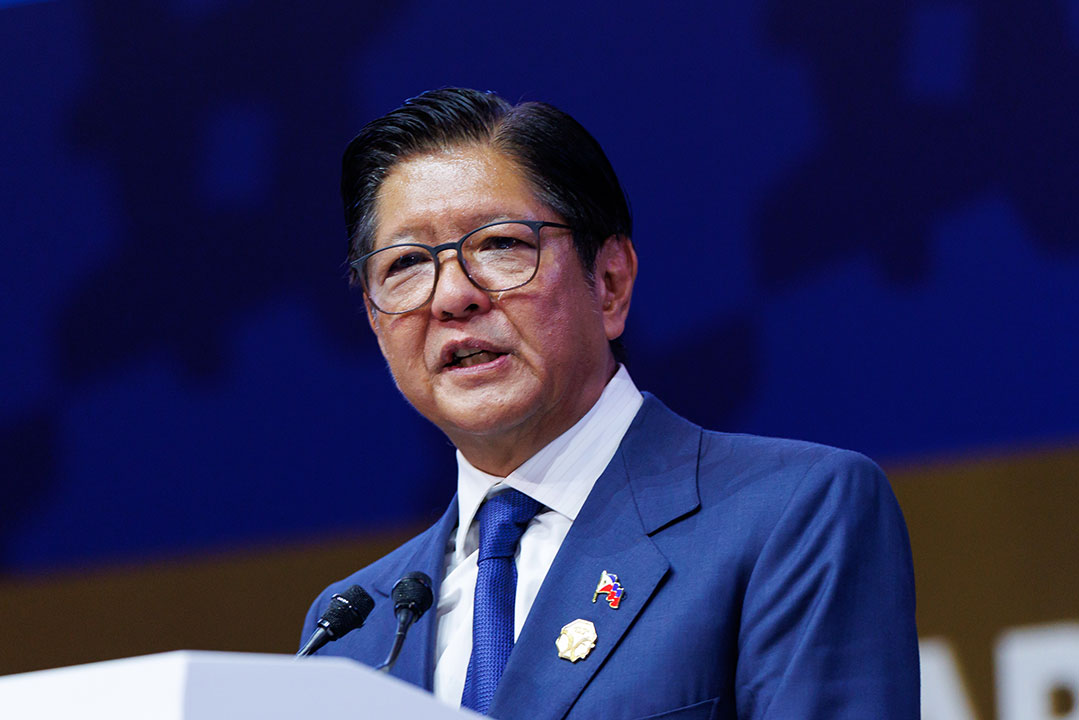
Philippine President Ferdinand Marcos Jr. is facing the country’s worst economic crisis since the pandemic as the energy shock unleashed by the Iran war hollows out consumer spending and fans inflation in a major Southeast Asian economy.
Economic data Thursday revealed how vulnerable the nation is to the energy choke from the US-Iran standoff, and rings an economic alarm to the rest of Southeast Asia, which relies on the Middle East for two-thirds of its oil.
The Philippine economy expanded 2.8% last quarter, below estimates and the slowest pace outside the pandemic since the end of 2009, while household spending was the weakest since 2010. The country’s peso is the worst performer in Asia since the start of the war, while its stock market is the second-worst in the world.
With inflation running at the fastest in three years, Marcos and the central bank are left with few easy options to contain the damage. They must spend more to shield households, or tighten monetary policy further after last month’s rate hike. The country also faces threats from a looming El Nino, which risks driving up food costs further.
The Philippine is also missing out on much of the artificial intelligence-driven export boom, which has helped the likes of Taiwan, Malaysia, Singapore and South Korea to weather the challenges of higher oil, as well as the impact of President Donald Trump’s global trade wars.
The dismal figures come as the Philippines hosts leaders of the 11-member Association of Southeast Asian Nations, which are seeking to bolster cooperation and regional resilience amid the economic fallout from the Iran war.
The region is facing a significant increase in fuel and energy costs, which will eventually feed into agricultural inputs, foods and basic commodities, the Philippines’ Foreign Affairs Secretary Theresa Lazaro said Wednesday at the opening of the Asean meetings.
To be sure, the Philippines started this year in a weak position, as a massive corruption scandal related to flood-control projects dented confidence and slowed government spending.
“Our growth performance trails Vietnam, Indonesia and China among others in the region,” Economic Planning Secretary Arsenio Balisacan said at a briefing in Manila. “This outcome reflects the combined impact of significant domestic and global challenges.”
The biggest factor was the Middle East conflict, he said. The US-Israeli war on Iran has spiked oil prices globally, but the Philippines is acutely affected because it imports more than 90% of its requirements from the region.
There were some signs of optimism Thursday that the US and Iran were nearing a deal, which spurred a rally in global stocks.
The peso extended gains to as much as 1.2% to lead Asian peers, benefitting from a slump in oil prices overnight. Philippine stocks advanced 1.2% amid a regional rally.
Investment fell 3.3% last quarter, while industrial production edged down 0.1%, according to Thursday’s data. Consumer spending rose 3% from a year earlier, and government expenditure gained 4.8%.
STAGFLATION
The Philippines is the most at risk in the region of stagflation — characterized by weak growth, high inflation and unemployment, according to Lavanya Venkateswaran, senior Asean economist at Oversea-Chinese Banking Corp. in Singapore.
The central bank has little room to support the economy because of peso weakness and surging consumer prices. Meanwhile, growth and investment have slowed dramatically since Mr. Marcos announced a probe into the misuse of flood-control funds last year. Growth last year slumped to 4.4%, the weakest pace in more than a decade outside the pandemic.
“The lower-than-expected GDP print in the first quarter shows fiscal stimulus is not enough to uplift economic growth, just like during the pandemic,” said Alvin Arogo, head of research and economist at Philippine National Bank. “As such, monetary tightening, which does not address the supply shock, could seriously put at risk the ability of the country’s growth recovery in the coming quarters.”
The corruption controversy continued to weigh on consumer, business and investor confidence in the first quarter, while delays in the passage of the budget slowed the rollout of critical programs, Mr. Balisacan said.
“You can see that clearly in the pattern of consumption growth beginning the third and fourth quarter, and how consumption growth was sharply slowing down while inflation was going down and interest policy rates were going down,” he said. “Those lingering effects are still felt today.”
The reading “continues to emphasize the double impact of lingering flood control issue and the biggest geopolitical conflict this year,” said Ruben Carlo Asuncion, chief economist at Union Bank of the Philippines. — Bloomberg