Peso returns to P58 level on Fed, BSP easing
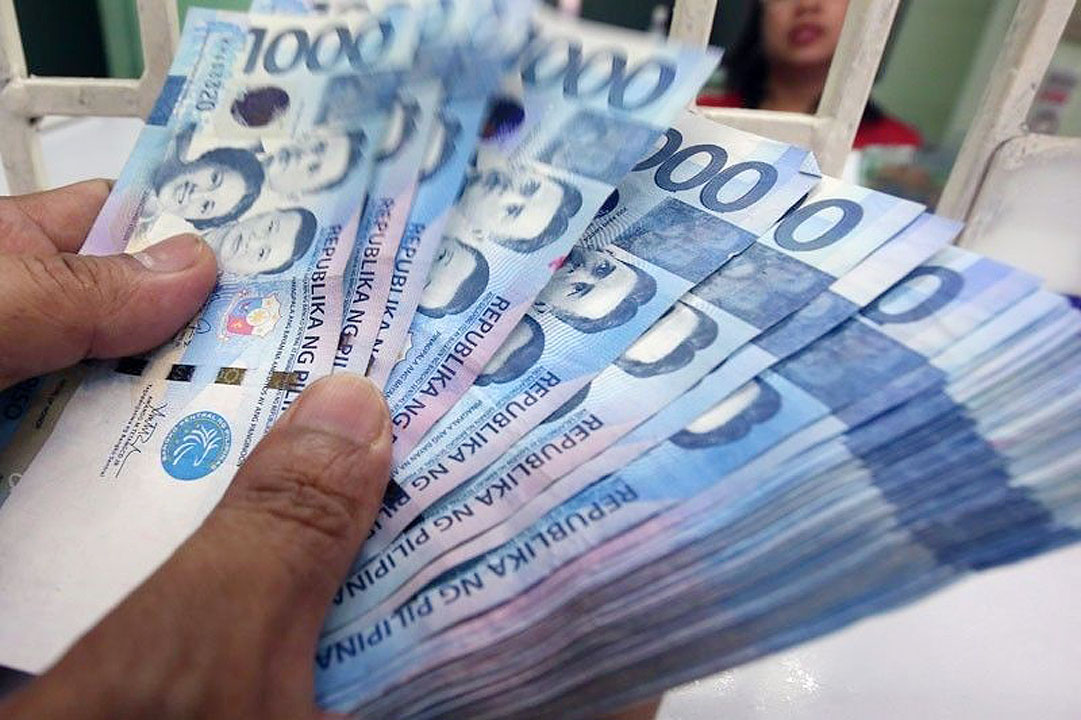
THE PESO climbed back to P58 level against the dollar on Thursday after both the US Federal Reserve and the Bangko Sentral ng Pilipinas’ (BSP) lowered benchmark borrowing costs.
The local unit jumped by 22 centavos to close at P58.99 versus the greenback from P59.21 on Wednesday, Bankers Association of the Philippines data showed.
The peso opened Thursday’s trading session stronger at P59.12 versus the dollar. Its weakest showing was at P59.18, while its intraday best was at P58.969 against the greenback.
Dollars traded rose to $1.697 billion from $1.29 billion on Wednesday.
“The dollar-peso closed lower in reaction to the Fed and BSP’s decision and forward guidance. The BSP cut but said this would be the last for the easing cycle,” a trader said in a phone interview.
The dollar was generally weaker on Thursday following the Fed’s decision overnight, Rizal Commercial Banking Corp. Chief Economist Michael L. Ricafort said in a Viber message.
The Fed cut interest rates by a quarter-percentage point on Wednesday in an uncommonly divided vote, but signaled it would likely pause further reductions in borrowing costs as officials look for clearer signals about the direction of the job market and inflation that “remains somewhat elevated,” Reuters reported.
Wednesday’s cut brought the policy rate to a range of 3.5%-3.75%.
Meanwhile, the BSP on Thursday likewise lowered its benchmark rates by 25 basis points (bps) to bring the policy rate to 4.5%, the lowest level in more than three years, as expected by 17 out of 18 analysts in a BusinessWorld poll. It has now delivered 200 bps in reductions since August 2024.
BSP Eli M. Remolona, Jr. said benign inflation gives them room to help support weak domestic demand amid lingering governance concerns that have affected investments, but stressed that they are nearing the end of their current easing cycle, with further cuts — if any — likely to be limited and dependent on data.
“Another rate cut would be justified if things are worse than we thought,” he said in a media briefing, adding that economic prospects have darkened further, with the slowdown in third-quarter growth likely to extend to this quarter and a recovery expected only by the second half of 2026.
“I wish I could say the worst was over. I thought the worst was over, but the new data that we’ve been seeing suggest that the fourth quarter will also see weak growth.”
Mr. Remolona also said the peso’s recent decline to a new record low is not a cause for concern and reiterated that they only intervene in the market to smoothen out sharp swings in the exchange rate.
“It hasn’t weakened enough and oil prices have been benign. It’s when the two of them move in an adverse direction together that we begin to worry about it.”
For Friday, the trader said the market will continue to react to the BSP’s “somewhat hawkish” policy guidance.
The trader sees the peso moving between P58.70 and P59.10 per dollar on Friday, while Mr. Ricafort expects it to range from P58.85 to P59.10. — Aaron Michael C. Sy with Reuters