What is the state of visual arts today?
Museum directors, gallerists, curators, artists share their thoughts on the CCP’s role
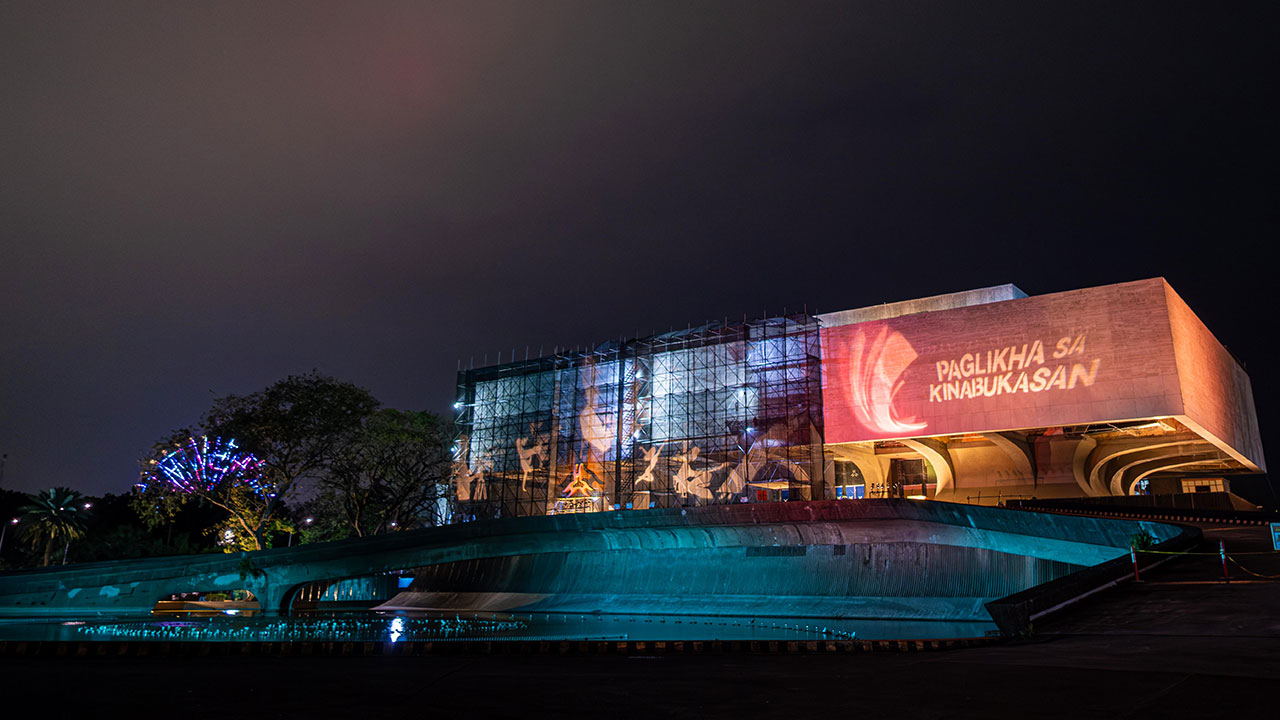
WHILE the Main Building of the Cultural Center of the Philippines (CCP) is being readied for reopening in stages this year, the institution’s trustees and chair members recently welcomed conversations about the state of visual arts in the Philippines.
“We want to identify programs, projects, and activities that may be able to assist in achieving the objective of getting Filipino visual artists better known by international museums and collectors, and better appreciated within Philippine culture,” said CCP chairman Jaime C. Laya, in his opening remarks at the roundtable on April 8, held at the CCP Blackbox Theater lobby.
Meanwhile, CCP President Kaye C. Tinga pointed out that the institution houses a underutilized art collection, which they aim to put to use with their programs. She also expressed eagerness to build on the Thirteen Artists Awards’ positive effects on inspiring young artists.
“Our thrust is to continue to contribute to national development,” Ms. Tinga said.
MORE VISIBILITY HERE…
One issue brought up by Metropolitan Museum of Manila President Tina Colayco was the public perception of the CCP.
“It’s more known among Filipinos for its performances, as a performing arts center,” she said. “Maybe the CCP can do a rebranding of this when the main building opens.”
To this, Ms. Tinga explained that, under the National Cultural Heritage Act, the National Museum is tasked to protect visual arts, the National Historical Commission of the Philippines is focused on built heritage, and the CCP for performing arts.
Despite this, the CCP’s vast visual arts collection should still not be overlooked. “We’ll definitely pour in more resources to promote what we have,” she said, “Especially to younger generations through social media.”
Aside from this, Ms. Colayco recommended that the CCP lead more efforts to unite art institutions, to “cast a wider net,” which may or may not eventually lead to a biennale.
“There’s a great need for all of our institutions to work together, to come together,” she explained. “Conservation services, studios and residencies for visiting artists, and the like are also needed by many museums. It can be something that different institutions can share.”
Providing an artist’s perspective to this suggestion were Alfredo and Isabel Aquilizan, whose exploratory, free-spirited approach to artmaking exposed them to exhibition models in other countries.
“In the ’80s and ’90s, Cuba started a biennale for artists from developing countries. Every two years, they could see contemporary artists from around the globe and look at the level of what artists can produce,” explained Mr. Aquilizan. “That was the best education they could get so they don’t have to send their artists overseas to study.”
… AND ABROAD
Silverlens Gallery founder and director Isa Lorenzo, speaking as someone who was able to set up a New York branch of their gallery, said that there is a demand for Philippine art abroad, among the Filipino and Southeast Asian diaspora.
“I wish that the CCP becomes the gold standard for exhibition making, not just in the Philippines, but in the region. It has many aspects to be maximized,” she said. “The CCP should be more outward-looking. That means being more active on social media, having more voices that speak to many generations, whether it’s through TikTok or Instagram or whatever social media.”
All panelists agreed that leaning into international art events can widen the existing network of Philippine art abroad.
Perfectly placed to give insight to this was Spain-based arts management educator Ana Maria Ortega, who shared that the Museo Nacional del Prado is preparing its 2027 lineup which will include Philippine art. It’s also set to hold a symposium on Philippine art.
“The world is ready to see us on the world stage. It’s a perfect moment for us to deepen our art scholarship, with the growing momentum towards large exhibitions bringing together Spanish and Philippine collections,” Ms. Ortega explained.
“The interest is already here. We have an opportunity to connect these efforts to build something more coherent and enduring.”
She added that 2027 is the 80th anniversary of diplomatic relations between the Philippines and Spain, something the CCP can play a leading role in to create an integrated narrative.
ROOM FOR IMPROVEMENT
Art historian and critic Carlos Quijon, Jr. suggested that the CCP provide a strong curatorial framework for young artists, which could “sharpen its focus” as a visual arts institution.
“The anxiety of being part of global conversations must be reviewed. Things are already working. We just need to support whoever is already on the field,” said Mr. Quijon, referring to Filipino artists and experts on Philippine art who are working abroad.
Another input he had was the lack of follow-through after the Thirteen Artists Awards. “Who works with those artists after they win the awards? Do they have solo shows? If there’s no follow-through, what is the award even for?” he said.
Silverlens’ Ms. Lorenzo added that the award money should be increased, and made separate from the production money, which would be possible with the right sponsors and patrons.
For National Gallery Singapore curator Clarissa Chikiamco, who joined the roundtable via Zoom, one gap in the CCP’s curation was that of non-traditional acquisitions like installations, video, and performance art.
“The legacy of the CCP venue as a non-commercial exhibition space, especially under the tenure of [the CCP’s museum director from 1970 to 1985] Ray Albano is in danger of being lost,” she said. “Right now, it’s difficult to access archives of this. Mainly it’s done through [the] Asia Art Archive, but it should be available at [the] CCP.”
She pointed out that archives related to the late conceptual artist Roberto Chabet, Albano’s contemporary, have been digitized, but there is still a lot more not yet covered.
“It’s important for Philippine institutions to collect contemporary art. It’s always the international institutions that have been actively acquiring such works,” explained Ms. Chikiamco. “Aside from paintings and sculptures, how does one acquire a concept? It’s in danger of disappearing if not worked on.”
Benilde Center for Campus Exhibitions director and Art Fair Philippines co-founder Geraldine Araneta added that the approach to Philippine art cannot be “one size fits all.”
“I see it as developmental — different artists need different things, and they have different capacities at different points in their careers,” she said. “We have to consider what each area needs.”
TAKEAWAYS
CCP Vice-President Dennis Marasigan concluded the roundtable with takeaways which the institution can use in their efforts moving forward.
They were summarized in five points: build on the programs that are already there; continue exhibitions and retrospectives; expand access to the CCP collection; collaborate more with other galleries and international organizations; and provide institutional support to artists, researchers, and curators.
“Our goal with this event was to find out what we could do more with the resources we have, and how to work with others to maximize our collection,” Mr. Marasigan told BusinessWorld after the roundtable. “Now that we have all this food for thought, we have a lot of work to do.” — Brontë H. Lacsamana