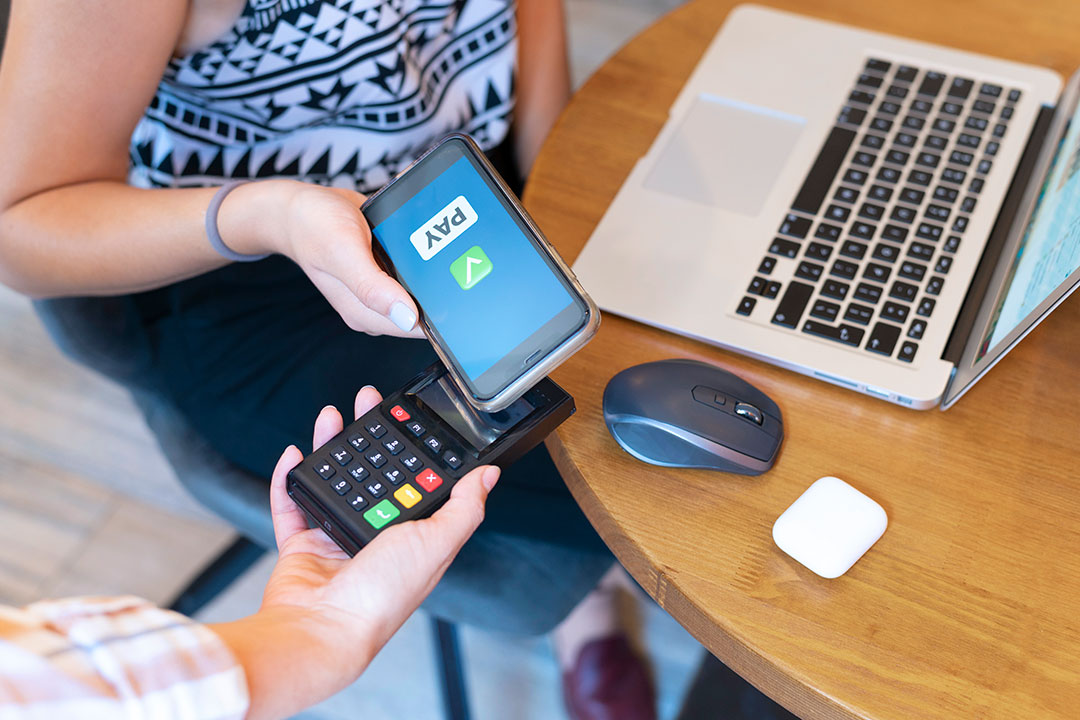
A HOUSE of Representatives committee approved on Tuesday a measure seeking to make digital payment systems in government and merchants more mainstream.
The House Banks and Financial Intermediaries committee said it will consolidate 15 bills proposing that kiosks and shops include digital payment platforms to help keep the government from further falling behind its digitization targets.
“This would make (digital payments) available as an option for consumers,” Bangko Sentral ng Pilipinas (BSP) Deputy Governor Mamerto E. Tangonan told BusinessWorld on the sidelines of the Committee hearing. “We’re going to mobilize the government to (become) the lead adopter of digital disbursement and collections.”
The Philippines is at risk of failing to hit its digitalization target by 2028 as outlined in the Philippine Development Plan (PDP).
The committee approved House Bill 7672, or the proposed e-Bayad Act, as the consolidated substitute bill for the various pending measures. The proposal was identified by the Legislative-Executive Development Advisory Council (LEDAC) last year as a priority bill.
The bill requires all government agencies to adopt digital payments for disbursements and collections either via in-house payment solutions or employing payment service providers that facilitate the real-time receipt of funds.
For merchants, the bill orders local government units (LGUs) to encourage and incentivize merchants via reduced fees, as well as assist small and micro-merchants in becoming more capable users of digital payments.
“The Bangko Sentral ng Pilipinas (BSP), Department of Trade and Industry (DTI), Department of Interior and Local Government (DILG), and the Department of Information and Communications Technology (DICT) shall also facilitate measures to provide capacity building for the covered agencies and merchants on the use of digital payments,” according to the bill.
Mr. Tangonan said the bill will help the government meet its 60-70% target for the share of digital payments in retail by 2028, which is one of the PDP goals.
BSP Governor Eli M. Remolona, Jr. said on Friday that the government could fail to reach its payments digitalization targets by the deadline due to slower-than-expected adoption due to worries about cyber risks.
In 2024, online payments accounted for a 57.4% share by volume and 59% by value of retail transactions, according to the BSP’s 2024 Status of Digital Payments in the Philippines report. These are up from 52.8% and 55.3%, respectively, in 2023.
Mr. Tangonan said that while the government has successfully enabled early adopters of digital payments, a growth driver is needed to boost late-stage adapters.
“We’re trying to find a second wind, the next breakthrough that will push our sales towards more growth. But without that… it’s really going to be hard,” he said.
“We need to start encouraging the late majority to adapt. Meaning, in the innovation lifecycle, we got the early adopters, the early majority, I think we got that. So we’re now working on the late majority.”
The BSP also continues to work with industry to lower fees to further boost digital payment adoption, Mr. Tangonan said.
He noted that among lower income users, fees serve as a “disincentive.”
He added the central bank is looking at implementing a pricing mechanism to lower fees, but noted that it is not feasible for banks to go to zero fees.
“In other countries, they can set zero fees. It’s not as feasible here. So, we have to work with something that can be successful.” — Aaron Michael C. Sy