Delta variant, vaccination pace to affect Asia’s recovery — IMF
THE International Monetary Fund (IMF) on Tuesday warned that the Delta variant of coronavirus disease 2019 (COVID-19) is hindering economic recovery in Asia, with the pace of vaccination to determine how soon countries can ease restrictions.
The IMF in its World Economic Outlook Update titled “Fault Lines Widen in the Global Recovery” said the recent surge in infections due to the Delta variant in emerging markets, including the Philippines, Indonesia, Malaysia, Thailand, and Vietnam, “caused a drag on activity.”
The IMF in June trimmed its growth forecast for the Philippines for 2021 to 5.3% from the 6.9% it gave in March, lower than the government’s 6-7% target. It however increased its outlook for next year to 7% from 6.5% due to base effects.
This year, the ASEAN-5 is expected to grow by 4.3%, which is lower than the 4.9% estimate given by IMF in April. Meanwhile, growth is estimated at 6.3% for 2022 from 6.1% previously.
Growth in emerging and developing Asia, which include China and India, is seen at 7.5%, less optimistic than the 8.6% expected previously. By 2022, these economies are projected to expand by 6.4% from the 6% pace it forecasted in April.
Meanwhile, the IMF’s global growth forecast was maintained at 6% for 2021 and raised to 4.9% (from 4.4%) for 2022.
“Uncertainty surrounding the global baseline remains high, primarily related to the prospects of emerging market and developing economies,” the IMF said.
Emerging markets are expected to vaccinate their populations slower than advanced economies, it said.
“Such delays would allow new variants to spread, with possibly higher risks of breakthrough infections among vaccinated populations. Moreover, households’ excess savings may be released more gradually if they remain worried about employment prospects and income security, weighing on aggregate spending,” it said.
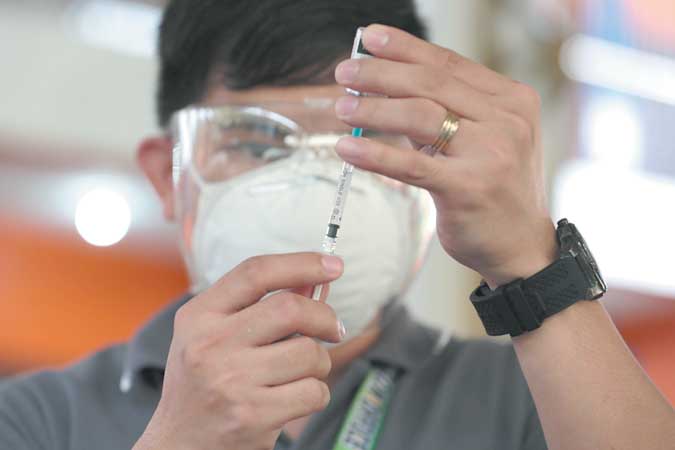
The Health department reported on Monday that a total of 17,202,421 COVID-19 vaccine jabs have been administered in the country. Over 11.11 million have received their first dose, while 6.09 million are already fully vaccinated against the disease. The government targets to vaccinate as many as 70 million by yearend.
In a separate note, Oxford Economics likewise said the COVID-19 pandemic will have a “lasting negative impact” on Asia-Pacific economies, but the effect will vary based on virus containment and authorities’ response to the crisis.
It said India, Indonesia, and the Philippines, in particular, “have struggled to contain outbreaks since the pandemic took hold.”
“At the same time, the fiscal response has been meager in both India and the Philippines, given the stringency of their lockdowns… Although Indonesia, and to a lesser extent India, have recovered somewhat better, we expect investment and employment to significantly underperform our pre-COVID forecasts. Elevated case numbers and slow vaccination rates pose additional headwinds to the outlook,” Oxford Economics added.
The IMF said in its report that governments should come up with policies to strengthen social safety nets and transition to the new normal.
“Once the health crisis is under control and economies are secure on their recovery paths, policy must increasingly focus on incentivizing shifts in employment, credit, and other inputs consistent with emerging growth opportunities,” the IMF said. — LWTN